TM Wander could expand into shopping centres owned by other Canadian landlords as Ruby Liu and Central Walk look for partners to take the food, retail and entertainment concept beyond the company’s own real estate portfolio.
Central Walk is open to working with developers, shopping centre owners and other partners across Canada, with large-format retail spaces among the opportunities the company is interested in exploring. Depending on the property, Liu said potential arrangements could include traditional leasing, joint development, project investment or other strategic partnerships.
Eastern Canada is also on the radar, with Liu identifying Toronto and the Greater Toronto Area as an important potential market. No Toronto location has been announced, and Liu said Central Walk is placing greater importance on finding the right properties and partners than achieving a predetermined number of locations.
The strategy represents the next stage for TM Wander, which opened at Tsawwassen Mills in May and is already planned for Woodgrove Centre in Nanaimo and Mayfair Shopping Centre in Victoria. Central Walk says weekend traffic at Tsawwassen Mills has been approximately 10 per cent higher than comparable year-earlier periods since TM Wander opened, giving the company an early operating track record as it looks farther afield.
The expansion also provides a new avenue for some of the broader ideas about physical retail that Liu has been developing for several years.

An Evolution of Liu’s Retail Vision
Liu outlined an ambitious vision for large-format retail in an interview with Retail Insider in 2025, describing environments that would combine merchandise with food, entertainment, cultural programming, events and experiences intended to attract younger consumers and families.
Those ideas were developed while Liu was pursuing a portfolio of former Hudson’s Bay leases and planning a new department store concept bearing her name. The proposed national rollout ultimately did not proceed after an Ontario court declined to approve the majority of the proposed lease transfers, but elements of the underlying retail philosophy continued to emerge within Central Walk’s existing properties.
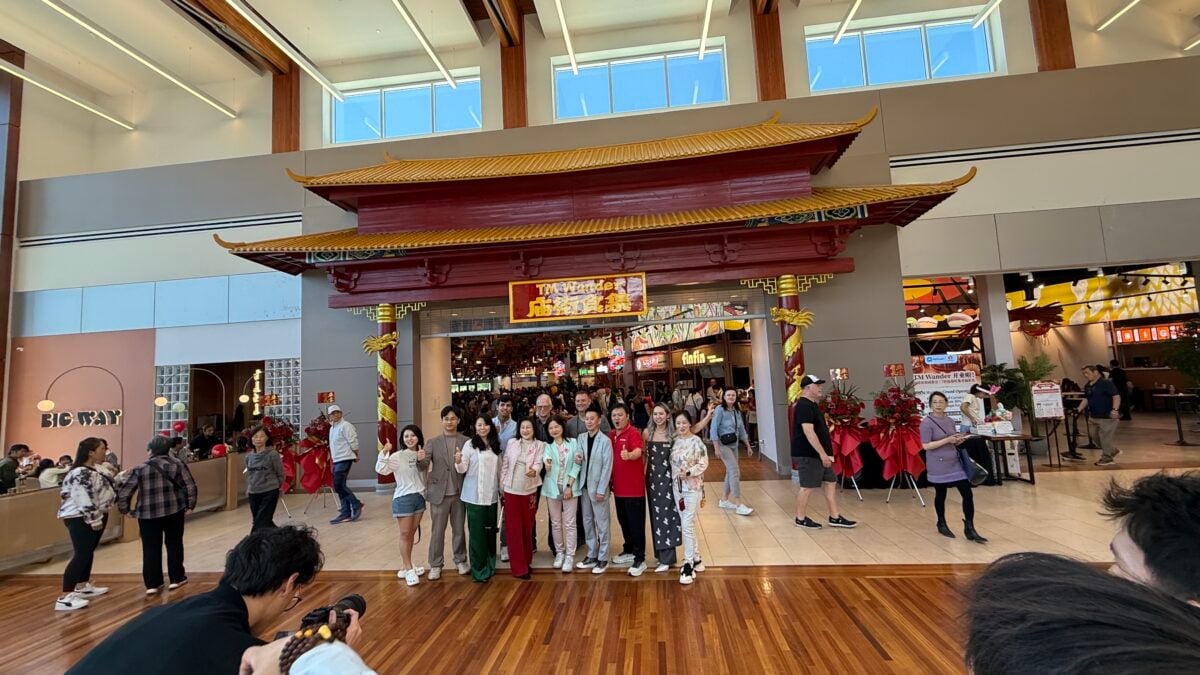
Many of those ideas were visible when TM Wander opened at Tsawwassen Mills on May 30, 2026. The approximately 25,000-square-foot venue was designed to accommodate up to 18 food-and-beverage operators, 34 marketplace vendors and a permanent performance stage with a large LED screen, alongside ongoing cultural and community programming.
The TM Wander name will also travel with the concept. While “TM” refers to Tsawwassen Mills at the original location, Central Walk says it also stands for “Taste & Market,” reflecting the food and marketplace components of the format. The company plans to continue using the TM Wander name as it expands to other locations.
When Retail Insider interviewed Liu following the opening, she acknowledged the continuity between TM Wander and some of her earlier ideas, saying that “the core vision has not changed.” What has changed considerably is how that vision can be deployed.
The proposed Ruby Liu department stores would have required control of large retail spaces operating under a new national banner. The TM Wander model provides a more flexible approach, allowing elements of the same philosophy to become one component within a broader shopping centre redevelopment.
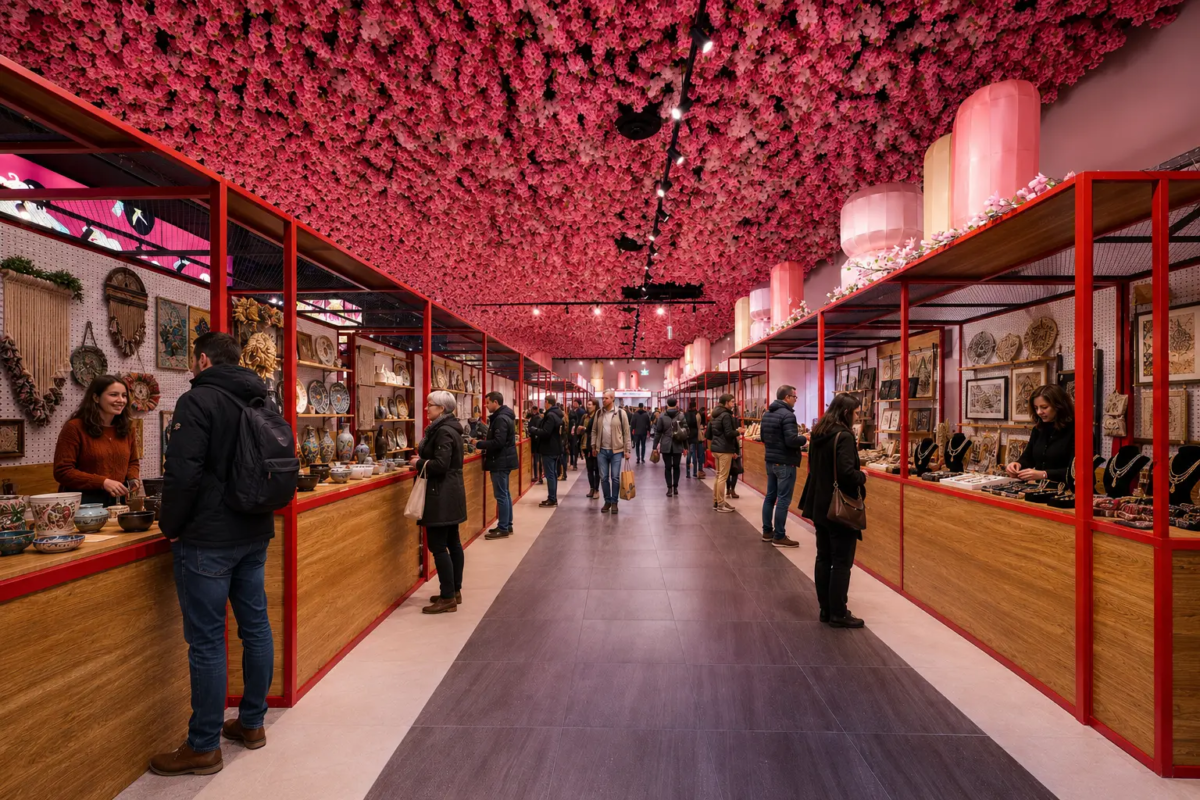
Testing the Concept at Tsawwassen Mills
The evolution also addresses one of the questions raised when Liu’s department store strategy was being developed. Retail strategist Carl Boutet met with Liu during that period and later told Retail Insider that he came away with the impression that Liu viewed large department store boxes almost as “mini malls,” divided into curated environments containing multiple brands and experiences.
Boutet saw potential in elements of the idea but questioned whether such an ambitious model had been sufficiently tested. “If you believe in the model, you need to demonstrate it first in your own malls,” he told Retail Insider earlier this year.
Central Walk is now beginning to accumulate that operating experience. TM Wander’s first location opened at Tsawwassen Mills, one of three British Columbia shopping centres owned by Central Walk, and Liu says it has attracted customers from different cities, cultural backgrounds and age groups. Commercial real estate, retail and design professionals have also visited to examine the format.
Central Walk also reports a measurable traffic increase. According to Liu, weekend traffic at Tsawwassen Mills has consistently been approximately 10 per cent higher than during comparable year-earlier periods since TM Wander opened.
A leasing package prepared for TM Wander provides another measure of activity, stating that the destination is attracting approximately 30,000 visitors per week. The company says it has a longer-term goal of reaching 50,000 weekly visitors as its tenant mix, programming and brand awareness develop.
Liu previously told Retail Insider that existing food court operators initially had concerns TM Wander could redistribute spending already occurring within the mall. Central Walk says the existing food court instead benefited as overall traffic increased. The operating history remains relatively short, but the company now has data from an active location as it begins talking to potential partners elsewhere in Canada.
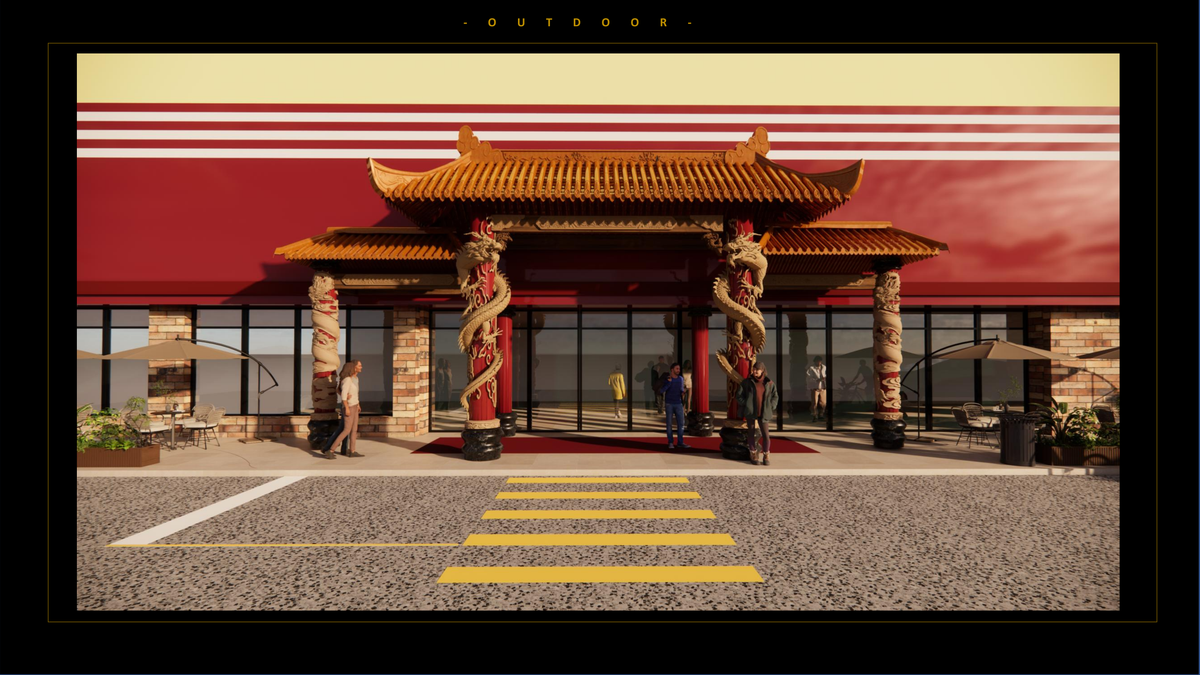
Woodgrove and Mayfair Become the Next Test
Central Walk is preparing to test whether TM Wander can be adapted to different properties and customer bases. A location is planned for Woodgrove Centre in Nanaimo as part of the redevelopment of approximately 144,000 square feet formerly occupied by Hudson’s Bay, where plans for the larger space also include an approximately 30,000-square-foot H Mart, a Family Entertainment Centre and other uses.
Another TM Wander location is planned for Mayfair Shopping Centre in Victoria, where Central Walk is redeveloping approximately 166,000 square feet of former Hudson’s Bay space. The two locations are not intended to be replicas of Tsawwassen.
Liu has said Woodgrove’s version will place greater emphasis on evening activity, while the Mayfair concept will be adapted to a younger demographic and Victoria’s university population. That ability to adjust the mix and programming to individual markets could become increasingly important as Central Walk begins working with properties it does not own.
TM Wander Opens to Other Landlords
Liu confirmed to Retail Insider that Central Walk is prepared to expand TM Wander beyond its own portfolio.
“We are absolutely open to expanding TM Wander beyond Central Walk-owned properties,” Liu said in written responses translated from Mandarin. “We are very interested in working with other Canadian developers, shopping centre owners and strategic partners.”
Central Walk is also presenting TM Wander as a model designed to travel. Its leasing material describes the Tsawwassen project as having established a framework for development, leasing, marketing and operations that can be adapted to different markets and property types.
Future locations would therefore be adapted to their individual markets and properties instead of following a single standardized format. The strategy substantially widens the expansion opportunity because Central Walk would not need to acquire a shopping centre to bring TM Wander into a new Canadian market.
It could work with an existing property owner through a conventional landlord-tenant relationship or participate more deeply in a redevelopment. Liu said Central Walk is particularly interested in large-format spaces in strong trade areas that require reactivation, including former department stores and Hudson’s Bay anchor spaces.
That brings the strategy back to some of the real estate Liu was considering in 2025, but with a different potential role for Central Walk. TM Wander does not need to occupy an entire former department store: the Tsawwassen location is approximately 25,000 square feet, while the Woodgrove and Mayfair plans demonstrate how the format can sit within a substantially larger redevelopment containing several complementary uses.
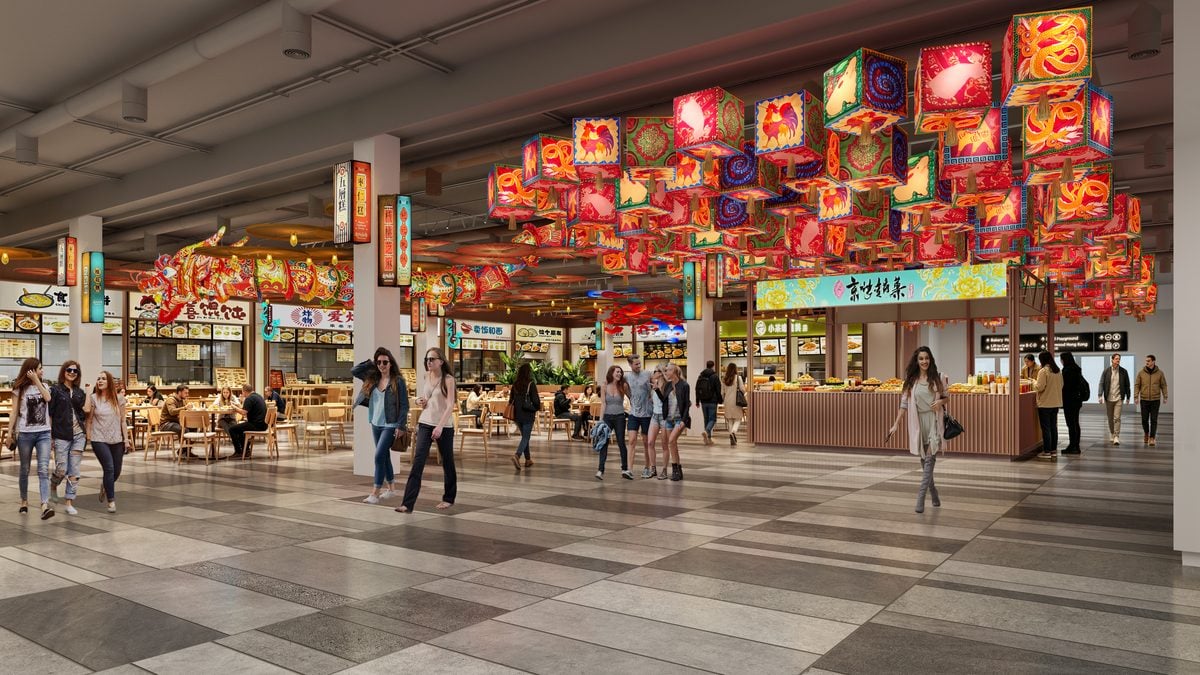
Former Department Store Spaces Present an Opportunity
The availability of former department store space has created a redevelopment challenge for shopping centre owners across Canada. Many of the boxes are substantially larger than the requirements of individual contemporary retailers, leaving landlords to consider subdivision or combinations of uses as they work to reactivate the space.
Central Walk is already following that approach at Woodgrove and Mayfair. TM Wander can form one part of a larger former anchor redevelopment alongside grocery, entertainment, recreation, restaurants and conventional retail.
That is where the connection to Liu’s earlier retail vision becomes particularly relevant. Her proposed department stores sought to assemble multiple activities inside a single large operation, while the emerging TM Wander strategy allows Central Walk to apply parts of that philosophy selectively, adapting the format to the building, market and other tenants involved in each project.
The strategy effectively separates Liu’s broader ideas about how consumers might use large retail environments from the requirement to operate a traditional department store, potentially making the model applicable to a wider range of properties and landlords.
Central Walk Open to Multiple Partnership Models
Central Walk is also leaving considerable flexibility around how those projects could be structured. Liu said a conventional lease is one possibility, but the company is prepared to consider joint development, project investment and other strategic partnerships depending on the property and opportunity.
That gives Central Walk several potential routes into shopping centres it does not own. In some cases, TM Wander could operate as a tenant, while larger redevelopment opportunities could involve a broader relationship between Central Walk and the property owner.
This represents a significant difference from the department store strategy Liu pursued in 2025. TM Wander can potentially expand one property and one partnership at a time without requiring Central Walk to secure a national portfolio of large anchor spaces at once.
Toronto and Eastern Canada on the Radar
That flexibility could eventually bring TM Wander to Ontario. Liu told Retail Insider that Eastern Canada represents an important potential market, with Toronto and the Greater Toronto Area of particular interest.
Central Walk has not announced a Toronto location, and no specific GTA shopping centre or redevelopment has been identified. Liu said the company is also not pursuing expansion according to a fixed location count, with finding the right property and partner taking priority over opening a predetermined number of locations.
Toronto has been part of Liu’s longer-term thinking for some time. Following TM Wander’s opening earlier this year, she told Retail Insider she hoped the format could eventually reach major Canadian markets including Vancouver, Toronto and Calgary. What is different now is that Central Walk has outlined a route into markets where it does not own shopping centres.
A More Flexible Path to Expansion
TM Wander remains at an early stage, with Tsawwassen Mills its only operating location. Woodgrove and Mayfair will provide the next tests of whether the format can be successfully adapted to different properties, markets and customer bases.
Central Walk nevertheless enters that next phase with an operating location, early traffic results, two additional projects in development and a willingness to work with other Canadian property owners. Its leasing material is already positioning TM Wander as adaptable to different markets and property types.
That gives Liu a different path for advancing some of the retail ideas she first discussed publicly in 2025. The proposed department stores envisioned large environments combining retail, food, entertainment, culture and social activity under a new national banner. TM Wander incorporates several of those elements in a smaller and more adaptable format that can operate alongside other anchors and uses.
The next question is whether that flexibility will translate into partnerships beyond Central Walk’s own portfolio. Toronto and the GTA are among the markets Liu wants to explore, while large-format vacancies and former department store spaces could provide opportunities elsewhere in Canada.
For TM Wander, national expansion may therefore look considerably different from the department store strategy Liu contemplated a year ago, advancing one property, one market and one partnership at a time.