

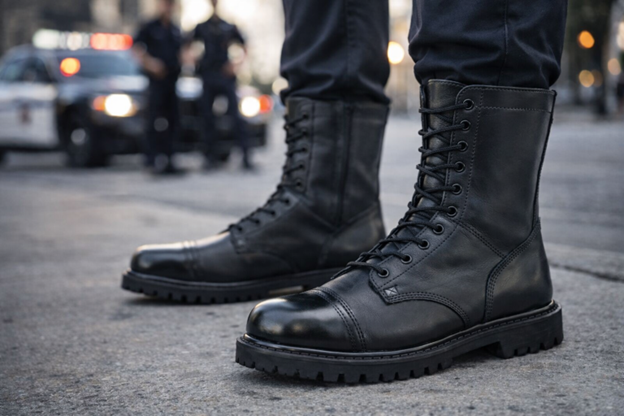
Choosing the right police boots directly impacts your safety, comfort, and performance during every shift. Your footwear affects how quickly you move, how long you can stay on your feet, and whether you end the day with sore joints or serious fatigue.
Police boots function as essential equipment, not just uniform items. The right pair supports your stability and mobility through long patrols, foot pursuits, and unpredictable situations.
This guide covers what matters most when selecting police shoes, trooper boots, and law enforcement boots for professional duty.
Match Footwear To Duty Environment
Your assignment determines what your boots need to handle. Patrol officers spend most of their shifts walking and standing on concrete. State troopers work along highways, with extended standing periods, exposure to vehicle traffic, and uneven road shoulders. Tactical and response units face rapid directional changes, rough terrain, and high-impact movement.
Prolonged standing and repetitive walking on hard surfaces increase your risk of foot, knee, hip, and lower back problems. Without proper cushioning and support, your police boots accelerate fatigue and raise injury risk. Consider the surfaces you walk on most, how long your shifts run, and how much sudden movement your role requires.
Prioritize Proper Fit and Ergonomic Support
Fit matters more than any other feature in police footwear. Poorly fitted boots cause blisters, nerve compression, joint strain, and reduced endurance. Your tactical boots should accommodate your foot width, arch height, and duty sock thickness without creating pressure points.
Lower extremity discomfort directly reduces your performance and increase injury rates during long shifts. Look for contoured footbeds, solid arch support, and shock-absorbing midsoles that maintain alignment and fight fatigue. Police shoes should allow your toes to spread naturally while keeping your heel locked in place. For officers dealing with plantar fasciitis, metatarsalgia, or chronic heel pain, consider integrating orthotic insoles for foot pain that are custom-molded to your arches. Purpose-built orthotics maintain neutral alignment, distribute pressure, and reduce shock on concrete, helping extend on-shift endurance while minimizing hotspots, numbness, and post-shift knee or back soreness. Internal foot movement creates friction and accelerates discomfort as your shift wears on.
Evaluate Materials And Construction
Material choice affects how long your boots last, how well they breathe, and how much they weigh. Full-grain leather provides excellent abrasion resistance and structure. Ballistic nylon improves airflow and cuts overall weight. Many modern police boots combine both to balance protection and comfort.
Construction method determines service life. Goodyear-welted police boots can be resoled, extending their usable lifespan significantly. Cemented construction weighs less but typically doesn’t last as long. If you’re logging serious miles on patrol, resoleable boots reduce long-term replacement costs.
Check Traction And Outsole Performance
Slip resistance keeps you safe during pursuits and rapid response situations. our police boots must grip on wet pavement, oil-exposed surfaces, and uneven ground. Rubber outsoles with multidirectional tread patterns improvetraction during sudden stops and quick direction changes.
Slips and falls remain a leading cause of workplace injury in law enforcement. Slip-resistant footwear significantly reduces these incidents. The outsole should balance grip with flexibility. Overly rigid soles reduce your responsiveness and excessively soft soles increase fatigue on hard surfaces.
Consider Ankle Support And Stability
State trooper boots and tactical law enforcement boots typically require increased ankle support. Higher shafts and structured collars help reduce lateral movement and lower sprain risk during pursuits or on uneven terrain. Structured ankle support improves your balance and reduces lower limb strain during physically demanding situations.
Effective stability extends beyond shaft height. Heel counters, midfoot shanks, and secure lacing systems all contribute to controlled movement without restricting mobility. Ankle padding should provide contact without pressure when you walk and run.
A well-engineered ankle system also improves proprioception, helping you maintain awareness of foot placement during rapid movement. This balance between support and flexibility maintains your speed, control, and injury prevention during extended shifts.
Manage Footwear Weight to Reduce Fatigue
Boot weight directly affects how quickly you tire. Heavier boots increaseenergy expenditure and accelerate fatigue during prolonged walking. Lighter footwear reduces stress on your joints and muscles over long shifts.
Lightweight police shoes work well for urban patrol or administrative duties. Trooper boots and tactical boots may need added protection, but should still use modern materials such as EVA midsoles to control overall weight. The goal is finding an efficient strength-to-weight ratio rather than maximum protection at any cost.
Address Weather And Climate Conditions
You work in all weather conditions, so your police boots need appropriate protection. Look for water resistance through treated leather, sealed seams, or waterproof membranes. Moisture control prevents blistering and skin breakdown during long shifts.
Cold climate agencies need insulated police boots to protect circulation and reduce cold-related injuries. Hot environments benefit from breathable linings and moisture-wicking materials.
Improper footwear for climate conditions increases the risk of skin conditions and circulation problems.
Ensure Safety Features And Compliance
Certain roles require additional protective features. Composite or steel toe caps provide impact resistance. Electrical hazard-rated outsoles protect against live current exposure.
Your footwear specifications should align with agency safety policies and applicable occupational standards to reduce injury risk and liability exposure.
Evaluate Durability And Lifecycle Cost
The purchase price doesn’t tell the whole story. Reinforced stitching, durable uppers, and high-quality outsoles extend service life. Tracking wear patterns helps identify failure points and improve future boot purchases.
Organizations prioritizing durability over low upfront cost reduce long-term operational expenses.
Final Considerations For Police Boot Selection
Choosing the best police boots requires evaluating your duty environment, fit needs, materials, traction, support, and safety features. Your police shoes, trooper boots, and law enforcement boots must perform as occupational equipment under demanding conditions.
Agencies that apply systematic selection criteria and incorporate officer feedback improve comfort, reduce injury risk, and enhance operational readiness. Proper footwear selection supports both immediate performance and long-term health.

