Home Blog Page 1029

Lightspeed Announces Acquisition of Chronogolf Amid Tremendous Annual Growth

CHRONOGOLF TEAM WITH LIGHTSPEED CEO DAX DASILVA (FAR RIGHT), LIGHTSPEED PRESIDENT JP CHAUVET (FAR LEFT) AND LIGHTSPEED CFO BRANDON NUSSEY (BLACK SHIRT, FRONT OF PHOTO) IN MONTREAL. PHOTO: LIGHTSPEED

Montreal-based Lightspeed, the powerful cloud point-of-sale system for independent retailers and restaurants, announced last week that it has acquired innovative golf course facilities management company Chronogolf. Lightspeed also just announced its year-end results, which saw 36% annual growth after a highly successful initial public offering in the spring of this year. 

Montreal-based Chronogolf was an existing Lightspeed partner prior to the recent acquisition. Chronogolf is an innovative cloud-based software offering that facilitates management for golf course operators around the world. Chronogolf saw tremendous success by using the Lightspeed platform for both the retail and restaurant facets of its business software, which it combined with its booking and management solutions.

Moving forward post-acquisition, Lightspeed’s inventory-rich, cloud-based software will help new and existing customers in the golf industry drive business growth and maximize efficiency. Complementing Lightspeed’s existing product offerings, such as Lightspeed Loyalty and Lightspeed Payments, the Chronogolf software will offer customers a fully-integrated point-of-sale and golf course management solution. This will provide the opportunity for these businesses to streamline their operations on one system, from pro shop to restaurant to tee sheet.

“Since Lightspeed’s inception, our focus has been to provide technology to small and medium-sized businesses in verticals with complex operations, so they can work smarter, make data-driven decisions, and create the best possible experience for their customers. Running a golf course combines retail, restaurant, and ecommerce—areas that are core to our business,” says Dax Dasilva, Founder and CEO of Lightspeed. “Expanding within the golf vertical is just one example of our commitment to these complex SMBs around the world.”

IMAGE/CHRONOGOLF/LIGHTSPEED

As part of the acquisition, the Chronogolf team, including Co-CEO’s JD St-Martin and Guillaume Jacquet, will join Lightspeed.

Key Features of Chronogolf by Lightspeed include: 

  • Run Your Pro Shop from Anywhere: Users can track customer experience across the facility with seamless POS integration, connect to payment terminals, cash drawers, printers and terminals, and access sales and inventory data from anywhere.

  • Boost Restaurant or Snack Bar Sales: Users can turn tables faster and serve guests better with the cloud-based restaurant POS that is built to handle everything from clubhouse drinks to fine dining. 

  • Increased Potential Sales Opportunities: Users can follow customers from green to restaurant through seamless POS implementation, customize menus and floor plans, improve communication between front and back-of-house and boost table turnover by taking orders and payments from any location.

  • Custom Integrations Powered by Lightspeed: Users can take a pro shop online by syncing the POS with Lightspeed eCom, process payments and end-of-day settlements with Lightspeed Payments, reward members and keep customers coming back with Lightspeed Loyalty, pull insightful reports to improve the business with Lightspeed Analytics, and automatically post sales data and reduce errors with Lightspeed Accounting.

  • Tee Sheet: Chronogolf by Lightspeed simplifies schedules with a user-friendly tee sheet, while being able to create unlimited categories, book and reorganize tee times instantly. 

Montreal-based Lightspeed is a cloud-based ecommerce platform that powers small and medium-sized businesses in over 100 countries around the world. It’s a smart, scalable, and dependable point of sale system that offers an all-in-one solution that helps restaurants and retailers sell across channels, manage operations, engage with consumers, accept payments, and grow their business. 

LIGHTSPEED AND CHRONOGOLF EXECUTIVE TEAM. LEFT-TO-RIGHT IN PHOTO: BRANDON NUSSEY, LIGHTSPEED CFO; DAX DASILVA, LIGHTSPEED FOUNDER & CEO; JD ST-MARTIN, CHRONOGOLF CO-CEO; GUILLAUME JACQUET, CHRONOGOLF CO-CEO; AND JP CHAUVET, LIGHTSPEED PRESIDENT. PHOTO: LIGHTSPEED

In March of this year, Lightspeed became one of the top 10 technology initial public offerings on the Toronto Stock Exchange (TSX: LSPD). Lightspeed has now announced its fiscal fourth quarter and full fiscal year 2019 financial results ending March 31, which are overwhelmingly positive. 

Highlights include a full fiscal year revenue growth of 36% to $77.5-million, and a gross transaction volume which grew by $4-billion to a total of $14.5-billion. 

“It’s been a great year for Lightspeed and for our customers. Our revenue grew 36% for the full fiscal year, and we completed our initial public offering. We also added two significant new products to our overall offering. We launched Lightspeed Loyalty to both our Retail and Restaurant clients in North America and Europe, and we made Lightspeed Payments generally available to our US Retail client base in late January. All of this creates momentum toward our main goal, which is to help complex SMBs thrive in a world with rapidly changing consumer expectations,” said Mr. Dasilva. 

LIGHTSPEED CEO AND FOUNDER DAX DASILVA PUSHING THE BUTTON TO COMMENCE TRADING ON THE MORNING OF MARCH 8, 2019. PHOTO: LIGHTSPEED

Lightspeed’s full fiscal financial highlights include:

  • Total revenue of $77.5 million, an increase of $21.3 million or 36%, 

  • Recurring Software and Payments revenue of $68.7 million, marking an increase of 34%,

  • Gross profit growth of 36% to $53.9 million as compared to $39.6 million in 2018, and

  • A net loss of $183.5 million as compared to a net loss of $96.2 million. (Net loss was impacted by a non‑cash charge of $191.2 million, offset by an associated $30.8 million deferred tax benefit, each related to our preferred shares which converted into common shares prior to Lightspeed’s IPO). 

Lightspeed summarized its 2019 operational highlights to include the following points: 

  • Customer locations grew by 20% to more than 49,000 as of March 31, 2019,

  • Positive net dollar revenue retention (which Lightspeed says further reinforced the stickiness of the Lightspeed platform),

  • A record number of new customers signed in the quarter and fiscal year was driven by strong customer momentum from complex Retailers and Restaurateurs in North America and around the world. 

  • Successful launch of Lightspeed Loyalty to the Company’s retail and restaurant customer base in North America and Europe. Included strong early adoption with more than 1,500 customer locations using Lightspeed Loyalty.

  • Strong initial adoption of Lightspeed Payments after launch on January 30, 2019 to U.S. Retail customers with demand coming from both new and existing clients of Lightspeed.

  • Approximately one third of unique customers have now purchased more than one Lightspeed module. 

Looking forward to 2020 and beyond, Lightspeed anticipates revenue, cash flows used in operating activities and Adjusted EBITDA to be in the following ranges:

First Quarter 2020

  • Revenue of $23.0 – $23.5 million

  • Cash flows used in operating activities of approximately $6 million

  • Adjusted EBITDA in the range of ($6 million) – ($7 million) 

Full Year 2020

  • Revenue of $107 – $110 million, representing annual growth of 38-42%

  • Cash flows used in operating activities of $7.5 million – $9 million

  • Adjusted EBITDA in the range of ($16 million) – ($18 million)

We’ll continue to provide updates on Lightspeed as it continues on its remarkable growth trajectory while catering to independent businesses in Canada as well as worldwide. 

*Partner content. To work with Retail Insider, contact: craig@retail-insider.com
Canadian Retail Sales Growth Struggles Forward: Expert

The latest data from Statistics Canada for March 2019 show low retail sales growth, but also modest improvement over even lower growth of prior months. Total Canadian retail sales were up 1.7% year-over-year in Q1 2019 on a not seasonally adjusted basis. While this was the weakest first quarter in 4 years, it still edged ahead of Q4 2018 when growth was a mere 1.3%. But even if things are looking up, there’s still a long way to go. 

Per the above chart, the 3 month trend (orange line) is at a low point, which in turn is driving down the underlying 12 month trend (green line). And things are still getting softer. Total retail sales increased only 0.4% year-over-year for the 3 months ending January 2019, the weakest consecutive 3 month performance in 6 years. 

Food and Drug

Food & Drug appears to be the best performer of the major retail sectors, which is not often the case. In Q1 2019, retail sales gained 3.3% year-over-year, almost double that of overall total retail. The 3 month trend (orange line in the chart above) is running still slightly ahead of the underlying 12 month trend (green line). 

Supermarkets & other grocery stores had a good Q1 2019, with retail sales increasing 4.6% year over-year. This represents a notable improvement compared to a 2.4% gain for all of 2018. 

Health & personal care stores are the next largest piece of the Food & Drug sector, and their retail sales gained a more modest 2.2% in Q1 2019. While not a big increase, this was about on par with their average performance of the past 12 months. 

After above average sales gains in previous months, convenience stores and specialty food stores seem to have hit a speed bump and have now cooled off. This might only be a temporary setback … or not. 

Store Merchandise

Retail sales in the Store Merchandise sector were up 2.1% year-over-year in Q1 2019. This is relatively weak by historical standards, but also a considerable improvement over the mere 1.0% gain recorded for the preceding quarter, Q4 2018. 

The 3 month trend (orange line in the chart) appears to be starting a comeback after a near-death experience. The underlying 12 month trend (green line) is still weak however, and is at the lowest point that it’s been in since at least 2013. 

A number of retailer segments had a poor Q1 2019, including electronics & appliance stores (retail sales down 6.5% year-over-year), sporting goods, hobby, book & music stores (down 2.2%), and home furnishings stores (down 0.4%). Retail sales at shoe stores were up, but only by a scant 0.3%. 

On the other side of the ledger in Store Merchandise, there were few strong gains in Q1 2019. Sales at miscellaneous store retailers were up 8.5% year-over-year, but this was mostly because of the addition of the new cannabis stores segment. The next best performance was at clothing stores, with retail sales up 4.4% in Q1 2019. 

Note that Statistics Canada is now suppressing the breakdown of general merchandise stores for confidentiality reasons. The figures in the “By The Numbers” table below are estimates based on previous trends. 

Automotive & Related

Automotive & Related had a rough year in 2018 and much of this has continued into 2019. Total sector retail sales barely squeaked out an increase in Q1 2019, rising by a mere 0.2% year-over-year. But even this was better than the 0.2% sales decline suffered in Q4 2018. 

Retail sales at new car dealers however are showing some signs of life. In Q1 2019, their sales were up 2.4% year-over-year, after having declined 0.6% for the year 2018. The much smaller used car dealers segment had the highest gain in the sector, with retail sales up 11.5% in the first quarter. 

Gasoline station retail sales are still holding back the Automotive & Related sector, and indeed Canadian retail overall. Sales were down 6.5% in Q1 2019 due to lower pump prices. 

By The Numbers

Special Note: Statistics Canada revised historical data with the February 2019 release. Unadjusted monthly data were revised back to January 2018, while seasonally adjusted data were revised back to January 2015. Those keeping score should update their files. The analysis in this report is always based on unadjusted data. 

For definitions of store types, see Statistics Canada NAICS

Canadian E-Commerce Sales

StatsCan started providing ecommerce retail sales data in January 2016. While the amount of data is limited, some trends appear to be emerging. Here are some results. 

Overall, e-commerce represented about 3.3% of total Canadian retail sales in Q1 2019, including both pure play operators as well as the online operations of brick & mortar stores. Canadian consumers however also buy online from foreign websites which is not captured in these numbers. 

Canadian e-commerce sales were up 19.3% year-over-year in the first quarter of 2019. This was significantly higher than for location based retail which gained 1.7%. 

Note that location based retail is the same as that in the preceding large “By The Numbers” table. It’s what’s normally reported as Canadian retail sales. Except that it isn’t. Location based retail excludes another section called Non-Store Retailers (NAICS code 454), which includes electronic shopping and mail-order houses, which in turn is where (mostly) pure play e-commerce businesses are. For the 12 months ending March 2019, electronic shopping and mail-order houses had an estimated $11.2 billion in e-commerce sales. 

But that’s not the only source of e-commerce, as (mostly) bricks & mortar location-based retailers also sell online. For the 12 months ending March 2019, this group had an estimated $7.6 billion in e-commerce sales. With electronic shopping and mail-order houses, there’s a grand total of $18.8 billion in e-commerce sales by Canadian operators over the year. Note that this does not include foreign e-commerce purchases made by Canadian consumers, but it does include e-commerce purchases made by foreigners at Canadian businesses. 

For electronic shopping and mail-order houses, an estimated 85.3% of their sales are allocated to e-commerce. For (mostly) bricks & mortar retailers, it can be estimated that just 1.2% of their total sales are attributable to e-commerce. 

In the final section of the above table, (mostly) pure play operators (namely, under electronic shopping and mail-order houses) generated an estimated 59.5% of all e-commerce sales in Canada, while (mostly) bricks & mortar location-based retailers’ share of e-commerce is 40.5%. 

For more explanation on the e-commerce numbers, see Statistics Canada: Retail 

This analysis is updated monthly as new numbers are published by Statistics Canada. If you would like notification of when an update becomes available (and you’ve read this far), please connect with Ed Strapagiel on LinkedIn

The New Kid in Town: An Analysis of the Emerging Canadian Cannabis Market, Part 3

exc-5cf0023dd135c900019dacbd

The following is the third and final segment in a three-part analytical series of the Canadian cannabis market by retail expert, Bruce Winder. In this section, Winder discusses the opportunities in the cannabis market and concludes this analytical series.

Opportunities

Could be a very, very large market – I would suggest that almost nobody really knows how big the current legal and illegal cannabis markets are. Why? Because it has been underground for so long and it is changing. According to an article in The Financial Post in February by Vanmala Subramaniam, Brightfield, a Chicago based weed research firm pegs the Canadian cannabis industry to be $ 5 BN by 2021.  This is in stark contrast to the $ 8 BN the firm previously estimated. The reality is that it will take a few business cycles to get a decent feel for the market and all of the sub-markets that are in play such as edibles, vapes, dried flower, lotions, cosmetics and more. Having said that, I think it is fair to say that the market will grow quickly as the taboo of using cannabis wears off and more nations make it legal.  

The Canadian CBD market is predicted to reach $ 1 BN over the next 5 years. Not just in Canada, but the CBD market in places such as the United Kingdom is also quickly growing, with companies like Blessed CBD proving popular amongst UK consumers.

Weed is quickly becoming mainstream in Canada and the US. The Associated Press reported that in the US retail sales of cannabis products jumped to US $ 10.5 BN, up 300% from 2017( Veiga)! According to Piper Jaffray & Co. analyst Michael Lavery the US weed market could be as large as $ 35 BN to $ 50 BN, about 10 times that of Canada says Armina Ligaya of The Canadian Press. That’s a lot of gunja and gunja related product !! As reported in Bloomberg, Barneys New York launched high end weed accessories in a California store including a $ 1,100 (US) glass bong and a $ 1,400 (US) weed grinder (Pettersson, 2019).  Also, as reported in The Financial Post by Emma Spears in March, Neiman Marcus started selling CBD infused cosmetics at five stores and Sephora has been experimenting with hemp oriented products.

An article by Chris Kudialis in FPs Cannabis Post in March of this year discussed how the two largest weed stores in the world are in Las Vegas. Planet 13 and NuWu Cannabis Marketplace are the poster children for the commercialization opportunities in America. 420, the heralded pot celebration day has received even more mainstream support in the US this year, as reported by The Associated Press. Big brands such as Lyft, Totino’s and Ben & Jerry’s have used the day to connect with users (Veiga, 2019).

Big beverage and big tobacco are jumping in – You know when a new business is hot when big brands start to give it attention. Numerous big brands have ponied up billions to get a stake in or begin to develop an offering in the cannabis industry. As reported in The Wall Street Journal, folks like Constellation Brands, Anheuser-Busch and Molson Coors have either invested or are kicking tires in the industry (Menton, 2019).  As reported in The Globe and Mail, tobacco giant Altria Group Inc. invested $ 2.4 BN in Cronos Group Inc.(Nicholson, 2019). One of the big problems with pot infused beverages is the current government regulation that specifies that these drinks cannot be produced in the same factory as regular drinks. This is a huge cost problem as makers need to build separate facilities. This hurts balance sheets and bottom lines.

Gross margins can be sweet if leaf is grown correctly – from what I have read the cost to produce a gram of pot can be quite low, depending on the method and scenario. As discussed, outdoor weed can be grown for 3 cents to 20 cents per gram. Even indoor grown weed can cost 90 cents to $ 2 per gram. Considering the retail price, even for illegal weed, is hovering around to $ 6.28 per gram there is money to be made in this industry for sure! Even with the many mouths to feed as described above, gross margins are favourable if managed with care. As Canadian LPs gain more experience growing in larger scale look for costs to decrease further. Having said that, if one believes that government regulation will loosen over time and permit more brand advertising and promotional activity look for selling, general and administrative costs to go up. This will negatively impact earnings before interest, taxes, depreciation and amortization (EBITDA) % but hopefully drive sales and earnings.

Edibles, vapes and other products could be bigger than flower – my understanding is that the dried flower market, while large will be eclipsed by the market for other cannabis derivative products such as edibles, vapes, lotions, creams, cosmetics, infused beverages and the like. It is important to think about the market potential for cannabis from both a THC (the ingredient that gets you high) and CBD (the ingredient that takes away pain and relaxes users). Both ingredients can be mixed in product to customize the desired outcome for users. Cannabis and specifically CBD has become mainstream and is now recognized as a legitimate medication.

USA may legalize federally – the billion dollar question for everyone right now is if and when the US will make cannabis legal at the federal level. Numerous states have already made pot legal and have spawned legitimate new industries. According to a March article from Business Insider (Berke, Gould, 2019) recreational marijuana is now legal in 10 states and medical marijuana is now legal in 33. These numbers are increasing constantly. Will President Trump make cannabis legal? If so, will he alienate some conservatives such as evangelicals? Republicans are all for commerce but the stigma around pot may be too much for them.

Certainly, one would assume that if the Democrats win The White House in 2020, the federal legalization of cannabis will soon follow. Will President Trump win a second term? There is much uncertainty in this important juncture in American pot regulation. As described in a November 2018 article from The Motley Fool (Williams, 2018) federal legalization has numerous impacts for stakeholders beyond the obvious market expansion benefits. Major US stock markets such as the NYSE and Nasdaq won’t allow weed companies to list on them if they sell in the US. Therefore the liquidity and thus valuation of Canadian and US providers stocks may be hampered.  

Canadian LPs have found a loophole to this by avoiding US sales (for the short term anyway) to gain the exposure and liquidity that these prestigious exchanges offer. Also, as reported in the Wall Street Journal, big American firms such as Constellation and Scotts Miracle-Grow are pressuring Washington to allow for weed companies to use banks (Ackerman, 2019). Canadian Cannabis firms are at the starting line ready to sprint once weed becomes legal south of the border. Canopy already has an option to acquire a US firm as discussed previously.

Other G7 countries may legalize – Canada has taken on the role of guinea pig for the rest of the developed world with the full on national legalization of grass.  It is reasonable to assume depending on how things work out for us and depending on which parties get elected we could see the UK, Germany, France and other G7 countries jump on the weed train. Bloomberg reported in March how investment bankers are getting ready to seize Europe’s budding (my apologies again) market for cannabis (Unsted, 2019). The Canadian Press reported in April that Canopy Growth bought a Spanish licensed producer Cafina.

Brands are still jockeying for supremacy – This is the biggest opportunity for many growers. We have yet to see a Canadian brand jump out ahead as the de facto national brand. Sure there is awareness for some of the bigger names and for sure regionally there would be some solid name recognition. However, due to tight regulations on marketing and advertising the industry still feels like a dogs breakfast (old retail Jedi term we used to describe a store planogram with way too many brands and packages). Once Canada loosens up these constraints (if they do), real brand building will occur and you will probably see aided and unaided brand awareness increase significantly over time. The industry may still feel fragmented, sort of like the craft beer industry but with so much money to burn from investors, don’t be surprised to see marketing expense go through the roof from big valuation LPs.

Further consolidation a for sure – this has already started and boy is it going to accelerate. There are too many players and only the strong will survive long term. Once some of the earnings misses start to pile up and valuations decrease, you will see weak players becoming targets for better financed rivals. Also, as discussed above, additional big beverage or big consumer will buy more weed firms to utilize built up cash and get some exposure in this relatively new business. These investments will burn a hole in the jeans of these young LPs and they will go on a spending spree (like Canopy Growth is currently). Big fish will swallow smaller fish to get brands, scale, talent, country specific growing facilities and the like. An arms race will emerge between the top few to become the next Nestle, Johnson & Johnson or Proctor & Gamble of the weed world.

Government regulations ease up – over time governments will loosen up the restrictive Canadian regulations on all things cannabis. Not from a usage standpoint (must protect minors) but more from an advertising and marketing perspective. Governments will avoid any deregulation that’s puts youths at risk or society at risk through obvious abuse of the substance(s). It won’t happen yet though. We will need to live through the nightmare that will be edibles legalization in October 2019.  In a couple of years look for strong, well-funded lobbyists organized by the newly formed Cannabis Beverage Producers Alliance to sway governments with among other things the promise of more tax revenue from a larger, faster growing market and jobs growth as the industry grows.

Nice new industry for Canada (we need it!) – finally, being a Toronto boy, I can’t help but feel proud that we have a new legal industry to strengthen our economy which is too heavily weighted to energy and resources. It is always nice to diversify and be the first at something so topical in the world. I just don’t know if we can keep our pole position over time. Oh well. Enjoy the high while it’s here I suppose.

Conclusion

The Canadian cannabis industry is sure to settle down over the next five to ten years once some of the issues discussed above have been worked through. Like other more mature industries such as alcohol, food and other consumer packaged goods (CPG) sectors, consolidation will eventually lead to a small number of dominant players who control the industry in an oligopolistic fashion. Governments will be tamed into lowering regulations through effective and well-funded lobbyists and power brands will take control much like other arenas. The secret sauce on growing and harvesting in large scale will be found and shared through acquisition, consolidation and employee musical chairs. Until then, enjoy the buzz of the excitement of an industry in its infancy and don’t invest any money in the industry that you are not prepared to lose.

Walmart Canada Launches State-of-the-Art Urban Supercentre Concept Store [Photos]

Retail giant Walmart Canada has unveiled what it calls its new Urban Supercentre Concept store in Toronto which integrates ecommerce, third-party licensees, state-of-the-art technology, and an updated assortment into a new bricks-and-mortar design and layout for urban markets.

The retailer’s Toronto-Stockyards location will be home for the new prototype store which is introducing “Fast Lane” – new technology that will allow customers to use the My Walmart app on their mobile device to shop and checkout quickly and seamlessly.

“With our new Urban Supercentre Concept, we’re continuing to position ourselves as a leader in store design and retail innovation,” said Lee Tappenden, president and CEO of Walmart Canada, in a news release. “We’re introducing new partners, testing new and innovative technologies, integrating ecommerce with bricks and mortar and updating our assortment to improve the customer shopping experience and to appeal more to young families in urban markets.

MYWALMART APP. PHOTO: WALMART CANADA

“Our new concept is a symbol of what’s to come in retail and demonstrates our vision for helping Canadians save money and live better, now and in the future.”

The company said a new licensee strategy reflects emerging trends and evolving customer needs, adding new partners like Freshii, MINISO, The UPS Store and The Party Shop. Also new associate positions have been added to focus on customer service, including online grocery and general merchandise pickup.

The “Fast Lane” checkout technology allows customers to scan products as they shop. Store associates – including new full- and part-time associates – work alongside state-of-the-art technology to help make shopping as easy and convenient as possible for customers, said the retailer.

A second Urban Supercentre Concept will launch in Thornhill, in Vaughan, Ontario, next year and best practices from these two stores will be used in future store renovations.

Walmart Stockyards, which first opened in January 2005, has about 300 full and part-time staff in 139,000 square feet of space. It is one of 135 Supercentres in Ontario.

LEE TAPPENDEN, PRESIDENT AND CEO OF WALMART CANADA. PHOTO: WALMART

Paula Bonner, Senior Vice President, Format Development, Walmart Canada, said the company has been remodelling a number of its stores over the last couple of years, spending $200 million just this year and over $1 billion over the last five years.

“This is a continuation of that learning where we’ve been focused a lot on our suburban and more rural stores and we really wanted to look at our urban stores thinking about our young millennial families and so we thought we needed to think about the customer offer for that customer and that is what this concept is all about,” she said. “It’s thinking about what is relevant for young families, young moms, today and what is the assortment they require, what is the experience they require. 

“When you look at our fleet of stores, and Stockyards where we are today in Toronto is right in the heart of that urban millennial family and obviously conveniently close to our store support centre which is always important when you’re looking at doing a prototype like this.”

Features of the new Urban Supercentre Concept at Stockyards include:

  • With the My Walmart App customers scan items and download digital coupons on the go and store-specific deals for additional savings. The store also offers free Wi-Fi and phone chargers. When My Walmart App users are ready to check out, they enter the “Fast Lane”, scan the barcode on their order, have the order charged to their credit card on file and show the receipt on their phone to the “Fast Lane” associate;

  • New concept stores will offer customers an array of new licensee concepts based on Walmart’s evolving licensee strategy. At the Stockyards Walmart, licensee partnerships include Freshii, the Party Shop, The UPS store, MINISO, Naoki Sushi and a newly-renovated McDonald’s;

  • A dedicated Walmart.ca section, where customers can see and shop for extended aisle products and speak with expert associates who can answer questions and assist with online orders. This area will also be used to host pop-up shops for online vendors. The new prototype also features expanded and improved pickup areas for added customer convenience both inside and outside the store;

  • A community hub which is a seating area where customers can eat meals, sit down with friends and family and check out a community board featuring local news, activities and events;

  • The grocery section has been renamed Fresh Market and carries top quality fruits and vegetables, including organics as well as 100 per cent Canadian beef, chicken, pork and seafood. The grocery department has been redesigned to include more theatre lighting and wood panel wall treatment for a market look and feel;

  • Two dedicated nursing rooms, a redesigned toy section and the company’s largest and only full-service Party Shop;

  • Several innovations from previous Walmart Canada prototypes will be integrated into the Urban Supercentre Concept, including improvements to product displays, signage and floor plans; and

  • The staff lounge has been updated to include sofas for lounging, bar top tables, and charging stations.The Thornhill location, which will be the second with this new concept, has the same target demographic.

“As we’re remodelling our chain what we’re doing is really testing and learning various concepts,” said Bonner, adding that the company does not have a number of how many stores will eventually adopt the new Urban Supercentre Concept.

Alykhan Kanji, Vice President, Format Development, said the company did research through its customers asking them what would enable them to have a better shopping experience.

“They gave a lot of their feedback and that has been incorporated into the design itself,” he said.

Canadian Fashion Retailer ADDITION ELLE Launches New Store Concept Amid Major Strategy Shift [Photos]

exc-5ceda813e5e5f03cd60bb5f7

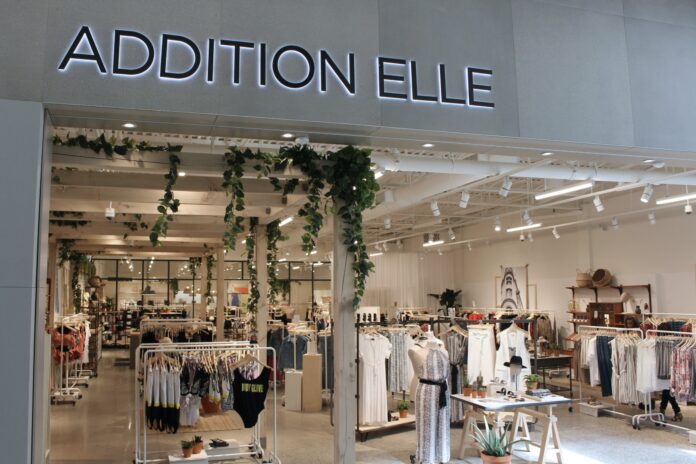
Canadian fashion retailer ADDITION ELLE has launched a new re-imagined flagship store at the brand’s Carrefour Laval location in Montreal.

And Jonathon Fitzgerald, the retailer’s President, said there are plans to replicate the concept throughout many of the company’s stores nationwide.

“We’ve given the brand and the Carrefour Laval store a modern upgrade,” said Fitzgerald, Group President at ADDITION ELLE and Penningtons which are both owned by Reitmans (Canada) Limited.

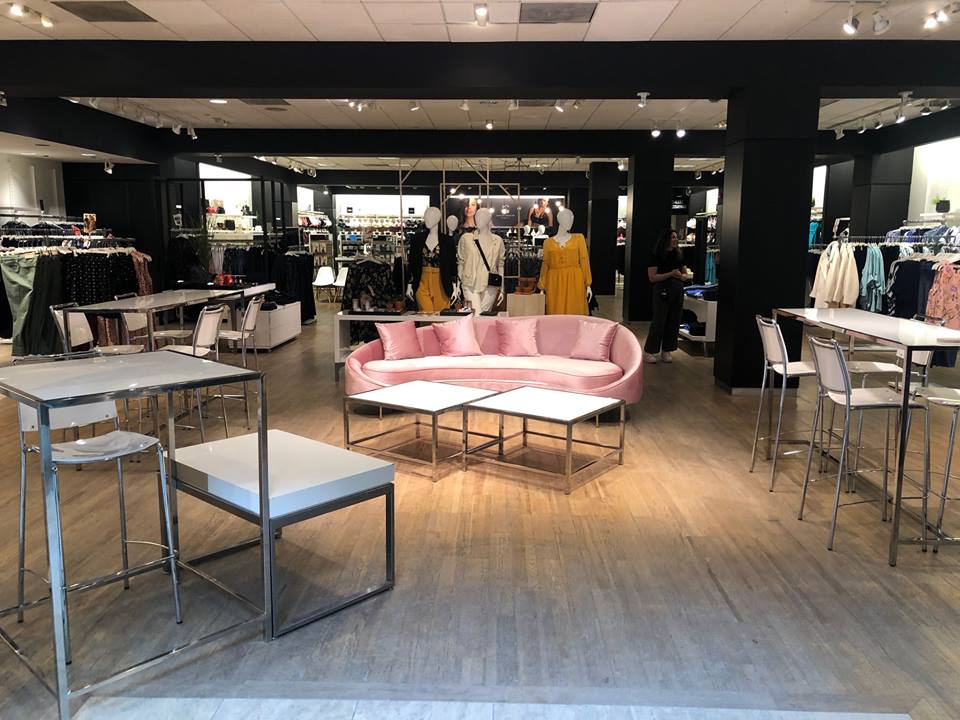
“Our goal is to create a store that is inviting and beautiful, from the product selection through to the architecture. The floor is a mix of natural wood and concrete, we used handmade cement tiling on the wall and an abundance of plants to give the space warmth and life. We used local artisans, workshops and mills to create the store as well as reclaimed materials for an authentic atelier feel. We have an area dedicated to services such as reservations made online for a personal stylist or bra fittings, pick up of online orders and returns.”

ADDITION ELLE’S NEW CARREFOUR LAVAL FLAGSHIP PHOTO: ADDITION ELLE

The newly redesigned Carrefour Laval store will be the first of its kind for ADDITION ELLE, which has 80 stores in Canada. Penningtons has 115 stores.

Fitzgerald said the store demonstrates the company’s new strategy and its new direction for stores.

“It’s to create this environment for our customers to enjoy. We have three real purposes for the store. It’s a showroom for our lifestyle products . . . We really are a one-stop shop for everything she needs including exclusive brand partnerships that we do,” said Fitzgerald.

“It’s also a community hub. So we run ADDITION ELLE live events which are every month and we invite local artisans, entrepreneurs to come and do events with us. So we’ve had female entrepreneurs who have created a chocolate brand, we’ve had yoga and meditation classes, we’ve had essential oil. It’s around wellness and the lifestyle basically. And it just brings a sense of purpose, brings a community and brings people together in our store because we want them to spend time with our brand. And this gives us a chance to talk to them about other things in their lives as opposed to just trying to sell product.

“The third part of the store is essentially a bureau to post. It’s where she picks up her online parcels . . . It’s where she can do returns, she can try everything on. So really it’s the connection of our omni-channel experience. It brings online and offline together into the store.”

Fitzgerald said the company will be looking at how it will be expanding the concept of the Montreal store to more and more people across the country in both ADDITION ELLE and Penningtons stores.

“We’ll be looking at how we evolve each of the stores because it’s a very specific store to Montreal. We’ve used a lot of local artisanal producers to create things within the store. From the wood we’ve used on the cash desk to reclaimed lamps to the metal glass wall we built in there, all are local Montreal artisans. They suit the style of Montreal,” said Fitzgerald.

“We don’t want to do an identical roll out across the estate. We want to make sure that each store is a local experience for the customers . . . The idea of the community connection and bringing omni-channel into the store is something that is key to all retail experiences and we have a great and loyal Penningtons customer that we would of course connect in this way too.”

As far as additional stores being launched in Canada, Fitzgerald said the company is always looking for different opportunities in the ever-changing retail market. It wants to make sure it optimizes on different opportunities.

SELFCARE AND COCKTAILS WORKSHOP AT ADDITION ELLE’S CARREFOUR LAVAL STORE PHOTO: ADDITION ELLE VIA FACEBOOK

“We’ll look at different pop-ups to test. So the Laval store we ran last year for about a year with a pop-up store which was very successful. We like to kind of test different formats and concepts in the stores before we commit. So we’ll be looking at different opportunities for pop-up stores as well,” he added.

ADDITION ELLE has also invested in its digital flagship. It has redesigned its ecommerce platform which will be launched in late July.

“We’re looking at ADDITION ELLE first and then we’ll look at the successful elements of that and possibly take that into Penningtons at a later stage,” said Fitzgerald.

ADDITION ELLE said the re-imagined concept in Montreal will offer customers an unprecedented selection of today’s most sought-after brands such as Levi’s, Body Glove, Calvin Klein, Birkenstock, New Balance, Lucky Brand, and Girlfriend Collective, in exclusively extended sizing.

ADDITION ELLE also announced recently the appointment of Andy Thê-Anh as Design Director.

The retailer said Thê-Anh brings a wealth of experience to the design team, having worked on concept, trend detection, and brand development for both high end and mass market brands.  Born in Vietnam, Thê-Anh moved to Quebec at the age of 16 and studied fashion design at LaSalle College.  With his understanding of fabrics, styles, colours and cuts, his expertise will enhance the design team, giving them strong leadership to develop the brand aesthetic even further, said the company, adding that the first collection under Thê-Anh’s direction will be available to the ADDITION ELLE customer in stores across Canada and on additionelle.com as of Spring 2020.

“Without a doubt, it’s a great new chapter for me and I’m very excited to join the ADDITION ELLE team. I’m looking forward to furthering a modern lifestyle concept, a new contemporary and fashionable aesthetic and designing exclusively for ADDITION ELLE”, said Thê-Anh.

Digital Commerce Continues to Surge in Canadian Retail Marketplace: Study

Canadian digital commerce continues to be a very healthy segment of the retail marketplace with the use of mobile devices becoming increasingly more popular to facilitate consumer purchases.

The 2019 Q1 Shopping Index Report by Salesforce found that Canadian digital commerce in the first quarter of this year grew 18 per cent year over year, seeing the third most digital growth globally.

Also, 39 per cent of Canadian digital shoppers in Q1 placed an order using a mobile device, slightly above the global average of 34 per cent.

Rob Garf, Vice President of Industry Strategy and Insights at Salesforce Retail, said the Canadian digital commerce growth outpaced the global average of 12 per cent.

“Canadian shoppers are not just browsing but buying via mobile,” he said. “Mobile growth continues to surge . . . Mobile is the remote control of our daily lives. It really is the thread that weaves together the digital and physical shopping for most consumers.”

Garf said 45 per cent of Canadian digital shoppers in the first quarter placed an order on a computer.

“There’s been a shift (to mobile). It’s significant (over the past few years). It was nearly nothing as recently as five years ago. If you want to think about what retailers have done to make the shopping experience more seamless, and really break down the friction that has existed, it really has led to mobile adoption for both browsing and buying,” he said.

 “The way I see it and how we’ve observed it, primarily from our customers, let’s face it, retailers made it really difficult to purchase via mobile for many years. It was very clunky. The user experience was not that intuitive and the checkout was very difficult. So the time from inspiration where a consumer discovered something they wanted to buy and the time they actually purchased it was not that fun of an experience. But retailers have really broken down that friction – really made it more seamless. And it’s primarily around the discovery event. Just making the user experience, the user interface, more intuitive and also the checkout mainly through digital wallets to move from what could have been a five-step checkout process to a one-step checkout process.”

Garf said the trend toward mobile will continue in the retail industry. Salesforce noticed that over the holiday season mobile was the dominant force for browsing and buying.

“We saw for the first time over the entire course of the holiday that it became mobile first for browsing and buying. So that’s really just a bellwether if you will for what’s to come in the future,” he added.

Consumers today are extremely busy. They’re time starved and they’re looking for convenience and automation. They’re also looking for personalization. And the digital experience helps elevate that reality.

“I’m not at all stating that physical retail is dying. In fact, we’re seeing a tremendous blend between the physical and digital to the degree that digital is being infused in the physical store and that could be with the consumer themselves where more than 71 per cent of consumers use a mobile device in the physical store to learn more about products, converse with their friends, family and colleagues, or check prices,” explained Garf.

“We’re also seeing digital being infused for the store. I grew up in retail. Spent a lot of time in the stores. Store associates are I believe the biggest brand ambassador and retailers must empower them with digital so that they’re on a level playing field with the consumers who have more access and availability to information than ever before.”

What the industry is seeing, particularly in high-touch retail, is a move from the checkout process which is all about speed and efficiency to a check in process which is all about personalization, engagement when the consumer is browsing and buying and at that moment of truth making decisions about what to actually purchase.

Garf said the continual adoption of digital by consumers is going to elevate the retail industry as a whole. For the consumer, it’s going to create more convenience, automation and personalization. For the retailer, it’s going to create more opportunity to connect to that consumer where they are and on their terms. It’s also going to enhance productivity for the retailers and the store associates.

“A big part of that is Artificial Intelligence. Artificial Intelligence has really moved from a tech buzzword to a material impact for retail. We found actually based on our Q1 shopping index that those consumers that clicked on a product recommendation driven by Artificial Intelligence had a 26 per cent higher average order value,” said Garf.

“The industry in general always talks about discounts, discounts, discounts. We actually see Artificial Intelligence as an antidote to discounts because it’s really driving that intimacy, that relevancy, providing that timeliness for the consumer, helping them make their life easier and breaking down the friction between inspiration and purchase.”

The report analyzed the habits of more than 500 million shoppers worldwide. It found that traffic grew by only two per cent but shopper spend increased by 10 per cent.

BRIEF: Ontario Science Centre Launches On-Site Retail, Canada’s Largest Esports Facility

exc-5cecbe3eec212dc60a5ca89d

Ontario Science Centre Launches Pop-Up Retail Spaces: The popular Ontario Science Centre is dipping its toes into retail by offering three ‘pop-up pods’ on its premises as well as a larger temporary retail space. The centre sees about a million annual visitors and will diversify its offerings by partnering with brands. 

Each of the three pods come in different colours (red, blue and green) and measure about 200 square feet each. The red pod has shelving built to accommodate product presentation and storage for vendors. Additionally, there’s a fourth space spanning about 400 square feet in the front entrance common area of Ontario Science Centre.

All four spaces are located close to the Centre’s main entrance and are strategically situated before guests head down ‘Discovery Way’ en route into the exhibits. 

Retailers continue to look to pop-up retail spaces in order to test out concepts, markets and to create consumer awareness. Brands seeking a unique location may consider Ontario Science Centre, which gets a variety of visitors including tourists, tour groups and science-seeking locals. The pop-up spaces can be seen on pop-up go’s website. 

Holt Renfrew Ogilvy Unveils Impressive Montreal Men’s Personal Shopping Suite: The renovation and expansion of Montreal’s Holt Renfrew Ogilvy store is on track for completion next year, and last week the store unveiled its men’s personal shopping suite. The impressive space features a luxurious beige backdrop with mirrored tables and green velvet accented furniture. The suite is located on Holt Renfrew Ogilvy’s fourth floor, which is dedicated entirely to men’s fashions.  

Last month Holt Renfrew Ogilvy opened its impressive 40,000 square foot men’s floor, which includes 25 boutiques for some of the world’s biggest luxury brands. No store in Canada can boast so many men’s shop-in-stores in one location (many are leased concessions), with the Montreal store having by far the largest men’s department of any Holt Renfrew store. Customers can book appointments at 514-842-5111 or email: Concierge-Ogilvy@HoltRenfrew.com

Last week Holt Renfrew Ogilvy opened ground-floor shops for Tiffany & Co., David Yurman and Bottega Veneta. Others will follow and we’ll report on them. 

Canada’s 1st and Largest Esports Entertainment Complex to Open this Week in Montreal: Gaming enthusiasts are eagerly awaiting the opening of Esports Central in downtown Montreal on Friday, May 31. The company says that it will be the first and biggest esports entertainment complex in Canada, spanning about 14,000 square feet, and will include a retail component. Its address is 1231 Ste. Catherine Street West in the heart of the city’s downtown retail district. 

The upper-level space, accessed by escalators, features rows of 94 high-end PCs offering a world of virtual reality. There are 20 consoles and six D-Box racing simulators, as well as two Omni Virtuix VR stations. 

Esports Central’s President is a woman named Delilah Kanou, who brings her years of technology and retail industry expertise to create a comprehensive experience at the esport complex. “It’s more than just entertainment, we’re here to unite the gaming community under one roof,” says Kanou. “It’s a place to grow and thrive with a supportive network of like-minded gamers. It’s the destination where future esports champions will emerge.” 

Esports Central also houses an in-house resto bar with overhead televisions, along with opportunities from streaming, product launches and workshops to hosting tournaments. The space also has private party rooms for corporate events and birthday celebrations. 
There’s also a retail section selling top-of-the line gaming hardware, accessories and apparel. Gaming specialists will be on hand to custom-build PCs made according to each gamer’s preference and budget. 

Luxury Women’s Fashion Brand Jonathan Simkhai to Open Toronto Pop-Up: US-based fashion designer Jonathan Simkhai will open a pop-up shop for the first time at TNT The New Trend at Yorkville Village in Toronto on June 13. The shop will feature Simkhai’s range of women’s ready-to-wear styles that are often edgy and glamorous. While prices aren’t as high as a brand such as Chanel, prices start in the hundreds of dollars with more elaborate dresses costing well over $1,000 each. 

Jonathan Simkhai founded his eponymous fashion line in 2015 in New York City after years of experience as a buyer and merchandiser. He honed his technical skills at Parsons School of Design and the Fashion Institute of Technology. Early success of the label propelled Simkhai into the CFDA {Fashion Incubator} program where he developed his eye for quality of craft.
Last year, Simkhai relocated his headquarters to Los Angeles where he operates a multi-level atelier and showroom that also hosts the first Jonathan Simkhai retail space. 

Toronto-based fashion retailer TNT The New Trend, which operates three retail spaces at Yorkville Village spanning a total of about 18,000 square feet, has a continuous rotation of pop-up brands from some of the world’s most interesting designers. Some are saying that the future of multi-brand retailers includes pop-up activations — even Nordstrom and Holt Renfrew host designer pop-ups, with about 10% of Holt Renfrew’s square footage now devoted to temporary activations.  

Tumi to Relocate Yorkdale Flagship: Luggage and accessory brand Tumi is relocating its storefront at Toronto’s Yorkdale Shopping Centre to a new 1,235 square foot space. It’s location is strategic, being between Richemont Group’s Piaget/Panerai boutiques and Davids Shoes, and directly across from David Yurman and Saint Laurent.

The new boutique will be similar in size to the current location a few steps away. Sources say that a significant international luxury brand will be taking over several retail spaces, including the current Tumi space, with an announcement to be made shortly.

Tumi operates boutiques across Canada and also wholesales in multi-brand shops.

Kettleman’s Bagel Co. Kicks Off Significant Expansion with 1st Toronto Location Deal: Ottawa-based bagel-focused QSR chain Kettleman’s Bagel Co., which currently operates three storefronts in Ottawa, is expanding its operations in Canada that will include about 15 new locations over the next five years. As part of the expansion, the retailer’s first Toronto location has been secured, according to Haroon Amadi of Redwater Capital Realty Inc., who is negotiating the retailer’s non-urban sites in southern Ontario. 

The Toronto location will open this fall in a 4,000 square foot space in the Shoppes of Alderwood in Etobicoke (which is also anchored by Toronto’s first Farm Boy grocery store). Kettleman’s Bagel Co. will be open 24 hours per day, seven days per week. Mr. Amadi explained that future locations will ideally be in the 3,500-4,500 square foot range with drive-throughs. 

Ketleman’s downtown eventual Toronto expansion is being handled by Brandon Gorman and Carmen Siegel of Cushman & Wakefield, and are seeking spaces in the 2,500 square foot to 4,500 square foot range in high-profile locations that allow for on-site bagel making. Cushman & Wakefield’s James Lavinskas is handling the Montreal region, and Brent Taylor at Brentcom Realty Corp. is handling leasing for the Ottawa/Capital region. 

Montreal native Craig Buckley opened the first Kettleman’s Bagel location in Ottawa in 1993. “When he started the business, he simply wanted to make the best bagels you could find, by rolling, kettling, and baking traditional Montreal style bagels in a wood burning-oven using hand picked hardwood, and maintaining an unwavering commitment to the traditional quality of the food,” according to the company. The three Ottawa locations are open 365 days per year and 24 hours per day. 

The company says that part of its success is due to its “no wall” experience. When patrons walk into the space, the first thing they see is the Kettleman’s Bagel Roller working and rolling fresh bagels, cutting the dough with a knife, and boiling the bagels in honey water to seal moisture. Behind the Bagel Roller is the baker who finishes the bagels with fresh poppy or sesame seeds and bakes them for about twenty minutes in a wood-burning oven. 

Roger Vivier Boutique Returning to Holts Yorkdale: Luxury footwear brand Roger Vivier will open a new shop-in-store at Holt Renfrew’s Yorkdale Shopping Centre store in Toronto. The boutique will be located in the women’s shoe department which also houses shops for Manolo Blahnik, Gucci, Christian Louboutin and Dior.

Roger Vivier had a boutique at Yorkdale’s Holts until 2017, when the space was taken over for the expansion of Chanel’s highly productive concession that operates in partnership with Holts.

Holt Renfrew Yorkdale’s shoe department has seen some changes recently. The Dior boutique is relatively new and replaced a Ferragamo shop-in-store that had occupied the space for several years. The Christian Louboutin boutique, which operates as a leased concession, recently added men’s footwear after a small separate men’s Louboutin shop shuttered to make way for renovations to the store’s men’s department.

Holts Yorkdale is seeing a significant expansion and renovation that will be completed in several months time. A 10,000 square foot expansion will see the opening of Dior, Fendi and Gucci, the latter which will be a ‘world of’ boutique with fashion, footwear and accessories. Burberry will also open a ‘world of’ boutique in the centre of the store’s main floor where Fendi is currently located. Further renovations to the store’s accessory area and second-level women’s fashion floor will follow. Recently, Holts unveiled a renovated menswear department with shops for brands including Balenciaga, Thom Browne, Fendi, Moncler and others.

As well, earlier this month Dior opened a futuristic pop-up space in the accessory area on Holt’s main floor featuring Dior’s pre-fall 2019 men’s collection. A ‘feminine robot’ by Japanese illustrator Hajime Sorayama stands guard at the shop that features a pod of brushed metallic, chrome and mirrored surfaces. The Dior collection includes a men’s version of the iconic Dior saddle bag as well as accessory and ready-to-wear items. It’s one of only three Dior pop-ups of its kind in North America, following shops in Washington DC and at South Coast Plaza in Costa Mesa, California. If you want to see it for yourself, it’s only open until Friday of this week. See slideshow directly above. 

Barry’s Bootcamp Embarks on Canadian Expansion with 2nd Location [Photos]

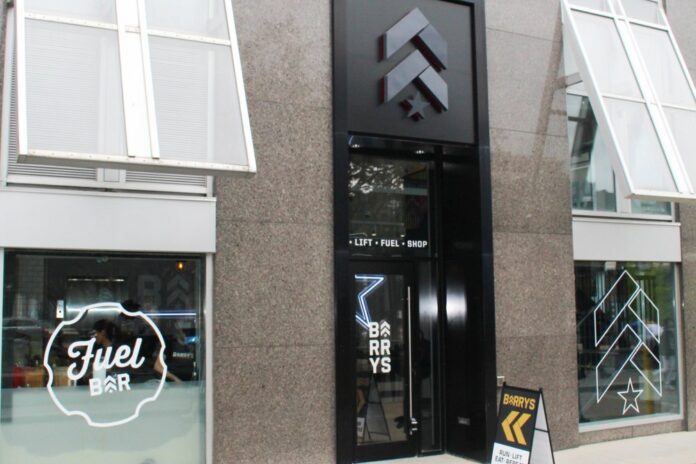
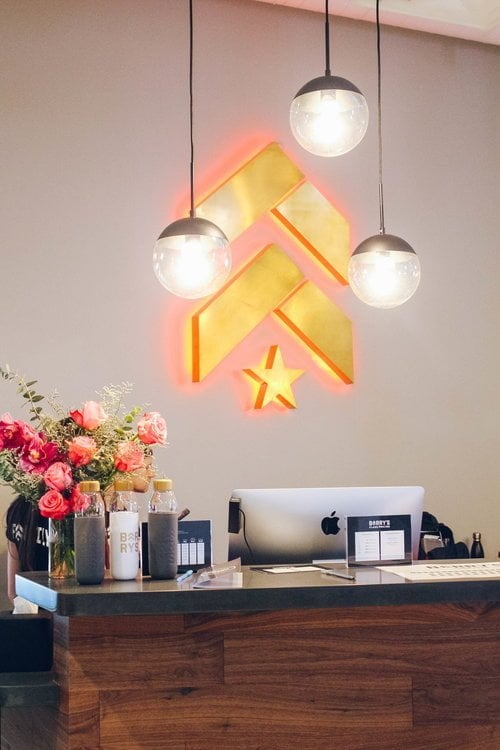
BARRY’S BOOTCAMP’S NEW YORKVILLE LOCATION PHOTO: BARRY’S BOOTCAMP

California-based high-intensity workout concept Barry’s Bootcamp has opened its second Canadian location as it embarks on a Canadian expansion that will eventually see about 10 storefronts over the next several years. The company, which refers to itself as being “Best Workout in the World” will also open its first ‘hybrid’ location this year in Calgary in a partnership with Lululemon that will create an interconnected retail space. 

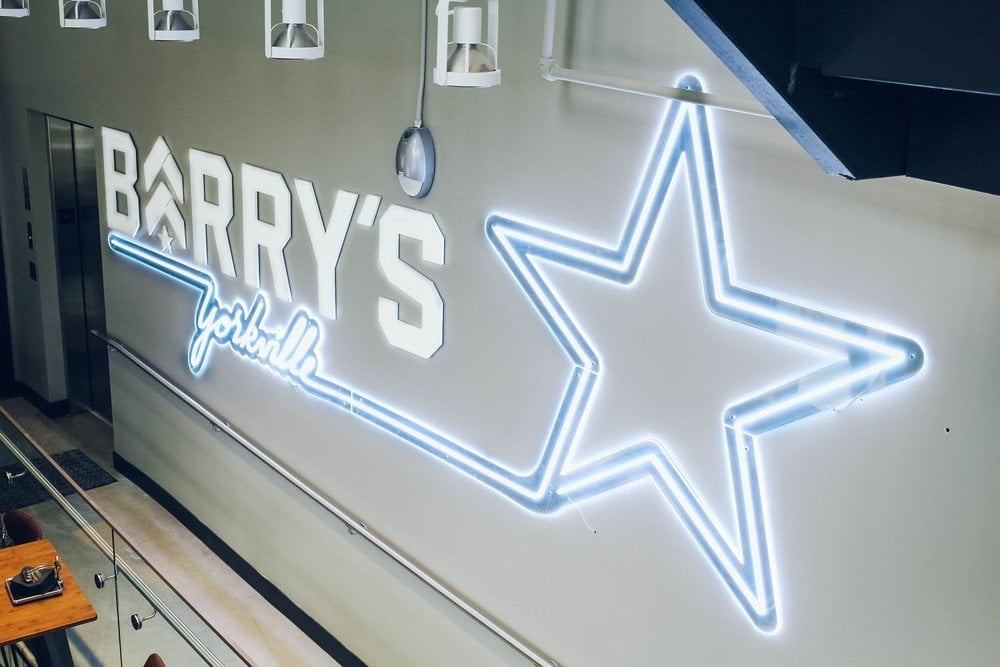
Barry’s Bootcamp opened its first Canadian location in Toronto’s Entertainment District at 310 Richmond Street West in late 2017, in an 8,000 square foot two-level space that is the largest in the company. Last week it opened its second location in Toronto’s affluent Bloor-Yorkville area. The new location is at the back end of the 100 Bloor Street West commercial podium and faces towards Cumberland Street and Village of Yorkville Park

PHOTO: BARRY’S BOOTCAMP

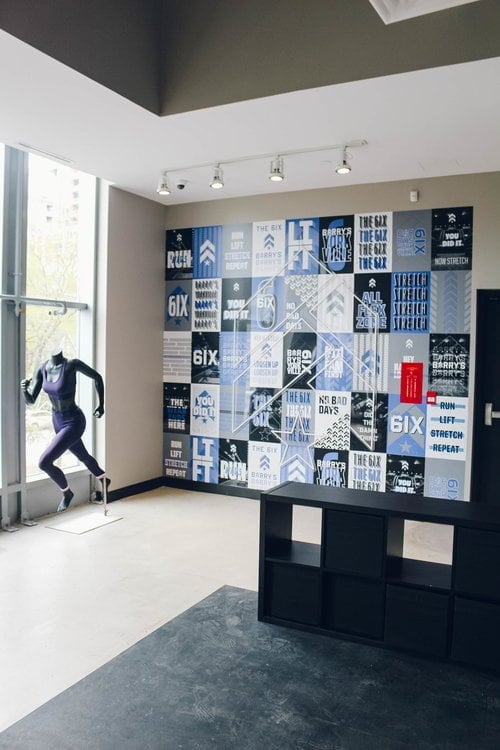
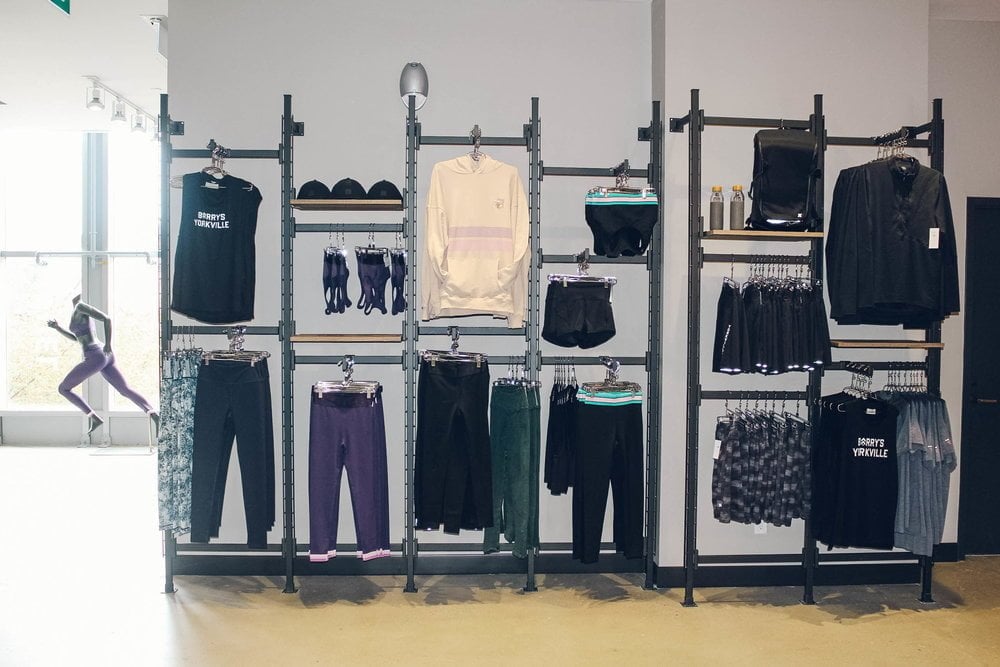
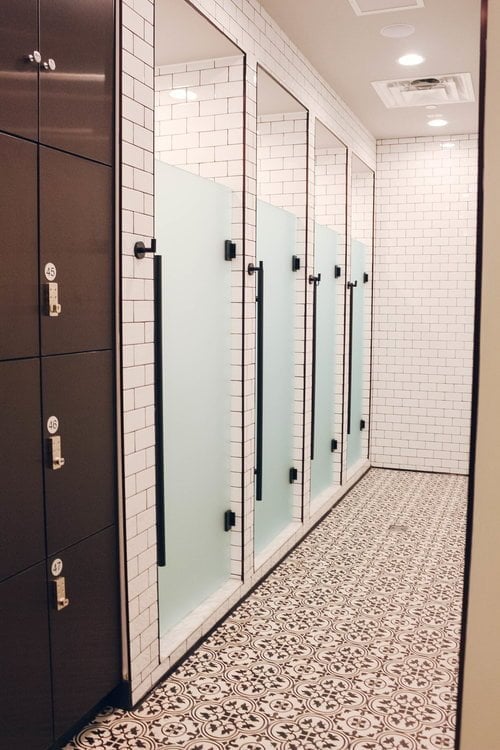
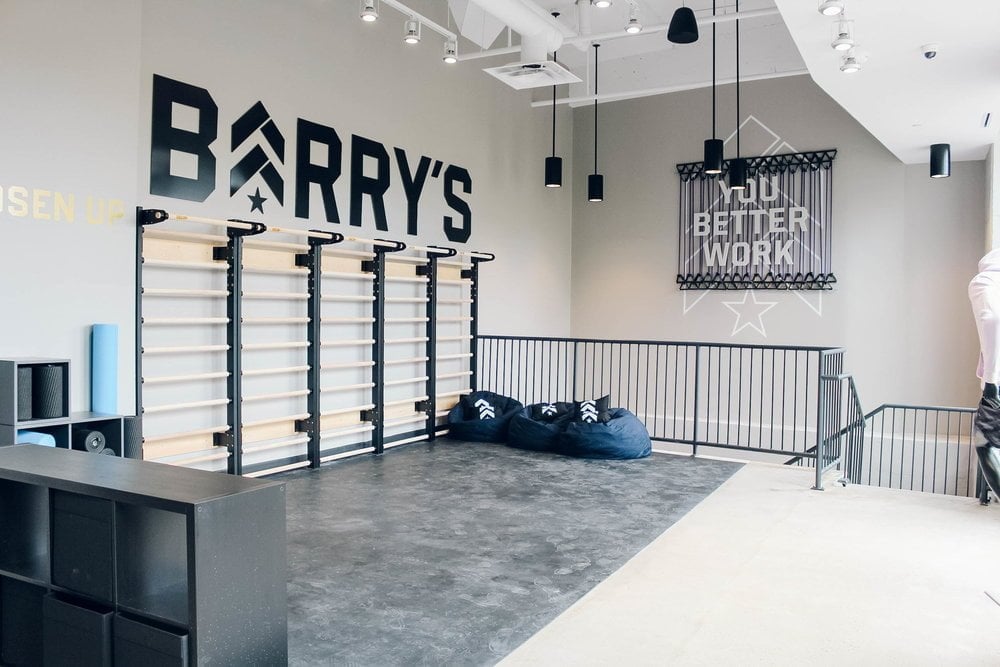
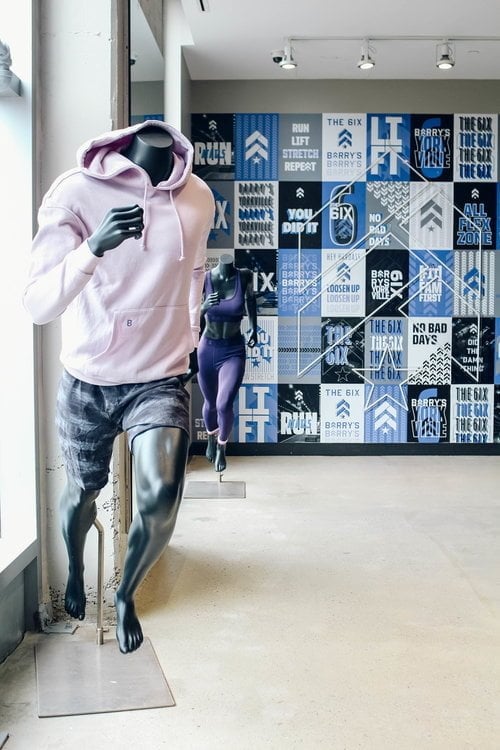
The new Bloor-Yorkville Barry’s Bootcamp spans about 5,000 square feet over two floors. The smaller ground floor features an entrance on Critchley Lane and a ‘Fuel Bar’ which serves nutritional items including a range of smoothies. The second level features a retail space with various merchandise including Barry’s original workout and athleisure apparel (with exclusive pieces for Yorkville) as well as Lululemon workout gear in a wholesale partnership. Upscale change room areas for men and women include high-end post-workout products for guests who have finished their workouts, including luxury Oribe products — the Richmond Street location was the first in the company to offer the Oribe line. 

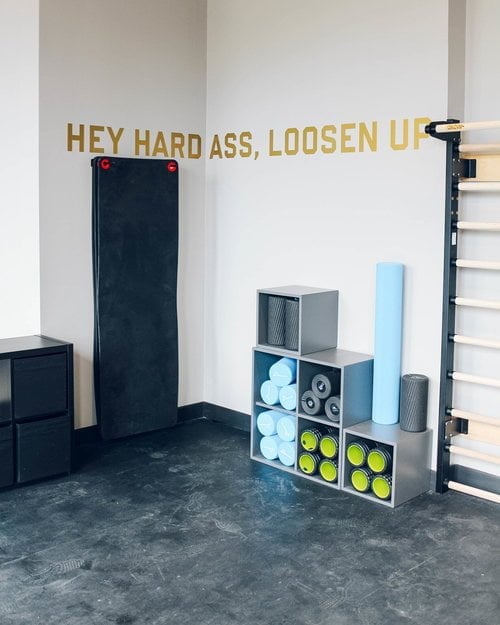
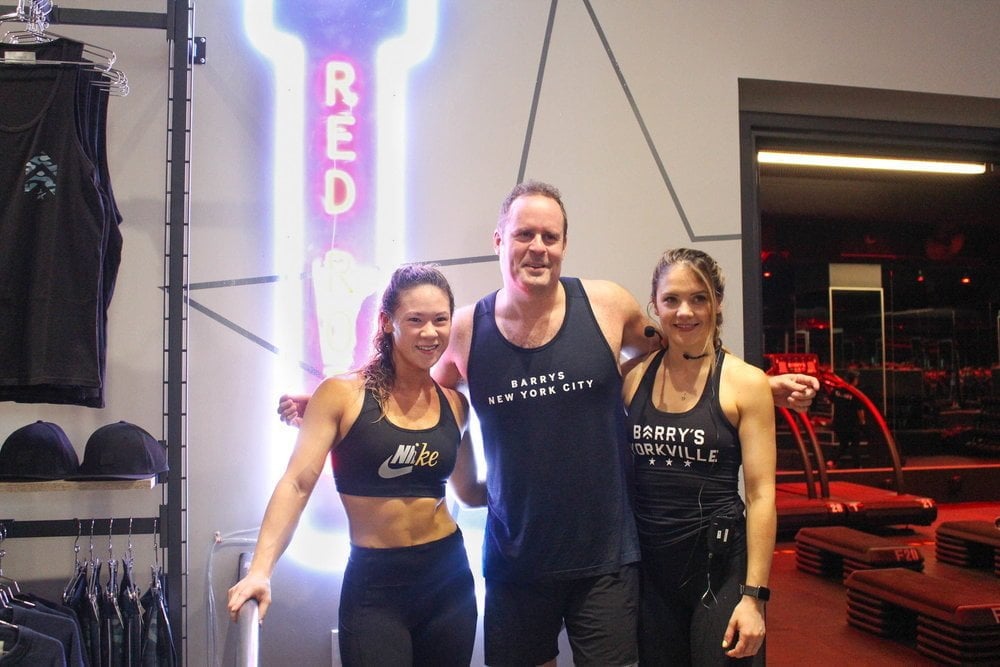
The second level of the Bloor-Yorkville location also feature’s two areas for workouts, including an area at the front where guests can stretch and otherwise work on flexibility in a brightly-lit area. At the back of the second floor space is Barry’s famous ‘Red Room’ workout space. The soundproof Red Room provides visitors the opportunity to participate in high-intensity interval training workouts, alternating treadmill cardio conditioning with strength training.

RETAIL AREA ON THE SECOND FLOOR NEAR THE CHECK-IN DEDK. PHOTO: BARRY’S BOOTCAMP

Top-of-the-line Woodway treadmills used are said to lessen the impact on people’s joints. Several dedicated classes throughout the day include a fitness trainer who leads the group classes — the trainer is there to challenge and encourage clients to push beyond their limits and achieve new goals. Barry’s says that the experience combines “the motivation of a personal training session with the energy of a group workout” that can be tailored for all fitness levels. 

Some Barry’s Bootcamp clients go regularly, sometimes several times per week. “I go almost every day,” said Toronto-based entrepreneur Jordan Whelan, who has been frequenting the Richmond Street location with a ‘Barry’s Legend’ monthly pass. “Barry’s Bootcamp is easily the greatest workout in the world. The intense rush of endorphins completely rectifies any mental anguish I am experiencing that day,” he said. “ It is motivational. Imagine high intensity cardio meets an unrelenting life coach. The entire vibe of Barry’s is work hard get results. I identify with the notion that anywhere worth traveling in life comes with diligence,” Mr. Whelan went on to say. 

According to its website, Barry’s Bootcamp classes cost $32 per session, with packages also available. A package of five classes cost $155, 10 classes cost $300, 20 classes cost $580, and 50 classes will set one back $1,360. There are also monthly memberships costing $315 (“Barry’s Star”) for 12 sessions and $415 (“Barry’s Legend”) for 30 sessions monthly. 

Brokerage CBRE negotiated both Toronto lease deals under the direction of Arlin MarkowitzAlex Edmison and Jackson Turner

The Bloor-Yorkville Barry’s Bootcamp is the 56th location in the world for the company, which began with a single location in West Hollywood, California, in 1998. Barry’s has since expanded with locations in several US states with a focus on California and New York, as well as partner locations in Canada, Australia, the UK, Sweden, Norway, Italy, Singapore and the UAE. The Barry’s Bootcamp website indicates that new locations will be opening in France, Qatar and Mexico. 

PHOTO: BARRY’S BOOTCAMP
STRETCHING AREA ON THE 2ND FLOOR. PHOTO: BARRY’S BOOTCAMP

The choice of location is important. Barry’s Bootcamp is a decidedly urban concept that locates in areas featuring an upper-income population that is able to afford its per-class and monthly fees. Toronto’s Entertainment District, for example, is home to thousands of young and upwardly mobile professionals, and is also a significant employment centre. Toronto’s Bloor-Yorkville area is known to be Canada’s wealthiest high-density neighbourhood and it’s growing quickly with several thousand more residents expected to be added over the next five years. 

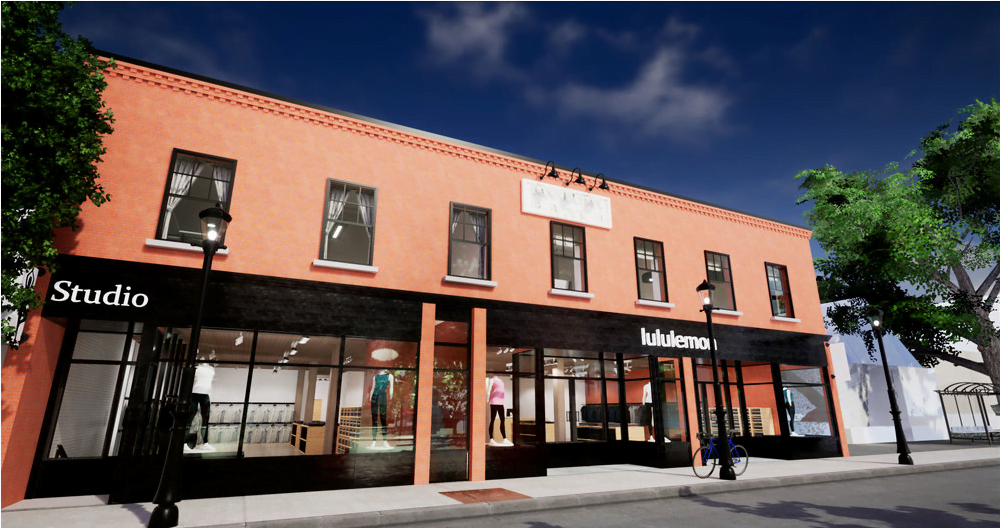
Canada is expected to become home to approximately 10 Barry’s Bootcamp locations. The next location to open will be in Calgary’s Mission/Cliff Bungalow area at 2308 4 Street SW in the historic Bannerman Block that was built in 1911. For the first time, Barry’s Bootcamp is partnering with Lululemon to open a space and when it’s finished later this year, both will share the building in an interconnected arrangement. 

BARRY’S BOOTCAMP WILL SHARE SPACE WITH LULULEMON IN THE HISTORIC ‘BANNERMAN BLOCK’ IN CALGARY. RENDERING: CERTUS DEVELOPMENTS

A deal for a downtown Vancouver Barry’s Bootcamp is also in the works, to be located on the ground level of a commercial building on the edge of the city’s affluent Coal Harbour neighbourhood. More details on this location will be revealed when the lease is finalized. 

Other potential markets include Montreal and Edmonton, and Toronto could see two or more Barry’s Bootcamp locations open, depending on finding the right spaces. 

We’ll continue to report on Barry’s Bootcamp’s expansion into the Canadian market, including the innovative first-in-the-world Lululemon partnership location that will open in several months in Calgary. 

Canadian Startup Launches Digital Measurement Technology to Revolutionize Retail Industry

PHOTO: PASSEN

Passen is a technology that could revolutionize body measurements and the retail industry as we know it today.

Passen is a digital measurement technology that the company says will bridge the gap between physical and online retail, and it is currently in negotiations with some of Canada’s biggest shopping centre landlords. The company captures and uses data to deliver an accurate fit for consumers when buying clothes online or in stores. This data is also used to reduce retail returns while enhancing upstream processes for the textile industry including production efficiencies and environmental sustainability, said Stuart Campbell, founder of the Toronto-based company.

“Reports suggest that in 2018 alone, over $30 billion in on-line apparel sales were returned to retailers” says Campbell. That is a lot of waste”

PHOTO: PASSEN

“It’s a zero risk proposition for the consumer. Free shipping and free returns. Of course, I’m going to buy five things, try all of them on, and send four of them back. Why wouldn’t I? That’s the default. The consumer will engage in a digital measurement experience from which they can then use their data almost like a passport on any retailer’s web site or brick and mortar location to purchase clothing while streamlining the process. Retailers and consumers alike enjoy a more efficient experience.  And then you get to use this kind of like passport on any retailer’s website or in their store to get this new service which is products that fit your body in a super streamlined way. Our value proposition is to increase online sales for clothing retailers and decrease online returns.”

The company began in March 2017.

“I’m a graduate of the Richard Ivey School of Business (University of Western Ontario) and I enjoyed working within the digital product development landscape before starting Passen in 2017.

“E-commerce is taking off and with the likes of Amazon and Shopify, it’s only going to grow. We identified the opportunity to solve the significant problem with “fit” as it related to consumer returns while a the same time bridging the growing gap between on-line and brick and mortar. In a sense technology created the (on-line) problem for traditional retailing and it can also fix it with out technology. It’s all about the consumer experience.” 

“The apparel industry hasn’t had the tools to necessarily respond to the speed in which technology is changing consumer behaviour. The Amazons of the world have set a precedent for return policies that aren’t necessarily fair for the apparel industry and yet, they’ve been adopted at great cost. Our technology intends to flatten the playing field and bring all vested parties together that include consumers, retailers, brands, and the malls that have done so much to host this industry over the years.”

Passen is a digital measurement platform that provides fit recommendations for clothing shoppers. Individuals receive their own profile. Clothing is measured as well and put into the company’s database. A fit algorithm will match the person’s body with clothing products that fit the person. That can happen through a click of a button on an e-commerce website or in a store or shopping centre. The technology will be on display for the first time at Retail Council of Canada’s STORE Conference, being held in Toronto on May 28-29.

“What we’re able to do with the click of a button is find and serve to you only the things that are relevant for you for your body. It’s an apparel fit technology and it embeds onto retailer’s websites and it’s a physical measuring experience and our go-to-market strategy is to put these measuring experiences, these destination experiences, in all the major malls across the world,” said Campbell. The concept aims to bridge the gap between physical and online retail with consumers being able to utilize Passen technology across both channels.

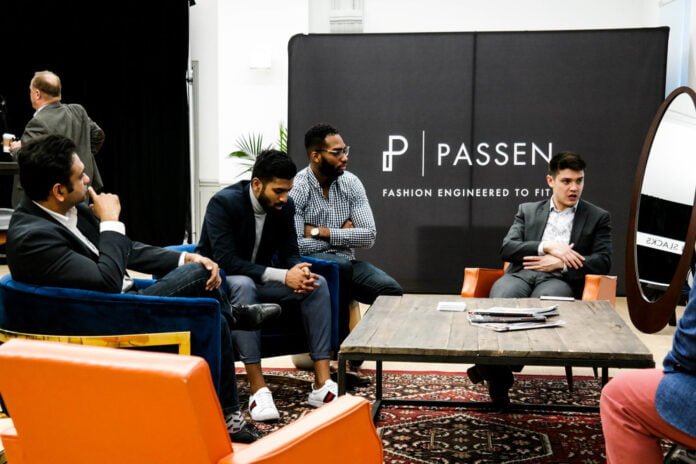
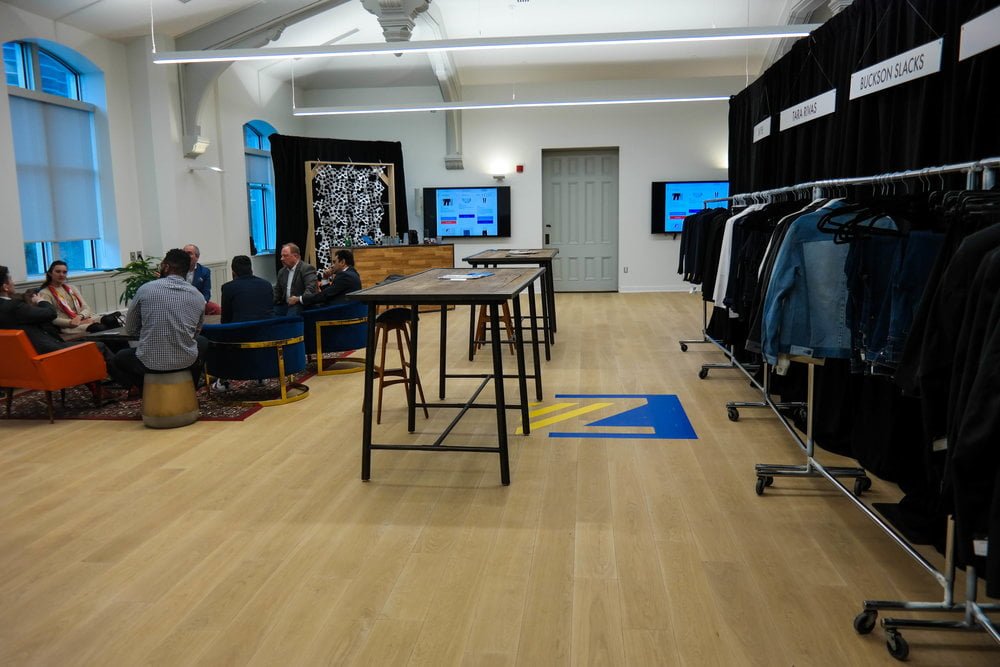
Recently, the Passen Lounge was launched –  a product showcase where it renovated an historic building on the Ryerson University campus and for three days it toured Canada’s most significant retail executive teams through showing them this new, re-imagined consumer experience.

“That was a three-day pop-up, if you will, to demonstrate a very specific consumer experience and to demonstrate our technology,” said Campbell. “You go, you get measured, you leave this measuring booth and with the click of a button we can find you an outfit from thousands of clothing items and pull it off a rack. What would have taken as an in-store experience of you going up and down aisles and taking four different sizes of something into a change room, we’ve streamlined the in-store experience and then as well these consumers can now shop online.”

Campbell said Passen is in conversations with all the major malls about deploying these lounges in their malls. The idea is that Passen will help drive traffic back to malls to provide consumers with an enhanced digital body measuring experience where customers have the option to shop and reserve in-store for pickup — or consumers can shop from the convenience of their own homes to have it delivered, guaranteeing fit. Future Passen lounges will also have the option of providing professional styling services, further enhancing the overall physical experience.

“The idea of this showcase was come and see the future and now let’s deploy these together and actually create a live consumer experience where someone can go buy real product and get their own digital profile and kick start this new shopping experience,” he said.

Danish Brand ‘Rains’ Enters Canadian Market with 1st Retail Storefront [Photos]

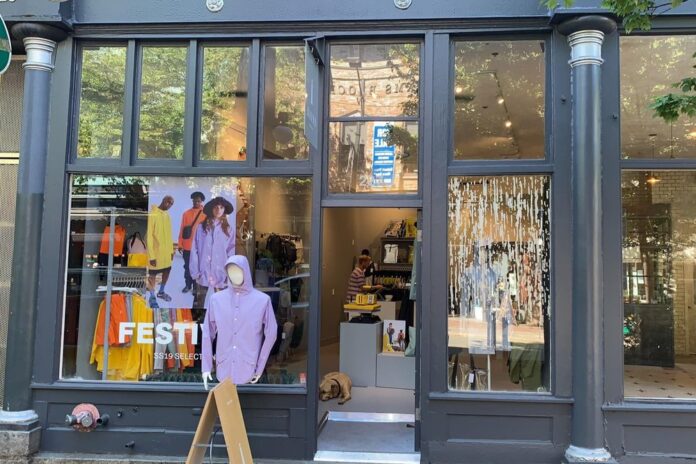
RAINS’ NEW VANCOUVER STORE PHOTO: LEE RIVETT

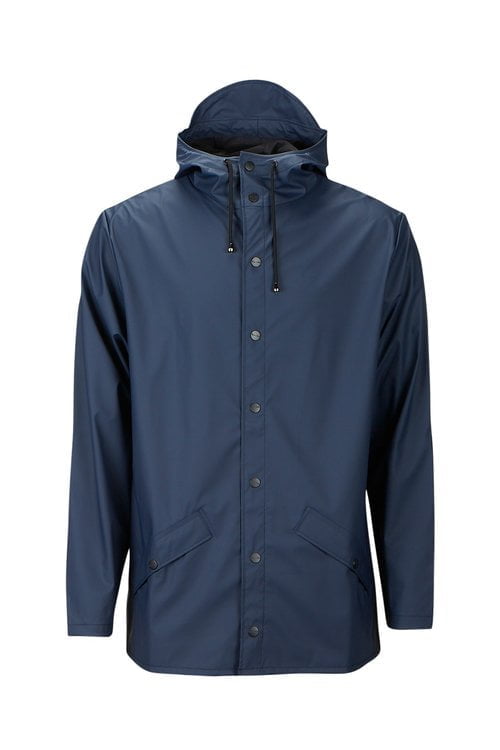
Aarhus, Denmark-based waterproof product-focused brand ‘Rains’ has entered the Canadian market with its first standalone storefront. The brand plans to further expand with more stores while also creating brand awareness for its wholesale accounts. 

The new Vancouver Rains storefront measures about 750 square feet and is located at 227 Carrall Street in the city’s historic Gastown area, next to a recently opened Le Labo boutique. The Rains shop carries an expansive assortment of Rains-branded products and the company says that the goal of the store is to showcase the entire collection to Canadian consumers in a city that is known for its wet weather, particularly in the winter months. The Vancouver store also provides a level of product knowledge and customer service that isn’t generally available in retailers that wholesale the line. 

The Vancouver store’s interior features a ‘Scandinavian DNA’ according to co-founder Philip Lotko, with grey-on-grey walls and contemporary wood fixtures throughout. The stark interior makes the product stand out, particularly as many items are colourful. The historic Gastown building’s facade was maintained to keep with the historical architectural integrity of the neighbourhood.

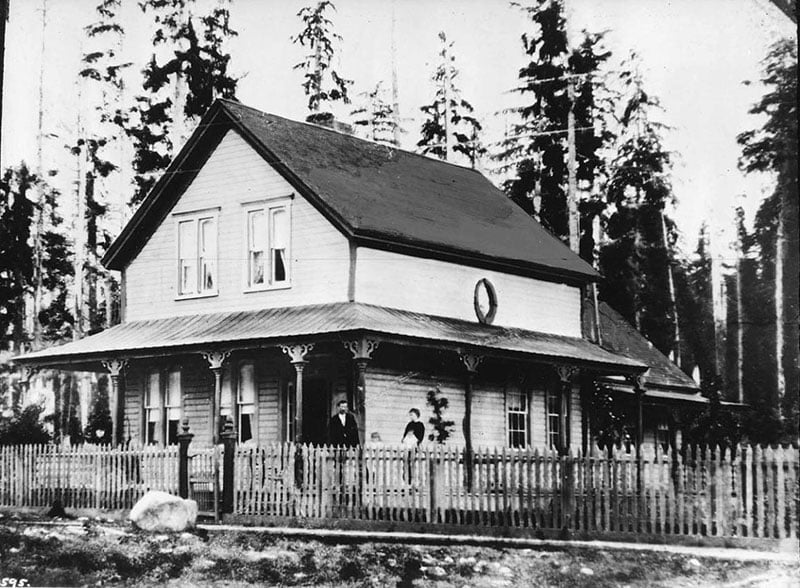
ORIGINAL BUILDING THAT OCCUPIED WHAT IS NOW RAINS’ BOUTIQUE ON CARRALL STREET IN VANCOUVER, BC PHOTO: FORBIDDEN VANCOUVER

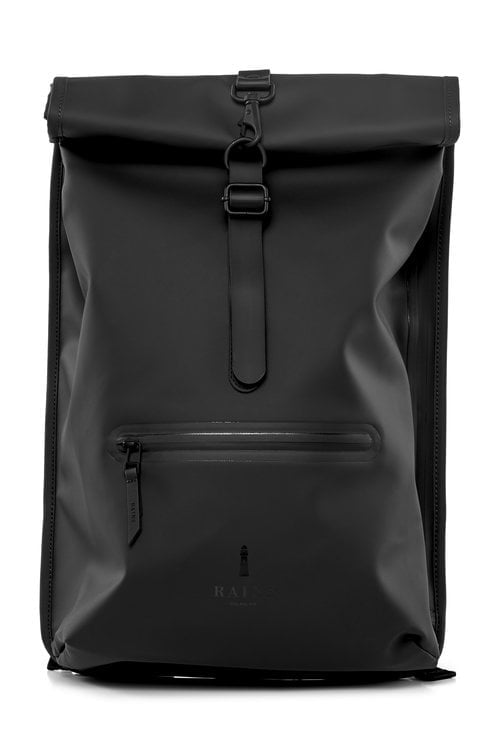
Rains was founded in 2012 and has grown quickly by “mixing function with fashion”, according to the company. Waterproof outerwear is a focus, and Rains also offers a line of waterproof bags and accessories. The brand launched with one product: a poncho that came in a variety of colours. The next season saw the brand greatly expand its product assortment. 

Prices are considered affordable for products. Rain jackets are priced in the $140-$150 range. A range of waterproof bags are priced in the $100 to $150 range each. 

Vancouver was chosen for Rains first Canadian storefront partly because of the strength of Rains’ wholesale accounts in the city. Mr. Lotko explained that he’d like to open larger stores than the one that the company initially opened in Vancouver, and that a ‘cluster’ of stores in Canadian markets will help enhance overall brand awareness. Stores allow locals and tourists to have easy access to the brand’s products in a consistent and curated environment. 

Multiple locations in Vancouver are possible, he said. Copenhagen, for example, has two standalone stores as well as wholesale accounts. Rains could also open shop-in-store concepts in other retailers, Mr. Lotko said. Rains currently operates 200 shop-in-stores worldwide as well as 22 standalone boutiques. 

The standalone stores are in European countries such as Denmark, Sweden, Norway, Belgium, France, Germany and The Netherlands. The UK is home to two units in London, and there are three stores in China and one in Moscow. Rains currently has one standalone store in the United States, on Lafayette Street in New York City. More North American locations are planned according to Mr. Lotko, with the company eyeing markets such as Seattle and Portland for stores.

Rains is in a significant expansion phase as it will open as many as 10 stores globally in 2019. The company only began opening standalone units in 2016 and will focus on rapid growth both with its retail and wholesale channels. 

While there are no immediate plans to open more stores in Canada, Mr. Lotko said that the retailer is looking to markets such as Toronto and Montreal to open stores. Rains continues to see success with its wholesale operations in Canada and those metrics could be useful in determine potential expansion markets, he said. 

Brands continue to go direct-to-consumer by opening their own retail stores. There are numerous Canadian examples as well. Vegan fashion and accessory brand Matt & Nat began opening stores in 2016 and will have 15 open by the end of this year — prior to opening stores, the brand only wholesaled in other retailers. The same can be said for Canada Goose, Herschel and other brands that have been opening their own stores over the past three years. We’ll continue to see brands opening their own stores for two primary reasons — stores are able to showcase a brand’s identity in a curated environment with staff while also potentially offering bigger profit margins for the brands themselves. 

Now located in Toronto, Craig is a retail analyst and consultant at the Retail Council of Canada. He’s also the Director of Applied Research at the University of Alberta School of Retailing in Edmonton. He has studied the Canadian retail landscape for the past 25 years and he holds Bachelor of Commerce and Bachelor of Laws Degrees. He is also President & CEO of Vancouver-based Retail Insider Media Ltd. Email Craig: craig@retail-insider.com