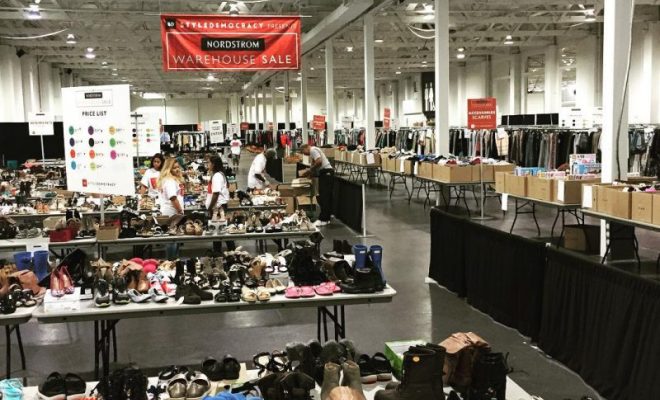
Toronto-based StyleDemocracy, which is known as one of the country’s leading outsourced warehouse sale businesses, continues to work with brands by hosting its well-known warehouse events where it sells discounted merchandise. Thousands of items are made available to the public, and thousands attend its regular warehouse sales.
StyleDemocracy’s Vice President, Oliver Berg, explained how the company’s clearances allow retailers to obtain higher recovery rates, and the retailers receive money soon after the sales have finished. Excess inventory is a reality for most retailers, though a benefit is clearance savings that are passed onto consumers.
Nordstrom, Frank And Oak and Dolce & Gabbana are three of numerous big brands that have worked with StyleDemocracy in the past, and this week, StyleDemocracy is hosting the first Ted Baker warehouse sale in Canada. It’s another major coup for Style Democracy, which continues to expand its operations.
The Ted Baker sale takes place at the International Centre at 6900 Airport Road in Mississauga from Thursday, December 6 to Sunday, December 9, inclusive. Included will be a vast assortment of apparel, outerwear, footwear and accessories, at prices up to 80% off retail. StyleDemocracy Insiders will receive an extra 10% off on opening day by subscribing to the mailing list [Sign Up Here] and as well, two $250 shopping sprees can be won by entering on Instagram.
StyleDemocracy has a long history — it was founded in 1999 as Canada’s first warehouse sale business, and it conducts many of its events at Mississauga’s International Centre. In October StyleDemocracy hosted a sale for brand Puma (which is in its 15th year with StyleDemocracy) and it drew crowds of over 30,000 people during the five-day event.
Such massive crowds are made possible through StyleDemocracy’s expansive email database, social media following and website traffic, as well as the company’s expertise in event marketing and event management. The highly respected company is headed up by President and Founder, Michael Berg, his son and Vice President, Oliver Berg.
StyleDemocracy’s warehouse sales, pop-up events and sample sales are held with a goal of 1) liquidating excess inventory, and 2) exposing StyleDemocracy’s clients to its massive community of shoppers (which is now estimated to be more than 250,000 across Canada).
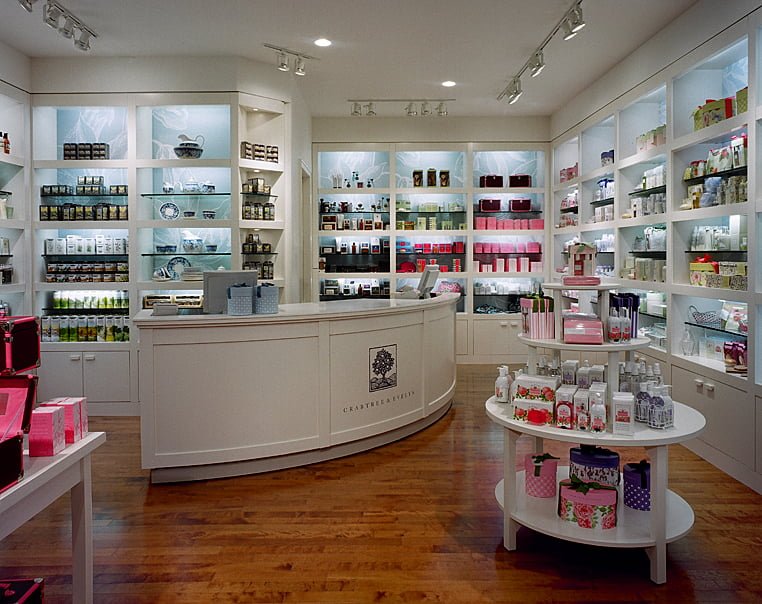
Crabtree & Evelyn Canada Files for Creditor Protection: The Canadian operations for Cambridge, Massachusetts-based body/fragrance/home care retailer Crabtree & Evelyn filed for creditor protection last week. Richter Advisory Group is acting as Trustee.
Crabtree & Evelyn currently operates 19 stores in Canada with 11 of those in Ontario, 6 in BC, and one each in Quebec, and Alberta. That is down substantially from the past when the retailer had dozens of stores coast-to-coast. Crabtree also wholesales in various specialty retailers, and its products are being supplied through Harvey Supply Chain International, a related entity in the United States.
The filing in the Quebec Superior Court notes that Crabtree & Evelyn Canada has been experiencing “significant losses” over the last few years, attributed to changing consumer tastes, the rise of e-commerce, and long-term declines in traditional retail traffic and productivity.
Crabtree & Evelyn Canada’s assets have a book value of $1.3-million according to the filing, consisting primarily of inventory. Debts are $15.2-million, primarily for the supply of inventory as well as advance of funds and support services.
Inventory will be liquidated to “maximize the value of its assets which will ultimately be distributed to its creditors.” The liquidation commenced November 30 and will end before December 31.
At the conclusion of the liquidation period, each of the closing stores will be surrendered to their respective landlords.
Jeff de Bruges Expanding in Quebec: French chocolatier and ice cream house Jeff de Bruges is opening two new locations in Quebec, as it looks to grow in super regional malls in the province.
The retail concept debuted in Canada in 2014 at Place Montreal Trust in Montreal’s downtown core, selling exquisite Belgian chocolates, ice cream, and other treats.
The retailer is relocating its Place Montreal Trust store to the Montreal Eaton Centre, which is in the midst of an exciting $200-million large-scale redevelopment project. The relocation is due, in part, to construction of Montreal’s $6.3-billion REM rapid transit project, the largest public transit undertaking in Quebec’s history.
A temporary pop-up store will open at Montreal Eaton Centre this month and relocate to a permanent 655-square-foot space in September. In March 2019, Jeff de Bruges will also open a 175-square-foot kiosk at Carrefour Industrielle Alliance in Montreal’s pedestrian network — La Maison Simons and the Banque Scotia theatre anchor the 210,000-square-foot historic building, which houses restaurants and boutiques.
Jeff de Bruges has tremendous market awareness in Europe and boasts turnover of more than $330 million in 2017. Philippe Jambon created the concept in France in 1986 and began franchising in 1988. The company introduced ice cream to the retail mix in 1990 and now operates more than 500 stores across France, including corporate and franchises, and close to 40 international locations.
Quebec remains the focus for now, with possible future locations spanning 600 to 1,000-square-feet in super regional malls across the province. The brand is working with brokerage Think Retail’s Tony Flanz.
Menē Launches First Luxury Jewelry Startup to go Public in TSX-V: Menē Inc., a publicly traded company on the TSX-V and an online 24 karat jewelry brand, unveiled its new interactive myMENĒ jewelry customization technology and user experience.
myMENĒ combines technology developed in-house by the Company’s product and engineering teams with Menē’s unique business model. This allows Menē customers to choose from a collection of 24-karat gold and platinum charms to create, preview, edit, share and purchase customized Menē bracelets and necklaces. This customization feature will soon be expanded to include pendants, medallions, and Menē Narrow Chains.
Those unfamiliar with the company may be surprised to learn that Menē crafts pure 24-karat gold and platinum jewelry that is transparently sold by gram weight through the company’s website.
At Toronto’s 38 Avenue Road Showroom, interested customers can visit a Menē vitrine (which live displays gold prices) and interact with the resourceful staff but cannot purchase on-site. Branded as a ‘Menē embassy,’ Avenue Road serves to provide a trust-building opportunity for the brand and for customers to enjoy in-person service.
On November 17th, 2018, the company, founded by 33-year old Goldmoney Inc CEO Roy Sebag and Diana Widmaier-Picasso, (granddaughter of that Picasso) reported that they were celebrating after having filled their 10,000th order in 11 months following their public launch.
Céla Pop-up at Saks: CF Toronto Eaton Centre’s Saks Fifth Avenue launched an in-store pop-up shop with Canadian skincare brand Céla. For the month of December, shoppers will be able to take advantage of the location to access the entire range of the Canadian made and nature-inspired products.
The pop-up also features the brand’s two newest products the Essential Face Mist and Essential Face Cream which will be launching mid-December.
The space has been designed by Céla founder Celine Tadrissi’s architect husband Antonio and his team at Prototype Design Lab and features a metal and grid-based theme into which the product is showcased.
The product line was launched in August 2018 as first of its kind by The Hammam Spa in Toronto. The traditional Turkish bath company is directed by Celine Tadrissi, and the skincare line contains six Canadian botanical extracts: blueberry, elderberry, evening primrose, juniper berry, rosemary, and lavender. All products marketed as ‘clean’ which indicates that they are free of parabens, phthalates, and sulfates.
Prime Retail Opportunity in Sherwood Park, Alberta: Avison Young has announced the availability of retail space at Sherwood Park Mall. The mall is a major regional retail destination that is currently undergoing an extensive exterior renovation. There are retail opportunities available in this 430,000-square-foot property, with a significant interior mall component, ranging from 2,000- to 15,000-square-feet. There will be various configurations possible, with all being granted exterior access.
This centrally located mall in the heart of Sherwood Park sees roughly 25,000 vehicles per day along Sherwood Drive. Sherwood Park boasts an average household income of $159,291 (2018), a population of 78,002 (2018, est.) and is located approximately 5 minutes east of Edmonton.
Popular UK-Based Tire Brand Enters Canada: Blackcircles, the leading online retailer of tires in Europe has officially launched its tire-shopping and online services in Canada.
As of last month, Canadian consumers from BC to Newfoundland gained access to the tire purchasing experience. Blackcircle’s website simplifies the tire buying process for passenger-vehicle tires so consumers can research, purchase tires then schedule an installation appointment all from one site. In addition, this experience enables consumers to shop for tires that best fit their vehicle and the way they want to drive.
Customers can buy their tires directly on the website, www.blackcircles.ca. The process is streamlined: choose a tire, enter a postal code, choose a nearby service center, and choose a date and time and pay. Then show up at the appointed time and date to get the tires installed.
Blackcircles was founded by Liverpool-born entrepreneur Mike Welch in 2001 and sells to approximately 2,000,000 customers in the UK, making it one of the largest online tire retailers in the world.
Television personality and movie mogul Vince Guzzo is planning on expanding his movie theatre empire from its base in Quebec to the rest of Canada.
Vice Guzzo and the other Dragons.
Guzzo, who is president and CEO of Guzzo Cinemas and the newest Dragon on CBC’s Dragons’ Den, said he’s actively exploring growth and development potential for his business enterprises which means looking at moving into major markets such as Vancouver and Calgary.
Guzzo Cinemas is the largest chain of independent movie theatres and IMAX screens in Quebec and third largest in Canada with 10 locations with 141 screens and nine IMAX’s. Two more locations are scheduled to open next year in Montreal and Laval. All the locations are in the Montreal area.
The Montreal-based entrepreneur also runs a chain of fine dining restaurants and a construction company.
“I look forward to establishing new synergies and capitalizing on opportunities from coast-to-coast that make sense given my current business portfolio,” said Guzzo. “Quebecers are already familiar with the exceptional consumer experience associated with Guzzo Cinemas and my other businesses, and I’d like to share that dedication to strong customer service and top-quality products with the rest of Canada.
“After I went on Dragons’ Den I got a whole bunch of calls from landlords and from big land developers across B.C. and Alberta. That got us thinking. We knew we wanted to look at that area. We had looked at buying Landmark theatres in Calgary when it was up for sale before another group bought it. And with them calling us we now have a better picture of where people think there’s missing theatres. The landlords are the ones feeding us information right now and we’re in talks with various groups. Some of them are already landlords in Montreal. Some of them are not. Some of them are new people but they’re happy to hear that’s there’s a third potential player coming into the market.”
He said that expanding into other markets including major Canadian business hubs like Vancouver and Calgary will allow him to take advantage of the broad economic opportunities available in other parts of the country.
But Guzzo was coy about specifics when it comes to expansion of his movie theatre business as he didn’t want to reveal information to his competitors.
“Any city 75,000 and up could have a theatre,” he said. “We’re just going to bring the latest technology to markets that haven’t seen any upgrades since the 80’s or the 90’s. That’s one of the big differentiations. The other thing is we are more entertainment driven than we are food driven. Our competitors are very big in having 101 concession counters. It’s almost like going into the food court of a mall sometimes.“
“We instead believe more in the conventional theatre foods. We did spread out a little bit to pizza. We did spread out to other things but not that much. But where we have a big, big distinction is while they consider an arcade area to be five, six machines, 10 machines in a corridor, we actually have 5,000 to 10,000 square feet of arcade space in our theatres so families can go into these arcades.”
Guzzo’s father opened the first cinema in 1974 in the east end of Montreal and in 1976 he expanded it to a three-screen multiplex. Vince Guzzo grew up in the movie theatre business with jobs as an usher, selling candy, a cashier and a projectionist. He officially took over management of a theatre in 1991.
Guzzo’s Giulietta Pizzérias establishments are all strategically located adjacent to his theatres.
“My movie theatres are gearing up for a bustling holiday season and I’m looking for ways to increase the number of satisfied moviegoers across Canada. Tapping into new markets and leveraging underserved customer bases will do wonders for my businesses in the long run, while also giving Canadians greater access to entertainment,” he said.
Guzzo points out that despite the introduction of Netflix and other streaming services the experience of seeing a show at a cinema is actually booming in North America with 2017 box office revenues reaching US$11.1 billion, which is up from the US$8.1 billion recorded in 2001, according to Statista.
Upscale Toronto-based multi-brand leather goods and luggage retailer Betty Hemmings has rebranded and relocated its Yorkville operations to an impressive new store across from its former location on updated ‘Yorkville Lane’. Now called ‘B Hemmings & Co’, the retailer carries a range of exclusive brands with impressive histories of craftsmanship, some of which are only available at the store in Canada, in a retail space inspired by luxury train cars.
B Hemmings & Co was established in 1978 and has operated in the Yorkville area for the entire time, retailing a range of of business, travel and lifestyle essentials – luggage, briefcases, wallets and luxury handbags of singular quality by some of the world’s leading artisan brands. Some of the brands carried in the store are not available elsewhere in Canada and a couple are exclusive to the store in North America. B Hemmings & Co’s philosophy of “investment in quality” delivers long-term value is one of the table-stakes that has amassed a loyal following of on-the-go professionals.
PHOTO: B HEMMINGS & CO
As part of its 40th anniversary celebration this year, owners Michael and Alexandra Warwick explained that they wanted to rebrand/refresh the store’s retail operations by adding several new luxury lines in a new retail space that would better showcase the exclusivity of the product. This fall, B Hemmings & Co relocated to a retail space across from its former store in ‘Yorkville Lane’ at 162 Cumberland Street which is also being updated with new paving stones, lighting, and several new tenants including Bar Alo, ranked as Canada’s top restaurant.
Broker Samuel Wygodny of City Commercial Realty negotiated the B Hemmings & Co deal, and The Pearl Group is a partner in the Yorkville Lane project that has seen the walkway overhauled to create an updated pedestrian connection in the neighbourhood.
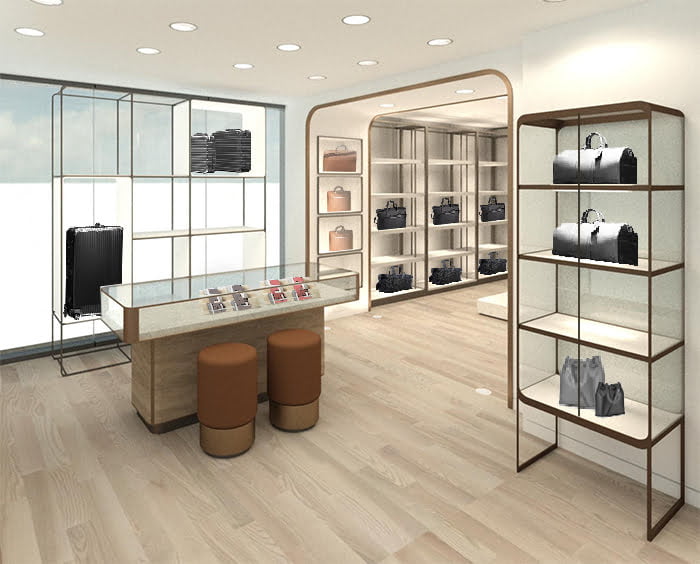
The new B Hemmings & Co is in a stunning retail space that was designed by Toronto-based dkstudio.
The design inspiration came from products carried in the store — the architect recognized that a high-end store carrying world-class brands such as Globe Trotter (which produces the Queen’s luggage), Smythson of Bond Street (Royal Warrant holders since 1887) and Serapian (used by select world leaders) deserved a luxurious space to showcase its wares. Quiet luxury and elegance were a theme, contrasting to the heavily branded luxury goods that permeate today’s market.
“A recurring theme of the brands is that they all represent a tradition of hand craftsmanship from what some would call a by-gone era. It was an era of travel by boat and train where the luggage was hand stitched and crafted as were the train and boat rooms and cabins, one would take to embark on a journey like the Orient Express,” according to to the design firm. The resultant design is one based on the concept of a luxury train car similar to what one would envision from the 1930’s but with a modern feel and warmth, that is used throughout the store, with each of the three rooms based on a different compartment of a classic train.
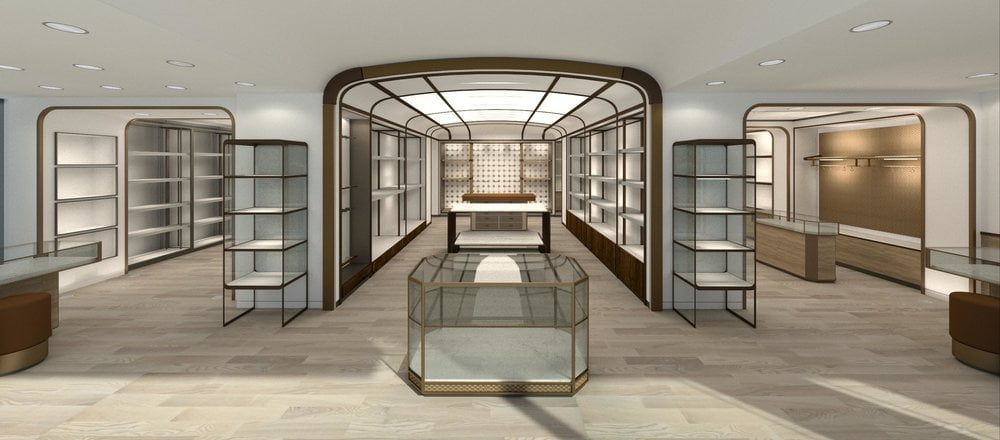
The central room of the new B Hemmings & Co features a vaulted ceiling, bronze trim, wood and leather that are reminiscent of the grand days of train travel on the Orient Express. Flowing arched ceilings are framed by riveted bronze trim plates. The central room houses B Hemmings & Co’s most iconic brand, Globe Trotter, which is only available in Canada at this store.
A central feature wall utilizes 480 pressed and molded corner pieces of the luggage, fitted on a sculpted 3-dimensional backdrop, a sculptural composition alluding to a stacked wall of luggage.
A common theme throughout the store is the arched train car roof and each room entrance features a curved portal highlighted with metal frames like compartments of a train. The store’s facade features train-inspired arches as well as the feel of a classic train station, with riveted steel girders that were re-invented with new materials.
Furniture in the store was also designed to coincide with the overall theme.
Several new brands have been added to the new B Hemmings & Co space. French luxury brand Lancel, which is making a comeback, is carried exclusively in Canada at the new store. Smythson of Bond Street is another exclusive-to-Canada brand, and the hand-made Moreau brand from Paris, with some bags priced at over $4,000 each, is only available in B Hemmings & Co in Canada.
Other brands carried in the new store include names such as Pineider (since 1774), Hartmann, Araldi, Bric’s, Ettinger (London), Troubadour, Swaine Adeney, Brigg, The Bridge, and Tumi. Many of the Tumi pieces are curated from Tumi’s premium collections and are generally not found in other stores carrying Tumi outside of some of the brand’s flagships, according to Mr. Warwick. B Hemmings & Co also has its own line of high-quality leather goods which Mr. Warwick explained feature the best leathers and craftsmanship available, sourcing tanneries used by some of the world’s top luxury brands.
B Hemmings & Co is located in Toronto’s Yorkville area, which is a high-end, high-density neighbourhood featuring a roster of luxury brands as well as residences, and the neighbourhood is growing quickly. B Hemmings & Co serves the local market as well as a clientele of shoppers from Toronto and even beyond. Given the rarity of some of the pieces carried at B Hemmings & Co, the retailer’s e-commerce site is a source for customers across the country as well as even globally.
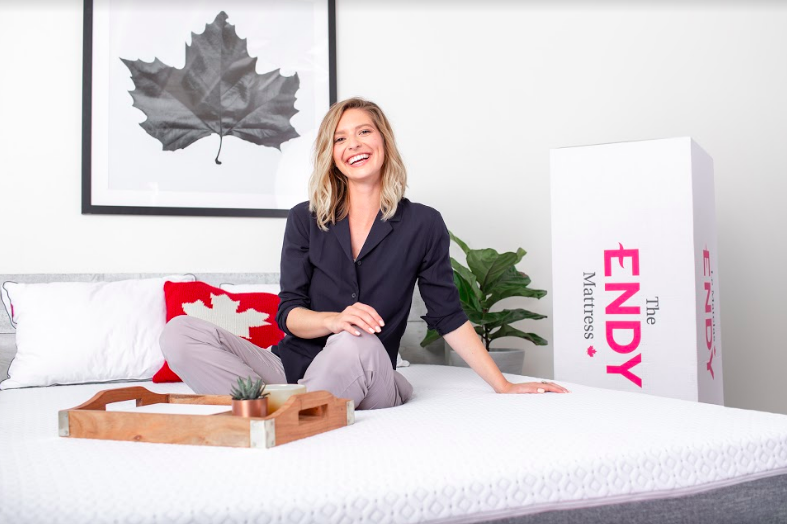
Sleep Country Canada has announced that it has acquired Toronto-based mattress-in-a-box brand Endy for $88.7-million. It’s the latest development in the hyper-competitive mattress-in-a-box category that has seen a constant influx of new brands looking to gain market share.
The deal is comprised of $63.7 million in cash to be paid at closing, and up to $25 million in cash to be paid in early 2021 based on the achievement of certain growth and profitability targets in 2020. The Sleep Country and Endy businesses will be run separately to encourage “the same competitive spirit that positioned both companies as leaders in their respective spaces”. General oversight of the Endy business will be provided by a board comprised of the senior management of Sleep Country and Endy. Rajen Ruparell will Chair this board.
“We launched Endy as a disruptor in the Canadian e-commerce space three years ago, and this announcement today is a testament to the incredible dedication of the entire Endy team,” said Rajen Ruparell, co-founder and Chairman of Endy and the company’s majority shareholder. “This acquisition will allow Endy to continue to grow rapidly and exceed customer expectations in a rapidly evolving retail climate, while remaining separate.”
Sleep Country at CF Sherway Gardens in Toronto. Photo: Craig Patterson
Endy is seeing explosive sales growth in Canada as the company continues to grow its operations. Despite increasing competition, the company is seeing rapid year-over-year growth of 300%, resulting both from expansive marketing efforts as well as consistently high ratings among purchasers. Growth has been so rapid that the company announced in the summer that it was opening a distribution centre in Western Canada to keep up with the demand.
Endy’s expanded assortment includes The Endy Pillow, The Endy Sheets, and The Endy Mattress Protector.
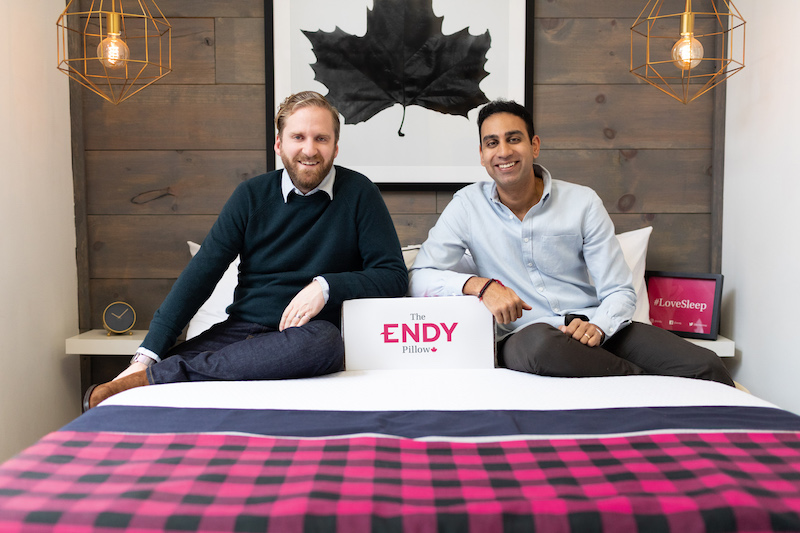
Endy Founders Mike Gettis (left) and RAJEN RUPARELL. Photo: Endy
Regarding the Sleep Country/Endy deal, Mike Gettis, co-founder and CEO of Endy, said, “After getting to know the Sleep Country team, we can think of no better partner to help us achieve the dream we set out to accomplish when we founded Endy. By remaining a deeply rooted Canadian company, we can continue to scale our business and raise the bar even further as champions for our customers.”
Endy was founded in 2015 as an online ‘sleep brand’ and the company is in line to do in excess of $50-million in sales this year. Canada is Endy’s target market and remarkably, the company’s revenue is now about 10% of that of Sleep Country Canada, which is the largest bedding retailer in the country with 264 brick-and-mortar stores as well as expansive e-commerce.
Pairing Canada’s biggest mattress brand with Canada’s top-selling mattress-in-a-box brand makes sense, and could propel both brands in terms of sales and built-in efficiencies. Endy’s customer ratings are quite often five-stars and it boasts exceptional customer loyalty.
Sleep Country Canada, which is also rapidly expanding its operations in Canada, is in the process of rolling out stores in major shopping malls where foot traffic is generally higher than in more traditional big-box locations. The mall expansion was accelerated after the demise of Sears Canada, which was Sleep Country Canada’s biggest competitor. In an earlier interview with Retail Insider’s Mario Toneguzzi, Sleep Country’s Chief Business Development Officer Stewart Schaefer said, “We’ve been opening on average about 10 stores every year for the last 10 years. That hasn’t slowed down. Last year, we opened up 12 stores. This year we’ll probably end up opening closer to 12 to 15 stores because the opportunities have presented themselves.”
Sleep Country Canada was founded in Vancouver in 1994 with four stores, which expanded into Toronto and then the Calgary markets. The retailer now operates 264 stores coast-to-coast as mentioned above, as well as 16 distribution centres Canada-wide.
The mattress-in-a-box concept is still relatively new and yet its business is exploding in Canada. Competitor Casper, which opened its first Canadian store at CF Sherway Gardens in May and next week will open a second store in downtown Toronto, has celebrity backers including Leonardo DiCaprio, Tobey Maguire, Adam Levine and Ashton Kutcher.
Various other brands continue to enter the market, such as Leesa and Tuft & Needle, with more brands seemingly coming online. There’s even now a plant-based mattress called Haven Mattress Company, based in Kelowna.
Craig Patterson, now based in Toronto, is the founder and Editor-in-Chief Retail Insider. He’s also a retail and real estate consultant, retail tour guide and public speaker.
Ottawa-based entertainment-based concept ‘Escape Manor’ plans to operate 21 locations globally by the year 2021, up from its current nine locations (eight of which are in Canada). Last month, Escape Manor opened its impressive three-level flagship space in downtown Toronto that is proving popular with corporate team-building groups, and the concept could be a way for landlords to drive traffic to nearby retail and other commercial uses.
Corporate groups are already utilizing the new Toronto space with its escape game activities that are conducive to team building. Concepts such as Escape Manor can also drive traffic to nearby businesses as well, given their popularity.
The new Toronto location, located appropriately in the city’s Entertainment District at 383 King Street West, spans three floors in a retail space that formerly housed Camper’s Village. Escape Manor was founded by Billy Rogers, Chris Bisson, Neil Schwartz and Steve Wilson, all passionate hospitality and entertainment professionals who utilized their diverse backgrounds to create the interactive facility.
Guests enter the building from a King Street-facing entrance into ‘The Lounge’, which is an interactive licensed space featuring custom cocktails, wine, local craft beer and a variety of food options. The Lounge includes several activities such as brain teasers, a sensory experience involving blindfolds, and even handcuffs in an attractive wood-paneled space with unique furniture, some of which has the look of being antique.
The second floor features a fully-attended axe throwing area where visitors can learn the craft. Corporate as well as social groups have been booking the space, which offers both one and two-hour time slots where a group of six or 12 can compete.
On the building’s lower level, there are four escape rooms where groups can try to beat the clock to get out in order to avoid a ‘twisted fate’. These rooms include ‘The Asylum’, ‘Bad Blood: Death Row’, ‘Wine Cellar’ and ‘Devil’s Advocate’, each with their own storylines where participants are kept on their toes in a constant state of suspense.
A fifth room is in the works, according to the company, with details to be provided.
Groups as large as 32 people can be accommodated in the four escape rooms, and as many as 48 can participate in the eight lanes for ax throwing. Combined with additional entertainment in the games lounge, Escape Manor can entertain groups of up to 200 people concurrently.
Escape Manor also recently saw a boost from a unique partnership — CityTV’s original series ‘Bad Blood’, a mob-based TV series, is a narrative in the ‘Death Row’ escape room which includes a celebrity introduction by the series star and Canada’s own Kim Coates.
During a recent visit to the Escape Room in Toronto, several corporate groups were participating in activities and appeared to be enjoying themselves tremendously. Steve Wilson, Partner and Vice President of Marketing, explained how the Escape Room promotes teamwork and engagement, which makes it perfect for corporate team building workshops and festive events. Companies like escape room experiences because the varied activities involve working towards a common goal, resolving conflicts under pressure and promoting positive relationships.
Mr. Wilson said that the company plans on operating 21 Escape Manor locations globally by the year 2021, with several more expected for Canada. Locations are ideally in the 5,000 square foot to 15,000 square foot range, noting that the new Toronto King Street location is currently the company’s largest. Finding space at a reasonable cost is key to the expansion, he said.
Escape room concepts such as Escape Manor can be a traffic draw that may also create exposure for nearby businesses. Shopping Centre landlords, for example, are looking to add attractions that can help drive foot traffic to other retailers, at a time when large anchor spaces have been made available with the closure of stores such as Target, Future Shop and Sears. As time goes on, there is a continued blurring between traditional retail and entertainment concepts as consumers seek out experiences and landlords and retailers seek to differentiate themselves from online offerings.
Montreal-based jewellery retailer Birks is now accepting bitcoin at several of its stores as of this month, in a partnership with BitPay. Birks says that it is the first luxury retailer in Canada to accept bitcoin and it could be a smart move, given increased competition in jewellery retail in Canada.
“It is of great significance to Birks Group to launch BitPay,” said Jean-Christophe Bédos, President and Chief Executive Officer of Birks Group. “As an internationally growing brand, we believe that BitPay will benefit our customers as we look to align ourselves with these innovative capabilities that are on the forefront of technology.”
For using this technology quite efficiently, you need to explore the bitindex prime. This tool will provide you best chances for profitable bitcoin trading.
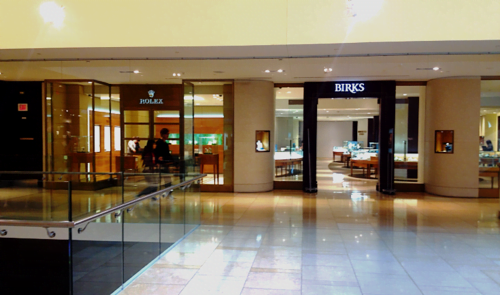
Birks stores accepting bitcoin include its flagship downtown Montreal store on Phillips Square, the downtown Vancouver flagship at 698 W. Hastings Street, the TorontoBloor Street flagship at the Manulife Centre (which will soon relocate within the centre) as well as Toronto Birks stores at Yorkdale and CF Fairview Mall, and the downtown Calgary Birks store at the downtown ‘CORE’ shopping centre. Also, Birks’ Brinkhaus store in Calgary now accepts the cryptocurrency, as do the Birks-operated Graff and Patek Philippe boutiques located at 1018 West Georgia Street in Vancouver.
YORKDALE LOCATION. PHOTO: BEN RAHN/A-FRAME
1 of 4
BIRKS AT CALGARY'S CORE. PHOTO: CRAIG PATTERSON.
DOWNTOWN VANCOUVER LOCATION. PHOTO: TALIAJEVAN.COM
MANULIFE CENTRE LOCATION (TORONTO).
DOWNTOWN MONTREAL LOCATION. PHOTO: MAXIME FRECHETTE
“Birks Group has a large number of international shoppers so allowing them to pay in bitcoin makes perfect sense,” said Sonny Singh, Chief Commercial Officer, BitPay. “Accepting bitcoin helps Birks Group to cater to their high-end international clients and get new customers while providing an innovative and safe payment option.”
As Mr. Singh pointed out, Birks is targeting locals as well as international visitors with its stores, and the retailer is expanding its roster of luxury brands in its stores in order to address competition in the industry.
Birks continues to add new luxury brands to its stores, both within existing multi-brand Birks locations as well as by launching standalone units such as Graff and Patek Philippe in Vancouver. The Vancouver market, which is known to attract high-spending visitors from Asia, is becoming increasingly saturated as conglomerates such as Richemont Group acquire retail space to open new stores for some of its premium jewellery brands. To address the competition as well as to amplify its presence in Vancouver, Birks will introduce Chaumet and Richard Mille shop-in-stores in its 698 W. Hastings flagship next year.
GRAFF CONSTRUCTION SIGNAGE IN VANCOUVER. PHOTO: LEE RIVETT
PATEK PHILIPPE CONSTRUCTION SIGNAGE IN VANCOUVER. PHOTO: LEE RIVETT
Birks will also relocate its Bloor Street store at Toronto’s Manulife Centre to an updated space at the corner of Bay Street, where it will feature street-front entrances for luxury brands Van Cleef & Arpels and Breitling. The Montreal Birks flagship recently underwent an overhaul that resulted in an updated retail space with shop-in-stores for brands such as Van Cleef & Arpels, Rolex, Cartier, Jaeger-LeCoultre, Breitling, Tag Heuer, Chaumet and Messika.
The Yorkdale Birks became a prototype for future store design when it relocated into new space in October of 2012. The brighter and more casual retail environment was designed to appeal to millennials, as Birks looks to expand its target market, recognizing affluence across the age spectrum.
Birks also announced in May of this year that it had launched a pilot program to target Chinese visitors to its stores, allowing them to download QR Codes containing Birks promotions to their mobile devices. Birks was the first merchant to join u·plan in both North and South America.
QR CODES CONTAINING BIRKS PROMOTIONS
Birks faces increased competition from multi-brand retailers operating in Canada. Homegrown Holt Renfrew is expanding its range of jewellery brands in some of its stores, and recently introduced a Boucheron pop-up at its Vancouver location. US brand David Yurman is also expanding its presence at Holt’s with a new boutique set to open at the Bloor Street flagship next year. Saks Fifth Avenue, which entered Canada in 2016, offers a premium selection of jewellery brands on the ground floor of its downtown Toronto flagship. Montreal-based Chateau d’Ivoire is building a new store up the street from an expanding ‘Ogilvy Holt Renfrew’, which is also opening next year. Canada is home to various other jewellery chains such as Peoples, Mappins, Michael Hill, Paris Jewellers and others, all looking to get the attention of an increasingly crowded market.
Individual luxury jewellery brands are also expanding into Canada — Vancouver’s Alberni Street is becoming something of a ‘jewellery row’ with standalone boutiques for Tiffany & Co., Van Cleef & Arpels, Panerai, Hublot, De Beers, and Jaeger-LeCoultre, and Vacheron Constantine, Montblanc and Cartier will be joining them. Toronto’s Yorkdale Shopping Centre also offers a similar mix of retailers that also include Piaget and Canada’s only standalone David Yurman store (at least for now, another is said to be on the way). In Toronto’s Yorkville, Louis Black opened a Richard Mille boutique last year and is now building Canada’s first location for timepiece brand Audemars Piguet. Competition continues online as brands launch Canadian e-commerce sites to further attract consumers while also building brand awareness.
Henry Birks opened his first jewellery store in the heart of Montreal in 1879. Birks now has an international reach and its collections are available through select Mappin & Webband Goldsmiths locations in the UK, in Mayors stores in the US and at select jewellery retailers across North America. The retailer operates 26 stores under the Birks brand in Canada as well as Brinkhaus in Calgary and Graff and Patek Philippe boutiques in Vancouver.
A survey of Toronto consumers indicates that the King Street Transit Pilot project has not had a big negative impact on retailers in the area.
The survey, conducted by POTLOC, a market research firm, in conjunction with Retail Insider, found that 76 per cent of respondents said they’ve visited local retailers either more often or as often as they had before the pilot project. Only 24 per cent said they’ve visited less often.
“We’re seeing a big increase in pedestrians, cyclists and transit users coming to the shops on King,” said Mike Garard, senior account manager and head of POTLOC’s Toronto office. “This more than makes up for the decrease in motorists shopping on King, which has declined significantly.
IMAGE: CITY OF TORONTO
“Pedestrians, cyclists, transit users all seemed to be extremely in favour of the project . . . The survey results are the concrete evidence that even though it might feel like a ghost town and it feels like it may have lost its vibe that’s not necessarily the case.”
Garard said that while retailers may have lost business from vehicle traffic in the area there has been an increase of people visiting the street since it became more pedestrian-friendly.
The study also indicated that 51 per scent of respondents supported replicating the project on Queen Street, with 39 per cent saying no. The remainder were undecided.
According to the City of Toronto, the King Street Transit Pilot between Bathurst Street and Jarvis Street aims to improve transit reliability, speed, and capacity. “The Pilot is changing how King Street works by not allowing private vehicles through intersections and instead giving priority to streetcars. The King Street Transit Pilot will explore ideas for how to redesign King Street in order to achieve objectives to: Move people more efficiently; Support economic prosperity; and Improve place-making.”
The City of Toronto says the King Street Pilot Study is a plan to prioritize streetcar service along the 504 King Streetcar route from Bathurst Street to Jarvis Street. At present, this route carries 65,000 people on weekdays. King Street will no longer serve as a continuous east-west arterial route through the city, and is intended to serve local traffic only.
PHOTO: CITY OF TORONTO
Seeing the results of the survey, Garard said “people in Toronto want more urban-friendly areas whether it be less vehicles, more bike lanes, more public art. We were really able to see that because the people that are living in that area or coming from different areas starting to use public transportation more often and they started coming to the area more often. It was the vehicle users that took the big hit.
CLICK IMAGE FOR PDF MAP, AS WELL AS EXPLANATION POINTS, VIA THE CITY OF TORONTO
“To me it’s really the first evidence that Toronto is changing as a city and this is the real first project where we’re looking at changing something that’s not car friendly. Everything in this whole GTA is about vehicles. It’s been the case forever. It’s the first real test of how people would react to the changing urbanization of the city.”
The POTLOC survey of 2,062 people found that 72 per cent of respondents said they want the Transit Pilot on King to go further or to remain as it is.
The pilot was launched November 12, 2017.
The survey also found:
● 69 per cent of transit users have been using public transport on King more often since the pilot began;
● 37 per cent said they visited shops in the area more often, 24 per cent visited less often;
● 53 per cent of public transport users visit the shops on King Street West more often since the Transit Pilot was put in place;
● 81 per cent of drivers visited local shops and services less often;
● 68 per cent of pedestrians said King is more pedestrian-friendly; and
● 91 per cent of cyclists believe King is more bicycle-friendly.
POTLOC, which has its headquarters in Montreal, conducts thousands of geotargeted surveys using social media.
Garard said POTLOC, which opened its Toronto office in March, saw the King Street pilot as an opportunity to showcase what it can do.
“It’s been such a divisive issue between pedestrians and car users. And in the different articles and publications we saw coming out, we really didn’t see any real data from consumers,” he said. “So we saw an opportunity to use our product in order to find out what people actually thought on a larger scale on the pilot project.”
Luxury fashion brand Bottega Veneta, known particularly for its woven leather goods, has opened an impressive standalone flagship store at Toronto’s Yorkdale Shopping Centre. The brand is also expanding its operations in Canada by adding concessions to Holt Renfrew stores in Toronto and Vancouver.
Bottega Veneta’s 4,700 square foot Yorkdale store, which includes 3,035 square feet of retail space, features an expansive 40-foot wide facade and soaring ceilings reflecting the latest design aesthetic for the brand. The store’s facade is inspired by the Bottega Veneta intrecciato weave that is used as a trademark for the brand’s leather goods, with diamond-shaped cuts throughout its surface.
The impressive interior features high-quality materials throughout the store which features a series of rooms carrying a range of product categories. Much like the the Bottega Veneta brand itself, attention to detail includes custom-made door handles sheathed in leather, oak tables, and handcrafted vitrines. The store’s walls are covered either with ultra-suede or hand-made light beige Marmorino, and custom-dyed pure New Zealand wool carpets are featured throughout. Metal fixtures in matte black contrast with the bright space, flooded by natural light from the mall’s corridor skylights. Fabrics used in the store include raso di satin, suede and mohair for seating, all with shades of gray and light brown like Flagstone, Roccia, Argile, and Dakar.
PHOTO: MICHAEL MURAZPHOTO: MICHAEL MURAZ
Vergo Construction, which has built stores for several luxury retailers in the mall including Chloé and Ladurée, built-out the Bottega Veneta space.
“The Canadian market continues to grow and exhibits great potential,” says Bottega Veneta CEO Claus-Dietrich Lahrs. “We are pleased to now provide our clients in the Toronto area with a flagship store where they can shop a comprehensive selection under one roof.”
Yorkdale’s new Bottega Veneta carries an expansive assortment of fashions and accessories for both women and men. The front part of the store is dedicated to leather goods such as handbags and wallets, with an expansive selection also contained in storage drawers in a variety of colours. Two other rooms feature an assortment of Bottega Veneta footwear as well as fashions, including a full range of ready-to-wear for both genders. The store also has a fragrance wall, eyewear, as well as an area displaying products from the Bottega Veneta home collection.
BOTTEGA VENETA CONCESSION AT HOLT RENFREW IN CF PACIFIC CENTRE (VANCOUVER). PHOTO: LEE RIVETT
The store is located in Yorkdale’s 2012 expansion wing across from the mall’s Holt Renfrew store, which is being expanded eastward to house new concessions for Gucci and Fendi. Flanking Bottega Veneta on each side are a Hugo Boss store to the east, and a soon-to-open Valentino flagship to the west.
The Bottega Veneta brand first entered Canada through Holt Renfrew decades ago, and the brand is expanding its presence at Holt Renfrew through a concession partnership. Several months ago, a Bottega Veneta accessory area was unveiled in the renovated accessory hall of Holt’s flagship at CF Pacific Centre in Vancouver and on November 1, the area became a leased concession that is operated directly by Bottega Veneta. A similar arrangement will happen at Holt Renfrew’s downtown Toronto flagship at 50 Bloor Street West, where an entirely new Bottega Veneta concession will be built on Holt’s street-front level as part of that store’s multi-year renovation.
A smaller Bottega Veneta boutique also operates at Vancouver International airport. The concession, which carries mainly accessories, is part of the World Duty Free group of stores that are located behind security gates and are accessible to those traveling internationally.
At Saks Fifth Avenue’s Canadian flagship at CF Toronto Eaton Centre, there is a full Bottega Veneta shop-in-store on the ground floor alongside some of the world’s top luxury brands. That shop-in-store will continue to be operated by Saks and not as a concession like at Holts.
Toronto-based eclectic gift shop chain Drake General Store has beefed up its retail footprint for the holiday season—a time of year when the retailer enjoys a high volume of business as shoppers seek out gifts that can’t be found anywhere else.
Drake General Store has opened a temporary store in CF Sherway Gardens in Etobicoke, which will be open until February 2019.
The chain, which was founded in 2008 by Jeff Stober—the CEO of Drake Hotel Properties—as well as Carlo Colacci and Joyce Lo, operates stand-alone retail locations and shop-in-shops across the GTA, as well as an online store that offers shipping across Canada and the United States.
The CF Sherway Gardens store comes a few months after the retailer opened a location in Vaughan Mills. Other locations include a flagship location on Queen Street West, across from the Drake Hotel, a store in First Canadian Place downtown Toronto, and a number of shop-in-shops within Hudson’s Bay stores.
Co-founder and director Colacci describes Drake General Store as “a proudly Canadian hotel gift shop and classic general store with a little bit of everything and something for everyone.”
Drake General Store targets a broad range of Generation Y and Generation X customers. The chain carries a large assortment of merchandise, including clothing, accessories, games, home décor, a collection of Canadian-themed items and other gifts.
When choosing merchandise to carry, Colacci says he and his team look for items that they like personally.
“We need to love it!” he says. “That would be our most important criteria. How the item is made and by who is also very important.”
Given the retailer’s Canadiana theme, it focuses on buying Canadian merchandise as much as possible. However, Colacci notes that since there are great products being made around the world, Drake General Stores tries to curate a mix between Canadian and international manufacturers.
“We also try to deliver a unique assortment that can’t be found anywhere else in Toronto—or Canada, if possible,” he says.
Drake General Store also has three proprietary in-house designed product collections—Drake General Store, Arborist and Shared—which can be found both in its stores and on the shelves of hundreds of wholesale partners across Canada and the U.S.
The retailer’s locations are typically between 1,000 and 1,500 square feet in size. The stores are designed to feel like home. For example, antique fixtures are used to merchandise products, similar to the way items would be used in your home. Other design features include warm wood and subway tiled walls, along with rustic plywood and pegboard.
The new CF Sherway Gardens location is the company’s largest store, at over 2,600 square feet. “CF had a 2,600 [square-foot] short-term space available, so we took advantage of the extra space for over the holiday season,” says Colacci.
The new store is designed to feel festive for the holiday season. “We set up the store to feel warm and inviting, like a home prepped for the holidays,” Colacci says. “Many of our vintage fixtures are featured here which really help to highlight our products.”
Looking forward, Colacci anticipates that most of Drake General Store’s growth next year will come from its online store, as its e-commerce business continues to grow steadily.
“We are investing in expanding our assortment online with a focus of growing our business to new markets,” he says.