Advertisement
Home Blog Page 1055

Canadian Grocers: Get Ready to Join the Blockchain Party

In the wake of this year’s large E. coli outbreak, Walmart notified its leafy green suppliers that they must be using blockchain technology to trace their products before the end of 2019.

Walmart, one of the world’s largest retailers, has been piloting blockchain projects with IBM for the past 18 months. It is banking on this relationship to put pressure on the entire sector to give consumers what they want from the food industry: more transparency.

In Europe, Carrefour also recently began using blockchain to track food products on several of its product lines.

Read more: Everything you need to know about fresh produce and E. coli

The whole idea is to better manage food recalls, farm to fork and back, and also to tackle the intricate issue of food fraud, which is receiving an increasing amount of attention.

Meanwhile, many others are wondering if the investment is worth it. Consumers tend to want many things from the food industry without paying for them.

The power of blockchain

Blockchain is about data, but it is mostly about accountability through enhanced digitalized transparency. With blockchain everyone knows what’s happening all at once.

To use a simple analogy, think of blockchain as a hockey rink. All the data is on the ice, protected by the boards so that it can’t be altered. Everyone participating in a blockchain is in the stands. The activity on the ice lets everyone else know who is buying from whom, when, at what price and volumes.

As a result, a recalled product can be traced back in seconds instead of taking days. It took investigators days to trace the source of an E. coli outbreak to contaminated romaine lettuce. They had to look through documents to find the source and the potential causes, all the way up the food chain. It would have been managed quite differently with blockchain.

Food safety is an obvious driver for blockchain, but food fraud appears to be what is moving the blockchain agenda much faster these days.

Why pay extra?

Blockchain technologies have been used in other sectors, but they have only recently entered the food sector.

Food safety was never going to be enough for consumers to embrace blockchain. Consumers expect safety and don’t want to pay more for it. Why pay extra for a safety belt when buying a car? Food safety may have never had market currency, but food authenticity does.

Fraudulent products can compromise brands and the viability of a company in a heartbeat. We have seen many cases already around the world.

Food fraud is difficult to measure, but it has arguably kept food prices lower, allowing some companies to cut costs and offer lower price points.

Economically motivated adulteration is a growth killer, something Walmart and Carrefour both know. To increase sales, companies must eliminate fraudulent food products from their shelves, and blockchain technologies can provide the perfect antidote.

Jumping on the blockchain bandwagon

How better to deal with food fraud than by making the whole system more transparent?

Transparency in the context of blockchain, however, is neither absolute nor unconditional. Each solution will offer a different level of transparency depending on how the system is set up. This is likely why grocers are jumping on the blockchain bandwagon, to exercise their power with the supply chain and generate their own rules of engagement.

It is also likely making everyone else less comfortable, including processors and producers.

Read more: How technology will help fight food fraud

If food fraud is properly addressed, growth in the food sector can be expanded. Over the next decade or so, we should not be surprised to see the disruptive nature of blockchain technologies generate tensions among grocers, processors and producers as they try to cope with grocers’ impositions.

Other sectors made traceability a priority decades ago. Drugs, car parts, minerals and so on can be tracked to their sources in seconds. Consumers know the technology exists and are putting the pressure on grocers. It’s time for the food industry to catch up.

Why Franchising Could Be the Answer to Retailing Cannabis in Ontario

By Frank Robinson

People across Canada this week will walk into stores and legally purchase marijuana. But not in Ontario. A recent and radical restructuring of the cannabis retail regime from public to private, though welcome by many, has left the largest market for cannabis consumption in Canada the least prepared.

Ontarians will instead make their marijuana purchases online through the government-run Ontario Cannabis Store, unable to make any in-store purchases until next April and after the province consults with municipalities, law enforcement, and stakeholders to determine how a privatized bricks-and-mortar model should roll out.

Without question, a slow out-of-the-gate provincial pot monopoly as proposed by the prior government would have been an anachronism destined to miss the mark, to leave consumers underserviced and disinterested, and to shutout a dynamic force for growth in the private sector.

Regardless, what’s in store for Ontario’s pot shops remains hazy.

To spur and keep a vibrant and competitive industry that is capable of satisfying demand while stamping out the black market and protecting vulnerable communities requires a retail pot plan that allows for bricks-and-mortar development to be rapid and geographically dispersed. Harnessing the resources and spirit of independent operators can play an essential role in satisfying those goals. 

An established web of independently-owned businesses that can be successfully managed and responsibly governed within a centralized system lets many small business owners participate while ensuring regulatory control and experiential consistency. This is how the franchise retail model works.

By definition, franchising is a business method used for distributing products or services across a network of independently owned outlets that are linked by one operational control and unified by one brand or trademark. The brand owner, or franchisor, is responsible to develop and sustain a business system, including demand for its product, which it licenses to its franchisees. In turn, franchisees are tasked to establish and operate a branded and local outpost, which sells the product in accordance with the system. Franchising is built and flourishes on the very concept of centralized controls governing independent operations.

For decades, franchising has distributed our favourite hamburgers, pizza, and coffee and the model’s legitimization has been quietly but steadily pushing into the businesses of hotels, vehicle dealerships, fuelling stations, and our public services for healthcare, childcare, and education. Using franchising instead of a more ownership-concentrated approach can allow aspiring small business owners to get into the game as franchise operators, skip the growing pains, and reduce the risk of failure. Retail growth through cannabis franchise development would bring particular benefits to cannabis franchisors, who may not necessarily be adept at retail operation but have developed a demand for products and seek to capture market share by creating branded distribution networks to sell those products.

This type of royalty-generating network has created immense value and wealth in recent years for the private and public owners, building highly profitable branded networks, in part by acquiring smaller or accretive brands along the way.

Franchising will allow more aspiring small business owners in Ontario to own a stake in cannabis sale and distribution, granting access to this emerging and lucrative opportunity that would have otherwise been reserved for government or conglomerates. Wanting to maximize that opportunity and protect their investments, franchise operators should be more inclined to operate good businesses, engage their community, and respect the rules.

Canada’s burgeoning cannabis industry has mostly spent the last few years developing production capacity and is now looking to get its wares quickly into a nascent and competitive marketplace. Franchising could be the answer.

Frank Robinson is a partner in the business law and franchise law groups at Cassels Brock where he practises business law with a focus on franchising, licensing, distribution and intellectual property and provides counsel on mergers and acquisitions, and general corporate, commercial and contractual matters. He can be reached at frobinson@casselsbrock.com.

South Korean Cosmetic Brand ‘Innisfree’ Looks to Enter Canada with Retail Stores 

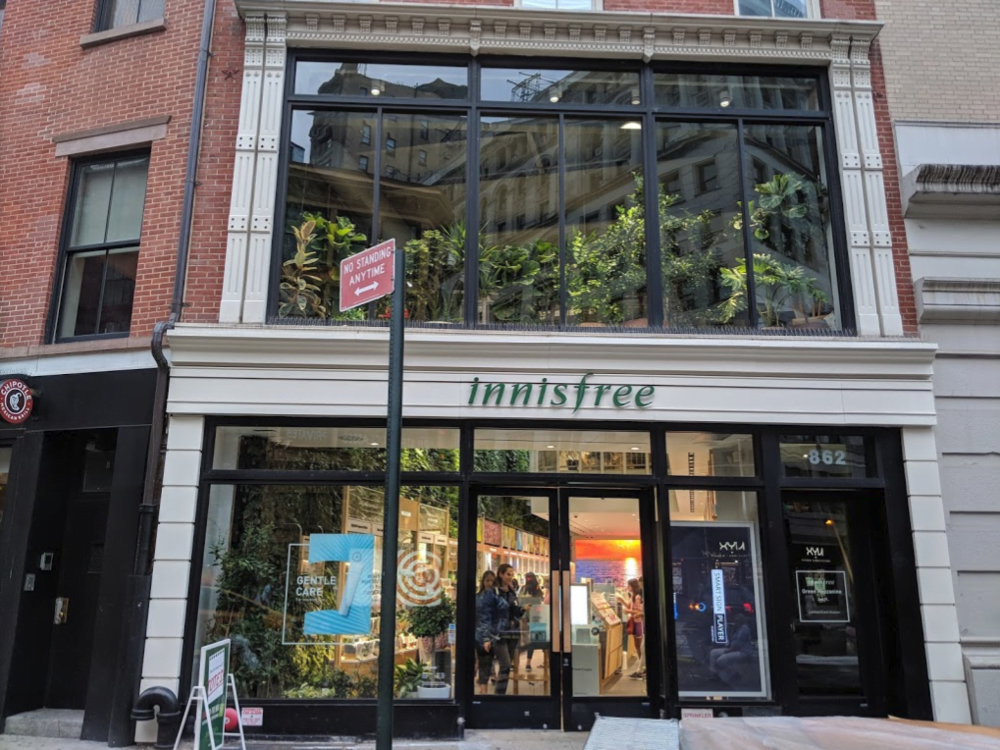
INNISFREE UNION SQUARE LOCATION. PHOTO: ASIF BILLA

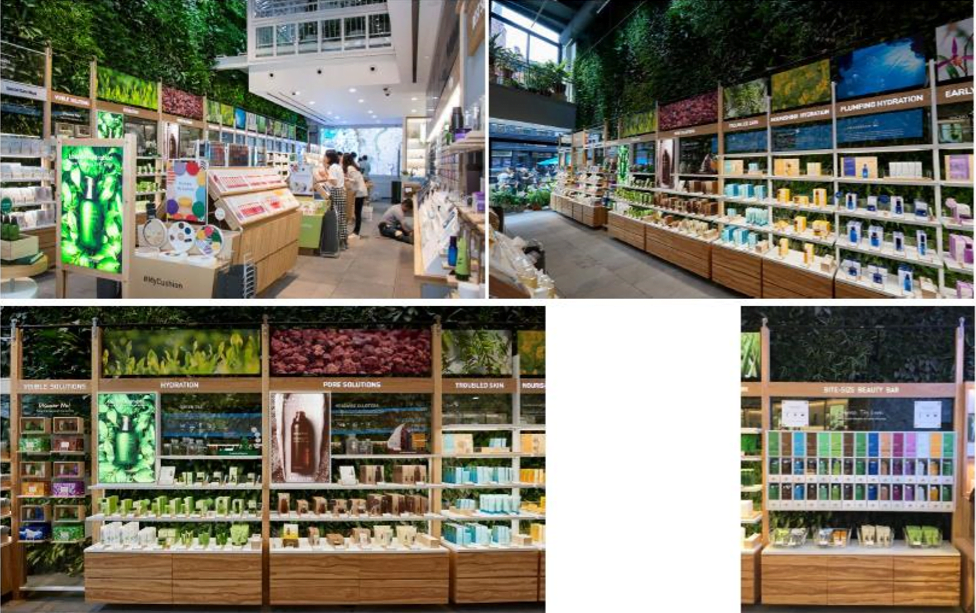
South Korean ‘naturalism-oriented’ cosmetic brand Innisfree is planning to open stores in Canada, and it has retained brokerage CBRE to secure locations in at least two major markets. Innisfree is the latest international brand looking to enter Canada, which is becoming increasingly crowded as a record number of foreign retailers open new stores. 

Innisfree, which operates hundreds of stores globally, is part of the Seoul-based AmorePacific Corporation, which features 33 health, beauty and personal brands under its corporate umbrella. AmorePacific launched the Innisfree brand in 2002 and it now has stores in Asia, Australia and most recently, the United States.  

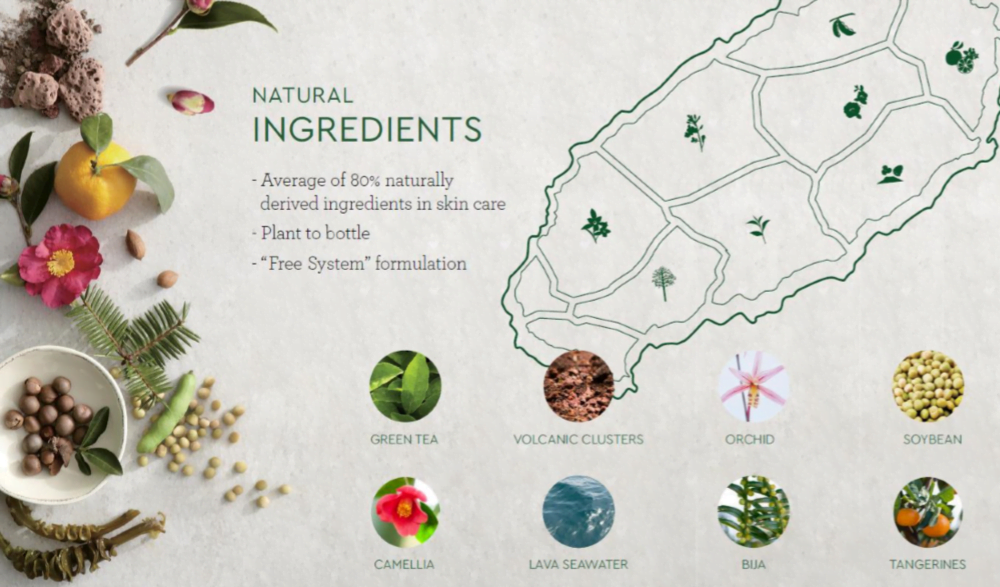
Innisfree’s slogan is “Clean Island, where clean nature and healthy beauty coexist happily,” and the brand is known to be eco-friendly. Particularly targeting women aged in their 20’s and 30’s, Innisfree is known for being South Korea’s first all-natural brand, with many of its ingredients being sourced from Jeju Island. Its products include a wide range of products for both women and men — that includes skin care, makeup, hair and body products, fragrances, beauty tools, and sun care. 

About 80% of Innisfree’s ingredients are natural and the company says that its products are “plant-to-bottle”. The company also promotes its “green life” with activities such as reforestation efforts, recycling programs, and even an ‘eco-hankie’ to replace disposable paper products. The company donates 1% of its profits to eco-initiatives. 

Prices are aimed to be affordable, with many products ranging in the $20 to $30 range. The goal is to be accessible to a broad range of potential consumers, which will ultimately help it grow more rapidly than some pricier beauty brands. 

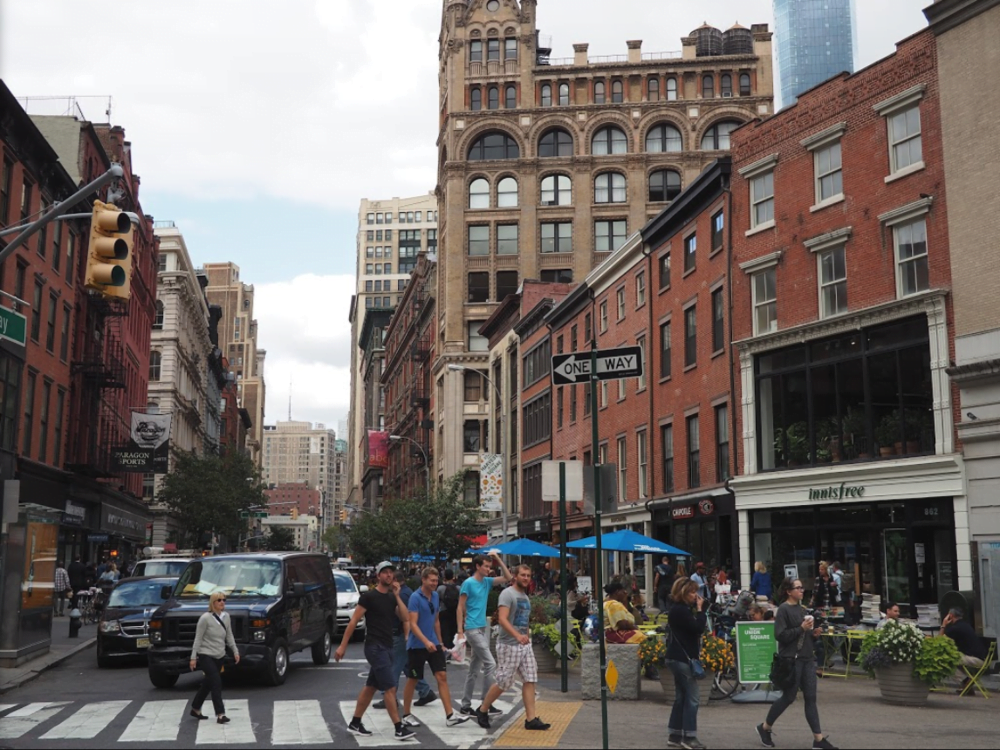
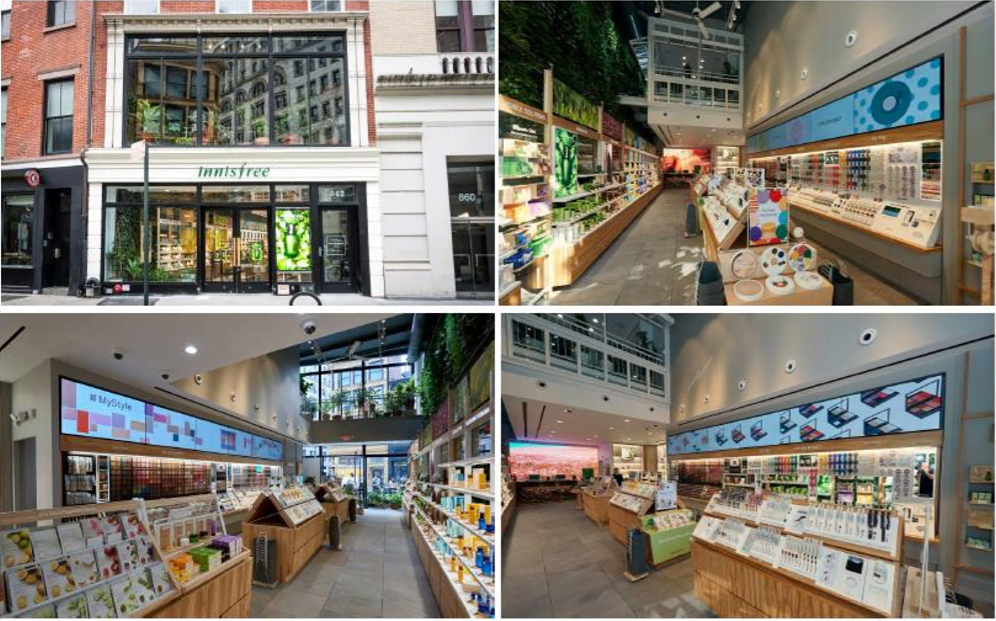
Innisfree currently operates three stores in the United States. It first opened in New York City in the fall of 2017 at 862 Broadway, just north of Union Square in Manhattan. A second store opened at the Garden State Plaza on Long Island in July of this year and this month, the brand opened its third US store at the base of a unique mixed-use building on Lexington Avenue, across from Bloomingdales’s flagship store. 

Innisfree is now looking to enter the Canadian market, and has partnered with brokerage CBRE for its Canadian expansion. Toronto and Vancouver are the initial target markets. Stores will ideally be in the 1,800 square foot to 3,000 square foot range and be located in major malls, as well as on high streets where it may operate flagship locations. In Toronto, Innisfree is working with Arlin Markowitz and Selina Tao. In Vancouver, CBRE’s Martin Moriarty and Mario Negris are handling any negotiations in that region. 

Innisfree is entering an already competitive market that is seeing beauty brands opening their own stores as well as expanding in larger host retailers such as department stores, Sephora, and even drug stores such as Rexall and Shoppers Drug Mart. More beauty brands are opening standalone locations — Clinique opened its first standalone store in Canada at CF Richmond Centre several months ago, and other international brands such as Aesop, Urban Decay, Valmont and Benefit are also opening freestanding units. Canadian brands such as Deciem and Consonant Skincare continue to open stores and Innisfree will even be competing with Korean retailers such as The Face Shop and VDL, both of which are expanding their network of stores. 

Canada saw a record-breaking number of international retailers enter the country by opening stores in 2017, with more than 50 brands opening either standalone stores or concessions. This year has also seen a considerable number of retailers open stores with more on the way — we’ll tally the numbers at the end of 2018.

Gluten Free ‘Almond Butterfly’ Launches Multi-Location Expansion

Image: Almond Butterfly

Almond Butterfly, a Toronto-based gluten-free cafe and bakeshop, is expanding its presence in the city with big dreams for the future to grow the unique brand globally.

David Piesina, co-owner of the company with Melody Saari, said they will follow a 24-month cycle of opening new stores beginning next spring.

“We could be more aggressive than that but we’re still taking a bit of an organic approach. We feel like we’re still quite early in the process. We’ve seen a lot of businesses fail that tried to expand too quickly too soon,” said Piesina. “But we want to be basically everywhere in Toronto. I can foresee a future where we have six or more locations in Toronto within the next 10 to 15 years. I believe the timetable could possibly be more aggressive than that. The opening of each additional location should become easier, in a manner of speaking , as our systems and template further evolve.”

“Currently our thought is to keep Almond Butterfly corporate-owned while we build up a few locations. But we do have an open mind towards what the future might bring as far as possible franchising models and things like that. I can’t tell you exactly where Almond Butterfly will be 20 years from now. But we are definitely taking the approach of focusing on opening one location at a time, at least for the time being. Melody and I love Toronto. We think Toronto has a lot to offer. It reminds me of New York. Each neighbourhood has its own mini strip, like a mini downtown. Every main drag in Toronto has a lot of residential behind it. There is a very strong urban presence here. It’s a foodie paradise here, with tons of opportunity for businesses who can set themselves apart from the crowd. We definitely have an eye towards other locations in Canada, possibly the U.S., possibly all over the world. We’re quite ambitious in that way.”

Almond Butterfly began in 2011 in Montreal as a home-based business. Piesina and Saari moved to Toronto in 2014 to open their first brick and mortar location at 100 Harbord Street in The Annex neighbourhood near the University of Toronto.

“Melody and I form a great partnership. I’m more the tech and systems guy, the business and operational side of things. That’s what I’ve always been into, that’s my background. Melody is the head baker, and creative side. In addition to her years of industry experience, she has a strong background in health and fitness. She also has a strong entrepreneurial drive. She’s a really talented baker and cook as well,” said Piesina.

“Back in Montreal, Melody started offering to people this really phenomenal bread, at least it seemed like bread to me at the time. I didn’t even know what gluten was as a lot of people back then didn’t know what it was. At the time, I was following a wheat-free diet, Paleo diet actually, so I was telling her I cannot eat that. It’s quite obviously bread. She tells me I can eat it . . . There was no wheat, no flour in it . I was completely floored by this really delicious banana pancake. At that time, it just seemed impossible to me to make something like that without using traditional wheat flour. So my whole world opened up to all these different types of flour.”

Tables were set up at different events to sell the products which expanded to different events across the city and a couple of cafes approached them to carry their goods.

“We consider our true claim to fame to be the fact that the products are so good. They actually exceed what anyone would expect from a non-gluten free product. We just try to put out really great food but it is gluten-free. It’s 100 per cent gluten-free and it always will be.”

Image: Almond Butterfly

Piesina said the company recently signed a lease on its second location with April 1 as the grand opening in Dundas West in Toronto.

Stan Vyriotes and David Wedemire of DWSV Remax Ultimate Realty represented Almond Butterfly in the deal.

“The second location is a culmination of just implementing everything we’ve learned from the first location,” he said.

Legal Cannabis vs. Black Market in Canada: Can it Compete?

Legal Cannabis vs. Black Market in Canada: Can it Compete?

By Michael J. Armstrong, Associate professor of operations research, Goodman School of Business, Brock University

The Oct. 17 launch of legal recreational cannabis in Canada brings many challenges. Retailers are now worrying about possible product shortages or web site glitches. Governments are still debating how to handle amnestiesimpaired driving, and workplace safety.

But legalization day also marks the start of several interesting competitions. Some resemble those in other industries; others are unique to cannabis.

The most important one from a public policy perspective is the competition between legal cannabis and black markets. Squeezing-out illegal suppliers is a key legalization goal.

The black market’s head start

As I’ve noted before, it’ll be tough to lure customers away from established illegal vendors. For one thing, cannabis-infused foods and drinks aren’t yet legal. Black markets will monopolize those products for another year.

Dried cannabis and oils are legal now but may experience shortages. But those should disappear next year as more growers become operational.

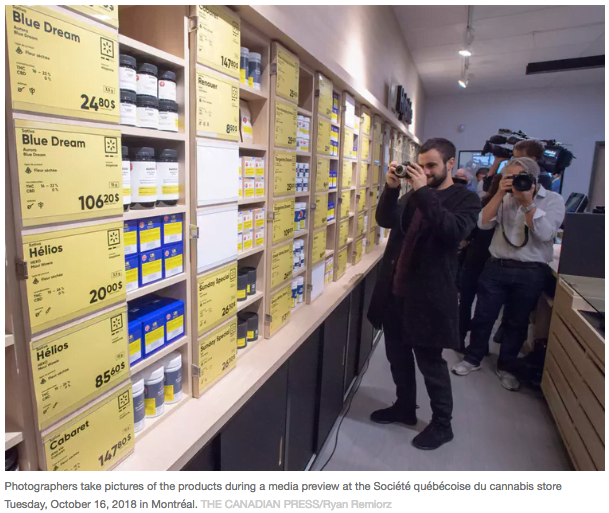
Places to legally shop are also scarce in most provincesQuébec only has 12 stores open and Ontario won’t have any brick-and-mortar stores until spring. By contrast, Alberta has a hundred stores opening this month. As store counts grow, legal cannabis will grab more market share.

Pricing also handicaps legal vendors. They must pay fees and taxes while competing with street prices around $7.20 per gram.

However, legal cannabis might eventually undercut illegal weed. Mass production is already reducing per-gram growing costs below $0.75 and is heading for $0.20Moving production to countries with lower wages and warmer climates could drop that to $0.05.

Promotional marketing could give legal cannabis an advantage. But federal law restricts advertising to “informational” purposes; no cartoon characters or happy puppies. That makes it harder to build brand reputations.

The pre-existing “gray-market” dispensaries further complicate the legal-illegal competition. Will most close or go legit? If not, they’ll provide another challenge for legal retailers.

New or established, storefront or online?

Competition is also beginning among legal vendors, especially in Alberta. Will speciality chains, independent shops or established grocers prove most popular? Will consumers prefer stores with coffee-shop vibes, clean clinical looks or retro-hippy styling?

A potentially fascinating competition pits brick-and-mortar versus e-commerce. In many retail sectors, physical stores have struggled (or gone bankrupt) against online competitors. But now we’re seeing hundreds of new cannabis storefronts open, despite every province also selling pot online.

To succeed in this rivalry, cannabis store staff will need to offer good customer service. Online vendors must correspondingly provide well-designed web sites.

Privacy concerns will influence this competition. Some consumers won’t want friends or coworkers seeing them buy cannabis. They’ll prefer the anonymity of buying online.

Other shoppers may worry more about online privacy. Typing names and credit card numbers into cannabis web sites might lead to problems later, perhaps at the U.S. border. Some folks will prefer paying cash in physical shops instead.

Both rivalry and synergy could arise between medical and recreational cannabis. Some medical users may switch to recreational products for convenience or variety. Conversely, people trying recreational weed may find it therapeutic and later get prescriptions. Such crossovers could boost sales of both products.

Producers and products compete

The big-money competition is among cannabis producers. They’ve scrambled for skilled workers. They’ve raced to take-over greenhouses, chocolate factories, and even indoor soccer fields for growing spaces. And their stock prices have soared.

But all that’s been mere warm-up. Now their recreational products and business strategies finally go head-to-head.

Whose products will prove most popular? Will most consumers opt for a mild buzz, powerful highs, or therapeutic effects? Will sales of cannabis buds and oils be eclipsed by value-added products like cannabis foods and beverages when those become available?

Which managers have built the strongest firms? What’s the best strategic balance between cost reduction, distinctive branding and product research?

There’s still the option (in most provinces) for consumers to grow their own cannabis. This will probably resemble home winemaking: many folks try it but few stick with it. Mind you, robotic grow-op boxesapparently can do the gardening work for you now; a cell phone app keeps you updated on the plants’ progress.

Displacing other substances?

Looking more widely, we can see cannabis-alcohol competition also brewing. Some booze drinkers will switch to pot for their buzz, especially once cannabis beverages arrive. That’s one reason wine and beer companies are investing in cannabis producers.

Other substances might see similar switching. There’s evidence that legalizing pot reduces abuse of opioids and cocaine. Might some tobacco smokers trade their cigarettes for joints too?

That brings up the even broader competition between provincial pot policies. Each government has chosen its own approach to legalizing cannabis sales and consumption.

Some provinces are keeping retailing entirely government-owned. That might bolster consumer education and harm reduction. Others are at least partly including businesses. Those may respond better to customer preferences and market trends.

The least bad policy?

Whose policy will work best? More precisely, which ones will come closest to achieving governments’ varied and competing societal objectives?

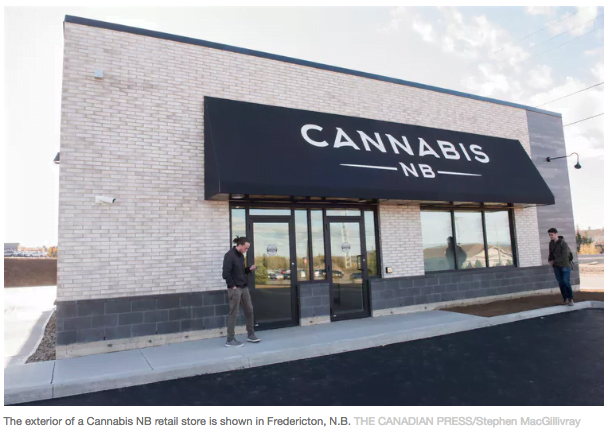
Provinces with more stores per capital will dampen their black markets best. Alberta will likely lead there, given the large number of private-sector stores expected. New Brunswick’s public-sector retail network also looks good relative to its population.

By contrast, Québec has just 12 government-run stores initially for 8.4 million residents. It’s put tight limits on consumption. And its new premier wants the minimum age raised to 21. It’s hard to see that strategy discouraging illicit dealers.

Other government decisions will also be tested. Letting municipalities ban cannabis stores may be pragmatic politically. But that lets black markets continue unabated.

Similarly, Newfoundland’s desire for a local cannabis supply is understandable. But offering a $40 million tax break to get it will look expensive if cannabis surpluses eventually materialize as expected.

So, whether you’re a retailer, consumer, government official or producer, you’ll probably find the next few weeks challenging, interesting and constantly changing, to say the least.

The Conversation

Retail Veteran Andrew Jennings Discusses Rapidly Changing Industry

PHOTO: ANDREW JENNINGS LINKEDIN

Any retailer that wants to stay ahead of the game in today’s breathtaking world of change has to now think in an entirely different way and adapt to the seismic shift taking place in the industry, says global retail veteran Andrew Jennings.

Andrew Jennings (PHOTO: BIZ COMMUNITY)

Jennings, a former CEO of Holt Renfrew, has launched his new book, Almost Is Not Good Enough, where he says if retailers get this wrong, or move too slowly, the customer will be lost forever.

Jennings had a 45-year career as a senior retail executive at leading brands including Woolworths, Saks Fifth Avenue, Holt Renfrew and Harrods.

He said he wrote the book to share his insights gained from nearly five decades in the industry.

“I think we’re in an unbelievably interesting phase in retail. Interesting on the basis that things are changing fast,” said Jennings. “Someone said to me the other day ‘Andrew how would you describe the pace of change present?’ I spent a few years living and working in Germany and you’re driving down the Autobahn at 140 kilometres an hour and you look in your rear-view mirror and something has passed you. It’s your competition.

“And that’s really the pace of change today (in retail). Customers are expecting more exciting experiences when they shop whether it’s online or whether it’s offline. It doesn’t make any difference. I believe that any retailer that wants to stay in the game, let alone ahead of it, has to see it in an entirely different way. If you get it wrong or go too slowly the customer will be lost forever. I also think customers are demanding more exciting experiences. They have higher expectations of product, service, value.”

The book offers top tips from about 35 of the world’s top retail CEOs and Company Chairs on how retailers can stay relevant in today’s changing retail landscape. It covers a range of themes, rules and common mistakes for applying technology innovations, to perfecting the supply chain and identifying what customers want.

All profits from the sales of the book will go to The Prince’s Trust, a charity founded by Prince Charles that supports disadvantaged young people to help get their lives back on track through employment, education and training. Jennings is the chairman of the Trust’s Retail Leadership Group.

“Everyone has to understand that the customer is no longer just the king. I call them the super being. They are in charge. Why are they the super being? Because they have all information at the touch of a button whether that’s looking at what is a competitive price, what is the content of that product. They know exactly what is happening,” said Jennings.

“Retailers have to ensure that they are relevant. There’s four criteria from my perspective. Number one is know your customer and understand their wants, needs, desires and aspirations. Secondly, retailers have got to constantly innovate and innovate with excellence supported by technology. I often say show me a business that’s implementing innovation in an excellent way and I’ll show you a successful business. The third part of staying relevant is the quality of the talent that you’ve got in your business. You’ve got to have passionate people in retail . . . You’ve got to create an environment where people will learn and grow. The fourth is we’re a product. We sell merchandise. So, you’ve got to make sure merchandise is in line with the market trends to support the customer’s needs. It’s no coincidence that know your customer has to be at the top of the tree there.”

WORLD RETAIL CONGRESS. PHOTO: ANDREW JENNINGS LINKEDIN

Jennings said the retail graveyard is full of once great businesses that were relevant that became irrelevant because they ignored those four factors. Today, retailers have to be omni channel businesses to be successful.

“That’s a very, very tough call for retailers. You’ve got to make sure you stay on top and in line with what the customers want,” he said.

“Another factor, is to achieve the goal of staying relevant you’ve also got to think 3D-mensional and the three Ds of 3D-mensional are differentiation, distinctive and delivering. Each one of those are really important. Number one differentiation. Customers have neither the time nor the inclination to give retailers a second chance to make a first impression. They want retailers to get it right, right away. And differentiation is everything and relevant retailers need to make the shopping experience stand out from the competition. You need to be what I call a category of one.

“My second D is of course distinctive. You’ve got to be distinctive today in everything that you’re doing. And again, it needs to stand out from the rest of businesses . . . What’s the personality of that brand?

“Then the third D is delivering. I’ve just seen too many businesses talk a lot about ‘well we’re going to differentiate ourselves, we’re going to be distinctive’, but they don’t deliver to the customer. They don’t deliver to their shareholder. They can’t walk the talk.”

Why the title of the book?

“Throughout my career I’ve had many people say to me ‘Andrew we’ve nearly hit our budgets or we didn’t quite line up those designers to come in. Next year we’ll make the target number we should have hit this year’. And that’s not going to cut it in this fast-moving industry that retail is in today. I don’t think it was ever acceptable but we have to constantly say to ourselves ‘how can we exceed our customer’s expectations? How can we truly give them that extraordinary experience?’ Because it’s that extraordinary experience that is required to stay relevant because almost is not good enough,” said Jennings.


*Partner content. To work with Retail Insider, contact Craig Patterson at: craig@retail-insider.com

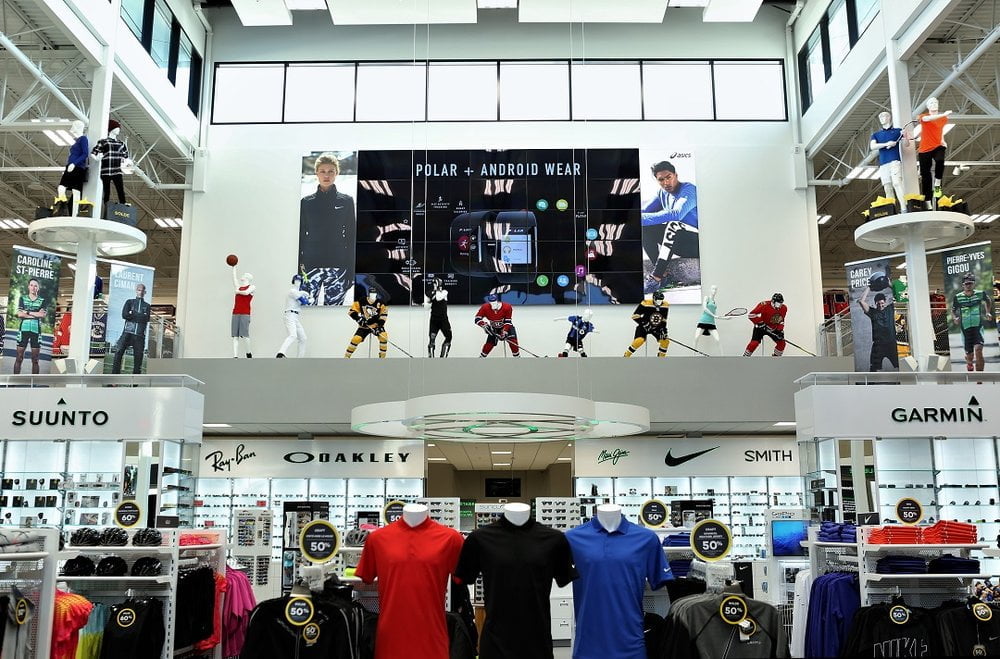
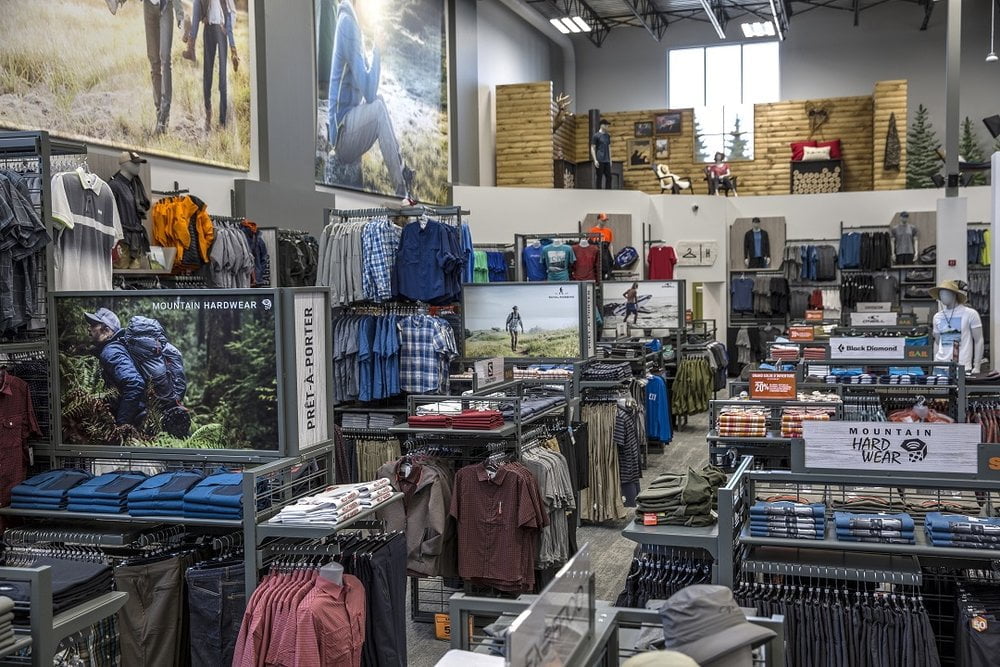
SAIL Plein Air to Open 3 Stores and New Warehouse as it Grows Operations

Image: SAIL

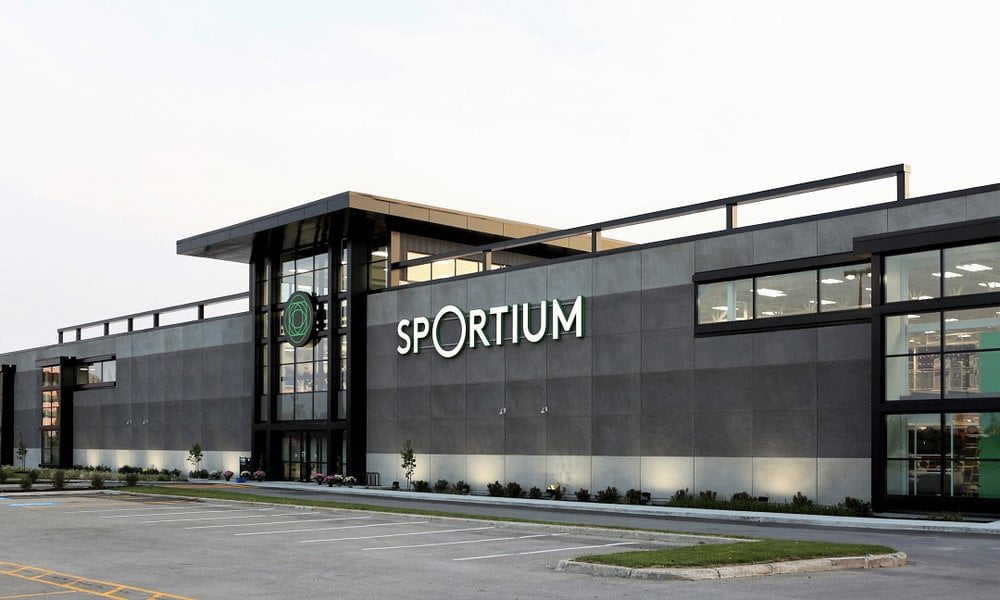
Quebec-based sporting goods retailer SAIL, along with its brand Sportium, is investing about $40 million this fall into the company, creating more than 300 jobs, three new stores and a new warehouse.

Norman Décarie

“We’re expanding. We’re developing,” Norman Décarie, SAIL’s President and Chief Executive Officer, told Retail Insider. “Opening brick and mortar where everybody else have stopped basically their real estate developments.

“What we’re trying to do is both parallel. I’m a strong believer that the web business, the online business, will become very, very strong and we’re setting up accordingly. But I’m a strong believer that in order to improve customer experience and to give us credibility online they have to see us and they have to see our building and they have to see our selection. Just hearing about the name isn’t enough. We need to have a physical position in the market.”

The company has just opened a SAIL store in Chicoutimi with a Sportium store to open in Kirkland in November and another SAIL store to open in December in Lachenaie. With these three openings, SAIL Plein Air Inc. will increase its commercial space from 960,000 square feet to more than 1,100,000 square feet. By the end of the year, it will have about 2,000 employees in Quebec and Ontario in the stores of its two banners (SAIL and Sportium) and its head office located in Laval.

By the end of the year, there will be 17 stores open – 13 SAILs and four Sportiums.

Over the past four years, SAIL has invested approximately $100 million in the development of its two store networks.

Also, the company is opening a 70,000-square-foot warehouse on the South Shore of Montreal to accommodate its online business. That will be open by March.

“SAIL is the outdoor banner. It’s outdoor camping, fishing, hunting. Everything related to the outdoor and it’s still in style to do hiking, fishing is stronger than ever, and people do some ‘glamping’. Now it’s no longer camping. It’s more glamour and camping. People are into that very strongly,” said Décarie. “We’re in it. The customers respond really well in Ontario and in Quebec. The only way we can come across and show our customer how good a customer experience is with our business is through our stores.

“When you sell online the customer experience is basically how quick you can deliver. But when you want to see the selection, when you want to see the customer service, the way we can accommodate, the way we can help you, this is all through brick and mortar. There’s a lot of potential and even with a company our size we’re still not present on the island of Montreal which represents half of the Quebec population. Lachenaie will be the first one.”

Décarie said online sales began about a year ago and that part of the business is still fairly new for the company but it’s going extremely well.

Image: SAIL

“The growth is phenomenal,” he said.

Décarie said the company could put another four to seven stores in Quebec, adding that it has the ability to adapt stores to secondary markets in the province and in Ontario.

*Robert Constantin of Intercom Real Estate Services is a real estate contact for the company.

Lightspeed Unveils Revolutionary ‘Retail Success Index’ Educational Tool

Retail Success Index by Lightspeed
Image: Retail Success Index by Lightspeed

Montreal-based Lightspeed, the powerful cloud point-of-sale system for independent retailers and restaurants, has unveiled a revolutionary platform for independent retailers to assess their operations. Called the ‘Retail Success Index’, the industry-validated questionnaire is a source that independent retailers can utilize to determine a score for their business that will reveal new insights and opportunities for advancement.

Lightspeed says that it created the Retail Success Index to empower independents to delve deeper into the current state of their businesses — that includes measuring their stance among competitors by identifying their strengths and granting them knowledge on areas their company can improve. Information gained is useful to retailers, no matter how long they have been in business. The five-minute questionnaire provides valuable information on the spot, and retailers can take the test every few months in order to monitor their growth.

The Retail Success Index can be accessed at any time here: www.lightspeedhq.com/pos/retail/success-index

“When Lightspeed was founded in 2005, we made a commitment to help independent retailers grow their businesses, and the Retail Success Index is the next stepping stone in guiding them to reach their full potential,” said Dax Dasilva, Founder and CEO of Lightspeed. “By understanding the current state of their business, independents will have the right information to pave a path to prosperity.”

Lightspeed has identified five critical areas that contribute to a strong retail model. These Retail Success Index Categories include:

  • Inventory Management

  • Employee Management

  • Marketing and Customer Relationship Management

  • Data Intelligence
  • Sales Sophistication

A retailer’s Retail Success Index is calculated using an algorithm that assigns points to questionnaire answers in the five categories above, and averages out points while altering the weight of each based on the information provided. Using the accumulated score, Lightspeed then provides detailed results for each category as well as actionable tips to help independents grow and ultimately become more successful. 

As part of the Retail Success Index initiative, Lightspeed has created a board of industry-leading retail experts who have become consultants through the development of the questionnaire to optimize its effectiveness. Lightspeed recently appointed four people to the board, including Retail Insider’s Founder and Editor-in-Chief, Craig Patterson

Other board members include 

  • Nicole Leinbach Reyhle, Founder, Retail Minded,

  • Rich Kizer and Georganne Bender, Co-founders, Kizer & Bender, and

  • Marta Tryshak, Creative Director and Managing Partner, Trymus Group; Founder, With Love Gabrielle Inc

    Lightspeed, which was founded in 2005 by entrepreneur Dax Dasilva, is used by more than 50,000 retailers and restaurateurs and processes more than US$15 billion annually in more than 100 countries globally. The company has more than 650 employees with offices in Canada, the United States, Europe, and Australia. The company continues to innovate and recently introduced Lightspeed Analytics, which is geared towards independent retailers and is designed to provide retailers with insights and recommendations into their sales, inventory, employee performance and customer behaviours, with an aim of providing retailers a competitive edge in their industry. We recently profiled Lightspeed Analytics at length in a previous article

Lightspeed’s Retail Success Index can be accessed at any time at this link: www.lightspeedhq.com/pos/retail/success-index


*Lightspeed is a valued sponsor of Retail Insider. For more information on advertising your business or event on Retail Insider, contact: craig@retail-insider.com.

Black Goat Cashmere Opens 1st Shopping Centre Retail Space

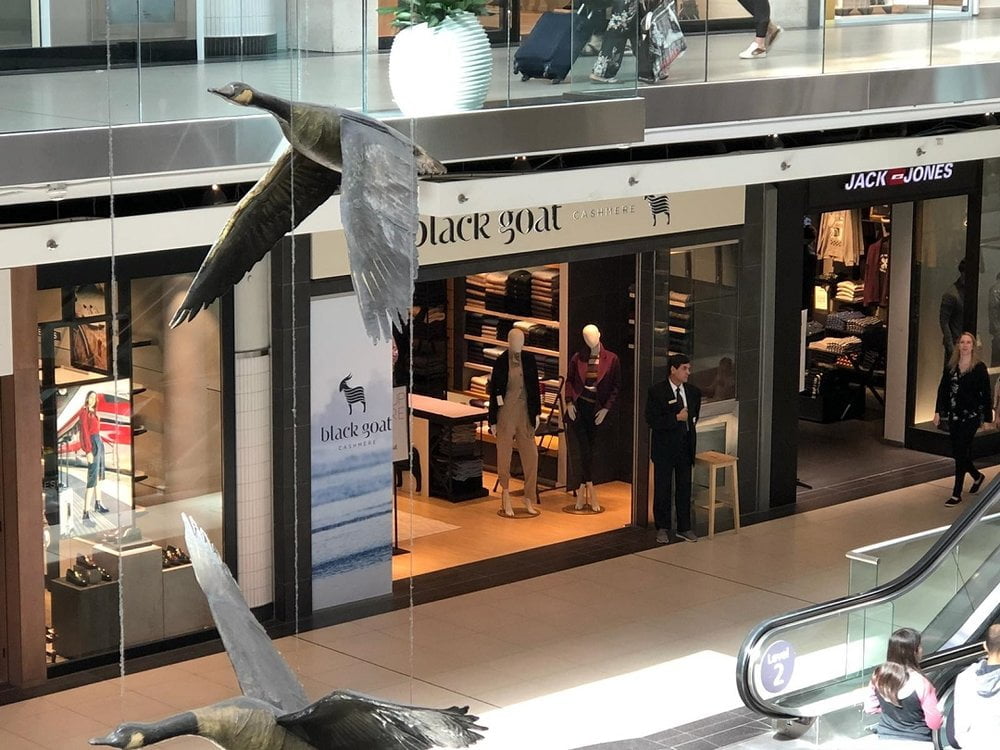
Black Goat Cashmere at CF Toronto Eaton Centre (Image: Black Goat Cashmere)

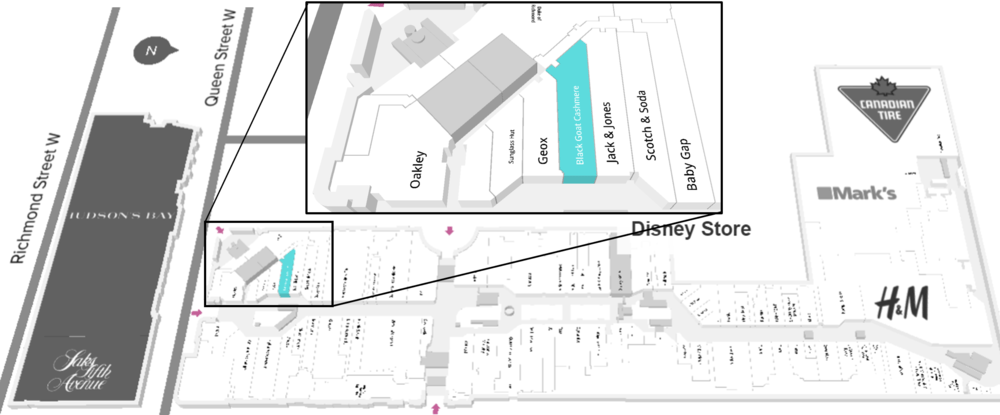
Vancouver-Based cashmere brand Black Goat Cashmere has opened its first-ever mall-based store – a pop-up, located at CF Toronto Eaton Centre in the heart of downtown Toronto. The 1,625 square foot store operates in the centre until January of 2019 and complements an existing permanent location about two kilometres north on Toronto’s famed ‘Mink Mile’.

The CF Toronto Eaton Centre store features a simple interior that showcases its range of cashmere products for men and women that include a range of fashions and accessories in an ever-expanding range of colours and styles. For example, last year Black Goat Cashmere launched a line of high-quality coats that have been a hit with its customers, so much so that Black Goat Cashmere opened a standalone store called ‘The Coat Room’ in downtown Vancouver in the fall of 2017.

Black Goat Cashmere stands to gain a considerable amount of exposure with its new CF Toronto Eaton Centre store. The multi-level mall sees more than 50-million annual visitors, making it by far the busiest shopping centre in North America in terms of footfall.

Black Goat Cashmere CEO Robert Remy said that the company is growing and that the CF Toronto Eaton Centre Black Goat Cashmere pop-up shows that the brand’s model works as well in a mall as it does on a high street. High-end street retail is limited in North America, noted Mr. Remy, and a shopping centre expansion makes sense as the brand continues to seek out new locations in order to showcase its products in dedicated retail spaces.

Jessica Millet of brokerage Oberfeld Snowcap negotiated the CF Toronto Eaton Centre deal, and represents Black Goat Cashmere in Canada.

The CF Toronto Eaton Centre Black Goat store also operates in tandem with the company’s other Toronto store, located at ‘The Colonnade’ at 131 Bloor Street West in-between luxury retailers Cartier and Escada. That store, which is a cozy 650 square feet in size, opened in the spring of 2015 and boasts exposure to a wealthy base of shoppers that frequent the area.

Besides its locations in Toronto, Black Goat Cashmere operates standalone stores in Vancouver and in Victoria, BC. The three Vancouver stores include two downtown units at Cathedral Place at 925 West Georgia Street (next to Chopard and across from Gucci) which was recently renovated, as well as The Coat Room which faces onto Hornby Street. A third Vancouver store is located on the tony South Granville strip at 2818 Granville Street.

The retailer also operates a 1300 square foot store in Victoria at 1008 Government Street. The store is the company’s largest permanent location to date, and includes a healthy customer mix of locals and tourists.

Black Goat Cashmere’s products are designed in Vancouver and manufactured in Mongolia with the highest-quality cashmere. The company is vertically integrated, and sells a variety of cashmere products for men, women and children. Some garments have accents such as mother of pearl buttons and leather trim. The Mongolian cashmere used is from long strands, which are known for durability and high quality, according to CEO Robert Remy. 

Mount Royal Village Continues Expansion Through Neighbourhood Acquisition

exc-5bb400827817f70700f6159f

Since First Capital Realty acquired Calgary’s Mount Royal Village in late 2011 it has actively transformed the shopping centre and the surrounding vicinity into a retail destination.

It’s part of the company’s overall plan to turn certain properties it owns – such as Liberty Village and Yorkville Village in Toronto – into truly go-to areas for the shopping and entertaining experience.

Over the last few years, Mount Royal Village, located along the busy 17th Avenue S.W. strip and near the affluent neighbourhood it is named after, has added retailers such as West Elm, London Drugs, Browns Socialhouse, Parc Brasseries, Kit and Ace as well as a wide array of services such as GoodLife Fitness.

In fact, First Capital Realty is the largest single-land owner in the Mount Royal area where the Village is located with all its fine dining, casual cuisine, chic cafes, boutique shopping and international retailers.

“The Mount Royal block was a very ordinary, rather strange-looking building on the street. It certainly didn’t match what was around it,” said Gareth Burton, senior vice president of construction and design with First Capital. “In keeping with how we think about neighbourhoods and the tenant mix, it was evident that there was no national gym chain. So the first thing we did was negotiate with GoodLife and put a gym in there.

“We then brought more restaurants to the ground floor because the street and the park (Tomkins Square) are a natural place for people to go and eat. We’ve also brought some lifestyle type amenities and reconverted our top floors into a different form of office so we could attract people who want to be in Mount Royal Village as opposed to a typical downtown office tower.”

“We worked with the building. We didn’t do a massive amount to the structure but we re-did the entire exterior so it was more appealing on the street. It looked more contemporary and could facilitate large format uses like Goodlife. And that gym is incredibly busy … It was clearly responding to a need on 17th Avenue.”

Mount Royal Village, which was built in 1979 and redeveloped in recent years, has about 108,690 square feet of space.

Directly to the west side of the Village, First Capital has also recently completed Mount Royal West – a mixed-use development at the intersection of 8th Street and 16th Avenue S.W. The 105,000-square-foot retail/office project will house an Urban Fare grocery store, a Canadian Tire urban store and medical office.

On the site, BOSA Development of Vancouver is building a 34-storey condo tower with 223 units called The Royal.

“We’ve created very unique space in a unique area,” said Jordan Robins, executive vice president and chief operating officer with First Capital.

Here are some numbers from First Capital that illustrate why the company is so keen on this area of Calgary:

  • Population. As of 2017, there were 30,778 people living within one kilometre of Mount Royal Village. Within three kilometres, there were 123,240. And within five kilometres, there were 223,162; and
  • Household income. As of 2017, household income within one kilometre of Mount Royal Village was $107,509. It was $136,161 within three kilometres and $134,120 within five kilometres.

Robins said the population in the area, comprised of both people living there and working there, is significant in order to create the functionality and vitality of what First Capital is doing. It’s also served well by transit and pedestrian-friendly.

“The retail we created in Mount Royal Village functions well with the office space and within the confines or the context of the neighbourhood as well. So there is commonality in that regard,” added Robins.

First Capital also owns the property on the east end of the city block where Mount Royal Village is located that currently houses lower level retail space.

The company is keen on the Beltline neighbourhood and is looking at the real estate it currently owns as well as potential properties to purchase and opportunities for redevelopment.

The company also owns the Devenish heritage building that is right beside Mount Royal Village and Mount Royal West.

“We want to try and understand how we can take the Devenish as it is today, how we can keep all the roots of the heritage of that building and what it represents and what it used to do, and how we can bring it to a contemporary environment,” said Burton.

The Shoppes at the Devenish, with 40,152 square feet of space,  is a unique heritage status building ideally located at the corner of 17th Avenue and 8th Street. It is home to several boutique retailers and two floors of character office space.