Advertisement
Home Blog Page 1065

Cadillac Fairview Expands Luxury Offerings at Multiple Canadian Shopping Centres

exc-5b51295c70a6ade9ec7a8ba1

As retail in Canada continues to polarize at the low and high-end, landlord Cadillac Fairview is creating areas in several of its Canadian malls in an effort to attract a wealthier demographic. It’s a pattern being seen amongst leading shopping centres globally, and is a rather recent phenomena in Canada, which has traditionally seen luxury retail in downtown areas on street fronts. 

Clustering luxury brands in one area makes sense for a landlord — high-end brands generally prefer to be within close proximity of each other in order to be conveniently accessible to their target market, which will see a high-end area of the mall as being “for them”. When luxury clustering is successful, the critical mass of spending power can propel these retailers’ sales numbers into the stratosphere. 

Several of Cadillac Fairview’s Canadian malls are notable in their creating ‘luxury areas’ that haven’t been seen in the past, with the phenomena being seen particularly in Vancouver, Calgary, Toronto and Montreal. 

In Vancouver, CF Pacific Centre is seeing something of a ‘luxury level’ having been created on the mall level which houses Harry Rosen and the above-ground pedway over Dunsmuir Street to Holt Renfrew. The Harry Rosen store operates a Zegna boutique across the way with a renovation to be completed in the fall, joining the likes of Max Mara, Pomellato, Mackage, Bose and Stuart Weitzman. Canada Goose and Maje will join the mix this year when they open stores on the same level, which also is home to a highly productive Apple Store. Not all stores on the ‘luxury’ mall level are pricey, however — H&M’s main mall entrance is across from Pomellato, with H&M set to expand to three levels by occupying space downstairs on the primary mall level. 

In Calgary, CF Chinook Centre is seeing luxury clustering around a newer part of the mall which houses Harry Rosen, Tesla and Tiffany & Co., as well as an expanded area towards the mall’s Saks Fifth Avenue store, which opened in February of this year. Louis Vuitton has been secured as a tenant for a curved retail space across from the entrance to Saks, and Mackage is also said to have finalized a lease nearby. Tiffany & Co., Harry Rosen, Canada Goose and Burberry are all located in the curved luxury section of the mall, and more luxury brands are said to be in negotiation nearby. It will be interesting to watch what happens in downtown Calgary as Louis Vuitton exits Holt Renfrew for the suburban CF Chinook — some say other luxury brands could follow, adding further struggles to Calgary’s considerably quieter downtown core. 

In Toronto, two Cadillac Fairview malls are seeing upscale brands opening stores. The downtown CF Toronto Eaton Centre, which is by far the busiest shopping centre in North America with more than 50-million visitors yearly, houses several upscale brands on its third level, not to mention prestige anchors. Standalone stores operating on CF Toronto Eaton Centre’s third level include the likes of Links of London, Hugo Boss, Sandro, Maje, Mackage, and Ted Baker, with the level bookended by flagships including Nordstrom to the north, and Saks Fifth Avenue/Hudson’s Bay to the south. Nordstrom carries a range of luxury brands with shop-in-store boutiques such as Loewe, Miu Miu, Gucci, Moncler and Stella McCartney, while Saks Fifth Avenue is home to an impressive roster of luxury brands which is among the best in Canada. Hudson’s Bay, as well, houses luxury women’s department ‘The Room’, known for its edgy fashions and impressive gowns, while the store’s men’s department continues to add upscale brands such as Balmain, Marni, Kenzo and, most recently, Paul Smith’s mainline collection in its own dedicated area. 

CF Sherway Gardens in Toronto also features several luxury brands, though they tend to be spread out a bit more than in some of Cadillac Fairview’s other Canadian malls. It might make sense that the entire mall is positioned relatively high-end for the most part, though — CF Sherway Gardens is certainly one of the most attractive shopping centres in Canada, boasting an impressive interior, valet parking, and anchors that include a well-stocked Nordstrom as well as a luxury-heavy Saks Fifth Avenue. Other standalone luxury boutiques at CF Sherway include De Beers, Tiffany & Co., Loding, Caudalie and Links of London, while licensed locations for Chopard and Montblanc can be found not too far away. 

CF Carrefour Laval near Montreal also features several upscale retailers, in an impressive shopping centre with interior architecture reminiscent of the historical buildings that might be found closer to Montreal’s downtown core. A Montblanc boutique is notable, as is Mackage, Marc Cain, Harry Rosen, and a Birks jewellery store which houses a Breitling shop-in-store. The mall lacks anchors such as Saks Fifth Avenue and Nordstrom, though it boasts a La Maison Simons store with an impressive roster of luxury brands for both women and men. CF Carrefour carries an impressive range of contemporary and international brands, though the Montreal market doesn’t generally spend as much on luxury brands as Toronto and Vancouver and possibly Calgary. 

Cadillac Fairview isn’t the only Canadian landlord adding luxury to its malls, though its expansive national portfolio of shopping centres is what makes its luxury offerings notable. Oxford Properties, which boasts its trophy property Yorkdale Shopping Centre in Toronto, can no doubt be proud of that and other properties — and as Canada’s retail landscape continues to polarize, we can expect to see more luxury retail at properties under management of landlords such as Ivanhoé Cambridge and QuadReal — the latter which is overhauling Vancouver’s Oakridge Shopping Centre, which could end up giving Yorkdale a run for its money as Canada’s prestige shopping centre if its ambition becomes reality. The same could be said of Shape’s ‘The Amazing Brentwood’ in suburban Vancouver, which recently saw an injection in the form of an investment from LCatterton Group, the investment arm associated with LVMH. LCatterton also recently announced a partnership with Carbonleo to help build the ‘Royalmount’ project on Montreal island which is also expected to feature an area for high-end retailers.

Heartland Town Centre Prepares for More Visitors as it Adds New Retailers

Image: Heartland Town Centre

The Heartland Town Centre in Mississauga, one of Canada’s largest and busiest power centres, is about to get even busier with many retail initiatives on the horizon.

Matthew Kaplan, leasing manager with Orlando Corporation which owns the retail property, said retail giant Nordstrom Rack will be opening its third Greater Toronto Area location in the beginning of September in 36,000 square feet of space.

This comes on the heels of the widely-popular Jollibee food offering which set up shop in Seafood City at Heartland – its third Canadian location and second GTA location – in mid July.

“We’re essentially a super regional centre . . . We’re the major population centre with industrial and office to the east of us and residential to the west and we’re accessible by the 401 (highway) which is just north of the centre,” said Kaplan.

“So we’re highly accessible and we’re a massive 2.2 million-square-foot centre with everything from apparel, grocery, restaurants, just everything customers are looking for in one place.”

Kaplan described Heartland as a “hybrid” centre with a mixture of full-price and outlet stores.

Dan Hyde, senior manager of retail for the Orlando Corporation, said Seafood City is an American grocery store chain catering to the Filipino community –  and that has brought a strong presence to the power centre from that community.

“That area was a redevelopment of a former Rona store. We tore down a portion of the Rona store. Rebuilt what remained, added to it and put a 50,000-square-foot Seafood City. That was their first venture out of the country. It’s been highly successful,” said Hyde. “They’re very happy with their sales and Jollibee is just going to drive their numbers up even higher. But it’s given a focal point to an ethnic group that we really hadn’t touched on specifically in the development.”

Heartland offers more than 190 stores and services with over two million square feet of retail space. The centre was built in multiple phases but the first stores started opening about 26 years ago.

Recently the New York-based chain Halal Guys, a Middle Eastern restaurant, opened at the power centre.

Other recent openings were a Costco gas bar and Congee Queen (a Chinese restaurant).

Kaplan said there are a few leasing opportunities existing at Heartland right now for retailers who might want to take advantage of the centre’s growing popularity.

One is an 11,000-square-foot space next door to the Nordstrom Rack. Also Home Outfitters recently vacated about 34,000 square feet. There are a few smaller units between 4000 and 10,000-square-feet which available which in the centre.

Hyde said the centre’s vacancy rate is running at about one per cent or a little bit less.

“One of the challenges of finding space for the tenants who do want in right now is with the right configuration and size and of course the right location with the neighbours they’re looking for,” added Hyde.

THE HALAL GUYS GRAND OPENING WAS AUGUST 3, 2018
Image: Heartland Town Centre

He said Heartland is about 250 acres of a 1,200-acre planned industrial office development that the company owns.

“It has a large neighbourhood of business community on the east side of it and of course a large residential neighbourhood on the west and north side of it,” added Hyde. “And we are surrounded by the 400 series highways . . . So we have accessibility from a long distance. People travel here from London, Kitchener, Guelph to shop here because of the scale of it but the fact we’re easy to get to.”

“We think our sales probably make us one of the higher performing large-format retailers in Canada if not North America.”

Why Immigrant Mom & Pop Stores are Really Social Ventures

SMALL BUSINESS OWNERS PROVIDE A SERVICE BY OFFERING GOODS NOT FOUND ELSEWHERE AND EMPLOYING LOCAL COMMUNITY MEMBERS. HERE, A SARI SHOP WINDOW IN TORONTO’S ‘INDIA BAZAAR.’ IAN MUTTOO, CC BY-NC

By Caroline Shenaz Hossein, Associate Professor of Business & Society at York University, and Semhar Asres Berhe, Research Assistant at York University

Icy cold winters and culture shock are not the only things newcomers face when they move to Canada; they also have a hard time fitting in and finding meaningful work. We accept people with the hopes that they will be integrated into the economy, but we do not do this from the outset. The way in which we settle immigrants into the Canadian economy requires some rethinking.

A few years ago, professors Tania Dasgupta and Srabani Maitra produced a film called Journey to Find Myself Again: Experiences of South Asian Immigrant Women in the Canadian Labour Market. in which they traced the lives of three highly educated immigrant women in Canada.

None could find work in their field. Some of the exclusion was bureaucratic, but much of it was a polite form of social exclusion because they had migrated from places that white assessors do not deem as having expertise.

Canada is a land of immigrants and refugees. Except for First Nations people, we all come from somewhere else. We may celebrate the contributions of newcomers of the past and present; however, we make the integration process difficult and this is especially the case for non-white immigrants.

We dread saying this R-word (R for racism) in Canada because we would rather live in the delusion that the United States has it worse. However, evidence shows a shameful legacy of inequities against Aboriginal and racialized people. There are far too many stories of highly skilled professionals becoming taxi cab drivers, daycare workers and cleaners.

Ford’s business agenda resonated

We need to do better.

But we don’t. Instead, non-white immigrants are relegated to low-paying and arduous work. Grace Galabuzi’s book, Canada’s Economic Apartheid explains how racialized and immigrant Canadians are held back from accessing good jobs and thriving in self-employment.

As a result, what we see are many Mom & Pop shops along the corridors of immigrant neighbourhoods in cities like Toronto: the Eglinton West, the Golden Mile, Malvern, Chinatown, Little India, Koreatown, Lawrence Heights, Jane and Finch, Rexdale.

In these instances, people are coping and deciding: why work in a depressing job for someone else when I can create my own enterprise?

In Ontario, Premier Doug Ford’s populist rhetoric resonated in some immigrant communities because he pushed his business expertise and support for small business. On The Agenda with Steve Paikin, two immigrant business people, one Chinese and one South Asian, said they supported Ford because of his emphasis on business.

Start-ups can support the family

For many people of colour, ours included, a family business is the way to earn a living. For many recent newcomers, when their credentials do not count they retool, they start-up businesses.

Many racialized Canadians shunned by formal sector jobs, find refuge in entrepreneurship. The psychological motive is a common reason people start a business. Immigrants and refugees want a better life; it is the reason they made the big decision to leave their homelands. The notion of being on welfare and perceived as a blight on society is demoralizing.

In the United Kingdom, two researchers examined six different ethnic groups in London and found that self-employment was their way to manage the harsh reality of a new country. Here in Canada, immigrants are starting new businesses more than those who are Canadian-born.

This is a story that resonates all over the Greater Toronto Area. People of colour are in precarious, often hostile work environments and can lose their jobs for no apparent reason.

Community-built businesses

Village of Dreams, a documentary about the Lahore Tikka House, an iconic restaurant in Toronto’s Little India, captures the essence of the late owner, Alnoor Sayani who wanted to bring comfort food to the diaspora and to give newcomers a decent-paying job. His wife Gulshan continues this tradition of training and mentoring newcomers; she has also ensured many women are leading the work in the restaurant.

Women deal with labour inequality steeped in both racism and sexism. Research has shown that the number of racialized women entrepreneurs has grown exponentially in recent years and Black and racialized women turn to business as a way to opt out of the racist workplace environment.

We see this story play out in the life story of one of Canada’s national icons: Viola Desmond. A businesswoman and owner of a beauty salon in Halifax, N.S., Desmond trained other Black women as apprentices. Many of her trainees became financially independent in an era where jobs for Black women did not exist outside of domestic work and prostitution.

Desmond’s business was a socially conscious one because she was reaching an unmet demand by providing beauty services to Black women, as well as developing the talents of young women to work for themselves.

Toronto’s social entrepreneur, Rusul Alrubail, who wears a hijab, felt she was routinely excluded in conventional incubators because of her cultural identity. So, she started a social enterprise to cater to the business technology needs of racially marginalized residents in the low-income community of Parkdale.

Alrubail feels access to venture funds and grants are elusive for her because she does not come from the traditionally well-connected network. She says many like her bond over this social exclusion occurring within the “business for good” sector.

Recent research in the social economy reveals how Black Canadian leaders are dismissed and ignored because the national Canadian narrative works better when Black and racialized people are viewed to be on the receiving end of aid and not as those leading innovative work to uplift their communities.

Redefining the social economy

How many times have we walked into a mainstream salon only to be turned away with the words, “we don’t do Black hair?”

Can a small business owner who operates a beauty salon serving a niche market to an under-served community be considered part of Canada’s social economy?

A new project, Social Innovations among racialized Canadians, based at York University, examines the operations of social innovators and immigrant-owned businesses in Ontario to learn how subsidies might help newcomers adjust better to society.

The project also looks at the hows and whys of small businesses, including social enterprises: for example, when a sales representative is fired and opens up an ethnic food store, does this business show any evidence of innovation in business economics? Or is it just survival economics?

Does his store improve his neighbourhood by hiring marginalized people and providing products not found in conventional supermarkets? Are historically oppressed people, who turn to business, able to co-opt resources and operate businesses in a socially conscientious manner?

The traditional methods of settling immigrants as workers needs review. This is not to say that every immigrant should become an entrepreneur. Many immigrants turn to business, yet they are shut out from grants for innovation or do not know about such opportunities. Currently, accessing loans and grants is a complicated process. Perhaps policymakers should be building up resources to help these budding local business people who are trying to make a difference in the communities they live in.

Nick Goberdhan, a student researcher from York University living and working in the Golden Mile, a Scarborough community, interviewed close to 30 Mom & Pop businesses. His preliminary findings show that diaspora businesses are rooted in care and self-love.

These business owners often merge the economic and the social because they hire and train people from the local community to deal with underemployment issues. In this way, diaspora businesses blur the definitions of business and community, and in doing this, they are rethinking what business actually means.

Perhaps Canada’s social economy needs to count these types of business within its definition of social enterprise. We need to recognize and honour those who have taken it upon themselves to engage in business in a different way — one that helps immigrants, families and their communities.

*This article was originally published on The Conversation. Read the original article

Caroline Shenaz Hossein is Associate Professor of Business and Society in the Department of Social Science at York University. Author of Politicized Microfinance: Money, Power and Violence in the Black Americas and editor of The Black Social Economy: Exploring Diverse Community-Based Markets. She has more than 10 years full-time professional work in finance and economic development in global nonprofits. Visit her website (Caroline-Shenaz-Hossein.com) and follow her on Twitter at @carolinehossein.

Pajar to Launch 1st Standalone Retail Stores

Pajar at Yorkdale Shopping Centre

Popular Montreal-based fashion brand Pajar, known particularly for its boots and outerwear, will open its first two standalone stores this fall as it expands its operations to include a direct-to-consumer model. The retail stores will compliment Pajar’s wholesale network and will also include some product exclusives in a curated environment that will “reflect the brand’s DNA” according to the company. 

One store will be located at Toronto’s Yorkdale Shopping Centre, and another will be at the Premium Outlets Montreal in Mirabel. The Yorkdale store replaces Nine West in a 1,340 square foot retail space next to luxury watch brand Breitling — Yorkdale is Canada’s most productive mall in terms of sales per square foot, and it’s also one of the largest and busiest malls in the country. Premium Outlets Montreal is Quebec’s leading outlet centre that houses brands such as Gucci, Max Mara, Ferragamo Coach and Michael Kors in an outdoor configuration. 

The stores will test the concept prior to Pajar launching permanent retail spaces. Both leases are several months in duration and as such, are considered to be pop-up stores. That’s according to Michel Golbert, Vice President of Pajar and grandson of the company’s founder. Brokerage Northwest Atlantic represents Pajar under the direction of David Bishop and Ryan McCarthy

Image: Pajar at Yorkdale Shopping Centre

Family-owned Pajar, known particularly for its high-quality footwear and outerwear, was founded in Montreal in 1963 by Paul Golbert. Paul Golbert found the inspiration for the company’s name by using the first letters of his name, his son’s name and his wife’s name, (PAul, JAcques, and Rachel), respectively. Pajar has expansive distribution in upscale retailers across the country such as Harry Rosen, Holt Renfrew, Nordstrom, Browns Shoes and David’s Footwear, and the new stores will act to further enhance Pajar’s brand awareness in order to gain market share across all channels. 

Pajar’s innovations included creating the ‘Zig-Zag’ boot which is an ‘apres-ski’ item featuring a centre-zip and sheepskin lining. It became the official provider for the Canadian Alpine Ski Team in 1989. The Pajar Canada Heritage Premium collection is manufactured in the same factory that Paul Golbert opened in Montreal’s ‘Plateau’ area when he first became a producer of Canadian footwear in 1973. Boots are lined with 100% genuine sheepskin, and are guaranteed to keep feet warm in temperatures as low as -40°C, according to the company. Other Pajar collections include outerwear such as foldable rain boots, a wide variety of winter coats for men and women, socks, belts, bags, and hiking boots. Some exclusive products will only be found in Pajar’s retail stores, noted Michel Golbert. 

The Pajar Sport collection includes urban performance and casual street wear that is manufactured in Pajar’s global facilities in Italy, Portugal, and Asia. The collection combines seam-sealed premium waterproof leather and textile uppers comfort rated to -30 C. The Oslo Apres Ski Collection, handcrafted in Italy, features genuine fur uppers including Fox, Rabbit, and Goat fur along with the hydro-repellent leathers, and seam-sealed construction.

The Yorkdale and Premium Outlet Montreal stores will feature Pajar’s ’DNA’ according to Michel Golbert, including various Canadian heritage/lifestyle/brand images, as well as special seating and even a toboggan in the store. The history of the company will be recognized in the stores, including images of the Golbert family in the 1920’s-40’s selling shoes in Paris where they lived prior to moving to Canada. Pajar remains an international business with distribution in more than 40 countries, notes Michel Golbert, and the company produces nearly a million pairs of boots annually. 

Ten employees have been hired for the two stores, which are scheduled to open in early September. The openings are expected to be attended by some notable celebrities, according to the company, with details to be revealed closer to their opening dates. 

“Pop-up retail is a terrific way for brands to test the waters before securing permanent storefronts,” said Linda Farha, founder and ‘Chief Connector’ at online pop-up retail platform pop-up go, which also features a curated pop-up match service. “Pajar is a terrific brand with an extensive heritage and given its rapid sales growth, its pop-up stores are likely to lead to permanent locations Canada-wide”

Michel Golbert reflected the same sentiment and said that once the Pajar retail concept is perfected, permanent Pajar stores may be rolled-out across the country. It’s part of an effort to amplify the brand, which already has considerable awareness both domestically as well as internationally. 

Pajar is the latest brand to go direct-to-consumer over the past couple of years. Several well-known Canadian outerwear brands have  expanded their operations beyond wholesale by opening stores. Montreal-based Mackage began an expansion in late 2015 that now includes stores in Montreal, Toronto, Vancouver and New York City, with a Calgary store at CF Chinook Centre in the works for this fall. Canada Goose opened its first standalone store in the world at Yorkdale in the fall of 2016, with plans to operate more than 20 stores globally by the year 2020. Last year Montreal-based Moose Knuckles also opened its first concept store at Yorkdale and most recently at Premium Outlets Montreal. All three brands are expected to further expand their network of stores while also maintaining wholesale distribution, not to mention e-commerce. 
We’ll follow up with photos of the two new stores when they open next month, and we’ll provide updates as Pajar continues to expand its operations. 

Fire & Flower Aims for Cannabis Retail Domination with Dozens of Planned Locations

exc-5b70b95a562fa71f5e51e0b7

Edmonton-based Fire & Flower aims to be a corporate retail store specializing in elevating Canadian cannabis products through experiential strategies and education-based programming.

And Trevor Fencott, the company’s CEO, said it plans to open 37 outlets in Alberta and expand throughout the country when legalization takes place in October.

Trevor Fencott In downtown edmonton location

“We currently have 37 applications with the AGLC (Alberta Gaming and Liquor Commission) for locations all across Alberta,” he said. “At a high level, our intent was to have roughly one third Edmonton, one third Calgary and then one third rest of province. That’s the rough intent. Now as a practical matter I think we are a little heavier at the moment in Edmonton because Edmonton was fairly quick out of the gate with providing some clarity in our ability to get locations lined up.” The company received conditional approval for the 37 locations last week.

“Our goal is to be in every province where private retail is available. We’ve also been awarded a licence in Saskatchewan (Yorkton). So we are there as well and we plan to apply for British Columbia . . . Our high level objective is to get and maintain a 15 per cent market share where possible and it depends on each province.”

The cannabis retail industry is expected to be highly-competitive as it gets itself up and running beginning in October.

Fencott said the key differentiator for Fire & Flower is it started from scratch and it is designed from the ground up to be a licenced cannabis retailer.

The market, he said, includes vertically-integrated licenced producers who are producing cannabis but now will have a retail presence. Another group is retailers who are pivoting their business into the cannabis space as a new market. They have a lot of retail experience but they perhaps don’t have as much regulated cannabis experience.

“For us it’s a pretty unique position to be in from the get-go to have built a company from the ground up specifically to do this,” said Fencott.

“Our core mandate is socially responsible, education-driven retail so one of the approaches we’re taking is basically not a lot of people have a lot of experience with this product and so we want to take a very proactive education-driven approach. Some of our competitors will also do that as well but it’s really our focus. We’ve been hiring staff and training in this reality for months and months now.”

Recently, the company announced plans for its future stores which it said are intended to ensure customers across diverse demographics feel welcome, comfortable and are able to maintain a level of privacy should they so choose. The customer experience at Fire & Flower will focus both on education and knowledge of cannabis and cannabis-related products through highly-trained cannabis specialists in each location, it said.

“Our store design is modern, bright and will ensure the highest level of comfort for our customers, many of whom are purchasing cannabis for the first time, upon legalization,” said Fencott, adding that the design aims to elevate the retail experience in shopping centres and stand-alone retail stores.

The company said responsible retailing for Fire & Flower encompasses many facets including: prohibiting consumption from minors, promoting road safety and offering stringently tested, first-class strains. Leveraging the latest technology and innovations, each retail location will include a robust proprietary security protocol to ensure the highest standards of safety for surrounding communities. This protocol was developed with the assistance of Norman Inkster, a Fire & Flower board member, who served as the 18th Commissioner of the Royal Canadian Mounted Police and President of Interpol for two years.

“The initial concept came from my partner in the business, Harvey Shapiro who is our chairman, and the idea was seeing the licenced production system and the medical system that the federal government was going to push ahead . . . the assumption was that the licenced producers would be able to be in a good position to provide online adult-use retail because they had this developed infrastructure already. Highly compliant. Once it became clear the federal government was going to move ahead more quickly with legalization plans that’s kind of where the idea got started,” said Fencott.

“For us, in about November things kicked into sort of high gear because Alberta released its provincial regulations which were quite clear and Alberta was quite far ahead of the pack in terms of having a clear set of guidelines in an application process. The other provinces really hadn’t published a lot that was very clear so we decided that Alberta would be our beginning.”

Burlington Mall Rebrands For Centre Overhaul [Photos]

Burlington Mall Rebrands For Centre Overhaul [Photos]

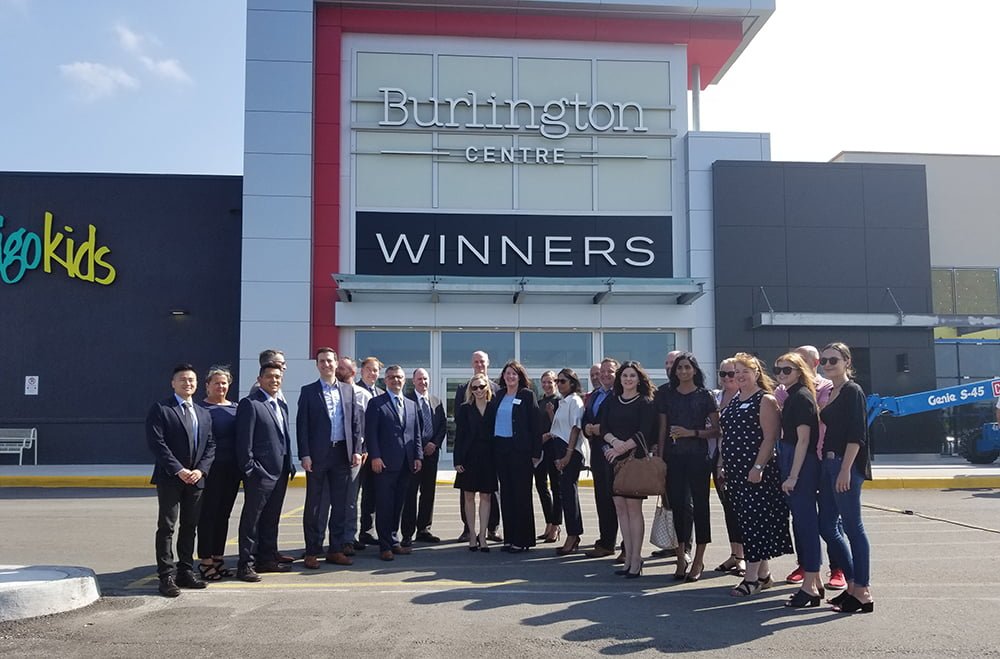
Burlington Mall turns 50 this year and as part of a $60-million overhaul, the centre is being rebranded with a focus to become a community gathering place. It’s now called ‘Burlington Centre’, and landlords RioCan and KingSett Capital have been responsible for renovating and adding several new retailers as part of the mall’s repositioning. 

“We see Burlington Centre as a template for how community malls can operate going forward,” says General Manager Heidi McGaw. “This community-oriented vision informs how we operate and the services we provide to our shoppers. We are not just Burlington Centre, we aspire to be Burlington’s Centre.”

Part of the mall’s overhaul involved repurposing its Target space — the Minneapolis-based retailer exited its Canadian operations in early 2015. The anchor space was demised and several new retailers were added. It’s part of an effort to create a focal point for the suburban community, which is located between Hamilton and Toronto on the shores of Lake Ontario. 

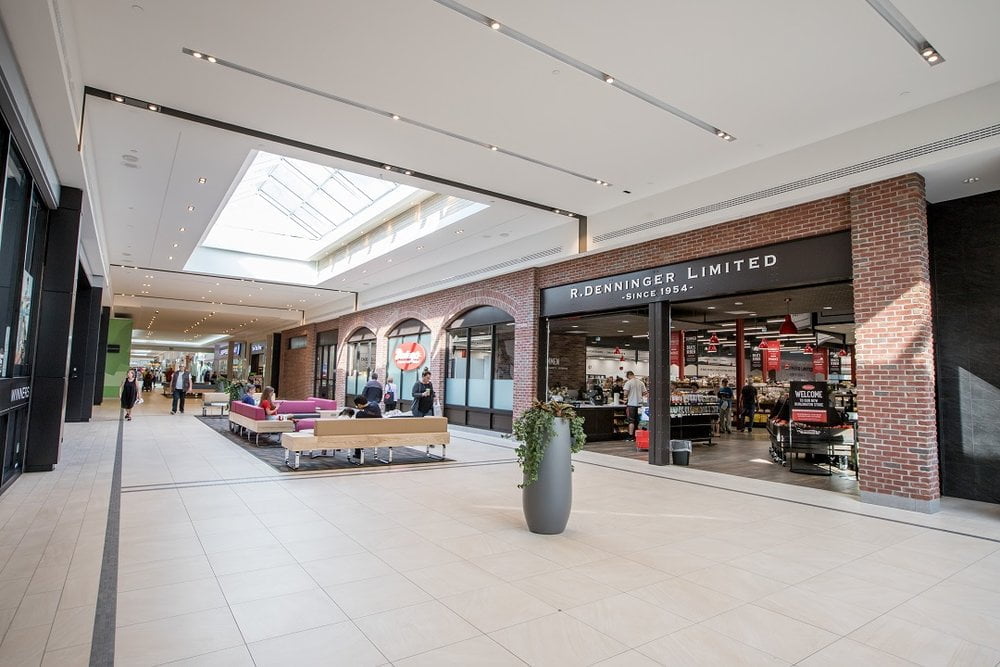
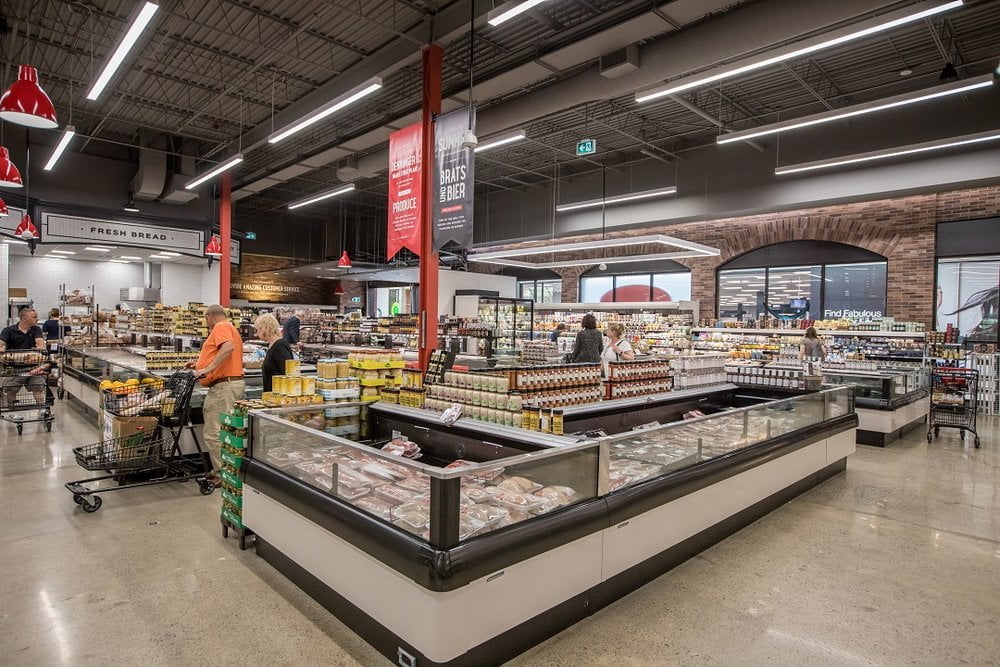
Some new additions to Burlington Centre’s former Target space include popular specialty grocery retailer Denninger’s, which opened in April of this year. Indigo and Starbucks both moved into the former Target space as well, and Winners was relocated into a larger space. Several national eateries were also added to the new Burlington Centre, including Blaze Pizza, Five Guys, Freshii, and Mr. Greek

A new entrance fronting onto Guelph Line was unveiled as part of the renovation. Other mall upgrades include new flooring, lighting, a new corridor connecting the existing food court to the HomeSense corridor, washroom upgrades, new ceilings in the food court, and new comfortable furniture that reflect’s Burlington Centre’s rebranding. 

Retail is changing, and large-format retailers such as department stores are becoming a thing of the past. Sears Canada also recently closed its operations and Hudson’s Bay now remains as the country’s sole traditional department store chain. Hudson’s Bay operates a 145,000 square foot store at Burlington Centre, which is, interestingly, one of two Hudson’s Bay locations in the relatively small city of Burlington. 

“We were careful to ensure the changes we made to our branding, tenant mix and physical space were reflective of the preferences of shoppers and changes in the community,” says John Ballantyne, Senior Vice President, Asset Management at RioCan. “We are proud of our history here, and excited to provide what the community is looking for in the near and long-term. We look forward to being part of the continued growth and prosperity of the Burlington community.”

Several more retailers will be opening at Burlington Centre this fall including Chinese variety retailer Miniso, which positions itself as a Japanese lifestyle brand with plans for about 500 Canadian stores over the next several years. 

As part of Burlington Centre’s 50th anniversary, a year-long campaign was launched in the spring that focuses on supporting local organizations and hosting and/or participating in community events. First was the ‘BurlingtonGreen’s Clean-Up Green Up’, with the shopping centre supporting the Burlington Fine Arts Foundation for Mother’s Day. Burlington Centre subsequently teamed up with the ‘Sound of Music Festival’ to host two pop-up concerts at the property ahead of the 2018 festival. As well, the centre recently helped launch the Gift of Giving Back’s summer campaign with BOMBA baseball.

Community programming will continue this September with a new partnership between Burlington Centre and the local Terry Fox Run for 2018 and in October, Burlington Centre will host a grand opening which will officially mark the end of renovations. 

Burlington Centre is the largest mall in Burlington, spanning about 738,000 square feet. The city has a population of more than 260,000 people which is expected to grow by 16% by 2027, with a trade area that is substantially larger. The area is remarkably affluent with an average household income surpassing $150,000 annually within a 10-km radius of the centre. It’s a family-oriented community with 48% of households having children, which makes Burlington Mall’s repositioning a smart move. According to a leasing brochure, Burlington Mall’s productivity is about $517 per square foot as of June of 2018. 

Burlington Centre is one of two major shopping centres in the city of Burlington. About three kilometres southwest of the centre is Mapleview Shopping Centre, a 635,000 square foot mall which houses Burlington’s other Hudson’s Bay store, as well as national and international retailers such as Apple, Aritzia, Brown’s Shoes, Michael Kors and Zara. Landlord Ivanhoé Cambridge confirms sales exceeding $900 per square foot annually, which will be discussed further in the upcoming Retail Council of Canada Shopping Centre Study which will be put together again this year by Retail Insider’s Craig Patterson

Other competing malls in the area include CF Limeridge in Hamilton and Oakville Place in affluent Oakville. The area also houses several smaller shopping centres, big-box and strip mall retail, and urban street-front retail in the downtown communities which dot the sprawling suburban landscape that characterizes the Ontario ‘Golden Horse Shoe’. Further northeast in Mississauga is the massive Square One Shopping Centre and over the border in Toronto is the CF Sherway Gardens, both considered to be leading centres for the region. 

We’ll do a follow-up to this article in October when renovations to Burlington Centre are completed, and new retailers have opened. 

The Messy Business of Meal Kits and Canadian Food Retailers

exc-5b6c90a68985832b2b367c05

Meal kits are becoming a North American phenomenon. Deals are happening everywhere. In the latest deal, Walmart has partnered with Gobble to deliver meal kits. In the battle over the future of food consumption in the U.S., Walmart is making moves to maintain a fighting chance against the food industry’s new mammoth, Amazon, after the latter acquired Whole Foods a year ago. Don’t be surprised if more grocers do the same.

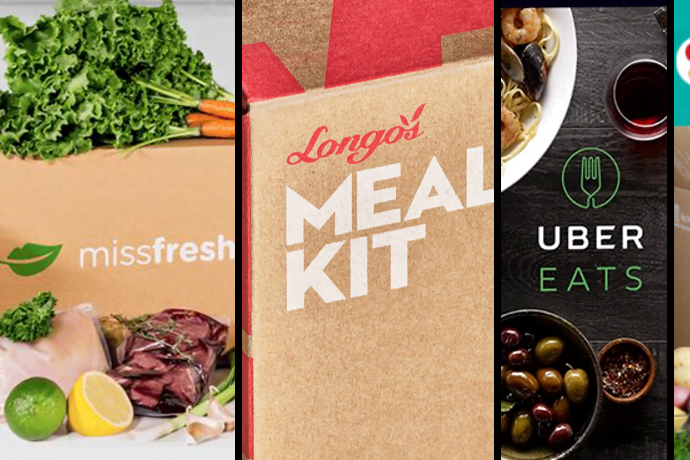
Meal kit delivery services made their debut in 2012, just 6 years ago. Most companies are still considered as start-ups. Gobble, for example, started in 2014 with its three step, one pan, 15-minute meal kit. The United States now has over 150 different meal kit companies, in many parts of the country. Canada has just under 20 significant players already. While this is a relatively new segment in food retail, it now represents over $1.5 billion in the U.S. alone, and is growing. Here in Canada, the meal kit segment is estimated to be worth around $200 million, but also growing. Metro made its move, a brilliant one at that, when it acquired Miss Fresh last year, allowing this grocer to hit the ground running. Meal kitting is likely in the cards for other grocers, but no great announcements have been made thus far.

And why not? Consumers want to be empowered by cooking but still need convenience. Instead of take-out, they will choose a meal kit which brings them pre-shopped, pre-measured, pre-everything so they can whip up an appealing dish in minutes, even with little or no cooking experience. Costs, however, are anywhere between $9 to $12 a meal, which makes this service prohibitive for many.

The other issue hitting this category quite hard is packaging. For assured freshness and food safety, ingredients must be thoroughly wrapped, making some younger, environmentally-conscious buyers less enthusiastic about their purchases. This is likely the biggest hurdle meal kits will need to overcome: the waste is astronomical. However, it’s important to highlight HelloFresh here as they are the first meal kit company to become carbon-neutral. In addition to this, they plan to significantly reduce food waste at their production facilities in 2021, making them the favorable choice among Canadians looking for a greener meal kit option. 

Another issue is profitability. Goodfood is one of the largest meal kit providers in Canada. Even though is has tripled the number of its active subscribers, which reached a total of 76,000 recently, it is still losing money. Most are not making a profit which is peculiar for a new growing segment. But given the excitement around meal kits, most of these companies barely sweat to raise capital. The pressure to generate revenues is real without spending too much on marketing. As the market matures, only some will survive. But those partnering or working with large retailers have a greater chance of survival and of grabbing a decent share of the market. Grocers have never been great at food service either, so uniting forces only makes sense. Furthermore, grocers are starting to see meal kits as foot traffic drivers, a major advantage these days. This is what Gobble is doing with Walmart.

Despite the challenges, meal kits are facing relatively few headwinds. The food service and hospitality sector in Canada has been booming over the last few years, with growth exceeding 5% in 2017 and forecasted growth of more than 4% this year. Compared to food retailing, these numbers are spectacular. Grocers want into the food service game, and meal kitting is certainly one way to do it. What makes the meal kit case more compelling are the expected revenues for home delivery. In 2018, we expect Canadians to order $2.5 billion worth of food, an increase of 23% last year. The industry expects double-digit growth over the next few years.

In other words, people are eager to eat more at home, while forgoing the cooking. Canadians are still buying cookbooks in droves and watching a record number of cooking shows; however, meal kits are becoming increasingly popular.

But it doesn’t stop there. Ghost restaurants are also in vogue in North America and Europe. Unlike UberEats, for example, where consumers can directly connect with restaurants, there is no interaction between a ghost restaurant and the consumer. These are virtual eateries, for consumers who don’t want to cook at all. They can order from these establishments through third party applications. All for the sake of convenience. All of these service models eliminate the inconvenience of waiting in dining rooms for your meal. For the business owners, they solve the issues of extra labour costs to mitigate risks related to higher minimum wages, and most important, of choosing the right location. 

But meal kits still do not resolve the age-old issue of dishes. You still need to clean up after you are done. Technology hasn’t solved this problem yet, but surely someone will come up with something soon.

Maritimes-Based Fashion Retailer ‘Envy’ Expands into Western Canada

exc-5b5e886b70a6addd33ee6d76

Women’s fashion forward retailer, Envy, which is based in the Maritimes, has expanded its presence to Western Canada with the opening of a store in the West Edmonton Mall.

And the unique retailer, established in 2000, is setting its sights on further expansion of the brand.

Jessica Wentzell, Director of Marketing for Envy, said Nancy Holmes, the company founder along with her husband Glen, saw a niche to target the fashion forward females in the Atlantic provinces.

“She’s really built quite a following here over the last number of years. In April, we opened up our West Edmonton location. So the key here is we’re going to be targeting an area that is very fashion forward. Edmonton is very fashion oriented. We thought it was a very good fit so we made the move out there. So that is our first technical Envy location in Western Canada. We’re super excited to be there.”

“We are loving being in Edmonton and we’re hoping to grow within the next couple of years . . . We will have other future plans happening out in the West as well.”

“We do have a sister company named Grace in Kelowna. She’s been there for about a year and a half now and that location’s been doing really well for us. Same sort of demographic. Same sort of brands and stuff in that location. Just a different banner.”

Grace has been in the Orchard Park Shopping Centre since last summer.

Wentzell said Envy carries many fashion forward popular brands such as Levi’s, Calvin Klein, Matt & Nat, Brunette the Label, Free People, Sans Souci, Dex, Fila, Mink Pink and more.

There are currently nine Envy stores in Halifax, Cape Breton, New Brunswick and some in the rural Nova Scotia market.

“We do have plans to open up actually a new location in Moncton in the middle of August. We’re in the middle of getting that up and running as well,” said Wentzell.

“As Envy expanded across Atlantic Canada, we continued to provide our shoppers with a unique boutique vibe, with high-end fashion pieces and a small business approach to customer service.”

Wentzell said Envy appeals to the woman who is looking for the newest trends.

“So we always say a trend setter versus a trend seller. A lot of the companies will be coming in once the brand is already popular. We try to get there beforehand. So we try to be a little bit more ahead of the game and find those brands that we feel are going to be coming up or the trends that are going to be coming up. We get them into the store beforehand and then we continue to develop through that trending period,” she said.

“So stuff like the Fila brand, the Free People brand, the Brunette brand that’s all something we tried to get ahead of the game and then we see it start to pop up in other stores. So then we need to find another brand to sort of stay ahead of the ball there.

“When we’re talking about the fashion forward female we always carry something that’s a little bit edgier as well. So you’ll see a lot of different stuff in our stores. We have high waisted jeans that we call like the mom jeans. A lot of destroyed jeans. Different details that you wouldn’t necessarily find in all the other ones like American Eagle and that sort of brand.”

Wentzell said the company’s research indicates that customers range in age from 15 to 65 plus.

“It hits the people who are looking for a trendier look and it doesn’t matter what age they are,” she said.

How Cameron Developments Built a Retail Powerhouse with Power Centres

exc-5b4284edaa4a99250c1ba5be

For the past 30 years, the Edmonton-based Cameron Development Corporation, a privately-held development company, has set its mark in the community with signature projects such as the South Edmonton Common power centre.

The company is focused on Edmonton and area development projects ranging from neighbourhood sites to regional power centres. It currently has multiple projects that are completed, under development, and proposed.

Harold Pacheco, marketing manager for Cameron Development Management Inc., said the company was established in 1979 after engineer Jerry Naqvi, its chief executive officer, moved from Pakistan to Canada.

Nordstrom Rack, opening in October at South Edmonton Common. Rendering Nordstrom 

“South Edmonton Common was basically his big gamble. He put everything into that. Put all his money into growing the centre and with the success of it basically Cameron Development Corporation was born,” said Pacheco. “Because of the success of South Edmonton Common we’ve got over 20 retail centres in the Greater Edmonton Area.

“We’ve also spun off into two different areas. Cameron Development Corporation being our commercial real estate arm. We also started Cameron Homes in 2002 – residential single-family homes and duplexes. We have a residential developer, Cameron Communities, that started in 2011. And we have multi-family luxury rental apartment building division called Cameron Lifestyles which we started in 2014.”

Future expansion into the area of developing higher-density, mixed-use projects is also in the cards for the company.

It has developed a reputation for producing projects of the highest quality and standard. Cameron has developed, owned and operated some of the most successful retail projects in Canada, including South Edmonton Common, a 2.3-million-square-foot power centre that has become one of the largest and most successful retail developments in Canada.

The company is also currently under development with 14 retail centres, including Currents of Windermere (1.1 million square foot retail shopping centre), Manning Town Centre (850,000 square foot retail power centre), Albany Market Square (450,000 square feet Walmart-anchored shopping centre), and Harvest Pointe (370,000 square feet of retail area, including a 130,000 sq ft Walmart anchor).

Pacheco said the Currents of Windermere includes residential development and a Town Square green space area for people to gather and hold events.

He said a transit-oriented development is underway at Clairview Station in northeast Edmonton.

And Pacheco added that Centre in the Park is a mixed-use development in Sherwood Park with retail below and 80 rental units above.

South Edmonton Common map (1998)

Recently, the company announced South Edmonton Common, one of the largest open-air retail developments in North America, will get bigger in the fall with the opening of a Nordstrom Rack location in October.

The retail power centre, spread over 320 acres and containing more than 2.3 million square feet of dining, shopping and entertainment space, has developed a reputation of being the place where many retailers establish their first locations when they come to Edmonton.

The success of the company had its roots when Naqvi came to Canada in 1964. In 1973, he became Vice-President, Development at Allarco Developments Ltd. under the tutelage of Dr. Charles Allard before venturing out on his own and founding what is now Cameron Development Corporation.

Today, he is very involved in the Edmonton community through various committees and boards and volunteer work such as the University of Alberta Board, the Glenrose Hospital Foundation, the Interfaith Dialogue Committee, the Society for Development in Third World Countries, CNIB, and Catholic Social Services.

BRIEF: Copper Branch to Open 15 Locations, Sephora Opens 70th Canadian Store

UPDATE: We’ve added an amendment to a previous version of this section of the Brief due to misinformation or an error, re: Copper Branch’s representation in Quebec:

Copper Branch Continues Its Plant-Based Hustle Across Canada and Beyond

Image: Copper Branch

Last April, when Retail-Insider reported on the Copper Branch plant-based take-over of Canada, there was an impressive 17 locations in Quebec and Ontario. Corey Bessner and Matthew Krantzberg of Core Consultants Realty have the exclusive mandate for Copper Branch in Quebec (other than enclosed malls and power centres of over 750,000 square feet) and have identified the opportunities and negotiated the deals in that province.

A mere four months later, there are 28 locations in the two provinces with 15 additional restaurants opening soon in Alberta and franchises have been sold internationally in France.  Below is a list of some new locations.

Established in Montreal in 2014, the vegan eatery has tapped into a major food movement, offering a fresh alternative to the usual fast-casual fare, serving 100% plant-based power foods designed for health-conscious time-strapped consumers. 

Copper Branch is already looking ahead and aims to have a presence coast to coast. Its immediate interest is to open in Vancouver and to continue to expand in Calgary, Edmonton, Toronto, Montreal, and Ottawa. Copper Branch continues its expansion with ideal spaces being 1,250- to 2,000-square-feet in open-air centres and office towers and 450- to 1,500-square-feet in enclosed malls.  

Tony Flanz of brokerage Think Retail has handled a few deals on behalf of Copper Branch in Ontario and other markets. 

The plant-based Copper Branch concept is shaking up the QSR experience, thanks to a strong vision, market insight, and experienced team. Founder Rio Infantino spent 25 years in the traditional fast-food franchise business before setting out to turn “real” food (nourishing gourmet power foods) into fast food designed to appeal to an audience hungry for clean, healthy meal options. 

Opening Soon:

A few recent Quebec deals (handled by Core Consultants Realty) include the following, and there several other sites currently in negotiations in various parts of Quebec:

  • 5520 Chemin Cote Des Neiges 
  • 3452 Park Avenue (September 2018)
  • 5385 Queen Mary
  • 2451 Notre Dame West
  • Les Galeries d’Anjou
  • 1180 de Maisonneuve West

Ontario:

  • Hamilton – CF Lime Ridge Mall (Fall 2018)
  • Brampton – (Fall 2018)

Alberta:

  • Calgary – Intact Place, 21 – 6 Avenue SW (Fall 2018)
  • Calgary – Bankers Hall, 315 – 8 Avenue SW
  • Calgary – Suncor Energy Tower, 111 – 5 Avenue SW
  • South Calgary – 19489 Seton Crescent
  • Edmonton – South Edmonton Common 10008 – 22 Avenue NW
  • SE Edmonton – 10310 Jasper Avenue (Fall 2018)

France:

  • Brest (Fall 2018)
  • Annecy (Winter 2019)

Edmonton’s The Helm launching Private White VC Luxury Collection

Image: The Helm

This fall, one of Edmonton’s leading retailers of luxury menswear, The Helm, will launch an exclusive collection in a partnership with Manchester manufacturer and heritage brand, Private White V.C. The UK-based menswear company has created pieces for almost every established tailoring house on Savile Row and supplied outerwear for royalty and luxury brands over the last 165 years.

This will be the first Canadian collaboration and first-ever cold-weather collection for Private White V.C. with five exclusive pieces for this collection with Canadian climates in mind—the Cache Parka, the Nordegg Flight Bomber, and the Waterton Shirt Jacket—to name a few. The collection is a collision of Manchester UK and the Rocky Mountains with featured items including a luxury version of the iconic flight bomber in a charcoal Loro Piana Wool as well as an ink-navy waterproof parka.

Opened in 2012, founders Chad Helm and Brad Kahler combined their years of experience in luxury menswear to create The Helm. After many years watching the local market be underserved by the larger names, they set out to change the local scene because they knew Edmonton men deserved better.

The Helm is located inside the historic Armstrong Block building on Edmonton’s popular 4thStreet Promenade, a walkable neighbourhood of independent shops and eateries.

Allbirds is Flipping Out with Sugar Zeffer Powered Flip-Flops

Image: Allbirds

At the beginning of August, Allbirds revealed its’ next greatest innovation and product–the Allbirds Sugar Zeffer powered by SweetFoam.

The Sugar Zeffer is a flip-flop, but since Allbirds is always looking to create better things in a better way, SweetFoam is the brand’s most revolutionary material to date. The sole is derived from renewable sugarcane and is the world’s first carbon-negative EVA, a component that is one of the most widely used in the footwear industry.

Every aspect of the Sugar Zeffer is bio-based or recycled providing comfort while leaving a light footprint on the planet and while the company says it is ‘no big deal’, for fans of great acting and environmentalism, big-name Leonardo DiCaprio has invested in Allbirds. The launch of SweetFoam is truly a game changer in the footwear industry as Allbirds plans on sharing the technology with the industry.

Allbirds is a San Francisco-based start-up that focuses on designing affordable environmentally-friendly shoes. They have created a movement that is inspired by natural materials rather than synthetics. Retail-Insider covered the launch of their first pair of kicks – sneakers made from merino wool – and loves that the brand also reimagined shoe packaging, where they only use 90 percent recycled cardboard boxes which act as both a shoebox and mailer all in one, cutting out the waste.

HBC’s ‘Discover This’ Pop-Up Celebrates Canadian Designers

Canadian fashion stalwart Hudson’s Bay has announced a new collaboration with fashion production and designer management firm, THE COLLECTIONS to launch a pop-up shop with 12 Canadian designers.  

Launching in early September, this is the retailer’s fourth iteration of its pop-up series which is dedicated to showcasing Canadian design talent.

Five locations across the country, including two stores in downtown Toronto (Queen Street, Yorkdale), and one each in Montreal, Vancouver (downtown) and Calgary (Chinook Centre) will showcase 90 styles including women’s wear, men’s wear, unisex, and jewelry.

All stores will feature designers Mikhael Kale, Pedram, S.P. Badu, WIL Studios, WRKDEPT, Hilary MacMillan and Sid Neigum, with the Vancouver and Toronto Queen Street locations adding Atelier Guarin, Markoo, and NY-based Daniel Gregory Natale, and accessories by Biko and Cuchara.

As part of Toronto Fashion Week, the collaboration will be presented at the RE\SET Studio on September 4th at 7:30 pm.

Miniso Expands into Atlantic Canada

MINISO (PHOTO: HALIFAX RETALES)

According to Halifax ReTales, value-priced Chinese variety retailer Miniso, which positions itself as a ‘Japanese lifestyle brand,’ is opening stores in Canada at a faster rate than was originally anticipated as it expands into new markets. 

Next month, Miniso will expand into Atlantic Canada for the first time when on September 8, it opens at Spring Garden Place in Halifax. The first three customers will receive a “special gift” and the first 100 customers will receive a free gift, according to Miniso. 

Miniso says that it plans to operate about 500 stores in Canada in the next three years — its products are branded and stores carry about 2,500 SKUs and to keep up with distribution, the company has announced it’s establishing regional logistics centres in Vancouver and Toronto to keep up with the rapid store expansion, which is primarily a franchise model. 

Miniso currently operates stores in BC, Alberta, Ontario, and Quebec. Its first store in Canada opened in Vancouver in the spring of 2017. The company was co-founded in 2013 by Japanese designer Miyake Junya and Chinese entrepreneur Ye Guo Fu, and is headquartered in Guangzhou, China. MINSO’s goal is to open 6,000 stores globally by 2020, averaging 80 to 100 store openings per month. [Subscribe to Halifax ReTales]

Sephora Opens Landmark 70th Store in Kamloops, BC

Sephora

On August 10th, Aberdeen Mall in Kamloops will welcome Sephora’s 70th Canadian location. The popular brand launched in a bountiful 3,420-square-foot location formerly occupied by Le Chateau and includes a 6-seat Beauty Studio, a 2-seat Skincare Studio and advanced iQ technologies such as Color iQ, Skincare iQ, and Fragrance iQ.

Image: Aberdeen Mall

Clients can choose from an array of customized and one-of-a-kind services such as Mini Makeover, Mini Facial, Custom Makeover, Skin Fit (a spa quality 60-minute hydrating oxygen-infused facial), and the Benefit Brow Bar.

The LVMH-owned Sephora is the ‘holy grail’ of beauty experiences for trend hunters and carries exclusive brands such as Fenty Beauty by Rihanna, Huda Beauty, Fresh, Drunk Elephant, Bumble and Bumble, Atelier Cologne, and many others.

Sephora has been working with Jeff Berkowitz of Aurora Realty Consultants on its site selection/lease negotiations. 

James Coleridge Is Whipping Up a Whole New Cone of Flavours

Image: James Coleridge

Having won over the hearts of Vancouverites with his old-world, hand-crafted and non-blasphemous gelato, Coleridge has announced that he will be launching a new venture named Uno Gelato this month.

Three locations in Kitsilano, Burrard Landing, and Stamps Landing will feature five vegan flavours and will reflect a European design with heritage elements, employ the finest Italian gelato production equipment, and will debut North America’s first Cattabriga gelato pasteurizer machine which has a homogenizer to create a smoother gelato.

Known for sourcing the cleanest of ingredients, Coleridge is working with new flavours incorporating Quesnel sourced birch syrup (instead of white sugar), East Vancouver’s Biota kombucha, raw coconut milk, and Canadian Springs water with activated charcoal. 

Coleridge recipes have won 13 international awards year after year, beating the originators of gelato—the Italians—over and over.