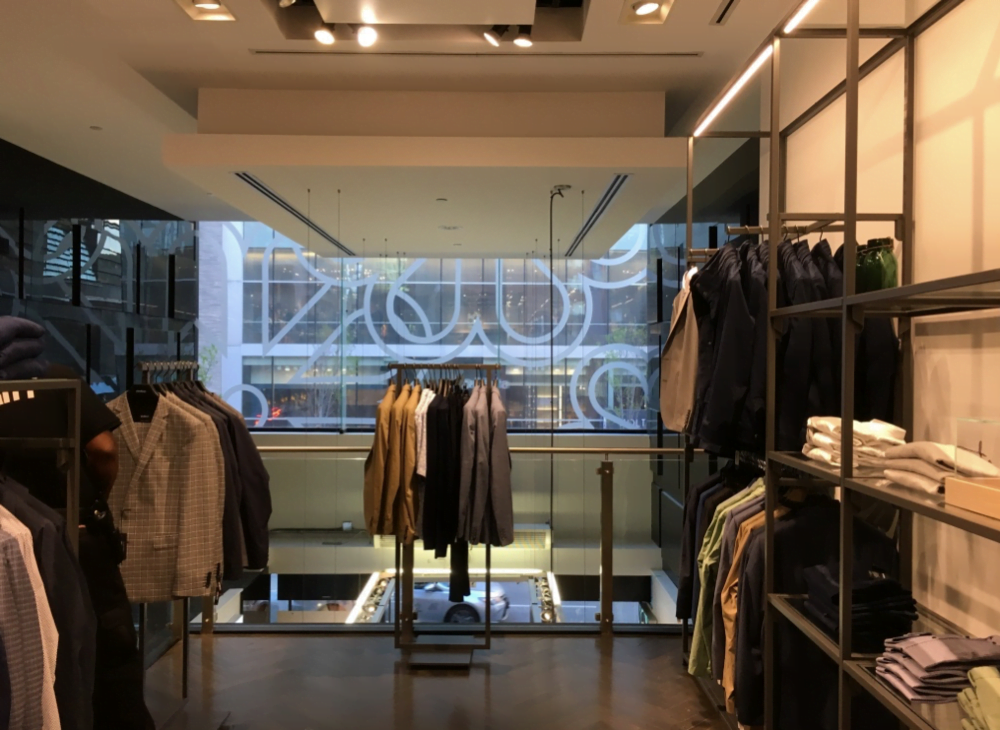
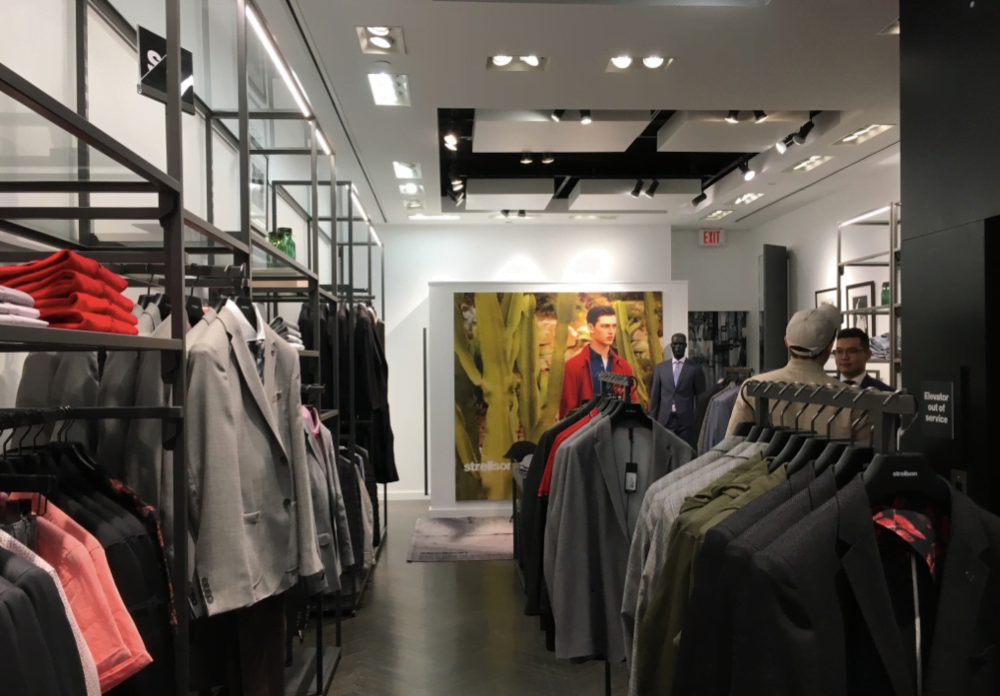
Strellson on Bloor Storefront - Photo by Craig Patterson
Upscale Swiss men’s fashion brand Strellson has relocated its Toronto flagship store to 95 Bloor Street West, in a retail space just up the street from one it vacated late last year. The company officially opened the store (which ‘softly’ opened several months ago) last week with an event hosted in partnership with Sharp Magazine.
Strellson occupies a two-level retail space formerly occupied by Town Shoes, with 2,125 square feet on its ground floor as well as almost as much space on its second level. The store carries a wide assortment of Strellson fashions, ranging from casual clothing to suits and formalwear, as well as shirts, accessories and related items. New to the men’s collection are men’s bags and wallets in both leather and nylon/cotton — items will be available this summer as new product continues to arrive in the store.
Strellson also operates a retail store at Toronto’s Bayview Village, as well as a concession at retail partner Hudson’s Bay at Toronto’s Yorkdale Shopping Centre. Strellson also wholesales at 19 Hudson’s Bay stores, as well as at over 30 independent retailers coast-to-coast. Strellson is also carried at several American Saks Fifth Avenue locations.
Founded in 1984 and owned by Holy Fashion Group (the original owner of German brand Hugo Boss), Strellson is Switzerland’s largest menswear manufacturer. It produces mid-to-high priced dressy and casual menswear, as well as accessories and related products. Its target market is men aged 25 to 40, and it retails in about 40 countries worldwide.
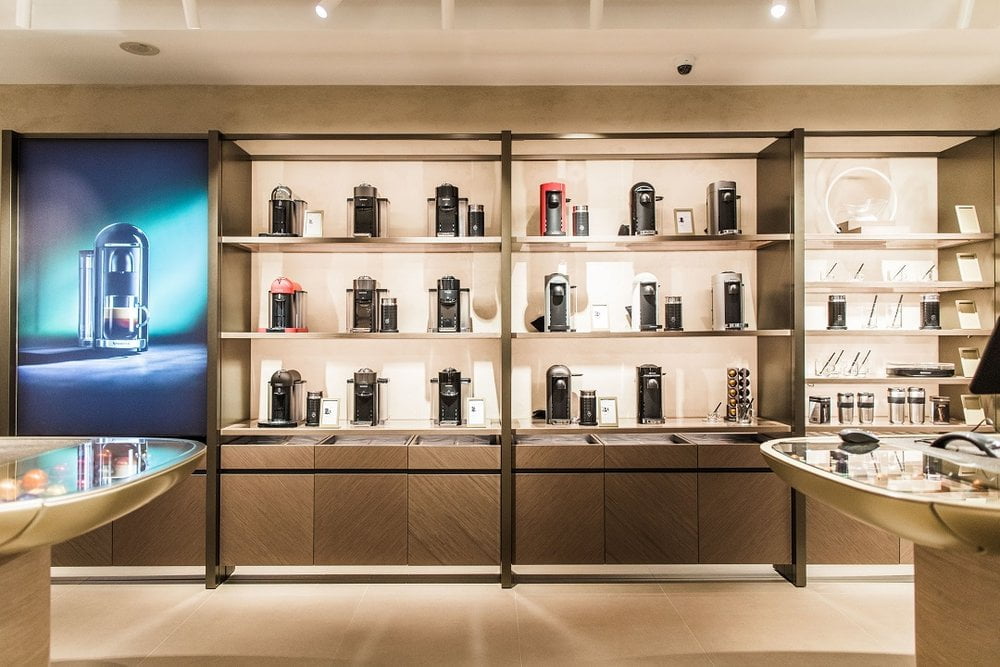
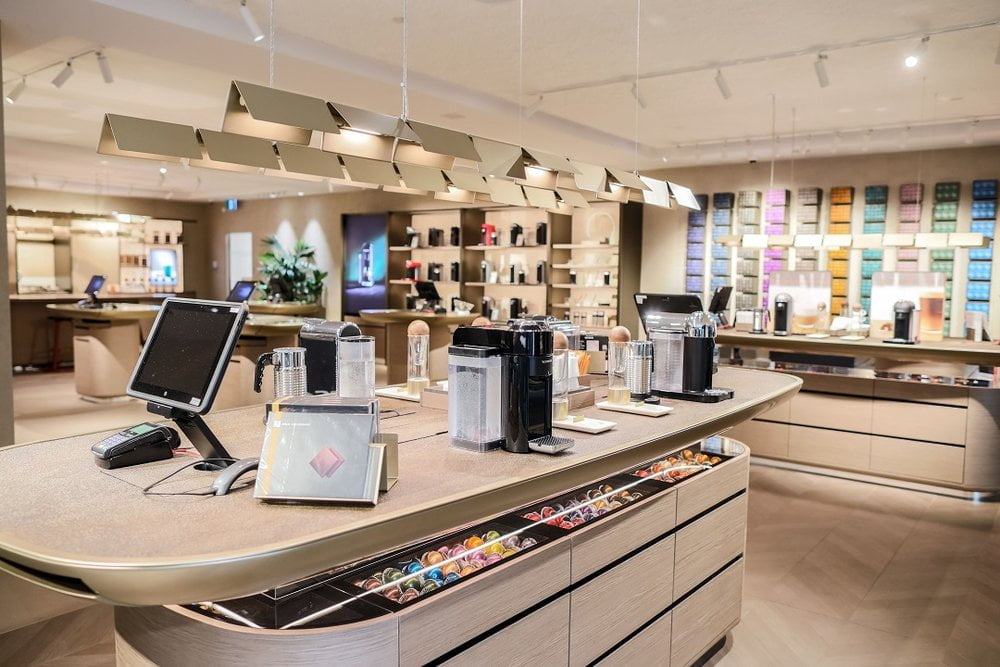
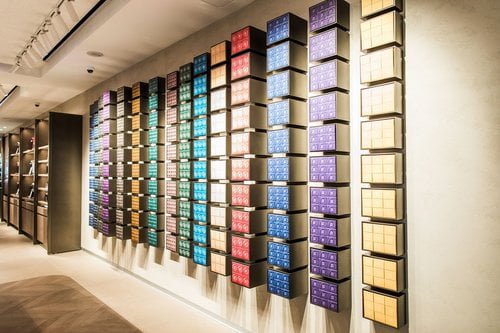
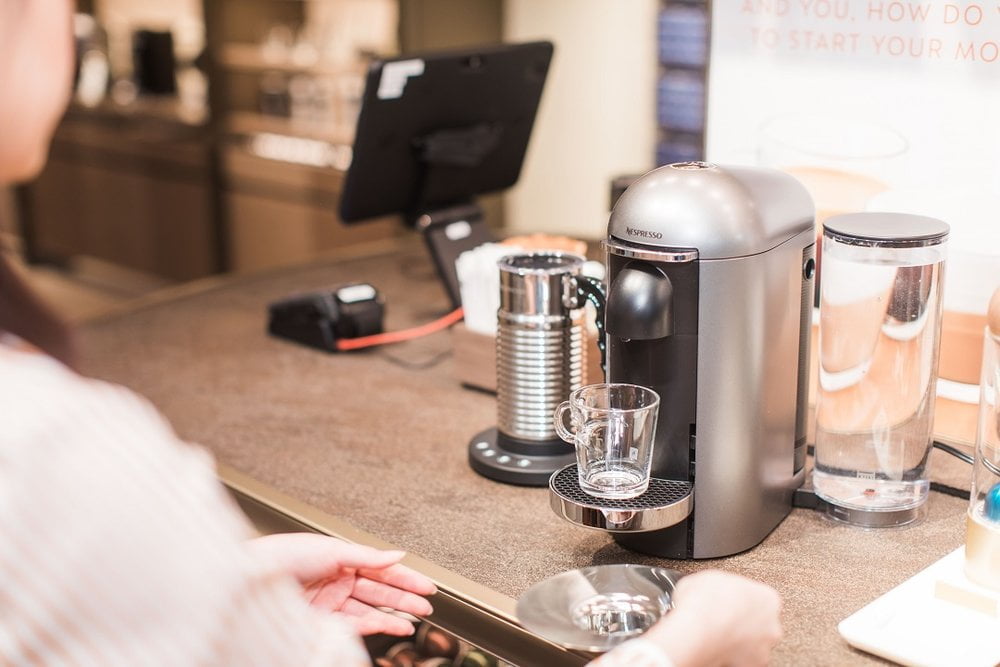
The unique boutique Nespresso cafe brand is in a growth phase in Canada with more locations on the horizon.
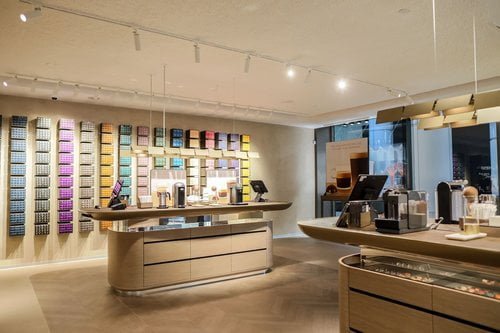
Alexis Giguere, VP of Retail for Nespresso Canada, told Retail Insider that the new boutique concept that it has rolled out both at CF Chinook Centre in Calgary and at Metropolis at Metrotown in Burnaby, B.C., brings a fresh experience to the company’s retail experience, focusing more on the experience than the “upfront transaction.”
“Sustainability is also an important topic for us and has always been since the very beginning. Our recycling solution surely is a good example, but the table-tops made from used coffee grounds that are in our new boutique concept or the wood that has been 100 per cent sourced from reforestation programs that we use to build them are also good examples of our commitment,” he said.
“2018 surely is, and continues to be, a big year for us as we will roll out great projects that will positively impact the environment and the way people consume our products.”
Giguere said the company has a good network of stores in major Canadian cities like Vancouver, Edmonton, Calgary, Toronto, Ottawa, Montréal and Québec City. There are still opportunities for it to solidify these clusters. Ultimately, it will be looking at increasing its store footprint in cities with strong potential like Winnipeg and Victoria, for example.
There are 26 Nespresso boutiques in Canada in five different formats – pop-up boutiques, temporary boutiques, boutiques at Hudson’s Bay, boutiques in a mall and boutique-bar – where customers and Club Members can purchase machines and Nespresso Coffees.
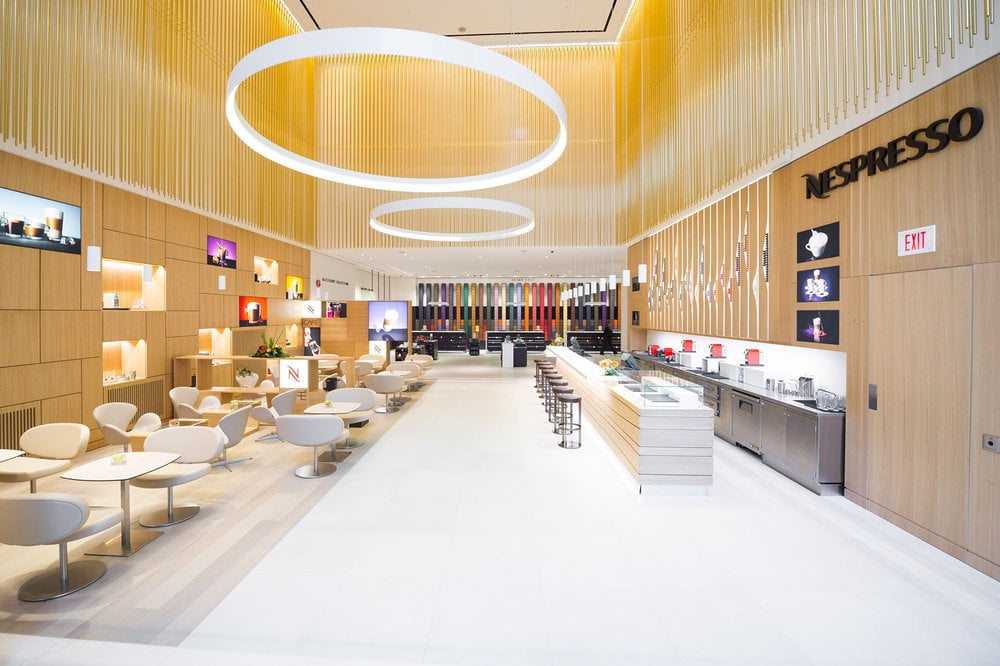
The newly opened 14,000 sq. ft Nespresso Toronto Boutique Bar features a boutique and café. Located at 159 Cumberland Street in Yorkville, the flagship location was designed by Italian architect Aldo Parisotto of Parisotto e Formenton. (Photo: JJ Thompson) (CNW Group/Nespresso Canada)
“In addition to this, there are more than 900 points of sales for Nespresso machines only across Canada through our partners like Hudson’s Bay, Canadian Tire and Costco, amongst others,” said Giguere.
When asked how many locations he ultimately sees in the Canadian market, he replied: “We do have a secret magic number, but . . . it is secret. We do have ambitious objectives for Canada and our retail expansion is surely a key-driver to our omni-channel growth strategy. Ultimately, we want to ensure that our brand is physically accessible to the most Canadians possible, without saturating the market. It is all about finding the right balance between brick-and-mortar and online in order to answer the needs of today’s consumer.”
Nespresso was founded in 1986 in Switzerland with the launch of its now famous portioned coffee system. A little more than 30 years later, Nespresso is present in 76 countries around the world and has a retail network of more than 700 boutiques.
Nespresso’s Canadian story started a little more than 10 years ago in November 2007 with its first boutique at Hudson’s Bay in Toronto. The same year, it opened another Boutique at Hudson’s Bay in Vancouver (December 2007). Its third Canadian boutique opened in Montreal, on Crescent Street, in February 2009, being the first boutique-bar where food was served.
“What differentiates us is that we have all the tools to offer customers and our Club Members the ultimate coffee experience, whether it is through our systems, Original and Vertuo or through our Nespresso coffees that are all developed in-house, in our Swiss headquarters, by our Coffee Experts,” said Giguere.
“We also have premium and personalized customer service, as well as convenient recycling solutions available across Canada. Nespresso capsules are fully recyclable, demonstrating how much we value sustainability. On a retail standpoint, what differentiates us is definitely our flexibility. With our five formats, we are able to open temporary or permanent locations and test markets. Our new store at Metropolis at Metrotown is a good example as the opening of this permanent boutique is the result of a test we did more than two years ago with a pop-up within the mall.”
Giguere said it is not the company’s plan right now to open more larger boutique/café concepts in Canada such as the Yorkville Boutique Bar at 159 Cumberland Street.
“While this concept is a good opportunity to develop our brand and give an additional experience to the customer, our focus is towards our new concept store at the moment,” he said.
Nations Experience plans to revolutionize Canadian retailing by occupying under-utilized real estate with its highly interactive retail concept, which can be described as a hybrid grocery store, food hall, shopping centre and theme park. The plan is to roll-out the concept nationally with at least one Nations Experience in each major Canadian city.
The unique concept was unveiled in Toronto in the fall of 2017, when grocery concept Nations Fresh Food unveiled its 155,000 square foot Nations Experience at Stock Yards Village. Nations took over a former purpose-built Target space to create a spacious retail centre that includes a value-priced grocery store as well as a dining area with different food options themed from around the world.
The complex also includes a children’s play area, games rooms and party rooms, as well as a retail corridor that is in the process of seeking tenants, including services as well as restaurants.
‘Nations’ references multiculturalism and Senior Vice President Frank Ho explained that the success of Nations Experience involved bringing in people from diverse cultures to shop in the “FoodTainment” centre. Rather than have food offerings catering to just one ethnic group, Nations has drastically expanded its potential reach by embracing all cultures — in its food hall area, offerings range from dim sum to sushi to lasagne to burgers.
The store’s expansive grocery offerings are well displayed and equally diverse, with palm trees above display shelves and unique elements such as a live seafood room with special ventilation so as to not carry over into other retail areas.
Mr. Ho said that he now considers the Stockyards locations’ 30,000 square foot entertainment area to be ‘too small’ — it’s proven to be quite popular with shoppers, and he thinks it could be triple the size. It’s designed for families — after enjoying a meal, parents can leave their children in the supervised entertainment area while they shop.
GROCERY AREA. PHOTO: NATIONS
A mall-like corridor at the Stockyards Nations Experience is available for lease, and tenants sought range from full-service restaurants to convenience retailers such as dry cleaners. Mr. Ho explained that Nations waited until it tested out its core grocery concept before leasing out to tenants, to ensure traffic is in place.
With its successful traffic patterns established, now’s the time to expand the existing Stockyards location, as well as to open Nations Experience centres across the country.
Nations Experience provides an opportunity for landlords to tenant spaces that might otherwise be a challenge to lease. Some of Canada’s secondary shopping malls are struggling and are seeking new uses, and Canadian landlords have also been hit with the closure of Target’s Canadian stores in 2015 and more recently, the demise of the Sears Canada chain. Not only could Nations Experience occupy a vacated Sears store, as an example, but it could even take over an entire existing centre to create something akin to a ‘mini West Edmonton Mall’ that would feature ample entertainment options as well as a core grocery offering, expansive international food hall component, as well as other hosted retail concepts in a corridor or other configuration that would be part of the Nations Experience centre.
Mr. Ho explained that the company is already looking to markets such as British Columbia to expand the Nations Experience concept, and that potential investors are being solicited to help fund the ambitious expansion. The goal is to have at least one Nations Experience centre in each larger city in Canada, and potentially multiple locations in markets such as the Greater Toronto Area, which could house large Nations Experience centres in markets such as Mississauga, Brampton and Oshawa. Families and those seeking value-priced, high-quality groceries are the targets for Nations Experience, which embraces ethic diversity with its offerings.
1 of 2
ARCADE AREA. PHOTO: NATIONS
PLAYGROUND AREA. PHOTO: NATIONS
‘PHASE 3’ OF NATIONS INCLUDES A MALL AREA THAT IS NOW ACCEPTING TENANTS. PHOTO: CRAIG PATTERSON
Nations Fresh Foods was established in Woodbridge, Ontario, in August of 2012 as a multicultural grocery store. The company operates stores in downtown Hamilton as well as in Mississauga, though neither of those are as large or as entertainment-focused as the new Stock Yards Village location, which will act as a prototype for future Nations Experience centres.
Nations Experience is a made-in-Canada concept that is also uniquely Canadian in its embracing multiculturalism. Given how popular the Stockyards location has already become, it would appear that this could be a winning formula for a national rollout.
For business investment or partnerships, please contact Frank Ho, Senior VP at: 647-889-6818, nationsfreshfoods@gmail.com.
As well, for parties interested in subleasing in the multi-tenant retail area at Nations Experience in Toronto, contact: Top Cats Realty Inc.:Gary Lazar: (416) 464-2271, gerry@topcats.ca, or Kelly Laughton: (416) 419-7470, kelly@topcats.ca.
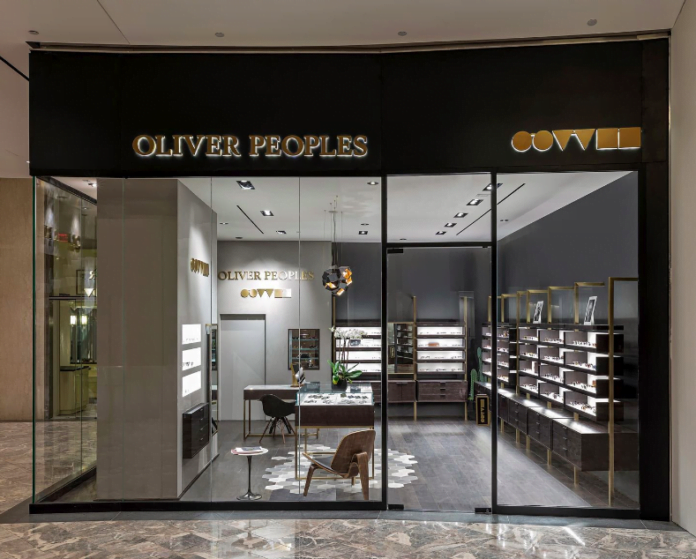
BROOKFIELD PLACE STORE IN NYC. PHOTO: OLIVER PEOPLES
American luxury eyewear retailer Oliver Peoples will enter the Canadian market this year with its first standalone stores. The popular upscale brand has stores in some of the world’s leading luxury shopping destinations, as it positions itself as a premium retailer for those who can afford its pricey offerings.
The brand’s choice for its first two Canadian stores is keeping in line with its premium real estate selection, choosing to locate its first Toronto store at Yorkdale Shopping Centre in a 700 square foot space near luxury brands such as Montblanc, Piaget and Van Cleef & Arpels. A Vancouver location will also open on Alberni Street in the heart of the city’s burgeoning ‘Luxury Zone’ — both locations will open this fall, according to the company.
Image: Yorkdale Shopping CentreHOUSTON STORE. PHOTO: OLIVER PEOPLES
Oliver Peoples is the latest international eyewear retailer to enter the Canadian market. Over the past 24 months, Canada has seen more international eyewear retailers enter the country than at any time in our history. Other popular names include Warby Parker, Illesteva, SEE, Bailey Nelson, Ollie Quinn, Mujosh, Optical Center, and Acuitis — all of these have recently opened their first locations in Canada, and they’re now in expansion mode.
Los Angeles-based Oliver Peoples was founded in 1987 with a boutique in West Hollywood, and it is now sold in its own boutiques as well as in upscale multi-brand retailers that carry eyewear. Its designers are in Los Angeles and frames are manufactured in Italy and Japan. Oliver Peoples was acquired by eyewear conglomerate Luxottica in 2007.
Frames are “anti-logo” which the company says “appeals to refined consumers”. Prices can be well into the hundreds, which differentiates Oliver Peoples from brands such as Warby Parker, SEE, Bailey Nelson and other recent entrants that offer more in the way of value pricing. Oliver Peoples’ frames are known to be worn by celebrities and the brand has an impressive following on social media.
Oliver Peoples appears to pick premium locations for its stores and in some instances, it’s very clear that the brand is going after a wealthy shopper. In Houston, Texas, for example, the retailer has a store at the prestigious River Oaks District — one might otherwise expect the store to be at the busy nearby Houston Galleria (which also has plenty of luxury stores). In Chicago, Oliver Peoples is located amongst luxury stores on Rush Street just south of Oak Street and the retailer has opened stores on premium streets such as Sloane Street in London, Ortega y Gasset in Madrid, Grant Avenue in San Francisco and Madison Avenue in New York City. Premium mall locations include top names such as South Coast Plaza in Orange County, King of Prussia near Philadelphia, Westfield Valley Fair in Santa Clara California, and others. Oliver Peoples has over 30 stores internationally, according to its website.
MADRID STORE. PHOTO: OLIVER PEOPLES
Next month, Oliver Peoples will open a location in one of the top malls in the United States — NorthPark Center in Dallas, which is known for its white brick interior as well as a roster of luxury brands that includes the top-selling location for Neiman Marcus.
We’ll update this article when we receive further details on the retailer’s 2018 national expansion.
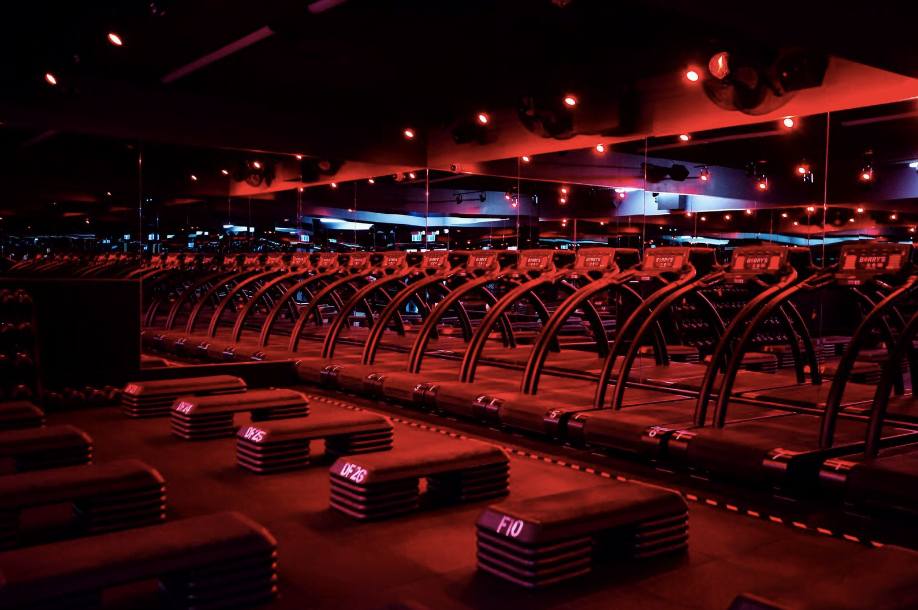
OUTSIDE THE TORONTO LOCATION AT 310 RICHMOND STREET WEST. PHOTO: BARRY'S BOOTCAMP
The high intensity workout at Barry’s Bootcamp is described as the best workout in the world and it recently entered the Canadian market with its first location in Toronto’s Entertainment District, with plans to expand further across the country.
Laurie Campbell, one of the owners and vice-president of operations for Canada, says the concept involves high-intensity interval training using Woodway treadmills – the top of the line treadmills that lessen the impact on people’s joints. That is then mixed up with weight training on the floor.
“Throughout class you go back and forth between your own floor spot and the treadmill, switching up to four times,” says Campbell. “It’s quite an intense workout but it is extremely effective in transforming your level of fitness. For people who are looking for a premium fitness experience, Barry’s is one of the best options available.”
The first location opened at 310 Richmond Street last October and a lease has been signed for Yorkville, on the Cumberland Street-facing side of the 100 Bloor Street West retail podium, which will open next January.
“In addition to the new Yorkville Barry’s, we would love to open a few more locations in Toronto. Apart from that, we are currently looking at various cities across Canada including but not limited to Vancouver, Calgary, Edmonton and Montreal,” says Campbell.
She says the brand is looking at anywhere from 10 to 14 locations across Canada.
“Right now we’re exploring different options, but we’re planning on significant expansion over the next five to seven years,” adds Campbell.
The company began in 1998 in Los Angeles and eventually expanded to New York in 2011 “which is where it became the phenomenon that it is today,” says Campbell.
All locations vary in terms of their size depending on the different markets and what’s available for real estate space.
Every studio has a Fuel Bar where smoothies and ready-to-go meals are served.
“We also have very luxurious change rooms with top of the line products that you can use pre- and post-workout,” says Campbell, adding that some locations also have a Flex Room where stretch classes can be run.
Size of the locations range from 5,000 to 7,000 square feet depending on the footprint and what’s available. Barry’s is using commercial real estate firm CBRE to scout out potential future locations in Canada.
“We knew that there was a strong desire for Barry’s to come to Canada,” says Campbell. “Before we arrived, Barry’s already had some notoriety here. There were calls for it in Vancouver and definitely Toronto.”
“Brands like Barry’s have a strong pull, especially for those who travel a lot. They make people feel at home because it gives them a sense of familiarity. Barry’s has been really successful in creating a sense of community throughout all their locations. When people visit us around the world, they’re able to feel that little slice of family and home.”
Here, from the company’s website, is a timeline of Barry’s history:
1998: LA based celebrity trainer Barry Jay has the idea for a one-stop cardio and strength training workout that actually works. Barry Jay partners with John and Rachel Mumford to open the first Barry’s Bootcamp in West Hollywood and together they launch the boutique fitness studio revolution;
2004: Barry’s CEO Joey Gonzalez joins the company and becomes a star trainer at Barry’s;
2009: Barry’s expands outside of Los Angeles for the first time, opening in San Diego;
2011: Barry’s takes Manhattan! The first NYC studio opens in Chelsea, which sees the first Fuel Bar launch and first use of its signature Woodway treadmills;
2015: Barry’s goes global! Studios open across the world in Norway, London, Boston, Miami, Nashville, and San Francisco. Expansion continues across New York City and the Hamptons. Barry’s retail hits new levels of success with expansion of the collection to Bloomingdale’s;
2016: Over 40,000 members of Barry’s FitFam take class every week ( celeb clients include Ellie Goulding, Mandy Moore, David Beckham, Harry Styles). The first studio opens in Chicago; and
2017: Barry’s readies for expansion into several new markets — both domestic and international.
By Sean McCartney, executive vice president of operations services at Radial.
Retailers are faced with exceedingly high standards as juggernauts in the eCommerce world continue to expand and excel worldwide. Connectivity, mobility, and technology advances have increased our access to more products from myriad outlets (or shopping channels) and without the ability to quickly fulfill the order and quickly get it to the customer, it can be difficult to remain competitive. A recent Radial and eTail Canada study found that Canadian retailers still struggle to “break the border” to meet international eCommerce demands. Currently, 59 percent of Canadian retailers do not ship to the United States, and 61 percent of Canadian retailers do not outsource any aspects of their businesses.
To remain competitive, Canadian retailers must prioritize cross-border eCommerce to meet the rising standard and reach of competing eCommerce companies worldwide. For Canadian retailers who are striving for a stronger, more robust cross-border eCommerce strategy, they should consider the following pieces of insight.
Retailers cite numerous challenges with cross-border shipping.
Retailers often forego cross-border opportunities for reasons such as their size limitations or because of regulations, cost, or shipping times. 16 percent of Canadian retailers also cite limited partnership capabilities as an issue. Whether because of their companies’ size limitations or because of regulations, cost, or shipping times, retailers that are not prioritizing cross-border shipping are nonetheless missing out on opportunities to tap into new and lucrative markets.
Canadian retailers must consider outsourcing or expending their fulfillment network to break into U.S. markets.
As they continue to cater to local markets, Canadian retailers of all sizes predominantly use in-house fulfillment models. Currently, 59 percent of Canadian retailers do not ship to the United States and 61 percent of Canadian retailers do not outsource any aspects of their businesses. However, these retailers must transition toward outsourcing fulfillment options if they want to break into new international markets. Leveraging partners who can provide multi-node, multi-tenant fulfillment enables the Canadian retailers to more efficiently fulfill orders and more cost effectively ship orders to various locations. Leveraging higher volumes of a third-party provider helps optimize costs and enables retailers to more easily scale operations.
Customer Service Channels are Essential to profitable expansion
Broadening customer service channels is the best means for Canadian retailers to reach international audiences. A great majority of retailers (85 percent) perform customer services in-house, with only 11 percent of retailers using both in-house customer service and outsourced models. Most retailers favor email and phone channels to provide customer care however they will encounter barriers to these channels when servicing customers internationally— whether through restrictive email regulations or long-distance phone expenses. Unlike email, and despite international limitations associated with in-house phone services, social media and chat capabilities provide customers with instant access to service representatives, no matter those customers’ locations. Facilitating these engagements allows companies to cost-effectively reach international audiences as they choose to expand. By outsourcing customer service, Canadian retailers can be enabled to overcome international limitations.
Another way Canadian retailers should look to meet evolving customer demands internationally is to prioritize omnichannel capabilities. With limited physical presence in the U.S., Canadian retailers must fully invest in omnichannel capabilities so that customers in new markets can engage with their brands successfully. Omnichannel capabilities are in use by Canadian retailers – 29 percent offer ‘pickup in-store’ and 33 percent offer ‘ship-from store’ – however they will need to expand with ‘pickup in-store’ and ‘ship-to store’ especially.
Cross-border eCommerce is the key to remaining competitive and profitable for Canadian retailers looking to compete with today’s retail juggernauts. To sharpen their competitive edge, Canadian retailers should consider partnering with a third-party customer service and fulfillment partner that can help them overcome challenges associated with international standards and fees. In doing so, they can ensure they provide always-on support for customers and offer omnichannel delivery capabilities to expand their footprint exponentially. By adopting these strategies and looking holistically throughout the entire customer journey – from the order placed, to the service interaction to when the package arrives –Canadian retailers can profitably succeed in the cross-border eCommerce game.
Sean McCartney oversees Radial’s global operations, which includes managing the company’s fulfillment centers and customer care centers around the globe. He is responsible for designing the network strategy, driving efficient labor management, effectively managing capacity utilization, expanding and differentiating Radial’s transportation offerings, and growing the company’s customer care solutions. He has over 20 years of experience in global supply chain logistics, distribution, and operations.
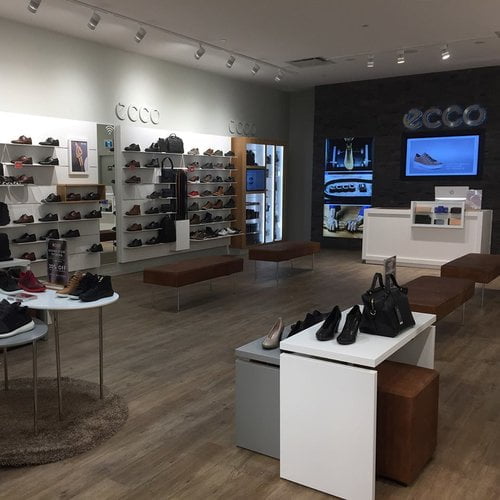
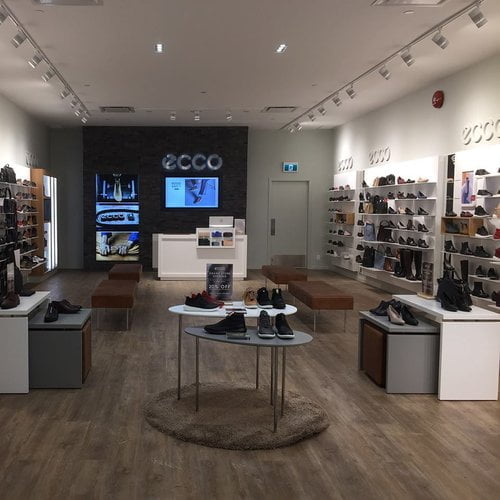
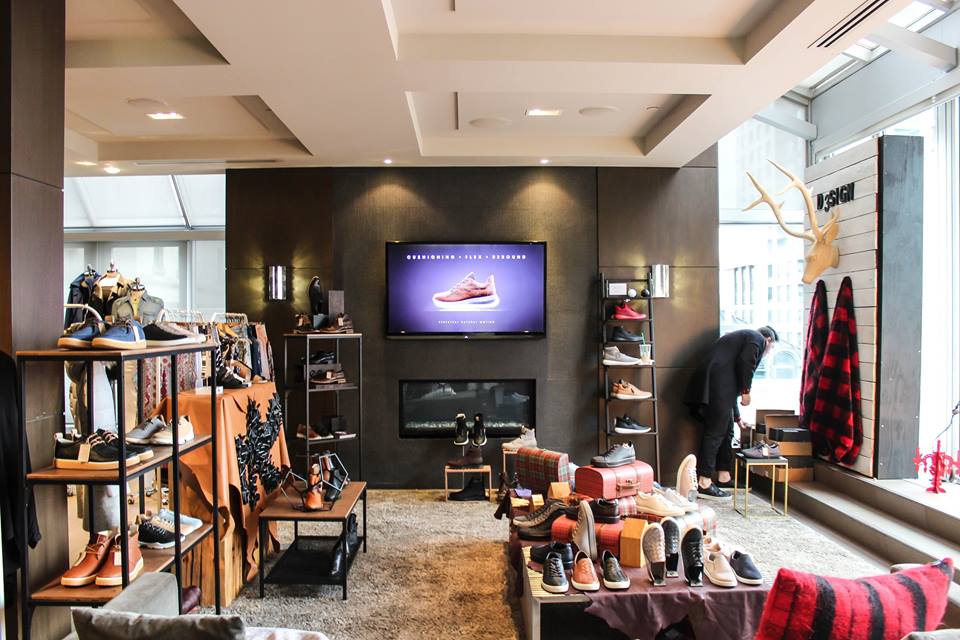
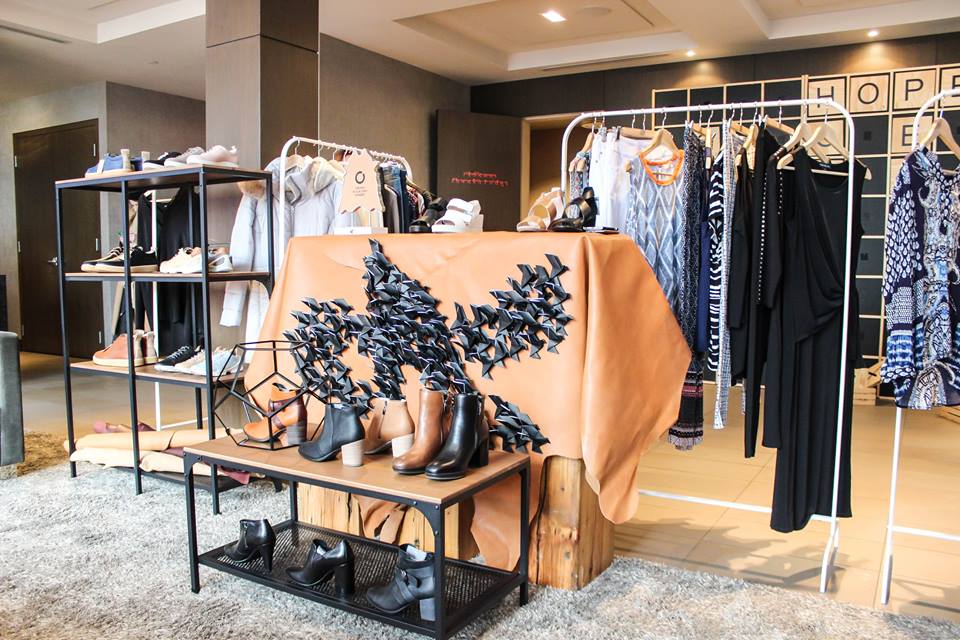
Footwear retailer ECCO, founded about 55 years ago in Denmark with a mission to produce comfortable shoes, is in expansion mode across Canada.
Jordan Searle, president of ECCO in Canada, told Retail Insider the brand, which has been here for 25 years, has been really well supported by retailers and will continue to expand its reach.
“It was distributed predominantly by wholesale originally and then over the years we developed retail as well,” said Searle. “So now our business is mostly balanced across wholesale distribution, retail and ecommerce.”
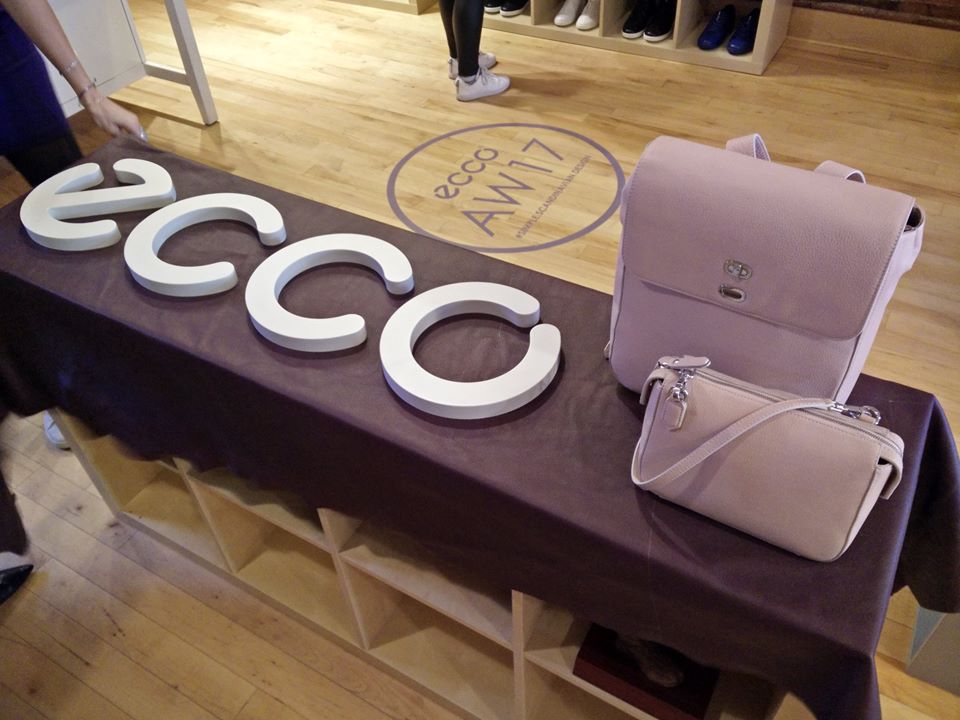
Photo: ECCO
Photo: ECCO
Photo: ECCO
There are 33 stores in Canada in the Greater Toronto Area, Ottawa, Quebec City, Montreal, Winnipeg, Calgary, Edmonton and the Greater Vancouver Area.
“This year already we’ve opened four stores. We opened at Scarborough Town Centre in Toronto, CF Richmond Centre in Vancouver, Park Royal in West Vancouver and we recently opened another outlet in Edmonton at the international airport,” said Searle.
“The latter half of this year we’re also opening up at CF Pacific Centre in Vancouver, Oakridge Centre in Vancouver, and CF Market Mall in Calgary. So this year we’re actually opening seven stores in total. That will bring us up to a total of 36 stores and then we are aiming by about 2021 to be between 43 and 45 stores.”
Searle said he wouldn’t consider the company’s expansion as rapid.
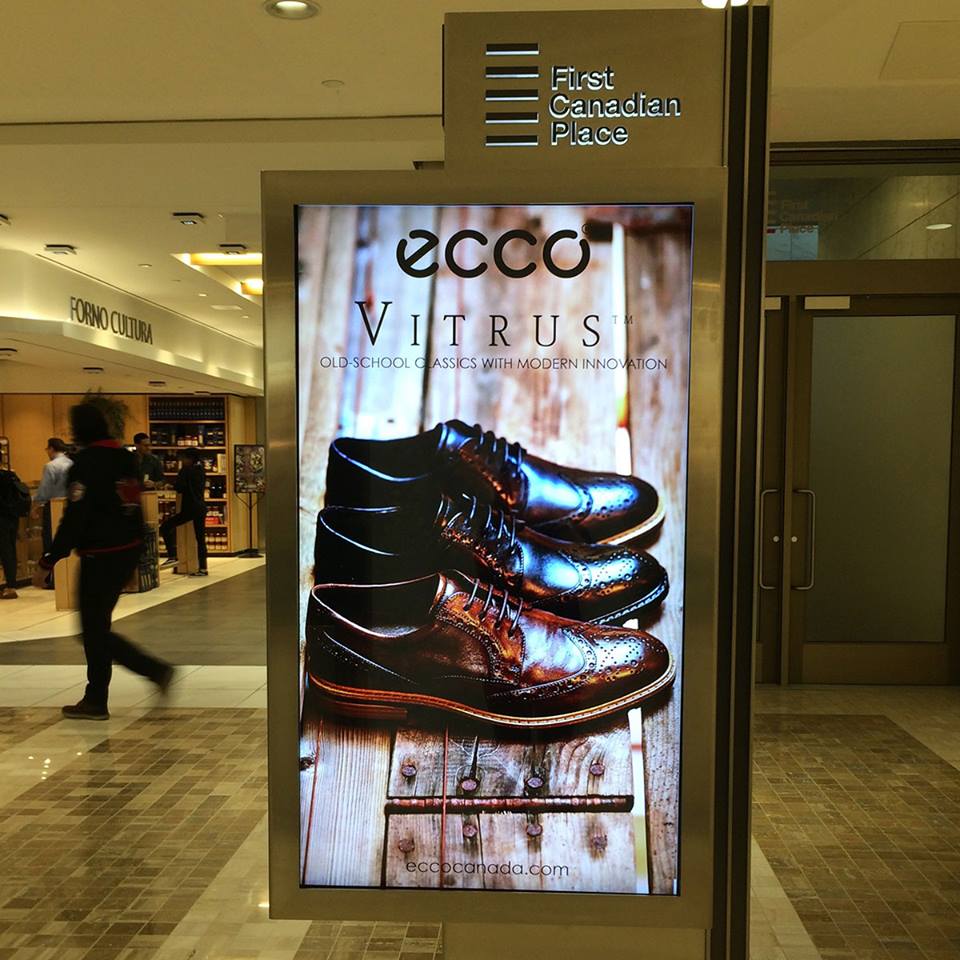
ECCO Advertising at First Canadian Place
“We see an opportunity to be represented in key areas in markets where we haven’t been represented before. There is a challenge in retail right now with a lot of more traditional retailers closing their doors unfortunately and that leaves a lot of our consumers without opportunities to buy out there,” he said.
“We need to ensure that we service our ECCO loyal consumers. It’s really about ensuring that we have distribution as opposed to an aggressive expansion across the country. We are not immune to the trends that we see in retail mainly that a lot of omnichannel and ecommerce is now something which is affecting certain bricks and mortar stores. So we’re very conscious of that but we do believe that we are under-represented as a brand in Canada.”
ECCO was founded in 1963 in Denmark by Karl Toosbuy. It’s still family-owned today.
“Mr. Toosbuy’s dream was to produce comfortable footwear. He was also very focused on controlling the entire process,” said Searle. “Just like in 1963, ECCO is still a vertically integrated company. What that means is we are producing all of our leather to make the footwear and we also make the shoes ourselves. And we also sell the shoes ourselves.
“And we distribute via wholesale, retail and ecommerce. The other thing about the product is that there is this Scandinavian heritage so it’s really coming from a heritage of form following function . . . We make comfortable shoes so people can perform in comfortable shoes.”
ECCO started out with 16 employees and one market. Today, it operates in 50 markets across the world with 17,000 members.
Photo: ECCO
The company prides itself on its passion for making great shoes from drawing the first lines of a shoe right through to selling them in its stores around the world.
“Unlike most other global shoe brands, we choose to operate our own tanneries and shoe factories. We control everything ourselves. Throughout our history, our philosophy has been to make shoes that are shaped to fit the foot, not the other way around. This is essential to who we are. It drives us forward and compels us to innovate. It is simple. We want to be the best shoe company in the world. With this vision, nothing is left to chance,” says the company on its website.
Casper at CF Sherway Gardens (Image: Craig Patterson)
New York City-based sleep brand Casper has launched its Canadian store expansion with its first ‘sleep shop’ location at Toronto’s CF Sherway Gardens, which opens to the public on Tuesday, May 15. A second location in downtown Toronto will be announced shortly, and a national rollout is planned that could see Casper open stores in many of Canada’s major cities.
The CF Sherway Gardens Casper spans just over 2,300 square feet on one level, and one of its aims is to create brand awareness while also offering the ability to try out Casper’s ever-expanding product assortment. Mattresses are displayed in four bedroom-like installations, and other products such as pillows, sheets, duvets, bed frames, and even dog beds are found in the store. Guests can purchase items from the store and bring them home immediately.
The space is designed to be interactive, and customers are encouraged to touch and try out products such as mattresses and pillows. Sleep pods towards the back of the store have curtains that can be pulled for privacy. Signage throughout the store explains the functionality of each item, educating consumers as they touch and feel products that have been traditionally only available online. The space can also be activated for events that may include a focus on sleep and wellness.
The CF Sherway Garden Casper Sleep Shop is strategically located in the mall’s centre-court area, which acts as a meeting point with several hallways radiating from it. Retailers such as Lululemon, Links of London and De Beers are nearby. The mall, which is one of Canada’s most productive in terms of annual sales per square foot, over the past several years has seen more than $550 million invested into expansions and renovations, including the addition of new Saks Fifth Avenue and Nordstrom stores.
General Manager of Casper Canada, Nicole Tapscott, explained how Casper’s business in Canada is growing quickly. It’s been so strong, in fact, that it necessitated opening a new Canadian headquarters for the brand, which will be announced at a later date in a space somewhere in Toronto. Casper will also begin manufacturing its products in Canada, creating about 75 jobs.
Casper continues to maintain a partnership agreement with Indigo Books & Music to stock pillows at 30 of its stores. This month, as well, Casper has announced a partnership with Canadian furniture retailer EQ3 which will sell Casper mattresses and pillows in selected stores, as well as online.
Casper at CF Sherway Gardens (Image: Craig Patterson)Casper at CF Sherway Gardens (Image: Craig Patterson)
Ms. Tapscott explained that the CF Sherway Gardens sleep shop will be the first in a national rollout that will see locations in cities nationwide. Toronto was used as a launch point and Vancouver is expected to be the next major market to see standalone Casper locations. And while CF Sherway Gardens is an enclosed mall, Casper is looking to open locations both in malls as well as on urban street front locations, depending on opportunity.
Casper’s Canadian expansion falls on the heals of its US brick-and-mortar expansion — the first permanent US Casper sleep shop opened in February of this year in a 3,000 square foot space at 627 Broadway in New York City. Casper operates 18 pop-up locations in the United States, with that initiative having commenced in the fall of 2017.
The company now boasts sales in the hundreds of millions of dollars annually, which is remarkable considering that the brand is about four years old. Casper, which is backed by celebrities including Leonardo DiCaprio, Tobey Maguire, Adam Levine and Ashton Kutcher, launched in 2014 as a direct-to-consumer online mattress retailer, with its product delivered in a “how did they do that?” sized box. Casper’s memory foam mattress comes in a variety of sizes, and the company has expanded its product assortment to include a “perfect pillow” pillow-in-a-pillow and soft, breathable sheets, frames, and even dog beds and other sleep-related products.
Casper at CF Sherway Gardens (Image: Craig Patterson)
We first reported on Casper’s Canadian expansion in August of 2016, when the company unveiled temporary “snooze rooms” in selected cities, following a spring 2016 “Napmobile” tour that saw stops in Vancouver, Calgary and Toronto. Casper found that having a physical presence created consumer engagement and provided feedback not found online — not to mention, consumers enjoyed being able to test the popular memory foam mattresses prior to buying. In March of 2017, Casper launched its first retail presence in Canada through a partnership with Williams-Sonoma-owned retailer West Elm, in Toronto.
As well, Casper unveiled its ‘Casper Cottage’ pop-up on Toronto’s trendy Ossington Avenue in July of 2017. In February of 2018, Casper announced its partnership with Indigo that was mentioned above.
We’ll update this article as Casper expands its Canadian retail operations, including opening new retail spaces as well as its new headquarters and manufacturing facility.
*All photos in this article were taken by Craig Patterson at CF Sherway Gardens in Toronto on Monday, May 14, 2018.
Upscale Toronto-based tableware and giftware retailer William Ashley has relocated its Toronto store to The Colonnade at 131 Bloor Street West, and the two-level space is impressive, to say the least.
The new store spans more than 12,000 square feet over two levels. A street-level entrance welcomes customers into a 1,085 square foot space that features a Teuscher of Switzerland chocolate boutique (currently the only one in Canada) as well as escalators that lead to the dramatic second-level retail space that occupies almost 11,600 square feet.
Soaring 23-foot ceilings, natural light, and impressive fixtures characterize the dramatic retail space, which is worth a visit for anyone who is in the area. There’s even an in-store café that serves tea and coffee complimented by Teuscher Chocolate, served with elegance in a dedicated section of the store that includes a series of south-facing, oval-shaped windows.
Toronto-based DesignAgency designed the new space, which it describes as having “a series of modern contemporary fixtures, environments and experiences wrapped and woven over two floors through the heart of the landmark Colonnade Building on Bloor Street,” going on to say that its goal was “to create an enveloping environment that is the very definition of William Ashley – all the while allowing the array of stunning products to tell their own unique stories.”
Matt Davis, Principal at DesignAgency, explained how his firm worked with William Ashley to create the unique retail space. While smaller than the previous location, design efficiency allows the new location to function as a considerably larger store. DesignAgency examined the unique space and came up with innovative storage solutions and as well, the layout of the new store has a more efficient flow than the former Manulife Centre location.
The process took about 3.5 years from site selection to completion, according to Mr. Davis, with construction taking about 11 months. The overhauled space was made possible by the fact that while The Colonnade’s exterior is heritage designated, its interior was fair game for a complete revamp.
One remarkable feature of the store is its functionality — for example, tables in the store can be joined in the central galleria to create a dining room for 120 people. The space is designed to be able to host different ‘experiences’ and activations throughout the year.
William Ashley’s president, Jackie Chiesa, explained how the new Colonnade store features enhanced customer service experiences that engages technology, personalized services (including wedding registry, corporate services and interior design) as well as an entirely new store design to showcase William Ashley’s prestigious assortment of goods.
The store features some of the world’s leading tableware and giftware brands — strolling the space reveals brands such as Waterford, Hermes, Christofle, and Versace, and several new brands such as Jonathan Adler have been added in the new store. A roster of brands and offerings are available on William Ashley’s website.
The Colonnade, which some consider to be ‘ground zero’ for luxury retail on Toronto’s Bloor Street West, is owned and operated by landlord Morguard. Scott Harris, General Manager of Retail at Morguard, noted that “the Colonnade was Canada’s first mixed-use building featuring chic retailers. From its opening in 1963 to today, an era of best-in-class retailers continues to serve the demands of Bloor Street shoppers seeking exceptional product.” Other retailers at The Colonnade include names such as Cartier, Mulberry, Escada, Black Goat Cashmere, Coach, Moncler and Prada, and towards the end of this year Christian Dior will unveil its largest store in North America in an expanded two-level retail space occupying the eastern-side of the complex.
What’s interesting is when The Colonnade opened in the 1960’s, it originally operated as something of a ‘shopping mall’ with a collection of stores that spanned two levels, with a corridor in between. Prior to William Ashley’s construction, the second level featured a corridor with some smaller retailers, as well as the Herzig Eye Institute which has since relocated nearby.
William Ashley relocated from the nearby Manulife Centre at 55 Bloor Street West, which is currently undergoing an overhaul costing over $100-million. The Manulife Centre William Ashley store closed at the end of 2016 and for over a year, it operated out of a 3,200 square foot pop-up space on the ground floor of The Colonnade, next to Italian luxury retailer Moncler.
William Ashley was founded in 1947 by Tillie Abrams (who passed away in 2010), and opened its first Bloor Street store in the 1950’s. In the early 1970’s, William Ashley was the first store in Canada to offer a wedding registry service. William Ashley boasts the largest selection of tableware and home decor in the world, and this year marks the 70th anniversary for the venerable retailer. William Ashley moved into the Manulife Centre at 55 Bloor Street West in 1994, replacing former women’s luxury retailer Creeds which went bankrupt in 1991.
Earls Restaurant Group has launched Earls Ambleside Beach in West Vancouver, with a series of events which began welcoming private guests on May 5th with the public officially enjoying the location on May 9th. This is the first new Earls to open in BC since 2011 and has 189 indoor seats, more than 80 on the extensive patio, measuring about 7,000 square feet with an additional 200-square-feet of patio.
Situated in the new Grosvenor development on the Ambleside seawall, the restaurant features prominent floor to ceiling windows, with an interior design best described as ‘West Coast Modern meets California Beach’. It was the expansion into competitive US cities like Boston, Chicago, Dallas and Miami that convinced Earls that they needed to ‘unchain the chain’ to ensure each restaurant opened is independently compelling.
The location offers free wifi and is ideally located near transit and the nearby Sea Bus, Sea Wall, Park Royal Mall, Shipyards Night Market, and the Lonsdale Quay Market, making it an ideal location for dining and afternoon patio enjoyment.
This location is the first Earls to offer a plant-based section with seven vegan-friendly items including Crispy Tofu Tacos, Vegan Hunan Kung Pao and Korean Bibimbap. Beverages include an exclusive line of bottled cocktails created with Trash Tiki which are bottled in-house each morning, a curated wine list, and the restaurant will be eliminating disposable plastics straws from the bar entirely.
The west-coast themed menu, which was created by culinary development chef, David Wong, and will be managed day-to-day by head chef, Simon Zanotto and executive chef Phil Gallagher, who lives on the North Shore. It features exclusive dishes such as the Lobster and Pancetta Pizza, Salmon Zen Bowl, and The Grilled Avocado Brunch Bowl.
Acorn Wood Designs, which was recently acquired by Peregrine, was responsible for most of the restaurant’s interior millwork and metal work. That includes tables, bars, the hostess station and wall paneling, as well as beverages stations, washrooms and doors. Peregrine confirms that high-quality finishes used in the space include walnut and oak, along with brass and powder-coated metal.