Advertisement
Home Blog Page 1068

How The IoT Is Influencing the Brick-and-mortar World of Retail

Real Examples of How IoT Applications in Retail

The Internet of Things, or IoT, catchword is one that has been hyped up all across the retail market for some time now, and it is steadily becoming more visible. Not necessarily as IoT either, but as a solution for land-based businesses in terms of digital transformation. With online retailers reigning supreme over brick-and-mortar Mom-and-Pop-type trading, the smaller organisations are starting to fight back.

In the same way that the IoT is becoming far more frequently seen around our home spaces, it’s being used to drive business into brick-and-mortar stores more often as well. The kinds of solutions IoT provides are not simply being implemented by major corporations with millions to spend, but also has smaller makers installing insight-driven equipment in order to up their returns.

Beacon Alerts

The first IoT solution on our list is the Beacon Alert. This alert app uses Bluetooth geolocation in order to provide shoppers with possibly valuable information that’s sent directly to their smartphones. This could be in the form of notifications about a special in the third aisle, for example, or the fact that a store is having a 50% Anniversary Sale.

Connecting with customers is a chief concern for business owners, and, as digital technology is starting to permeate the regularity of our interactions, Beacon Alerts have allowed many a merchant to touch base with their audiences without them having to say a word!

Shopper Mapping

Strategically placed sensors are able to provide very valuable insights to Shopper Mapping and the high-traffic points within a store. Knowing where and how a consumer locates a product is important to sales departments, managers, and marketers alike. The kind of insights that Heat Maps and Customer Trace provide allows Canadian retailers to better position sale items, adjust the setups of their stores in order to eliminate vacant space, and record shopping trends over pre-set periods.

Certain technology allows security camera images to generate a heat map of a store’s layout, and then translates the data onto a dashboard for use by store managers. For instance, the volume of traffic of people walking past the storefront versus the amount of these who actually enter the shop can be measured in real time and compared to other time stamps.

This insight, paired with how frequently one of these potential customers actually makes a purchase, will hugely drive the success of advertising statistics. By making use of so-called People Counters and Location Heat Maps, storeowners are able to refine both the exterior and interior advertising and overall appearance in order to maximize how any likely clients actually enter the store and buy something. As application developments and sensors continue to drop in price, the demand for more of these types of insights grows exponentially.

The Business/Customer Relationship

In the past, business owners built relationships with their customers with face-to-face interaction as the foundation for these. Today, retailers are making use of the IoT to learn from, interact with, and advertise to their clients.

Using real estate as an example, there are ways in which house hunting has become far easier, and more convenient. When a home becomes available, for either rent or sale, agents are able to place sensors and upload video content from their smartphones or tablets to an IoT-based cloud application. This then allows prospective tenants and homeowners to view and virtually visit these homes whenever they want to, from wherever they are. No more Sundays spent viewing open houses!

Brick-and-Mortar Retail Has a Fighting Chance

Implementing the kind of IoT solutions outlined here provides invaluable insights for business owners, allowing them to generate more income and attract potential customers with their endeavours far more successfully.

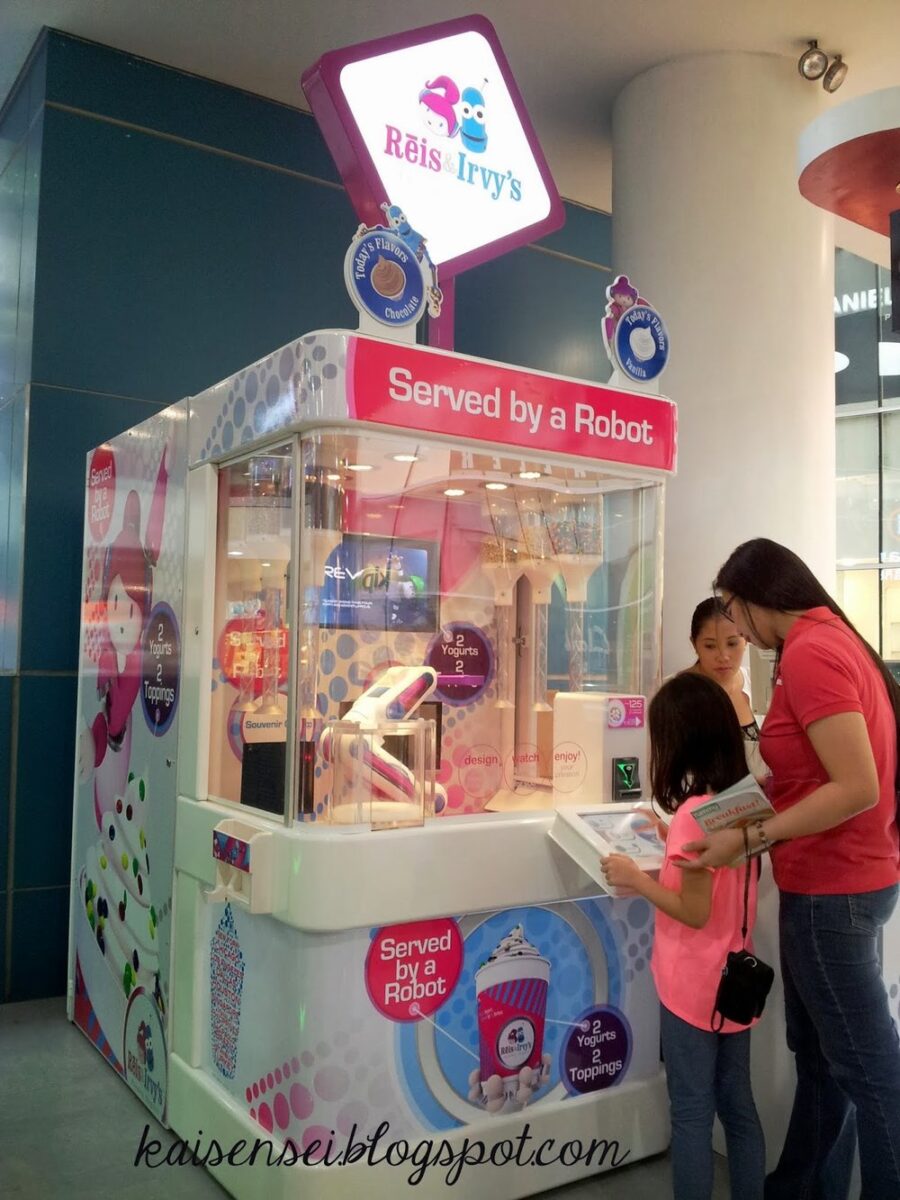
Automated Frozen Yogurt Chain Reis & Irvy’s Looks to Disrupt Canadian Market

exc-5adfe4cc88251bb6ead31b4c

A new frozen yogurt chain that takes a futuristic spin on the traditional froyo concept is breaking into the Canadian market with ambitious growth plans. 

San Diego-based Reis & Irvy’s, a chain of robotic frozen yogurt dispensers owned by Generation NEXT Franchise Brands, Inc., has partnered with Froyo Vending Canada, Inc. to launch Reis & Irvy’s Canada. In April, the Canadian franchisees announced a large-scale franchise agreement, which will see the frozen yogurt chain gain a hefty presence in Edmonton and Calgary.

Reis & Irvy’s ‘Froyo Robots’ are fully automated, 15-square-foot machines that dispense frozen yogurt and process transactions independently. Customers can customize their order, choosing from a variety of different frozen yogurt flavours and toppings. Each order takes approximately 60 seconds to dispense.

Since the robots do not require a staff attendant on site, aside from refills and cleaning, the concept could disrupt the so-called froyo market considerably.

“It’s a robot – it does all the serving itself, so you don’t need someone there 24 hours a day,” says Brett Beninger, president and CEO of Froyo Vending Canada. “It’s quite simple, and it’s really on trend.”

Brett Beninger, president and CEO of Froyo Vending Canada.

Reis & Irvy’s launched in the U.S. market in 2016. It has since grown to include more than 180 franchisees across the U.S., and has pre-sold more than 1,000 units.

Under the Canadian agreement, Froyo Vending Canada serves as the exclusive master franchisee of Reis & Irvy’s Froyo Robots in Canada for five years, with an obligation to purchase a minimum of 500 of the robots over that period.

Recently, Froyo Vending secured a major franchise agreement, in which entrepreneur Barry Ehlert will have exclusive rights to all Reis & Irvy’s locations throughout Edmonton and Calgary.

“I love this product,” says Ehlert. “The brick and mortar frozen yogurt and ice cream retail industry in Canada is ready for this kind of unattended and very disruptive vending technology.”

In total, Froyo Vending Canada has pre-sold approximately 110 Reis & Irvy’s Froyo Robots in Canada, with 30 of those locations set to be operating by July. The first locations are expected to open in late May and early June.

“We’ve had some success in the west, and now we’re just starting to push out east,” says Beninger, who notes that the company has made inroads in many provinces across the country.

The chain targets high-traffic locations such as amusement parks, hotels, movie theatres, shopping malls, airports, colleges and universities. The product appeals to consumers of all ages, Beninger says.

“We’re looking for locations that average about 1,000 people per day in foot traffic,” he says.

Although franchisees such as Ehlert are launching large-scale Reis & Irvy’s operations, franchisees also have the option of purchasing as few as three robots. That presents an opportunity for individuals who are working full time and looking for a second source of income to launch a side business with few overhead costs and a limited time commitment, according to Beninger.

He notes that the robots are programmed to alert franchisees when maintenance is required or refills are needed. “It will do all of that for you, so you don’t have to be present,” Beninger says. “It could be a second income for someone…it’s actually quite a simple business to own and operate.”

The compact nature of the robots, he adds, makes it easy to relocate units that aren’t performing well. “We can pick it up and move it into a better location, if that is the case,” Beninger says.

‘Amazon of Cannabis’ Namaste Plans for Explosive Growth in Canada

Namaste Technologies Inc.

Vancouver-based Namaste Technologies Inc. has been described as the Amazon of the cannabis space.

It calls itself the largest online retailer for medical cannabis delivery systems globally, distributing vaporizers and smoking accessories through 24 ecommerce sites in 20 countries and with distribution hubs located around the world. Namaste has majority market share in Europe and Australia, with operations in the UK, Canada and Germany and has opened new supply channels into emerging markets including Brazil, Mexico and Chile.

Now it is poised for further growth into cannabis sales.

Kory Zelickson, co-founder and COO of Namaste Technologies Inc., said Namaste, which began in 2014, recently acquired Cannmart Inc. – an Access to Cannabis for Medical Purposes Regulations Production License applicant.

“We’ve created the first application in Canada that’s available for download on your iPhone or Android device called Namaste MD which is 100 per cent virtual patient acquisition,” said Zelickson.

“We’re the first company to fully digitize patient acquisition in compliance with Health Canada’s standards and regulations. We’ve created a portal where people can book a consultation . . . and through a video conference on their phone get their prescription. And then what we’re doing, instead of having those prescriptions for a particular patient go straight to a grower directly, we’re going to be one of the first retail businesses where we’re actually under our licence with Cannmart going to be buying in bulk from different providers and creating a marketplace for cannabis where a patient can come to source their cannabis from one location and have access to multiple providers from domestic growers and also internationally-imported cannabis too.”

Namaste Technologies Inc.

Zelickson said the concept is a unique one in Canada because a lot of the medical cannabis market works where patients go directly to a grower.

“There’s no marketplace at this point. So that will be something very unique. The MD is the patient acquisition portal we’ve been launching already and starting to acquire patients,” he said.

“Namaste focuses a lot on the ecommerce site. So we said to ourselves we want to start getting involved in the direct sale of cannabis. Our interest wasn’t into cultivating. We see ourselves more like Uber. We have the service. We’re selling cannabis but we’re never going to possess it. We want to be very hands off. We don’t want to cultivate. We want to focus on the technology side.”

He said the company will be leveraging all its technology currently in place for its ecommerce platform into cannabis sales.

“So our focus in the cannabis market in Canada for now is going to be on acquiring patients at a very accelerated rate because we have a tool that no other company has to acquire patients as fast as we can. We’re going to be leveraging all of our data, all of our technology towards that end,” said Zelickson.

Namaste acquired Cannmart as a late-stage ACMPR applicant, with the intention of creating Canada’s most expansive marketplace for medical cannabis. It currently operates one of the largest global ecommerce platforms for cannabis delivery devices and plans to leverage its technology and consumer data with the end goal of acquiring medical patients.

NamasteMD will serve the company as a patient acquisition tool, allowing patients to connect with doctors and nurse practitioners in a safe and secure online environment from the comfort of their homes. NamasteMD was designed to streamline the patient onboarding process in comparison to traditional brick-and-mortar clinics.

Its vision is to become an all-inclusive online cannabis marketplace and create a platform that consolidates many of the best product offerings by the top ACMPR Licensed Producers in Canada.

“This important milestone represents an incredible achievement for Namaste and its shareholders. Receipt of the ACMPR Production License not only validates Namaste’s strategy but it serves as a critical component of the Company’s anticipated growth moving forward.  We are very proud to have met our goal of receiving our ACMPR medical cannabis Production License from Health Canada as we look to explore the tremendous opportunities that exist in the Canadian cannabis market,” said Sean Dollinger, President and CEO of Namaste, in a statement.

The company said sales for the second quarter of 2018 were $5.6 million, representing a $3.7M or 195 per cent increase quarter-over-quarter. Gross profit for the second quarter was $1.9 million, representing a $1.2 million or 150 per cent increase quarter-on-quarter. For the first six months of the year, the company had sales of $10.6 million, representing a $6.6 million or 165 per cent increase year-on-year. Gross profit for the first six months was $3.6 million, representing a $2.1M or 140 per cent increase year-over-year. The gross profit increase relates primarily to the growth in revenue outside the United States, it said.

T&T Supermarket’s Cindy and Tina Lee to Receive Prestigious 2018 RCC Grand Prix Trailblazer Lifetime Achievement Award

Retail Council of Canada has announced that T&T Supermarket founder Cindy Lee and CEO Tina Lee as the winners of the 2018 Canadian Grand Prix Trailblazer Lifetime Achievement Award. The Award will be presented at the Canadian Grand Prix New Product Awards Gala on May 30, 2018 at the Toronto Congress Centre, from 5:30pm to 8:30pm ET. [Info/Buy Tickets Here]

Special pricing is available for Retail Council of Canada members. 

Retail Council of Canada’s Canadian Grand Prix Trailblazer Lifetime Achievement Award recognizes individuals or families who have demonstrated outstanding service and dedication to the Canadian retail and grocery industry. Recipients reflect the industry’s spirit of community and trust, while also demonstrating a strong commitment to innovation – be it both in their company’s products as well as the leadership they provide within their organization. 

“Retail Council of Canada is honoured to recognize this amazing mother-and-daughter team, Cindy and Tina Lee, with this Trailblazer Lifetime Achievement Award in conjunction with T&T Supermarket’s 25th anniversary,” said Diane J. Brisebois, President and CEO, Retail Council of Canada. “Cindy and Tina have shown an exceptional, relentless passion to serve their customers with the highest-quality grocery products in a retail environment that is culturally aligned with the unique food needs of Asian families. T&T Supermarket has inspired all grocery retailers to make their stores increasingly relevant to more immigrant families in Canada.”  

Cindy Lee founded Asian grocery chain T&T in 1993, and her vision and tireless work (along with that of her team) created an unrivalled authentic Asian food experience that continues to operate 25 years later.  When Cindy retired in 2014, her legacy was furthered by her eldest daughter, Tina, who took over as CEO. Tina is leading T&T with a people-oriented, purpose-driven management style that anticipates consumers’ increasing demands for the highest quality goods. Today, T&T Supermarkets is the largest Asian grocer in Canada, and by the end of 2018, will have 27 locations nationwide. T&T is also widely regarded as one of the best Asian grocery chains the world.

Retail Council of Canada’s Canadian Grand Prix Trailblazer Lifetime Achievement Award has previously been awarded to such distinguished recipients such as Mother Parkers Tea & Coffee CEOs Paul Higgins Jr. and Michael Higgins, and most recently, Longo’s President and CEO Anthony Longo and the Longo Family. 

The Trailblazer Lifetime Achievement Award will be presented to Cindy and Tina Lee at Retail Council of Canada’s Canadian Grand Prix New Product Awards Gala on May 30, 2018 at the Toronto Congress Centre, from 5:30pm to 8:30pm ET. For more information and to purchase tickets, visit www.rccgrandprix.ca/gala-tickets.

The Canadian Grand Prix New Product Awards Gala will close the second day of Canada’s biggest retail conference, STORE 2018, which will feature more than 80 speakers and attract more than 2,500 retail leaders from across North America. Media are also invited to attend STORE 2018, from May 29 to May 30, 2018. Special pricing is available for Retail Council of Canada members.For more information and to purchase tickets, visit www.storeconference.ca/tickets.

SSENSE Unveils 5-Storey Montreal Flagship [Photos/Video]

Montreal SSENSE store. Image supplied

Montreal-based SSENSE, the “global fashion platform known for its directional retail mix and original content”, has formally announced that it will open a flagship concept in Montreal this week that it says will reimagine the convention of retail. The five level space opens to the public on Thursday, May 3, and it will be unlike anything in Canada. 

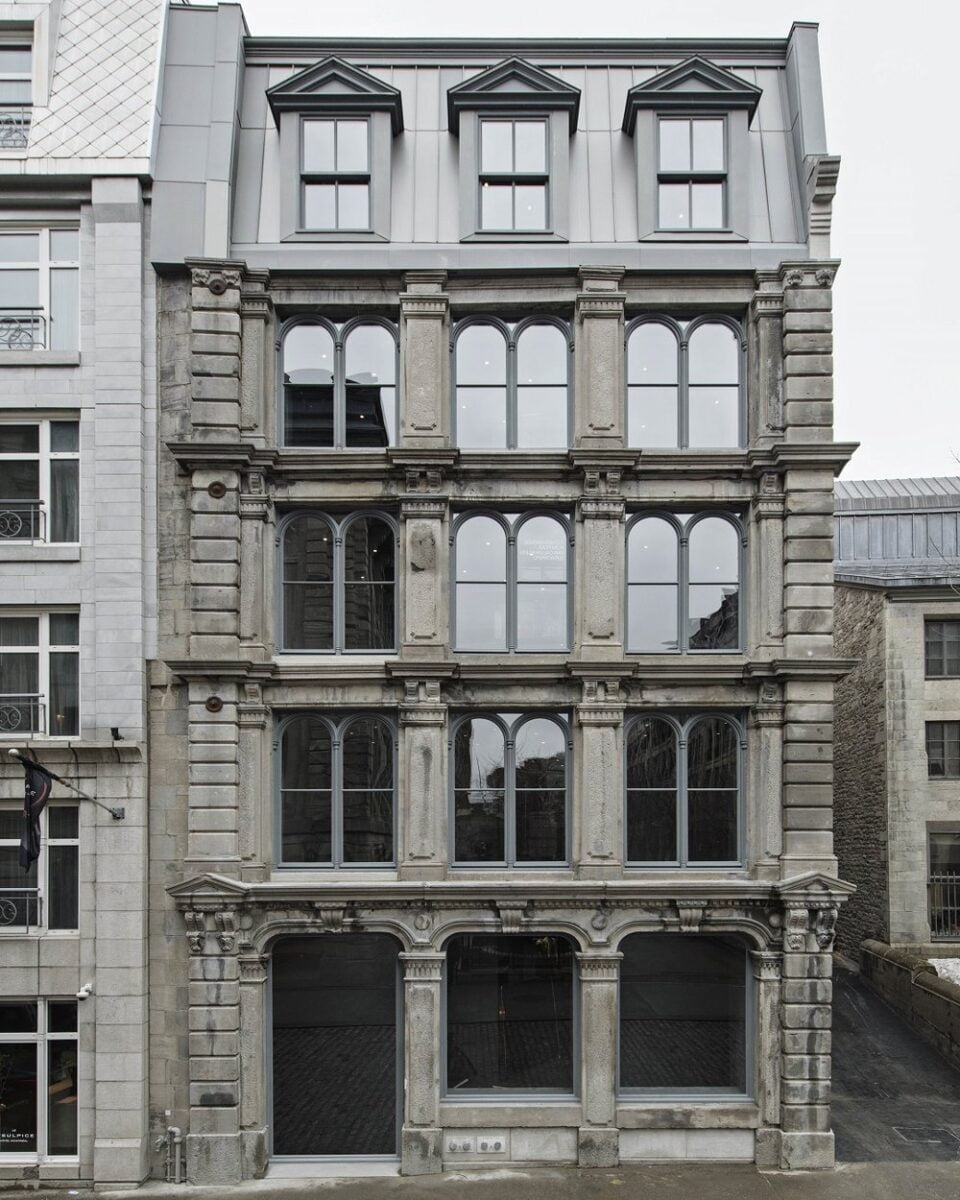
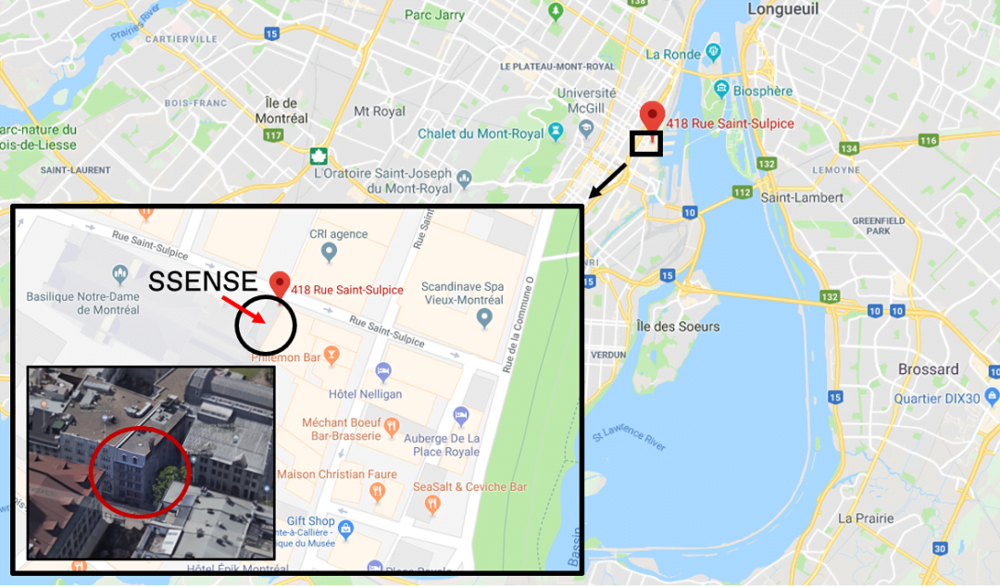
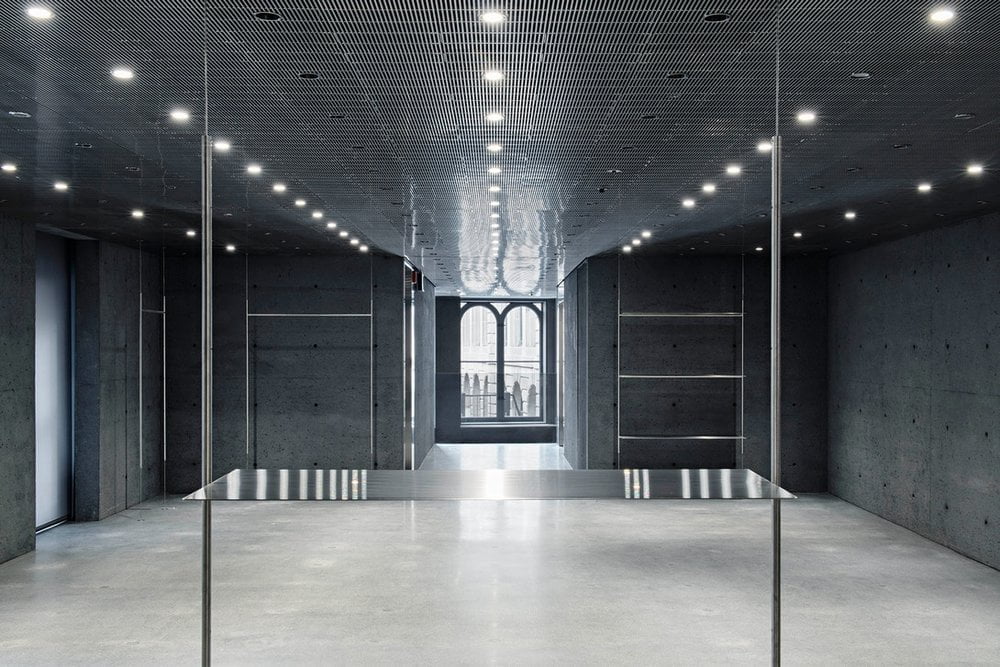
The five-level Montreal SSENSE is located in Old Montreal at 418 Saint-Sulpice in a renovated heritage building spanning 13,000 square feet. Milan-based David Chipperfield Architects has been responsible for designing the space, which features a heritage facade and concrete interior — it’s the first building in Canada to be designed by the Italian firm. 

Located adjacent to the city’s iconic Notre-Dame basilica, SSENSE is housed in what the company describes as “an in-situ concrete structure — a building-within-a-building — where the concrete architecture is transparently expressed and explicitly exposed while preserving the original historic facade”. 

Image: SSENSE
CLICK FOR INTERACTIVE GOOGLE MAP
Image: SSENSE

The unique building acts as a way to bridge SSENSE’s online and brick-and-mortar operations by “creating a seamless interface from online to offline.” The Montreal space will use an appointment-based personal shopping model facilitated through its proprietary interface (montreal.ssense.com) as well as a stylist app to allow for over 20,000 products available on ssense.com to be entirely accessible for clients to try on within 24 hours of scheduling an appointment on the website. 

Fashion platform SSENSE, known for its mix of luxury, streetwear, and avant-garde labels, was founded in 2003 by three brothers — Rami Atallah, Firas Atallah, and Bassel Atallah — and the online platform currently serves 136 countries, operating in English, French and Japanese. The website generates an average of 53 million monthly page views while achieving high double digit annual growth since its inception. 

Co-founder and CEO Rami Atallah said, “SSENSE MONTRÉAL is the physical manifestation of everything we stand for at SSENSE. It is backed by 15 years of insights gathered on both ssense.com and our previous retail location and I am confident we have established a blueprint for retail in the future. E-commerce enables scale but is suboptimal in important ways, especially fostering human connection. A seamless integration with physical spaces fills the gaps in the customer experience. I am so proud to launch SSENSE MONTRÉAL, a space for our community and a space for Montréal.”

Image: SSENSE
Image: SSENSE

Two of the building’s five levels are dedicated to hosting personal shopping appointments in a space featuring eight spacious fitting rooms. SSENSE stylists will be available for consultation via appointment, and merchandise bookings will be facilitated through the website. The remainder of the space is dedicated to cultural space, as well as a top-floor 34-seat café that offers “a relaxed yet inventive culinary experience,” with a constantly-changing market-fresh menu developed by noted Montreal-based restaurateurs Jason Morris and Kabir Kapoor. A glass ceiling over the café spans its entirety, offering an unobstructed view of the sky above. A small book store is also located on the top level. 

According to SSENSE, the space has a unique functionality, featuring a 60 cm grid system embedded throughout the structure that “acts as the framework and placement of a hidden convertible socket system for all mechanical, functional, and technical elements”. The grid system “enables flexibility and agility, adapting to the change of pace and simultaneous activities occurring in the space at any given time,” according to a press release. 

Image: SSENSE
Image: SSENSE

A Vertical Lift Module will be utilized for delivering and storing appointment orders — the technology is typically used to optimize industrial space and improve warehouse management and in the case of the Montreal SSENSE, the technology will provide “inconspicuous muscle for front of house activity”. 

Various activities will periodically animate the building with a range of ‘site-specific projects’ that will draw visitors to the space for events and activities. The inaugural project, called Arca / Tormenta for Prada & SSENSE, is described as “a site-specific performance-cum-installation commissioned by Prada and SSENSE. Exploring the integration of splintered self-states, Tormenta is framed in three distinct and interdependent rituals that converge to exercise the permeable connective tissue separating the once-repressed and the manifest, the embodied; a strengthening of the thin film between self love and self harm”. The public installation will be available to view through June 3, following a live performance in the space on April 26 which was available as a lifestream online. The rather unusual presentation, which we watched live last week, can be viewed here: tormenta.ssense.com, and is described as having “a voyeuristic, multi-camera perspective”. 

Image: SSENSE

As part of the Prada-iniative, an exclusive four-piece Prada capsule collection, in collaboration with Arca, is available at SSENSE MONTRÉAL and online at ssense.com. Prices range between US $295 and US $745.

It’s clear that SSENSE in Montreal will become a focal point for projects from some of the world’s trendiest and well-known designers and brands. The company says that some of its upcoming programming will include original projects by: Virgil Abloh, Moncler, Wales Bonner, DIS, Berlin Community Radio, Heron Preston, Kwaidan Editions, Vejas Kruszewski, and Amnesia Scanner. The store may also act as a tourist attraction for Montreal, given SSENSE’s global profile. 

[Video above is via SSENSE]

Isodiol Acquires Stake in Compass Cannabis Clinic Amid Expansion Plans

Image: Compass Cannabis Clinic

A global company, specializing in the development of pharmaceutical and wellness products, is acquiring 19.9 per cent of Compass Cannabis Clinic, based in Kelowna, B.C.

Isodiol International Inc. is a global Bioactive CBD innovator. Cannabidiol—CBD—is a cannabis compound that has significant medical benefits.

Under the terms of the acquisition, Isodiol will have exclusive CBD distribution rights for its family of brands through the Compass distribution network.

Dave Martyn, president of Compass Cannabis Clinic, said the strategic relationship with Isodiol secures for its patients access to a full line of the highest-quality Cannabidiol products.

“In addition to our supply agreement, Isodiol’s equity participation will help strengthen our profile and support the continued expansion of our footprint and operation. We have already established Compass as a leading private cannabis retailer in Western Canada and we are actively going to pursue additional retail licensing opportunities across the country.”

Image: Compass Cannabis Clinic

Compass Cannabis has two separate models of business operations. The retail model will be rolling out post legalization. The clinic model exists today.

“The unknown in terms of the clinics is what will medical look like post legalization in Canada. We know it’s still going to be there and we know it’s going to be an important factor with insurance but we did want to add another line and for us that was retail sale items,” said Martyn. “Isodiol operates on the CBD side of the business. CBD is likely to be de-classified, particularly CBD that comes from hemp.

“The products work exceptionally well. CBD is probably the most under-appreciated business line. We’ll see going forward . . . Isodiol has the ability to deliver the product which is important. I think CBD will have potential for shortages based on the demand that we’re seeing globally at this point. And they’re also working with us on our own line of products which is exciting as well.”

Compass Cannabis currently has 12 clinics that are open. Some operate as full Compass Cannabis Clinics while others operate through medical practitioner offices.

“We’ve got 39 locations right now that we’ve either executed leases on or effectively letters of intent that we’re going to open them up,” said Martyn. “They’re on a staggered timeline. Some of them go all the way out to 2020. But it is one we’re hoping to expand quite thoroughly through Western Canada but we’re also getting a lot of calls from Eastern Canada right now. Ontario in particular is a market that seems ripe.’

Martyn said post legalization many current Compass locations will evolve into a retail business model, where provincial and municipal licensing allow, thus running both business models simultaneously.

He said the Compass medical operation will also begin exploring opportunities in international markets, including expanding into Australia in the third quarter of 2018, through existing operational partnerships.

Previously,  Compass Cannabis announced it was hooking up with Starbuds, a leading cannabis retailer in the United States, to create a network of retail locations across Canada. The joint venture foresees up to 40 retail locations, perhaps more, in Western Canada.

“Compass has put together an excellent business plan to capitalize on the upcoming medical and retail opportunities in select provinces and to establish itself as one of Canada’s largest and most trusted cannabis clinic operations,” said Marcos Agramont, CEO of Isodiol, in a statement.

“Compass differentiates itself in the marketplace by offering prime locations, free appointments and most importantly exceptional patient education, care and support, which align well with our values.”

The agreement between Isodiol and Compass  also includes Isodiol setting up a distribution channel for its family of THC-free Cannabidiol brands and products, pending regulation in Canada. Isodiol will also provide Compass with a private label line of additional Cannabidiol products for its fast growing patient base.

Per the agreement, Isodiol will issue a total of $4 million with $2 million paid in cash and $2 million paid in stock for the 19.9 per cent of equity acquisition, subject to 36-month escrow.

My Not-so-secret Weapon For Customer-centric Transformation

My Not-so-secret Weapon For Customer-centric Transformation

Customer experience is a top priority for execs these days. 95 per cent say delivering great customer experience is critical to success. But, the reality is many organizations are still struggling to figure out how to put CX theory into practice.

Over the course of my career, I’ve accompanied many businesses in becoming more customer centric. What stands out is how difficult it is for businesses to understand customers’ realities. In fact, User Testing’s report reveals only 13.85 per cent of marketers have a deep understanding of their customers’ journeys across all touchpoints, online and offline.

I’ve realized large companies struggle to improve CX because they’re missing out on a crucial element: the ability to put themselves in customers’ shoes.

But, how can organizations gain this knowledge?

The power of customer journey mapping

One of my favourite tools to start the CX process is customer journey mapping. You may have heard about this technique. 88 per cent of CX pros surveyed by Forrester report incorporating it into their practice.

I experienced it’s value firsthand, seven years ago when embarking on a website redesign for a high-end tile company. When we started the project, the company’s website was an online catalogue of their inventory. We wanted to bring the website to the next level, but we weren’t experts in the tile industry, so we needed to find out more about client needs and pain points. We chose to conduct customer-facing research and to map their journey.

Once our customer journey map was complete, we could finally see the big picture. One common customer complaint was they couldn’t picture how tiles would look installed in their space. Customers experienced this frustration at several points in their journey: first when looking at tile samples in the store, and later when examining the samples they’d brought home.

When we started designing the website, we used these insights to develop unique features to help customers visualize tiles in their space. We understood the website had to serve customers at multiple points in their journey: when first coming in to the store to see products, and later on when weighing their options at home. To meet these needs, the website we created allowed staff, equipped with tablets, to accompany customers browsing in the store and to show them images of how tiles would look in completed rooms. On top of that, staff were able to track customers’ favourite tiles and to send an automatically generated email with product information and inspirational photos. The website we designed was more than a virtual storefront: it was a dynamic tool, which could accompany the customer from the beginning to the end of their journey.

Although customer journey mapping wasn’t a trend at the time, both myself and my client were immediately able to see its’ great potential. The client was impressed by the profound understanding of their business my team developed in a short period, and by the value we created by using this knowledge in our website design. They even told us our website led to a significant decrease in costs of producing sales and marketing collateral.

In fact, by engaging in customer journey mapping we were able to provide more than a website. We were able to build a strategic roadmap, identifying digital initiatives that could be developed to improve the overall customer experience. For example, we discovered the client’s professional customers (architects and designers) needed an online portal through which to manage their project orders and communications.

Customer journey mapping in action

Since my first adventure with customer journey mapping, demand for this service has exploded. Today, we work with a wide range of clients, from retailers to financial institutions, to help them use it to understand their customers and to deliver a delightful experience across channels.

I’ve realized that there’s no one-size-fits-all approach to creating a customer journey map. Each project my team has tackled has presented new challenges and revealed new insights. One thing I can say for sure, is that mapping the customer journey is a journey in itself.

For large organizations, launching a customer journey mapping project can be a big challenge. Whether it’s about identifying which journey to map, breaking down silos to collaborate across departments, or figuring out how to capture the right insights, each organization faces unique challenges.

Anastasia Simitsis is a VP, Strategy and Experience Design at Valtech Canada. She has been creating digital strategies and experiences that both fulfill user needs and business goals. Anastasia speaks at numerous digital marketing events, gives training at Campus Infopresse, and has co-founded Tout le monde UX. She also runs UXPA-QC, Quebec’s local chapter of the User Experience Association. Follow her on Twitter at @UXfocus.

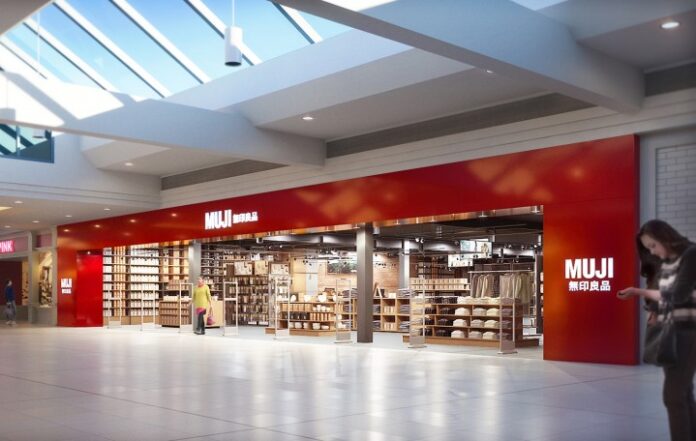
Muji Continues Canadian Expansion with CF Richmond Centre Store [Photos]

MUJI at CF Richmond Centre in Vancouver. IMAGE: MUJI

Minimalist Japanese retailer MUJI has opened its eighth Canadian store at CF Richmond Centre in suburban Vancouver. It’s the company’s third store in the Vancouver area. 

The store carries more than 4,000 items including apparel, food and household goods — including live plants. The store also offers the ‘MUJI YOURSELF’ service, which allows customers to customize stationery items with a selection of stamps, as well as the ‘MUJI GIFT’ service, featuring a gift bag sealing machine.

Despite two previous openings in the Lower Mainland, the Richmond store’s opening was well attended with lineups waiting to get in. As with all of MUJI’s Canadian store openings, a canvas shopping bag featuring a branded regional map was given to some of the first shoppers (spending at least $20) at the new store over the weekend. 

PHOTO: MUJI

One of the reasons that the store was so busy may have been brand awareness — Richmond is a multicultural community of almost 220,000 people, with about 60% of its residents being immigrants — the highest of any city in Canada. CF Richmond Centre, which is considered to be the leading mall in the area, is also one of Canada’s most productive shopping centres, according to Retail Council of Canada’s latest Canadian Shopping Centre Study. Another popular Japanese retailer, Uniqlo, opened earlier this month at CF Richmond Centre to considerable crowds as well.

“There are many people who already know about MUJI in the Richmond area,” says Toru Akita, president of MUJI Canada. “We’ve received many requests to open a store in Richmond. After considering different locations, we are pleased that we finally found the right place. Although the store is smaller than the other locations in British Columbia, we will still offer a wide variety of products as well as the latest store experience. I sincerely hope that the people of Richmond will visit and love our store.” 

PHOTO: RITCHIE PO

The CF Richmond Centre MUJI is located next to the mall’s Victoria’s Secret store, in a retail space spanning more than 6,355 square feet on one level. The lease deal was coordinated/negotiated by Martin Moriarty and Mario Negris of CBRE Vancouver, as well as Arlin Markowitz from CBRE Toronto, who is overseeing the retailer’s national expansion. 

MUJI entered Vancouver in August of 2017 when it unveiled a 7,770 square foot space to massive crowds at Metropolis at Metrotown in Burnaby. An impressive 14,507 square foot store subsequently opened on Robson Street in Vancouver in December of 2017, making the store MUJI’s largest outside of Asia, at least for now. 

MUJI’s first Canadian store opened in Toronto in November of 2014 at the Atrium, which is a multi-use complex featuring retail at its base as well as retail above. The original 4,400 square foot MUJI store at the Atrium has temporarily relocated while the permanent space is expanded both outwards and upwards. MUJI’s second Canadian location, spanning 5,225 square feet, opened at Mississauga’s Square One in November of 2015, followed by the October 2016 opening at Toronto’s Yorkdale Shopping Centre (6,375 square feet) and the Summer 2017 debut of a 6,000 square foot space at CF Markville, north of Toronto. Most recently, MUJI unveiled a  a 6,800 square foot store at Scarborough Town Centre, which was its fifth in the Greater Toronto Area. 

Last year, MUJI’s Canadian President, Toru Akita, said that he expected MUJI to operate between 15 and 20 stores in Canada by the year 2020, and a source working with the company says that the retailer has already mapped out many of the locations where it plans to expand, which may include malls as well as urban street front locations. 

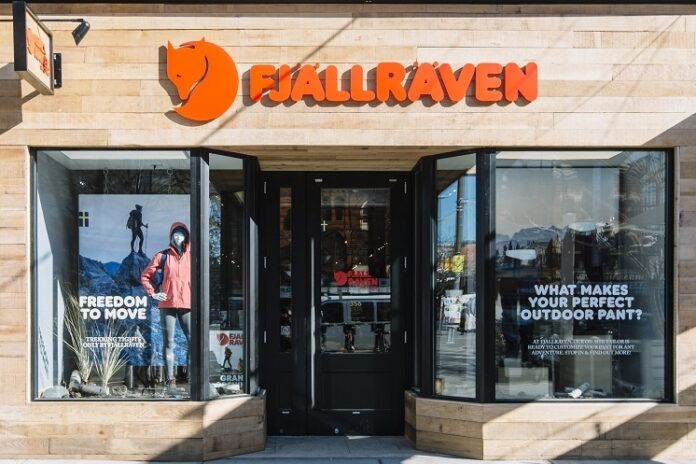
Fjällräven Unveils Toronto Flagship [Photos]

Fjällräven on Queen Street

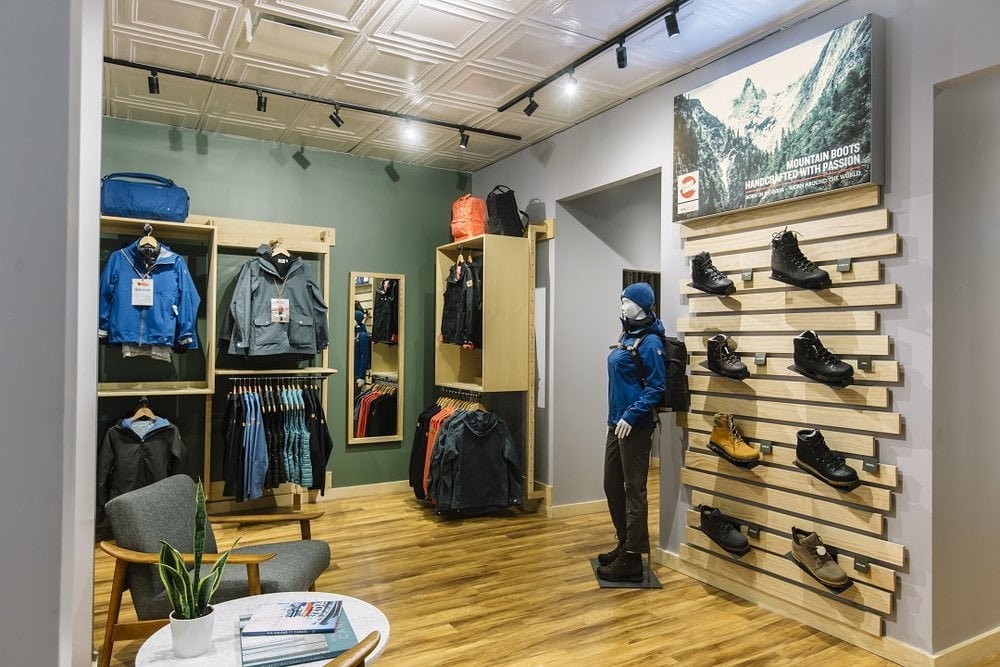
Swedish brand Fjällräven has opened a store on Toronto’s Queen Street West, marking the fifth Canadian location for the brand that specializes in outdoor gear and clothing. 

Nathan Dopp, President of North American, Fjällräven

“We’re thrilled to expand our brand footprint in Canada with our first bricks and mortar store in a bustling retail district in Toronto,” says Nathan Dopp, President of North American, Fjällräven. “Our intent is for the Queen Street West location to serve as a hub for Torontonians who are outdoor enthusiasts, while helping local customers find the perfect Fjällräven fit for their next adventure.” 

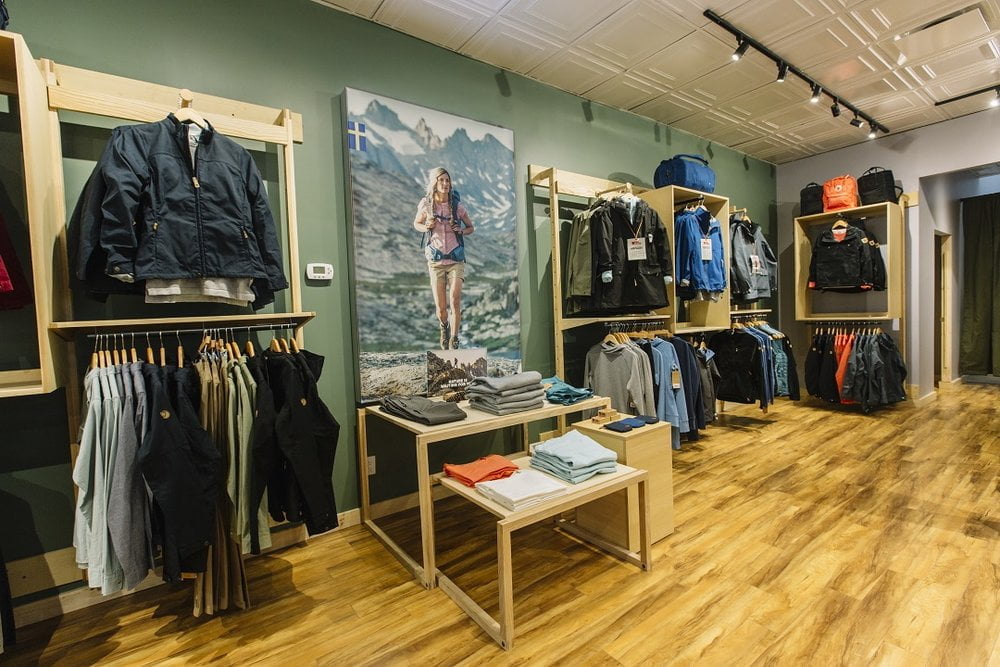
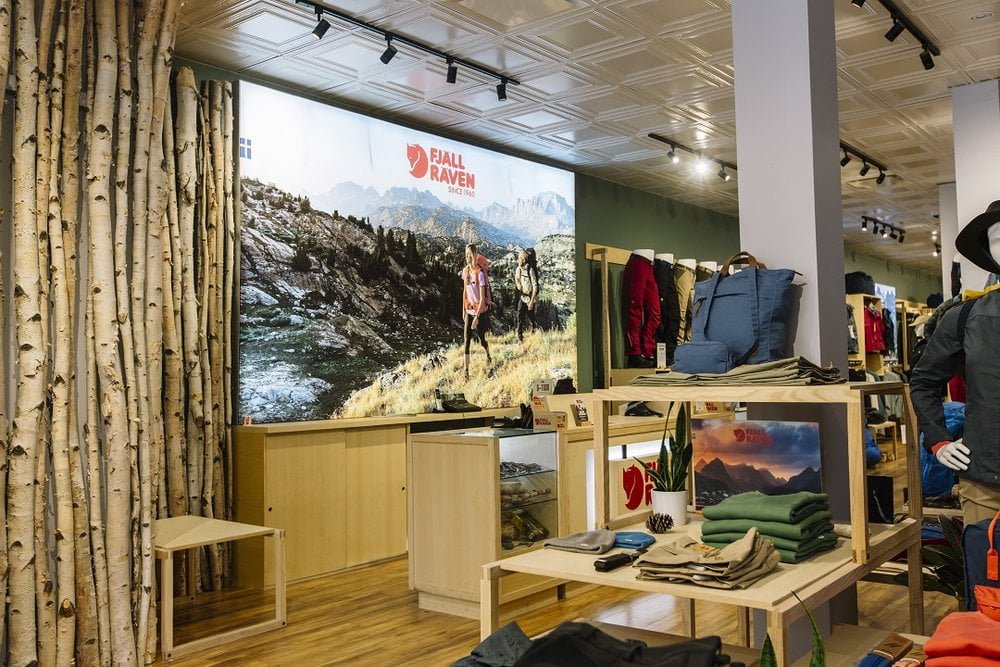
Located at 356 Queen Street West, the 2,200 square foot store carries the brand’s expansive assortment of clothing and accessories, including dozens of different colours and styles of its iconic Kånken backpack on a dedicated display wall (with hundreds in stock in a back room). One of the reasons Fjällräven is opening stores is to better showcase its entire line in a dedicated environment, which it says also helps create brand awareness for its extensive network of wholesale accounts in Canada.

Chris Canuel of brokerage Northwest Atlantic negotiated the lease deal.

Fjällräven, which is known for its functional and sustainable outdoor equipment, has a commitment to making the outdoors accessible to more people at all experience levels. The word ‘Fjällräven’ translates to mean ‘artic fox in Swedish’, and the company was founded in 1960 by Åke Nordin in his basement in the Swedish town of Örnsköldsvik. The company has expanded to to have a presence in more than 30 countries worldwide. Fjällräven has 20 stores in the United States. 

The Toronto store is highly experiential with an element of customization — a trend being seen among leading retailers. Included is a ‘waxing station’ that allows shoppers to witness waterproofing of the brand’s G1000 material, and there’s an in-store tailor at another station that allows buyers to fine-tune the fit of their outerwear purchases, free of charge. Touch screens on the backpack wall allows customers to choose styles in a range of colour combinations. 

Fjällräven opened its first Canadian store in the spring of 2014 in Vancouver at 147 West Broadway, in the city’s ‘Fairview’ area, and a second Vancouver store opened on W. 4th Avenue in Kitsilano in the summer of 2016. The company also now has stores on Government Street in Victoria and on Banff Avenue in Banff, Alberta, as well as on Sainte Catherine St. W. in Montreal as well as a shop-in-store at NEON on Queen Street West in Toronto. 

The Toronto store’s grand opening is on Saturday, April 28, with doors opening at 10:00 am. 

*All photos are by Jenna Marie Wakani. 

Lightspeed Announces New CFO as the Company Sees Explosive Growth

Montreal-based Lightspeed which is a leading point-of-sale solution for independent retailers and restaurants, is seeing remarkable growth that includes having surpassed 50,000 global customers after seeing a record-breaking Series D investment of US $166 million. Head of an anticipated IPO, Lightspeed has announced the appointment of Brandon Nussey to Chief Financial Officer. 

Mr. Nussey has a big job ahead of him — he will lead the company’s finance, legal, human resources, data and IT teams. In a recent conversation, Mr. Nussey explained his enthusiasm for working for the rapidly-growing Lightspeed, which he noted had an exceptional corporate culture under the leadership of founder and CEO Dax Dasilva. Lightspeed, which targets independents, is also known for embracing diversity within its workforce, as well as communities generally. 

Brandon Nussey

“Brandon’s expansive finance, investment and leadership experience are true assets to the Lightspeed team in the wake of our Series D round and as we look ahead to the company’s next steps,” said Mr. Dasilva “Our focus has always been on the success of the independents we support, and we’re excited to continue to deliver top innovations to enhance the advancement and mobility of their businesses.”

Over the past eight years and prior to joining Lightspeed, Mr. Nussey served as the Chief Financial Officer at D2L Inc., a leading SaaS-based education technology provider. During this time, he led the company through a period of hyper-growth where he helped attract US $165 million in growth financing from top-tier investors to support expansion into new verticals and geographies. 

Over the course of his 20 years of experience as a technology executive, Mr. Nussey also served as Chief Financial Officer of The Descartes Systems Group and as an Executive in Residence at Communitech. Additionally, Mr. Nussey is Treasurer and Board member for the Loran Scholars Foundation, one of Canada’s most prestigious scholarship programs. 

In a statement, Mr. Nussey said: “It’s a thrill to be appointed CFO at this pivotal time in Lightspeed’s growth. With the recent momentous investment, we have all the resources necessary to be the dominant player and leading innovator for our customers. There are big moves on the horizon that will support the success of independent retail and restaurants, and I believe Lightspeed can be Canada’s next great technology story.

Lightspeed has experienced consistent and rapid growth — the company recently ended its fiscal year, which saw record revenue growth and new customer additions. The thriving company boasts:

  • Over 600 employees, with eight offices around the world
  • More than 50,000 global customers
  • A full suite of products and tools to help independent retailers and restaurants run their business better, including the industry’s most complete analytics solution with predictions and insights
  • Many marquee retail brands that use the POS platform every day to power their business include: Todd Snyder, Want Les Essentiels, Draper James, Rocket Fizz, Malin+Goetz, Mike’s Bikes in California, RICARDO Boutique + Café
  • A large and growing client list of restaurateurs, who have started to adopt new technology at a much faster pace than ever before. Some of the places that use Lightspeed include: La Marina NYC, Nobu Malibu, Lutze Biergarten, Zoku Amsterdam Hotel, Hummus Bros, Crêpeaffaire, and Detroit Foundation Hotel.

Founded in 2005 and now with more than 600 employees, Lightspeed processes more than US$15 billion annually in more than 100 countries. Mr. Nussey discussed the benefits to using Lightspeed, which launched an innovative analytics tool last year. Lightspeed Analytics, which is geared towards independent retailers, is designed to provide retailers with insights and recommendations into their sales, inventory, employee performance and customer behaviours, with an aim of providing retailers a competitive edge in their industry. We profiled Lightspeed Analytics at length in a previous article

For more information, please visit http://www.lightspeedhq.com
Facebook:  Facebook.com/LightspeedHQ, Twitter: @LightspeedHQ and Instagram: @LightspeedHQ.