Advertisement
Home Blog Page 1071

Granville Street Strip to See Retail Resurgence

exc-5b3055ab0e2e7265f3011bcb

*An earlier version of this story indicated that co-working company WeWork was no longer moving into the upper levels of downtown Vancouver’s Hudson’s Bay store. We have since learned that this information is incorrect, and we retract that part of this story. Our sincerest apologies, as we endeavour to report accurately and in this instance, our sources were unfortunately incorrect. 

Downtown Vancouver’s Granville Street strip is in a state of transition that is adding a range of uses beyond the typical nightclubs that characterize it as the city’s ‘Entertainment District’. New and edgy retailers are said to be negotiating leases in the area, nightclubs are expanding service to include lunch and dinner, and new co-working spaces will add vibrancy to the area as Vancouver’s core continues to densify, and gentrify. 

Charles Gauthier, President/CEO of the Downtown Vancouver Business Improvement Association, says that the wheels are in motion for further positive changes to the 800 and 900 blocks of Granville Street which are located immediately south of Robson Street. Change has been gradual since the year 2009, when the street saw a cosmetic overhaul in anticipation of the 2010 Winter Olympics. In September of 2015, Nordstrom opened a 230,000 square foot flagship at CF Pacific Centre on Granville Street’s 700-block, which has helped shift the city’s retail centre eastward from the Robson Street strip, which has dominated for decades. Nordstrom, as well as nearby Hudson’s Bay and Holt Renfrew are driving foot traffic to the area, not to mention money — designer-heavy Nordstrom is said to be one of the top locations in the chain with sales of well over $200-million annually, while Holt Renfrew on the 500-block is said to do about $400-million in sales annually. 

Granville Street might be known for its boisterous nightclubs, though things are certainly changing. Mr. Gauthier noted that several of the street’s ‘liquor-primary’ establishments such as nightclubs, recognizing the value of time and real estate, have been expanding their hours to include lunch and dinner service during the day. Such food and beverage offerings will act to further add vibrancy to the street with a potential snowball effect that could see further improvements to the area, including new tenants. 

Downtown Vancouver’s office vacancy rates are at record lows, and Mr. Gauthier explained that there won’t be any new office towers ready for occupancy in the area until around 2021 or 2022. Co-working space company Spaces has secured 68,000 square feet in the former Tom Lee Music Building at 929 Granville Street, and it’s expected to further add vibrancy to the area, supporting new businesses that area also expected to follow. “This will be a game changer that will transform the immediate area,” he said. 

“It’s an ecosystem” said Mr. Gauthier in an interview, explaining how different elements will come together to make Granville Street a success. The street is also drawing attention from investors such as Bonnis Properties, who have invested in various properties in the area with the expectation to further add tenants to enhance the overall vibrancy of the area.

Some businesses are bullish about the street — Hungry Guys is an example, securing restaurant space in the former Tom Lee Music building (Tom Lee relocated nearby last year). Local retailer ‘8th & Main’ at 1105 Granville Street is said to be doing well. 

Independent retailers have an opportunity to move onto the street, noted Mr. Gauthier, who went on to explain how rents on Granville Street are lower than many of downtown Vancouver’s commercial streets, while also enjoying footfall that is expected to only increase as new tenants of all types move in. 

That sentiment is shared by Martin Moriarty, Vice President at CBRE in Vancouver. Mr. Moriarty has worked on many deals on the street and he says that he agrees with Mr. Gauthier’s sentiment that Granville Street is a great place for independent retailers, as well as retailers seeking an edgier address than that of some more popular commercial streets in the area. 

“Traffic is stronger on Granville Street than it is in Gastown, and rents are comparable,” explained Mr. Moriarty in an interview.  He referred to brands such as John Fluevog shoes, Urban Outfitters and Brandy Melville as examples, which cater to a more youthful demographic. Mr. Moriarty said he expects to see more in the way of edgier brands move onto Granville Street — one example is Quebec-based Exclucity, known for its popularity amongst ‘sneakerheads’, which recently secured its first Vancouver retail space  at 850 Granville Street with plans to open a store later this year. 

Other notable retailers opening soon on Granville Street include Shanghai Baixin (stationery), Lebanese restaurant chain Zaatar y Ziet  both of which will be first-to-North America locations. Montreal-based fashion retailer Judith & Charles recently left CF Pacific Centre for a space on the 600-block of Granville Street. Adidas also just opened a new store a few doors down from its Adidas Originals location which was renovated and re-opened in December. Value-priced Chinese retailer Miniso will open soon next to John Fluevog shoes on the 800 block.  “There will be more of a retail continuity along the street for several blocks,” explained Mr. Moriarty, who went on to praise the area’s architectural ‘character’ which is something of a contrast to the more manicured streetscapes of nearby Yaletown. 

Granville Street is expected to continue to gentrify as brands move onto the street, with the assistance of CBRE and other brokerages working in the area. The 637,000 square foot Hudson’s Bay flagship store at 674 Granville Street, as well, will be seeing some changes as its parent company looks to further monetize its real estate. Rumours that Saks Fifth Avenue could move into the store or nearby persist, though it’s unclear if and how the luxury retailer would be able to secure the required space (some say it could go into a development across Seymour Street from Hudson’s Bay). As well, internal changes in the Granville Street Hudson’s Bay will see menswear move from the sixth floor into the sub-basement, while the store’s upper levels are earmarked for WeWork office space. 

As real estate prices continue to climb, more changes are expected for Granville Street in the coming years, spanning the entire stretch of Granville Street from Burrard Inlet to the North, to False Creek in the south. Office development continues on the northern portion of the street towards the Seabus Terminal and cruise ship berths at Canada Place, while the stretch of Granville towards the Granville Street bridge will also see major improvements. The ‘Vancouver House’ residential tower, now under construction, will be joined by another tall tower that Pinnacle International recently announced, both of which will include substantial commercial elements at their bases. High real estate prices will also dictate development at the heart of Granville Street, particularly along the 800 and 900 blocks and further southward, as landlords look to capitalize on an unprecedented real estate boom by investing in their properties to create maximum return. 

Quebec Start-Up Berso Aims to Disrupt Baby Retail Market

exc-5b3aa163f950b7084642b451

A new Quebec-based start-up called Berso is striving to shake up the baby retail market with a new concept that combines e-commerce with brick and mortar retail.

Berso aims to be a one-stop shop for maternity and baby-related merchandise, catering to tech-savvy millennials who are starting families.  The company designs and manufactures products, in addition to operating an e-commerce and retail division through which Berso sells its own brand of products as well as other major brands.

“I saw that no one in this market was catering to millennials, and I thought there was a good opportunity,” says Martin Lamarche, president and CEO of Berso.

Recognizing that millennials increasingly do their shopping online, Lamarche saw the importance of creating a user-friendly e-commerce platform. However, he also wanted to tap into the generation’s tendency to socialize and engage with their community on a regular basis.  So, he designed a retail concept that combines the best of both worlds.

Specifically, Berso stores serve as not only a shopping destination, but also a gathering place for parents, with a coffee bar, yoga classes, and occasional speaking events.

“We want to build a community around our brand,” says Lamarche. “Moms can share their experiences together.”

In addition to browsing merchandise in store, customers can use tablets available within the stores to explore additional merchandise online, and can order items to be delivered directly to their homes. Customers can also make use of personal shoppers who will help them find what they’re looking for, within their specific budget.

“E-commerce will be part of our brick and mortar experience. We’ll have iPads everywhere,” Lamarche says. “The shopping experience is very important.”

Berso carries a wide variety of items for babies and expectant mothers, such as clothing, furniture, strollers, toys and accessories. Approximately 70% of the merchandise carried is comprised of Berso’s own brand, with the remaining 30% comprised of other major brands. The company focuses primarily on mid-to-high-end merchandise.

“It’s going to be a one-stop shop of maternity and apparel and accessories,” says Lamarche. “You’ll have everything you need.”

Berso plans to open five stores in Quebec over the next three years, before expanding to other provinces and countries. The first location is poised to open in Montreal’s South Shore in March or April 2019, coinciding with the launch of Berso’s e-commerce website.

Berso is working with Tony Flanz of brokerage Think Retail to explore additional locations, with a focus on spaces that are between 10,000 to 15,000 square feet in size, and which have ample parking.

Canada’s ‘ShoeRu’ Ron White Sees Success as Brand Embarks on International Expansion

RON WHITE ENTRANCE TO THE MANULIFE CENTRE FLAGSHIP. PHOTO: CRAIG PATTERSON

Canada’s leading shoe designer Ron White, aka ‘The ShoeRu’, continues to see considerable success with his business as the brand expands its wholesale operations globally. The company has hired a Vice President of Global Sales, Maxwell (Max) Harrell, to focus on expanding distribution in the United States as well as to lead the company’s global growth in European and Asian markets. 

“It was time to take our US and global expansion to the next level and Max’s deep background in retail, wholesale and most importantly ‘better’ product is a perfect fit for Ron White,” said founder/CEO/Creative Director Ron White. “Max’s experience with Made-in-Italy brands makes him the ideal candidate to lead this next level of global growth in our company.”

The Ron White label is seeing considerable success both domestically and globally, as the company marks 25-years in operation this fall. Ron White might be best known for creating the world’s first All Day Heels®, which are a proven hit amongst those seeking comfortable footwear that is also stylish. 

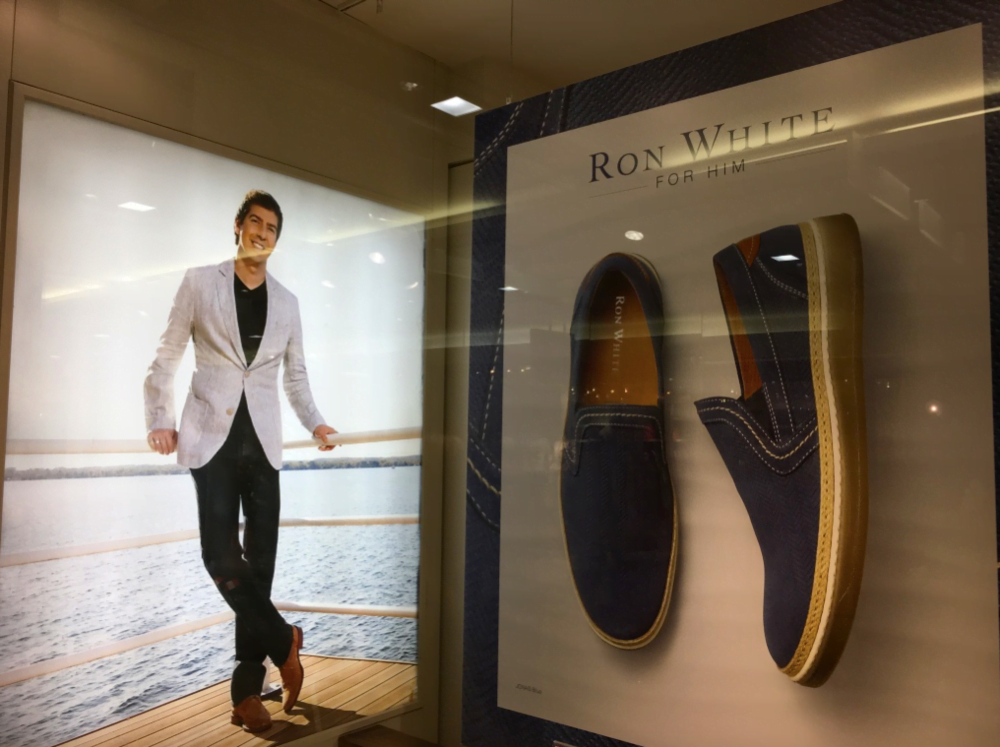
The company includes retail operations with five standalone stores in the Toronto area, as well as wholesale operations in notable major retailers. Standalone stores include Toronto locations at the Manulife Centre, Bayview Village, CF Sherway Gardens, 1553 Bayview Avenue (Leaside), as well as a unit in downtown Oakville at 189 Lakeshore Road East. Ron White’s Manulife Centre flagship recently saw a renovation that included a new interior and facade, as part of the Toronto centre’s overhaul that will include a new Eataly location set to open in early 2019

RON WHITE WINDOW IN THE MANULIFE CENTRE FLAGSHIP. PHOTO: CRAIG PATTERSON

Ron White’s women’s collections are available at upscale stores in Canada and the United States — Nordstrom is a major distributor in Canada as well as at three of its US flagships, as is Jean-Paul Fortin, Saks Fifth Avenue, Von Maur and a range of smaller prestige retailers. Ron White’s men’s collection recently launched at Nordstrom, and is available at other selected prestige retailers. Ron White also recently partnered to create the ‘Rapisardi/Ron White’ collection — the line is inspired by the heritage and innovation of the legendary Rapisardi brand, and is available at retailers including Hudson’s Bay

The Shopping Channel has also been a huge success for the Ron White brand, which is now one of the top-selling brands on the television network. Ron White’s shoes will also begin being showcased this fall in the United States on the Home Shopping Channel. Despite the rapid growth in e-commerce, these shopping channels continue to see remarkable success as well as sales gains. 

The Ron White brand is looking to make further inroads into new markets via wholesale, and Mr. Harrell’s background will be an asset. He’s had leadership positions at major footwear brands and prior to joining Ron White, he served as Director of Sales for Summit at White Mountain Group and is past Founder and President of CC Corso Como, Ballasox and Ciao Bella. Mr. Harrell also held significant sales positions at Sketchers, Rocket Dog Footwear and Esprit

“The Ron White brand is exploding at retail, and on the cusp of amazing growth worldwide. I am excited to be joining the team and putting a focus on further growing US and international distribution,” said Mr. Harrell. “Ron has built a strong and sustaining brand in Canada and this is a unique opportunity to take his coveted All Day Heels® technology, along with the brand’s momentous buzz, into leading US retailers in a category that is underserved, yet highly desired by women around the world.”

Ron White first opened a comfort-focused multi-brand store in Toronto, called The Foot Shoppe in 1993. It grew to several locations and in 2006, Mr. White rebranded the stores to his own name, targeting a younger, more fashion forward shopper as a result. Soon after, Mr. White decided to create his own namesake footwear brand, merging his vision of chic style mixed with comfort. Ron is recognized for creating the world’s first “All Day Heels®” bringing together striking design, luxurious materials and unique cutting-edge technology.

The brand has earned a loyal celebrity following that includes Hollywood’s A-list, heads of state and royal family members. From the red carpet at the Golden Globe Awards to backstage at the Primetime Emmy® Awards, Ron’s shoes have been a favourite for both presenters and performers.  A few of the celebrities who have walked in his shoes include: Vanessa Williams, Kathy Griffin, Celine Dion, Katie Couric, The Duchess of York, Christina Hendricks, Paula Abdul, Megan Mullally, Rob Lowe, Kevin Spacey, Matt Damon and Dennis Quaid.

Canadian Landlords Struggle to Determine ‘Fit’ for Cannabis Retailers at Properties

exc-5b3a921a1ae6cf8fe6e52f0b

The legalization of recreational cannabis in Canada, that comes into effect in October, has landlords across the country trying to determine if retailers in this emerging industry will be a good fit for their properties.

A new report by Avison Young, Canadian Cannabis Legislation and the Commercial Real Estate Industry: How Can Landlords Qualify Prospective Retail Tenants?, said most landlords have already made decisions about retail cannabis tenants with limited and imperfect information and the market will rebalance as the industry matures.

James Heaps, a vice-president based in Avison Young’s Calgary office, who specializes in acquisitions, divestitures and business advisory services, said the commercial real estate company has developed a request-for-qualifications framework for landlords.

“We developed a RFQ process to educate, vet and assist landlords in selecting prospective retail-cannabis tenants,” said Heaps. “As a result, landlords, and their existing tenants, are realizing the potential benefits of working with credible retail-cannabis operators and the overall potential of the recreational-cannabis industry.”

“Now that the federal government has approved the legal sale of recreational cannabis, and the competition for retail-cannabis tenants is likely to ramp up as a result, the RFQ has taken on greater importance.”

Heaps said landlords have to consider three key areas about tenants as they make decisions on who they will lease property to in the future – the leadership, the human resources and operations, and the financing.

“The leadership of the cannabis retail organizations. What they’re operational plan is. Such things as their standard operating procedures. Security protocol. Training of staff. The Alberta government does have the SellSafe program which is a four-to-six hour program for helping train staff and getting them up to speed with the proper protocol as well,” said Heaps.

“And the last piece is really the financial aspect which is recognizing all of these retail cannabis stores are startups when they open. And like any startup there’s significant capital costs up front. Part of the success will be ensuring that they’re financed properly up front.”
Calgary’s retail vacancy rate has remained in the low single-digits for many years in recent times and sometimes it’s been hard for new retailers to enter the market as they’ve had difficulty finding space.

Susan Thompson, Research Manager for Avison Young’s Calgary office, said the legalization of recreational cannabis will enhance retail real estate sales and leasing activity in Canada.

“There’s been obviously a very quick scramble to secure space because that was part of the licensing process as they had to have a firm commitment on space. So these guys need to line something up right away. And Calgary already had a fairly tight retail vacancy outside of the central business district,” she said. “So they were trying to compete for a limited number of spaces.”

She said e-commerce and in-store shopping will be closely watched as the market seeks to determine consumers’ preference levels – and cater to them.

“As a result, many new and exciting retail-cannabis-related real estate opportunities are about to unfold – and investors and landlords need to do their homework on prospective tenants,” she said.

Heaps said a considerable amount of leasing activity has already taken place in this market and leading retailers will emerge.

“Once legal retail-cannabis sales commence in October, industry leaders will likely expand by merging with and acquiring other companies,” he said. “This activity will spark demand for additional retail space, providing landlords with a second opportunity to attract and assess prospective tenants.”

Heaps said the typical size of a retail cannabis store will be between 1,500 square feet to 3,000 square feet with some even larger.

But that size of space is not always available in the market.

“They’re looking for the right demographic mix in the neighbourhood around them,” said Thompson. “They’re looking for high profile locations with lots of vehicle, pedestrian and transit around it.  And then there’s certain areas that obviously are destinations. So they’re looking at those as well.”

Calgary to See Luxury Retail Resurgence

exc-5b3a8f3caa4a99939678680e

Calgary’s economy may have taken a beating in the past few years since oil prices collapsed in the latter half of 2014 but its luxury retail market has survived and even made some modest gains.

“In the bubble that is luxury retailing in the Calgary market, the city shines with a cluster of luxe brands in the downtown Holt Renfrew store and an emerging high-end pocket of sizzle at the CF Chinook Centre,” said Michael Kehoe, an Alberta-based retail specialist with Fairfield Commercial Real Estate in Calgary. 

“Despite the economic downturn across Alberta, fuelled by lower oil prices and empty downtown office towers in Calgary, luxury retail in the energy capital of Canada is thriving. Regardless of the level of sophistication, there is significant wealth here with a need to show it. Not that we are seeing a luxeplosion the likes of that are rocking markets across Asia but Calgary is witnessing a modest growth in the luxury retailing segment.”

Kehoe said there is a growing cadre of aspirational luxury shoppers across the greater Calgary regional district that include female executives toting their Louis Vuitton or Burberry bags and sporting Rolex watches.

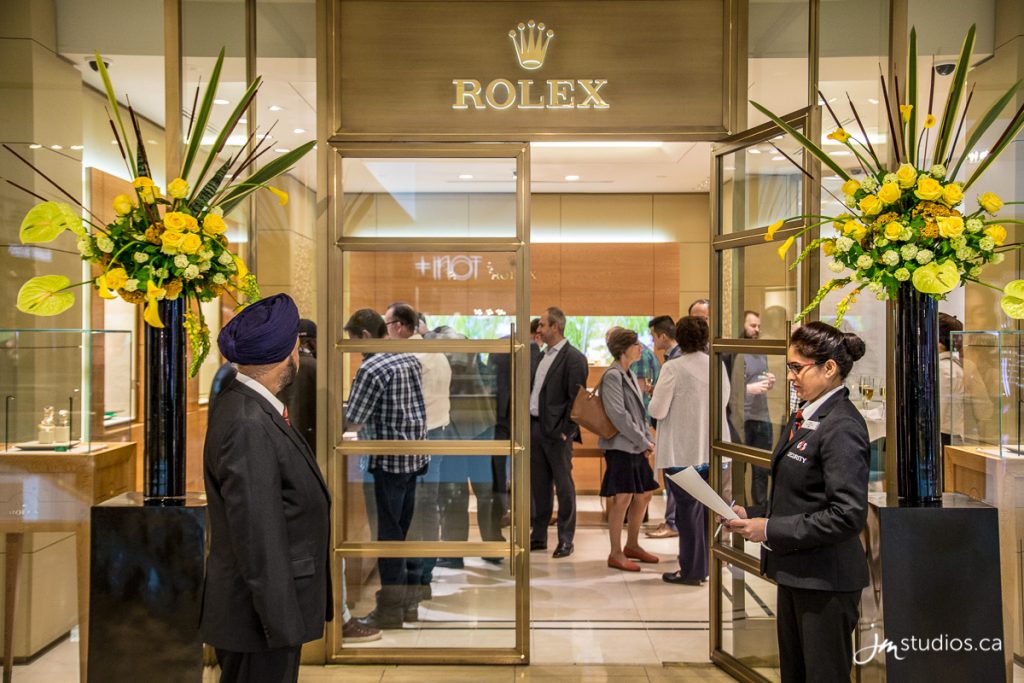
ROLEX BOUTIQUE AT BIRKS AT ‘THE CORE’ IN DOWNTOWN CALGARY.

“The market has moved beyond just handbags, designer shoes and jewelry. Calgary luxury retail is catering to all four segments of the luxe market: start of money, show off, fit in, way of life and the super elite shopper who strives for differentiation from the mass luxe consumer. Many super-elite shoppers in Calgary prefer to travel to shop or buy online,” he said.

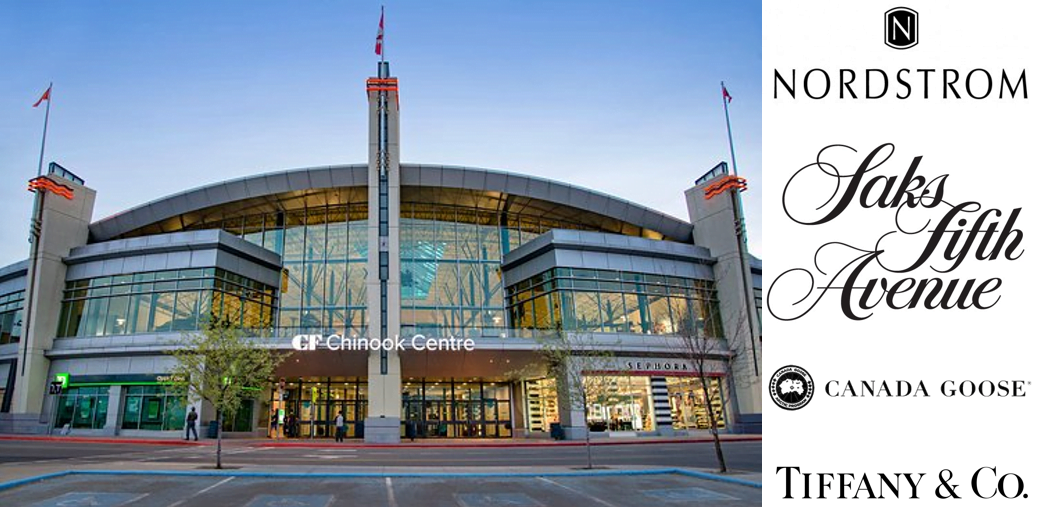
“CF Chinook Centre peruses luxe with an emerging higher-end tenant cluster led by a new Louis Vuitton store set to open in 2018. The international brands enjoy the synergistic traffic benefits of being nestled in by Nordstrom and Saks Fifth Avenue as the retailing stars align with the Chinook landlord’s vision, patience and deep pockets. Some of the basic elements are in place at Chinook with the city’s only Canada Goose and Tiffany & Co. stores among others. The Chinook Nordstrom store focuses for the most part on their house brands with a mix of designer labels and a Saks Fifth Avenue that is still finding its way.”

He said the city’s significant Rolex offering is currently situated in the Maison Birks store in downtown Calgary at the CORE shopping centre and not at Chinook Centre.

MIKE KEHOE

Kehoe added that Chinook could double down on luxe and land standalone boutiques like Givenchy, Celine, Gucci, Prada, Moncler, Valentino or the House of Prada’s Miu Miu. Most of these brands are represented at Nordstrom and/or Saks but featuring these brands at CF Chinook would significantly differentiate the Centre from the downtown Holt Renfrew.  

“And that is how the luxury shopping battle will be won,” said Kehoe, who is a commercial real estate professional with more than 40 years of experience in the retail real estate field.

Kehoe worked for many years as a mall manager, marketing director and retail leasing executive. He is an Ambassador for the New York-based International Council of Shopping Centres where he has been a member since 1982.

Darryl Schmidt, vice-president of national leasing at Cadillac Fairview, said the downturn in the economy has caused many luxury retail brands to take a pause on the Calgary market.

“But that’s starting to change in the last six to 10 months. So we’re starting to get more traction. There was a great global focus on Asia and high tourist areas that that Asian population would frequent from the luxury brands. And now that they’ve kind of filled in that element of their network they’re starting to broaden their reach and look at other markets they feel a need to have a presence in. And Calgary is finally on that radar screen again,” said Schmidt.

“We still have some of the highest average household incomes in the country. Some of the highest disposable incomes in the country. And we’ve seen good success from Nordstrom and some solid initial success from Saks. And that kind of puts it back on everybody’s radar screen in terms of a market that they need a presence in or need to round out.”

Besides Louis Vuitton, Schmidt said a deal has been done with fashion retailer Mackage for CF Chinook Centre.

“We’ve got some other groups but it’s a little too premature (to announce). We’re negotiating with them right now. If you get a critical mass of luxury, it begets more luxury. They like to cluster together. There are true synergies in having flagship stores side by side. It creates a better shopping experience for the customers and the retailers benefit from that,” added Schmidt.

Canadian In-Mall Entertainment Company Launches New Concept

exc-5b0b31c470a6addca9ca1ae2

ZaZaZoo, the plush animal ride rental company which launched its innovative new concept a few years ago in several Canadian shopping centres, now has a new way of entertaining kids in those malls.

The company recently launched ZaZaPlay, an active motion playground, in the St-Laurent Centre in Ottawa, with plans to expand the innovative game for kids entertainment to malls across Quebec and Ontario this year.

Sonny Juane, director of operations for ZaZaZoo, which is based in Gatineau across the river from Ottawa, said ZaZaPlay is a light-projected interactive experience where participants can choose from a variety of single or multi-user games.

He said it uses the latest technology in object recognition sensors to provide a unique experience for both active users and walk-by spectators.

“We launched there. We’re going to assess basically how we deliver the service and the process. What’s the best way to deliver it? And then what we’re going to do is we’ll be expanding it to other locations.”

“In some malls the plush animal rides, for example, it’s much more difficult to implement in multi-level malls. It’s much more difficult if they have narrow hallways for example. So we were looking for additional entertainment that we could implement there without necessarily having the plush animal rides.”

Juane said the goal is to expand the concept as quickly as possible into as many locations as possible.

ZaZaZoo Plush Animal Ride Experience is Canada’s number one supplier of Plush Animals Ride Rentals.  The company, which began operations in 2015, provides rides for shopping malls and special events. Its goal is to enhance the customer shopping experience by providing unique entertainment that can be enjoyed both by children and parents alike.

“We originally started out with the plush animal rides. They’re motorized children’s rides,” said Juane. “They’re like furry animals. Around the mall. We started getting requests from mall managers looking for other types of different experiences for them.”

“As you know the retail industry has gone through this kind of transition right now and they’re trying to figure out how to basically increase foot traffic. So our timing was awesome. They didn’t know what they wanted but we kind of filled that void at that point.”

Juane said the company’s general goal has always been quite broad. It’s trying to provide engaging and interactive experiences to draw more families into shopping centres.

ZaZaPlay is in a set kiosk space.

“We play different types of games like digital soccer and hockey. There’s like a Hungry Hippo style game but they’re dragons. So Hungry Dragon,” said Juane. “We use cameras to detect body and motion movement from children.”

“The idea of doing interactive digital video we kind of contemplated because our goal is to get kids more active. To get their faces out of tablets and everything else. We’re doing an interactive video . . . versus physical activity but we’re finding it’s great because the way it’s used it creates activity. The rides are great. They’re awesome but it’s really for kids riding around the mall. There’s not a lot of physical activity. While this one is very, very active.”

The company was founded by Melanie Lafreniere. Her idea was born after realizing that some children may not be too excited about spending time in malls and that would influence the time parent’s spent shopping.

Zazazoo launched at Les Promenades Gatineau in November 2015.

Canadian Food Sector Prepares for Edible Cannabis

exc-5b3d56de8a922db5a54ad85b

The Trouble with Edibles

On Oct. 17, smoking cannabis will become legal in Canada. As for cannabis edibles, they will take a bit longer: Cannabis-infused food products will be legal in a little less than a year’s time.

Once edibles are available, things will get complicated in Canada’s food industry. But, with the right regulations, this is a profit opportunity that doesn’t come by every day.

Initially, Bill C-45 did not include edibles. It was only last fall, when the parliamentary health committee decided that edibles would need to be included as well if the country was going to adopt a comprehensive approach to legalized cannabis. According to a recently published survey from Dalhousie University, 93 per cent of those favourable to the legalization of marijuana are also very likely to try at least one edible product. Recognizing this possibility, the parliamentary committee approved a neat little amendment and, voilà, edibles became part of the package.

The food industry is a $200-billion sector. It is a massive portion of our economy, split into multiple streams. Food retailing, food service, delivery, food trucks, institutional services, arenas, stadiums – there are channels of distribution everywhere, and food can get to wherever you are. In less than a year, this will include cannabis – except that, unlike the smokable version, edibles can be consumed by anyone without those around them knowing. It’s discrete, convenient – and potentially dangerous.

Health Canada was caught by surprise by the additional legalization of edibles, and is still trying to come up with an appropriate regulatory framework. Many questions linger about the distinct dangers that edibles pose, particularly for children. Food companies are notoriously paranoid about food-safety issues, since they are always just one recall, outbreak or tragic incident away from closing their doors. All it takes is one child eating a cannabis-infused product, and the damage to that food company would be irreversible.

It is critical that a regulatory framework be put in place, which would include proper labelling of edibles, complete with THC content and intoxicant warnings, to assure both the public and industry that edibles and humans can co-exist safely.

With adequate safety measures, edibles present a hugely profitable opportunity for the Canadian food industry. No one really knows for certain what the market potential is for cannabis, much less for edibles, but growth opportunities are palatable. In California, for example, consumers purchased US$180-million worth of cannabis-infused food and drink last year. This amounts to roughly 10 per cent of the state’s total cannabis sales. Sales are up 18 per cent since January of this year. In Colorado, where cannabis is also legal, sales of edibles rose by about 60 per cent a year over the past two years. This kind of tremendous growth is what the food industry needs right now. The more consumers are exposed to cannabis, the more they will opt for the edible version. Quite simply, this is a potential phenomenon akin to what the industry saw with sales of gluten-free products.

Edibles also stand to shake up current players in the food sector. For example, people may choose cannabis more often than a drink or two, and thus disrupt the alcohol industry. We could see some consumers substituting their usual wine, beer or spirits for a cannabis-infused spaghetti sauce, or possibly even cannabis oil. Or perhaps some will be opt for a pot muffin or brownie. In fact, many wine producers are concerned about what a mature cannabis market will look like. For Ontario, British Columbia and Nova Scotia – where the wine industry is flourishing – this could be a problem. We are already seeing cannabis beer being launched in different places in the country. But it’s not just alcohol that is susceptible, as edibles can take many different forms: Candies are the number one food product containing cannabis sold in the United States.

It will be interesting to see how branding strategies will align with cannabis, too. Some people will choose cannabis to get high, but not everyone. Beyond the psychoactive effects of cannabis, there is also the possibility of pitching it as a superfood. The cannabis plant is full of nutritional value. It contains protein, carbohydrates, insoluble fibre, potassium, magnesium, sulfur, calcium, iron, zinc, vitamins E and C and many other elements considered beneficial for human health. For food manufacturers looking for a new value-added feature, cannabis could potentially be the next omega-3 or probiotic.

The Dalhousie survey questioned businesses about their plans for cannabis edibles. Almost 20 per cent of the food processing companies surveyed are either in the edibles market already, or intend to enter the market within a year. But, a whopping 50 per cent of food companies in Canada are uncertain about their position regarding cannabis. Respondents cited different reasons, such as concerns over employees being trained properly, or not knowing what products will eventually be allowed into the market. Many companies are also worried about how cannabis can affect their brands or their supply chain strategy with other partners in the industry.

With legalization, the stigma linked to cannabis will eventually disappear, but it will take a while. The food industry is known to be extremely risk averse, and it won’t be any different toward cannabis. Until the industry knows the consumer is ready, cannabis edibles will stay on the sidelines – but hopefully not for too long.

Inside the Shoppers Drug Mart Store that Replaced a Hard Rock Café [Photos]

Shoppers Drug Mart Yonge Dundas Square

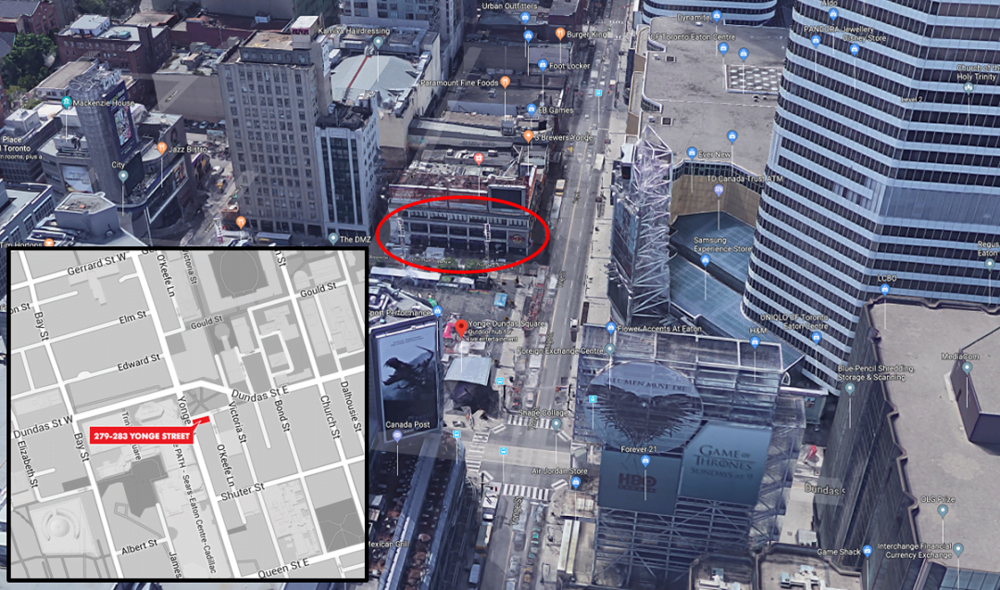
Shoppers Drug Mart has opened a three-level, 16,000 square foot store in Toronto where the city’s iconic Hard Rock Café was once located, and the new store includes some features not found in other Shoppers Drug Mart locations. 

We were first to report in March of 2017 that Shoppers Drug Mart had leased the building in which Hard Rock Café was located, with plans to convert the 22,000-square-foot building to a flagship drug store to serve the busy area. Hard Rock Café occupied the site for about four decades and prior to that, the building housed the Friar’s Tavern from the years 1963 to 1976. Celebrity visitors included Bob Dylan. In the 1980’s, part of the second level served Toronto’s Queer community, including drag shows and a dinner theatre called “Evening at La Cage”.

HARD ROCK CAFE PRIOR TO SHOPPERS DRUG MART. PHOTO: WWW.ERAARCH.CA
INTERACTIVE GOOGLE MAP

As a tribute to the building’s musical past, Shoppers Drug Mart has dedicated a 140-square-foot space on the store’s upper level to showcase artifacts from these venues as well as memorabilia from some of Toronto’s music legends, in addition to an interactive timeline that allows visitors to see historical highlights come to life through photos and video.  

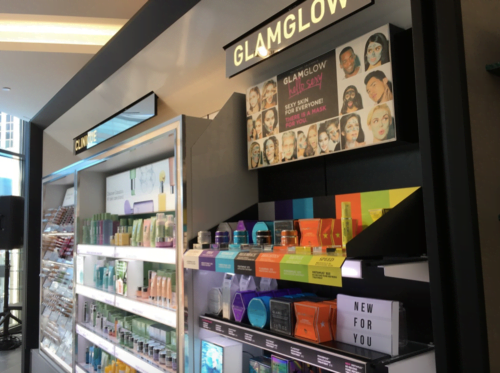
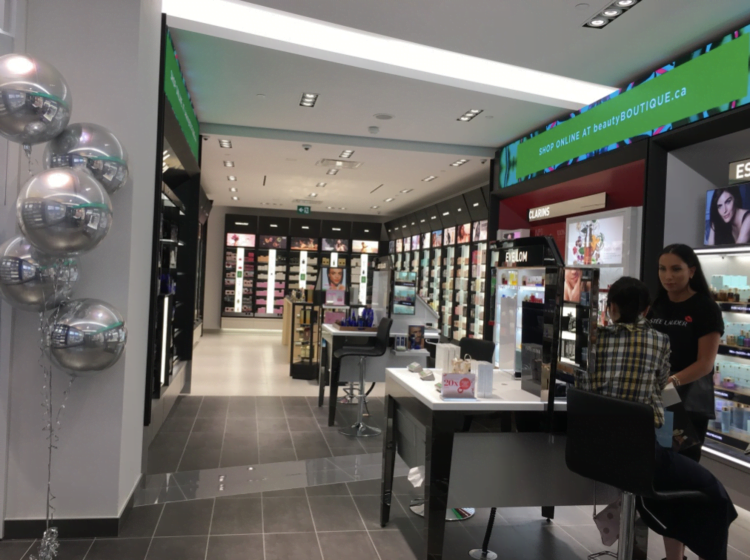
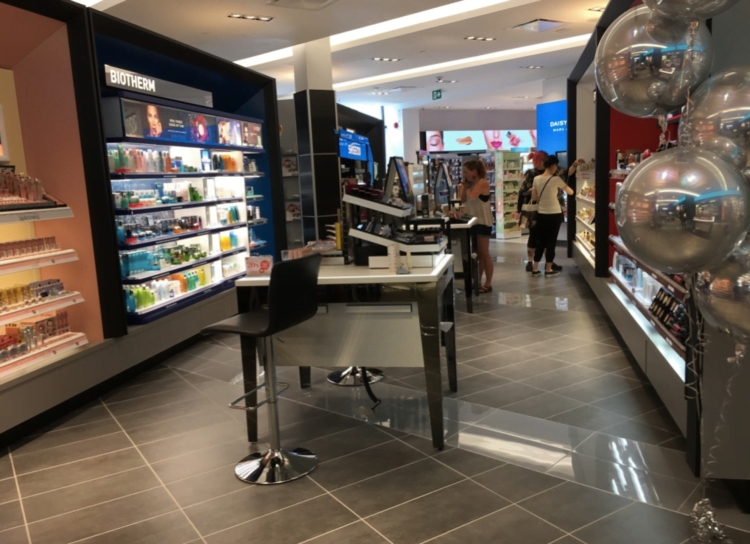
The retail space itself looks like a typical Shoppers Drug Mart store, though its street-facing windows overlook the visually stimulating surroundings which characterize Yonge-Dundas Square — Canada’s answer to New York City’s Times Square. The new store’s 5,000 square foot street-level is dedicated primarily to beauty items, with an expansive beautyBOUTIQUE that is larger than any we’ve seen.

Included is a digital ’beauty wall’ for the Quo brand which provides consumers with beauty information tailored to their selections and preferences. There are plenty of recognizable international brands, and the space also offers a rotating selection of unique indie beauty brands for consumers to discover. Shoppers Drug Mart Beauty Experts were on hand to assist customers with selection and purchases. 

A vibrant red stairway with a large LED screen on one side connects the street level with the second level. An elevator connects the store’s three levels. 

Much of Shoppers Drug Mart’s typical retail offerings can be found on the upstairs level of the store, with expansive walls of glass providing a view of the very busy area — CBRE marketing materials claim that more than 60-million people frequent the area annually. Following an acquisition by grocery behemoth Loblaw in 2014, Shoppers Drug Mart has been expanding food offerings in its stores. The Yonge-Dundas Shoppers Drug Mart features fresh food that can be purchased on the go, including fresh produce, PC Kabobs, pork chops, ground beef, burgers, chicken breast, sausages, and salmon. Grocery offerings include cereals, soups condiments, ice cream and various frozen foods, ready-to-eat food such as sandwiches, wraps, sushi, as well as fresh pastas, sauces, quiche and meat pies.

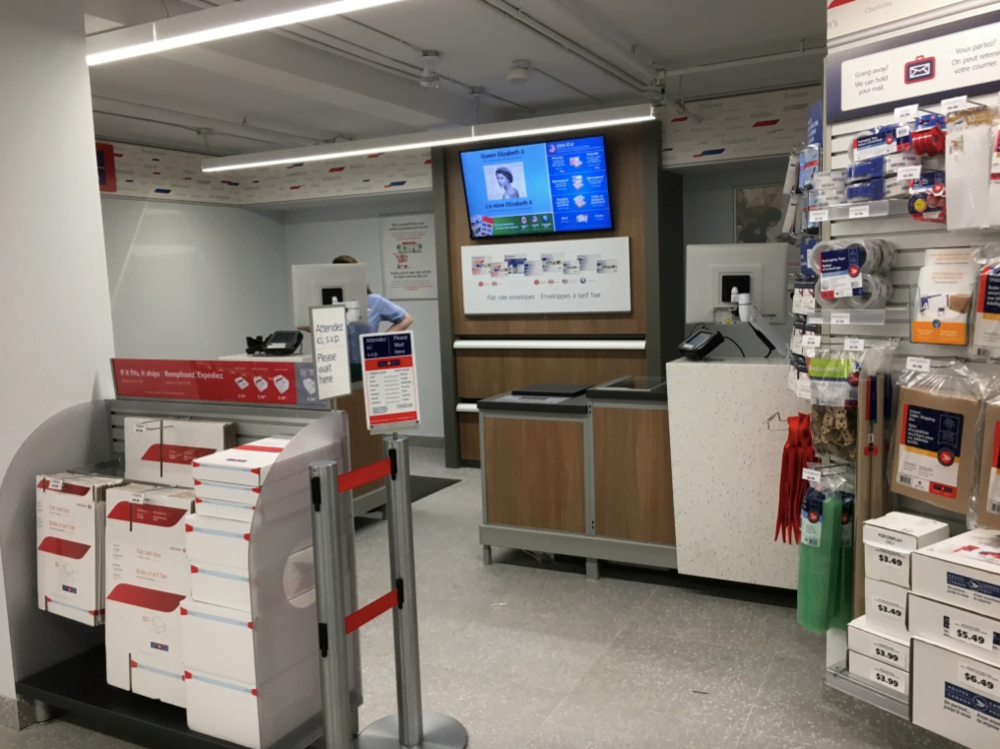
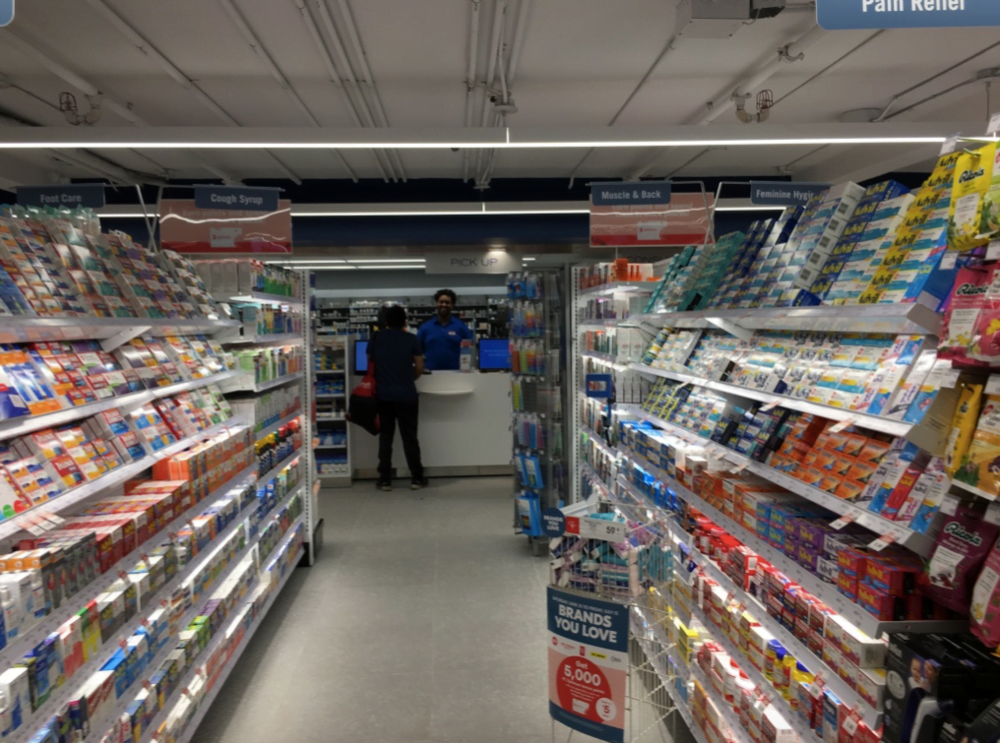
The store’s basement level, with lower ceilings and less natural light than the other two floors, houses the store’s pharmacy area as well as a full-service Canada Post outlet. The store is owned and operated by Andrew Yeh, who has been a pharmacist in the area for the past ten years. The store also offers Shoppers Drug Mart’s digital pharmacy, where patients can manage their prescriptions online.

The Canada Post concession offers staffed counters as well as a self-serve shipping station to make purchases and send parcels. The self-serve technology allows customers to print shipping labels or stamps, drop off parcels in a secure drop box and pay by debit or credit before receiving a receipt with the tracking number, according to Shoppers Drug Mart. 

Despite being three levels, the new store doesn’t feel ‘gigantic’. Aisles feature the typical displays found in most Shoppers Drug Mart locations, and some parts of the store almost felt crowded. When the building was being marketed for lease last year, brokerage CBRE noted that the building encompassed about 22,000 square feet of space. A source who tipped us off last year that the lease had been signed also said that the asking rent for the building was $2-million annually — or about twice what Hard Rock Café was paying when it occupied the building until the summer of 2017. The building boasts frontage of about 60-feet along Yonge Street, with a further 125-feet facing onto Dundas Square. 

The same source told us that the landlord wished to lease the space to one large tenant, hence why Shoppers Drug Mart got the space.

The Yonge-Dundas intersection is the busiest pedestrian area in Canada, and is anchored by North America’s busiest shopping mall — the CF Toronto Eaton Centre, which sees an estimated 50 million annual visitors. Neighbours include a 220,000 square foot Nordstrom flagship, Uniqlo’s first Canadian storeSaks Fifth Avenue’s Canadian flagship, and an expanded H&M flagship that is the chain’s top-selling unit in the country. Samsung also opened its largest Canadian retail space across the street at CF Toronto Eaton Centre in a highly experiential 21,000 square foot premises. 

Shoppers Drug Mart, which has more than 1,300 Shoppers Drug Mart and Pharmaprix stores coast-to-coast, continues to expand its operations into categories including pharmacy, beauty and food. The company’s beautyBOUTIQUE concept competes with the likes of Sephora and Hudson’s Bay, and Shoppers Drug Mart also operates four beauty stores under the ‘Murale’ banner. Last year, sources were saying that Shoppers Drug Mart was looking to shutter the Murale banner and open standalone beauty stores under a yet-to-be-determined name, though it’s unclear if the idea has since been scrapped, or if the company will continue with potential plans for standalone beautyBOUTIQUEs in Canada. The company also owns and operates 43 corporate Shoppers Home Healthcare stores, two new Wellwise by Shoppers Drug Mart stores and an e-commerce site Wellwise.ca, making it the largest Canadian retailer of home health care products and services.

Besides its expansive retail operations, the company also owns Shoppers Drug Mart Specialty Health Network Inc. — a provider of specialty drug distribution, pharmacy and comprehensive patient support services — as well as MediSystem Technologies Inc., a provider of pharmaceutical products and services to long-term care facilities.

Shoppers Drug Mart’s Yonge-Dundas location is the latest example of a former restaurant/food venue being turned into a drug store. Last year we toured a Rexall store on Toronto’s Bloor Street West that was once ‘the Brunswick’ bar, popular with university students. 

Avalon Mall to Renovate and Expand by Repurposing Sears Space

exc-5b3a88862b6a282271911a64

By Mario Toneguzzi

A multi-million-dollar, three-year redevelopment project has been launched to enhance Avalon Mall’s position as the dominant enclosed mall in Newfoundland and Labrador.

And the capital investment program, by owner Crombie Real Estate Investment Trust, includes re-purposing former Sears retail space to make room for many more tenants.

Marcel Elliott, Regional Property and Leasing Manager of Avalon Mall, said the Sears space was 137,000 square feet.

“We’re chopping off about 60,000 square feet on the end and creating more parking and then we will be build out in front of it. We’re subdividing space and adding new space to create smaller units and mid-size to big-box units,” said Elliott.

“The net gain for us is about 20,000 square feet of CRU (Commercial Retail Unit).”

Elliott said the result will be an addition of about 36 new tenants for the mall located in St. John’s.

“For the last decade we’ve basically been operating at a zero vacancy rate. We’re really the only centre in the province. So adding 36 sounds like a lot but we’ve got a waiting list,” said Elliott.

Crombie said the $54.5 million Phase I project coincides with Avalon Mall’s 50th Anniversary, and began in April with construction of a four-level, 875-space parking structure. The project will include a redesign and realignment of Kenmount Road vehicle access, and the redesign and phased renovation of the centre’s interior common areas, entrances and exterior facade.

It said all interior common areas will be transformed with contemporary porcelain tile, acoustic ceiling tiles, and wooden seating. Lighting will be updated to LED linear and recessed downlight fixtures. Natural light will be in abundance, as plans include a clerestory to replace existing skylights. Additional features are designed to create an exciting and engaging visitor experience.

The food court is receiving the same lighting, ceiling, and tile treatments as centre court, corridors, and atriums.

Crombie also said a new store front design criteria will be implemented during the project that will align with the centre’s modern and simplified new look.

The two-level Avalon Mall is the largest enclosed shopping mall in Newfoundland and Labrador at approximately 564,000 square feet of gross leasing area.

“For us, we just have a pent-up demand for people who want to be here in smaller footprints and finally we’re able to go to the market and accommodate the people who want to be here,” said Elliott.

“The mall does just under $700 a (square) foot. So it’s a pretty solid number for Atlantic Canada. Newfoundland never really gets too high or too low. Most tenants want to be here. They want to be truly national and across the country. So you kind of have to be in St. John’s to say that . . .  It’s a pretty decent place to do business.”

Crombie Real Estate Investment Trust is an open-ended real estate investment trust that owns a portfolio of 284 retail and office properties across Canada, comprising approximately 18.9 million square feet. The REIT’s enterprise value is $4.6 billion.

Mario Toneguzzi, based in Calgary has 37 years of experience as a daily newspaper writer, columnist and editor. He worked for 35 years at the Calgary Herald covering sports, crime, politics, health, city and breaking news, and business. For 12 years as a business writer, his main beats were commercial and residential real estate, retail, small business and general economic news. He nows works on his own as a freelance writer and consultant in communications and media relations/training. Email: mdtoneguzzi@gmail.com

26th KNOWSHOW Tradeshow Returns to Vancouver With a Twist, July 17-18 2018


KS23-01.jpgKS23-01.jpg

By Mario Toneguzzi

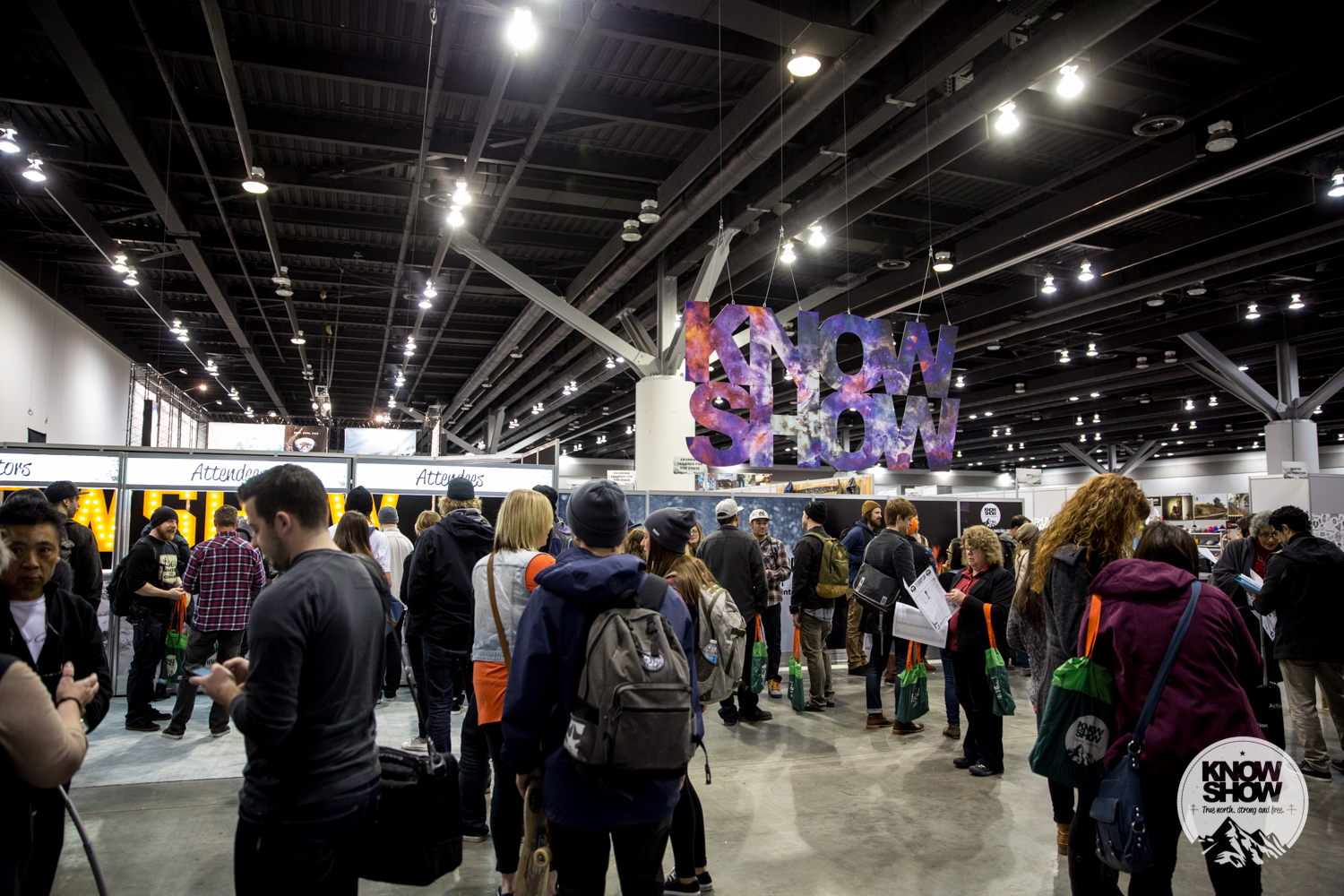
KNOWSHOW is entrenched as Canada’s premiere lifestyle trade show in Vancouver – an engaging B2B marketplace where leading lifestyle fashion brands unveil their seasonal products to Canadian retailers.


Screen Shot 2018-07-02 at 2.18.08 PM.pngScreen Shot 2018-07-02 at 2.18.08 PM.png

The Spring/Summer edition of the bi-annual show, produced by Cube Business Media, takes place July 17-18 at the Vancouver Convention Centre, it connects hundreds of unique retailers and the brands that they buy from in a concentrated showcase of upcoming trends, styles and products.  This summer’s event is followed by the Fall/Winter edition on January 16-18, 2019.

Perry Pugh, General Manager and one of the founders of KNOWSHOW, said the tradeshow began in 2006.

“We are a retail trade event where brands and buyers meet. It’s largely been a buying show for the last 13 years but we’re now creating an all-encompassing retail and brand-based platform where people meet fashion influencers, buy next season’s products and also expand their shop’s ability to market in a changing retail landscape,” he said referring to this year’s addition of a “KNOWHOW” Conference.

Pugh added that the show draws about 600 unique retailers and about 3000 attendees annually throughout mainly Canada but some American retailers too.

KNOWSHOW runs two seasonally-focused events each year with a winter show in January and a summer show in July.

“We’ve got retailers from across the spectrum from lifestyle fashion boutiques, action sports, winter sports and outdoor retailers and now we’re adding heavily into the gifting, accessory, jewelry market as well,” said Pugh.


0X8A2804.jpg0X8A2804.jpg

This year marks the first year that KNOWSHOW has included a conference component, called KNOWHOW – which is described as a tactically focused learning event for brands and retailers aimed at developing essential marketing. The goal of the conference is to provide actionable strategies to help organizations find, engage, convert, and build solid relationships with key customers.

“KNOWHOW Conference was born out of a need that we’ve seen in the market . . . giving these self-starting entrepreneurs an opportunity to keep their skills up in a changing world,” said Pugh, adding that so much has changed over the years in how retailers connect with customers.

He said KNOWHOW is a way for those retailers to stay abreast of the best skills, trends and ways to make sure they stay relevant and stay connected to the market.

Also new at KNOWSHOW is a TableTop Market with a curated selection of local and international accessory brands. Organizers say the Market aims to create a more functional sales space for accessory and gift brands that want to reach Canada’s hippest Lifestyle-Fashion Retailers. Categories at the Market include: Jewelry; Fashion Accessories; Craft Pantry Items; Home Goods; Men’s Grooming Products; and Bath and Body Products.

David Tyldesley, vice-president and co-founder of Cube Business Media which owns the show, commented on the tremendous changes that have taken place in the retail sector over recent years.

“Tremendous change has happened but KNOWSHOW has managed to stay relevant to the core target of independent retailers, in particular in Western Canada,” he said. “We’re bringing some new concepts to the show and for the first time ever we’re planning to open up KNOWSHOW a little bit more so it’s not just a buying show. We’re doing some interesting things and we’re really excited about the innovations we’re bringing this year, and as-yet-unannounced new features for next year too.  You can expect KNOWSHOW to maintain and further expand its relevance in 2018 and 2019.” 

Learn more at knowshow.ca.