Home Blog Page 1077

Vancouver Restaurateur Open Controversial Religion-Themed Food and Beverage Concept

Image: Hail Mary's

If there is something you need to get off your chest and are feeling the call of Confession, forego climbing the cathedral steps, and pull up a stool at Hail Mary’s at 670 East Broadway in Vancouver. Order what’s on tap, a panko-crusted deep-fried avocado, and make yourself comfortable as you wait your turn to duck into the crushed velvet ‘confessional.’

Hail Mary’s is the latest Canadian food and beverage concept to utilize religious symbolism and controversy to sell its wares, joining the likes of national chain Sweet Jesus ice cream and Vancouver-based Perverted Ice Cream, among others. 

Hail Mary’s is the newest member of the East Broadway & Fraser Street community, contained in a brick-clad 650-square-foot holy ‘hole-in-the-wall.’ Decorated in shades of blood red and black with gold stencilling, Hail Mary’s is a retro kitsch kitchen and bar offering an eclectic menu, good range of local alcohol and spirits, and a collection of iconography that would make a nun blush.

Image: Hail Mary’s

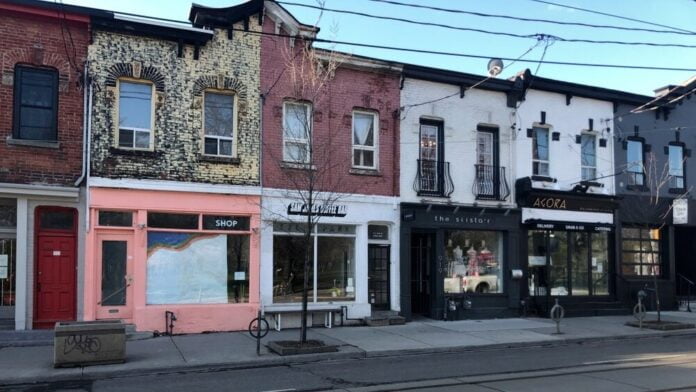
The location is no doubt diverse. If so inclined, the owners of Hail Mary’s, Haley White and Mike Zalman, could stand at their door and feast on food from around the world. Across the street is the newly-launched zero-waste Nada Grocery, to the west is Pizzeria Barbarella, Filipino Siga Siga, and Chinese main-stay Anna’s Cake House; to the east the fragrant Noor Convenience and Donair.

With a legal capacity of 30 seats, and a build-out time of 40 days and 40 nights (really), the duo has packed a lot of character into the tiny space. When asked about the inspiration for Hail Mary’s, White explains: “The concept for the aesthetic of Hail Mary’s was born out of a strong appreciation for religious iconography and imagery,” and adds that there may have been “a message from God” involved.

White was the general manager of Whip Café at 6th and Main for three years, and Hail Mary’s is partner Zalman’s third restaurant. He also owns and operates two Slickity Jim’s – one on Main Street and the other on West 7th. All three restaurants have a style reflective of a Gen-X mindset that fondly embraces the past and does not mind taking a poke at things revered. At Hail Mary’s the extensive use of Catholic iconography is not meant to be a statement about the church but about embracing the imagery and the sentimentality that these images hold in the memories of many.

Although the location has only been open for two weeks, White already has their customers pegged. “Disenfranchised Catholics, iconophiles, East Van locals, our wonderful friends, tourists, people getting off the back door of the B-Line bus, Mom and Dad.” 

With a staff of six, the duo split time with White in the front-of-house taking confessions and orders, and Zalman in the kitchen wearing a ‘The Sin is Within’ Hail Mary’s branded t-shirt whipping up Korean Chicken Lettuce Wraps, Vegas Vegan Burger, Nachos, a tangy Watermelon Salad, and Mac & Cheese. Like the neighbourhood, the menu has something for everyone.

Highlights are the unisex Sinners and Saints washrooms, The 7 Deadliest of Sins signature drink, and a coffee nook that my Polish Baba would sell her soul for.

Not willing to reveal the cost of the venture, White teases that it was “a small piece of our souls.” Which begs the question, is competition that fierce in Vancouver’s restaurant scene with the addition of lines of food trucks, and gut-wrenching trends like poutine, tacos, poke/pokerittos, and ramen gripping the city, that a soul sacrifice is required? We may never know, but with another Strange Fellows Cider under my belt, I may be enlightened.

From a business perspective, the addition of Hail Mary’s into the west coast landscape, in the footsteps of the Sweet Jesus expansion into Canada and the United States, and Perverted Ice Cream heating up on Vancouver’s Robson Street, could this be the beginning of a trend in blasphemic businesses? Heaven only knows! 

US-Based Brokerage JLL Acquires Canada’s Northwest Atlantic

exc-5b63650f88251b35562130f4

Chicago-based brokerage Jones Lang LaSalle (JLL) announced that it has acquired highly-respected Toronto-based Northwest Atlantic. It’s a significant announcement for the Canadian retail industry, as Northwest Atlantic’s representation mandate includes brands such as Apple, TJX (Winners/Marshalls/HomeSense), Cineplex, Indigo, DSW Shoes, Nordstrom and many others. 

The acquisition allows JLL to expand its current retail advisory business in Canada significantly, with an aim to provide a range of real estate and leasing services to retailers seeking to enter, expand or operate in Canada. Northwest Atlantic will operate as a boutique practice team, according to JLL. 

Canada could see a record-breaking number of international retailers entering Canada this year by opening stores, and plenty of other companies are expanding their footprint in Canada. Northwest Atlantic’s business is broad as it represents leading global, national and local retailers across all categories, and specializes in the leasing of power center, street-front and enclosed mall retail segments. Representatives specialize in supporting retailers with market penetration strategy, demographic analysis, trade area definition and delineation, roll-out strategy, site identification, selection and acquisition, transaction negotiation, corporate approval process support, renewals and dispositions, and relocation analysis.

“Retailers’ needs are changing dramatically as e-commerce impacts everything from site selection to store configuration and supply chain logistics. Our new partnership and combined operations with Northwest Atlantic enhance and broaden the scale and scope of our service offerings for retailers,” said Brett Miller, CEO, Canada, JLL.

Northwest Atlantic is a significant player in the Canadian retail industry, representing more than 65 retailers and having transacted more than 75-million square feet of retail real estate across the country. Founded in 1991, the privately-held Northwest Atlantic is owned by 11 shareholders, including CEO Tim Sanderson, and Principals Lawrence Hildebrand, Chris Wood, Scott Lee and Dianne Lemm

“We joined JLL because of its Practice Team structure, which allows us to continue operating as a specialized unit and does not change our hands-on approach with our clients,” said Mr. Sanderson, now Executive Vice President, JLL. “We are now able to add resources, technology, a deeper research platform and increased geographic coverage across Canada and globally. We can now give our clients access to a full suite of offerings from JLL that we didn’t have on our own, such as office and industrial services, project management and capital markets expertise through JLL’s National Retail Investment Group.”

As part of the arrangement, 45 Northwest Atlantic employees (including 22 brokers across Toronto, Montreal and Vancouver), will join JLL and integrate with JLL Canada’s existing retail team. As a result, the new Northwest Atlantic executive team will report to and partner closely with Brett Miller, CEO of Canada for JLL and with Naveen Jaggi, President of Retail Advisory Services for JLL Americas.

“We’ve been growing our retail advisory services throughout the United States since 2015, and looking for the right cultural fit to increase our presence in Canada. Northwest Atlantic’s client-centric mentality and unwavering commitment to their clients’ success made them the right group to add to our expanding global retail business,” said Mr. Jaggi. “By joining forces with the Northwest Atlantic team, we’ve now created an opportunity for our clients worldwide to tap into a unified business across the United States and Canada for seamless, platinum advisory services.”

JLL’s business in the United States is massive — it’s the largest third-party retail property manager in the United States and partners with retailers, investors and owner/operators through its team of professionals around the world. JLL is a Fortune 500 company with nearly 300 corporate offices, operations in over 80 countries and a global workforce of 83,500 as of March 31, 2018 (JLL is the brand name, and a registered trademark of Jones Lang LaSalle Incorporated). 

MUJI Announces Downtown Toronto Mega-Flagship [Rendering]

exc-5b62369470a6ad4e5cf27043

Minimalist Japanese retailer Muji has provided an update on the expansion of its downtown Toronto store, including a rendering showing how it will have a significant presence on Dundas Street when it opens this fall. The expansion will more than quadruple the size of the store at 20 Dundas Street West, which was Canada’s first Muji location when it opened in November of 2014. 

Muji confirms that the two-level store will span a whopping 19,125 square feet, which the company confirms makes it the largest Muji location outside of Asia. Renderings show that a considerable amount of its retail space will be on the second level of the Atrium complex in which Muji is located — the retail space is being created out of office space in the large mixed-use complex. 

The 19,125 square foot store is considerably larger than the original 4,373 square foot store which opened at 20 Dundas in 2014 — back then, Muji stores were generally smaller and have been progressively getting larger as the company continues to open stores. 

The store’s location is strategic, being located steps off of the busiest pedestrian crossing in Canada — Yonge Street and Dundas Street, and is across the street from the CF Toronto Eaton Centre which, with more than 50-million annual visitors, is the busiest shopping centre in Canada. Several major brands operate flagships in the immediate area including H&M, Michael Jordan, Adidas, Samsung, Uniqlo and Nordstrom, among others. 

The expanded Toronto flagship will surpass the size of Muji’s Robson Street flagship in Vancouver, which opened in a one-level 14,507 square foot space in December of 2017. Muji hasn’t yet revealed what departments will be included in the expanded Toronto flagship, though the Robson Street flagship might provide some insight — books, custom monogramming and live plants can all be found in the downtown Vancouver store, which has become an attraction on Robson Street’s 1100 block. 

Some Muji stores in Asia feature food and beverage offerings (including its ‘Café & Meal’ concept) and in Japan there are even fresh grocery offerings. A Muji store in Osaka, spanning more than an acre in size with about 46,300 square feet of retail space, is currently the retailer’s largest store globally. 

Muji is said to be doing stellar sales in Canada, and particularly on the West Coast where it recently announced that its Metropolis at Metrotown unit, which spanned 7,770 square feet when it opened in August of 2017, will be expanded this fall to an impressive 12,305 square feet on one level. The idea is to bring the store in line with the experience, product selection, and footprint of the Robson Street flagship. 

Muji’s Canadian stores have been growing progressively larger as they open in Canada. As mentioned above, Muji entered the Canadian market with a 4,373 square foot store in downtown Toronto in November of 2014. That was followed by a 5,225 square foot store at Mississauga’s Square One in November of 2015, followed by the October 2016 opening at Toronto’s Yorkdale Shopping Centre (6,375 square feet) and the Summer 2017 debut of a 6,000 square foot space at CF Markville, north of Toronto. A store at Scarborough Town Centre, measuring about 6,800 square feet, opened in March of this year. 

On Canada’s West Coast, Muji currently operates three stores — Metropolis at Metrotown was the first when it opened last August, followed by the Robson Street store in December and most recently, a 6,355 square foot store at CF Richmond Centre which opened in April of this year

Brokerage CBRE has been involved with MUJI’s negotiations across Canada, led by Arlin Markowitz, Senior Vice President of CBRE’s Downtown Toronto Urban Retail Team.  CBRE Vancouver‘s office, including Martin Moriarty and Mario Negris, were involved in the three Vancouver deals.

Last year, Muji’s Canadian President, Toru Akita, said that he expected MUJI to operate between 15 and 20 stores in Canada by the year 2020, and a source working with the company says that the retailer has already mapped out many of the locations where it plans to expand, which may include malls as well as urban street front locations. 

Known for being innovative and its products being affordable and unbranded, Muji carries various household items, furniture, appliances, stationery and apparel. With hundreds of stores worldwide, it saves money by spending little to nothing on market research and advertising. MUJI is short for Mujirushi Ryohin, or ‘no-brand superior items’, and was founded in 1980 as the private-label brand of a major supermarket chain.

iQ to Open Flagship and Expand Operations

exc-5b611c57575d1fbdb30b9fdf


Rendering of the new Yorkdale locationRendering of the new Yorkdale location

Rendering of the new Yorkdale location

By Craig Patterson

Toronto-based healthy eating concept iQ continues to grow its operations, with more locations in the works as it ramps up an expansion which could see it become a national brand. The company will unveil its largest location yet at Toronto’s Yorkdale Shopping Centre towards the end of the summer, and founder/CEO Alan Bekerman says that more iQ locations are in the works.

Mr. Bekerman founded iQ in 2011 and since then, the company has opened seven locations in seven years. Its first location opened in 2011 at the TD Centre in Toronto’s Financial District in about 460 square feet, and it was a hit from the very beginning. A second location opened nearby at Brookfield Place in 2012 and in 2014, iQ unveiled a considerably larger location at the base of the 18 York office tower in Toronto’s burgeoning SouthCore, south of Union Station.


Click for interactive Yorkdale Mall MapClick for interactive Yorkdale Mall Map

Click for interactive Yorkdale Mall Map


Brookfield Place LocationBrookfield Place Location

Brookfield Place Location


Food Prep Team Leader at TD Centre LocationFood Prep Team Leader at TD Centre Location

Food Prep Team Leader at TD Centre Location

In 2016, iQ partnered with Toronto-based Greenhouse Juice to open a joint location at First Canadian Place in Toronto’s Financial District — by that time, it was clear that workers in Canada’s business centre had embraced iQ’s healthy food options as well as Greenhouse Juice’s offerings (that company is also expanding). In 2016, as well, iQ opened a 300-square-foot concession at the Equinox fitness centre at Yorkville Village in Toronto, marking iQ’s first foray outside of the tight geographic clustering of its first four locations. In 2017, iQ opened a larger-than-usual location at 613 King Street West, in an historic area which is rapidly transforming to become one of the most interesting and densely populated areas of the city.

Towards the end of the summer, iQ will unveil its flagship location at Toronto’s Yorkdale Shopping Centre, marking the brand’s first location outside of Toronto’s downtown core. The Yorkdale location will span almost 2,300 square feet in a strategic corner location across from the mall’s stunning RH (aka Restoration Hardware) and Sporting Life stores. Mr. Bekerman explained that a flagship is ideally a ‘best location’ for a brand and while this might be true for the Yorkdale location when it opens, he says that the goal is for every new location to be better than the last as each is a learning experience.


Brookfield LocationBrookfield Location

Brookfield Location


25014496_395449280867962_2062858322523979776_n.jpg25014496_395449280867962_2062858322523979776_n.jpg


iQ’s retail spaces vastly range in size, and Mr. Bekerman explained that each of these have been used to test the concept prior to an even greater rollout. While the smaller locations have been wildly successful, future locations will ideally be in the 2,500 square foot range, he said.

Larger iQ locations allow for more of an “experience” he explained, by offering seating, a place for customers to line up, and the ability to play music in order to create a curated environment. Shopping centres have been transforming over the past several years, and now landlords are seeking to add food and beverage offerings through their mall properties in order to create foot traffic to other retail categories, not to mention give shoppers a place to relax and refuel.

Mr. Bekerman also expressed gratitude to iQ’s broker Vanessa Oliver of Regent Street Retail and Restaurant Real Estate Solutions, who is working with iQ’s expansion under mandate and has negotiated multiple lease deals on behalf of the retailer.


26865697_1785861211457992_2751510651460386816_n.jpg26865697_1785861211457992_2751510651460386816_n.jpg

King Street West Location:

iQ’s popularity is, in many respects, a product of the company’s simplicity. Mr. Bekerman explained that he founded the company out of frustration with the lack of health food options in downtown Toronto — he himself worked in Toronto’s Financial District when he decided to launch a concept that would utilize the highest quality ingredients such as whole grains, lean proteins, and good fats, offering healthy food that is also served quickly and conveniently. The company’s website notes that its menu shifts with the seasons, and that it devotes itself “to scratch cooking + embracing the type of food that we feel good about eating everyday”. Nutritional content is the focus with dishes that are “clean, colourful and light”. iQ partners with local farmers and suppliers where it can, and it also proudly serves Pilot Coffee at its locations.

Two more Toronto iQ locations are in the works, and their exact locations will be announced shortly. One will be in midtown Toronto, Mr. Bekerman said, while the other will be up in North York.

Looking to the future, Mr. Bekerman said that he’s working with broker Vanessa Oliver of Regent Street to eventually expand the concept outward beyond the Greater Toronto Area. While nothing is confirmed as of yet, locations could some day open in other Canadian provinces and maybe even beyond as iQ continues to perfect its concept.


Craig Patterson, now based in Toronto, is the founder and Editor-in-Chief Retail Insider. He’s also a retail and real estate consultant, retail tour guide and public speaker. 

Follow him on Twitter @RetailInsider_, LinkedIn at Craig Patterson, or email him at: craig@retail-insider.com.

Kenneth Cole Expands Canadian Operations Including 1st Retail Stores

Image: Kenneth Cole on Queen Street

New York City-based fashion brand Kenneth Cole is expanding its wholesale and retail network in Canada, which includes opening standalone stores in major Canadian cities. The company has just unveiled its first standalone store in Canada on Queen Street West in Toronto with a second location already confirmed, and this fall 16 men’s shop-in-stores will debut at Hudson’s Bay stores across the country. 

The 1,800 square foot Toronto flagship, located at 315 Queen Street West, carries ready to wear clothing, footwear and accessories for both men and women under the Kenneth Cole New York label. The store’s interior is punctuated with raw steel, concrete, brick and glass, aiming to create a welcoming environment which also speaks to the Kenneth Cole brand. Kennth Cole joins a rapidly growing roster of national and international brands that have located standalone stores on the more ‘popular’ section of busy Queen Street West. Ryan McGrath of Northwest Atlantic acted on behalf of Kenneth Cole in the lease deal, with Brandon Gorman of Cushman & Wakefield acting on behalf of the landlord (The Pearl Group). 

The store’s interior references Kenneth Cole’s “trailer story” — designer Kenneth Cole began selling women’s shoes in the back of a production trailer in December 1982, and the Toronto store’s interior is a nod to the brand’s heritage. That includes the “use of clean lines, strong artistic works and purposeful messaging,” according to the company.

The Kenneth Cole flagship store will be located at 315 Queen St. West in Toronto (CNW Group/Kenneth Cole Productions Inc.)

Kenneth Cole has already secured a second store location at Vaughan Mills just north of Toronto, according to Daryle Perrin, Vice President of Licensed Brands, of Haggar Canada. That store is scheduled to open in September. Kenneth Cole signed an expanded agreement with Haggar Canada Co. to manufacture, market and distribute men’s and women’s apparel and distribute men’s and women’s footwear in this country. 

He said that the Queen Street location “represents modern street front retail” in an area that is extremely diverse. Toronto’s bustling Entertainment District is directly to the south, and the area is seeing a population explosion that is adding thousands of new residents to the area. To the north is the Art Gallery of Ontario, Ontario Collage of Art and Design and neighbourhoods such as Kensington Market and Chinatown, and a few blocks to the east is the City’s Financial District, which is considered to be Canada’s most important business address. 

Mr. Perrin said that more standalone Kenneth Cole locations are expected in Canada’s larger cities. The Vancouver market is strong and includes a substantial tourist component, while the more ‘traditional’ Calgary market is another example of a city where the brand has taken hold. 

Image: Kenneth Cole on Queen Street

Kenneth Cole’s standalone store expansion is part of a greater effort to expand the brand further into Canada. This fall, Kenneth Cole will unveil 16 ‘soft shops’ at Hudson’s Bay stores nationwide, recognizing the importance of the retailer to the brand, not to mention Hudson’s Bay being the remaining traditional department store retailer in Canada. The soft shops will include some of the design elements seen in the Queen Street flagship, including the use of raw steel in its fixtures. 

Hudson’s Bay also carries Kenneth Cole’s men’s footwear line in most of its stores, and Kenneth Cole women’s footwear is now carried in 10 Bay stores, according to Mr. Perrin, with plans to further expand the brand into Hudson’s Bay as well as other independent retailers in the country. 

Kenneth Cole’s fashions are sometimes referred to as being an ‘Urban Uniform’ which features mix-and-match pieces made from fabrics that are intended to be comfortable for a busy person on the move. Designs are ‘modern classic’, which should resound with downtown Toronto residents as well as many Canadians that are seeking out reasonably priced, versatile fashions. 

Online shopping is also an important component to Kenneth Cole’s business and as part of its Canadian expansion, its website is also seeing an expanded focus. Ultimately the goal is to be an omnichannel retailer with components of direct-to-consumer, wholesale and e-commerce. 

We’ll be following this brand as it continues to expand its presence in Canada. 

Grocery Disruption in Canada as Retailers Fight for Online Dominance

PHOTO: GROUPON

One after the other, grocers are going virtual. All of them, at some point over the last 12 months, have announced some sort of commitment to an e-commerce strategy. Costco launched its home delivery pilot in Ontario, while Maxi’s, Loblaws‘ discount stores in Quebec, were the latest to jump on the virtual bandwagon with their Click and Collect program. In other words, grocers are no longer content with waiting for customers to walk through the door, ready to spend money on food. Grocers are now accepting that they must increasingly go after and work harder for the money.

The proverbial wake up call for food retailers came a year ago when Amazon purchased Whole Foods in the U.S. in August 2017. The biggest concern among grocers was that it would drive down prices, even in Canada. This has not yet happened, at least not in any direct way. Food inflation is not strong, but neither is the sector experiencing any deflationary pressures.

SAVE ON FOODS (OVERWAITEA) ONLINE STOREFRONT.

What is happening: consumers gradually walking away from the average traditional grocery stores. Some are drawn to specialty stores, but many are buying online, and often from suppliers selling unique products not available through the major outlets. Habits are changing. Some estimate online food sales to be at about 1.5% of all food retail sales in Canada, with some grocers seeing online sales growth reach double digits. Given that we are one of the most connected nations in the world, the current 1.5% of sales could go up to 7% within the next 10 years, which equates to approximately $10 billion in sales. This would represent over 800 decent-sized stores in today’s food distribution landscape.   

Canada is essentially catching up to several other industrialized countries. Ireland and the United Kingdom are at 7.5% in online grocery sales. France is at just over 5.5%. Canadians are nowhere near that level, as most of us never considered online food shopping until just recently. Now, it’s in the media almost every week, enticing Canadians to think differently about food outlets and how they might want to shop.

Grocers weren’t overly enthusiastic in embracing e-commerce either. Other than Sobeys in Quebec and Longo’s Grocery Gateway in Ontario, not much virtual shopping was going on. Reluctant grocers were concerned about lost foot traffic and reduced same-store sales, precious metrics in the business. But Amazon’s clear commitment to food retailing changed everything. The sector is now playing defense and retailers are trying to embrace their new reality. Basically, an online shopper is more rational and strategic. Senses and emotions can trick you into buying certain products you don’t need or “shouldn’t” be buying in the first place. In a physical store, want overpowers need, much more often than you might think. Online, however, impulse buying is almost impossible. Grocers are slowly having to learn how to add on sales while transacting with a customer who has access to neatly presented information in real-time, all the time — a scary thought for the conservative type in the industry. 

For some Canadians though, saving money through online shopping is not that easy. On the one hand, free applications allow the tech-savvy to save. On the other hand, the process excludes certain consumers. It involves some research, knowledge of software use, and especially time. Some are comfortable with this, but not everyone. But since the Internet and social media have become so prominent in our lives, chances are that, over time, the number of shoppers willing to buy food online will outnumber those reluctant to do so.

PHOTO: WOWCHER

Location means something different in food retailing now. More competition will only make things more complicated for grocers. If it’s death by a thousand cuts for the industry, everyone wants to be the one holding the blade. Loblaw and WalMart have very dissimilar approaches — no surprise — driven by in-house thinking. While Metro has been a little quiet compared to others, Sobeys has entered a partnership with U.K.-based Ocado, a powerhouse in online shopping. This could make for an interesting duo in the sector. Costco has now announced it wants to play in the online space which could also be damaging for the establishment.

Everyone wants in, but in the end, only a few will deploy an e-commerce strategy that will “click” with Canadian consumers.

Miele Unveils First-in-the-World Flagship Prototype [Photos/Video]

Miele at Yorkdale Shopping Centre (CNW Group/Miele Canada)

High-end appliance brand Miele has unveiled a new first-in-the-world interactive ‘Miele Experience Centre’ flagship at Toronto’s Yorkdale Shopping Centre, which will act as a prototype for future Miele locations in major markets globally. The highly experiential space could represent the future of experiential retail, which includes an interactive experiential component and even food that is made and served throughout the day. 

The 2,200 square foot retail space is located in Yorkdale’s latest expansion wing, which features new locations for RH (aka Restoration Hardware) and Sporting Life. Miele describes its flagship as “digital first, but human at heart”, with a  combination of digital elements, product experience and expert advice. “The new Miele Experience Centre is truly a unique showcase demonstrating excellent quality, technology and service”, says Yves Dalcourt, President of Miele Canada. “The experience we will give our customers will change the way people will look at buying appliances and will set a new standard within our industry.” 

Yorkdale’s Miele Experience Centre is highly interactive — visitors are encouraged to try out appliances ranging from laundry and floor-care appliances to kitchen products through to ‘Smart Home’. It almost feels like a technology playground while at the same time, being a retail store where customers can buy the products.

As with many homes these days, the store’s kitchen area is the ‘heart and soul’ of the new store. Several times a day, a chef demonstrates cooking and baking in the dedicated space and as an added bonus, freshly prepared culinary treats ranging from croissants to homemade soup to pasta can be sampled by customers during their visit. There’s a lounge area adjacent to the store’s kitchen that encourages one to pause and enjoy. 

Technology, including various digital elements, are an important part of Miele’s new space — ambient lighting and videos change with the time of the day, with five video screens grabbing the attention of visitors. Interactive displays throughout the store showcase the latest in Miele technology. At the ‘Swiping Cooktop Screen’, it’s possible to perform virtual cooking and to experiment with the various Miele induction cooktops on display. A 46-inch touch screen display on the ‘M-Touch Wall’ shows the product range with the eponymous technology in full size and illustrates the function of the controls which simplify the operation of numerous built-in appliances. This is new to Miele, as is the ‘Miele CareCollection Consumables Wall’ which, with the aid of short videos, informs visitors about Miele’s various cleaning and care products. Visitors can launch video demonstrations by simply scanning items using the NFC scanner provided.

Brand/retail consultancy FITCH designed the storefront as well as the series of playful, interactive spaces created to enable guests to explore and experience Miele products in action. 

What’s interesting is while this store is ‘direct-to-consumer’, it’s not in competition with other retailers that sell Miele products. Miele utilizes a chartered agency system, where all products sold in third-party retailers actually interact with Miele itself. As a result, someone shopping at a multi-brand retailer might go to the Yorkdale location to test out some products, and Miele is able to track if the consumer came from that multi-brand store. 

PHOTO: MIELE CANADA

The store is Miele’s first ever to be located in a ‘premium shopping mall’ according to the company (Miele’s Calgary, Montreal, Toronto and Vancouver Experience Centres are in less-prime locations), and Yorkdale makes sense. The shopping centre is home to more luxury brands than any centre in Canada and the clustering has led to a loyal base of shoppers that are also considerably wealthy. A representative from Miele noted that in some instances, a Miele chef will attend a purchaser’s home to show them and any domestic staff how to use appliances, including creating a multi-course meal for educational purposes. 

Miele representatives also explained that Yorkdale was chosen because it’s a busy mall with about 18-million annual visitors. The mall is also Canada’s most productive in terms of annual sales per square foot, which may continue to be the case as another Canadian Shopping Centre Study is in the works for 2018. 

About 30-40 more Yorkdale-like Miele Experience Centres are expected to open globally in the world’s major centres. Yorkdale is expected to be the only such experience centre in Canada, however, according to the company. 

Miele is considered to be the world’s leading manufacturer of premium domestic appliances including cooking, baking and steam-cooking appliances, refrigeration products, coffee makers, dishwashers and laundry and floor care products. The Miele company was founded in 1899 and has eight production plants in Germany as well as one plant each in Austria, the Czech Republic, China and Romania. Its annual turnover in 2016/17 was about 3.93-billion Euros with sales outside of Germany accounting for 70% of that amount. Miele is represented with its own sales subsidiaries and via importers in almost 100 countries — the Miele company, now in the fourth generation of family ownership, employs a workforce of around 20,200, with 11,200 of those being in Germany. The company headquarters are located in Gütersloh/Westphalia, Germany.

Cutting-Edge Chicago-Based Fashion Designer Opens Retail Space in Toronto [Photos]

exc-5b5f9a32352f53c1e4c3c71e


Photo: Craig PattersonPhoto: Craig Patterson

Photo: Craig Patterson

By Craig Patterson

Cutting-Edge and unique fashion designer Shernett Swaby, based out of Chicago, has opened a boutique in Toronto. The store is called Swaby and is located at 632 Queen Street West, and it showcases some of the boldest fashion designs we’ve seen. 

The concept itself is unlike anything in Canada to date. When someone purchases a garment from her brand, Swaby offers free alterations for the life of each garment and in some instances, Ms. Swaby herself will create a new design out of a garment at no additional cost. For example, a pair of pants may be turned into a skirt, lining in a garment might be replaced, or if someone’s body shape changes, garments can be modified. It’s part of an effort to make her clothing last for years by updating older pieces that might otherwise be discarded, with the longevity of garments, making Swaby both cost-effective as well as environmentally friendly. 

The company’s website states that it believes “that every woman should feel confident and beautiful whenever they get dressed, regardless of what size they are,” and that complimentary alterations are provided “including zipper replacements and lining replacements ‘and any other changes that might be needed to keep you enjoying your Swaby garment for the life of that garment”. 

Prices range from a bit over $100 for a simple shirt to well into the thousands for bolder designs which even include impressive evening gowns. Ms. Swaby was in the new Toronto store last week to meet with clients and it’s clear that she’s passionate about her work as well as very skilled in her trade. Even during an opening event at the store, she was fitting clients with her unique designs, and shoppers we spoke with were impressed with the individual attention as well as the one-of-a-kind designs found in the store. 


Photo: Craig PattersonPhoto: Craig Patterson

Photo: Craig Patterson


Photo: Craig PattersonPhoto: Craig Patterson

Photo: Craig Patterson

Shernett Swaby was born in Jamaica and grew up in Canada. She started sewing at age eight by making clothing for her dolls, as well as mending her own garments. Ms. Swaby’s mother was a seamstress who also acted as inspiration while teaching tricks of the trade. As an adult, Ms. Swaby continued to perfect her craft by creating garments that ‘celebrate individualism’ with an artistic flare. 

Ms. Swaby was a top-five finalist on TV Series ‘Project Runway Canada’ about a decade ago and following that in 2009, she opened her first boutique in Chicago (she had been in business several years prior to the show, it should be noted). She continues to operate a store there at 750 Franklin Street in Chicago’s upscale ‘River North’ neighbourhood, which is known for its art galleries, clubs and now more than ever, luxury condominium buildings which in some instances have only one unit per floor. 

Personalization remains key to swaby’s value proposition and remarkably, all of the garments and accessories that are sold at Swaby’s showroom are designed and manufactured on the premises. Ms. Swaby herself will be traveling regularly to meet with clients and Toronto will become something of a ‘second home’ with the opening of her Queen Street store. 


Photo: Craig PattersonPhoto: Craig Patterson

Photo: Craig Patterson


Photo: Craig PattersonPhoto: Craig Patterson

Photo: Craig Patterson


Photo: Craig PattersonPhoto: Craig Patterson

Photo: Craig Patterson

Spanning about 1,100 square feet, Swaby’s Toronto store is located in what some say is one of the world’s ‘hippest’ areas, located alongside trendy stores and food establishments in the ‘West Queen West’ retail strip. Swaby’s Toronto store features a simple white interior which sets off her fashions, which change yearly as new themes are released. This season there are ‘ropes’ that adorn some pieces and ‘balls’ was the theme from last year — though given the customization possibilities, we’re told that almost anything is possible in terms of design, and that most requests can be accommodated. 

Swaby also has a line of leather goods such as bags and belts that are hand-made by Ms. Swaby herself and this year, one of the themes is ‘origami’. Several of her creations are available in the store at the moment, some featuring a branded logo. 

What sets Swaby apart from other design houses is the personalization that Shernett Swaby herself provides to her clients, and she has plans to grow her business to other major centres. Toronto is likely to be the only location in Canada for the brand, and next year she says she has her heart set on opening her first store in New York City. After that, the goal is to open Swaby stores in Paris and London. 

Swaby’s new Toronto showroom is at 632 Queen Street West. 


Craig Patterson, now based in Toronto, is the founder and Editor-in-Chief Retail Insider. He’s also a retail and real estate consultant, retail tour guide and public speaker. 

Follow him on Twitter @RetailInsider_, LinkedIn at Craig Patterson, or email him at: craig@retail-insider.com.

Sporting Life Announces 1st Store Location in British Columbia

exc-5b5d112088251bab88796bfe

Upscale Toronto-based sport and fashion retailer Sporting Life is expanding into new markets. The company has just announced that its first store in British Columbia will open in the fall of 2019 at The Amazing Brentwood in Burnaby, east of Vancouver. It’s all part of an expansion to position Sporting Life as a national brand that will soon have stores in four provinces. 

“Vancouver’s renowned active and health conscious population provides an ideal foundation for launching Sporting Life on the West coast,” said Sporting Life co-founder and CEO David Russell. “We’ve had our eye on this city since Patti (co-founder of Sporting Life) and I lived in Vancouver years back. We see the value in this market and believe in the retail environment. We hope to ultimately have three stores in the greater Vancouver area.”

The Brentwood Sporting Life store will span about 44,000 square feet according to the company, and will open in 2019. The store will feature attractive interiors and an assortment of designer brands, as with the company’s other stores. 

Last summer, The Amazing Brentwood’s landlord SHAPE  announced that it had partnered with the L Catterton group, which is a private equity firm linked with French luxury conglomerate LVMH (Louis Vuitton Moët Hennessy) and Groupe Arnault. The new $2 billion The Amazing Brentwood will become the focal point of a community that will include over a million square feet of retail space, considerable office space, as well as multiple residential towers for thousands of new residents. The first phase is scheduled to open in the spring of 2019. 

The Amazing Brentwood’s retail component will house more than 250 stores, a ‘culinary collection’, and a one-acre plaza. An entertainment focus will also include the addition of Cineplex VIP Cinemas, as well as The Rec Room entertainment centre. Brentwood is eyeing luxury brands to move into the centre, placing it directly in competition with QuadReal’s Oakridge Centre on Vancouver’s West Side, which intends on becoming the region’s second ‘luxury node’ to complement the downtown Vancouver ‘Luxury Zone’.  

Sporting Life was founded in 1979 and sells apparel and footwear, as well as equipment geared towards runners, cyclists, skiers, snowboarders and hikers. It has a large selection of outerwear, fleece and coats from popular brands MonclerCanada GooseArc’teryx and The North Face, among others. It also carries a mix of high-end and casual clothing brands such as BarbourBognerHugo BossMackageJohn Varvatos and others. Fairfax Financial Holdings Ltd. bought 75% of Sporting Life in December of 2011.

Sporting Life operates stores on Toronto’s Yonge Street (2665 Yonge Street and ‘Bikes & Boards’ at 2454 Yonge Street) as well as at Toronto’s CF Sherway Gardens (which relocated to a new space in September of 2015), Yorkdale Shopping Centre, Collingwood ON (222 Hurontario Street), Markham ON (CF Markville), Richmond Hill ON (Hillcrest Mall), Ottawa (Lansdowne) and two Calgary stores — one at Southcentre Mall and another at CF Market Mall. The Yorkdale and CF Market Mall stores are the chain’s two newest stores and both opened in the fall of 2017. 

Sporting Life is in a growth phase that is seeing stores opening across the country. This fall, Sporting Life will open its first store in the Province of Quebec in a one-level retail space at Quartier DIX30 in suburban Montreal. It will be Sporting Life’s 11th store location as the company looks to double its store count over the next several years. 

In a previous interview, David Russell said that Sporting Life will look to eventually operate about 20 stores Canada-wide. He explained that the Sporting Life brand will become truly national as it expands into the Vancouver/British Columbia market in 2019, with plans for three store locations in the Lower Mainland. While the Calgary market will be adequately served with two stores, an Edmonton location was a goal for the company, he said at the time (a downtown Edmonton deal unfortunately never materialized). The Greater Toronto Area has room for between two and three more Sporting Life locations, according to Mr. Russell, and the Montreal region could see as many as three stores as well. Store locations will ideally be in the 44,000 square foot range, he said. 

In an interview with Marina Strauss of the Globe & Mail [Paywall], Mr. Russell revealed that Sporting Life’s current annual revenue is about $160 million annually, and that the company intends to eventually see sales numbers of about $400 million from its 20 or so stores. The company is profitable and store sales are increasing at low-single-digit rates. E-commerce currently makes up about 15% of sales and Mr. Russell told Ms. Strauss that he expects that number to reach about 20%. 

Sporting life is working with brokerage Northwest Atlantic for its Canadian expansion plans, with Chris Wood handling Western Canada and Sam Windberg handling Sporting Life’s eastward real estate expansion. 

Shoppers Drug Mart Opens at the Base of Luxury Rosedale Building [Photos]

Shoppers Drug Mart Rosedale Rendering

Shoppers Drug Mart has opened a new store along the commercial strip of Toronto’s Rosedale area at the base of a multi-use luxury building which is in the process of being completed. The new store adds an expansive assortment of beauty products for those living nearby, as well as an assortment of grocery items for an area that probably could have used it. 

The new store is located at the base of the ‘Hill and Dale’ building located at the southeast corner of Roxborough Street and Yonge Street, about a block north of the Rosedale TTC subway station. Hill and Dale, with a name derived from adjacent ’SummerHILL’ and ‘RoseDALE’ features six levels including a ground level with retail space, middle floors for offices, and upper-most floors featuring 17 luxurious residences with prices surpassing $2,000/square foot in many instances. 

Shoppers Rosedale Construction

The new store is accessed from a corner location boasting high-end finishes including dark granite steps leading up to the store’s entrance. Inside, high ceilings showcase the store’s ‘BeautyBOUTIQUE’ cosmetics area which encompasses almost a third of the entire store. The back of the store features traditional drug store wares as well as a pharmacy. 

Being under the same ownership umbrella as Loblaw, Shoppers Drug Mart has added a grocery area to the new Rosedale store that features refrigerators housing a variety of food items, ranging from packaged goods to vegetables. It’s a welcome addition to the area which generally lacks grocery stores, save for the nearby Harvest Wagon which is known for its high-quality groceries at expectedly high prices. 

Expanding its food offerings has seen Shoppers Drug Mart address potential food deserts in some Canadian communities. Rather than a standalone grocery store having to set up shop and take a risk, Shoppers Drug Mart is able to utilize its own space to carry grocery items that might otherwise not be available in the area. This is proving particularly useful in some downtown areas such as in Edmonton, where Shoppers Drug Mart recently unveiled a two-level store at Edmonton City Centre which features an in-store grocery area. It’s no doubt a welcome addition to those living nearby, who would otherwise have to travel some distance to meet their basic grocery needs. 

The Rosedale Shoppers Drug Mart replaces a recently-shuttered location at 817 Yonge Street, which is a few steps south of the intersection where Yonge Street intersects with Church Street (to the west) and Davenport Road (east of Yonge). That 9,000 square foot retail space is currently being offered for lease, in an area that is seeing explosive growth in the forms of several thousand new condominium units to be finished over the next few years. 

Shoppers Drug Mart is also adding other stores to the area, including a multi-level store at the southwest corner of Yonge Street and Charles Street which is under construction and will feature a heritage facade. Another two-level, 12,000 square foot Shoppers Drug Mart will open at the base of ‘The Britt’ residential tower under construction at the northeast corner of Bay Street and Wellesley Street. When finished, both stores will serve the densely-populated and highly-educated residential area which is adjacent to the University of Toronto, Government of Ontario, and several significant research hospitals.