Advertisement
Home Blog Page 1078

MINISO Canadian Expansion Moves Faster than Anticipated

Image: Miniso

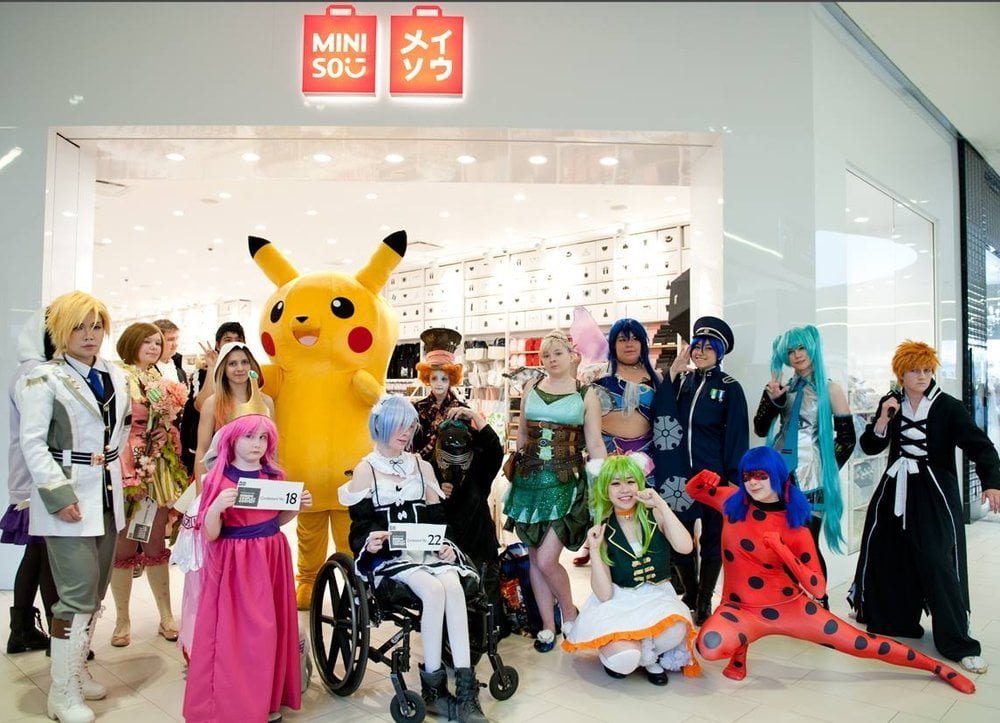
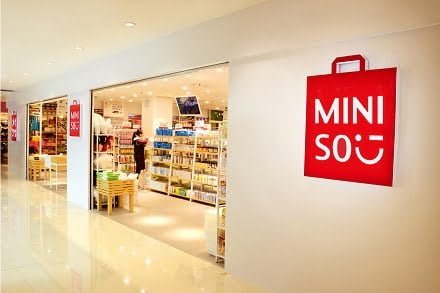
Value-priced Chinese variety retailer MINISO, which positions itself as a ‘Japanese lifestyle brand’, is opening stores in Canada at a faster rate than was originally anticipated as it expands into new markets. The company, which entered Canada about a year ago when it opened its first store in Vancouver, has already opened stores in four provinces and by the end of this year, it anticipates having about 100 locations coast-to-coast. 

MINISO says that it plans to operate about 500 stores in Canada in the next three years — prior to making this revelation, the company was ambiguous about when it would reach the ambitious 500-store goal. MINISO’s products are branded and stores carry about 2,500 SKUs and to keep up with distribution, the company has announced it’s establishing regional logistics centres in Vancouver and Toronto to keep up with the rapid store expansion, which is primarily a franchise model. 
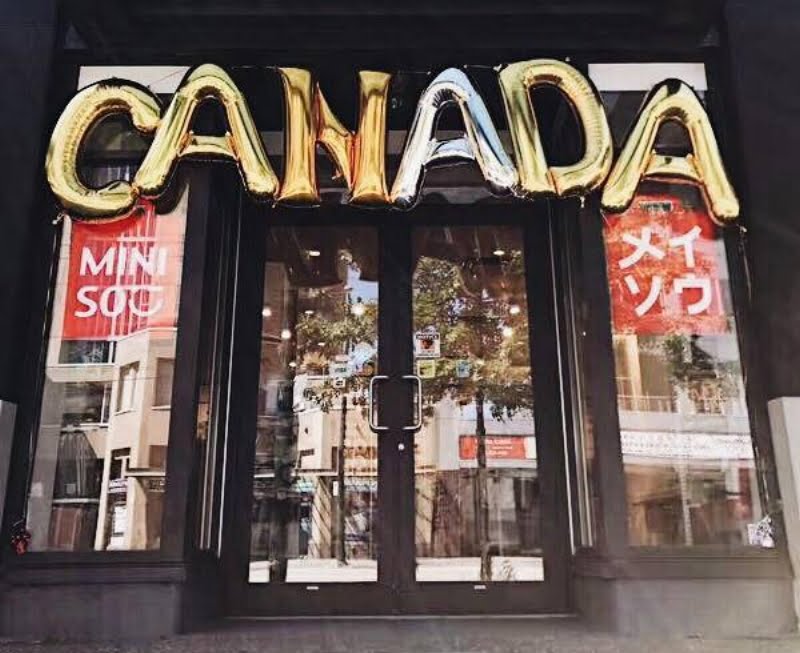
The retailer’s store expansion has certainly picked up the pace over last year. From the time that MINISO opened its first Vancouver store in April of 2017 to December of that year, the retailer had opened 12 stores in the Greater Vancouver Area. By the end of this year, MINISO anticipates operating about 30 stores in the region — up from an announced 15 locations that were anticipated near the beginning of the expansion. 
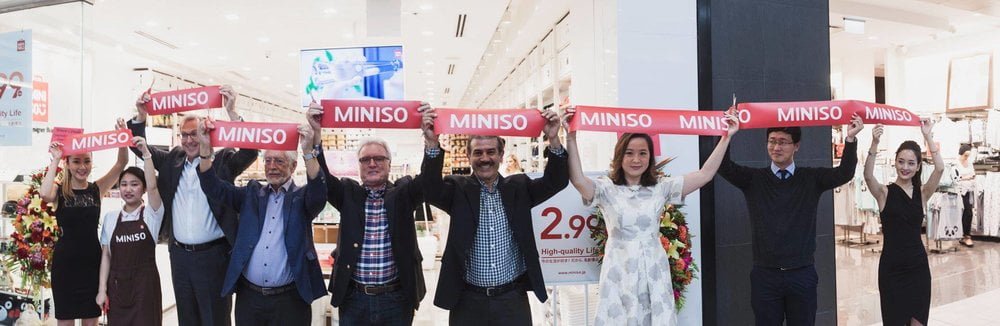
MINISO now operates stores in BC, Alberta, Ontario and Quebec. Its first Toronto store opened earlier in May at CF Toronto Eaton Centre, and a downtown Montreal store opened several weeks before. The Alberta market is clearly a target for the brand and it already has four stores, with three of them in Edmonton, including one at the busy West Edmonton Mall

The company says that in Canada, its most popular items are household products and beauty products. MINISO stores carry a range of items that also include electronics, clothing, toys, underwear and other accessories, with prices between $2.99 and $34.99. The store is therefore affordable to almost everyone, giving it a broad appeal. MINISO’s products are also considered to be of exceptional quality for their price points, and the retailer could take market share from other variety retailers and even possibly ‘dollar retailers’ operating in this country. 

MINISO was co-founded in 2013 by Japanese designer Miyake Junya and Chinese entrepreneur Ye Guo Fu, and is headquartered in Guangzhou, China. MINSO’s goal is to open 6,000 stores globally by 2020, averaging 80 to 100 store openings per month. MINISO’s signage and branding appears similar to that of fast-fashion Japanese chain UNIQLO — which isn’t a surprise, considering that MINISO openly names itself as a competitor to UNIQLO as well as Japanese variety retailer MUJI. All three are now present in Canada, with UNIQLO and MUJI set to debut their first Vancouver/Lower Mainland locations this fall. 

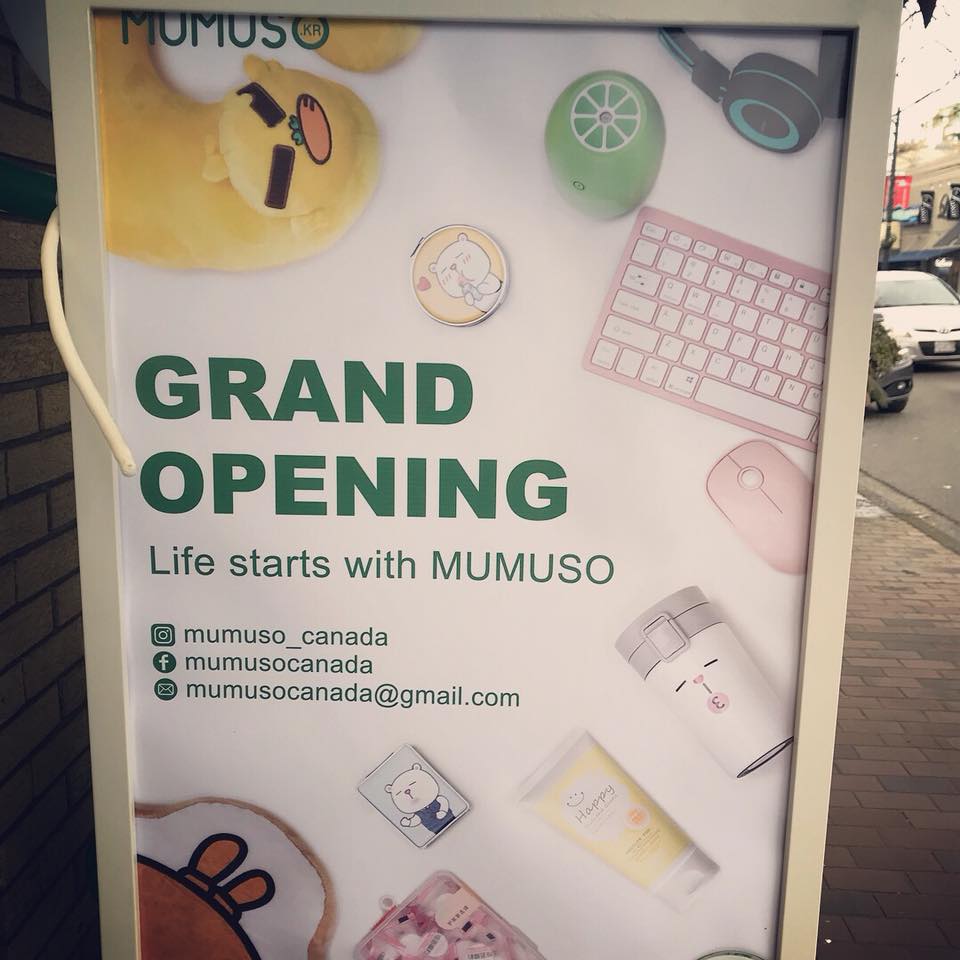
Some have accused MINISO of being a ‘copycat’ of the other Japanese brands. MINISO itself now has a ‘copycat’ competitor in Canada — Mumuso opened its first Canadian store in Vancouver several months ago just a few doors down from MINISO’s location on W. 41st Avenue in the city’s affluent Kerrisdale neighbourhood. Mumuso, which claims to be based out of Korea, but is actually Chinese, features products, branding and pricing that is remarkably similar to MINISO, save for branding that is green instead of red. Some have noted that packaging on some of Mumuso’s items is similar to that of L’Occitane en Provence, which offers skin care and other items at a considerably higher price point. 

Mumuso’s Canadian expansion hasn’t been quite as rapid as MINISO — Mumuso, which opened its first store over the winter, appears to currently be operating stores in Vancouver’s Kerrisdale as well as at the Aberdeen Centre in Richmond, just south of Vancouver. 
We’ll continue to periodically report on MINISO’s Canadian expansion, as it represents one of the most ambitious retailers to have entered Canada in recent memory. 

Editor’s Note: Miniso is working with Jim Murdoch and Roula Bchara at real estate advisory services firm Oakmont Real Estate Services for its Canadian expansion. 

Shrinkflation: When less is not more at the grocery store

YOU’RE NOT IMAGINING THINGS. THE QUANTITIES OF PACKAGED FOODS REALLY ARE SHRINKING AS FOOD MANUFACTURERS TRY TO AVOID HIKING PRICES. SHRINKFLATION HOWEVER IS BEGINNING TO IRRITATE CONSUMERS WHO FEEL THEY’RE BEING CHEATED. PHOTO: THE CONVERSATION

Most consumers are concerned about the cost of food. We constantly look for bargains and the food industry knows it.

According to a recent survey by Dalhousie University, more than 60 per cent of all Canadian consumers consider price as one of the top three decision criteria when grocery shopping. Price is key, no matter what. Grocers play around with prices to keep all of us on our toes.

Pricing in the food processing sector is intricate. Ingredients, energy costs and wages are among the factors that weigh heavily on food manufacturers as they try to cultivate relationships with grocers and retain market shares.

For decades, to keep price points low, the shrinking package strategy has been employed by the food industry — known as shrinkflation, it’s the process of items shrinking in size or quantity while their prices remain the same or increase.

Everything is getting smaller, whether it’s cartons of ice cream, bags of chips, cookies, chocolate bars or boxes of pasta. There have been several media stories on this issue in recent years.

CHOCOHOLICS TAKE NOTE: CHOCOLATE BARS ARE AMONG THE FOODS THAT ARE SHRINKING. PHOTO: BASEEMA CHOCOLATE

Thousands of products have shrunk

All over the world, food packages are shrinking. A recent U.K. study suggests there are almost 3,000 food products that can be found in a typical grocery store that have shrunk since 2012. This came at a period of time when annual food inflation hit a whopping six per cent. And so people were paying more for less and the food industry was accused of gouging consumers.

Similar numbers are coming out of the U.S. market. Many American food manufacturers have also admitted to shrinking packages to maintain prices at a competitive level. Many of these products enter the Canadian market. Based on what’s going on in the U.S. and Europe, we could estimate that anywhere between 15 to 20 per cent of all packaged food products have shrunk in the last five years, if not more.

Food companies have found a way to defend margins, largely without upsetting anyone.

Shrinkflation is almost the norm these days, but consumers are beginning to find it irritating. Yet food companies are not really misleading the public. Weight and volume information can easily be found on any labelled package. Habits make us believe we are purchasing the same thing as we zoom in on the one constant that motivates our behaviour when shopping: Price.

When costs rise in food manufacturing, a company has basically three options: Raise the price, make smaller packages or change the ingredients. Given our competitive food industry, hiking prices can be challenging. Since early 2018, prices in food stores have dropped because of higher competition.

Reformulating is dangerous

Yet changing ingredients can be risky. For 30 years, before the 2008 bump in commodity prices when food was considered an afterthought compared to today, companies were egregiously reformulating food products. This was at a time when taste and the quality of ingredients were not on the radar.

Some food manufacturers have paid the ultimate price for changing the taste of certain products just to save a few pennies. The so-called New Coke is a classic example of a misfire.  And today, with social media, companies are one poor decision away from seeing an entire product line vanish.

THE NEW COKE DEBACLE OF THE 1980S SHOWS THE RISKS OF A COMPANY REFORMULATING A BELOVED PRODUCT. PHOTO: CREATIVE COMMONS

The only viable option, really, is to downsize. With the arrival of many non-food investment firms and conglomerates that value food as much as bolts, tires or buildings, recalibrating ingredients and changing a package is almost second nature.

3G Capital, the Brazilian giant which gobbled up Heinz-Kraft, Burger King and Tim Horton’s in recent years under its holding company, Restaurant Brands International, is one good example. Most of these new players in the food space are not astute about the nuances of food products. They just look at the numbers knowing consumers are out there looking for the best price.

Whether or not we want to admit it, as food consumers, we value quantities for the lowest price. It’s challenging to get out of this way of thinking.

But there could be an opportunity for manufacturers looking at increased costs. Instead of downsizing products and hoping no one notices, emphasizing its superior taste and original package size could become a selling point.

Studies show that consumers who remember how good a product tastes are willing to pay more for less if given no other choice. Food manufacturers should try selling flavour over quantity.

Showing a more transparent approach to packaging, or emphasizing quality could let consumers appreciate that things do get complicated out there and some adjustments are required. But we all know that won’t happen.

Is shrinking packaging obscuring inflation?

It’s unclear how shrinkflation is captured by the StatsCan consumer price index. Certain quantities are taken into account by the index, but there’s no explanation on how data collection is adjusted as quantities change rapidly.

Shrinking package sizes could contribute to food inflation in a subtle way. In some cases, quantities have been reduced by 15 per cent in three years. By compounding real inflation, food prices may have gone up by more than six per cent in many cases, when the reported food inflation rate was anywhere between 1.5 to two per cent.

In the end, consumers can be outraged and condemn the practice of shrinking food products. But when you really think about it, food companies are really delivering what consumers are asking for — low prices.

*This article was originally published on The Conversation. Read the original article
Large ‘Time Out’ Food Market to Anchor Montreal Eaton Centre Overhaul [Renderings]

exc-5b0dcf07758d46971ba8bc3c

Time Out has announced that it will open a Time Out Market food concept in downtown Montreal in late 2019. The 36,000 square foot culinary experience will anchor the $200-million overhaul of the Montreal Eaton Centre which landlord Ivanhoé Cambridge announced in January of this year. 

Time Out Market is part of the larger Time Out Group, which is a global media and entertainment business based in London UK. Time Out currently operates the wildly successful Time Out Market Lisbon in Portugal, which opened in 2014 — with 3.6 million visitors in 2017, it ranked as Portugal’s most popular attraction. 

The new Time Out Market Montreal will include a mix of 16 food offerings, two bars, a demonstration kitchen, a cooking academy, a retail shop and a ‘cultural stage’. 

“Montréal has developed into a culinary hotspot and is now one of the world’s foodie capitals. This is a city with incredibly creative chefs and an audience with a love for great food. As if this wasn’t enough, Montréal also has a buzzing cultural scene with over 100 festivals each year. All of this makes this city a perfect spot for Time Out Market and we look forward to opening our first site in Canada,” said Didier Souillat, CEO of Time Out Market. “Time Out Market continues to be a great success story and is now recognized as one of the most visionary formats: our first site in Lisbon is Portugal’s most visited attraction, we have an exciting pipeline of new sites and for our upcoming opening in Miami we have all kitchens signed up with the city’s ‘who’s who’ of the most celebrated chefs. We are proud to have been chosen by our partner Ivanhoé Cambridge to now also bring our unique Time Out Market experience to the great city of Montréal,” he said.
 
“We are delighted to announce our first management agreement for Time Out Market. It allows us to accelerate our global expansion, grow our brand and drive additional revenue. The fact that Ivanhoé Cambridge chose us as strategic partner and will make a significant investment to bring Time Out Market to Montréal is proof of the strength of the format and the brand,” said Julio Bruno, CEO of Time Out Group plc. 

Time Out Montreal will anchor the $200 million redevelopment at Centre Eaton de Montreal, which will involve joining the existing Montreal Eaton Centre property with the adjacent Complexe Les Ailes. More than 30-million people will pass through the combined centre in what will be Canada’s second-busiest centre in terms of annual footfall (surpassed only by CF Toronto Eaton Centre). Landlord Ivanhoé Cambridge is investing more than $1-billion in revitalizing the downtown area near the newly combined complex. 

The existing Montreal Eaton Centre retail centre, which opened in 1990, currently has 155 retail units and a total GLA exceeding 276,000 square feet. The 198,000 square foot Complexe Les Ailes, opened in 2002, currently houses 66 retail units — though these numbers will no doubt change with the announced merger/renovation. GH+A Design is working on the project — the firm has worked with some of the country’s top mall landlords. 

“We are absolutely thrilled to be collaborating with Time Out Market and to bring this incredibly successful format to Montréal. Our discerning clientele is always looking for fresh, new and innovative experiences that define the urban character of our properties nestled at the heart of downtown Montréal. Time Out Market Montréal will be the masterpiece of the Centre Eaton de Montréal’s transformation and will help redefine the urban leisure experience downtown,” said Claude Sirois, President, Retail, at Ivanhoé Cambridge. 

Time Out Market is a business division of Time Out Group plc — the global media and entertainment business has a presence in 108 cities in 39 countries and an average global monthly audience reach of 217 million. Timeout.com’s worldwide reach includes a massive online presence, mobile applications, social media channels, city magazines, guides, live events and more.

The Lisbon Market location features 26 restaurants, six kiosks, eight bars and cafés, five shops as well as a cooking academy. In March 2018, it received an international award recognizing it as one of the most visionary concepts in the European food service sector.

Time Out Market has announced that towards the end of 2018, it will open food centres in New York City and Miami, followed by Boston, Chicago and Montréal in 2019. 

Tanya Heath Paris Relocates Canadian Flagship as it Prepares for National Expansion

Image: Tanya Heath Paris

Unique footwear brand Tanya Heath Paris has relocated its Canadian flagship in Toronto, as it prepares to expand its operations in this country. The brand is the first in the world to provide interchangeable heels and its following is expanding quickly, necessitating a broader distribution network. 

Tanya Heath’s first Toronto store opened in October of 2014 on Old York Lane in the city’s upscale Yorkville area. The retailer recently relocated to a new 1,000 square foot retail space at 126 Cumberland Street.

The new store provides more sunlight as well as exposure on busy Cumberland Street, which also faces the Village of Yorkville Park which is often animated with events, according to co-owner Leslie-Ann Dominy.

Known for its high-quality shoes with interchangeable heels, Tanya Heath Paris was founded in 2009 by Canadian Tanya Heath, who now lives in France. Ms. Heath was born and raised in Ottawa and moved with her husband to France in 1996 where she studied business, specializing in strategy and new technologies. She struggled to find shoes that were versatile enough for her busy lifestyle — something fashionable enough for work, yet comfortable enough to take her children to school.

In 2009, with the help of 14 engineers and technicians plus several designers and master boot makers, Ms. Heath created a unique company that boasts the world’s first adjustable height shoe with removable heels. 

The brand offers a range of shoe styles that can be paired with a wide selection of interchangeable heels, which can be attached and removed by the click of a button on the shoe itself. The benefits are twofold — the shoe’s appearance can be modified with new heels while also modifying the shoe’s height, depending on what the wearer desires.

Shoe styles are meant to be timeless, with heels that are designed in a range of colours and textures. Heels can be slid into place and removed with the click of a button inside the shoe.

Tanya Heath Paris

There are seven types of heels that come in dozens of colours and textures, including:

  • Christophe: a 4.5 cm (1.7  inch) trotter that is perfect for walking, 
  • Stéphane: a 6 cm (2.3  inch) kitten heel,
  • Daniel: a 6.5 cm (2.5  inch) heel that is  super sturdy, visually graphic and  is comfort personified, 
  • Damien: a 6.5 cm (2.5  inch) stiletto heel  for a feminine look in a  comfortable height,
  • Patrice: a 6.5 cm (2.5  inch) heel that is gracious, elegant and sturdy and  very good for all-day wear. 
  • Denis: a  strong and stable 8 cm (3.1  inches) heel that will ‘let you soar’, 
  • François is a 8.5 cm (3.3  inches) stiletto.

In the Toronto boutique, Ms. Dominy also stocks a range of handmade leather bags from Toronto-based designer ‘uppdoo’, which has a standalone retail store on Bloor Street West just east of Ossington Avenue. There are also cashmere fashion items from Pam Willcox of Snapdragon Designs. The store’s walls feature chic designs from artist John Coburn. A unique design feature in the store is a ‘lego wall’ by Everblock at the back that speaks to the functionality of the product contained within.

Manufacturing for Tanya Heath Paris’s shoes is being moved to Portugal and as a result, prices on the shoes will be coming down substantially, according to Ms. Dominy. All heels are made in France in a factory owned and operated by Tanya Heath Paris.  Now that the product is accessible to a wider range of clients, Tanya Heath is looking at expanding its operations in Canada that could include standalone boutiques as well as shop-in-stores and other similar configurations.

Montreal, Vancouver and Calgary are all strong markets that could see stores — the Tanya Heath Paris Canada website serves customers nationwide. Besides standalone stores, the company is also considering partnering with retailers to house a selection of shoes and heels in its stores, which could range from a display case to a full shop-in-store.

Tanya Heath Paris

Tanya Heath Paris also operates stores in Paris as well as Porto, Portugal,  Beirut, Lebanon, and is also available at upscale multi-brand retailers in Europe with new boutiques in Hong Kong and Tokyo that will be opening soon.

Links of London Continues Canadian Expansion with Multiple Standalone Store Openings

exc-5b04be2daa4a99ccc1ff6ae4

British luxury jewellery brand Links of London is expanding its network of standalone stores in Canada. The company has just opened its first freestanding store in Vancouver, and it has also secured a space at Mississauga’s Square One, with plans to open this summer. More stores will follow as Links of London continues to seek out retail space in Canadian markets, where the retailer is seeing considerable success.

Links of London opened its first two standalone Canadian stores in the summer of 2016 in Toronto — an 860 square foot CF Toronto Eaton Centre boutique launched in June, followed by a 1,200 square foot location at CF Sherway Gardens about a month later. A 615 square foot Yorkdale boutique, Toronto’s third, opened in the summer of 2017. The Vancouver store marks the brand’s fourth freestanding Canadian boutique, spanning about 800 square feet at CF Pacific Centre, across from Harry Rosen and between Ermenegildo Zegna and a significant soon-to-be-announced retailer.  

“We are thrilled to expand our brick-and-mortar presence in Canada and bring our freestanding retail concept to the West Coast,” said Leela Petrakis, President of FF Group North America, the parent company of Links of London. “With British heritage playing a greater role in Canadian society than ever before, we’re excited to introduce Vancouver’s CF Pacific Centre customers to our whimsical British jewellery, and the storytelling elements that are at the heart of the Links of London brand DNA. 

The Vancouver store features an innovative made-to-order bespoke service — a popular feature in the brand’s Canadian stores. According to Ms. Petrakis, customization and personalization is seeing considerable success amongst Links of London’s Canadian customers. The brand’s ‘Sweetie Stylists’ help customers design a personalized ‘Sweetie bracelet’ with their selections of diamond and gemstone rondelles, precious metals and keepsake charms. 

The Vancouver store also offers in-house engraving, which was introduced to Canada’s Links of London stores when its Yorkdale Shopping Centre store opened in the summer of 2017 — all current and future locations will feature engraving, given its remarkable success.

A section at the back of the store includes seating, as well as a display of men’s jewellery items. The retail concept, which is inspired by the design of a ‘London townhouse’, is already seeing very strong sales, noted Ms. Petrakis.

The Vancouver store technically opened on November 15 of 2017 as a ‘Holiday Shoppe’ pop-up, which temporally closed after the Holidays for a full renovation to reflect the brand’s updated store design and showcase its extensive collections.

Towards the middle of the summer, Links of London’s fifth Canadian store will open at Square One in Mississauga. The 800 square foot boutique, which will be triangular in shape, will boast a 30-foot wide glass facade in the mall’s ‘luxury wing’ that was unveiled in the summer of 2016. At the centre of the store will be a bracelet bar, as is the case with its other Canadian locations. The Square One Links of London store will be located in the luxury wing, between retailers Stuart Weitzman and Urban Decay, and across from Jamie’s Italian and Harry Rosen, in a wing that also houses Salvatore Ferragamo, Tory Burch, Rolex, and Holt Renfrew.

Ms. Petrakis said that Links of London is looking to open more standalone Canadian locations, and is considering cities such as Calgary, Edmonton, Montreal and possibly Ottawa — though locations have yet to be secured. Another Toronto store is a possibility as well — Ms. Petrakis noted that despite the fact that the city already has three standalone stores, Toronto is also a very strong online market for the brand. Choosing a location, be it a major shopping centre or urban street-front, requires careful consideration, she noted.

Links of London currently operates five freestanding U.S. locations, with four stores in New York City and a store at Forum Shops in Las Vegas. The brand also has a successful partnership with Bloomingdale’s, operating concession shops at select locations across the country. Links of London was founded in 1990 and has grown to become a global luxury brand.. The name ‘Links’ originated from the brand’s first product — the iconic salmon cufflinks, which became the springboard for its unique jewellery, timepieces and gifts for women, men and children.

Jimmy Choo Opens 1st Standalone Vancouver Store [Photos]

Jimmy Choo (Image: CBRE)

UK-based luxury footwear and accessory brand Jimmy Choo has opened its first freestanding location in Vancouver in the city’s burgeoning ‘Luxury Zone’. 

The store is located at 1035 Alberni Street, spanning 1,549 square feet on one level. It’s Jimmy Choo’s second standalone Canadian store, following the August 2014 opening of a 2,250 square foot location at Toronto’s Yorkdale Shopping Centre

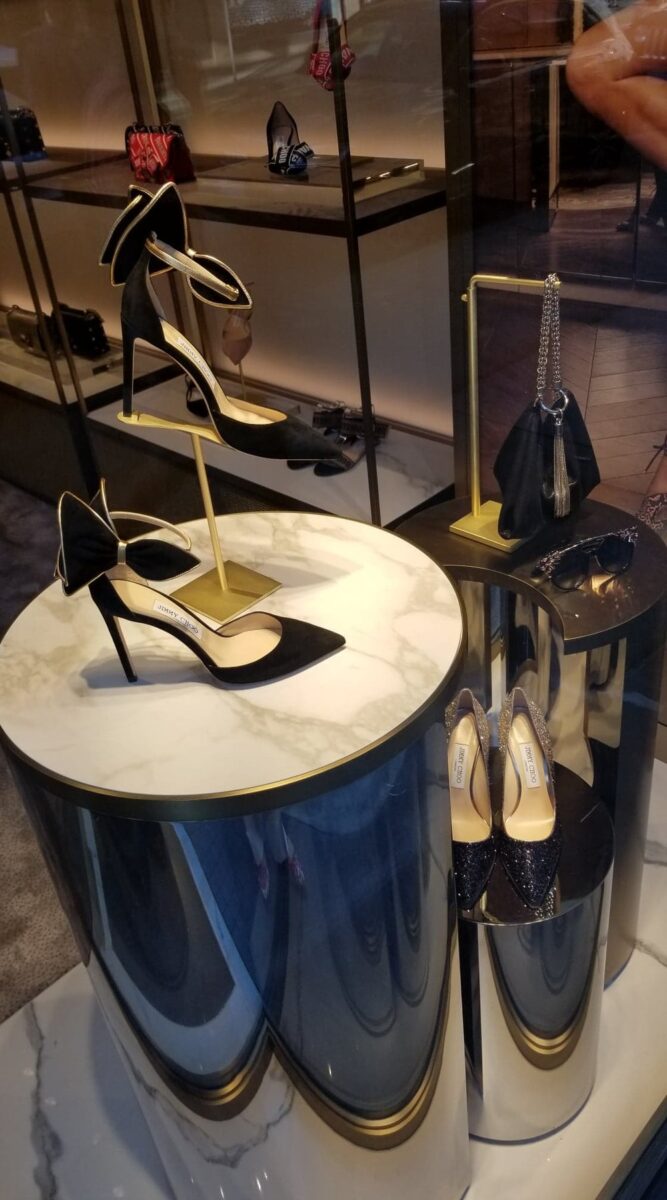
The interior of the new Vancouver store reflects Jimmy Choo’s latest design aesthetic, and the store carries some pricey lines that aren’t found in other Jimmy Choo stores. Some of the prices are into the thousands and according to staff in the new store, its target market is a high-spending Asian shopper that tends to frequent the cluster of luxury boutiques in the area. The store houses footwear and accessory collections for women, and not men. 

Photo: Helen Siwak

David Wedemire and Stan Vyriotes of DWSV Remax Ultimate Realty Inc. acted on behalf of Jimmy Choo in the Vancouver deal, while Mario Negris and Martin Moriarty of CBRE Vancouver negotiated on behalf of the landlord. 

Jimmy Choo replaced Montreal-based leather goods and fashion retailer m0851, which has operated its Alberni Street location since the spring of 2008. M0851 had said that it had secured a replacement location at CF Pacific Centre, though the company recently ran into financial troubles and is in the process of restructuring its operations. 

Luxury jeweller Tiffany & Co. is located a few steps east of the new Jimmy Choo — last year, Tiffany almost tripled the size of its highly productive store with a Burrard Street frontage. Adjacent to the west of Jimmy Choo is a space that formerly housed restaurant Italian Kitchen (which has relocated) and Montecristo Jewellers is said to be opening a store in that space. 

The 1000 Block of Alberni Street is home to several pricey jewellery brands. Recent additions include Van Cleef & Arpels, IWC Schaffhausen, Hublot, Panerai and Rolex, joining locations for leading luxury brands such as Prada, Versace, Saint Laurent, Louis Vuitton and Burberry. On nearby Burrard Street, Hermes will open a large replacement flagship store at the corner of West Georgia Street and the current Hermes space will eventually be tenanted by Cartier

Towards the end of this year, Jimmy Choo will be opening a second Toronto store that will span about 2,400 square feet over two levels at 102 Yorkville Avenue. The new Toronto store will be located between Chanel, which opened at 100 Yorkville Avenue in November of last year, and a Brunello Cucinelli flagship that will open in the same purpose-built complex as Jimmy Choo spanning 102-108 Yorkville Avenue. 

Photo: Helen Siwak

Jimmy Choo, which was co-founded by designers Tamara Mellon and Jimmy Choo in 1996, has stores globally, including 33 in the United States. In Canada, the brand can also be found in select retailers such as Holt RenfrewSaks Fifth Avenue and Nordstrom

Birks Launches Pilot Program to Target Chinese Visitors

Image: Birks

Birks, Canada’s leading luxury fine jewelry brand since 1879, has launched the pilot program u·plan in Canada, allowing Chinese travelers to download QR Codes containing Birks promotions on their mobile devices.

When Birks launched the program this spring, it was the first merchant to join u·plan in both North and South America.

“U·plan is the world’s first open cross-border marketing platform that provides services in the fields of finance, travel and retail. Inspired by new technologies such as Geo-fencing, u·plan focuses on accurate marketing and instant discounts for cross-border consumption, permitting cardholders user-friendly and upgrading capabilities,” said Aynsley Knight Mariani, director of public relations for Birks Group.

BIRKS YORKDALE SHOPPING CENTRE LOCATION
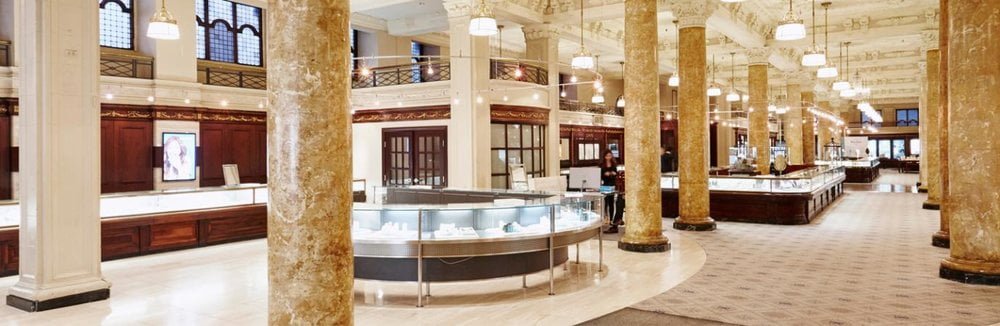
BIRKS RIDEAU CENTRE LOCATION (OTTAWA). PHOTO: BIRKS

“As a growing brand, we believe that u·plan will benefit our customers – with a focus on our Chinese clientele – as we look to align ourselves with these technical capabilities while achieving our expanding objectives.”

She said the Chinese clientele is a large market for Birks and continues to grow and the program is currently available in all stores across Canada.

“Birks looks forward to aligning issuers, acquirers, travel agencies and merchants into the same industry chain with the ultimate focus of making the shopping experience more user-friendly in Canada,” said Knight Mariani.

Jean-Christophe Bédos, President and Chief Executive Officer of Birks Group, said the launch of the program is of great significance to the brand.

BIRKS DOWNTOWN MONTREAL LOCATION. PHOTO: BIRKS
SASKATOON LOCATION. PHOTO: BIRKS
BIRKS QUARTIER DIX30 LOCATION (BROSSARD, QUEBEC). PHOTO: BIRKS

Birks said cardholders will have the ability to utilize u·plan by accessing the exclusive QR code gift certificate coupon in the mobile apps of UnionPay International and Chinese issuing banks such as Bank of China and China Merchant Bank.

“Alternatively, cardholders can receive the gift certificate coupons that could be used at the destination promoted by the apps of UnionPay International’s partner travel agencies at the time of booking airlines or hotels. A reminder to cardholders of these discount coupons will also appear when they are in the vicinity of any Birks location,” said the company.

BIRKS YORKDALE SHOPPING CENTRE LOCATION (TORONTO). PHOTO: BIRKS
BIRKS CHINOOK SHOPPING CENTRE LOCATION (CALGARY). PHOTO: BIRKS

Birks said it looks forward to aligning issuers, acquirers, travel agencies and merchants into the same industry chain with the ultimate focus of making the shopping experience more user-friendly in Canada.

Birks operates 28 stores under the Birks brand in most major metropolitan centres in Canada. The company’s history dates back four centuries to Sheffield, England.

In 1879, Henry Birks opened a jewellery boutique in the heart of Montreal. Birks now has an international reach and its collections are available through select Mappin & Webb and Goldsmiths locations in the UK, in Mayors stores in the US and at select jewellery retailers across North America.

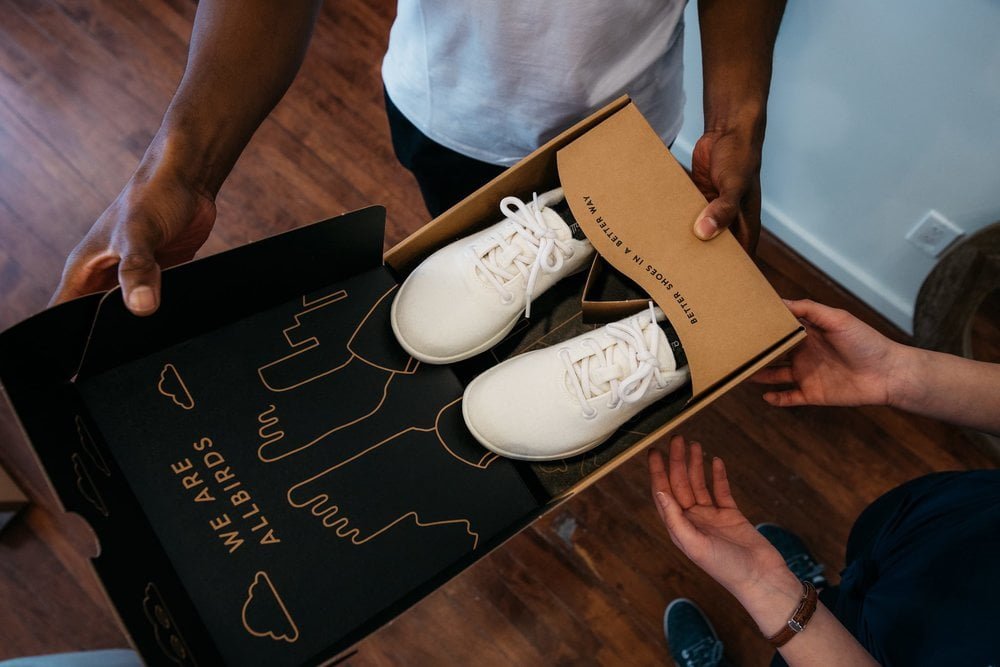
Allbirds opens 1st Standalone Brick-and-Mortar Store in Canada [Photos]

Former Allbirds storefront on Queen St. W. in Toronto. Image: Allbirds

San Francisco-based footwear brand Allbirds has opened in a retail space on one of the world’s trendiest areas — Toronto’s ‘West Queen West’, as the brand expands its Canadian presence after opening a Canadian online store in March of this year as well as two pop-ups at Nordstrom. The Queen Street pop-up is being used as a test to determine if the company’s next move will be permanent stores in Canada. 

Allbirds was founded by Tim Brown and Joey Zwillinger in 2014 — Brown is a retired professional soccer player from New Zealand with a degree from the London School of Economics, and Zwillinger is a biotech engineer and renewable materials expert. A Kickstarter crowdfunding campaign in 2014 kicked-off the brand with the campaign reaching over $100,000 in sales in just four days. Mr. Zwillinger’s background helped design the construction of the rapidly growing brand while introducing additional sustainable materials such as a vegetable oil-based polyurethane insole.

In 2016, the business partners renamed the footwear brand as ‘Allbirds’ and introduced it to the world. Mr. Zwillinger explained that the Allibirds name is a historical reference to New Zealand having been so remote at one time that its only inhabitants were ‘all birds’. The company has since seen millions of dollars in venture capital for its expansion, with investors showing confidence in a brand that Time Magazine has named “the world’s most comfortable shoe”

PHOTO: CRAIG PATTERSON

“We always try to find new uses for materials that naturally exist right in front of us, rather than relying on cheap synthetics like traditional footwear brands. With a focus on developing on what we call the ‘right amount of nothing’, we are taking the core function of shoes and distilling it to its minimum which results in shoes that look great and feel amazing throughout the day,” said Mr. Zwillinger. 

Allbirds offers three styles of shoes and two materials for men and women, including the Runner, Lounger and the newly launched Skipper for $135, and ‘Smallbirds’ for children, priced at $80 per pair. Styles are minimalist and unisex. 

The Wool collection including the Wool Runner and Wool Lounger, which uses ZQ-certified merino wool that is crafted in one of the world’s finest textile mills outside of Milan, Italy. The engineered one-piece outsole offers supreme cushioning and the brushed wool-lined insole stays soft to the touch. Mr. Zwillinger said that Allbirds, while being a shoe company, is also a technological innovator. Fine merino wool typically isn’t strong enough for footwear but Allbirds’ innovation has developed a product that is super-strong and breathable, not to mention extremely soft and comfortable. 

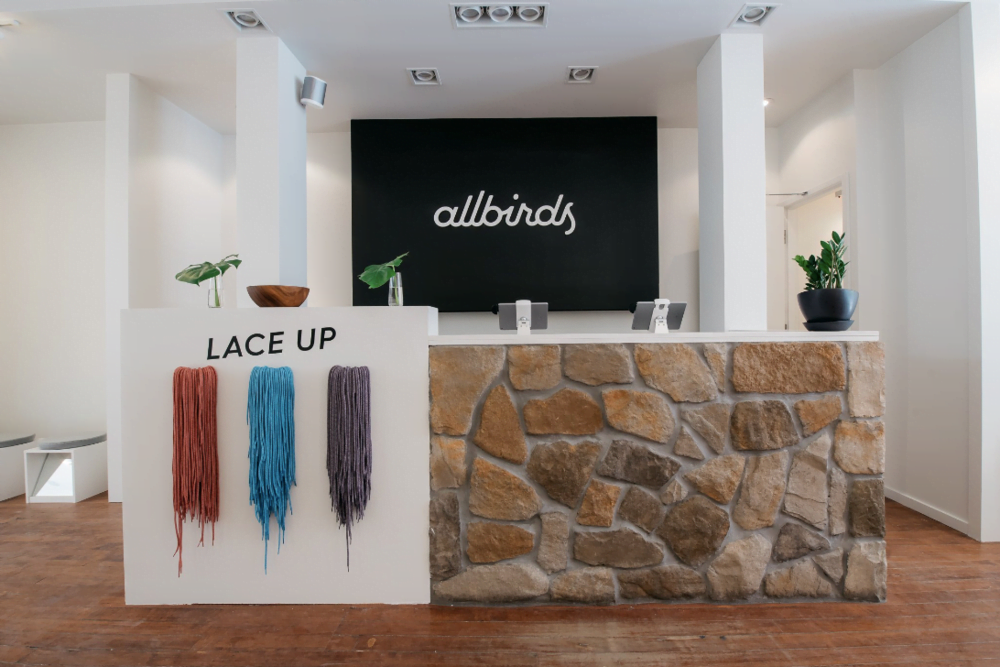
CASH DESK WITH SHOE LACES DISPLAYED. PHOTO: ALLBIRDS
WALKING ‘DEMONSTRATION AREA’ — INCLUDED IS CONCRETE, A WOODEN BOARDWALK, AND STONES. PHOTO: ALLBIRDS

Allbirds recently introduced a new suite of products named ‘Tree’ made from its most sustainable material to-date. Crafted from a textile that Allbirds engineered using Eucalyptus pulp, the Tree collection creates a cooling effect by wicking away moisture and, in concert with a silky-smooth mesh construction, delivers remarkable breathability and supreme comfort. The Tree collection features ethically sourced Eucalyptus fibres, which use only 5% of the water and one-third of the land compared to traditional footwear materials.

The Toronto pop-up, located at 700 Queen Street West, features a crisp white interior and plenty of seats to try on Allbirds’ shoes — Mr. Zwillinger noted that other pop-ups have been so busy that an issue is sometimes lack of space to try shoes on. Display areas showcase a variety of styles for adults as well as smaller versions for children, and a back area houses an innovative ‘demonstration area’ where visitors may try out shoes on diverse terrain that includes concrete sidewalks, a wooden boardwalk, and stones laid along the pathway. 

The Toronto pop-up will be open until August and it’s located in an area that Vogue Magazine declared in 2014 to be ‘the second-coolest’ in the world. The ‘West Queen West’ area, as it’s called, features a mix of local, national and international brands, and is known to be a launch point for trendy retailers that want to open their first Canadian store in a place that isn’t Yorkdale Shopping Centre. The lease deal for Allbirds at 700 Queen Street West was handled by CBRE Toronto’s Arlin Markowitz and Jackson Turner. The pop-up was conceptualized and executed by Community Agency alongside the Allbirds team. 

WALL SHOWCASING SHOES MADE FROM ‘WOOL’ AND ‘TREE’, WITH AMPLE SEATING. PHOTO: ALLBIRDS

Allbirds launched its Canadian expansion in the spring of 2017 with an e-commerce site dedicated to the Canadian market, as well as pop-ups at Nordstrom’s Canadian flagships at CF Pacific Centre in Vancouver, and at CF Toronto Eaton Centre in Toronto

The Queen Street pop-up will further allow Allbirds to test the waters in Canada, according to Mr. Zwillinger — Allbirds doesn’t wholesale in multi-brand retailers, instead opting for a direct-to-consumer retail model. Permanent stores could eventually open in markets such as Toronto and Vancouver, he noted. Similar pop-ups are currently activated in New York City and San Francisco, and those and other US markets could eventually see permanent Allbirds retail spaces. 

*Article includes files from Helen Siwak, who wrote about Allbirds’ initial entry into Canada for Retail Insider earlier this spring. 

Sport Chek Opens 1st Kids-Only Concept Store [Photos/Video]

Image: Sport Chek Kids

FGL Sports-owned Sport Chek has opened its first location dedicated specifically to kids, and the concept could be replicated if it proves to be successful. 

“Realizing the exponential growth in our kids’ categories across Sport Chek, we believe Sport Chek Kids is a great opportunity to showcase all our kids product in one location while bringing a completely tailored shopping experience for kids to our Sport Chek fleet,” said Kara Anastasiadis, Associate Vice President, Purchasing of FGL Sports. “Above all, we are excited to champion the healthy, active lifestyles of the younger generation in a store built just for them,” she added. 

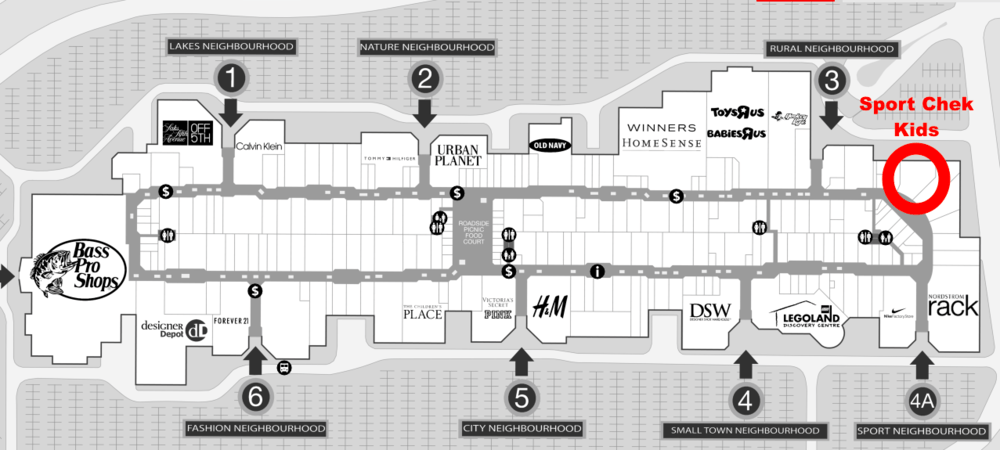
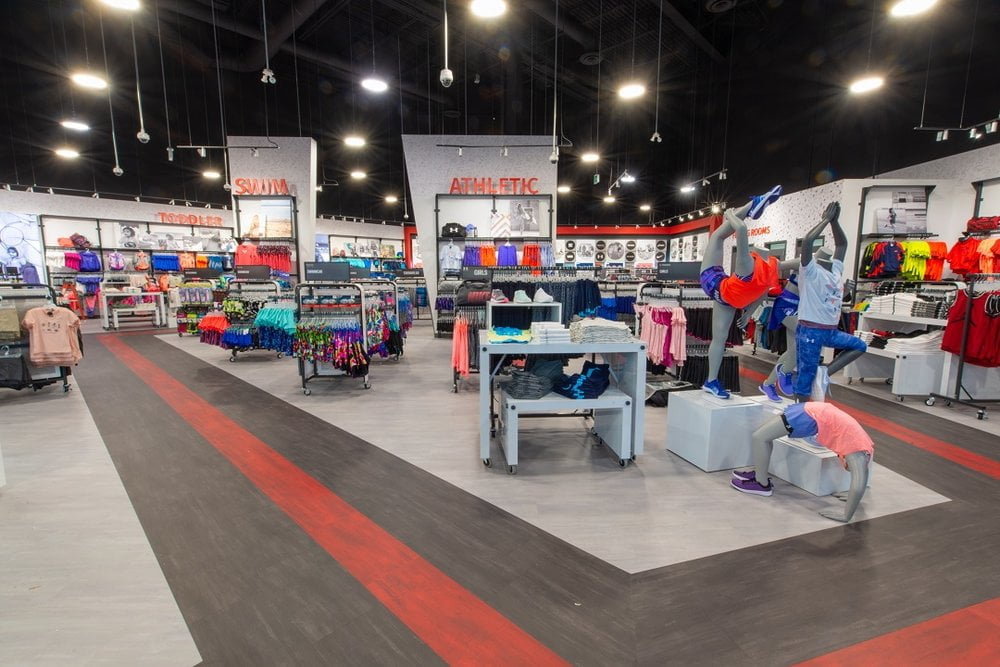
The store, located at Vaughan Mills near Toronto, spans about 6,930 square feet on one level. It caters to children from infant up to the age of 14, according to Ms. Anastasiadis, with a goal of creating a one-stop shipping experience for families that are looking to have kids active with a variety of activities. 

Sport Check location at Vaughan Mills
Image: Sport Chek Kids

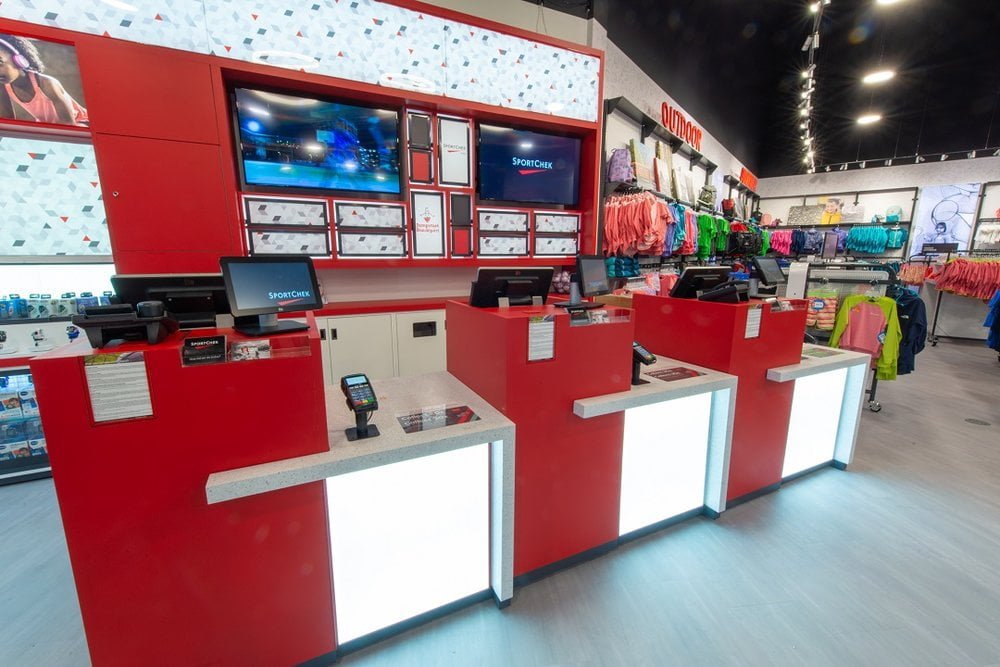
Special kid-focused features include lowered footwear benches, cash desks, floor fixtures and inclusive, kid-sized mannequins.

The store, which has 22 staff dedicated to providing knowledge and personalized service to kids and their parents, is laid out in a ‘shop-by-activity’ configuration that offers targeted shopping areas based on activity of choice — be it hockey, running, swimming or other sports. Included is an expansive assortment of kids apparel, footwear and gear from top brands and new, unique brands, according to the company. The store boasts the largest footwear wall and preschool and toddler apparel selection available in the entire Sport Chek network. 

“With Sport Chek Kids, our goal is to get kids active. Reaching out to kids through this new concept store was really important in making sure each child to young teen feels confident and well equipped with the right gear,” said Trish McFarlane, AVP, Visual Customer Experience of FGL Sports. “When designing this store, we worked with kids and their parents to ask them what store features were most important to them in the shopping experience to ensure we built a store that made them feel proud and comfortable.

Sport Chek Kids Footwear Wall. Photo: Sportcheck

Sport Chek has seen tremendous growth in its kids business, according to Ms. Anastasiadis, and learnings from the new Vaughn store may be used to enhance offerings in other Sport Chek stores. It’s also possible that more kids-only Sport Chek locations could open in Canada, though the company’s focus will be first on perfecting the Vaughan concept. 

The location makes sense — Vaugahn is located in a suburban part of the Greater Toronto Area that includes many families with children, and the area is growing rapidly as new homes continue to be built in the area. Vaughn Mills is one of three ‘hybrid outlet centres’ that is operated by landlord Ivanhoé Cambridge — others are in suburban Calgary (CrossIron Mills) and Vancouver (Tsawwassen Mills). The massive Vaughan Mills, which spans almost 1.3 million square feet, sees more than 14-million annual visitors and is one of Canada’s most productive centres, according to Retail Council of Canada’s Shopping Centre Study

Image: Sport Chek Kids

This isn’t the first time that Sport Chek has opened a store dedicated to a specific target market — in the spring of 2017, the retailer launched its first women’s-only store at CF Chinook Centre in Calgary. The 16,675 square foot store was “designed for women by women” according to Ms. Anastasiadis, and merchandise there is organized by activity in a similar fashion to the new Kid’s store. The women’s store also has a different “feel” from traditional Sport Chek stores, and offers unique services such as one-on-one bra fittings, dedicated personal shopper, and a ‘Community Manager’ who can connect shoppers with local studios, classes, and information pertaining to brand launches and other initiatives.

Sport Chek operates a network of more than 200 stores across the country, in a variety of formats in a range of sizes — some stores are on the smaller side, while some are flagships spanning as much as 80,000 square feet. Parent company FGL Sports, which is headquartered in Calgary, is part of the larger Canadian Tire corporate ownership umbrella. 

Innovation at FGL Sports comes at a critical time for sports retailers in Canada, as competition heats up from homegrown as well as new international entrants. The world’s largest sports retailer, France-based Decathlon, recently opened its first store in Canada in suburban Montreal and has already announced a second superstore in Quebec City. MEC Continues to open new and replacement stores in Canada, while companies such as Sportium and SAIL are also expanding their networks of Canadian stores. 

Image: Sport Chek Kids

Theft Hits Bottom Line of Canadian Retailers

PHOTO: RELIANCE SECURITY

Retail security expert Stephen O’Keefe says many independent retailers don’t really have a grasp on how to control loss prevention through theft and that’s hitting their bottom line.

Stephen O’Keefe

O’Keefe, President of Bottom Line Matters, a web-based loss prevention and risk management solutions company, based out of Toronto, for small to mid-sized retailers, has had many years of experience with some of the giant retailers in Canada and globally.

“There’s a lot of independent retailers which is what I am going to be focusing on now who don’t really have a grasp on how to control it because they don’t understand the magnitude of the problem,” said O’Keefe. “That’s something that every once in a while is a bit of a shocker. It’s the magnitude. It’s a $5-billion problem in Canada.

“The larger retailers – about 95 companies – have identified it and they’ve been able to put in loss prevention departments and so they spend the money because they know there’s going to be a return on investment from having a permanent loss prevention department. But that’s because of the size. So they’re able to afford it.”

For mid-size retailers, it’s a challenge. They don’t want to incur more of an expense than they’re going to get back because that in itself becomes a loss.

“Independent retailers are always looking for the silver bullet and there’s no one solution to the problem,” said O’Keefe. “But there is a common denominator with both of the categories. And the two categories specifically in terms of the crime part is internal theft and external theft. There’s another portion that’s administrative errors.”

PHOTO: ASIAN TRADER

Because there’s no silver bullet, O’Keefe tells independent retailers when it comes to external theft that they have to look at what’s causing the loss or why customers are being able to get away with it. The one thing that can prevent a customer from stealing is “aggressive hospitality” or customer service.

“And the reason why is because customers who are not professional shoplifters will steal when they find that there’s the unique circumstances where they don’t feel that risk of exposure. Where they feel that they can get away with the crime. And that’s opportunity,” said O’Keefe.

“So you have to remove the opportunity by putting in this fear of exposure and that’s eye contact, customer service basically.”

How do you combat employee theft?

“It’s this notion of engagement for the emotional connection, attachment, commitment that you have to another. In this case, an organization,” said O’Keefe. “Employees who are engaged and companies that measure engagement levels find that productivity goes up, profits go up, accidents go down because people are more diligent, and shrink goes down because people aren’t stealing from you because they’re connected to you.

“So if you want to use the term silver bullet, what’s the silver bullet for employees? Engagement. Keep them engaged . . . If you spend money serving customers and engaging employees, you will without doing anything have a reduction in your shrink.”

O’Keefe was Walmart Canada’s VP Loss Prevention & Risk Management for 15 years. He currently advises on loss prevention affecting shrinkage and profitability for retailers and has more than 30 years experience in retail theft prevention with some of Canada’s largest retailers.

He is considered a leading authority on loss prevention, security, risk management, health and safety and process improvement.

Before establishing his own consultancy firm, O’Keefe held a variety of loss prevention management positions with Sears Canada, Zellers, The Hudson’s Bay Company and Walmart Canada.

In 2016, he was awarded the Retail Council of Canada’s Loss Prevention Lifetime Achievement Award.

“Thanks to his deep understanding of retail loss prevention, Stephen was instrumental in helping enact legislation that assisted retailers in sharing relevant information relating to criminal activities. While doing so, Stephen involved all stakeholders to ensure the outcomes would benefit the communities we serve,”  said Diane J. Brisebois, President & CEO of Retail Council of Canada, at the time of the award.

STEPHEN O’KEEFE.

“Throughout his career, Stephen has been a passionate advocate for retailers and a visionary leader, dedicated to fighting fraud in the retail industry. I can think of no one more deserving of this special honour,” said Rita Estwick, Director of security Strategy at Canada Post and recipient of the inaugural Loss Prevention Lifetime Achievement Award.

His LinkedIn profile says: “As an independent consultant, I leverage my experience and knowledge to help a number of companies achieve results. Clients range from non-retailers looking for guidance to serve their retail customer to retailers looking for quick solutions to unique and costly problems, right to the Industry Association.

“Unnecessary expenses related to crime, safety issues and non-compliance with regulations or operational standards can be devastating to any company. Learning from the experience of others has always been the secret to the success of many great companies. In this capacity, I bridge the knowledge gap and provide solutions that matter to my clients – just the bottom line.”