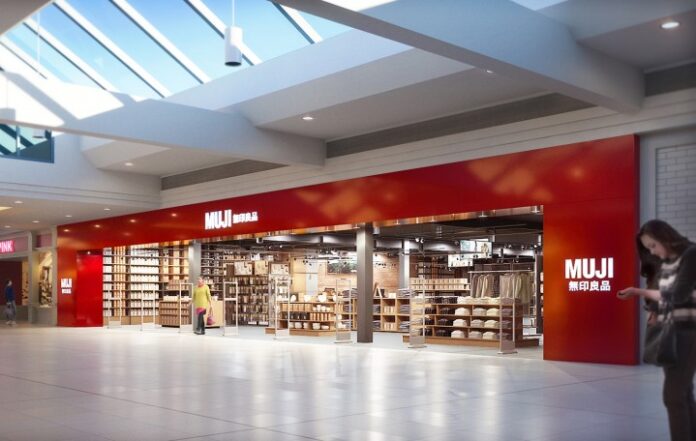
MUJI at CF Richmond Centre in Vancouver. IMAGE: MUJI
Minimalist Japanese retailer MUJI has opened its eighth Canadian store at CF Richmond Centre in suburban Vancouver. It’s the company’s third store in the Vancouver area.
The store carries more than 4,000 items including apparel, food and household goods — including live plants. The store also offers the ‘MUJI YOURSELF’ service, which allows customers to customize stationery items with a selection of stamps, as well as the ‘MUJI GIFT’ service, featuring a gift bag sealing machine.
Despite two previous openings in the Lower Mainland, the Richmond store’s opening was well attended with lineups waiting to get in. As with all of MUJI’s Canadian store openings, a canvas shopping bag featuring a branded regional map was given to some of the first shoppers (spending at least $20) at the new store over the weekend.
PHOTO: MUJI
PHOTO: RITCHIE PO
PHOTO: RITCHIE PO
One of the reasons that the store was so busy may have been brand awareness — Richmond is a multicultural community of almost 220,000 people, with about 60% of its residents being immigrants — the highest of any city in Canada. CF Richmond Centre, which is considered to be the leading mall in the area, is also one of Canada’s most productive shopping centres, according to Retail Council of Canada’s latest Canadian Shopping Centre Study. Another popular Japanese retailer, Uniqlo, opened earlier this month at CF Richmond Centre to considerable crowds as well.
“There are many people who already know about MUJI in the Richmond area,” says Toru Akita, president of MUJI Canada. “We’ve received many requests to open a store in Richmond. After considering different locations, we are pleased that we finally found the right place. Although the store is smaller than the other locations in British Columbia, we will still offer a wide variety of products as well as the latest store experience. I sincerely hope that the people of Richmond will visit and love our store.”
PHOTO: RITCHIE PO
The CF Richmond Centre MUJI is located next to the mall’s Victoria’s Secret store, in a retail space spanning more than 6,355 square feet on one level. The lease deal was coordinated/negotiated by Martin Moriarty and Mario Negris of CBRE Vancouver, as well as Arlin Markowitz from CBRE Toronto, who is overseeing the retailer’s national expansion.
MUJI entered Vancouver in August of 2017 when it unveiled a 7,770 square foot space to massive crowds at Metropolis at Metrotown in Burnaby. An impressive 14,507 square foot store subsequently opened on Robson Street in Vancouver in December of 2017, making the store MUJI’s largest outside of Asia, at least for now.
PHOTO: RITCHIE PO
PHOTO: RITCHIE PO
MUJI’s first Canadian store opened in Toronto in November of 2014 at the Atrium, which is a multi-use complex featuring retail at its base as well as retail above. The original 4,400 square foot MUJI store at the Atrium has temporarily relocated while the permanent space is expanded both outwards and upwards. MUJI’s second Canadian location, spanning 5,225 square feet, opened at Mississauga’s Square One in November of 2015, followed by the October 2016 opening at Toronto’s Yorkdale Shopping Centre (6,375 square feet) and the Summer 2017 debut of a 6,000 square foot space at CF Markville, north of Toronto. Most recently, MUJI unveiled a a 6,800 square foot store at Scarborough Town Centre, which was its fifth in the Greater Toronto Area.
Last year, MUJI’s Canadian President, Toru Akita, said that he expected MUJI to operate between 15 and 20 stores in Canada by the year 2020, and a source working with the company says that the retailer has already mapped out many of the locations where it plans to expand, which may include malls as well as urban street front locations.
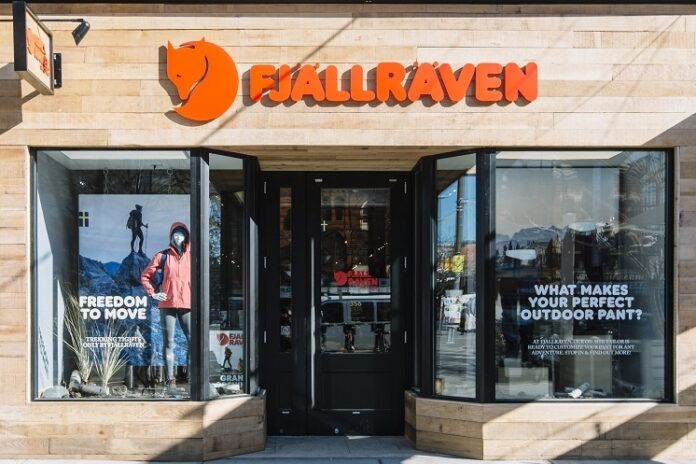
Swedish brand Fjällräven has opened a store on Toronto’s Queen Street West, marking the fifth Canadian location for the brand that specializes in outdoor gear and clothing.
Nathan Dopp, President of North American, Fjällräven
“We’re thrilled to expand our brand footprint in Canada with our first bricks and mortar store in a bustling retail district in Toronto,” says Nathan Dopp, President of North American, Fjällräven. “Our intent is for the Queen Street West location to serve as a hub for Torontonians who are outdoor enthusiasts, while helping local customers find the perfect Fjällräven fit for their next adventure.”
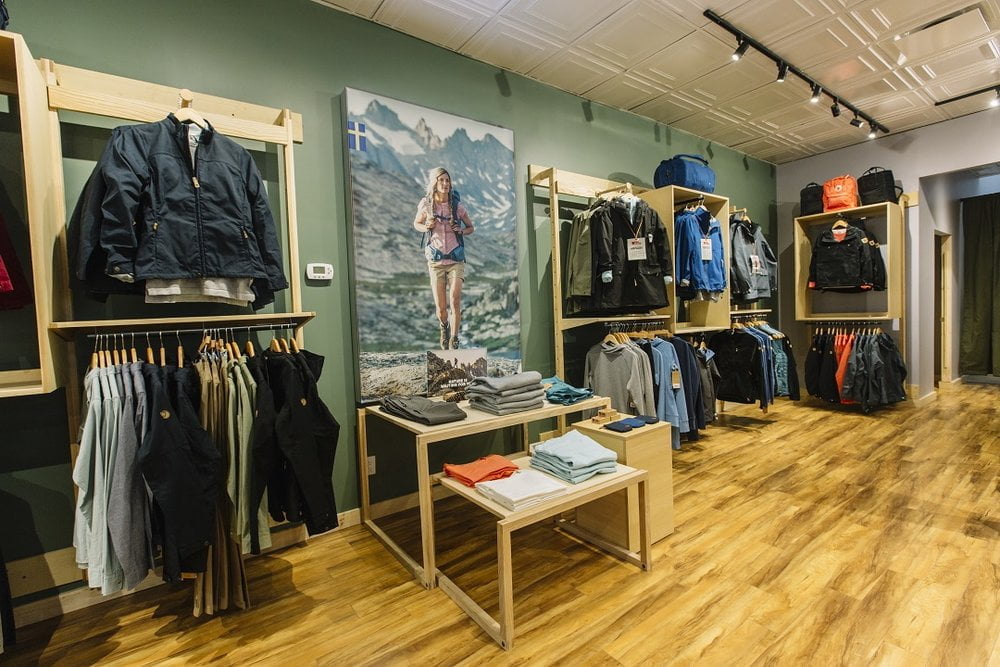
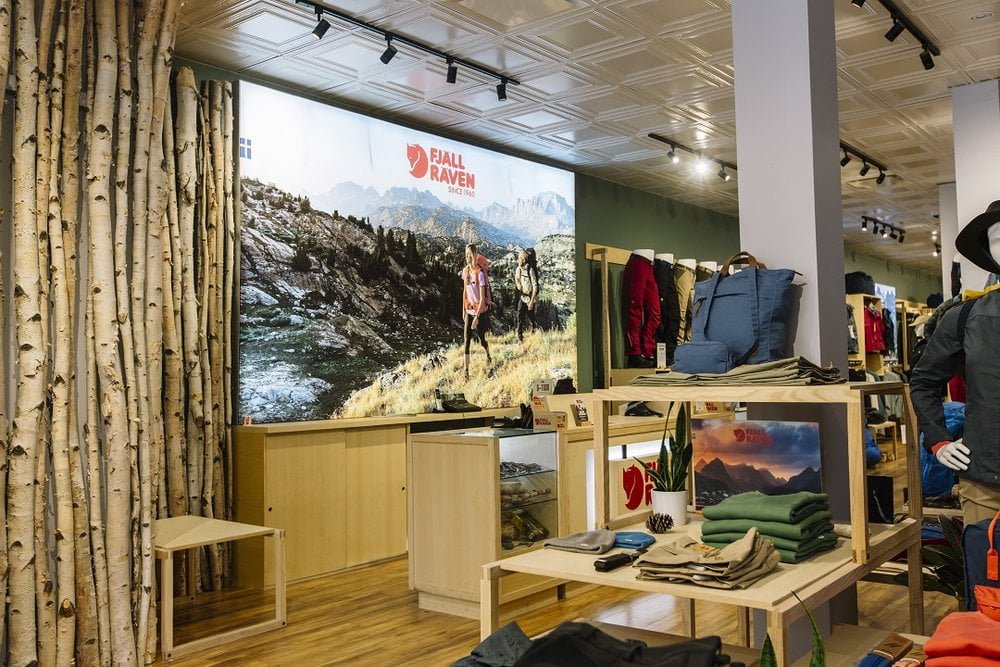
Located at 356 Queen Street West, the 2,200 square foot store carries the brand’s expansive assortment of clothing and accessories, including dozens of different colours and styles of its iconic Kånken backpack on a dedicated display wall (with hundreds in stock in a back room). One of the reasons Fjällräven is opening stores is to better showcase its entire line in a dedicated environment, which it says also helps create brand awareness for its extensive network of wholesale accounts in Canada.
Fjällräven, which is known for its functional and sustainable outdoor equipment, has a commitment to making the outdoors accessible to more people at all experience levels. The word ‘Fjällräven’ translates to mean ‘artic fox in Swedish’, and the company was founded in 1960 by Åke Nordin in his basement in the Swedish town of Örnsköldsvik. The company has expanded to to have a presence in more than 30 countries worldwide. Fjällräven has 20 stores in the United States.
The Toronto store is highly experiential with an element of customization — a trend being seen among leading retailers. Included is a ‘waxing station’ that allows shoppers to witness waterproofing of the brand’s G1000 material, and there’s an in-store tailor at another station that allows buyers to fine-tune the fit of their outerwear purchases, free of charge. Touch screens on the backpack wall allows customers to choose styles in a range of colour combinations.
Fjällräven opened its first Canadian store in the spring of 2014 in Vancouver at 147 West Broadway, in the city’s ‘Fairview’ area, and a second Vancouver store opened on W. 4th Avenue in Kitsilano in the summer of 2016. The company also now has stores on Government Street in Victoria and on Banff Avenue in Banff, Alberta, as well as on Sainte Catherine St. W. in Montreal as well as a shop-in-store at NEON on Queen Street West in Toronto.
The Toronto store’s grand opening is on Saturday, April 28, with doors opening at 10:00 am.
Montreal-based Lightspeed which is a leading point-of-sale solution for independent retailers and restaurants, is seeing remarkable growth that includes having surpassed 50,000 global customers after seeing a record-breaking Series D investment of US $166 million. Head of an anticipated IPO, Lightspeed has announced the appointment of Brandon Nussey to Chief Financial Officer.
Mr. Nussey has a big job ahead of him — he will lead the company’s finance, legal, human resources, data and IT teams. In a recent conversation, Mr. Nussey explained his enthusiasm for working for the rapidly-growing Lightspeed, which he noted had an exceptional corporate culture under the leadership of founder and CEO Dax Dasilva. Lightspeed, which targets independents, is also known for embracing diversity within its workforce, as well as communities generally.
Brandon Nussey
“Brandon’s expansive finance, investment and leadership experience are true assets to the Lightspeed team in the wake of our Series D round and as we look ahead to the company’s next steps,” said Mr. Dasilva “Our focus has always been on the success of the independents we support, and we’re excited to continue to deliver top innovations to enhance the advancement and mobility of their businesses.”
Over the past eight years and prior to joining Lightspeed, Mr. Nussey served as the Chief Financial Officer at D2L Inc., a leading SaaS-based education technology provider. During this time, he led the company through a period of hyper-growth where he helped attract US $165 million in growth financing from top-tier investors to support expansion into new verticals and geographies.
Over the course of his 20 years of experience as a technology executive, Mr. Nussey also served as Chief Financial Officer of The Descartes Systems Group and as an Executive in Residence at Communitech. Additionally, Mr. Nussey is Treasurer and Board member for the Loran Scholars Foundation, one of Canada’s most prestigious scholarship programs.
In a statement, Mr. Nussey said: “It’s a thrill to be appointed CFO at this pivotal time in Lightspeed’s growth. With the recent momentous investment, we have all the resources necessary to be the dominant player and leading innovator for our customers. There are big moves on the horizon that will support the success of independent retail and restaurants, and I believe Lightspeed can be Canada’s next great technology story.
Lightspeed has experienced consistent and rapid growth — the company recently ended its fiscal year, which saw record revenue growth and new customer additions. The thriving company boasts:
Over 600 employees, with eight offices around the world
More than 50,000 global customers
A full suite of products and tools to help independent retailers and restaurants run their business better, including the industry’s most complete analytics solution with predictions and insights
Many marquee retail brands that use the POS platform every day to power their business include: Todd Snyder, Want Les Essentiels, Draper James, Rocket Fizz, Malin+Goetz, Mike’s Bikes in California, RICARDO Boutique + Café
A large and growing client list of restaurateurs, who have started to adopt new technology at a much faster pace than ever before. Some of the places that use Lightspeed include: La Marina NYC, Nobu Malibu, Lutze Biergarten, Zoku Amsterdam Hotel, Hummus Bros, Crêpeaffaire, and Detroit Foundation Hotel.
Founded in 2005 and now with more than 600 employees, Lightspeed processes more than US$15 billion annually in more than 100 countries. Mr. Nussey discussed the benefits to using Lightspeed, which launched an innovative analytics tool last year. Lightspeed Analytics, which is geared towards independent retailers, is designed to provide retailers with insights and recommendations into their sales, inventory, employee performance and customer behaviours, with an aim of providing retailers a competitive edge in their industry. We profiled Lightspeed Analytics at length in a previous article.
Last year, in 2017, total Canadian retail sales growth was up 6.7%, a 20 year high. But the latest numbers from Statistics Canada show that sales gained 4.1% year-over-year in the first 2 months of 2018, significantly less. In fact, this soft patch appears to have started last December.
As a result, the 3 month growth trend (orange line in the chart above) has sunk to a level lower than at any point last year. The underlying 12 month growth trend (green line) has now peaked out and is due to soften even more going forward. Poor spring weather across much of the country does not bode well for retail sales results in the next few months.
The 3 month retail sales trend in the Food & Drug sector has now sunk to a 4 year low. The underlying 12 month trend has been softening since late 2016, and is poised to deteriorate further as we go deeper into 2018.
Retail sales at supermarkets & other grocery stores represent half of this sector, but they were up by only 0.6% for the 3 months ending February 2018. Specialty food stores are doing well, with double digit sales gains in recent months, but this group is too small to offset the slow growth at mainstream supermarkets and grocers.
After enjoying some high retail sales gains in 2016 and 2017, health & personal care stores have slowed down considerably. Their sales were actually down 0.1% year-over-year for the 3 months ending February 2018. Health & personal care stores at one time were the champions of the Food & Drug sector, but it appears those days are gone.
The Store Merchandise sector seems to have run into some strong headwinds at the start of 2018, after having posted strong retail sales gains over much of last year. The 3 month sales growth trend has slowed to 4.6%, which is historically “not bad”, but now is running decidedly below the underlying 12 month trend. At this pace, the sector is unlikely to repeat its strong 2017 performance in 2018.
The laggards in this sector include furniture and home furnishings stores (retail sales were up a meagre 0.3% for the 3 months ending February 2018), clothing and clothing accessories stores (up just 1.5%), and general merchandise stores (up a below average 2.6%).
On the other side of the coin, electronics & appliance stores gained a huge 20.1% year-over-year for the 3 months ending February 2018, while building material & garden equipment/supplies dealers gained 7.8%.
Note that Statistics Canada is now suppressing the breakdown of general merchandise stores for confidentiality reasons. The figures in the table below are estimates based on previous trends.
The Automotive & Related sector is also weakening after a hot 2017. The 3 month trend has dropped off dramatically in last couple of months, although sales gains are still above the overall retail average.
The main change is in new car dealers. Their year-over-year retail sales gain was just 2.8% for the 3 months ending February 2018, which is less than a third of the 9.4% increase recorded for 2017.
This was partially offset by gas stations, whose retail sales increased 9.9% during the same period. This gain is all due to rising gasoline prices.
By The Numbers
Special Note: Statistics Canada has made updates to 2017 numbers, and has also moved retail storefronts of telecom companies out of electronics & appliance stores and into a non-retail category, Telecommunications (NAICS 513). Retail trade statistics have been revised back to January 2012.
StatsCan started providing ecommerce retail sales data in January 2016. While the amount of data is limited, some trends appear to be emerging. Here are some results.
Overall, e-commerce represented about 2.% of total Canadian retail sales for the 12 months ending February 2018, including both pure play operators as well as the online operations of brick & mortar stores. Canadian consumers however also buy online from foreign websites, spending which is not captured in these numbers.
Canadian e-commerce sales were up 12.8% year-over-year for the 3 months ending February 2018. This however is significantly less than the 27.4% annual increase recorded for 2017 over 2016, implying that e-commerce sales growth may be slowing down.
Note that location based retail is the same as that in the preceding large “By The Numbers” table. It’s what’s normally reported as Canadian retail sales. Except that it isn’t. Location based retail excludes another section called Non-Store Retailers (NAICS code 454), which covers electronic shopping and mail-order houses, which in turn is where (mostly) pure play e-commerce businesses are. For the 12 months ending January 2018, electronic shopping and mail-order houses had an estimated $9.08 billion in e-commerce sales.
But that’s not the only source of e-commerce, as (mostly) bricks & mortar location-based retailers also sell online. For the 12 months ending February 2018, this group had an estimated $6.93 billion in e-commerce sales. With electronic shopping and mail-order houses, there’s a grand total of $16.02 billion in e-commerce sales by Canadian operators over the year. Note that this does not include foreign e-commerce purchases made by Canadian consumers, but it does include purchases made by foreigners at Canadian e-commerce businesses.
For electronic shopping and mail-order houses, an estimated 85.3% of their sales are allocated to e-commerce. For the (mostly) bricks & mortar crowd, it can be estimated that just 1.2% of their total sales come from e-commerce.
In the final section of the above table, (mostly) pure play operators (namely, under electronic shopping and mail-order houses) generated an estimated 56.7% of all e-commerce sales in Canada, while (mostly) bricks & mortar location-based retailers’ share of e-commerce is 43.3%.
This analysis is updated monthly as new numbers are published by Statistics Canada. If you would like notification of when an update becomes available (and you’ve read this far), please connect with Ed Strapagiel on LinkedIn.
Aeroplan’s Troublesome ‘Purity of the Country’ Survey is Nothing New
Aeroplan, a popular Canadian loyalty program, found itself in hot water recently after launching a survey that asked participants about contentious issues, such as whether immigration “threatens the purity of the country” or whether men have a “natural superiority over women.”
CROP, the marketing research company that designed the survey for Aeroplan, defended the practice, stating that learning about consumers’ values can help companies predict their preferences and choices.
The loyalty program apologized and announced it was deleting all the data collected through the survey. But the move is not likely to placate consumers who are already angry with the company.
As a marketing professor who teaches consumer behaviour and researches loyalty programs, I believe consumers perceived the survey to be backwards on several distinct levels.
First, the scope of the questions seemed out of line with the mission of a travel rewards program.
Second, the questions were offensive to many respondents because they appeared to normalize intolerant views.
And third, there is the concern that simply asking such charged questions can change respondents’ attitudes and render them more xenophobic, prejudiced and sexist.
All information is precious
To many, these questions seemed completely irrelevant to Aeroplan’s mission and business model.
As a coalition reward program, Aeroplan sells its miles to a very diverse set of partners like Costco, Esso and TD. The partners hand out the points to their customers as a token of appreciation for their business and as an incentive to remain loyal.
Finally, the customers swap the miles they have accumulated for rewards offered by Aeroplan, like vacation packages or merchandise, thus closing the loop.
Consumer research has a long tradition of using rich, varied information that’s not limited only to dry demographic data to understand customers and their needs and preferences.
Some of the apparently irrelevant characteristics turned out to distinguish between consumers with different types of lifestyles — somebody who spends a lot of time outdoors, for example, versus somebody who travels abroad frequently.
Furthermore, a consumer’s lifestyle was correlated with their propensity to drink one of the two beers — hence the relevance of the questions that seemed to have nothing at all to do with the product.
Different lifestyles, values, attitudes, interests and preferences tend to be clustered together — for example, Swiss consumers who are price-insensitive to wine tend to be older, well-informed, live in a single household and are more likely to prefer both Italian and German wines than other consumers.
The fact that different lifestyles are associated with clusters of attitudes and consumption patterns means that seemingly irrelevant details about a person can be diagnostic of their preferences in a wide variety of contexts. No surprise, then, that Cambridge Analytica was so keen on gathering apparently benign and trivial information, such as one’s Facebook likes.
In the era of machine learning, marketing researchers not only need more data, but they need more diverse, comprehensive data that contain new, non-redundant information. The contentious questions in CROP’s survey were precisely designed to tap into a fresh pool of insights.
No question is neutral
The contentious questions were framed in the affirmative, asking respondents about the extent to which they agreed with the statements. They could have just as easily been presented in the negative — for example, “immigration does not threaten the purity of the country.”
It may seem a superficial difference, but research shows that people are prone to acquiescence bias. That is, they tend to agree, rather than disagree, with statements presented in surveys. So the framing of the question will impact the way people respond to it.
Furthermore, respondents expect that “agree” is the correct answer, the one that questionnaire’s designers expected. Applying this logic to Aareoplan’s case, it appears that the company is implicitly backing the statements and thus legitimizing them.
We also know that measurement tools like surveys or interviews that are commonly used in social sciences can interfere with and change the attitudes that we are trying to measure. The concern here is that by floating these statements, the company may actually contribute to the creation and proliferation of bigoted and narrow viewpoints.
Humans like consistency
For example, if someone has no clear attitudes towards immigration, they might be more likely to agree with the statement that immigration threatens “the purity of the country” due to the way the question was framed and to acquiescence bias.
Since humans also like to maintain a consistency across time, the tiny act of having answered in the affirmative to this question may lead them to perceive themselves as the type of person who disagrees with immigration-friendly policies.
Of course, the chain of events I just described is probabilistic — based on a theory of probability and so subject to chance. But applied to a large number of respondents, the effects may still be material.
In the era of artificial intelligence, companies can capitalize on any type of information they gather on their customers or prospective customers. At the same time, consumers are becoming more sensitive about the data they share with merchants and also to the specific questions they are being asked.
It’s not a zero-sum game: Sometimes consumers can benefit by letting companies know more about what they really want. But finding that sweet spot where companies can learn about consumers without invading their privacy or offending them is not easy.
Alina Nastasoiu is an Assistant Professor of Marketing at DeGroote School of Business and McMaster University She received her PhD in Marketing at Ivey Business School at Western University and is currently researching consumer loyalty programs and teaching consumer behavior. Email: nastasom@mcmaster.ca
French chocolate and ice cream retailer Jeff de Bruges is launching a Canadian expansion with plans for two stores in Quebec and possibly beyond. De Bruges is known for its chocolate creations and other product categories that are imported from Belgium.
The retailer, which launched in 1986 and began franchising in 1988, introduced ice cream into the mix in 1990 under the direction of entrepreneur founder Philippe Jambon. Jeff de Bruges saw revenue over more than $330 million in 2017. The company boasts more than 500 locations across France with a mix of corporate and franchised stores, as well as 38 locations — one of which is in Canada.
Jeff de Bruges opened its first Canadian location in Montreal in early 2014 at Place Montreal Trust in downtown Montreal. Plans for more locations were put on hold temporarily, and the retailer says that it plans on opening two more locations in Quebec — and as well, Ottawa and Toronto could be target markets if all works as planned.
Stores are said to be “fun and fresh” with a modern turquoise and brown palette, as well as large windows to attract passersby. The overall feel is “industrial chic” and displays are creative — for example, stores feature a wall-mounted chocolate tablet. Packages are upscale and can be personalized in store with ribbons and keepsake boxes.
Jeff de Bruges is working with brokerage Think Retail under the direction of Tony Flanz for its Canadian expansion. According to Think Retail, retail spaces for Jeff de Bruges will ideally be in the 700 square foot to 1,000 square foot range with a primary focus on super-regional malls.
BRIEF: Old Navy Announces 3 Stores, SSENSE to Unveil 5-Storey Flagship
3 Canadian Stores Part of Old Navy 60-store North American expansion
Old Navy Store (PHOTO: RETAIL IN ASIA)
Old Navy is expanding its retail presence across Canada by opening three additional stores in 2018. In 2017, the value-priced Gap-owned fashion retailer operated 78 stores in Canada and pledged to operate at least 100 stores by 2020. This new announcement is consistent with Old Navy’s real estate strategy which is to continue the expansion of the brand into non-traditional retail locations such as discount, urban, and outlet centres.
Opening on May 2nd is a 12,500-square-foot location at Carrefour Angrignon (Lasalle, QC) and a 15,500-square-foot location at Outlet Collection at EIA (Edmonton, AB) followed in mid-June by a 10,200-square-foot location in CF Fairview Mall (Toronto, ON)
In addition to opening stores, Old Navy is remodeling approximately 150 stores across the fleet in an effort to ensure existing stores represent the best expression of the brand.
Vancouver-Based Build-Your-Own Pizza Chain ‘Assembli’ to Enter Toronto Market
Image: Assembli
Some delicious news for pizza and salad lovers in Toronto. Assembli, which has two locations on the West Coast, will be opening its third location in downtown Toronto anticipated this summer, with construction to be completed in June. Leading construction firm BUILD IT by Design is currently working on the space, and provided the images in this article.
Assembli offers custom-made pizzas and salads, which is great for those seeking unique offerings or those that have specific preferences. Assembli uses high-quality ingredients as well as fresh, non GMO, hormone-free, antibiotic-free and local and organic when possible. There are more than 50 toppings to choose from and you can even order online to avoid waiting in line. Watch for this popular concept to expand its operations. Toronto’s location for Assembli will be downtown at 373 Church Street just south of Carlton Street, at the base of an upscale residential tower that is nearing completion on the site. BUILD IT by Design, which works with some of the world’s top retailers and restaurants on their Canadian store build-outs, have supplied photos showing the ‘before’ work that’s happening now, as well as the final product that will be finished this summer. The new space will have a mix of high-quality industrial interiors, colourful fixtures, and kitchen/prep areas that will wow customers.
After years of renovations, Toronto’s Union Station is well on its way to becoming a retail and cultural destination. With an average of 250,000 people passing through the transportation hub each day, this week’s opening of the ‘Home by thisopenspace’ pop-up store is an incredible opportunity for the participating eight online brands to get new ‘non-digital’ eyes on their products.
This two-month temporary retail space is also providing a taste of what the world of bricks-and-mortar retail is really like. Its ‘cheeky’ theme is inspired by the notion that almost everyone who passes through Union Station, are either ‘going home’ or ‘coming from home.’
Doug Stephens, a retail expert and founder of Retail Prophet, says the idea of the Union Station pop-up is “fantastic,” and is part of a larger trend of bringing change to traditional retail spaces.
Home by thisopenspace (Image: Union Station)Home by thisopenspace (Image: Union Station)
Hogan Pharmacy Innovates by Putting the Lockdown on Prescriptions
Image: Hogan Pharmacy
Hogan Pharmacy throughout southern Ontario are taking a leadership role in addressing two major health issues – the opioid epidemic and unintentional paediatric medicine poisonings.
Hogan Pharmacy is the first pharmacy chain in Canada to offer SAFE RX® Locking Prescription Vials (LPVs™) for dispensing with the ability to encode the patients’ four-number lock right at the pharmacy. LPVs™ provide a more secure medication storage option for anyone filling a prescription and will help in preventing accidental access to medications and intentional pilfering, which is a leading source for teen prescription drug abuse and opioid addiction. This product is an affordable and sensible solution to keep medicine out of the wrong hands.
According to a recent Government of Canada report, there were 2,946 apparent opioid-related deaths in Canada in 2016. In only nine months, from January to September 2017, there were at least 2,923 apparent opioid-related deaths.
Walmart Canada Campaigns to Put 10 Million Meals on the Table in 2018
Image: Walmart Canada
Walmart Canada has launched its 2nd annual ‘Fight Hunger, Spark Change,’ national fundraising campaign. Running from April 5th to May 2nd, Walmart hopes to raise enough funds to secure 10 million meals for Canadian families in need through Food Banks Canada and its network of more than 550 food banks.
Customers are invited to join in the fight against hunger. First by purchasing specific products – either in store or at walmart.ca – of select products, with participating brands donating a portion of the proceeds to Food Banks Canada, up to a maximum of $850,000. Partners include: General Mills, Kellogg’s, PepsiCo, KraftHeinz, Mars, Ferrero, Old Dutch, Maple Leaf, Unilever, Lassonde, Mondelez, and Starbucks. Second, by dropping non-perishable food donations in the donation bins located at the front of each Walmart store.
A ‘Donate at the Register’ opportunity ran from April 5th to 27th where customers were offered the opportunity to round up their purchase at the register to the nearest dollar. Walmart will be matching these funds to a maximum of $820,000.
Walmart is also donating $100,000 to Food Banks Canada’s retail food program and donating $80,000 to support Food Banks Canada’s National Food Sharing System, which helps to move approximately 10 million pounds of food annually.
With more than 85,000 associates, Walmart Canada is one of Canada’s largest employers and has an extensive philanthropy program focused on supporting Canadian families in need, and since 1994 Walmart has raised and donated more than $300 million to Canadian charities.
Halifax’s Wicker Emporium Files for Creditor Protection
Image: Wicker Emporium
The Nova Scotia-based importer and retailer of solid wood furniture and home decor, Wicker Emporium, filed for protection under the CCAA on April 18, listing over $5-million in liabilities, including $865,000 to Accord Financial, according to publication Insolvency Insider.
First opened in 1972, founder Madan Kapahi created Wicker Emporium as a way to share treasures from his home country of India with shoppers in eastern Canada. Growth for the company over the years has been successful and as of now, the company operates 23 bricks-and-mortar stores in Atlantic Canada and Ontario, as well as an online store.
Due to changes in sale patterns in different locations, however, the company has experienced a recent decrease in profits from sales, particularly at stores located in more rural areas. As a result, the company has experienced difficulty in paying its suppliers, many of which are furniture manufacturers based in Asia.
MNPwas appointed monitor. Burchellsis counsel to the company.
SSENSE to Open 5-Storey Montreal Flagship (on Thursday, May 3)
418 Saint-Sulpice
Montreal is buzzing right now, ahead of the opening of multi-brand retailer SSENSE‘s new Montreal flagship, which is said to be opening on May 3. While SSENSE won’t officially provide details on the new store just yet, we were able to put together a few relevant details ahead of the highly anticipated grand opening.
The five-level Montreal store will be located at 418 Saint-Sulpice in a renovated heritage building in Old Montreal. Milan-based David Chipperfield Architects has been responsible for designing the space, which is expected to be groundbreaking in its design.
SSENSE’s Montreal flagship is expected to be highly experiential and will include installations from artists as well as features to create ongoing interest — SSENSE, which operates from a current storefront in Old Montreal as well as online globally, sells products from a selection of independent, luxury and streetwear designers, also produces its own original editorial content. The company was founded in 2003 by three brothers (Rami Atallah, Firas Atallah, and Bassel Atallah) and the online platform currently serves 136 countries, operating in English, French and Japanese. About 80% of SSENSE’s clients are between the age of 18 and 34.
This month, SSENSE acquired fashion community Polyvore and immediately closed the platform without warning.
Stay tuned for more details on SSENSE’s Montreal flagship, as the company is expected to make an announcement very soon.
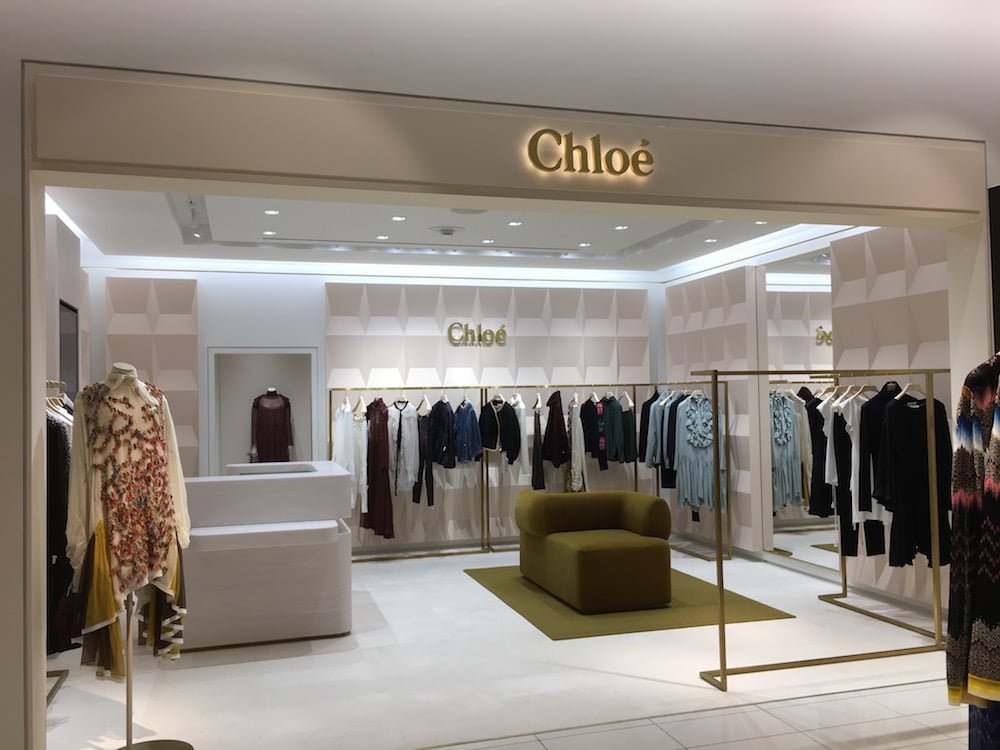
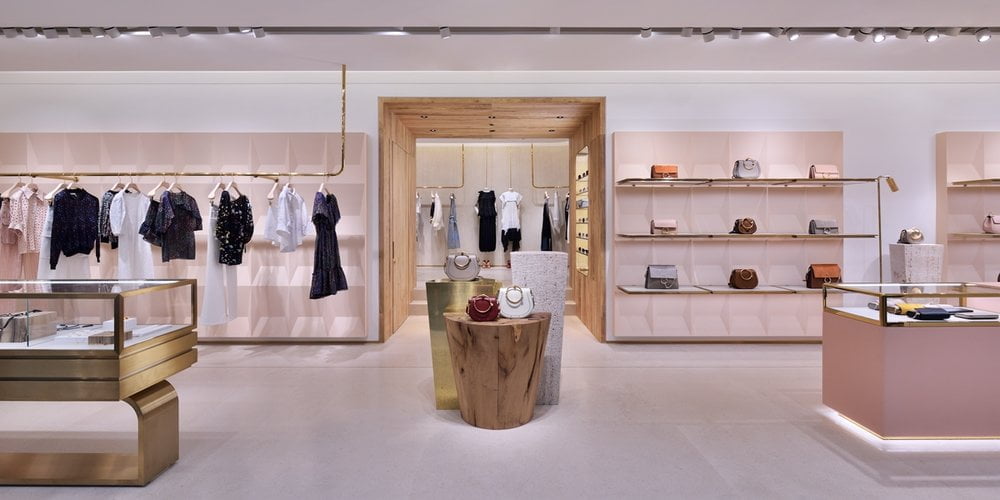
Paris-based women’s luxury brand Chloé will open its first Canadian standalone store at Toronto’s Yorkdale Shopping Centre this summer. The boutique will be the first in North America to feature the brand’s newest concept.
The Yorkdale Chloé will be located between two other luxury brands — Saint Laurent and Mr. and Mrs. Italy, and across from David’s Shoes and the mall’s recently opened Ladurée salon. The 2,200 square foot Chloe boutique is expected to open in the middle of June, and the store is currently under construction. The Yorkdale boutique, being the Canadian flagship for Chloé, will carry the brand’s entire offer of ready-to-wear, leather goods, handbags, accessories, sunglasses and footwear. Vergo Construction is building the new Yorkdale store.
Chloé has been growing its presence in Canada over the past several years through its wholesale accounts, which includes upscale retailers such as Holt Renfrew, Saks Fifth Avenue and Nordstrom. In less than three years, Chloé has opened several shop-in-stores in Canadian locations for Nordstrom and Saks, beginning with separate ready-to-wear and accessory boutiques at Nordstrom in Vancouver in September of 2015. In February of 2016, Chloé boutiques opened at both of Saks Fifth Avenue’s Toronto stores (CF Toronto Eaton Centre and CF Sherway Gardens) and in October of 2016, Chloé shop-in-stores opened along with Nordstrom’s beautiful location at Toronto’s Yorkdale Shopping Centre.
CHLOÉ WOMEN’S READY-TO-WEAR – NordsTROM Boutique during 2016 opening
Yorkdale will be Chloé’s eighth standalone store in North America. In the United States, Chloé operates boutiques in New York City (850 Madison Avenue and at 93 Green Street), Las Vegas (Forum Shops at Caesar’s and Wynn), Los Angeles (Melrose Place), Costa Mesa CA (South Coast Plaza) and in Miami at the Bal Harbour Shops.
Chloé will join other luxury brands in Toronto’s Yorkdale shopping centre, which is Canada’s top mall in terms of annual sales per square foot. The clustering of luxury brands at Yorkdale is of the same caliber as what’s found in downtown Vancouver and in downtown Toronto and in some instances, some luxury stores only have one standalone location in Canada at Yorkdale, such as David Yurman, Vacheron Constantin and Longchamp. Yorkdale continues to attract wealthy shoppers and because of this, Holt Renfrew is also in the process of expanding its highly productive store at the mall.
Chloé is part of the Richemont Group conglomerate, which includes some of the world’s top luxury brands. Esteemed designer Natacha Ramsay-Levi joined the company as Creative Director in the spring of 2017. Several of Richemont’s brands already operate at Yorkdale near the new Chloé boutique, including Cartier, Van Cleef & Arpels, IWC Schaffhausen, Jaeger LeCoultre, Montblanc, Panerai, Vacheron Constantine and Piaget. Chloé, which was founded in Paris in 1952, has stores globally as well as a network of concessions and wholesale partnerships that include a presence in some of the world’s top multi-brand stores.
Lemongrass House is bringing the experience of Thailand to Vancouver, opening its first retail store in Canada.
The flagship store, located in the city’s historic Gastown neighbourhood, recently opened its doors and offers consumers natural, handmade, premium spa products from the global brand.
Maxine Druker and Ben Horne are co-owners of the store.
Druker said the products are hand-produced in Thailand and all of the products are signed by the people who made them.
“They’re a real artisan product,” she said.
“It’s everything you need for your body from head to toe.”
Druker said the store was specially designed to bring some of the beauty, style and delights of Thailand to Vancouver. It engages the senses and charms the spirit from the moment a customer walks through the door.
The store carries about 1,200 products “for every body because we have products for kids and pregnant moms – even dogs,” she said.
This is the first time that the Lemongrass House brand has been available for purchase in Canada. Along with retail stores in 17 countries around the world, Lemongrass House products are being used in some of the world’s top hotels and spas, said Horne.
“Although we sell to spas and hotels, the concept is that people can take their own spa products home with them,” said Druker.
“We are the first retail outlet Lemongrass House in North America,” added Horne.
The spa and personal care products are all-natural and handmade, created by Thai artisans.
“The products are safe for the human body and safe for the planet,” said Druker, adding that the brand is a natural fit for Vancouver.
“Our goal is to have a retail presence across Canada basically in big cities. But obviously we’re starting out and this is our first store and it’s a new brand so we can’t expand too quickly,” said Horne.
“We want to concentrate on the retail presence in Vancouver but also an online, ecommerce presence. Having said that, we’re selling an experience. We’re selling a smell. We’re selling a shampoo. The retail store in Vancouver is an opportunity to introduce people to the brand and the concept and building on the success of that store we will be expanding. We’d like to open a store in Toronto. We’d like to open a store in Edmonton.”
Founded by Bobby and Palita Duchowny, Lemongrass House has grown to become a leading provider of handmade spa products to the world’s top hotels and spas, the company says on its website.
“Bobby was born in Malibu, California, and in 1996 he came to Thailand on a movie location assignment, fell in love with the country and decided to stay. He was introduced to an organic farming project and, using his background in aromatherapy that he acquired in the U.S., became interested in extracting pure plant oils from their crops,” says the website.
“Bobby and Palita started making small batches of natural insecticide, using Neem Oil, in the kitchen of their apartment and sold it at the Chatuchak Weekend Market in Bangkok. UNICEF in Thailand heard about them and placed large orders for their signature mosquito spray for use by their teams working in the field. Riding on this success, they relocated to Surin Beach in Phuket and in 2000 started providing premium spa products to the local hotel operations.”
PayBright was the first company to launch instant consumer financing for e-commerce purchases in Canada in 2017. “Until then, Canadian retailers and consumers did not have access to a payment method that is becoming common in the U.S., Europe, and other parts of the world,” said Wayne Pommen, President & CEO of PayBright.
He said PayBright’s e-commerce solution integrates with merchants’ e-commerce platforms and provides Canadian customers with an additional payment option at checkout. After selecting PayBright as a payment method, customers can finalize their purchases in a matter of seconds. Merchants receive their funds directly from PayBright the next business day with no credit risk. Customers then pay for their purchases in affordable monthly installments over time, with interest rates as low as zero per cent.
“PayBright is now fully integrated with a number of e-commerce platforms, such as Shopify, Magento, WooCommerce, Solidus, Salesforce Commerce Cloud, IBM Websphere Commerce and SAP Hybris. Merchants using any of these platforms can rapidly deploy PayBright as a payment option for customers. We are also developing additional platform integrations in 2018.”
“We do it about as quickly and easily as you will find anywhere through an instant approval and paperless process. In addition to providing in-store financing, we’re the only company in Canada that’s offering financing for e-commerce transactions in a significant way. Until recently, Canadians were not able to be instantly approved for an installment loan if they were buying something online. E-commerce is the fastest-growing retail channel in Canada and our installment payment solution for online checkout fills a key gap in the Canadian marketplace. We are seeing adoption by small and large merchants in a number of categories,” said Pommen.
“The uptake of PayBright’s offering by our retail partners’ customers shows that instant financing is resonating with Canadian shoppers as well. Our e-commerce merchant partners are seeing growth in customer traffic, increases in checkout conversion of 10-25 per cent, and average order values that are as much as 80 per cent higher than orders that do not benefit from financing. Overall, offering installment payments drives significantly higher revenue per visitor.”
The company was founded in 2009 in the healthcare space. About 18 months ago, the new brand – PayBright – was launched in the retail space.
PayBright says it has approved over $300 million in consumer credit since inception and is funded by major Canadian financial institutions including iA Financial Group and CWB Financial Group. It is also partnered with more than 3,000 merchants in 10 Canadian provinces.
PayBright says it provides consumers with virtual credit accounts they can use to make purchases at participating merchants. Each purchase is paid for with a straightforward, easy-to-understand installment payment plan. Unlike other financing options, PayBright does not require consumers to sign up for a credit card and does not charge hidden fees or punitive interest rates, it adds.
“Customers really benefit when they are making a larger purchase and can break the cost down into monthly payments. We will instantly approve a customer for as much as $15,000. They can then use this approval for multiple purchases over time. And as they make repayments on their purchases, they free up their credit to be used again,” said Pommen. “It’s a win for the customer and a win for the retailer as well.”