Advertisement
Home Blog Page 1089

Still Time to Register for RCC Retail Marketing Conference: Thursday April 12

exc-5ac52a438a922d7dd700f284

There’s still time to register for this year’s Retail Council of Canada Retail Marketing Conference, taking place on Thursday, April 12 at the Delta Hotels Toronto at 75 Simcoe Street. This year’s intense day-long conference is designed by retail marketers specifically to give retail marketers an overview on the most recent developments in the industry. 

Retail Council of Canada members get a special discounted rate for next week’s event. 

The impressive lineup of speakers includes some of Canada’s leading retail innovators and brands:

For more information including a full  listing of speakers, visit: www.rccretailmarketing.ca.

To purchase tickets, please visit www.rccretailmarketing.ca/register.

Frank and Oak Sees Success with Omnichannel as it Expands

Photo: Frank and Oak

Fashion retailer Frank and Oak, which began as an online business, continues to expand its bricks and mortar footprint across the country.

ETHAN SONG. PHOTO: LINKEDIN

But it’s key to success is omni channel retail – using its physical and digital presence in a combined way to enhance the customer experience.

“I’m a big believer that the number of locations in this day and age is not important  . . . A lot of people are fixated on the store count but in reality it’s so much more about regional growth and regional growth is defined by the combination of online and offline and the omni channel for customers,” said Ethan Song, co-founder of Frank and Oak.

“I think we’re definitely seeing the market shifting. There’s no doubt about that. We’re really seeing the purpose of stores transform.”

Years ago, retail stores were used purely as a transactional area.

But today, leveraging stores to create a unique customer experience is important. Leveraging stores to deliver a brand’s message is also becoming more important and moving beyond just the transaction of selling a product.

“Obviously Frank and Oak is a brand that started online and we like to use our stores as a bridge between the physical and the digital and leveraging our stores to basically deliver a satisfying experience for the customer.”

Recently, the company opened a store near the Zara in Place Ste-Foy, Quebec, in about 1,300 square feet featuring both men’s and women’s collections. So will a new 2,400 square foot location set to open on Friday at Metropolis at Metrotown in Burnaby, east of Vancouver. 

That brought the company store count to 17 in Canada.

The retailer is also moving locations within West Edmonton Mall to an area with more retail traffic.

“Our target customer is really young, creative and we wanted to make sure that we’re in an area that addressed that demographic,” said Song.

He said the brand has plans to open more locations in the country.

“The number of locations is not nearly as important as creating unique experiences for customers,” said Song, adding that the company’s focus to date has been on the Toronto, Montreal and Vancouver markets and will continue to be in the near future.

HICHAM RATNANI. PHOTO: LINKEDIN

“We’re going to see this world where digital and physical combine to one.”

Frank and Oak started in 2012 and its first location was late 2014.

It was founded by childhood friends Song and Hicham Ratnani.

“We design the entirety of our limited-edition Frank And Oak collections at our headquarters in Montreal’s Mile End. We started with a simple goal of helping men dress better and affordably via our passion for style, design and technology. Five years, nearly eighty thousand Oxford shirts sold, and a growing women’s line later, we remain committed to the little things – the important things – we have built our reputation on,” says the company.

Song said he and a small group of passionate creatives launched Frank And Oak “in what was basically a broom closet.”

“In this small space, we designed entire collections, built a website, and everyone lent a hand to pack and ship out orders.

These early years were a lot of hard work, but it was a laugh and the goal was quite honestly just to stay afloat and keep creating products we loved. In the years that followed, we’ve grown as a company and as individuals, and we’ve become more conscious that we have an active role to play in making our own community, and the world, a better place.”

One of the company’s key pillars is reducing the carbon footprint.

On its website recently Song wrote: “In the next few months we will introduce products made with recycled polyester and organic fibers, and game-changing water-efficient denim. But that’s just the start. We’re determined to do our part for the planet. This means big changes in the way we make products with major steps towards sustainability.”

‘Micro-Mall’ Concept ‘RAAS’ Looks to Expand After Initial Success

exc-5ac30275562fa73cd89124e8

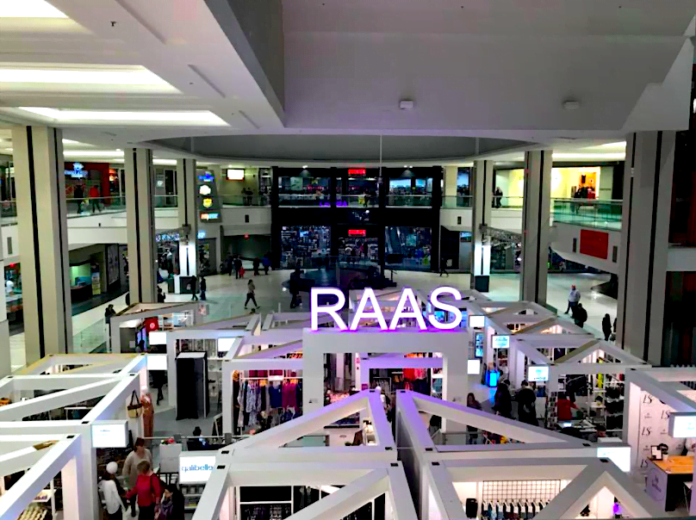
The future of retail may very well lie in the idea of micro malls – smaller spaces created within bigger malls that allow local and emerging retailers the ability to set up shop in a quick manner and develop their business.

Mark Ghermezian, part of the family that developed West Edmonton Mall and other big international shopping centres, helped develop the Retail as a Service (RAAS) concept which launched at WEM last fall.

“We wanted to create a platform that empowered and gave relevance to emerging and local stores. We really felt that there is a whole market of so much talent and so much good products out there and they’re prohibited today from opening up a brick and mortar store,” said Ghermezian.

“We looked at this and said what is the platform we can create that really helps these brands be successful and for us it was a component of creating a space, creating a community and creating an experience. And if we can bring all three of those together, we thought that would be something that would really unlock local and emerging brands to be successful.”

The first one tested was in Edmonton and it’s been a big learning curve on figuring out what the space would be like and what the community would be like in that micro or mini mall within the big mall.

Another concept opened in Mall of America in Minneapolis in November.

The West Edmonton Mall concept opened at the end of October 2017. It has just over 5,000 square feet dedicated for RAAS.

West Edmonton Mall.

“We felt that was an appropriate size for where we are today. But we do see the sizes of RAAS locations being anywhere from 5,000 square feet to 20,000 square feet,” said Ghermezian.

The West Edmonton Mall site can have a minimum of 20 local retailers to as high as 30.

“In some cases, you have brands that are sharing space. On average it’s 20 to 25,” he said.

“The plan is to democratize retail and create a platform that really allows these brands to be successful in a brick and mortar experience. The plan is to do this globally and create a community around the world of the best local and emerging and direct to consumer brands.”

Ghermezian said the belief is that a product can be created within the micro stores that can deliver on boosting direct to consumer business from their website. There is also the learning experience these brands can receive from the other brands who are also participating in the community.

“We have a five-year plan where we do this globally and we’ve been testing the last five months in the two markets we’ve been in and so far so good. We’ve been fortunate enough to work with a lot of the top brands in the cities that we’re in,” he said.

“We’re coming in and just trying to build a new platform that’s different from other people out there and hopefully the market really appreciates what we’re trying to do.”

Oakridge Centre Retail Transformation to Anchor Vancouver’s ‘City of the Future’ [Exclusive Interview]

exc-5a6ffa55e4966b05b5fa7369

Vancouver’s Oakridge Centre is about to see changes unlike anything seen in Canada to date, creating a dynamic mixed-use community that will also become Vancouver’s second municipal town centre (envisioned as a “City of the Future”). The existing 574,000 square foot shopping centre, which sits on 28 acres of land in the heart of Vancouver’s affluent West Side, will be transformed into a major 4.5 million sq.ft. hub of retail, residential, workspace, parks and civic space.

Included will be a massive community centre, public library, performance facility, dance academy, daycare, 100,000 sq.ft. of curated culinary experiences and an approximately nine-acre park — as well as office space and residential towers that will house about 6,000 people in more than 2,600 homes. Oakridge will anchor an up-zoned neighbourhood that is projected to grow by more than 50,000 people within a kilometre radius over the next two decades. QuadReal partnered with Westbank Corp. and together have engaged Henriquez Partners Architects, Tokyo-based interior design firm Wonderwall, and other design partners for this initiative that will be a model for future high-density retail mixed-use redevelopments globally.

Landlord QuadReal together with Westbank presented the updated design at the International Council of Shopping Centres conference in Whistler in January of 2018. Much of the presentation to the press revolved around the broader scope of the project, which will eventually see a spectacular mixed-use community in what will be the single biggest development in Vancouver’s history. To learn more about the retail component to the expanded Oakridge Centre, we spoke with QuadReal Executive Vice President, Retail Andy Clydesdale to get an in-depth picture of how the retail at Oakridge will unfold.

“Our partnership with Ian Gillespie and Westbank has been refreshing and energizing as his creativity and global perspective is challenging us to look past the ‘traditional, old ways of retail development’ and be forward thinking in our design and tenant mix,” says Mr. Clydesdale.

Mr. Clydesdale provided insight into what’s planned for Oakridge’s retail component, which will integrate into the entire community and will serve locals as well as visitors — about 26 million shoppers are expected to visit the expanded centre annually, making it one of Canada’s busiest in terms of footfall. Oakridge’s retail component will see an overhaul that will be almost unrecognizable, with the existing retail space set to almost double in size to about 1-million square feet, including indoor retail as well as an outdoor pedestrian street.

The retail centre will include a collection of conceptualized streets that will house a variety of retail tenants. These are described with terms such as “luxe run”, “trend experience”, and a “high street”. The mall’s “luxe run” could house more than 20 international luxury retailers, according to Mr. Clydesdale, including some that currently lack a presence in the market or in Canada, for that matter. Given the real estate constrictions of downtown Vancouver, Oakridge could end up housing tenants that would ultimately become a second ‘luxury zone’ for Vancouver.

The pedestrian-only high street will be part of the mall’s outdoor component that will run north-south along the length of the mall’s western perimeter. A new perimeter road will also run along the western edge of the property.

The centre will feature two larger anchors, as well as some smaller anchors that will be part of the retail mix. Hudson’s Bay will continue to be Oakridge’s largest anchor tenant in a brand new 140,000 sq.ft. store — it will be the centre’s sole traditional department store anchor, replacing an existing Bay location that was once a Woodward’s store. Oakridge will also house a major grocery tenant — Sobeys which will replace the centre’s existing Safeway store (both are owned by Empire Company). QuadReal is working with key existing retailers such as Harry Rosen, Apple and Tiffany & Co. to create flagship stores that will be aligned with its future thinking for experiential retail.

A large culinary centre spanning between 50,000 and 75,000 sq.ft. will serve the centre and neighbourhood — Mr. Clydesdale noted that there will be a range of tenants and culinary experiences, adding to the diversity of an already diverse neighbourhood. QuadReal explains that this will be something of a Chef-driven ‘kitchen concept’ including a variety of restaurants offering the best of the best of local and international cuisine.

“The heart of the new Oakridge will be a carefully curated collection of top retailers from around the globe, including unique luxury brands and services, flagship stores and some first-to-market retailers, seamlessly integrated with a world class culinary experience and outdoor spaces,” says Mr. Clydesdale.

QuadReal will work with existing retail tenants at Oakridge as the overhaul progresses, and renovations to the retail component will occur in phases so that the centre may remain open. As far as timing is concerned, the new Hudson’s Bay department store and “Trend Experience” components are expected to be completed in 2022, with other development ongoing until roughly 2025 or 2026.

Oakridge’s retail component is planning for the future, with provision made for e-commerce fulfillment. There will be ‘five-star concierges’ for shoppers with capabilities of being able to deliver packages to one’s car or residence, for example.

About 6,000 parking spaces are planned for the centre, the majority of them with electric vehicle charging stations. Valet parking will be an important part of the mix, according to Mr. Clydesdale. Underground bicycle silos will allow riders to quickly stow their bikes below ground in a secure 11-metre deep well.  With a simple swipe of a pass, bikes are retrieved or stored in 13 seconds. QuadReal is planning for a future where transportation will be different — self-driving cars are expected to proliferate in the coming years, and other transportation methods such as public transit will continue to gain prominence.

The City of Vancouver is investing heavily in public transit in the area — the Canada Line rapid transit line runs past Oakridge and connects it to downtown Vancouver as well as the airport, and there are plans for enhanced transit along W. 41 Avenue, running east-west via a B-Line rapid bus service that would connect Joyce-Collingwood Station to the east with the University of British Columbia to the West.

Vancouver’s West Side is home to some of Canada’s wealthiest people, living in homes that are priced into the millions of dollars. Vancouver, itself, has become a global destination with visitors bringing their money for activities that include shopping.

Retail Council of Canada ranked Oakridge Centre as Canada’s second-most productive shopping centre for 2017 with annual sales of nearly $1,600 per square foot — given its already strong sales, demographics and proposed area development, Oakridge’s sales growth potential is almost unlimited.

Vancouver’s Oakridge Centre will be one of the most interesting developments in Canada to watch over the next several years — its scale is unprecedented and its design is groundbreaking. The centre is anticipating to eventually see about 42-million visitors a year, including 26-million shoppers, five-million cultural visitors, five-million park visitors, four-million residential visitors and two-million library patrons.  It’s all part of an effort to redefine the shopping centre as a social experience — humans are social by nature, and as e-commerce gains prominence centres such as Oakridge will continue to draw shoppers by also offering culinary and entertainment options. Given its stunning design and fortunate location, Oakridge Centre could become the gold standard for shopping centre design globally.

WANT Apothecary Now Curates for the Globe via eCommerce Initiative

4960 RUE SHERBROOKE WEST, MONTREAL, QC.

For the past several years, Montreal-based multi-brand retail concept WANT Apothecary carefully selected neighbourhoods for its tasteful retail stores of highly curated and coveted products. The company now operates five locations in North America: Nomad in New York City, South Granville in Vancouver, Lawrence Park and Rosedale in Toronto, and Westmount in Montreal.

Barely a year has passed and WANT Apothecary has announced that they are expanding online and sharing their remarkable curation and omni-channel shopping experience across the globe. 

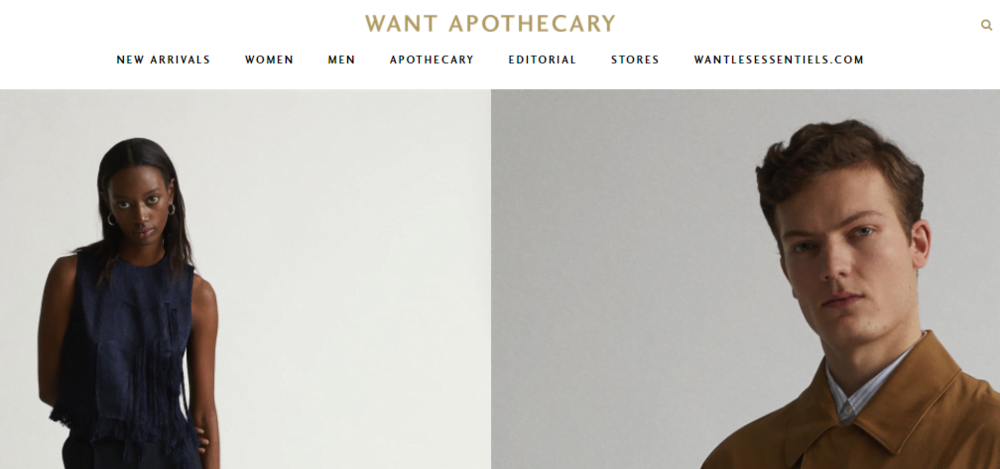
WANT Apothecary is the brainchild of WANT Les Essentiels co-founders, brothers Byron and Dexter Peart (who sold their stake in September) as well as Mark Wiltzer, and Jacqueline Gelber. Loosely inspired by the atmosphere of a 19th-century pharmacy, the concept shop presents a unique opportunity for customers to discover a trusted resource for their style and beauty needs. The online shop is carefully curated by the same team that introduced the WANT Apothecary concept boutiques to five of the top shopping cities in the world. Products include women’s and men’s ready-to-wear as well as accessories, leather goods, footwear, and various gift items, not to mention an assortment of beauty products (hence the apothecary name). 

Collections in the stores are highly curated to reflect the retailer’s aesthetic, and each store is typically between 1,700 and 2,000-square-feet to ensure a more intimate experience. Desired international fashion brands such as Acne Studios, Commes des Garçons, Jil Sander, Junya Watanabe, Hommes Plus, Toteme, Fleur du Mal, M. Martin, Aspesi, Xu Zhi, and Filippa K, line the shelves. A carefully edited array of beauty and body-care products including Grown Alchemist, Susanne Kaufmann, Cosmetics 27, Verso Astier de Villatte, and Byredo rounds out the selective offerings.

The online shop will reflect the same design ethos as the retail boutiques and visitors will enjoy personalized service and will be encouraged to confidently pamper themselves with smart fashion, beauty essentials and home wares that “fulfill their daily needs… and WANTs.”

BRIEF: Miniso Enters Quebec, Montblanc Closes in Vancouver, Christian Louboutin Opens in Montreal

exc-5abf0b491ae6cf734d5a36b5

Miniso Expanding into Quebec

Value-priced Chinese variety retailer Miniso is launching its Quebec expansion this spring with multiple locations, including a flagship on Montreal’s Sainte-Catherine Street. That store replaces a Footlocker that once occupied space at 475 Sainte Catherine Street West. Suburban locations will include malls such as CF Galeries d’Anjou and others. 

Miniso opened its first Canadian stores in the spring of 2017 in Vancouver, where it continues to expand rapidly. The company says that it plans to open as many as 500 locations in Canada in the coming years. Miniso’s expansion appears to be progressing faster than originally anticipated with some of the country’s top malls signing Miniso as a tenant, including CF Toronto Eaton Centre and West Edmonton Mall which will both see Miniso locations open this year. 

Miniso’s Ontario expansion began in October of 2017 when it opened at Pickering Town Centre, east of Toronto, and its Alberta expansion commenced in December with a store in the city’s ‘Griesbach’ area. 

Miniso’s product offerings are also extensive, including home goods, kitchenware, underwear, cosmetics, toys and even electronics. Products are branded by name and are considered to be of exceptional quality for the price. The company was co-founded in 2013 by Japanese designer Miyake Junya and Chinese entrepreneur Ye Guo Fu, and is headquartered in Guangzhou, China. MINSO’s goal is to open 6,000 stores globally by 2020, averaging 80 to 100 store openings per month. 

Change Lingerie Expands into Hamilton

Danish lingerie and fashion brand Change (formerly ‘Change of Scandinavia’) has opened an 850 square foot store at Hamilton’s CF Limeridge. It’s part of Change’s Canadian store expansion over the next several years.

The retailer has announced that it plans to open 25 more Canadian stores, and it’s working with brokerage Think Retail. Change launched its Canadian retail operations in 2006 and it now boasts 17 locations in BC, Saskatchewan, Ontario and Quebec. 

Change Lingerie’s bra sizes are larger than most retailers, so it caters to a different niche than most others — approximately 75% of Change’s bras are in the DD to M cup size range, with a wide range of fits and styles (most lingerie retailers operating in Canada sell bras in the B-D size range). Change stores offers free bra fitting to ensure that its products meet the needs of its diverse customers, and prices are kept reasonable to attract a broad clientele. Approximately 75% of Change’s revenue comes from underwear and bras, with the remainder from loungewear, swimmer, nightwear and stockings. 

Change launched in Denmark in 1995, with its first retail store having opened in Copenhagen in 2001. The company now operates about 250 corporate and franchised stores globally. 

Indochino Officially Measuring Up the New York Yankees

Vancouver-based Indochino, global leader in made-to-measure apparel, is entering into a multi-year sponsorship as the ‘Official Made to Measure Suit’ of the New York Yankees,’ offering tailored experiences to legions of Major League Baseball fans.

Tapping into the tens of millions of Yankees fans in the United States and more abroad, the Indochino sponsorship will see company branding appearing, not only in Yankee Stadium signage, but in-store showrooms, Yankees digital and social channels, and in a “Measuring Moments” social media campaign featuring Didi Gregorius, shortstop for the New York Yankees.

“The Yankees are among the world’s most iconic sports teams and it is an honour to be joining forces with them to give fans access to a host of custom experiences tailored to America’s pastime,” said Drew Green, CEO of Indochino.

This two-year sponsorship is part of a long-term investment Indochino is making in its largest market, which will be further supported by a third Manhattan showroom opening on 51st and Madison Avenue in late spring, joining the Soho and Financial District locations.

Surmesur Brings Made-to-Measure with a Twist to Vancouver

Quebec City-based custom menswear retailer Surmesur has opened its latest store in Vancouver’s Yaletown two doors down from Mancave Barber Shop and across from trendy restaurants West Oak and the Keg Steakhouse. Founded in 2010 by brothers Vincent and Frank Thériault, the company manufactures and retails men’s made-to-measure clothing which includes custom suits, shirts, blazers, trousers and other garments. It combines body-scanning and manufacturing technologies with traditional methods, boasting a catalogue of over 8,000 fabrics with a wide assortment of collars, buttons, and sleeves.

Surmesur currently has 14 retail showrooms in Québec and Ontario, as well as in Pittsburgh and Chicago, including six “shop-in-shops” in smaller markets. By partnering with local businessman Jonathan Richard as owner-operator of the Vancouver store at 1012 Mainland Street, Surmesur sees an opportunity to offer Vancouverites its signature blend of traditional tailoring and technological innovation with a local twist.

Surmesur endeavours to keep its costs down to keep prices reasonable and as a result, custom shirts are priced from $65 and suits start at $450. After measurements and fabric/button/design choices are made, suits are ready in four-to-six weeks.

New owner-operator, Jonathan Richard is a long-time men’s wear aficionado, event organizer, and former bar manager of the tony Vancouver Club. He believes that positioning Surmesur in Yaletown, a neighbourhood which has a great mix of sophistication and casual style, is perfect for its signature blend of traditional tailoring and technological innovation with a local twist.

Competitor Indochino’s flagship showroom is located on nearby Mainland Street — less than a two-minute walk from the new Surmesur. 

Bäckerhaus Veit Knocks it Out of the Oven for the 2nd Year in a Row

Canada’s Best Managed Companies (BCMC) has announced that artisanal bread company Bäckerhaus Veit will be recognized as a leader in their industry at a gala in Toronto on April 11, 2018. This is the second year in a row that the company has received this distinction. The CBMC welcomes applications from hundreds of entrepreneurial companies each year to compete for this designation in a rigorous and independent process that evaluates the calibre of their management abilities and practices.  

Bäckerhaus Veit is a female-owned premium, private label artisan bakery, created in 1987 by CEO Sabine Veit, and is backed by over 85 years of European bread making experience and recipes. By fusing Old World craftsmanship with New World technology, the company bakes handcrafted breads, rolls and pretzel products in stone-hearth and rack ovens using nutritious ingredients.

In 2015, the company relocated from their 50,000 square foot facility in Woodbridge, Ontario to a new 150,000 square foot facility in Mississauga, Ontario, which was completely renovated to become a purpose-built, state-of-the-art facility integrating tried and true old-world traditions and recipes with high volume production. 

The 2018 Best Managed program award winners are amongst the best-in-class of Canadian owned and managed companies with revenues over $15 million demonstrating strategy, capability and commitment to achieve sustainable growth.

Kinetic Commerce appoints Retail/Ecommerce Veteran Damon Sloane as VP of Retail Innovation & Client Success

Kinetic Commerce recently announced the appointment of Retail/Ecommerce veteran Damon Sloane to the newly created position of Vice President of Retail Innovation & Client Success.

Mr. Sloane spent the last four years as the General Manager of Ecommerce and Digital with Michael Kors where he led the strategy and go-to-market launch of their ecommerce and omnichannel initiatives. During his time there, Kors’ digital transformation saw the brand named a ‘digital genius’ by L2 Inc. (one of only two fashion brands to receive that status) and also a finalist in the Canada Post Ecommerce Innovation Awards.

“The entire Kinetic Commerce Team is thrilled to team up with Damon,” says Kinetic President and Chief Innovation Officer David Dougherty.

Kinetic Commerce is a leading retail design and technology firm with offices in Toronto and New York – specializing in helping enterprise retailers bring the best parts of digital and physical commerce together, creating more meaningful connections with their customers and empowering their associates to deliver superior service.

Christian Louboutin Opens Montreal Boutique

French luxury footwear and accessory brand Christian Louboutin has unveiled a boutique at Holt Renfrew in Montreal. Maxime Frechette provided photos that can be viewed in the slideshow above. 

It’s likely to be a temporary move for Louboutin, however — Holt’s store at 1300 Sherbrooke Street West will eventually close when it merges with nearby Ogilvy, though the company hasn’t provided exact timelines. The newly combined ‘Holt Renfrew Ogilvy’ has delayed its opening until the year 2020, according to parent Selfridges Group, which owns both stores.

Christian Louboutin opened its Canadian flagship in Toronto at 99 Yorkville Avenue in August of 2016, in a two-level 2,625 square foot space which is currently its only freestanding location in Canada. Louboutin also operates separate concessions for women and men at Holt Renfrew at Toronto’s Yorkdale Shopping Centre as well as in Vancouver at CF Pacific Centre. Louboutin also operates a women’s concession at Nordstrom in Vancouver. 

Montblanc Closes in Vancouver Ahead of Hermès Relocation

The only standalone location for luxury brand Montblanc in Vancouver has closed in preparation for the relocation of the city’s Hermès operations. 

Montblanc opened its 1,700 square foot boutique at 717 Burrard Street in early 2013. The store replaced the city’s location for luxury brand Ports 1961, which shuttered its three Canadian stores at around that time. The retail space was once connected to the corner retail space that most recently housed Bell, which is currently vacant. At one time, the combined retail space has housed retailers such as luxury brand Furla and in the early 1990’s, Versus by Versace opened its first North American outpost in the space that had an address 1008 West Georgia Street. 

The retail spaces will be combined yet once again, and will also annex adjacent spaces including an upstairs level currently housing Suki’s Salon & Spa (which is relocating in the same complex). Hermès CEO Axel Dumas recently informed Retail Insider’s Craig Patterson that a Hermès flagship will be moving into the space, with a similar amount of retail space to that of the 6,000+ square foot Toronto store that was unveiled at 100 Bloor Street West in November. 

Richemont acquired the strata unit currently occupied by Hermès at 755 Burrard Street, and after Hermès relocates, Richemont will renovate and open a new Cartier flagship, according to the building’s management. 

Montblanc operates six boutiques in Canada. Three are in Toronto (151 Bloor St. W., Yorkdale Shopping Centre, CF Sherway Gardens), two are in Montreal (1289 Boulevard de Maisonneuve W. and CF Carrefour Laval) and in December, Ottawa saw the opening of a Montblanc boutique at CF Rideau Centre.  

Winners/HomeSense Super-Size at West Edmonton Mall

Winners and HomeSense, Canada’s largest off-price retailers, celebrated the grand opening of their new superstore location in West Edmonton Mall last Tuesday. It’s the largest in the entire company. Located on the lower level in a space formerly occupied by Target, the new store offers nearly 61,000-square-feet of designer and brand name merchandise. The store features fashions for the entire family as well as accessories, home accents and giftware. 

To mark the grand opening of the West Edmonton superstore, Winners/HomeSense presented a $5,000 donation to The Canadian Women’s Foundation and the first 100 people in line received a $10 Gift Card.

The Winners/HomeSense brands have become synonymous with off-price shopping.  With more than 360 stores nationwide, the chain utilizes its tremendous buying power and strong vendor relationships to deliver high-quality, brand name merchandise at a great value.

Over the past several years now, there’s been a rapid expansion of off-price retailers in Canada. TJX Companies Inc., which operates Winners, Marshalls, and HomeSense stores in Canada, plans to continue expanding further into Canada in 2018.

Footwear Brand ‘Allbirds’ Launches in Canada

Photo Allbirds

Footwear brand Allbirds has entered Canada with an e-commerce shopping platform and to mark the occasion, it has also opened pop-ups at Nordstrom in Vancouver and Toronto.  

It began with a Kickstarter crowdfunding campaign in 2014 for ‘Wool Runners’ launched by Tim Brown. A former professional athlete and graduate from the London School of Economics and Political Science, Brown saw the campaign reach over $100,000 in sales in four days.

Enter Joey Zwillinger, a biotech engineer and renewable materials expert who worked to improve the construction and introduce additional sustainable materials such as a vegetable oil-based polyurethane insole.

In 2016, Brown and Zwillinger renamed the footwear ‘Allbirds’ and introduced it to the world. Together, the two had created a sustainable footwear company that offered better shoes in a better way and were on a mission to prove that comfort, design and sustainability are not mutually exclusive. 

The Wool Runner was hailed as “the world’s most comfortable shoe” by TIME Magazine later that year and took advantage of the natural properties of wool to create an unparalleled comfort and wear experience.

“We always try to find new uses for materials that naturally exist right in front of us, rather than relying on cheap synthetics like traditional footwear brands. With a focus on developing on what we call the ‘right amount of nothing’, we are taking the core function of shoes and distilling it to its minimum which results in shoes that look great and feel amazing throughout the day,” said Zwillinger. 

The Wool collection including the Wool Runner and Wool Lounger uses ZQ-certified merino wool crafted in one of the world’s finest textile mills outside of Milan. The engineered one-piece outsole offers supreme cushioning and the brushed wool-lined insole stays soft to the touch. 

In 2018, Allbirds offers three styles of shoes and two materials for men and women, including the Runner, Lounger and the newly launched Skipper for $135, and Smallbirds for children for $80. In addition, Allbirds will offer a limited-edition Canadian colourway embroidered with a maple leaf to celebrate the company’s expansion, launching exclusively on Allbirds.ca.

Canadian fans of the brand will be pleased to learn that Allbirds has launched online in Canada and Pop-In@Nordstrom is open in Toronto and Vancouver as of March 30, with five exclusive styles in addition to the full range of products.

(POP-UP AT NORDSTROM IN VANCOUVER ON MARCH 30, 2018. PHOTO: NORDSTROM)

“We are looking forward to introducing Canadians to Allbirds, particularly as Canadians have a fundamental understanding about the importance of protecting our environment,” said Brown.

Always innovating, Allbirds recently introduced a new suite of products named ‘Tree’ made from its most sustainable material to-date. Crafted from a textile that Allbirds engineered using Eucalyptus pulp, the Tree collection creates a cooling effect by wicking away moisture and, in concert with a silky-smooth mesh construction, delivers unmatched breathability and supreme comfort.

The Tree collection features ethically sourced Eucalyptus fibres, which use only 5% of the water and one-third of the land compared to traditional footwear materials, and that is definitely technology that we can all get behind. 

Off-Price Retail Sees Unprecedented Growth in Canada 

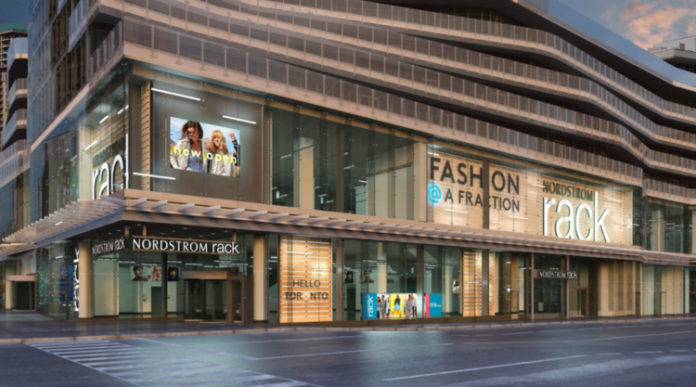
(RENDERING OF THE TORONTO BLOOR STREET NORDSTROM RACK, OPENING ON MAY 3)

Canadians love a good bargain, and there’s never been more of an opportunity to shop off-price in this country. Nordstrom Rack has entered Canada with plans to operate as many as 15 stores, and the Hudson’s Bay Company’s Saks OFF 5TH division is expected to announce more Canadian stores with a goal to have 25 locations by the end of this year. TJX Canada nameplates Winners, HomeSense and Marshalls also continue to open stores as the market sees unprecedented competition. 

This week, Winners unveiled its largest combined Winners/HomeSense location in the chain at West Edmonton Mall in Edmonton. The 62,050 square foot store occupies the entire ground floor of a retail space that housed a Target store and prior to that, Zellers and before that, Eaton’s. The 30,115 square foot space most recently occupied by Winners in the mall is now being converted to TJX banner Marshalls.

It’s all part of a trend that is seeing off-price retailers expanding in Canada like never before. David Ian Gray, consultant and retail strategist/founder of DIG360, noted that there continues to be considerable growth at both ends of the spectrums — low-end and luxury retail — with the ‘middle’ lagging in terms of growth in Canada. He explained that the expanding off-price players are replacing defunct chains such as Zellers and Sears, though consumer behaviour also plays a big roll in the successful expansion of off-price retailers in Canada. “Fashion chains such as H&M and Forever 21 had introduced inexpensive fashion that looks trends to younger shoppers who are now migrating up to off-price”, according to Mr. Gray.

[Above: video of the opening of the largest Winners store in the chain at West Edmonton Mall this week]

In the fall of 2017, DIG360 released a study in partnership with Leger that examined consumer preferences for large-format fashion retailers in Canada. Leger interviewed 1,566 adult Canadians and asked them about what stores they shopped at, and how often. 

About 39% of respondents said that they had shopped at Winners in the past year, well ahead of Saks OFF 5TH at about 2% of respondents — though Saks OFF 5TH’s lower numbers could be partly due to the fact that it has considerably fewer stores in fewer markets than Winners at the time of the poll. Interestingly, the DIG360/Leger study noted that about 3% of Canadians had shopped at Nordstrom Rack in the past year despite the chain not yet having arrived in Canada — if cross border shopping is any indication, Nordstrom Rack will be a hit in Canada, he said. 

Winners and Marshalls are positioned as being generally mid-market with discounted designer items from popular brands and in some instances, luxury offerings in a handful of departments called ‘Runway’. Saks OFF 5TH, which sources say isn’t performing as well as expected in Canada, might be viewed as being “expensive” by some given that it has ‘Saks’ in its name. Nordstrom Rack has the benefit of being associated with the ‘friendlier’ and more popularly-priced Nordstrom chain, which now operates six full-line stores in Canadian cities including Vancouver, Calgary, Ottawa and Toronto. 

(SAKS OFF 5TH AT SOUTH EDMONTON COMMON. PHOTO: CRAIG PATTERSON)

TJX Canada continues to expand aggressively in Canada with its Winners, HomeSense and Marshalls banners. Winners anticipates to open seven more stores in 2018, while HomeSense is expected to open eight stores. Marshalls is expected to open another 15 stores in Canada this year. By December, Winners will have more than 270 stores in Canada, HomeSense about 120 locations, and Marshalls will have about 85 stores if all goes as planned. The momentum is expected to continue into 2019. 

Saks OFF 5TH currently operates 17 stores in Canada and could open as many as eight more locations this year, as it seeks to meet a goal of 25 stores. Nordstrom Rack has confirmed five more locations to open in Canada in 2018, and there could be even more that haven’t been announced. 

Sears Canada recently closed all of its Canadian stores, and real estate formerly occupied by Target and FutureShop continues to offer opportunities for new tenants. The space provides retailers such as TJX the opportunity to open new and expanded locations in various markets, in a cost-effective way if leases are negotiated strategically. This year will be an interesting one as Sears’ boxes are repurposed and ‘cultural department store’ chain Indigo is also taking advantage of the situation by opening new and replacement stores in space once occupied by Sears. 

(PHOTO: WINNERS.CA)
(VAUGHAN MILLS STORE. PHOTO: NORDSTROM)

Nordstrom Rack opened its first Canadian stores last week to a lineup at Vaughan Mills near Toronto, and the company says that it plans to operate as many as 15 stores in Canada when all is said and done. About 30% of the product carried at Nordstrom Rack in Canada comes from full-line Nordstrom stores, which is about double that in its Nordstrom Rack stores in the United States. Saks OFF 5TH’s merchandise is a mix of product that even includes some clearance items from Hudson’s Bay stores. Both chains, as well as TJX Canada, rely on external sources for their products and supply could become an issue as the chains continue to aggressively expand. 

Outlet malls, as well, are expanding into Canada in a big way. Large US-style ‘designer outlet centres’ are still a relatively new phenomenon in Canada, with the first having opened in southern Ontario several years ago. In a bit over a month, Alberta’s first pure outlet centre will open in Edmonton (called Premium Outlet Collection Edmonton International Airport) and while TJX is confirmed to be a tenant at the Edmonton centre, Saks OFF 5TH and Nordstrom Rack will both operate nearby at the South Edmonton Common power centre. Some readers have complained that the retail mix at the new Edmonton outlet centre, which recently announced 70 of its roughly 100 or so tenants, isn’t compelling enough because most of its stores can be found elsewhere in the city. The mall’s manger explained the value proposition to the Edmonton Journal, though the argument is still up for debate. 

(EDMONTON PREMIUM OUTLET COLLECTION. RENDERING: IVANHOÉ CAMBRIDGE)
PHOTO: SOUTH EDMONTON COMMON

Adding to the discount retail competition in Canada, as well, are retailers such as Costco, which has about twice the number of stores in Canada per capita when compared to the United States. It’s a remarkable statistic and might speak to the lack of competition in Canada — though if so, that’s changing quickly. 

It remains to be seen if the rapid growth in off-price retail in Canada will continue as a trend. DIG360’s David Ian Gray noted that despite its outstanding performance, Winners is not for everyone. It’s the “thrill of finding something unexpected” that is part of the attraction for fashion ‘hunters’, noted Mr. Gray, and that those who “shop with a plan” find its unpredictability off-putting.

We’ll be touring the downtown Toronto Nordstrom Rack store ahead of its May 2 opening and will provide a report with photos. That store will be particularly unique because it’s in a downtown space at the corner of one of the best known intersections in Canada — while most Nordstrom Rack stores are suburban boxes, a handful are downtown and are said to do very well with urbanites. 

Over 21% of Ecommerce Traffic is ‘Bad Bots’ Says Study

A new report says there is a growing concern about bad bot behaviour on website traffic – something ecommerce sites should pay particular attention to.

The fifth annual Bad Bot Report 2018: The Year Bad Bots Went Mainstream, by Distil Networks, also found that ecommerce has the number one highest proportion of “sophisticated” bots (22.9 per cent), which mimic human behaviour to evade detection.

Edward Roberts, director of product marketing for Distil, which is a global leader in bot mitigation, says the study showed a growth in all bot behaviour both good and bad.

“Bad is up approximately 10 per cent and good is also up. The proportion of human traffic is down because both of those are up,” he says. “And that sort of tells you that bots are growing in popularity and more people are launching them.”

Here are the key findings from the report:

● In 2017, bad bots accounted for 21.8 per cent of all website traffic, a 9.5 per cent increase over the previous year. Good bots increased by 8.7 per cent to make up 20.4 per cent of all website traffic;

● For the first time, Russia became the most blocked country, with one in five companies (20.7 per cent) implementing country-specific IP block requests;

● Gambling companies and airlines suffer from higher proportions of bad bot traffic than other industries with 53.1 per cent and 43.9 per cent of traffic coming from bad bots, respectively. Ecommerce, healthcare and ticketing websites suffer from highly-sophisticated bots, which are difficult to detect;

● 83.2 per cent of bad bots report their user agent as web browsers Chrome, Firefox, Safari or Internet Explorer. 10.4 per cent claim to come from mobile browsers such as Safari Mobile, Android or Opera;

● 82.7 per cent of bad bot traffic emanated from data centres in 2017, compared to 60.1 per cent in 2016. The availability and low cost of cloud computing explains the dominance of data centre use;

● 74 per cent of bad bot traffic is made up of moderate or sophisticated bots, which evade detection by distributing their attacks over multiple IP addresses, or simulating human behaviour such as mouse movements and mobile swipes; and

● Account takeover attacks occur two to three times per month on the average website, but immediately following a breach, they are three times more frequent, as bot operators know that people reuse the same credentials across multiple websites.

“A bot is any script or anything running that’s hitting your website or whatever web property you have,” says Roberts. “It is doing something for some reason that you might not be aware of. The classic example of a bot would be Google. Google in itself is a bot. It goes around the Internet and it scrapes everybody’s website in order to index the content so that you can find it on their search engine . . . It’s just an automated tool that goes around the web and hits every website. Of course, you want to allow that one. So that would be classified as a good bot.

“On the nefarious side, which is a bad bot, they go around doing all manner of things and ignoring the peril is the message we want to get across. They’re not just benign things hitting your web infrastructure. They are trying to do things. Like they could be competitors scraping your prices to beat you in the marketplace . . . They could be testing gift card balances . . . These things are just going around the web just looking to find things that they can take advantage of. So they do have a purpose.”

Distil, which is based out of San Francisco, says bad bots are used by competitors, hackers and fraudsters and are the key culprits behind web scraping, brute force attacks, competitive data mining, online fraud, account hijacking, data theft, spam, digital ad fraud and downtime.

The findings of the report comes from Distil’s newly-launched Distil Research Lab, a team of analysts who examine the most sophisticated automated threats for some of the world’s most attacked websites.

“One of most robust group of companies that we do protect are ecommerce companies . . . Bots do different things on different industries. Ecommerce or retail sites are definitely suffering from some of the most dangerous and most sophisticated types of bots that we see,” explained Roberts.

White Paper Shows How Canadian Retailers Improve Results from and for their Workforce

Labour costs represent a significant expense for most retailers — in some instances, nearly two-thirds of a typical retailer’s budget. Staffing inefficiencies can mean the difference between a profitable retailer, and one that is doomed to fail. At a time when some retailers are struggling and closing, retail CFO’s and their staffs are seeking new ways to enhance performance, add value and trim expenses.  

Leading workforce management software and services company Kronos has released a white paper that offers useful insights into ways retailers can increase profitability and customer satisfaction with key strategic changes to their workforce management. Titled ‘The New Retail Solution’, you can download the white paper here.

Workforce management strategies address key retail challenges

What makes this white paper particularly topical is that costs are certainly escalating for retailers in Canada. Rising minimum wages, predictive scheduling (aka fair scheduling) legislation, and increases in leave allocations are adding to other growing operating costs retailers are facing, such as increased rent. Although retail sales in Canada also continue to rise, the added costs have retailers seeking strategies to better manage spending and efficiency, particularly as it pertains to staffing. 

Retailers are also seeing unprecedented competition in Canada — last year alone, more than 50 international retailers entered Canada, and 2018 is shaping up as another busy year. Since the Canadian market numbers only about 36 million, retailers will need to find ways to become even more efficient as a way to survive and thrive in the changing retail landscape, which will include new and stronger competitors. 

The Kronos white paper also discusses challenges and opportunities retailers face as omnichannel retail takes hold and technology continues to change the future forever. It discusses impacts on retail margins, and how increased productivity can lead to better outcomes.

Download the white paper to learn more about how to gain improved efficiencies that lead to greater profits. 

Staples Canada saw significant labour cost savings

More than 1,000 global retailers, from The Co-operative Group to PUMA, Swarovski to Hugo Boss, rely on Kronos for retail workforce management solutions that transform their businesses in ways that measurably improve customer satisfaction while reducing risk and controlling labour costs, all leading to greater profitability. 

Closer to home, Staples Canada is one Kronos customer whose workforce management solution integrates data on point-of-sale volume and new inventory to forecast store volume.  Managers use this information to determine labour demand when creating schedules.  If volume trends change, managers rerun labour demand and adjust schedules to align labour with demand. In year one, labour use was within budget while sales increased, decreasing labour costs as a percentage of sales. Staples Canada also is saving 70,000 hours annually in payroll signoff time and unplanned regular and overtime. Associates use mobile devices to request time off, check schedules and accrual balances, and view a time-off request status, increasing their engagement.

You can read the Staples Canada case study here.  For more information on Kronos, visit www.kronos.ca

*Partner content. To work with Retail Insider, contact Craig Patterson at: craig@retail-insider.com.