Advertisement
Home Blog Page 1107

Brick-and-Mortar Retailers Innovating with Technology in the Face of Retail Headwinds

DIGITAL SIGNAGE TO DIRECT CONSUMERS. (PHOTO: SCALA)

Not everything in retail these days centers around the proverbial ‘retail apocalypse’. It’s refreshing to also hear positive news, including that from global digital signage provider Scala, which is working with brick-and-mortar retailers to digitize their spaces to create the ‘Store of the Now’.  

Scala helps customers increase sales and create powerful communication solutions with customized digital signage. Last year they were acquired by STRATACACHE, whose group of complementary, scalable digital solution companies power networks for the world’s largest brands.  

“What we’re seeing is the most significant drivers of growth in retail come from online – particularly Amazon – but it isn’t as bleak for brick and mortar as it may seem. This is because the retailers who are learning how to turn the store into the digital equivalent of Amazon in real time is sort of the holy grail – delivering the idea of digitizing physical,” says Jonathan Rosen, senior vice president, content, strategy and creative services at PRN, a sister company of Scala in the STRATACACHE family.

He says the idea of taking digital and bringing it to physical spaces is really coming of age right now.

(DIGITAL SCREENS IN A FLIGHT CENTRE LOCATION. PHOTO: SCALA) 

“I think it’s kind of ironic in a way that while physical is transforming and stores are becoming smaller and the economics are changing, digital has really opened up a way for us to learn how to better tailor physical experiences. And if we use those learnings properly, we’re incredibly bullish on retail and all of its outlets,” says Rosen. 

Over the last few years they’ve been able to develop a suite of differentiated technologies that are designed to integrate digital right into the store and connect people across multiple channels in real-time, allowing for the kind of personalization and targeting that occurs regularly online.

“The successful retailers that are deploying technology in their stores are seeing a significant return on their investment,” adds Rosen. 

Another trend that is developing is the number of digital-first retailers who are now going into bricks and mortar. 

“We’re seeing a lot of that trend because when you start digitally, you learn so much about your consumer that you’re really able to easily build the brick-and-mortar outpost, tailoring it to what you know because you learned all of it through your digital practice,” says Rosen.

“Where we see a lot of growth as well is bringing those ideas into other kinds of venues where you’re seeing real-time newsworthy product promotions that are dynamically triggered based on real-time selling opportunities uncovered by data,” says Rosen. “We’re also seeing a lot in terms of product selection tools that are digital.”

(DIGITAL SIGNAGE USED IN THE HUNKEMÖLLER EXPERIENCE FITTING ROOM DEVELOPED BY SCALA PARTNER DOBIT)

Michael Arnett, managing director for Canada with Scala, adds that technology such as Scala’s can be embraced in the retail environment for the better.

“We provide bespoke solutions and those solutions are technology-driven, but really we’re an enabler of providing something bigger and better. Our solutions deliver customer experiences, changing behavior and making shopping more seamless – saving precious time for shoppers,” says Arnett. 

“Optimizing Customer X at the place of physical engagement enhances the kind of connection that brands strive for,” Arnett added.

“The fact is that people since the beginning of time have wanted to head to the market – to the public space,” says Rosen. “Physical spaces are really important for the human psyche. It’s really just about how do you take and transform all of that information that we’re swimming in right now, and convert that into a meaningful experience for today’s shopper.”

For more information, visit: www.scala.com  

Harry Rosen Mink Mile Flagship Renovation Reaches Milestone [Photos]

exc-5a236449c83025304292e350

Upscale Toronto-based menswear retailer Harry Rosen is renovating its 82 Bloor Street West flagship store in Toronto. So far, much of the second floor has been upgraded with new designer boutiques, and other floors have also seen modifications. Harry Rosen will continue renovating the store into 2018. 

The 55,000 square foot, five level men’s store, which opened in 1987, is the largest of its kind in North America with escalators joining four of the store’s retail floors, it appears to be something of a “luxe men’s department store”, with areas for suits, tailoring, grooming, footwear, accessories and other categories. 

The flagship is in the midst of a $5 million renovation, with much of the initial renovations happening on the store’s second level where a handful of the world’s top menswear brands have seen renovated hard-shop boutiques profiling the latest collections. Newly built boutiques for brands Ermenegildo Zegna, Moncler, Giorgio Armani, Brunello Cucinelli and Loro Piana reflect each of the brand’s latest designs, with some not existing anywhere else in the world, as of yet. 

The Zegna boutique, for example, was designed by New York City-based architect Peter Marino. Mr. Marino is considered to be one of the world’s leading interior designers and has worked with some of the world’s top brands, including the likes of Chanel, Louis Vuitton, Dior and Fendi

The Giorgio Armani boutique is very luxe, featuring silk walls, attractive lighting, and the highest quality materials. The Armani boutique carries the brand’s ‘Black Label’ collection — Harry Rosen carries the men’s collection exclusively in Canada. 

The new Moncler boutique includes ample use of marble and wood, and the bright, beautiful Brunello Cucinelli boutique features the brand’s trademark white walls and wood accents. The Tom Ford boutique on the second floor is also expected to see upgrades in the new year, as well. 

“It’s such an honour that the biggest brands in the world are telling us that they want to be a significant part of the Harry Rosen experience. They’re making huge investments with us to bring these first-to-market design ideas to our stores,” says Larry Rosen, CEO.

The store’s third floor is also seeing some changes — men’s furnishings were relocated from the ground floor (making room for more shoes downstairs) to an area anchored by an Eton shop, as well as bespoke tailoring. Harry Rosen’s Bloor Street flagship is the only one in the company to feature a permanent bespoke department, which artfully creates custom-designs with the highest quality of finishes, with prices to match. 

Next year, as well, the third floor will see renovated hard-shops for premium luxury brands Kiton, Isaia and Corneliani

The expansive ground floor footwear department has grown to carry many of the world’s top shoe brands, and men’s accessories has also seen new lines in an upgraded area. The store’s lower level, which carries a range of designer sportswear including Diesel and John Varvatos, will also be seeing some renovations as things progress into 2018. 

Renovations to the Bloor Street Harry Rosen flagship are part of a multi-year, $100 million+ renovation/expansion program for the chain, which has seen most of Harry Rosen’s Canadian stores being renovated and expanded over the past five years. With stores spanning from Vancouver to Montreal, Harry Rosen is considered to be the country’s top upscale multi-brand menswear retailer, with considerable market share. It is also considered to be world-class with its exceptional customer service and extensive product and brand offerings — it’s come a long way from the year 1954, when a young Harry Rosen opened a 500 square foot men’s store on Toronto’s Parliament Street. The Harry Rosen chain now boasts 15 full-line stores in Canada as well as three outlet locations. 

*All photos are courtesy of Harry Rosen.

Stock Yards Village Adds Unique Hybrid Grocery Store/Entertainment Complex [Photos]

(PHOTO: NATIONS FRESH FOOD)

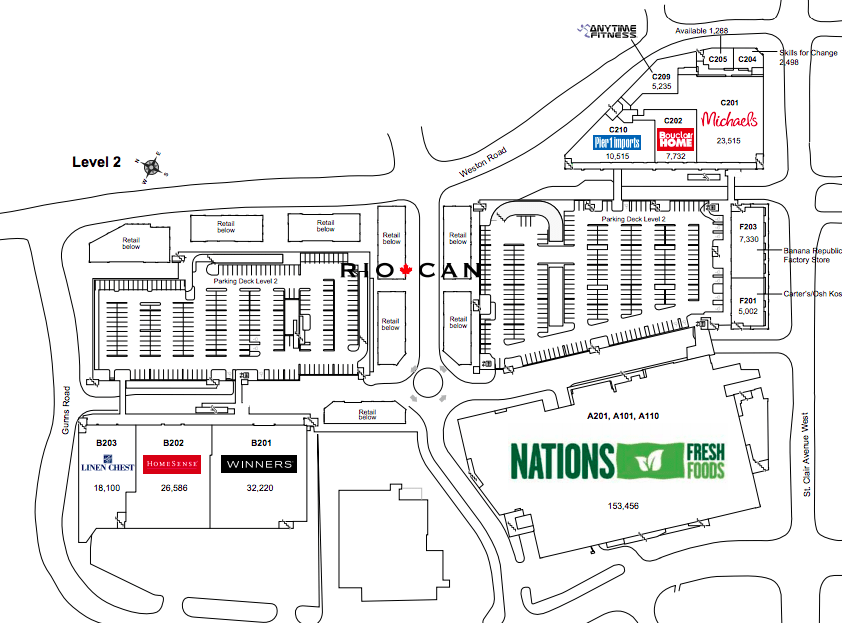
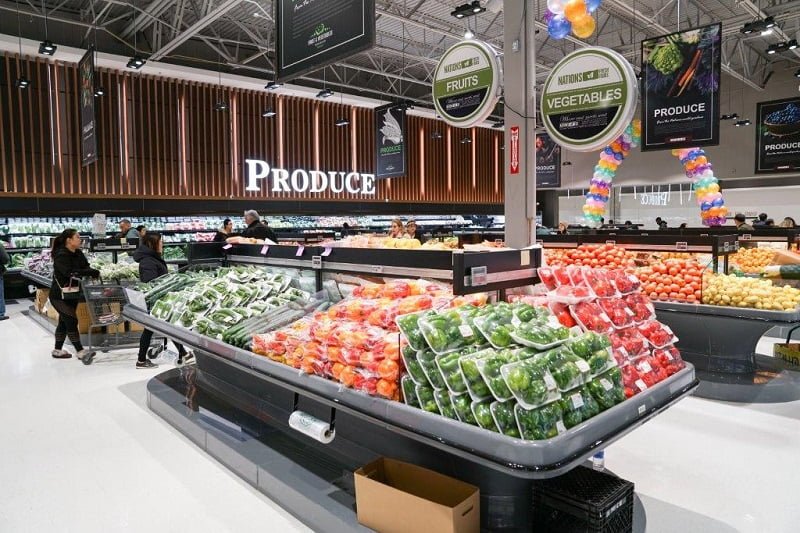
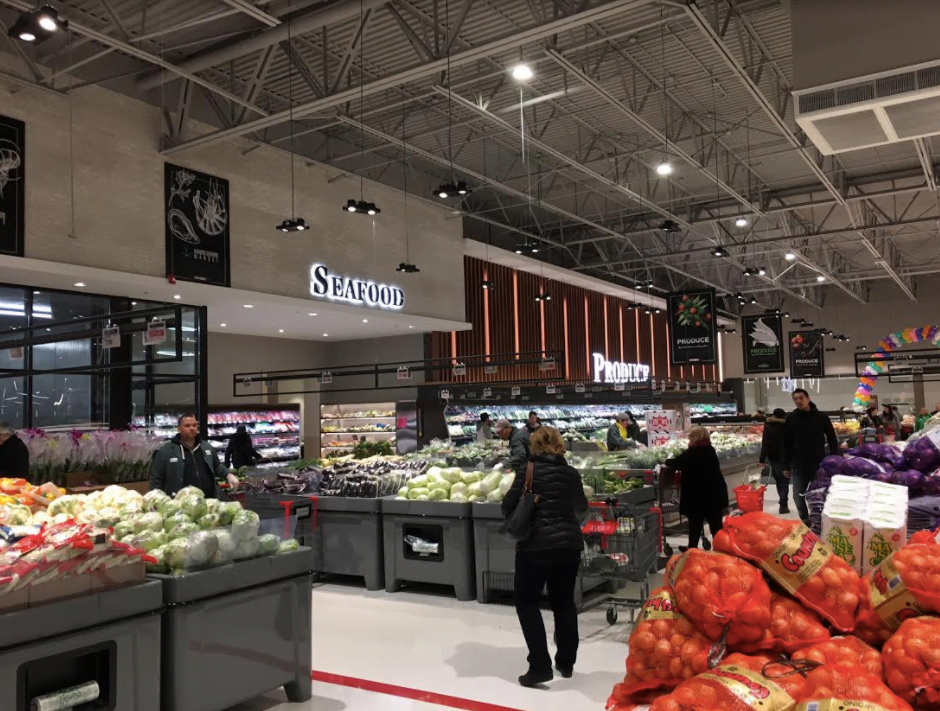
The Stock Yards Village development in Toronto has forged a unique partnership with Nations Fresh Food to bring an innovative grocery, dining and entertainment option to the shopping centre.

Nations, which is an Ontario grocery chain, took over the old Target department store space of about 150,000 square feet and opened last month.

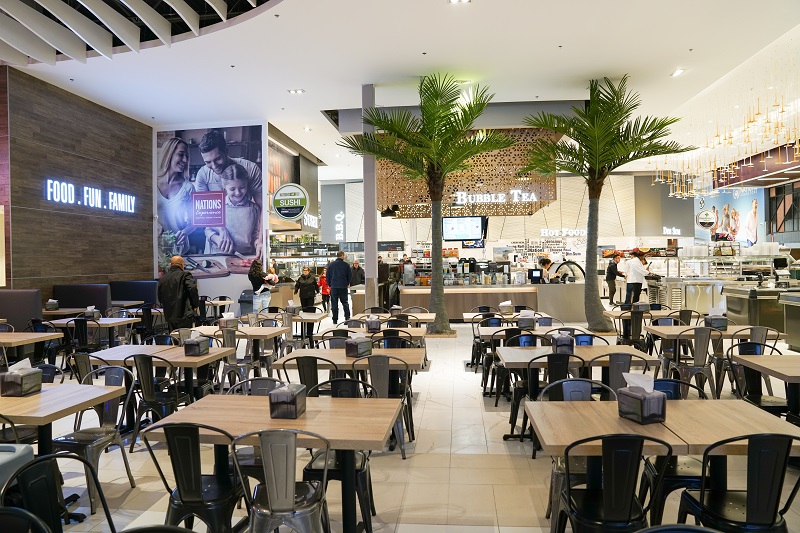
“It really is a new concept shopping experience because it’s not just grocery,” says Meredith Vlitas, director of corporate marketing for RioCan, which operates the Village. “The way that the store is set up there’s a large-format grocery component and a large-format, sit-down food court.

“There’s about 4,000 square feet of playground, 8,000 square feet of entertainment areas and then they have five themed party rooms. So when you go into the property there’s a large entertainment area, a really great arcade.”

Stock Yards (PHOTO: CRAIG PATTERSON)

Nations Fresh Foods is a multi-cultural grocery store chain which was founded August 28, 2012 in Woodbridge, Ontario. Besides the location at Stock Yards Village, the company has stores in downtown Hamilton and in Mississauga.   

When the Stock Yards Village opened in 2014 on St. Clair Avenue West at Weston Road, it was a unique urban development, intended to become a go-to destination for a wide variety of retail, dining and commercial uses in a vibrant, evolving community.

The property is owned by RioCan and the Canada Pension Plan Investment Board.

The open-air lifestyle shopping centre is about 550,000 square feet with 76 units.

Some of the bigger anchor tenants at the Village include Sport Chek, HomeSense, Winners, Roots and Banana Republic.

PHOTO: NATIONS FRESH FOOD
PALM TREES AND SOARING CEILINGS — IT’S NOT OFTEN THAT A GROCERY STORE HAS SUCH A SENSE OF DRAMA. (PHOTO: CRAIG PATTERSON)

“In the local trade area, there was a void quite frankly in terms of our offering from a retail perspective at the property. We really feel that Nations is a great fix. We’re really thrilled to have forged a partnership with them to bring a really innovative grocery, dining, and entertainment option to the shopping centre,” says Vlitas.

“Nations with its new concept really helps to diversify our offering and works to deliver on our vision of making Stock Yards Village a go-to destination for the community shopping needs.”

For RioCan, this provides a great example of how it is looking ahead to integrate new format options into the retail mix at its properties, giving customers new reasons to visit the mall.

FOOD COURT (PHOTO: NATIONS FRESH FOOD)

Jeremy Hurwitz, a leasing representative for RioCan, says the unique property required a unique retailer like Nations to cater to the diverse demographic in the community.

He says there’s still about 20,000 square feet of vacancy scattered throughout the property.

Leasing at the shopping centre has been very active over the past year with many new stores opening up – Snuggle Bugz, Healthy Planet, Unwired. A new Tim Hortons is also opening soon.

(STOCK YARDS VILLAGE. PHOTO: RIOCAN)

The Kids & Company, a 5,000-square-foot daycare, will be opening soon as well.

Prominent Mountain Climber Launches E-Commerce Retail Company

(SCREEN SHOT FROM THE 'LIVE OUT THERE' WEBSITE)

Mountain climber Jamie Clarke has never let obstacles and challenges get in the way of reaching a goal.

Twice he has scaled Mount Everest.

Now, the Calgary-based adventurer, author and public speaker, is taking on the challenge of the retail industry, promising to disrupt the outdoor gear and wear sector with the mission to get the world outside.

Clarke and business partner George Achilleos have launched their own brand featuring high-quality product at affordable prices available at outdoor apparel e-commerce company, Live Out There.

(JAMIE CLARKE)
(“CLIMB WITH US”: 2010 HANESBRANDS MOUNT EVEREST EXPEDITION – JAMIE CLARKE – LINKEDIN)

Clarke says the innovative direct-to-consumer strategy is aimed at revolutionizing the traditional retail model.

“I’ve summited Everest twice, and climbed the Seven Summits where one’s life depends on good gear,” says Clarke. “There can be no compromise on quality and everything we’re making at Live Out There will be more than good enough to use on another Everest climb.

“Our company mission is to get the world outside and the reason being is that people who spend time outside are happier, healthier and more creative. And if we’re really going to live up to our mission then we have to be able to focus on how we can tackle those problems of making high-quality gear less expensive for people.”

Clarke says Live Out There is the only outdoor gear brand in North America that embraces the four key elements of a retail revolution: high-quality product; radical transparency including manufactured cost disclosure; fair pricing from sourcing to consumer; and direct-to-consumer delivery which eliminates middlemen and the elevated cost associated with that.

(SCREEN SHOT FROM THE ‘LIVE OUT THERE’ WEBSITE)

Clarke and Achilleos opened a bricks and mortar store, Out There Adventure Centre, in 2003 in the heart of downtown Calgary. They then opened the e-commerce business in 2009. The physical store closed operations in June of this year, partly due to the faltering economy in Alberta which suffered through two years of a brutal recession caused by a collapse in oil prices.

“The systemic problem was sort of a global and certainly North American revolution occurring in retail which is exciting and painful,” says Clarke. “It was a realization for us that the distribution channel is broken, antiquated and needs to change.”

“And instead of being part of the problem. We wanted to be part of the solution. I think that’s a cautionary tale for many businesses in our digital economy and retail in particular. You better either be part of the solution because if you remain part of the problem you’re going to get wiped out.”

In November, Live Out There launched its own product which is made in two factories in China. The company has offices in Calgary and Montreal. Distribution centres are located just outside of Los Angeles and in Kamloops, B.C.

“Transparency and price disruption have come to other verticals, but the outdoor industry has been stuck in the same wholesale-retail model for half a century and this does not provide a fair price to consumers,” explains Clarke. “Outdoor gear is too expensive because of this, but it doesn’t have to be. Consumers are paying too much.”

Live Out There’s direct-to-consumer model cuts out the middlemen – and the corresponding markup that comes with it – enabling the brand to sell a higher quality product for significantly less than what’s on the market today, adds Clarke.

On the company website, https://liveoutthere.com, there is clear information of how much it costs to make the product, the margin and the retail markup comparing Live Out There prices to those in the traditional retail model.

MUJI Opens Massive Vancouver Flagship to Huge Crowds [Video/Photos]

MUJI Opening Robson Street (PHOTO: MUJI)

Minimalist Japanese retailer MUJI has opened its largest store outside of Asia on Vancouver’s Robson Street. Thousands lined up for the store’s opening on Saturday, and the lineups are expected to continue well into 2018. 

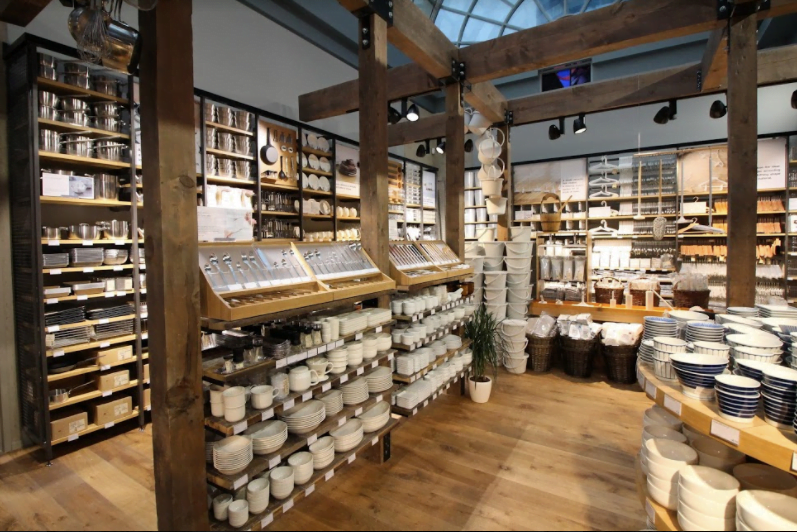
The 14,507 square foot store is unlike any MUJI location in North America, offering a host of products and services not available at its other Canadian locations. MUJI says that the store has more than 4,500 products including household goods, apparel and food, in a remarkable retail space that includes a massive skylight above part of the store. 

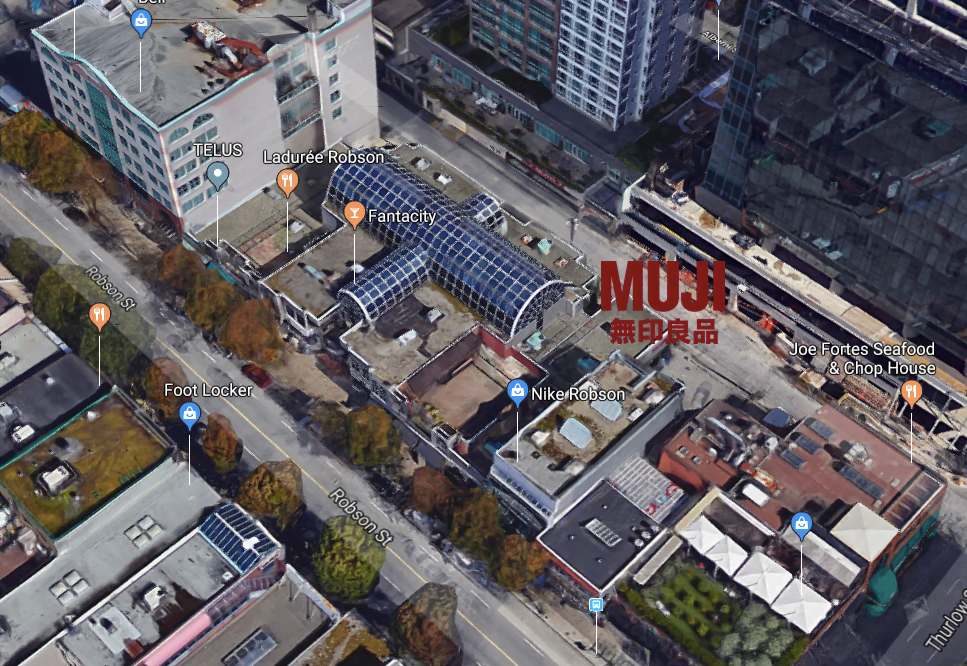
The rounded skylight is a relic from the Robson Galleria, which once occupied the 1125 Robson Street address and housed retailers such as Polo Ralph Lauren, Pegabo Shoes and Alfred Sung. The atrium eventually became a retail space and The Gap replaced the Ralph Lauren store — MUJI occupies the former Gap space as well as the adjacent atrium, in what is now one of MUJI’s largest stores globally. 

(CLICK FOR INTERACTIVE GOOGLE MAP)
(LOOKING FROM ABOVE: MUJI’S VANCOUVER FLAGSHIP INCLUDES THE GLASS ATRIUM FORMERLY HOUSING THE ‘ROBSON GALLERIA’ MINI-MALL THAT ONCE OCCUPIED THE SITE. THE 10,000 SQUARE FOOT POLO RALPH LAUREN STORE WAS EVENTUALLY REPLACED BY THE GAP, PRIOR TO BEING LEASED TO MUJI. IMAGE: GOOGLE STREET VIEW)
(RENDERING: MUJI)

MUJI opened its first store in British Columbia in August of 2017 at Metropolis at Metrotown and at the time, it was the largest in Canada at 7,770 square feet. Both the Metrotown and Robson Street lease deals were coordinated/negotiated by Martin Moriarty and Mario Negris of CBRE Vancouver, as well as Arlin Markowitz from CBRE Toronto.

Retail Insider’s Susanne Milner attended the pre-opening on Friday evening — Satoru Matsuzaki, President of parent company Ryohin Keikaku Co. Ltd. was in attendance, as was MUJI Canada president Toru Akita as well as other officials. The opening kicked off with a traditional sake toast and Japanese drumming. 

(OPENING CELEBRATIONS. PHOTO: SUSANNE MILNER)

(Video above is by Susanne Milner) 

A few of the store’s unique components include: 

(PHOTO: MUJI)

MUJI Coffee Counter: MUJI Canada partnered with Vancouver-based Ethical Bean Coffee (known for its 100% fairtrade certified, organic coffee, not to mention social responsibility, global awareness, and environmental accountability). 

Book section: MUJI’s Robson Street location includes books for adults and children in a relaxing space surrounded by natural wood and plants. Books are carefully selected and displayed with related living goods, allowing customers to experience a lifestyle with books. Visitors can sit in this area to browse through the book selection while enjoying a cup of coffee. (Books are from Vancouver-based Raincoast Books)

Aroma Bar: Customers can create a customized fragrance blend by choosing from more than 40 essential oils and related unique scents. A customized bottle of essential oil costs $22. 

(COFFEE BAR. PHOTO: MUJI)
(BOOK SECTION. PHOTO: MUJI)
(AROMA BAR. PHOTO: MUJI)

As well, the store offers the following services: 

Style Advisor: The complimentary service can be booked ahead for those seeking an updated wardrobe. 

Interior Advisor: The consultation service can recommend MUJI furniture and storage solutions, not to mention how to create a relaxing living environment with the aesthetics of simplicity — something MUJI is big on. The complimentary service is for almost any room in the home, and may include a 3D simulation by the designer. 

‘MUJI YOURSELF’: A customization service including embroidery, stamps, gift wrapping and label printing. Customers can personalize various MUJI products such as shirts, handkerchiefs, bags, towels, etc. Each design costs from $3 to $5, according to the size. Stamps can be used to personalize stationery and gift bags, and label printing can be used to customize various MUJI products such as stationery, storage and  furniture, costing between $0.20 to $0.80 each, depending on size. 

Plants: For the first time in North America, MUJI is offering live plants for shoppers. various potted plants are available for sale (from Surrey’s Burnaby Lake Greenhouses), as well as a small selection of gardening accessories. 

MUJI Labo: The elevated apparel line, available at selected MUJI flagships globally, was founded in 2005 and is known to “experiment with new styles, materials and manufacturing processes”. 

(PHOTO: DAVID IAN GRAY)
MUJI Vancouver
(PHOTO: MUJI)

Susanne Milner interviewed MUJI Canada president Toru Akita, and he provided some insight into the new Robson Street flagship. Interestingly, MUJI chose Robson Street after surveying guests at its January 2017 pop-up at the Fairmont Pacific Rim Hotel, where 60% of respondents surveyed said that Robson Street would be the best location for a flagship. The store was originally planned to be about 10,000 square feet (taking over the Gap space) but Mr. Akita decided that an even larger space was required for the retailer to test out new concepts. 

Mr. Akita explained that the company has plans to open as many as 25 stores in Canada, and that details are being finalized for more stores in the Lower Mainland (one lease is already signed). The Metrotown store is already doing so well, in fact, that MUJI is accelerating its expansion plans for more stores in the Vancouver area — and other markets are in line for MUJI stores as well. 

Alberta and Quebec are on the company’s radar for stores as is the Greater Toronto Area, which already has four MUJI stores. MUJI entered Canada through Toronto in November 2014 when it opened a 4,400 square foot store on Dundas Street West, followed by a November 2015 opening at the Square One shopping centre in Mississauga (5,225 square feet), an October 2016 opening at Toronto’s Yorkdale Shopping Centre (6,375 square feet), and the summer 2017 opening of a 6,000 square foot store at CF Markville in Markham. 

Overall, feedback from those who attended the store opening (including Susanne Milner and David Ian Gray of consultancy DIG360) is that the store is impressive with its minimalist design, ample use of reclaimed wood, and overall product and service selection. Mr. Gray said that he expects the store to do “exceptionally well” and that MUJI “did a great job in taking a hard-to-design legacy space and making it warm and inviting”. 

For those wishing to see the store, however, there might be a wait — long lineups are expected to continue into 2018 to see the new space, a phenomenon also witnessed with the opening of Canada’s first Ladurée last year a few doors west of MUJI on Robson Street, both contributing to the continued revival of Vancouver’s best-known retail strip. 

See below for more photos of MUJI’s Vancouver Robson Street flagship. 

Companies Embrace Technology to Manage Surge in Online Sales

exc-5a1e2e3c0d92971bbc7e87fe

As e-commerce sales grow, retailers and logistics companies are facing significant challenges in facilitating the shipment and delivery of a high volume of goods – particularly during the busy holiday season. Many companies are embracing mobile technology to help manage these challenges.

“E-commerce is continuing to gain traction in Canada and the rest of the world,” says Suneil Sastri, director of product marketing at software company SOTI Inc. “Online sales are going to continue to grow somewhere between 8-10% year-over-year over the next three years, until it hits about 10% of total retail sales in Canada by 2020.”

A significant proportion of those online sales occur between the end of November and the beginning of January. That means huge volumes of goods are being shipped around the world in a relatively short period of time.

Canadian courier Purolator Inc., for instance, recently reported that it anticipates it will move approximately 20 million packages this peak season. And U.S. multinational courier company FedEx Corp. expects to ship 380-400 million packages worldwide during the busy holiday shopping season.

“Ultimately, this has been a boon for transportation companies and parcel delivery companies, including postal services,” Sastri says.

However, the surge in business is also creating challenges for these companies. With e-commerce companies such as Amazon offering same-day and one-day shipping, logistics companies must find ways of operating more efficiently than ever before, Sastri says.

“Because there are higher volumes of deliveries and there is pressure for fast and reliable deliveries, they need to be able to be better coordinated across their entire supply chain,” he says. Companies also need to find ways of minimizing costs in order to remain competitive, he adds.

Mobile technology is one tool that logistics and transportation companies are embracing to navigate these challenges. For example, Sastri says many companies are using RFID scanners in their warehouses to track goods. In addition, many transportation companies are equipping their truck drivers with tablets, which can help provide drivers with relevant pick-up and delivery information, as well as traffic information to optimize routes.

“Mobile technology is one of the keys to helping companies overcome the challenges across their entire supply chain,” Sastri says.

Embracing mobile technology can help companies deliver items faster, Sastri says, but more importantly, it improves reliability. By being able to track the location of an item, logistics companies can more efficiently coordinate the pick up and delivery of items, and track the process from end to end.

“If you can’t meet your delivery windows, it will cause angst among your customers,” he says. “Mobile technology really guarantees the reliability and confidence in regards to that same-day, one-day or even two-day delivery.”

A growing number of retailers are also embracing mobile technology into their businesses, Sastri adds, as consumers increasingly demand a seamless experience when shopping both online and in stores.

“As you look at these new digital consumer behaviours, it extends beyond [online sales],” he says. “Consumers are looking for this better omni-channel experience.”

For example, Sastri says many retailers are equipping their sales associates in stores with mobile devices. That enables store employees to help customers search for products and conduct transactions on the spot, rather than forcing customers to wait in line for a cashier.

“It makes that shopping experience better,” he says.

Brief: Fendi Grows, MINISO Expands in Ontario, Decathlon Announces 2nd Canadian Store

exc-5a208b94f9619acc4f4a73cd

Fendi Expands its Presence in Canada

Italian luxury brand Fendi continues to grow its presence in Canada, including new and expanded concessions contained within Holt Renfrew stores. 

The ground-floor Fendi accessory boutique at 50 Bloor Street West in Toronto recently saw its space grow to include an expanded offering with pieces of ready-to-wear. The expansion was made possible by taking space in front of the existing Fendi boutique inside of Holt’s, which has operated there for several years. Vergo Construction, which has worked with a number of luxury brands (as well as Ladurée, which opens next week at Yorkdale) built-out the new Fendi space. 

Fendi also operates a women’s ready-to-wear boutique at Holt Renfrew in Vancouver — the shop opened several months ago, and it also includes luxurious furs. Fendi is expected to open standalone stores in Canada at some point, though nothing is yet confirmed. 

Lightspeed Appoints New Chief Technology Officer

Innovative Montreal-based Lightspeed, known for its cloud-based point-of-sale system for retailers and restaurants, has announced that John Vandermay will be the company’s new Chief Technology Officer. His nomination comes in the midst of incredible growth for Lightspeed, following the announcement that the company closed a US $166 million (about $207 million Canadian) series D round investment

Mr. Vandermay has over 25 years of software engineering and global leadership experience — he was most recently with Visto (formerly Collective), an advertising technology company in NYC and as CTO there, he led the transformation of the company from an advertising media service provider to a technology platform by building a breakthrough SaaS enterprise advertising platform that seamlessly provided transparency and interoperability between the myriad of ad technologies.

Mr. Vandermay will also curate a blog series entitled Lightspeed talks code. Read the first entry here.

“It’s incredible to welcome John back to Canada and into our Lightspeed community, at the height of growth in our development sector. John’s extensive experience in software engineering and product development will make him an invaluable asset to the Lightspeed team,” said Lightspeed Founder and CEO Dax Dasilva, “as a Canadian company, we’re proud to be part of an innovative network of technology companies that are attracting top industry talent back to Canada.”

In 2016, Lightspeed launched its omnichannel product, seamlessly merging in-store POSeCommerce and mobile, empowering customers to sell anywhere, at any time.

Bayview Village announces Canadian exclusive holiday pop-up with design superstar, served up with fine wine

Toronto’s Bayview Village Shopping Centre has secured the exclusive Canadian location for celebrity favourite and cult handbag designer ela’s holiday pop-in. Opening December 1, ELA & VINO will also be serving a selection of the world’s best wines and Prosecco courtesy of Noble Estates Wine & Spirits in a first-of-its-kind shopping experience.

Meghan Markle, Gwyneth Paltrow and Sophie Trudeau are fans of the ela handbags brand, which has risen to cult status due to its signature silhouettes and humble luxury aesthetic. 

“The Bayview Village shopper is very much an ela girl – she is sophisticated, glamorous yet understated, and values the quality craftsmanship of luxury brands. As the ‘hautest’ shopping destination in Toronto, Bayview Village was an obvious choice for our holiday pop-in,” says Ela Aldorsson, co-founder, ela. “Of all the possible locations in Canada and the world, we are thrilled and delighted that ela has chosen Bayview Village. ela is a natural addition to our 360-degree premium lifestyle experience,” says Melissa Evans-Lee, Marketing Director, Bayview Village. 

ELA & VINO runs from December 1 to 29 and is located in the Centre’s East Corridor, adjacent to TNT – The New Trend. Wine and Prosecco sampling will take place from Noon to 9pm Monday to Friday, and Noon to 7pmSaturday and Sunday. A launch party will take place Tuesday, December 5, from 4pm to 7pm.

Sorelle and Co. Opens First Standalone Toronto Location

Vaughan-based bakery Sorelle and Co., which sells artful gluten-free, soy-free, sesame-free, vegan, nut-free & preservative-free food, known particularly for its desserts. 

The beautiful new space at 161 Yorkville Avenue is located at the base of the former Four Seasons Hotel on Avenue Road. The interior is reminiscent of its other two locations — a standalone cafe and bakery in Vaughan, just north of Toronto, as well as a concession in the Pusateri’s Food Hall at Saks Fifth Avenue in downtown Toronto (which opened about a year ago). 

The Yorkville space is beautifully decorated and boasts a bright corner space — it includes high tea service as well as space for private gatherings. Sorelle and Co. is a welcome addition to the Yorkville area, which is undergoing a remarkable transformation that includes new retailers, restaurants, and billions of dollars in commercial and residential construction. 

Toronto’s Hottest New Pop-Up Space Sees New Tenants

The three-level 202 Queen Street West commercial building in Toronto continues to see cool new installations. The retail space housed hat retailer New Era for about 10 years — New Era left its Canadian retail operations over the summer. 

Since then, several companies have hosted pop-ups in the space. For example, Microsoft Xbox hosted a One X pop-up on November 18-20, and on October 18-22 Square hosted the space. Photos above are of the Xbox pop-up. 

Below is a 3D tour of the space, which was provided by Warren Vandal of GEOmarketing Solutions — he uses an innovative Matterport platform to photograph stores to make it appear that one is walking through the multi-level space. 

For more information on 202 Queen Street West, contact Joseph Gatto of Chestnut Park Realty at: ggatto@chestnutpark.com

*****

Sandro and Maje Open at CF Toronto Eaton Centre

Upscale Paris-based brands Sandro and Maje have opened at  CF Toronto Eaton Centre, sharing a 3,285 square foot retail space that was most recently occupied by American fashion retailer BCBG between the mall’s Marc Cain store and its Apple Store.  Sandro and Maje will also open soon at the McArthurGlen Designer Outlets in Vancouver — their first outlet locations in Canada. 

Sandro and Maje opened their first Canadian stores in the fall of 2016 at Toronto’s Yorkdale Shopping Centre. Until the fall of 2016, Canadians could only buy Sandro and Maje collections in a handful of concessions at Hudson’s Bay

Last year in an interview, SMCP representatives said that Canada could see approximately five freestanding locations each for both Sandro and Maje, and that Vancouver was certainly a target city for at least one location for each of the brands. 

Sandro and Maje are considered to be in the ‘contemporary’ price-point — Sandro began in Paris in 1984, and is known for focusing on “sleek, chic and effortlessly cool womenswear and menswear” — there are over 500 Sandro stores worldwide, and parent company SMCP (which stands for Sandro, Maje, Claudie Pierlot) operates close to 1,200 points of sale globally in 35 countries, with about 4,300 staff. Sister-label Maje, dedicated to women’s fashions, was founded in Paris in 1998 and with over 400 locations worldwide, is known for “bohemian-chic, solar, and more feminine womenswear collections”.  

CF Pacific Centre Partners with ClickDishes for its updated Urban Eatery

Vancouver’s CF Pacific Centre, part of the Cadillac Fairview mall portfolio, has partnered with Canadian startup ClickDishes on a new initiative. The partnership enables restaurants at CF Pacific Centre’s newly reopened Urban Eatery to offer Starbucks-esque mobile ordering to mall patrons, making it one of the first smart food courts in Western Canada.

ClickDishes is a social foodie app and mobile platform — with their launch at CF Pacific Centre shoppers are able to order their meal from the restaurant of their choice via the ClickDishes mobile app, skip the line, and pick up their food from the restaurant when it is ready.

ClickDishes also gives shoppers the chance to make the most out of their time at the centre while still being able to enjoy the diverse food options there. For restaurants, it helps them gain more customers and process more sales.

MINISO Continues Push into Ontario

Chinese variety retailer MINISO, known for its value-prices, continues to open stores in Ontario. Its first store in the province opened on October 21 at Pickering Town Centre, east of Toronto, followed soon after by a store at Stone Road Mall in Guelph. A store at Upper Canada Mall will open this weekend, with Richmond Hill’s Hillcrest Mall and Oshawa’s Oshawa Centre to see MINISO locations open in early 2018. 

MINISO opened its first Canadian stores in the spring of 2017 in Vancouver, where it continues to rapidly open locations. The company says that it plans to open as many as 500 stores in Canada in the coming years. MINISO’s product offerings are also extensive, including home goods, kitchenware, underwear, cosmetics, toys and even electronics. Products are branded by name and are considered to be of exceptional quality for the price. The company was co-founded in 2013 by Japanese designer Miyake Junya and Chinese entrepreneur Ye Guo Fu, and is headquartered in Guangzhou, China. MINSO’s goal is to open 6,000 stores globally by 2020, averaging 80 to 100 store openings per month. 

INDOCHINO Launches ‘The Proposal’ campaign

Vancouver-based made-to-measure suit company INDOCHINO has launched a fun campaign called ‘The Proposal’ — men who ask their significant other to marry them by next Valentine’s, dressed in a new INDOCHINO suit, will receive a free custom suit to wear on their wedding day.

How it Works:

  1. Between now and December 31, 2017, buy a suit from INDOCHINO. 
  2. Propose to your partner by next Valentine’s Day in your new INDOCHINO suit.
  3. Share a photo or video of the proposal publicly on Facebook or Instagram up until 11:59pm EST on February 14, 2018. Tag @Indochino in your post and use the hashtag #TheProposal.          
  4. The first 200 verified participants to enter will receive an INDOCHINO premium two-piece suit for their wedding.       

“Every year, we dress thousands of grooms and it is always a huge honour to be a part of this very special moment in a couple’s life,” said Drew Green, CEO of INDOCHINO. “Now, we want to celebrate the beginning of such a beautiful journey and give these valued customers their wedding suits, ensuring they look their very best on their wedding day.”

Decathlon Secures Second Canadian Retail Location

Value-priced large format French sporting goods retail chain Decathlon has announced that it will open its second Canadian store in Laval, near Montreal in 2019. Over the summer, the retailer announced that it would open its first North America location in suburban Montreal at Mail Champlain next spring — Quebec is the launch point for Decathlon on the continent. 

The Laval store will be located at Centropolis de Québec, at the intersection of Highways 40 and 540. Cominar REIT is the landlord — the $300 million Centropolis de Québec commercial centre will include a 340,000 square foot Ikea store, opening in the summer of 2018. 

Founded in France in 1976, Decathlon Group has more than 1,100 stores in 28 countries, with more than 78,000 employees and revenue of about C$15 billion. It designs, manufactures and distributes a wide range of sports-related equipment and accessories, with over 20 in-house brands dedicated to different sports, and each with its own design team. The company has yet to enter the United States, though it opened a store last year in Mexico. 

Decathlon could disrupt the Canadian retail industry if it expands nationally, potentially threatening homegrown retail chains including FGL SportsSAILSportiumMEC, and even retailers such as Canadian Tire. While some question its brand awareness, our August of 2017 article announcing its arrival was one of our most-read articles of the year — if that’s any indication of the level of excitement, we think it will do just fine. 

*Retail Insider will periodically feature pop-up concepts in its Briefs. For more information, contact Editor-in-Chief Craig Patterson at: craig@retail-insider.com 

New App Launches to Help Students Find Jobs

Image: SWOB

A new app is helping to make it easier for students to find jobs and for companies to reach potential new staff.

Swob Inc., is the Tinder for jobs. It’s a free app designed to make job searching easy and convenient. Through the use of technology, students can now search for a job with the simple use of their phone.

Swob is the first-of-its kind service to target students in high turnover industries such as retail, and food services for part-time, seasonal and full-time employment.

The idea was the brainchild of brother and sister co-founders Stephanie Florio and Alexander Florio. Both studied at York University and then both went to Seneca and studied marketing. After graduating, both Alexander and Stephanie worked in advertising and public relations for four years.

“I was working in a marketing agency and for the first few months loved it but fast forward I didn’t enjoy it at all,” says Alexander, who then ended up spending a lot of time looking for another job.

He became frustrated but that’s when the idea for Swob was born and the duo has never looked back.

They met with students and got their feedback – not much was tailored for this demographic in terms of the job hunt process.

“We made it very easy for them . . . We basically eliminated the step of them having to go into the malls with a stack of resumes. We’re making that initial introduction for them,” says Alexander.

Since the app went live on November 1, 670 students have used it.

It’s free for students and Swob generates its revenue from companies who post jobs on the app. To date, its clients include McDonald’s, Tim Hortons, Pizzaville, The Keg, Kelsey’s, Paramount Fine Foods, and M&M Food Markets.

“Students that are looking for jobs when they download the app they answer a few simple questions and create a profile and from there they select how far they want to travel depending on their location and then they can select what industry they would want to be in and what they’re looking for,” says Alexander. “So whether it be full-time, part-time. And they can select the industry – retail, restaurant, customer service. From there, jobs will start to appear.

“It’s the Tinder (dating app) for jobs. If a job appears and they don’t like it, they swipe left and never see the job again. Swipe right if do like the job and then they can apply.”

For employers, they are able to experience the benefits of securely filtering through the best possible candidates, safely and efficiently.

For students, it’s a way to look for part-time, full-time and seasonal positions.

“As of right now, we’re only available in Toronto in the GTA area but that’s just because we’re a startup right now. But slowly, slowly we want to expand nationally all across Canada for sure,” says Stephanie.

She says the service is only live now on the App Store but early next year it will get the app for Google Play for androids.

Mark’s Rebrands to Attract New Customers

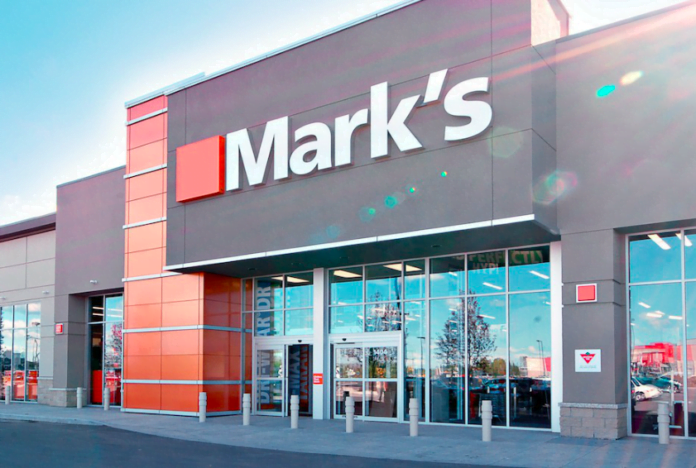
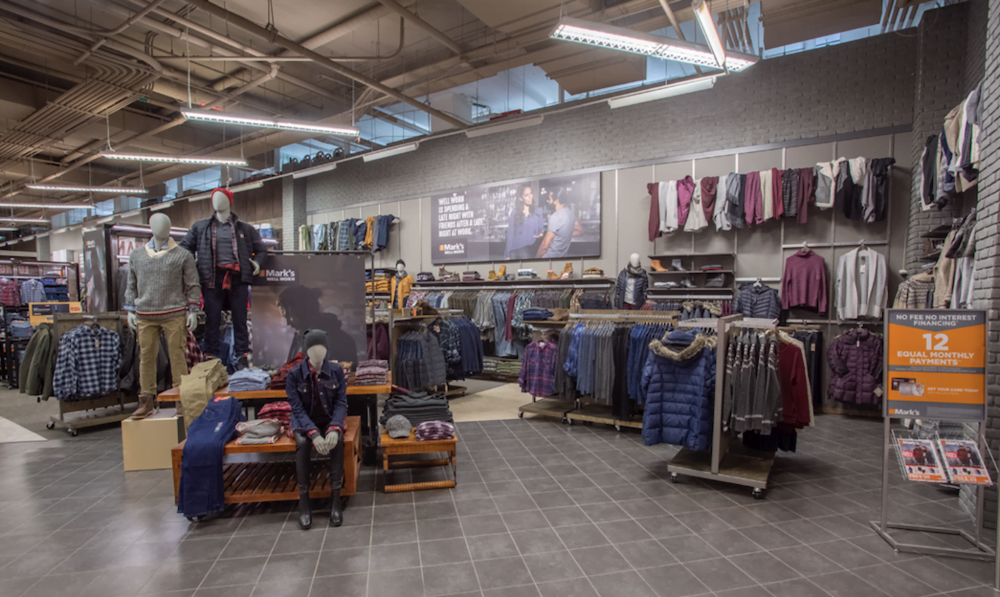
(PHOTO: MARK'S)

Mark’s, a Canadian clothing and footwear retailer specializing in casual and industrial wear, has embarked on an ambitious new branding campaign to attract new customers.

Well Worn is an expression of the company’s new brand platform with the goal of getting back to the retailer’s heritage which began in 1977 as Mark’s Work Wearhouse with its first store in Calgary.

“It’s about being authentic and real,” says PJ Czank, president of Mark’s, which today has 384 stores across the country. The retailer falls under the umbrella of Canadian Tire.

(UPDATED STORE INTERIOR. PHOTO: MARK’S)

“Mark’s has been around for 40 years and it’s a brand that people know and trust. We built the company on quality and durability. So for us Well Worn is really a positioning that celebrates the Canadians like us who persevere with grit and determination.”

Canadians who work hard and play hard.

“Mark’s is still the same Mark’s that customers have known for 40 years but our goal is to expand and to introduce the brand to a new consumer as well,” adds Czank.

To that end, Mark’s is opening three pop-up stores November 30 on Spring Garden Road in Halifax, Queen Street in Toronto and CF Market Mall in Calgary.

(WELL WORN IS BEING A JACK OF ALL TRADES, AND MASTER OF A FEW. – MARKS CANADA INSTAGRAM)

“We were looking for spaces in places that would reach a customer who traditionally wouldn’t consider Mark’s. It’s a bit of a first for Mark’s. It’s a different approach. It’s allowing us to bring the brand platform – the Well Worn platform – to a new consumer,” says Czank.

“The goal of this is to have fun with the concept. We want to introduce a new concept and we’re putting these stores up very quickly. And this shows the new approach that Mark’s is going to have. We want to be nimble and we want to react to consumers. We want to be able to understand what it is that’s going to resonate with a Well Worn customer.”

The pop-up locations will be operating for six months.

Recently, Mark’s turned its store at the CF Toronto Eaton Centre into a new concept. The assortment was edited and re-merchandized as the company focused on its hero categories which include outerwear, jeans, casual shoes and industrial – its leading categories of clothing.

(WELL WORN IS SEEING YOUR 7-DAY WEEK TURN INTO 8. – MARKS CANADA INSTAGRAM)

“The appeal of the store is already attracting a different customer into the store. It’s created an easier shopping experience. We’re showing people how to wear clothes versus  traditionally commodity merchandising,” says Czank, adding that the concept has found its way into 85 stores across the country.

“Anybody that has shopped at Mark’s will still feel comfortable but anybody new walking into Mark’s is going to look at Mark’s in a whole new way.”

The overall goal is to change perceptions and introduce new customers to Mark’s thereby expanding its target audience.

“I think there’s a lot of very exciting things that are going to happen for Mark’s in the future,” says Czank.

The first Mark’s Work Wearhouse store opened August 14, 1977 in Calgary as an industrial accessories retailer. With early success, the company expanded rapidly going public in 1981. Mark’s Work Wearhouse was purchased by Canadian Tire Corporation for $116 million in 2002.

Hermès Unveils Impressive Mink Mile Flagship

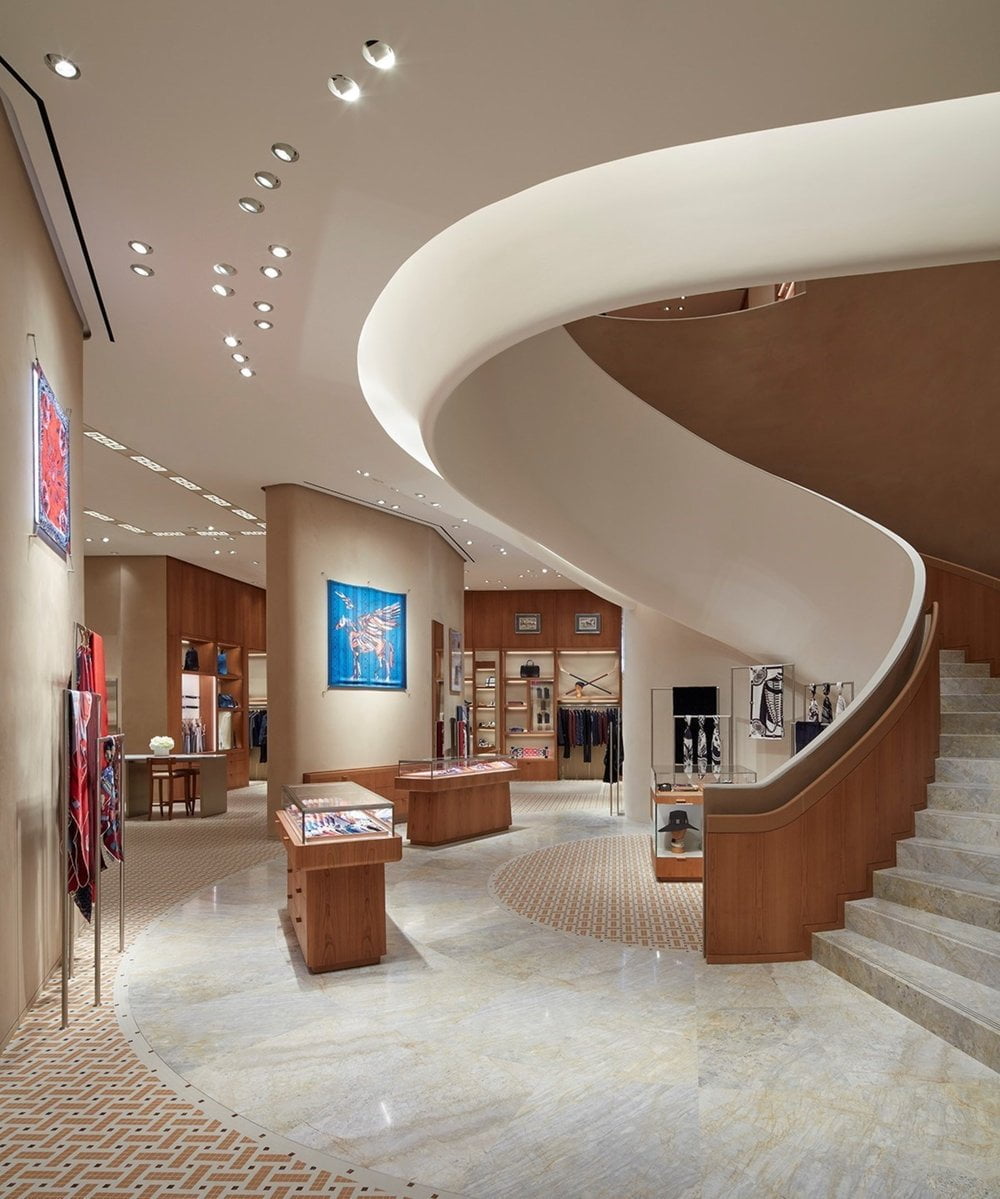
(PHOTO: HERMÈS/EVAN DION)

Iconic French luxury brand Hermès has reopened its Toronto flagship, in a retail space that is considerably larger than its former location up the street. The expanded Hermès marks a milestone in the transformation of Bloor Street West, as it continues to attract global flagships. 

Now located at 100 Bloor Street West, Hermès’ new Toronto flagship includes about 5,800 square feet of retail space. In total, the store occupies almost 12,000 square feet with about 4,000 square feet on the ground-floor, as well as an additional 8,000 square feet on the second level. 

Arlin Markowitz of brokerage CBRE’s Toronto Urban Retail Team negotiated the 100 Bloor Street West Hermès deal. 

Hermès’ previous location at 130 Bloor Street West, which closed last week, had about 2,300 square feet of retail space in a leased premises spanning 3,965 square feet (Now downsized to 2,520 square feet, the former Hermès space is being offered for lease by CBRE’s Mr. Markowitz). 

(CLICK IMAGE FOR INTERACTIVE GOOGLE MAP)
Hermès Toronto at 100 Bloor Street West (CNW Group/Hermes Canada inc.)
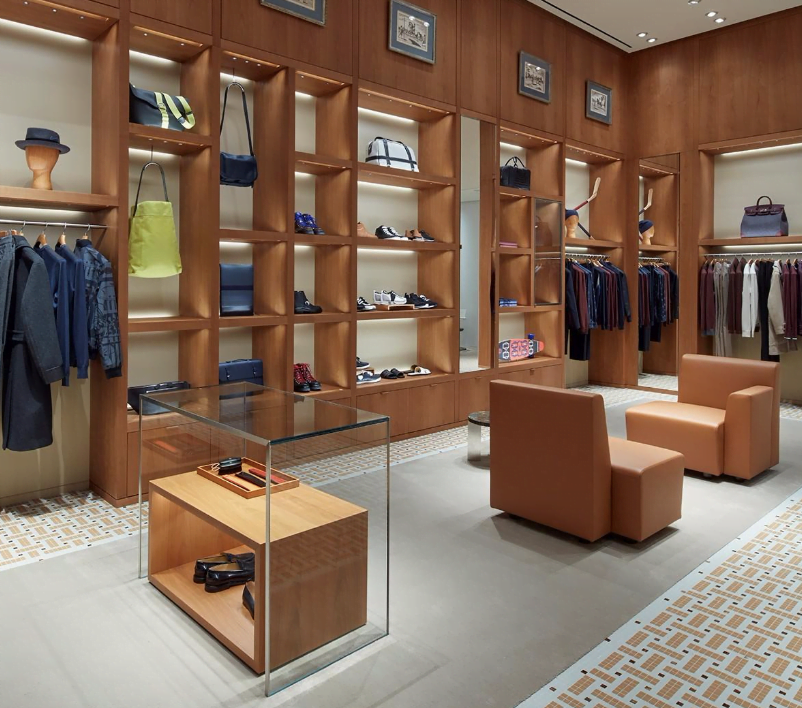
(MEN’S AREA ON THE MAIN FLOOR. PHOTO: HERMÈS/EVAN DION)

The new Hermès is about 10 times the size of the brand’s first Toronto boutique, which opened at Hazelton Lanes (now Yorkville Village) in 1976 with just 600 square feet of accessories (it expanded in 1981 to carry ready-to-wear). York Hannover, Hazelton Lanes’ developer, sold the licensed boutique to Jennifer Carter in 1989 and in the spring of 1992, she relocated the boutique to The Colonnade at 131 Bloor Street West (in the 2,240 square foot retail space now occupied by Mulberry). In the summer of 2008, Hermès relocated to 130 Bloor Street West, and Ms. Carter remains President of Hermès Canada to this day. 

Hermès new 100 Bloor Street West store is located in a retail space formerly occupied by Williams Sonoma, which exited Bloor Street in January of 2017. A Holt Renfrew Men’s store is located next to Hermès to the east, and a luxury brand will open a boutique next year on the other side of Hermès. 

The new Hermès’ exterior includes a simple beige rose brickwork facade with beveled windows and large, recessed windows. The original Williams Sonoma store interior was stripped to the studs and rebuilt — the complicated and disruptive process took months. Parisian architecture agency RDAI designed the space. 

(STONE FRAGRANCE TABLE IN A DEDICATED FRAGRANCES AREA ON THE GROUND FLOOR)
(MAIN FLOOR SILK AREA)

At the centre of the store is an oval staircase with marble steps and cherry wood topped with a leather handrail. It’s immediately visible as one enters from the ground floor, which also houses scarves, jewellery, fragrances, and men’s ready-to-wear. The fragrance area includes a dedicated table, and the men’s area includes custom-made hockey sticks created specifically for the new store. 

The second floor includes an expansive offering of women’s ready-to-wear, as well as Canada’s first Hermès home department. Included in the home section are wallpapers and textiles as well as tableware, plaids, and objects for the home. The second floor also includes a personalized space that can be closed off for privacy. 

Because of the configuration of the space, which includes ample second-level back-of-house operations, the store’s retail 5,800 square foot area is smaller than some of Hermès’ North American flagships. In New York City, Hermès occupies more than 30,000 square feet on Madison Avenue in two stores (Hermès operates a standalone men’s store as well as a grand space for women/home, as well as atelier) and other large stores include Beverly Hills (12,000 square feet), Las Vegas (Wynn, 13,000 square feet), Houston (10,117 square feet), Dallas (8,400 square feet), Miami Design District (12,000 square feet), Boston (8,700 square feet) and at The Bravern in suburban Seattle (9,300 square feet). A substantially expanded San Francisco flagship is also due to open soon. 

(GROUND FLOOR SILK)
(PRIVATE SHOPPING AREA ON THE 2ND FLOOR)
(CLOSEUP OF THE STORE’S BRICKWORK FACADE — THOUSANDS OF BRICKS WERE BROUGHT IN FROM DENMARK)

Hermès will continue to expand its presence in Canada over the next couple of years. In a press release, Holt Renfrew confirmed that Hermès will expand its Montreal presence with a new 3,000 square foot boutique in an overhauled ‘Holt Renfrew Ogilvy’, which will result in the closure of a nearby Holt Renfrew as the retailers merge (Hermes operates a small street-front boutique at Montreal’s Holt’s). Vancouver will also see an Hermès flagship open in about 18 months, with about the same amount of retail space as the new Toronto flagship. Hermes also has a small boutique at Holt Renfrew in Calgary, which it opened in 2009. 

Toronto’s Bloor Street West is undergoing a luxury transformation that includes the addition of several new retailers. Moncler, MCM and APM Monaco recently opened on the street, and Prada is almost finished with an overhaul that has substantially expanded its Colonnade space into a massive global flagship. Luxury brand Christian Dior is another significant movement for Bloor Street West — towards the end of 2018, Dior will open a store spanning in excess of 13,000 square feet, making it Dior’s largest single retail space in all of North America. 

On the other side of Bay Street, Holt Renfrew is beginning the process of renovating its 50 Bloor Street West flagship and across the street at the Manulife Centre, Eataly will anchor a $100 million commercial podium redevelopment. At the corner of Yonge and Bloor will be One Bloor Street East and One Bloor Street West are substantial developments that will add exciting new retail and food and beverage offerings to the area — Retail Insider will profile Toronto’s Mink Mile extensively in an updated article next month.