Advertisement
Home Blog Page 1115

Hey, Flyer.  Ditch the Paper and Go with SMS!

Image: Raange

Dear paper flyer. – Or should I call you leaflet, circular, pamphlet, handout?  Paper flyer is fine?  Okay.  So, you’ve been spreading your word, sharing the good deals and coupons (which we really do appreciate) since the late 1700’s, on paper.  You’re easy to make, you’ve been mass distributed and you’ve been a marketing-winner in a paper-filled world.  Yes, I know, you can be glossy and come in a variety of formats.

I also see you’ve got your feet wet, trying to go digital in the way of assuming the role as an online flyer.  You’re even an app, these days.  Congratulations.  You took the first steps.  But, here is something I’d like you to consider.

Picture not having to sit in a physical mailbox or linger patiently on a website until someone clicks there to view it.  Picture not being hidden in an app icon, awaiting the first hurdle – to be opened, then the second hurdle – being seen amidst all the other flyers on the app itself.  What if you could be sent directly and seamlessly to customers and be the only flyer that gets looked at when opened?  What if you knew that you had a 95% chance of being opened?

More than half of the world now uses a smartphone and statistics show that SMS has a whopping 95% open rate.  Pair that thought with the knowledge that you’re being sent to an opted-in customer list.  These are loyal customers who want to read you.

You also have a wide range of options to time your messages.  Outside of what day of the week you choose, you can be sent at a specific time that best fits your customers.  For example, if you’re a grocery flyer, you may think it best to be sent on a Wednesday at noon, to prepare customers for a Thursday or Friday supermarket visit.  Another thought to timing:  You can be easily altered to account for sudden environmental or socioeconomic changes that could drive traffic for specific products – like shovels during a snowstorm, for example.

Another benefit of SMS, and of digital flyers in general, is the ability to track what customers have viewed on a flyer.  Tracking what interests customers can lead to better offerings and ultimately benefits both customer and merchant.  This along with the timing flexibility I mentioned, could eventually lead to preferences at the flyer level.

You’re asking, “Why not go the email route?”  I can answer that one for you with some statistics.  10% of emails (in Canada) are doomed to the spam folder, while less than 15% even get opened.

Oh, is your paper starting to crinkle?  That’s okay.  For now, you are still a comfortable habit for customers, but you will become unmistakably thinner as people, more and more, are being drawn to digital flyers.  Why not give SMS a try?  The results will be astonishing and have you ditching the paper and going with SMS!

What to do with all that left-over paper lying around?  Well – you can recycle it, of course!

At Raange, Inc., our goal is to elevate traditional brick & mortar retailers to quickly and easily transition to the latest marketing concepts and communication channels, to rebuild trusted dialogue with past, present, and future customers. Contact us about a PILOT today.

Let’s Talk About Boosting Your Flyers! Email @: Contact_Me@raange.com; Text @: (514) 613-3324 with Keyword ‘BOOST’

*Partner content. To work with Retail Insider, email: craig@retail-insider.com

Saks Fifth Avenue Announces Calgary Opening Details [With Renderings]

exc-59f231f171c10bb49d1d6dbc

*Update: Saks Fifth Avenue is now open in Calgary. Here’s a description and photo-tour [Feb 22, 2018]

*****

Luxury retailer Saks Fifth Avenue, operating under the Hudson’s Bay Company umbrella, has just announced the opening date of its Calgary store, as well as its new General Manager. Saks is looking to hire for over 120 positions for the new CF Chinook Centre location, which is scheduled to open on February 22, 2018. We’ve included seven renderings of the new store.

Saks Fifth Avenue opened its first two Canadian stores last year, both in Toronto. On February 18, 2016, Saks opened its 170,000 square foot downtown Toronto flagship at CF Toronto Eaton Centre, which occupies a portion of the east side of the massive Hudson’s Bay Queen Street building. On February 25, 2016, Saks opened a 143,200 square foot second store at CF Sherway Gardens

The 115,000 square foot Calgary Saks store is being built in the mall’s former Target space — prior to Target, Zellers occupied that space. The new two-level Saks store will have a full-service restaurant and a salon, though it may lack the food halls found in Saks’ first two Canadian stores in Toronto. Renderings indicate that the Calgary store will look similar to its Toronto stores. 

Saks just announced that Lydia Seifert has been appointed as Vice President, General Manager of Saks Calgary — she has nearly 20 years of experience in the retail industry. 

A recruitment centre has opened in suite 701 of the CF Chinook Centre professional tower. Saks is seeking to fill approximately 120 full- and part-time career opportunities. Positions are available for selling managers and support managers, as well as sales and support staff in all departments, including men’s and women’s ready-to-wear, handbags, jewelry, shoes, cosmetics, personal shopping, merchandising, visual, alterations and asset protection. The recruitment centre is open for walk-ins and on-site interviews Mondays through Fridays. All interested candidates are encouraged to apply in-person or to submit a resume at www.hbc.com/careers or via this link.

Saks Fifth Avenue has said that it will open a 200,000 square foot flagship at the back end of Hudson’s Bay’s downtown Montreal flagship in 2018, though sources in the company say that there’s a delay, with more details to follow. 

Saks has also said that it plans to open a store in Vancouver, though sources confirm that finding enough space is a challenge for Saks. One option would have been to insert Saks into Vancouver’s 637,000 square foot Hudson’s Bay flagship, though the option is now less likely given that WeWork will be taking the top two floors of Hudson’s Bay’s Vancouver store, reducing its size by about 140,000 square feet. Saks may end up building a freestanding store somewhere in the Lower Mainland, and downtown Vancouver is said to be a priority. 

CF Chinook Centre is one of Canada’s top malls in terms of annual sales per square foot, according to Retail Council of Canada’s Shopping Centre Study. A 2017 study will be released this fall, and there are sponsorship opportunities available [sales kit] — last year’s study was widely read. As well, Retail Council of Canada is hosting an interesting event on November 21 at Google’s downtown Toronto headquarters, discussing the future of brick-and-mortar retail in Canada, including the new 2017 study. Click here for more information

Renderings of the new Calgary CF Chinook Centre Saks Fifth Avenue are via Craig Nealy/Stantec

Sherwin Williams Sees Considerable Retail Growth as it Continues Canadian Expansion

WHITBY STORE. PHOTO: SHERWIN-WILLIAMS

Cleveland, Ohio-based paint retailer Sherwin-Williams continues to open stores in Canada, after reaching a milestone of 200 store locations in the summer of 2016

The company now has more than 225 stores in Canada, with 46 in British Columbia, 28 in Alberta, 7 in Saskatchewan, 8 in Manitoba, 88 in Ontario, 37 in Quebec, 4 in New Brunswick, 2 in Newfoundland, 6 in Nova Scotia and one in PEI. 

Over the past three years, Sherwin Williams has opened 48 new stores in Canada, and there’s no end in sight. The company is seeking to expand its presence within the province of Quebec, with a focus on the Greater Montreal and Quebec City regions. Sherwin Williams is working with brokerage Think Retail for its Quebec expansion (the company works with Webster Retail in Ontario) and is seeking sites in the 2,500 square foot to 4,000 square foot range along high streets and in open-air centres. 

Sherwin-Williams was founded in Cleveland in 1866, and it celebrated its 150th birthday last year. The company is technically a year older than Canada, and has a unique Canadian connection – Sherwin-Williams opened a manufacturing plant in Montreal in 1894, and its second CEO was Canadian. Sherwin-Williams is now the largest producer of paint in the world and its products are sold through a wide network of distributors including, home centres, independent retailers, mass merchandisers, and through more than 4,200 company-operated paint stores. The company boasts annual revenue in excess of US $15 billion. 

Saint Laurent Secures Mink Mile Storefront

Future Saint Laurent Boutique at Holt Renfrew 50 Bloor Street West (Image: Craig Patterson)

French Luxury brand Saint Laurent (formerly Yves Saint Laurent) will open a large boutique on the ground floor of Holt Renfrew in downtown Toronto this fall, featuring its own street-front entrance onto Bloor Street West. The Saint Laurent boutique is the latest addition to the 50 Bloor Street West Holt Renfrew flagship, which is about to see substantial renovations that will include the addition of several new luxury brand concessions. 

Sources at Holt Renfrew say that the Bloor Street Saint Laurent boutique is expected to carry ready-to-wear as well as accessories. The space is quite large, taking over much of the west side of Holt’s ground floor that was, until recently, stocked with menswear. Holt’s men’s offerings have all been relocated to its dedicated 16,500 square foot men’s store, a block west at 100 Bloor Street West

Saint Laurent has expanded its presence in Canada significantly over the past 15 months, having opened two boutiques, as well as a concession at Nordstrom in Vancouver. Saint Laurent opened its first standalone store in Canada in Vancouver at 746 Thurlow Street in July of 2016, spanning two floors and with 4,800 square feet of retail space. A second location at Toronto’s Yorkdale Shopping Centre, spanning 3,000 square feet on one level, opened in November of 2016. The company also recently amplified its Vancouver offerings with the addition of a new leased accessories boutique at Nordstrom in Vancouver’s CF Pacific Centre flagship, replacing a retailer-operated hard-shop that opened with Nordstrom in September of 2015. 

(HOLT RENFREW, 50 BLOOR STREET WEST, ON OCTOBER 25, 2017. PHOTO: CRAIG PATTERSON)
(FLOOR PLAN: MORGUARD)
(UNDER WRAPS: A NEW LORO PIANA ACCESSORIES BOUTIQUE WILL BE OPENING SOON ON THE GROUND FLOOR OF HOLT’S AT 50 BLOOR STREET WEST. LORO PIANA ALSO RECENTLY OPENED A CONCESSION AT HOLT’S YORKDALE AND, SOON, IN VANCOUVER. PHOTO: CRAIG PATTERSON)

Saint Laurent’s new Bloor Street frontage will add an extra element of luxury to the part of the street between Yonge Street and Bay Street, which is undergoing unprecedented changes at a cost of hundreds of millions of dollars. On the south side of the block, the Manulife Centre is undergoing a podium transformation that will add new retailers, including a 50,000 square foot three-level Eataly (opening in early 2019) as well as an overhauled Birks jewellery store flagship. The Yonge-Bay stretch of Bloor Street West isn’t considered to be as luxury-focused as the stretch towards Avenue Road, generally — though Birks’ new store, which will feature street-front entrances for pricey shop-in-stores such as Van Cleef & Arpels and Breitling, will add an extra element of luxury to compliment Saint Laurent across the street. 

(PODIUM OVERHAUL: LOOKING DOWN AT CONSTRUCTION AT MANULIFE CENTRE AT 55 BLOOR ST. W., WHICH WILL SEE EATALY OPEN A 50,000 SQUARE FOOT SPACE OVER THREE FLOORS IN 2019. BIRKS HAS TEMPORARILY RELOCATED TO THE CORNER OF BLOOR AND BALMUTO STREETS WHILE ITS FORMER SPACE IS OVERHAULED. PHOTO TAKEN OCTOBER 25, 2017 FROM THE CAFÉ AT HOLT’S BY CRAIG PATTERSON)

Holt Renfrew’s 50 Bloor Street West flagship is about to undergo a substantial renovation that will include the addition of several luxury brand concessions on its ground floor. A Loro Piana boutique is currently under construction on the east side of the floor near the store’s Prada and Miu Miu boutiques, and management from Celine were said to be in town this week to determine what they can do in terms of opening a substantial concession at Holt’s on Bloor, as well. Part of Holt’s new strategy appears to be to include multiple luxury branded concessions in its stores, creating a clustering that will attract wealthy clients to the store’s other departments and services. Upstairs on the second floor, as well, Brunello Cucinelli recently unveiled a bright, large women’s concession in retail space once occupied by Giorgio Armani and Tom Ford, and a Moncler boutique is under construction next to it. More changes will be on the way for the second level, as well, when Chanel relocates its expanded offerings to a massive new flagship that will open this fall at 100 Yorkville Avenue, though Chanel will also continue to retain a presence at Holt’s.  

Luxury brands with street-facing entrances isn’t a new thing for Holt Renfrew — at one time, Giorgio Armani had a ground level boutique at Holt’s on Bloor, with access directly from the street. Last year, Chanel opened a 5,000 square foot street-level concession at Holt Renfrew in Vancouver that faces onto Dunsmuir Street, though it is only accessed from within the department store. In Montreal, as well, Holt’s features Sherbrooke Street West-facing retail spaces for Dior, Hermes and Gucci — though that will eventually change when Holt’s closes that store to merge with nearby Ogilvy. Sources confirm that the new Ogilvy will feature a number of large luxury brand concessions, with Chanel and others occupying large spaces on the store’s revamped ground floor.  

Controversy: Some Retailers Unhappy as Brands Open their Own Online Stores

A recent trend of suppliers/manufacturers setting up their own online stores is not going over well with bricks and mortar retailers who now have additional competition in the marketplace.

With a diverse inventory and minimal overhead, this is allowing suppliers to offer their products at a lower cost.

Fred Pritchard

Fred Pritchard, vice-president of Golda’s Kitchen Inc., in Mississauga, an online retailer of bakeware, cookware and cake decorating supplies, says some of the suppliers are aggressive about online sales and would have customers buy from them rather than the retailer.

(PHOTO: GOLDA’S KITCHEN)

“Those are the ones who are problematic suppliers. They also then typically want to orchestrate their policies around that ‘we’re going to sell on Amazon only, not you’ because they want the gravy of Amazon. They know that Amazon is a huge market and they won’t sell direct to Amazon as a vendor but they want to be the retailer on Amazon,” says Pritchard, adding that some suppliers are even opening their own physical stores.

“They now want the retail portion. So they explicitly exclude retailers from selling on Amazon or any other third-party marketplace platform and they pick up that work themselves because they’re greedy and they want to see extra profit. So they tell you, you can only sell on your website.”

Pritchard says Golda’s Kitchen is one of the longest established online retailers in Canada starting in 1999. It also has a bricks and mortar store in front of its warehouse.

The bottom line for many retailers is that it affects their sales and their bottom lines.

“When will that business dry up because the supplier has inundated the web with their product . . . It’s not about when that small retailer will lose that business. It’s not about if they will, it’s when. When will the consumer stop buying that product in their store because they can get it cheaper from the manufacturer?,” says Pritchard.

“My suggestion to the independent retailer is if you have a brand that’s intent on selling direct, get them out of your store as soon as possible and replace them with a brand that is going to respect the work you do, respect the effort you do educating consumers, talking up the product features, and working with customers either on your website or directly. And work with those types of suppliers. There’s enough suppliers out there who are not selling direct and you can fill your store with fabulous things and your consumers will be happy.”

(PHOTO: BOW CYCLE AT TV SHOW – BOW CYCLE INSTAGRAM)

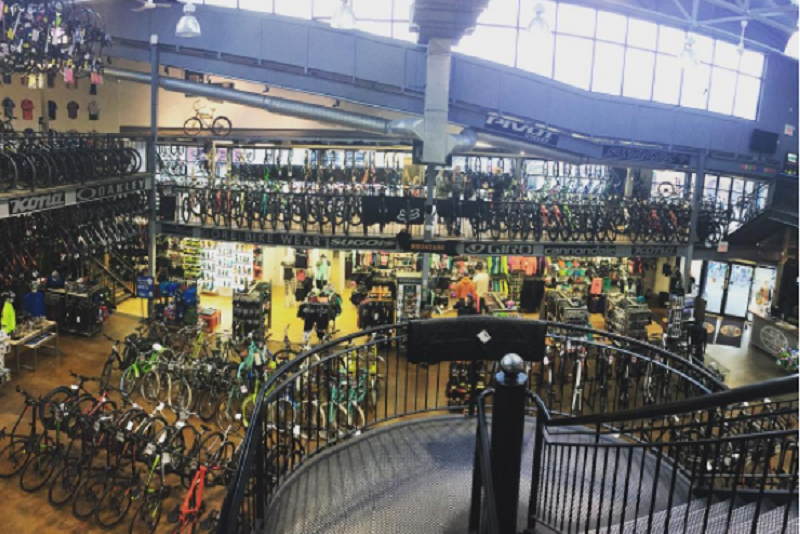
John Franzky, one of the owners at Bow Cycle which has been in business 60 years in Calgary, says the trend has been a little hard to swallow since it first started as the retailer and the supplier are now both trying to sell to the same customer with two different means of operations.

“I’m supporting your brand. Paying my rent. And now I’ve got another competitor out there in the world wide web?,” says Franzky. “Obviously as a retailer I do have concerns about the web sales going out there, the Amazons and all of that.”

“I’ve been supporting these guys for years and I understand everybody wants to grow their sales but I have felt the slap in the face from a handful of manufacturers and distributors for decisions they’ve made to go after the business themselves.”

(PHOTO: BOW CYCLE CALGARY – BOW CYCLE INSTAGRAM)

But despite the increased competition, Franzky and other retailers feel there are still many consumers that like the look, smell and touch of bricks and mortar locations.

“The good bike shops are always going to have the smell of rubber. The Internet doesn’t have the smell of rubber. We’re definitely fearful of it. There’s no two ways about it. They’re taking market share,” he says.

Image: BraTopia

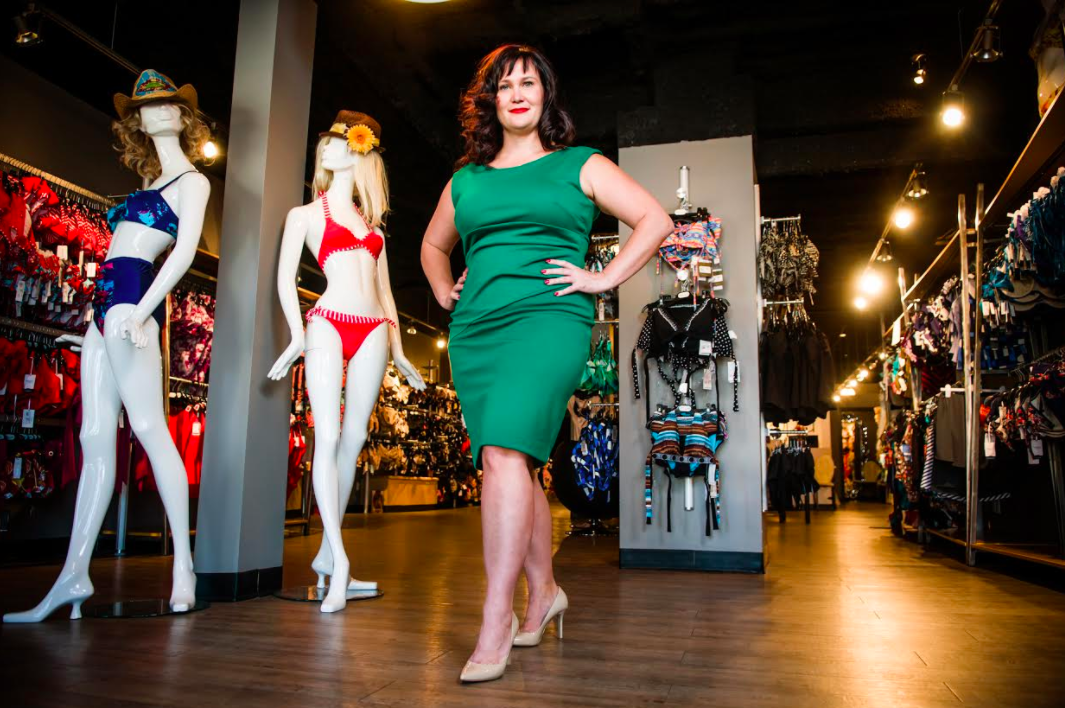
With time and the Internet and ecommerce, agencies and distributors for clothing stores are becoming more and more obsolete because the retailer doesn’t need a middle-man any more. This is the first business being threatened, says Colette Hamon, owner of BraTopia, a retailer of lingerie and swimwear which opened January 2011 in Calgary.

“These brands have moved a lot of their sales inhouse. Some of these companies have not only eliminated the agency distributor, they have also opened their own ecommerce sites so that you the consumer are going to go to their website to not only look at the product but you could also buy it off of their website,” she says.

Addition Elle Embarks on U.S. Expansion

exc-59e81489f9a61e10b2b54bca

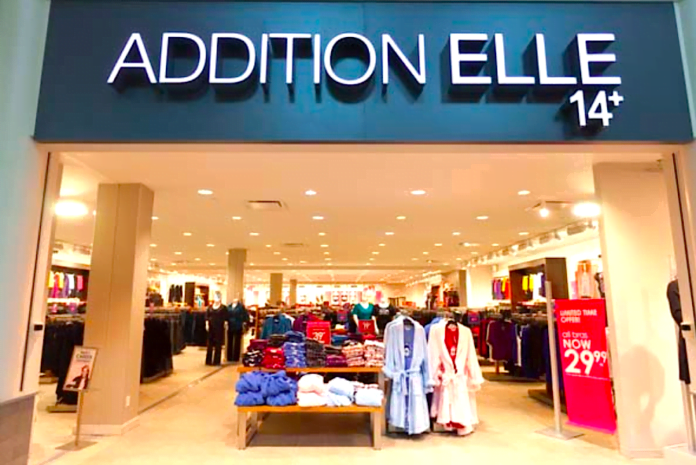
Canadian plus size fashion brand Addition Elle is forging into the U.S. market, with a new e-commerce website, a new wholesale partnership with Macy’s, and the possibility of future brick and mortar stores.

Addition Elle, one of several women’s clothing banners operated by Montreal-based Reitmans Canada Limited, officially launched its localized U.S. e-commerce website in September. The launch coincided with Addition Elle’s New York Fashion Week runway show, as well as a weeklong pop-up shop that the brand hosted in New York City.

“We always knew we had a strong following of U.S. customers interested in our brand,” says Roslyn Griner, vice president of marketing and visual presentation at Addition Elle. She notes that a large portion of the brand’s social media followers is comprised of U.S. residents.

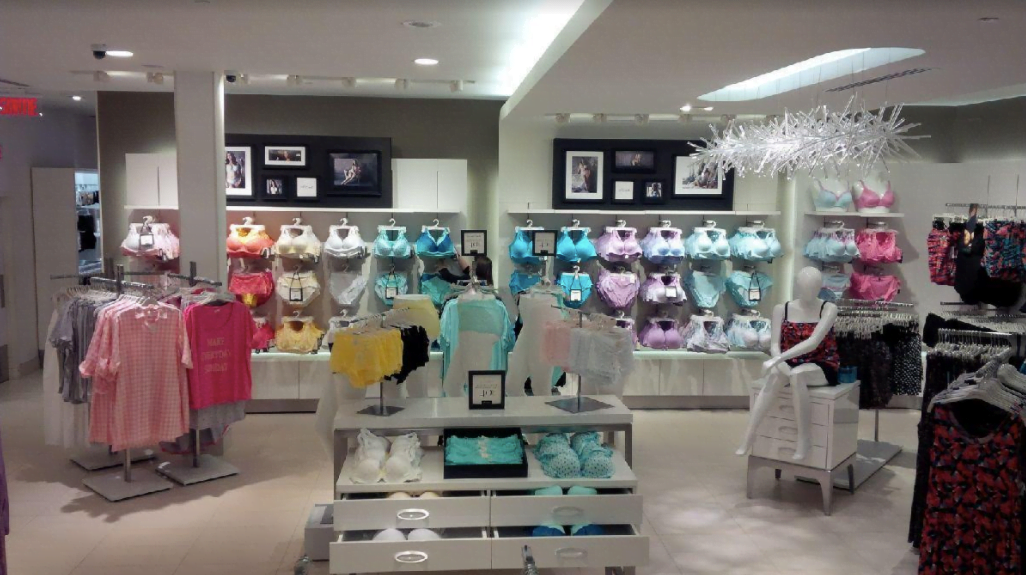
The massive U.S. market presents a significant expansion opportunity for Addition Elle, which is well established in the Canadian market with 93 locations. The brand targets customers between the ages of 35 and 44, with a broad range of clothing ranging from office wear to casual wear, activewear and lingerie.

“There is so much potential growth in the U.S. market,” Griner says. “It’s one of the largest markets for plus sized, outside of Canada.”

Based on the success of the September pop up shop, the brand appears positioned to thrive in the U.S. The shop, which was located on Fifth Avenue in Manhattan’s Flatiron District, was stocked with every item from the Addition Elle fashion show, in every size. Customers could try on items in the store, and then make their purchase through the new e-commerce website.

“We wanted to start getting people to experience our fit, which we believe is our asset,” says Griner. The result, she says, was the highest ever level of e-commerce sales for Addition Elle. “We did the most sales online during that week of the pop up – more than we’ve ever done in the past.”

Addition Elle is not entirely new to the U.S. market. Wholesale partnerships with department stores such as Nordstrom and Dillard’s in the past couple of years have enabled Addition Elle to test the waters south of the border. A new partnership with Macy’s will expand that U.S. wholesale presence, with certain Addition Elle merchandise set to be carried in 50 Macy’s locations by the end of this year, and 150 locations as of spring 2018.

Without any standalone Addition Elle stores in the U.S., however, Griner says building brand recognition in the new market remains a challenge.

“The biggest challenge is that we don’t have brick and mortar stores there, so people can’t experience our fit on a day-to-day basis,” says Griner. “We’re competing with brands that have much bigger penetration.”

Standalone Addition Elle stores could be a possibility in the future, but before taking that step, Griner says the brand intends to monitor its online sales to identify regions where demand is strong.

“I think we need a year or two of online sales before we open up brick and mortar stores,” she says.

In the meantime, Addition Elle is focusing on boosting its profile through online and social media marketing, as well as partnerships with high profile influencers. For example, the brand has teamed up with prominent U.S. model Ashley Graham to produce several lines of intimate apparel.

North of the border, meanwhile, Addition Elle is focused on revamping some of its Canadian stores to improve the shopping experience for customers.

“We’re working on new concept stores,” Griner says.

Ransomware like Bad Rabbit is big business

October is Cybersecurity Awareness month, which is being observed in the United StatesEurope, and elsewhere around the world. Ironically, it began with updates about a large-scale hack, and is ending with a large-scale ransomware outbreak.

Internet firm Yahoo kicked things off on Oct. 3 when it admitted that hackers in 2013 had accessed information about all three billion of its user accounts, not “just” the one billion first reported.

Ransomware “Bad Rabbit” is providing the finale with attacks that began Oct. 24. So far, the outbreak is mostly affecting business computers in Russia.

Both stories are fitting, in a way. The FBI considers computer break-ins and data ransoming the top two cyber threats we face. But while the former is old-fashioned e-crime, ransomware is much trendier. Much like online retailingonline advertising, and online currencies, ransomware is soaring.

Your money or your data

Traditional criminal hackers obtain their ill-gotten gains by stealing valuable data such as credit card numbers or passwords. They then look for customers, such as other criminals, to buy that data.

In contrast, ransomware hackers instead sell data back to the owners. If ransomware infects your computer, it encrypts your files to render them inaccessible until you pay a ransom. This simplifies cybercrime by replacing theft with extortion.

For example, in summer 2016, ransomware locked down the University of Calgary email system. The university paid $20,000 to unlock it.

Today, that looks cheap. In July, a Canadian company reportedly paid $425,000 to regain its data. The month before, South Korean firm Nayana paid $1 million, the highest ransom publicly admitted so far.

Growing scale and sophistication

Much like legitimate firms, some ransomware charges lower “prices” but targets larger volumes. Bad Rabbit demands only a few hundred dollars to decrypt each computer. But it is affecting machines across Russia.

Similarly, the Wannacry ransomware attack in May affected computers in about 100 countries. It forced many British hospitals to cancel surgeries.

An IBM survey found that almost half of businesses suffered ransomware attacks in 2016. Some 70 per cent of those paid a ransom to regain their data.

The survey also indicates small businesses are particularly vulnerable. They often lack the computer expertise to defend themselves. Only 30 per cent provided cybersecurity training to employees, compared to 58 per cent within larger companies.

Ransomware’s sophistication is growing too. Ransomware “worms” like ZCryptor spread themselves across networks, rather than riding on infected emails.

Some ransomware specialists are selling their services to organized crime. This crime-as-a-service business model allows criminals to outsource their technology needs. User-friendly ransomware “kits” can be purchased for $175.

Future possibilities

What might come next? Imagine state-sponsored hackers using ransomware. Host countries might give — or even sell — permission for local hackers to attack rival countries’ computers.

These cyber-privateers could plunder commerce abroad, without the host country’s direct involvement or accountability. Think of regional rivals like North and South Korea, or major powers like the U.S., Russia and China.

Sound far-fetched? Russian security services have already been accused of working with organized crime on cyberattacks. The Russian government denies any involvement. But its president, Vladimir Putin, did suggest independent “patriotic hackers” may have tampered with the U.S. election process.

How about virtual protection rackets? Instead of one-time payments for decryption, users might be “convinced” to pay ongoing fees for the “service” of avoiding encryption.

Or instead of hiding virtual data, ransomware could shut down physical objects. The Internet of Things is exposing new targets. Control systems for factories, utilities and our homes are increasingly online.

What if ransomware turned them off? Businesses begrudgingly pay thousands to recover emails. Imagine what they’d pay to restart assembly lines.

Precautions to take

To defend themselves, computer users need to do the basics. Run antivirus programs to detect threats. Think before clicking on unexpected email attachments. Keep application software and operating systems updated. (Surely you’re not still running Windows XP?)

Users should also back-up files regularly. If ransomware strikes, backups allow ransom-free recovery. But keep them on removable drives to prevent their infection.

Infected users can also try decrypting files with tools from sites like NoMoreRansom.org. But these might work only on simple cases.

Corporate and government action

Software makers should do more to facilitate safe computing practices. For example, it’s great that Windows now has self-updating antivirus protection. Unfortunately, it’s still awkward to back-up data onto removable drives.

Business insurers could also play a role. They might require corporate computers to be updated and backed-up to qualify for coverage.

Co-operation among independent agencies is needed to fight ransomware’s breadth. Canada’s Communications Security Establishment set a good example two weeks ago when it made its Assemblyline malware analysis software publicly available to tech professionals.

In contrast, the U.S. National Security Agency sets a bad example: It had known about a weakness in Windows for years, but didn’t tell Microsoft until early 2017.

Law enforcement likewise needs to cooperate across jurisdictions. September’s Interpol-Europol Cybercrime Conference was a good step in this direction.

As foreign hackers increasingly “tax” domestic businesses, ransomware becomes a national security issue. Governments may need to negotiate agreements like those covering seaborne piracy.

Finally, firms might consider keeping key systems disconnected from the internet, as some military computers have always been. Just because anything can be online, it doesn’t mean everything should be.

Brief: Zadig & Voltaire to Open Canadian Stores, Louis Vuitton to Open 1st Men’s Store, m0851 Files for Creditor Protection

exc-59ee896590bcce54c34d26a6

Zadig & Voltaire to Open 1st Standalone Canadian Stores this Fall: Paris-based fashion brand Zadig & Voltaire will open its first two standalone Canadian stores this fall — one in Toronto, and another in Montreal. 

The Toronto Zadig & Voltaire location will be at Yorkdale Shopping Centre, in a 2,000 square foot space in the mall’s Nordstrom-anchored expansion wing, next to French women’s retailer Maje. The Montreal location will open this fall in Montreal’s Westmount, at an address to be revealed at a later date. 

Jeff Berkowitz of Aurora Realty Consultants represents Zadig & Voltaire in Canada, and negotiated the Montreal deal. 

Montreal-based Axxys Construction is building both stores. 

The standalone store openings coincide with Zadig & Voltaire’s exiting Holt Renfrew as a vendor earlier this year. 

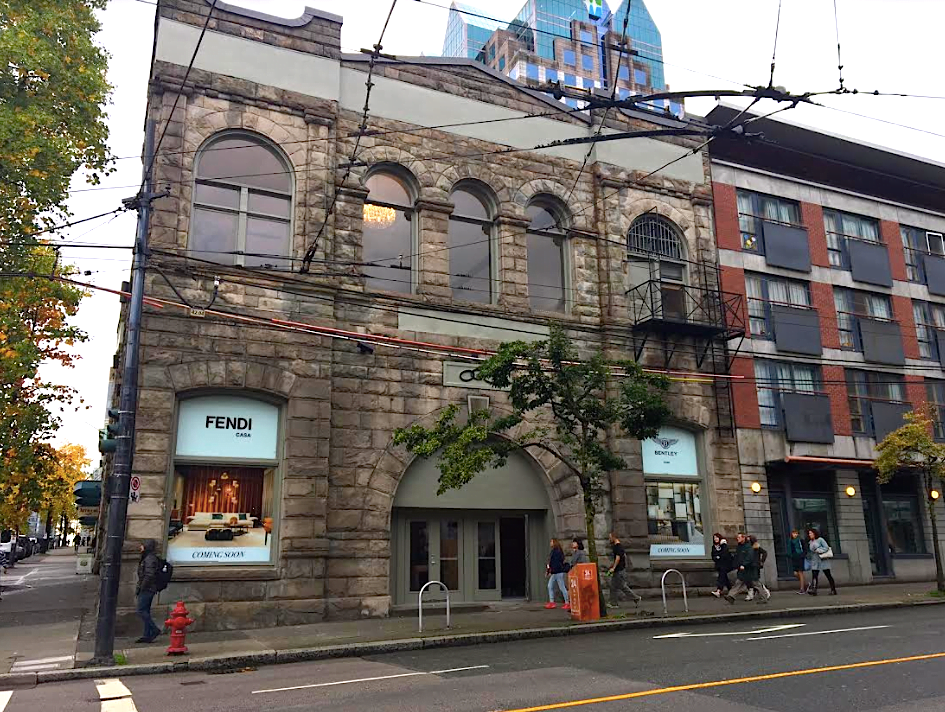
Fendi Casa and Bentley Home Coming to Vancouver: Home furnishings retailer Major Global Interior will be opening a new location in Vancouver this fall, and it could be met with some controversy. Last week, signage went up in the windows of 300 W. Pender Street, indicating that Fendi Casa and Bentley Home will have a presence in the retail space located a stones throw from Victory Square in the city’s struggling Downtown Eastside, as well as adjacent to homeless youth shelter Covenant House

Fendi Casa and Bentley Home both feature beautiful, high quality furniture collections with prices that can go well into the thousands — Fendi is an Italian luxury brand that is also in the process of expanding its fashion stores into Canada, and Bentley is known for its pricey vehicles that sell very well in the Vancouver market. 

In the summer of 2014, Major Global Interior found itself pushing back after it opened Canada’s first Versace Home store nearby at 310 W. Cordova, replacing an independent retailer that had operated in the space for years. Vancouver is certainly gentrifying as the world’s wealthy continue to gravitate towards the city, though some locals are expressing their opinions that ‘gentrification’ is pushing out the poor in the area. 

Edmonton Whole Foods Space Goes to H-Mart: Whole Foods was originally supposed to move into a 42,000 square foot retail space the former Canadian Tire building at 3803 Calgary Trail in Edmonton last year, but the store never opened for a variety of reasons. Now, Chris Buyze, via Twitter, says that US-based Korean-themed grocery chain H-Mart will open its first Alberta store in that location.

H-Mart has been opening stores across Canada, after opening its first Canadian store in suburban Vancouver in 2003. Another interesting target has been the downtown Toronto market. H-Mart opened a small store at 695 Yonge Street, a block south of Bloor Street, several months ago, and it will also eventually open a store in the former American Apparel space at 338 Yonge Street. Downtown Toronto’s population is exploding, and grocery retailers are moving in to serve new residents.  

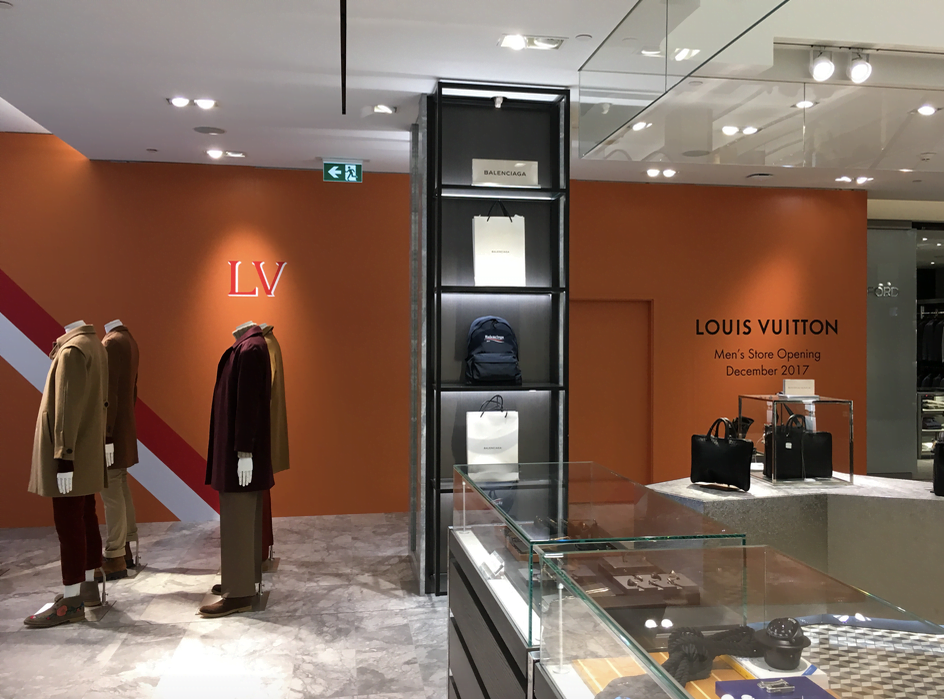
Louis Vuitton to Open 1st dedicated Canadian Men’s Boutique in VancouverLVMH-owned luxury brand Louis Vuitton will be opening a dedicated men’s concession at Holt Renfrew in Vancouver in December, according to construction signage in the store adjacent to its Howe Street entrance. The CF Pacific Centre Holt Renfrew flagship recently expanded by about 40,000 square feet, bringing it to almost 188,000 square feet. 

Louis Vuitton men’s will join nearby boutiques for Tom Ford and Berluti, with staff in the store saying that more are on the way. 

Holt Renfrew’s Vancouver store’s renovations are ongoing. Sources formerly with the company confirm that the original intention of the expansion and renovation was to bring the store’s sales up to $500 million annually from about $300 million at the time, though sales forecasts have since been revised. If Vancouver’s Holt’s had achieved a half a billion in sales, Vancouver would have been the only city in North America besides New York City to boast such a high-selling luxury fashion department store. 

Nordstrom Vancouver Adding Men’s Luxury Boutiques: Nordstrom is known to do shop-in-stores for some of its leading women’s luxury brands, with Vancouver and Toronto flagships featuring boutiques for the likes of Celine, Chloe, Stella McCartney, Saint Laurent and others. Nordstrom’s men’s departments, on the other hand, typically lack these — not just in Canada, but company-wide. 

Nordstrom’s CF Pacific Centre flagship in Vancouver is seeing such strong sales for its luxury brands, including menswear, that the company is taking the unprecedented step of creating dedicated luxury menswear boutiques — a Valentino men’s shop was recently unveiled for the popular collection, and a couple more are expected to follow. Staff say they expect a Balenciaga shop-in-store to be next, with a third brand undetermined, and possibly Calvin Klein, who’s elevated menswear collection is carried in the Vancouver store. 

Vancouver is a shining star for Nordstrom, with sources at the company saying that the CF Pacific Centre flagship, which opened in September of 2015, is the company’s top performer — beating out highly productive flagship units in Seattle and Chicago. 

What Canadian Landlords can learn from Chinese Malls: A retail expert discusses how China’s malls are generally more aggressive to change, in an article today in Retail Insider. As well, Montreal-based Lightspeed POS has secured a massive investment that has it on track to be one of only a handful of Canadian tech startups valued in excess of a billion dollars. 

m0851 Files for Creditor Protection: According to newsletter Insolvency Insider, upscale Montreal-based leather and fashion brand m0851 (once named Rugby North America) filed a Notice of Intention to make a proposal under the Bankruptcy and Insolvency Act on September 27. 

The company celebrated its 30th anniversary in the spring, with revenue reportedly surpassing US $25 million annually. Until recently, the company operated 22 stores globally, and was in the process of expanding into major Canadian shopping centres. According to La Presse, five franchised and corporate m0851 stores have recently closed (in Madrid, Los Angeles, Boston, Ottawa and De Maisonneuve Boulevard in Montreal) and a location in Westmount will close in a few weeks. A total of 16 stores will remain open after the restructuring, including a new location at Montreal’s Rockland Centre that opened a couple of weeks ago.  

Debts amounting to about $7.3 million became a burden on m0851, and the company has a plan — prices on its products will be reduced, with handbags priced at 25% less than before while still offering the same quality, and being made in Montreal, says the report in La Presse. [Subscribe to Insolvency Insider]

Retail Insider will now be regularly including these briefs as part of our expanding reporting mandate. For more information, contact Editor-in-Chief Craig Patterson at: craig@retail-insider.com
What Canadians Can Learn from Chinese Mall Design

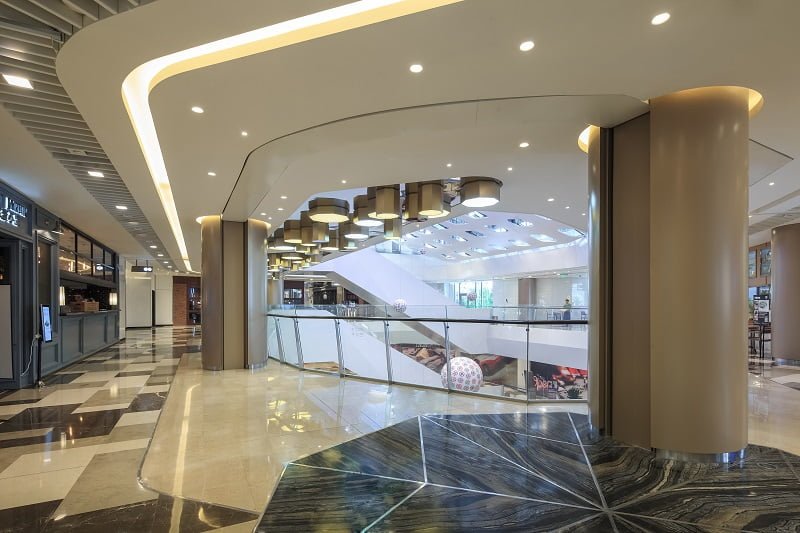
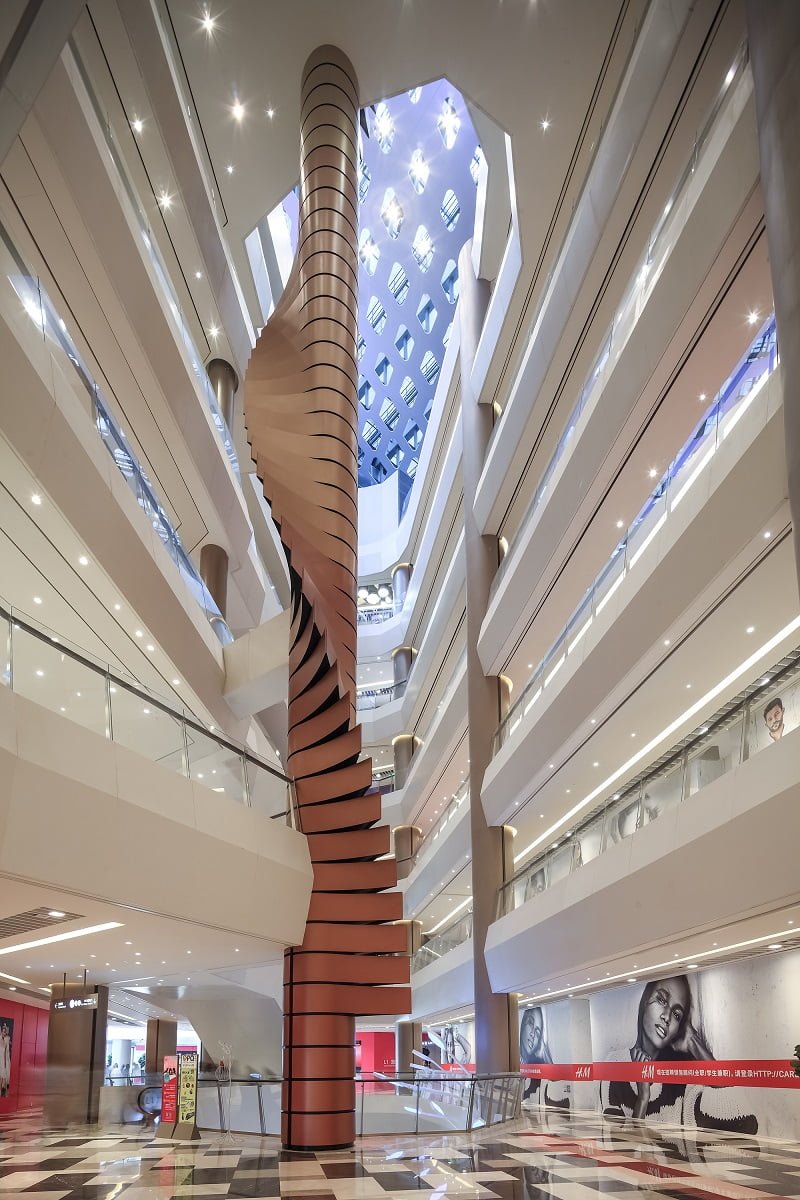
(CRYSTAL GALLERIA IN SHANGHAI)

Canadian and North American shopping centres can learn from the malls in China which has a much more aggressive move to change, says an expert in design and architecture.

David Stavros, Senior Design Principal|Executive Vice President, Asia, Principal of B+H Architects, says China’s entrepreneurial spirit has allowed its retail sector to become an early adopter of change.

“In the scramble to remain relevant in a crowded marketplace, its stance towards rapid change has seen the introduction of social attractors such as ice rinks, basketball courts, public art installations and immersive IMAX theatres into its malls,” says Stavros. “The mall is quickly repositioning itself as an activity hub, not just a retail centre.”

He says there is also a significant uptake in new technologies, which enable a completely new kind of shopping experience.

(CRYSTAL GALLERIA IN SHANGHAI)
(GOOD CANADIAN EXAMPLES: ABOVE AND BELOW ARE PHOTOS OF CF RIDEAU CENTRE IN OTTAWA, VIA CADILLAC FAIRVIEW)
CF RIDEAU CENTRE IN OTTAWA, VIA CADILLAC FAIRVIEW)

“In North America, we talk about the need to make these changes, but the pace is much slower. A lot of focus now is on maximizing the land assets, with new constructions and the introduction of residential developments,” explains Stavros.

“There are many opportunities to import the lessons learned in China to our malls in North America. Over the years, the mall has re-invented itself many times but always in service to the same desire: people want to come together, watch and be watched, and feel part of something bigger. Investors and owners who are willing to break from traditional models and respond flexibly to new technologies and shifting demographics will be as successful as ever.”

He says malls in both North America and China are experiencing the same pressures and stress fractures – namely the threat of e-commerce. So retail can no longer be relied upon as the main social attractor because it can happen any time, any place.

(CF RIDEAU CENTRE)

“But people still want a reason to get out and come together,” says Stavros. “The key to success is understanding the social attractors that draw people together – and retail will happen. Community engenders retail, not the other way around.”

“In both parts of the world, retail, in and of itself, is no longer drawing in the population. There is a shift to new, disparate uses, with more emphasis on experiences and food. At the Crystal Galleria (Shanghai), B+H designed space for food offerings in 40 per cent of the (six-level) building. These spaces were distributed on each floor, throughout the mall, instead of a cluster in just one or two locations. The result is you have an energy and a flow of people throughout the entire building.”

B+H is a Canadian-based architecture firm with nine offices in six countries, including offices in Shanghai and Hong Kong. The firm has had a presence in China for 25 years. They’ve worked on several shopping centres and retail stores, including LIVAT Wuhan centre and LIVAT Wuxi Centre, the Paul & Shark store in Hong Kong and Sephora’s flagship store in Shanghai. In Canada, they do a lot of work with Cadillac Fairview, including working on the renovation of the CF Rideau Centre Expansion in Ottawa.

(CRYSTAL GALLERIA IN SHANGHAI)

Recently, B+H gathered all of their design leads from each of their offices in Toronto for a two-day deep dive into the future of malls. B+H mapped out several different future scenarios and how each scenario could potentially impact what a mall looked liked. The scenarios include one future where Amazon (or Alibaba) wins and another scenario was dubbed Etsy’s revenge. All of these scenarios informed a board game that each of B+H’s design leads played as a way of exploring potential future outcomes.

Stavros says the intent was to understand the wants, the needs and the desires of the people and how they can establish a roadmap that will help them negotiate the disruptive changes that are really upon us nowadays.

In a recent report, The Purpose Of The “Mall”: Community as a Framework for the Mall, B+H Architects said the first “mall” as we know it today opened in 1956 in Edina, Minnesota.

“The reason today’s malls are failing is because they’ve lost their purpose – the reason why they exist in the first place. It’s only when the mall becomes what it was once intended to be – a meeting place for people to connect in a space that authentically reflects who they are and moves flexibly into the future – that we will begin to see the revival of the institution,” said the report.

*Photos in this article provided by B+H Architects via Kim Graham & Associates

As well, Retail Council of Canada is releasing its second annual Canadian Shopping Centre Study this fall, and there’s still room to advertise. [For more information]. 

Montreal-Based Lightspeed POS Secures Massive Investment

Lightspeed Montreal Head Office (Image: Lightspeed)

New funding is expected to drive continued innovation for Montreal-based Lightspeed POS Inc.’s growing customer base of nearly 50,000.

Lightspeed, which bills itself as the world’s most advanced cloud-based point-of- sale software solution for independent retailers and restaurateurs, recently announced it had closed a US $166 million investment.

The series D round was led by Caisse de dépôt et placement du Québec (la Caisse) with an investment of US $136 million, and included participation from Investissement Québec (IQ), iNovia Capital and a credit line from Silicon Valley Bank.

“The retail and restaurant industries now require businesses to deliver a greater and more unique experience to thrive,” says Dax Dasilva, Founder and CEO of Lightspeed. “Lightspeed is leading the digital transformation with our powerful, easy-to- use platform, which enables your favourite local businesses to increase revenue, continue to innovate, and ultimately deliver an extraordinary shopping or dining experience.”

The total amount invested in the Montreal-based technology company is US$292 million as global demand continues to grow for cloud-based POS and commerce solutions. The total investment includes all the rounds from A to D which began in 2012.

Image: Lightspeed

“We’re reaching a different stage in the company where we have a different type of investor that reflects the maturity of the company,” says Dasilva.

The company says it remains focused on providing customer-centric, market-leading POS technology solutions that power retail and restaurant businesses. It says the additional investment supports further innovation of its fully-integrated omnichannel Retail and mobile Restaurant solutions, and supports the company’s global expansion to address market demand.

“International expansion is a big focus for us. We have eight offices around the world,” says Dasilva.

Nearly 50,000 retailers and restaurateurs, processing over US $15 billion in transactions annually use Lightspeed’s services which can be found in 100 countries. The company was founded in 2005 and it has grown to nearly 600 employees, with global offices in Canada, USA, Europe, and Australia. Three offices are located in Europe where 200 of its employees work.

Dasilva says the company is also starting to see some traction in Asia and South America.

Since 2015 when it had its last round of investment, Lightspeed grew from 25,000 customers to 50,000 today and Dasilva says some pretty impressive customer growth is expected over the next couple of years. The total amount of transactions processed went from $10 billion in 2015 to $15 billion today.

“Two years ago, when we first invested in Lightspeed, the company was already considered a Canadian leader in its field. Today, its solutions are used in more than 100 countries and Lightspeed is the world’s largest company in its sector. This success is due to the impressive innovations that it implemented and the strategic vision of its experienced management team,” says Christian Dubé, Executive Vice-President, Québec at la Caisse. “This investment is part of our commitment to provide long-term support to Québec’s new-economy companies as they grow internationally.”

Lightspeed says its customers see a 20 per cent increase in revenue, on average, during the first full year on the platform. A few of the marquee retail brands that use the POS platform every day to power their businesses include: Todd Snyder, Want Les Essentiels, DASH, Draper James, Rocket Fizz, Malin+Goetz, Mike’s Bikes in California, and the Montréal Canadiens. Restaurateurs are beginning to adopt new technology at a much faster pace than ever before, and some of the places Lightspeed can be found include: Eataly, La Marina NYC, Nobu Malibu, Lutze Biergarten, Zoku Amsterdam Hotel, Hummus Bros, Crêpeaffaire, and Detroit Foundation Hotel.

“We were among the first to believe in Lightspeed’s remarkable growth potential and invest in it,” says Investissement Québec President and CEO Pierre Gabriel Côté. “Lightspeed is currently enjoying an impressive level of success. It is now a global leader whose growth and accomplishments are making waves far beyond our borders. It was only natural for Investissement Québec to reinvest in the company.”