Canadians love their flyers. This isn’t new news. In fact, 9 in 10 Canadians check some form of flyer or coupon before they hit the stores. But I think it’s easy to assume that everyone who checks those flyers are driven by the same simple desire: to save money. Some new research that our team at Metroland has just completed in collaboration with BrandSpark International shows that it’s a bit more complicated than that.
Sure, saving money is important. But many Canadians consider flyers a source of inspiration as much as they are a source of information. In fact according to our research, 21% of all flyer and coupon users are “Inspired” shoppers who often look through flyers for new products, ideas and information and often read flyers for sheer enjoyment.
Inspired [21%]: “Inspired” shoppers are one of the four unique consumer segments identified in our research. As with most Canadians, saving money is important is important to this type of shopper, but they are willing to pay more for better quality products that are more suited to their needs. Other segments include:
Engaged [34%]: Engaged shoppers are “shopaholics” – utilizing all sources of information to save money and find the newest products. These are savvy shoppers that are comfortable using both printed flyers as well as the latest technology and apps to get an “edge” while shopping, and have no problem visiting multiple stores and spending extra time to get the best value wherever they can find it.
Deal-Seeking [19%]: Driven by their need to save money, Deal Seekers target stores and products that will help them stay within a predetermined budget – whether the need comes from lower discretionary income, or a desire to be a “smart shopper.” Flyers and coupons are the means by which they find deals and create a shopping list to prevent impulse buying.
Utilitarian [26%]: Utilitarians are shoppers with little time and attention, and who view shopping largely as a task. While deals and saving money are valued, they are secondary priorities to making shopping trips as fast and simple as possible. They use flyers as a tool to build their shopping list as they search for nearby stores that carry the products they need.
Our study also revealed that “Engaged” shoppers were more frequent shoppers than any other psychographic segment in the categories studied, except for Home Improvement in which Inspired shoppers came out on top.
This suggests that while flyers and coupons are often targeted to meet the needs of the “Deal- Seeking” shopper, there is a real opportunity for brands and retailers to integrate more inspirational content into their flyer to serve and appeal to the attractive “Engaged” and “Inspired segments.
On the other hand, brands should also continue to consider how these needs, and the value they can provide, still hinge on the format in which it is offered. Our research revealed that when seeking inspiration, printed flyers are typically at the top of the media hit-list. But when shoppers are looking to compare prices, flyer apps and aggregated sites (such as Save.ca) viewed on mobile devices are often the format of choice.
The key takeaway from these few examples is that it’s not enough to target your customers by medium; instead, brands and CPG retailers should customize the content of their flyers both for the customer they’re targeting, and the format through which they’re receiving it. Leveraging a variety of flyer and coupon formats with content targeted to these different shoppers based on their unique needs – whether they are deal-hunting or seeking inspiration – will set you up for success!
To access the full report, A Consumer’s Path to Savings: The Role of Flyers in Today’s Digital World, go to: metroland.com/path-to-savings
Lisa Orpen is Vice President, National & Multi-Market Sales for Metroland Media Group.
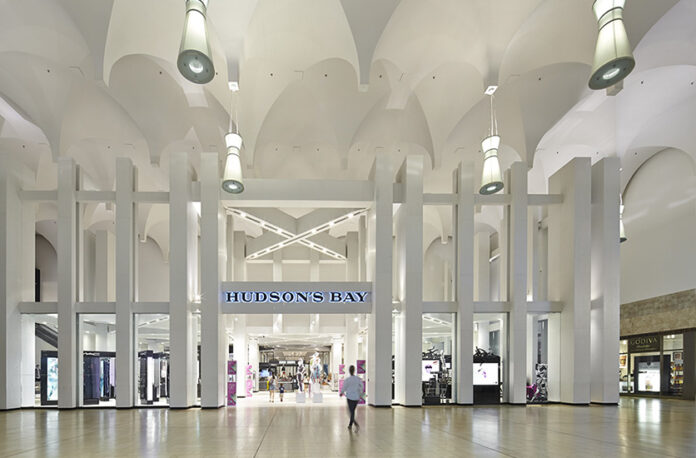
The first-of-its-kind initiative is a multi-sensory experience redefining the way men and women discover fragrance as the space is aimed at reaching millennials in a category where the shopping experience has remained largely consistent over the years.
Amaury de Vallois, General Manager at COTY Canada, says the company recognized an opportunity to reinvent and elevate the art of perfume in a modern way.
“Millennials have different shopping habits from the generations before them, and this new experience is visually interesting – an innovative and interactive way to try different scents.”
The new shop-in-a-shop retail outlet is a pilot project after officials realized some interesting things from research about millennials. First, shopping is an experience for them as they look to interact with brands before buying. Second, 75 per cent of them still want to buy in a bricks and mortar location. And third, memorable, entertaining experiences allowing for the discovery of something new are important to them.
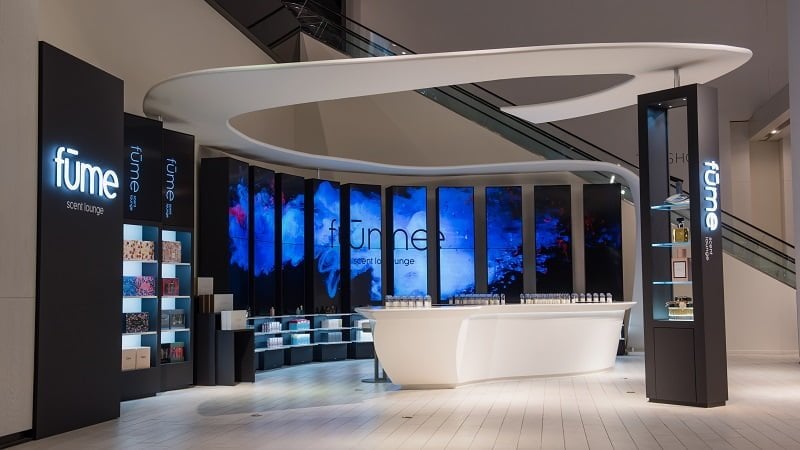
The new fūme scent lounge was designed for that with sight, sound, touch and smell part of the sensory journey to discover fragrance with a modern approach.
Diane Sonnenberg, vice-president, marketing, luxury with COTY Canada, says the concept is the company’s re-invention and re-imagination of the fragrance shopping experience.
“It’s really bringing fragrance shopping back to an art form,” she says. “If you think about fragrance, everything about it is art from the creation of the fragrance itself from a master perfumer to the artisan that creates the bottle, the art directors that create the campaigns whether they be the photography or the video. It’s all art. We really wanted to elevate the experience to an art form in a very modern way . . . A completely different experience for the modern consumer.”
“We felt we had an obligation to help modernize the fragrance selling experience and make it fun and experiential. This is a pilot project . . . We’re testing this one and we’re hoping for great success and we’ll see where things go from there.”
Here are some of the key features of the lounge:
It is framed below a curling fabric canopy designed to resemble perfume mist;
There are large-format screens across a series of sculptural digital pillars;
The latest videos from fashion icons such as Gucci and Marc Jacobs will be played to music;
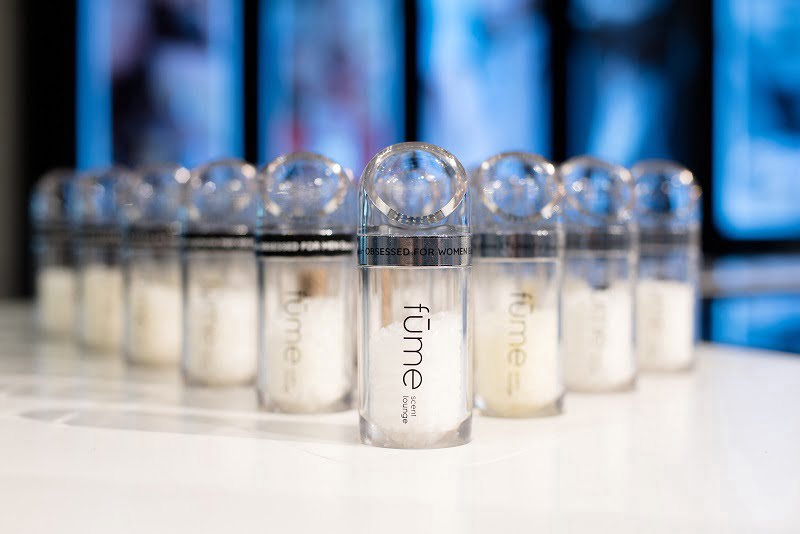
Non-spray inhalers allow consumers to explore the different fragrances;
Each inhaler is RFID-tagged, so it can be scanned on the interactive table, displaying information about the brand, the fragrance notes, selection and price; and
A playful quiz provides consumers with custom scent suggestions.
“This concept aligns with our vision to offer our customers new and unique experiences,” says Alison Coville, President, Hudson’s Bay. “We believe it will excite our customers and enhance their shopping experience, allowing them to discover the perfect fragrance in a new and playful way.”
“When we started working on it, I knew immediately this could not be a normal fragrance counter,” says Pereklita.
“We’re leading the customer on a journey of discovery . . . It’s really quite a different experience than the traditional department store way of buying perfume.”
COTY is the third largest beauty company in the world with approximately $9 billion in pro forma revenue. It operates three divisions – Consumer Beauty, which is focused on mass colour cosmetics, mass retail hair colouring and styling products, body care and mass fragrances with brands such as COVERGIRL, Max Factor and Rimmel; Luxury, which is focused on prestige fragrances and skincare with brands such as Calvin Klein, Marc Jacobs, Hugo Boss, Gucci and philosophy; and Professional Beauty, which is focused on servicing salon owners and professionals in both hair and nail, with brands such as Wella Professionals, Sebastian Professional, OPI and ghd.
Guildford Town Centre and Metropolis at Metrotown are both owned and operated by Ivanhoé Cambridge.
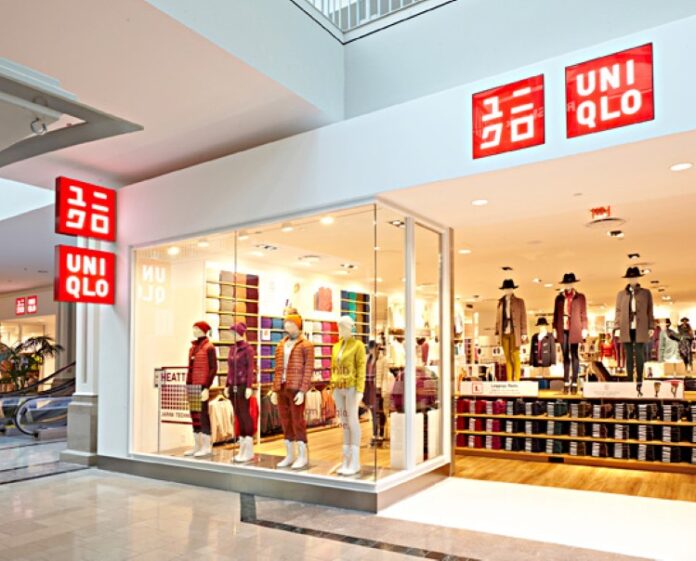
The Guildford Town Centre UNIQLO will span 18,000 square feet on the mall’s second level. The corner retail space is partly contained within an expansion corridor, with the store being next to the GAP on one side and across from Old Navy on the other.
The Metrotown UNIQLO opened to massive crowds, and occupies two levels and 20,630 square feet in the mall.
In September of 2016, UNIQLO Founder and CEO Tadashi Yanai told Marina Strauss of the Globe & Mail that UNIQLO could eventually operate as many as 100 stores in Canada.
UNIQLO now operates approximately 1,900 stores in 19 countries worldwide, including Japan, Australia, Belgium, Canada, China, France, Germany, Hong Kong, Indonesia, Malaysia, Philippines, Russia, Singapore, South Korea, Spain, Taiwan, Thailand, U.K. and the United States.
(RENDERING OF THE NEW VANCOUVER OLYMPIC VILLAGE STORE)
Outdoor gear retailer MEC (Mountain Equipment Co-op) is building new flagship stores in Vancouver and Toronto as it eyes further expansion in the future across the country.
David Labistour, CEO of MEC, told Retail Insider that the company’s website is by far its fastest growing store and its single biggest store.
“But we also know we have to have convenient locations for our customers,” he says. “I think we have to put in more stores. Ontario. We’re under-stored in Ontario. The whole GTA region. If the right opportunity presents itself we’ll go into Saskatchewan.”
“Retail is shifting incredibly quickly. I think we have to be adaptable and make sure that we respond to the changes that are happening.”
(MASSIVE WOOD CANOPY IN THE KELOWNA STORE, BUILT BY VANCOUVER-BASED PEREGRINE.BUILD)
MEC has 22 stores in British Columbia, Alberta, Manitoba, Ontario, Quebec and Nova Scotia.
It is Canada’s largest consumer co-operative with about five million members across the country. A lifetime membership is available for $5.
“We’ve always been very focused on having a very strong customer focus,” says Labistour. “We’ve had a very clear idea the purpose of the organization to be. We want to get people active and get people outdoors. A lot of what we do is aimed at the purpose of getting people off the couch and out the door. We’ve really tried to build a brand that is consistent with that and I think we’ve managed to build a very authentic brand that does resonate with people.”
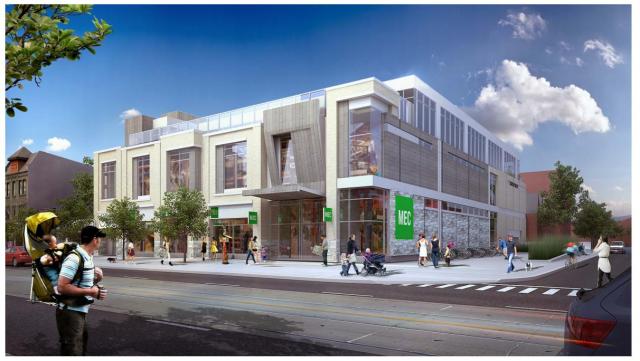
He says the company is moving its Toronto store from King Street to Queen Street.
“King Street has become very congested. We know that it’s becoming very difficult for people to access that store. So we’re moving the store to an area where it’s more of a shopping precinct and has better access. I think in retail you need to continue to assess whether you can improve your locations,” says Labistour.
The new build will be about 40,000 square feet.
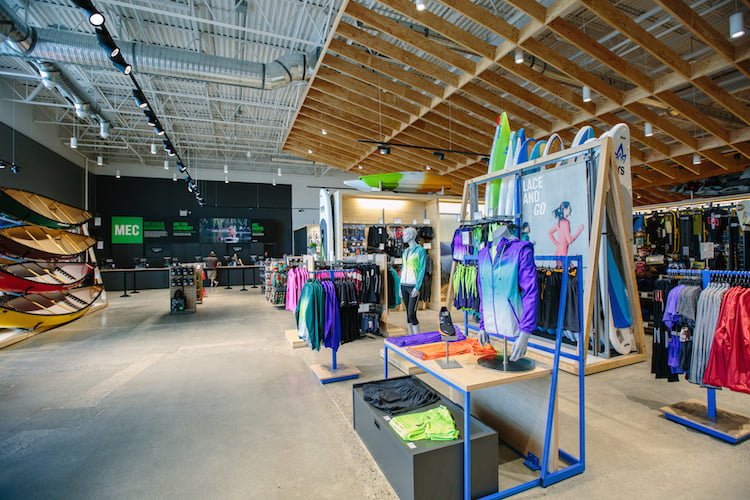
“It will be a much nicer store we believe because it gives us the opportunity to freshen up the way we build stores now. And our new store builds are quite different. They’re much more open and light. Have better flows,” he says.
There is no firm date on the opening of the new store but it will be within the next year.
(NEW TORONTO QUEEN STREET STORE. RENDERING: MEC)
Recently, MEC also announced it was building a new 60,000-square-foot flagship store in Vancouver with the three-storey building to be located at the eastern gateway to Olympic Village.
MEC’s Olympic Village location will replace its store at 130 West Broadway, which the Vancouver-based retailer has occupied since 1995.
Labistore says the current store in Vancouver on West Broadway is leased. The lease is coming due and the landlord wants to redevelop that site.
“In moving, it gives us a chance to really build a great flagship store in Vancouver because our oldest and possibly, arguably, least attractive store we have is our Vancouver downtown store. So it gives us a chance to really build a beautiful new building while moving to a new site to avoid disruption,” says Labistour.
Beedie Development has owned the site of the new MEC store to be built at 2nd Avenue and Quebec Street since 2007. When construction of the new store is complete in mid-2019, MEC will operate the purpose-built, high-performance green building on a leasehold basis from Beedie for at least 20 years.
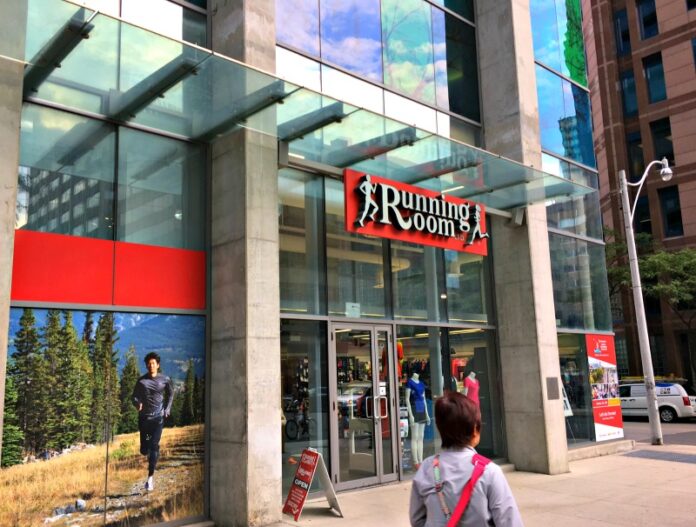
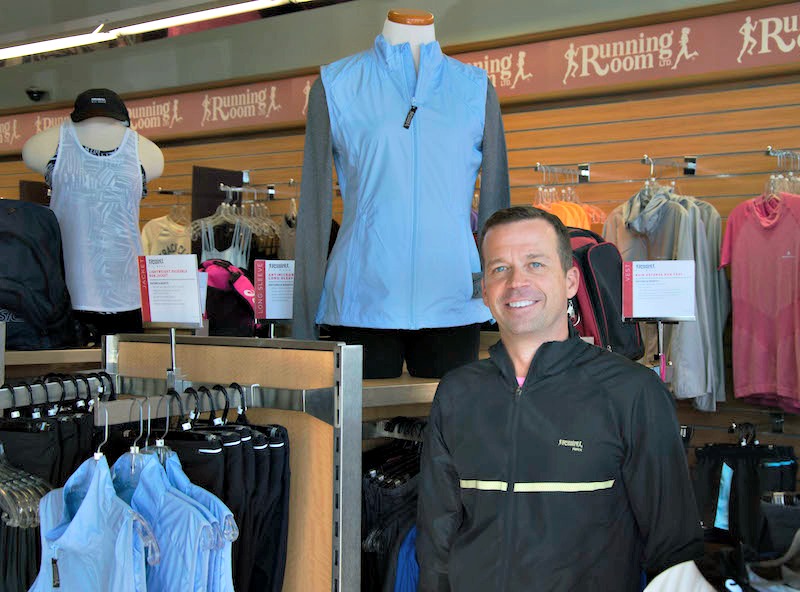
(THE RUNNING ROOM, BAY STREET IN TORONTO. PHOTO: CRAIG PATTERSON)
Two or three years ago e-commerce was barely 1.5 per cent of the Running Room’s overall business.
After a significant investment that percentage has ballooned to near 10 per cent for the Edmonton-based retailer, which has stores across the country and into the United States.
“I really hope we’re going to hit that number by the end of the year. We’ve got an aggressive program. We want to have it 20 per cent in the next two years. That’s our goal,” says Jason Stanton, a partner and CMO of the company.
Stanton’s father, John, founded the family business in 1984 with its first store in a small room of an old house in Edmonton. Today, the retailer has 107 stores in Canada and nine in the United States.
(JASON STANTON)
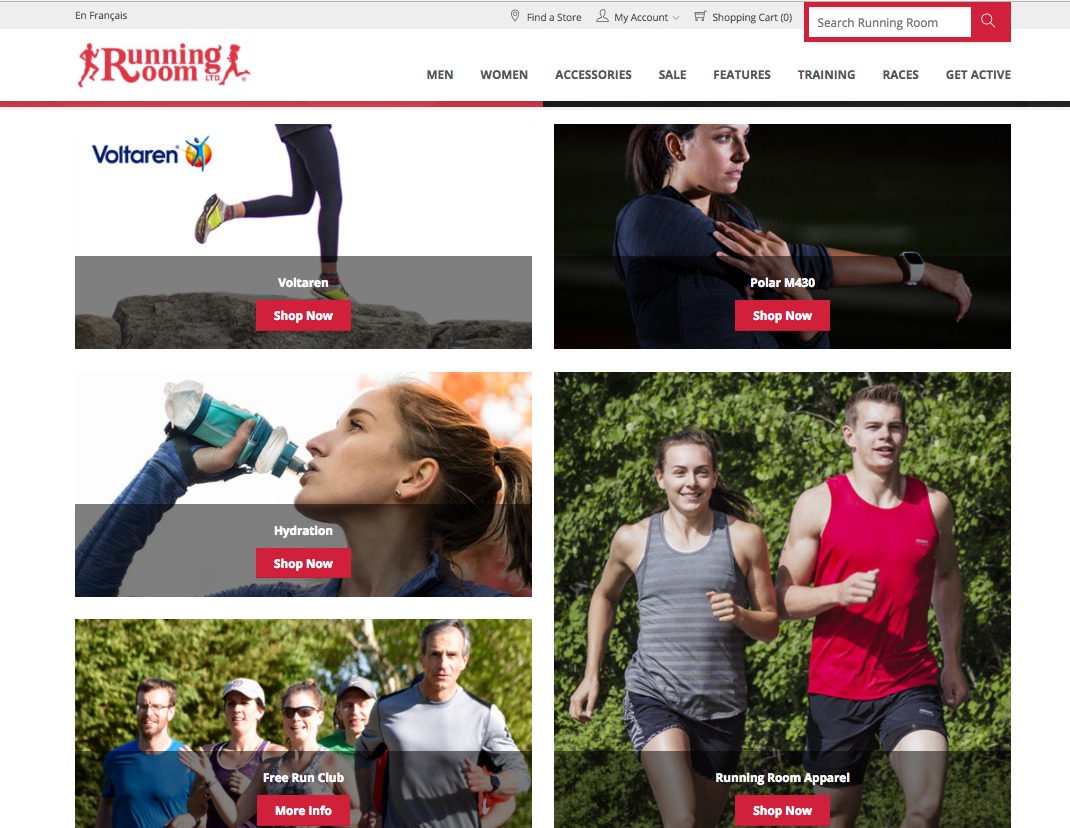
“We started to take a look at our competitors,” explains Stanton of the company’s e-commerce push. “Certainly because of the landscape, borders aren’t as relevant. We started to look at some of our U.S. counterparts and what was going on and just realized that we needed to up our game and we made a really good investment a couple of years ago just to get our shopping platform more friendly and certainly catching up to what the consumers’ expectations were with it.”
That resulted in a much smoother process in how customers buy and pick up their merchandise.
“In the last six months, we’ve been seeing such a strong growth rate that we decided to really kind of double down and make sure that we are where our consumers want to purchase and how they want to purchase,” adds Stanton. “What we’re finding is they love shopping online but they really still love visiting retail. So we’re sitting at about 53 per cent of our online purchases are picked up at our retail stores which is quite unique.”
Six months ago the Running Room decided to add on another 5,500 square feet of dedicated dot.com space for its customer service group which is continuing to grow. Right now, it’s growing at a 25 to 32 per cent rate in the last six months and the company is really happy about that.
(SCREEN SHOT OF RUNNING ROOM’S ECOMMERCE SITE)
“Having a facility and a dedicated inventory for the dot.com has been a really big investment that’s been going on for us over the last six months,” says Stanton.
While there is joy in being and growing in the dot.com space, there’s no question the Running Room remains a very customer service-oriented company for products it sells.
“Overall we still feel there are opportunities (for expansion),” says Stanton. “We just had a store move in Victoria which we feel there’s lots of those type of opportunities, of stores that have done well for us.”
They will be strategic moves for existing stores but also the company will keep its eyes open for expansion as well.
“If there’s any oddities we see come up . . . then we’re for sure looking for that,” says Stanton. “We’re still committed to the U.S. as well but they have some pretty strong headwinds there with sporting goods and the run specialty (retail industry). So we’re letting those waters kind of calm down and making sure our stores are up to standard. And for sure the U.S. is a place we’re going to look to expand. We’re talking a bit of a 10-year plan.”
(JOHN STANTON JR., JOHN STANTON SR.[FOUNDER], JASON STANTON)
According to Statistics Canada, Canadian retail sales in June rose for the fourth consecutive month, edging up 0.1 per cent to $49 billion. That’s also a 7.3 per cent hike from a year ago.
Stanton says there have been some pretty strong headwinds for the business in the last couple of years but it is somewhat insulated because of what it does and what it offers. The Running Room is more than just a retail operation because it has running clubs and clinics and it is involved in many different events.
“Despite some economic ups and downs in retail that go on we still have our run clubs and clinics that are thriving and doing quite well . . . On the retail side, though, we’ve been fighting that plus minus two, three per cent for the last couple of years. We’re excited because the last six months we’ve seen some really positive numbers. Certainly out of Ontario. And Alberta has actually really weathered the storm quite well and is starting to breathe again quite nicely.”
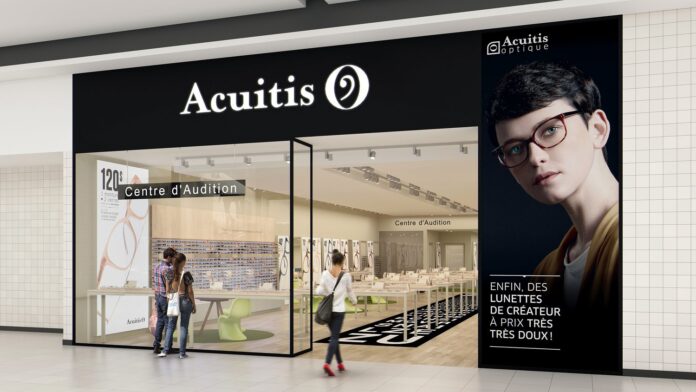
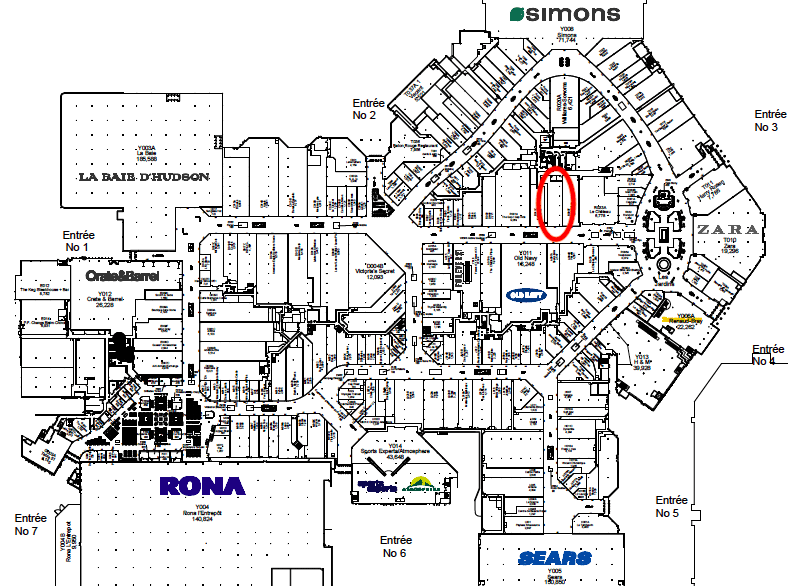
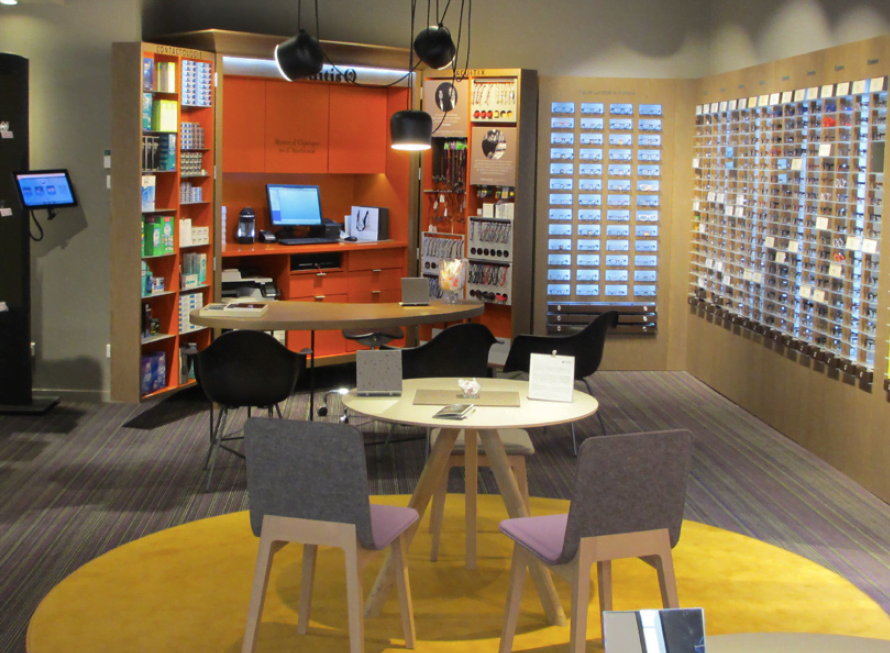
Popular French optician and acoustics specialist Acuitis is launching its North American expansion in Quebec this fall, with the opening of a 3,226 square foot flagship boutique at CF Carrefour Laval in mid-November. The store will feature quality eyewear and hearing aid services, and a second Canadian location is also already confirmed for Acuitis.
The family business was founded in 2010 by father-son team Daniel and Jonathan Abbitan, with a goal of offering quality, affordably accessible eye and hearing care while also providing personalized, customer-centric service. Acuitis offers an ‘all inclusive’ service for its eyewear including eye examinations, mounting, lenses and any required adjustments. Glasses are often ready within an hour, with prices ranging from $120 to $550.
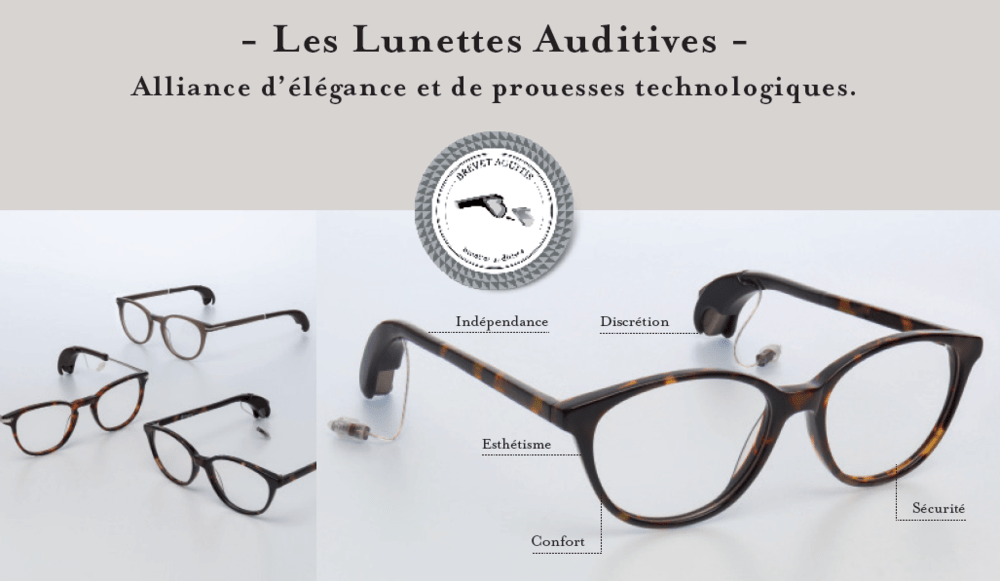
The company’s artistic Director Frédéric Beausoleil has worked with some of the world’s biggest names in eyewear (including Cartier, Louis Vuitton and Marc Jacobs), and styles will be unique in Canada. This season, many frames will be brightly coloured to highlight a sportier look, while metal frames will be modern and minimalist. Acuitis will also offer branded sunglasses, such as Ray-Ban, Lacoste, Calvin Klein, Nike and others. The retailer also features ‘hearing glasses’, which feature hearing aids that are are attached to the sleeves of the frame.
Acuitis is expanding quickly, having recently opened 21 stores in Europe this year alone. The company currently operates 71 stores in France, Switzerland, Luxembourg and, most recently, Italy and England, with more to come.
A second Quebec boutique is already scheduled for spring 2018 at CF Promenade St-Bruno. When asked about more locations, the company says that it will first monitor the success of its first two stores before expanding further into North America. If an expansion launches as anticipated, Canada will see even more competition in the rapidly expanding optical retail market.
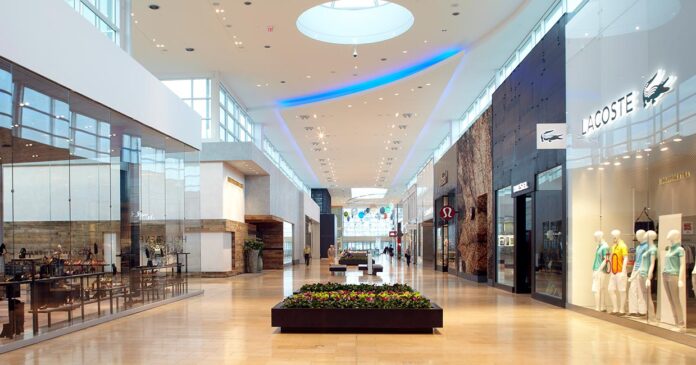
CF Carrefour Laval is one of the country’s top malls in terms of sales per square foot, according to Retail Council of Canada’s Shopping Centre Study. A 2017 study will be released next month, and there are sponsorship opportunities available for companies seeking exposure to the industry (email: mmarkou@retailcouncil.org). As well, Retail Council of Canada is hosting a discussion forum to coincide with the release of the study on November 21 at Google’s downtown Toronto headquarters. [Details]
Two events occurred in Canadian apparel retailing earlier this year that, while not coming as a surprise, still require a comment.
The first involved the news that both Jean Machine and Grafton Fraser, Inc. had filed for Creditor Protection. In addition, German women’s apparel retailer, Gerry Weber, announced it was closing its eight corporate owned stores. Over the past three years a predictable pattern of post Holiday Season store closings has emerged. So the fact that three company’s made similar announcements really should have not come as a surprise.
The second development also involved a predictable occurrence. Industry savants have opined that the fate of the three retailers were preordained as they operated in the middle of the apparel market. The corollary that inviably followed was that the middle of the market was a dead zone, as consumers were trading up or trading down. To that contention, Trendex notes the following:
Over 80% of Canadian apparel retailers operate in the “middle of the market”, so it should not come as a surprise that the overwhelming number of apparel retailers that experience financial problems are in the middle of the market
If the low-end of the market is growing, why are the sales of Walmart Canada, YM Inc. and the Inc. Group not increasing?
Just because a group of retailers are labelled “off-price” does not mean they should be lumped in with true low-price retailers, including Walmart Canada. Without a doubt, the products/prices at Saks OFF 5TH and Marshalls are the same or often more than comparable items Sears sells. Because an off-price retailer sells a pair of $200 women’s jeans for $52 does not make it a bottom-tier retailer
Fast fashion retailers are usually included in the definition of low-tier retailers. Obviously Zara’s pricing would preclude it from ever being considered as a bottom-tier retailer
Many apparel retailers that define the middle of the market, including Marks, Moores and the Hudson’s Bay continue to prosper. Simons certainly could not be considered either a low-end or high-end retailer, as such it must be included in the middle of the market
There is no statistical evidence (only anecdotal evidence) which substantiates the contention that Canadian apparel consumers are trading up or down. If such evidence exists industry savants should share it.
In commenting on the closing of stores, Doug Stephens, CEO of Retail Prophet noted, “their cases are really symbolic of the struggles that most mid-tier fashion retailers have been experiencing.” This publication is in total agreement that many mid-tier fashion retailers are struggling, however their problems are a result of two groups of factors. The first are external, including the growth of e-commerce and the influx of foreign apparel retailers. The second group of factors are internal, or self-inflicted if you will. They include troubled apparel retailers including Sears Canada’s failure to:
Offer consumers a high value product
Delineate a unique selling proposition
Operate a first-class e-commerce program
Implement a comprehensive marketing plan which communicates the retailers USP
Close underperforming stores
Readers will note that one of the factors does not involve consumer’s wholesale abandonment of the middle of the market. Without a doubt some consumers are truly trading up or down, but this publication would contend that the number that do so, are far too few to explain the problems that some retailers in the middle of the market have experienced.
It would be safe to assume that what most “consultants” do not realize is that the middle of the Canadian apparel market is undergoing a period of “creative destructionism”. During this evolutionary retail period, Canadian consumers will continue to move up, down, and in many cases sideways, but within the middle of the market. Consumers might migrate to Frank & Oak or Zara, but they are still staying within the boundaries of the middle of the market. Canadian consultants will continue to mischaracterize what is going on with the middle of the Canadian apparel market until they realize that retailers like Marshalls have as much in common with Walmart as Donald Trump has with his predecessor.
This article appeared earlier this year in Canadian Apparel Insights, a monthly publication by Trendex North America. For more information and to subscribe, visit the Trendex website.
For Monica Frangulea, the designer behind the Toronto-based fine jewellery line Musesa, jewellery is much more than an accessory. In her view, it’s a dramatic way of making a statement.
Monica Frangulea
“When you have a simple outfit, the moment you add a statement piece, it totally changes the look,” Frangulea says. “It adds glamour.”
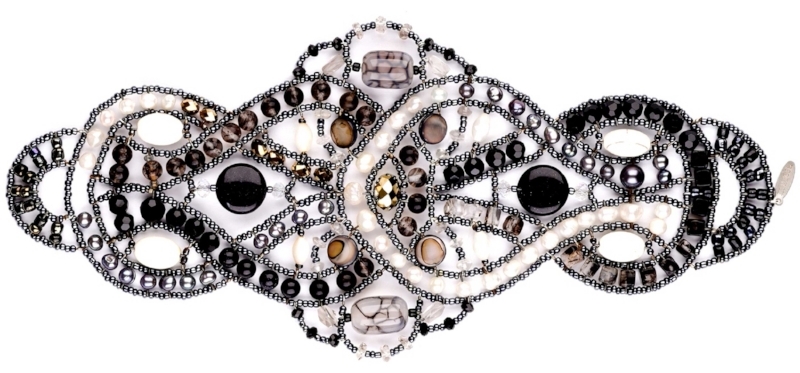
Frangulea is an architect from Romania who made her foray into the jewellery business six years ago, with the launch of Musesa. The brand specializes in bold, unique statement pieces, which incorporate precious and semi-precious gemstones, such as rubies, emeralds, sapphires, diamonds, as well as elements of gold and sterling silver.
“Our pieces are very bold and very big,” Frangulea says. “Even the smaller pieces are very noticeable.”
Image: Musesa
Musesa’s line includes a broad array of necklaces, bracelets and earrings. The items feature colours ranging from neutral blacks, browns and greys to bold shades such as turquoise, red and purple – including some pieces that incorporate all colours of the rainbow. The pieces range in price from $40 to $600.
Given the bold style of Musesa jewellery, Frangulea says it captures attention when her customers wear it, and leaves a lasting impression. “The most important feature in Musesa jewellery is the design – it’s recognizable,” she says.
The name of the jewellery line – Musesa – stems from the word ‘Muse’. That ties in with the broader inspiration for the line, which lies in ancient Greece and other historical civilizations. Having spent much of her life in Europe, including several years in Greece, Frangulea was inspired by the history-rich Mediterranean surroundings in that part of the world.
Although Frangulea often replicates pieces that she has made using different colours and different stones, and each piece is unique. “You will never find exactly the same piece twice,” she says.
Frangulea’s architectural background comes in handy when creating jewellery, she says. When designing large, heavy statement pieces, in particular, she says it’s important to consider the positioning of each stone and the structure of the piece.
“You need to very carefully control the geometry, and the weight of the material, so it doesn’t lose shape,” Frangulea says. “That’s where my architecture background comes into play.”
Image: Musesa
Although the jewellery line was originally targeted towards a slightly older clientele, Frangulea says it has appeal among a broad range of customers.
“I was surprised to get a lot of younger clients,” she says. “My customers are millennials all the way to older generations.”
Musesa also offers e-commerce sales, which lets the jewellery line cater to customers across Canada and abroad. “I have clients all over the world,” Frangulea says.
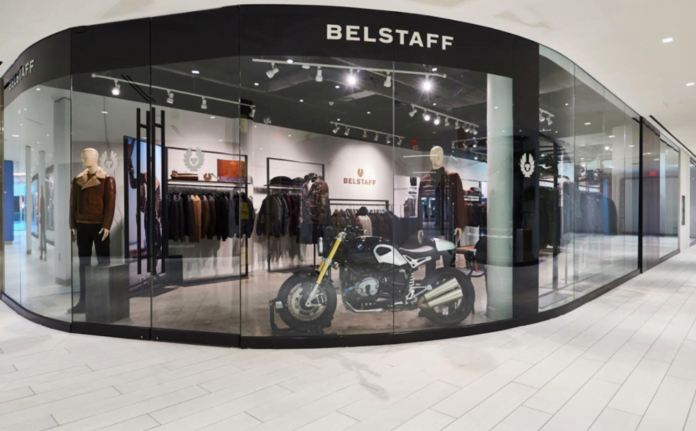
British luxury heritage brand Belstaff has opened its first freestanding Canadian boutique, at Toronto’s Yorkville Village shopping centre. The 1,100 square foot storefront is operated in partnership with a prominent retail family that has been in business in the area for a generation. Belstaff is the first of several upscale boutiques that opened at Yorkville Village (formerly ‘Hazelton Lanes’) this fall, as the centre regains its position as the heart of the affluent Yorkville community.
Toronto’s new Belstaff boutique features an expansive collection of fashions, footwear and accessories for men, including an impressive selection of outerwear, denim and sweaters for the fall and winter season (Belstaff Kids will launch in the spring of 2018, with more to come). Clothing ranges from the refined to rugged — Belstaff is known to be popular amongst motorcycle enthusiasts, though it’s also perfectly suitable for urban endeavours, be it daywear or a night on the town. The brand was founded in Longton, Stoke-on-Trent, Staffordshire in 1924, and it was the first company to use wax cotton in the manufacturing of waterproof apparel for motorcycling. Belstaff operates several boutiques globally and in the United States, Belstaff operates a freestanding store at 814 Madison Avenue in New York City.
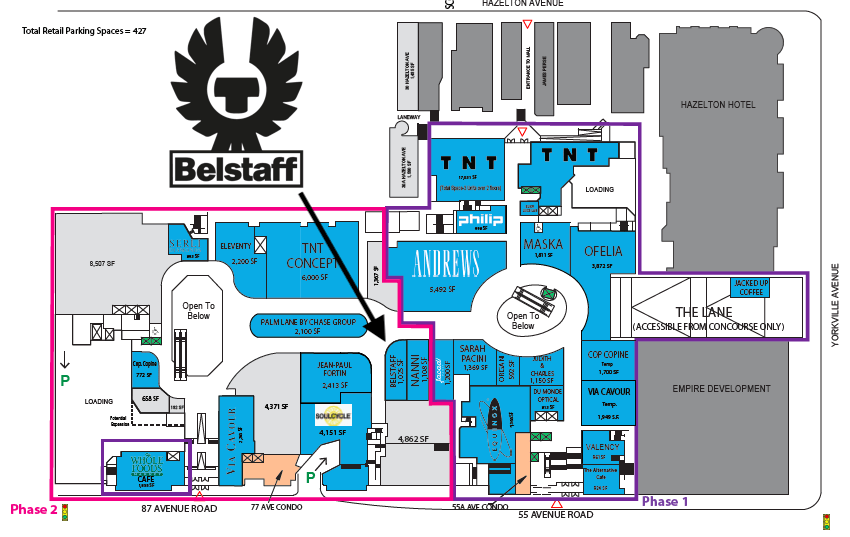
Fixtures in the new Toronto Belstaff store were imported from Europe, and stay true to the brand. The store’s design is simple yet impactful — light grey walls contrast with black accents, both inside and out. The store’s facade features an elegant rounded corner that provides optimum visibility. Its location in Yorkville Village is also strategic — fitness concept SoulCycle has an entrance nearby, as does Galerie De Bellefeuille, Jean-Paul Fortin shoes, TNT Concept and North America’s first location for upscale Italian brand Eleventy. At the heart of it all, and directly across from Belstaff, there is the Chase Group’s latest restaurant concept, Palm Lane, which has a seating area that faces directly towards Belstaff.
Belstaff opened in partnership with the Zappacosta family, which has been in the retail business for more than a quarter of a century. It’s very much a family affair — brother and sister team Philip and Leandra Zappacosta act as image and lifestyle consultants, and also run the luxury menswear boutique ‘philip’ that opened at Yorkville Village in the summer of 2016. This fall, as well, the Zappacostas re-opened their upscale multi-brand retail concept ‘Nanni’ next door to Belstaff at Yorkville Village, with a connecting entrance between the two stores. Nanni opened its first store in the former Hazelton Lanes in 1991, and the Zappacostas have had a retail presence at the centre since then.
Belstaff is one of several highly successful brands once carried at the eponymous philip store, and its exceptional sales spearheaded the partnership to open Belstaff’s first freestanding Canadian store. Other brands have also approached the Zappacostas about opening stores in Toronto, and they’re in talks to potentially open other mono-brand luxury boutiques nearby. The family decidedly maintains their retail operations in Toronto’s Yorkville area, which they consider to be ground-zero for luxury retailing in Canada.
Belstaff’s CEO, Gavin Haig, explained how the timing was right to open a standalone Belstaff boutique in Canada, given the brand’s strong year-over-year growth at various wholesale partners. He praised the Zappacosta family as being entrepreneurial, successful “serious professionals”, and how a relationship was struck from their successful wholesale account that led to the Toronto Belstaff boutique partnership.
Mr. Haig said that he expects at least two more Belstaff boutiques in Canada, and that Vancouver is a target because it boasts a strong Asian population that responds to heritage brands.
On Thursday, October 26, Belstaff held a well-attended opening party in partnership with the Zappacosta family at the new Yorkville Village store. For those that missed it, more Belstaff Toronto events will follow.
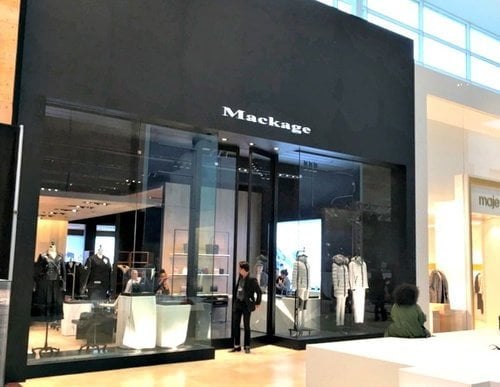
Mackage (YORKDALE STORE IN OCTOBER 2016. CREDIT: CRAIG PATTERSON)
American Firm Acquires Canada’s Mackage:La Press reports that Montreal-based fashion brand Mackage, which also owns the Soia & Kyo brand, has been sold to American and Korean interests. La Presse says that Mackage wasn’t willing to grant an interview about the acquisition, so details are limited.
Mackage’s founders continue to run the business with a headquarters remaining in Montreal and APP’s majority shareholders include a numbered company owned by InterLuxe, SK Holdings (Korea) and PP Americas Plans (a fund owned by the Montreal Transit Corporation pension plans). The two largest minority shareholders are Elfaco Holdings (Elfassy family) and Elisa Dahan (co-founder of Mackage).
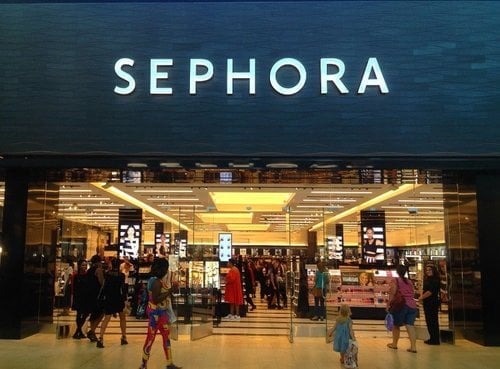
Sephora Opens 2nd Canadian TIP Store at West Edmonton Mall: LVMH-owned beauty retailer Sephora has opened its second Canadian ‘TIP’ concept store at West Edmonton Mall. TIP stands for “Teach, Inspire, Play” — Sephora describes the concept as being “where digital technology and services fuse, culminating in a truly revolutionary shopping experience for modern day beauty enthusiasts of all ages to beauty together”.
The West Edmonton mall Sephora also expanded from 5,860 square feet to 9,960 square feet, making it one of the largest Sephora stores in Canada.
Retail Council of Canada’s Shopping Centre Study will be released next month. For companies seeking exposure to retailers and landlords, this is a tremendous advertising opportunity — last year’s study saw over a million impressions, and was widely distributed while also extensively referenced in the press. For more information, email Mary Markou at: mmarkou@retailcouncil.org.
As well, Retail Council of Canada is hosting an interesting event on November 21 at Google’s downtown Toronto headquarters, discussing the future of brick-and-mortar retail in Canada, including the new 2017 study. Click here for more information.
David’s Tea: Two of Five Top Leaders Depart: According to a report in La Presse, two top executives at Montreal-based David’s Tea have recently left. Christine Bullen, Vice President of Operations and President of David’s Tea USA, and Edmund Noonan, Chief Property Officer, “have ceased to be employed by the company” according to La Presse.
On June 7 of this year, the Chief Financial Officer (CFO) Luis Borgen quit his job with the company.
Walmart Canada Launches Original Branded Content Digital Series:Walmart Canada is launching a scripted dramedy series this fall called Upstairs Amy, in partnership with Interac and APEX PR. The branded content series, available on Youtube, is described as “a modern comedy about millennial parents and the gap between who they are and who they want to be. Amy Zhang’s life is upended when the condo she shares with her husband Dean and their toddler is flooded, so they move several floors up in the same building – and meet their glamorous-but-mysterious new neighbour, Kaavya, who has all the confidence and ‘spark’ Amy wants for herself. Amy enlists her best friend Veronica to help her sleuth out Kaavya’s story, and chronicles it all in YouTube videos about their adventures – interspersed with her comedic takes on love, career, and parenting. In this irreverent, quirky series, Amy uncovers the mystery of Kaavya – and finds out if she can become the true ‘Upstairs Amy’.”
Heather Loosemore, Senior Director, Marketing Communications, Walmart Canada said, “The story of Upstairs Amy – and the many influencers we have engaged with for this program – reflects these core values in an authentic and entertaining way.”
The series is being produced by Shaftesbury (the Canadian studio was responsible for the vampire web series Carmilla) in association with Canadian debit card company Interac, and Ruckus Digital is leading development on media and social content for the series. Hamilton Beach is the official small kitchen appliance partner for the series and its products will be featured throughout, with links to Walmart Canada’s website. Real-life digital influencers were curated by APEX PR.
(NYC SHOWROOM. PHOTO: INDOCHINO)
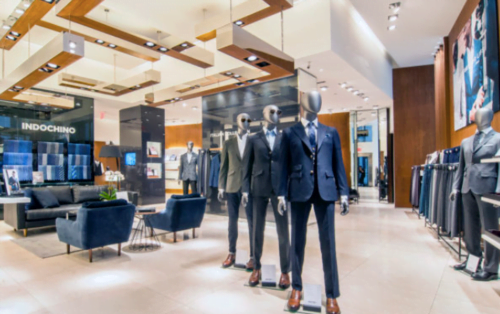
INDOCHINO Announces Seattle Showroom — its largest to date: The world’s largest made to measure apparel company will unveil its downtown Seattle flagship on November 10 at 1801 5th Avenue, spanning 4,371 square feet. It will be INDOCHINO’s largest showroom to date, located just north of Nordstrom and near Amazon‘s global headquarters.
“We have a strong affinity with our neighbors south of the border, with thousands of online customers and hundreds more who travel north to take advantage of our Canadian retail locations,” said Drew Green, CEO, INDOCHINO. “We’re looking forward to introducing our experiential approach, innovative product and accessible price point to the next generation of Seattleites.”
Seattle is the eighth INDOCHINO location to open in major North American cities this year as the company continues to expand its innovative experiential retail concept, with the company aiming to open 150 showrooms globally in the next five years.
‘The Wool House’ is expected to see over 300,000 visitors at the Royal Agricultural Winter Fair (November 3-12) and will be curated by the Harris Tweed Authority and will be outfitted in wool products/garments designed and/or produced in Canada. Visitors will also be educated on the benefits of wool, including the positive impact on the environment to supporting local economies, as well as shown the journey of a garment from farm to closet.
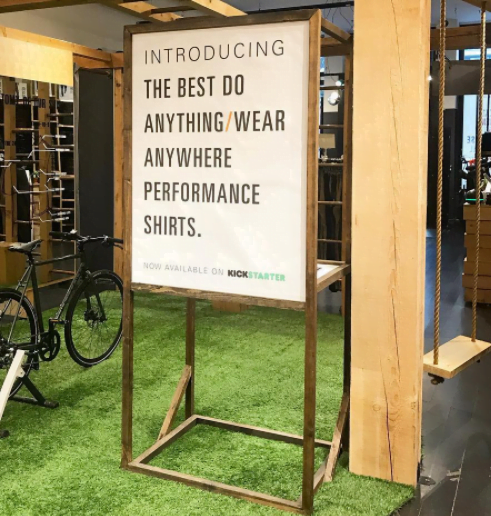
DUER launches Kickstarter campaign for Performance Shirts, far exceeds goal: Vancouver-based fashion brand DUER launched a line of Performance Shirts in Kickstarter several days ago, with a goal of raising $50,000. The company reached that goal in less than 12 hours, becoming the 10th most popular projection Kickstarter as well as becoming number one in the fashion category. The campaign currently has over 1,100 backers with funds pledged being in excess of $130,000.
(DUER PERFORMANCE – INSTAGRAM)
The new line offers DUER’s take on the performance-infused streetwear for its bottoms, and brings it to three shirt silhouettes in multiple colours for men and women. Shirts have many of the same features as the company’s pants, including a patented gusset, performance stretch, and moisture wicking.
“We built this company to solve problems,” explains Gary Lenett, DUER’s Founder. “Technical clothing couldn’t be dressed up. Fashionable clothing lacked the performance features and comfort of technical clothing. DUER combines both, and I’m thrilled that we’ve been able to adapt the same formula to solving problems with shirts as we previously did for jeans and other pants.”
Standard Apparel Files for Bankruptcy: According to publication Insolvency Insider, Toronto-based wholesale showroom and apparel distributor Standard Apparel has filed for bankruptcy. The company, which was founded in 2007, is the exclusive Canadian distributors of brands Fred Perry, Filson, Hudson Bay Company Signature Collection, Aigle, Oliver Spencer, and several others. The company also operated standalone Fred Perry and Oliver Spencer fashion retail stores on Queen Street West in Toronto. According to its website, Standard Apparel operates a 20,000 square foot warehouse at 87 Wingold Avenue.
KSV Kofman Inc. is the trustee in bankruptcy, according to filings. Standard Apparel lists $5.3 million in liabilities, including owing about $1.7 million to the Bank of Montreal, and a factum states that the Trustee does not expect the Companies’ assets to be sufficient to fully repay that amount. [Subscribe to Insolvency Insider]