Home Blog Page 1239

Ecommerce Retailer La Petite Écolière Launches Girlswear For a Cause

exc-5a1630c5f9619afa6abbc3a4

A new Toronto-based e-commerce company is striving to send a message that girls’ education is important, both through the merchandise it sells and the causes it supports.

La Petite Écolière is a line of girlswear that boasts positive messages celebrating education, such as ‘Brains are Beautiful’ and ‘Love to Learn’.

The company’s goal is to inspire girls to pursue education, and to support charities that are working to advance education for girls and women, says Roberta Lindal, founder and CEO of La Petite Écolière.

“I hope to inspire girls to have a dedication to their education, and to know that no professional fields are off limits to them,” Lindal says. “I hope to inspire parents to have these conversations with their daughters, not only about their education and future goals, but about not taking it for granted. Because many girls worldwide do not have the resources we do.”

Lindal has spent much of her career working for charities dedicated to children’s education, and in those roles, she observed benefits that can result when girls become educated.

“For girls and women in developing countries, an education can prevent child marriage, [increase] child survival rates, and increase wealth for both the girl and her country’s GDP,” Lindal says.

In Canada, Lindal says that although statistics show that more women are graduating from high school and post-secondary school, there is still progress to be made. Specifically, she notes that there is a lack of women pursuing education in fields such as science, technology, engineering and math (a.k.a. STEM), and when it comes to leadership and board level positions in many fields, women are vastly outnumbered by men.

“Systemic and sustained efforts from schools and universities need to prepare women to get into leadership roles, and STEM programs and careers,” Lindal says.

La Petite Écolière offers T-shirts for girls between the ages of 2 and 8 years old, and with growing demand from an older demographic, the company is now expanding its production to include certain designs in women’s sizes.

The company also plans to roll out additional products and school supplies in the near future, such as notebooks, lunch bags, and pencil cases.

“We are always releasing new products and designs tied to our mission,” Lindal says.

Lindal comes up with the concepts for the products, and works with graphic designer Derek Sharpe to bring her visions to life. All of the merchandise is designed, produced and printed in Canada, and is made with organic cotton and bamboo materials.

In addition to selling merchandise through its website, the company is currently in the process of launching a wholesale program in order to sell items through retailers.

Proceeds from every purchase at La Petite Écolière are invested into charities working to advance education for girls and women. One of those charities is Plan International Canada, which works in Canada to improve the status of women, as well as working to improve the quality of life of children, families and communities in developing countries.

**Images provided by La Petite Écolière (via their website and Instagram)

Canadian Retail News From Around The Web: November 28, 2017

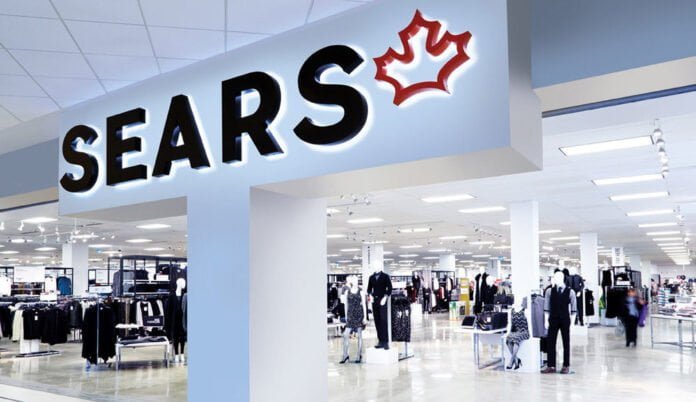
What’s Next After the Failure of Sears Canada?

exc-5a15e39b24a694106df630c7

Now that Sears has joined the storied list of Canadian retailers who have failed, including Eaton’s, Simpson’s, and Woodward’s, there are two remaining questions:

  • Which apparel retailers will benefit from Sears Canada’s demise?
  • Which apparel suppliers were affected by Sears Canada’s closure?

It would seem that everyone has their own list of ideas as to why Sears Canada failed. However, it’s important to understand that at least two of the reasons often given by industry savants contributed only minimally to Sears Canada’s demise. The first is that the retailer was positioned in the middle of the market. As Trendex has previously pointed out, many retailers positioned in the middle of the Canadian apparel market (e.g. Mark’s) continue to survive and in some notable cases prosper. 

(Continued after the advertisement) 

The second reason often given is that e-commerce’s growth adversely affected Sears Canada. Ironically, Sears Canada was one of the first Canadian retailers to launch an e-commerce site. Although the facts that Sears Canada has struggled with e-commerce and its e-commerce program was underdeveloped are undeniable, but so is the fact that e-commerce accounts for only 2% of Canadian retail sales versus 10% in the United States. 

As such, even if Sears Canada had an e-commerce offering as good as its direct competitors, it still would not have saved the retailer. From this publication’s perspective, Sears Canada’s future was preordained when Eddie Lambert, in 2004, acquired 51% of Sears Canada. At that point, Sears Canada unfortunately became nothing more than a “piggy bank” for “Fast Eddie” and a parade of Sears Canada CEO’s followed who operated the retailer without the authority or vision to make the necessary changes to keep the retailer competitive.

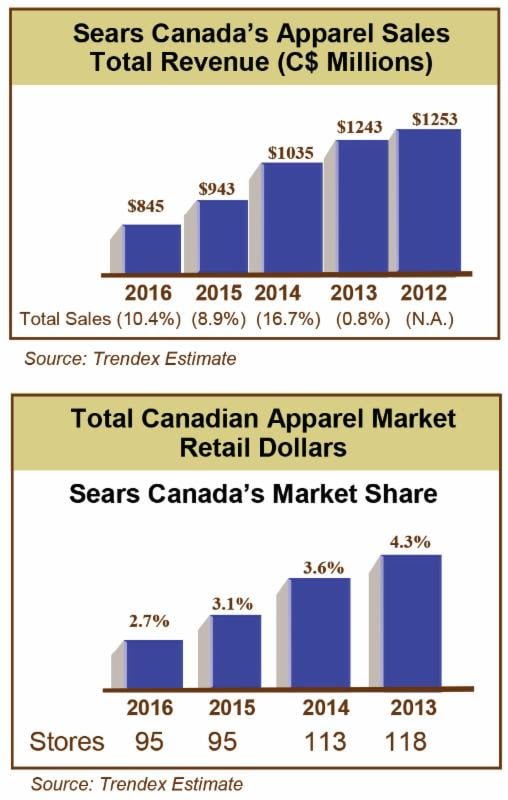
Prior to understanding the specific implications of Sears Canada’s failure for the Canadian apparel industry, its historical position in the market requires examination. Going back to 2012, Sears’ apparel division’s sales were almost C$1.3 billion. In that year it was Canada’s second largest apparel retailer. Five years later, in 2016, the retailer’s apparel sales were C$845 million and it had become the country’s fifth largest apparel retailer.

Assessing which apparel retailers will benefit from Sears Canada’s demise is relatively straight forward, given the profile of the Sears Canada’s customer, along with the retailer’s historic commodity strengths.

Ten years ago, Sears Canada’s strength was disproportionately among younger mothers, the middle class in general, and specifically among middle class immigrants, and seniors. During the past decade, Sears Canada increasingly lost their young-mother customer base to children’s specialty chains, along with others who offered a more obvious value proposition including Old Navy, Walmart Canada, and Winners. Going forward, while its not certain whose Sears Canada’s two core segments will specifically gravitate to, it is a certainty that the winning retailers will be those in the middle/older segment of the market including Reitmans, Costco, Winners and Walmart Canada. Marks should benefit from Sears’ historic strength in men’s workwear, while retailers including Northern Reflections should benefit from Sears Canada’s historic strength in older women’s casual apparel.

How will Sears’ failure affect the base of Canadian apparel suppliers as historically Sears Canada was the largest customer of Canadian apparel suppliers? Although Sears Canada’s dependence on its domestic supplier base had lessen over the past decade, it was still enormously important to a handful of suppliers including NTD Apparel, Jeno Neuman, Stanfield, and Orientex. According to Sears Canada’s, filing for protection in excess of 68 U.S./Canadian apparel suppliers were owed a total of C$21.8 million. At the end of this article is a list of Sears Canada’s apparel suppliers/creditors, not counting those headquartered in Asia. Note, all monies owed are expressed in Canadian dollars

In the case of the majority of the international apparel suppliers, the amounts owed to them by Sears Canada represents a small portion of their sales. 

On the other hand, the monies owed to Canadian headquartered apparel suppliers including Stanfield, etc. represent a large portion of their annual sales. Worse still is the prospects of these companies replacing Sears’ lost sales.

Since at least the beginning of this decade it would be safe to say that watching Sears Canada’s performance was akin to watching a train heading for a wreck. It was obvious in the case of Sears Canada that the wreck was certain to occur, what was not known was when it would happen and how bad the wreck would be.

At least now we finially have the answers to both questions.

BRIEF: Oxford Expands Temporary Retail Initiative, YSL Pops up at Square One, Mark’s Pop Up on Queen

exc-5a164f1e652dea2e1ad8456a

Oxford Properties Expands Mall Pop-Up Initiative

Landlord Oxford Properties is expanding pop-up retail in its malls in a big way. It began in the spring of 2017 when Yorkdale Shopping Centre launched a permanent pop-up space called CONCEPT, and now other malls are seeing dedicated pop-up areas. 

Edmonton’s Kingsway Mall is the latest in the portfolio to include dedicated pop-up areas — spaces were created in a renovated part of the mall that formerly housed a Target store (which has seen a $50 million overhaul). Called ‘Community’, the 2,700 square foot space is described as being “a revolving showcase of remarkable retailers… connecting you to passionate people, new products, and authentic experiences.” 

Vendors include: CACAO 70 Dippery (popular ice cream), Cookie Dough Stand, Milk Milk Lemonade (various delicious beverages), and Whisk Dessert Co. (previously “Over the Top Cakes”) which features locally made desserts such as macarons, pies, cheesecakes, eclairs, cookies, and assorted seasonal desserts are available for pre-order & ready made for pickup. 

Kingsway is also leasing to temporary tenants in the immediate area — Lindsay Botha, Manager of Specialty Leasing and Partnerships, explained how the mall’s pop-ups are a way for brands to test out the mall.   

“Malls are a community of retail,” she explained, and having the diversity of temporary tenants that might not otherwise locate in the mall is adding diversity to the already successful retail centre. 

Other Oxford malls are adding pop-up spaces — Scarborough Town Centre in Toronto recently introduced its ‘Sweet Market’, which includes three popular sweets retailers in one retail space. Calgary’s Southcentre is another property getting in on the temporary retail game, which has the potential to add “local flavour” to malls, which often overwhelmingly feature national and international chain retailers. 

Edmonton-based jewellery retailer The Makers Keep tested out Kingsway last year, and decided to make the move to become a permanent tenant. Owner Katrina Petryshyn was initially hesitant to move into the centre for two reasons — malls are notoriously expensive, not to mention considered to be “mainstream” by some. But the math made sense, and the Maker’s Keep found a community at Kingsway that led to the signing of a long-term lease. 

Retail analysis and futurist David Ian Gray predicts that 2018 will be ‘The Year of the Pop-Up’ — though given the momentum we’ve seen in 2017, it might already be temporary retail’s year for the making. 

Demand for pop-up retail space is already unprecedented, says Linda Farha, Founder and Chief Connector at pop-up go, an online platform that helps pair retailers with available temporary retail spaces, which also features a curated pop-up match service that provides access to the ever-growing pipeline of pop-up seekers looking for space. Pop-up retail wasn’t on the radar for the most part, she noted, and now business is booming. 

Yorkdale Unveils ‘CONCEPT 4.0’

Toronto’s Yorkdale Shopping Centre’s permanent pop-up space CONCEPT has launched another rotation of tenants — until a couple of weeks ago it was Sunwing Vacations, and now CONCEPT is featuring several terrific food vendors. 

The latest round of tenants will be in the space until February 28, 2018. The most popular and exclusive dishes from Cheesecake (on a stick) by Heirloom, French Toasted by Fidel Gastro’s, Buster’s Sea Cove, Me.n.u and Chatime are featured. 

Yorkdale also has a separate pop-up area in the centre of the mall called ‘Indulge’, featuring Uncle Tetsu’s Japanese Cheesecake, Pie Squared, and Eva’s Original Chimneys. All three vendors also popped-up at CONCEPT when it launched in the spring of 2017. 

HiO Pops-Up at CF Malls

European designer retail concept HiO has opened on Level 2 (former Gerry Webber space) at the CF Toronto Eaton Centre, and a second location will open mid-December at Toronto’s CF Sherway Gardens. HiO features a selection of hard-to-find European designers, with a focus on fashion accessories. 

It was explained that HiO is set up to test brands before they expand out into either their own retail stores, or otherwise wider distribution in Canada. Brands include Campo Marzio, Agatha Ruis de la Prada, and Moleskine — the latter which is reported to be on the hunt for retail spaces for its own stores with the help of The Behar Group for sites in Toronto, and Think Retail for Montreal.  

Nordstrom Launches MoMA Pop-Ups

Seattle-based Nordstrom is bringing New York City’s Museum of Modern Art to Canada. Nordstrom’s Vancouver and Toronto flagships both feature MoMA shop-in-stores that feature collections ranging from inexpensive greeting cards and coasters to a gigantic clock priced in the thousands. 

Only eight of Nordstrom stores (including two in Canada) feature pop-ups, called ‘Pop-In by Nordstrom’. It’s the brainchild of Olivia Kim, vice president of creative projects at Nordstrom, and her buying team. “I’ve always been a huge fan of MoMA Design Store and their ability to thoughtfully consider the most interesting, exclusive and enticing products from around the world,” said Ms. Kim.

YSL Beauty Opens 1st-Ever Pop-Up at Square One

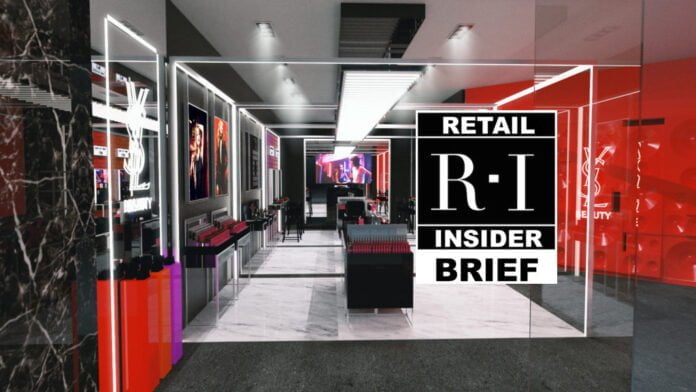
Now until December 31, Yves Saint Laurent Beauty is operating an innovative pop-up at Mississauga’s Square One. The modern 1,100 square foot space features more than 400 products for women and men and includes complimentary engraving on lipstick, fragrance or the iconic Touche Éclat, makeup classes, events and more. For more information, visit www.yslbeauty.ca.

The pop-up includes YSL’s best-selling collections for lips and fragrances, including the recently launched Tagouage Couture and Tient Encre de Peau All Hours. 

Hillcrest Mall Launches ‘Choose Your Experience’ VR Pop-up

Richmond Hill’s Hillcrest Mall will be adding a virtual reality pop-up experience opening this December. For a limited time, guests of all ages will be able to experience a variety of VR through tech simulations.

“With the surge of new upcoming retailers at Hillcrest, shoppers are eager to see what we have in the works. This holiday season, Hillcrest is focusing on important updates in advance of its interior renovation, including a new Santa Set and revamped website.” says Lisa Resnic, Marketing Director and Specialty Leasing Director, Hillcrest Mall. “This year will also be the first time we are introducing Black Thursday to offer shoppers even more value.”

Landlord Oxford Properties is adding new experiences to the mall, which has seen almost $100 million in investment over the past several years — it just announced that it is tenanting its former Target space, while it also renovates common areas and adds new retailers. 

As well, Hillcrest has added the innovative ZaZaZoo concept to the mall — shoppers to rent and ride large plush animals throughout the shopping centre, and guests of all ages are encouraged to take part. We profiled ZaZaZoo about 18 months ago on Retail Insider, when it was still a relatively new concept. 

*****

For retailers seeking to do pop-ups, or for landlords looking to get into the game, online platform pop-up go helps pair retailers with available temporary retail spaces — pop-up go also features a curated pop-up match service that provides access to the ever-growing pipeline of pop-up seekers looking for space. Fore more information, contact Linda Farha at: linda@zenergycom.com.

*****

Jeweller Myles Mindham pops-up at Toronto’s Yorkville Village

Local luxury jeweller Myles Mindham has opened a pop-up inside of Toronto’s recently overhauled Yorkville Village shopping centre. The space is called Hazelton by Mindham Fine Jewellery, and it’s in the mall until the end of December on the second level between Judith & Charles and Sarah Pacini. 

The roughly 650 square foot boutique carries various Mindham designs, priced between $300 and $5,000, in a space that looks almost too good to be a pop-up. 

Minhdam also has a permanent store on nearby Hazelton Avenue, in a lovely area featuring a mix with commercial and residential along a tree lined street. 

Yo Sox also pops-up at Yorkville Village

Colourful Toronto-based sock brand Yo Sox has a pop-up on the ground level temporary retail space at Yorkville Village, facing ‘The Oval’. Various sock designs are available. 

Yo Sox was founded in 1993 and it also has a store at 607 Queen Street West, in the city’s hip ‘West Queen West’ area. 

New Scotland Clothing Co. pops-up in Halifax

As first reported in Halifax ReTales, the New Scotland Clothing Co. has opened a seasonable pop-up in a retail space near the Apple Store at Halifax Shopping Centre. The casual Nova Scotia-based fashion brand’s designs are manufactured in Canada. 

The company also has a permanent retail space in Dartmouth, just across from Halifax. Remarkably, it has a 4.9 star rating with 53 votes on Facebook. 

Loewe Pops-Up at Holt Renfrew Square One

Spanish luxury brand Loewe has a pop-up space at Holt Renfrew’s Square One for the holidays. The LVMH-owned brand, known for its leatherwoods, has amplified its presence significantly in Canada over the past two years. The collection is now carried at Holt Renfrew and Nordstrom, including selections of ready-to-wear as well as accessories. 

Holt Renfrew is also hosting other pop-ups for the holidays — Tiffany & Co. has opened temporary spaces to hawk expanded collections, and Holt’s itself is selling gift items including seasonal toy bears, with proceeds from sales going to charity. 

Mark’s to Open Queen Street West Pop-Up as it Rebrands

Formerly ‘Mark’s Work Warehouse’ and now known as ‘Mark’s Well Worn’, the Calgary-based retailer (under the Canadian Tire umbrella) is opening a pop-up for several months at 336 Queen Street West in Toronto. The space has hosted several pop-ups and over the summer Ikea decked out in an impressive retail space that was also highly interactive with games and food. 

We’re told that 336 Queen St. W. will be demolished next spring for a new mixed-use building. 

POP-UP PLANNING POINTS, brought to you by the experts at pop-up go

Pop-ups are becoming increasingly diverse with more organizations turning to creative experiential marketing strategies for fresh and innovative ways to enhance their brands. Pop-ups can range from the tried and true, to the wild and wonderful but there are a few common elements that make up the backbone of every successful activation. Here are three key components to consider when planning your pop-up debut: 

Lists: Make one – and check it twice

Don’t rush in to start your pop-up, make sure you have taken some time to think about all the different elements that will be involved in your activation. Think about what you want your finished experience to look and feel like – work backwards from this and create a plan that will help to make sure your brilliant ideas become an equally brilliant reality.

Think about all the possible aspects and logistical information to ensure your pop-up runs smoothly. For example, if you plan to have merchandise at your pop-up – What merchandise will you have? How will you transport it there? And, once it’s in the space, how will it be displayed? If you have on-site sales, don’t forget to determine how you are going to accept payment. Think about all the materials that will be needed to set-up and sustain your activation.

Staff: The faces of your business

The people you hire to staff your pop-up are the people who will be representing your business throughout the duration of your activation – think of them as brand ambassadors and make sure you select the right people to create the right impression. Leave enough time for staff training to ensure your new hires know your brand inside and out. It’s important for your pop-up to have a strong and engaging staff capable of supporting you in your efforts to create compelling experiences.

It’s hard to predict how many people your pop-up will attract, so make sure to think positively and hire more staff than you need. This will also allow for attrition and any other issues that may occur if someone is not able to show-up.

Social Media: Create a buzz before, during and after your pop-up

Social media will be vital for marketing your pop-up and encouraging word-of-mouth promotion from your visitors. Make sure to create a strategic social media plan and execute it ahead of your launch. You can use helpful tools to pre-schedule your posts, such as Sprout Social. Develop social content that demonstrates why your pop-up is unique and worth visiting.

You may also want to consider what external trends relate to your activation and participate in those online conversations to capitalize on their buzz. Try to plan or gather as much visual content as you can ahead of time, but remember to post “in the moment” content too including photos and live videos of your pop-up in action to increase FOMO effect.

Fail to prepare and prepare to fail. When your pop-up is well-planned, it’s a breeze to execute and will therefore be more successful. First impressions are important – you only get one so make the most of it by defining a clear strategy which includes these core elements.

*****

*Retail Insider will periodically feature pop-up concepts in its Briefs. For more information, contact Editor-in-Chief Craig Patterson at: craig@retail-insider.com. 

Photo Studio Helps Canadian Retailers Boost Online E-Commerce Presence

By Angela Westfield

Many Canadian retailers have been slow to embrace e-commerce, and plenty still lack websites to promote their products and services. This is particularly concerning, considering how rapidly Canadians are embracing online shopping. Studies show the importance of visuals to websites and to address this, Montreal-based Nat Gorry is working with retailers to put their best foot forward with an online presence.

Images are powerful – they can tell a story, inspire, and persuade consumers to make purchases. Even restaurants find that menu photos can increase sales of a particular dish by as much as 30%. Instragram’s popularity is growing exponentially, now with over 500 million active user. Video takes things to a whole new level with videos on Facebook, for example, getting over 8 billion views daily.

Recognizing the importance of quality photos and video to e-commerce, industry leader Nat Gorry set out to help Canadian retailers build better websites, including both photo and video content. The Nat Gorry studio works with some of Canada’s top brands, including Marie Saint Pierre and SSENSE to create quality images for their sites, helping drive sales growth through that channel.

Ms. Gorry explained how she recognized how consumers are increasingly shopping online, which is corroborated with statistics from Canada Post showing that 76% of Canadians shopped online last year. One concern, however, is that a considerable amount of Canadian online shopping is done in the United States, where retailers have been ahead of Canada in developing e-commerce businesses. To level the playing field, Nat Gorry Studio is working with companies to create high-quality Canadian e-commerce sites. 

High quality images can make the difference between selling and not selling, Ms. Gorry noted. Because online shoppers aren’t able to actually touch the product, having clear product photos is crucial to not only just selling the product, but creating trust between the retailer and consumer that the product is as described, not to mention reflecting the brand’s visual identity while telling its story. The reality of e-commerce is that if there are no photos, there are likely to be no sales.

Video is increasingly being used in e-commerce as well, with some retailers actually providing videos of models walking in garments, for example. Instagram also supports video uploading, and the Nat Gory Studio has been working with Canadian retailers both on video for the web, as well as for Instagram.

Taking the ‘right’ photos can be challenging, as product placement, styling, lighting, editing and other components must be considered. Ms. Gorry explained how some of her customers send products to her studio so that photos are profiled consistently, artistically, and fashionably. Although it may look easy, there’s a lot of skill and effort required to make a quality photo or video appear effortless, she explained. For larger companies looking to shoot their own photos, she said that she can set up and organize their studios as well as organize workflow, train photographers and stylists, and make other recommendations to ensure success – sometimes taking several weeks to do so.

For smaller Canadian retailers unsure of where to begin, Nat Gorry can also assist with website design. It’s an important service particularly in the province of Quebec, where an alarming two thirds of retailers lack online stores. Contact Nat Gorry at: studio@natgorry.com telephone: 1.514.381.8884. 

Bailey Nelson Launches Ontario Expansion with 1st Store [Photos]

exc-5a162605ec212d9bd36f2dbb

Australian eyewear retailer Bailey Nelson has opened its first corporately-owned location in Toronto. The company entered Canada earlier this year and already operates three stores in Vancouver. 

The new Toronto store is in a bright open retail space at 732 Queen Street West, in an area with the highest concentration of street-front eyewear retailers in Canada. Formerly a location for Starbucks, the new Bailey Nelson store features a retail space in the front, as well as an optometrist’s office at the back-end. 

The glasses buying process is simple — an optometrist can do an eye exam if warranted, and staff then help pick out frames. Bailey Nelson has an extensive range of frame styles to suit different looks at very reasonable prices, and there’s also an expansive selection of sunglasses. 

Brokerage CBRE is working with Bailey Nelson on its Canadian store expansion. The Toronto deal was negotiated by the CBRE Toronto Urban Retail Team under the direction of Jackson Turner, Arlin Markowitz, and Alex Edmison. In Vancouver, Martin Moriarty and Mario Negris of CBRE are handling Canada’s west. 

Bailey Nelson launched its Canadian store expansion in the summer of this year when it unveiled a store at 1135 Robson Street, in the heart of the city’s busiest shopping area (and new a soon-to-open MUJI flagship). A second location followed in Gastown at 202 Carrall Street, and most recently Bailey Nelson opened at 2169 W. 4th Avenue in Vancouver’s Kitsilano area. 

In an interview several months ago, Bailey Nelson’s North American managing director, Bree Stanlake, explained that the retailer will look to open multiple locations in each market it enters. Following Vancouver and Toronto, Bailey Nelson will seek to expand into Ottawa and other major Canadian cities. 

Bailey Nelson will test out the Canadian market and while there’s no ‘ultimate goal’ as to the number of stores it will open, Ms. Stanlake noted that Canada could see as many as 40-50 Bailey Nelson stores open over the next four years. Stores will generally range in the 1,000 square foot to 2,000 square foot range, and its initial focus will be on urban street fronts, in order to create connections within local communities. Shopping mall locations will also eventually play a key role in the company’s expansion, said Ms. Stanlake, particularly given our climate and exceptional foot traffic at leading centres. 

Founded in Bondi Beach (Sydney) Australia in 2012, Bailey Nelson retails high-quality, on-trend glasses and sunglasses at a moderate price-point. It designs and manufactures its high-quality frames and uses top-quality lenses. Prices are a fraction of the cost of some competitors, and customer reviews reflect satisfaction with the company’s customer service and product selection. 

WineOnline Continues to See Exceptional Ecommerce Growth

Image: WineOnline.ca.

As Canadians increasingly embrace the convenience of online shopping, one e-commerce retailer is trying to encourage consumers to add wine to the list of items that they order online rather than buying in store.

WineOnline.ca, a Toronto-based online wine distributor, aims to expand the selection of wine available to Canadians and deliver it to their doorsteps.

Aaron Bick, founder and CEO of WineOnline.ca

The company was launched in 2004 by Aaron Bick. After having lived in the U.S. for several years, where he became accustomed to buying many things online – including wine – he was disappointed upon his return to Ontario to find that similar services weren’t available. Bick also found the selection of wines available in Canada to be limited.

“I was sort of distraught at the lack of choice and the lack of service and the lack of knowledge surrounding wine,” says Bick, founder and CEO of WineOnline.ca. That prompted him to launch WineOnline.ca, and in the years since, the e-commerce company has grown significantly. 

“We’re growing all the time,” says Bick, who notes that in the past year alone, the company has grown by 100%.

In September, WineOnline.ca was nominated for a Canada Post E-commerce Innovation Award, in the Pure Play of the Year category.

The company’s target customers include busy professionals who enjoy the convenience of having wine delivered to their doorstep, as well as wine collectors in search of specific wines that aren’t available in local liquor stores.

Canadians have been relatively slow to adopt online purchases of alcohol, Bick says. Compared to other developed countries, he notes that a far smaller proportion of alcohol sales in Canada are conducted online.

That’s in part because in provinces such as Ontario, alcohol was – for many years – almost exclusively available through government entities such as the Liquor Control Board of Ontario (LCBO). Many consumers still aren’t aware that other purchasing channels are available, Bick says.

“It takes a really long time to change behavior,” he says.

With the LCBO having recently introduced an online sales channel, however, there is growing consumer awareness of the option to purchase wine and other alcohol online, Bick says.

“It brings legitimacy to what we do,” he says.

In addition, as consumers get accustomed to buying many of their other goods online, Bick says a growing number of shoppers are showing interest in ordering wine through this channel, as well.

“The convenience factor is big,” Bick says. “As people get busier and busier, this will become a more attractive alternative to people.”

Although the LCBO’s new online sales channel presents a new competitor for WineOnline.ca, Bick says his company provides a vast selection of quality wines that aren’t available through the LCBO.

“Almost none of what we sell is available at the LCBO,” Bick says. “Almost everything we bring in, we represent exclusively. That’s a big selling point.”

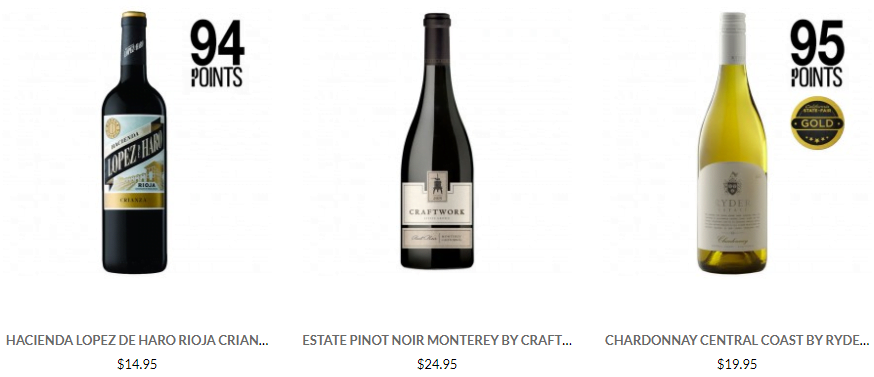
The company sells wines from many different regions around the world, including Europe, Australia, South Africa and South America, among many others. WineOnline.ca’s top-selling wines are from Spain, according to Bick.

Another factor that sets WineOnline.ca apart from its competitors, Bick says, is service. The company strives to educate clients on the wines available, and for clients who aren’t sure what to buy, customer service representatives are available to help them choose something based on the types of wines they like.

“We try and provide as much information about each wine as possible, so clients can learn about the wine before they buy it,” Bick says. “We allow people to be the wine hero in their group of friends.”

**Photos and video provided by WineOnline.ca (via their website, Instagram and YouTube channels), including the additional photos below.

Trendy Ossington Avenue Sees Changes with Major Retail Additions

exc-58235e68725e25b7506c4942

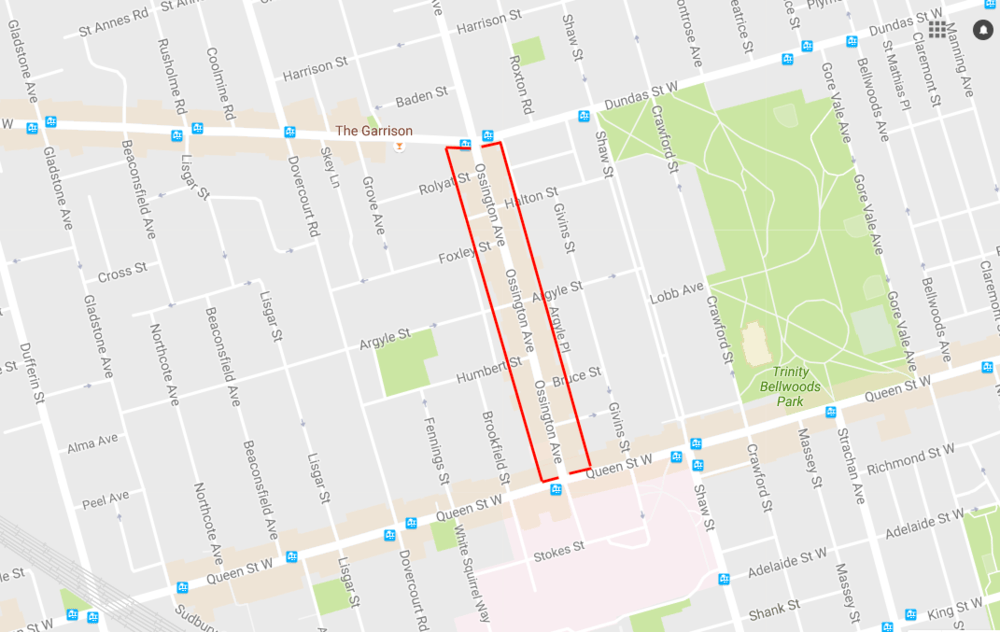
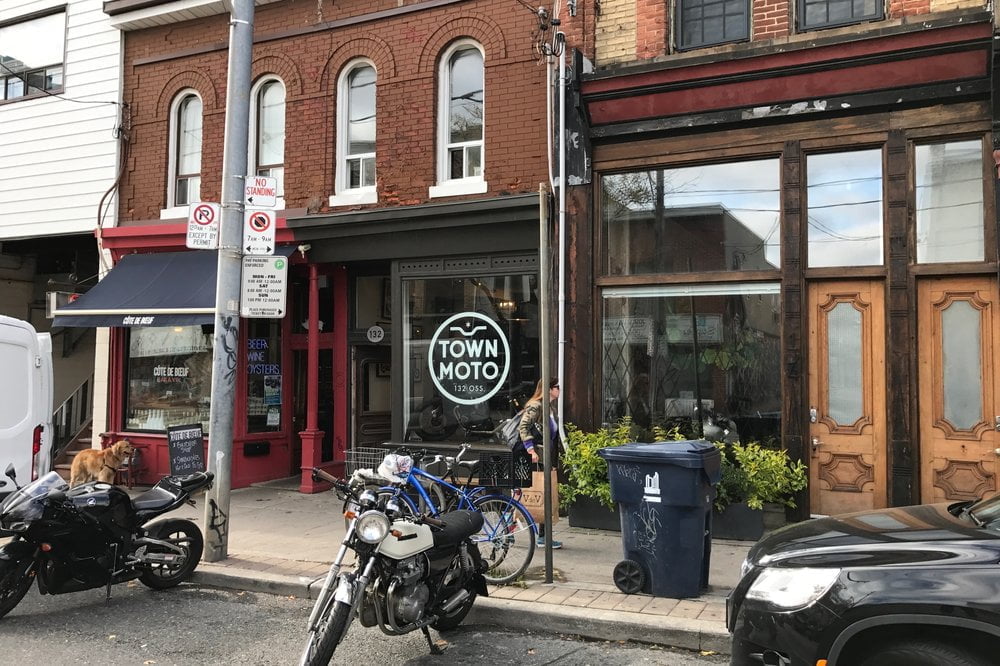
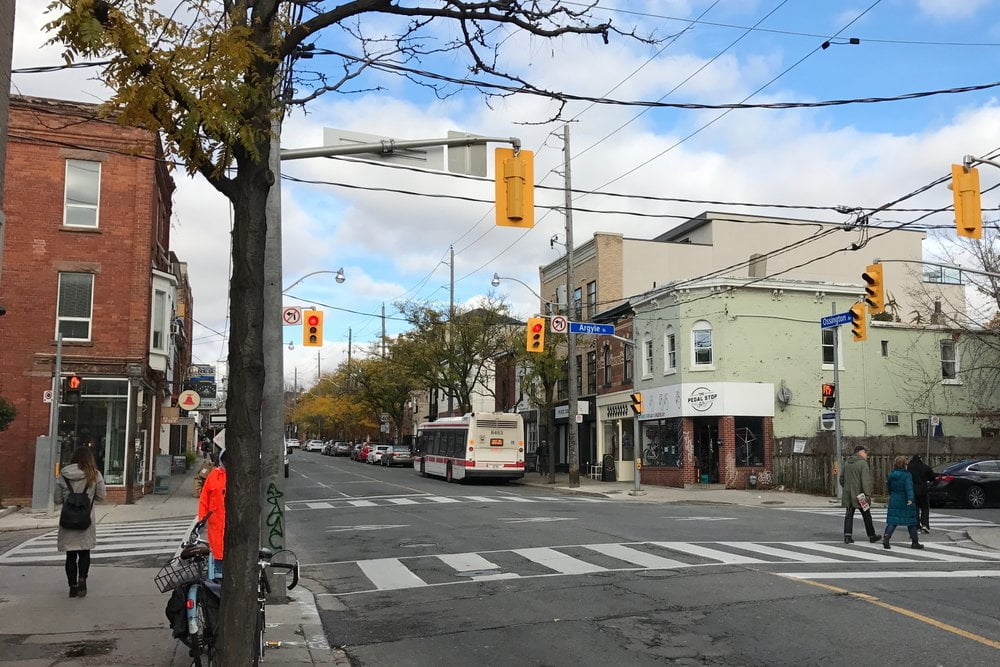
Ossington Avenue is on track to become one of Canada’s trendiest retail strips. Located in Toronto’s west end, the north-south street lies just outside of Toronto’s downtown core, with its main retail strip bordered by Dundas Street West to the north and Queen Street West to the south. A mixture of small local businesses and larger retail chains populate the street – everything from artisanal craft shops, clothing retailers, restaurants and bars.

Although primarily known for its local establishments, the street is also now populating with international retailers. Starbucks was one of the first major names to set up shop on the strip in 2012. Tiger of Sweden, and Shinola have also opened up their first Canadian stores along the strip. Most recently announced is a Lululemon Men’s Store, coming next year.

Toronto is a city filled with thriving neighbourhoods and shopping districts. Over the past year, most retailers focus their retail efforts in the downtown core. CF Toronto Eaton Centre has seen a major influx of new retailers, and neighbourhoods such as Yorkville and Queen Street West have seen new retailers open street-front spaces over the past several years. 

A neighbourhood like Ossington seems non-traditional for Toronto retail. Guaranteed retail success is not necessarily found in this area of Toronto, compared to the city’s established shopping nodes. With only a few brand name retailers that are currently on Ossington, why are more retailers suddenly interested in setting up shop here?

“We’re getting more calls from retailers that want to come to Ossington Avenue,” says Aly Damji, VP of Commercial Real Estate at Hullmark Developments, a Toronto-based real estate company that currently owns nine commercial properties in the neighbourhood. 

Mr. Damji explained over the phone last week that sudden interest in Ossington Avenue isn’t necessarily shocking.  “Retail has become more of an experiential experience. As retailers drive higher online sales, they look for retail spaces in neighbourhoods that speak to the culture of their brand”, he said. 

American luxury brand Shinola opened its first Canadian store over in the summer of 2016 at 1000 Queen Street West. Shinola opted for a 1,800 square foot space on Ossington, rather than open a store in Yorkville like most luxury retailers. “When [Shinola] looked at other retailers on Ossington, it aligned with their brand really well,” says Mr Damji. “They have a hard corner spot at Queen and Ossington, which tackles both markets of Ossington and Queen Street West”.

Vancouver apparel brand Reigning Champ has opened their first Toronto location in the Ossington neighbourhood. According to Mr. Damji, Reigning Champ discovered that their brand had a strong presence in the Toronto market through online sales. Despite Reigning Champ initially focusing on opening their first location on Queen Street West, Mr. Damji says an Ossington store is more of a brand statement for them. “As they drive higher online sales, they look for stores that speak to the culture of their brand.”

Canadian athletic apparel retailer Lululemon opened its first Canadian Lululemon Men’s store at 96 Ossington Avenue in the former Harley Davidson cafe space. Mr. Damji also reassures that more brand name retailers are on the way, and should be announced within the next year.

Another addition to the street in 2017 was Toronto’s first location for Vancouver-based fitness concept Ride Cycle Club, founded by J.J. Wilson, son of Lululeomon founder Chip Wilson. 

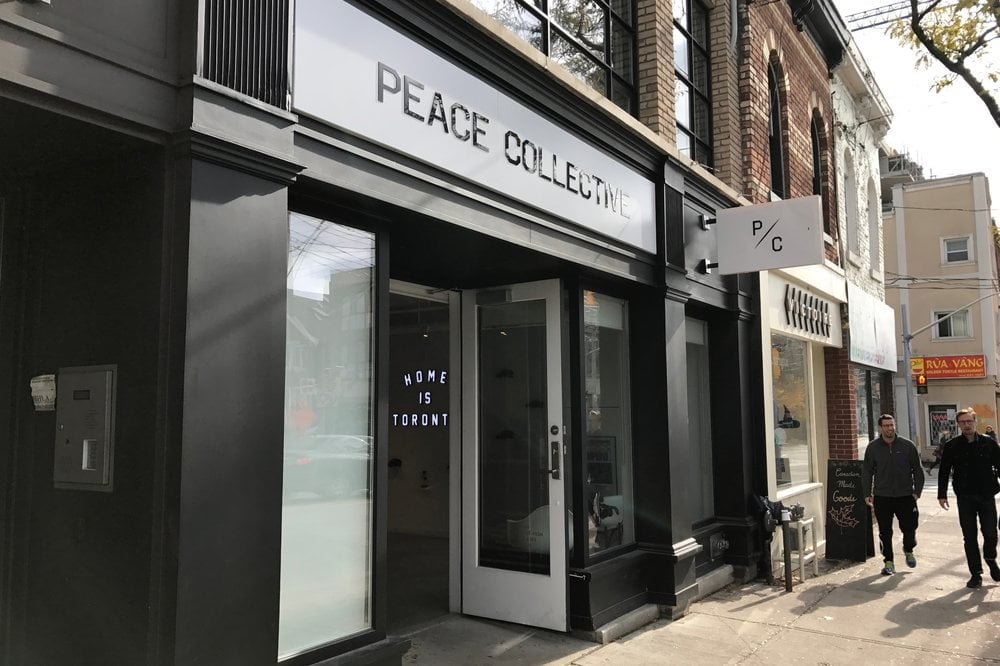
According to Sales Representative Jackson Turner, brokerage CBRE has been involved with a number of deals on the street, including Reigning Champ, Lululemon Men’s, Peace Collective, as well as the new Ride Cycle Club.  

How are these brands truly performing on Ossington? According to Mr. Damji, Shinola and Reigning Champ have both seen higher than expected sales and foot traffic.”Initially we felt that brands were locating on Ossington solely for the brand statement”. Mr. Damji credits Ossington Avenue’s success with the street’s connection to nearby West Queen West, which has been bringing great weekend foot traffic to the area.

As more major retailers begin to fill Toronto’s trendy Ossington Avenue, there is a question on the minds of nearby residents and retailers — can small retailers and brand name retailers co-exist, or is one of Toronto’s trendiest neighbourhoods facing possible gentrification? 

“That is something we look at ourselves. We are very conscious about the neighbourhood.” says Mr. Damji. “Ten years ago, Queen West had a mixture of international retailers but also local retailers as well” Mr. Damji continues, ensuring that retail development on Ossington will be more responsible and that the company wants to see local business thrive in this area.

Mr. Damji says the key to a successful street of retail is co-existing, and that without smaller retailers, a successful neighbourhood loses it’s cool “vibe” that retailers initially loved when moving into the area.

“A lot of retailers who were in the Queen Street West node are starting to move to Ossington. We want to make sure the local retailers do well,” Mr. Damji ensures.

We’ll be watching the transformation of Ossington Avenue in the coming months, as the area continues to welcome national and international brands to an already compelling neighbourhood street. 

Study Ranks Canada’s Top Retail Streets

exc-5a16176dec212d9bd36d0755

A study released this month by Cushman & Wakefield ranks global retail streets based on rents per square foot, with seven Canadian locations included. What’s interesting is according to the Cushman report, five of the seven Canadian high streets saw decreases between June of 2016 and June of 2017. 

The report, called Main Streets Across the World 2017, tracks 451 of the top retail streets around the globe, ranking the most expensive in each country by their prime rental value. Cities in Canada to rank in the study include Toronto, Montreal, Vancouver, Ottawa, Edmonton and Calgary. 

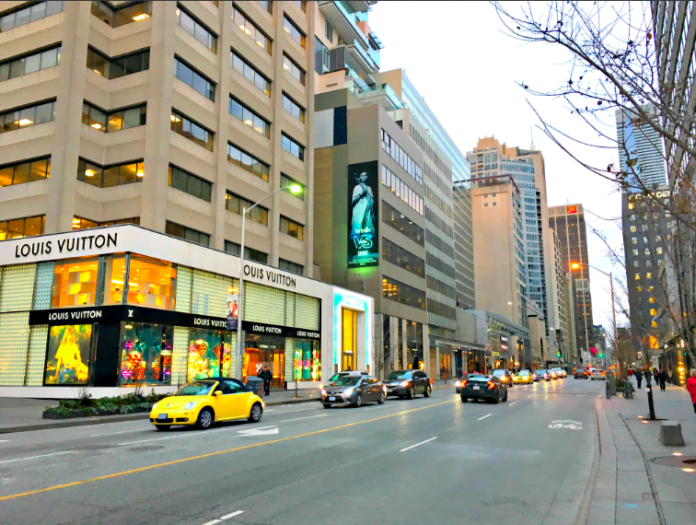
Toronto’s Bloor Street West, aka ‘The Mink Mile’, came out on top again this year with a prime rental value of $300 per square foot. That’s down from $325 in 2016, according to the report. Things will no doubt be changing for Bloor Street West between now and the year 2020 — the street will see more new retailers and redevelopment than any similar street on the continent.

Hermes prepares to open a flagship at 100 Bloor Street West on November 22, 2017. Photo Retail Insider

New retailers to open on the street include Canada’s first locations for APM Monaco and MCM, and a massive new Hermes flagship is set to open next week at 100 Bloor Street West. Holt Renfrew and Harry Rosen are renovating their existing stores, and new developments to the area include retail at 1 Bloor Street East (including Nordstrom Rack and a Mark McEwan grocery store), 1 Bloor Street West (which reportedly could feature Apple as an anchor), and the redevelopment of the commercial podium of Manulife Centre, which will include the addition of a 50,000 square foot Eataly location in 2019. Retail Insider will be doing an in-depth feature on Bloor Street West next month. 

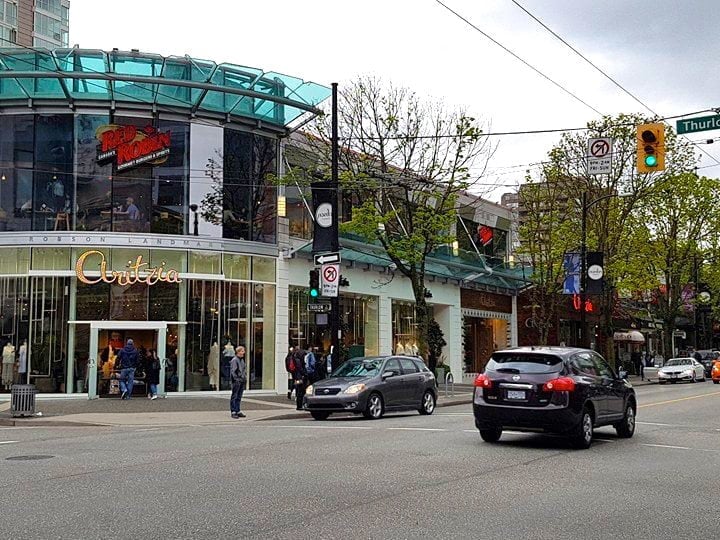
Vancouver’s Robson Street ranked second in the study, with rents asking $183 per square foot. That’s down from $215 in 2016 — the street is in a state of transition, and there are currently some vacancies on the 1000 and 1100 blocks. Things are looking up for Robson Street — on December 2, Japanese retailer MUJI will open its largest store outside of Asia on Robson Street, and we’re told that several exciting announcements are on the way for the street. Interestingly, once sleepy Alberni Street, located a block north, has become the city’s luxury retail address, and rents reflect that. According to a recent report by CBRE, Alberni Street’s rents are now up to 50% higher than those on Robson Street, and Alberni Street’s retail sales are often higher than those on Toronto’s prestigious Bloor Street West. 

Vancouver’s Robson Street. Photo Ritchie Po

Montreal’s Sainte-Catherine Street West came in at a close third, with rents of $175 per square foot — down from $180 in 2016. The street is seeing the addition of popular new retailers, and is about to embark on a multi-year infrastructure project that will include new heated sidewalks, among other improvements. Sainte-Catherine Street will continue to go more upscale at its east and west ends between now and 2020. On the west side at 1307 Sainte-Catherine Street West, an expanded 250,000 square foot ‘Holt Renfrew Ogilvy’ store will include ground-floor boutiques for luxury brands such as Chanel, Louis Vuitton, Hermes and Prada. Towards the east end of the retail strip at Philips Square will be a 200,000 square foot Saks Fifth Avenue flagship, which will be located at the back end of the city’s flagship Hudson’s Bay department store. The opening date for Saks is currently unknown — it was announced to be opening in early 2018, but we’re told there are some delays. 

Montreal’s ste-catherine St. W. is going to be seeing some big changes over the next few years, including new streetscape and heated sidewalks

Toronto’s Queen Street West ranked fourth in the study with retail rents at $110 per square foot — unchanged from 2016. Queen Street West between University Avenue and Spadina might be compared to Vancouver’s Robson Street — both feature popular chain national and international tenants, as well as a mixture of some local retailers. Queen Street West is seeing some new developments including a new MEC flagship that will open in late 2018 — and while there are some vacancies on the strip, these are expected to be filled with new retailers in due course. 

Edmonton’s Whyte Avenue, which technically is 82 Avenue NW, ranked fifth with rents of $48 per square foot. That’s down from $50 per square foot, according to the study. Whyte Avenue remains Edmonton’s most popular retail high street, with many local and some national and international tenants. Given its chilly climate, Edmonton is an overwhelmingly mall-dominated market so asking rents on streets are considerably less than those in top malls such as Southgate Centre and West Edmonton Mall. 

Whyte Avenue in Edmonton. Photo University of Alberta

Sussex Drive and Wellington Street in Ottawa ranked sixth with rents of $45 per square foot, up from $40 in 2016. The stretch of Sussex drive just north of Rideau Street boasts a lovely collection of boutiques in an attractive setting — Le Creuset operates next to fashion retailers Kaliyana and ca va de soi in a row of heritage buildings. Busy CF Rideau Centre is nearby, and it features national and international retailers such as Nordstrom, La Maison Simons, Tiffany & Co., Harry Rosen and others. 

Calgary’s 17 Avenue SW. ranked seventh with rents of $43 per square foot per year, down from $50 in 2016. The commercial street includes a mix of local, national and international retailers, in a rather pleasant environment that is anchored by First Capital Realty’s ‘Mount Royal Village’ multi-use commercial project. Calgary is a city overwhelmingly dominated by malls — CF Chinook Centre and CF Market Mall are top performers in Canada, and even downtown Calgary is dominated by a large indoor retail complex called The CORE, anchored by Holt Renfrew, La Maison Simons, Harry Rosen and Hudson’s Bay. 

Rendering of Mount Royal Village in Calgary, via First Capital Realty

New York City’s 5th Avenue (between 49th Street and 60th Street) boasts the highest retail rents in the world, topping out at US $3,000 per square foot. That number was unchanged from the year prior. Other leading streets in the United States include Rodeo Drive in Beverly Hills (US $875), Union Square in San Francisco (US $700), North Michigan Avenue in Chicago (US $550) and Lincoln Road in Miami (US $300). Toronto’s Bloor Street West, as a comparison in the study, ranked at US $231 — making it appear to be a bargain in comparison. 

Other top international streets, all in US dollars, included Hong Kong’s Causeway Bay ($2,725), London’s New Bond Street ($1,719), Milan’s Via Montenapoleone ($1,433), Paris’ Champs Elysees ($1,407), Ginza in Tokyo ($1,200) and Pitt Street Mall in Sydney Australia ($1,000). 

[Read the Full Report]

Study Predicts Online Shift for 2017 Winter Holidays in Canada

exc-5a0ce5be24a694752b623528

For the first time, more Canadians will be doing their holiday shopping online than those visiting bricks and mortar stores, according to a new survey.

The Accenture 2017 Holiday Shopping Survey says Canadian shoppers are continuing to leverage technology for convenience.

Kelly Askew, managing director of retail strategy practice in Canada for Accenture, says convenience is very important to consumers.

“That’s showing itself with the continued rise in online shopping . . . The majority of Canadians are going to do their shopping online,” says Askew.

The survey is in its sixth year.

Askew says Accenture expects to see online shopping continue to grow so bricks and mortar retailers need to ensure they are doing everything they can to create a differentiated experience where customers are going to want to come to stores for other reasons than just completing a transaction.

“It’s a question of time. People are time starved. They are not setting aside days to go to the mall and do their holiday shopping,” adds Askew.

The survey found that 66 per cent of shoppers said they are familiar with Google Home and 75 per cent are already using it/would definitely use it/are willing to use it and 61 per cent are using – or are aware of – Amazon Alexa, to buy gifts this season. Also, 66 per cent of Canadian shoppers who responded to the survey said they first check Amazon before looking or buying anywhere else.

Nearly half of respondents want online wish lists to make the task of holiday shopping easier.

“This year, Canadians are putting a high premium on convenience and digital when it comes to getting their holiday shopping done,” says Robin Sahota, managing director of Accenture’s retail practice in Canada. “Canadians are also moving toward being shopped and wrapped earlier than ever before, which means retailers must seize the opportunity to innovate and by offering a distinctive experience, lay the foundation for more profitable, year-round relationships. The key is to define their purpose, engage in a way that is memorable and be clear about the role they will play in shoppers’ lives.”

The survey says the rise of constant discounts from deal websites and Amazon Prime Day have lured more than half of Canadian shoppers, who are now shopping for holiday gifts throughout the year, including 65 per cent of older millennials (age 28-37) and 63 per cent of Gen Z (18-20) consumers. It says fewer Canadians are likely to shop on Boxing Day this year (64 per cent), down from 70 per cent last year. Also, 57 per cent of shoppers said they are less inclined to shop on Boxing Day and 48 per cent are less inclined to shop on Black Friday.

“There is a growing trend that shows Canadians are less willing to shop during major deal days, specifically Boxing Day and Black Friday,” says Askew. “Winning over the Canadian consumer will require providing active, rather than passive, shopping inspiration. This might mean proactively offering gift recommendations for a certain person, to help retailers influence a consumer’s purchase before they even think about searching for ideas.”

Brief: APM Monaco Enters Canada, Canada Goose Opens in Calgary, Cheesecake Factory Opens 1st Canadian Location

Brief

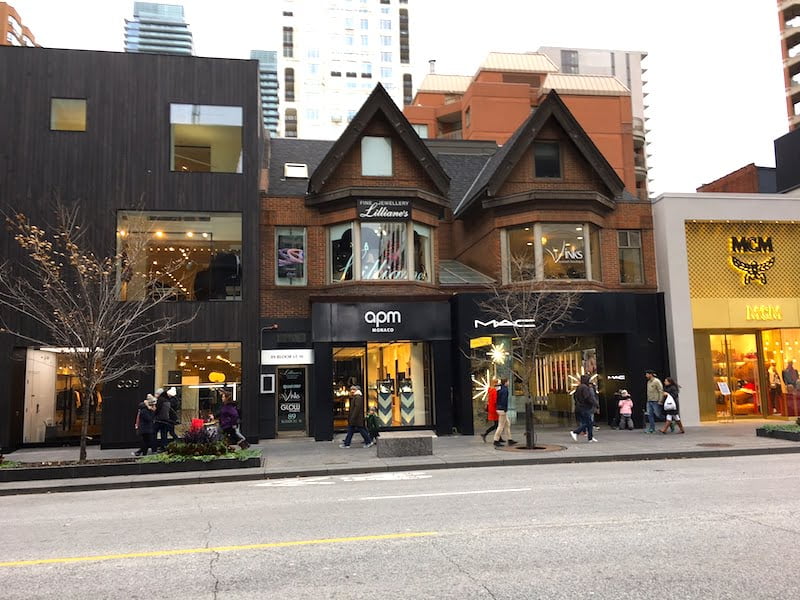
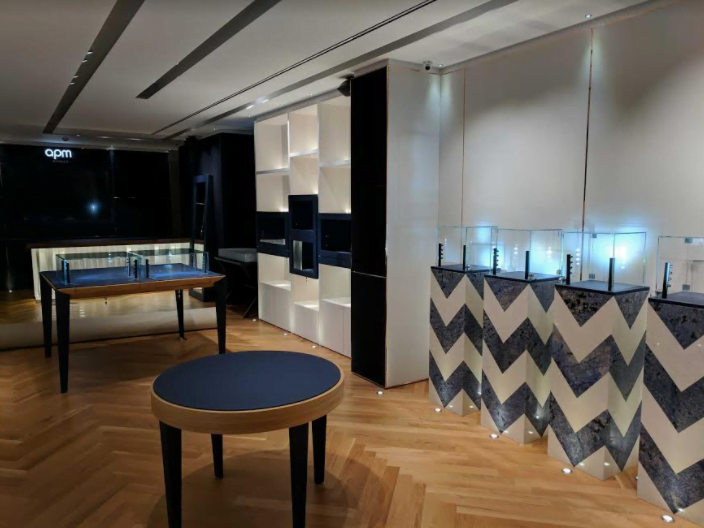
APM Monaco Opens 1st Canadian Store: Monaco-based jeweller APM Monaco has opened its first Canadian boutique in Toronto, with more expected to follow. 

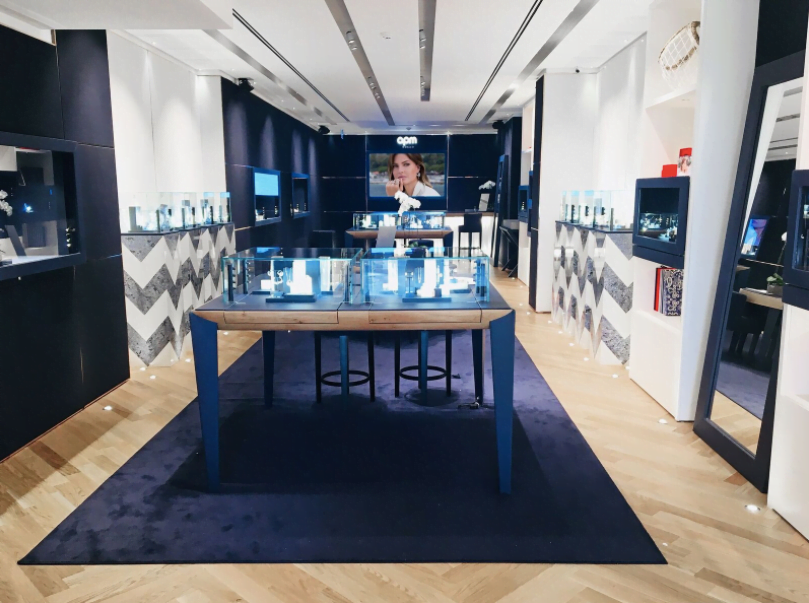
The 1,700 square foot Toronto store is located at 89 Bloor Street West, across from Harry Rosen and Holt Renfrew Men. APM Monaco’s store design is inspired “by the Monaco lifestyle” with a signature navy and white colour combination. The attractive retail space was built by Montreal-based Vergo Construction, which works with national and international retailers on their store build-outs. 

The Toronto APM Monaco retail space was most recently occupied by Roots Kids — Jordan Karp and Ryan Morein, now with brokerage Savills, represented APM Monaco (for both the Bloor deal as well as for its national rollout), and CBRE Downtown Toronto’s Arlin Markowitz, Alex Edmison and Jackson Turner acted on behalf of the landlord in a sublease deal involving Roots. 

APM Monaco was founded in 1982 by Ariane Prette as a jewellery brand specializing in creating traditional gold, diamond and precious stone pieces for other jewellers. In 2011, the Prette family launched the new APM line (standing for Ariane Prette Monaco) that is made from the purest form of silver, carefully selected cubic zirconia and one-of-a-kind freshwater cultured pearls, among other high-quality materials. 

Its products are handmade with their own manufacturer to ensure consistency. Designs are also “influenced by Monaco and the South of France,” according to the company, “with a touch of Monegasque flair”. Creative director Kika Prette (daughter-in- law of Ariane Prette) introduces four new collections a month with 12 fashion themes a year. 

APM Monaco has over 160 stores worldwide, and it’s growing quickly — a rapid US store expansion is currently in the works and sources confirm that Vancouver is a target for at least one APM Monaco store location. 

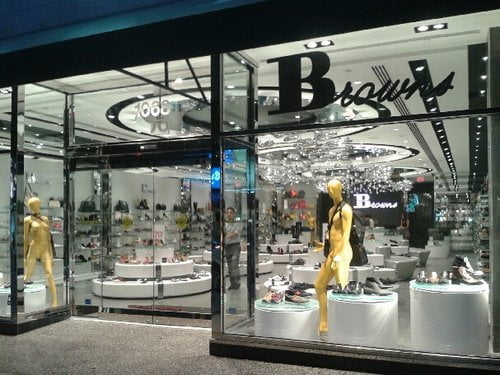
Browns Shoes Continues Store Expansion: Popular Montreal-based multi-brand Browns Shoes continues to open stores in Canada, maintaining its position as a significant national retailer. 

Photo: Browns Shoes

The company has revealed that it will be opening several stores over the next few months — this fall, a Browns store will open at Les Promenades Gatineau in Quebec, and in early 2018 the retailer will open a Browns store at Hillcrest Mall in Richmond Hill, north of Toronto. 

Eric Ouaknine, Director of Retail Experience at Browns Shoes, says that 2018 will be a busy year for the company — new stores will open under the company’s Browns and B2 banners, and some existing locations will also see renovations, expansions or relocations. We’ll provide updates as they can be revealed. 

Browns Shoes currently operates 60 stores throughout Canada, and is represented in Canada by brokerage Oberfeld Snowcap. Browns Shoes is a family-owned business, founded in 1940 in Montreal by Benjamin Brownstein. The company is now third-generation run. Stores feature designer brands as well as in-house brands including Mimosa, Browns Couture, The Wishbone Collection, Luca Del Forte, Intensi and B2. The B2 brand became so successful in its own right that it now boasts its own freestanding stores, which also carry various other designer brands.

Canada Goose

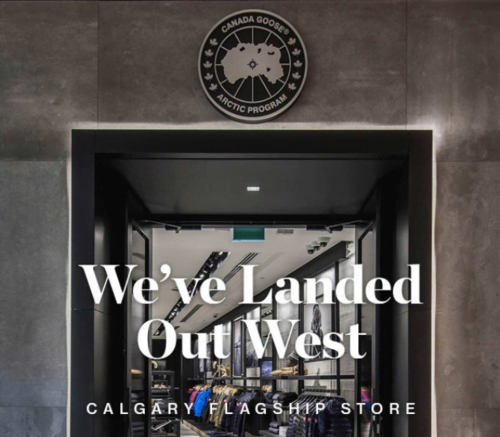
Canada Goose Opens 2nd Canadian Store in Calgary: Toronto-based outerwear and fashion brand Canada Goose has opened its second standalone Canadian store in Calgary. Canada Goose’s first store in the world opened at Toronto’s Yorkdale Shopping Centre in October of 2016, and the company now has stores in New York City, Chicago, Tokyo and London, with a unit to open soon in Boston. 

The 3984 square foot store at CF Chinook Centre replaces BCBG, which vacated its Canadian stores several months ago. 

Canada Goose says it plans to operate between 15 and 20 stores globally by the year 2020. 

Canada Goose’s second Canadian store was intended to be in Vancouver, according to sources, but securing real estate was a problem. 

Zadig & Voltaire Montreal Location Revealed: It was a bit of a secret where Zadig & Voltaire would be opening its Montreal store. The Paris-based fashion brand opened its first standalone Canadian store this month at Toronto’s Yorkdale Shopping Centre, in a 2,000 square foot space. 

Zadig & Voltaire

Retail Insider’s Montreal correspondent, Maxime Frechette, has discovered the location of Zadig & Voltaire’s Montreal store, which opens this fall. Signage went up yesterday at 4891 Sherbrooke Street West in the city’s affluent Westmount community, in a space formerly occupied by UGG. The stretch of Sherbrooke Street West has a terrific mix of contemporary brands, and Zadig will fit right in. 

Jeff Berkowitz of Aurora Realty Consultants represents Zadig & Voltaire in Canada, and negotiated the Westmount deal. Montreal-based Axxys Construction is building the store, and recently completed the Yorkdale unit. 

Until several months ago, Zadig & Voltaire was carried at Holt Renfrew — Holt’s is parting ways with some brands as it amends its retail strategy to include carrying some of the world’s most popular luxury brands — with many of those operating as shop-in-store concessoins. 

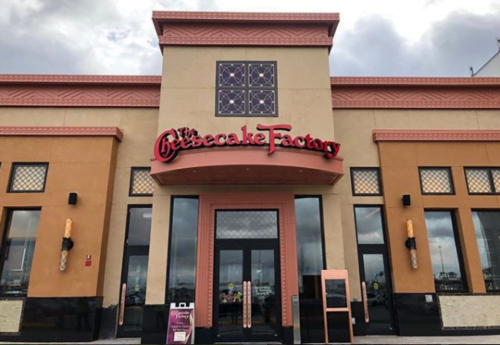
Cheesecake Factory Opens 1st Canadian Location at Toronto’s Yorkdale Shopping Centre: Popular full-service American restaurant chain Cheesecake Factory has opened its first Canadian location, spanning in excess of 10,400 square feet with two covered patios. We’re seeing full-sized restaurants opening in Canadian malls more than ever, as landlords diversify their properties with more food and beverage offerings. 

(THE CHEESECAKE FACTORY CANADA – INSTAGRAM)

There were substantial lineups on opening day. 

Cheesecake Factory replaces a Milestones restaurant that occupied a space facing north, near Yorkdale’s Hudson’s Bay store. The restaurant features imported limestone floors and custom wood columns, hand-painted murals and modern lighting. 

Cheesecake Factory is known for its extensive food offerings, including having a menu with over 50 signature cheesecakes and desserts. Cheesecake factory opened as a bakery in Los Angeles in 1972, and its first restaurant opened in Beverly Hills in 1978. The Company, through its subsidiaries, owns and operates 208 full-service, casual dining restaurants throughout the United States and Puerto Rico, including 194 restaurants under The Cheesecake Factory® banner; 13 restaurants under the Grand Lux Cafe® banner; and one restaurant under the RockSugar Pan Asian Kitchen® banner. As well, the company has 15 international restaurant locations that operate under licensing agreements in the Middle East, Asia and Mexico. 

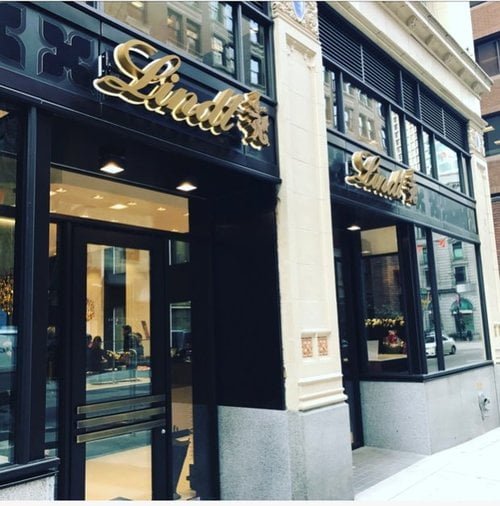
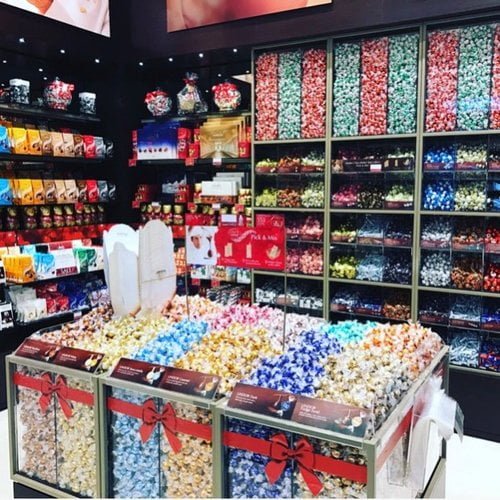
Lindt Opens Retail Space and Cafe in Vancouver: Swiss chocolate brand Lindt has opened a retail concept and cafe in downtown Vancouver. The 1,800 square foot space opened earlier this month at Vancouver’s recently overhauled Exchange Tower. 

While most Lindt locations are dedicated to selling chocolate, the Vancouver space takes things one step further with an in-store cafe, with a menu including chocolate truffles, chocolate bars, Lindor Truffles, and a chocolate drinks bar — not to mention premium chocolate bars that can be gift wrapped for the holidays.

Acting for the landlord in Lindt’s new retail space were the CBRE Vancouver team, under the direction of Mario Negris, Adrian Beruschi and Martin Moriarty. 

*Photos: Martin Moriarty.

Mark’s Rebrands: The retailer formerly known as Mark’s Work Warehouse, and most recently as simply ‘Mark’s’, is again rebranding to become Mark’s Well Worn. The new positioning seeks to drive growth with a net new consumer for the retailer, while maintaining a deeply entrenched sense of pride and respect for the brand’s industrial roots. We’ll be doing a more in-depth feature later this week on what it all means for the company, which operates under the Canadian Tire umbrella. 

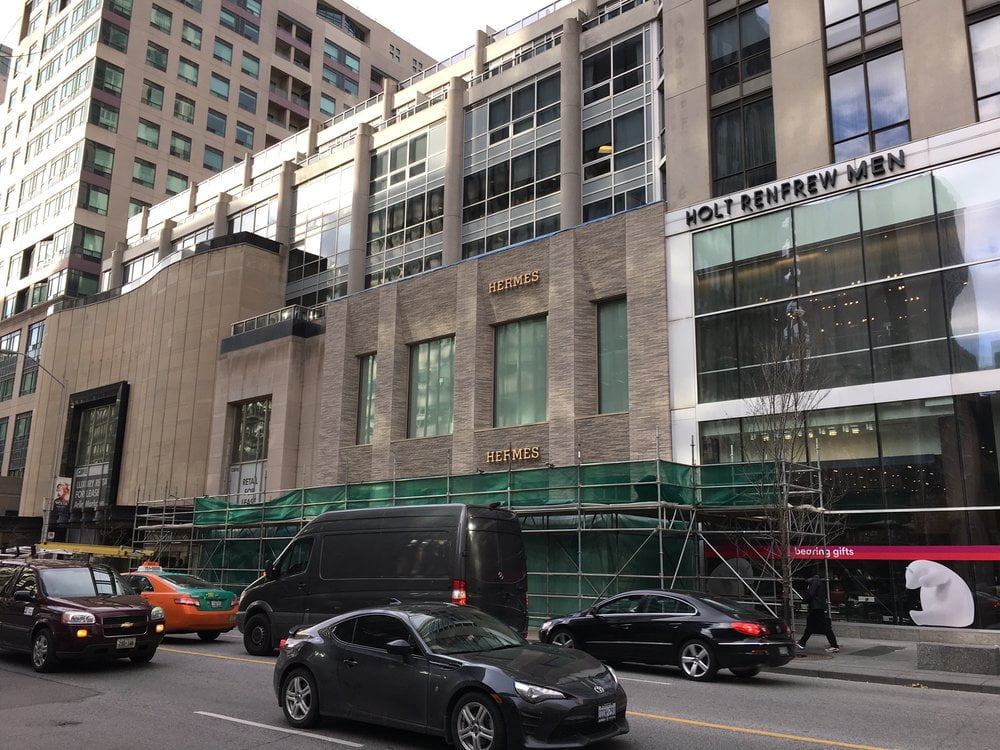
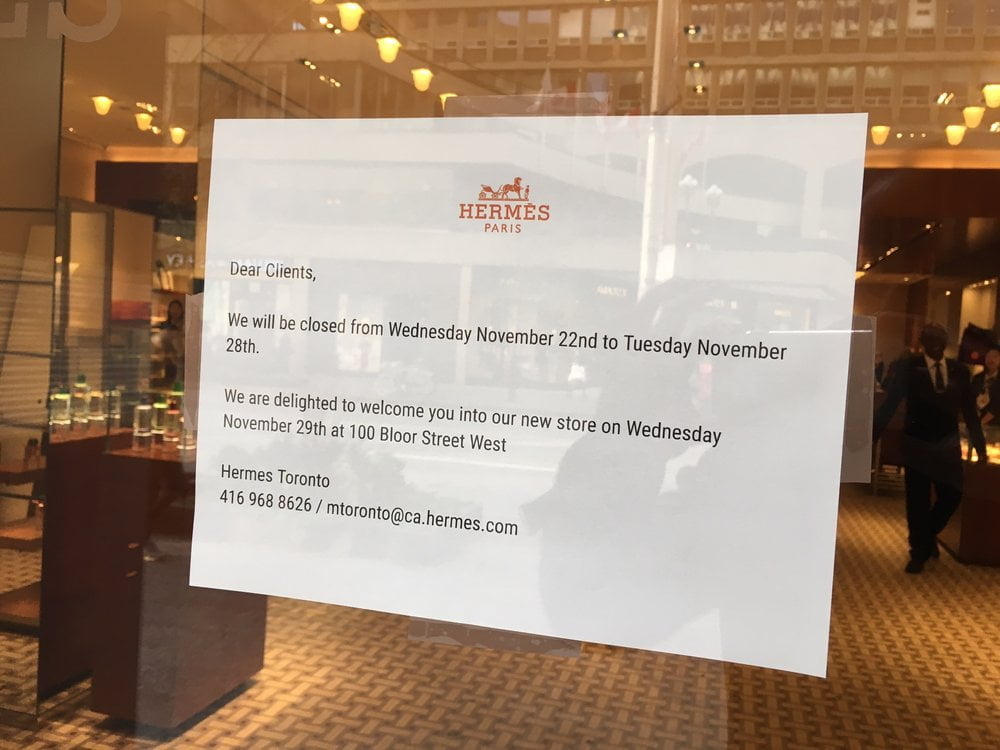
Hermes Prepares to Open Mink Mile Flagship: Construction hoarding is coming down on the large new Hermes flagship at 100 Bloor Street West in Toronto, which is scheduled to open to the public on Wednesday, November 29. We’ll feature an article on what will become one of the brand’s largest locations globally, including interior photos of the space. 

Construction has been ongoing for months on the two-level space, which replaces a Williams Sonoma store that closed in January of 2017. A standalone Holt Renfrew Men’s store is located immediately east of Hermes, and it will soon be revealed that a luxury brand has leased space on the west side of Hermes as well. 

Signage at the current 130 Bloor Street Hermes indicates that it is closing temporarily for about a week prior to the opening of the new store. The new store’s facade is a light coloured stone — see photos directly below, taken the afternoon of Tuesday, November 21. 

Retail Insider will now be regularly including these briefs as part of our expanding reporting mandate. For more information, contact Editor-in-Chief Craig Patterson at: craig@retail-insider.com. 

For more of today’s retail news, visit:

Canadian Retail News From Around The Web: November 22, 2017