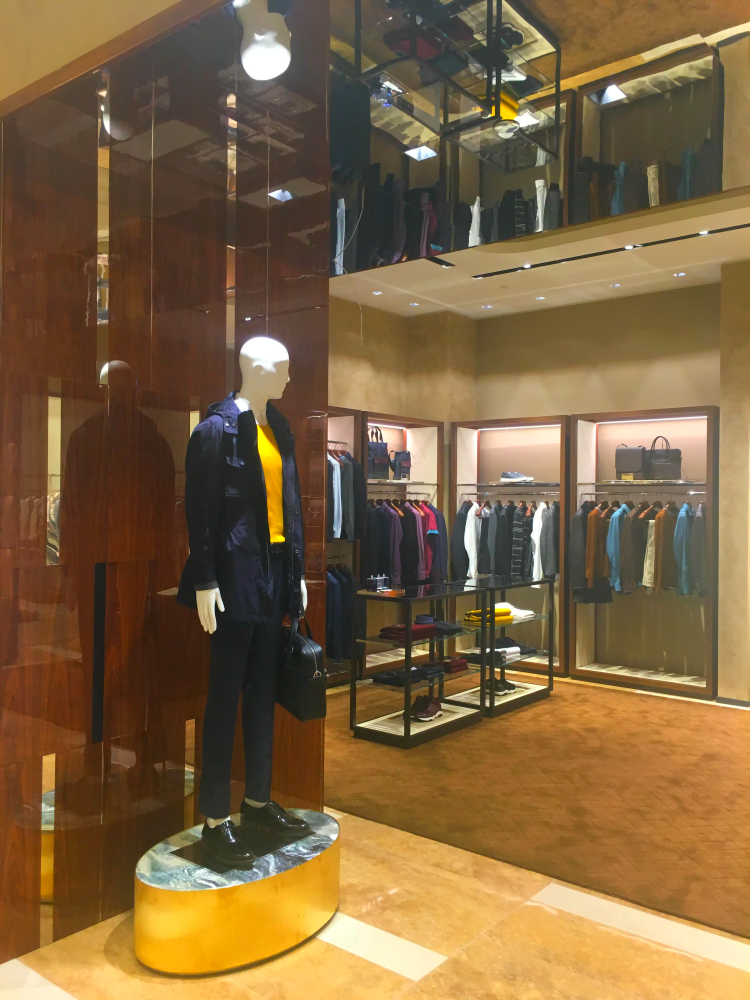
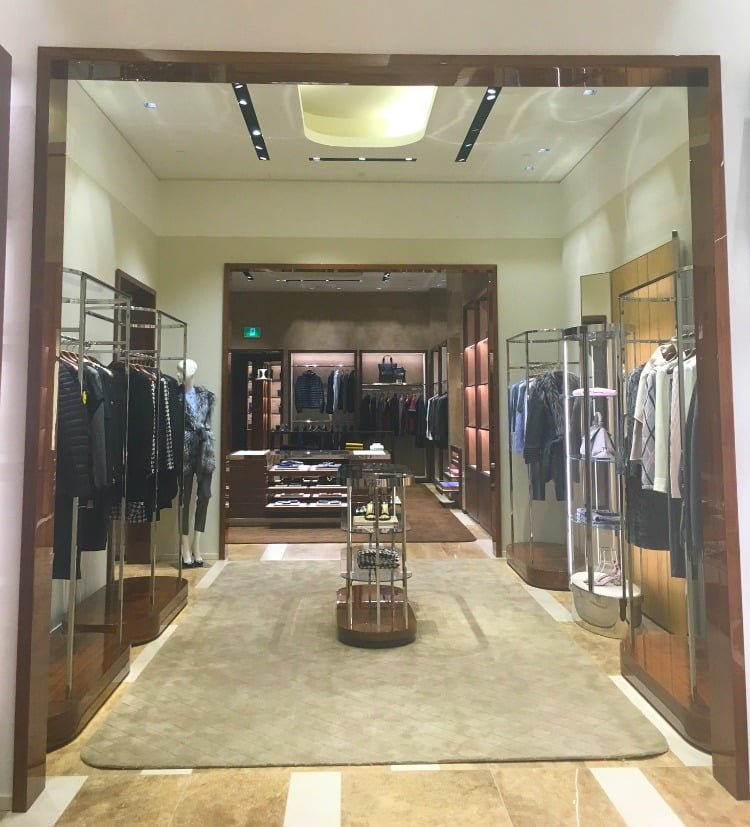
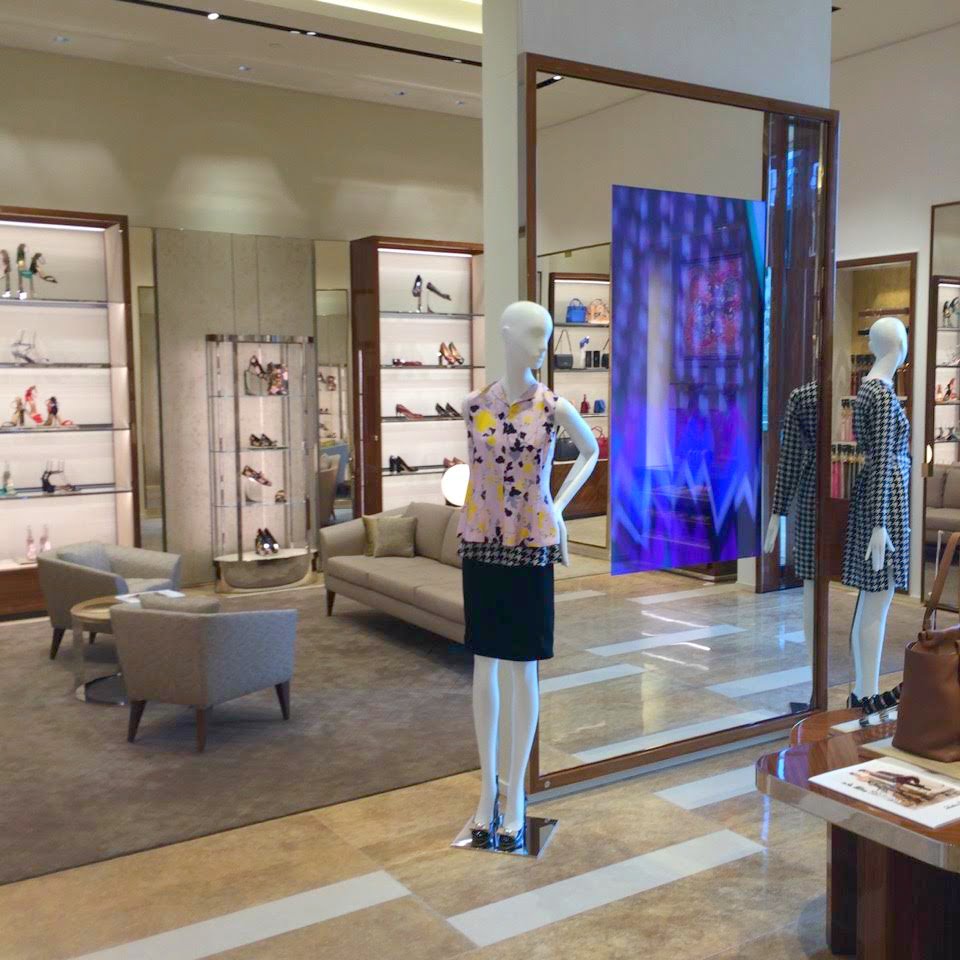
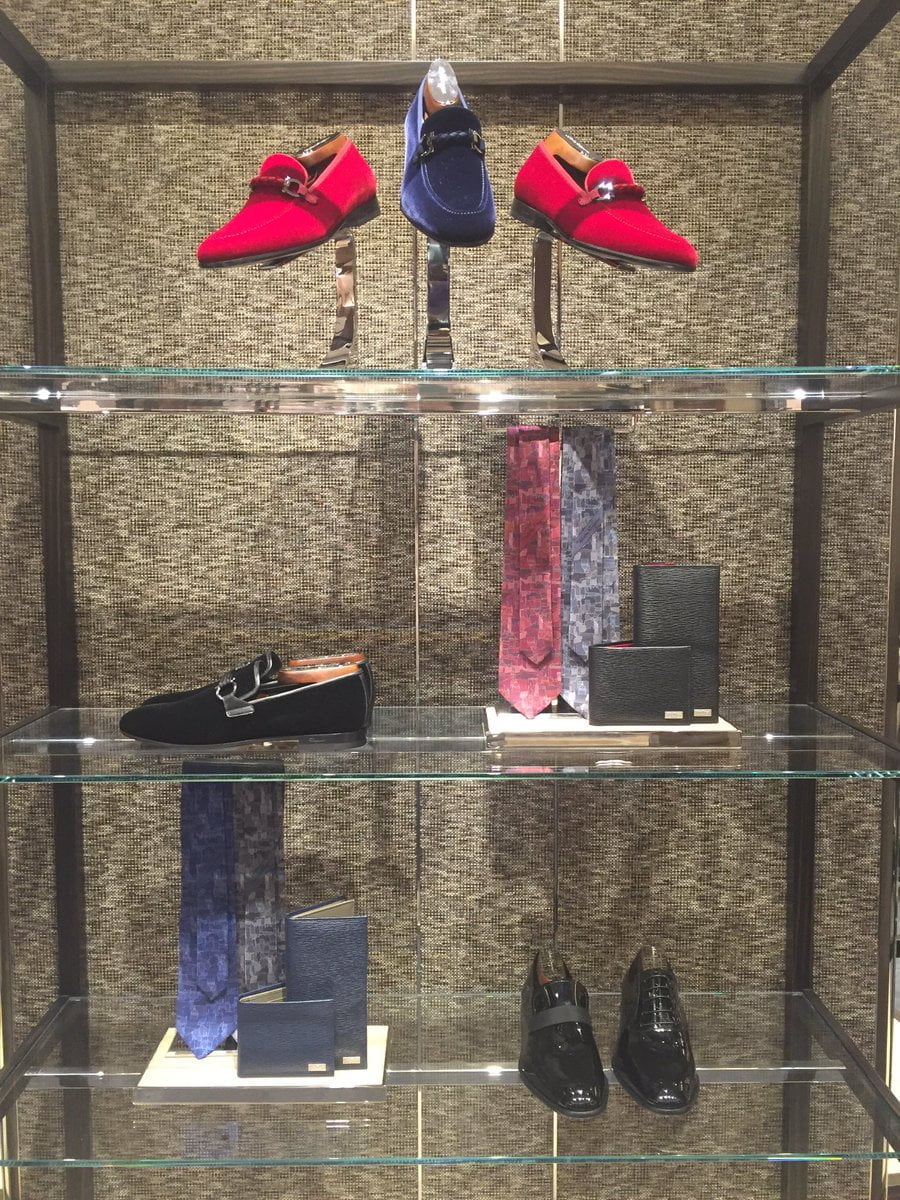
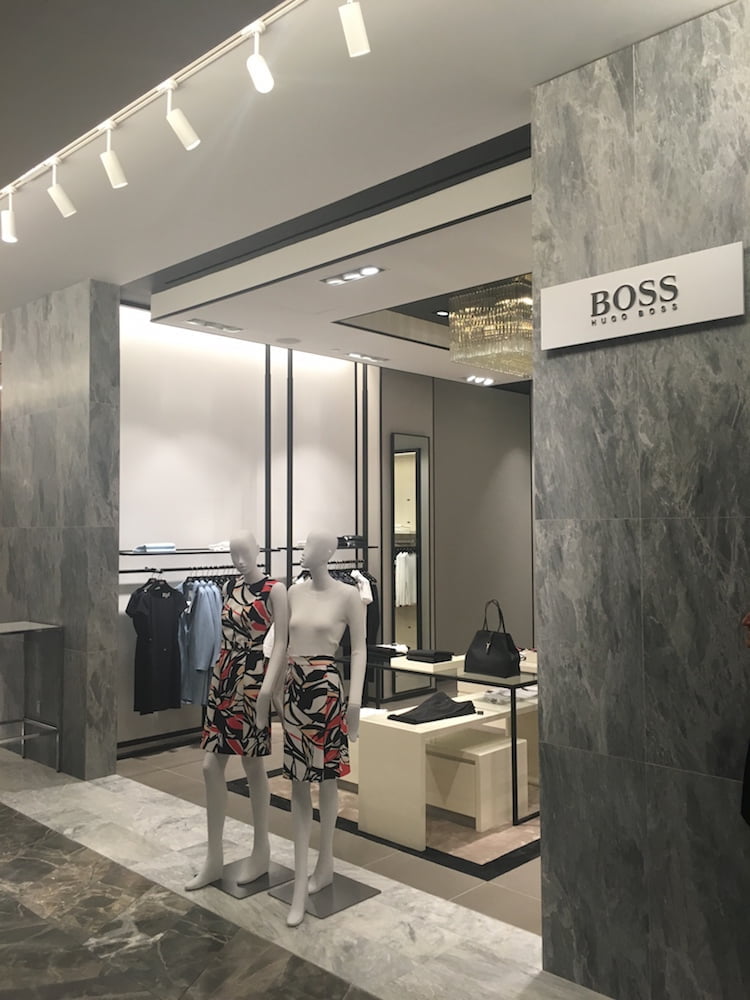
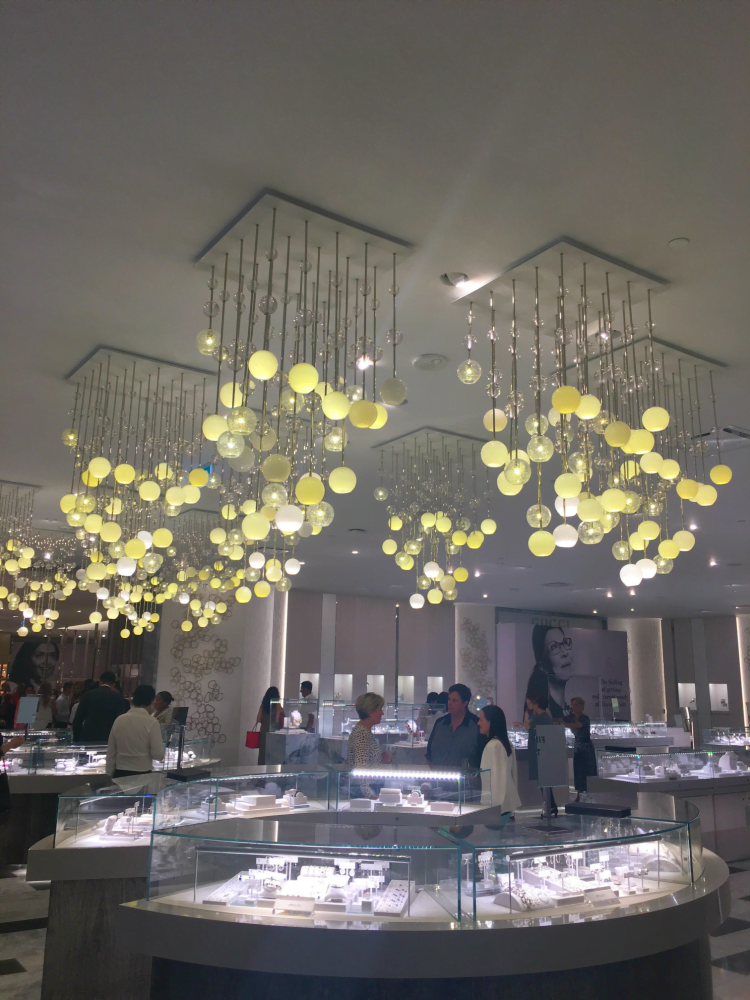
Popular Germany-based jeweller Thomas Sabo will continue its Canadian store expansion by opening three new locations this year, as well as at least one more in 2015. Interestingly, the company has only two locations in the United States, while it currently operates eight Canadian stores.
In October, Thomas Sabo will open stores at Mississauga’s Square One Shopping Centre, as well as at Winnipeg’s Polo Park. In November, the brand will open at Calgary’s Market Mall. According to the company’s PR firm, Faulhaber Communications, Thomas Sabo will open at least one more Canadian store next year, and its location will be revealed shortly.
Thomas Sabo has only two American retail locations, both in Las Vegas. In 2015, the company will open a flagship store in New York City, possibly spearheading a substantial store expansion south of the border.
Established in Pegnitz, Germany in 1984, Thomas Sabo retails its own brand of jewellery, watches and beauty products for women and men. It operates 240 stores across all five continents with a total of about 1,500 employees.
Luxurious Zurich, Switzerland-based legwear and knitwear retailer Fogal has closed its Vancouver store. Located at 1012 Alberni Street (off Burrard Street), the boutique was one of only three North American locations.
Fogal’s other two North American stores will continue to operate, according to a representative at Fogal. Fogal has a store at 131 Bloor Street West in Toronto, as well as a location in New York City on Madison Avenue.
Fogal operates 28 boutiques internationally, including nine locations in Switzerland and seven in Japan. It also retails at selected upscale department stores worldwide.
Fogal hosiery display. Photo: www.fashionfish.ch
Fogal’s Vancouver store was located in the upscale 755 Burrard Street retail complex, between footwear retailer Mephisto and jewellery retailer Pandora. 755 Burrard’s corner tenant is luxury French retailer Hermes, and the complex also houses upscale retailers Coach, Wolford and L’Occitane. This fall, L’Occitaine will vacate 755 Burrard to relocate to a substantially larger space on Robson Street. Stationary/gift retailer Papyrus will subsequently replace L’Occitaine’s 1,000 square foot premises.
An anonymous source forwarded us a lease plan, solving the mystery of the location of minimalist Japanese retailer Muji’s first Canadian location. Measuring almost 4,400 square feet, Muji will be smaller than we initially expected, compared to some of its American stores.
We were initially alerted to Muji opening at Toronto’s Atrium on Bay by Urban Toronto‘s ACT7, who forwarded us a City of Toronto Building Status Application indicating that Muji will locate in space C-03 of the retail complex.
Muji location. Photo: Atrium on Bay Lease Plan
We weren’t sure which space C-03 was, exactly, until we were provided a lease plan indicating that the 4,373 square foot space is the former location of Black’s Photography, with street frontage on Dundas Street West, near Yonge Street.
Many of us initially expected that Muji would replace apparel brand Guess, which recently vacated its multi-level space with a municipal address of 306 Yonge Street. Urban Toronto’s soundmuseum, however, discovered signage indicating that a pop-up Halloween-themed retailer will move into Guess’ space, at least until the end of October.
For comparison, Muji’s San Jose store is about 4,590 square feet, while its Manhattan location at the Forrest City Ratner building measures about 5,000 square feet. Its two Los Angeles-area stores are larger, however — its Santa Monica store is about 6,300 square feet, while its Hollywood store spans 8,600 square feet. Muji currently operates nine American stores. Five are in New York City, and four are in California.
We’re awaiting details of the locations of two more Toronto Muji stores, which are expected to open by the end of 2015. We’re told that Muji locations will open across Canada soon after. Interestingly, Muji isn’t using a Canadian brokerage to secure Canadian retail space. Rather, the retailer is coordinating securing its own Canadian leases.
Hudson’s Bay will continue the expansion of its Hudson’s Bay Outlet concept by opening a second location this fall at the Premium Outlets Montreal. The roughly 27,000 square foot store will carry clearance merchandise from its department stores, as does its first location that opened last year in Toronto.
A source tells us that Montreal’s Hudson’s Bay Outlet will open October 30, 2014, at the same time as Premium Outlets Montreal. Phase One of the mall will measure about 365,000 square feet with about 80 retailers, featuring many of the same outlets as its sister property in Toronto. Premium Outlets Montreal will be home to Canada’s first Max Mara outlet, however, and we’ll update this article when we receive the mall’s complete tenant list. Hudson’s Bay Outlet will act as the mall’s primary anchor.
SOURCE: WWW.SMARTCENTRES.COM
Canada’s first Hudson’s Bay Outlet opened in August of 2013 at the Toronto Premium Outlets. The Toronto location is slightly smaller than Montreal’s, measuring about 25,000 square feet. Clearance merchandise from Hudson’s Bay store is featured, including merchandise from luxury womenswear department, The Room.
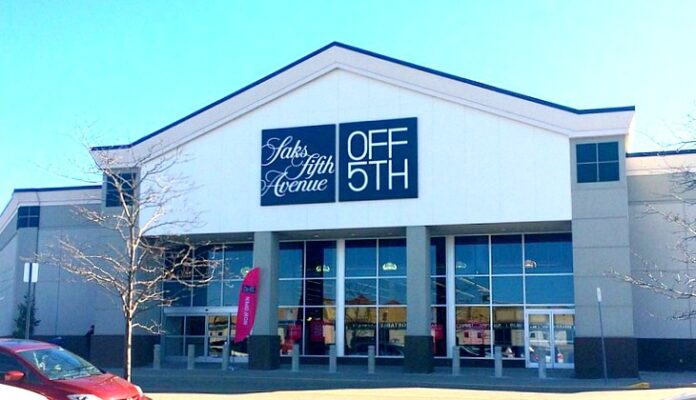
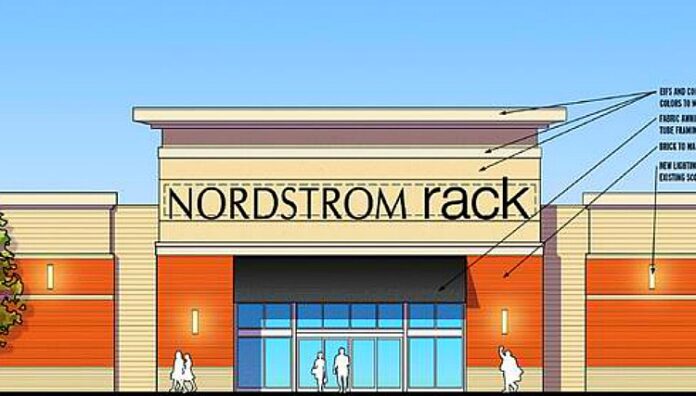
Hudson’s Bay Outlet will face increased competition, as Nordstrom plans to open as many as 20 Nordstrom Rack locations in Canada, beginning in 2017. Hudson’s Bay’s parent company will counter this competition, however, as it plans to open as many as 25 Off 5th by Saks Fifth Avenue stores in Canada over the next several years.
A source at Hudson’s Bay confirms that the company may open more outlets in selected Canadian cities over the next several years. We’ll report more as we learn further details.
Ed Strapagiel is a consultant specializing in applied marketing, business development and strategic planning. [Ed Strapagiel’s Website]
Statistics Canada‘s latest numbers show a relatively strong gain of 4.8% in total retail sales in June 2014 over the same month a year ago, on a not seasonally adjusted basis. This is the best result since October of last year.
Better still, the year-over-year gain for Q2 2014 overall was 5.2%, a two year high, and a marked improvement over the 3.8% increase in Q1. The 3 month year-over-year growth trend (orange line in the chart above) continues to track a little above the 12 month trend (green line), indicating some upside going forward. The positive momentum bodes well for the rest of 2014.
While Automotive & Related retail sales are still recording the highest gains, the other major retail sectors are gaining and coming into better balance. Broader improvement is another good sign.
Food & Drug Stores
Food & Drug stores’ sales were up 4.0% year-over-year in Q2, a four year high, and almost double the growth of Q1. The 3 month trend is now significantly above the 12 month trend. This sector however has a tendency to vary up and down, so this level of growth may not be sustainable.
Health & personal care stores are mostly responsible for the strong showing, with retail sales up 7.4% in Q2. Two smaller subgroups, specialty food stores and convenience stores, also had strong sales in Q2, up 9.3% and 6.9% respectively.
On the other hand, supermarkets & other grocery stores continue to lag the retail average. Year-over-year sales were up 1.6% in Q2, but declined 1.9% in June alone.
Store Merchandise
Retail sales for the Store Merchandise sector were up 6.2% in June versus a year ago, the highest such increase in two years. The 3 month trend (orange line in the above chart) is now on the upswing and ahead of the 12 month trend (green line), which represents a recovery from a soft first quarter.
Much of the strength in Store Merchandise is from the other general merchandise stores group, which are mostly large combo retailers. In Q2 2014, their sales were up 9.1% year-over-year, and this came on the heels of a strong 8.4% gain in Q1.
At the same time, a few other store types in this sector showed improving retail sales: – Clothing stores were up 5.2% year-over-year in Q2 versus down 0.4% in Q1; – Shoe stores gained 4.9% in Q2 versus a decline of 1.9% in Q1; – (Conventional) department stores were up 5.7% in Q2 versus a modest 1.8% gain in Q1.
Nevertheless, some store types had a more difficult Q2: – Electronics & appliance stores continue to be the basket case of Canadian retail, with sales down a further 0.6%; – Miscellaneous store retailers were also down 1.4% in Q2, worse than the 0.5% drop in Q1; – Jewellery, luggage & leather goods stores ekked out a 0.3% Q2 gain, well down from the 6.9% Q1 increase.
Automotive & Related
The Automotive & Related sector continues to lead Canadian retail with a 6.8% sales increase in Q2 versus a year ago. This is actually slightly softer than the previous pace but still a high growth level.
Automobile dealers account for a little over half of this sector and had a 5.6% year-over-year sales increase in Q2 2014. Even though this is above the retail average, it was the lowest result for auto dealers over the last five quarters.
Gasoline station sales were up 10.4% in Q2, the top result of all store types, and somewhat stronger than their 9.3% Q1 gain.
The other motor vehicle dealers group (e.g., motorcycles, recreational vehicles, etc.) however is a weak spot in this sector. Their retail sales declined 2.1% in Q2, following a drop of 0.2% in Q1.
Upstart online shoe-seller SHOEme has doubled its brand selection and now claims to be “Canada’s largest shoe store” based on selection. However, the company will have to deal with heightened competition from the likes of Ohio-based Designer Shoe Warehouse (DSW).
“There will be a lot more competition in Canada,” Retail Insider analyst Craig Patterson told Business in Vancouver. “DSW is huge. It’s a risky deal,” Patterson said. “DSW could be a nightmare for SHOEme.”
Minimalist Japanese retailer Muji will reportedly open stores across Canada over the next several years. It has secured its first Canadian location at Toronto’s Atrium on Bay, with further locations to follow in various Canadian cities.
Known for being innovative and its products being affordable and unbranded, Muji carries various household items, furniture, appliances, stationary and apparel. With hundreds of stores worldwide, it saves money by avoiding locating stores in high-rent areas and spends little to nothing on market research and advertising. Muji’s Canadian stores will carry about 3,000 products — less than the roughly 7,500 carried in its Japanese stores. Muji is short for Mujirushi Ryohin, or no-brand superior items, and was founded in 1980 as the private-label brand of a major supermarket chain (not unlike Canadian brand Joe Fresh).
Canada’a first Muji store will either replace Guess Jeans, which recently closed, or locate in retail space fronting Dundas Street West. Click this image for the entire Atrium on Bay floorplan.
Muji’s first Canadian store will open this December at Toronto’s Atrium on Bay. Urban Toronto‘s ACT7 forwarded us information from the City of Toronto Building Status Application website, indicating that Muji will locate in space C-03 on the ground floor of the retail complex. Atruim’s leasing manager was away on vacation last week, so we’re awaiting details on which space Muji will occupy in the mall. We initially expected that Muji would replace apparel brand Guess, which recently vacated its multi-level space with a municipal address of 306 Yonge Street. Urban Toronto’s soundmuseum, however, notes that new signage indicates that a pop-up Halloween-themed retailer will move into Guess’ space, at least until the end of October. Unless Muji can build its store between the first week of November and some time in December, Muji may actually end up locating in a vacant retail space with Dundas Street frontage, as per the floorplan below.
Photo: Wikipedia
We’re awaiting details of the locations of two more Toronto Muji stores, which are expected to open by the end of 2015. We’re told that Muji locations will open across Canada soon after. Interestingly, Muji isn’t using a Canadian brokerage to secure Canadian retail space. Rather, the retailer is coordinating securing its own Canadian leases. This is according to Uniqlo‘s Canadian broker, who we initially expected was involved with Muji’s Canadian expansion.
Muji currently operates nine American stores. Five are in New York City, and four are in California (San Francisco, San Jose, Hollywood, and Santa Monica). Given Muji’s choice for its first American stores, we expect that Vancouver will be Canada’s next city to house multiple Muji locations. We can confirm, as well, that landlords we’ve spoken with in other Canadian cities are also very interested in securing Muji as tenants for their properties.
We’ll update this article when we learn more about Muji’s Canadian expansion, including the exact location of its first store at Toronto’s Atrium on Bay.
Ron White with actress Kim Cattrall. Photo: Ron White
August 25, 2014
Footwear designer Ron White‘s brand has seen substantial growth, with its wholesale volume triple what it was last year. From humble beginnings starting with a Visa cash advance as a multi-brand footwear retailer, Ron White has created an internationally acclaimed namesake footwear brand. His company’s US sales now surpass those in Canada, as new retailers continue to pick up his lines. White’s success is based on a simple concept: providing fashionable shoes that feel wonderful.
Ron White store in Oakville, Ontario. Photo: Ron White
In 1993, Ron White opened a comfort-focused multi-brand store in Toronto, called The Foot Shoppe. It grew to several locations and in 2006, Mr. White rebranded the stores to his own name, targeting a younger, more fashion forward shopper as a result. Soon after, Mr. White decided to create his own namesake footwear brand, merging his vision of chic style mixed with comfort. Ron is recognized for creating the world’s first “All Day Heels®” bringing together striking design, luxurious materials and unique cutting-edge technology. His women’s collection quickly became the store’s top seller and his collections are now carried in top retailers throughout North America with overseas expansion coming in 2015.
Ron White has earned a loyal celebrity following that includes Hollywood’s A-list, heads of state and royal family members. From the red carpet at the Golden Globe Awards to backstage at the Primetime Emmy® Awards Ron’s shoes have been a favourite for both presenters and performers. A few of the celebrities who have walked in his shoes include: Celine Dion, Katie Couric, The Duchess of York, Christina Hendricks, Paula Abdul, Megan Mullally, Rob Lowe, Kevin Spacey, Matt Damon and Dennis Quaid.
Ron White’s women’s collection has expanded into three separate labels. White’s first line, simply called ‘Ron White’, launched in 2007 as an elegant and sophisticated collection with shoes retailing from $295-$495. His top-priced line, ‘Ron White Signature’ launched in 2011 and is interpreted as ‘refined chic meets equestrian grace’ with a retail tag ranging from $525 to $1195. Both of these collections are hand crafted in Italy. His newest and most affordable line, ‘WHITE Ron White’, launched in the spring of 2013 as a playful, contemporary collection featuring the latest colours and silhouettes, with shoes retailing from $195 to $245.
After years of perfecting his men’s collection in his own stores, Ron White is now launching Men’s Footwear this month on the wholesale side, again merging his comfort technology with on-trend style. His men’s collection retails between $275 and $495 and will be showcased in leading independent and specialty stores in the USA and Canada.
The Ron White Collection for Men and Women is available online, in select Holt Renfrew locations across Canada, at Ron White stores in Toronto and in key specialty stores including Ogilvy in Montreal and O’Connors in Calgary. The WHITE Ron White Collection is available online, in select Town Shoes locations nationwide, at Hudson’s Bay locations across Canada and in Ron White stores in Toronto.
In the United States, Ron White Men’s and Women’s Collections are available in leading independent and specialty retailers including the iconic Arthur Beren in San Francisco. This fall, White’s men’s and women’s collections will also be carried on Zappos.com.
While not an all-encompassing list, here are 10 of the most common mistakes I regularly see on retail management resumes:
1. Lack of a retail-specific headline
If you’re a district manager, state it loud and proud at the top of your resume: RETAIL DISTRICT MANAGER (tip: If you rank highly in your company, then you’re a TOP-RANKED RETAIL DISTRICT MANAGER!). You’re not a Business Development Specialist. You’re not a Sales and Marketing Professional. You’re not a Strategic Operations Leader. If you are looking for a job as a retail district manager and you have experience at that level, then label yourself as such and make it easy for the recruiter. Then use a separate resume with a different headline for jobs in other fields.
2. Long and meaningless summaries or profiles
If you have only held one or two meaningful jobs and your resume is one page, you probably don’t need a summary at the top. If you have held several jobs, you may want to include a short summary to help the reader understand the depth of your experience. But remember, a true summary should summarize your experience and other key qualifications – not your personal characteristics. Don’t turn it into a lengthy spiel about how talented you are. On that note, see point 3.
3. Using adjectives to describe yourself
You may be dynamic. Your friends may think of you as dynamic. Heck, every boss you ever had may consider you to be dynamic. But you calling yourself dynamic on your resume won’t convince anyone, so don’t waste your time or the reader’s time. Stick to the facts and avoid including anything on your resume that makes the reader think, “Oh yeah, prove it!” (However, if a former supervisor called you “the most talented district manager he’s ever seen” in a written recommendation, you may want to include that on your resume!)
4. Over-emphasis on core competencies
Almost every job-seeker uses a core competency section on their resume, and they usually put it near the top. The problem is it’s usually just a list of skills that, really, the reader has no reason to believe (after all, it’s YOU talking about YOU – not exactly objective). Sometimes it can help to include these keywords on your resume, but don’t assume that recruiters put much stock in them. And yes, it’s perfectly acceptable, and often preferable, to put them at the bottom of your resume. This keyword list is not as important as your employment history, so make it easy for the reader to get to that section.
5. Listing accomplishments before work history
The first thing a recruiter wants to know about you is your current and recent employers and positions. They don’t want to know whether you increased sales 12% over last year UNTIL they know where you worked, when, and in what position. Don’t put the cart before the horse – show your achievements within the experience section, not before. (One exception may be an achievement that summarizes your experience, such as “Developed and promoted 8 store managers and 15 assistant store managers with last 3 employers.”)
6. No clear description of accountability
How many stores did you oversee? Where were they located? What was the annual sales volume under your control? How many direct reports did you have? How many staff in total did you oversee? Where did your store/district/region rank in the company? I often see resumes where it is not easy to determine the person’s accountability. Just this week I reviewed a district manager’s resume and it took a second reading before I found that his district had 8 stores in it – that crucial piece of information was buried half way through the 8th bullet point and I missed it on the first scan-through. Recruiters may not try as hard as I did to find that information.
7. Lengthy descriptions of duties and responsibilities
Retail recruiters already have a good understanding of what store managers do on a daily basis. The same is true for assistant store managers, district managers, regional directors, etc. They recruit these candidates for a living so they don’t really need to be told that you, as a store manager, were responsible for customer service, hiring and training, inventory management, head office reporting, performance management, coaching, setting expectations, etc. It’s not terrible to include these keywords on your resume, but don’t go overboard – it’s already obvious to the reader.
8. Lack of clear, tangible achievements
Key performance indicators are perfect to use as achievements. After all, they are measurements of your performance, and future employers want you to perform well for them too. They’re also tangible, which is important for building trust with the reader. If you don’t use any numbers on your resume, and instead only use achievements such as “Built a strong and talented team of sales professionals” or “Instituted an open-door policy and significantly improved morale,” the reader may not be too impressed. Those are great achievements but they’re also entirely subjective, and resumes should focus primarily on objective facts.
9. Too much work history
I quite often see resumes that list – and sometimes fully describe – jobs from the early 90s, 80s, 70s, and yes, I’ve seen jobs listed from the 1960s on a resume. There are two problems with that – one, recruiters aren’t usually interested in what you did that far back, and two, it opens you up to age discrimination. If recruiters can tell that you are in the later stages of your career and the employer is looking for someone younger, you will be passed over for that. Don’t give them the opportunity.
10. Poor layout and appearance
Appearance is very important. In fact, appearance is usually noticed before content. Think about it – when you first glance at a page, you notice aspects of the document’s appearance before you’ve actually read anything, and that can include font type/size, use of white space, text enhancements, page margins, etc. Your mind forms an instant judgement about whether reading that document will be an enjoyable or easy experience, often before you’ve read anything. So when we talk about making a great first impression with your resume, appearance plays a very big part in that.
Cheers!
Michael Howard Professional Resume Writer, Retail Industry
Michael Howard is a professional resume writer working exclusively with store managers, district managers, regional managers, and other retail leaders from across North America. Visit retailresumes.ca for details or follow him on Twitter.
Despite its recent challenges, Target will open three more Canadian locations this fall, bringing its total store count to 130. Two locations are in Ontario, and one in Manitoba.
The new locations include:
Sheridan Mall in Mississauga, Ontario,
Polo Park in Winnipeg, Manitoba, and
St. Laurent Boulevard in Ottawa, Ontario.
Target employs an average of 150 staff, or ‘team members’ as they say, at each of its Canadian locations.
On July 31, Target announced PepsiCo executive Brian Cornell will take over as CEO of its US operations. He replaced chief financial officer John Mulligan, who had been in the job since Gregg Steinhafel resigned earlier this year, following a large data breach late last year.
“At Target we’re always looking for ways to enhance the guest experience, including opening stores in new locations that make shopping even more convenient for our guests,” said Mark Schindele, president Target Canada. “We look forward to serving our guests at these three new stores, two of which we built from the ground up.
Target is committed to providing Canadian guests with a one-stop shopping destination for stylish, quality products at unbeatable prices, including beauty, apparel and accessories, home, grocery, personal care and more. Each of the three new stores will carry an extensive range of Target owned and exclusive brands, as well limited time collaborations with Beaver Canoe (a member of the Roots Canada family); and ongoing collaborations such as the Nate Berkus Collection, Sonia Kashuk and Pixi beauty collections and Shaun White apparel.”