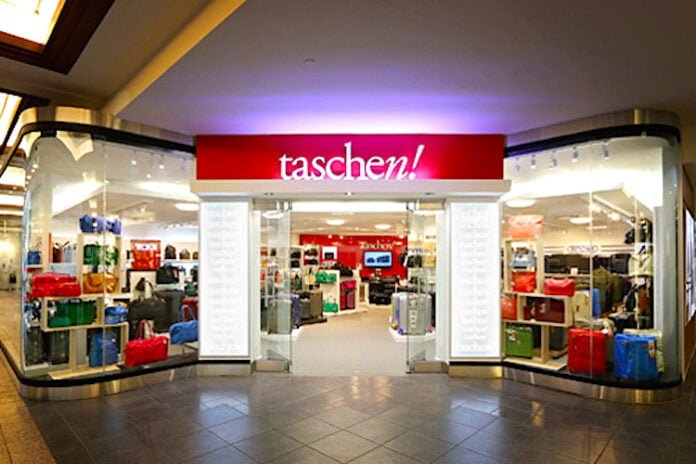
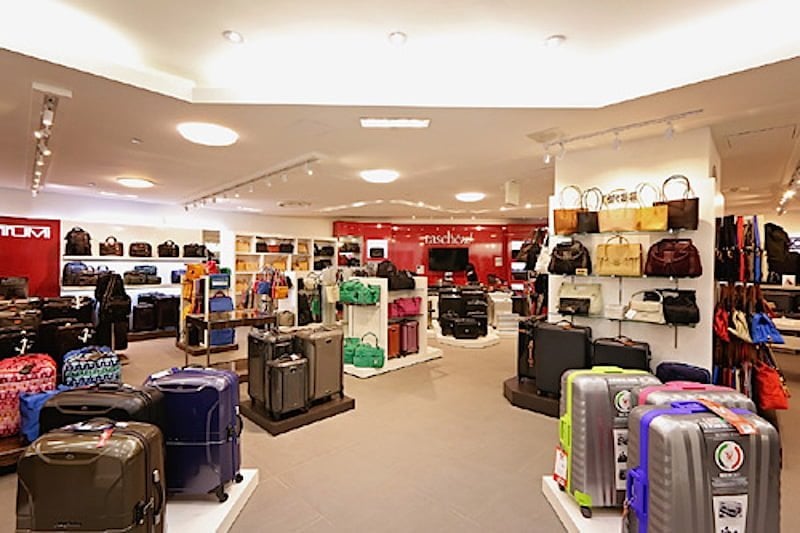
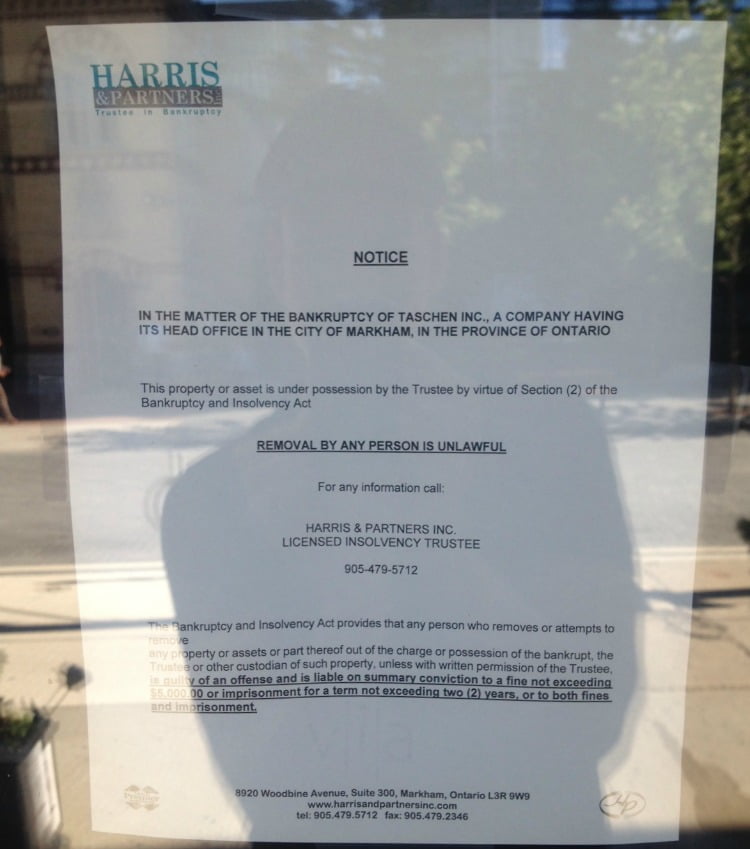
Markham, Ontario-based bag and luggage retailer Taschen! has shuttered its four Canadian stores amid bankruptcy proceedings. The iconic Canadian retailer operated stores under that name since 1995 and prior to that, it operated under the ‘Bree‘ nameplate, reflecting its then-most prominent in-store brand by German designer Wolf Bree.
The word ‘taschen’ is German for “bags” (taschen being the plural form of tasche), and the company sold many of them — including handbags, luggage, attache cases, briefcases, duffles, backpacks, suitcases, trunks, wallets and key pouches, among other product categories. Brands carried in its stores included Tumi, Rimowa, Bric’s, Bree, Mandarina Duck, Porsche Design, Offermann 1842, Ted Baker, Kipling, Briggs & Riley, LeSportsac and Jack Georges.
The four shuttered Taschen! stores include two Toronto locations: 162 Cumberland Street (unit 8) and at nearby 29 Yorkville Avenue, as well as stores in Calgary at Banker’s Hall and in Montreal, inside of Holt Renfrew-owned Ogilvy.
This is unfortunately the second bankruptcy for the company — it also went bankrupt in October of 1995. At the time, Taschen! had stores in Vancouver (732 Thurlow Street and at Pacific Centre) as well as on Cumberland Street in Toronto, Banker’s Hall in Calgary, and inside of Ogilvy in Montreal. Prior to this, when it operated under the Bree nameplate, the retailer had a number of other locations including at Toronto’s Hazelton Lanes (now ‘Yorkville Village‘), at Toronto’s Queen Quay Terminal, and at Edmonton’s Manulife Place Phase 2. The same franchisee operated a number of ‘Breetique’ stores in the 1980’s, including stores at Toronto Eaton Centre and inside the former Harridge’s stores at Scarborough Town Centre and Bayview Village in Toronto.
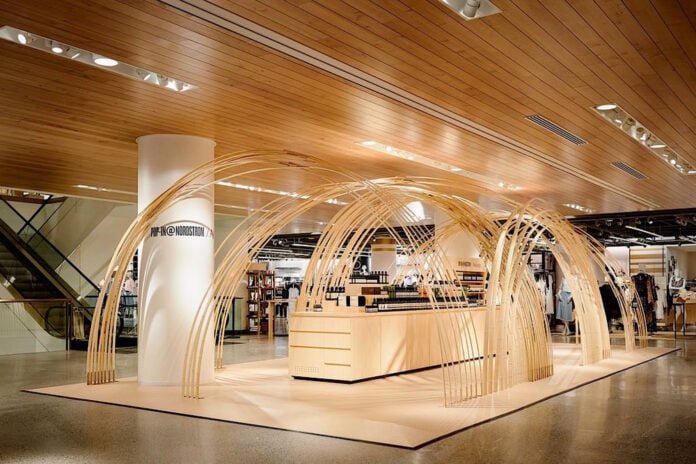
AESOP POP-UP AT NORDSTROM, VANCOUVER, IN APRIL OF 2016. PHOTO: AESOP
Short term retail space, sometimes called ‘pop-ups’, have never been more popular in Canada, according to experts. It’s a phenomenon that is drawing consumers to physical stores, in an age where online shopping is becoming increasingly popular. Three experts provide their opinions on why pop-up retail is beneficial, and likely here to stay.
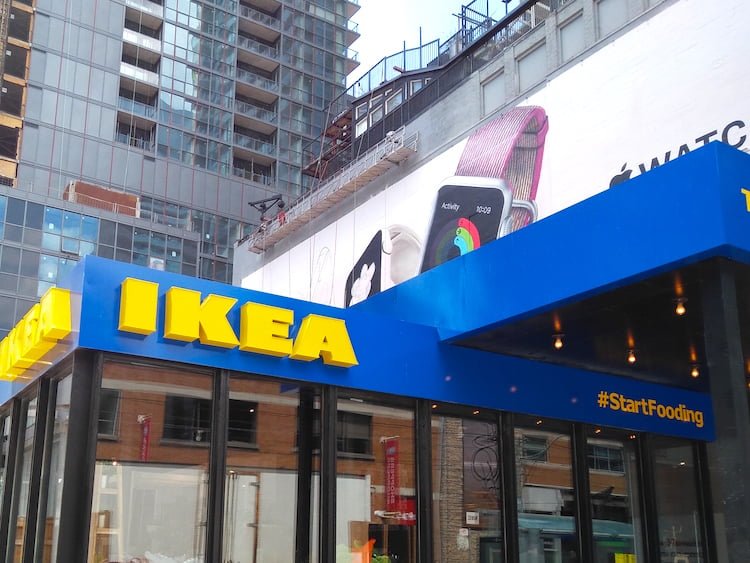
In Canada, pop-up retail spaces are showing up on urban street-fronts, in shopping malls, and even inside of department stores. Ikea recently opened a temporary location in downtown Toronto, with customers lining up to check out homewares contained within. Vancouver-based Kit and Ace has been using temporary store locations as part of its store real estate strategy, prior to opening permanent showrooms. Montreal-based yoga retailer Lolë has also been using pop-up spaces to build brand awareness, working with brokerage Think Retail to open temporary locations nation-wide. An Ottawa pop-up will open in August at CF Rideau Centre, following the retailer opening 12 Canadian pop-up locations in the spring of 2016.
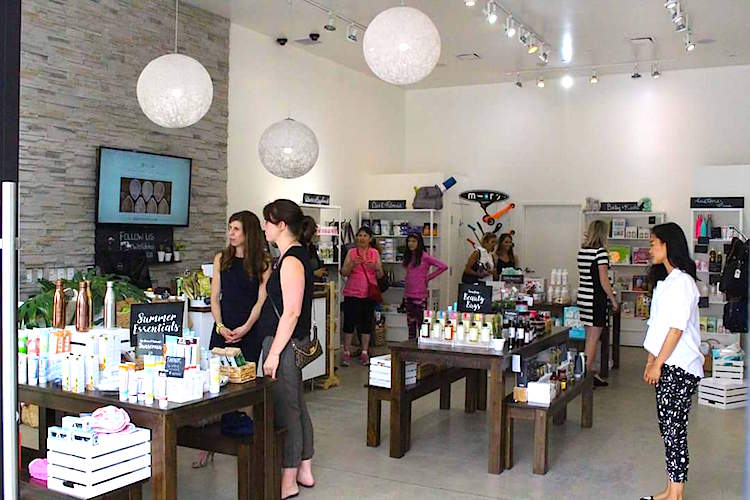
In Toronto, online health-focused retailer Well.ca recently opened its first-ever brick-and-mortar location at CF Shops at Don Mills. The 915 square foot store features some of the company’s most popular products and according to staff, it’s been well-received with some online shoppers choosing to pick up orders in the store. Downtown on Bloor Street West, on the sidewalk in front of Club Monaco, four outdoor vendors are selling edibles, gifts and flowers, creating buzz on the city’s prestigious ‘Mink Mile’.
INSIDE WELL.CA AT CF SHOPS AT DON MILLS IN TORONTO. PHOTO: CADILLAC FAIRVIEW
Department stores are also featuring pop-up shops. Holt Renfrew is currently hosting Italian home furnishings retailer Kartell, which will occupy space on the store’s Bloor Street concourse level for the rest of the summer. Nordstrom‘s Vancouver flagship recently saw an Aesop pop-up that featured stunning wood accents surrounding the display. Nordstrom also features ‘permanent’ rotating pop-ups in its Vancouver store (as it will at the CF Toronto Eaton Centre flagship when it opens this September) called ‘Pop-in@Nordstrom’, run by former Opening Ceremony buyer Olivia Kim.
Outlet malls are even getting in on the action — a Jimmy Choo outlet recently opened at Toronto Premium Outlets, though only until August 30.
Pop-up retail is seeing over $10 billion in North American sales, according to Farla Efros, president of retail consultancy HRC Advisory. Although pop-ups aren’t new, she noted that the “treasure-hunt” phenomenon (Costco is an example) and the fact that a product might be “here today and gone tomorrow” is a draw that can create a sense of urgency for consumers, and success for the pop-up retailer.
Ms Efros explained that some of the world’s largest retailers are getting in on the pop-up trend in order to drive traffic, to create excitement, to test unique services, and to determine the viability of brick-and-mortar in hopes of driving sales and loyalty in an otherwise tough retail market. She went on to explain how brands can use pop-ups to market their brand and products in an innovative way, without spending large sums of cash to secure inventory, retail space, staff and other longer-term fixed costs. Pop-ups also address ‘Generation Z’s demand for newness, innovation and quality, in a tactile physical environment that cannot be replicated online.
Ms. Efros noted that the trend has become so large, a number of businesses have emerged that offer established brands and startups the opportunity to secure temporary retail space to set up shop. One of these companies is Toronto-based pop-up go, which was recently profiled on Retail Insider because of its unique service for retailers seeking short-term spaces.
IKEA POP-UP IN DOWNTOWN TORONTO. PHOTO: BLOG.HUBBA.COM
pop-up go‘s creator Linda Farha, also founder of Zenergy Communications, recognized the pop-up trend and set out to launch an online platform that connects retailers with available short-term retail spaces. The company also makes use of Ms. Farha’s marketing agency background by providing Make It Pop, also a marketing service for pop-ups. She explained how many successful pop-ups include ‘Massclusivity’ (offering many people an ‘exclusive’ product), and an element of surprise (“planned spontaneity”), with many pop-ups also broadening their product offering in order to attract different demographics. “Millennials are increasingly seeking out urban, boutique-styled experiences,” she noted. “Pop-up retailers can provide this through limited time concepts at unique or atypical retail locations. Finding these locations can be a challenge however, and pop-up go was created to help connect the right people with the right spaces across North America.” The website helps enable pop-ups across industries and Ms. Farha also discussed a study conducted by Eventbrite in 2014, where pop-up dining experiences in the United States grew a whopping 82% between 2012 and 2014 — with 75% of dining pop-up guests believing that it’s worth paying more, as well as pre-paying for a unique dining experience.
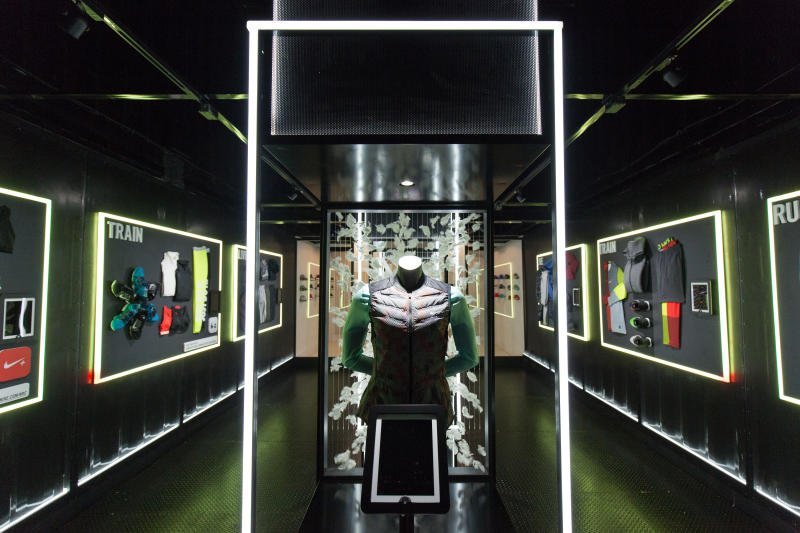
NIKE POP-UP IN VANCOUVER. PHOTO: CA.COMPLEX.COM
Avison Young Sales Representative Hilary Kellar-Parsons provided her unique insight into pop-up retail, explaining its benefits for some retailers. She explained how pop-ups can allow retailers to test the market without being bound by long-term leases, while also saving money on leasehold improvements often required for more permanent locations. She noted that even with limited investment, some of these pop-ups have been very well executed. She described how some retailers want to enter new markets but aren’t immediately able to secure their preferred location/space (particularly in malls) and how pop-ups provide an opportunity for retailers to establish a presence in the market prior to opening their permanent store in their ideal location.
Established brands and companies may also use pop-ups as part of ‘guerrilla marketing’, Ms. Kellar-Parsons explained. These companies often have high budgets and can invest heavily/pay a premium on a short-term marketing campaign with a pop-up location. The pop-up can include brands selling merchandise or creating more of an event space or a space for a consumer experience — a Coca-Cola pop-up, for example, would be more about the brand and less about selling the actual product like a traditional retailer.
She finally went on to explain how some landlords are also motivated to facilitate pop-up retail, and it’s not just for the cash-flow. Dead space isn’t desirable, so pop-ups allow landlords to create activated and tenanted spaces if even just for the short-term. There’s an added benefit to this as well — while the short-term tenant occupies the retail space and generates revenue for the landlord, the same space can be kept on the market longer in order to secure the “right” long-term tenant, giving the landlord some breathing room while animating retail space that might otherwise be vacant or feature ‘for lease’ signage.
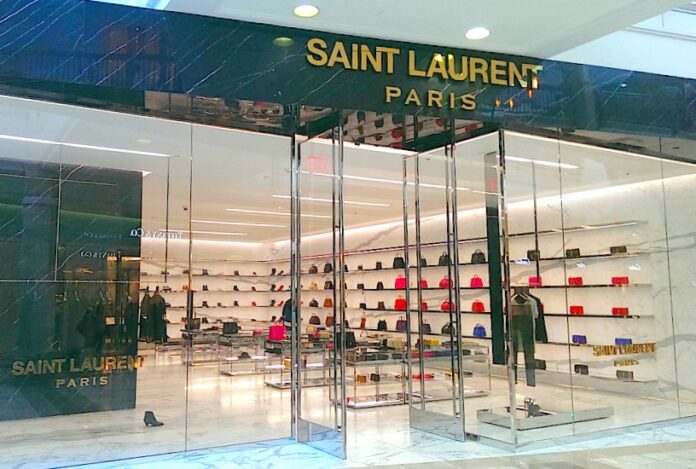
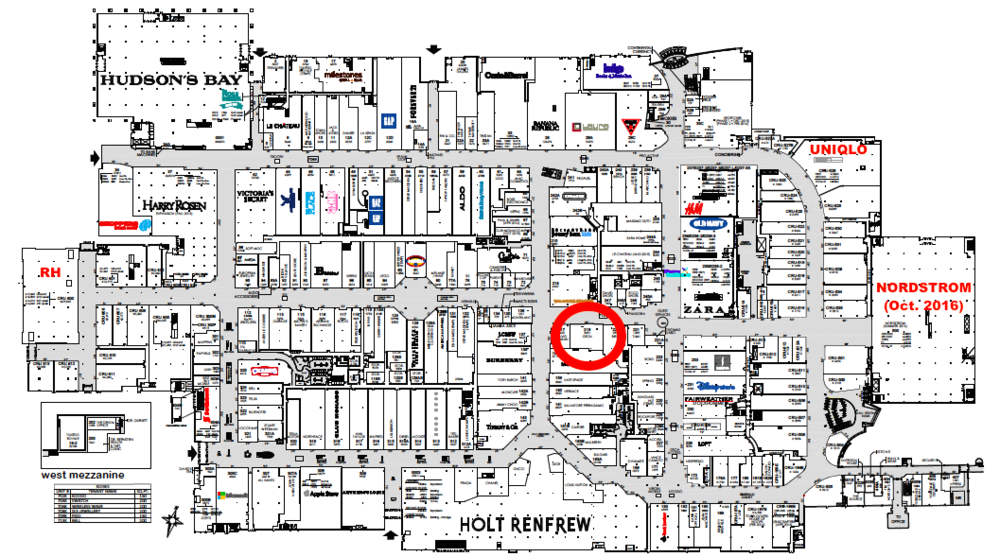
French luxury brand Saint Laurent Paris (formerly ‘Yves Saint Laurent’) will open a store this fall at Toronto’s Yorkdale Shopping Centre. It will be one of two freestanding Canadian stores for Saint Laurent, following the opening of a downtown Vancouver location last week. Sources at Saint Laurent recently confirmed the new Toronto location.
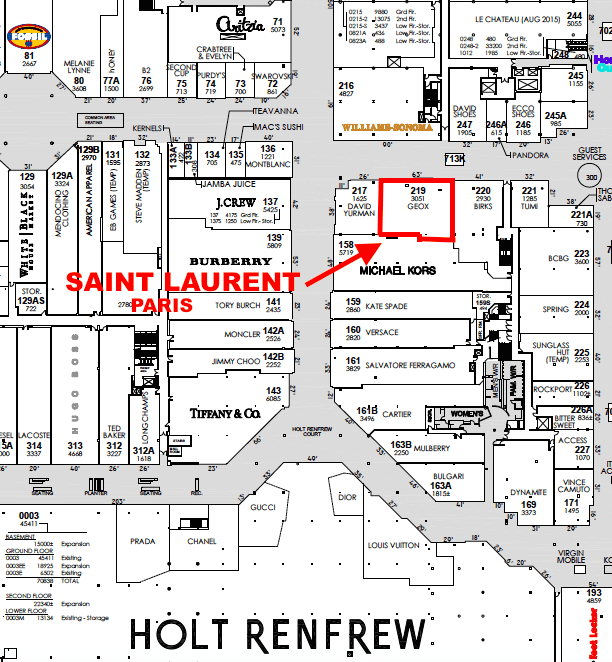
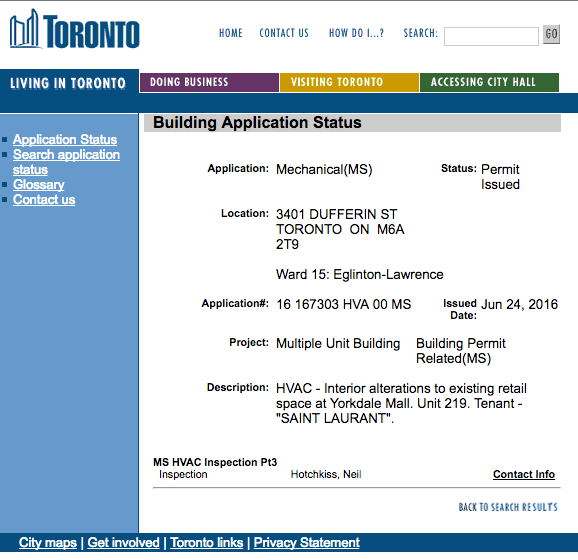
According to a City of Toronto Application, Saint Laurent will occupy retail space ‘219’ in the mall, which was recently vacated by footwear retailer Geox. The new 3,000 square foot, one-level Saint Laurent will be located next to luxury brand David Yurman, which opened its first Canadian location at Yorkdale in December of 2013. A source at the Vancouver Saint Laurent store says that the Yorkdale location is expected to open in November of this year, and that the Toronto store will feature men’s and women’s ready-to-wear fashions as well as footwear, bags and accessories.
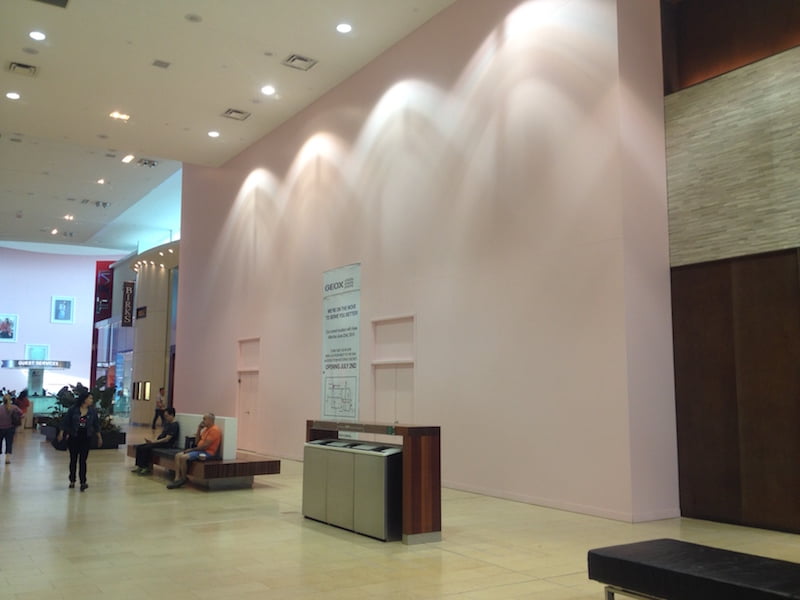
Image: City of Toronto HOARDING FOR THE NEW SAINT LAURENT. HIGH CEILINGS COULD FACILITATE A DRAMATIC FACADE. PHOTO TAKEN ON JULY 17, 2017 BY RETAIL INSIDER.
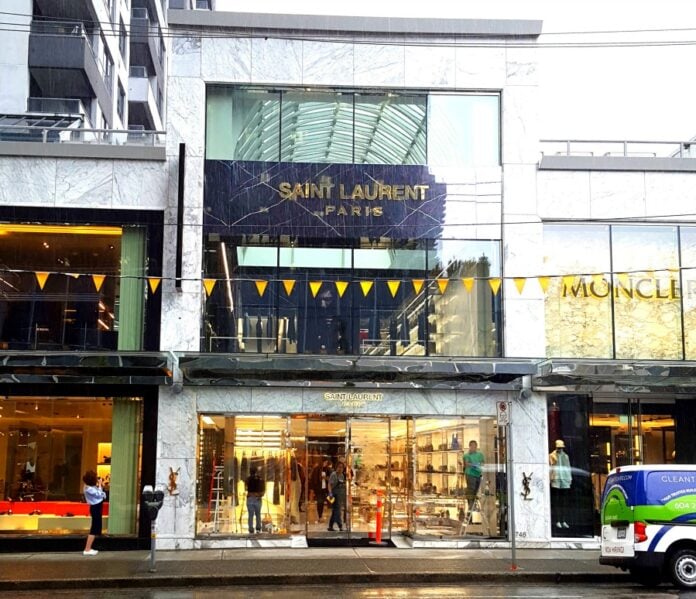
Last week, Saint Laurent opened a two-level, 4,800 square foot store at 746 Thurlow Street in downtown Vancouver, in the heart of the city’s burgeoning ‘Luxury Zone’. That store also features the brand’s men’s and women’s collections, as well as footwear, bags and accessories.
Saint Laurent is also carried at a handful of upscale retailers in Toronto. The brand’s largest presence is at Saks Fifth Avenue at CF Toronto Eaton Centre, which features two shop-in-store Saint Laurent boutiques — a handbags shop on the ground floor, and a women’s ready-to-wear boutique on Saks’ third floor. Saint Laurent will also have a presence at Nordstrom in the same mall when it opens in September.
Saint Laurent Paris operates locations globally, including 18 full-priced U.S. stores and three Saint Laurent outlets. The brand is owned by French luxury holding company Kering. Saint Laurent recently saw designer Hedi Slimani exit the company, to be replaced by Anthony Vaccarello.
Welcome to Montreal Friday. Every Friday this summer, I will show you what’s new in Montreal, because Montreal is a fun and wonderful city to discover. Here are my two discoveries of the week. (Follow me on Twitter and Instagram for previews and as well, lets engage on Twitter with hashtag: #FRIDAYMTL).
Discovery of the week
Opening soon: m0851 Flagship downtown, and a new Westmount location:
After recently opening new stores in Boston and Madrid, Montreal-based fashion brand m0851 will open mid-August in Westmount. The unique and beautiful 1,500 square foot store will be located at 4925 Sherbrooke Street West.
Westmount’s Sherbrooke Street West is a new hotspot for shopping in Montreal. The prestigious retail area includes neighbours such as the recently opened Bois & Cuir furniture store (profiled here last week) as well as some of the most exclusive stores in Montreal including IRO, Aesop, James Perse, Sarah Pacini, Want Apothecary and others.
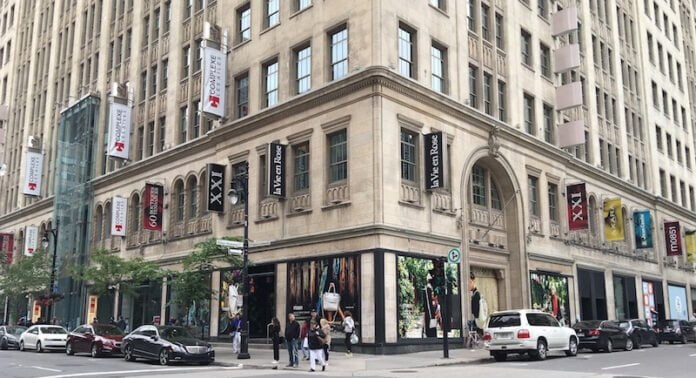
In September of this year, the existing m0851 store at Complexe les Ailes will relocate and become the brand’s global flagship. The existing 1,121 square foot store can only be accessed from within the mall, while the new location will feature frontage on both Sainte Catherine Street West and Blv. Robert-Bourassa, as per the photo at the top of this article.
The beautiful 1,700 square foot space will feature over 80 feet of display windows along both streets, with exterior doors from the historic Eaton Building (which once housed a 1-million square foot Eaton store) — a beautiful location for m0851’s flagship.
We’re told that the architecture of the new store will reflect brand values, and will include plenty of raw materials with a mixture of wood, concrete and metal as found in its new locations.
Previously, this space was occupied by Tommy Hilfiger (from 2002 to August 2015) followed by La Vie en Rose for a few months. Originally, the space measured 3,996 square feet on the first level and 7,022 square feet for the second level. Complexe Les Ailes will soon merge with adjacent Centre Eaton, with the mall going through a major renovation to host several new tenants, anchored by Saks Fifth Avenue‘s off-price Saks OFF 5TH which will open in the fall of 2018.
The company now operates 23 stores globally, with 11 of those in Canada. Its Canadian stores are located in Montreal (4 stores including one in Laval), Quebec City, Ottawa, Toronto (2 stores), Vancouver (2 stores) and one in Calgary. International cities featuring m0851 include New York City, Santa Monica CA, Boston, Madrid Spain, Tokyo (2 stores), Nagoya, Osaka, Hong Kong (3 stores) and Beijing. M0851 also distributes their collections through a select network of retailers in 35 countries, and has an e-commerce site. Oakmont Real Estate Services is the brand’s Canadian brokerage.
The m0851 brand was founded in 1987 by Frédéric Mamarbachi, and its name represents the first initial of his surname, as well as his birth month and year. The company designs and manufactures leather bags, accessories, jackets and outerwear. It started out manufacturing leather belts under the nameplate ‘Rugby North America’ and in 2003, changed its name to better reflect a refined, urban brand identity. Its head office is in Montreal’s trendy Mile End neighbourhood. Its products are designed and manufactured in Montreal, and its store interiors are also designed in-house.
Food of the Week:
Bouffons MTL, July 16 to 30: If you’re in Montreal during this time, I invite you to discover the Bouffons MTL food truck festival. I think it is the best place for people to try everything food-wise that makes Montreal, Montreal. Many prestigious Montreal restaurants will be present in food truck version, and many more. I will discuss it more in next week’s Montreal Friday! Don’t miss it.
Bouffons Montreal is presented in Juste Pour Rire and Zoofest Festival with more information here: bouffons.ca
Vancouver-based Indochino, the world’s largest made-to-measure menswear company, plans to open stores in malls nationwide after initially securing street-front locations. The retailer’s ambitious expansion plans include opening about 150 retail stores globally by the year 2020, with a goal of selling a million suits annually.
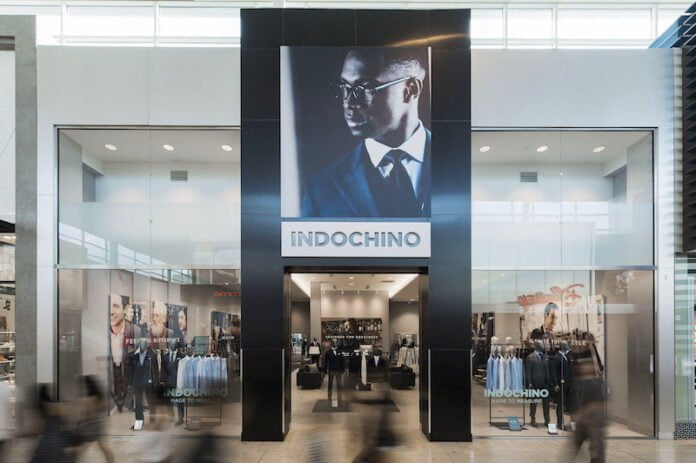
This week, a second mall-based Indochino location opened at Toronto’s highly productive Yorkdale Shopping Centre, following last month’s opening at Square One in Mississauga. A third Indochino will open on August 11 as part of CF Rideau Centre‘s expansion in Ottawa, and sources say that the retailer has been in talks to open other enclosed mall locations in Canada.
The Yorkdale store is over 2,250 square feet, and is the retailer’s third location in the greater Toronto area. “Yorkdale is the gold standard for mall shopping in North America, attracting some of the most affluent brands and over 2.5 million customers every month,” said Indochino CEO Drew Green. “It is with great pride that we join the ranks of world-leading fashion brands in Yorkdale with our innovative approach to made-to-measure apparel.”
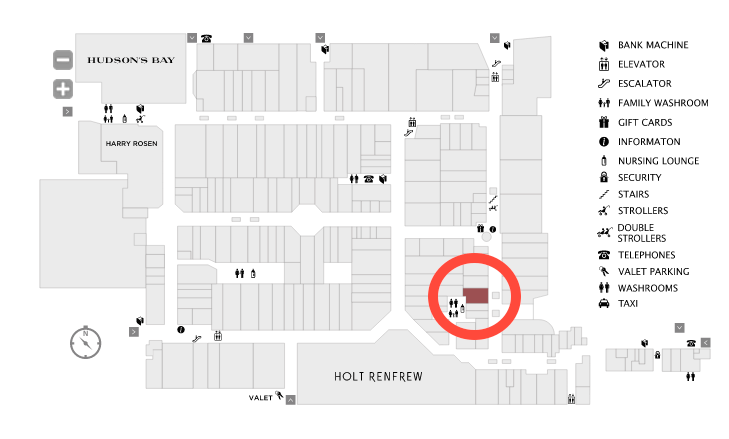
Yorkdale Mall Plan
The Ottawa CF Rideau Centre store will be part of the mall’s newest expansion wing, which will be anchored by Quebec City-based fashion retailer La Maison Simons. We’ll be reporting on the mall’s expansion prior to its scheduled August opening date.
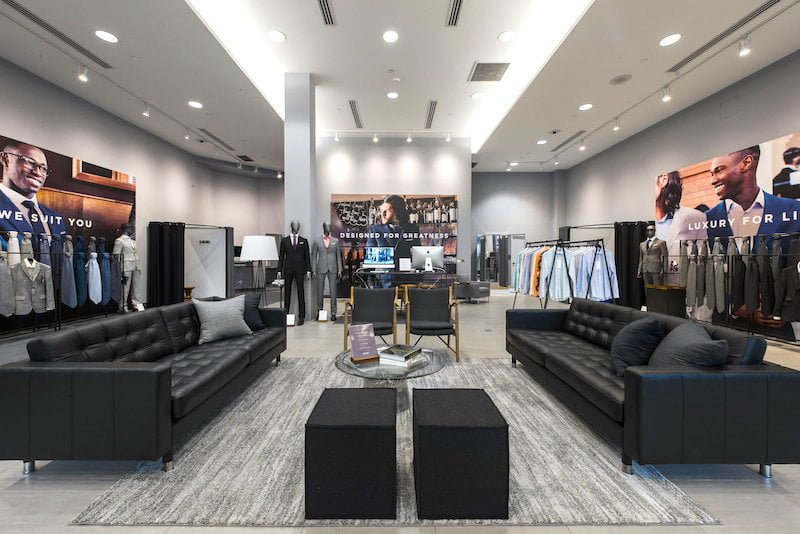
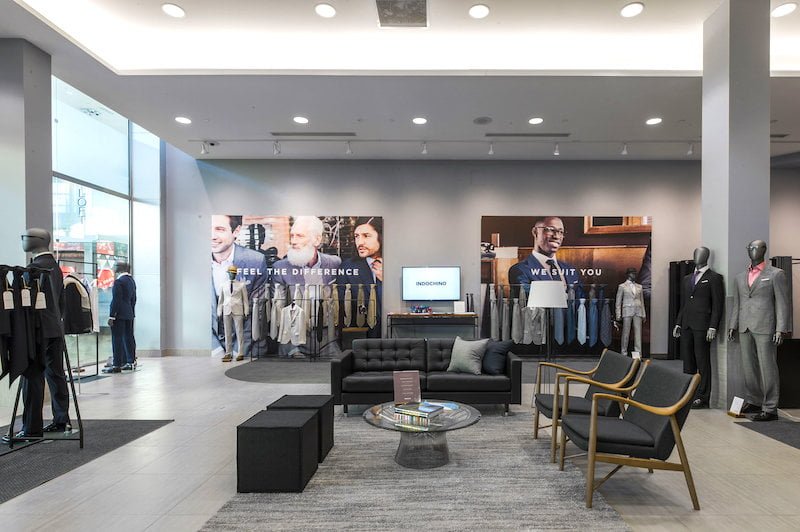
The stores, or showrooms as Indochino calls them, are an extension of the company’s online made-to-measure experience. Indochino customers are paired with a Style Guide in-store, who helps them design one-of-a-kind suits or shirts, with suit prices beginning at $599 and shirts at $89 (both Canadian Dollars). Style Guides take measurements, assist with fabric selection, and walk shoppers through custom options including buttons, vents, pockets, lapels and monograms. Each garment is made to order and delivered within four weeks, when customers can return for a second fitting to ensure a perfect fit. The showroom works in tandem with Indochino’s e-commerce website, so men can access their profiles and reorder at their convenience. The showrooms are designed to be modern and bright, boasting comfortable reception areas and lounges dedicated to serving groom parties and other groups.
Dean Handspiker, Senior Director of Retail at Indochino, said: “Interestingly, our current showrooms are primarily appointment based but, with Square One first, and now Yorkdale, we’re seeing nearly half of our sales come from from passersby who walk in completely new to the brand”. He went on to say, ” Shopping Centres are now recognizing the uniqueness of our approach, that we are part of the next generation of retail, and thus a desirable tenant offering a point of differentiation in the market.”
Indochino’s sales growth is remarkable. In the first half of 2016, the retailer achieved 66% year-over-year sales growth, anchored by 76% in year-over-year in-store sales and a 76% increase in new customers omni-channel. The company sold more suits and shirts in the second quarter of 2016 than it did in the combined first two quarters of 2015.
Oberfeld Snowcap represents Indochino as brokerage in Canada. According to Oberfeld’s website, Indochino is seeking retail spaces both on streetfronts and in enclosed shopping centres, generally in the 1,500 to 2,000 square foot range. Given that the Square One location is 2,900 square feet and Yorkdale is over 2,200 square feet, we expect these numbers to be amended.
Indochino was founded in Vancouver in 2007 as an online custom suit retailer. Co-founder Kyle Vucko was recently replaced as CEO by Drew Green, founder of Shop.ca. Indochino’s showrooms include Canadian locations in Vancouver’s Yaletown area, three in the Greater Toronto Area (downtown Toronto, Yorkdale, and Mississauga’s Square One), and its U.S. showrooms are in New York City (Broome Street Soho), Boston (Newbury Street in Back Bay), Beverly Hills CA, San Francisco (Post Street, Union Square) and on Chestnut Street in downtown Philadelphia.
Photos are of the Yorkdale store, supplied by Indochino.
“Carrefour de l’Estrie has a dominant position in the region, and we’re very pleased to invest in its modernization,” said Claude Sirois, President, Ivanhoé Cambridge Retail. “This initiative is part of our strategy of injecting capital into our shopping centres to maintain and enhance their competitive positioning, for the benefit of our discerning customers in the Sherbrooke area.”
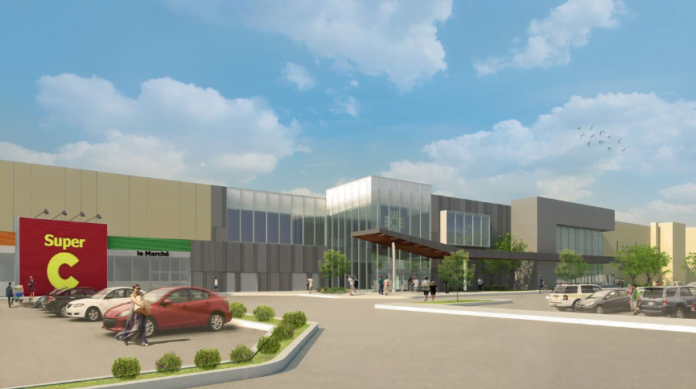
The Carrefour de l’Estrie revitalization will be divided into four Phases. ‘Phase 1‘ involves the former Target space, which will be turned into four separate stores as follows:
Super C (value-priced grocer operated by Metro) will occupy 45,000 square feet of the available 63,603 square feet on the ground level of the former Target space. Super C will feature entrances from both within the mall as well as in the parking lot, and will cost about $5 million to build.
Sports Experts/Atmosphere will open a 29,800 square foot store on the upper level of the former Target space. The flagship will feature technology similar to the recently opened Sports Experts at CF Carrefour Laval and Sport Chek on Vancouver’s Robson Street, including an interactive RFID shoes wall, e-commerce screens and an interactive video wall.
Two other tenants are currently in negotiations to take the rest of the space. A reliable source tells us that an interested tenant includes Los Angeles-based fast-fashion retailer Forever 21, and that Globo Shoes is now confirmed to be taking part of the space.
The exterior cladding of the former Target store will be replaced, and a storefront window and glass wall will be installed on the upper level to bring more natural light into the centre. Also, two new loading docks will be added on the south and east sides to better serve the new retail space.
‘Phase 2‘ will include a new entrance with a canopy and a glass wall on both levels, which will be built in the eastern portion of the shopping centre. The strategic location of the entrance will improve shopping experience and brightness in the centre. Inside the centre, plans call for removal of an escalator and harmonization of the architectural details of the balconies. The work will also include revitalization of the exterior cladding to the west of the new entrance and the installation of a window on the upper level.
‘Phase 3‘ will involve reconfiguring the space previously occupied by Super C and Sports Experts. New windows and canopies will be installed on the facade for new restaurants. Landscaped areas, with trees and other vegetation, will be planted around the centre to combat the ‘heat-island effect’. Sources say that Old Navy and Sephora are in ongoing negotiations to open in the current Sports Experts space, but this is unconfirmed by Ivanhoé Cambridge or these retailers.
‘Phase 4‘ will include ‘standardization’ renovations to the centre in order to create the same look and feel in the rest of the mall as in Phases 1 and 2 above, with the vast majority of the existing floors and ceilings to be updated.
The only part of the centre with no plans at this point is the current Sears Decor space. In a consolidation effort, Sears Canada has decided to close this under-performing store on August 12, 2016, but the Sears store in the mall will remain open.
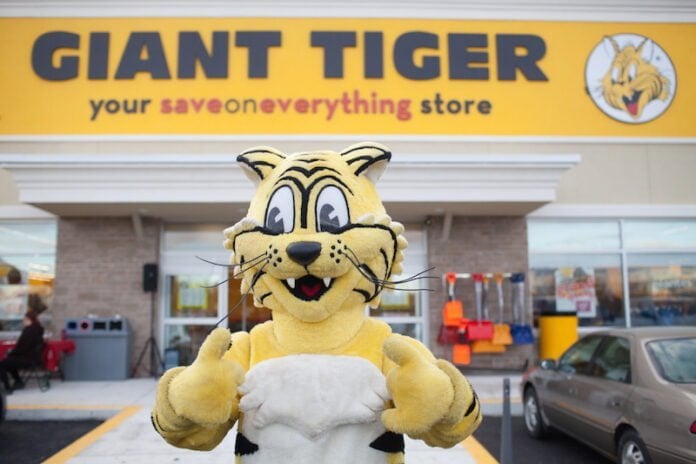
Ottawa-based discount retailer Giant Tiger is seeing considerable success with its Canadian operations, with plans to continue opening new stores. The company recently launched three new women’s fashion lines, and has also spearheaded store renovations and other strategies to enhance shopping environments.
The retailer was founded in 1961 in Ottawa’s Byward Market area, and has since grown to operate 218 Canadian stores and employs over 7,000 ‘team members’. Stores carry categories such as family fashions, footwear, groceries, confectionary, pet food, cleaning supplies, housewares, stationery, toys, and health/beauty products. The company’s strategy involves striving to lower prices through continued improvements to efficiency as well as maximizing buying power through economies of scale, as well as increasing market share in existing markets by modifying stores and assortment, based on local needs. The company continues to seek out new markets to further increase revenues via well-researched and planned expansion that involves opening new store locations.
Giant Tiger’s vice president of Marketing, Karen Sterling, says that the retailer will continue with plans to open between 10 and 15 Canadian stores annually, doing so primarily with a franchise model that sees partnerships with successful retail merchants who can aspire to become franchisees in their communities. One of the many advantages to franchising is gaining access to local market expertise, not to mention the ability to customize product assortment tailored to local tastes. Franchisees are already a part of the community, allowing Giant Tiger to operate as a “living, breathing part of the community” which includes investing in the local community both with fundraising and sponsorships, she explained.
Ms. Sterling explained how Giant Tiger has also been rolling out an updated store concept to enhance the shopping experience, as well as provide convenience for time-starved consumers. She described the core client as being a 25 to 50 year old female, partnered and possibly with children. As the ‘CFO’ of the household, seeking out both value as well as time savings, the target shopper seeks out a ‘one-stop’ shopping experience with an optimal value proposition. Stretching the family budget is met through value-priced fashions and other categories, while time savings can be met through stores carrying a variety of product categories under one roof, be it fashions, bedding, bath and food items. Stores are also laid out efficiently and are “not too large” so as to not overwhelm shoppers. Giant Tiger’s primary store format (as opposed to its GTExpress format) measures in the 13,000 to 18,000 square foot range, though some locations can be smaller or larger, depending on markets and real estate.
E-Commerce is also an extension of the store, she said, with Giant Tiger’s website carrying over 6,000 products that can also be picked up in-store.
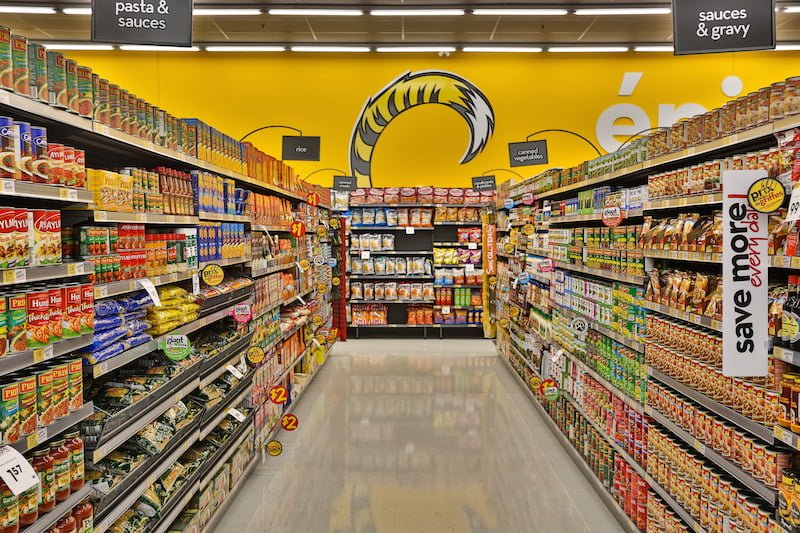
Since 2012, Giant Tiger has been investing heavily in its in-store experience, she explained. Redesigned stores feature wider aisles, convenient shop-in-shop departments, and an overall experience meant for time efficiency. This spring, Giant Tiger expanded operations by launching three value-priced women’s fashion lines — Lily Morgan™, myStyle™ and the updated ACX Active™ — which are already seeing tremendous success. The company also launched its first TV/print/online ad campaign as part of the initiative, which includes a body-positive image for its female shoppers (see video below).
Giant Tiger will continue to seek out opportunities for new stores in Canada, seeking out real estate as well as local partners. It’s undetermined how many stores Giant Tiger could eventually operate in Canada, as decisions are made based on opportunity, which includes cost effective real estate. A second location in Barrie, Ontario will open, for example, while it’s somewhat unlikely that the retailer would open a store in the heart of downtown Toronto. A number of larger-format retailers have been closing stores in Canada, providing increased real estate opportunities for companies such as Giant Tiger to expand into existing real estate.
Registration is underway for VMSD Magazine’s 2016 International Retail Design Conference (IRDC), taking place September 13-15 at Le Westin Montréal in Montréal. Retail-Insider readers receive an exclusive individual registration rate of US $1,125 by using the discount code RETAIL2016. That’s a $120 savings off the current Early Bird rate of US $1,245.
Speakers confirmed to date include retail design leaders from Aldo, BonLook, Bunulu, Kenneth Cole, Maison Birks, Marriott International, Qdoba Mexican Eats, Roche Bros/Brothers Marketplace, Tommy Bahama, Whole Foods Market and Wolverine Worldwide.
The conference program features sessions on such timely topics as:
strategic approaches to engaging Millennials,
how to capture new markets,
visual merchandising and luxury brands,
international inspiration in retail design,
designing cannabis retail spaces,
getting buy-in from the C-suite,
blurring the lines between the physical store and online retail,
shop-in-shops and popups,
virtual/augmented reality and the customer experience, and much more.
In addition, IRDC 2016 will offer Power Track sessions featuring three 25-minute segments, each jam-packed with case-study insights and unique perspectives from a variety of retail areas including digital strategies, re-designing heritage brands, and design management insight for working with creative teams.
Complete details about speakers, sessions, networking events, sponsors and the conference hotel (Le Westin Montréal) are available at irdconline.com.
ABOUT VMSD Cincinnati-based VMSD (Visual Merchandising + Store Design) is the leading magazine for retail designers and store display professionals, serving the retail industry since 1922. Every month, VMSD showcases the latest store designs and visual displays, presents merchandising strategies and new products, and reports on industry news and events. Learn more at vmsd.com.
ABOUT IRDC Now in its 16th year, the International Retail Design Conference (IRDC) is the premier educational and networking event for the store design and visual merchandising community. Presented by VMSD magazine, IRDC combines educational sessions, roundtable discussions, case studies and networking events into three productive days, drawing 350+ attendees from the U.S. and abroad. Learn more at irdconline.com.
[Partner content. If you are interested in sponsored content, please contact us]
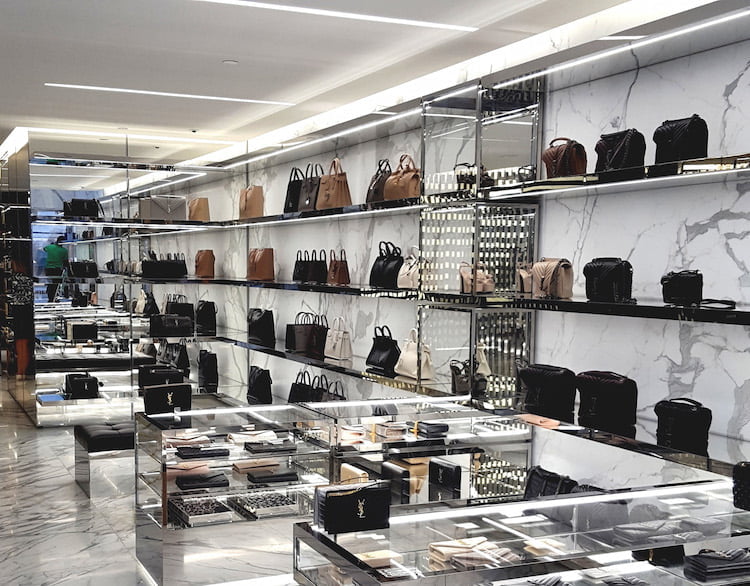
French luxury fashion brand Saint Laurent Paris (aka ‘Yves Saint Laurent’) has opened its first Canadian location in Vancouver’s ‘Luxury Zone’. The two-level, 4,800 square foot store at 746 Thurlow Street is located between recently opened Moncler and Prada locations in The Carlyle retail complex.
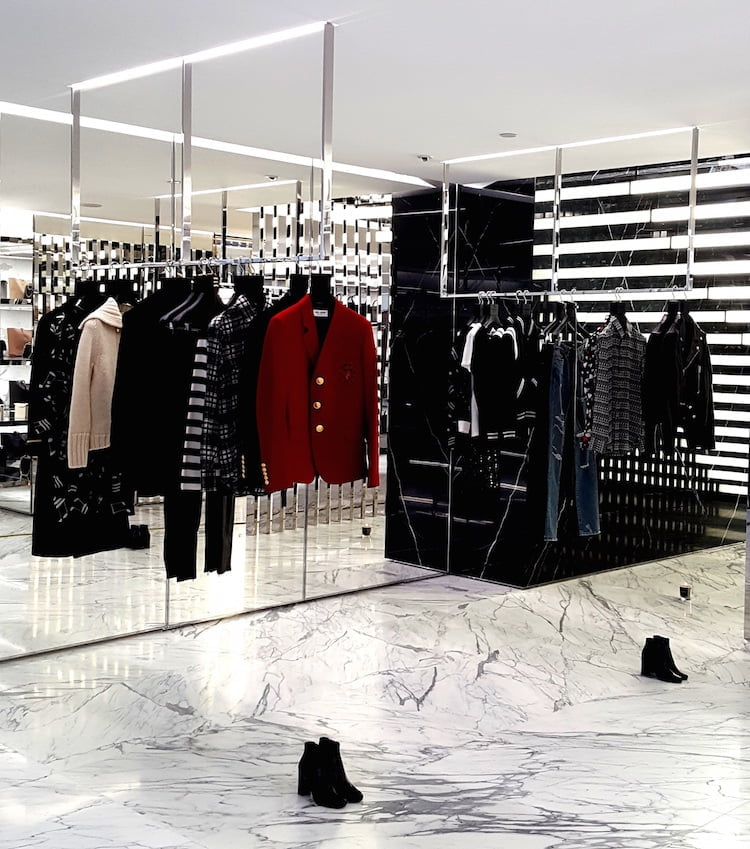
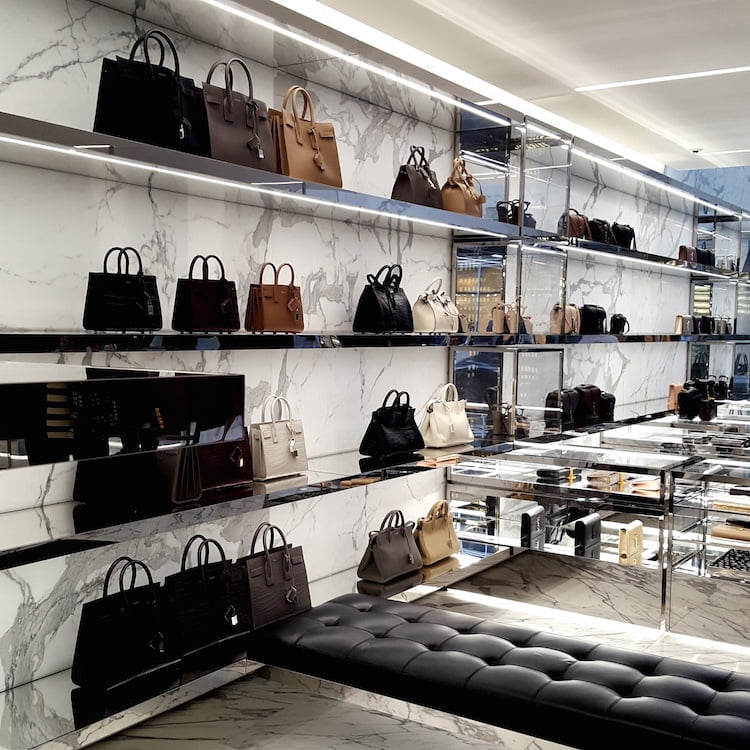
Vancouver’s Saint Laurent store features women’s and men’s ready-to-wear collections, as well as accessories and footwear. Women’s fashions are on the main floor along with footwear and accessories, and menswear is located on the second level along with accessories for both genders. The upstairs level features soaring ceilings and a large rounded skylight that was part of the original complex, which recently saw major changes to house multiple luxury retailers. A basement space is dedicated to offices/storage, according to a source with the company.
The Vancouver Saint Laurent deal was negotiated by Mario Negris, Martin Moriarty and Shane Epp of Vancouver’s CBRE Urban Retail Team. CBRE has been involved with leasing retail spaces in The Carlyle, which also includes upscale tenants De Beers and Tory Burch (as well as Prada and Moncler, as mentioned above).
Saint Laurent joins a substantial number of luxury brands in Vancouver’s expanding ‘Luxury Zone’. Directly across Thurlow Street, Strellson, Versace and Brunello Cucinelli opened stores late last year. Nearby luxury brands include Burberry, Escada, Louis Vuitton, Hermes, Tiffany & Co. and Dior, and opening this fall will be large licensed locations for Rolex and Stefano Ricci. French jeweller Van Cleef & Arpels will join them in early 2017 with a large unit on Alberni Street, currently under construction.
Saint Laurent women’s ready-to-wear and accessory boutiques opened within Vancouver’s flagship Nordstrom in September of 2015, and a limited selection of men’s Saint Laurent fashions are carried at Leone and Holt Renfrew in downtown Vancouver.
We’ll soon be announcing a second freestanding Canadian Saint Laurent store location that will open later this year.
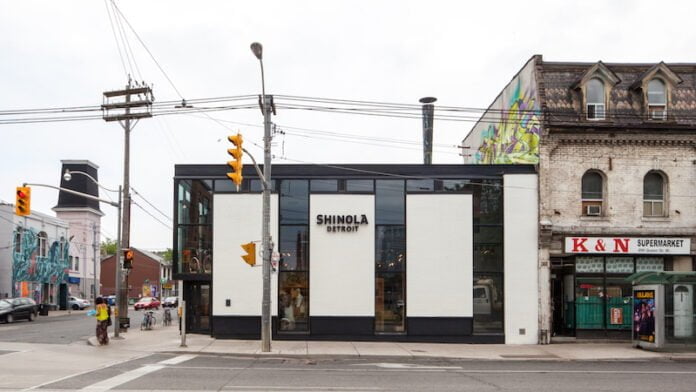
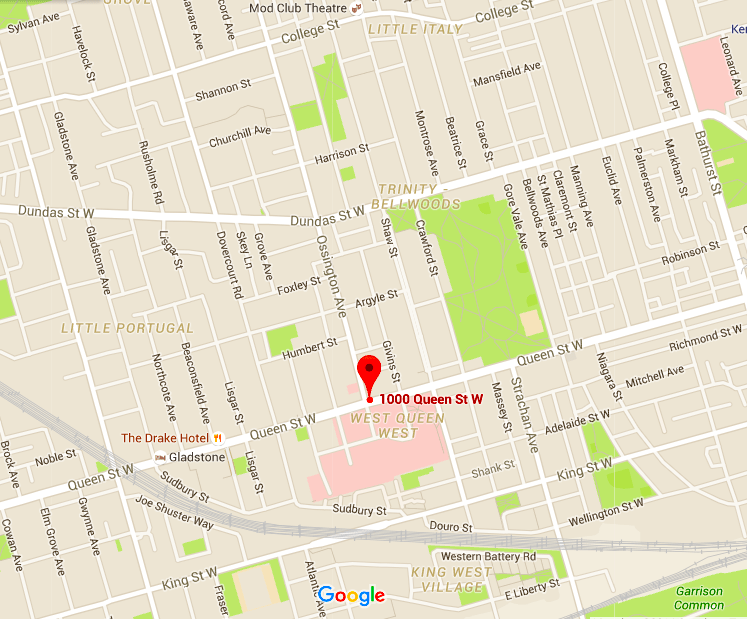
Upscale Detroit-based lifestyle brand Shinola has opened its first freestanding Canadian store on ‘Canada’s coolest street‘. Located at 1000 Queen Street West (corner of Ossington Avenue), Toronto’s Shinola is the first of potentially multiple Canadian stores, according to the brand’s Creative Director, Daniel Caudill.
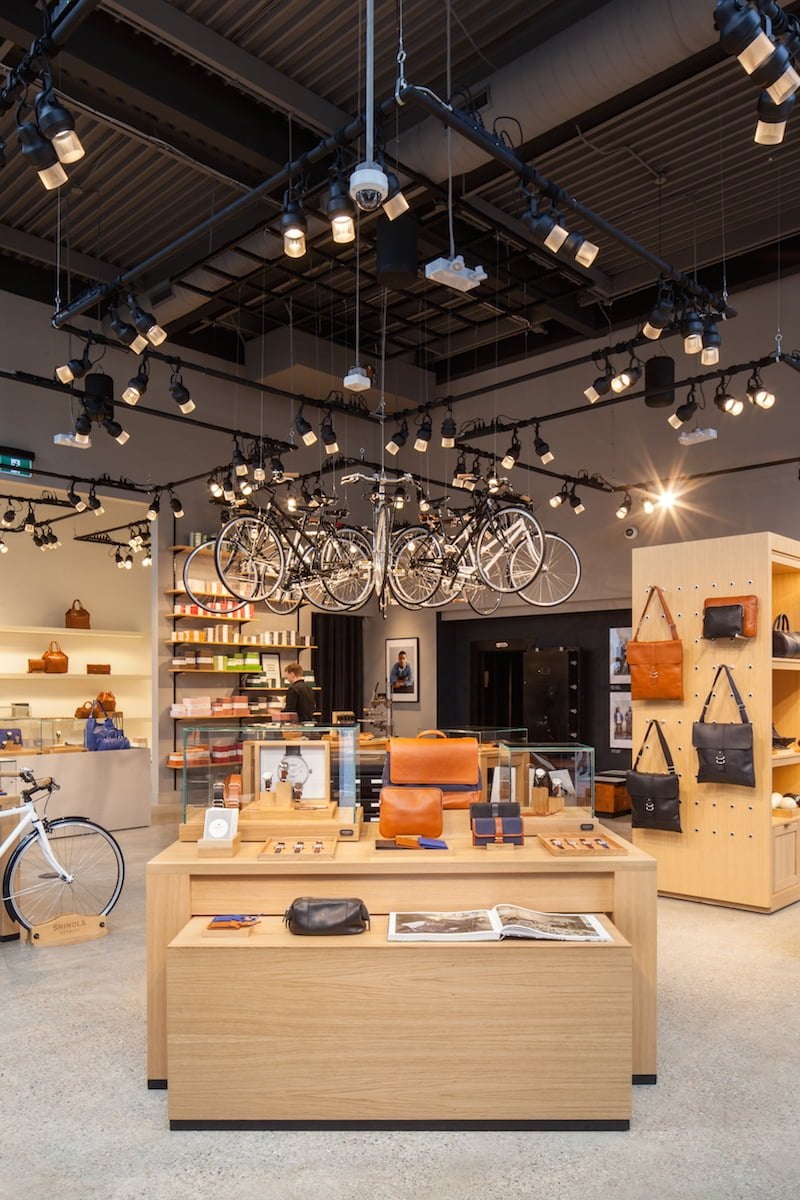
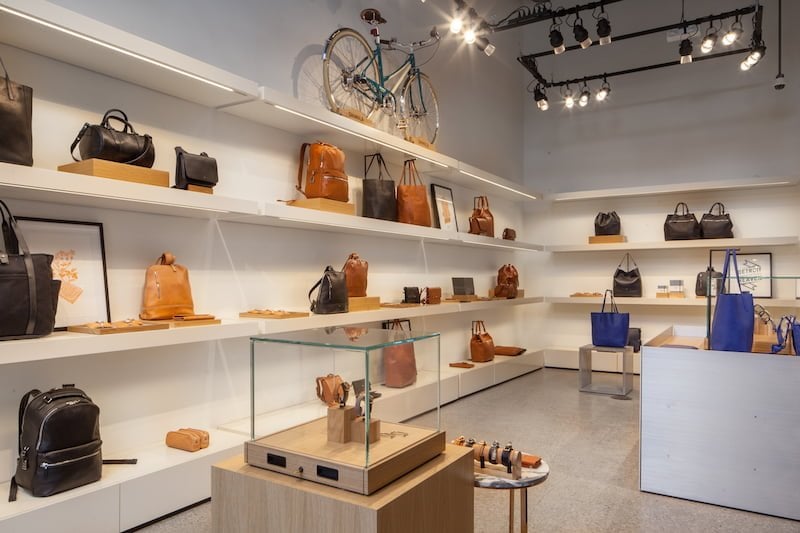
The new 1,800 square foot Toronto store features dramatic soaring ceilings of almost 20 feet, with a display of Shinola-branded bicycles hanging from the ceiling (see photo below). The store features light walnut fixtures which are characteristic of Shinola locations, as well as a fitting room in an old vault which was restored as part of the original building, which was once a bank. Mr. Caudill revealed that the new Toronto store features the brand’s largest selection of women’s leather goods and accessories, which are featured in a separate boutique area at the north end of the spacious store.
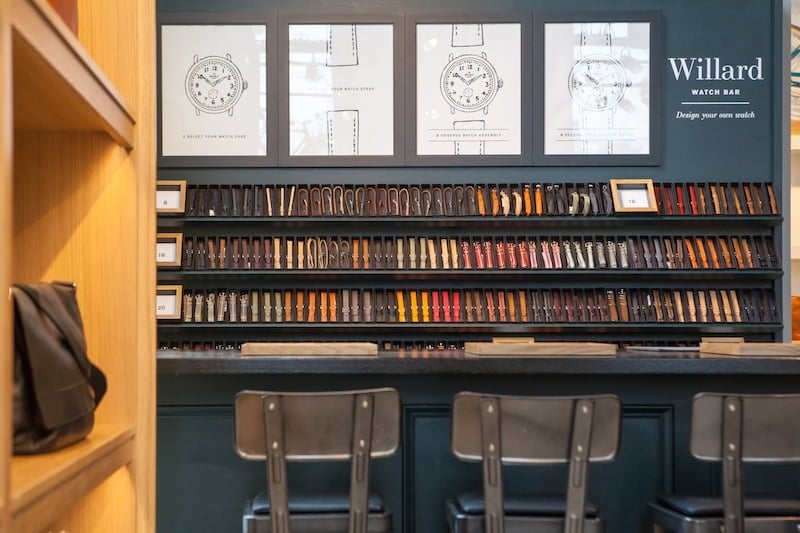
Product customization is a key feature to Shinola’s Toronto boutique, explained Mr. Caudill. A ‘watch bar’ counter allows shoppers to pick out separate watch faces and watch bands, creating the desired timepiece look of the customer’s choosing. An in-store monograming station is also available for leather goods as well as paper products.
The retail space was formerly occupied by youthful fashion retailer Stussy and a coffee shop, both of which closed last year. The building is owned by Toronto-based Hullmark Developments, which owns several nearby buildings on Ossington Avenue. The Toronto store is Shinola’s 16th location worldwide, and only its second outside of the U.S. — a London, U.K. store opened in the fall of 2014. Brokerage Think Retail‘s Tony Flanz represented Shinola in the Toronto deal.
The store’s watch bar allows shoppers to choose separate watch faces and watch straps, creating customized timepieces.
The women’s section at the back of the Toronto store is the largest of all 16 Shinola locations.
Mr. Caudill explained that the Toronto store isn’t likely the last for Canada, as Shinola looks to other markets for new stores. Although no retail spaces have been selected, a Vancouver location is likely at some point, he said, and Toronto could even see a second Shinola location depending on real estate opportunities. Shinola is looking to increase brand awareness in Canada prior to any major expansion, which it began doing last year with a Holt Renfrew shop-in-store at 50 Bloor Street West, which continues to operate today.
Shinola was founded in Detroit in 2011, and specializes in watches, bicycles, leather goods, pet accessories, and selected apparel. Its name is a nod to the former Shinola shoe polish company that operated in the early to mid 1900’s. The company is now owned and operated by Bedrock Brands, a privately owned Texas investment group, and was launched by Tom Kartsotis, one of the founders of the Fossil Group retail conglomerate. Most products are made in the United States, though some watch parts come from Switzerland.
Think Retail represents Shinola as brokerage in Canada and according to its website, Shinola seeks retail space in the 1,250 square foot to 2,500 square foot range, ideally on high streets.