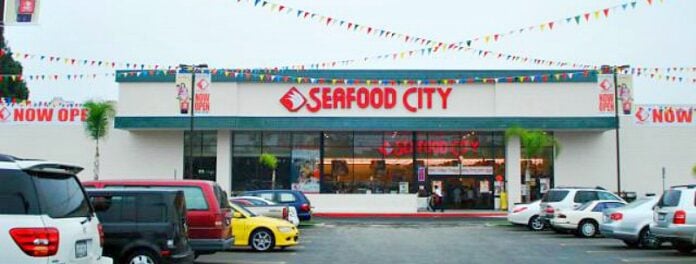
Sobeys Inc. has signed deals to sell 30 of its stores in Western Canada for approximately $430 million. Sobeys purchased Canada Safeway in June of 2013. The Competition Bureau required Sobeys to sell 23 of its stores prior to granting approval for its Safeway purchase.
According to Sobeys, Overwaitea and the Federated Co-operatives chain have received approval from the Competition Bureau and Sobeys anticipates the deals will close in March or early April. The sale of the Winnipeg Price Chopper store is subject to finalization of an agreement, as well as approval from the Competition Bureau.
Overwaitea has agreed to purchase the following 15 store locations:
Safeway: 2345 Beacon Avenue, Sidney, BC
Safeway: 1950 Foul Bay Road, Victoria, BC
Safeway: 3958 Shelbourne Street, Victoria, BC
Safeway: 1143 – 56 Street, Tsawwassen, BC
Safeway: 131 Signal Road, Fort McMurray, AB
Sobeys: 1000 Railway Avenue, Canmore, AB
Sobeys: 65 Bow Street, Cochrane, AB
Thrifty Foods: 270 East Columbia Street, New Westminster, BC
Safeway* 3756 – 10 Avenue, Port Alberni, BC
Safeway* 610 – 6th Street, New Westminster, BC
Safeway* 181 Trans-Canada Highway, Duncan, BC
Safeway* 108 – 3170 Tillicum Road, Victoria, BC
Safeway* 370 Trans-Canada Highway, Ladysmith, BC
Thrifty Foods* 18888 North Parallel Road, Abbotsford, BC
Thrifty Foods* 2000 Island Highway, Nanaimo, BC
* Additional stores not included in October Consent Agreement
Co-op has agreed to purchase the following 14 store locations:
Sources tell us that Eataly will open its first Canadian food concept in Toronto, likely in the city’s Yorkville area. Steph Chiu has written this analytical piece about Eataly and how it will affect local food retail if it opens in Yorkville.
By Steph Chiu
Yorkville is a popular destination in downtown Toronto, known for its upscale shopping, restaurants, and hotels. Gourmet grocery stores have also emerged in recent years as consumers have started to demand higher-quality food products. Currently, shoppers in the area can visit
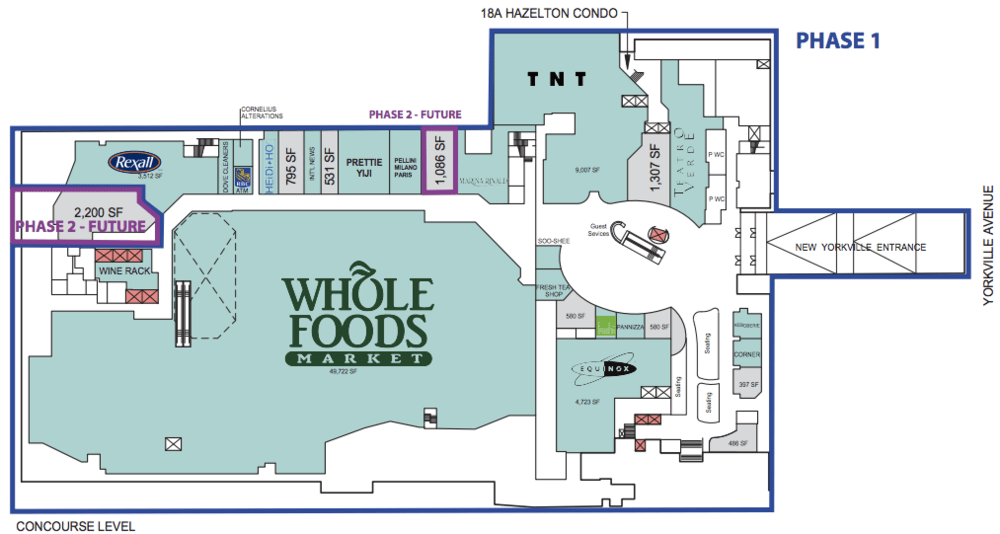
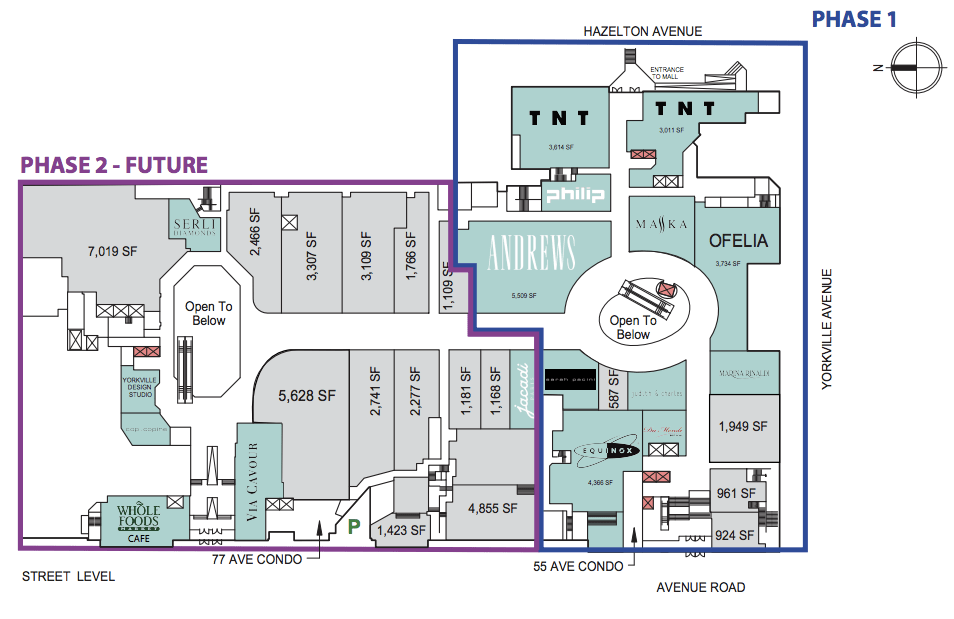
Pusateri’s Fine Foods (57 Yorkville Avenue), the Bloor Street Market (Manulife Centre, 55 Bloor Street West) or Whole Foods Market (Hazelton Lanes, 87 Avenue Road) for all their grocery needs. However, consumers will soon have a fourth option to choose from: Eataly, a new Italian food concept coming in the near future to the Yorkville district.
Eataly is an Italian food market that first opened in Turin, Italy in 2007. Eataly was founded on Oscar Farinetti’s desire to combine elements of a lively, open environment with a learning centre to create a unique atmosphere where anyone could shop, taste, and learn about high-quality Italian foods.
Eataly goes beyond the traditional shopping experience and offers more than your average fine grocery retailer. Inspired by the European food-hall concept, its massive stores are populated with tasting areas and gourmet restaurants to complement the upscale food offerings. The intention is for customers to taste the artisan products, learn about them from educated staff, and then buy the ingredients to recreate Eataly’s restaurant food at home, at fair prices.
Not only do Eataly stores have dedicated departments for nearly every category of food imaginable (including unique departments like Chicago’s Nutella bar), they also offer a variety of unique classes that range from cooking lessons to wine tastings.
TYPICAL EATALY STORE INTERIOR
Overall, Eataly boasts 27 locations around the globe, with stores in Italy, Japan, the United States, Dubai, and Turkey. Eataly only recently entered the North American market with its two stores in the United States: a 50,000 sq. ft. emporium in New York City, and an even bigger 63,000 sq. ft. landmark in Chicago. The NYC store has quickly become one of the most visited tourist sites in the city and achieved nearly $70 million in sales in its first year alone. The larger Chicago location, with over 10,000 products and 23 eateries, was so popular in its first week that it had to shut down
because it ran out of food. Crowds continue to populate both stores daily, eager for a taste of the unparalleled gastronomic experience. If the success of these two stores is any indication, Eataly’s arrival in Toronto will likely be just as well-received.
The Eataly Chicago map shows just how big and extensive the store is in both size and product offerings
As we mentioned above, Eataly’s entrance into the Yorkville district will put it in direct competition with Pusateri’s and Whole Foods (and to a lesser extent the Bloor Street Market and local Rabba grocery outlets). But how do they compare to Eataly ?
Pusateri’s Fine Foods is a Toronto-based family business known for leading the revolution in fine foods in Toronto, opening its first store in 1986 on Avenue Road. Its stores offer an extensive selection of products from around the world, including their renowned olive oil bar, and are designed to resemble a European marketplace in ambiance. There are currently three Pusateri’s locations in Toronto: Avenue Road, Yorkville, and Bayview Village.
Whole Foods Market is a well-known chain of grocery stores that originated in Austin, Texas in 1980. Whole Foods is a purveyor of fine natural and organic foods and has strict quality standards for the foods it allows to be sold in its stores (for example, Whole Foods does not sell anything containing ingredients named on its “Unacceptable Ingredients for Food” list). The store design resembles a standard grocery store environment, but with a higher-quality selection. The chain expanded to Canada in 2002. There are now 371 locations worldwide, with stores in the United States (355), Canada (8), and the United Kingdom (8). Whole Foods expects to open another 40 Canadian stores in the coming years.
In comparing the two grocery stores to Eataly’s store concept, it would appear that Eataly has the edge with its comprehensive value proposition. While all three are very comparable in product quality and variety, neither Pusateri’s nor Whole Foods have added services like restaurants and classes, and the atmosphere inside an Eataly store is undeniably unique. Consumers will no doubt be intrigued by what Eataly has to offer.
We are very excited for Eataly’s imminent arrival in Toronto, which we predict will cause quite a disturbance in the growing luxury grocery scene. Although further details cannot yet be released, stay tuned for more updates on this developing story and to find out exactly when and where it will be located.
Industry note:
The specialty food industry in Canada has been growing rapidly in the last decade, with 7.5% growthfrom 2012 to 2013 according to Stats Canada , making it the fastest-growing segment in food and beverage retail. Although the definition of ‘specialty food’ varies considerably, from “anything that is above average in quality or price” to “products that exemplify quality and innovation…often made by small manufacturers, artisans, and entrepreneurs,” it is clear that this is a distinct and emerging segment of the grocery industry. 2012 reportby Agriculture and Agri-Food Canada outlined consumer trends in healthy, natural, and unique products, driven by increasing ethnic diversity, as key reasons for the growth in specialty foods. Specifically in the gourmet and artisan food space, demand continues to grow as consumers become more affluent as well as interested and informed about their food choices.
Roots has confirmed new leases for two flagship stores in Toronto and one in Vancouver, and it is committing several million dollars in major renovations to these stores. A third flagship on Toronto’s Bloor Street West will relocate.
According to lease plans, the Toronto Eaton Centre Roots store is 7,665 square feet. It enjoys a high-profile location adjacent to a mall entrance, and it will neighbour the mall’s flagship Nordstrom store which is scheduled to open in the fall of 2016.
Roots’ Vancouver flagship store. Photo: Google Streetview screenshot
“We’re particularly excited about these three flagship stores,” says Roots co-founder Michael Burdman. “Each one provides an ideal showcase of the entire Roots brand for both our Canadian customers and the many foreign tourists who visit our stores in Toronto and Vancouver. Despite the phenomenal growth of our online business in recent years, our retail stores remain the ultimate, defining experience of our company.”
The new Bloor Street store will replace its former 15,000 square foot flagship, located a block west. The store’s 6,500 sq. ft. layout is “more ideally suited to the needs of Roots in the Bloor-Yorkville area, Canada’s preeminent shopping district,” according to the press release. It opens in May, 2014.
At the Eaton Centre in downtown Toronto, Roots will reportedly conduct a major renovation of its multi-level store, known as ‘Roots Central’. In Vancouver, Roots will be expanding and renovating its Robson St. flagship store. We’re awaiting further details of the Vancouver expansion and we’ll report more shortly.
Interestingly, Roots is also enjoying significant growth in Asia. Thanks to a partnership with Taiwan-based partner, Branded Lifestyle, Roots now has 118 stores in Taiwan and China. Branded Lifestyle plans an extensive retail expansion for Roots in Asian to take place over the next three years.
Roots has just announced that it will open a flagship store in the former Gap Kids retail space at 80 Bloor Street West in Toronto. Roots will be about 6,500 square feet and is scheduled to open in May, 2014.
Despite receiving a press release discussing three Roots flagships, we’ve created this separate article for its new Bloor Street store since we were initially informed that Roots had leased the considerably smaller retail space across the street at 89 Bloor Street West (and not at 80 Bloor, as we now know). We’re not sure if Roots plans on opening a concept in the space or if it even intends on opening there, at all.
Roots’ lease at 80 Bloor Street West will only last for a few years, however. 80 Bloor’s owner plans to eventually demolish the entire building, replacing it with about 37,000 square feet of retail space below a tall residential tower.
Brokerage Paracom Realty Corporation is the exclusive listing/leasing broker for 20 Edward Street, currently the World’s Biggest Bookstore. The store is scheduled to close at the end of March, 2014.
Designed by Turner Fleisher Architects, with multi‐level patio opportunities, soaring ceiling heights, column free space, and common ‘back of house’ elements, this new restaurant row will offer exceptional dining spaces.
World’s Biggest Bookstore in Toronto
The entire site boasts 250 feet of frontage along Edward Street. Each of the four restaurants will have numerous eye catching signage and branding opportunities to pull in the millions of yearly patrons from the many office buildings, stores, hotels, universities, theatre and entertainment offerings Yonge and Dundas has to offer.
“We are really excited to work on this project and know that being steps from Toronto’s busiest intersection the site will attract the best ‘New to Market’ operators along with established Canadian brands and international chefs and concepts. 20 Edward Street will be Toronto’s ultimate restaurant destination” says Jordan Karp, Vice‐President,Retail Advisory Services and lead for Paracom on the project.
The site is considered to be prime, especially now that Nordstrom and Saks Fifth Avenue will open flagship stores only a short walk south.
. Currently, few Canadian retailers sell luxury merchandise online. According to Holt Renfrew CEO Mark Derbyshire, the new e-commerce site will be both innovative and impressive.
. Besides discussing how Holt Renfrew plans to foster top-notch customer experiences in its stores, Derbyshire described the company’s proposed e-commerce site as “one of the most innovative sites [he] can imagine” and that he is “building up high expectations” as a result.
Holt Renfrew’s e-commerce endeavours come with good timing. In the next year or so,
. A source at Nordstrom tells us that the company intends to eventually launch a Canadian e-commerce site, though the source wasn’t able to provide any specific timelines. Nordstrom is enjoying
. Harry Rosen will continue to compete with Holt Renfrew for menswear sales and both will see increased competition as Saks Fifth Avenue and Nordstrom roll out their menswear offerings to Canadians.
has released a report outlining its claim that deregulated alcohol sales in Ontario will “drive up prices, harm communities and lead to hundreds of millions of dollars in lost tax revenue”.
Beer Store President Ted Moroz said allowing convenience stores and gas stations to stock beer, wine and liquor would increase the risk of sale to minors, shrink selection and mean the end of the Beer Store bottle-return program.
“Prices will go up. Make no mistake. Beer, wine and liquor will be more expensive in Ontario,” Moroz said. “Our study shows that’s what happened in Alberta and British Columbia, while also showing that Ontario currently has among the lowest beer prices in Canada and a better beer selection than other provinces with deregulated systems.”
“The convenience store lobby is blatantly ignoring the facts when they tell Ontarians otherwise.”
data, liquor board reports and numerous previous studies to examine deregulation experiences in Alberta and British Columbia and found that prices paid by consumers rose sharply with deregulation. Meanwhile, the report found that private retail systems in deregulated Canadian provinces and several U.S. states make it much easier for underage consumers to buy alcohol.
Greg Flanagan, an economist who studied the Alberta deregulation of retail alcohol sales, conducted an independent review of The Beer Store’s findings. He said the current system delivers the advantages of competition that benefit consumers, government and alcohol producers without any of the harms associated with a deregulated system.
“Retail deregulation does not deliver lower consumer prices, nor does it lead to higher government tax revenues,” said Flanagan. “I am confident that prices will rise or government revenue will fall, or a likely combination of the two will occur if thousands of corner stores and gas stations across Ontario are allowed to put alcoholic beverages on the shelves.”
The Beer store analysed survey results and found the following:
Ontario has some of the lowest pre-tax beer prices in Canada, better selection and delivers more provincial tax revenue than a deregulated system would. These price and government revenue advantages will be lost if Ontario’s system is deregulated.
Corner stores and gas stations in Ontario are more than ten times more likely to sell cigarettes to minors than the Beer Store is to sell beer to minors. In a survey conducted by the Centre for Addiction and Mental Health, 1.2% of underage Ontario students surveyed said they were able to purchase beer, while 15.6% indicated they were able to purchase cigarettes at corner stores or gas stations.
There would be no benefit to offset the risks of deregulation. Not on price, or selection. Ontario’s Beer Stores stock up to 330 brands; in Alberta, where sale of beer was deregulated, the selection is less than half that number.
Deregulated beer sales would mean the end of the Beer Store’s award winning recycling program. This program diverts approximately 450,000 tonnes of recyclable materials – half the annual volume of the Blue Box program – and saves taxpayers $40 million in recycling costs annually.
Canada’s Competition Bureau has reached an agreement with four major ebook publishers that is expected to lower the price of ebooks in Canada. In the United States in 2012 and 2013, similar settlements resulted in lower prices for ebooks. US settlements reportedly showed discounts of 20% and even higher on some bestselling ebooks.
According to the Competition Bureau, Canadian consumers will benefit from the agreement registered with Competition Tribunal, in that the Bureau expects that competition among retailers will increase, resulting in lower prices for ebooks.
The four publishers have agreed to remove or amend clauses in their distribution agreements with individual ebook retailers that the Bureau believes have the effect of restricting retail price competition, which will allow retailers to offer discounts on ebooks.
“This agreement should benefit Canadian consumers by lowering the price of ebooks in Canada. Businesses operating in the digital economy must realize that anti-competitive activity will not be tolerated, whether it occurs in the physical world or the digital one.” says John Pecman, Commissioner of Canadian Competition Bureau.
J. Crew has opened a 6,500 square foot store at Toronto’s 110 Bloor Street West, and it is reportedly the first in Canada to extensively carry the company’s more expensive and fashion-forward ‘J. Crew Collection’. The Collection features pieces that are considered to be ‘more complex’ than the regular-priced, somewhat conservative J. Crew line.
J. Crew and neighbouring Brooks Brothers have replaced retail spaces formerly occupied by Guerlain as well as a 13,000 square foot Escada store. Guerlain moved to a neighbouring retail space at 110 Bloor, while Escada moved to a substantially smaller space (3,656 square feet) at 131 Bloor Street West, aka ‘The Colonnade‘.
LONDON, ON – Bonnie Brooks, Vice Chair Hudson’s Bay Company, will be the first woman to receive the Ivey Business Leader Award and will address Canada’s most prominent business leaders at the annual gala dinner in Toronto on October 30, 2014.
Ms. Brooks joined Canada’s pioneering retailer, Hudson’s Bay, as President and CEO in 2008 and was appointed to President of the Hudson’s Bay Company in 2012 when Lord & Taylor (USA) was rolled into Hudson’s Bay Company. Successfully engineering a major turnaround at The Bay over the past five years, she was named Vice Chair in 2014 – one more achievement in a ground breaking career in the retail fashion industry which spans over three decades and three continents.
“Bonnie Brooks is a visionary leader in her field. Always ahead of the curve, she has a knack for boldly seizing opportunities that many do not have the courage to pursue, while simultaneously anticipating trends that will change the competitive landscape in the medium term,” said Bob Kennedy, Dean of the Ivey Business School. “I am proud to say Bonnie is one of our graduates. She embodies so many of the leadership qualities we aim to develop at the School, and we are proud of her success.”
Prior to joining Hudson’s Bay Ms. Brooks served in several retail leadership positions, including President at Lane Crawford Joyce Group, the Hong Kong based retail giant with over 500 stores in Asia, between 1997 and 2008. Previously she held executive roles with Holt Renfrew Canada including Executive Vice President / General Merchandise Manager.
“Bonnie Brooks has a corporate reputation that is second to none not only in Canada but also internationally,” said Kevin O’Brien, HBA ’93, Chair of the Ivey Business Leader Award Dinner. “She has defined herself as an outstanding leader within an extremely competitive industry serving as an inspiration for the Canadian business community.”
The Ivey Business Leader Award will be presented at a black-tie dinner at Toronto’s Ritz Carlton Hotel. Proceeds from the annual event have supported the Ivey Alumni Association Toronto Chapter HBA and MBA Scholarships established to attract top students to the School and the Toronto Alumni Professorship in Business Leadership, and will now support the new Ivey Building.
She joins an esteemed list of past Ivey Business Leader Award recipients demonstrating leadership in both business and their communities. Past recipients of the award include:
2013: George Cope, CEO Bell Canada
2012: Rick George, Former CEO Suncor Inc.
2011: Ed Clark, Group President and CEO of TD Bank Group (TD)
2010: Peter Munk, Founder and Chairman of Barrick Gold Corporation
2009: Richard J. Currie, Past Chairman, BCE Inc. and former President, Loblaw Companies Limited and George Weston Limited
2008: Dominic D’Alessandro, President & CEO, Manulife Financial
2007: Claude Lamoureux, President & CEO and Robert Bertram, Executive Vice-President, Investments, Ontario Teachers’ Pension Plan
2006: Isadore Sharp, Chairman and CEO, Four Seasons Hotels Inc.
2005: Peter Godsoe, former Chairman and CEO, The Bank of Nova Scotia
2002: Gwyn Morgan, President and CEO, EnCana Corporation
2001: Harrison McCain, Chairman, McCain Foods Limited, and G. Wallace McCain, Chairman, Maple Leaf Foods Inc.
2000: Purdy Crawford, Chairman, AT&T Canada
1999: Fairfax Financial Holdings Limited, led by Prem Watsa, Chairman
1998: Paul Desmarais, Chairman, Power Corporation of Canada
1997: Frank Stronach, Chairman of the Board, Magna International Inc.
1996: Jean C. Monty, President and CEO, Northern Telecom Limited
1995: R. Jack Lawrence, Deputy Chairman, Nesbitt Burns Inc.
1994: Robert Nourse, President and CEO, The Bombay Company Inc.
1993: Cedric E. Ritchie, Chairman, The Bank of Nova Scotia
1992: John C. Carroll, President and CEO, Molson Breweries
1991: John M. Thompson, Chairman and CEO, IBM Canada Limited
About the Ivey Business School, Western University
The Ivey Business School (www.ivey.ca) at Western University is Canada’s leading provider of relevant, innovative and comprehensive business education. Drawing on extensive research and business experience, Ivey faculty provide the best classroom experience, equipping graduates with the skills and capabilities they need to tackle the leadership challenges in today’s complex business world. Ivey offers world-renowned undergraduate and graduate degree programs as well as Executive Development at campuses in London (Ontario), Toronto and Hong Kong.