Home Blog Page 1308

Dollar Store Wars Heat Up as Canadian Retail Polarizes

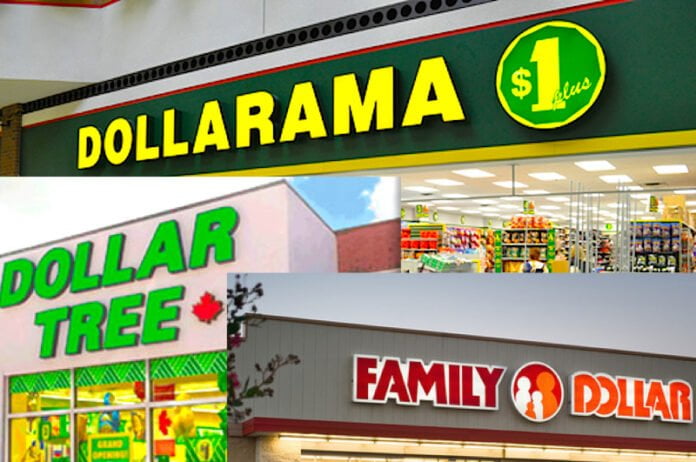
The Canadian retail market continues to polarize. Montreal-based dollar store retailer Dollarama has significantly increased its anticipated maximum number of Canadian stores, and competitor Dollar Tree is looking to increase its current store count five-fold. Family Dollar is also eyeing Canada, creating competition at the low-end which mirrors the potential bloodbath at the top end, as luxury retailers also battle to gain Canadian market share. 

In March of 2014, Dollarama CFO Michael Ross said that the then 800-store retailer would expand by about 50%, eventually operating about 1,200 Canadian locations. This was based on a growth number of about 85 stores in 2014, and a further 70 to 80 locations in 2015. According to CTV, Dollarama’s Canadian store count recently sat at 972, with its 1,000th Canadian location set to open this fall. Remarkably, Dollarama now expects that it will eventually operate about 1,400 Canadian locations within the next several years. 

Dollarama (PHOTO: DOWNTOWNCHATHAMCENTRE.CA)

American competitor Dollar Tree currently operates over 200 Canadian locations, under the ‘Dollar Tree Canada‘ nameplate. Remarkably, representatives say that its goal is to eventually operate in excess of 1,000 Dollar Tree Canada stores. Both Dollar Tree and Dollarama continue to sign leases and open stores nation-wide, with some busy locations earning well into the millions, according to some landlords we’ve spoken with. 

Also operating under the same ownership is American chain Family Dollar. A company representative recently said that Canada is on Family Dollar’s radar, with the potential to open Family Dollar-branded locations in Canada within the next several years. It would be remarkable that Canada would host three large dollar retailers, considering its size and already intense competition. 
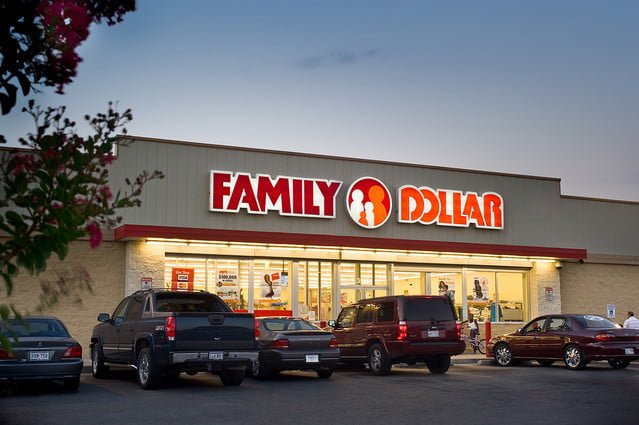
Family Dollar (PHOTO: VIRALSURVIVAL.COM)

On BNN last month, HRC Advisory CEO Antony Karabus described how polarization in the Canadian retail market continues to unfold. He noted how high-end and lower-end retailers seem to be succeeding in Canada, while ‘middle-market’ companies struggle and in some cases, close. Canada’s ‘dollar store wars’ is certainly an indication of this, as is increasing competition at the top end of the retail spectrum from a variety of luxury retailers. 

Various luxury brands continue to enter the Canadian market, as well as expand existing operations. Prada, for example, will substantially expand its Canadian operations over the next 12 months, and brands such as Dior, Brunello Cucinelli and Jaeger-LeCoultre are preparing to open their first free-standing Canadian stores over the next few months. Large-format luxury retailers are also putting on the boxing gloves — Holt Renfrew, for example, is spending in excess of $300 million to overhaul and expand its store fleet, and Saks Fifth Avenue and Nordstrom plan to open multiple Canadian stores. Upscale menswear retailer Harry Rosen is also spending millions to update and replace some of its locations, as retailers continue to profit from an increasing number of Canadian luxury shoppers. 
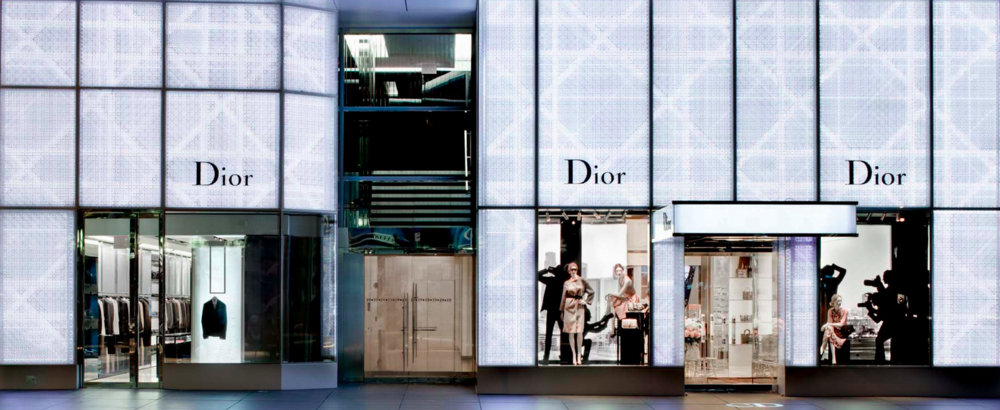
Soon, Dior will open its 1st free-standing Canadian location at 900 W. Georgia St. in Vancouver. A 2nd Dior location will open on Bloor St. W. in Toronto in 2016.

One Canadian retailer appears to be addressing the polarization trend, carrying both lower-priced product as well as pricey luxury brands. Quebec City-based La Maison Simons, which we discussed yesterday, plans to open up to 25 Canadian stores, up from its current nine locations. About 80% of Simons’ product is reasonably-priced private label, with the remaining 20% being designer, with some fashions priced well into the thousands. Simons appears to be seeing success with its formula — not only does it plan to almost triple its current store count, revenues are forecasted to grow by over 30% within the next two years. 
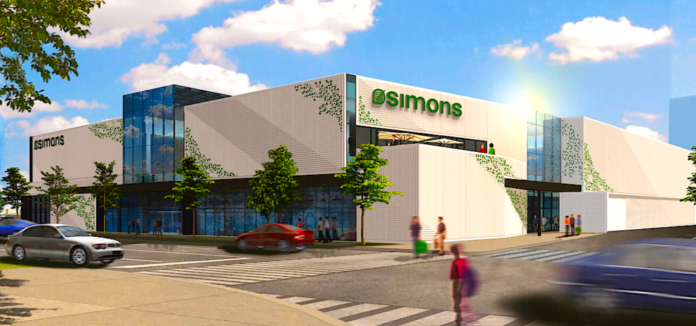
La Maison Simons to Open 2 Toronto Locations

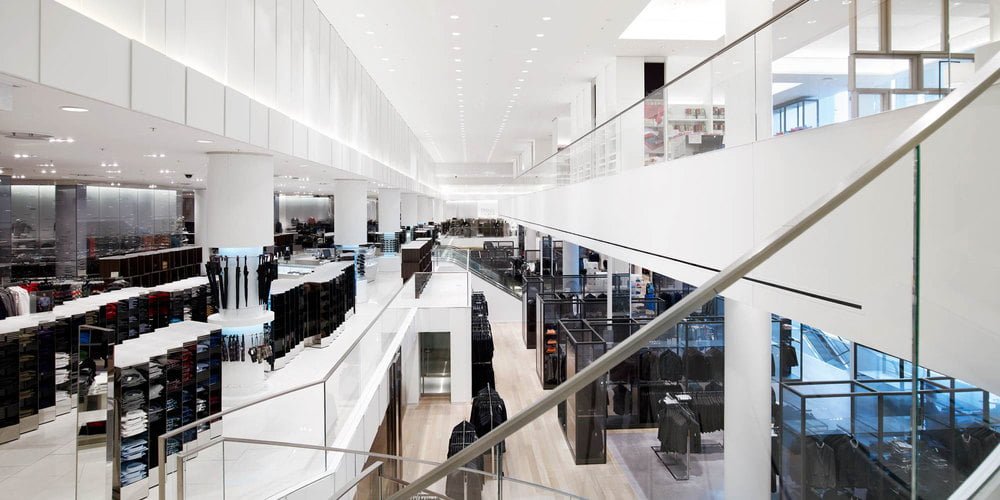
RENDERING: LA MAISON SIMONS

The CEO of popular large-format Quebec City-based fashion retailer La Maison Simons has revealed that it will open two Toronto stores, joining a location already under construction in Mississauga. Simons is spending in excess of $200 million to open eight locations over the next three years, eventually operating as many as 25 stores nationally. 

According to the Montreal Gazette, Simons’ CEO Peter Simons said that the retailer will open locations at Toronto’s Yorkdale Shopping Centre, as well as at Scarborough Town Centre. Store sizes and opening dates are yet to be determined. Simons will also open a 113,000 square foot location at Square One in Mississauga in the spring of 2016, and all three malls are under the ownership umbrella of landlord Oxford Properties. 

Mr. Simons recently told us that he was still interested in opening a downtown Toronto store, though negotiations to open at the Toronto Eaton Centre had stalled. He also said that he could open a second Calgary location at Oxford Property-owned Southcentre, joining a recently announced downtown Calgary Simons store. Sources say that Simons may have leased a second Vancouver-area store, and that the retailer is looking to eventually operate as many as four stores in the Vancouver area. 

If Simons secures space at Calgary’s Southcentre, it will be the sixth Oxford-owned mall to feature the retailer. Oxford Properties currently operates 11 shopping centres across Canada. 

PHOTO: LA MAISON SIMONS

Simons is spending in excess of $200 million on its store expansion, according to the Montreal Gazette. Its next location opens in August, measuring about 80,000 square feet at Les Promenades Gatineau, north of Ottawa. On October 15, Simons will open a 100,000 square foot location at West Vancouver’s Park Royal. In 2016 it will open the Mississauga location as well as a 100,000 square foot store at Ottawa’s Rideau Centre. In 2017, Simons will open a 92,000 square foot location at The CORE in downtown Calgary, as well as a second Edmonton location, measuring about 100,000 square feet, at Londonderry Mall. Simons’ first location outside of the province of Quebec opened at West Edmonton Mall in October of 2012. 

Several months ago, Mr. Simons told us that he envisions up to 20 locations for Canada. In last week’s Montreal Gazette article, he indicated that this number could be as high as 25. 

Founded in Quebec City in 1840, La Maison Simons is unique in how it pairs its substantial private-label fashion with a handful of higher-priced designers. Despite its large floorplates, Simons stores lack cosmetics departments and the large footwear areas typical in similar-sized department stores. Simons currently operates nine stores, including eight in the province of Quebec and one in Edmonton. The company has over 2,000 employees. The company’s 2014 revenues were in excess of $300 million, according to Mr. Simons, with projections for $400 million plus “in the next year or two”.

Prada to Substantially Expand Canadian Operations

Italian luxury brand Prada plans to substantially grow its Canadian operations over the next 12 months. It will significantly expand and renovate its ‘Mink Mile’ flagship in Toronto, as well as enlarge and replace several existing concessions. Prada will also open a second freestanding Canadian flagship in Vancouver later this year, spanning two floors. 

Sources confirm that Prada’s Toronto Bloor Street flagship will substantially expand by adding a second level. Located at 131 Bloor Street West in The Colonnade, Prada’s Canadian flagship currently measures 5,890 square feet. The store will expand by taking space currently occupied by The Japan Foundation, which occupies almost 12,800 square feet on the complex’s second floor. The Japan Foundation will vacate The Colonnade for Prada’s Bloor Street expansion, which is expected to be completed in early 2016. It is unclear how much of The Japan Foundation’s space will be occupied by Prada, as sources we spoke with indicated that neighbouring Chanel may also seek more space in the complex.  

Sources at Prada said the expansion would be ‘substantial’, with one salesperson saying that the store would exceed 15,000 square when completed. We cannot confirm that number at this time. 

Prada will open its second freestanding Canadian location in several months at the southeast corner of Alberni Street and Thrulow Street in Vancouver. Located within The Carlyle retail complex, the 8,200 square foot two-level Prada flagship will neighbour brands such as De Beers, Tory Burch, and Moncler. Across the street, Brunello Cucinelli, Versace and Strellson will open over the next several months as well, as Vancouver’s ‘Luxury Zone’ grows to rival Bloor Street’s cachet. 

Prada currently operates several concessions within luxury retailer Holt Renfrew. Sources say that Prada may open an expanded ground-floor concession with a streetfront entrance at Holt Renfrew’s Bloor Street flagship, featuring accessories, footwear and ready-to-wear. The Prada concession within Holt Renfrew’s Vancouver store is expected to expand as the store grows and renovates, and sources at Holt Renfrew say that Prada may also open substantial locations within Holt’s Mississauga Square One location when it opens in the spring of 2016, as well as at an expanded Ogilvy/Holt’s in Montreal in 2017. 

Farla Efros, President of leading retail consultancy HRC Advisory, said in an interview that despite the large size of the new Canadian Prada stores, the brand would be best to continue focusing on accessories and footwear. She noted that Prada’s bags and shoes are at a reasonable designer entry price, as are the brand’s sunglasses and other small accessories. Women are increasingly spending less on clothing and more on accessories, thus Prada’s ready-to-wear targets only a ‘certain group’ of women, according to Ms. Efros. Overall, Ms. Efros said that it’s important for Prada to continue investing in the brand’s brick-and-mortar operations to ensure that it remains relevant, in light of increased competition and a recent downward trend in Prada’s earnings. 

Saks Fifth Avenue’s first two Canadian stores are expected to open as early as December of 2015. We are unaware if Prada has agreed to operate out of either. Saks will open its 150,000 square foot Canadian flagship within the Toronto Eaton Centre Hudson’s Bay building, as well as 132,000 square foot unit at Toronto’s Sherway Gardens. 

Several of Nordstrom’s American locations feature Nordstrom shops-in-stores, both for accessories as well as women’s ready-to-wear. It remains to be seen if any Nordstrom locations will include Prada. Nordstrom recently confirmed that its Vancouver Pacific Centre and Toronto Eaton Centre stores will be among six downtown flagships for the company. 

Defining the Canadian Millennial

By Farla Efros, President, HRC Advisory

The Millennial generation represents approximately 26% of the Canadian population, or about 9 million people. The population is growing quickly, with spending predicted to exceed that of baby boomers. 

The group defines itself partly by technology, including the number of devices one possesses. Remarkably, Canadian Millennials average over three devices per person. Social media acts as their primary medium of communication, versus the ‘old days’ of watching the news, reading the newspaper or speaking on the phone. They define themselves by how many friends, followers or ‘likes’ they receive daily. They communicate via Instagram, Snapchat, Vine, Tumblr and/or texting—they often leave Facebook, as it ‘belongs to their parents’.

But don’t be fooled – in some cases, Millennials do like ‘the classics’. Many prefer hard cover books to digital and enjoy going out to see movies in a real theatre and on the big screen.

Millennials care about the environment and often make purchase decisions based on environmental responsibility, sustainability and/or giving back.  They opt for recycled/reusable sports bottles over packaged bottled water, and are mentoring their parents to do the same.

Having been raised by “helicopter parents,” this group is optimistic with unrealistic expectations resulting in a very demanding, savvy generation with a lot of “entrepreneurial” spirit.  This makes them potentially difficult to manage and hold on to in the everyday workforce, with many companies today struggling to hire and keep Millennial employees past the 2 year mark. 

The shopping journey for them is different than the norm, they use technology to gather options – and opinions. 68% of Millennials are looking for a form of peer acceptance prior to making the purchase.

They are highly opinionated and influential trendsetters, seekers and promoters of new brands – Triangl bathing suit, Brandy Melville, Forever 21, Top Shop, Uniqlo, Apple, to name just a few. They learn about brands via social media and then openly discuss their likes and dislikes as a way to learn about what is ‘now’. They are smart, trendy, savvy and they know how to extend their dollar. But beware, as they get bored quickly. In a recent study by Indiana University’s Kelley School of Business, when 600 fashion-savvy Millennial students were asked about brands such as A&F, Hollister, Timberland, Michaels Kors and Uggs, they indicated that they had ‘grown tired’ of these brands which had previously been their go-to items.

The Retailer’s Dilemma:  Where is the opportunity? 

The Millennial generation demands constant innovation and without it, retailers are at risk of becoming obsolete. But what does innovation really mean? How do retailers innovate fast enough? And how do they satisfy a generation of low loyalists, or loyalists that have low attention spans without alienating or putting at risk other parts of their current business and long time customers? 

Retail strategies to capture Millennial consumers:
•    Master the 4-Fs – be Fast, Fashionable, Feasible and Favoured
•    Turn browsers into buyers by speaking their language
•    Innovate through unique offerings that they can’t get anywhere else 
•    Speak their language (like H&M with the runways) 
•    Entertain them with parties and selfies  
•    Keep them in-store longer with charging stations to keep their devices working and free WiFi to help them share with friends

For today’s retailers, it is a balancing act that requires a clearly defined strategy that is nimble, forward thinking, fully integrated and leverages a deep understanding of this ever-changing consumer. Retailers recognizing the uniqueness of Millennials are more likely to see success than those who fail to recognize their nuances.

Farla Efros

Farla Efros is President of HRC Advisory, a leading retail advisory firm. She previously worked with Office Depot, where she served as the Executive Vice President and Chief Merchandising Officer. She has coached executives at numerous leading retailers and consumer packaged goods companies in the area of category management and assortment optimization, and she has broad experience in merchandising and category management, having worked with many of the world’s leading consumer packaged goods companies and retailers. Ms. Efros can be reached at: fefros@hilcoglobal.com

Pacific Centre Opens Nordstrom-Anchored Retail Wing [Article Includes Lease Plan and Photos]

The retail expansion under Pacific Centre‘s new Nordstrom opens today. Landlord Cadillac Fairview recently revealed a list of tenants, nine of which open today, and three which open later this summer. 

The 44,000 square foot retail expansion is located under the mall’s new Nordstrom, which is currently under construction. The Nordstrom flagship will open on September 18, with a charity gala set to be held two days prior. 

The following stores open today. According to an updated lease plan provided by Cadillac Fairview, stores are of the following sizes: 

–AllSaints: 2,264 square feet,

–B2 (by Browns Shoes): 2,167 square feet,

–Hugo Boss: 6,129 square feet,

–Kate Spade New York: 1,909 square feet,

–Pandora: 694 square feet,

–Ted Baker: 2,976 square feet,

–Tumi: 1,230 square feet,

–Weekend Max Mara: 1,773 square feet.

The following stores open later this summer: 

–Abercrombie & Fitch: 5,073 square feet,

–Disney Store: 4,497 square feet. 

–Microsoft Store: 5,354 square feet,

–Rockport Shoes: 1,625 square feet.

Kate Spade’s Pacific Centre unit will be the second Vancouver-area location for the brand, following the opening of its Park Royal store last fall. Tumi is a first for the Lower Mainland, and B2 replaces a location which shuttered on Robson Street last year. Pandora closed its Alberni Street store to locate in Pacific Centre, with Chinese luxury jeweller Lao Feng Ziang taking the Alberni Street space. Pacific Centre’s Ted Baker and Abercrombie & Fitch locations are both first-to-market. Remarkably, AllSaint’s Pacific Centre unit is only a third the size of its other Canadian store, measuring about 6,600 square feet at Toronto’s Yorkdale Shopping Centre. 

Designed by Vancouver-based architect James K.M. Cheng, the new building will also include a three-level 230,000 square foot flagship Nordstrom store, opening on Friday, September 18. The top four levels of the former Sears building have been converted to 290,000 square feet of AAA class office space and will be home to the head office of Sony Pictures Imageworks, the Vancouver offices of Microsoft, and law firm Miller Thomson.

Tiffany & Co. Opens at Rideau Centre

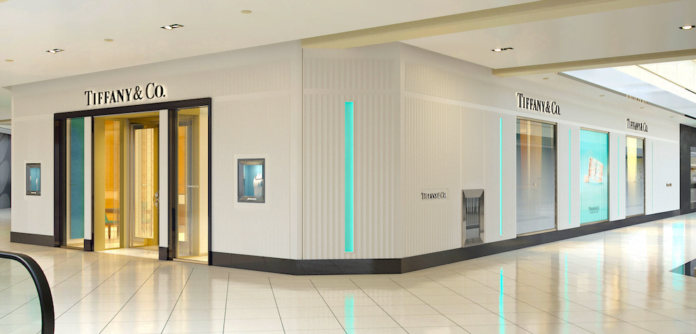
PHOTO: TIFFANY & CO. RIDEAU CENTRE

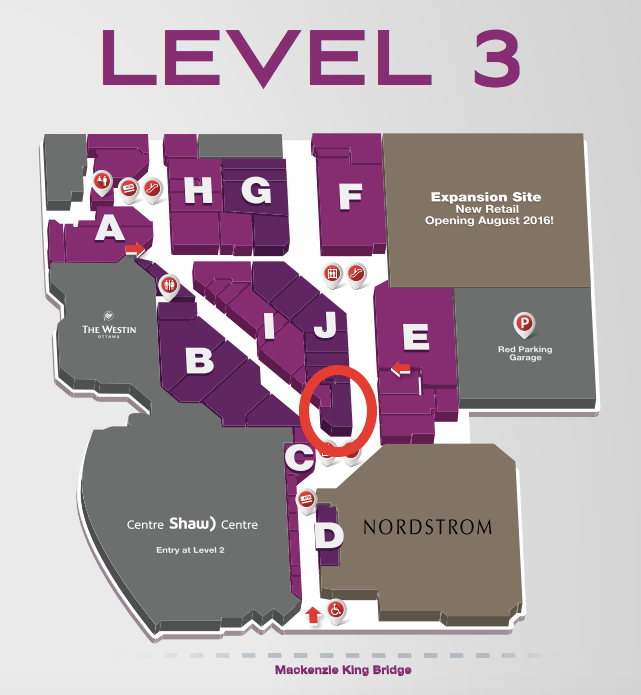
Tiffany & Co. has opened its ninth free-standing Canadian location at Ottawa’s Rideau Centre. It replaces the city’s former Tiffany concession within Holt Renfrew, which closed earlier this year. 

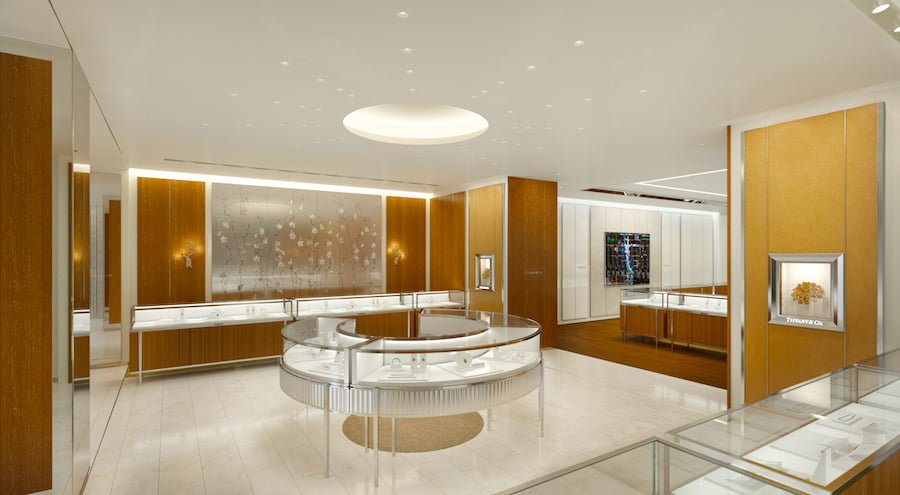
The new 2,400 square foot Ottawa Tiffany store carries a range of jewellery including engagement rings, ‘celebration rings’ and diamond jewellery. Lines such as the Atlas Collection and its newest collection, Tiffany T, are showcased along with jewellery collections by Tiffany designers Jean Schlumberger, Elsa Peretti, and Paloma Picasso.

The Rideau Centre Tiffany replaces a shuttered shop-in-store concession within the city’s recently closed Holt Renfrew. Holt Renfrew shuttered its Ottawa store on January 25, as the Toronto-based luxury retailer focuses on operating larger stores in a handful of primary markets. 

TIFFANY & CO. RIDEAU CENTRE
PHOTO: TIFFANY & CO. RIDEAU CENTRE
MAP: RIDEAU CENTRE.

Tiffany has three free-standing stores in Toronto, two in Vancouver, and one each in Edmonton, Calgary and Montreal. Three smaller Tiffany & Co. concessions also operate within Holt Renfrew locations in Vancouver, Calgary and Montreal. 

Rideau Centre is undergoing a $360 million expansion. Nordstrom’s second Canadian store opened on March 6,  measuring 157,000 square feet and occupying the top two levels of the mall’s former Sears location. New retail space will be added and in August of 2016, including a 100,000 square foot La Maison Simons which will open at the north end of the mall. As well, upscale menswear retailer Harry Rosen recently opened a 17,000 square foot replacement store featuring a footwear store with its own entrance, replacing a location about half its size. 


Vancouver One of Only 12 World Cities to Feature New Burberry Collection

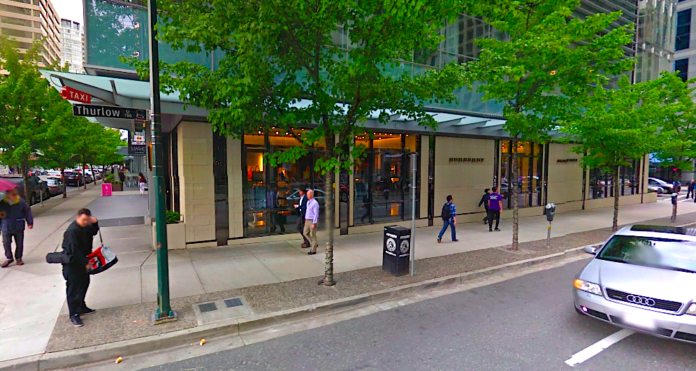
BURBERRY, 1101 ALBERNI STREET, VANCOUVER. PHOTO: GOOGLE STREET VIEW SCREEN CAPTURE.

Downtown Vancouver’s free-standing Burberry store is one of only 12 worldwide to receive the British luxury brand’s new series of pricey bucket bags. Vancouver is, by far, the smallest of the 12 cities receiving this honour. 

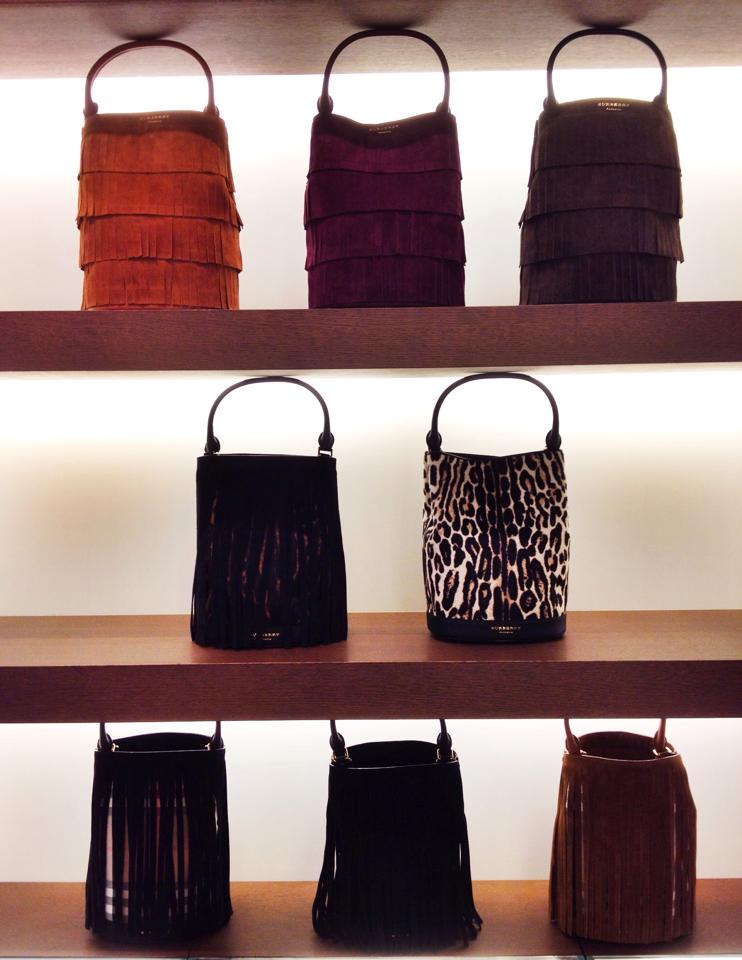
According to Women’s Wear Daily, Vancouver joins London, Los Angeles, New York, Chicago, Paris, Milan, Barcelona, Hong Kong, Shanghai, Beijing and Osaka as the only cities in the world to feature 12 styles of pre-launched Burberry bucket bags. Among the 12 styles are animal-print suede fringe, suede, suede fringe and animal print, done in assorted colours including black, elderberry, olive, cognac, racing green and navy. 

The collection is technically for Autumn/Winter 2015, and it will launch in other Burberry stores in the middle of July. Prices range between (Canadian Dollars) $2,795 and $3,495. 

PHOTO: BURBERRY

Restoration Hardware Finds Success in Defying the Status Quo

Restoration Hardware has always been a fun and inspirational place in which to shop. It’s filled with wonderful stuff that you don’t really need—such as Russian submarine clocks—but its vast and unique assortments are necessary for creating an exceptional customer journey, known to its shoppers.

In recent years, we have seen many furniture and other larger-format stores downsize or modify their strategy to reduce their footprint. Often these retailers will open up smaller or “urban store” formats in an effort to counteract raising rents and appeal to changing consumer tastes, especially in city centres. Take Swedish retailer Ikea for example, who announced at the end of last year that they plan to open up to 10 smaller outlets across Canada in 2015, which will be one-tenth of the size of current stores and serve primarily as pick-up locations for e-commerce customers. Other well-known retailers have taken a similar approach. Walmart continues to open locations for its chain of “Neighborhood Market” stores across the United States. Whole Foods recently announced that it plans to open a smaller chain of stores to be named “365 by Whole Foods Market.”

On the contrary, Restoration Hardware’s expansion plan consists of building bigger, not smaller, stores. We recently visited one of Restoration Hardware’s “gallery concept” stores in the City Creek Centre, Salt Lake City, Utah. Their design gallery concept store is huge—yes, huge! There is just room after room after room of luxurious furniture and accessories (see pictures below). And, even more impressive, sales associates confirmed that sales are up over 20%! The company also reported a 15% increase in revenues for the first quarter of 2015.

So, how is Restoration Hardware able to pull this off?

  • A solid strategy that focuses on experiential retailing and resonates well with their target customer in the luxury segment, from décor to quality products to customer service. Like other luxury retailers, this allows for higher margins.
  • A great deal of items are at popular or affordable prices, especially for on-the-spot purchases, both in-store and online. These items appeal to a broader market, which means more sales!
  • They have heavily invested in their catalogue and online businesses. In the last fiscal year (2014), 50% of total sales came from these two channels. They use these massive “design galleries” as showrooms for their products.
  • A continued emphasis on innovation. Last week, they announced a new concept, RH modern, which will include more modern and minimalistic offers compared to classic collections.

Restoration Hardware proves that you can achieve exceptional sales growth by defying the status quo.

Restoration Hardware, City Creek Center (Salt Lake City, Utah)

Written by: John Williams, Senior Partner, Strategy and New Concepts at J.C. Williams Group

Nomophobia: Retailer’s Best Nightmare

By Jeff Trachsel, CMO for NextWorth Solutions

Most consumers are so addicted to their smartphones that a clinical term is now dedicated to the psychological attachment people have to their devices: nomophobia, short for no-mobile-phone-phobia. This may sound like a joke, but the fear of phone separation is a real growing trend that should make retail marketers sit up and pay attention.

Consider the impact of this “new normal” on retailers. Now more than ever smartphone owners and price-sensitive shoppers are using smartphones while in store to price shop and make better informed buying decisions. In fact, 36 percent of U.S. smartphone users use devices in store to compare prices, according to one comScore study of 3,598 smartphone users. 

Brick-and-mortar retailers are battling with technology as it takes customers out of stores and drives them online. But rather than throwing in the towel, retailers of all sizes should instead embrace nomophobia as an opportunity to grow customer satisfaction and boost sales.

Below are three actions that retail marketers can take to make the most of nomophobia.

One: Play nice with mobile.

One study from comScore of nearly 4,000 smartphone users also found that 27 percent of respondents read customer reviews while in the aisles of a store, 23 percent call, email or text family and friends for feedback and 22 percent read product details on their device. For retailers, this means developing a mobile-friendly version of websites is crucial.

As a result of Google’s Mobile-Friendly Update earlier this year, creating a mobile-friendly site is more important than ever. Google’s new algorithm gives a ranking boost to sites and pages that are mobile friendly, pushing those sites further up in the results. With mobile-friendly websites retailers can deliver on a customer’s desire for easily accessible information in the palm of their hand, which can lead to higher customer satisfaction and loyalty.

Becoming mobile friendly can also bring about the need for a mobile app. In fact, 55 percent of shoppers who responded to Cisco’s fifth annual retail survey said they will use a retailer’s app while shopping, and 34 percent claimed to use a third-party app for the same purpose. With a mobile app, retailers can effectively cater to customers’ needs for convenience and efficient shopping. Apps can effectively deliver special offers, or money-saving coupons once customers walk in the store. Retailers can also offer utility services that would otherwise need to be researched on a customer’s own time including interactive store locating tools, information on store hours and customer service contact information.

Two: Promote early device upgrades.

Mobile-friendly programs can tie a customer’s love for smartphones with his or her love for shopping. For example, retailers can leverage in-store trade-in programs to accelerate a customer’s device upgrade timeline. Device trade-ins have become well known by consumers who are looking for ways to upgrade to the latest and greatest for less. Well-timed trade-in promotions can help retailers cut through the clutter during new device launches, while increasing foot traffic from buyers looking for money-saving specials tied to new technology investments.

Retailers looking to motivate mobile-obsessed customers should embrace an online presence to amplify in-store promotions, and offer customers mobile promotions that can only be redeemed in store. Promoting in-store trade-in through digital channels ensures the trade-in messages reach consumers who are tied to their smartphones, then helps to drive them in store. By catering to consumers who want the latest and greatest device, retailers are encouraging more spending and boosting foot traffic to stores.  

Three: Encourage mobile payments.

With the emergence of smartwatches and new payment methods – particularly Apple Watch and Apple Pay – mobile addiction is at an all-time high. Within 72 hours of its launch, 1 million payment cards were activated on Apple Pay. With a mobile payment structure that is simple and secure, Apple Pay has created a new breed of shoppers seeking out retailers that accept this new form of payment. Retailers that don’t offer Apple Pay, or another form of mobile payment like Google Wallet, risk losing shoppers.

Forrester Research projected the mobile in-person market, or people using phones to pay in-store, to be valued at $6.8 billion in 2015. This new form of payment is fast, easy and easily accessible, which means traditional retailers must find ways to work mobile payment into brick-and-mortar locations, or lose the ongoing battle to ecommerce. 

Today’s consumers are more mobile obsessed than even before, making mobile shopping and targeting the “new normal” for retailers. Providing services such as trade-in that help customers upgrade for less, enabling mobile-friendly websites and apps and embracing mobile payment options are all ways retailers can leverage this trend to boost customer satisfaction and drive higher sales.

About NextWorth Solutions, Inc.

NextWorth Solutions has been defining, running and optimizing trade-in programs for major retailers nationwide since 2006. The NextWorth Solutions team has more than 100 years of combined experience in the CE trade-in industry. Its unique combination of expertise, team and platform enables it to provide unparalleled trade-in support and experience to its partners, driving their key business objectives. Through the delivery of turnkey in-store and online trade-in platforms, NextWorth Solutions is fundamentally changing the way people buy, own and disown consumer electronics.

Versace & Brunello Cucinelli to Join Strellson at 745 Thurlow in Vancouver

Canada’s first Brunello Cucinelli location will open in downtown Vancouver, along with the city’s first free-standing Strellson and Versace stores. All will locate in the retail component at the base of the 745 Thurlow tower, which is currently under construction. All retailers will open either later this year, or in early 2016. 

The main floor retail component of the 745 Thurlow Street development is now 100% leased. 745 Thurlow is a 25 storey office tower encompassing 400,000 square feet at the southwest corner of Thurlow and Alberni Streets. The tower is designed to achieve LEED ‘Core and Shell’ Gold certification – the first office tower in downtown Vancouver to do so. 

All tenants at 745 Thurlow were represented by Stan Vyriotes and David Wedemire of DWSV Remax Ultimate Realty Incorporated. Larissa Jacobson (604-661-5066) at Bentall Kennedy (Canada) LP is handling retail leasing at 745 Thurlow. 

Brunello Cucinelli will open in a 2,700 square foot retail space with a Thurlow Street frontage. Referred to as the “King of Cashmere”, the Italian luxury fashion brand was founded in 1978 and sells womenswear, menswear and accessories. Although known for its luxurious cashmere apparel, the brand has expanded to include non-cashmere fashions including leathergoods, bags, shoes, and sportswear. The company is headquartered in a 14th century castle on the top of a hill in the middle of Italy’s Umbria region, and it donates 20% of profits to its charitable foundation, and pays workers wages that are 20% higher than the industry average. According to its website, the brand is “firmly rooted in quality excellence, Italian craftsmanship and creativity”. Brunello Cucinelli currently operates 15 U.S. locations in Aspen CO, Atlanta, Bal Harbour FL, Beverly Hills, Chicago, Costa Mesa CA, Dallas, East Hampton NY, Honolulu, Las Vegas, Manhasset NY, New York City, and San Francisco. All cities have one free-standing Brunello Cucinelli location except for New York City, which has three. 

Upscale Swiss menswear brand Strellson will open in an Alberni Street-facing retail space measuring just over 2,200 square feet. Founded in 1993, Strellson is Switzerland’s largest menswear manufacturer. Owned by Holy Fashion Group, it produces mid-to-high priced menswear (both dressy and casual), accessories and related products, targeting men in the 25 to 40 age range. It retails in about 40 countries. It currently operates two free-standing Canadian locations – a flagship at 170 Bloor Street West, as well as a location at Toronto’s Bayview Village. Strellson confirms that it will open at Yorkdale Shopping Centre next year, and the brand is considering a location in Ottawa. Strellson shops-in-stores are also in a handful of Hudson’s Bay stores. The brand currently has no locations in the United States. 

Versace will open a 1,875 square foot store at 745 Thurlow’s corner retail space. The Italian luxury fashion brand was founded by the late Gianni Versace in 1978, and it is seeing a resurgence as it opens stores around the world. Upscale Vancouver-based fashion retailer Leone currently features a Versace shop-in-store, and Versace Home opened last summer in Vancouver’s Gastown area. Currently, Canada’s only free-standing Versace fashion store is at Toronto’s Yorkdale Shopping Centre, which opened late summer of 2014. The brand currently has 16 free-standing locations, and sources at Versace confirm that a number of new U.S. stores are planned, including a 5,000 square foot Chicago flagship. 

745 Thurlow’s three luxury retailers will join other brands in Vancouver’s Luxury Zone such as Prada, Dior, De Beers, Burberry, Escada, Hermes, Tiffany & Co., Jaeger-LeCoultre, Moncler, Montblanc, Omega, Gucci, Louis Vuitton and others. Sources say that a number of premium French and Italian brands continue to negotiate for retail space in the immediate area, including at the Shangri-La Hotel as well as an Alberni Street-facing retail complex to be built at 1040 W. Georgia Street. 

Sources say that Brunello Cucinelli has also been in negotiations to open an outlet store at Vancouver’s McArthurGlen Designer Outlets, scheduled to open this summer. Sources also say that Brunello Cucinelli is seeking retail space in Toronto and that several months ago, it passed up the opportunity to lease Benetton‘s former space at 102 Bloor Street West. Vancouver-based fashion brand Kit and Ace has since secured that space. Cucinelli continues its hunt for Canadian real estate and rumour has it that a Calgary store could also be in the works.