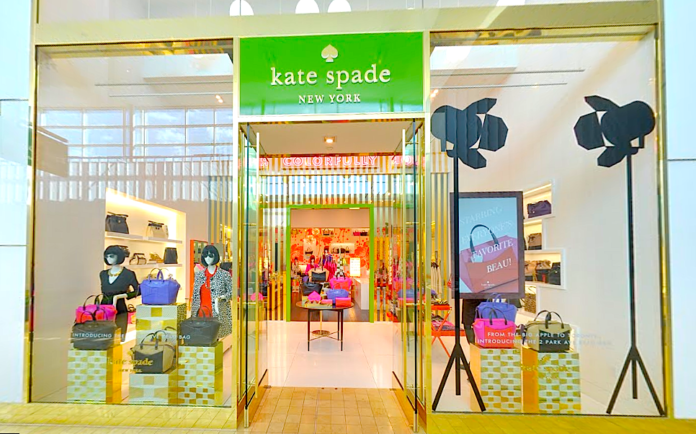
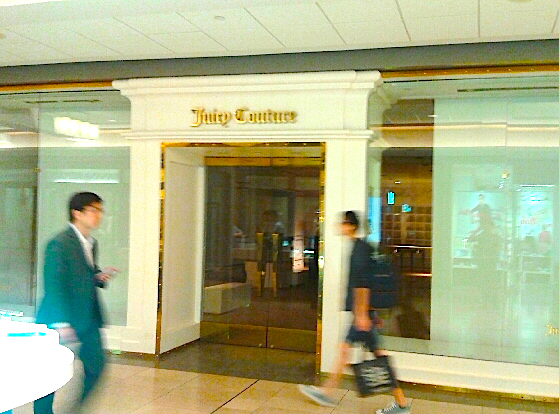
Parent company Kate Spade Inc. has closed Juicy Couture‘s Canadian stores. Not all is lost, however, as several Juicy Couture locations could become Kate Spade stores. The same is happening with its American locations, causing some to speculate that as many as four new Kate Spade shops could open in Canada by the end of this summer.
Kate Spade Inc. recently sold Juicy Couture’s license to American department store retailer, Kohl’s. Spade retained Juicy Couture’s store leases, however, including its Canadian retail spaces.
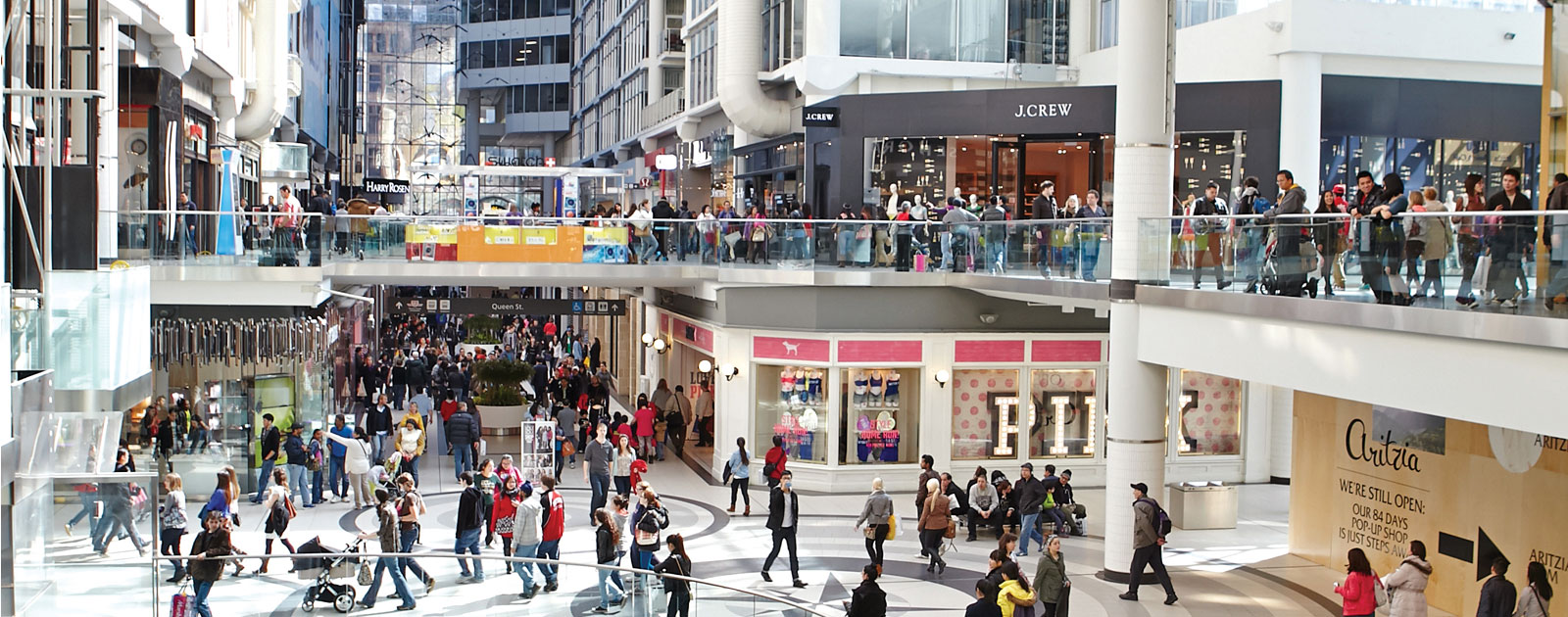
Juicy’s last full-priced Canadian location closes today: a 2,975 square foot unit at Toronto’s Sherway Gardens. Its 2,500 square foot Toronto Eaton Centre location closed on Saturday, May 17th, and its 2,250 square foot Yorkdale Shopping Centre (Toronto) and 3,500 square foot Pacific Centre (Vancouver) locations have already shuttered. Its outlet location at Toronto’s Vaughan Mills remains open for now, and is scheduled to close on June 30th.
JUICY COUTURE’S SHUTTERED PACIFIC CENTRE LOCATION. PHOTO: CRAIG PATTERSON
Kate Spade could replace Juicy Couture locations at the Toronto Eaton Centre, Sherway Gardens and Pacific Centre. Yorkdale already has a 1,620 square foot Kate Spade store, though the mall’s 2,250 square foot Juicy Couture space is larger. Spade could also replace Juicy’s Vaughan Mills space, though the Toronto Premium Outlets already boasts Canada’s only Kate Spade outlet.
We’ll update you when we learn which Canadian Juicy Couture locations will become Kate Spade stores.
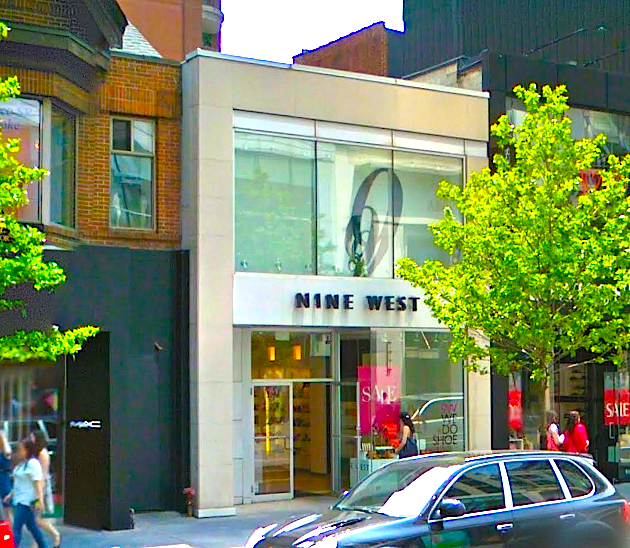
Nine West is subleasing its Bloor Street store, creating an opportunity for a new luxury retailer on Toronto’s so called ‘Mink Mile’. Located at 93 Bloor Street West, the 2,150 square foot space neighbours some of Canada’s most expensive stores.
SOUTHGATE CENTRE, EDMONTON. PHOTO: DARRELL BATEMAN
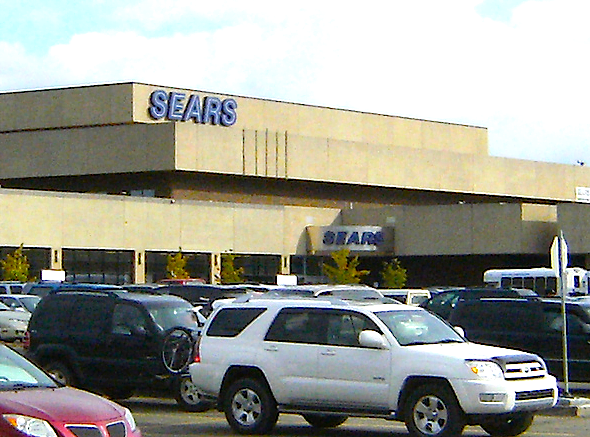
Sears Holdings announced on Wednesday that it may sell Sears Canada. The company still has several exceptional Canadian store locations, despite divesting most of its better leases. Finding one buyer for all of its stores will ultimately be difficult, as Sears Canada has a substantial number of arguably undesirable store locations. The company could end up selling off a few of its better stores, as it has done before, and we’ll profile several of these locations. Ultimately, Nordstrom, Saks Fifth Avenue and La Maison Simons could move into some of Sears Canada’s remaining real estate.
Below, we’ll profile several of Sears Canada’s better locations and who could occupy them, moving west to east across the nation:
Vancouver/Lower Mainland: The proposed $1 billion redevelopment of Sears’ Metropolis at Metrotown real estate is uncertain, and Sears Canada owns this location (and surrounding parking) outright. If redevelopment doesn’t come to fruition, the existing 217,300 square foot Sears space could be redeveloped to include several retailers, including possibly Vancouver’s second La Maison Simons store. Vancouver’s first Simons store opens next year at West Vancouver’s Park Royal.
Edmonton: Sears has two fairly high-profile Edmonton locations, the largest being at Southgate Centre. Spanning 234,000 square feet, this former Eaton’s location could be reconfigured to include new retail, as well as possibly a new anchor store. Top contenders include Nordstrom and Saks Fifth Avenue, though not if West Edmonton Mall gets its way. West Edmonton Mall’s 149,000 square foot Sears location is in the mall’s original ‘Phase I’, which could be redeveloped to increase shopping traffic to that part of the mall.
Calgary:Southcentre’s 234,000 square foot Sears could be redeveloped, and La Maison Simons has been in talks with Oxford Properties. Simons typically seeks about 100,000 square feet for its new stores. If Sears sells this store, redevelopment could include multiple tenants as well as Simons.
Winnipeg: Polo Park‘s 263,000 square foot Sears store could be redeveloped to include multiple tenants, including a new anchor. Saks Fifth Avenue is highly unlikely, though Nordstrom and/or La Maison Simons are possible.
“Reports of my death have been greatly exaggerated.”
– Mark Twain*
Media reports highlight the dramatic shift of spending from traditional stores to e-commerce. Industry analysts and pundits predict the demise of brands with substantial investments in retail real estate. We live in an increasingly virtual world, they say, and those with deep roots in the physical realm are starting to look more and more like dinosaurs.
The transformation of shopping fueled by all things digital is profound with no signs of deceleration. The crazy little thing called the internet is changing virtually (pun intended) everything. But anyone who thinks that brick and mortar stores are going away has it wrong. Here’s why.
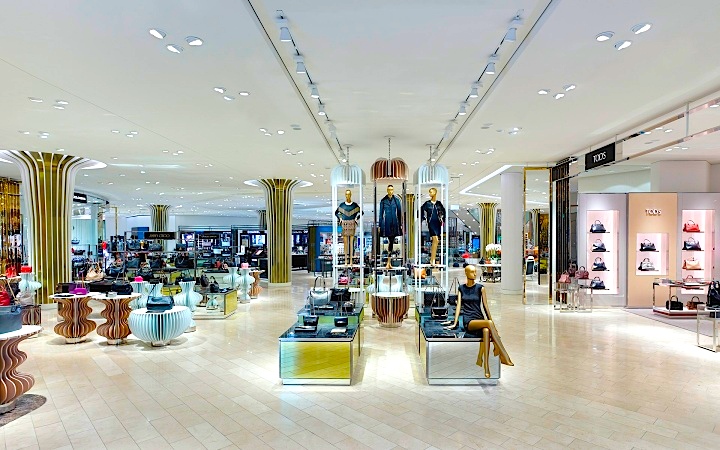
Photo: Breuninger
Brick and mortar retail can enhance the value proposition. Physical retail offers many important advantages–the ability to see and try on products, instant gratification, face-to-face customer service, social interaction and so on–that digital selling cannot readily replicate.
Purchase events matter. There is a reason that e-commerce penetration in many product categories remains low. Where the risk of buying online is perceived as high (apparel, many big ticket items), direct-to-consumer shares remain in the single digits. Brands like Zappo’s have innovated in customer service to overcome some of e-commerce’s limitations, but long-term growth potential is modest. In fact, e-commerce darlings like Bonobos, Nasty Gal and Warby Parker have begun to broaden their reach–and address flattening growth–by opening physical stores. Plenty of products–particularly perishables and low-priced items–also have underlying economic reasons why direct selling volume will remain constrained.
Consumer segments matter. Great customer intimate brands embrace the notion of treating different customers differently. When you do this, you understand the different needs, wants and behaviours of varied customer types. Depending on the product and the particular consumer, the purchase journey may begin and end at a physical store. For others, they will never set foot in a brick & mortar location. Others will research online and buy in store. You get the idea. Your mission is to understand the role your physical locations play in being intensely relevant and remarkable for the customers you need to attract, retain and grow. Then build out and customize the experience accordingly.
The blended channel is the only channel. Stop thinking channels and start thinking about a consistent, integrated customer experience for your brand. Other than products and experiences that can be delivered completely digitally, the majority of retail purchases are influenced by both the digital and physical realms. More and more data is emerging to confirm this. Your mileage will vary, but silo-ed thinking, organizations, incentives and metrics confuse, rather than illuminate.
Frictionless commerce is essential. Let’s be blunt: there’s more heat than light in the discussion of omni-channel capabilities. Strategically, the key is to hone in on how to be differentiated, relevant and remarkable for the customers you wish to serve. And then you must root out the sources of friction in your customer experience. With more consumers going back and forth between digital and physical channels in their decision journey, if you don’t make it easy to do business with you chances are there is a competitor who is ready to pounce.
Mobile adds value to physical retail. When e-commerce was either sitting at your home or office surfing the web, the distinction between digital and brick & mortar really meant something. Now with consumers untethered and having increasingly powerful devices with them 24/7, mobile becomes the great integrator–and makes the distinction between e-commerce and brick & mortar less relevant all the time.
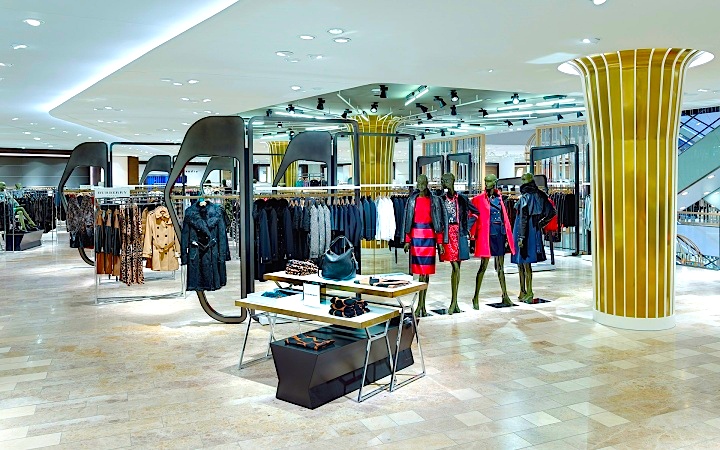
Photo: Breuninger
Seismic changes ARE impacting retail. With the exception of companies in the early stages of maturity, most retailers need fewer stores and many of the stores they have will need to be smaller. But assuming that physical retail is going away any time soon is just plain wrong. The tendency to isolate e-commerce and brick & mortar performance is equally misguided.
Amazon and a handful of best-in-class e-commerce companies will continue to thrive. And new pure play digital models will undoubtedly emerge to captivate consumers and gobble up share.
But there is plenty of business to be done in physical stores. Less, but still plenty. And most of the growth in what is counted as e-commerce is not a shift to online-only brands, but rather to brands that have cohesive omni-channel strategies. Think Nordstrom and Macy’s so far. For them, stores are assets, not liabilities. But the way brick and mortar retail drives consumer engagement and loyalty is morphing quickly.
These emerging winners follow a simple but compelling formula:
Published with permission. This post originally appeared at Steven P. Dennis’ Blog on May 15, 2014. Copyright 2014. Follow Steven P. Dennis’ Blog on Twitter.
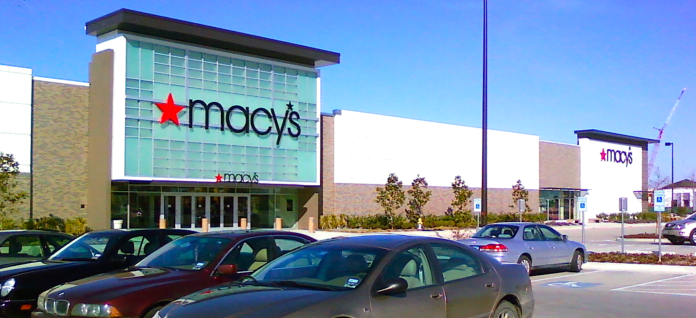
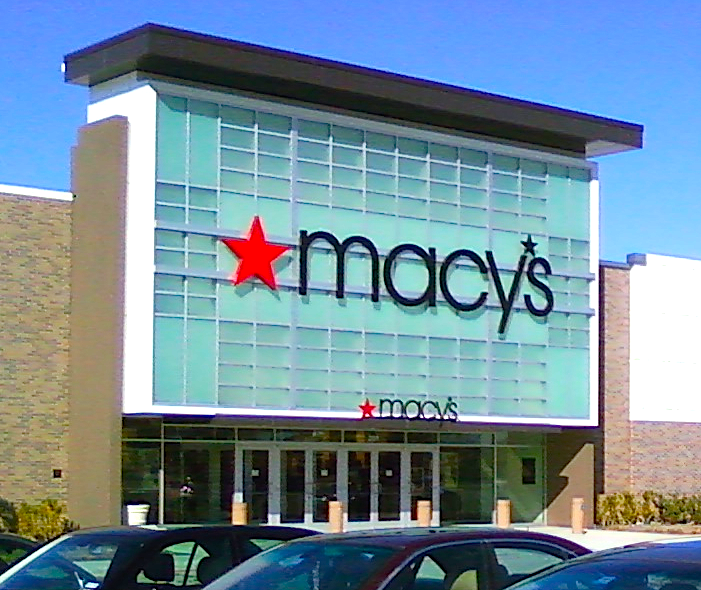
Macy’s won’t buy Sears Canada, according to a Macy’s spokesperson. Speculation arose that Macy’s would buy Sears Canada, after Sears revealed that it’s considering selling its Canadian operations. Other purchasers are possible and although Sears Canada continues to occupy some valuable retail space, most of its best store locations have already been divested.
On an analyst conference call yesterday, Macy’s CFO Karen Houget noted that Macy’s won’t open in Canada, reiterating what CEO Terry Lungren said late last year. Macy’s is interested in international expansion, however, and Ms. Houget indicates that Macy’s could open in China. Macy’s operates its mid-priced namesake stores, as well as its more upscale Bloomingdale’s division.
It’s clear that Sears Holdings wants to sell Sears Canada, given that it has already hired an investment banker. Sears Holdings currently owns 51% of Sears Canada.
Sears Canada’s Canadian operations include: 113 department stores, 48 big box Sears Home stores, 234 Hometown (rural) stores, over 1,400 catalogue and online merchandise pick-up locations, 11 outlet stores, 97 Sears Travel offices, as well as its repair and service network. Of its department stores, 14 are owned outright while the rest are leased.
Other possible Sears Canada purchasers include Canadian Tire, British fast-fashion chain Primark, and American discounter Kohl’s. Seven of Sears Canada’s top locations were already sold off, including several key flagship locations. Several former Sears stores will become Nordstrom locations, with Nordstrom’s first Canadian store scheduled to open in Calgary this September. Saks Fifth Avenue will also occupy about 130,000 square feet in part of the former Sears at Toronto’s Sherway Gardens. Sears Canada still occupies several prime store locations, and we’ll discuss those further, tomorrow.
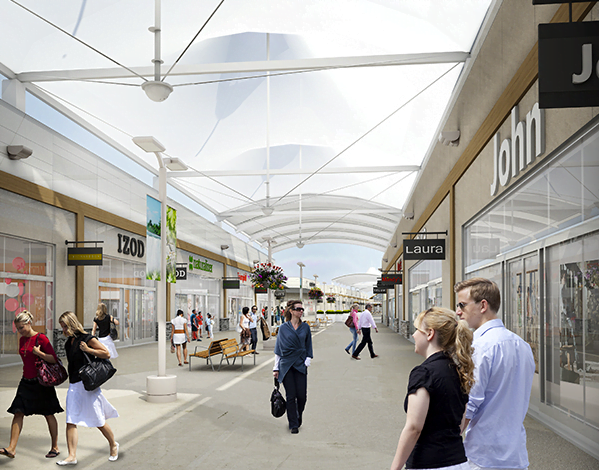
Canada’s largest open-air outlet mall opens today in Niagara-on-the-Lake, Ontario. The Outlet Collection at Niagara boasts 102 stores spanning a total of 520,000 square feet, including several retailers new to Canada. It’s the first ‘pure’ outlet mall built by Ivanhoé Cambridge. The mall isn’t completely finished: there are plans to potentially add another 130,000 square feet.
Sales estimates for the outlets are as high as $600/square foot. Ivanhoé Cambridge estimates that it cost $178 million to build. Sprawling over 63 acres, the mall offers 2,300 parking spaces, and employs roughly 1,500 people.
The mall features dozens of other popular retailers including Tommy Hilfiger, J. Crew Factory, Nike Factory Store, Coach, Fossil, Bench, Lacoste, North Face and Marshalls. The mall’s new website includes a floor plan and corresponding list of all its retailers.
“We intend on becoming one of the area’s top tourist destinations, drawing value-seeking shoppers from all over the world,” said Bri-Ann Stuart, Outlet Collection general manager.
According to David Baffa, Ivanhoé Cambridge’s Senior Vice President of retail development, the mall could see a further expansion, bringing it to a massive 650,000 square feet.
Although it’s the first ‘pure’ outlet mall location for Ivanhoé Cambridge, it won’t be its last: the landlord will open another outlet mall in Edmonton in 2016. Teresa Spataro, VP of development and leasing at Ivanhoé Cambridge, says we can expect another outlet mall announcement in the very near future.
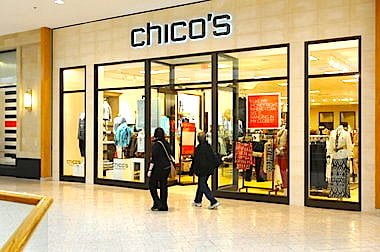
Popular American womenswear retailer Chico’s just announced its first three Canadian store locations. All three stores will open in August, with more Canadian location announcements to follow. Its first Canadian store locations will be in the suburban Toronto area.
Chico’s first three Canadian stores will be located in the following malls:
Its Mississauga store will be 3,360 square feet, located across from Hudson’s Bay on the mall’s second level. Its Mapleview location will be roughly 3,100 square feet and will be on the mall’s lower level, between Maison Birks and White House | Black Market. Its Upper Canada Mall store will open on the mall’s second level. Both Square One and Upper Canada are managed by Oxford Properties, while Mapleview is managed by Ivanhoé Cambridge.
Chico’s Canadian stores will see updated interiors based on the company’s new prototype, featuring warm tones, subtle animal prints, iconic woven entry doors, luggage details on fixtures and layers of artifacts as props.
Chico’s was founded in 1983 in Florida. It sells private-branded clothing and accessories for women, “featuring a combination of great style with on-trend, expressive and one-of-a-kind designs to yield a wardrobe that is fashionable, unique, relaxed, figure-flattering, and comfortable,” according to a description on its parent company’s website.
Chico’s currently operates more than 600 stores and over 100 outlets across the U.S., the District of Columbia and Puerto Rico.
You always want to make a good first impression, especially when it comes to your customers. Staffing your new store opening smoothly will allow you to give customers a great first impression of your store and what your brand has to offer. There are a few key areas to focus in on that will help your business better prepare for your new store opening.
These include: having a strong understanding of your immediate needs, a vision of the people you want to hire, a pipeline to support your vision, and a grasp on the cost effects of incorrectly staffing.
1. Understanding your needs
Do you have a strong understanding of your immediate needs? What is holding you back from opening your location tomorrow?
Setting realistic hiring targets based on prior experience with store openings or other locations with similar profiles will help you not to feel under staffed from the start. Do not rush an opening! Make sure you have the right personnel to support your operations before you open your doors. When setting your hiring targets to fill your store’s needs, it is important to make sure you set timelines and budgets for each and stay within those frames. Also, identify if there are any roles you could develop internally. This may include growing an employee’s role from another location or hiring staff to start off in one role but anticipating growth within the future.
2. Understanding what kind of people you want to hire
What would my ideal employee look like?
Building out candidate profiles of the ideal employee can help with your recruitment efforts. Having a clear vision of the type of employees you want your new store to have will help you be more selective and create stronger screening and assessments to make sure there is a match. Creating strong job descriptions will allow you to share with your candidates a clear vision of your expectations and corporate culture. The next step is making sure your screening and assessments are measuring the right competencies and key performance areas that make for a great fit. By understanding the roles you need to fill and the people you wish to fill them, you will be hiring quality candidates who will save you time and money in the long run.
3. Building a talent pipeline
How can I use my current candidate database?
When looking to fill roles for your new store opening, it’s essential that your start building a talent pipeline to work from. These may include candidates who are already in your company’s database from other locations who may not have been hired, but could still be a great fit for the organization. Reconnecting with these candidates will help you build a pipeline to work from. Also, connecting with potential job seekers and passive candidates on their social and professional networks can also help create brand awareness and increase your potential talent pool. This pipeline needs to continually be grown and improved to help with future needs that will arise.
4. Understanding the cost of turnover if staffed incorrectly
How much does turnover really cost me?
Staffing your new store with average employees may be sufficient for your opening but in the long term these are not employees who will grow within your organization. This is why it is essential to build a talent pipeline and be clear on the types of people you want to work for your business. Every company faces turnover issues, especially in the retail sector.
On average, last year front line part-time staff positions saw a 67% turnover rate. This was followed by a 24% turnover rate for full time staff. These numbers are daunting and for a retail hiring manager they can cause major disruptions in operating a store. The costs associated with turnover can be very high and when calculating direct and opportunity costs, we found that on average the price of losing a front line retail position is approximately $2,000 per employee. This includes costs such as training, onboarding, recruiting, lost experience and lower morale. Turnover is an issue companies will always have to face but by planning and hiring the best fit quality candidates, you can help your new store opening get started on the right foot!
Lisa McCann is the Corporate Marketing Manager at Vancouver-based recruitment company, Mindfield Group.
Canada is an international retail ‘hot spot’, according to the world’s foremost fashion-industry trade publication. Many international retailers are contemplating Canadian expansions, following Nordstrom and Saks Fifth Avenue‘s lead. Home-grown retailers will need to innovate to compete, or risk facing demise, like bankrupt retailer Boutique Jacob.
Women’s Wear Daily referred to it as the ‘department store effect’: following Nordstrom and Saks Fifth Avenue’s announcements that they would open in Canada, other international retailers followed. Mary Mowbray, Senior Vice President of the retail group at Colliers International in Toronto, said the following:
“The Canadian consumer weathered the downturn better. They have more money to spend and are more comfortable spending it. Traditionally there have been fewer players in the mid- and higher tiers in Canada, and that’s left an opening for more brands to enter here.”
Rents on desirable streets in Toronto, Montreal and Vancouver are all rising. On Vancouver’s Alberni Street, rents jumped 43 percent between 2012 and 2013, averaging $147 per square foot. Alberni Street recently saw Tory Burch and De Beers store openings, and several of the world’s top luxury brands are currently examining Alberni Street retail space.
Laura Pomerantz, principal of her own real estate firm, said that growing tourism and a burgeoning Asian population in British Columbia triggered much of the expansion. Specifically, she said:
“You have a savvy and sophisticated customer in Canada who recognizes brands and is brand conscious. You have a lot of tourism between Canada and America, and that makes a built-in customer base.”
Some Canadian retailers will struggle with the new competition, a fate most recently exemplified by Boutique Jacob’s bankruptcy. According to retail consultant David Ian Gray, other Canadian bankruptcies could follow, if retailers fail to innovate in the face of new competition.
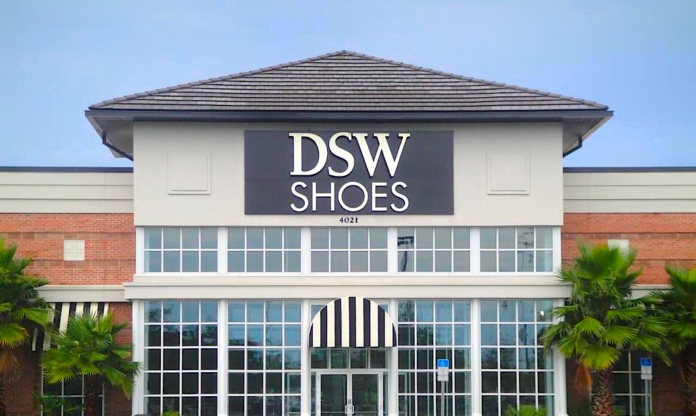
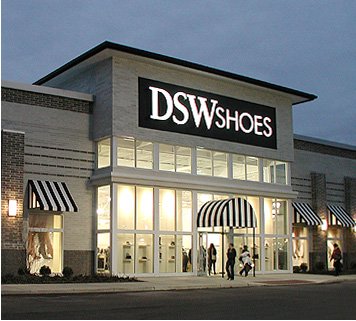
Discount footwear retailer DSW Designer Shoe Warehouse (DSW) has completed its share purchase of Canadian footwear retailer, Town Shoes, for $75.5 million (US$68.7 million) in cash. DSW acquired a 49.2% interest in Town Shoes, paving the way for DSW to open Canadian stores. DSW’s initial stake provides 50% voting control and board representation, equal to Town Shoes’ primary remaining shareholder, Callisto Capital.
DSW is hugely popular in the United States, currently operating 410 retail locations with more on the way. Its name indicates its business model: it sells designer shoes at discounted prices. Stores average at around 22,000 square feet and each store carries about 24,000 pairs of shoes. The company has hundreds of millions in cash and no debt, hence its ability to complete its all-cash purchase of Town Shoes.
DSW’s share purchase comes with the option to buy the rest of Town Shoes’ shares after four years. Town Shoes is already familiar with the Canadian retail market, and it may be able to help DSW set up its retail locations as well as other operations, including logistics. Town Shoes is Canada’s largest footwear retailer, with 182 stores and $291 million in sales for 2013. Namesake ‘The Shoe Company‘ also operates under Town Shoes’ control.
In the winter of 2013, sources informed us that Town Shoes/The Shoe Company intended to open DSW-like stores in Canada. Plans have since changed, now that DSW itself will operate in Canada via Town Shoes.