Advertisement
Home Blog Page 151

Dr. Phone Fix sees revenue growth y/y of more than 14% in Q3

Image: Dr. Phone Fix

Dr. Phone Fix Canada Corporation reported on Thursday financial results for the three and nine months ended September 30, 2025, and provided an update on recent corporate developments. The company operates a network of 35 corporately-owned stores across four Canadian provinces.

Dr. Phone Fix is an award-winning, eco-friendly, and customer-centric leader in Canada’s cell phone and electronics repair and pre-owned resale industry. Founded in 2019, Dr. Phone Fix operates 35 corporately owned retail locations across Canada, offering fast and reliable device repairs, certified pre-owned devices, and a wide range of accessories.

Financial Results Summary (CAD)

(all dollar amounts in 000’s)Three Months Ended Sept 30, 2025Three Months Ended Sept 30, 2024Variance (%)Nine Months Ended Sept 30, 2025Nine Months Ended Sept 30, 2024Variance (%)
Revenue3,2652,866+14 %8,3197,579+10 %
Gross Profit1,7471,596+9 %4,5284,074+11 %
Gross Margin53.50 %55.70 %-2.20 %54.40 %53.80 %+0.60 %
Operating Expenses (SG&A)1,9251,980-3 %6,0555,702+6 %
Adjusted EBITDA418149+181 %700-72+1066 %
Cash & Equivalents772535+44 %77253544 %
Piyush Sawhney
Piyush Sawhney

“Q3 demonstrated strong same-store sales performance, stable margins, and meaningful positive EBITDA improvement, supported by continued operational discipline and expanding national partnerships,” said Piyush Sawhney, Chief Executive Officer of Dr. Phone Fix. “Year-to-date, Adjusted EBITDA has reached $0.7 million, an improvement of more than 1,000%, highlighting the strength of our operating model as we scale.”

“Looking ahead, our growth playbook combines measured new store openings with a disciplined M&A strategy to accelerate scale. Today, we operate 35 corporately owned stores. Upon closing our acquisition of substantially all of the assets of Geebo Device Repair Inc. over the coming days, our footprint will expand to 41 stores nationwide, and we are on target to open four additional stores before the end of 2025, bringing us to 45 operating locations by year-end.

“Our strategy remains to target high-quality operators, deepen our procurement and refurbishment capabilities, strengthen insurer and OEM program access, and leverage our proven operating playbook to drive cash generation at the unit level. Taken together, we believe this approach will expand our footprint efficiently, deepen our national coverage, and enhance long-term profitability.”

Q3 2025 Financial Highlights

  • Revenue increased 14% to $3.27 million, compared to $2.87 million in Q3 2024, driven primarily by strong same-store sales growth.
  • Gross profit increased 9% to $1.75 million. Gross margin of 53.5% reflected normal CPO mix variability due to higher demand for premium devices.
  • Operating expenses decreased 3%, despite operating an additional store and expanded corporate activity.
  • Adjusted EBITDA increased 181% to $0.42 million, compared to $0.15 million in Q3 2024, driven by higher gross profit and lower salaries and benefits.
  • Cash ended at $0.77 million, supported by improved working capital and the March private placement.

Year-to-Date Financial Highlights

  • Revenue increased 10% to $8.32 million, compared to $7.58 million in Q3 2024 YTD, with 9% growth from existing stores and 1% from the newest location.
  • Gross profit increased 11% to $4.53 million, compared to $4.07 million last year, with year-to-date gross margin improving to 54.4% from 53.8% due to stronger purchasing power and supplier partnerships.
  • Operating expenses (SG&A) increased 6% to $6.05 million, compared to $5.70 million in Q3 2024 YTD. Excluding share-based compensation, operating expenses decreased by approximately $0.2 million year-over-year, despite operating an additional store.
  • Adjusted EBITDA reached $0.70 million, compared to a loss of $0.07 million last year, reflecting improved gross profit and disciplined expense management.

More from Retail Insider:

Goodfood financial results reflect market challenges

Image: Goodfood

Goodfood Market Corp., a leading Canadian online meal solutions company, announced Thursday financial results for the 13 weeks and 52 weeks ended September 6, 2025, indicating results reflect a challenging environment.

Neil Cuggy
Neil Cuggy


“The results this year reflect a macro environment that remains challenging. Consumer discretionary spend continues to face pressure, and meal-kit demand across North America has not stabilized, yet the business demonstrates ongoing resilience. We maintained a solid gross margin2 of 42% and delivered positive Adjusted EBITDA for both the full year and the fourth quarter, along with $2.2 million in annual adjusted free cash flow. These results reflect the flexibility of our cost structure and the disciplined approach our teams brought to operations throughout the year, in the face of top line headwinds,” said Neil Cuggy, President and Chief Operating Officer of Goodfood.

“Looking ahead, we remain realistic about the growth outlook for traditional meal kits, as the category continues to contract across North America and globally, and we remain realistic about cost pressures remaining elevated. With that in mind, we are positioning the business to operate profitably without relying on a macro recovery. Both our Heat & Eat products recently launched and Genuine Tea are helping improve our product mix, and we are working to strengthen this foundation as we move forward. While we are approaching the future with prudence, we continue to pursue select acquisitions that strengthen our platform and improve our cost and margin structure.”

Selim Bassoul
Selim Bassoul

“We do not expect meaningful near-term improvement in food input inflation, labour costs, packaging, logistics or compliance expenses and we expect these pressures will persist through Fiscal 2026. Our operational review is focused on building an even more disciplined, flexible and margin-resilient business. We are refining our product lineup, tightening costs, and strengthening the customer experience with a clear eye on sustainable profitability and cash flow stability. Goodfood has strong assets and a committed team,
and this ongoing operational review will guide sharper, more focused execution going forward,” said Selim Bassoul, Chair of the Board of Goodfood.

Key financial results:
● Net sales were $25 million in the fourth quarter, with gross profit of $10 million and gross margin of
40.3%
● Net loss of $4 million, adjusted EBITDA margin of 2% and adjusted EBITDA1 of $0.4 million for the fourth quarter
● Cash flows provided by operating activities of $0.3 million and adjusted free cash flow1 was $2 million for the fourth quarter
● Cash and marketable securities at $16 million, with Bitcoin Exchange-Traded Fund (BTC) at $3.4
million at quarter-end on initial investment of $3.0 million
● Strengthening product mix driven by the launch of Heat & Eat meal solutions and Genuine Tea
which continues to exceed expectations
● Leadership transition accompanied by an operational review focused on product evolution and
customer experience nearing completion

The decrease in net sales is driven by the decrease in active customer and order rates, driving lower orders partially offset by an increase in average order value. The decrease in active customers can be explained mainly by a decrease in marketing spend and incentive offerings, uncertainties regarding economic outlook and consumer spending driving customers towards spending more carefully and trading down, as well as a more pronounced seasonality in Fiscal 2025. The decrease in net sales was partially offset by Genuine Tea’s net sales in Fiscal 2025, explained the company.

The decrease in gross profit is driven by lower net sales and higher shipping and packaging costs driven by lower orders compared to the same period last year. This was partially offset by improved average order value as well as decreased credits and incentives as a percentage of net sales. Gross margin increased slightly by 0.5 percentage points mainly driven by higher average order value and lower labour costs partially offset by higher shipping costs, it said.

“The decrease in selling, general and administrative expenses is primarily due to lower marketing spend, wages and salaries as well as other general and administrative expenses. Selling, general and administrative expenses as a percentage of net sales increased by 1.6 percentage points from 35.9% to 37.5% primarily driven by lower net sales,” explained Goodfood.

“The reorganization and other related net costs in Fiscal 2025 relate to severance related costs compared to net gains in Fiscal 2024 mainly due to reversal of impairment resulting from a sublease agreement.

“The decrease in depreciation and amortization is mainly driven by derecognition of right-of-use assets due to sublease agreements.

“The increase in net loss is primarily driven by lower profitability as a result of lower net sales as well as restructuring activities partially offset by lower selling, general and administrative expenses and improved gross margin.”

More from Retail Insider:
Bottega Veneta Unveils New Boutique at Holt Renfrew Vancouver

Bottega Venetta at Holt Renfrew in Vancouver. Photo: Bottega Veneta

Bottega Veneta has expanded its Canadian footprint with the opening of a new boutique at Holt Renfrew’s downtown Vancouver flagship. It replaces a Bottega Veneta concession that opened in 2018, introducing a fully updated design language to the West Coast market at a time when the brand is reasserting its identity worldwide.

Spanning 765 square feet on the main floor luxury hall of Holt Renfrew CF Pacific Centre, the Bottega Veneta Vancouver boutique brings the brand’s newest global store concept to Canada for the first time. It offers a broader selection of categories than previously available in Vancouver, including women’s ready-to-wear and fragrance. These additions signal a more complete presentation of the house in a city where the brand has steadily strengthened its retail presence over the past decade.

An Immersive Interpretation of Italian Craft

The new boutique relies heavily on materiality to express Bottega Veneta’s roots. The floors are clad in terrazzo, the traditional Italian tiling technique closely associated with Venetian homes and palazzi. Here, the surface is designed to evoke the gradient of the Venetian lagoon, with movement in the stone that subtly evokes the sensation of walking above water.

Throughout the space, shelving and display units are sculpted from Italian walnut wood, a nod to Villa Necchi in Milan, the modernist icon designed by Piero Portaluppi. The deep tone and distinctive veining of the walnut add warmth to a boutique defined by curved walls and bright natural lighting. The combination creates a setting that positions luxury not as spectacle but as quiet, intentional design — a through line in Bottega Veneta’s history.

The result is an environment calibrated for discovery. While the previous concession relied on more straightforward merchandising, the Bottega Veneta Vancouver boutique emphasizes intimacy and immersion. The space encourages browsing, with categories arranged to form what the house describes as a narrative rather than a product grid.

Bottega Venetta at Holt Renfrew in Vancouver. Photo: Bottega Veneta

A Curated Mix of Collections

The assortment includes women’s bags, leather goods, belts, jewelry, sunglasses, ready-to-wear and fragrance. For Vancouver, the introduction of women’s ready-to-wear and fragrance marks an expansion from what was offered in the earlier concession. The goal is to present a more complete expression of the brand, including pieces that reflect the most current vision of Bottega Veneta as it transitions under new creative leadership.

Ready-to-wear, first introduced by the house in the mid-2000s, has become central to its global boutiques, reflecting an evolution beyond leather goods into a full lifestyle and apparel universe. Fragrance, too, has become increasingly important to the brand’s retail mix, offering customers an entry point into Bottega Veneta’s aesthetic without the commitment of larger luxury purchases.

The variety also aligns the Vancouver shop with the brand’s standalone flagship at Yorkdale in Toronto, which opened in 2018 and remains Bottega Veneta’s most expansive Canadian location. While the new Vancouver space is smaller, its design sophistication and curated mix signal a shift toward high-impact, compact boutiques — a trend visible across luxury retail amid changing consumer patterns and real estate strategies.

Holt Renfrew at CF Pacific Centre in downtown Vancouver. With the closure of Hudson’s Bay and the recent shuttering of Nordstrom, Holt Renfrew is the only large-format store of its kind left in downtown Vancouver. Photo: Cadillac Fairview

Bottega Veneta’s Broader Canadian Footprint

The new boutique at Holt Renfrew Vancouver marks a milestone for the brand’s presence in Western Canada, joining a network of Bottega Veneta locations that has grown steadily over the last decade. The house’s Canadian expansion is defined by a mix of standalone boutiques and concessions, each reflecting the brand’s approach to presenting its collections within different retail environments.

The company’s first major breakthrough came with the opening of its flagship at Toronto’s Yorkdale Shopping Centre in late 2018. That store remains the largest and most comprehensive Bottega Veneta location in the country, occupying more than four thousand square feet and offering an extensive mix of ready-to-wear, accessories, leather goods and footwear. It was the brand’s first full-scale standalone presence in Canada and continues to serve as the benchmark for its Canadian retail ambitions.

Bottega Veneta also maintains a presence at Vancouver International Airport through a boutique that was first introduced before 2018 as part of the duty-free retail mix. The airport location focuses primarily on accessories suited to international travellers and remains a consistent point of contact for visitors entering or leaving the city.

Within Holt Renfrew stores, the brand has prioritized concessions as a strategic way to reach customers in key luxury markets. In addition to the new Vancouver boutique, Bottega Veneta operates a concession at Holt Renfrew’s Bloor Street flagship in Toronto, specializing in handbags and small leather goods. These shop-in-shop environments offer curated assortments that align with each store’s regional clientele and remain important entry points for customers discovering the brand.

In Montreal, Bottega Veneta maintains a concession inside Holt Renfrew Ogilvy, the retailer’s downtown flagship that has emerged as a central hub for luxury brands serving the Quebec market. The Ogilvy space features a selection of women’s leather goods, accessories and seasonal collections presented within the store’s broader luxury floor. It extends the brand’s reach into a market where European design and craftsmanship remain highly prized among both local residents and international visitors.

Oakridge Park opens in Vancouver in March 2026. Bottega Veneta is not currently known to be a tenant at the centre.

Reinforcing Bottega Veneta’s Global Strategy

The store arrives at a pivotal time for Bottega Veneta as the brand undergoes creative and leadership changes within its parent company, Kering. Louise Trotter, appointed creative director in late 2024, is expected to guide the next evolution of the brand, balancing a heritage rooted in discreet luxury with a need to resonate in a competitive global market.

Her predecessor, Matthieu Blazy, leaned heavily into craft, emphasizing materials, handwork and subtle experimentation. Before Blazy, Daniel Lee helped modernize Bottega Veneta’s silhouette, generating a wave of renewed attention for the brand between 2018 and 2021. The new boutique’s design, which blends traditional techniques with architectural restraint, reflects an ongoing commitment to refinement rather than reinvention.

Kering, which acquired Bottega Veneta in 2001, has been repositioning several of its brands under the leadership of its new CEO, Luca de Meo. The group is navigating a luxury market that has cooled after years of rapid expansion, prompting deeper focus on brand differentiation, customer loyalty and experiential retail. The Vancouver shop fits squarely into this strategy by offering a tightly defined, high-impact environment that reinforces the brand’s core values.

More from Retail Insider:

Body Shop Canada opens flagship store in Vancouver

Photo- The Body Shop

The Body Shop Canada has opened its newest flagship store at Vancouver’s CF Pacific Centre. This opening marks a significant milestone in the brand’s next chapter as a fully Canadian-owned company, continuing its mission to expand its Canadian retail footprint, reimagine in-store experiences, and deepen connections with Canadian consumers, said the company.

The Pacific Centre flagship showcases the brand’s new store designs, featuring skin consultations, interactive product discovery zones, and community-driven spaces that bring The Body Shop’s heritage and values to life. The space is thoughtfully designed to provide an engaging and welcoming shopping experience for both loyal customers and a new generation of beauty lovers. This opening also reflects The Body Shop Canada’s continued growth in British Columbia with Pacific Centre becoming its 14th location in the province, explained the company.

Michael Roden
Michael Roden

“Our Vancouver flagship represents an exciting moment for The Body Shop Canada,” said Michael Roden, President of The Body Shop Canada. “The West Coast has always embraced our values, and this new store allows us to deliver a more engaging, modern, and meaningful experience. We’re proud to continue building a brand that feels both globally inspired and distinctly Canadian.”

This Vancouver opening builds on the momentum of a transformative period for The Body Shop Canada. Since becoming 100% Canadian-owned under Serruya Private Equity, the brand has strengthened its omnichannel strategy, invested in revitalizing stores nationwide, and opened new locations, including Sherway Gardens and Lime Ridge Mall. The Pacific Centre flagship marks the brand’s first major West Coast expansion under its renewed vision, said the company.

Founded in Brighton, England in 1976 by Dame Anita Roddick, The Body Shop pioneered ethical beauty with cruelty-free formulations, transparent labelling, and fair-trade sourcing long before these values became industry standards. Today, the brand remains a global leader in purpose-led retailing across more than 80 markets, and its commitments to positive social impact and ethical sourcing remain core to its Canadian operations.

More from Retail Insider:
Competition Bureau warns against fake discounts

Photo: Gustavo Fring

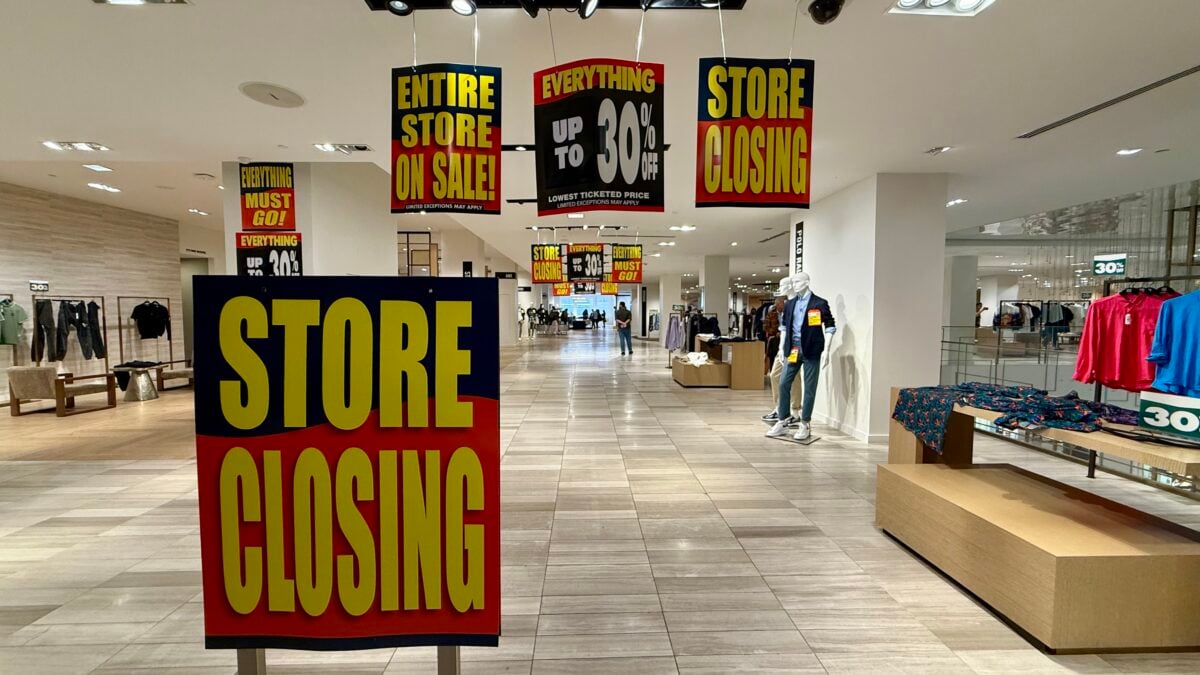
The Competition Bureau is warning businesses that it’s illegal to advertise fake discounts by promoting a made-up “regular price”. This type of tactic often pops up during major sale events, like Black Friday, said the federal agency.

“When advertising, businesses cannot invent a higher regular price to make a sale look like a bargain when it’s not. For example, businesses can’t advertise an item as “$100, now $50″, if it never actually sold at $100,” it said in a recent news release.

“Also known as fake ordinary selling price, this practice can mislead consumers and violates the Competition Act.”

What businesses should know according to the Competition Bureau:

When promoting a sale, the regular price must be a price the item is genuinely sold at, and businesses must be able to prove it. To prove that a regular price is valid, it must meet one of two legal tests:

  1. Volume test: More than 50% of sales of the product were at that price or higher within a reasonable period (usually within a year) before or after the promotion; or
  2. Time test: The product was offered for sale, in good faith, at that price or higher for a substantial period of time (usually within a year) immediately before or after the promotion. In good faith means the retailer honestly believes the price is fair and expects that customers will actually pay it.

“If the regular price does not meet either test, discount claims can be considered misleading under the law. Businesses must be honest and transparent in their marketing so Canadians can make informed shopping decisions,” it explained.

To stay on the right side of the law, the Competition Bureau recommends that businesses:

  • Only advertise a “regular price” if it is genuine and the product was offered at that price for a long enough time, or if many products were sold at that price within a reasonable time.
  • Keep detailed records of promotions, including dates, discounts and regular prices, and any other offers or savings claims. For example: buy one get one free.
  • Avoid making ambiguous and unverifiable savings claims even if a promotion doesn’t directly state the regular price. For example: 20% off our regular price!
  • Educate your employees about deceptive sales and discounts practices.
  • Regularly review your marketing practices to ensure they don’t mislead consumers or violate the deceptive marketing provisions of the law.

The Competition Bureau said it investigates deceptive marketing practices. If a business or consumer believes they have come across fake sales, they should report them to the Competition Bureau.

The Competition Bureau is an independent law enforcement agency that protects and promotes competition for the benefit of Canadian consumers and businesses. Competition drives lower prices and innovation while fueling economic growth.

More from Retail Insider:
KITS Eyecare expanding retail footprint with Toronto store opening in Q1 2026

Concept rendering of KITS’ planned Queen St. W store (CNW Group/KITS Eyecare Ltd.)

Kits Eyecare Ltd., a leading vertically integrated eyecare provider, plans to expand into its second retail location, expected to open in Toronto in Q1 2026. The space, located on Queen Street West, represents the company’s second retail showroom and follows the strong performance of KITS’ flagship location in Vancouver, it said.

Located in the heart of Toronto, the showroom will feature over 2,500 square feet of blended retail and café space and will feature a full-service onsite optometrist, providing comprehensive exams alongside KITS’ acclaimed eyewear collections. The Toronto location serves as a cornerstone of KITS’ national omni-channel strategy, giving customers across the Greater Toronto Area the opportunity to try on frames in person, pick up online orders, and access same-day service on select prescriptions, said KITS.

KITS said its decision to expand into Toronto is driven by the momentum of its Vancouver flagship. Since opening in July 2021, the Vancouver store has sold more than 23,000 pairs of glasses, with approximately 35% of customers opting for premium lenses such as progressives, polarized, or transitions. Recent performance continues to accelerate, with the store averaging 300 frames sold per week quarter-to-date. Same store sales continue to grow at well over 50% year-over-year, with gross margin of over 50%.

Roger Hardy
Roger Hardy

“KITS has entered its strongest growth phase to date,” said Roger Hardy, Co-Founder & CEO. “Opening our Toronto Flagship in the heart of the country’s largest city is a major brand milestone.

“This new store brings the entire KITS experience to life – the quality, the technology, the value – all in one place. We’re thrilled to welcome Toronto customers and continue building the fastest-growing optical brand in the world.”

Toronto represents the single largest optical market in Canada, with a diverse, digitally engaged population and strong demand for accessible, high-quality eyecare. The new location will serve as a blueprint for future KITS retail expansion across Canada, added the company.

More from Retail Insider:

Inside Canada’s Black Friday Spending Shift

Black Friday. Photo: Unsplash

As Black Friday arrives this week, the Canadian retail landscape reflects a set of converging forces that reveal as much about national sentiment as they do about consumer behaviour. What follows is a summary of the latest reporting from Retail Insider, examining how Canadians are preparing for the most consequential shopping period of the year and the tensions shaping the way they spend. Together, the data suggests a retail environment undergoing rapid cultural and economic recalibration, one defined by values-driven purchases, strategic deal-hunting, and a renewed reliance on physical retail spaces.

In one of the most striking shifts ahead of the weekend, Square’s new survey reveals a decisive turn toward localism. According to reporting in Retail Insider’s “Canadians set to paint Black Friday Maple Leaf Red this year,” 62 percent of Canadians intend to allocate more of their holiday budgets to locally owned retailers, reflecting what the company’s chief marketing officer calls a deepening “pride in supporting neighbourhood businesses.” More than half of those surveyed say they are willing to pay up to 50 percent more to buy Canadian, a sharp contrast to the era when Black Friday served mainly as an annual migration to U.S. e-commerce giants.

The turn inward is revealing, particularly given the economic pressures of the year. Canadians have seen higher food prices, lower discretionary spending, and broader macroeconomic strain. Yet, the willingness to favour local businesses even at a premium suggests a reframing of value: shoppers are now attaching emotional and community significance to their purchases. The survey’s findings on restaurants add to that narrative. Sixty-six percent of Canadians say they are supporting more neighbourhood-owned restaurants than they did a year ago, and a significant majority note that these establishments feel more community-rooted and hospitable. If Black Friday once represented the height of transactional spending, 2025 is bringing something closer to relational commerce, where supporting local businesses is seen not as a luxury but a civic gesture.

This shift toward neighbourhood economies sits alongside another trend: a resurgence in traditional retail destinations. JLL Canada’s annual holiday survey, captured in Retail Insider’s “JLL Canada Holiday Retail Survey: Less on gifts, more on experiences, self-treats, and shopping centre visits,” shows that 90 percent of Canadians plan to visit a shopping centre this season. While malls once feared permanent displacement by digital commerce, they are increasingly reclaiming their status as community hubs. As JLL’s Paul Ferreira puts it, holiday errands are turning into “holiday outings,” with shoppers deliberately weaving dining, entertainment, and browsing into each trip. This movement aligns with the broader shift toward experience-driven spending: even as Canadians plan to spend 8 percent more this season, nearly all of the increase is flowing into experiences and non-gift items such as food, décor, and seasonal activities.

The act of going to the mall appears to carry renewed purpose. With 87 percent of Canadians planning to dine out and nearly half planning hotel stays, the holiday season is no longer framed simply around consumption, but around time, connection, and self-treats. The same survey finds that 56 percent of Canadians plan to buy themselves clothing or shoes, a notable rise in self-gifting that mirrors global trends. While gift-giving to others has dipped, the desire to mark the season through experiences and personal indulgences has grown stronger. Black Friday may act as an entry point, but the season’s centre of gravity seems to have moved to the emotional and social dimensions of consumption.

Still, even as Canadians express pride in shopping locally and a desire for experiences, another layer of behaviour points to deliberate frugality. Vividata’s new consumer study, detailed in Retail Insider’s “How Canadians shop Black Friday 2025,” describes Black Friday shoppers as highly strategic. Many are blending social discovery with deal-chasing, using social platforms, trusted recommendations, email coupons, and resale marketplaces to navigate the season. Shoppers are not merely scrolling for entertainment; they are curating an always-on cycle of inspiration and comparison, one that allows them to move from discovery to purchase “in the same moment.”

The numbers reveal a bargain-hunting public that remains acutely price-sensitive. Seventy percent say they are always looking for special offers, 64 percent are seeking the lowest prices, and nearly half will switch from a favourite brand if another offers a better deal. The rise of second-hand platforms as part of the holiday mix is especially pointed. According to Vividata, 23 percent of Canadians have recently increased their use of resale marketplaces, and Black Friday and Cyber Monday shoppers now spend an average of $376 a month online, much of it on clothing and accessories. The topline traffic numbers reinforce the digital giants’ dominance: Amazon claims 82 percent monthly unique visits among Canadians, while Temu reaches 57 percent and Walmart 42 percent.

This duality — pride in buying Canadian, paired with a hunt for the best value — is not contradictory so much as emblematic of the moment. It reflects a consumer who is both emotionally attuned and economically cautious, someone willing to pay more for local goods but also determined to stretch every dollar elsewhere.

That balance is echoed in new findings from Xero, covered in Retail Insider’s “Black Friday Trends: Canadians Support Small Businesses.” The report is clear: Canadian consumers are expected to spend nearly $9.3 billion over the Black Friday–Cyber Monday weekend, and most intend to keep small businesses at the centre of their plans. The level of intentionality is notable. Eighty percent of Canadians say they feel pride when shopping small, and 70 percent are willing to pay more for a product or service if it supports a local business. This suggests that even in a season where price is a top motivator, values remain a defining influence.

Xero’s findings also offer a rare moment of optimism for the nation’s small business economy. Despite a weakened economic backdrop, one in four Canadians plan to increase their spending with small businesses this season. The report notes that holiday sales can account for 20 to 30 percent of annual revenue for many local businesses, making this consumer shift a potential lifeline. The demographic patterns are also revealing. 

Boomers and women are leading the push to shop small, but even younger Canadians — long characterized as convenience-driven — are adopting more community-oriented behaviours. The report positions this moment as a potential turning point for small businesses heading into 2026, especially if even 10 percent more spending shifts toward local operators.

If there is a single unifying thread across the research, it is that Black Friday continues to anchor the season. The Retail Council of Canada’s latest data, captured in Retail Insider’s “Black Friday set to surge as Canadians shop smarter,” reinforces the day’s centrality. Eighty-four percent of Canadians now say Black Friday is their most important shopping day, and more than half begin researching one to three weeks in advance. But the survey also shows that Black Friday is no longer a single moment; it has become the starting line for a multi-week cycle of price comparisons, promotions, and purchase planning. Consumers are selective, methodical, and under more stress than in previous years, with 57 percent reporting that holiday shopping feels more stressful than it did last year.

The RCC data also reveals strong loyalty to Canadian-made goods, even as price remains the dominant factor in purchase decisions. Eighty-six percent plan to shop close to home, and 84 percent will look for Canadian-made items, but the desire for value continues to override other considerations. The regional breakdown offers additional nuance, with Alberta and British Columbia showing the strongest year-over-year spending increases and Quebec the sharpest decline. The national story, however, is one of determination: Canadians plan to celebrate, even if it means stretching each purchase further than they once did.

Across all five reports, Black Friday emerges as a mirror of Canadian consumer identity. It reflects a desire to support local businesses, a renewed enthusiasm for shared experiences, and a deeply pragmatic approach to spending. Shoppers are treating the season as both an economic exercise and a cultural one, weaving together pride, frugality, and community into a single retail narrative.

Happy Belly Food Group announces 14th consecutive record quarter

Heal is part of the Happy Belly Food Group (Photo credit: Heal website)

Happy Belly Food Group Inc., a leader in acquiring and scaling emerging food brands across Canada, has announced its unaudited financial results and corporate update for the fiscal quarter ended September 30, 2025, indicating the 14th consecutive record quarter and third consecutive quarter of positive net income from operations.

Sean Black
Sean Black

“In Q3 2025, Happy Belly Food Group achieved its 14th consecutive record quarter and third consecutive quarter of positive net income from operations,” said Sean Black, Chief Executive Officer. “These milestones-including segmented EBITDA for the QSR division surpassing $1.0 million in Q3 and royalties & fees for the QSR division also surpassing $1.0 million in Q3, both marking firsts for the Company-reinforce our reputation as a disciplined, high-growth multi-brand restaurant operator with a predictable growth model.

“They highlight our ongoing mission to become Canada’s leading acquirer and scaler of emerging food brands while driving long-term shareholder value.

“We have a lot to be proud of as a team, and as an organization. We have truly built a predictable and repeatable growth model that saw our system sales more than double, driving a 125% increase versus the same quarter last year. We successfully added 12 new restaurant locations in Q3 to the Happy Belly portfolio through a mixture of organic and inorganic growth, with another 2 restaurant locations added through our organic growth model so far in Q4, giving Happy Belly 75 operating locations in total.

“I would like to personally congratulate all brand leaders, franchisees, team members and cross functional teams for a truly great quarter. The team continues to execute our aggressive growth plan which has led to significant growth in Q3. System sales reached $19.2M (+125%), and total revenues of $7.2M (+188%) supported by our adjusted EBITDA reaching a new high of 10.4% in Q3.

“Our core principles have been the 3P’s: People, Product and Process, while staying operationally and financially disciplined throughout our execution plan. These strong results are a testament to the team-oriented culture we have built at Happy Belly. Our management team and brand partners are working together to support our franchisees in national and US expansion as we anticipate to deliver significant organic growth beyond our original expectations in 2026. With a clear focus on growth, we believe our best chapters are still to come.”

Q3 2025 Financial Highlights

  • System wide sales across Quick Service Restaurants (QSR) totaled $19.2M in the third quarter of fiscal 2025, up 125% versus the same quarter last year (2024 – $8.5M). The increase is attributed to organic baseline restaurant growth, alongside increased restaurant count, which reached 73 operating restaurants at the end of Q3 2025, up 109% versus 35 in the prior year.
  • Total operating revenues, vendor rebates and interest income totaled $7.2M in Q3 2025, up 194% versus the same quarter last year (2024 – $2.5M), and for the nine months ended September 30, 2025, $16.6M up 149% from 2024 (2024-$6.7M).
  • Year-over-year growth was driven by continued sales growth in both the Quick Serve Restaurant (QSR) and Consumer Product Goods (CPG) segments, multiple business acquisitions in the past twelve months, and new restaurants being added to the portfolio (12 additional restaurants during Q3 2025).
  • Total product sales totaled $6.0M in the third quarter of 2025, up 224% versus the same quarter last year (2024 – $1.9M). In addition, royalties and franchise fee revenues reached $1.1M during the quarter, up 297% from the prior year (2024 – $0.3M), which was driven by an increase in royalties collected from 55 franchised restaurants in the system.
  • Adjusted EBITDA reached $0.7M or 10.4% in the third quarter of fiscal 2025, up from $0.1M or 4.2% in the same quarter last year. During the third quarter of fiscal 2025, net income from operations was $0.3M up from a net loss of $0.1M in the same quarter of 2024.
  • Segmented EBITDA for the QSR division surpassed $1.0M in Q3, marking a first for the Company.
  • Royalties & Fees for the QSR division surpassed $1.0M in Q3, marking a first for the Company.
  • Net working capital remains healthy at $2.8M as of September 30, 2025 (December 31, 2024 – $3.3M). Total cash and cash equivalents were $3.3M as of September 30, 2025 (December 31, 2024 -$3.5M). Furthermore, cash flows before non-cash working capital was positive $0.7M in Q3 2025 up from $0.1M in the same quarter last year.
  • In the third quarter, the Company generated $0.8M in cash flow from operating activities up from negative $(0.2)M in the same quarter of 2024.
  • During Q3 2025, Happy Belly added 12 restaurants to its growing portfolio. Heal Wellness opened two new locations in Aurora and Kensington. Rosie’s Burgers opened a new location in Bridgeland. The acquisition of Salus Fresh Foods added nine new locations in the GTA. Following the close of Q3, Happy Belly further expanded by opening iQ foods on Avenue Rd and Yolks on Bloor St West. These additions bring the total number of restaurants in the Happy Belly portfolio to 75.

More from Retail Insider:

Canadian Retail News From Around The Web For November 27, 2025

Canadian Retail News From Around The Web

News at a Glance

Retail Insider is streamlining its Canadian retail news from around the web to include a handful of top news stories that can be viewed quickly during the day. Here are the top stories from the past 24 hours.

Think twice before shopping on fast fashion sites, consumer groups warn (CTV)

DoorDash Canada adds Pet Valu, Miniso, Mastermind Toys to platform (Chain Store Age)

Meal deals, nicotine and booze boost Couche-Tard sales growth (BNN)

Couche-Tard to expand meal-bundle promotions as it plots next takeover (Globe & Mail)

Judge says Amazon needed 100 lawyers to assess 2.25 M documents in competition probe (BNN)

Canada’s “Last Sale” Rule: What It Means for Non-Resident Importers and E-Commerce Sellers (Global Trade Magazine)

‘For Sale’ sign appears at Kitchener’s Toys “R” Us (CTV)

Holiday Shoppers Choose Experiences Over Excess as Economic Pressures Mount (6ix Retail)

‘Everybody benefits’: Saskatoon businesses urge residents to shop local (CTV)

Independent grocers federation not happy with farmers’ call for cap on profits (Kelowna Courier)

Deal with The Beer Store allows Ontario grocers to avoid accepting beer and wine empties (Grocery Business)

Alberta set to lead Canada in Black Friday spending, Retail Council says (Discover Airdrie)

Fast EV charging returns to CrossIron Mills mall (CTV)

Fire forces evacuation, closure of Orillia’s Canadian Tire store (Orillia Matters)

Nutella Canada kicks off holiday campaign at Toronto Santa Claus Parade (Grocery Business)

Alberta collected most cannabis tax revenue per capita of any province (CBC)

Arrests made in smash-and-grab robberies at Guelph, Ont. jewelry stores (CTV)

Students and Calgary police meet at Marlborough mall for 19th annual ‘Shop with a cop’ (CityNews)

Number of Canadians missing credit card payments soaring: Equifax

Photo: Tima Miroshnichenko

Equifax Canada’s Q3 Market Pulse Quarterly Consumer Credit Trends and Insights shows a renewed rise in missed payments heading into the holidays, with 1.45 million consumers in Canada missing a credit payment in Q3, more than 46,000 higher than in Q2.

The national 90+ non-mortgage balance delinquency rate reached 1.63 per cent, up 14 per cent year-over-year. Total consumer debt climbed to $2.62 trillion (+3.4 per cent year-over-year), while average non-mortgage debt per consumer rose to $22,321, up $511 from a year ago, said the company.

Rebecca Oakes
Rebecca Oakes

“Earlier this year, we saw tentative signs of stabilization, however Q3 data indicated some renewed stress, especially in younger households and homeowners in urban centres,” said Rebecca Oakes, Vice-President, Advanced Analytics at Equifax Canada.

 “The holiday season is a time when credit card spending typically rises $300–$500 per consumer and previous Equifax data shows that missed card payments increase by roughly 7 per cent come January. Spending over the next few weeks will be a decisive moment for many consumers in Canada.”

Financial stress for younger consumers, especially in certain cities
Financial stress remains greatest among younger people (aged 18-35 years old) with 1 in 20 missing a credit payment during Q3. Among 26–35-year-olds, the 90+ days non-mortgage balance delinquency rate reached 2.45 per cent, up 20.51 per cent year-over-year. In addition, the delinquency rate for 18–25-year olds stood at 2.11 per cent, up 16.58 per cent year-over-year, said Equifax, adding that by contrast, older consumers in Canada recorded smaller increases, including 56–65 year olds at +9.95 per cent, and for the 65+ cohort at +4.36 per cent.

“Several large urban centres posted increases in non-mortgage delinquency, including Toronto which reached 2.27 per cent (+19.58 per cent year-over-year); Vancouver at 1.27 per cent (+18.18 per cent); and Ottawa at 1.55 per cent (+17.61 per cent). Smaller increases were seen in Edmonton (+11.23 per cent) and Halifax (+12.51 per cent), as well as cities in the Prairies and Atlantic regions,” it said.

Missed payments
Missed payments were concentrated among non-mortgage households. Of the 1.45 million consumers who missed a payment, 84 per cent (about 1.21 million) did not hold a mortgage. For mortgage holders, roughly 1 in 35 missed a payment compared to 1 in 37 at the end of Q2, noted Equifax.

“The data shows there are still emerging financial challenges for older consumers, especially those with a mortgage in cities such as Toronto,” added Oakes. “Mortgage payment shock is still contributing to rising missed payments on credit cards, personal loans, and even on mortgages themselves.”

Credit use and card behaviour heading into year-end
Non-mortgage debt rose just over 5 per cent year-over-year, and although growth was slower than prior years, pick up in the housing market led to a $31.8 billion increase in mortgage balances versus Q2. Inflation-adjusted card spend increased 1.6 per cent, led by Nunavut (up 5.5 per cent), Quebec (up 4.0 per cent), and New Brunswick (up 2.8 per cent). Overall card payment health improved modestly—fewer consumers paid only the minimum and more consumers paid their balance in full—however those top line numbers mask a growing strain among younger consumers in Canada. Minimum-payer rates increased for consumers under 25, as well as consumers aged 26–35-years old, and those in higher-cost provinces such as Ontario and British Columbia, shared the report.

“Since the pandemic, we’ve seen periods where consumers proactively curb credit use as finances tighten. We observed younger consumers pulling back on card spend last quarter, and it will be important to see whether that discipline holds through the holiday season,” concluded Oakes.

Consumers aged 46+ moved in the opposite direction with average card spending rising to $2,342 in Q3, up $48 year-over-year, said the report.

Auto industry facing new headwinds

Equifax said the auto industry has experienced multiple challenges over recent years with rising vehicle prices and high interest rates curbing consumer demand during 2022 and 2023. In Q3 2025 renewed activity did continue with new auto loan volumes rising 4.8% compared to 12 months prior, however, auto lenders are facing an escalating threat from synthetic ID fraud leading to increasing levels of auto loan stacking losses. This type of fraud accounted for an estimated 1/3 of auto loans (over $10k) opened in Jan 2025 which missed payments in Q3 and is contributing towards an estimated $450 million loss for auto lenders per year.

Age Group Analysis – Debt & Overall Balance Delinquency Rates (excluding mortgages)

 Average
Debt
(Q3 2025)
Average Debt Change
Year-over-Year
(Q3 2025 vs. Q3 2024)
90+ Delinquency
Rate ($)
(Q3 2025)
Delinquency Rate Change
Year-over-Year
(Q3 2025 vs. Q3 2024)
18-25$8,6354.46%2.11%16.58%
26-35$17,6030.68%2.45%20.51%
36-45$27,2631.03%1.97%15.99%
46-55$34,9871.95%1.43%14.13%
56-65$29,7724.80%1.16%9.95%
65+$15,1213.75%1.13%4.36%
Canada$22,3212.34%1.63%14.17%
     

Major City Analysis – Debt & Overall Balance Delinquency Rates (excluding mortgages)

CityAverage
Debt
(Q3 2025)
Average Debt Change
Year-over-Year
(Q3 2025 vs. Q3 2024)
90+ Delinquency
Rate ($)
(Q3 2025)
Delinquency Rate Change
Year-over-Year
(Q3 2025 vs. Q3 2024)
Calgary$24,4511.89%1.81%13.65%
Edmonton$23,8670.52%2.27%11.23%
Halifax$21,7582.32%1.55%12.51%
Montreal$17,3152.49%1.53%13.27%
Ottawa$19,8181.27%1.55%17.61%
Toronto$21,5233.12%2.27%19.58%
Vancouver$24,8083.58%1.27%18.18%
St. John’s$22,7812.34%1.69%13.19%
Fort McMurray$37,830-0.23%2.44%8.32%
     

Province Analysis – Debt & Overall Balance Delinquency Rates (excluding mortgages)

ProvinceAverage
Debt
(Q3 2025)
Average Debt Change
Year-over-Year
(Q3 2025 vs. Q3 2024)
90+ Delinquency
Rate ($)
(Q3 2025)
Delinquency Rate Change
Year-over-Year
(Q3 2025 vs. Q3 2024)
Ontario$22,9382.29%1.80%20.06%
Quebec$19,4962.47%1.10%6.09%
Nova Scotia$21,7832.16%1.66%8.33%
New Brunswick$22,9771.65%1.71%11.28%
PEI$24,3653.84%1.26%16.88%
Newfoundland$25,3852.48%1.60%12.17%
Eastern Region$21,8482.51%1.59%16.11%
Alberta$24,7900.95%2.00%10.86%
Manitoba$18,6353.03%1.73%5.99%
Saskatchewan$23,7331.40%1.73%2.84%
British Columbia$23,0522.74%1.46%14.29%
Western Region$23,3061.97%1.72%10.89%
Canada$22,3212.34%1.63%14.17%

* Based on Equifax data for Q3 2025

More from Retail Insider: