“We are pleased with our first quarter performance, reflecting disciplined execution across the organization and continued progress against our strategic priorities. We advanced our integration initiatives as planned, with early actions reinforcing our operating model and strengthening our ability to drive efficiency and synergy capture. While the external environment remains uncertain, we are focused on what we can control — driving operational excellence, advancing our integration of HanesBrands, maintaining cost discipline and consistent execution — all supported by our low-cost vertically integrated platform and strong balance sheet, which position us well to deliver on our strategic and financial objectives,” said Glenn J. Chamandy, Gildan’s President and CEO.
Highlights
Record first quarter net sales from continuing operations of $1.17 billion up 63.8% over the prior year
Operating margin of (0.1)%, adjusted operating margin of 14.3%
GAAP diluted loss per share from continuing operations of $0.30 and adjusted diluted EPS from continuing operations of $0.43
Integration initiatives progressing as planned; Company well on pace to realize approximately $100 million in synergies in 2026 and continues to expect approximately $250 million of annual run-rate cost synergies over the next three years
Company maintains its full year 2026 guidance and maintains its three-year objectives for the 2026–2028 period
This quarter represents the first full fiscal reporting period during which the results of HanesBrands are fully consolidated into the company’s financial statements
Photo: Gildan Activewear website
“The HanesBrands Australian Business has been classified as held for sale and reported as discontinued operations since the fourth quarter of 2025. As such, the operating results discussed herein are on the basis of continuing operations. Furthermore, consistent with the announcement made during our last quarterly results, we are now transitioning to disaggregating our net sales into Wholesale and Retail. “Wholesale” comprises sales to distributors, screenprinters, embellishers and global lifestyle brand (GLB) customers. “Retail” comprises sales to mass merchants, department stores, national chains, specialty retailers, online retailers and directly to consumers,” said Gildan.
“Net sales from continuing operations were $1.17 billion, up 63.8% over the prior year, in line with guidance of approximately $1.15 billion. The year over year increase reflects the HanesBrands acquisition partially offset by integration initiatives undertaken to optimize our manufacturing footprint and accelerate synergy capture. Compared with proforma net sales from continuing operations1 of $1.29 billion, the year over year decline was primarily driven by lower volumes stemming from our proactive inventory reduction across customer channels, which temporarily reduced sell-in, as previously communicated. Wholesale sales were $552 million compared to $626 million, down 11.9% versus the prior year due to the aforementioned proactive inventory reduction across our combined customer channels as well as the non-recurrence of preemptive buying ahead of tariffs in the comparable period last year.”
Gildan is a leading manufacturer of everyday basic apparel. The company’s product offering includes activewear, underwear, socks, and intimates sold to a broad range of customers, including wholesale distributors, screenprinters,embellishers, retailers or e-commerce platforms, as well as global lifestyle brand companies and directly to consumers. Gildan markets its products in North America, Europe, Asia Pacific, and Latin America, under a diversified portfolio of Company-owned brands including Gildan®, Hanes®, Comfort Colors®, American Apparel®, ALLPRO™, GOLDTOE®, Peds®, Bali®, Playtex®, Maidenform®, Bonds®, as well as Champion® which is under an exclusive licensing agreement for the printwear channel in the U.S. and Canada.
Gildan owns and operates vertically integrated, large-scale manufacturing facilities which are primarily located in Central America, the Caribbean, North America, and Asia.
French dermo-cosmetic brand La Rosée is accelerating its Canadian rollout, positioning itself at the intersection of clean beauty, pharmacy distribution, and accessible pricing. The company, founded by pharmacists Coline Bertrand and Mahault de Guibert, has entered the market through an exclusive partnership with Shoppers Drug Mart, now reaching more than 540 locations nationwide.
The La Rosée Canada expansion reflects a broader shift in the beauty industry, where clinically positioned skincare brands are increasingly blending medical credibility with lifestyle-driven branding. Industry observers have described the company as a leading example of a “French Pharmacy 2.0” model, combining safety, sustainability, and mass accessibility.
A Strategic Canadian Entry Led by Industry Veteran
The Canadian rollout has been spearheaded by Solange Strom, a veteran retail executive and former CEO of L’Occitane Canada. Strom, who now leads La Rosée’s Canadian operations, brings decades of experience translating French beauty brands for local consumers.
Solange Strom
“I love a challenge, and I understand the Canadian consumer very well,” Strom said in an interview. “The timing is perfect. Canada is just arriving at the point where ingredient transparency and clean formulations are becoming mainstream.”
Her involvement also reflects a deliberate strategy by the brand to prioritize operational execution over rapid expansion. Rather than entering multiple channels simultaneously, La Rosée has focused on building a strong foundation within a single national partner.
Pharmacy Distribution as a Competitive Advantage
Unlike many clean beauty brands that rely heavily on digital marketing, La Rosée’s growth model is rooted in physical retail, specifically pharmacy environments. In France, the brand is distributed through nearly 10,000 pharmacies, and that model has been replicated in Canada through Shoppers Drug Mart.
“We chose Shoppers because it gives us national reach,” Strom explained. “If a customer hears about La Rosée, they can find it within minutes almost anywhere in the country.”
The exclusive agreement is expected to remain in place for an initial period, with a focus on expanding within the existing network before exploring additional channels.
Photo: La Rosée
Clean Beauty Positioned for Scale
At the core of the La Rosée Canada expansion is a tightly curated product assortment built around simplicity and efficacy. The brand deliberately limits its SKU count, offering only essential products designed to meet core skincare needs.
“They believe you can build a highly profitable company with fewer products, as long as those products are exceptional,” Strom said.
This approach contrasts with traditional beauty strategies that emphasize constant product launches. Instead, La Rosée focuses on high-volume hero products, including moisturizers, shower oils, and deodorants, many of which rank among top performers in French pharmacies.
The brand also emphasizes inclusivity through gender-neutral positioning and universal formulations suitable for sensitive skin.
Photo: La Rosée
Sustainability as a Core Business Driver
Sustainability is not positioned as a marketing layer but as a foundational principle of the brand. La Rosée has eliminated external packaging, introduced refill systems, and incorporated upcycled ingredients sourced from food industry waste.
“We want to go beyond reducing impact,” Strom said. “The goal is to give back more to the planet than we take.”
As of 2026, roughly one-third of the product range incorporates upcycled ingredients, with a target of reaching 50 percent by 2030.
This sustainability-driven model is beginning to influence larger industry players, with multinational brands adopting refill systems and cleaner formulations in response to changing consumer expectations.
Photo: La Rosée
Digital Integration to Support Retail Growth
While physical retail remains central, La Rosée is also investing in e-commerce to complement its store presence. A Canadian website has recently launched, designed to provide education, product information, and direct purchasing options.
“The digital channel is where we tell our story,” Strom said. “It also helps drive customers back into stores.”
This omnichannel approach reflects a broader trend in beauty retail, where brands use digital platforms to support in-store discovery rather than replace it.
Canada as a Testing Ground for North America
Canada is serving as a strategic entry point for North America, allowing La Rosée to refine its approach before entering the United States.
“Canada is a test-and-learn market,” Strom said. “Once we understand what works here, we can apply those learnings to a much more complex U.S. market.”
This measured expansion strategy aligns with the company’s broader philosophy of disciplined growth, which has enabled it to scale rapidly in France while maintaining profitability.
Photo: La Rosée
A Brand Aligned with Shifting Consumer Expectations
The La Rosée Canada expansion arrives at a time when Canadian consumers are becoming more focused on ingredient transparency, sustainability, and value. Tools such as ingredient-scanning apps and increased awareness of environmental impact are reshaping purchasing decisions.
Strom believes the brand is well positioned to capture this shift.
“Consumers want products that are safe, effective, and fairly priced,” she said. “That’s exactly what La Rosée offers.”
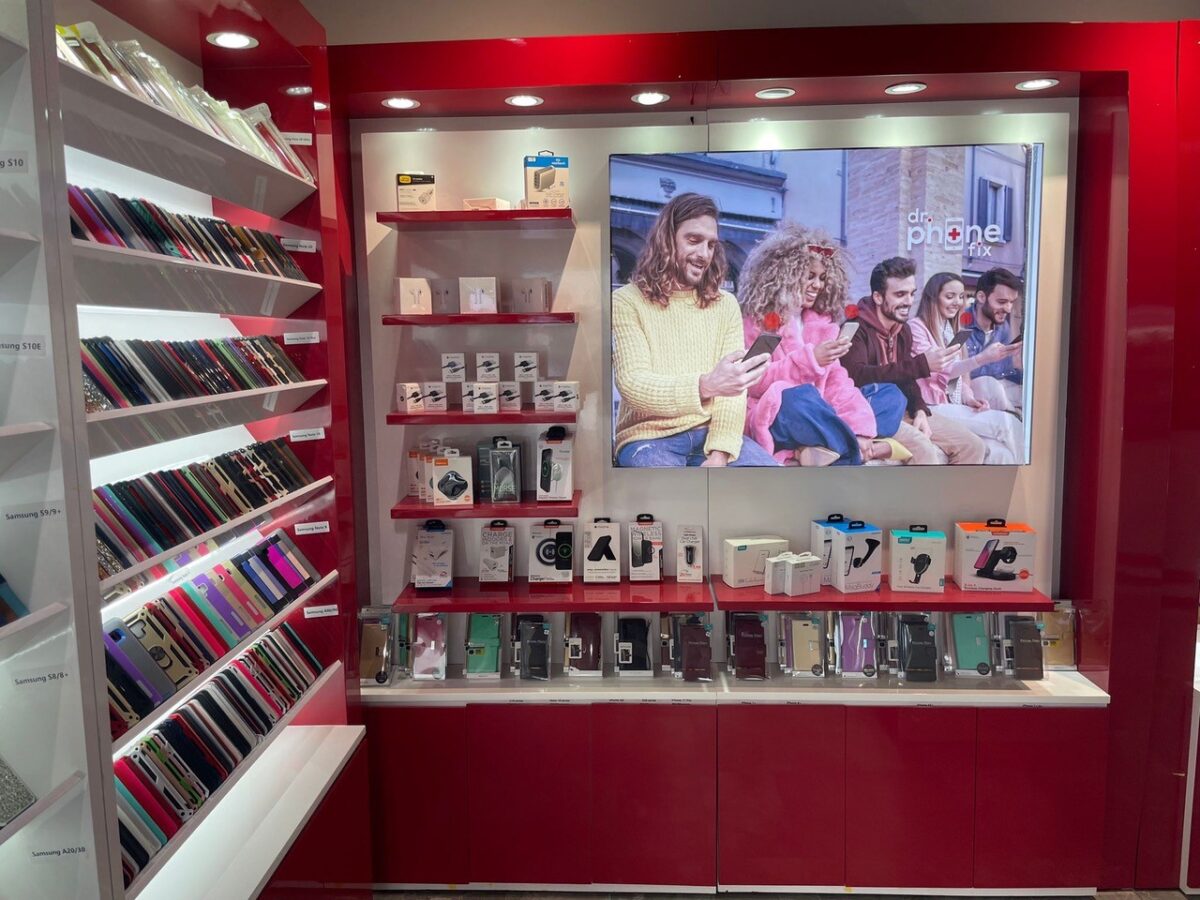
Dr. Phone Fix, one of Canada’s fastest-growing consumer electronics repair and resale platforms, released Thursday its financial results for the three and 12 months ended December 31, 2025 with annual revenue growing by 19% from the previous year.
The company operates a network of 44 corporately owned stores across five Canadian provinces.
“We expanded our footprint to 44 corporately owned stores, entered Atlantic Canada through the Geebo acquisition, and strengthened our capital structure through closing an oversubscribed financing. While reported profitability was impacted by one-time listing and transaction expenses, our underlying operating performance continued to improve, supported by strong same-store sales and disciplined cost management.”
“While fourth quarter margins reflected a higher mix of certified pre-owned device sales, this shift is consistent with our strategy to drive higher revenue throughout and expand our market share. Looking ahead, our growth strategy remains focused on a balanced approach of new store openings and targeted acquisitions. With our national platform now established and infrastructure in place, we are focused on leveraging our growing scale, improving unit-level economics, and executing on a disciplined acquisition pipeline in a highly fragmented market.”
Q4 2025 Financial Highlights
Revenue increased 47% to $3.84 million, compared to $2.60 million in Q4 2024, driven by strong seasonal demand, continued same-store sales growth, and increased certified pre-owned device sales, supported by higher volumes from insurance repair programs.
Gross profit increased 2% to $1.35 million. Gross margin of 35.1% reflected a higher mix of certified pre-owned device sales, which carry lower margins than repair services, as well as increased device volumes during the quarter.
Operating expenses (SG&A) were consistent year-over-year at $2.06 million, despite operating additional stores, including the integration of Geebo locations, and increased corporate activity associated with operating as a public company.
Adjusted EBITDA was $(0.10) million, compared to $0.26 million in Q4 2024. The quarter reflected strong revenue momentum, with short term profitability impacted by strategic capital investments in inventory for further future growth, new store expansion, and integration initiatives. These investments are aligned with the company’s growth strategy and are expected to support improved operating leverage and earnings performance as they mature.
Cash ended at $0.23 million, reflecting continued investment in working capital and network expansion, including inventory build to support certified pre-owned device demand, drive higher sales volumes, support expanding partnerships, and support the opening of new locations contributing to the current store count.
Full-Year 2025 Financial Highlights
Revenue increased 19% to $12.15 million, compared to $10.18 million in 2024, driven primarily by organic same-store sales growth across the company’s existing store base. Same-store sales growth is calculated by comparing revenues at locations that have been open for at least 12 months. Contributions from new store openings, acquisitions, and insurance programs were not material to the period, as these initiatives were implemented late in the fourth quarter and had limited operating time to impact results. These initiatives are expected to contribute more meaningfully in 2026.
Gross profit increased 9% to $5.88 million, compared to $5.40 million last year, with full-year gross margin of 48.3% reflecting increased contributions from certified pre-owned device sales, which carry lower margins than repair services, as well as an evolving product mix across the network.
Operating expenses (SG&A) increased 5% to $8.12 million, compared to $7.77 million in 2024, reflecting continued investment in infrastructure to support future growth, as well as public company costs. Excluding share-based compensation and listing-related expenses, operating expenses remained well controlled, demonstrating operating discipline as the company scaled its platform.
Adjusted EBITDA increased 219% to $0.60 million, compared to $0.19 million in 2024, driven by higher revenue and gross profit. This improvement reflects continued progress in the company’s underlying operating model, despite increased operating expenses associated with expansion and public company costs.
Image: Dr. Phone Fix
Q4 2025 Accomplishments
Entered Atlantic Canada through the acquisition of Geebo Device Repair, a six-store chain in Nova Scotia, expanding Dr. Phone Fix’s national footprint.
Completed a $2.57 million non-brokered equity private placement in two tranches, with net proceeds to be used for acquisitions, store expansion, inventory investment, and general working capital purposes.
Signed new store leases in Alberta and Ontario, supporting continued expansion into high-demand markets.
Continued to strengthen insurance and OEM partnerships, supporting increased certified pre-owned device volumes and procurement efficiencies across the network.
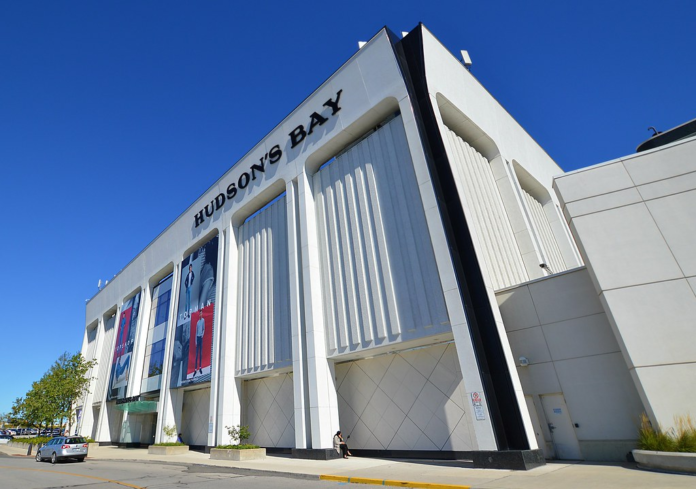
Former Hudson's Bay at Toronto's Yorkdale Shopping Centre is one of the stores jointly owned by RioCan. Photo: Greg Southern
The Canadian retail landscape reached a decisive inflection point in 2026. The closure of Hudson’s Bay stores, which vacated roughly 15 million square feet of space across the country, marked more than the loss of another retailer. It signaled the end of a model that had defined shopping centres for decades.
For years, department stores served as the gravitational force of the mall. Their presence shaped leasing strategies, customer traffic patterns, and even the physical design of retail real estate. With Hudson’s Bay now gone from the majority of its traditional locations, that model has effectively collapsed.
This moment is not isolated. Instead, it represents the culmination of more than a decade of Canadian department store closures, a trend that has steadily reshaped the industry as Retail Insider looks at its reporting over the past 14 years.
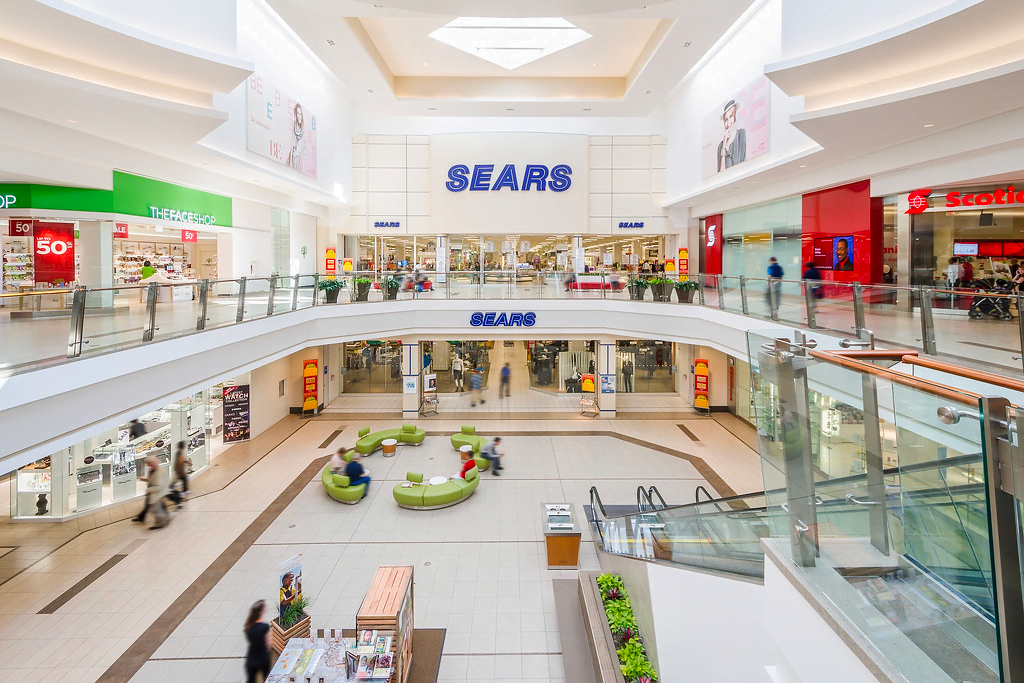
Former Sears Location at Scarborough Town Centre (Image: Oxford Properties Group)
From Anchors to Absence: A 14-Year Shift
When Retail Insider published its first article in April 2012, the topic was the potential entry of Nordstrom into Canada. At the time, shopping centres were still firmly anchored by large department stores. Zellers operated more than 270 locations. Sears Canada had over 110 stores nationwide (and was retracting). Hudson’s Bay maintained a dominant national footprint.
However, that structure began to unravel quickly.
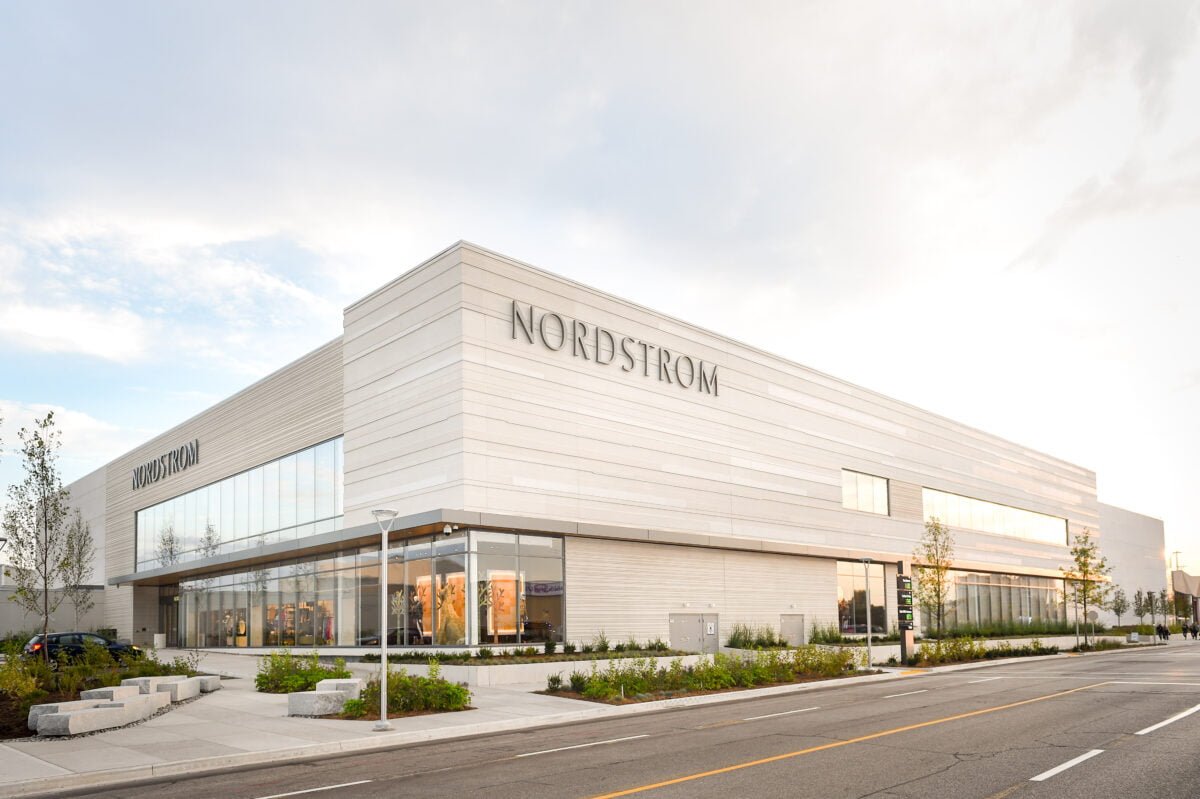
Zellers exited in 2013, followed by Target’s high-profile entry and withdrawal in 2015. Sears Canada shuttered its operations in 2018, leaving behind approximately 15 million square feet of vacant space. Nordstrom entered Canada in 2014 with significant expectations, only to exit in 2023 after filing for creditor protection. Saks Fifth Avenue had a relatively short Canadian run from 2016 to 2025 in Toronto and Calgary.
The final blow came with Hudson’s Bay. By June 1, 2025, the company had closed its Canadian stores, eliminating another massive block of retail space and effectively ending the department store era as it once existed.
The cumulative effect is striking. Over the past 14 years, tens of millions of square feet of anchor retail space have been vacated, forcing landlords to rethink the fundamental structure of their properties.
Former Nordstrom at CF Sherway Gardens (Image: Nordstrom)
The Collapse of the Traditional Mall Model
For decades, Canadian shopping centres followed a predictable format. Large department stores were positioned at the ends of corridors, drawing shoppers through a series of smaller inline tenants. This “end-to-end” flow created consistent foot traffic and supported a wide range of specialty retailers.
That model no longer functions in the same way.
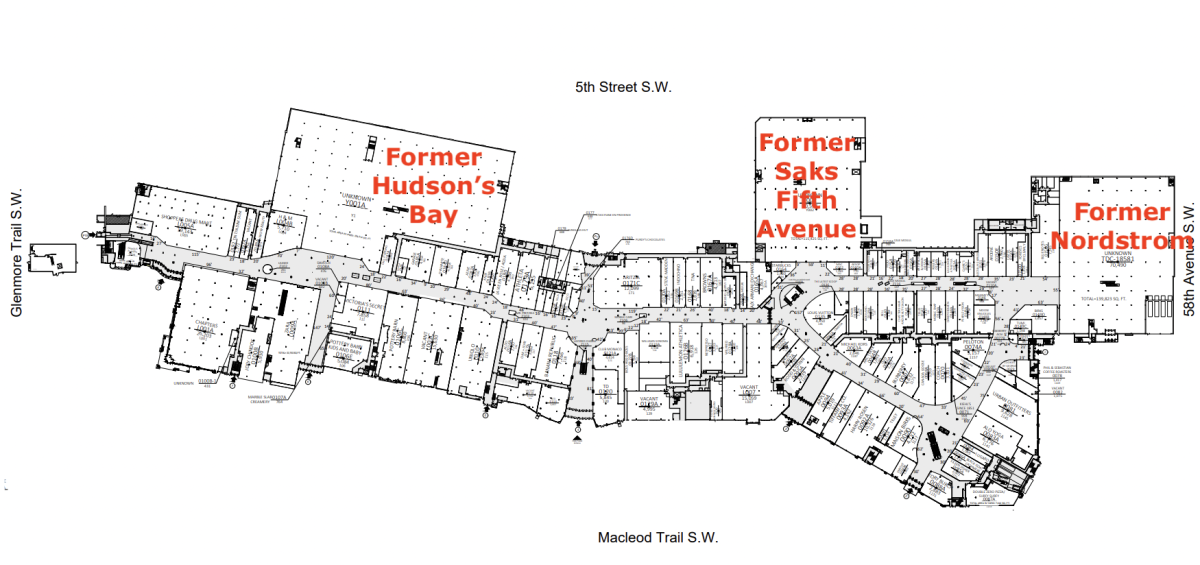
Today, many malls operate without traditional anchors. In some cases, multiple anchor tenants have disappeared from a single property. At CF Sherway Gardens in Toronto and CF Chinook Centre in Calgary, for example, Hudson’s Bay, Nordstrom, and Saks Fifth Avenue all served as anchors as recently as 2023. By mid-2025, none of those stores remained, leaving hundreds of thousands of square feet to repurpose.
This level of disruption would have been difficult to imagine even a decade ago, yet here we are.
CF Chinook Centre lease plan (Calgary) via Cadillac Fairview
The 15 Million Square Foot Challenge
The closure of Hudson’s Bay created an immediate and significant vacancy shock across Canada. Industry data indicates that enclosed mall vacancy rates surged sharply following the closures, reflecting the sudden influx of large-format space onto the market.
However, the real challenge is not just the volume of space, but its scale.
The average Hudson’s Bay store measured approximately 150,000 square feet, while the average mall tenant occupies closer to 3,700 square feet. This creates what industry analysts have described as a “40-to-1” leasing challenge. Replacing a single department store requires the equivalent of dozens of smaller tenants, along with substantial capital investment to physically divide the space.
As a result, landlords have adopted a range of strategies. Many are subdividing former department store boxes into multiple units. Others are pursuing redevelopment opportunities, including residential towers and mixed-use projects. In select cases, a single large tenant has taken over an entire space, although this remains relatively rare.
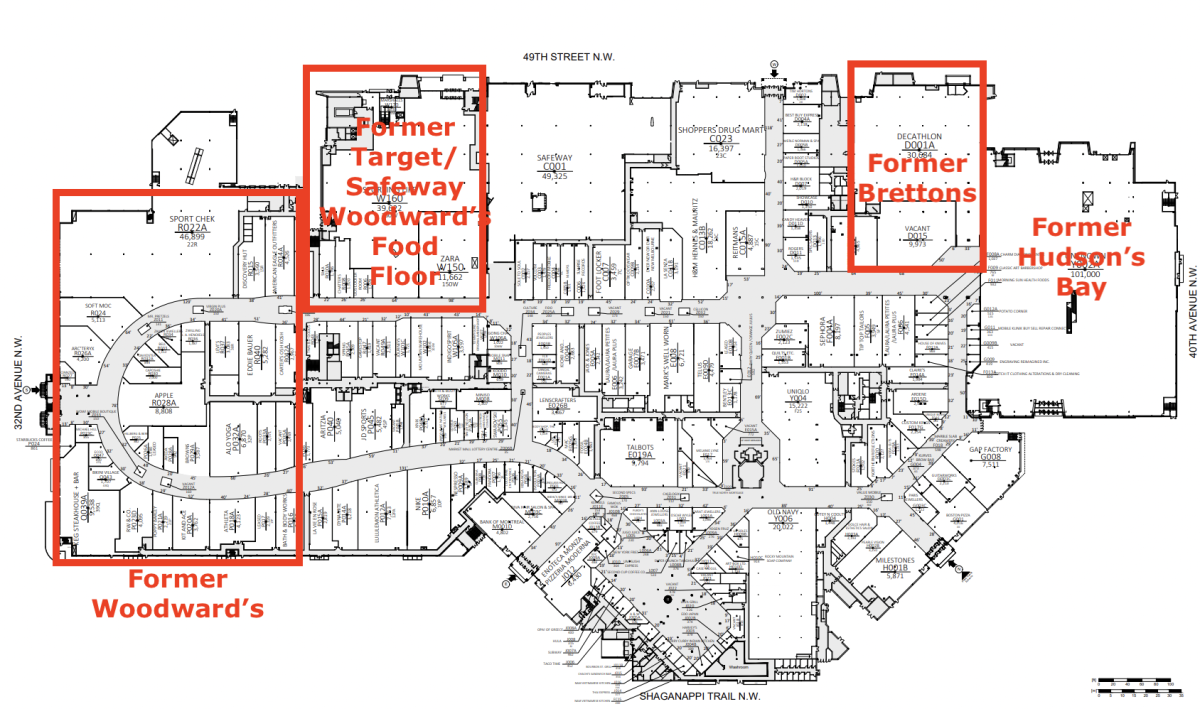
CF Market Mall in Calgary, showing former anchor uses including Woodward’s, Bretton’s, and a space that first housed a Woodward’s Food Hall. Image Cadillac Fairview
A New Generation of Anchors Emerges
As traditional department stores disappear, a new mix of tenants is redefining what it means to anchor a shopping centre.
Experiential concepts are becoming increasingly prominent. Large-format fitness operators, entertainment venues, and leisure-focused businesses are taking over spaces once occupied by fashion retailers. These uses are designed to draw visitors for experiences that cannot be replicated online.
At the same time, essential services are moving into malls in greater numbers. Grocery stores, medical clinics, and even government service centres are becoming key drivers of foot traffic. These tenants offer consistency and resilience, particularly in an era where discretionary retail spending can be volatile.
Non-traditional retail is also expanding. Automotive showrooms, value-oriented international retailers, and specialty grocers are occupying space that would once have been reserved for department stores. This shift reflects a broader change in consumer behaviour, where convenience, necessity, and experience are increasingly prioritized.
Eataly, La Maison Simons, and Nike opened in the former Nordstrom box at CF Toronto Eaton Centre (photo: September 18, 2025). Photo: Craig Patterson
Case Studies in Transformation
Several Canadian shopping centres illustrate how this transition is unfolding in practice.
At CF Toronto Eaton Centre, the former Nordstrom space has been reconfigured to accommodate multiple tenants, including La Maison Simons, Nike, and Eataly. Vancouver’s Nordstrom box will soon see similar announcements. This approach demonstrates how large-format spaces can be successfully subdivided into complementary uses that drive traffic throughout the property.
These examples highlight the diversity of strategies being employed, as well as the importance of tailoring solutions to specific markets, be it downtown or suburban.
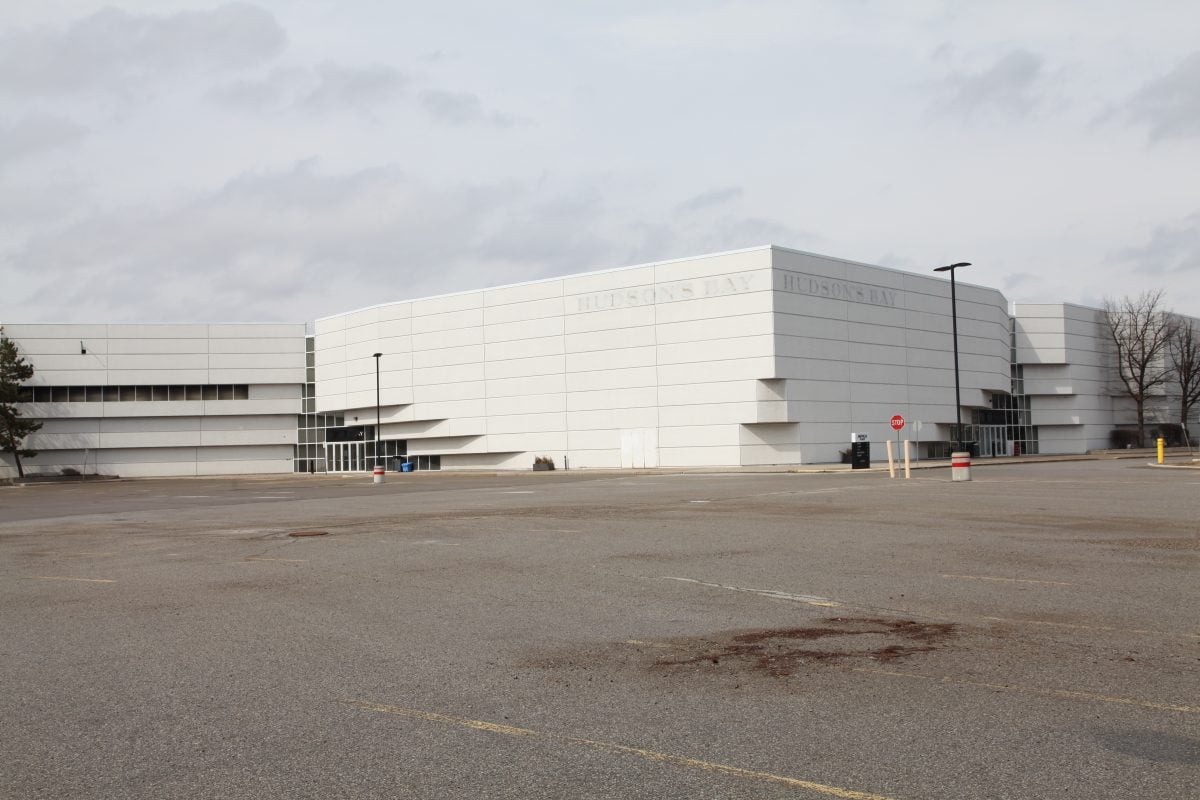
Exterior of the former Hudson’s Bay building at Oakville Place, to become Nations Experience.
A Bifurcated Future for Canadian Malls
Not all shopping centres are experiencing this transition in the same way. A clear divide is emerging between top-tier urban malls and secondary or tertiary properties.
Major centres in cities such as Toronto, Vancouver, and Montreal are seeing strong demand for space, even as they absorb former department store locations. These properties benefit from high foot traffic, strong demographics, and proximity to transit.
In contrast, smaller or less centrally located malls face a more challenging path. The cost of redeveloping large, multi-level department store spaces can be prohibitive, particularly in markets with lower leasing demand. In some cases, these spaces may remain vacant for extended periods.
This bifurcation is reshaping investment strategies as well. Shopping centres anchored by essential services and experiential tenants are increasingly viewed as more stable assets, while those reliant on traditional retail face greater uncertainty.
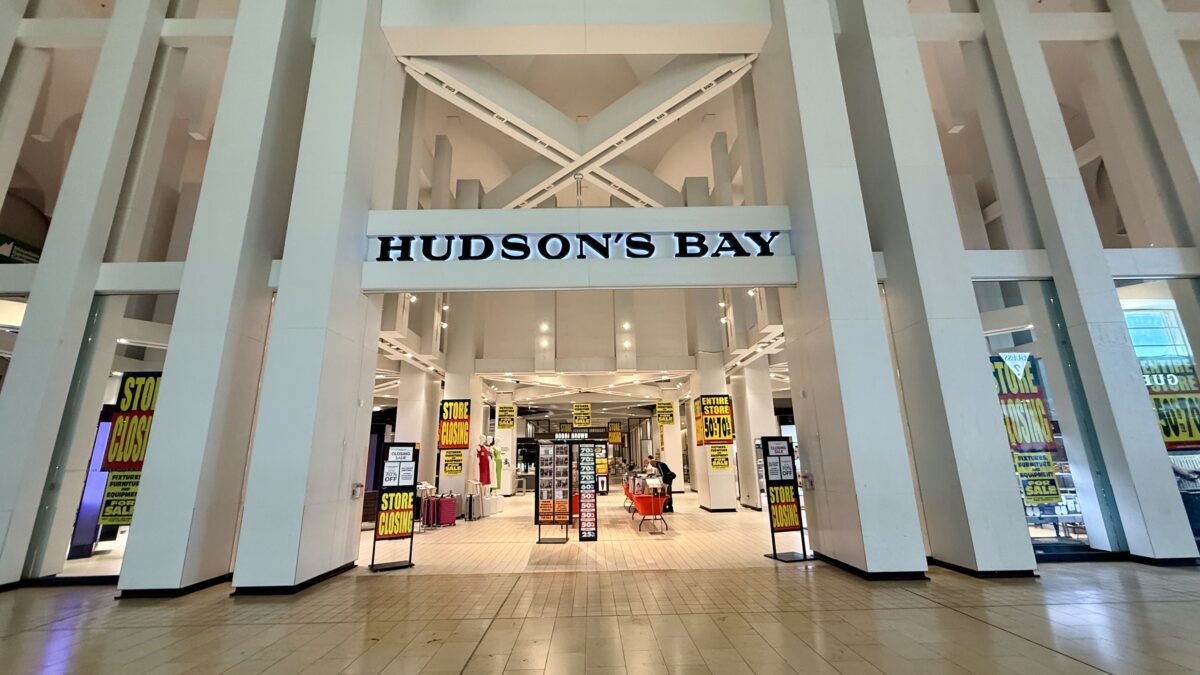
Hudson’s Bay store at Yorkdale in Toronto on May 12, 2025. Photo: Craig Patterson
The End of the Mono-Anchor Era
The decline of department stores represents more than a change in tenant mix. It marks the end of what can be described as the “mono-anchor” era, where a small number of large retailers defined the identity and performance of an entire shopping centre.
In its place, a more diversified and resilient model is emerging. Malls are evolving into multi-purpose environments that combine retail, services, entertainment, and residential components. This shift reflects broader changes in how Canadians live, work, and shop.
Importantly, it also aligns with the realities of e-commerce. Retail categories that are easily replicated online are losing ground, while those that require physical presence are gaining importance.
A New Chapter for Canadian Retail
As Retail Insider marks 14 years of covering the industry, the transformation of Canadian shopping centres stands out as one of the most significant structural shifts in modern retail history.
What began with the gradual decline of department stores has accelerated into a full-scale reconfiguration of the mall. The spaces left behind are not simply being filled, they are being reimagined.
The next phase of this evolution will be defined by how effectively landlords, retailers, and communities adapt to this new reality. While the traditional department store may no longer anchor the mall, the concept of the shopping centre itself is far from obsolete.
Instead, it is being reshaped into something fundamentally different, and perhaps more relevant to the way Canadians live today.
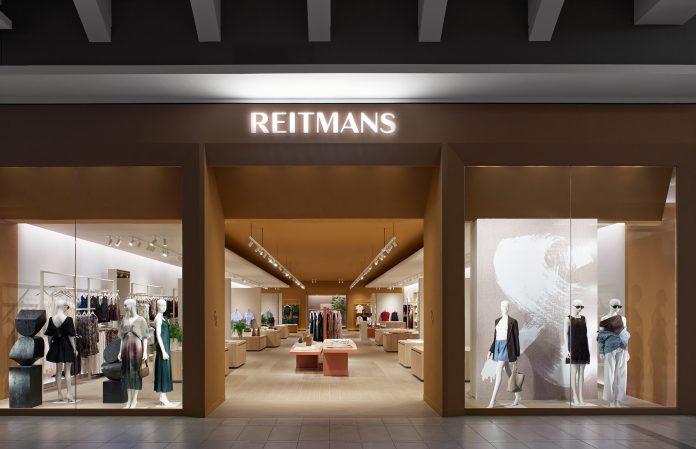
Image Credit: Ben Rahn/A-Frame [www.aframestudio.com] (CNW Group/Reitmans (Canada) Ltd)
As part of its 100th anniversary, Reitmans said Thursday it is stepping into its next chapter with the unveiling of a new logo and reimagined store concept at Carrefour Laval, located in the Greater Montreal area, about 20 kilometres from downtown Montreal.
More than a renovation, this reopening reflects an evolution of the in-store experience with an approach that further affirms the brand’s renewed identity, said the retailer.
Isabelle Bonin
This unveiling marks the first public appearance of Reitmans’ new logo, reflecting a more confident identity and a forward-looking perspective. This visual evolution is part of the broader momentum the brand is building as it enters its centennial year. Designed by award-winning interior design studio, BURDIFILEK, as a structured and intentional space, the new concept is grounded in a thoughtfully planned layout and natural flow, offering a refreshed perspective on the shopping experience, said the company in a news release.
Reitmans logo
“This initiative reflects a natural evolution for Reitmans. We wanted to create a clear and intuitive environment that better showcases our collections and reflects our current fashion sensibility,” said Isabelle Bonin, Vice President, Marketing, eCommerce and Visual Presentation at Reitmans. “It’s an experience designed to better support our customers and strengthen their connection to the brand.”
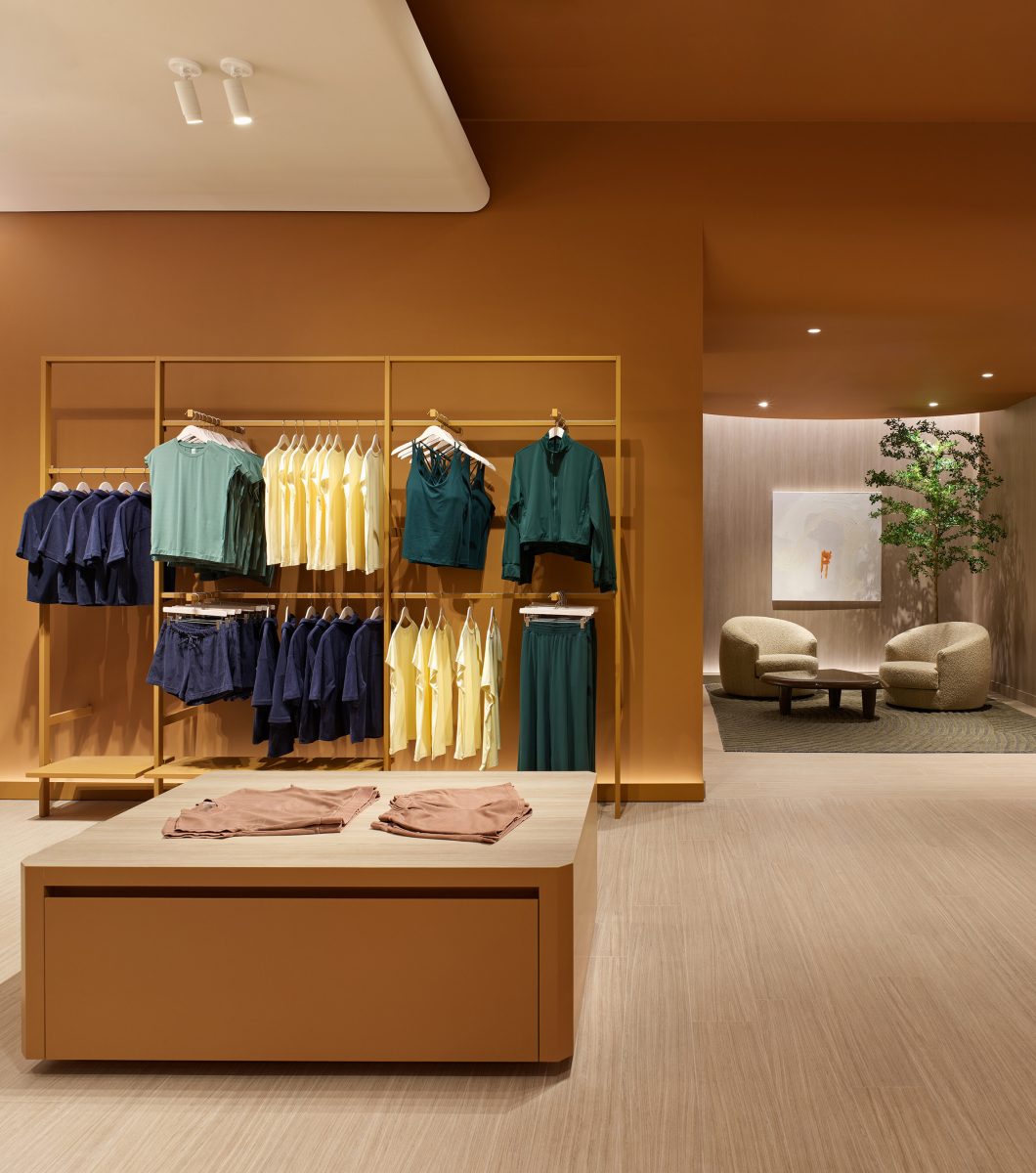
Image Credit: Ben Rahn/A-Frame [www.aframestudio.com] (CNW Group/Reitmans (Canada) Ltd)
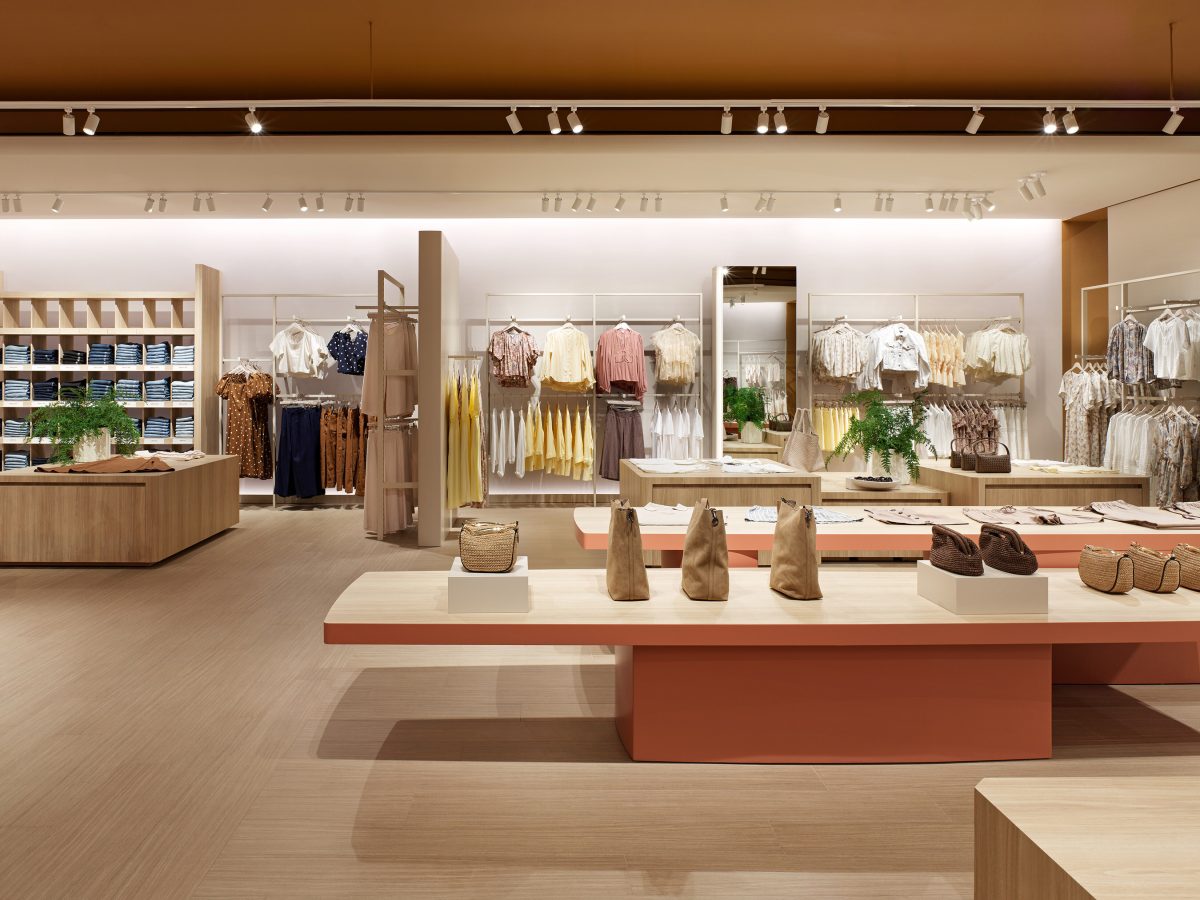
The store features a warm and refined aesthetic with open layouts, carefully considered lighting, rich textures, and a clean palette. By focusing on what matters most, the space strikes a balance between clarity and emotion by creating a harmonious experience where fashion takes centre stage, said the brand.
“Reitmans has a long-standing legacy. Our goal was to not reinvent it, but to reinterpret it. We highlighted the familiarity of the brand within a confident setting that will resonate across Canada,” said Diego Burdi, Co-Founder and Creative Director, BURDIFILEK.
Paul Filek
“In an era of rapid retail change, the forces at work are both global and local. Our partnership with Reitmans reaffirms design as an investment in business strategy for evolving legacy brands and secures its longevity in a demanding market,” said Paul Filek, Co-Founder and Managing Partner, BURDIFILEK.
Reitmans said it also collaborated with Montreal-based artist Miville and will be featuring one of her original pieces in the space to introduce an artistic dimension that connects fashion, design, and expression.
“With this new concept, Reitmans is setting a clearer and more ambitious direction that is aligned with the initiatives launched as part of its centennial. This evolution reflects a stronger point of view on style, expression, and customer experience while remaining true to the brand’s core, said the company.
Launched at Carrefour Laval on April 18, this concept paves the way for a rollout across Canada beginning in 2027, it said.
The brand operates more than 200 stores across the country.
Image Credit: Ben Rahn/A-Frame [www.aframestudio.com] (CNW Group/Reitmans (Canada) Ltd)
They said the MOU establishes a framework for collaboration across key areas including stakeholder engagement, participation in industry forums, and joint efforts to foster sustainable opportunities and build sector resilience in the face of emerging challenges. These priorities reflect a shared understanding that domestic and international tourism growth depends on strong, ongoing coordination between government and industry stakeholders.
Parks Canada and TIAC said they will work to advance a strong, competitive and sustainable sector that contributes to Canada’s economic prosperity and environmental stewardship.
Parks Canada is one of Canada’s leading tourism experience providers, welcoming approximately 24 million visitors every year to some of the world’s most iconic natural and cultural heritage destinations. Visitors to Parks Canada administered places help generate $4 billion to the national GDP and spend the equivalent of more than $11 million every day in communities across the country.
With 171 national historic sites, 48 national parks, five national marine conservation areas and one national urban park, Parks Canada’s vast reach provides services in over 200 locations across Canada, in every province and territory, rural, urban and northern.
“The renewed Memorandum of Understanding with the Tourism Industry Association of Canada reflects our shared commitment to strengthening Canada’s visitor economy while protecting the natural and cultural treasures that define our country. By continuing to work together, Parks Canada and TIAC will support sustainable tourism that benefits communities, enhances visitor experiences, and ensures these special places are protected for future generations,” said Andrew Campbell,Interim President & Chief Executive Officer, Parks Canada.
“Working closely with Parks Canada helps TIAC deliver real value for Canada’s tourism sector. This MOU gives us a stronger foundation to tackle shared challenges, open up new opportunities, and make sure tourism continues to support jobs, businesses, and communities across the country. A more united sector is not only good for tourism, it is good for Canada,” said Sébastien Benedict, President & Chief Executive Officer, Tourism Industry Association of Canada.
With fuel disruptions across Asia sending ripple effects through global supply chains, Canadians may be having a sense of déjà vu. But would today’s disruptions lead to the kind of shortages we saw in the early days of COVID-19?
Vinayak Madappa, Retail Advisory Partner at Capgemini, who has spent the last several years working with retailers on post-COVID supply chains, says that’s not likely – and that the pandemic may have actually left Canadian consumers better insulated than they realize.
“The biggest shift is in how retailers think about safety stock. Before COVID, the industry ran lean as a result of focus on free cash flow and lower inventory holding on the assumption that efficiency and resilience were the same thing, and 2020 proved they are not. Most retailers have not gone back to that position, and we are now seeing “just in case” inventory vs “just in time” inventory as a standard buffer,” he said.
“Transportation impacts as an example from Red Sea adds 10+ days to delivery windows leading to impact on shelf availability. Sourcing and supplier diversification is no longer an option and is mandatory. This was dominated by cost and margin pressures. The other factor is that COVID was a different kind of shock: it hit demand, operations, and logistics all at once, whereas what we are seeing now is primarily fuel-driven and narrower in scope, which means the system is being stressed but not overwhelmed. The response to this was shifting to multi country / region (LATAM/Eastern Europe) sourcing and dual sourcing at SKU level is a new BAU (Business as Usual) for retailers making supply chain resilient by reducing lead times, derisked transportation (Red Sea impact).
Vinayak Madappa
“Lastly, contractual structures have changed with suppliers agreeing to alternative routes, multiple ports of entry and allows for better control tower visibility in the supply chain ecosystem.”
Where are the pressure points right now?
Madappa said the categories that warrant the closest attention are textiles and apparel, technology and electronics, and anything with deep sourcing dependency on Asia.
“These are where the second-order effects of fuel disruption land hardest, through higher diesel costs flowing into fertilizer, farm machinery, and manufacturing inputs, which simultaneously drives up costs,” he explained.
“On a secondary level, while Canada is a major producer in agriculture, we are dependent heavily for foreign processing leading to impact on packaged goods, frozen food and other on the shelf staples which are impacted by both price increases as well as delays in logistics.
“Hospitality and travel-adjacent retail are also worth watching, because ticket prices to Asia are already up significantly and disrupted routes are changing how Canadians plan and spend. For retailers with heavy private label programs sourced in those regions, the six-to-eight month window is when commodity and yield pressures are likely to show up in replenishment costs.”
Are current inventory levels enough of a buffer?
For retailers that made the shift from weeks to months of safety inventory, they’ve bought significant time before disruptions become visible to shoppers, noted Madappa.
“For most retailers, the current inventory buffers for essential and core SKU’s is in the range of 8-12 weeks of protection which limits availability exposure. The risk is that not every retailer made that transition across all categories, so there will be pockets of exposure even within otherwise well-managed businesses. If this disruption is not resolved within six to eight months, that is when on-shelf availability starts to become a genuine concern in Asia-dependent categories,” he said.
“What consumers are already feeling, though, is price, because fuel is a global commodity and that pressure does not wait for inventory buffers to run down. The buffer protects availability, not cost.”
Craig Adderley photo
Diversification and nearshoring being tested
Madappa said diversification and nearshoring are being tested, and for the most part the ones that were executed well are holding up.
“Canada’s trade relationships are more diversified than they sometimes get credit for, with backup suppliers for technology components spread across Latin America, and strong food and everyday goods ties to Australia, New Zealand, and CUSMA partners like Mexico and the US.
“Textiles follow a similar pattern, where dependency tends to be concentrated in raw materials rather than finished goods, and many Canadian brands have retained domestic finishing and production capacity.”
Where will consumers feel the impact?
Madappa said consumers are already feeling the impact in price, and that is the most immediate and sustained effect.
“Pricing pressure hits shelves well before inventory buffers are exhausted, and consumers have already started responding by reducing basket sizes and shifting toward discount banners,” he said.
“Assortment is the next place to watch. As commodity and yield pressures work through the supply chain, retailers may rationalize stock keeping units in certain categories, which means less variety rather than empty shelves. Delivery timelines on certain goods, particularly those moving through disrupted shipping lanes, will also stretch. The least visible impact is probably in the margin decisions happening right now, where brands are absorbing costs they will eventually have to pass through, which means some of the pricing pressure consumers are feeling today is still in its early stages.”
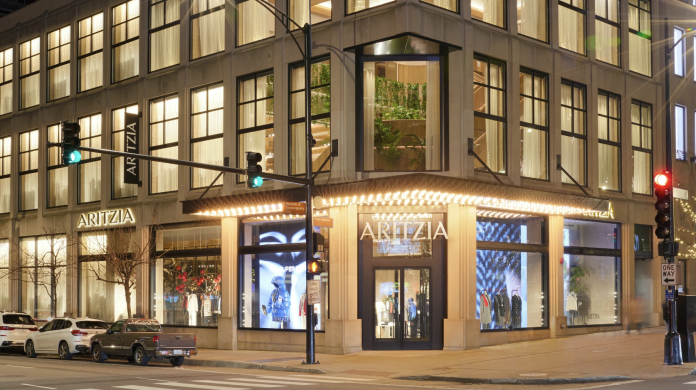
Aritzia Chicago flagship on Michigan Avenue. Photo: BLDUP.com
Aritzia is entering a new phase of growth, one that is increasingly defined by its performance in the United States rather than its historical base in Canada. Once viewed primarily as a Canadian fashion success story, the Vancouver-based retailer is now scaling rapidly across North America, supported by strong demand, expanding store networks, and growing brand awareness south of the border.
Recent analysis from Stifel, led by Managing Director Martin Landry, suggests that momentum remains firmly intact. The firm expects Aritzia to deliver another strong quarterly performance when it reports fourth quarter fiscal 2026 results, supported by robust consumer demand and accelerating U.S. sales trends.
Martin Landry
Stifel has increased its comparable sales growth forecast for the quarter to 21 percent year-over-year, ahead of broader market expectations. The upward revision reflects strong credit and debit card data, which indicates that consumer spending at Aritzia has remained elevated even as the company laps prior periods of significant growth.
Sustained Momentum in a Challenging Retail Environment
What stands out in Aritzia’s performance is not only the pace of growth, but its consistency. The company is sustaining high levels of comparable sales despite operating against increasingly difficult comparisons from previous years.
In the United States, Aritzia continues to post exceptional results. According to Stifel’s analysis of transaction data, U.S. sales are tracking at growth rates of 40 to 45 percent year-over-year. This level of performance reflects both organic demand and a rapidly expanding physical footprint.
Store growth has played a meaningful role. Aritzia’s U.S. store count has increased by approximately 21 percent year-over-year, and the network has nearly doubled over the past four years. As new locations open and existing stores mature, the brand is reaching a broader customer base while reinforcing its positioning in key metropolitan markets.
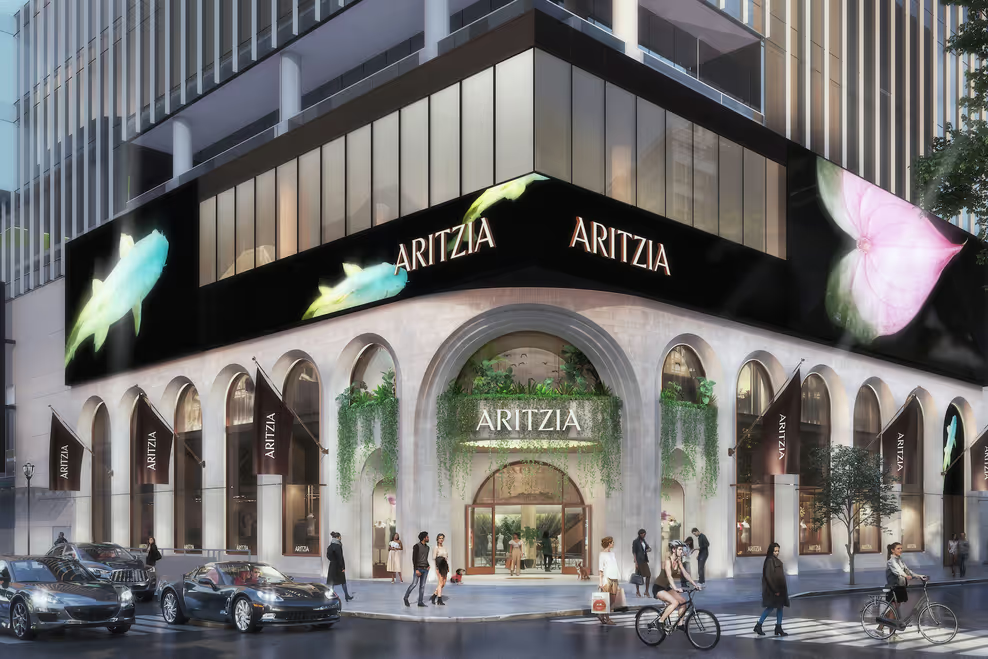
Rendering of the future four-level 41,800 sq ft Aritzia store at Robson and Howe in Vancouver. Rendering: Aritzia
A Scalable Model Built on Brand and Inventory Discipline
Aritzia’s ability to sustain growth is closely tied to its operating model. The company maintains tight control over its product assortment, merchandising strategy, and inventory levels, which has allowed it to respond effectively to demand without relying heavily on discounting.
Stifel points to strong product reception and effective digital marketing as key contributors to current momentum. At the same time, the company has ensured that inventory levels are sufficient to support demand, reducing the risk of missed sales opportunities.
This balance is particularly important in a retail environment where many competitors continue to struggle with inventory mismatches and margin pressure. Aritzia, by contrast, is seeing the benefits of disciplined execution across both physical and digital channels.
Margin Expansion and Profitability Strengthen the Story
Growth alone does not define Aritzia’s trajectory. The company is also improving profitability as it scales, which is reinforcing investor confidence.
Stifel expects adjusted EBITDA margins to expand by approximately 100 basis points in fiscal 2027, supported by lower markdown activity and operating leverage on selling, general, and administrative expenses. This combination suggests that Aritzia is not only growing, but doing so efficiently.
Earnings growth is expected to remain robust. Stifel forecasts adjusted earnings per share of $4.25 for fiscal 2027, representing an increase of roughly 34 percent year-over-year.
Such performance places Aritzia ahead of many retail peers, particularly at a time when discretionary spending remains uneven across categories.
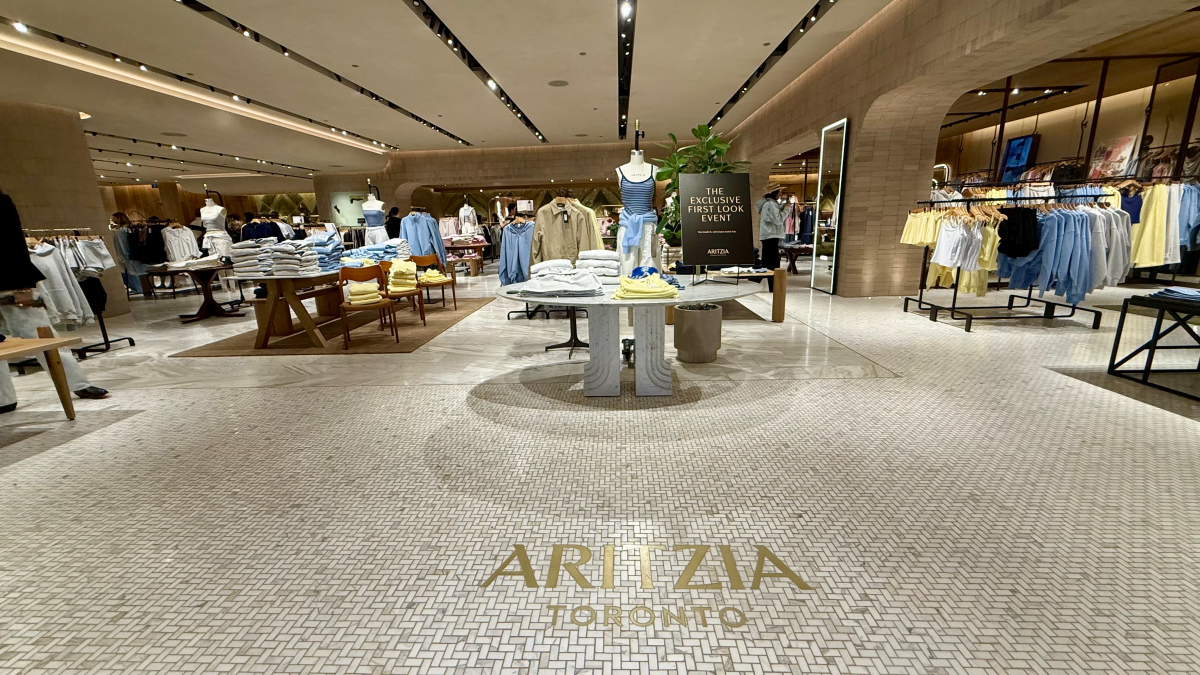
Newly expanded Aritzia store at CF Toronto Eaton Centre, April 2026. Photo: Craig Patterson
A Strong Balance Sheet Enables Continued Expansion
Another critical component of Aritzia’s evolution is its financial position. The company is expected to end the fiscal year with a cash balance approaching $750 million, the highest in its history, alongside strong free cash flow generation.
This level of liquidity provides significant flexibility. Management has the ability to reinvest in store expansion, supply chain infrastructure, and digital capabilities, while also considering capital return strategies such as share buybacks.
Unlike many retailers that rely on external financing to support growth, Aritzia is increasingly positioned to fund its expansion internally. That distinction is becoming more meaningful as economic conditions remain uncertain.
Significant Runway Remains in the United States and Beyond
Despite its recent growth, Aritzia’s expansion story is still in its early stages. The company operates fewer than 80 stores in the United States, a fraction of the footprint maintained by several of its competitors.
This gap highlights a substantial opportunity for continued store growth, particularly in underpenetrated markets. In addition, Aritzia has yet to establish a meaningful brick-and-mortar presence outside North America, even as it serves international customers through its e-commerce platform.
With a strong return on invested capital exceeding 20 percent, the company is well positioned to continue deploying capital into high-return opportunities.
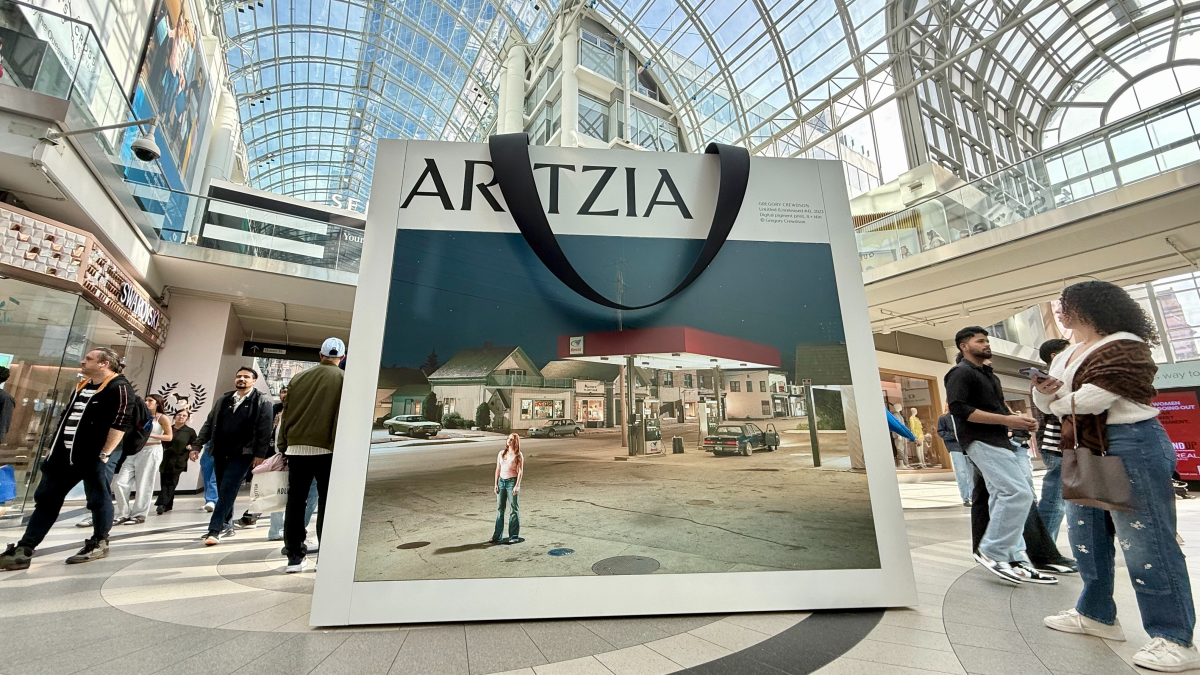
Mall installation for the newly expanded Aritzia store at CF Toronto Eaton Centre, April 2026. Photo: Craig Patterson
Valuation Reflects Confidence in Long-Term Growth
Aritzia’s share price has reached new highs, reflecting growing investor confidence in the company’s trajectory. While valuation multiples are above historical averages, Stifel argues that the premium is justified given the strength and durability of earnings growth.
The firm has increased its target price to $158, supported by higher earnings forecasts and continued momentum observed in recent consumer spending data.
From National Success to Continental Scale
Aritzia’s evolution is increasingly clear. What began as a Canadian retail success story has developed into a brand with growing influence across North America.
The company’s ability to combine strong product execution, disciplined operations, and strategic expansion has positioned it well for continued growth. While risks remain, including potential macroeconomic pressures and shifts in consumer behaviour, current performance suggests that Aritzia is navigating these challenges effectively.
As the company continues to scale its U.S. presence and explore future opportunities, its transformation into a North American retail powerhouse appears well underway.
Working as a cosmetology instructor in Minnesota is quite rewarding, thanks to the high demand for quality cosmetology training services, fast & affordable training, and the satisfaction of seeing your students grow. But having to renew your licence from time to time after you start working is a challenge you probably will never be ready enough for.
So, what should you do, and how do you ensure effortless renewal? Here are our top tips.
First, Understand the Renewal Requirements
Renewing your licence should be manageable, but only when you know what you are doing. Luckily, the renewal requirements for a cosmetology instructor licence in Minnesota are very clear. Your licence will expire on the last day of your birth month, typically every three years. Keep in mind that the licence period can be shorter when you first get your licence.
Beyond the expiry timeline, you also must complete the defined continuing education requirements. You are specifically required to complete 45 hours of continuing education for a successful renewal.
Make sure to get a top-ratedMN Board of Cosmetology-approved course from a top provider like RocketCert. This way, you are not just sure of taking the required topics, but also that you are studying content that will actually improve your teaching processes.
Choose Your CE Classes Carefully
If you ask us, the most important requirement for a successful renewal is continuing education. We mentioned earlier that the board expects you to complete 45 hours of continuing education. These are broken down into:
30 hours in teaching methodology
15 hours in clinical practice within your field of licensure
This seems like a steep requirement, especially when you consider how tightly packed most instructors’ schedules already are between teaching hours, student supervision, lesson planning, and other crucial inputs.
Still, choosing the right provider can help a lot, as some courses are better designed with instructor-level application in mind. So, whether you want to improve your teaching effectiveness, classroom control, or skill correction techniques, make sure to go for a course that offers what you are looking for.
Start Planning the Earliest You Can
The board of cosmetology has up to 15 business days to process renewals. So, avoid submitting your renewal application so close to the last week of your birth month to avoid unnecessary delays. Early birds will love it here, since you can submit a renewal application up to 10 weeks before your licence expires.
Keep Your Documentation Clean
Not many cosmetologists see this one coming, yet it contributes greatly to renewal slowdowns. While your course provider will more than likely be the one who will report your course completion to the board, there are times when you have to do it yourself.
This is mainly the case if the provider you used takes time to submit completion records to the board system. Make sure you understand how long it takes for your course provider to report completion so that you can decide whether you should report it yourself.
Also, make sure to retain the proof of course completion, just in case the board ever requires it.
Get Started Today
The easiest licence renewals are the ones that you planned seriously for. And when you understand what is required for a successful renewal, you can plan adequately. The information in this post should place you in a better position to do just that.
To make your work even easier, consider taking your continuing education course from RocketCert. Since they offer expertly written and fully narrated courses, you will have a seamless learning experience. One that fully facilitates improved performance at work.
Fine jewelry is going through a change that is away from just status symbols. For a long time large diamonds, heavy settings, and very public displays of wealth were what one saw. Today, however, many buyers are into pieces that are more personal and symbolic and that have an emotional connection.
This change in direction is a result of larger lifestyle trends. One sees a greater interest in mindfulness, authenticity, and individuality from consumers. Jewelry is not for visibility or as an investment play anymore; it is a form of self-expression and emotional storytelling. Therefore, we are seeing a shift to softer aesthetics, organic shapes, and very subtle use of color in current design.
Why Moonstone Aligns With This Shift
Among the gems that are seeing a revival in appreciation, moonstone stands out for its quiet, almost ethereal glow. Unlike high-clarity, high-sparkle stones, which are prized for their brilliance Moonstone is valued for its subtle adularescence, a light that seems to hover just below the surface.
This very quiet and almost imperceptible design element is what modern trends are leaning into with the moonstone one sees today. Also in terms of what the stone represents beyond its look, for years moonstone has been a stone of intuition, emotional balance, and inner clarity. These symbolic properties really connect with today’s buyers, who in turn are looking for jewelry that speaks to their internal self rather than just what is on the outside.
In this regard, moonstone is beyond decorative. It is a meaningful piece that is worn not for beauty alone but for personal value.
From Statement to Subtle Luxury
A change is noted in what consumers today consider to be luxury. What used to stand out as luxury is its bold and public presentation, which has now given way to refinement, restraint, and intention. This shift is very much present in the fine jewelry market.
Today instead of large-scale gemstone pieces or over-the-top designs, what one sees is a trend towards jewelry that has an easy and versatile appeal. Jewelry that you can wear every day, layer up with ease, and that fits into any lifestyle is what is in demand.
Moonstone in this trend is very much at home. It has a gentle glow that does not seek out the foreground but rather what goes on behind it. It presents a feeling of quiet opulence, a luxury that is felt in the bones as opposed to shouted out. This also is a shift towards a larger culture that values the understated over the overdone.
Design Trends Helping Drive Moonstone’s Appeal
Presently it is the contemporary jewelry designers who have brought moonstone back into the public eye. One sees a trend towards minimal settings, clean lines, and organic shapes, which in turn put the stone’s natural beauty at the fore.
One also sees that which is termed the bezel setting is very popular; what this does is frame the stone in a smooth metal edge, which in turn improves on the stone’s durability, and one sees a very modern look at the same time. In the case of moonstone bezel rings, for example, one notes how design may bring out the natural play of light in the stone without in any way overdoing it.
Less disruption, more focus on natural beauty. In gold, rose gold, or sterling silver pieces, moonstone does best in simple, flowing designs. The result is jewelry that is at once modern and classic.
Why Symbolic Stones Matter in Modern Retail
The rise in the popularity of stones such as moonstone is a part of a larger trend in consumer behavior. Today’s jewelry consumers are very much into products that tell a story. Instead of buying based purely on visual appeal or brand prestige, they opt for items that have meaning and that they feel an emotional connection to.
This is a rekindled interest in gemstones that have historical, cultural, or spiritual value. Stones are chosen for what they represent, calm, protection, clarity, love, or transformation, and not just for their appearance.
In the retail world one is seeing a large-scale change. This is pushing brands and designers out of the decorative and into the thematic; they are thinking more about story and intent. Jewelry in particular is shifting away from being simply decorative. Jewelry, in fact, is moving away from the decorative toward that which defines identity and emotion.
Moonstone and the Future of Fine Jewelry
Looking out at the future, one sees that moonstone is in a strong position within the growth of the fine jewelry market. As customers’ value meaning, subtlety, and emotional connection in their purchases, gemstones that present these elements will see increased appeal.
Moonstone as a choice brings a subtle shine and large-scale meaning, which one sees as a trend in this direction. It is a balance of natural charm with very personal value, which at present is very much at home in design.