Calgary entrepreneur Christine Buhr has opened the city’s second FS8 studio in Marda Loop, less than a year after launching the first Western Canadian location in Calgary’s West District.
The expansion reflects the city’s strong demand and enthusiasm for FS8’s unique blend of Pilates, Tone and Yoga, said Buhr.
Since opening FS8 West District in May 2025, Buhr has built a thriving community around the concept’s functional, low-impact and high-energy approach to movement. Ten months later, Buhr’s Marda Loop location brings the same results-driven and science-backed workout, expanding FS8’s influence to one of Calgary’s most vibrant neighbourhoods.
“After opening West District, the response from Calgary has been incredible,” said Buhr. “People connected with our approach immediately. Seeing how quickly the city embraced FS8 reinforced what I already believed going in: FS8 is a perfect fit for this city, and we’re excited to offer a second location for people to enjoy.”
Christine Buhr
Located in the heart of Marda Loop, the new studio reflects the neighbourhood’s strong sense of community and active lifestyle. The space offers a welcoming environment where members of all fitness levels can train together while building strength, balance and flexibility, added Buhr.
“FS8 breaks the traditional fitness mould by combining functional strength, mindful movement and restorative practices into one class,” she said. “It’s designed to help every body and mind feel stronger, move better and build confidence in their everyday lives.”
Utilizing a combination of reformer and mat Pilates, strength training and yoga, FS8’s workouts are tailored to support different goals and muscle groups through three unique class offerings: FS8 Original, FS8 ReformX and FS8 Ignite.
FS8 photo
FS8 Marda Loop, located at 2012 34 Ave SW, has a variety of memberships and class packs available, including an exclusive five-class introductory offer for those looking to experience FS8 for the first time.
Buhr said through COVID she sold her other business and she was looking for something new and a new experience. Pilates was something that fell into her radar, particularly FS8.
“I had hurt my neck at the time, and I was looking for a new way to train. The model and the workout looked like something that was safe, yet really effective. When I first tried it, I was really surprised at how hard the workout actually was, but it was a low-impact workout that I could still do without it impacting my neck,” she explained.
“I was really impressed by the overall programming and that the organization had built this really cool model that they were starting to roll out. I thought, what a neat thing to get on board with. I think training in this way is going to start growing further. We’re going to get away from these high-intensity bootcamp workouts, and people are looking for things that are easier on their bodies but still give them a good workout.”
FS8 photo
Buhr said the response to the first location in West District has been amazing.
“It’s been such a great experience. I think the biggest surprise to me was the community building. I knew that I always wanted to focus on that, but I didn’t realize how impactful we were actually going to be to people’s lives. I go into the studio and have a workout, and there isn’t a day that goes by when someone doesn’t come up to me and say, ‘Christine, thank you so much for creating this space for us. I just feel seen. I’ve made friends here. I’m getting an amazing workout in. Your instructors are awesome. It’s a great place to come, and it makes me feel so good’.”
And there are more locations to come.
“I own the rights to the Calgary market, so we are going to be expanding. We wanted to get Marda Loop under our belt first and really make sure that we understood how to grow the model correctly in the city. But we are currently looking for other locations to be expanding into,” added Buhr.
Launched in 2021, FS8 is a next-generation fitness concept that fuses Pilates, Yoga and strength training into a full-body, low-impact workout. FS8 is part of the FIT House of Brands, alongside F45 Training and VAURA Pilates.
A machine which is not able to stop exactly is a liability. A machine that is incapable of engaging gears will lose products, wear out quicker, and expose operators to risks. The two parts that determine the two outcomes are the brake and the clutch.
Your load is connected to your motor through industrial brakes and clutches. The brake detains or halts movement at will. The clutch switches or unswervingly drives power to the motor. The two of them provide you with control over all the movements made by your machine.
What Are Industrial Brakes and Clutches?
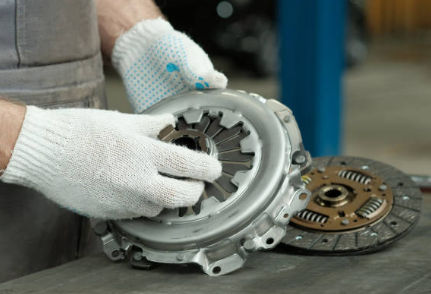
A brake is a force exerted or a rotating shaft brought to a stop. That shaft is connected or disconnected to the source of drive by a clutch. In the majority of machines the two are combined, the clutch operating when it is necessary that power be given, the brake when it is not.
They are both operated by electricity or pneumatic means. You call them by a signal and they are back within a few milliseconds. No mechanical levels, no human intervention.
Where They Are Used
Packaging Machines: Clutches operate at an opportune time. Brakes occupy the place between cycles.
Printing and Paper Lines: The types of magnetic particles used to control web tension constantly do not jerk.
CNC and Machine Tools: This is by electro-magnetic brakes which retain the spindle or axis during power outage.
Conveyor Systems: Brakes are used to halt the belt immediately when sensors are activated to stop.
Cranes and Hoists: When the power is off the load is frozen in place by power-off brakes as soon as the current is cut.
How Clutches and Brakes Power Industrial Systems
Manufacturing and Automation Systems
Clutches and brakes are widely used in conveyor systems and assembly lines to control motion and ensure smooth start-stop operations. They help maintain efficiency and reduce mechanical stress on equipment.
Printing and Packaging Industry
In printing presses and packaging lines, these components play a key role in maintaining proper tension and alignment. This ensures consistent output quality and prevents material wastage.
Textile Industry
Clutches and brakes are essential in spinning and weaving machines, where they help maintain uniform speed and fabric alignment. This improves product quality and operational stability.
Machine Tools and Robotics
In CNC machines and robotic systems, they provide precise torque control and accurate positioning. This allows for high precision in cutting, shaping, and automated tasks.
Energy and Heavy Equipment
For heavy-duty machinery and power systems, clutches and brakes handle high torque loads and deliver reliable braking performance. Their durability makes them suitable for continuous and demanding operations.
Types of Brakes and Clutches – Explained
Electromagnetic Brakes and Clutches
They are most widely used in the field of industrial automation. With DC 24V applied to the brake, a magnetic field causes the armature plate to slide the friction surface against and halts rotation. The clutch is inverted – with voltage the connector of the drive, with cutting the connector of the drive.
Torque Range: 6 Nm-400 Nm This is the range of torque that suits your shaft load.
Maximum speed: 1800 rpm that is applicable in the majority of regular motor uses.
Response: Very fast. The magnetic field accumulates and fades within milliseconds.
Installation: Small size, simple to fit on the shaft.
Best used: positioning systems, machine tool drives, conveyor stops and any operation that requires a hard, dependable engage or release.
Power Off Brakes
A power off brake works just the reverse of the normal electromagnetic brake. When set to zero, it sweeps together and when a voltage is applied, it relaxes. This causes it to be a safety device in default in case of power failure, the brake automatically activates and retains the load.
Torque Range: 0.3 Nm to 8 Nm Minuscule stepper motor sizes and smaller servo axes.
Voltage DC 24V: thermal and overload protection built in.
Safety: Operates on power loss no additional circuitry required to support fail safe.
Best: horizontal axes, servo and stepper motor shafts, any type of load that has to remain in place during a power outage.
Magnetic Particle Clutches and Brakes
The fine iron powder between the rotor and housing of units of magnetic particles is used. As DC current is passed through the coil, the powder chains and passes torque. Minimum current means minimum torque. The association is almost linear exact, smooth and modifiable at any given point between zero and maximum.
Torque Range: 3 Nm to 400 Nm in single and hollow shaft designs.
Maximum speed: 1500 to 1800 rpm according to model.
Key Feature: Constant slip causes no damage in the heat the powder absorbs and energy dissipation.
Tension Control: Tension control is used in printing, film handling and paper handling.
Best: winding and unwinding processes, printing presses, and any process that requires torque to be maintained continuously without interruption.
Pneumatic Clutches and Brakes
In the pneumatic types, compressed air at 0.6Mpa is applied to open the clutch or brake. A piston is forced by air pressure to hold friction discs together. Expel the air, expel the torque. Since the air pressure can be adjusted so can the torque output to as much as 400 Nm on the shaft mounted model.
Control: Adjust air pressure to fine-tune precise torque at any given point.
Durability: No electric coil to burn out very long service life under heavy loads.
Electromagnetic vs. Magnetic Particle vs. Pneumatic – Which One Fits?
The three technologies solve different problems. Use this table to match the type to your application in one look.
Feature
Electromagnetic
Magnetic Particle
Pneumatic
Control Method
Electric (DC 24V)
Electric (DC 24V)
Compressed air
Response Speed
Very fast
Fast
Fast
Torque Adjustability
Fixed torque levels
Continuously variable
Adjustable via air pressure
Slip Operation
No , hard engage/release
Yes , smooth slip
No
Tension Control
Not ideal
Excellent
Good
Shock on Engagement
Slight
None , smooth
Slight
Best For
Positioning, holding, stopping
Printing, paper, winding
Heavy-duty machinery
If you need hard stops and precise positioning, go electromagnetic. If you need smooth tension control with no shock, go magnetic particles. If you are driving heavy machinery and already have compressed air on site, pneumatic is the right call.
How to Choose the Right Brake or Clutch
Step 1: Determine Your Torque Need.
Measure the shaft torque your motor gives and the load inertia you are loading. Select brakes or clutches with a static torque rating at least as much as your peak shaft torque. The under-rating leads to slip and early wear.
Step 2 : Choose the Right Type
Hove, Hard stop required: Electromagnetic brake.
Fail-safe when losing power: Power off brake.
Piezoelectric slip and tension control: Magnetic particle clutch or brake.
Heavy load, compressed air supplied: Pneumatic clutch.
Step 3 : Check Shaft and Speed
All ATO electromagnetic and magnetic particle brakes and clutches work up to 1800 rpm. Models of magnetic particle hollow shaft are rated at 1500 rpm. Make sure that you order a motor speed that is within range.
Step 4 : Match the Voltage
Every electric model operates on DC 24V. When you have a different supply voltage on your control panel, then you will be required to have a step-down converter. A regulated air supply of 0.6 MPa is required in pneumatic models.
Sum Up
Brakes and clutches may not be seen as large parts of a machine, but they are very important in the performance of a machine. They determine the smooth and correct starting, stopping and positioning of a machine, which directly affects the performance and quality of the product. Selecting the incorrect component may result in overflow, loss of materials and unjustified equipment wear.
In manufacturing and automation, in heavy-duty equipment and machines, high quality clutches and brakes guarantee accurate torque control, stable movement and dependable operation. Electromagnetic, power-off, magnetic particle and pneumatic solutions are designed to satisfy varying operational needs and remain efficient and durable when used on a continuous basis.
Not only is it maintenance, but it is a strategic choice to ensure that machinery is safeguarded by investing in the right clutches and brakes, better management, and overall increased productivity. In cases where accuracy, performance, and stability are crucial, the correct solution means a more smooth operation and performance.
Your transformer is leaking energy. Not because it is broken because of the way it was built. Standard E-I core transformers have gaps in their magnetic path. Flux escapes at those gaps. You pay for it on every electricity bill.
A toroidal transformer has no gaps. The core is a solid ring. Magnetic flux travels in a closed loop and stays exactly where it should. The result is 40% less energy loss, 80% less magnetic leakage, and a service life measured in decades. A toroidal transformer does not contain any gaps. The core is a solid ring. Magnetic flux moves in a closed loop and does not go anywhere it should not. The result is 40% less energy loss, 80% less magnetic leakage and a service life measured in decades. This is why toroidal transformers become the go-to for medical equipment, high-end audio systems and precision industrial controls.
What Is a Toroidal Transformer?
A toroidal transformer is constructed around a donut shaped core of high flux ferromagnetic material. Both the primary winding and the secondary winding are wound evenly around this ring.Because the core is continuous with no joints or air gaps, the magnetic field stays locked inside it from end to end.
This single design decision the ring shape is responsible for every performance advantage a toroidal transformer has over conventional alternatives.
Where People Use Them
Medical Devices: Zero EMI is not optional in operating rooms and patient monitoring equipment.
Audio Amplifiers: The quietest power supply on the market, no hum, no interference in the signal.
Industrial Controls: Deals with continuous heavy loads in harsh environments for decades.
Voltage Converters 220 V to 110 V or 110 V to 220 V to Global Equipment.
What Makes It Better: The Numbers.
It is easy to make marketing claims; engineering data is not. We are not arbitrarily talking of 40 percent loss reduction or 80 percent magnetic leakage reduction, but of these are the direct consequences of the smooth geometry of the toroidal core.
In an energy environment where energy prices are on the increase and downtime of a system is costly, these figures translate to the difference between the power system that barely makes the make and those that will last decades. We do not simply enhance the specifications of the traditional E-I transformers by removing the air holes present in the construction, but entirely transform the way that power is treated, making each watt of power you spend count.
Why the Toroidal Core Wins on Every Metric
The unbroken ring structure is a direct consequence of the technical superiority of a toroidal transformer. The toroidal design offers a continuous path unlike the usual laminated transformers where the magnetic flux escapes at every joint and gap.
80 Per cent Less Magnetic Leakage: Field lines remain locked in the ring by removing core joints. This practically eliminates the electromagnetic interference (EMI) which usually disrupts the sensitive circuits around it.
40 percent less Energy Waste: Higher step up & step down transformer output requirements. When you eliminate leakage, you eliminate power waste. The toroidal design reduces hysteresis and eddy current wastes the hidden energy thieves so that more power gets to your equipment.
10-fold Service Life: Since the amount of energy wasted as heat is minimized the unit is maintained much cooler. Although switching power supplies can easily fail early because of thermal stress, a toroidal transformer is designed to last several decades when used under normal conditions.
The initial investment is likely to be more, but the arithmetic is easy: do away with replacement costs, as well as system downtime, the toroidal transformer will be more than compensated many times.
Toroidal vs. Conventional vs. Switching Power Supply
Not sure which technology fits your setup? This table settles the comparison in one look.
Feature
Toroidal Transformer
Conventional Transformer
Switching Power Supply
Magnetic Leakage
Up to 80% less
High leakage
Variable
Energy Loss
Reduced by 40%
Higher core losses
Low at full load
EMI / Noise
Near zero
Moderate
High-frequency EMI
Size & Weight
Compact, lightweight
Bulky and heavy
Very compact
Service Life
Several decades
Long but shorter
Half of toroidal
Best For
Medical, audio, industrial
General use
Consumer electronics
For anything where signal purity, long service life, or continuous industrial operation matters, the toroidal transformer wins on every row that counts.
Inside the Build What Goes Into a Toroidal Transformer?
What Are the Starting-Points of Everything in the Core?
A toroidal transformer is based on a high-permeability core of high-permeability ferromagnetic material ring shaped. Most transformers begin with a core upon which the joints or air gaps are made on which the break is to occur in the magnetic circuit.A toroidal core has none of these breaks.
What this means in practice: the magnetic flux circulates through a single, uninterrupted path. There is no leakage point for energy to escape. Core losses that you would pay for in heat and higher electricity costs simply do not occur in the same way. It is the reason every other performance advantage in this transformer traces back to the core geometry.
Why Does Winding Quality Determine Real-World Efficiency?
The core sets the ceiling on performance. The winding determines how close you get to it. Toroidal transformers use high-purity copper wire wound in a tight, uniform pattern around the entire circumference of the ring.
Uneven winding creates resistance imbalances. Resistance imbalances generate heat. Heat is wasted energy. The accuracy of winding in eliminating these imbalances ensures that resistance is kept to a minimum, efficiency to its maximum and performance does not vary depending on whether the transformer is carrying light load or heavy continuous current.
What Is the Protection of Insulation to the ToroidalTransformer in Strenuous Situ?
A Toroidal transformer that performs perfectly in a lab but degrades under real operating conditions is not a reliable transformer. The insulation system in a toroidal transformer is built to handle what industrial and medical environments actually throw at it.
Several levels of insulation PET with windings and Mylar tape on the outside cover have triple purposes: they ensure no electric leakage between windings, enhance thermal conductivity to ensure that the transformer operates in a high-efficiency manner, and ensure moisture, dust, and mechanical stress protection. In applications where hard industrial conditions are a requirement or are required to obtain a safety certification; this insulation system is what enables the transformer to service to specifications throughout its entire service life.
How to Pick the Right Toroidal Transformers
Step 1 : Calculate Your Load
Sum up the power of all the equipment on the secondary. Add 20% on top as a buffer.That sum is your minimum VA rating.
Step 2 : Confirm Input Voltage
North America runs on 110V or 120V. Most of the world uses 220V to 240V. ATO covers all the standard inputs and custom voltages up to 690V.
Step 3 : Set Your Output Voltage
Standard outputs are 12V and 24V. If your application requires any other type of voltage, state it during the quote process any voltage up to 690V is available.
Step 4 : Think About the Environment
• High heat: PET and Mylar insulation handle elevated temperatures reliably.
• Chemicals: Double-varnished copper winding resists most industrial environments.
• Medical or audio: Specify low EMI requirements and high isolation level upfront.
Conclusion:
Toroidal transformers are not a luxury option, it is the correct choice when alternative transformers fail to work in the application. The reduced heat production, the reduced noise, and the greatly decreased loss of energy all provide it with high-level performance and long-term stability.
Supported by decades of technical engineering experience, toroidal transformers nowadays are developed to cater to a variety of power needs, both small-scale electronics and large-scale industrial systems. They are very versatile, and adhere to the internationally accepted standards, including CE, RoHS, CQC and VDE, and, therefore, can be used in a variety of environments all over the world.
When it comes to projects that require accuracy, high durability, and clean and efficient power, selection of the appropriate transformer is a very important choice. Not only does a carefully designed toroidal transformer enhance the functioning of the system, but it also guarantees higher efficiency and dependability as time goes by thus a smart and futuristic decision to apply in any application.
Calgary-based Foothills Creamery says it is committed to driving innovation in the dairy industry and its latest entry is a high-protein ice cream, which it says is a first in Canada.
“It’s an exciting time for our team at Foothills Creamery,” said Bill McKenzie, CEO of Foothills Creamery. “We have a very dedicated team that constantly comes up with new ideas that I believe will make the Canadian dairy industry more exciting, and our new Protein Ice Cream is leading that charge in 2026.
Foothills Creamery image
“As far as we know, this could be the first true ice cream, not a frozen dairy dessert, in North America that’s also high in protein. Refusing to compromise on the Foothills Creamery standards of excellence was a key goal when we set out to make this ice cream.”
Bill McKenzie
Foothills Creamery was founded in 1969. It continues to use the same old-fashioned, barrel-churned techniques as it did in 1969. Foothills Creamery supplies over 80 flavours of ice cream, sorbet, sherbet, and soft serve to over 1,000 independent ice cream shops across Western Canada. Its ice cream is also available at grocery stores and currently offers 14 flavours in 1.4 L containers, 8 flavours in 500 mL, and 6 flavours of 237 mL single serve (also available as a multi-pack).
“In a category like ice cream, customer preferences are constantly evolving, with more people looking for products that offer both indulgence and added benefits. At Foothills Creamery, innovation is a key focus for us as we continue to listen and adapt to what our customers want. It is important that we evolve alongside them, while staying true to the quality and nostalgic feel our brand is known for, bringing forward new products that feel both exciting and familiar,” said Wegener.
“Innovation like this also plays an important role in supporting dairy producers. By creating products that align with modern consumer preferences, we’re helping drive continued demand for high-quality Canadian dairy. It reinforces the versatility of dairy and ensures it remains relevant in new and growing areas of the category, which supports long-term growth for the producers behind our products.”
The new high protein ice cream has 30 grams of protein per pint and contains 50 per cent less sugar. It comes in 500 mL Coffee Bean and Chocolate Peanut Butter. They retail between $7.49 and $7.99 and are available at Freson Bros., and select Sobeys and Safeway locations across Alberta, with Calgary Co-op availability beginning in stores April 10.
The new high-protein ice cream is just the latest in a series of new butter and ice cream products. In 2025, Foothills Creamery launched single-serve ice cream (237 ml), available individually and in a 6-pack multi-pack. The Ice Cream Multi-Pack won the 2025 Alberta Food & Beverage Awards for Sweets and Candy, hosted by the Alberta Food Processors Association. Foothills Creamery also launched flavoured whipped butter, including Maple Brown Sugar and Cowboy Spice Blend varieties. Other new ice cream flavours for 2026 include Whisky Caramel (500 ml), Coffee Bean (500 ml), and Spumoni Twist (1.4 L).
Foothills Creamery image
Wegener said consumers today are more thoughtful and intentional with their spending, but they haven’t moved away from treating themselves.
“They’re simply more selective, choosing products that deliver clear value, whether that’s through quality, uniqueness, or how well it fits into their lifestyle. In categories like ice cream, there is still a strong desire for those small moments of enjoyment, but consumers expect more from what they choose, which is why delivering on both product quality and relevance is a top priority for us,” he said.
“We love creating new products for consumers to try, while also being mindful of the realities of today’s retail environment, where shelf space in the freezer aisle continues to be limited. That means focusing on innovations that truly resonate and earn their place in store. We’re very excited about the protein ice cream launch and look forward to seeing how consumers respond. If there is strong demand, we would absolutely love to expand the line with additional flavours in the future.”
The Retail Council of Canada has named entrepreneur and designer Jillian Harris as its Independent Retail Ambassador of the Year, recognizing her role in building a purpose-driven retail platform that supports Canadian small businesses.
The award will be presented at the Excellence in Retailing Awards Gala, part of RCCSTORE26, taking place June 2 to 3, 2026. The annual recognition highlights independent retailers who demonstrate leadership, innovation, and community impact across Canada’s retail sector.
Harris has built a retail ecosystem anchored by The Jilly Box, which includes both a seasonal subscription service and a year-round e-commerce platform known as The Market by The Jilly Box.
The business has grown into one of Canada’s most visible independent retail platforms, leveraging Harris’s audience of more than 1.5 million followers across digital channels. However, its core value lies in its merchandising strategy and brand curation.
Each edition of The Jilly Box highlights Canadian-owned, women-owned, BIPOC-owned, and 2SLGBTQIA+-owned businesses. This approach provides emerging brands with access to a national audience that may otherwise be difficult to reach through traditional retail channels.
In a market where independent brands often struggle with customer acquisition and retail distribution, the model offers a direct-to-consumer pathway that combines storytelling, product discovery, and community engagement.
Image: The Jilly Box
A Different Model for Independent Retail
According to Kim Furlong, President and CEO of Retail Council of Canada, Harris’s work stands out in a challenging retail environment.
“Jillian Harris has built something genuinely distinctive in retail,” Furlong said. “At a time when independent entrepreneurs are navigating one of the most challenging market environments in recent memory, she has used her platform and her business to actively open doors for them.”
The recognition reflects a broader shift in retail, where influence, content, and commerce increasingly intersect. Harris has effectively translated her background in design and lifestyle media into a scalable retail platform that prioritizes brand storytelling alongside product sales.
This model differs from traditional wholesale or department store distribution, instead positioning the platform as both curator and amplifier for independent brands.
Community Impact and Financial Contributions
Philanthropy has also been embedded into the business model. The company donates $40,000 from each quarterly box, with nearly $1 million reinvested into local community organizations to date.
This structure reinforces a broader positioning around values-driven retail, where commercial success is tied to social impact. It also aligns with growing consumer demand for transparency, purpose, and community engagement in purchasing decisions.
Recognition Within Canada’s Retail Industry
The Independent Retail Ambassador of the Year Award is part of RCC’s broader Excellence in Retailing Awards program, which recognizes innovation and leadership across the sector.
Past recipients include founders and operators of independent Canadian businesses that have demonstrated strong community engagement and brand leadership.
The award will be presented during RCCSTORE26, which is expected to feature more than 75 speakers and draw retail executives from across North America.
Rendering of the new Garage flagship store on Oxford St. in London UK. Image: Garage/Groupe Dynamite
Canadian fashion retailer Groupe Dynamite is seeing strong early traction in international markets as its Garage brand makes a high-profile debut in the United Kingdom, signaling potential for broader global expansion.
According to a new research report from Stifel, authored by Martin Landry, the company’s initial entry into the U.K. market has exceeded expectations, with both newly opened stores in London being the most successful openings in Groupe Dynamite’s history.
Martin Landry
Strong Consumer Response in London
The Garage brand launched its U.K. e-commerce platform in early February, followed by the opening of two physical stores in London at the end of March. Early indicators point to exceptional demand.
According to the Stifel report, customers began lining up as early as the evening prior to opening, with queues forming ahead of the following morning’s launch. The level of consumer engagement underscores the brand’s ability to resonate beyond its North American base.
The company has already secured three additional locations in the U.K., with most expected to open later this year, suggesting that management is moving quickly to build on early momentum.
Garage Brand Resonating with Global Consumers
The success in the U.K. reflects the strength of the Garage brand, which has become the primary growth engine for Groupe Dynamite. The brand targets younger consumers with trend-driven assortments, accessible pricing, and a strong social media presence.
Stifel notes that Garage has been gaining market share, supported by effective digital marketing strategies that leverage influencers and brand ambassadors. This approach has contributed to significant online growth, with e-commerce revenue increasing more than 60% year-over-year and accounting for over a quarter of total sales.
The brand’s positioning appears to translate well across markets, which is a critical factor for international scalability.
Garage at Bluewater Shopping Centre near London. Photo: Bluewater Centre
International Expansion Gains Credibility
Groupe Dynamite’s early success in the U.K. suggests that its growth strategy is evolving beyond North America. While the company has already established a strong presence in the United States, the U.K. launch represents a meaningful step into Europe.
The performance of the initial stores indicates that Garage could expand further into other European markets over time, supported by strong brand awareness and product-market fit.
For investors, this development may shift perceptions around the sustainability of Groupe Dynamite’s growth trajectory. Stifel raised its target price on the company following the results, reflecting increased confidence in future earnings potential.
Garage at Bluewater Shopping Centre near London. Photo: Bluewater Centre
Momentum Extending Into 2026
The company’s strong performance is not limited to a single market or quarter. Early results for the first quarter of fiscal 2026 indicate continued momentum, with comparable sales up approximately 28% year-over-year in the first eight weeks of the period.
This sustained growth is supported by a combination of strong merchandising, effective marketing, and operational discipline, including rapid inventory turnover that allows the company to respond quickly to changing trends and cost pressures.
A Canadian Brand Scaling Internationally
Groupe Dynamite’s expansion into the U.K. highlights a broader opportunity for Canadian retailers seeking growth beyond domestic markets. While international expansion can be challenging, particularly in fashion retail, early indicators suggest that Garage has the potential to establish itself as a global brand.
As the company continues to execute on its strategy, the combination of strong brand positioning, digital engagement, and disciplined operations may support further international growth in the years ahead.
Beer Canada is raising concerns following the federal government’s decision to proceed with another tax increase on beer, at a time when affordability remains a top concern for Canadians.
This latest increase adds further strain on Canada’s domestic brewing industry and its unionized workforce, who have joined a growing coalition of voices calling on the government to repeal the escalator policy and return tax decisions to Parliament, said the national organization.
“Canadian consumers already pay some of the highest beer taxes in the world. With today’s increase, the federal excise component will now be more than 20% higher than it was in 2017, when the current system of automatic annual increases was introduced,” it said.
The federal government announced a cap of 2% on this year’s increase, which is irrelevant, as it simply mirrors the rate adjustment already scheduled. In reality, it will result in an estimated $14 million in additional taxes on beer this year alone, added Beer Canada.
Beer Canada photo
It said the policy of unreviewed and automated tax increases ignores core challenges facing the industry, including:
Rising input costs, particularly aluminum used in beer packaging
Weak and declining sales volumes across the category
Declining beer sales volumes in restaurants and pubs
Richard Alexander
“This policy choice is making life less affordable for Canadians and placing additional strain on an industry that supports jobs in nearly every federal riding,” said Richard Alexander, President of Beer Canada. “From barley farmers to brewers, to pubs and restaurants in our communities, this sector is deeply rooted in the Canadian economy.”
“While targeted support for small brewers is welcome, the reality is that taxes are increasing on more than 95% of beer sold in Canada,” added Alexander. “At a time of declining sales and rising costs, allowing another increase to proceed is the wrong decision at the wrong time.”
Beer Canada said it continues to call on the federal government to cancel future automatic increases, repeal the escalator policy, and restore parliamentary oversight of tax decisions, ensuring they are subject to proper scrutiny and reflect the impacts on Canadian jobs, investment, and affordability.
Beer Canada’s member companies brew 90% of all beer consumed by Canadians annually. The production, distribution and sale of beer supports 149,000 Canadian jobs, generates $13.6 billion in Gross Domestic Product and $5.7 billion in government tax revenues.
Meanwhile, the Canadian Craft Brewers Association said it is delighted with the news that craft breweries will continue to receive a 50% reduction in excise taxes on their first 15,000 hectolitres of beer brewed for an additional two years, along with a 2% cap on the annual escalator.
“This announcement demonstrates the Federal Government’s recognition of the importance of reducing the tax burden on Canada’s locally owned and operated craft breweries. It is a welcome and timely development for our sector, which is facing unprecedented uncertainty for small businesses and workers. Together, these two measures are expected to provide more than $30 million in total relief through to 2028. For typical local craft breweries, this keeps thousands of dollars in their operations, with savings reaching as high as $90,456 for Canada’s larger independent brewers,” it said.
Ketut Subiyanto photo
“This change acknowledges the urgent need to support Canada’s smaller breweries, which represent almost 30,000 industry jobs. According to data from Innovation, Science and Economic Development Canada, 63% of the nearly 900 breweries producing less than 15,000 hectolitres annually are not yet profitable. A major barrier to profitability is the level of provincial and federal markups and taxes that small brewers face, and today’s announcement helps address this challenge.
“We applaud the Federal Government’s action and recognize that there is still more work to be done to modernize the excise tax framework to support larger independent craft brewers that produce more than 15,000 hectolitres annually. Collectively, these measures help support Canada’s world class brewers, protect Canadian jobs and ensure Canadians and tourists alike can enjoy the best Canada has to offer. We thank the Federal Government for this announcement and look forward to continued collaboration to strengthen and grow the Canadian craft beer sector.”
Last week Toronto City Council approved a motion to study and develop a plan for a 4-store public grocery test. But should government focus on food insecurity this way & will these stores work?
Food Affordability
I think we can all agree that there are serious issues in Canada and in Toronto as it relates to food affordability.
Global food inflation has increased significantly since the pandemic due to a number of factors such as changing weather patterns & its effect on crop yields, herd sizes, cost increases from large global consumer-packaged-goods (CPG) companies who have used price as a way to meet earnings targets, increasing input costs such as fertilizer, ingredients, energy, labour and more.
This has become more critical as other household spending costs such as housing & rent, insurance, taxes and the like have taken a bigger bite out of consumer disposable income.
Wages too, particularly for lower income consumers (bottom quartile), have not kept up with inflation. These people are feeling the squeeze more than others as their disposable income is lower & an increase in food costs hits harder.
Also, unemployment has ticked upward, particularly for younger consumers.
So how should governments address this issue?
Bruce Winder
Public Run Grocery Stores
On paper, the concept of opening non-profit government run grocery stores may sound attractive at first glance. Why?
First, the concept is easy to understand and discuss. It makes for a great political soundbite. Second, the perception with consumers is that grocers make a lot of money and by operating these stores at break-even, they would save shoppers a significant amount of money (30-40%). Thirdly, it conveniently paints grocers as the “bad guys” taking on the role as scapegoat for decades of poor policy decisions & inaction.
Challenges With Opening & Running Public Grocery Stores
If and when the government completes its business case for the 4-store public grocery pilot, they will no doubt face a number of challenges with making the concept viable.
Current Grocery Margins
Last year, I completed an analysis that looked at the average net income % for Canada’s big 3 grocers (Loblaw, Metro, Empire) over a 3-year period and it was about 4%. This profit rate has remained fairly constant pre and post pandemic. Compare this to global CPG companies who have seen margins climb steadily over the last few years & according to my analysis were about 14%.
This means that after the 3 grocers pay all of their bills, they make $4 of profit on every $100 they sell. Therefore, the most that government can save on prices by operating at break-even is 4%. Even this outcome will be impossible for reasons I discuss below.
Required Infrastructure
To run a grocery store, never mind 4 of them, you need significant infrastructure. Examples include management teams, staff to receive goods, stock shelves, pay suppliers, and much more. You also need technology to administer payment to suppliers, employees & receive payment from shoppers. Store fixtures are not cheap either, particularly for frozen goods. Material handling equipment is a must also.
Does the city already have this infrastructure? If not then they need capital to purchase it or operational cost to lease equipment. This must be factored in too.
Scale Economies
Combined, Canada’s 3 big grocers buy many tens of billions of dollars a year from suppliers. That volume allows the grocers to buy food at very low costs. The more you buy, the lower the price. If Toronto opens 4 grocery stores, food costs will be exponentially higher based on volume.
If the city does not have its own supply chain infrastructure & suppliers must handle that capability, then prices go up even further as the city will need to buy from distributors who add their mark-up.
Expertise & Efficiency
Canada’s existing 3 big grocers have a combined three hundred years of experience and expertise selling food. This has enabled them to become incredibly efficient at what they do. Same with independent grocers who have sold into Toronto neighborhoods for decades.
Can governments really offer the same or anywhere near this efficiency? If not, costs soar and service falters.
Gustavo Fring photo
Pricing & Demand
Based on the challenges that have been outlined above, I can’t see a world where the city could sell groceries cheaper than existing discount grocers & still break-even. Therefore, the city would need to spend tens of millions of dollars of taxpayer money on subsidies to attempt to do so. This would no doubt cause significant harm to local independent grocers who sell in the GTA, not to mention larger grocery chains who employ thousands of Torontonians.
Now, let’s assume for a moment that the city has an appetite to sell at a tremendous subsidized loss to save consumers 30-40%. How would the city manage the demand of millions of GTA shoppers rushing the stores from all income groups and all geographies to buy cheaper than existing grocers?
Shelves would be bare. Crowds would be massive. Parking lots would be jammed. Line ups would be hours long. Social unrest would ensue.
Opportunity Cost
If the City of Toronto gets into the grocery business and spends tens of millions of dollars on the initiative, what else could it have spent that money on?
If one believes in specialization & doing what you do best then the City of Toronto should focus on governing and let grocers of all sizes focus on selling food.
Certainly, the city could use more attention in other key areas such as crime, transit & housing.
Gustavo Fring photo
What is the solution?
The inconvenient truth is that global food prices will continue to increase.
From my perspective, the way out of this involves 2 steps:
Invest the money earmarked for the test to bolster Toronto’s existing food bank network. Buy more food for these facilities to offset a drop in donations.
Increase Canada’s productivity. Champion key industries that provide high paying jobs (ie. technology, energy) to eventually increase real wages for all income groups, especially those in the bottom half of the economy.
True to its nature-first ethos, Rocky’s stores are anchored in the company’s philosophy of connecting with nature. The exteriors feature a deep earthy green, reminiscent of walking into a forest. Paired with lush plants and organic textures, the space becomes an environment that invites customers to slow down and connect. The result is a space that feels less like traditional retail and more grounded and human.
At the heart of this is Rocky’s signature quartzite community sink: a sculptural focal point designed not just for product testing, but for gathering. It’s where customers are invited to connect, explore, and experience Rocky’s products in a hands-on, sensorial way. It’s immersive, communal, and quietly powerful from a design perspective, turning something as simple as a sink into the emotional centre of the space.
Beyond design, Rocky’s stores are built around people. At the heart of the experience are store associates who meet customers where they are, offering thoughtful, personalized recommendations rooted in care. It’s not just about selling a product; it’s about building authentic, lasting relationships in a space designed for discovery and connection.
Karina Birch, owner of the brand, said the brand’s first store opened in Canmore, Alberta in 1998. The current ownership bought it in 2000.
There are 14 stores – 10 in Alberta (the Bow Valley, Edmonton, Calgary, Red Deer, and Lethbridge, and Winnipeg, Saskatoon, and two in the Greater Toronto Area.
Karina Birch
Birch said the most rent openings were in Ontario at CF Sherway Gardens and Upper Canada Mall in Newmarket. They opened within the past year.
“The name changed last year. The official change was the summer of last year. We had been slowly working up to that change for the last 10 years informally, because customers referred to us as Rocky. Internally, we called the company Rocky, and we used that language on some of our marketing materials, blogs, gift sets, packaging, emails. So we were informally using the term Rocky, and then we formally made the change across all of our branded assets in summer 2025,” said Birch.
The Canmore store was renovated about three years ago.
“The biggest change is that our sinks got bigger, so we leaned into the experience, building out the experience at the sink. We’ve had sinks in the stores for 20 years, but now we’ve expanded them considerably and made them a feature. They often sit in the centre of the store, and that’s a really important part of the physical experience of the brand,” explained Birch.
“It’s the one time customers get to luxuriate in unique combinations of all our products. At the sink, you can go beyond trying just the soap or body scrubs. It’s almost like entering our lab. The team focuses on coming up with unique combinations . . . Basically, you get to play around like you’re in a lab and try unique combinations, creating beauty or personal care “cocktails,” showcasing versatility and the fact that many products are multitasking formulas. You can use them in three or four different ways.
“The sinks have been the biggest change. We’ve also leaned more into bringing nature into the store, so you’ll see more plants and branded content on our screens, telling stories about our connection to nature and highlighting product launches. You’ll also see lifestyle pieces throughout the store, like photography, books or other lifestyle items.”
Rocky photo
When it comes to growth, Rocky is focusing on Ontario.
“We’re looking at new locations to supplement the two stores there. Once we feel we have the traction we want in Ontario, we’ll look to the West Coast. But for now, our focus is Ontario,” added Birch.
In October 2023, a fire destroyed Nando’s in the Kerrisdale neighbourhood in Vancouver, a community-favourite for two decades.
After more than two years of rebuilding, they recently reopened their doors at a new location, which has moved down the street to 2179 West 41st Avenue with a fresh new look and updated interiors.
“Kerrisdale has always meant more to us than just a restaurant location. For 20 years, it was a place where friendships were built, families gathered, and our team truly felt part of the community,” said Sonny Mahal, Owner & Operator, Nando’s Kerrisdale.
Sonny Mahal
“Losing the restaurant in the fire was heartbreaking, but the support we received from the neighbourhood reminded us how special that connection really was. Reopening in Kerrisdale is incredibly meaningful for us, it’s a chance to continue the story, welcome our longtime guests back, and create new memories with the Kerrisdale community.”
The new restaurant features updated interiors and a refreshed design that reflects a new direction for the brand.
“The Kerrisdale restaurant had been part of the neighbourhood for so long, losing it was incredibly sad for the entire company,” said Lauren Aubry, Director of Marketing for Nando’s Canada. “Seeing the dedication to rebuild after the fire has been inspiring for all of us. We’re excited to welcome guests back.”
Lauren Aubry
Nando’s signature chicken is marinated in PERi-PERi chili peppers for 24-hours and flame-grilled to order in the heat level of your choice, meaning there’s something for both mild lovers and heat seekers. The diverse menu includes sandwiches, wraps, bowls, salads, and more. Guests can choose between dine-in, pick-up takeout, or order for delivery.
After making its 1987 debut in Johannesburg, South Africa, Nando’s expanded to Canada with its first location in 1994. There are currently 29 locations across Canada.
Mahal said he started with Nando’s in 2006 with the location in Kerrisdale. He also has another location in North Vancouver which he has owned since 2021.
Mahal still vividly remembers the night of the fire.
“We were at work, and everything happened so fast. One minute we were cooking, and the next, the fire department came into our building saying everybody needed to evacuate,” he explained.
“We left everything inside, thinking it might be a small incident. But there were police everywhere, a whole bunch from the fire department, smoke coming into our building. We weren’t sure where it was coming from, but we were evacuated and told to stay behind police lines because it was not safe. We stayed there until about eight o’clock in the morning, just watching what was going on.
“The fire happened two doors south, two businesses down, and it slowly spread because these old buildings did not have firewalls. After one building caught fire, it kept spreading. Around 2:30 a.m., it jumped to the restaurant, and that was it. They couldn’t put the fire out. They had over 80 firefighters, and around 5:30 a.m., they made the decision to get a bulldozer and demolish it because it wasn’t coming under control.
“It was devastating. Not just for us, but for our employees too. Over 25 employees overnight lost their jobs. It also affected the neighbourhood—some businesses were here 10–15 years, and some apartment buildings meant people were left homeless. It devastated the community; it affected everybody personally.”
Nando’s photo
Mahal said it was definitely a challenge to rebuild. Challenges included finding a site, construction, and design. They had four design teams involved—from South Africa, the UK, Canada, and U.S. Everything was custom: lighting and furniture from South Africa, tables from the UK, some furniture from the US, tiles from Italy.
“We signed the lease in June. The hardest part was finding a location back in Cardale. We could have opened anywhere in Vancouver, but coming back to this community, where we started, was important. It took two and a half years to finally secure a location,” said Mahal.
“I think the hardest challenge for us was finding a location back in Kerrisdale. Technically we could have opened anywhere in Vancouver but just coming back in this community because we had been here for so long (was important). The support from the community and guests has been amazing,” said Rachel Chand, co-owner.