

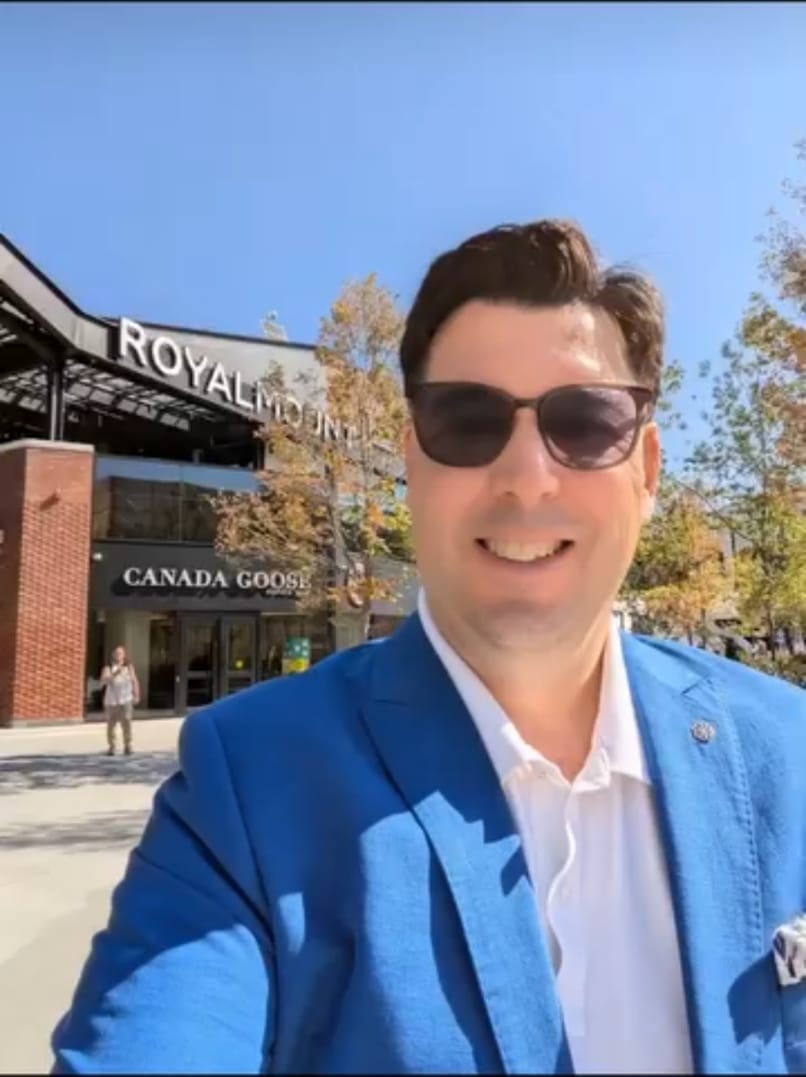
Montreal’s newest luxury retail and lifestyle destination, Royalmount in Montreal, is celebrating its first anniversary. Since opening its retail centre on September 5, 2024, the massive mixed-use development has been watched closely by industry experts, retailers, and city leaders for signs of how it might reshape the region’s shopping landscape.
One year in, the centre is reporting steady growth, an evolving customer base, and promising signals for long-term success. Retail expert Carl Boutet, who has followed Royalmount closely, says that while it is still early days, the project is carving out a distinctive role in Montreal’s retail ecosystem.
A Qualified, Younger Clientele
New data from Montreal analytics firm Propulso offers a detailed look at who is visiting the centre. Over the past year, more than 270,000 unique mobile devices were tracked across Royalmount, the Montreal Eaton Centre, and CF Carrefour Laval for comparison.
The findings show that Royalmount has not yet reached the visitation frequency and dwell times of its comparables, but its audience stands out. Visitors are younger, more affluent, and more international than those at other malls.
“The most interesting part of the Propulso study is that Royalmount is skewing younger while other malls are skewing older,” said Boutet. “That’s exciting because it speaks to the long-term potential of this project.”
The study revealed that the average Royalmount visitor is 4.3 percent younger than Quebec’s general population. There is a particularly strong presence among the 15 to 55 age group, in contrast to most shopping centres where the 55-plus demographic dominates.
Income and Education Levels Stand Out
Affluence is also a defining characteristic. According to Propulso, Royalmount shoppers’ incomes are 5.5 percent higher than Quebec’s general population, with a striking overrepresentation of 43 percent among individuals earning more than $200,000 annually.
This group represents the core luxury customer that Royalmount’s anchor tenants, such as Louis Vuitton, Gucci, and Balenciaga, were designed to attract. At the same time, one in three visitors holds a bachelor’s or master’s degree, well above the Quebec average.
“Quality over quantity is the right way to look at it,” Boutet explained. “The frequency might not be there yet, but the profile of who is coming in is exactly what the developers were betting on.”
Tourism and Reach
Royalmount’s visitor base extends well beyond Montreal’s borders. Propulso found that half of visitors come from outside the Island of Montreal. About one in ten is considered a tourist in Montreal, three percent arrive from elsewhere in Canada, and one percent from the United States.
On average, visitors travel 25.5 kilometres to get to the centre, a figure 15.5 percent higher than that of CF Carrefour Laval. Royalmount also sees 26.6 percent more tourists than Laval’s leading shopping centre.
“These numbers reinforce that Royalmount is more of a destination,” said Boutet. “Like Yorkdale in Toronto, people don’t necessarily live nearby, but they’re willing to make the trip for the mix of shopping and dining.”
Visit Frequency and Duration
Despite encouraging demographic signs, Royalmount still faces challenges in repeat visits and dwell times. Two out of three visitors came only once during the past year, compared to one in two at Montreal Eaton Centre and CF Carrefour Laval. Visit frequency overall was about 30 percent lower than its comparables.
The average visit duration was also shorter. While Royalmount matched Montreal Eaton Centre with a slight increase of three percent, visits were 35 percent shorter than at CF Carrefour Laval.
“I found that surprising,” said Boutet. “With such a strong food service component, I would have expected people to stay longer. Over time, as more hospitality and experiential elements open, I think those numbers will shift.”
Retailers Navigating Early Performance
Feedback from retailers has been mixed, according to Boutet. Larger, multi-store operators with established customer bases appear to be meeting expectations, while smaller, single-store retailers face a tougher road.
“The ones finding it difficult are those who relocated to Royalmount as their only store,” Boutet said. “Most of them are on revenue share arrangements, which has helped. But if they had to pay full rent, it might be more challenging.”
He emphasized that this is typical of large-scale retail projects in their early stages. “It’s a long haul project. They had a big launch even though they opened at half occupancy. Now they’re building momentum. Success for something of this scale doesn’t happen overnight.”
A Blend of Luxury and Lifestyle
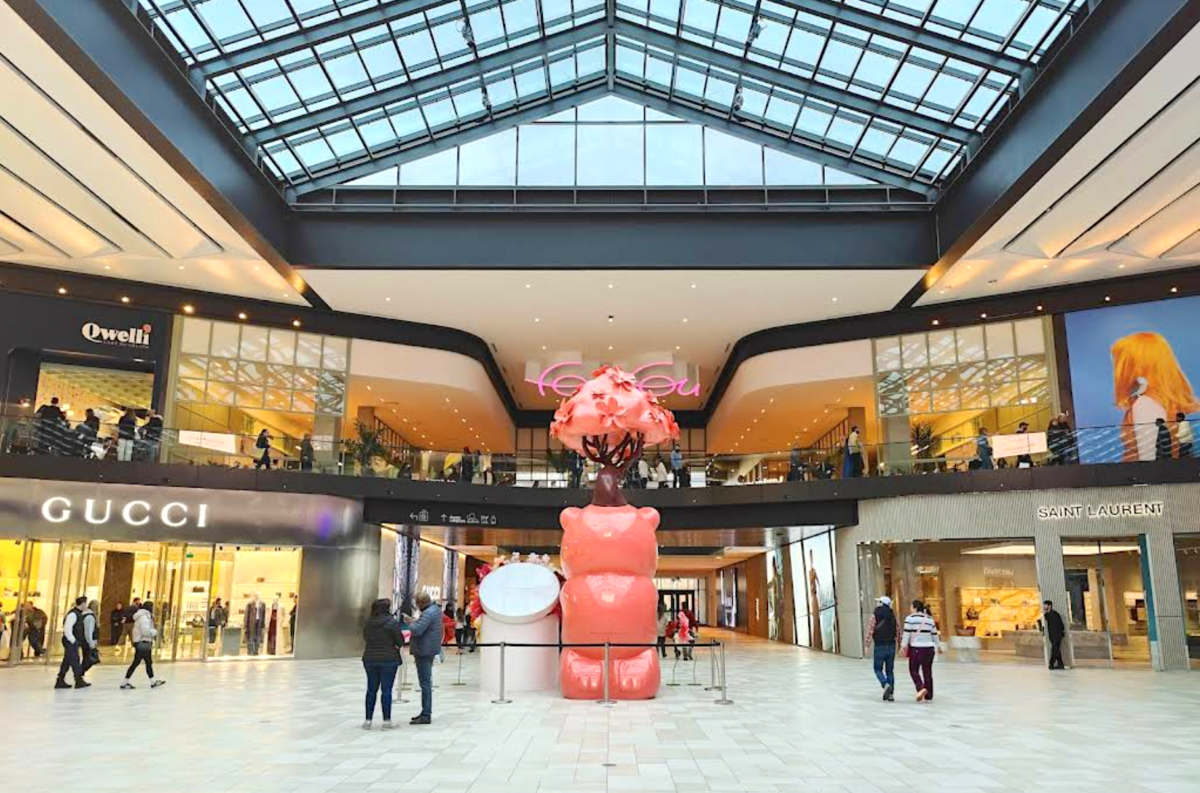
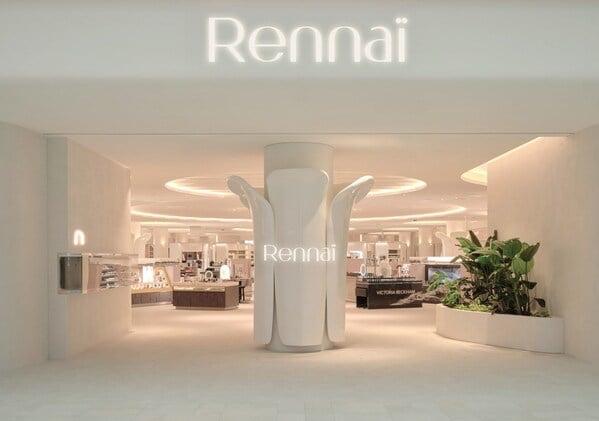
Royalmount’s retail mix has become one of its strongest selling points. The centre features about 170 stores and 60 dining options, with approximately half being new-to-market for Montreal.
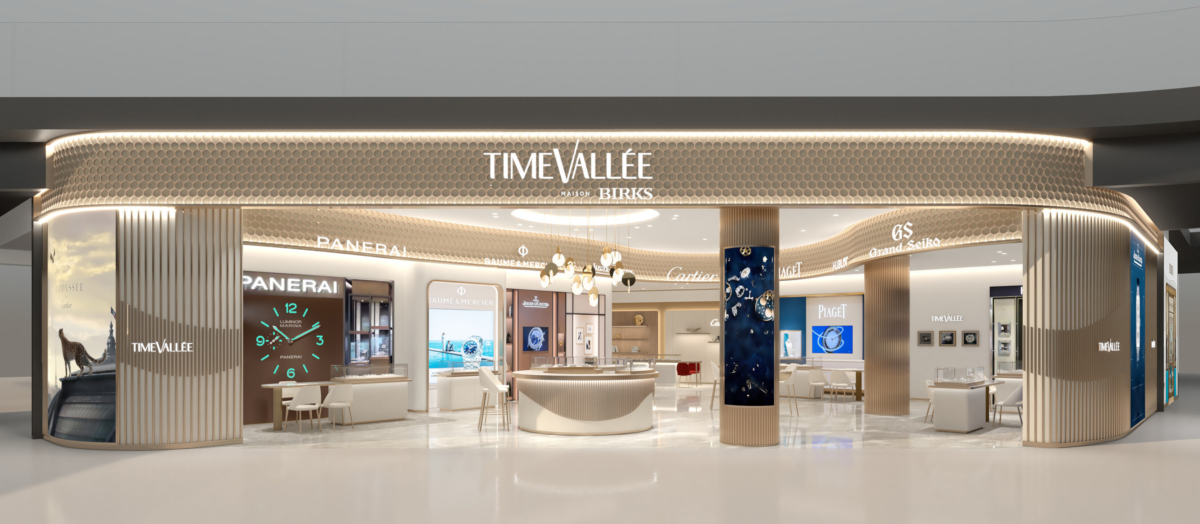
Highlights include Quebec’s first flagship boutiques for Louis Vuitton and Gucci, the province’s largest Rolex boutique, and RH’s debut design gallery. Alongside these luxury brands, mainstream names such as Zara, H&M, Mango, Nike, and Sephora provide balance.
This combination has been designed to appeal to both affluent shoppers and younger, trend-driven consumers. “You need the masses to keep Zara and Nike thriving, but at the same time, you want the high-income clientele for Louis Vuitton,” Boutet noted.
Dining, Entertainment, and Events
The food and beverage offering at Royalmount has emerged as one of its main draws. Its food hall, Le Fou Fou, includes 12 dining options and four bars, complemented by a wide range of restaurants throughout the property.
Entertainment venues such as Rec Room and planned attractions like an aquarium further expand its appeal. Public spaces, including a 77,000-square-foot urban park, have been activated with more than 50 events in the first year, ranging from Asian night markets to live DJ sessions.
“They’re not holding back,” Boutet said. “They’re pushing hard to make sure there’s always a reason for people to visit, whether it’s shopping, food, or cultural programming.”
Municipal Politics and Future Phases
Royalmount is still in the early stages of its planned 20-phase development. The retail centre represents only about 7.5 percent of the project’s eventual density, which will include offices, hotels, entertainment venues, and potentially residential components.
The residential portion remains on hold due to zoning issues and political debate. “It’s complicated,” Boutet said. “There’s pressure from municipal authorities, and with elections coming up, approvals are unlikely until the political dust settles.”
For now, the soft condo market in Montreal means there is little urgency. But longer term, residential development will be key to creating the “mini-city” that Royalmount is envisioned to be.
Impact on Montreal’s Retail Market
Royalmount’s arrival has intensified competition in Montreal’s luxury and fashion sectors. Some analysts believe it has accelerated the decline of nearby Rockland Centre, while drawing affluent consumers who might otherwise shop in Toronto or New York.
Boutet suggests that Holt Renfrew Ogilvy, downtown Montreal’s main luxury clustering, will likely feel some impact, though both properties create synergies rather than outright conflict.
“I think in a couple of years we’ll wonder what Montreal would have looked like without Royalmount,” he said. “It adds a critical mass of luxury retail that the city simply didn’t have before.”
Looking Ahead
As Royalmount Montreal enters its second year, industry watchers expect steady growth rather than explosive expansion. The emphasis on quality customers, strong food and entertainment offerings, and sustained investment in luxury brands suggests the foundation is in place for long-term success.
“There will be turnover, like any mall, and they’ll need to keep fine-tuning the mix,” Boutet concluded. “But the important thing is that the trend lines are positive. The demographic they’re attracting is the right one. With only a fraction of the project built, there’s a lot of runway ahead.”









The average visit duration is shorter at RM because people have to pay for parking after 4h. So you can’t, example, go dine, then shop because you’ll exceed. or again, watch a movie then eat.
I was wondering about parking being a factor — though 4 hours seems like a long time to spend in a mall!
To be honest, lots of people (me included), love to just take their time, be well served (whether in stores or for food). i’ve been to the mall and i’ve overheard numerous customers complain about having to pay. also, I went last time to shop & eat, and I had to pay parking! if you go to the 2nd floor (more common stores), for sure you won’t spend more than 4h. but if you’re only in the designers, you can easily spend loads of time!