Advertisement
Advertisement
Home Blog Page 235

Simons to open 1st Toronto store at Yorkdale Shopping Centre on August 14

Rendering of the Simons Yorkdale Shopping Centre location, set to open to the public on August 14, 2025 (CNW Group/La Maison Simons)

Simons, the oldest private, family-run business in Canada, announced Thursday its highly anticipated Yorkdale Shopping Centre store will officially open its doors to the public August 14 at 10 a.m. EST. The store will occupy two levels of the mall’s former Nordstrom store.

The first of two new urban Toronto locations opening this year, the Yorkdale store will span more than 118,000 square feet across two floors and feature labels exclusive to Simons, international designers, as well as local brands and artists to be revealed at the opening. True to Simons’ uniquely Canadian approach and inspired by natural elements, the structure will leverage architecture by Lemay-Michaud Architecture, and interior design by Toronto-based Gensler Design, said the retailer.

Bernard Leblanc (Image: Simons)

“At Simons, serving our customers is our greatest privilege,” said Bernard Leblanc, President and CEO of Simons. “On August 14, we’re proud to open our doors at Yorkdale Shopping Centre and invite Torontonians to discover the distinctive blend of fashion, art, and design that defines Simons. Our history and success have always been rooted in exceptional service — a commitment to our customers, our employees, and our partners — and we can’t wait to share it with Toronto firsthand.”

As Simons’ 18th coast-to-coast location, the opening marks a major milestone in the brand’s continued national expansion and reaffirms its investment in the Greater Toronto Area and the future of Canadian retail, said the company.

The retailer was founded in 1840 by John Simons in Quebec City. Originally a dry goods store, the family company is known today for accessible and inspired fashion. It is committed to cultivating creativity and building meaningful relationships with its staff, partners, and clientele. The company cares about the environment and about the communities in which it does business, it said.

“Simons is recognized as a fashion authority with an original shopping concept. The company offers an extensive array of avant-garde fashions and exclusive private collections for men and women, complemented by a selection of nationally recognized brands and top designer names. Simons also carries home fashions for the bedroom, bathroom, and kitchen.”

There are 17 Simons stores – 10 in Quebec, including the company’s head office in Quebec City; three in Alberta; one in British Columbia; one in Nova Scotia; and soon four in Ontario.

The second Toronto Simons store will open in September at CF Toronto Eaton Centre. The 110,000 square foot multi-level store will also occupy space in the mall’s former Nordstrom, alongside Eataly and Nike. Simons also has a store in the GTA at Square One in Mississauga, which opened in 2016.

Related Retail Insider stories:

Retail sales decline in May: Statistics Canada

Downtown Montreal. Image: Toonie Tours

Retail sales decreased 1.1% to $69.2 billion in May. Sales were down in three of nine subsectors and were led by decreases at motor vehicle and parts dealers, reported Statistics Canada on Thursday.

Core retail sales—which exclude gasoline stations and fuel vendors and motor vehicle and parts dealers—were relatively unchanged in May. In volume terms, retail sales decreased 1.4% in May, noted the federal agency.

“Feedback from respondents for May highlighted the effects of trade tensions between Canada and the United States on Canadian retail businesses. Supplementary questions asked to respondents show that 32% of retail businesses were impacted by the trade tensions in May, compared with 36% in April. The most common impacts in May were price increases, change in demand for product and increased expenses for raw materials, shipping or labour,” said Statistics Canada.

Following gains in each of the previous two months, motor vehicle and parts dealers (-3.6%) recorded the largest decrease in retail sales in May. The decrease was led by lower sales at new car dealers (-4.6%), which fell for the first time since February. The largest increase in the motor vehicle and parts dealers subsector in May came from automotive parts, accessories and tire retailers (+1.7%), said Statistics Canada.

Sales at gasoline stations and fuel vendors (-1.4%) decreased in May for a third consecutive month. In volume terms, sales at gasoline stations and fuel vendors fell 2.1%, it said.

Photo- Olive Garden
Photo- Olive Garden

“Core retail sales were relatively unchanged in May for a second consecutive month. The only subsector within core retail sales to post a decline was food and beverage retailers (-1.2%), which fell for the third month in a row. The decrease in this subsector was led by lower sales at beer, wine and liquor retailers (-2.9%), followed by supermarkets and other grocery retailers (-0.6%),” explained Statistics Canada.

“The largest increase to core retail sales in May came from building material and garden equipment and supplies dealers (+1.9%), which followed a decline of 0.3% in April. Sales were also up at health and personal care retailers (+0.7%) in May. This was the 11th consecutive month of gains in the subsector.”

On a seasonally adjusted basis, retail e-commerce sales decreased 1.7% to $4.3 billion in May, accounting for 6.2% of total retail trade, compared with 6.3% in April, added the federal agency.

“Statistics Canada is providing an advance estimate of retail sales, which suggests that sales increased 1.6% in June. Owing to its early nature, this figure will be revised. This unofficial estimate was calculated based on responses received from 52.7% of companies surveyed. The average final response rate for the survey over the previous 12 months was 90.4%,” it said.

Maria Solovieva
Maria Solovieva

Maria Solovieva, Economist, TD Economics, said the two-month surge in auto sales came to an abrupt halt in May.

“While we expect some rebound in June, the reversal will likely be limited. Core sales activity remains soft. On a real per capita basis – a metric that gained attention last year as a recession signal when adjusted for rapid population growth – sales are now in contraction for the second straight month,” she said.

“Consumer caution remains the dominant theme. Despite some recovery in traditional confidence measures, Canadians appear to be treading carefully as they assess the impact of tariffs. The Bank of Canada’s new sentiment index declined in Q2, weighed down by soft consumer spending data. Similarly, our internal Spend data suggests only a weak recovery in June, with quarterly momentum still muted. This persistent weakness in household demand will weigh on growth in the second quarter.”

Shelly Kaushik
Shelly Kaushik

An expected pullback in autos drove a soft retail sales figure for May. However, a decent flash estimate for June suggests the downward momentum in spending could be stabilizing. As Canada and the U.S. work towards a trade deal, it’s clear that more trade certainty can help support Canadian consumers and broader economic activity, said Shelly Kaushik, Senior Economist, BMO Capital Markets.

Andrew Grantham
Andrew Grantham

Andrew Grantham, Senior Economist, CIBC Capital Markets, said the rebound in retail sales during June is a good signpost for a return to GDP growth heading into the second half of the year, although with no detail available yet we don’t know how much of this advance is being driven by volatile elements such as auto and gasoline sales.

“Moreover, in inflation-adjusted terms June’s increase likely only just offsets the decline seen in May. While the Bank of Canada is widely expected to keep interest rates on hold next week, further rate reductions may still be needed later in the year to ensure growth is strong enough to close the slack that has built up in the economy, which should start to put downward pressure on core inflation,” he said.

Related Retail Insider stories:

A&W Food Services of Canada announces Q2 results for Fiscal 2025

Food Court A&W Photo by Matthew at Best Edmonton Mall

A&W Food Services of Canada Inc. announced Thursday its financial results for the 12 and 24-week periods ended June 15, 2025.

Susan Senecal
Susan Senecal

“We are pleased to report a stronger second quarter for A&W,” said Susan Senecal, Chief Executive Officer. “We successfully opened 4 new restaurants and achieved 3.4% System Sales Growth and Same Store Sales Growth of 1.6%. The growth in Same Store Sales was driven by increases in both average check and guest counts, reflecting the success of our marketing campaigns, including a two-week Canada-wide Teen Burger promotion.

“We continue to be pleased with the performance of our value offerings and marketing initiatives, which have effectively appealed to the needs of our guests today. A significant highlight of the quarter was the launch of A&W Rewards, our new loyalty program, on April 22nd. A&W Rewards provides guests with access to offers, discounts and free rewards, only available on the mobile app, giving them even more reasons to visit A&W.”

Q2 FINANCIAL HIGHLIGHTS

For Q2 2025, compared to Q2 2024

  • System Sales of $452.3 million increased by $15.0 million (3.4%)
  • Revenue increased by $4.5 million (7%) to $68.8 million
  • Income before income taxes increased by $6.6 million (63%) to $17.2 million
  • Adjusted EBITDA increased by $4.0 million (18%) to $25.5 million
  • Operating costs increased by $3.5 million (11%) to $36.0 million, largely attributable to increased marketing-related costs incurred by the National Advertising Fund (“NAF”)
  • General and administrative expenses decreased by $0.5 million (4%) to $11.1 million
  • Cash Dividend of $0.480 per share declared June 2, 2025 and paid June 30, 2025
  • Opened 4 new A&W restaurants

Related Retail Insider stories:

Loewe Opens Experiential Perfume Pop-Up at Holt Renfrew Toronto

LOEWE Perfumes Holt Renfrew Bloor Pop-Up. Image: Michael Muraz

Luxury Spanish brand Loewe has introduced a striking new concept at Holt Renfrew’s Bloor Street flagship in Toronto, unveiling an exclusive 2,000-square-foot pop-up dedicated to Loewe Perfumes. This unique installation, described as an immersive “Crafted Garden,” opened July 21 and will remain in place for nearly a year, making it a major brand milestone in North America.

Positioned within Holt Renfrew at 50 Bloor Street West, the pop-up occupies a high-profile space with a separate entrance on Bloor Street. Previously, the space housed a Saint Laurent “World of” boutique until that brand relocated to its newly expanded standalone flagship at 110 Bloor Street West.

“This is the biggest Loewe Perfumes pop-up we’ve launched globally since introducing this concept,” said Lucia Kittlein, Loewe’s Training and Trade Marketing Manager for the Americas, in an interview with Retail Insider. “It’s the only one of this scale in North America, and we see it as more than just a pop-up. It’s like an art gallery for the brand.”

Lucia Kittlein

A Sensorial Experience: Nature Meets Craft

The Crafted Garden design draws inspiration from Renaissance gardens, creating a labyrinth-like installation where fragrance, nature, and artistry intersect. The concept is immersive, encouraging visitors to not only explore scents but also engage multiple senses through tactile elements and visually striking displays.

Key to the design is a modular system created by Molo Design, a Vancouver-based studio known for sustainable, sculptural interiors. Molo’s honeycomb structures, crafted from recyclable materials, transform the space into an organic environment reminiscent of botanical manuscripts and gilded texts. This Canadian connection underscores Loewe’s commitment to sustainable artistry while adding a local design narrative to the Toronto pop-up.

“From the moment you enter, the idea is to evoke curiosity and play,” explained Kittlein. “We want people to touch, explore, and experience fragrance in a completely new way.”

LOEWE Perfumes Holt Renfrew Bloor Pop-Up. Image: Michael Muraz

Exclusive Collections and Seasonal Highlights

The pop-up features Loewe’s full fragrance portfolio, including the Botanical Rainbow range, the Home Scents collection, and the Un Paseo por Madrid series inspired by iconic Spanish locations. The space also introduces limited-edition pieces exclusive to Holt Renfrew during the installation’s run.

Among these are beeswax candles in honey and bronze tones, part of the Paula’s Ibiza summer campaign, and collectible candleholders that merge utility with artistry. Upcoming exclusives include Palo Santo, a scent joining the Loewe lineup in August, and a renewed collaboration with Spanish design house Therow, introducing unique floral elements integrated into fragrance caps.

“Our intention is to refresh the space seasonally,” said Kittlein. “If you visit in October or during the holidays, you’ll notice changes reflecting our latest campaigns. This flexibility keeps the experience dynamic and aligned with Loewe’s creative evolution.”

Street-facing entrance for the LOEWE Perfumes Holt Renfrew Bloor Pop-Up. Image: Larry Leung

Engaging In-Store Experiences

The Loewe Perfumes pop-up at Holt Renfrew Bloor Street offers more than just fragrance shopping — it is designed as a space to linger and connect. The Holt’s Café To-Go Counter adds a culinary dimension to the experience, serving freshly baked croissants, savoury snacks, macarons, and whimsical touches such as chocolate lollipops shaped like the Loewe logo.

Visitors can also enjoy a curated flower shop and participate in seasonal workshops that highlight craftsmanship and creativity. These rotating experiences, combined with exclusive in-store activations, reflect Loewe’s ethos of personalization and play. “It’s about creating moments where people feel part of the brand’s world,” said Lucia Kittlein. “The idea is to make fragrance discovery both interactive and inspiring.”

Holt’s Café To-Go Counter in the Loewe pop-up at Holt Renfrew, 50 Bloor St. W. in Toronto. Photo: Larry Leung

Why Toronto and Why Holt Renfrew?

Toronto’s Bloor Street has long been regarded as Canada’s premier luxury retail corridor, making it a strategic choice for Loewe’s first large-scale fragrance pop-up in the country. The partnership with Holt Renfrew was a natural extension of Loewe’s selective approach to retail.

“Holt Renfrew is the ideal partner for us in Canada,” Kittlein emphasized. “The clientele is sophisticated and appreciates the artistry behind the brand. We also value Holt’s ability to create experiences beyond transactional retail, which aligns with our vision.”

Loewe Perfumes debuted in Canada two years ago through Holt Renfrew, initially launching with a smaller activation in Vancouver. Since then, the brand has expanded with pop-ups at Square One in Mississauga and a permanent counter in Vancouver, though nothing compares in scale to the Bloor Street installation.

“This Toronto concept is a benchmark for us,” Kittlein noted. “It’s where we experiment, learn, and bring our most ambitious ideas to life.”

LOEWE Perfumes Holt Renfrew Bloor Pop-Up. Image: Holt Renfrew

Engaging the Community Through Craft

Beyond fragrance, the pop-up encourages interaction and personalization. A curated library invites visitors to browse books on art, nature, and design — sources of inspiration for Loewe’s visual identity. Seasonal workshops, in-store activations, and collaborations with Holt’s Café further enrich the experience, transforming shopping into an educational and cultural encounter.

“Every detail is intentional,” said Kittlein. “From the materiality of our displays to the stories behind each scent, it’s about creating a dialogue between heritage and modernity.”

This approach reflects Loewe’s broader positioning as a brand rooted in modern craft, blending traditional techniques with innovative forms. Even the choice of materials, such as marble caps for perfume flacons, vegetable wax for candles, and sustainable paper-based structures, reinforces a narrative of authenticity and artistry.

LOEWE Perfumes Holt Renfrew Bloor Pop-Up. Image: Larry Leung

An Artistic Dialogue with Scent

One of the most compelling aspects of the Toronto pop-up is its multi-sensory journey, designed to immerse guests in Loewe’s world. Highlights include the Home Scents greenhouse, featuring fragrances like Oregano, Cucumber, and the cult-favourite Tomato, as well as the Madrid Collection, which translates Spanish cultural landmarks into olfactory form.

“Tomato is our bestseller,” revealed Kittlein. “It’s playful, fresh, and very true to nature. We like to take the ordinary and make it extraordinary—whether that’s through scent, design, or storytelling.”

The space also introduces the Aura Collection of textured candles, each handcrafted using unique glazing techniques that ensure no two pieces are alike. These limited-edition designs will be available until October, after which Loewe will debut new tactile concepts.

LOEWE Perfumes Holt Renfrew Bloor Pop-Up. Image: Michael Muraz

A Year-Long Chapter in Loewe’s Canadian Story

The Loewe Perfumes pop-up at Holt Renfrew Bloor Street will run until May 2026, offering Canadian consumers an extended opportunity to engage with the brand. Looking ahead, Loewe aims to solidify its presence in Canada through additional pop-ups and potentially a permanent boutique within Holt Renfrew.

“For us, Canada is an exciting market,” Kittlein said. “Consumers here are curious, design-conscious, and open to experiential retail”. 

More from Retail Insider:

Loblaw reports revenue growth of 5.2% in Q2

Image: Loblaw

Loblaw Companies Limited announced Thursday its unaudited financial results for the second quarter ended June 14, 2025, indicating that revenue growth reflected higher customer traffic and unit sales as well as larger baskets.

Loblaw said it delivered a strong performance this quarter by continuing to provide Canadians with quality, value, service, and convenience across its nationwide network of stores and digital platforms.

Strong sales growth was driven by new store openings and improved same-store sales, with everyday value offerings, personalized PC OptimumTM loyalty rewards, and impactful promotions driving higher customer engagement, it said.

“In the Food Retail business, consumers continued to focus on value, which resulted in outperformance by Hard Discount and Real Canadian Superstores banners. Same-store traffic, basket size, and item count all increased compared to the same quarter last year. Food Retail tonnage volume also increased, reflecting solid market share gains within both discount and conventional segments. In Drug Retail, robust pharmacy and healthcare services drove continued strength, led by specialty drug growth. Front store sales momentum continued, particularly in prestige beauty categories, partially offset by the strategic exit from certain electronics items. Loblaw advanced its full-year plan to open approximately 80 new stores and 100 new pharmacy clinics, providing access to affordable, quality groceries and healthcare to more communities across Canada. This included opening 10 stores and 12 pharmacy clinics in the quarter, bringing the year-to-date total to 20 new stores and 23 new pharmacy clinics. In addition, the Company continued to successfully execute the ramp-up of its East Gwillimbury distribution centre, said the company.

Loblaw also separately announced Thursday a 4-for-1 common share stock split to ensure its common shares remain accessible to retail investors and the thousands of employees who participate in the Company’s employee share ownership program. The stock split will not dilute shareholders’ equity. The stock split will be implemented by way of a stock dividend.

“Canadians are seeking value, quality and service and are increasingly rewarding us for delivering on their needs, resulting in sales and market share growth,” said Per Bank, President and Chief Executive Officer, Loblaw Companies Limited. “We are bringing our value focus to more and more communities across Canada through our new store openings, with 61 new stores opened since last year.”

Photo- Per Bank LinkedIn

2025 SECOND QUARTER HIGHLIGHTS

  • Revenue was $14,672 million, an increase of $725 million, or 5.2%.
  • The sale of Wellwise by Shoppers was completed in the first quarter of 2025. Revenue related to Wellwise in the second quarter of 2025 was nil (2024 – $21 million). Excluding the impact of revenue related to Wellwise, revenue increased by 5.4%.
  • Retail segment sales were $14,389 million, an increase of $731 million, or 5.4%.
  • Food Retail (Loblaw) same-stores sales increased by 3.5%.
  • Drug Retail (Shoppers Drug Mart) same-store sales increased by 4.1%, with pharmacy and healthcare services same-store sales growth of 6.2% and front store same-store sales growth of 1.7%.
  • E-commerce sales increased by 17.5%.
  • Operating income was $1,239 million, an increase of $371 million, or 42.7%.
  • Adjusted EBITDA was $1,840 million, an increase of $127 million, or 7.4%.
  • Retail segment gross profit percentage was stable at 32.0%.
  • Net earnings available to common shareholders of the Company were $714 million, an increase of $257 million or 56.2%. Diluted net earnings per common share were $2.37, an increase of $0.89, or 60.1%. The increase was primarily driven by the impact of lower costs related to certain intangible assets associated with the 2014 acquisition of Shoppers Drug Mart Corporation which are now fully amortized and lapping of prior year charges.
  • Adjusted net earnings available to common shareholders of the Company were $721 million, an increase of $57 million, or 8.6%.
  • Adjusted diluted net earnings per common share were $2.40, an increase of $0.25 or 11.6%.
  • Net capital investments were $239 million, which reflects gross capital investments of $409 million, net of proceeds from property disposals of $170 million.
  • Repurchased for cancellation 2.05 million common shares at a cost of $445 million. Free cash flow from the Retail segment was $640 million.

Loblaw is Canada’s food and pharmacy leader, and the nation’s largest retailer. Loblaw provides Canadians with grocery, pharmacy and healthcare services, other health and beauty products, apparel, general merchandise, financial services and wireless mobile products and services. With more than 2,800 locations, Loblaw, its franchisees and Associate-owners employ more than 220,000 full- and part-time employees, making it one of Canada’s largest private sector employers.

It has more than 1,100 grocery stores that span the value spectrum from discount to specialty; full-service pharmacies at nearly 1,400 Shoppers Drug Mart and Pharmaprix locations and in close to 500 grocery stores; PC Financial services; Joe Fresh fashion and family apparel; and four of Canada’s top-consumer brands in Life Brand, Farmer’s Market, no name and President’s Choice.

Related Retail Insider stories:

Alpine Park retail taking shape as demand for suburban development surges: CBRE’s Alistair Corbett (Images)

Image: Alpine Park
Image: Alpine Park

After years of planning, Alpine Park — a major new urbanist community on Calgary’s west side — is finally breaking ground with its multi-phased retail development now underway. 

Alpine Park is a $2.5 billion mixed-use development by Dream Unlimited.

Speaking with Retail Insider, Alistair Corbett, Senior Vice President at CBRE, who is handling the retail leasing side of the mega project, shared insights into the scope of the development, current leasing momentum, and the strength of Calgary’s suburban retail market.

Alistair Corbett
Alistair Corbett

“It’s interesting — finally a lot of stuff getting in the ground and going after years of planning,” said Corbett. “This stuff takes so long for everybody to put together.”

Alpine Park is located off Stoney Trail at 154th Avenue — the interchange that takes drivers east into Evergreen and west into the new community of Alpine Park. 

A Three-Phase Retail Strategy

Corbett outlined a thoughtfully staged retail strategy for Alpine Park, designed to evolve alongside the growing community.

“This has been more than a decade in the making, but essentially there are three retail components to that community,” he said.

  • Phase One: The Convenience District
    Construction is already underway on a single-level, 60,000-square-foot centre focused on daily needs. “It’s gas and drive-thru and daily needs, daycare, that kind of format,” Corbett explained.
  • Phase Two: The Service District
    Coming in 2027 and beyond, this 65,000-square-foot mixed-use space will be “grocery anchored, some extra retail and medical and services like that.”
  • Phase Three: The Social District
    Planned for further down the line, this phase will be adjacent to a village centre housing up to 12,000 residential units. “That brings on the food and the entertainment portion,” he added.

Population Growth and Market Catchment

The development will serve both the Alpine Park community and neighbouring areas underserved by retail.

“The community itself of Alpine Park when it’s fully developed would be over 20,000 people,” Corbett said. “What’s really interesting about this site is the east portion of Stoney Trail, where Evergreen and Bridlewood is — that’s really under-retailed if you think about it.”

Corbett noted that the existing retail in the area is concentrated along 162nd Avenue, on the south end of Evergreen, meaning many residents will pass directly by the new retail area to access their communities.

“You’ve kind of got an existing base of people that are under-serviced that are coming past it every day. Plus you’ve got the growth of Alpine Park on the west. Bridlewood and Evergreen brings you about 25,000 people.”

Image: Alpine Park
Image: Alpine Park

Leasing Momentum and Tenant Mix

On the leasing front, the project is gaining traction with several deals secured and more in negotiation.

“I think it’s fair to say that they’ve announced the Petro Canada deal, the McDonald’s deal, a large, 12,000-square-foot daycare,” said Corbett. “We have active paper with wine stores, vets, physiotherapies, martial arts.”

While food tenants are confirmed, Corbett couldn’t yet name them. “There’s a lot going on that’s kind of underneath the paper.”

As for the Service District, advanced negotiations are ongoing with grocery and other retail anchors. “Those are lengthy discussions,” he said.

A Tight Retail Market with Surging Demand

Alpine Park is launching into a suburban retail environment marked by extremely low vacancy rates and strong consumer demand.

“There is almost no vacancy down in the south end — well, in most of the suburban areas of the city,” Corbett explained. “The south trade zone is a 2.2% vacancy number. That’s almost functionally zero.”

“Lots of residential growth. This is what the retailers and the service providers are looking for — sites that will be successful on day one,” he added.

He noted that new retail development has lagged in recent years, despite high demand. “We normally bring on about 1.3 million square feet of space a year in the retail market in Calgary, and last year was just over half a million,” said Corbett. “This conventional stuff has been really hard to bring to market just because… the interest rates and the construction costs and what tenants were willing to pay — it just hadn’t been penciling.”

But things are shifting. “Good sites with really good tenants, with good rates. The rates are recalibrated,” he said. “The retailers can understand that Calgary’s a really desirable market to get space — it’s competitive and it’s tough, but it’s also expensive. And those rates have now recalibrated back up.

Image: Alpine Park
Image: Alpine Park

Strong Fundamentals Driving Calgary Retail

Asked to describe Calgary’s retail sector overall, Corbett pointed to a city with fundamentals working in its favour.

“We’re not an overbuilt city. In fact, on the contrary, the vacancy rate overall — including downtown — is 4.6%. And downtown is 12% vacant. But this kind of grocery-anchored, high-quality suburban retail is almost nothing vacant.”

Population growth is another factor. “We’re coming up with our six and seven per cent growth rates, right? But with no new space being delivered. Everybody’s same-store sales were, on the whole, great because all of these new people are shopping at the same number of shops.”

Mixed-use urban areas face a different trajectory, but the suburbs are booming. “The demand in the suburbs is insane,” Corbett said.

Image: Alpine Park
Image: Alpine Park

Looking Ahead

With its careful planning, rapid leasing activity, and strategic location, Alpine Park is poised to become one of Calgary’s key suburban retail hubs — a rare new project in a market starved for supply.

“It’s just been really carefully thought out by Dream,” Corbett concluded. “Some of the team have already been on it for a decade, getting this ready to go. And now — here we are.”

Related Retail Insider stories:

Image: Alpine Park
Image: Alpine Park
Image: Alpine Park
Image: Alpine Park
Image: Alpine Park
Image: Alpine Park
Image: Alpine Park
Image: Alpine Park
Image: Alpine Park
Image: Alpine Park

Canadian Retail News From Around The Web For July 24, 2025

Canadian Retail News From Around The Web

News at a Glance

Retail Insider is streamlining its Canadian retail news from around the web to include a handful of top news stories that can be viewed quickly during the day. Here are the top stories from the past 24 hours.

Algorithmic Pricing and Competition: RCC Draft Submission (RCC)

Posthaste: The hidden costs of the ‘Buy Canadian’ movement (Financial Post)

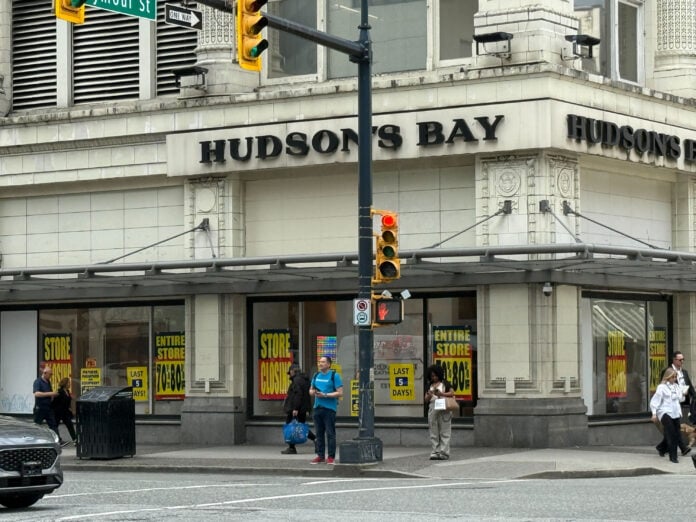
Vancouver storefronts sit empty amid policy gridlock, construction delays (Business in Vancouver)

Montreal’s Ecksand Eyes Move to SoHo (National Jeweller)

Two new businesses expected to open at Cottonwood in early August, joining new café that recently opened (Fraser Valley Today)

Nigerian grocery chain Ebeano launches first Oakville store (Oakville News)

A bookstore that’s been a Halifax institution since 1987 is facing closure (CBC)

French bakery and pastry shop to open soon in Chilliwack (Fraser Valley Today)

How to Move from Canada to the U.S. Without a Job Offer

If you’re a founder or independent pro eyeing this business adventure—moving to the U.S. from Canada without a job—this legal game’s all about showcasing your talent, your investment, or your potential to contribute significantly. You don’t necessarily need a job offer — what you need is to demonstrate your value and plans. The U.S. legal system offers pathways for high-impact individuals willing to make a compelling case—whether through investment, exceptional ability, or entrepreneurial enterprise.

Moving to the U.S. as a Founder or Independent Professional, No Job Offer Needed

Start-up Visa Options

  • E-2 Investor Visa

If you’ve got some capital saved up, this one’s a favorite. You need to invest a substantial amount in a U.S. business—think of it as putting your money where your dreams are. The catch? You have to be from a country that has a treaty with the U.S., and Canada qualifies, so you’re good there.

  • L-1 Intracompany Transfer

If you already run a business in Canada and want to expand or set up a U.S. branch, this visa allows you to transfer as an executive or manager. It’s like bringing your enterprise across borders smoothly.

Think of it like a good workout: it requires preparation, but not an impossible mission.

For example, E-2 is mostly about demonstrating your investment, the business plan, and your ties to your home country. If you’re organized and have your ducks in a row, it’s manageable. No crazy hurdles — just good paperwork and a convincing story.

On the other hand, L-1 is about your future role. If your Canadian business is legit and you’ve been running it for at least a year, transferring as an executive or manager is straightforward. It’s a paperwork game—show your company’s structure, your role, and how the U.S. branch is an extension of your business, nothing else.

Not a walk in the park, but definitely manageable with the right pro legal advice and preparation.

How Much Money Give You the Green Light?

Of course, it’s not about having a mountain of money, but enough to show you’re serious and capable.

For E-2 Visa, usually, $100,000 to $200,000 is a ballpark, but it really depends on the business type and location. The key here? Your investment must be substantial relative to the business. It should be enough to make the business viable.

While for the L-1 Visa money isn’t the main focus here; it’s about your existing company and your role. But, you do need to show you have enough resources to support your new U.S. ‘special’ operation.

The number is flexible but meaningful — enough to give confidence that your venture is real and sustainable.

EB-2 or EB-3 Green Card — The Self-Petition Route

  • EB-2 (Advanced Degree or Exceptional Ability)

If you’re a highly skilled professional or entrepreneur, you might qualify for a green card without an employer’s sponsorship. You’d need to prove you’re a top-tier talent—think publications, awards, or super skills.

  • National Interest Waiver (NIW)

A subset of EB-2, where you can self-petition if your work benefits the U.S. national interest—say, tech innovation, real estate development, or economic contribution. No need for a job offer here as well.

Who Decides How Great Your Profile Is?

The USCIS (U.S. Citizenship and Immigration Services) and its team! They review your case based on the evidence you provide. It’s not just one person—they have officers who evaluate your documents, your business plan, your background. 

These guys look at your credentials, your investment, your business’s potential, and how well you meet the visa criteria. If everything checks out, you get the green light.

Start a Business and Self-Sponsor

If you’re a successful founder with a solid plan, you can establish a U.S. entity, demonstrate investment and growth prospects, and pursue visas like the EB-2, NIW, or E-2. It’s about showing your venture’s potential to contribute positively to the U.S.

Other Creative Routes

  • O-1 Visa

For individuals with extraordinary ability in sciences, arts, or business, etc. If your profile is exceptional—think published work, major awards—you can self-petition or be sponsored.

  • B-1 Business Visitor Visa

Short-term, for exploring opportunities, attending fancy meetings, or negotiating great deals—though you can’t work or earn U.S. income on this one.

Why No TN Visa?

The TN Visa is specific to Canadian and Mexican professionals working under NAFTA/USMCA agreements, and it requires a job offer in the U.S. from an employer.

Since you’re aiming to move as a founder or independent professional, without a direct employer offering you a position, TN isn’t the best fit. That’s why you want to focus on the other pathways which allow a more entrepreneurial or self-driven entry.

How to Keep the Paperwork from Turning into a Luggage

Think of your documents as a well-packed carry-on, not a trunk full of random papers you’ve occasionally caught just for in case. A good lawyer’s job? Help you organize that bag so it’s light, efficient, and easy to carry through immigration checks without straining your back.

Clear, Complete, and Organized

Your file should be a neat, easy-to-follow story—proof of funds, your business plan, personal credentials, and legal documents. No need to include everything in your sock drawer, just what’s necessary to prove your case as a strong one.

Less Clutter, More Clarity

The officials just want to see that you meet the criteria—so your job is to make it obvious, straightforward, and bulletproof. Think of it as a well-edited magazine, not a messy scrapbook.

  • uncheckedKeep your documents tight, your plans clear.
  • uncheckedShow you’re serious about your venture, not just dreaming.
  • uncheckedPick the right visa based on what you want to do—investment, management, or extraordinary ability.
  • uncheckedIt’s about proving your case, not just looking good at the border.

You don’t need to be a millionaire or a legal wizard—just strategic, prepared, and confident in your vision. The U.S. system rewards those who come prepared to tell a compelling story about why they belong.

Tips for Canadians Entering the U.S. Business Landscape

Building a bridge from Canada to the U.S. isn’t just about crossing borders—it’s about understanding the landscape, the nuances, and the subtle differences that can make or break your move.

Understand the Market Culture and Business Environment

Like it or not, this isn’t just about knowing the laws—it’s about feeling the vibe of doing business stateside. U.S. consumers and clients often expect quicker responses, more aggressive marketing, and a different approach to customer service.

Start immersing yourself in U.S. industry groups, forums, and local events—virtually or in person not a big difference. Build relationships early, because networks are the currency here and you will understand it very quickly.

The U.S. and Canada are neighbors, but their legal landscapes are distinct. The most important advice—engage a U.S. business lawyer early—don’t wait until you’re knee-deep in compliance issues.

Incorporation & Business Structure

In the U.S., LLCs are super popular for flexibility and liability protection—think of them as the Canadian LLCs equivalent, but with their own quirks. C-corporations are also big, especially if you’re considering raising capital or going public.

Taxation

U.S. tax laws can be complex—we have federal, state, and local taxes all come into play. Canada’s global income approach differs from U.S. systems that might have more aggressive tax incentives for startups and investors. So, test the waters. 

Compliance & Regulations

For instance, employment laws vary by state—some are more employer-friendly, others more worker-friendly. Make sure you understand minimum wage laws, overtime rules, and worker classification differences.

HR & Employment Practices

The HR game in the U.S. has a different rhythm than you used to in Canada.

  • Hiring & Termination Laws—More flexible compared to Canada, but also more nuanced. Each state can have its own rules.
  • Benefits & Payroll—Social security, unemployment insurance, and health benefits are handled differently. In some states, you might need to set up a local payroll system from day one.

Better to build a network of the U.S.-based HR consultants or payroll providers. It’s better to have trusted partners than to learn the hard way (you won’t like it.)

Building a U.S. Business Network — Where to Start?

Step 1. Connect with the U.S. Chambers of Commerce—Canadian-American chambers are gold mines for networking.

Step 2. Attend industry-specific expos, virtual summits of all kinds, and trade missions.

Step 3. Leverage LinkedIn to find U.S. entrepreneurs, investors, and legal advisors—the team you’re going to need. Don’t just connect—engage.

Step 4. If feasible, partner with local U.S. firms or professionals who understand the regional nuances.

Visa & Business Crossroads

Your network, your local partnerships, and all our operational readiness will support your visa case. Show your U.S. strategic intent by demonstrating plans for employment creation, investment, or strategic growth—these are key for visas like E-2 or L-1.

Think of your initial steps as laying the groundwork—business plans, local alliances, and huge market understanding—that will make your visa application more compelling.

The Big Picture

Getting comfortable with U.S. business culture and network-building is a thoughtful marathon. Focus on creating genuine relationships with people, understanding your regional differences, and aligning your Canadian super strengths with U.S. market opportunities.

And always remember, the U.S. loves entrepreneurs who come prepared—who understand the terrain, respect their game rules, and show clear intent to contribute and prosper together.

Best Bird Control Strategies for Commercial Properties and Retail Spaces

Astonishing truth — birds might look harmless fluttering across the sky, but when they decide to set up camp at your retail store or commercial building, they’re far from charming. 

A few stray birds dropping feces here and there? Maybe, it’s not a big deal if you have an appropriate and reliable solution. However, once they start nesting in your signage, staining your entryway, or dive-bombing customers like they own the place, it’s not just annoying — it’s a full-blown business risk. 

It seems not only ugly and dirty, but also can have detrimental effects on your health, especially to your respiratory system. 

Bird management isn’t just about aesthetics and flying them away manually. It’s approximately protecting your reputation and preventing your thing from retaining and staining. You must also ensure you’re not unknowingly violating fitness and safety codes and tips. 

Whether you are handling a mall, eating place (restaurant), hotel, or a sprawling industrial complex, reliable and strategic bird management definitely helps. So, allow’s dig into what clearly works and how you could maintain your space bird-free — without going full scarecrow mode.

Why Bird Control Matters for Retail and Commercial Spaces

If you run a consumer-dealing franchise or an outlet, first impression is everything, specifically in business. Another reality, no one wants to walk under a cover protected in pigeon poop or listen to squawking seagulls at the same time as sipping their latte. 

Bird infestations are extra than simply unsightly; they mess together with your emblem’s vibe and put your expert photo at hazard.

Now, let’s talk about the harm that these flying birds can do to your property. Bird poops are acidic, and their pH value is certainly too low to corrode the paint, subsequently causing the concrete to erode over the years. 

Nesting material that the birds use can also block and resist the passage in vents and gutters. And don’t even get us started on smooth-up expenses — they upload up speedy.

Then there’s the health perspective. In the meals industry mainly, birds aren’t just a nuisance; they’re a crimson flag for inspectors. Their droppings can bring bacteria and parasites, placing each employee and clients at chance. So whether or not you’re serving meals or selling footwear, hen manipulation is ready keeping an easy, secure surroundings.

Common Signs of a Bird Problem in Commercial Environments

The signs aren’t continually dramatic, however they’re easy to spot in case you recognize wherein to look. You might notice droppings streaked down your signage or coating walkways — now not a first rate search for foot site visitors. Birds additionally love sneaky nesting spots, specifically in HVAC units, beneath awnings, or right in the lettering of outdoor signs and symptoms.

And in case you’re listening to lots of flapping, chirping, or even aggressive swooping whilst humans skip by, that’s a particular warning signal. Birds get territorial speed, particularly for the duration of nesting season. Left unchecked, a small difficulty can develop into a full-scale infestation — speedy.

Best Bird Control Solutions for Commercial Settings

There’s nobody-length-suits-all right here, but the proper information is that fowl control has come a long way. Today’s solutions are high-tech, discreet, and (thankfully) humane. You should take a look at a pest control shop near you and better to visit them online first. 

Ultrasonic Bird Repellent Devices for Large Areas

If your property spans a wide location — like a shopping mall or resort complicated — ultrasonic repellents are a strong choice. These gadgets emit high-frequency sound waves that birds hate, but human beings can’t listen. It’s a low-profile, non-invasive way to cover a big space without drawing attention.

Visual Deterrents and Motion-Activated Repellers

Sometimes, all it takes is a touch wonder. Flashy visible deterrents like reflective tape or predator decoys (assume owls and hawks) can spook birds into locating every other roost. Pair people with motion-activated devices that spray water or flash lights, and you’ve been given a sturdy defense device that appears like a real-time chook protection team.

Solar-Powered Repellent Options for Sustainable Protection

Want to maintain matters inexperienced? Solar-powered bird-management tools are eco-friendly and fee-powerful. They work brilliantly for rooftops, outdoor patios, and garden areas — mainly in sunny areas wherein birds love to accumulate. They fee in the course of the day and perform continuously, giving you peace of mind without adding in your software bill.

Netting and Spikes for High-Activity Zones

These are vintage-faculty however powerful. If you’ve been given ledges, signage, or beams that birds simply won’t depart alone, netting and spikes can bodily block them from landing or nesting. Spikes may sound harsh, however they’re absolutely safe and humane — just uncomfortable enough to persuade birds to transport on.

How to Choose the Right Bird Control Products for Your Property

Okay, so how do you know what is right for your location?

Start thinking about your location and types of birds you are working with. Pigeon? Gals? Starling? Different species require different approaches. Next, consider how much foot you get traffic-especially in public-related areas. You do not want your solution to be ugly or distracted.

Beauty matters more than you can think. Retail and hospitality businesses should bend towards low-visuality or decorative preventive mix. No customer wants to feel that they are shopping inside a bird mesh.

In addition, be honest about whether you need a quick improvement or a long -term solution. Temporary preventives can solve the problem for a season, but if birds are victims of nests, you want something more permanent.

Here’s the good element. You don’t have to parent all this out to your very own. Envirobug gives some of the most reliable and effective chook manipulation tools in the marketplace — built specifically for industrial and retail environments.

Wireless Ultrasonic Bird Repellent Devices

Easy to put in, completely wi-fi, and constructed for large spaces — these devices are ideal for rooftops, parking garages, and open courtyards. No noise, no mess, simple effects.

Visual and Reflective Repellers for Entrances and Rooftops

Got a storefront or eating place patio? These reflective options are both diffused and powerful. Birds get the trace speedy, and you get to hold your clean, polished look intact.

Sticky Bird Deterrent Gel for Ledges and Beams

This one’s a piece of a secret weapon. Apply it to unusual roosting spots and birds will live away without harm. It’s discreet, weather-resistant, and lasts for months. Perfect for the ones hard-to-deal with architectural functions like symptoms, ledges, or beams.

Final Thoughts: Proactive Bird Control for Better Business Environments

At the end of the day, chicken manipulation isn’t just some other renovation assignment — it’s part of building a smooth, safe, and alluring space for the people who matter maximum: your customers and your group.

A proactive method approaches fewer complications down the road. No emergency cleanups. No complaints. No embarrassing bird attacks within the automobile parking space (sure, it occurs). Just a well-maintained asset that shows you care about the info.

Envirobug has your lower back with professional-grade solutions that paint with your commercial enterprise, no longer towards it. Because whilst you put money into effective chook manipulation, you’re investing in the lengthy-term fitness of your logo.

And that’s a win for everybody — besides the birds.

Apple Launches AppleCare One, Bundling Multi-Device Coverage Into One Monthly Plan

Apple iPhone 14 at CF Pacific Centre location (Photo: Lee Rivett)

Apple is introducing AppleCare One, a new subscription-style protection plan that consolidates coverage for multiple Apple devices under a single monthly fee, a shift that could simplify after-sales protection and boost attachment rates across Apple’s hardware ecosystem.

Priced at $19.99 per month, AppleCare One covers up to three Apple products, with the option to add additional devices for $5.99 per month per product, according to the company. The plan launches in the U.S. starting tomorrow, with enrollment available directly through an iPhone, iPad, or Mac, as well as in Apple Stores.

The move positions AppleCare less like an add-on and more like a portfolio-level subscription, designed for customers who now own multiple Apple devices—and want a single plan that follows them as they upgrade.

A Single Plan Across iPhone, iPad, and Apple Watch

AppleCare One includes the core benefits of AppleCare+, including unlimited repairs for accidental damage such as drops and spills, battery coverage, and 24/7 priority support. The new plan also expands theft and loss protection, previously associated primarily with iPhone coverage, to now include iPad and Apple Watch.

Apple says the bundled pricing remains the same regardless of which products a customer adds, framing the plan as a value proposition for users carrying a typical Apple stack.

For customers who would otherwise subscribe to AppleCare+ individually on multiple devices, Apple claims the new offering can deliver savings of up to $11 per month compared with separate plans.

A Broader Enrollment Window—And a Longer Backward Reach

AppleCare One also changes a key limitation of AppleCare+: the narrow sign-up window tied to new device purchases.

Under the new structure, customers can add eligible devices they already own—up to four years old—as long as they’re in “good condition.” This is a significant expansion beyond the typical 60-day window that has historically governed AppleCare+ enrollment.

For Apple, that change could materially increase the addressable market for paid protection, including customers who previously opted out at checkout or delayed their purchase decision.

Designed for Upgrade Cycles and Device Turnover

Apple is also building in automation intended to reduce friction for customers who upgrade frequently. When a customer trades in a covered device directly to Apple, the company says the product will be automatically removed from the plan and replaced with the new device.

As a monthly subscription, AppleCare One is positioned as a flexible coverage layer that can scale up or down based on household device counts, with customers able to move devices in and out of the plan over time.

Why It Matters to the Retail Channel

While AppleCare has long functioned as a high-margin services layer in Apple’s business model, AppleCare One reflects a more explicit move toward subscription packaging and recurring revenue logic—bundling, predictable billing, and multi-device retention.

For consumer electronics retail, warranty and protection plans remain an important battleground. AppleCare One may pressure third-party retail protection offerings by making Apple’s first-party coverage easier to maintain, easier to understand, and more continuous across replacement cycles.

The plan also signals how Apple is adapting its service ecosystem to a reality where customers increasingly own not one Apple product, but several—and want them supported through a single interface.

AppleCare One is available in the U.S. starting tomorrow.