Supercharged by the powerful M5 chip, the new 14-inch MacBook Pro delivers even more performance and takes the next big leap in AI for the Mac. Photo: Apple
Apple has introduced a new 14-inch MacBook Pro powered by its M5 chip, positioning the update as a major performance jump for AI-driven workflows and professional computing. The new model is available to pre-order in Canada today and will be available in stores beginning Wednesday, Oct. 22, through Apple Retail and authorized resellers.
Apple says the M5 chip delivers a “next big leap in AI” for the Mac, with a redesigned GPU architecture and faster overall system performance. The update also targets mobile professionals, with Apple claiming up to 24 hours of battery life—a figure that, if reflected in real-world use, reinforces the company’s competitive advantage in performance per watt.
“MacBook Pro continues to be the world’s best pro laptop, and today, the 14-inch MacBook Pro gets even better with the arrival of the M5 chip,” said John Ternus, Apple’s senior vice president of Hardware Engineering.
M5 Focuses on AI and Graphics Performance
The M5 chip introduces a next-generation GPU that includes a Neural Accelerator in each core, which Apple says boosts AI performance significantly. Apple claims the new MacBook Pro delivers up to 3.5x faster AI performance than the previous generation, alongside up to 1.6x faster graphics performance.
Apple is increasingly emphasizing on-device AI processing as a differentiator for the Mac, suggesting that users can run more sophisticated workloads locally, including large language models (LLMs), without relying as heavily on cloud computing. The company says AI performance improvements will benefit a broad user base—from students transcribing lecture notes to developers running local models in tools like LM Studio.
For pro workflows, Apple says M5 delivers faster performance for tasks such as AI video enhancement, 3D rendering, and code compilation. The company also highlights improvements to unified memory bandwidth, which it says supports faster manipulation of large datasets and more responsive multitasking in demanding applications.
Battery Life and Storage Get Attention
Apple says the new 14-inch MacBook Pro delivers up to 24 hours of battery life, reflecting a continued effort to position the device as a truly portable workstation. The company also notes improvements in SSD performance, which it says will accelerate tasks like importing large photo libraries or exporting high-resolution video projects.
Storage capacity can be configured up to 4TB, a spec aimed at professionals working with large creative files or local AI models.
macOS Tahoe and Apple Intelligence Expand the Software Pitch
The new MacBook Pro ships with macOS Tahoe, which Apple says includes productivity improvements across the system. The company highlighted updates to Spotlight search, new Continuity features that improve integration with iPhone, and interface changes built around a new Liquid Glass design language.
Apple also continues to layer its AI strategy into the operating system through Apple Intelligence, framing it as privacy-focused intelligence built directly into macOS. Apple says Live Translation features will work across Messages, FaceTime, and Phone, while Shortcuts gains additional automation capabilities tied to Apple Intelligence models.
Display, Camera, and Ports Stay Central to the Value Proposition
Beyond silicon and software, the new 14-inch MacBook Pro maintains Apple’s core hardware positioning in the premium laptop market. It includes a Liquid Retina XDR display with an optional nano-texture finish, a 12MP Center Stage camera, and a six-speaker system with Spatial Audio support.
The notebook will be offered in space black and silver, with Apple continuing to highlight its port selection as a key advantage for professional workflows.
Pricing and Availability in Canada
Apple says the new 14-inch MacBook Pro with M5 is available to pre-order starting today, with full availability beginning Oct. 22. The starting price remains positioned as a value-driven entry point for pro users relative to the performance gains Apple is claiming.
For Canada’s premium computing market, the M5 launch reinforces Apple’s intent to keep the MacBook Pro at the centre of professional workflows—while aligning the hardware roadmap more tightly with AI-driven software capabilities.
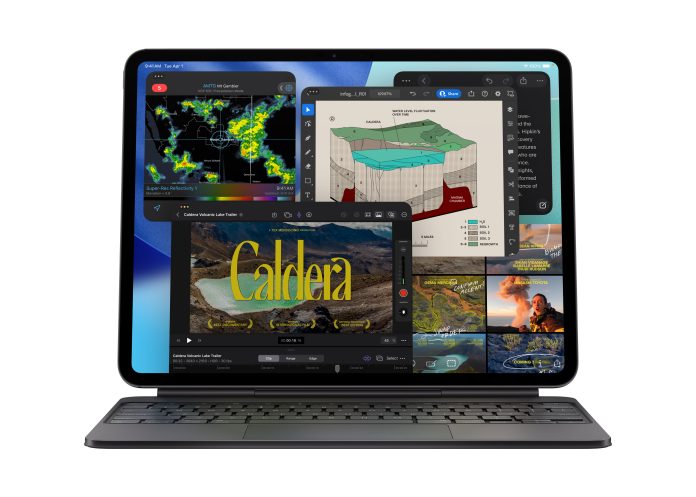
With the M5 chip, the new iPad Pro delivers a huge boost in performance and takes the next big leap in AI for iPad. Photo: Apple.
Apple has introduced a new iPad Pro powered by the M5 chip, positioning the device as its most advanced tablet yet for AI-driven workflows, graphics-heavy tasks, and professional multitasking. The new iPad Pro is available for pre-order starting today and will arrive in stores on Wednesday, Oct. 22, according to the company.
Apple is framing the M5 iPad Pro as a major performance jump over prior generations, particularly for AI and graphics applications, while also expanding connectivity capabilities through Wi-Fi 7 and a new Apple-designed cellular modem.
“Powered by the next generation of Apple silicon, the new iPad Pro delivers our most advanced and versatile iPad experience yet,” said John Ternus, Apple’s senior vice president of Hardware Engineering.
M5 Targets AI Performance and Graphics-Heavy Workflows
Apple says the M5 chip delivers up to 3.5x the AI performance of the M4-powered iPad Pro and up to 5.6x faster AI performance than the iPad Pro with M1. The company says the gains come from a redesigned GPU architecture that includes a Neural Accelerator in each core, alongside a faster CPU and Neural Engine.
Apple is positioning the new iPad Pro as capable of handling on-device AI tasks such as diffusion-based image generation and AI-powered video masking—use cases it connected to apps like Draw Things and DaVinci Resolve.
The M5 also introduces a third-generation ray-tracing engine, which Apple says supports more realistic lighting and reflections in visually demanding applications and games. The company claims iPad Pro delivers up to 1.5x faster 3D rendering with ray tracing compared with the previous iPad Pro generation, and up to 6.7x faster rendering performance than the iPad Pro with M1.
Faster Memory, Storage, and New Fast-Charging Support
Apple says the new iPad Pro increases unified memory bandwidth to more than 150GB/s, which it describes as nearly a 30% increase over the previous generation. Storage read and write performance is also claimed to be up to 2x faster.
Apple is also increasing baseline memory configurations, with the 256GB and 512GB models now starting at 12GB of unified memory, which Apple says is 50% more than before.
Fast-charging has also been added, with Apple saying the new iPad Pro can reach 50% charge in around 30 minutes when paired with a higher-wattage USB-C adapter.
Apple Debuts New Wireless Chip and Brings C1X Modem to iPad Pro
Beyond silicon performance, Apple is pushing deeper into vertical integration across connectivity components.
The new iPad Pro introduces N1, an Apple-designed wireless networking chip that enables Wi-Fi 7, Bluetooth 6, and Thread, which Apple says improves performance and reliability across features like Personal Hotspot and AirDrop.
On cellular models, Apple is also introducing C1X, its Apple-designed modem, which it says delivers up to 50% faster cellular data performance than the previous generation, with lower power usage for frequent cellular users. Apple is also emphasizing GPS and 5G support for mobile productivity.
Ultra Retina XDR Display, Thin Design, and External Display Enhancements
The new iPad Pro will continue to ship in 11-inch and 13-inch sizes in space black and silver, with Apple emphasizing industrial design as a differentiator. Apple says the 11-inch model is 5.3 mm thin, while the 13-inch model is 5.1 mm thin.
The device continues to feature Apple’s Ultra Retina XDR display with tandem OLED technology, including high brightness output and support for nano-texture glass as an option for glare reduction.
Apple also adds support for driving external displays at up to 120Hz, and introduces Adaptive Sync support for compatible displays—moves aimed at professional creative workflows as well as gaming performance.
iPadOS 26 Adds New UI, Windowing System, and Pro Features
Apple is pairing the new iPad Pro with iPadOS 26, which introduces a new visual design built around “Liquid Glass,” along with an overhauled multitasking experience.
The company says iPadOS 26 adds a new windowing system, a menu bar for app commands, and expanded file management tools through an updated Files app. Apple is also bringing the Preview app to iPad, enabling native PDF viewing and editing with features such as Apple Pencil markup.
Apple is also emphasizing pro-focused capabilities including Background Tasks and more advanced audio and recording features, alongside Apple Intelligence enhancements such as Live Translation and expanded automation functions.
Pricing and Availability
The new iPad Pro with M5 will be available in 256GB, 512GB, 1TB, and 2TB configurations.
Pricing begins at:
$999 (U.S.) for the 11-inch Wi-Fi model
$1,199 (U.S.) for the 11-inch Wi-Fi + Cellular model
$1,299 (U.S.) for the 13-inch Wi-Fi model
$1,499 (U.S.) for the 13-inch Wi-Fi + Cellular model
Apple says the device will be available in Apple Store locations and through Apple Authorized Resellers beginning Oct. 22.
With the launch, Apple is continuing to position iPad Pro as a laptop-adjacent productivity device, with an emphasis on AI acceleration, advanced graphics performance, and higher-end multitasking features that increasingly blur the line between tablet and traditional computing.
The upgraded Apple Vision Pro features the powerful M5 chip, the comfortable Dual Knit Band, innovative features with visionOS 26, and all-new spatial apps and Apple Immersive content.
Apple has introduced an upgraded Apple Vision Pro featuring the company’s new M5 chip, a redesigned Dual Knit Band aimed at improving comfort, and visionOS 26, adding new spatial computing features ranging from widgets to expanded Apple Intelligence capabilities.
The updated headset is now available for pre-order, with retail availability beginning Wednesday, Oct. 22, including in Canada, according to Apple.
Apple says the new Vision Pro delivers a performance boost through M5, including faster system responsiveness, improved graphics, and longer battery life—positioning the device as its most capable spatial computing platform to date.
“With the breakthrough performance of M5, the latest Apple Vision Pro delivers faster performance, sharper details throughout the system, and even more battery life,” said Bob Borchers, Apple’s vice president of Worldwide Product Marketing.
M5 Brings Faster Performance, Sharper Rendering, and Higher Refresh Rates
Apple says Vision Pro with M5 is built on third-generation 3-nanometer technology and includes a 10-core CPU and a next-generation 10-core GPU, with support for hardware-accelerated ray tracing and mesh shading. The company framed the graphics improvements as a step forward for immersive gaming and high-detail environments, pointing to titles like Control as an example of enhanced lighting and reflections.
The headset’s display output is also being pushed further. Apple says the updated Vision Pro now renders 10% more pixels on its micro-OLED displays compared to the prior version, aiming for sharper text and clearer visual detail.
Apple also says the device can increase refresh rate up to 120Hz, which it says can reduce motion blur during passthrough viewing and improve experiences such as Mac Virtual Display.
The updated headset continues to pair M5 with Apple’s R1 chip, which processes input from the device’s cameras and sensors and displays new images within 12 milliseconds, according to Apple.
Longer Battery Life and Faster On-Device AI
Battery performance is another focus in the update. Apple says the headset now supports up to 2.5 hours of general use and up to three hours of video playback per charge.
The M5 also brings AI performance gains through a 16-core Neural Engine, which Apple says can run AI-powered system features up to 50% faster, and up to 2x faster in third-party apps compared with the previous generation.
Apple highlighted enterprise and professional applications as a key part of the Vision Pro roadmap, citing developers such as JigSpace, which is using Apple’s Foundation Models framework to bring on-device AI workflows into spatial interfaces for complex visualizations and data exploration.
Dual Knit Band Targets Comfort and Longer Wear Time
Apple also introduced a new Dual Knit Band, designed to improve comfort and balance for longer sessions. The band uses a dual-strap design with 3D-knitted construction and a Fit Dial system for adjustment.
The Dual Knit Band will ship with the new Vision Pro and is also compatible with the previous-generation headset. Apple says it will be sold separately for $99 (U.S.).
visionOS 26 Adds Widgets, New Personas, and Jupiter Environment
The updated Vision Pro will ship alongside visionOS 26, adding persistent widgets that reappear in the user’s space each time the headset is worn, along with updates to Personas and expanded spatial media playback formats.
Apple says visionOS 26 also adds an interactive Jupiter Environment, while extending Apple Intelligence features to more languages.
Later this fall, Apple says a dedicated Apple Vision Pro app is coming to iPad, enabling users to discover content, queue downloads, and manage Vision Pro experiences from a second device.
Pricing, Availability, and Retail Rollout
Apple Vision Pro with M5 starts at $3,499 (U.S.), with storage options including 256GB, 512GB, and 1TB.
Pre-orders are live in Canada and other markets including Australia, the U.S., the U.K., France, Germany, Japan, Hong Kong, and the UAE. Apple says additional rollout will follow later in China mainland, Singapore, South Korea, and Taiwan.
Apple is also continuing its in-store demo strategy for Vision Pro, with customers able to book demonstrations at Apple Store locations in markets where the headset is sold.
While Vision Pro remains positioned as a premium category product, Apple’s M5 upgrade, software roadmap, and expanding immersive content catalog signal that the company is still investing heavily in turning spatial computing into a long-term platform—one that spans entertainment, productivity, and enterprise adoption.
Salesforce has announced a strategic partnership with Stripe and OpenAI to launch an Instant Checkout integration built on the new Agentic Commerce Protocol (ACP). The collaboration, unveiled today, will redefine how merchants engage with customers by leveraging conversational AI to streamline the path to purchase and create intelligent, frictionless shopping experiences.
The announcement marks a pivotal moment for digital commerce. According to Salesforce’s latest research, nearly half of all shoppers already using AI for online purchases are open to having an AI agent complete transactions on their behalf. This insight signals a fundamental transformation in retail, one that shifts the focus from static browsing to dynamic, personalized engagement driven by intelligent agents.
Through the Agentic Commerce Protocol, developed jointly by Stripe and OpenAI, retailers can now create standardized frameworks to connect with consumers through AI. This advancement means that discovery, decision-making, and checkout can occur in one fluid conversation. Salesforce’s Agentforce Commerce will integrate ACP into its ecosystem, allowing merchants to activate Instant Checkout functionality and empower AI-driven transactions across digital touchpoints.
A Collaboration Built for the Future of Retail
The new integration underscores Salesforce’s commitment to innovation within digital commerce. Working with Stripe, the programmable financial services company that powers many of the internet’s most secure transaction systems, Salesforce is building a foundation that supports faster, more reliable, and globally scalable commerce solutions.
Stripe’s infrastructure enables payments through various methods, including its consumer-facing product Link, providing flexibility and speed that modern consumers expect. The partnership builds on an established relationship between Salesforce and Stripe that previously produced Salesforce Payments, and this next step brings even deeper alignment around AI and automation.
Together, Salesforce, Stripe, and OpenAI are setting the standard for what the future of shopping looks like: a seamless, AI-optimized experience where merchants can engage customers at the precise moment of interest and complete sales instantly.
The Salesforce Perspective
“Through our collaboration with Stripe and OpenAI on the ACP, we are delivering the unified system designed for the future of agentic commerce, creating a dramatically faster and more personalized path to purchase,” said Nitin Mangtani, General Manager of Commerce Cloud and Retail at Salesforce. “This fundamental shift empowers our merchants to drive revenue growth and build deeper customer loyalty across a platform where shoppers already reside.”
Mangtani emphasized that the Agentic Commerce Protocol will transform how merchants build relationships with customers, shifting from reactive service to proactive engagement powered by AI. The combination of Agentforce Commerce and Stripe’s secure payment systems ensures businesses can scale quickly while maintaining trust and compliance.
Transforming the Merchant Experience
For merchants using Agentforce Commerce, the integration offers tangible business advantages:
Enhanced Shopper Experience: AI-powered personalization simplifies the purchase process, improving satisfaction and retention.
Increased Conversion Rates: Intelligent checkout reduces friction and shortens the path from interest to purchase.
Operational Efficiency: Automating steps such as product discovery, inquiry handling, and payment frees up resources for growth.
New Revenue Opportunities: Conversational commerce opens new channels for engagement, helping brands meet consumers where they already are—within chat-based and AI-driven environments.
Future-Proofing: Adopting agentic commerce early allows businesses to remain at the forefront of the retail evolution, integrating new AI capabilities as they emerge.
Stripe’s Role in Enabling Agentic Transactions
Stripe’s participation in developing the Agentic Commerce Protocol is central to the partnership’s strength. Its proven reliability in facilitating global payments makes it the ideal infrastructure partner for AI-led commerce. The company’s financial systems ensure merchants can launch faster and operate with lower overhead, avoiding the costly integrations that often slow innovation.
“We’re excited to partner with Salesforce to help merchants using Agentforce Commerce thrive in the agentic commerce era,” said Maia Josebachvili, Chief Revenue Officer of AI at Stripe. “Together with OpenAI, we’re enabling businesses to reach millions of new buyers by helping turn discovery into purchase inside ChatGPT.”
This collaboration not only expands the reach of participating merchants but also demonstrates how conversational platforms like ChatGPT are becoming active commerce environments rather than passive information sources.
Guided Shopping and Agentic Personalization
Salesforce also introduced Guided Shopping for Agentforce Commerce, designed to help retailers quickly deploy branded AI shopping assistants on their digital storefronts. These AI-driven agents can recommend products, answer questions, process transactions, and manage post-purchase requests in a single conversational flow.
By connecting Guided Shopping with Salesforce’s Customer 360 suite, which includes Agentforce Marketing, Service, Order Management, and Data 360, retailers can offer hyper-personalized experiences at scale. Each interaction draws from a unified data set, ensuring shoppers receive relevant recommendations and responsive service across all touchpoints.
This integration reinforces Salesforce’s long-term vision of enabling Agentic Enterprises: organizations that use intelligent agents not only to automate commerce but to strengthen every aspect of the customer relationship.
The Broader Impact on Retail and Technology
The introduction of the Agentic Commerce Protocol is a signal that the global retail industry is entering a new operational phase. Just as e-commerce revolutionized brick-and-mortar shopping two decades ago, agentic commerce promises to redefine digital retail today.
By merging the intelligence of OpenAI, the infrastructure of Stripe, and the CRM leadership of Salesforce, this partnership is poised to create a fully connected ecosystem where AI anticipates consumer intent and executes transactions with precision and trust.
As conversational commerce becomes mainstream, the merchants adopting this model early will have a clear competitive advantage. Whether integrated into existing storefronts or embedded within third-party chat environments, the potential for customer acquisition, retention, and lifetime value is immense.
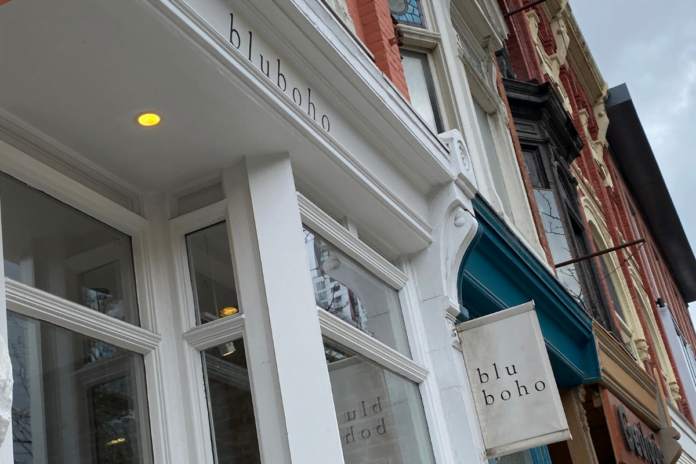
Bluboho on Queen Street in Toronto (Image: Dustin Fuhs)
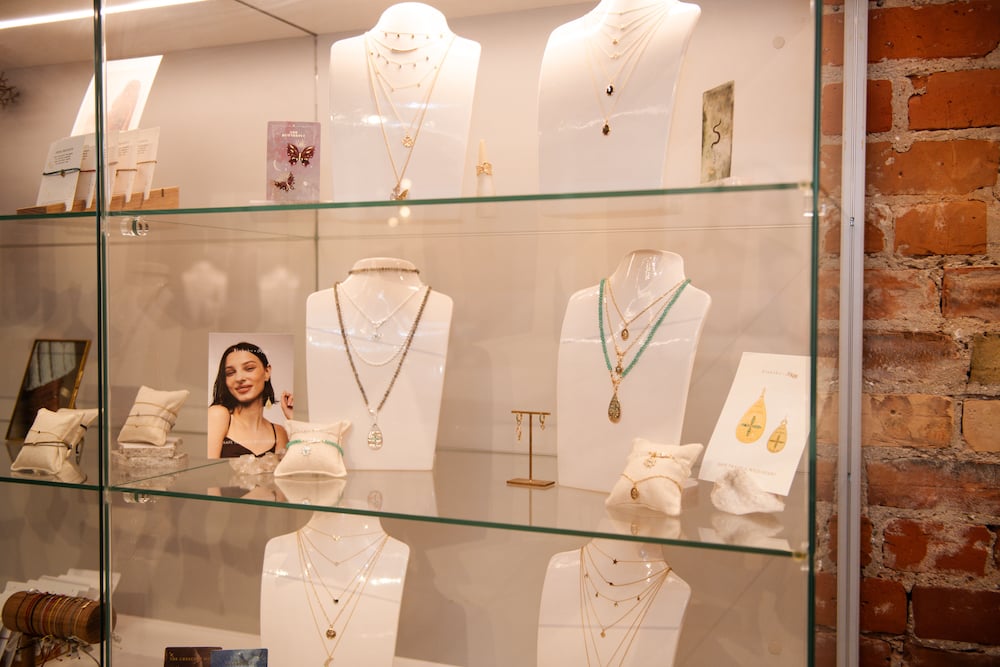
Bluboho’s rise in Canadian jewellery has been steady and intentional, grounded in a philosophy that jewellery should mark life’s most meaningful chapters. In an interview, founder Maggie Aurocco described how the idea sprang from a desire to offer pieces that felt personal and artful rather than purely transactional. “I couldn’t find a great place to buy jewellery,” she recalled of moving to Toronto after a role with Lululemon. “I wanted artisanal, meaningful, beautiful jewellery, and everyone said, go to Tiffany’s. I had an experience and thought, this can be done better.”
From that insight, she and a friend opened a small Oakville boutique in 2011, curating designers from around the world. The name “bluboho,” Aurocco explained, mirrors the brand’s dual intent: “Blue” for the infinite possibilities of life and “boho” for a free-spirited, eclectic sensibility. The stores quickly became places where guests came to celebrate or process life events, from engagements and graduations to grief and change. “People were coming in to mark some of the most important moments of their lives,” she said. “We also had people coming in to mark the death of a child or divorce. It was important that the name and space honour that.”
Maggie Aurocco
As Bluboho expands, its measured approach to real estate, its sustainability commitments, and its intimate store design are central to the Bluboho expansion plans that Aurocco shared.
From curator to creator: the shift to in-house design
The retailer began as a curator of roughly 20 artisan designers. By 2015, foreign exchange swings and a growing desire to tell customer stories through product nudged Bluboho toward in-house creation. “We were buying a lot from the U.S., and the dollar shifted dramatically,” Aurocco said. “There were stories we wanted to tell and guests telling us stories we wanted to translate into pieces.” Bluboho hired a jeweller, sketched ideas rooted in those narratives, and saw immediate traction. Within a few years, the assortment evolved to be almost entirely Bluboho-designed.
Today the line spans fine rings, necklaces, earrings, bracelets, wedding bands and bespoke engagement pieces in 10k and 14k gold, often with a delicate profile that balances raw texture and refined finishes. Collections are conceived with a clear emotional brief: jewellery as a living archive of experiences. “My goal is that jewellery marks every moment of your story,” Aurocco said. “You’re wearing your story and that energy on your body.”
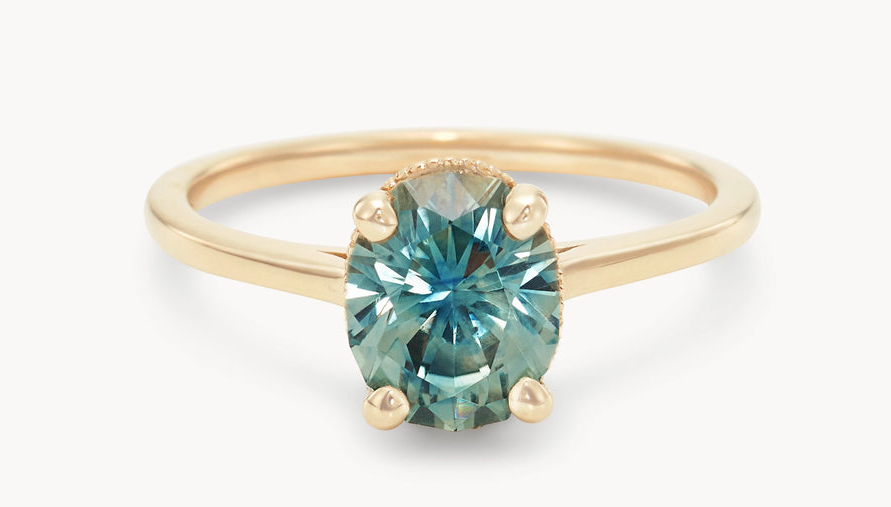
Engagement ring, photo: Bluboho
Craft and sourcing: a hybrid model for quality and technique
Manufacturing evolved alongside design. For years, Bluboho produced entirely in Canada. As designs grew more intricate, the brand added specialist partners while keeping local craft at the core. “Everything was made in Canada from 2015 up until maybe three years ago,” Aurocco noted. “I love making things locally. It’s easier and faster, but there are techniques we can’t always get here.” The company now partners with artisans in Toronto and Montréal, and with expert teams in Thailand and India for specific methods and stone setting. The goal is consistent: match each design to the best available craftsmanship.
That flexibility allows Bluboho to deliver on both design ambition and durability. It also supports one-of-a-kind and custom work that needs particular hand skills. “We want the best possible quality we can get,” she said, emphasizing that each workshop is chosen for its mastery of a technique rather than a generic capacity to produce volume.
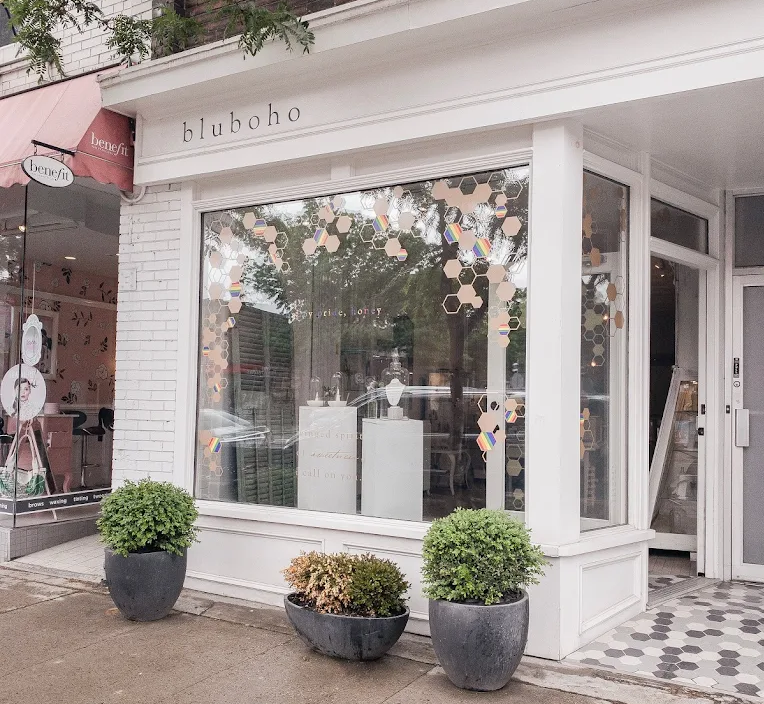
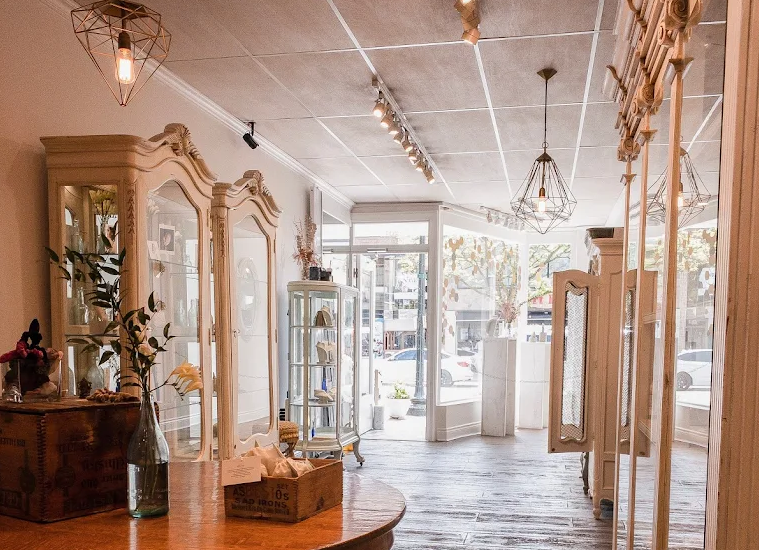
Bluboho on Yonge Street in Toronto. Photo: Bluboho
Sustainability as a throughline, not a slogan
Aurocco’s background in environmental science informs the brand’s sustainability framework. “I have a huge love of nature and did a lot of courses in the economics of the environment and sustainability,” she said. “We can’t be fully sustainable, but we can be better.” Bluboho is a 1% for the Planet member, supporting initiatives such as the David Suzuki Foundation and Surfrider alongside smaller local groups. Within operations, the team prioritizes recycled gold and silver, recyclable and reusable packaging, and repair services to extend a piece’s life.
Stone sourcing follows the same logic. Montana sapphires feature prominently in engagement rings because they can be sourced by sifting rather than traditional hard-rock mining, which reduces environmental impact. “If you can sift instead of mining, it makes a big difference,” Aurocco said. The brand’s focus on solid metal, repairability, and heirloom intent is meant to counter a culture of disposability. “These are not pieces meant to be worn for a week and tossed aside,” she added.
Bluboho x St. Kitts collection, September 2025. Photo Danielle Arnold
Retail footprint: neighbourhood by neighbourhood, with intimacy by design
Bluboho’s brick-and-mortar story began in Oakville in 2011, followed by Yonge and Briar Hill in 2013, and then a milestone opening at Queen and Spadina in downtown Toronto. From there, the footprint widened to Calgary and Ottawa, with a strong Toronto presence that has helped anchor awareness nationally.
Recent expansion included Vancouver’s Park Royal, where Bluboho opened what Aurocco calls its smallest store to date at roughly 500 square feet. The size is a feature, not a compromise. “You have people tucked into this little cocoon,” she said. “You can be with them and show them things.” That intimacy is central to the Bluboho expansion plans, which favour right-sized spaces over maximal footprints.
The next Toronto location will take that idea even further. In spring 2026, Bluboho will open at The James in Summerhill, a boutique retail development that extends the historic “Five Thieves” stretch at Scrivener Square. At about 400 square feet, the new store will be the brand’s most intimate yet. “The vision is a super intimate shopping experience,” Aurocco said. “We’re going to offer some special pieces there that we don’t offer in our other stores. One-of-a-kind, unique, and we’ll do custom as well.” Early design discussions point to a space that feels domestic and warm, with art and tactile materials. “I want it to feel like you’re walking into a home,” she said.
Inside Bluboho on Yonge Street in Toronto. Photo: Bluboho
West Coast momentum and a Toronto jewel box
Vancouver’s Park Royal was always a target. Aurocco knew the centre from earlier Lululemon days and admired its mix of nature and luxury. “If we ever came to Vancouver, I wanted to be in Park Royal,” she said. A local brokerage connection that knew the brand helped secure a space in a roster better known for national and global banners. The compact format has performed well, validating Bluboho’s belief that jewellery retail benefits from focused, conversational environments.
In Toronto, The James location will serve as a jewel box for capsule editions, custom work, and exclusive designs, complementing the larger urban stores. While it is the smallest footprint in the portfolio, its mandate is ambitious: to become a neighbourhood studio where the brand’s narrative-driven approach to jewellery is experienced at its most personal. The micro-store concept is a recurring theme in the Bluboho expansion plans, with a tilt toward human-scaled environments that privilege dialogue over display.
Customer experience and price architecture
Bluboho’s assortment is built to meet guests across life stages and budgets. “I’ve always wanted to take that woman from a teenager all the way through to a 50th anniversary,” Aurocco said. Entry pieces under $500 support milestones such as Sweet 16 and graduation, while anniversary and bespoke designs often land in the $2,500 to $5,000 range. One-of-a-kind or custom rings can reach $10,000 to $25,000 and beyond, depending on the brief.
The brand positions itself between mass jewellery and legacy maisons. The pitch is neither logo-driven nor status-led; it is story-led. “Jewellery is often passed down,” Aurocco said. “Those stories get passed down through generations. It’s beautiful to be part of all of it, not just one snapshot of someone’s life.”
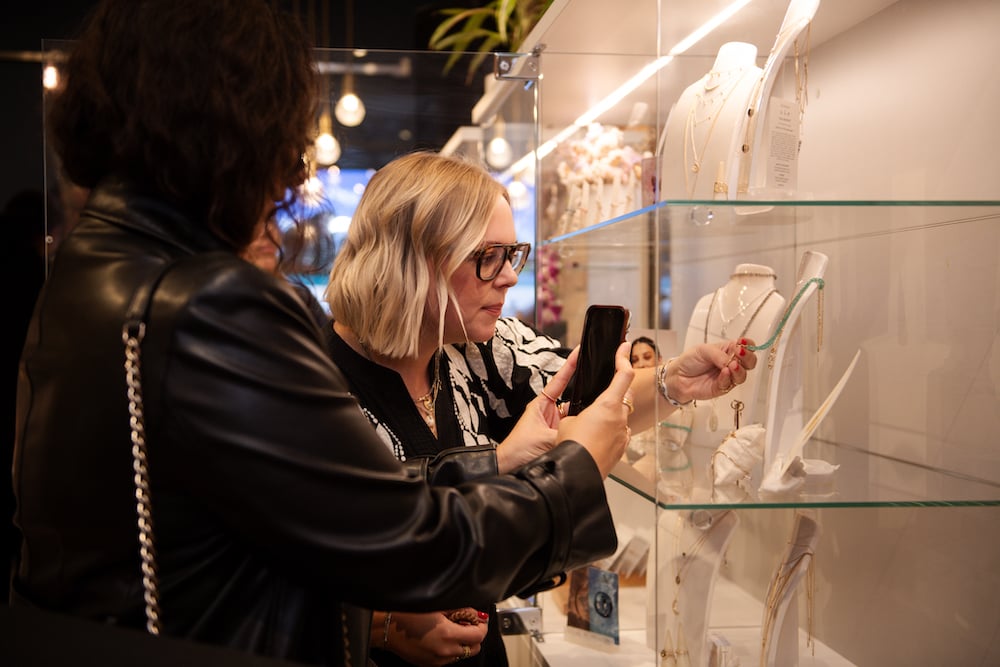
St. Kitts launch event at Bluboho in Toronto, September 2025. Photo: Daniella Arnold
E-commerce and wholesale: Canada first, with global echoes
Online, Bluboho sells across Canada with natural strength in the Greater Toronto Area, but demand is well distributed nationally, including the West Coast and the Atlantic provinces. The site also serves U.S. customers and ships to Europe and Australia. Wholesale accounts in select cities deepen awareness where the brand does not yet have stores and give new customers a chance to try pieces in person. “With jewellery, often people want to see it in person,” Aurocco said. “Especially at higher price points.”
That omnichannel strategy supports a disciplined retail rollout. Physical stores focus on communities where Bluboho can recruit strong teams and find the right real estate. E-commerce and wholesale maintain reach in markets where the brand is not ready to plant a flag. It is a practical expression of the Bluboho expansion plans: grow where the conditions are right and keep in touch everywhere else.
St. Kitts collaboration, image: Bluboho
A capsule with St. Kitts, and a full-circle charm
Collaborations are rare at Bluboho, but one recent partnership is close to Aurocco’s heart. The tourism board of St. Kitts approached the brand about a capsule. Initially unsure, she kept researching and discovered that St. Kitts is short for Saint Christopher, the patron of safe travel. That sparked a childhood memory. “When I was twelve, my mom put me on a train across the country and tucked a little Saint Christopher charm in my hand,” she said. “My whole life, every time I traveled, my mom would ask if I had it.”
The symbolism was too aligned to ignore. After a visit to the island, Bluboho designed concepts that honoured its quieter, raw beauty. The Saint Christopher charm became the anchor. “It was a full-circle moment,” she said, tying a personal talisman to a place whose character she describes as humble, warm and uncommercial. The capsule underscores how the brand approaches partnerships: only when the story resonates and the product can carry that story authentically.
Future markets: patient, people-first growth
Bluboho remains family-owned, and that ownership structure shapes the pace and style of expansion. “We don’t have the pressure to do it,” Aurocco said. “We can organically expand as we see the right real estate and the right people.” Halifax is high on her mind. Victoria, Winnipeg, and Saskatoon are also on the radar, driven by e-commerce demand and wholesale signals. The test is not just footfall potential; it is whether the company can hire a team capable of delivering the brand’s intimate service model.
“I would love to be in Halifax,” she said. “Retail is so special, especially jewellery. We get tears of joy and tears of sadness in the store. Offering a container for that, not just digital, is a beautiful thing to me.”
Montréal’s Griffintown neighbourhood has welcomed the official opening of RECESS, a pioneering wellness destination that blends thermotherapy, social connection, and immersive art. Positioned as Québec’s first social thermal station, RECESS introduces a new model of urban wellness designed to bring community and culture into the practice of sauna and cold-plunge rituals.
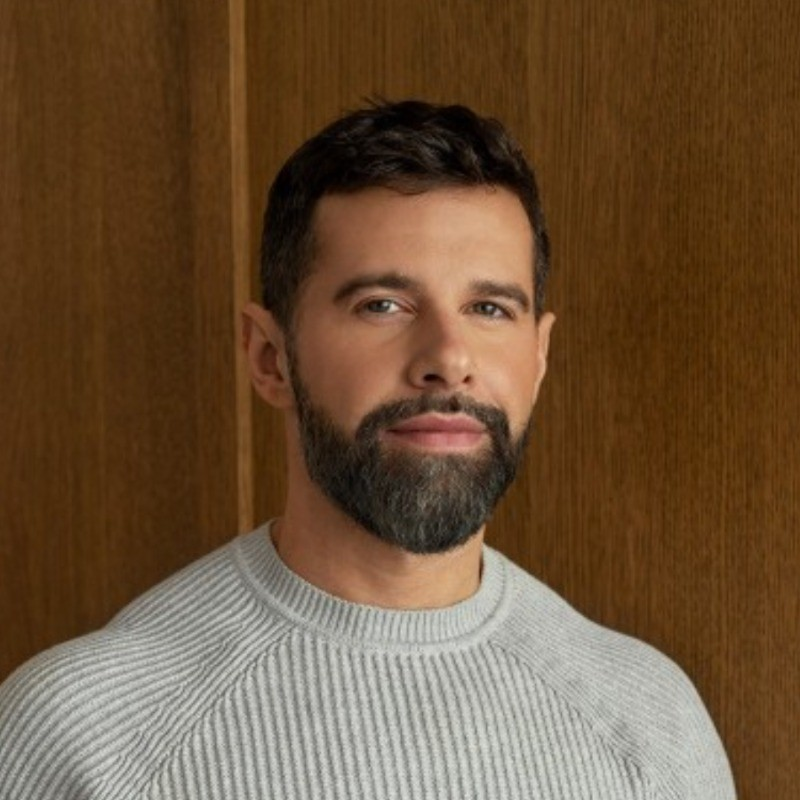
Founded by Adam Simms, a former tech entrepreneur, and Marilyne Gagné, a leader in Canadian health and wellness, RECESS is seeking to redefine how Montréalers approach both personal recovery and social interaction.
Adam Simms
“We wanted to create a space where people can truly reconnect with themselves and with others,” said Simms in an interview. “RECESS is that pause where you refocus on what matters most: body, mind, and community.”
Reinventing Thermotherapy for City Life
Unlike traditional destination spas that often require a half-day excursion and come with a higher price point, RECESS aims to embed thermal wellness into the routines of city dwellers. Located at 217 Young Street in Griffintown, the 4,700-square-foot facility offers 75-minute guided sessions built around a circuit of sauna, cold plunge, and immersive lounge experiences.
“Québec has many spas that are beautiful, but they tend to be destinations,” explained Simms. “People may go once a quarter, or a few times a year. Our goal is to flip that model. RECESS is in the middle of the city at a much more accessible price point. Members can come multiple times a week or a few times per month and truly integrate the therapy into their lifestyle.”
Marilyne Gagné
The concept draws on centuries-old Scandinavian and Nordic sauna traditions but adapts them for modern urban life. Gagné emphasized that RECESS is built to resonate with demographics that wellness operators have often struggled to reach. “What’s special about this brand is that it has a masculine energy to it,” she said. “Men often get pulled into spas by their partners, but our concept is active, efficient, and designed to appeal to busy schedules. We’re seeing strong traction with men who want to experience this with friends, making it truly social.”
The RECESS Experience
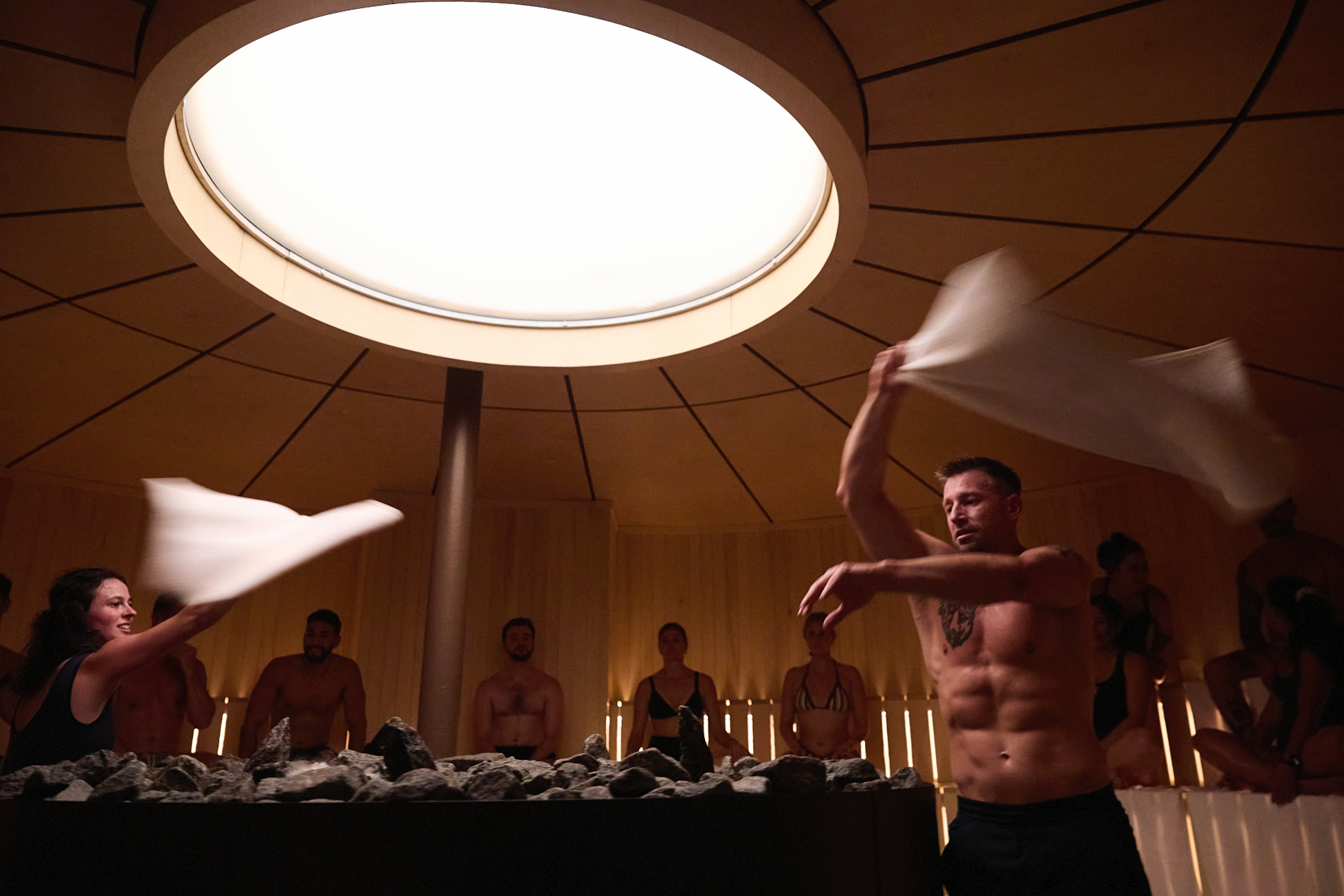
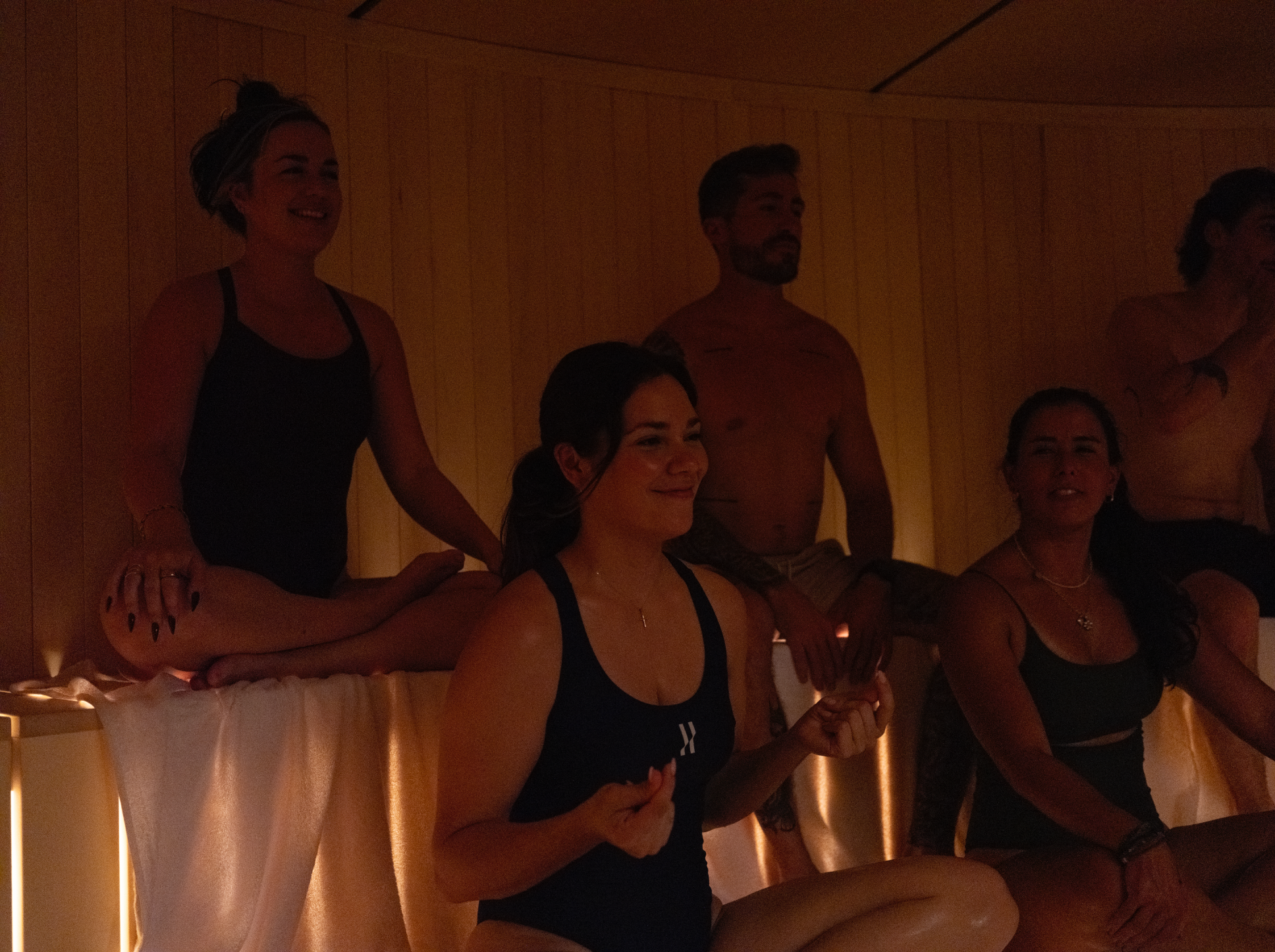
Each guided session begins in a coliseum-style sauna, a circular space that can host 50 participants at once. Heated by a central oven and accented with dynamic lighting, the space allows guides to lead tailored sessions that incorporate essential oils, music, and even towel-waving techniques.
“It’s about creating a multi-sensory journey,” said Simms. “Guides curate experiences that can be energizing, deeply relaxing, or socially engaging, depending on the atmosphere they want to create.”
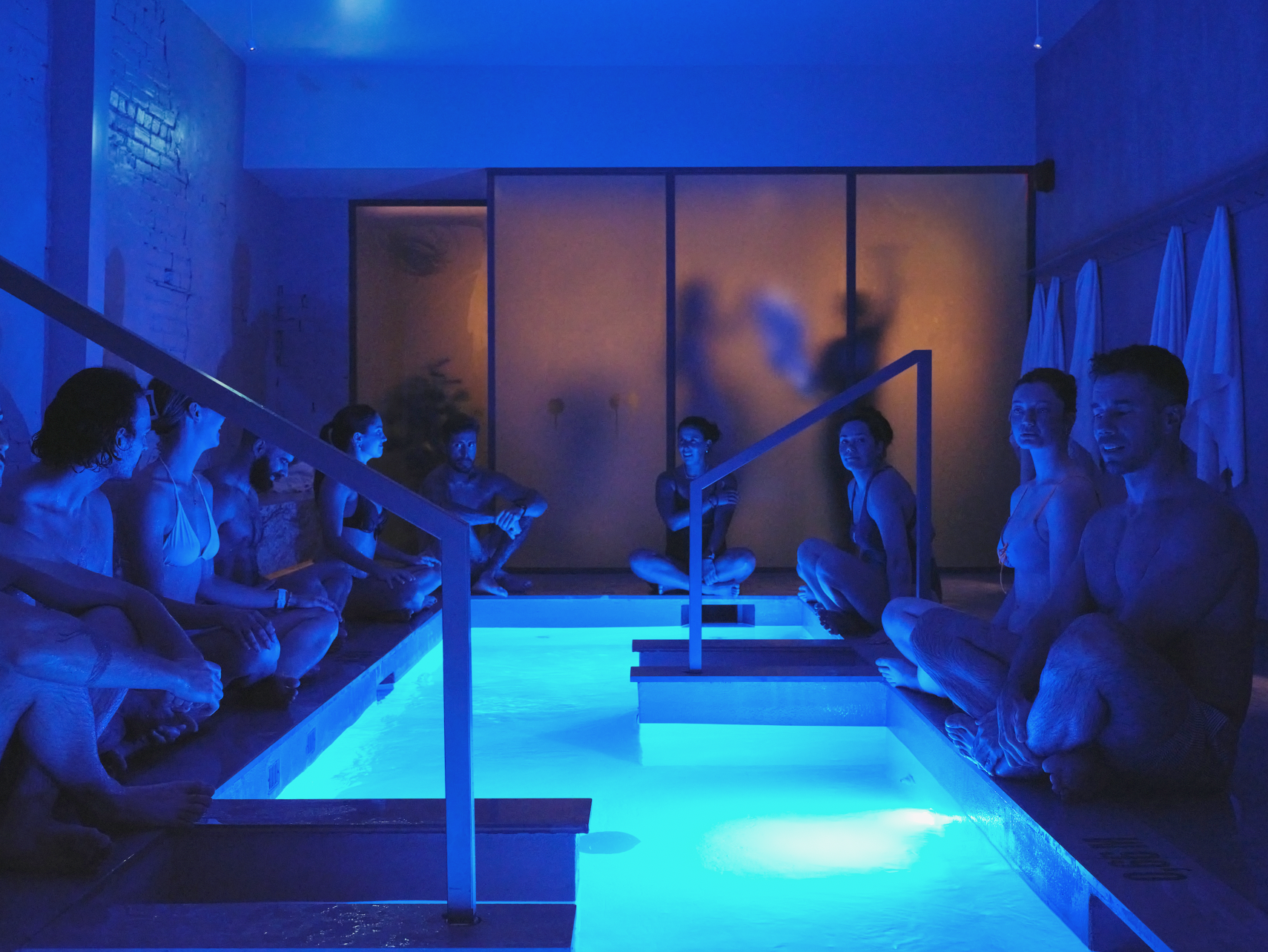
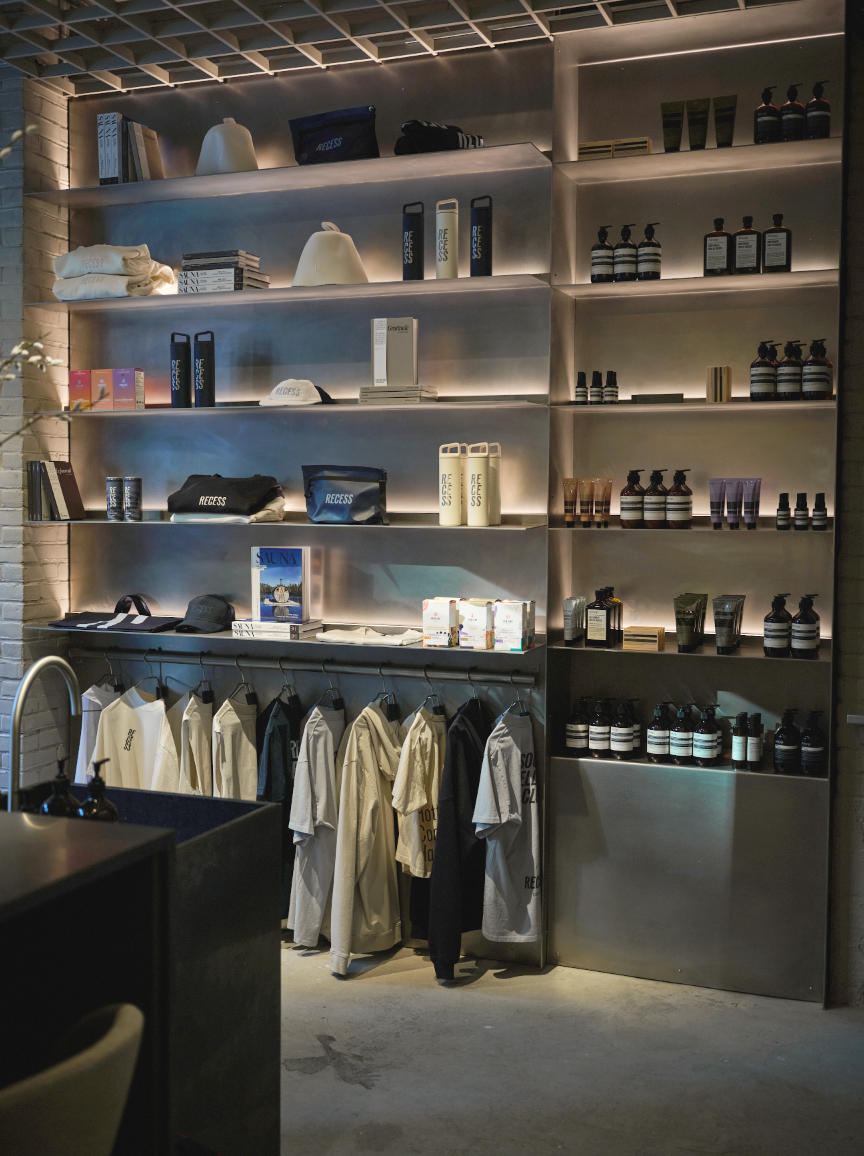
From there, guests move to a rinse and shower station featuring stone sinks and Aesop amenities before entering a 22-foot cold plunge pool. Designed to hold 14 to 16 people at once, the plunge emphasizes shared experience rather than solitary endurance. Breathing exercises led by trained guides support participants in managing the intensity of the cold immersion.
The circuit concludes in an immersive lounge featuring rotating exhibitions of digital and visual art. Here, participants can enjoy tea and conversation, extending the social aspect of the experience. “We wanted to integrate art into the wellness practice because when people are present in these heightened states, they’re more open to inspiration,” Simms said.
Sauna at RECESS in Montreal. Image supplied
A Social and Cultural Shift
The social dimension is central to RECESS, reflecting both historic and contemporary influences. “For centuries, in places like Greece, Egypt, and Finland, the sauna was a gathering place,” noted Gagné. “Families would go together, communities would meet, and conversations would happen in the sauna. Canada hasn’t fully adopted that tradition yet, and RECESS is designed to bring that culture here.”
Simms added that the timing is ideal given the shifts in lifestyle and work brought on by hybrid arrangements.
“Griffintown has become full of condo towers with people working from home,” he explained. “Many of them are searching for connection. We hope RECESS can be a third space—a healthy, social alternative to the bars and cafés in the neighbourhood.”
Cold Plunge at RECESS in Montreal. Image supplied
Strategic Location in Griffintown
The choice of Griffintown is deliberate. Once an industrial district, the area has transformed in recent years into a hub of residential and cultural life. The neighbourhood now features restaurants, gyms, and creative venues that attract young professionals.
“When I moved here, nothing existed, it was just factories,” said Simms. “In the past decade, condos have gone up, and in the past five years, the commercial life has exploded. Griffintown is now one of the city’s most vibrant areas for young professionals and creatives.”
Gagné added that the area’s culture aligns with RECESS’s vision. “This is a generation that is tired of swiping on apps. They want to meet people in person. They want day activities that make them feel good, help them sleep well, and can be repeated regularly without breaking the bank. RECESS fits into that lifestyle perfectly.”
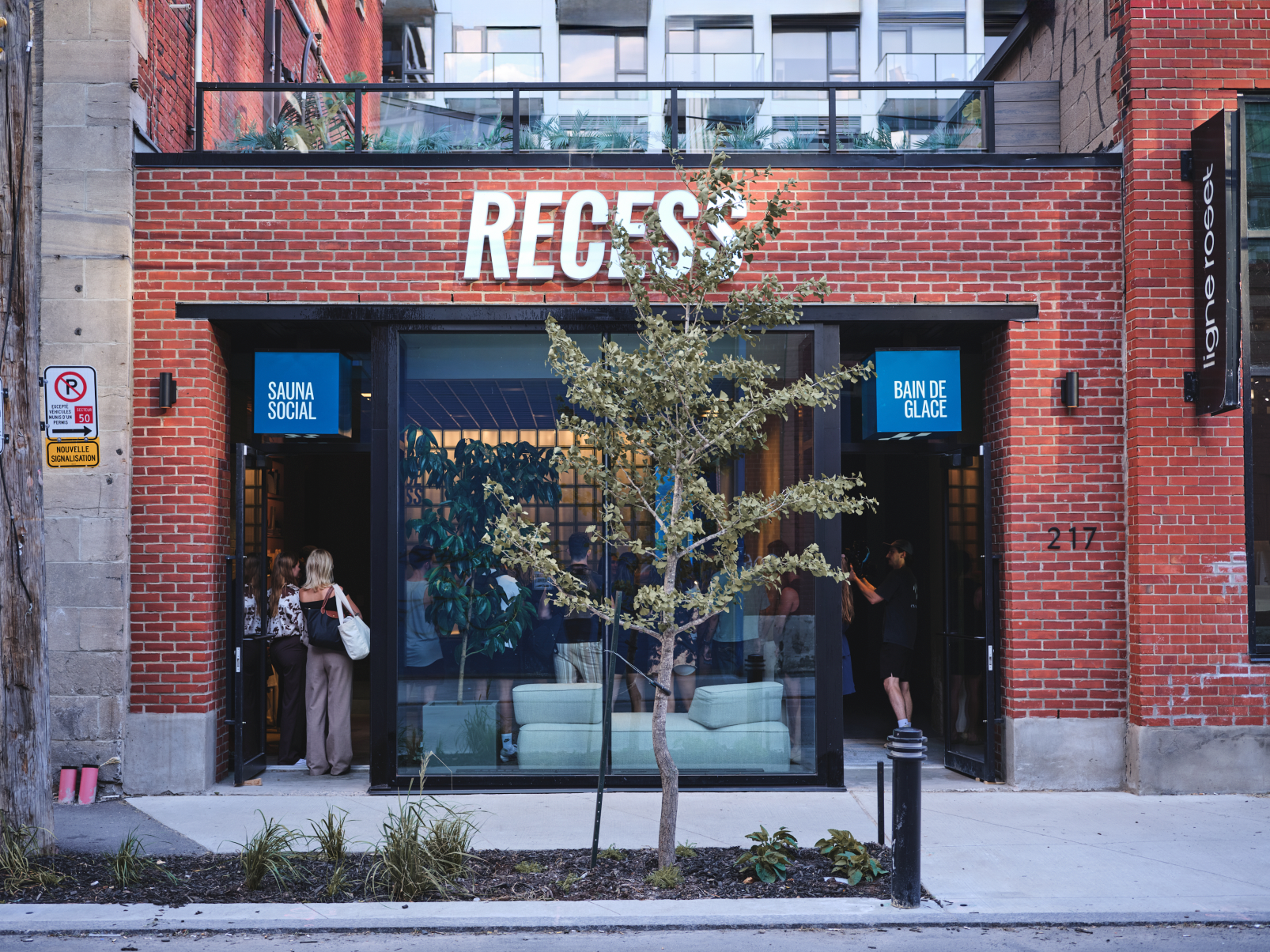
Night image of RECESS in Montreal. Image supplied
Founders with Proven Expertise
The co-founders bring complementary expertise to the project. Gagné is the founder of Dermapure, a Canadian network of 75 medical aesthetic clinics, which she scaled into a business with nearly $200 million in revenue. “After 16 years of growing Dermapure, I was ready for a new challenge,” she said. “This was my chance to bring another innovative concept to market, one that supports both wellness and community.”
Simms, meanwhile, comes from the technology sector, having helped scale Montréal-based Lightspeed and worked with collaboration platform Trello, which was later acquired for $400 million. He also teaches photography at Concordia University. “I wanted to prioritize health, wellness, and community in my work,” Simms said. “RECESS is about creating something beautiful in Montréal that doesn’t exist yet.”
Both founders also bring strong networks and partners. Simms’s partner, Dr. Marc-Antoine Rivard, a certified Wim Hof instructor, oversees the scientific and safety protocols at RECESS. Gagné’s daughter is also involved in marketing and operations, while partnerships with brands like Aesop further integrate design and sensorial detail into the experience.
Aesop products in the lounge at RECESS in Montreal. Image supplied
Competitive Context
The wellness and recovery sector is expanding quickly across North America. Concepts such as Othership in Toronto and newer entrants like Revive Wellness in Toronto’s west end have demonstrated demand for urban wellness experiences. Internationally, Nordic-inspired thermotherapy has seen a resurgence as people look for alternatives to alcohol-based social spaces.
Even before its official opening, RECESS has drawn attention from industry peers. “Recently, the founder of Othership reached out to us while he was in Montréal,” Gagné recalled. “He came by to meet us and said, ‘Your brand is sharp, you’ve captured attention.’ That was very encouraging.”
Expansion Plans Beyond Montréal
While the Griffintown location is the flagship, the founders see broader potential. “We envision up to 10 locations across Canada,” said Gagné. “But they need to be precious, in very specific areas that reflect our brand.”
Interestingly, the expansion strategy looks beyond the United States. “We’re much more aligned with European cities,” explained Simms. “London, Paris, Berlin, these are places where the culture and lifestyle fit what RECESS represents.”
Gagné added that when training in Norway with leading thermotherapy experts, they were told that no global network had yet organized this concept sustainably. “That means there is still space to create a truly international model,” she said.
Sauna at RECESS in Montreal. Image supplied
Pricing, Access, and Membership
A key differentiator for RECESS is accessibility. At approximately $50 per session, the pricing is designed to encourage repeat visits. Membership models will allow professionals and residents to incorporate thermotherapy into their weekly or monthly routines.
Sessions are capped at 50 participants to preserve intimacy, and private group bookings are available for up to 50 people. “We see strong potential for corporate team-building, brainstorming, and leadership development in this environment,” Simms explained. “It’s an ideal setting for innovation and collaboration.”
A New Category in Canadian Wellness
As the first social thermal station in Québec, RECESS represents more than just another spa. It is positioning itself as a new category of urban wellness — an accessible, repeatable ritual that blends health, art, and community.
“Every detail, from the scents to the architecture to the social flow of the sessions, has been carefully designed,” said Gagné. “This isn’t just about recovery, it’s about reconnection.”
Simms echoed that vision. “Our hope is to inspire people to build wellness into their everyday lives,” he said. “To create a space where people can feel better physically, connect socially, and leave inspired. That’s the essence of RECESS.”
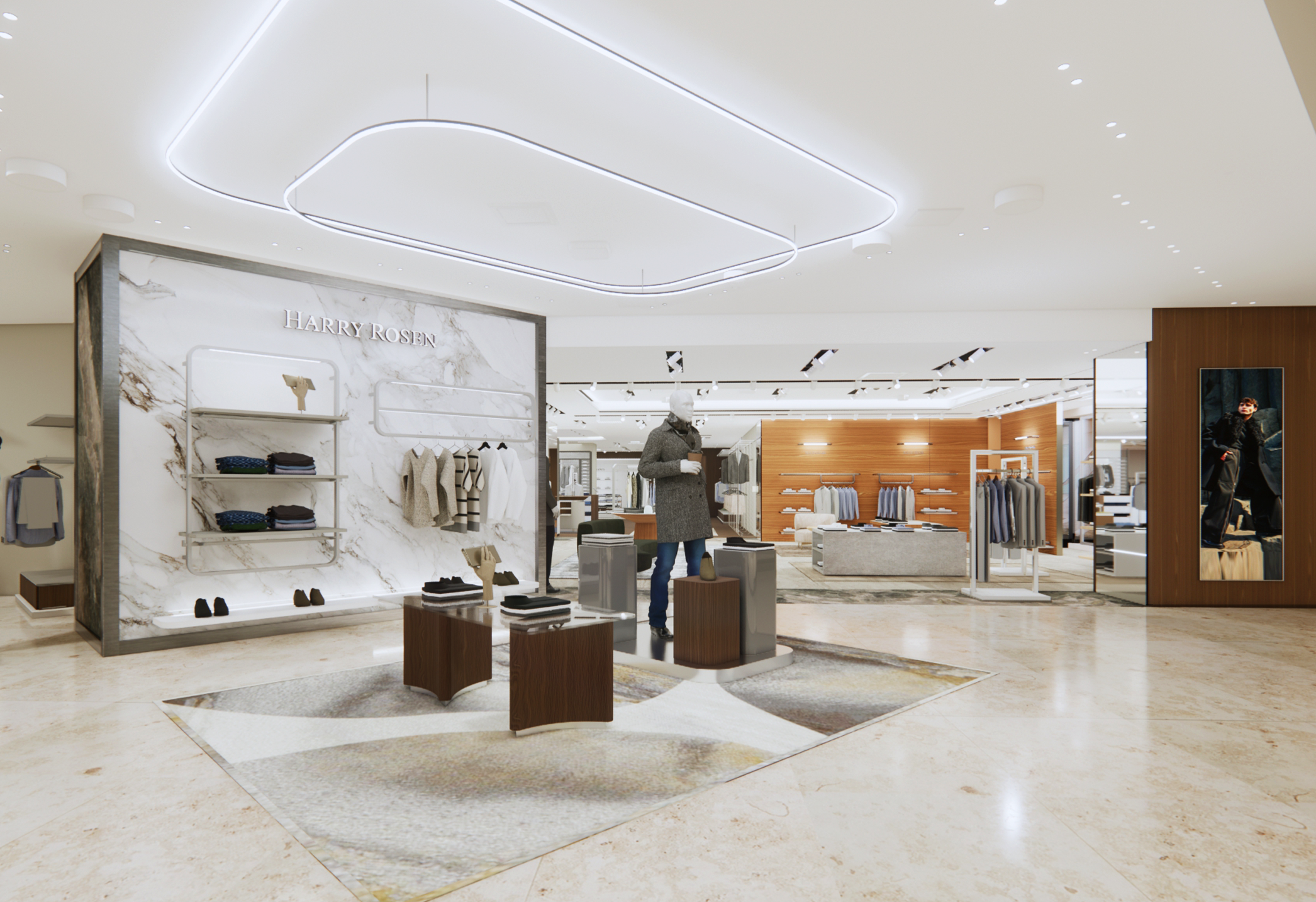
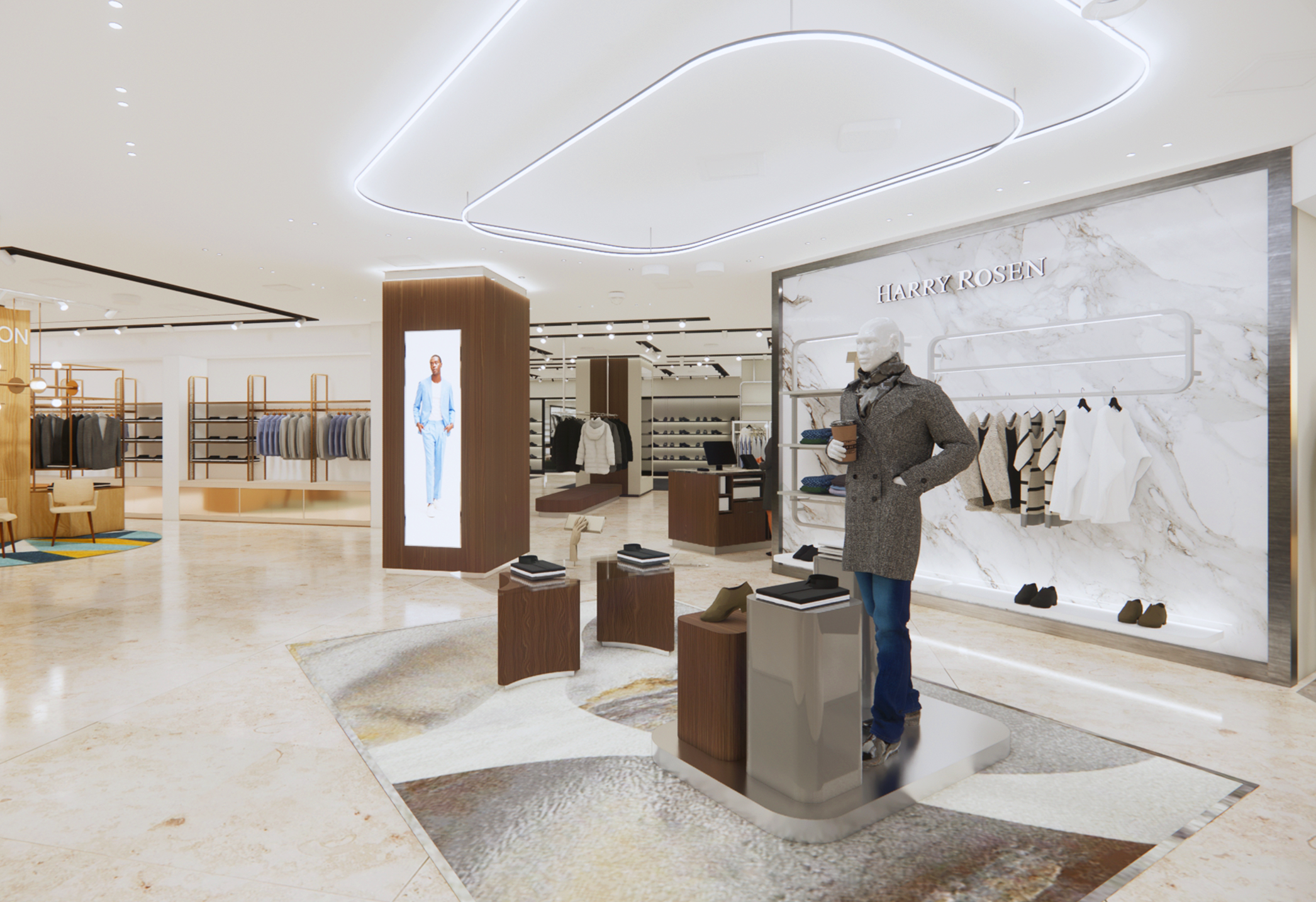
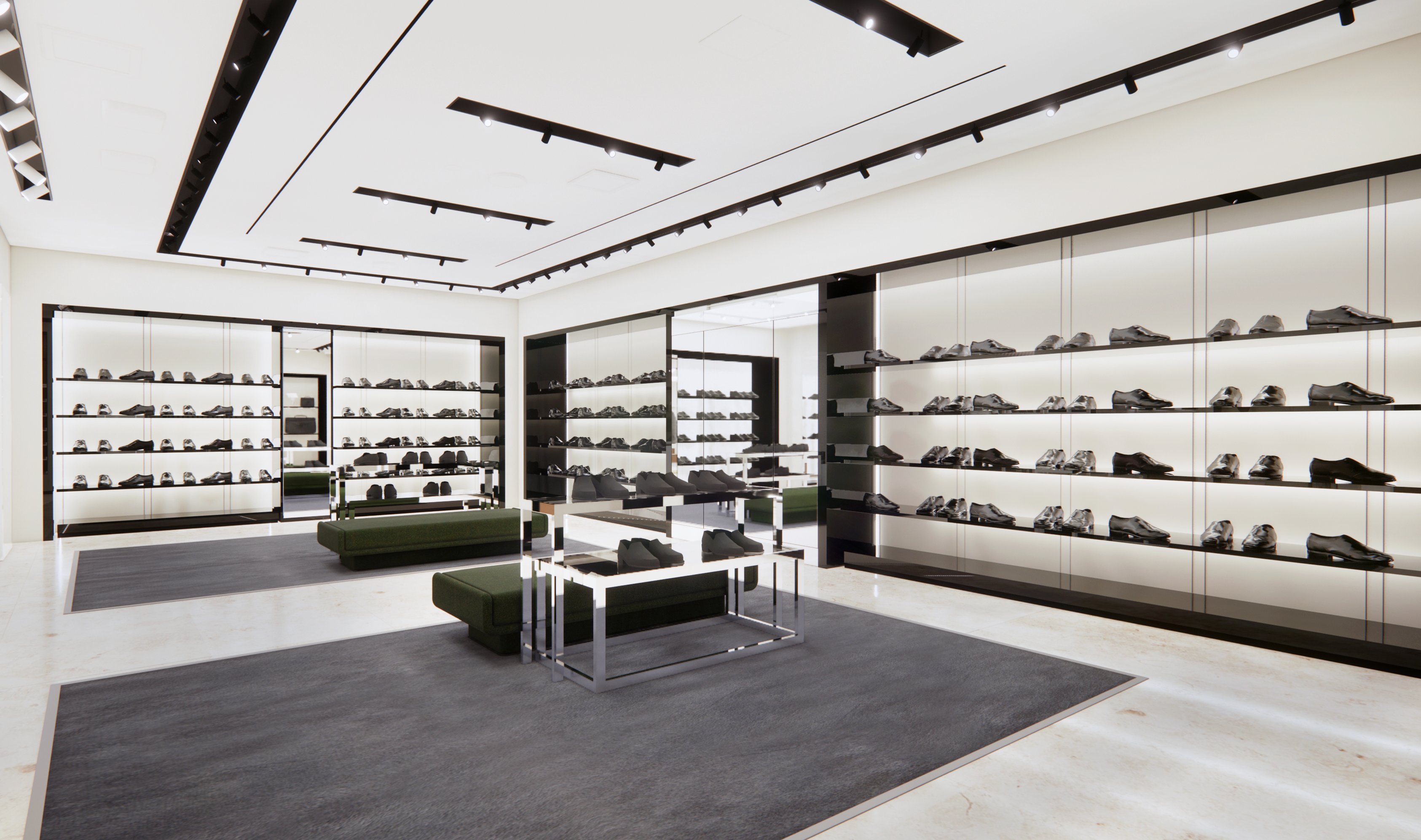
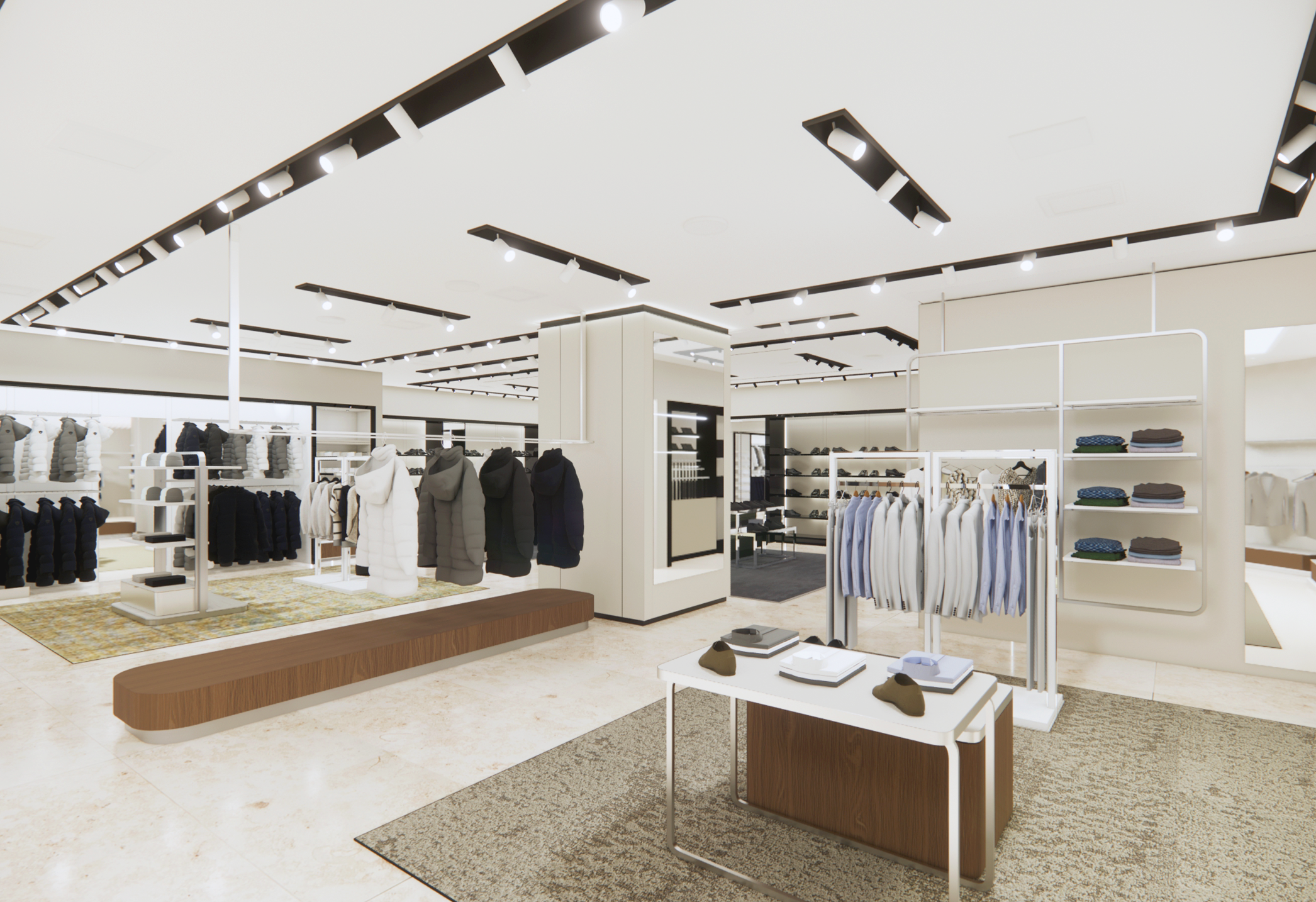
Harry Rosen First Canadian Place. Photo: Harry Rosen
Harry Rosen, Canada’s leading luxury menswear retailer, says it is doubling down on Downtown Toronto with the opening of its reimagined store in First Canadian Place in November.
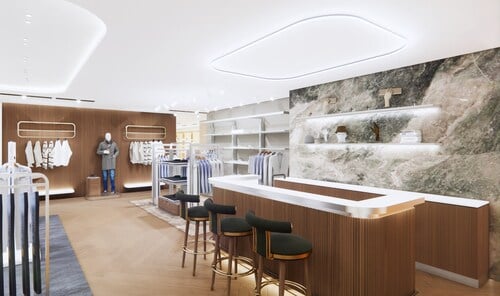
The 10,380-square-foot, single-level space is a bold investment in the future of workwear, purpose-built for the professionals driving the future of Canadian industry. Designed for connection as much as commerce, the store invites customers to grab an espresso, meet with style advisors in a plush lounge to review fabrics for their next custom suit, browse curated collections, or attend in-store and office-hosted events that bring the city’s business community together, said the company in a news release on Wednesday.
The renovation is the first major milestone in Harry Rosen’s $50 million, multi-year program to modernize its retail experience across the country. Future openings will include a second Vancouver flagship at Oakridge and the relocation of the Toronto Bloor Street store to a new, expanded flagship on Cumberland, both slated for 2026, explained the retailer.
“Reimagined in its original home in First Canadian Place, the newly transformed space reflects a refined, unified retail vision that features updated design and customer-centric experiences. The store will house a mix of the most relevant and elevated brands in men’s workwear, including ZEGNA, Canali, Eton, Eleventy, Maurizio Baldassari, HAROLD, and more, to showcase everything from world-class tailoring to modern business casual and more relaxed dress codes. With personalized made-to-measure experiences and a welcoming in-store bar designed for client hosting and community-building, the store will prioritize the style, connection, and service that today’s business professionals need,” it said.
Image provided by Ian Rosen
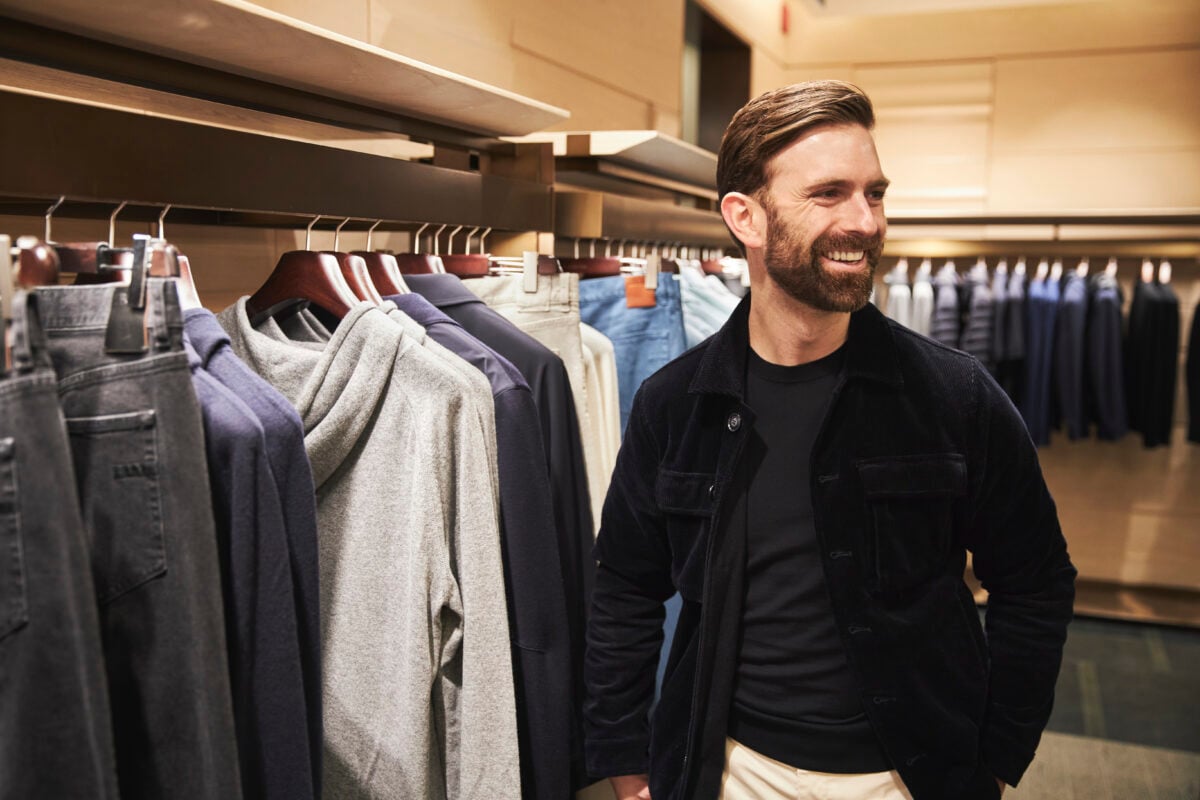
“Work is back, and so is the wardrobe that goes with it,” says Ian Rosen, President and COO of Harry Rosen. “Harry Rosen has long been Toronto’s destination for a broad spectrum of businesswear, whether you’re suiting up for the boardroom or slipping on your weekday uniform. With this new store concept in the heart of the Financial District, we’re creating a space that reflects the new era of work and reinvigorating our investment in Toronto’s vibrant Downtown core.”
The store will feature leading luxury brands including ZEGNA, a first-of-concept from Canali, Patrick Assaraf, and Eleventy, as well as Canadian concept shop debuts from Eton and Maurizio Baldassari. These brands and more will sit alongside an expanded shoe selection, Harry Rosen’s in-house label, HAROLD, and signature services, including one-on-one style appointments, a private made-to-measure and tailoring suite, and corporate wardrobe planning, all fully integrated into the new layout, said the retailer.
“Designed with both people and purpose in mind, the renovation prioritizes sustainability through the thoughtful reuse of existing materials and the integration of warm, natural textures that elevate the in-store experience while reducing waste,” it said.
“As part of Harry Rosen’s broader investment in community and conversation, the First Canadian Place location will also serve as a venue for client events, speaker panels on modern leadership and style, private tastings in partnership with The Macallan, and exclusive corporate experiences both in-store and at the office, tailored for the professionals who power Bay Street.”
Harry Rosen is Canada’s leading luxury menswear retailer. Founded in 1954 by the man whose name the chain still bears, the store has grown from a single 500-square-foot store in Toronto to become a powerhouse in Canadian retailing with 19 stores across Canada and a robust e-commerce offering.
Harry Rosen, First Canadian Place (CNW Group/Harry Rosen Inc.)Photo: Harry RosenHarry Rosen First Canadian Place. Photo: Harry RosenHarry Rosen First Canadian Place. Photo: Harry Rosen
As the hotel prepares to celebrate its 40th anniversary in January 2026, the recognition marks a milestone in a storied history that has made Pan Pacific Vancouver synonymous with luxury hospitality on Canada’s West Coast.
“This recognition is both an honour and a celebration of the lasting connections we’ve built with our guests over the years,” said the Pan Pacific Vancouver team in a statement. “It reflects not only the loyalty of those who continue to choose us, but also the dedication of our exceptional team who bring our hospitality experiences to life every day.”
A Vancouver Landmark with Global Prestige
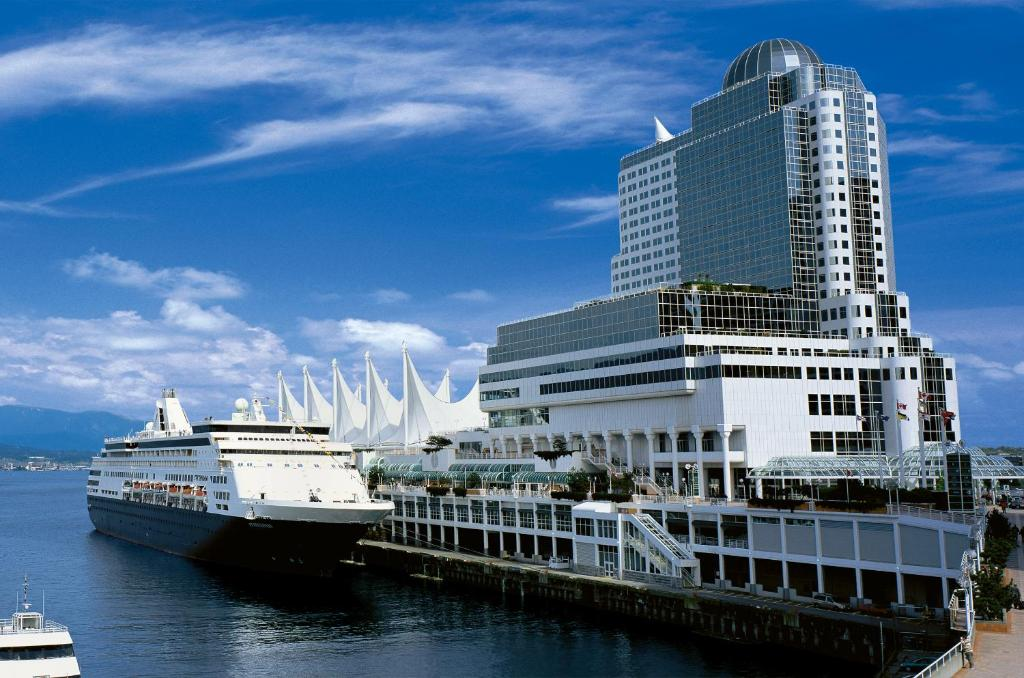
For nearly four decades, Pan Pacific Vancouver has welcomed travellers from around the world to its waterfront location at Canada Place, where the harbour, mountains, and skyline converge in one of the most iconic views in the city.
The hotel’s distinctive white sail roofline has become a hallmark of Vancouver’s skyline since its opening for Expo 86, serving as a gateway for international visitors. Its blend of architectural design, world-class service, and harbourfront elegance continues to position it among Canada’s premier destinations for both leisure and business travellers.
The accolade from Condé Nast Traveller reaffirms the property’s longstanding reputation as one of Canada’s most celebrated hotels, complementing its history of AAA/CAA Four Diamond and TripAdvisor Travellers’ Choice awards.
Photo: Pan Pacific HotelPhoto: Pan Pacific Hotel
Inside Pan Pacific Vancouver
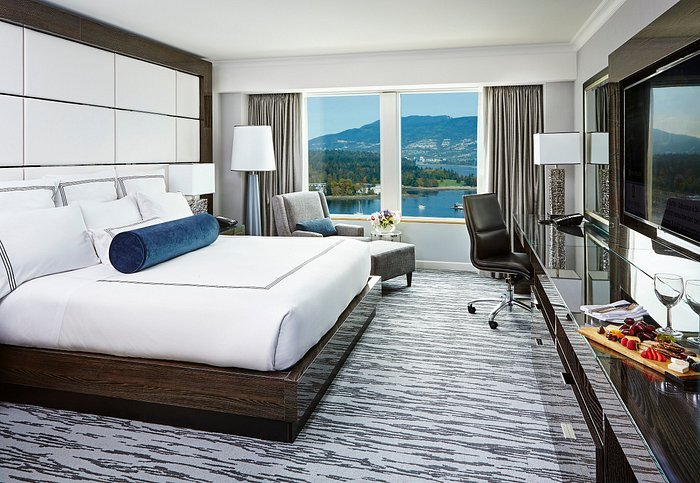
Located at 300–999 Canada Place, the five-star Pan Pacific Vancouver features 503 guest rooms and suites, many offering panoramic views of Coal Harbour and the North Shore Mountains. The hotel’s Pacific Club Rooms & Suites offer exclusive amenities, including private check-in, dedicated concierge service, and access to the Pacific Club Lounge.
Signature accommodations such as the Pacific Suite include a jacuzzi, rain shower, full kitchen, and baby grand piano, catering to guests seeking elevated luxury and privacy.
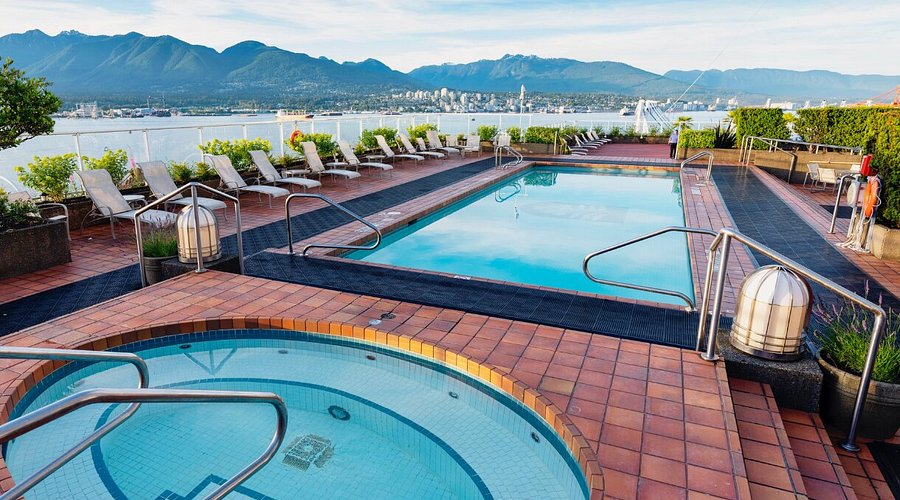
Amenities include a rooftop pool, Spa Utopia, fitness centre, and extensive business and event facilities. The hotel offers valet and self-parking, electric vehicle charging, and pet-friendly accommodations.
Photo: Pan Pacific Hotel
Dining and Events at the Waterfront
Pan Pacific Vancouver is also known for its culinary offerings, anchored by Five Sails, an acclaimed fine-dining restaurant with panoramic ocean views. Oceans 999 serves coastal cuisine and breakfast favourites, while the Coal Harbour Bar is a popular gathering spot for cocktails overlooking the waterfront.
With 42,000 square feet of meeting space across 20 rooms, including a 9,600-square-foot ballroom, the hotel is a destination for conventions, weddings, and corporate events. Its direct access to the Vancouver Convention Centre East and cruise ship terminal enhances its appeal to global travellers.
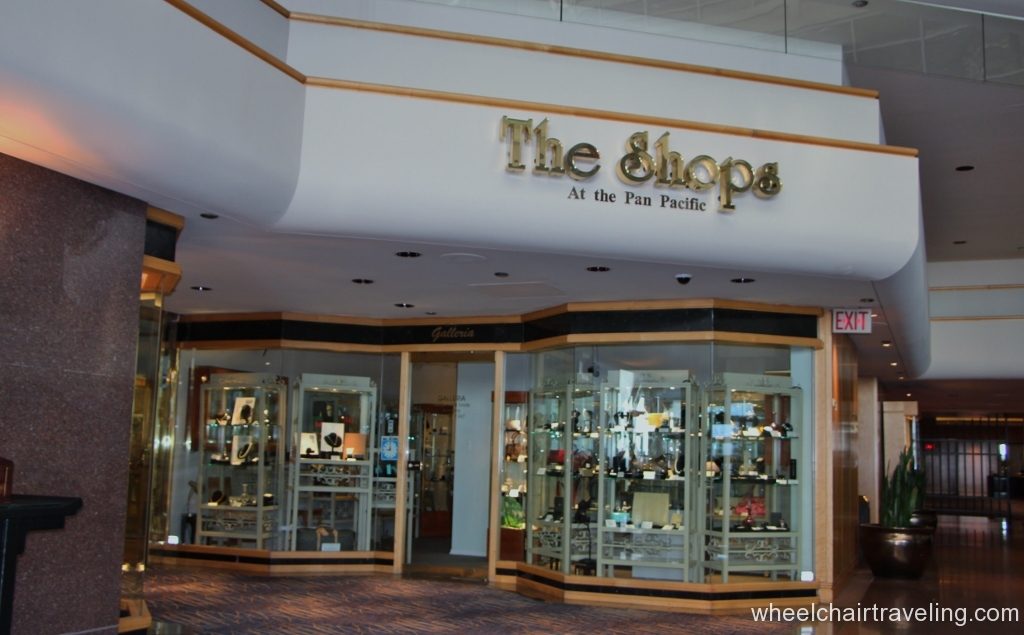
The Shops at the Pan Pacific Hotel in Vancouver. Photo: Wheelchairtraveling.com
Retail at the Pan Pacific Vancouver
Beyond its role as a world-class hotel, Pan Pacific Vancouver has a rich connection to retail that stretches back to its opening in 1986. Located on the third level, the hotel’s retail galleria has long catered to international visitors arriving through the Vancouver Cruise Ship Terminal, offering an elegant mix of boutiques, galleries, and specialty shops.
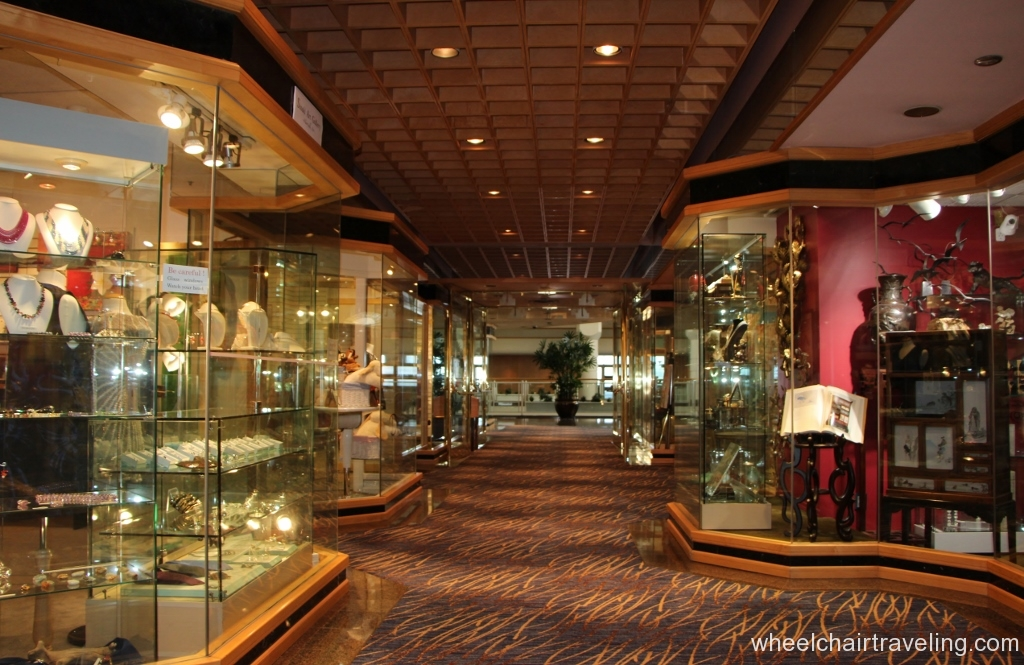
Today, five retail spaces remain, featuring a curated selection of art galleries and boutiques:
Chali-Rosso Art Gallery – Showcasing fine art by Salvador Dalí, Pablo Picasso, and other world-renowned masters.
Premiere – A fashion boutique offering contemporary collections.
Ramin & Sons – A well-known purveyor of unique antiques and fine collectibles.
Sasaki Art Gallery – Blending fashion, art, and local creativity.
Victory Antiques – Specializing in vintage furnishings and décor.
The Shops at the Pan Pacific Hotel in Vancouver. Photo: Wheelchairtraveling.com
The Luxury Retail Era of the 1990s
During the 1990s, the retail galleria within Pan Pacific Vancouver was among the most sophisticated shopping destinations in the city. At that time, Japanese tourism was booming, and luxury brands sought proximity to this high-spending clientele.
A licensed Celine boutique operated on the third floor — one of only two Celine locations in Vancouver at the time — managed by Collections International, a local retail group that also operated a multi-brand luxury designer store (including Hermes, Prada) within the same galleria. Nearby, Farideh, a high-end women’s fashion retailer, offered European designer labels and featured an adjacent Valentino boutique, also operated under license.
The galleria also included Furs by Jacques, a luxury furrier owned by the Saitoh Group, catering to affluent Japanese visitors and cruise ship travellers. Together, these boutiques created a compact yet influential luxury enclave within the Pan Pacific complex, positioning it as an early hub for international designer retail in Vancouver.
However, as the city’s luxury retail landscape evolved through the early 2000s, brands gradually shifted toward Burrard Street and West Hastings Street.
A boutique at The Shops at the Pan Pacific Hotel in Vancouver. Photo: Trip Advisor
A Storied History: From Expo 86 to Iconic Status
The Pan Pacific Vancouver Hotel and Canada Place share a remarkable legacy that began with Expo 86, a pivotal event that transformed Vancouver into a global destination.
The hotel opened on January 8, 1986, shortly before the World’s Fair, as part of a redevelopment project led by the Canada Harbour Place Corporation, a federal Crown entity established to transform the former Canadian Pacific Railway Pier B–C into a world-class waterfront hub.
The complex was designed collaboratively by Zeidler Roberts Partnership, Musson Cattell Mackey Partnership, and DA Architects + Planners, incorporating the now-famous white sail roofline, rising approximately 90 feet high, as a tribute to Canada’s maritime heritage.
Below the hotel sit the Vancouver Convention Centre East, the World Trade Centre offices, and the Vancouver Cruise Ship Terminal, which can berth up to three cruise ships simultaneously. Together, these facilities embody the spirit of Expo 86 — innovation, design, and global connectivity.
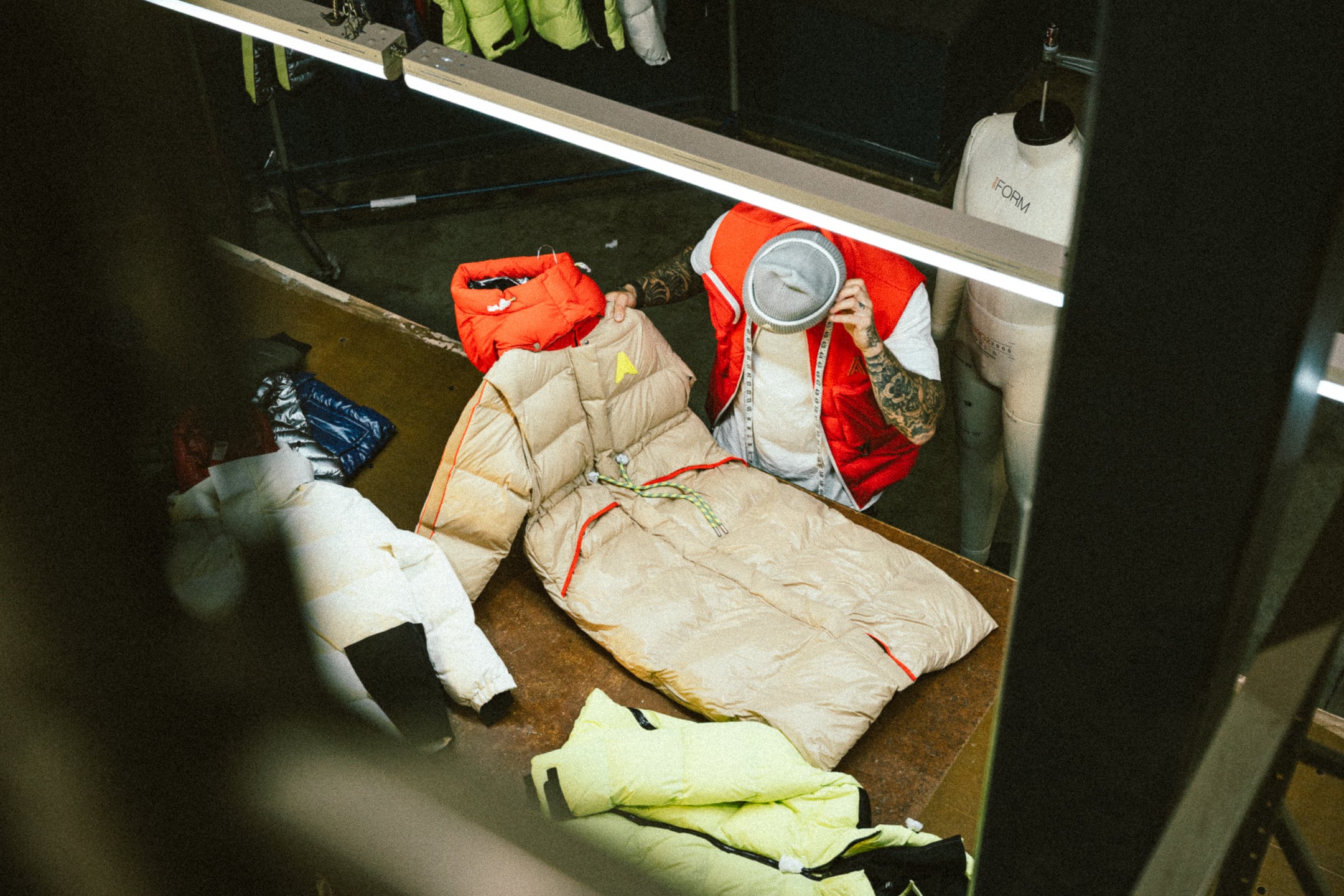
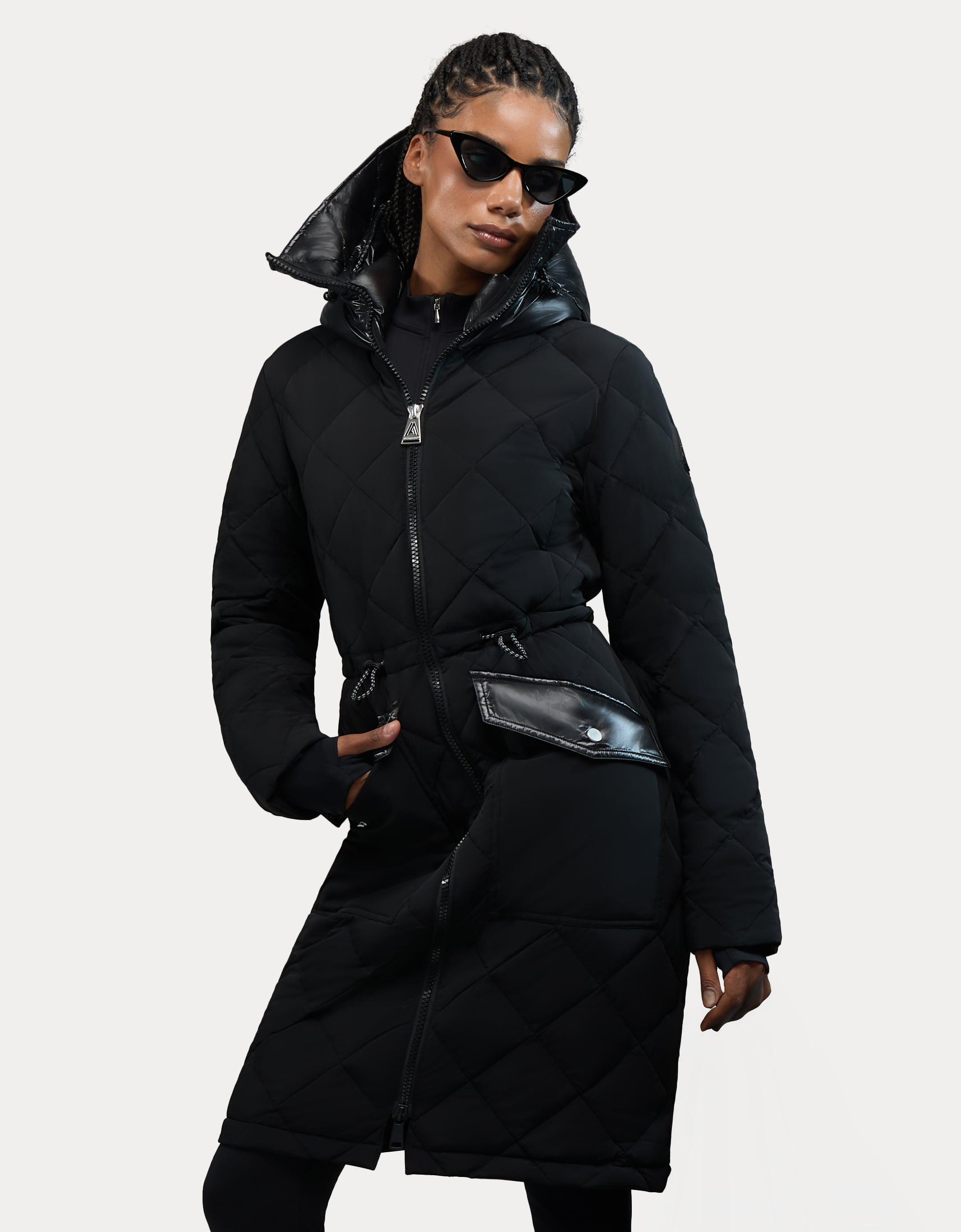
The brand has an exciting year ahead, with the launch of their FW25 campaign in September and their descent into lifestyle, accessories, and apparel next year. They will continue introducing high-quality products that rival legacy outerwear brands with an even more desirable price point.
“We actually hosted the event downtown Montreal for the launch of Fall 2025,” said Pivovar. “At the same time, it was a big milestone because it was the first-year anniversary.”
Photo: Alpenhaus
Alpenhaus, Canadian-based lifestyle and apparel brand that combines fashion and function to create smart luxury-inspired products that rival legacy brands, operates under the umbrella of Thread Collective, a Canada- and U.S.-based group known for managing a portfolio of fashion brands, including Psycho Bunny. Unlike the group’s typical licensing model, Alpenhaus is an owned brand developed from scratch in collaboration with Pivovar.
Alan Pivovar
“They usually work more on the licensee model,” he said. “But Alpenhaus is one of the brands that we own and we’ve been creating too.”
Pivovar began developing Alpenhaus in the spring of 2023, with the first collection launching in Fall 2024.
He said the brand was designed to reflect shifting lifestyle patterns, particularly in the aftermath of the COVID-19 pandemic.
Photo: Alan Pivovar
“People’s buying habits and people’s vision and styles of living have changed a lot,” said Pivovar. “People are trying to go more often outside of town, taking time off.”
He described Alpenhaus as a lifestyle brand aimed at supporting this shift, with an emphasis on quality, accessibility and sustainability.
“We try to provide really good quality, a good price,” he said. “It’s a whole package like that.”
The brand name itself draws inspiration from European culture.
“Alpenhaus is actually a type of place you can find in Europe that people go for short-term stays out of town,” he said. “You’re welcome the way you are — it’s relaxed, it’s casual.”
The brand’s style reflects this ethos, offering a mix of lifestyle and performance-focused clothing.
“I wasn’t focused on one type of product like glamorous,” said Pivovar. “I can do lifestyle, I can do more high fashion. This philosophy was really good to translate into products.”
Pivovar, who grew up in Strasbourg, France, near the German border, said his European background contributes to the aesthetic and values of the brand.
“My childhood is mostly, I grew up close to the German border,” he said. “Back to the memory gives me the inspiration as well.”
Photo: Alan Pivovar
His background is in graphic design and product engineering — not fashion — something he says reflects the brand’s inclusive and community-driven message.
“My background has nothing to do with fashion,” said Pivovar. “We build that brand from nothing, and we’ve been able to even perform in the field.”
Alpenhaus is currently sold both online and in select retail locations. Its parent company, Thread Collective, has a strong foothold in wholesale and direct-to-consumer business models.
“We have our own e-com, which is a great tool,” said Pivovar. “But at the same time, there’s a couple of retailers too in Canada and mostly the U.S.”
In Canada, Alpenhaus products can be found at retailers such as Sporting Life and local boutiques including Suite 100.
Photo: Alpenhaus
“Our business has been really, really strong in the U.S.,” said Pivovar, noting partnerships with Bloomingdale’s and Macy’s.
Looking ahead, Alpenhaus is planning to enter the European market — a natural step, according to Pivovar.
“That’s the next step,” he said. “It’s already in progress.”
Despite its outdoor aesthetic, Pivovar is clear that Alpenhaus is not strictly an outdoor brand.
“We never started as an outdoor brand,” he said. “People associate that to a lifestyle.”
He said recent events have shown the brand’s appeal beyond clothing, building a sense of community across various industries.
“There were people from different industries — investors, artists — and they were extremely impressed,” said Pivovar. “We’re trying to be loyal to them as well.”
Edmonton’s retail market has demonstrated consistent performance over the past three years, signaling a period of ongoing recovery and stability following disruptions caused by the pandemic, said the report.
Key trends:
Edmonton leads retail spend, driven by rising income and population growth. Consumer spending in the Edmonton region continues to rise on a nominal basis. The city leads Canada in per capita retail expenditures, driven in part by well-paying jobs in the energy sector. As interest rates continue to decline, spending is expected to accelerate. Edmonton remains among the top metro areas for disposable income and housing affordability, positioning it to outperform other major Canadian cities in retail sales growth while continuing to attract interprovincial migrants;
The rollout of federal–provincial childcare funding has provided relief of up to $30,000 for childcare programs through federal grants; which has fueled quick absorption of the available commercial real estate suitable for conversion. Market dynamics have shifted: there is a growing prevalence of non-profit and preschool-only operators over traditional full-day, forprofit models—especially those requiring outdoor space. From a leasing standpoint, inquiries and leads from traditional childcare tenants have noticeably declined due to provincial grant caps;
Recent enforcement trends by the Competition Bureau have placed increased scrutiny on exclusivity clauses and restrictive covenants in retail leases. These provisions are now considered presumptively anticompetitive, particularly when they involve broad geographic scope, indefinite terms, or protections favoring dominant tenants—conditions that may substantially lessen competition in local markets. While grocery anchors have been the primary focus, these guidelines apply across all retail sectors, signaling a broader shift in regulatory oversight impacting property controls and leasing strategies.
Londonderry Mall. Photo: Mario Toneguzzi
“Retail vacancy rates have been trending downward from 2021 to 2024, before climbing slightly in 2025 due to new construction deliveries. Demand for physical storefronts have strengthened as the rapid growth of e-commerce begins to level off. Despite challenges stemming from shifts in work patterns, Downtown Edmonton is showing signs of recovery, supported by a growing residential population in the core. The return of workers, students and visitors, along with ongoing development, is expected to further boost retail activity,” said the Avison Young report.
“As of mid-2025, Edmonton has approximately 543,200 square feet (sf) of retail space under construction, representing a 6.91% decline compared to the previous year. Despite this moderation, the city’s retail development pipeline continues to rank among the most stable in major Canadian markets.
“Strong tenant demand, limited space availability, and interest in new developments have driven rental rates upward. While rising unemployment, cautious consumer sentiment, and slower population growth are expected to temper rent growth, projections still point to a steady upward trend through 2026.”