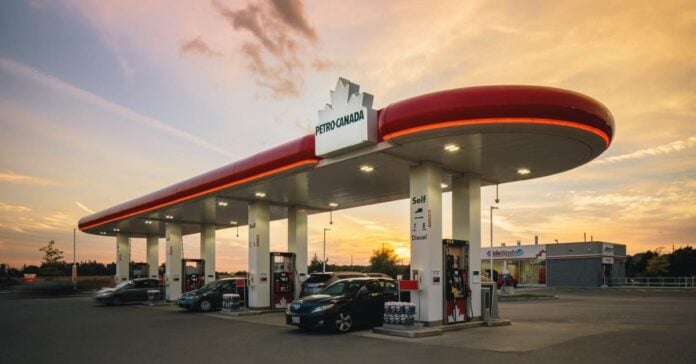
Petro-Canada is set to implement a change in how customers purchase fuel at its Ontario locations. Starting September 3, 2024, the majority of Petro-Canada stations across the province will require customers to prepay for their fuel, either at the pump or inside the store.
This move marks a shift in the company’s operational strategy, aligning Ontario with practices already common in other parts of Canada. The decision comes as part of a broader industry trend addressing safety concerns and combating fuel theft, issues that have gained prominence in recent years.
The corporation emphasizes that this proactive change aims to ensure safety at their locations while simultaneously reducing the risk of fuel theft.
The timing of this policy implementation, immediately following the Labour Day long weekend, suggests a strategic approach to minimize disruption during the busy summer travel season. Petro-Canada has assured customers that they will be well-informed of the change through signage at stations and additional communication efforts.
While Petro-Canada is taking a lead in implementing this policy across its Ontario network, it’s part of a larger conversation within the fuel retail industry. The Canadian Fuels Association reports that approximately 78% of gas stations in Canada are independently owned, allowing individual retailers to make their own decisions regarding prepayment policies.
Other major players in the industry are also addressing these concerns. Shell, for instance, has already implemented prepayment systems in jurisdictions with existing legislation or at locations deemed high-risk for theft. In Ontario, where such legislation doesn’t exist, Shell continues to assess each site based on safety, security, and customer needs.
The move towards prepayment comes against a backdrop of increasing fuel thefts across Canada. While Petro-Canada has not disclosed specific figures, other provinces have reported significant spikes in fuel-related crimes. In Saskatchewan, for example, RCMP data showed a 70% increase in fuel thefts in 2022 compared to the previous year.
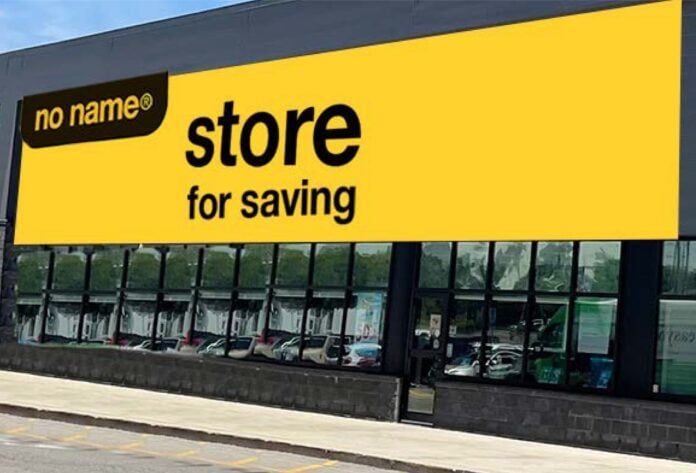
Mock up of new no name store front (CNW Group/Loblaw Companies Limited - Public Relations)
Loblaw Companies Ltd. announced Thursday its plans to pilot a new concept, value-based no name store in three Ontario markets.
It said the no name store will help customers save up to 20 per cent on everyday grocery and household essentials, by lowering operating costs and carrying only a targeted assortment of products.
The no name store is piloting in three markets in Ontario, beginning in September 2024: Windsor, St. Catharines, and Brockville.
Per Bank
“Our goal is simple – providing food and essential household items across a limited range of national brands and no name brand products at our lowest possible price,” said Per Bank, President and CEO, Loblaw. “Since food inflation took off globally, we have been laser-focused on doing what we can to keep prices lower for customers, including opening more discount food locations in more parts of the country. This new test concept allows us to pass on lower prices to our customers – it’s a completely different and simplified shopping experience.”
The company said no name stores are reducing operating costs through a variety of ways, including:
Shorter operating hours (10am-7pm)
Smaller assortment means the store is less complicated to run
Limited marketing and no flyers
No refrigeration (no dairy or fresh meat products)
Reused fixtures – shelves, cash lanes – to minimize building costs
Fewer weekly deliveries, reducing logistic costs
Melanie Singh
“Our commitment to customers is that products at the no name store will be up to 20% less than the regular retail price on a comparable product at any of the four main discount grocers in that local area. These no name stores will have a limited selection of 1,300 products, but these are many of our top-selling pantry staples and household goods throughout the province, so we know they’re what customers buy most and what will bring them the biggest savings,” said Melanie Singh, President, Loblaw’s Hard Discount Division. “This is a test and learn project, and we’re planning to listen and adjust quickly. The pilot is unchartered territory and while success isn’t guaranteed, our commitment to creating value and meeting customer needs remains unwavering.”
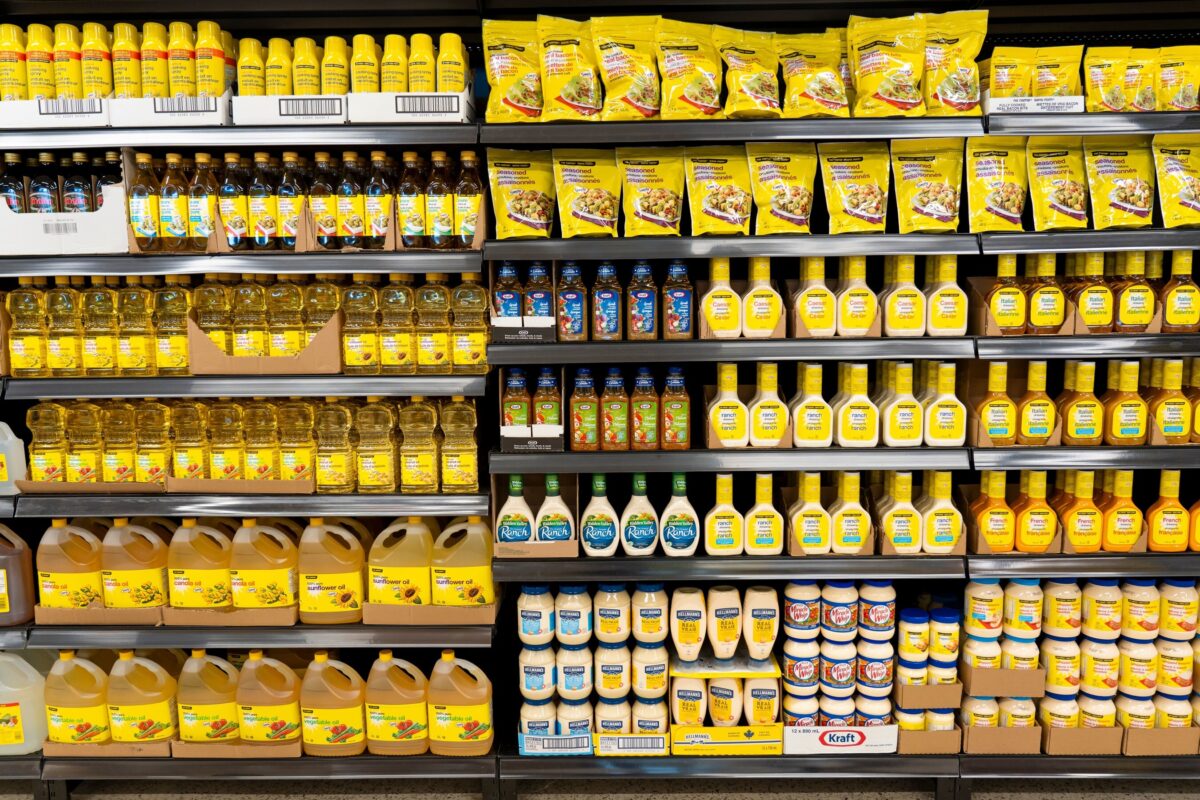
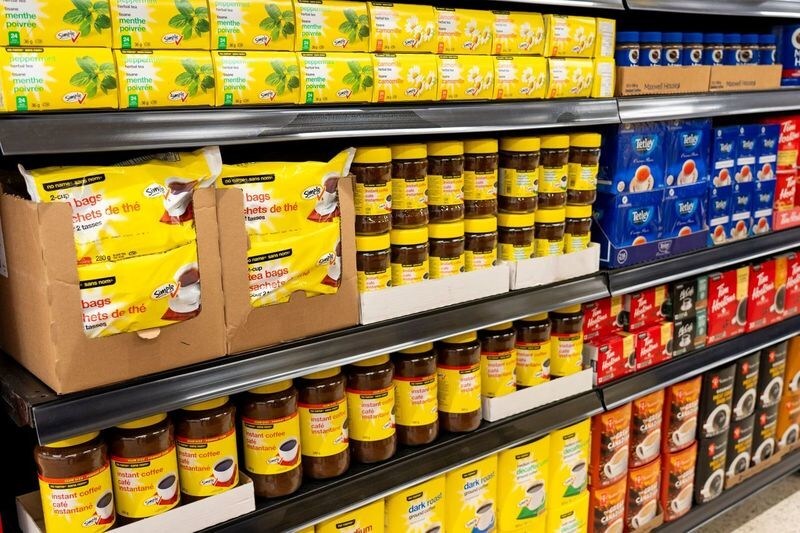
Loblaw pilots no name store to help customers save on food and household essentials (CNW Group/Loblaw Companies Limited – Public Relations)Loblaw pilots no name store to help customers save on food and household essentials (CNW Group/Loblaw Companies Limited – Public Relations)
Loblaw said customers can expect a small range of frozen food items, complemented by pantry staples, household necessities, and shelf-stable bakery and produce items including bread, bagels, apples, bananas, peppers, and carrots. This curated line up of products ensures every item on the shelves contributes to the store’s mission of affordability and quality.
“I’m not sure it will be successful, but Loblaw is targeting the non-urban market, which has been somewhat underserved compared to major urban centers like Toronto, Montreal, or Vancouver. Only time will tell.”
Loblaw Companies Limited is Canada’s food and pharmacy leader, as well as its largest retailer and private sector employer. With over one billion transactions each year in its network of 2,500 stores and national e-commerce options, Loblaw brings food, pharmacy, beauty, apparel and financial services to customers through many brands: President’s Choice, No Name, Loblaws, Shoppers Drug Mart, No Frills, Real Canadian Superstore, T&T, Joe Fresh, PC Express and PC Financial. The Company’s loyalty program, PC Optimum, has more than 16 million active members.
HOTWORX, North America’s one-of-a-kind 24-hour infrared fitness studio, is coming to Canada.
For the first time, HOTWORX franchise opportunities are now available for entrepreneurial Canadians looking to join the fitness world and open a HOTWORX studio, and be among the first to open a location in Canada.
HOTWORX’s has a revolutionary three-fold fitness approach combining infrared energy, heat and virtually instructed exercise programs, which ensures maximum workout efficiency in less time.
“We work closely with our franchise partners to help them set up for success and grow in their markets. A HOTWORX fitness studio doesn’t require a big real estate footprint, which makes it an appealing opportunity for franchisees in Canada,” he said.
“We are excited to introduce Canadians to our unique fitness studios that not only deliver superior results but also provide an immersive workout experience,” Smith said. “With our 24/7 accessible studios and innovative 3D Training Method, HOTWORX is an ideal solution for Canadians looking for a workout unlike any other fitness program available.”
The concept, which is based in New Orleans, was launched in 2017 with the first location in Mississippi. Today, there are 676 locations.
“We should open the 700th store this September,” added Smith. The vast majority of the locations are in the U.S. with one in Ireland and one in Saudi Arabia and one to open soon in Dubai.
“I’ve been told by bankers and other people that in the fitness we’re the most differentiated brand that’s out there.”
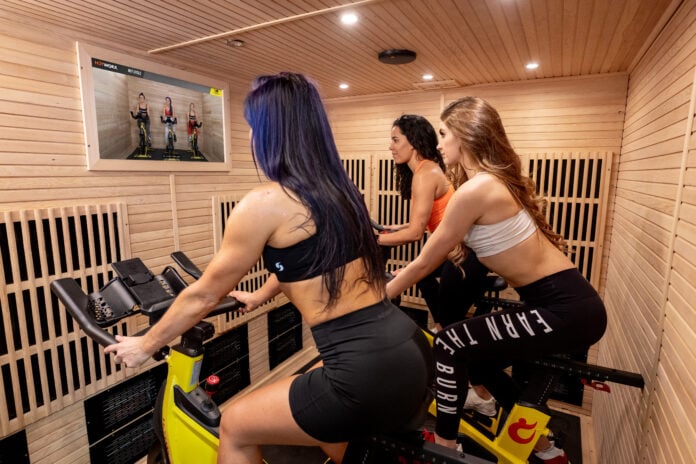
HOTWORX combines traditional workouts with cutting-edge technology, offering a unique approach to fitness. HOTWORX’s patented workout saunas use infrared energy, a type of electromagnetic radiation that penetrates the skin to reach muscles and joints and produces heat. When combined with workouts, infrared energy and heat can amplify the benefits of exercising from enhanced muscle warm-up and increased circulation to enhanced caloric burn, fat oxidation, and reduced pain.
Photo credit: HOTWORX
The HOTWORX 3D Training Method
The HOTWORX 3D Training method revolutionizes fitness through:
Heat: Elevates core body temperature, boosting metabolism.
Infrared Energy: Penetrates on the cellular level, accelerating detoxification and strengthening the body’s regenerative processes.
Exercise: Features isometric and HIIT programs to increase heart rate and maximize calorie burn
Hot Workout Programs
Each HOTWORX studio offers 12 unique virtually instructed workouts:
Isometric Workouts (30 minutes): Hot ISO, Hot Yoga, Hot Pilates, Hot Barre, and more.
HIIT Workouts (15 minutes): Hot Cycle, Hot Thunder, and Hot Blast.
24/7 Accessibility
Smith said the saunas in the studios have a patented design that allows for three people to come inside, face a screen and do a workout to a virtual instructor.
“We’re looking for a master franchisee partner for Quebec since Quebec is so unique in many ways including language,” he said. “Then we’re going to sell direct into all the other provinces in Canada. We started that marketing push and getting very close to some actual new franchisees. It looks like British Columbia is going to be the first place that we’re going to be in. That may not hold true but it looks like that’s where we’re getting the traction first.
“We are speaking with many prospects now and we should have a number of new franchisees within weeks or the coming months.”
Smith said Canadian growth could be similar to the U.S. The company’s strategy from the beginning was to target a location to service every 100,000 people in the market.
Typical size of a location is about 2,000 square feet.
Avi Behar and Larissa Jacobson-Rooke of The Behar Group Realty Inc. are representing the brand for its Canadian expansion.
The expansion into Canada is not just exciting news for fitness enthusiasts, but also for the commercial real estate sector. Avi Behar, Chairman of The Behar Group, a prominent Canadian commercial real estate firm, commented on the potential impact.
“HOTWORX’s entry into the Canadian market presents an exciting opportunity for the commercial real estate sector. Their compact studio model is well-suited for both urban centres and suburban locations, offering landlords a unique, high-traffic tenant that can revitalize retail spaces. We anticipate strong interest from property owners looking to diversify their tenant mix with this innovative fitness concept.”
With Canada’s railway system grinding to a halt due to a labour dispute, Canadian business groups are worried about the massive impact this is going to have on the national economy.
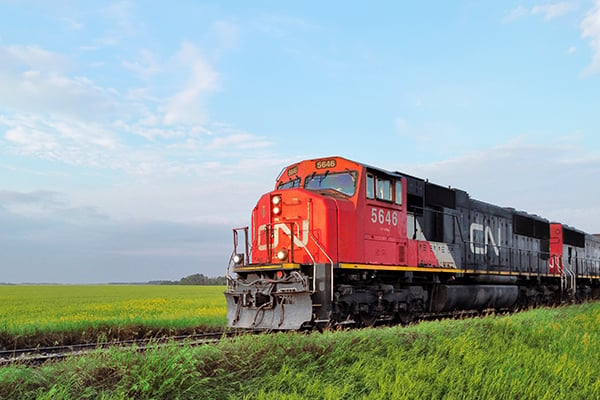
Canadian National Railway Co. and Canadian Pacific Kansas City Ltd. locked out 9,300 engineers, conductors and yard workers on Thursday after the parties could not come to a new contract agreement before the midnight deadline.
A report by the Conference Board of Canada suggests a two-week rail disruption would result in a $3 billion loss in nominal GDP this year in Canada.
The loss would be felt by both households, with a $1.3 billion loss in labour income, and businesses, with a $1.25 billion loss in corporate profits, said the Conference Board.
“The rail companies have spent the last few days refusing various categories of goods (perishables, hazardous et al) onto their networks to avoid being left holding them during the lock-out,” he said.
“Frankly, at short notice, the road transportation network simply does not have the surge capacity to cope with the sheer scale of volume that railroads shift across the country everyday (estimated $1 billion/daily) and with a harvest looming, and retailers doing their final moves for peak trading, there will be an almighty fight between categories of shippers to secure capacity to get their products to market. By the end of the weekend, road freight charges are set to escalate rapidly, not dissimilar to the situation that container prices did during the pandemic.
“From a retail point of view, this development will be devastating for their “just in time” logistics. Not dissimilar to when the ports were on strike, the implications will only be much more severe with stock either held at port with limited options to move from port onto the road network, or staged on cross country routes, now inaccessible. Inbound container ships may be held “at sea” as there will not be enough capacity to process their freight, which means even if the strike is called off over the next week, there will be a delay before the normal flows resume. For each week of delay, it could take four to six weeks for the flow to resume.”
Newbury said moves between major cities will become hampered very quickly as a significant proportion of freight is moved via rail which is low cost and reasonably reliable.
“Very soon shelves of perishables will run dry, promotions will cease, prices may start to rise sharply and we see retailers taking the opportunity to clear their excess stock held in their warehouses to fill the gaps on the shelves,” he added.
“The challenge for retailers and consumers alike is to keep a calm head and trust the railroad companies and unions will be persuaded to land on a negotiated settlement and resume operations, however, if this has not happened by early next week, and positions are hardened by the other party’s negotiating position, the country could be looking at severe challenges with food, healthcare, fuel and heating oils, essential maintenance items affecting the whole population, particularly those fixed and low-income households, and the most vulnerable in our society.”
“CFIB has already been hearing from businesses concerned about not getting essential shipments of aviation gas for forest fighting equipment, manufacturing inputs, vehicle parts, retail products, and agricultural equipment,” he said.
“Not only will the work stoppage negatively affect shipments of raw materials and goods essential for small business operations, but it will also lead to a decreased on-shelf availability of consumer products, including grocery and drugstore essentials and even baby formula. Thousands of commuters in Canada’s three biggest cities will be affected as well. Some small businesses are already reporting they will need to halt operations as they will no longer be able to receive critical inputs or meet their contractual obligations to customers.
“Small businesses will be left with very few alternatives, especially as trucking capacity is already strained and shipments are now stuck in the system. And as many businesses are already very weak due to increased post-pandemic debt, weak demand and dramatically higher operating costs, this couldn’t come at a worse time.
“We’re calling on the federal government to intervene immediately by introducing binding arbitration or enacting back-to-work legislation. Longer term, Canada needs a better way of addressing labour disputes for critical supply chain industry players.”
The Conference Board of Canada has modeled what the potential impacts of a two-week stoppage would be on Canada’s overall economy.
Key insights include:
Mining, agriculture, manufacturing take the brunt of the hit among goods producing industries, while wholesale trade and transportation suffer the bigger losses among service producers
Canada’s trucking industry is already struggling with congestion and a shortage of drivers, making it difficult for Canadian importers and exporters to find alternate transportation if rail stoppages occur
‘Lower economic activity would also erode government revenues. Federal government revenues would fall $391 million while aggregate provincial and territorial government revenues would be eroded by $533 million,” said the Conference Board report.
“The potential impacts are widespread across industries. Mining, agriculture, manufacturing take the brunt of the hit among goods producing industries, while wholesale trade and transportation suffer the bigger losses among service producers. The impact on transportation goes beyond rail since port traffic, trucking and other segments are highly dependent on rail.
A two-week strike would reduce Canada’s GDP by 0.1 per cent this year. If the strike were to last twice as long, the negative economic repercussions would more than double, forcing Canadian exporters and other industry players into more substantial production cuts. A four-week strike could lower GDP by nearly $10 billion in 2024, and result in 49,000 job losses on average in the year. Our economic outlook for Canada in 2024 is weak, with much of the support for any positive growth relying heavily on trade.”
“The Government of Canada has a responsibility to protect the Canadian public and maintain national security, and it is time to act decisively to fulfill that obligation,” it said.
“Under section 107 of the Canada Labour Code, the Minister of Labour can refer the dispute to the Canada Industrial Relations Board (CIRB) for binding arbitration and prohibit a strike, lockout or end any ongoing stoppage pending a resolution. Alternatively, the government can also reconvene Parliament and introduce back-to-work legislation.
“This is not about siding with either party; it is about standing up for Canadians. The federal government must show leadership and act before our trains – and with them, our economy – grind to a halt. Otherwise, the steep price of inaction will be paid by Canadian families, workers, and businesses.”
A recent CME survey of 226 manufacturers revealed the destructive impacts that a nationwide rail stoppage will have on Canada’s industrial economy:
66 per cent of manufacturers said a strike will have severe consequences on their operations.
92 per cent of manufacturers expect delivery delays, 76 per cent expect to face increased costs, 57 per cent expect reduced sales and 49 per cent say it will reduce competitiveness.
Manufacturers would incur an average financial impact of $275,000 each day of a stoppage (combined decreases in revenues and increases in expenses).
77 per cent of manufacturers believe these labour stoppages have negatively influenced foreign investors’ views of Canada.
88 per cent of manufacturers support federal government intervention to prevent strikes at critical infrastructure sites, including railways.
Retail Insider is streamlining its Canadian retail news from around the web to include a handful of top news stories that can be viewed quickly during the day. Here are the top stories from the past 24 hours.
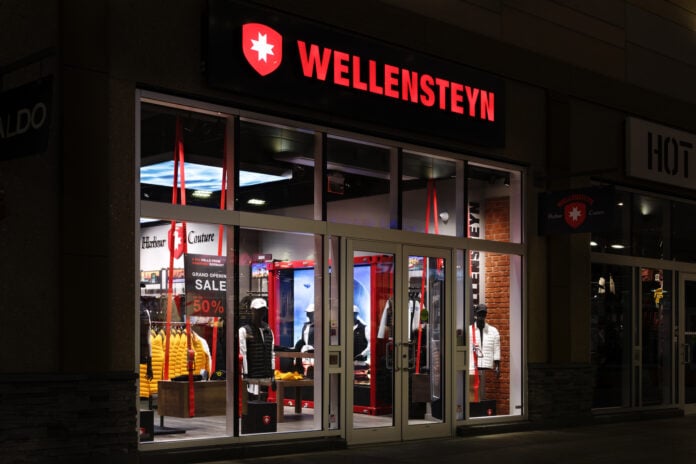
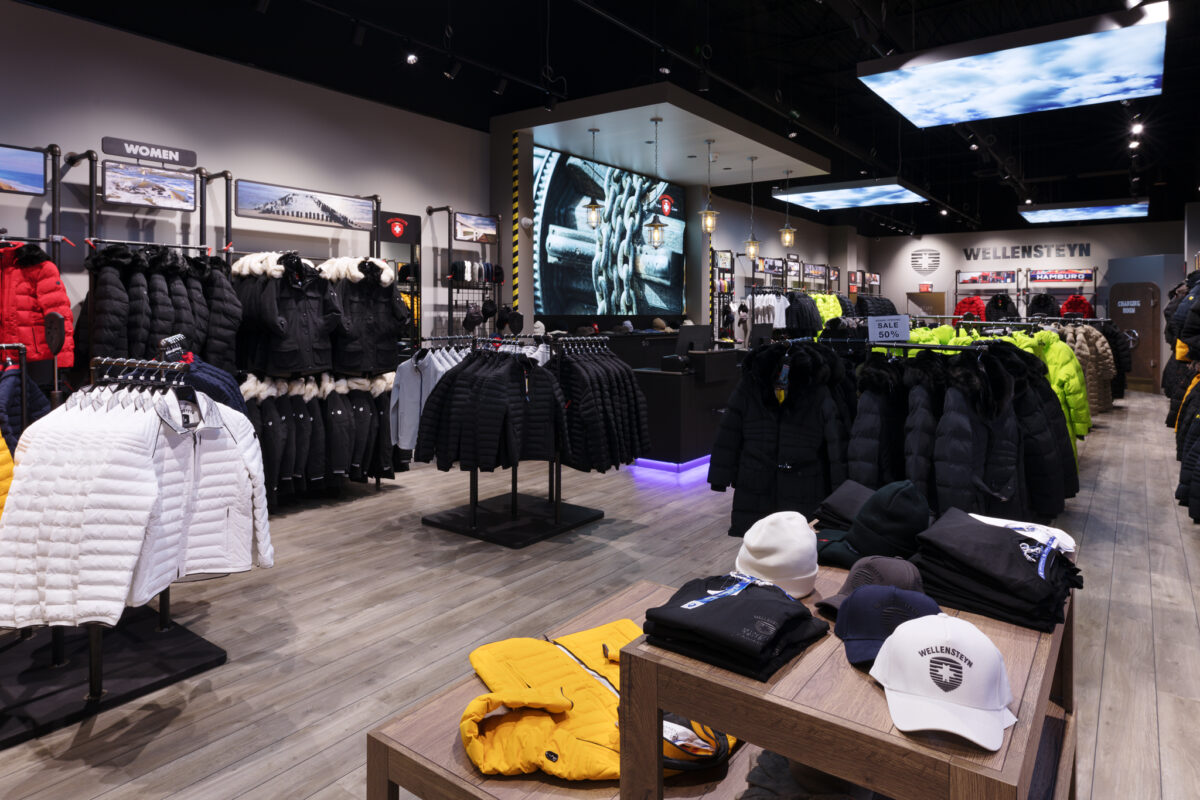
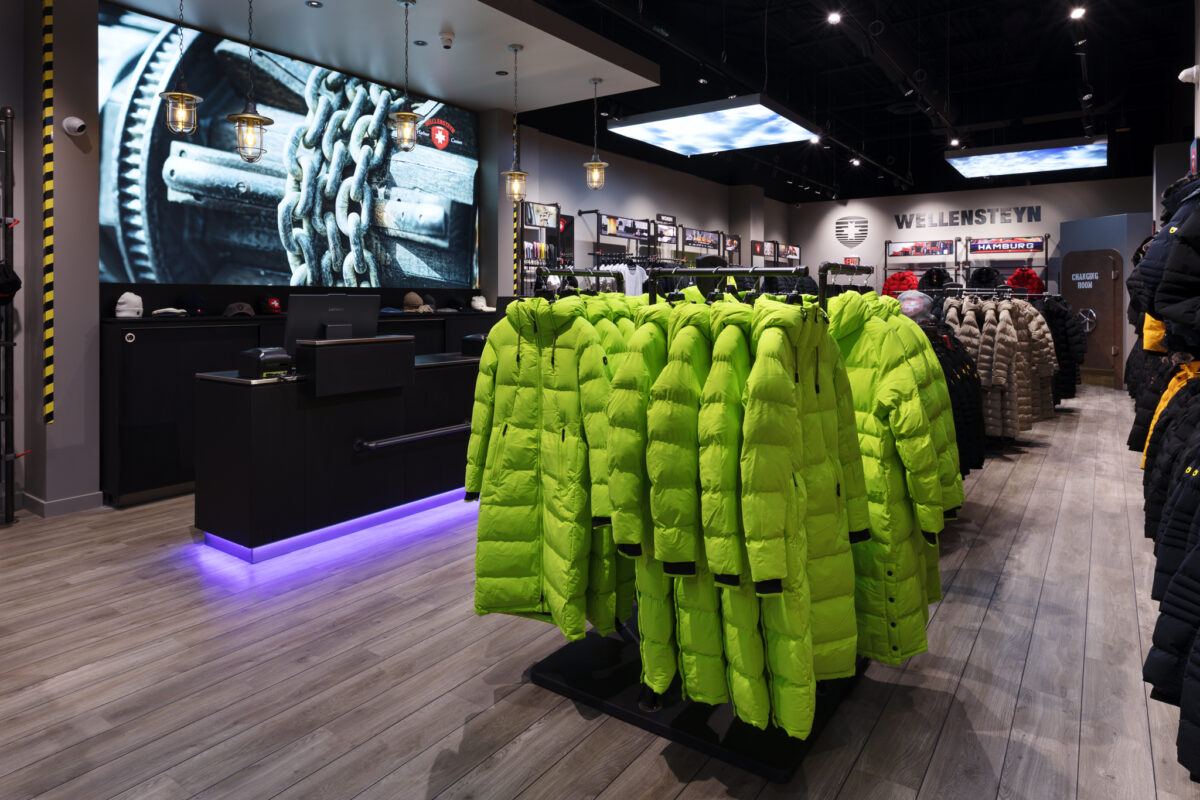
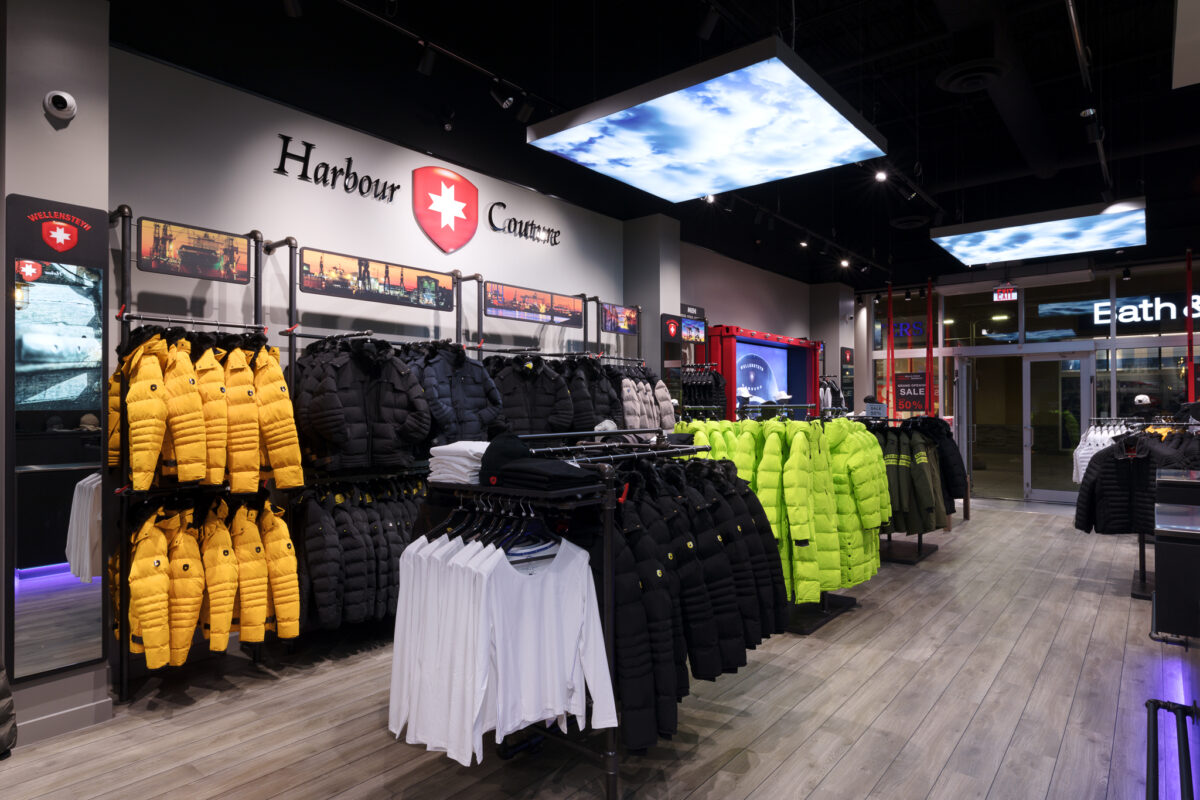
Wellensteyn at Outlet Collection at Niagara. Photo: Wellensteyn
Wellensteyn, the German-founded outdoor coat and accessory company that celebrates both fashion and function, has opened its first store in Canada.
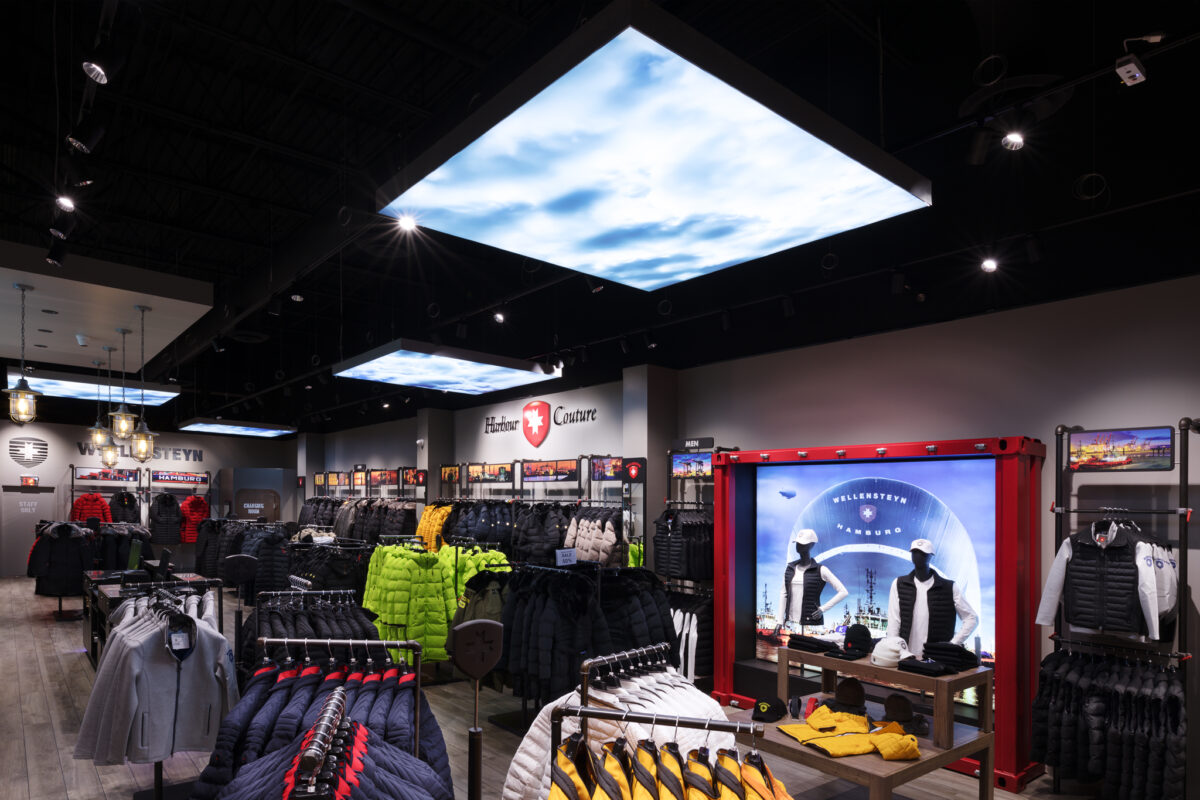
The brand’s 2,350-square-foot store is at Outlet Collection at Niagara, which is located just off the QEW, just minutes from Niagara Falls, Ont.
“This destination outdoor shopping opened in 2014 and is the ideal home for Wellensteyn. The iconic brand will compliment the centre’s line-up of more than 100 brand name fashion and lifestyle retailers, including Aritzia, Nike Factory Store, Kate Spade New York, Brooks Brothers Factory Store, Coach, Michael Kors and Tommy Hilfiger,” said Think Retail, which worked with the retailer to find the space.
Wellensteyn at Outlet Collection at Niagara. Photo: WellensteynWellensteyn at Outlet Collection at Niagara. Photo: Wellensteyn
“Think Retail congratulates Wellensteyn on its official Canadian market entry and we are thrilled to work with the team on its growth—the vision is to open two to three more stores in 2025, with an initial focus on outlet centres in Ontario.
“With its commitment to fashion and all-weather function, Wellensteyn is well positioned to appeal to consumers coast to coast.”
In the 1940s, Adolf Wuttke, who made instruments used to help explore the depths of the volatile North Sea, set out to create high-quality outerwear for people working on the water, as well as those in the shipyards, said Think Retail.
“Wuttke designed a unique parka made with waxed sailcloth, which has stood the test of time. Fifty years on, the family-run company expanded the offering and in the 1990s began catering to a new generation with a selection of jackets for all seasons,” it said.
Wellensteyn at Outlet Collection at Niagara. Photo: WellensteynWellensteyn at Outlet Collection at Niagara. Photo: Wellensteyn
“Today, Wellensteyn embodies function and fashion for all genders and ages, with its wide-selection of jackets, as well as shoes, hats, scarves, belts, sunglasses, watches and other accessories.
With a history that spans more than 70 years, Wellensteyn has a strong legacy across Europe and is available at select retailers in North America.
“Now, in Canada, the initial focus is on growth in Ontario, then, later, British Columbia and Alberta. Ideal sites are 2,000 square feet.”
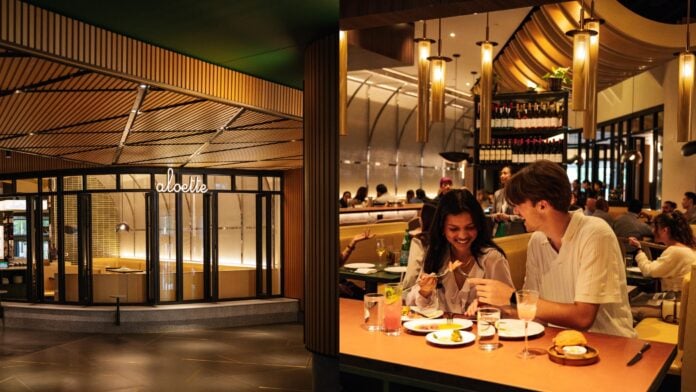
Experience Aloette Bay, conveniently situated just steps from Union Station, Scotiabank Arena, and the heart of downtown Toronto. (CNW Group/Alo Food Group)
Michelin-recommended Aloette, one of Toronto’s most beloved and celebrated dining institutions, is opening its newest location, Aloette Bay on August 22.
Located on the fourth floor of 81 Bay Street at CIBC SQUARE’S TABLE Fare + Social, this new venture marks Alo Food Group’s continued expansion in the city, bringing its renowned casual yet elevated dining experience to one of Toronto’s most dynamic and vibrant food destinations in the heart of the South Core across from the Scotiabank Arena, it said in a news release.
“We’re thrilled to open our doors at this new location and bring Aloette’s unique blend of approachable luxury to a new audience,” said Chef Patrick Kriss, Chef and Owner of Alo Food Group. “This location is an opportunity to share our passion for great food in a setting that caters to both the fast-paced lifestyle of the Financial District and the vibrant energy of Toronto’s South Core.”
The company said Aloette Bay will offer both dine-in and takeout options, making it a convenient choice for those looking to enjoy a delicious meal during a busy workday or a leisurely lunch with friends. It will be open for breakfast, lunch, happy hour and dinner featuring daily specials that highlight seasonal ingredients and the creative fare that has made Aloette a favourite among Toronto food lovers. Expect exciting new menu items plus signature Aloette dishes, including the famous Burger, Iceberg Wedge, Fried Chicken and Lemon Meringue Pie. Guests can also enjoy a selection of craft cocktails, wines, and beers, carefully chosen to complement the menu.
CIBC SQUARE’S TABLE Fare + Social is a premier food destination in downtown Toronto, featuring a curated selection of local and international culinary offerings.
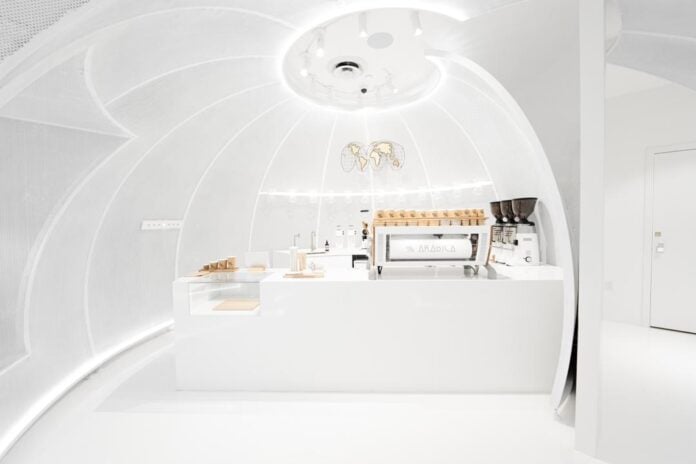
New Whistler Village %Arabica location. Photo: supplied
% Arabica, a Japanese coffee brand, opened a new location in Whistler Village in British Columbia earlier this summer. The new location offers a unique experience as consumers can enjoy the natural beauty around them. The brand will also be expanding into the CF Toronto Eaton Centre.
“% Arabica Whistler Village is a key piece in % Arabica’s expansion puzzle. It allows us to reach coffee lovers in a premier tourist spot while complementing our urban presence with the upcoming CF Toronto Eaton Centre branch. This dual strategy of embracing both bustling city environments and serene, nature-rich destinations helps % Arabica connect with a diverse range of customers. By doing so, we are not just expanding geographically, but also enriching the % Arabica experience across different settings,” says the % Arabica team.
There is one location at the CF Toronto Eaton Centre that will open in the future and the brand already has a location at the Toronto Union Station, which opened last year. The Toronto Union Station was % Arabica’s first location downtown Toronto and its second location in Canada. Its first location opened in 2022 at Toronto’s Yorkdale shopping centre.
The brand was founded in 2013 by Kenneth Shoji and now has around 190 locations worldwide. Michael Betal of Cushman & Wakefield represents % Arabica in finding real estate within Canada.
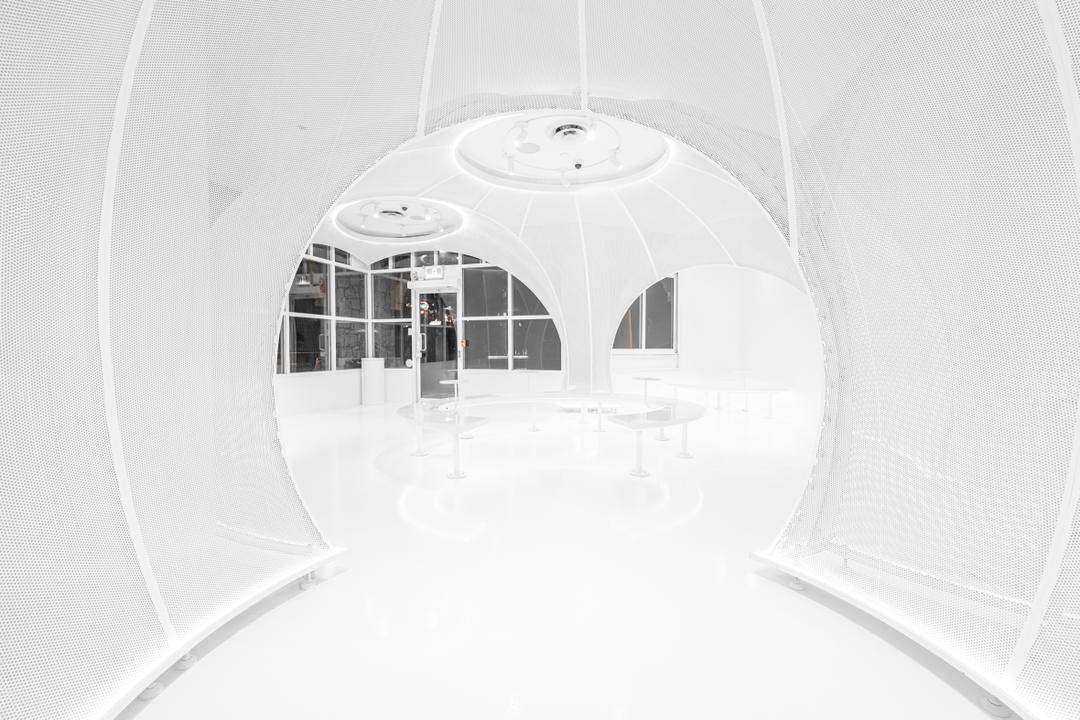
New Whistler Village %Arabica location. Photo: supplied
Modern twist alongside nature
The new Whistler location opened on June 22nd and visitors can expect a modern interior by Chris Precht, an architectural designer from Studio Precht.
“Our Whistler Village location is designed to be a cozy retreat that mirrors the beauty and tranquillity of the mountains. We have incorporated a cool, glacier-like ambiance with a modern twist that allows you to soak in the natural beauty. Imagine sipping on your favourite % Arabica coffee while enjoying panoramic views of the snow-capped peaks or the lush forests. This exact experience is what we wanted our visitors to savour.”
Guests can expect the space to connect “coffee with Canada’s natural landscape” with the design inspired by ice caves. The space also features white metal mesh domes on the ceiling, a centrally placed counter, and a % symbol sign.
While the new location won’t have any specials on the menu, the brand will be adding its “Canadian exclusive Maple Latte.” This drink will be available at all % Arabica’s locations within Canada and uses locally sourced maple syrup, “offering a uniquely Canadian twist to our menu. It is a perfect way to enjoy a taste of Canada while savouring the exceptional quality of % Arabica coffee.”
All % Arabica locations are committed to remain sustainable and use locally sourced ingredients. The brand also tries to be more involved in local communities by participating in events.
“Sustainability and community are at the heart of % Arabica’s Whistler Village branch. We are committed to using eco-friendly materials and energy-efficient practices in our operations. Our packaging is compostable, and we are sourcing local ingredients to support nearby farmers and businesses. % Arabica also plans to participate in community events, giving back to the beautiful place we now call home and ensuring % Arabica operates responsibly,” says the % Arabica team. “Sustainability remains a core focus, and % Arabica will keep investing in eco-friendly practices and sourcing methods.”
New Whistler Village %Arabica location. Photo: supplied
Looking ahead
The % Arabica team says the brand will be continuing to expand globally along with improving its online presence.
“Looking ahead, % Arabica is excited to continue our global expansion, reaching new and diverse markets. We are also focusing on enhancing our digital presence and customer engagement through innovative technology, such as mobile ordering and personalized loyalty programs.”
And to keep on coffee trends, the brand will also be listening to what consumers are looking for through customer feedback and will explore new coffee blends and brewing techniques.
“Whistler is not just a destination; it is an experience filled with vibrant energy, breathtaking scenery, and a sense of adventure that perfectly aligns with the spirit of % Arabica. We are inspired by the idea of bringing our love for exceptional coffee to a place where people come to enjoy the best of nature and outdoor activities. It is about creating a special spot where both locals and visitors can gather, relax, and savour a perfect cup of % Arabica coffee amidst the stunning backdrop of Whistler.”
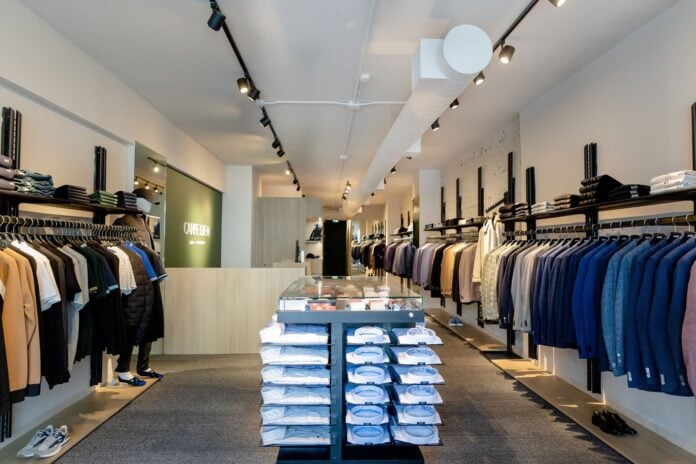
Carpe Diem menswear in Toronto - Nersessian worked with the retailer to create effective displays. Photo supplied
By Ani Nersessian
In the realm of retail, the synergy between in-store and online experiences is more crucial than ever. Visual merchandising bridges the gap between these two worlds and elevates the customer journey to new heights of engagement and satisfaction. As we explore this topic, let’s uncover the untapped potential within the union of brick-and-mortar and e-commerce landscapes.
A well-merchandised brick-and-mortar store does not necessarily guarantee a well-merchandised e-commerce shop, and the same applies for the other way around as well. It is quite common for retailers to initiate their retail businesses with a website before they open their first brick-and-mortar store, which can steer the visual merchandising plan of the physical space. An optimized website, in regard to visual merchandising, is one that has fulfilled a full consumer journey: That means capturing the audience’s attention from the home page, enticing them to explore further, making it easy to navigate, encouraging add-ons, and taking them to the cash out point. If the website itself was first optimized, it could be used as a more effective reference for guiding a new in-store set-up. The same would apply in reverse as well: If you have invested more planning into the set-up of your physical shop rather than your website, you can apply some of the consumer journey strategy from your in-store set-up to your website.
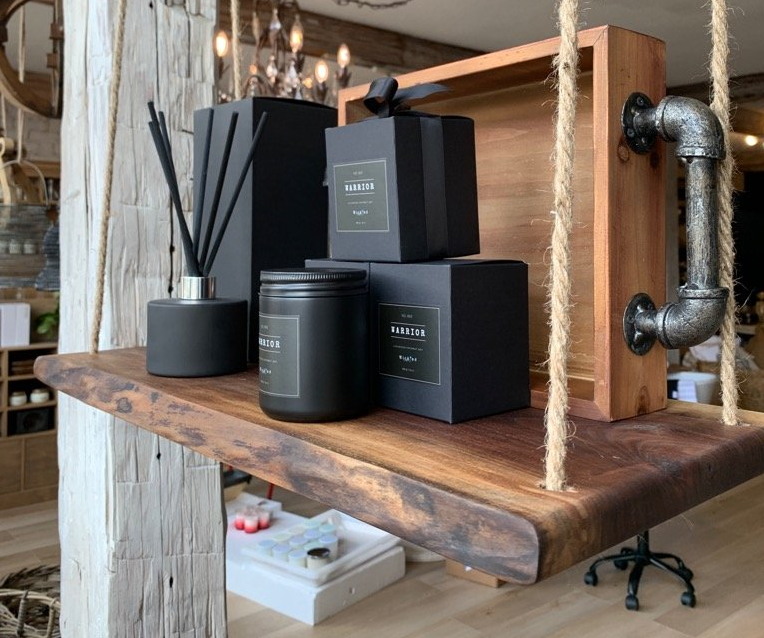
Wick’Ed Fragrance House is an independent home and fragrance shop in Cookstown, Ontario. While Wick’Ed Fragrance House’s online presence is strong, Ela Onisto, the owner, has noticed a surprising trend. Despite the potential for greater online traction due to its smaller-town location, the majority of sales still occur in-store. Ela’s customers often express a preference for the physical shopping experience, finding the ambiance of the store to be particularly inviting and relaxing. Ela has put considerable effort into optimizing the physical space with professional visual merchandising services, resulting in a welcoming environment that resonates with her clientele. While the website offers the same inventory, there remains an opportunity to enhance its appeal to match the inviting atmosphere of the store. Compared to the in-store visual merchandising, the website shopping categories, product groupings, general flow and add-on suggestions are less defined. In-store set-ups can be used as a guideline for setting up the consumer journey on the website in all of the areas that they related to one another, which we will explore further in.
Inside WICK’ED FRAGRANCE HOUSE, image supplied
So how can we use e-commerce to unveil opportunities within in-store merchandising, or vice versa? By assessing if and how each consumer journey stage can be further optimized, taking inspiration from the successes of one, to adapt to the other. To do this, we first need to understand the connection between these two worlds.
Let’s compare each key stage of the consumer journey within visual merchandising:
The Intro
In-Store: Storefront, window display, and in-store front feature area
Online: Home Page and Banner
“The Intro” of each space communicates the brand overall, as well as a reason to walk in. Since these “intro” points are the gateways to the shops, currency and relevance are key, meaning the “Intros” are top in terms of freshness and planning. The most timely significant product features belong here.
The Space Organization
In-Store: Space Plan and Category Zones
Online: Main Navigation and Sub-Categories
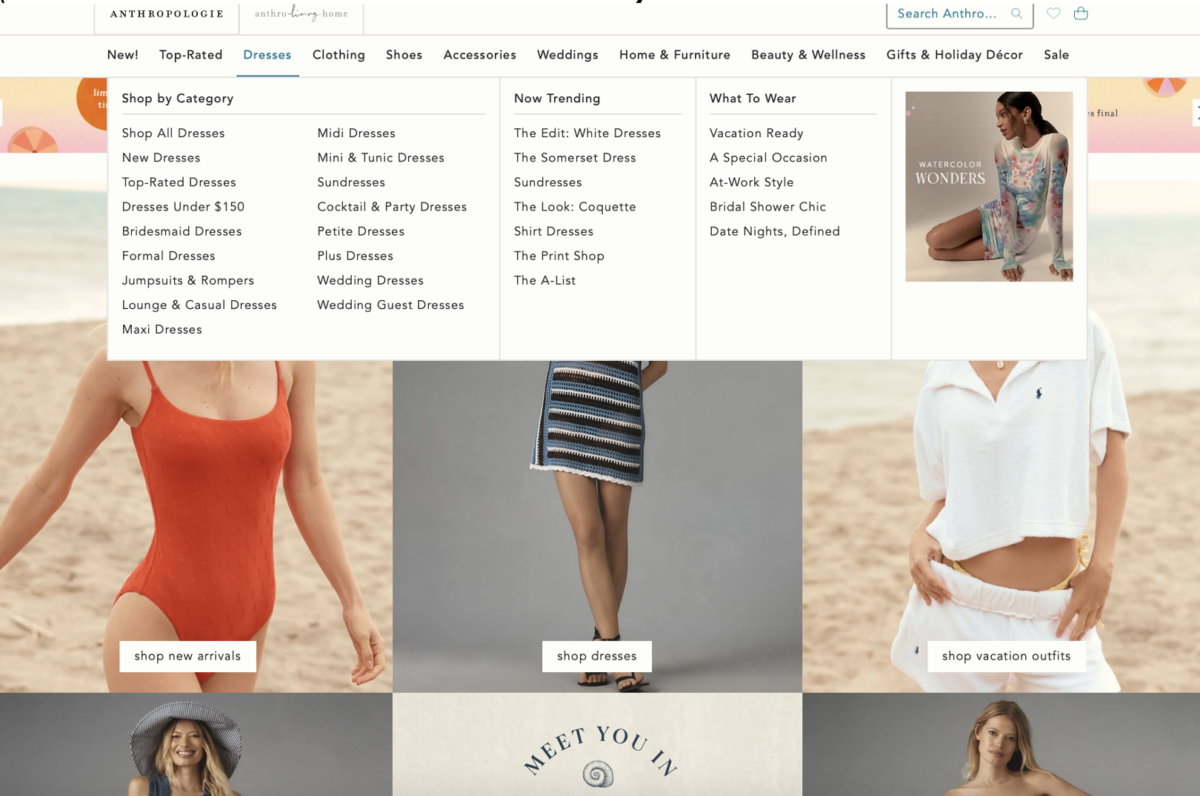
It is quite common to categorize the assortment by their product types. Yet, this could be quite uninspiring for customers. A part of the customer service is not only presenting the assortment, but presenting it as a story, highlighting it as a way to fulfill a need. Let’s look at two familiar yet very different industry titans: Loblaws and Anthropologie. Given their distinctive brands (one being essential and the other being specialty fashion), you may assume consumers’ shopping behaviours and needs are just as different. And while that may be true, both rely on relevant categories on their sites to inspire and ease shopping decisions. Loblaws, for example, has curated sections focusing on the most current relevant themes, in addition to the typical categories by food types; They have a seasonal shop including themes like Parents’ Day, Seasonal Décor, Summer Grilling, Seasonal Allergy Relief, etc.) Their Seasonal produce section highlights the top grocery picks beyond the standard product categories. As well, they have a Discover section to include popular ideas to shop for (e.g. Kids Meal & Snack Ideas, Shop Local, etc.)
Similarly, Anthropologie ‘s navigation sub-categorizes its overarching product categories for ease, but also includes inspiring themes labelled as “Now Trending” and “What To Wear” sections to present the collections in a more inspiring way. No matter the size of the business, looking at larger companies could be a great source of inspiration for strategy.
Screen shot of the Anthropologie website
Let’s reverse that as well. If an in-store merchandiser has intuitively or strategically curated set-ups based on their observations of shoppers’ behaviours or needs, these curated themes could be guidelines for the e-commerce navigation as well. Practically speaking, you may list more curated themes on a website than in-store due to space constraints.
The Product Packages
In-Store: Product Adjacencies
Online: Product Listing Pages
Product groupings on a website’s listing page or within the zone of a physical store are known as product adjacencies. Once the categories are selected, deciding which products belong here are key as part of the merchandising and buy plan. This means the products would relate to each other logically, but the order of them also matters. On a webpage, the first positions for the products would be the most important, while in-store, we would prioritize products at eye-level. The data pulled to assess the best sellers would also help decide which are worthy of these key spots within their zones. Placing the main product in the most focal areas with the coordinating pieces in secondary sections would communicate their relationships. For example, on a shelf, you may decide that the main attraction is a cake stand in the centre, gaining the most attention, while the coordinating serving utensils and dessert plates are conveniently placed on either side.
If the quantity of products allocated per webpage or per zone are overwhelming, it would be worthy considering categorizing even further, or using the help of filters to decrease the quantity. Generally, relying on the customer clicking through several webpages would risk them losing interest and losing visibility on the items on the later pages. In-stores, overabundance would mean sacrificing key negative spaces that helps to define one grouping from another. The amount of negative space that is needed would be dependent on the type of retailer, however, it is rare, if ever, that no negative space is needed between product groupings.
It is important to organize products clearly enough and efficiently in order to ease the shopping selection as a part of customer service. The way that our customers shop in-stores could also unveil the filters and tags that would help them to make quicker purchasing decisions online. For example, if the product category is Beauty and Skincare, do the customers shop by brand, skin concern, usage, product type, or all of the above? The order of the customer’s decision-making is important and would affect the overall hierarchy of categorization, as well as define the filters that are needed to help quicker purchasing decisions. For example, If the customer shops by brand first, then by skin concern, the product would be grouped by brand, and within each brand, by skin concern, and lastly by usage. If the brands are less important (or lesser known) than the skin concern, the products would reverse being grouped by skin type first, and then by brand.
Inside WICK’ED FRAGRANCE HOUSE, image supplied
The Key Product Info
In-Store: Product Displays
Online: Product Display Pages
While business owners may know every selling point of a product, we cannot assume they are evident to a customer. Each product display page would need to include every key information about the product including specs and key selling points to help make that shopping decision. While this could be the way it is displayed online, it would mostly rely on the informational text and graphic design to make the information as comprehensible as possible. In contrast, it is not practical nor effective to highlight every piece of information about every product in-stores. There is also less need, given the in-person conversation is also an option in-stores. Therefore, the key selling points of featured products would be important to highlight, which would be communicated by showing the products in context, in usage in a display, highlighting the key features visually, as well as supportive signage. The prioritization and proportions of all of these would be important during planning, so that they are truly effective. In each space, we would need to consider all of the questions that would play a factor in a customers’ shopping decision, for example, options for sizes, colours, price points, materials, etc.
Last Chance for Add-Ons
In-Store: Impulse Buys or Product Accessories
Online: Product Recommendations
The final opportunity to add-on sales are at the cash desk (the point-of-purchase section) or the bottom of the product listing page, commonly shown under the header of “You may also like….”. Another point, before getting to the end of the consumer journey, is within the product adjacencies: If a consumer is attracted by the main item (e.g. a teapot set), what accessories could be added on to coordinate with this item? You may hope to find teacups, napkins, or tea. These accessories could then also be a part of the add-ons in the online shop, either as product adjacencies within a curated page, or under the “You may also like” section online. To leverage this section, it is advisable to see this truly as an add-on section rather than as an alternative, where the customer may be swapping out their original purchase. In contrast, the point-of-purchase add-ons would be items that are fairly neutral and generic enough to add-on to any purchase, rather than specifically relate to it. It is important to be mindful of what would realistically be added on; smaller items with lower prices would be an easy upgrade, while a larger, more substantial item would be less tempting.
Since we have drawn similarities, it is also important to understand the nuances of each side. It is common for a shop with multiple locations to edit each location based on its local demographic. One way we see this is in its curated assortment plan; while the bulk of it may be cohesive in style for a consistent brand image, the exact same assortment range would not be relevant for every single neighbourhood. In the case of the online world, we do not have the case of considering different neighbourhoods. We do, however, have the capability of catering to an even broader audience, given there is less geographical limitation. That typically means a larger range of assortment which has advantages and disadvantages: The advantage is that you do not have to be quite as selective on what to stock, as long as it is generally relevant (e.g. particularly in the cases of seasonal goods.) However, the hierarchy of features would apply based on the seasonality. The disadvantage is not having the same targeted curation, which means the key feature areas are even more significant to kick off the shopping momentum and gain the interest. It is even easier to give up on the shopping experience when shopping online due to its convenience and ease of exiting. This is why the “key feature areas” are critical to master, as well as understanding which of those curated themes would apply to each local brick-and-mortar location.
In the ever-evolving landscape of retail, mastery of visual merchandising is a cornerstone of success. By embracing the convergence of in-store and online worlds, retailers can unlock a treasure trove of opportunities to captivate audiences, foster brand loyalty, and propel their businesses to new heights of excellence.
Ani Nersessian
After 15+ years of industry experience with various retailers and environments such as Holt Renfrew and Adidas Group Canada, VM ID Inc. was founded by Ani Nersessian to help retailers get set-up with a VM culture that is right for them.
VM ID Inc. is a Visual Merchandising service company which provides catered support for retail businesses through consulting, designing and labour services. Email: ani@vm-id.com
Canadian parents are grappling with increased back-to-school expenses this year, despite purchasing fewer items.
According to a recent survey conducted by NerdWallet Canada, the average projected spending for back-to-school shopping has surged to $743 per family, a significant increase from $524 in the previous year. This uptick comes even as 23% of parents report buying fewer items due to inflationary pressures.
The findings align with a separate study by the Retail Council of Canada, which indicates that 85.7% of Canadian consumers are either maintaining or increasing their back-to-school expenditures compared to last year. The NerdWallet survey further highlights that while 92% of parents will engage in back-to-school shopping, a concerning 18% may incur debt from these purchases.
Interestingly, Canada’s latest Consumer Price Index (CPI) data presents a nuanced picture. While prices in the recreation, education, and reading category have seen a slight year-over-year decrease of 0.2% for July, the clothing and footwear category has experienced a more substantial decline of 2.7% over the same period.
To mitigate rising costs, Canadian consumers are adopting various strategies. The NerdWallet survey reveals that 53% of respondents plan to take advantage of sales, 26% will use coupons, and 20% intend to purchase some secondhand items. Additionally, 65% of those surveyed plan to use credit cards for their purchases, potentially benefiting from cash back or other incentives. However, financial experts caution that this approach could lead to higher costs if the resulting bills are not paid in full or on time.
The Retail Council of Canada’s survey also sheds light on evolving shopping preferences. In a reversal of pandemic-era trends, 71.6% of respondents now prefer in-store shopping for back-to-school items. Furthermore, Canadian consumers appear to be planning their purchases earlier this year, with 40% intending to shop between two and four weeks before the school term begins – a 10% increase from the previous year.
This shift in consumer behaviour comes against the backdrop of Canada’s cooling inflation rate, which slowed to 2.5% in July – the lowest since March 2021. The moderation in shelter inflation, a key economic pressure point, has also contributed to this trend, with both rent and mortgage interest costs experiencing downward pressures.