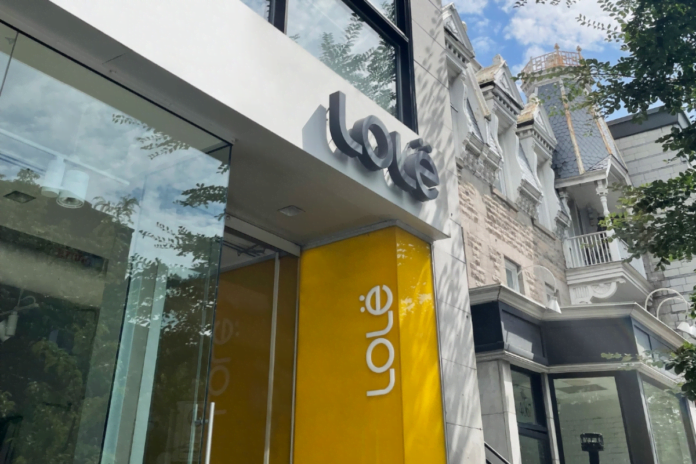
Montreal-based Lolë, a global apparel brand producing elevated athleisure, active and outerwear designed to last, plans to open three additional stores in Canada this year after recently acquiring San Francisco-based époque évolution, an upscale, female-founded collection of ethically crafted, high fashion and function everyday essentials for women.
CEO Todd Steele said the retailer plans to grow the époque évolution brand as well.
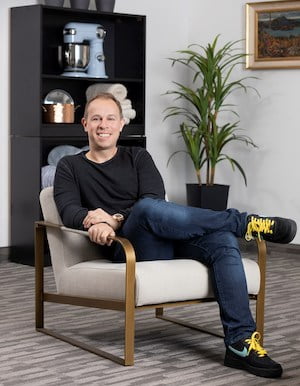
Todd Steele
“We’re thrilled to welcome époque évolution and its founder, Nancy Taylor, to the Lolë family,” said Steele. “She brings decades of design experience, along with extensive knowledge and innovation in sustainable fashion, and we look forward to seeing how both brands evolve in this exciting new chapter.”
Taylor will maintain her current role at époque évolution while also stepping into the role of Head of Design and Creative Director for Lolë.
Steele said époque évolution was started in 2018.
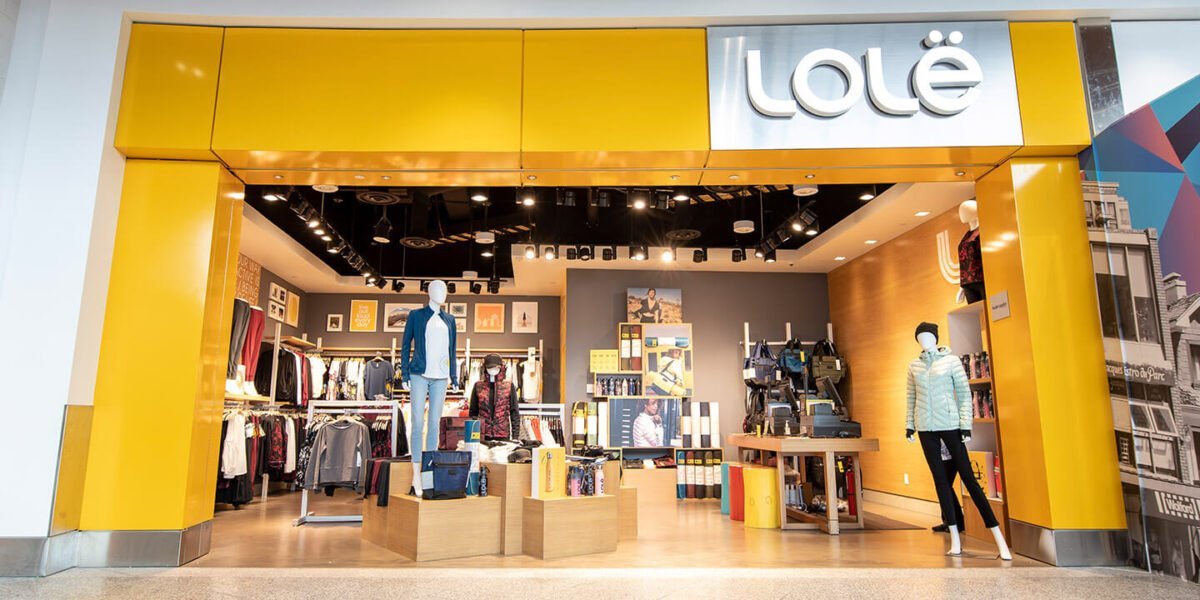
Lolë at Toronto Pearson Airport – Terminal 1
“We’re interested in the brand for a few reasons. The first is just Nancy as a talent. She’s got a tremendous amount of experience in we’ll call athleisure, active lifestyle apparel, and we thought she could do even more for us and for our business. We brought her in house and had her work across our brands,” said Steele.
“The brands Lolë and époque both share similar values around sustainability, around fair trade, around making product the right way for both our customers and the world at large. So that was really important to her and to us.
“Finally and most importantly, we think that she really identified a white space that maybe’s not the focal point of most of our competition, which is taking these active fabrics and applying them to silhouettes that are maybe a little more sophisticated and appropriate for the office, for travel, at slightly higher price points. We do see as people return to the office and as people emerge from this post COVID world the need to want to dress up but want to still carry with them the comfort and versatility that comes with some of these fabric choices.”
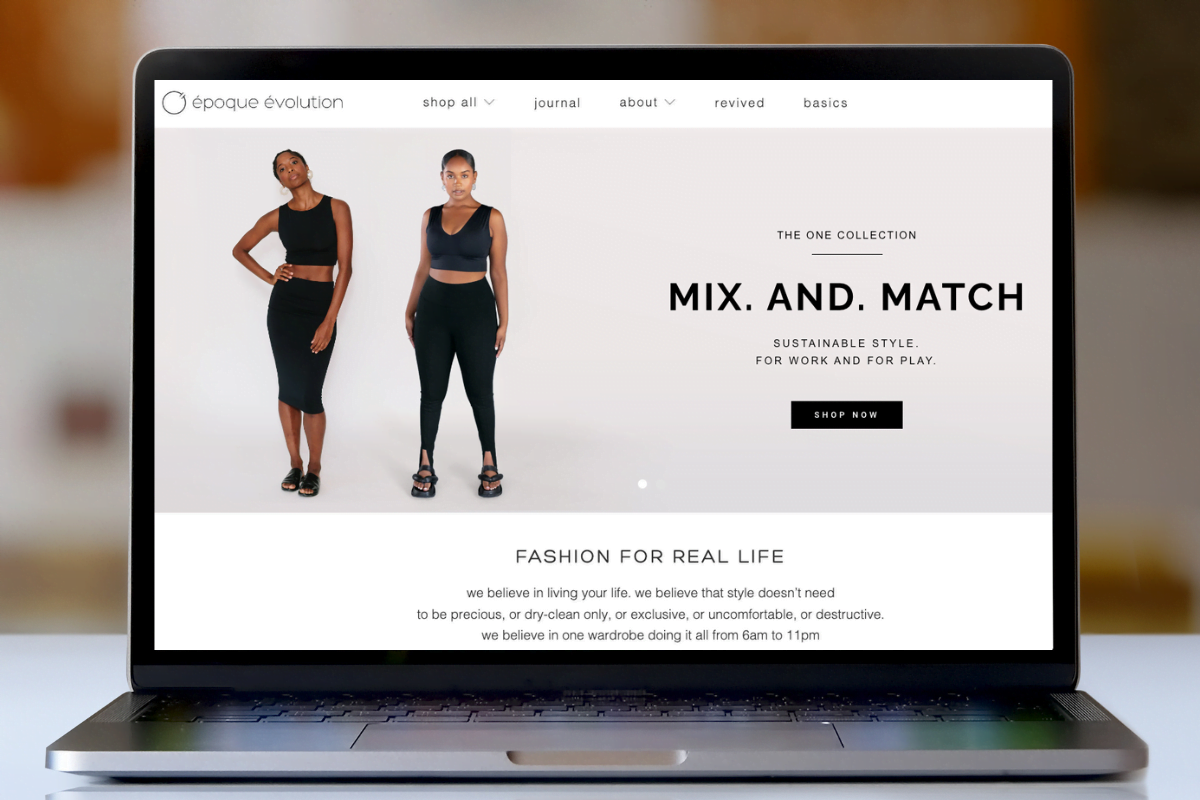
Image: LoleLolë and époque évolution Logo (CNW Group/Lolë Brands)
Steele said époque does not have any retail stores. It is a 100 per cent direct to consumer business over the web.
“We’ll look to probably add some of their product in the short term to our retail stores but over time we’d like to begin to test brick and mortar retail for them as well. They also have no wholesale business but we do think there’s plenty of retailers, premium retailers, out there that would be appropriate for the brand,” added Steele.
Lolë, which began in 2002, currently has 10 locations – four corporate owned stores (two in the U.S. and two in Canada) and six partner stores in Canada.
“We’ve got plans to open up three new Canadian stores this year,” he said. “One in the Montreal area and two in Toronto.
“We had pre-COVID somewhere around 40 stores globally and obviously as we restructured the business we closed many of those stores. I think we’d like to do three to five stores a year. I think it will continue to be reasonable growth. But yes we absolutely believe in the brick and mortar retail experience.”
It also has a fairly substantial wholesale business where its products can be found in such retail locations as The Bay, the Forzani Group of retailers, SAIL, Sporting Life, Nordstrom. Lolë clothing can be found at more than 1,500 retail outlets around the world.
Image: epoqueevolution.com
After holding senior design positions at Athleta and Gaiam before starting époque évolution in 2018, Taylor witnessed a real need for change in the way things were done in fast fashion.
“It’s all about choices: better materials, better production partners. We’ve proven that you can be fashionable in a way that functions in your real life, and maintains environmentally sound values,” said Taylor. “This is an incredible opportunity to grow the brand with the help of Lolë’s amazing team, operations and distribution network.”
Lolë was created in 2002 by Evelyn Trempe when she spotted a gap in women’s technical outerwear. She noticed that the selection of women’s travel and outerwear was bland and lacked style. So she set off on a mission to create an inspiring collection for women who want to get out there and live out loud every day, says the company on its website.
“Fast-forward to today, Lolë has evolved into a global brand with a mission to inspire mindfulness. From smart consumption to unique experiences, we create to make you feel good, day and night, at work or play, year after year.”
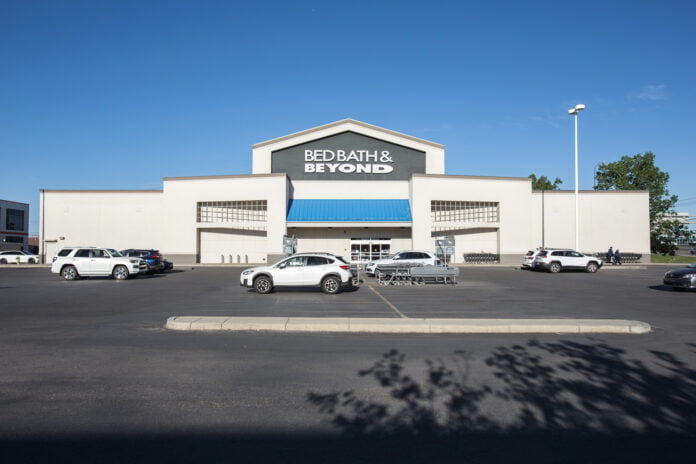
Canadian entrepreneur Doug Putman is launching a new Canadian home store brand called rooms + spaces in 21 retail locations formerly occupied by Bed Bath & Beyond and buybuyBABY storefronts.
Putman is acquiring more than 800,000 square feet of real estate and the new stores will open in early summer.
“With so many empty storefronts across the country right now, Canadians are craving enjoyable in-store shopping experiences, where they can see and touch products, especially when it comes to outfitting a home. I see such a strong opportunity to invest in Canadian retail and I’m always looking for new opportunities,” said Putman, founder of Ancaster-based Putman Investments.
“The creation of a new home brand was a natural addition to my retail portfolio, which now provides shoppers with everything they need across the baby, toy and home categories.
“We just went through the (available leases) and estimated what we thought we could potentially do in sales and then kind of looked at what the rent agreements would be. If we thought we could make the store profitable we took it on. There were some stores that we didn’t feel we could make profitable either sales we thought would be too low or rents were too high. Ideally I would have loved to take all 55 but in the end it came down to the stores we got. Since this release, we signed a couple more as well. We know we’re going to be above 21 stores. It’s now just seeing how many other deals we can get across the line. I’m still hoping we have more than 30 stores by the end of the year.”
Photo supplied
The entrepreneur’s retail portfolio includes Toys”R”Us and Babies”R”Us Canada, Sunrise Records, Alex Brands (including Alex Toys in the US), T.Kettle, hmv in the UK and more.
Doug Putman. Image supplied
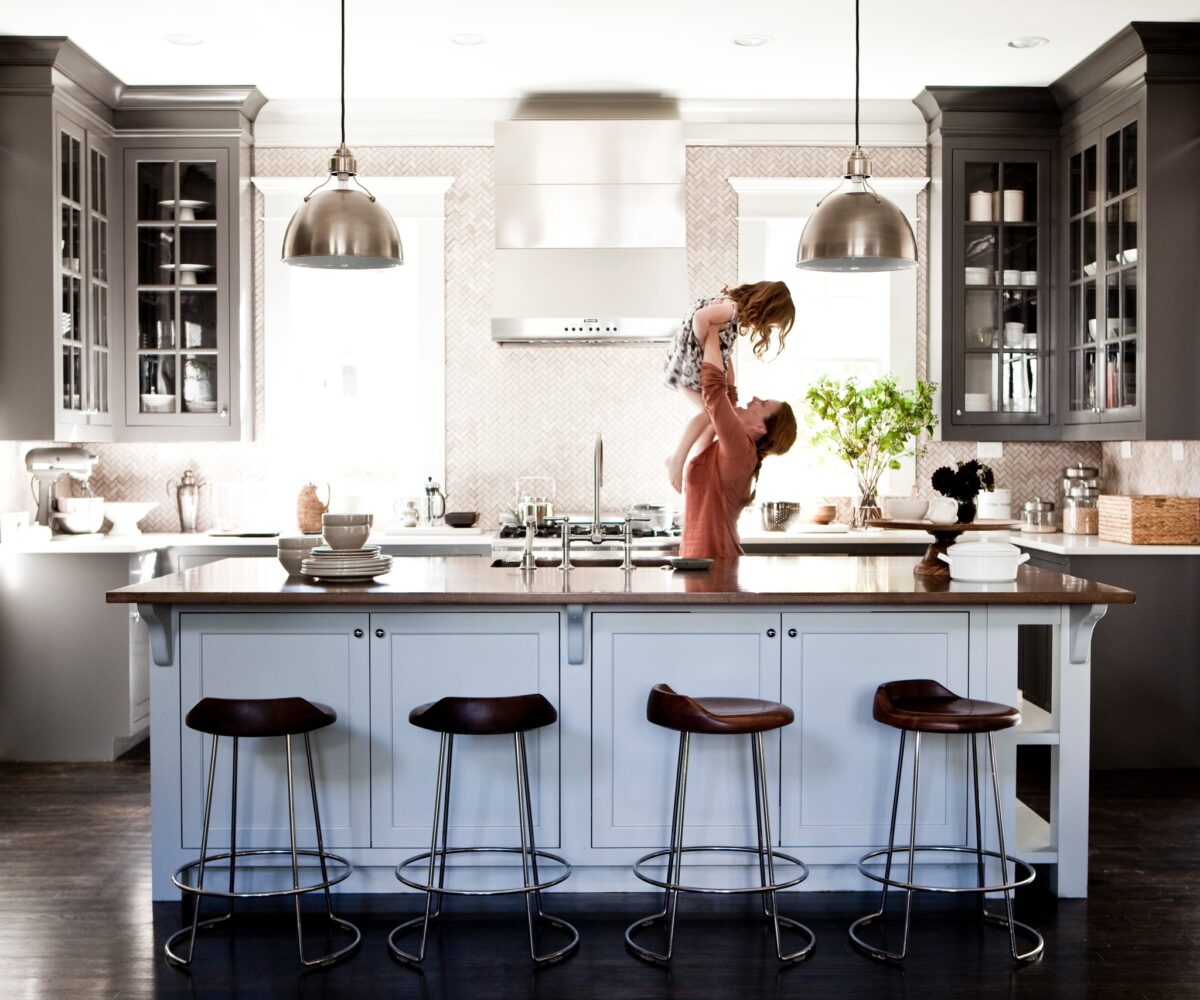
The new retail concept will cater to the modern shopper who is looking to create spaces throughout their home that reflect their unique personality and style. The stores will carry a broad range of products for every room in the home. From essentials such as kitchen gadgets and luxurious towels to unique items like bed wedges, cherry pitters and charcuterie sets, the stores will have everything needed to transform a space, whether it be a house, apartment or cottage, into a home.
rooms + spaces is actively hiring 500 associates and will open more positions in the near future. Interested candidates are asked to apply online at roomsandspaces.ca.
The new retailer said it will support Canadian businesses and suppliers wherever possible and carry iconic brands, such as oxo, Homedics, Cuisinart, Martex and more.
The company will be led by Greg Dyer, formerly General Manager of Bed Bath & Beyond Canada.
“I can’t wait to welcome shoppers into our new Canadian-owned rooms + spaces stores this summer,” said Dyer, President, rooms + spaces. “Our team is excited about creating product assortments tailored to Canadian homes and decorating styles. Whether it’s couples seeking affordable decorating or entertaining solutions, or parents supporting the needs of students moving away to school, our store associates are here to help consumers find everything they need to make their home their own.”
The stores will be located in former Bed Bath & Beyond and buybuy BABY locations in the following cities:
British Columbia:
Kelowna: Orchard Plaza, 1540 Keehn Road
Langley: Langley City Square, 19860 Langley Bypass
Vancouver: 1740 West Broadway
Victoria: Mayfair, 775 Finlayson Street
Alberta:
Calgary: Brentwood Village, 3630 Brentwood Road
Calgary: Chinook Station, 306 Glenmore Trail SW
Edmonton: South Edmonton Common, 2021-98 Street NW
Edmonton: West Edmonton Mall, 8882 170 Street
Saskatchewan:
Regina: Grasslands, 4855 Gordon Road
Saskatoon: Preston West, 1709 Preston Avenue North
Ontario:
Belleville: Bell Front Shopping Centre, 366 North Front Street
East Gwillimbury: Green Lane Centre, 1-18126 Yonge Street
Kitchener: The Boardwalk, 225 The Boardwalk
London: Westwood Centre, 3325 Wonderland Road
Richmond Hill: Bayview Ridge Shopping Centre, 225 High Tech Road
Stittsville: 5487 Hazeldean Road
Stoney Creek: Heritage Greene, 1783 Stone Church Road East
Whitby: Thickson Ridge Power Centre, 1650 Victoria Street East
Woodbridge: RioCan Colossus Centre, 67 Colossus Drive
Newfoundland:
St. John’s: The Village Shopping Centre, 430 Topsail Road
Putman said the available lease locations were attractive.
“There’s not a ton of medium, large box space available and Bed Bath had good real estate to begin with. So getting these locations is good for us and obviously we want to be where the traffic is and where people are going to buy. We like the centres that we’re in,” he said.
Putman said the new retail concept began as soon as he started hearing there were troubles with Bed Bath & Beyond.
“We look at a lot of opportunities in retail. There’s obviously been a bit more now, recently. So any time something comes up we’re always thinking about the space and do we believe it’s a large enough opportunity for us and do we believe we can fix the problems that whatever that company has had,” he said.
“I think on the Bed Bath piece we felt it was a great retailer at one time. They had their troubles. Payment became an issue. Vendors stopped shipping. They made some poor decisions and all of a sudden the business is in a lot of trouble, but overall the top line of the business was really strong. Customers were shopping there. Customers enjoy it. They’re not happy they don’t have the right stock and things like that.”
Photo supplied
Putman said the home decor and furnishing sector is a huge category in the retail industry with billions of dollars spent on it.
“I think it just checked a lot of our boxes of being a business that was big enough and interesting enough for us and the opportunity was there. It just all worked out well for us,” he said.
There were no financial details released about the lease transactions, although sources have said the purchase prices for leases was somewhere in the $3 million range.
Putman said the new brand has purchased all new inventory for its stores.
“We believe it’s going to be successful because we have the capital to allow the team to purchase the inventory that they need with a focus on brands. And I think the team we’ve assembled, the merchants, are very knowledgeable and I think they understand the category really well. So I think the assortment is going to come out looking fantastic when we get opened,” he said.
“It was one of the categories that benefited through the pandemic of spending. But even if you look at the Bed Bath numbers pre-pandemic in 2019, 2018, 2017, they always had really good robust sales, good robust earnings . . . They were doing exceptionally well for many years. So the pandemic was good for them and that probably helped mask a lot of the issues they were having. So when sales kind of dropped back down it was a big problem.
“We think the home category is going to continue to grow. Everyone wants to have a space that they love and enjoy whether that’s their house, their apartment, their dorm, their condo. So I think if you have the right product at the right price then I think you’ve got a winning formula. We’re not trying to compete with a Walmart or a TJX. Our outlook is there’s this great big mid-space where you can do a good, better, best assortment and not be in a race to the bottom to have the cheapest towel or the cheapest blanket. To have something that’s a good price but is a great quality product.”
The retail giant announced Tuesday it was acquiring 10 of those leases for $1.6 million.
Acquiring these leases will enable CTC to continue building on the growth of its Mark’s and Pro Hockey Life (PHL) banners. CTC has designated six of the 10 leases acquired for Mark’s relocations in Grande Prairie, Medicine Hat, Red Deer and Strathcona County (Alberta), Langley (BC), and Oakville (Ontario), it said.
In addition to the Mark’s relocations, the agreement will allow CTC to implement plans for four new Pro Hockey Life (PHL) stores in Ontario. The 10 leases combined represent more than 242,000 square feet of retail space, added the company.
Retail Ventures CND Inc. was retained by Bed Bath & Beyond Canada LP and Alvarez & Marsal Canada Inc. (court monitor), to facilitate the sale of leases or other property rights for 54 leases of Bed Bath & Beyond and the 11 leases of Buy Buy Baby across the country.
Sam Winberg, Principal/Broker of Retail Ventures CND, said the brokerage worked under the direction of Dave Rosenblatt, Partner at Osler, Hoskin & Harcourt, LLP in Toronto, in the process that concluded on March 31.
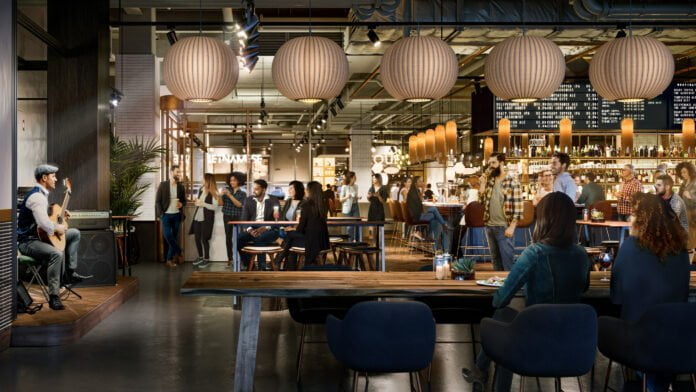
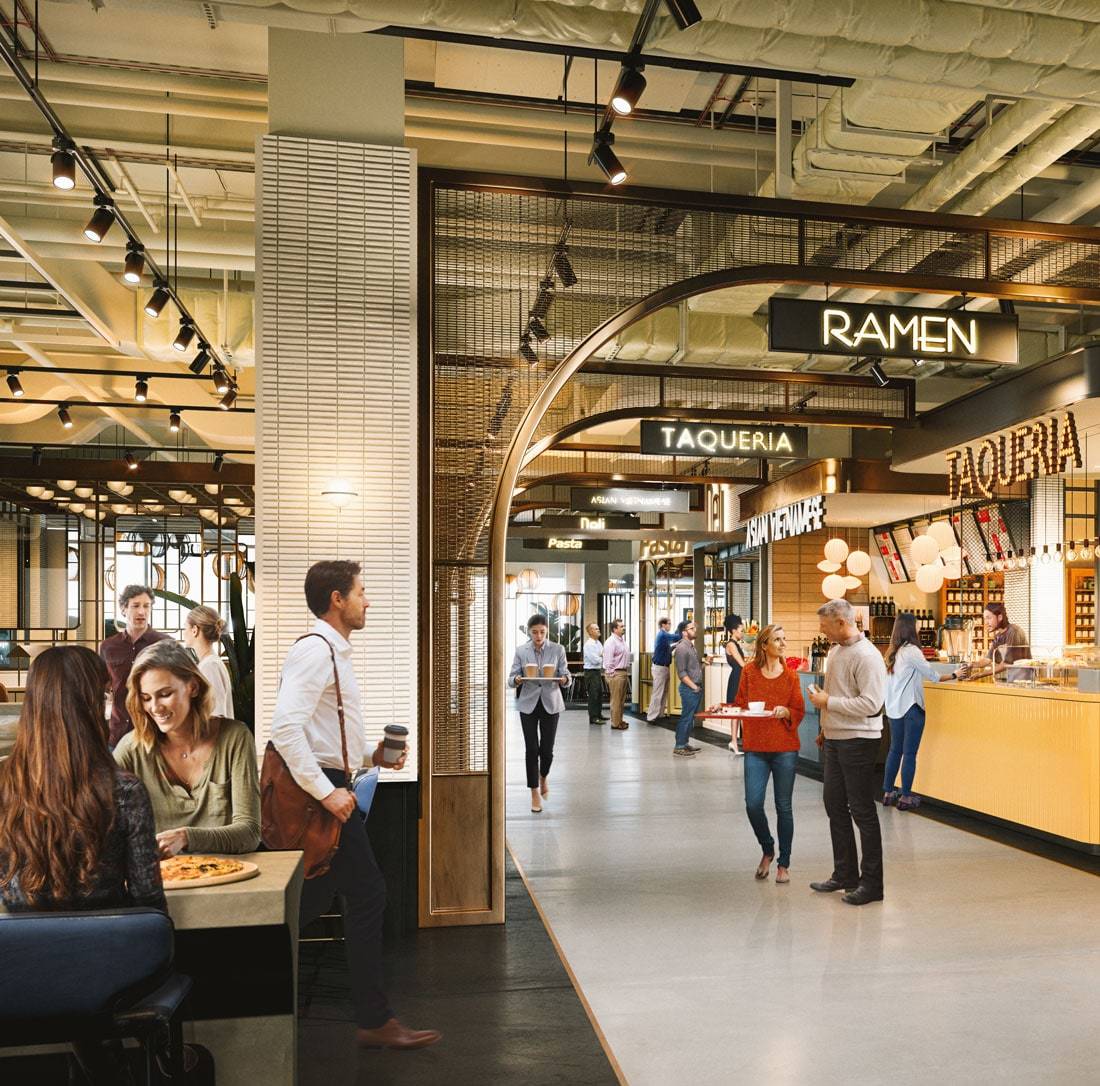
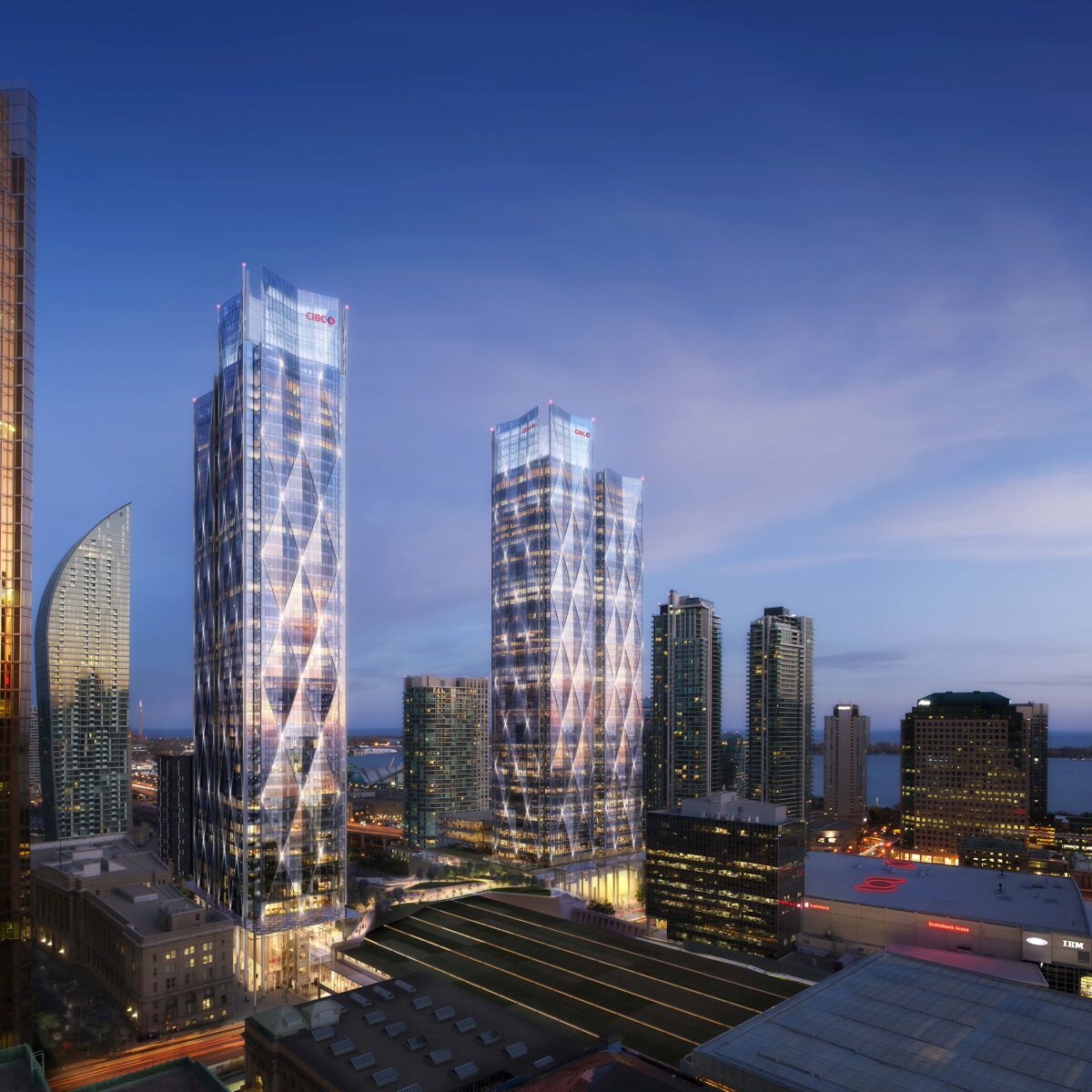
A large and innovative food hall will open in downtown Toronto’s Financial District this summer at the CIBC SQUARE complex. Called TABLE Fare + Social, the food hall will compete with others nearby at a time when foot traffic is down in Toronto’s core.
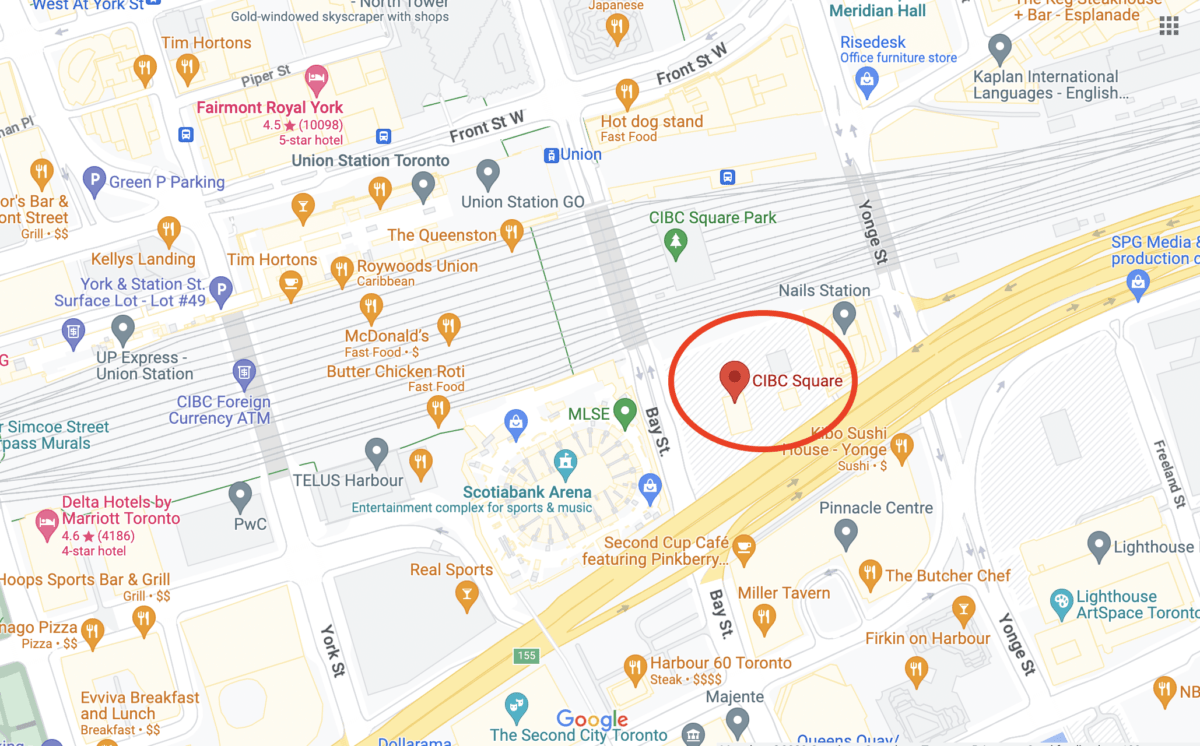
The TABLE food hall is a partnership with Ivanhoé Cambridge and Hines, which developed the CIBC SQUARE office complex which spans 50 floors and about three million square feet over two phases. The approximately35,000 square foot food hall itself will be located on the fourth floor of the first phase at 81 Bay Street.
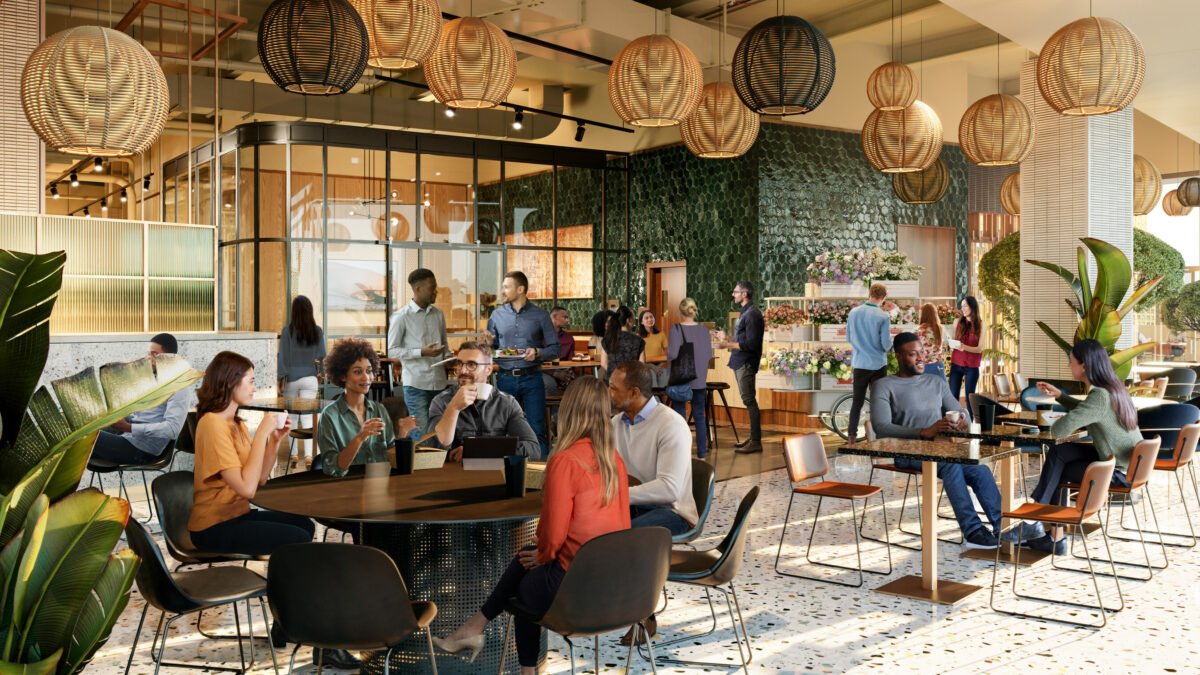
A “multifunctional space with various seating areas” will be included, “from communal tables to quiet alcoves in the library and al fresco dining”, according to a press release. A range of food will be available, from Thai to Japanese and local options to create diversity and to reflect the diversity of the city. Tenants will be announced at a later date. The goal is to create an experiential space with year-round programming that includes food tastings, cooking classes, live music, pop-up events, trivia nights, and others to be announced.
The food hall’s target audience includes attendees at the Scotiabank Arena entertainment facility which is located across the street, as well as commuters from nearby Union Station and the thousands of office workers in Toronto’s downtown core. While foot traffic is down significantly in downtown Toronto as many work from home, things are expected to improve into the summer as more office workers return to work in the Financial District in the coming months.
CIBC SQUARE on May 3, 2023. Photo: Dustin FuhsImage supplied
A nearby residential boom will also add customers to the new TABLE food hall — thousands of multi-family units have been built in the area in recent years and many more are on the way.
The food hall will be open six days a week from the morning into the evenings, offering options such as morning coffee, lunch options, pre-game cocktails and dinner options depending on timing. The space was designed by DesignLSM and The Behar Group is handling leasing. At the moment, The Behar Group is looking for additional food tenants for TABLE Fare + Social.
Avi Behar, Chairman and CEO of The Behar Group, said that the new TABLE Fare + Social will be unlike anything currently in downtown Toronto. The setup will include a range of first-class vendors and seating depending on one’s preference — that includes quieter areas near ‘The Library’ while others may choose to be closer to the action near a central bar area. Private dining areas in the food hall can be booked for events, meetings, talks and other activities, creating an amenity for the office complex above as well as businesses and people in the area. TABLE will connect to a licensed privately owned public park space which will become a draw for the area and an added attraction for the food hall.
TABLE will compete with nearby food and beverage offerings at Union Station, which has been under renovations for years while adding new tenants catering to visitors and locals. Toronto’s Financial District, including the expansive underground PATH network, is home to hundreds of food offerings along its corridors and in food courts located at the base of office towers. Other food halls in the area include Chef’s Hall at 111 Richmond Street and another operated by Oliver & Bonacini which is under construction at CF Toronto Eaton Centre. Further out, a food hall will be opening this year at The Well in downtown Toronto as well the Waterworks project nearby.
(CNW Group/TABLE)Rendering of the completed CIBC SQUARE via Ivanhoé CambridgeRendering of the completed CIBC SQUARE via Ivanhoé Cambridge
“TABLE will deliver an innovative and dynamic culinary experience to the heart of Toronto. At CIBC SQUARE, we are committed to creating vibrant and engaging spaces that reflect the needs and interests of the communities we serve. TABLE is a great example of this, bringing together a diverse mix of vendors, activities, and programming to create a truly extraordinary and memorable destination,” said David Hoffman, General Manager at CIBC SQUARE. “We look forward to seeing TABLE thrive and grow as a hub for social interaction, culinary exploration, and community engagement in Toronto.”
“We are proud to see our collective efforts in the creation of TABLE come to life, which will undoubtedly become a sought-after gathering place for Toronto residents and visitors alike. We are committed to curating an exciting and diverse culinary experience that reflects the rich heritage and dynamic food scene in Canada. With TABLE, we aim to provide a space that fosters a sense of community, belonging and connection,” says Sunita Mahant, Head of Social Impact & Inclusion, Sustainable Investments, at Ivanhoé Cambridge. “We cannot wait to welcome everyone to TABLE and invite them to pull up a chair, connect with others, and savour what TABLE has to offer.”
Retail Insider is streamlining its Canadian retail news from around the web to include a handful of top news stories that can be viewed quickly during the day. Here are the top stories from the past 24 hours.
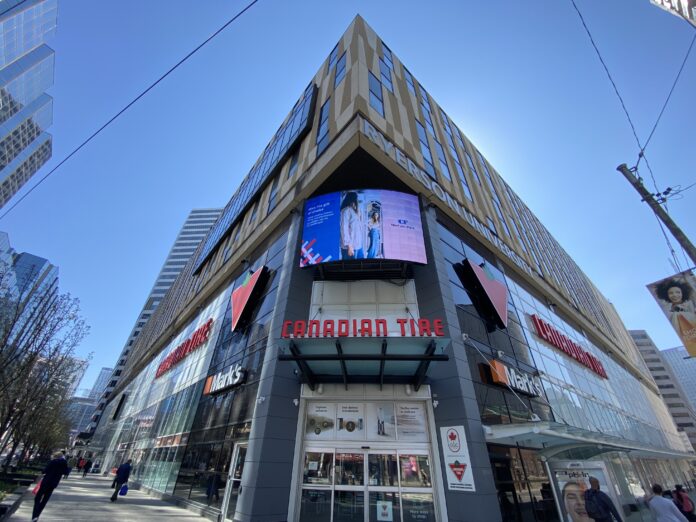
Canadian Tire at CF Toronto Eaton Centre (Image: Dustin Fuhs)
Canadian Tire Corporation is expanding its Mark’s store footprint with the acquisition of several real estate leases formerly held by Bed, Bath & Beyond in Canada.
The retail giant announced Tuesday it was acquiring 10 of those leases for $1.6 million.
Acquiring these leases will enable CTC to continue building on the growth of its Mark’s and Pro Hockey Life (PHL) banners. CTC has designated six of the 10 leases acquired for Mark’s relocations in Grande Prairie, Medicine Hat, Red Deer and Strathcona County (Alberta), Langley (BC), and Oakville (Ontario), it said.
“Following our 10th consecutive quarter of growth in Q4 2022, Mark’s is continuing to build on its incredible momentum in the Canadian market by strategically relocating six retail spaces to more convenient and larger sites,” said PJ Czank, President of Mark’s, in a statement. “These relocated stores will feature more products and deeper assortments of our best brands to meet the needs of our customers in Alberta, British Columbia and Ontario.”
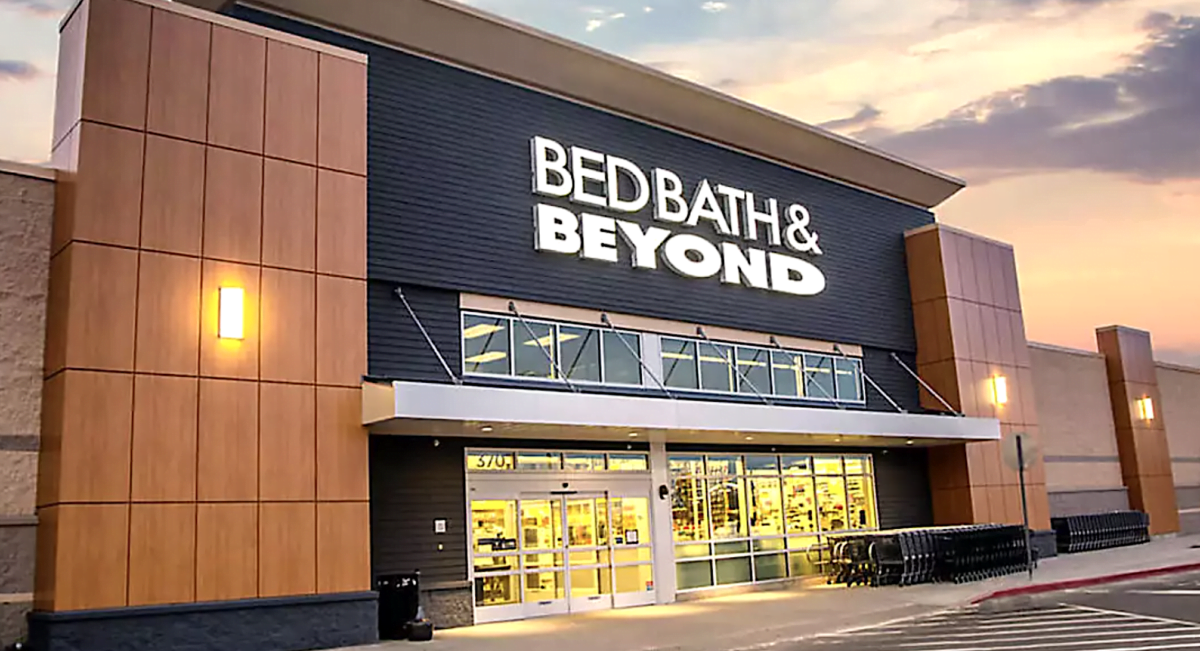
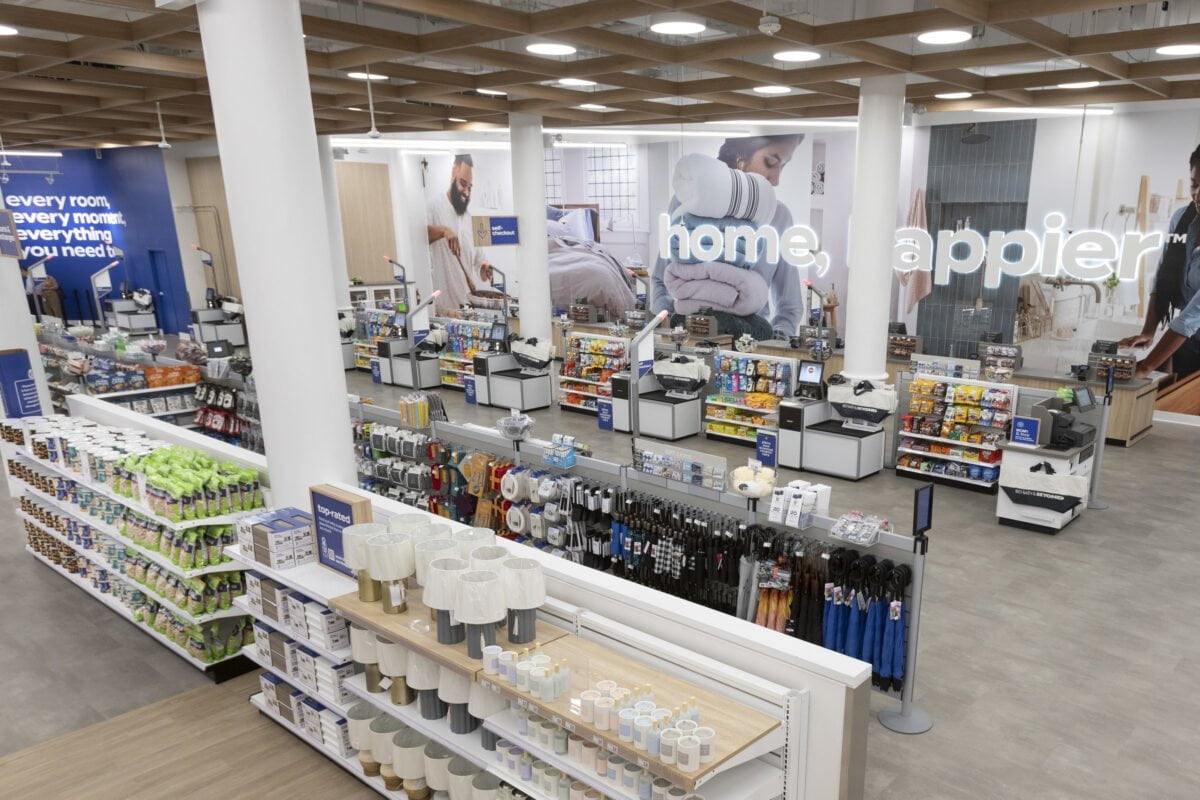
Photo: Bed Bath & Beyond
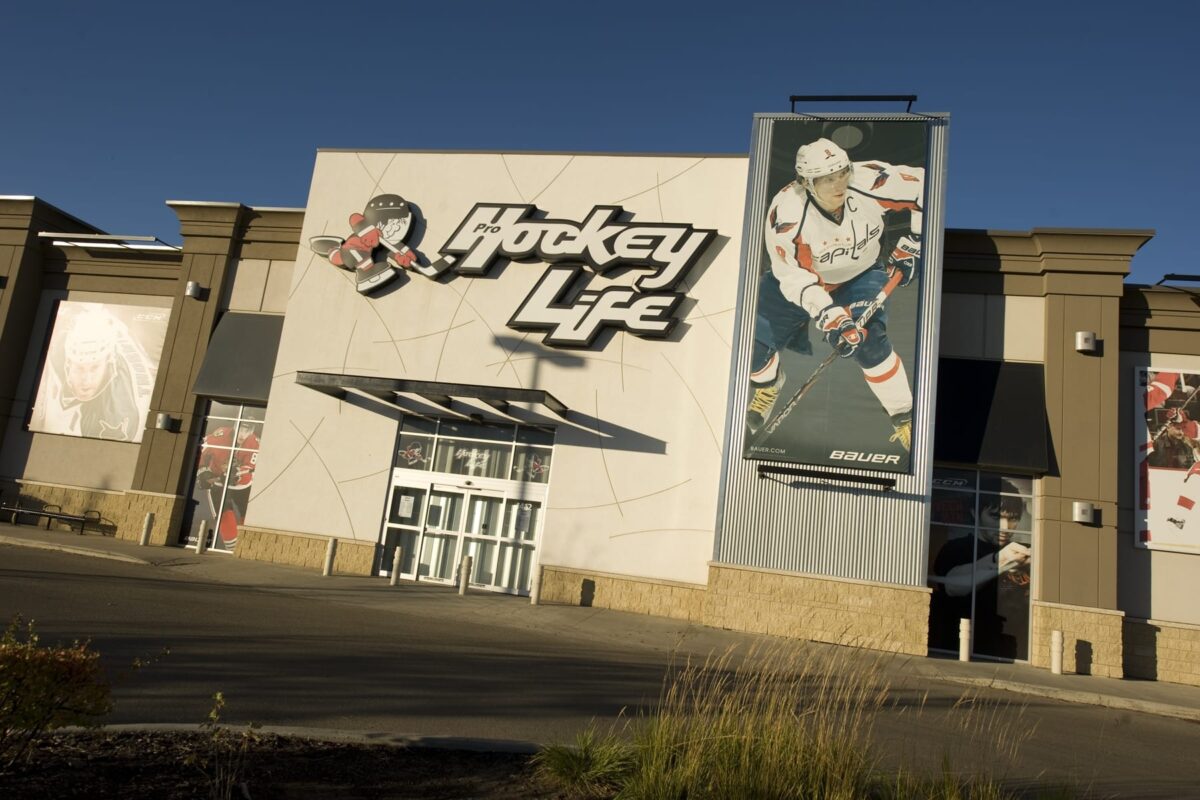
In addition to the Mark’s relocations, the agreement will allow CTC to implement plans for four new Pro Hockey Life (PHL) stores in Ontario. The 10 leases combined represent more than 242,000 square feet of retail space, added the company.
Canadian Tire Corporation, Limited is a group of companies that includes a Retail segment, a Financial Services division and CT REIT. Its retail business is led by Canadian Tire, which was founded in 1922 and provides Canadians with products for life in Canada across its Living, Playing, Fixing, Automotive and Seasonal & Gardening divisions. Party City, PartSource and Gas+ are key parts of the Canadian Tire network. The Retail segment also includes Mark’s, a leading source for casual and industrial wear; Pro Hockey Life, a hockey specialty store catering to elite players; and SportChek, Hockey Experts, Sports Experts and Atmosphere, which offer the best active wear brands.
There are close to 1,700 retail and gasoline outlets. In addition, CTC owns and operates Helly Hansen, a leading technical outdoor brand based in Oslo, Norway.
Retail Ventures CND Inc. was retained by Bed Bath & Beyond Canada LP and Alvarez & Marsal Canada Inc. (court monitor), to facilitate the sale of leases or other property rights for 54 leases of Bed Bath & Beyond and the 11 leases of Buy Buy Baby across the country.
Pro Hockey Life at South Edmonton Common
Sam Winberg, Principal/Broker of Retail Ventures CND, said the brokerage worked under the direction of Dave Rosenblatt, Partner at Osler, Hoskin & Harcourt, LLP in Toronto, in the process that concluded on March 31.
He said 48 leases were “purchased”.
“There were a total of 65 leases for sale but through the due diligence process some leases were not able to be sold. Various reasons like insufficient term, exclusives or restrictions,” he said.
“Some landlords bought back their own leases to control future tenancy. Retailers bought the rest of the stores. There is very little large format space available in the better power centres across Canada. Demand for space is stronger than supply.”
In a previous Retail Insider story, Winberg, who was an original founder of Northwest Atlantic Canada in 1991, which was sold to JLL in 2018, said interested parties could purchase the lease and have the courts endorse the assignment.
“When Bed Bath & Beyond filed (under the Companies’ Creditors Arrangement Act), the Monitor reached out to us because we had experience doing this and have asked us to help them in trying to create value from the 65 leases that Bed Bath & Beyond and Buy Buy Baby have.
“During (court) filings, the Monitor’s job is to try to create value to pay debts of the filing company.”
Bed Bath & Beyond’s flagship store in the Chelsea neighborhood in Manhattan
Court documents filed in the Ontario Superior Court of Justice on February 10 under the Companies’ Creditors Arrangement Act indicated that the Bed Bath & Beyond Group has been in financial difficulty for the past several years, suffering significant net losses since 2018.
“Over this period, BBB Canada itself has seen dramatic declines in revenues. In an effort to improve the Bed Bath & Beyond Group’s financial performance, former management embarked on a series of initiatives designed to transform the business. Unfortunately, the COVID-19 pandemic and the broader economic downturn significantly disrupted the Bed Bath & Beyond Group’s operations, putting further financial strain on the entire enterprise, including BBB Canada, and hindering the transformational efforts of management,” said the documents.
“The Bed Bath & Beyond Group’s situation significantly worsened throughout 2022, with declining year-over-year sales in both the United States and Canada, multiple credit rating downgrades, cash flow constraints, and significant inventory reductions. Cash constraints caused delays and stoppages of merchandise shipments to BBB Canada’s stores, causing inventory levels to decrease dramatically.”
As of January 31, BBB LP employed approximately 387 full-time employees and 1,038 part-time employees in connection with its retail operations across Canada.
“The North American retail industry has experienced a period of rapid change and shifting consumer demands over the past number of years. Even prior to the COVID-19 pandemic, retailers like the Bed Bath & Beyond Group faced dramatic declines in retail foot traffic as consumers shifted their spending to online platforms like Amazon and Wayfair. The rapid changes resulted in a surge of retail bankruptcy filings,” said the court documents. “The Bed Bath & Beyond Group was not immune to the foregoing challenges. By 2018, its revenues were declining and it was reporting significant net losses. Recognizing the need to quickly adapt, the Bed Bath & Beyond Group’s former management developed a comprehensive plan to transform its business and position itself for long-term success.
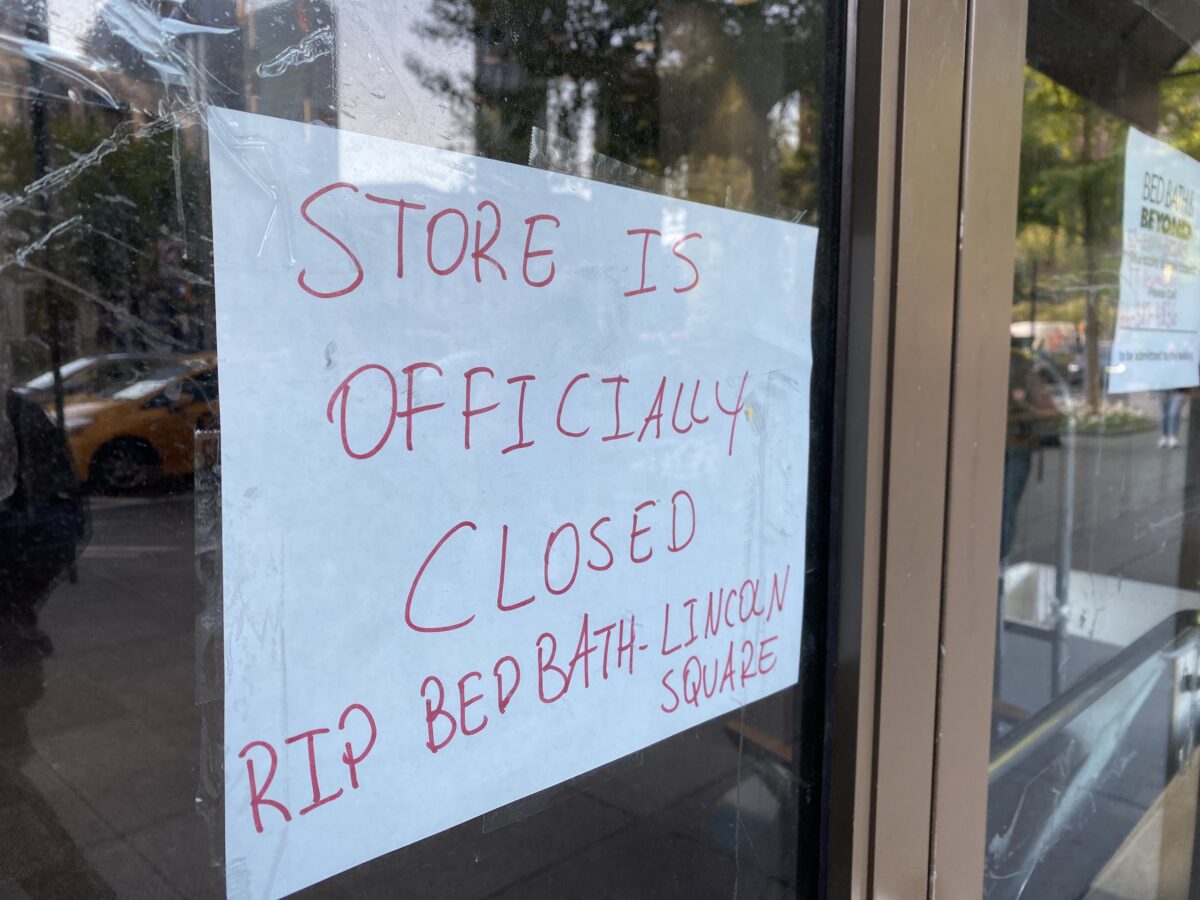
Closed Store Signage at Bed Bath & Beyond Lincoln Square in Manhattan (Image: Dustin Fuhs)
“Unfortunately, the Bed Bath & Beyond Group’s efforts to restructure its operations was interrupted in its early stages by the global COVID-19 pandemic in March 2020. The impact of the COVID-19 pandemic extended beyond the immediate effect of store closures and resulted in global supply chain disruptions and persistent inflation. Ultimately, the Bed Bath & Beyond Group’s liquidity constraints resulted in a significant number of key suppliers either tightening or revoking the ability of the Bed Bath & Beyond Group to access inventory on credit.
“In 2022, the Bed Bath & Beyond Group announced that it had taken steps to address its liquidity constraints and improve its balance sheet and cash flows. The process of remedying the Bed Bath & Beyond Group’s business and financial decline, however, continued to be complex and challenging throughout the Fall of 2022. While the Bed Bath & Beyond Group successfully reduced its accounts payable, raised gross proceeds of approximately US $75 million through an at-the-market offering program, and cleared out a significant portion of its excess private-label goods, inventory issues continued to plague the Bed Bath & Beyond Group through the 2022 holiday season.”
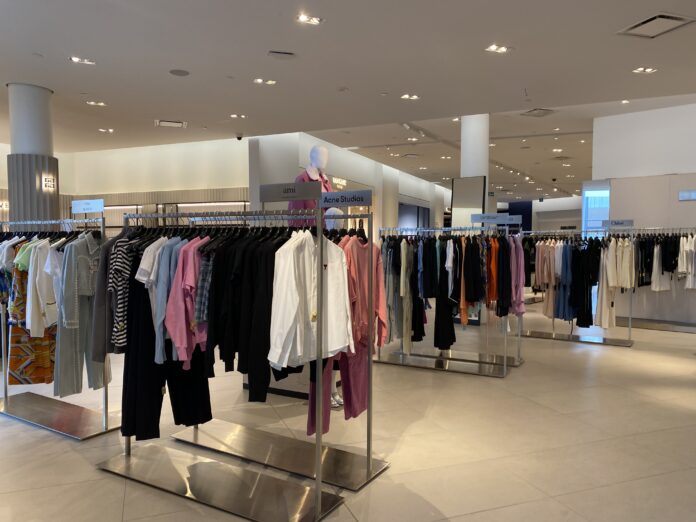
Holt Renfrew at Yorkdale Shopping Centre (Image: Dustin Fuhs)
Have you ever gone to a store to try on shoes before going on to buy them elsewhere? Or had a salesperson talk you through the advantages of different models of printers before buying a cheaper version online? If so, you have engaged in “showrooming.”
Showrooming is the practice of visiting brick-and-mortar retail stores to research a product before buying it elsewhere at a lower price. It allows consumers to look and test out products before spending their money on them.
In addition, research has found that brick-and-mortar businesses do indeed suffer from this type of consumer behaviour. Showrooming puts retailers under price pressure by intensifying competition and squeezing margins.
But this isn’t always the case. Recent years have seen stores that encourage showrooming, like Best Buy, and companies like Amazon, that have invested in bricks-and-mortar stores, to flourish. This suggests the reality of showrooming might be a little more complicated than initially thought.
Our research took into account several different types of consumers. Some consumers were pickier than others and preferred to shop at stores with more product variety, while others engaged in showrooming.
Crucially, those who showroomed didn’t engage in price-comparison shopping — they did their research ahead of time and knew exactly what products and prices to seek out.
Some shoppers didn’t engage in showrooming because they felt guilty about buying a product elsewhere after a salesperson spent time marketing a product to them, or had no time to visit many different venues.
But other consumers were not-so-choosy and opted to shop at stores with less variety, with the intent of making a purchase, so long as they found a product that was a good enough fit. If they didn’t find an acceptable fit, they moved onto another store.
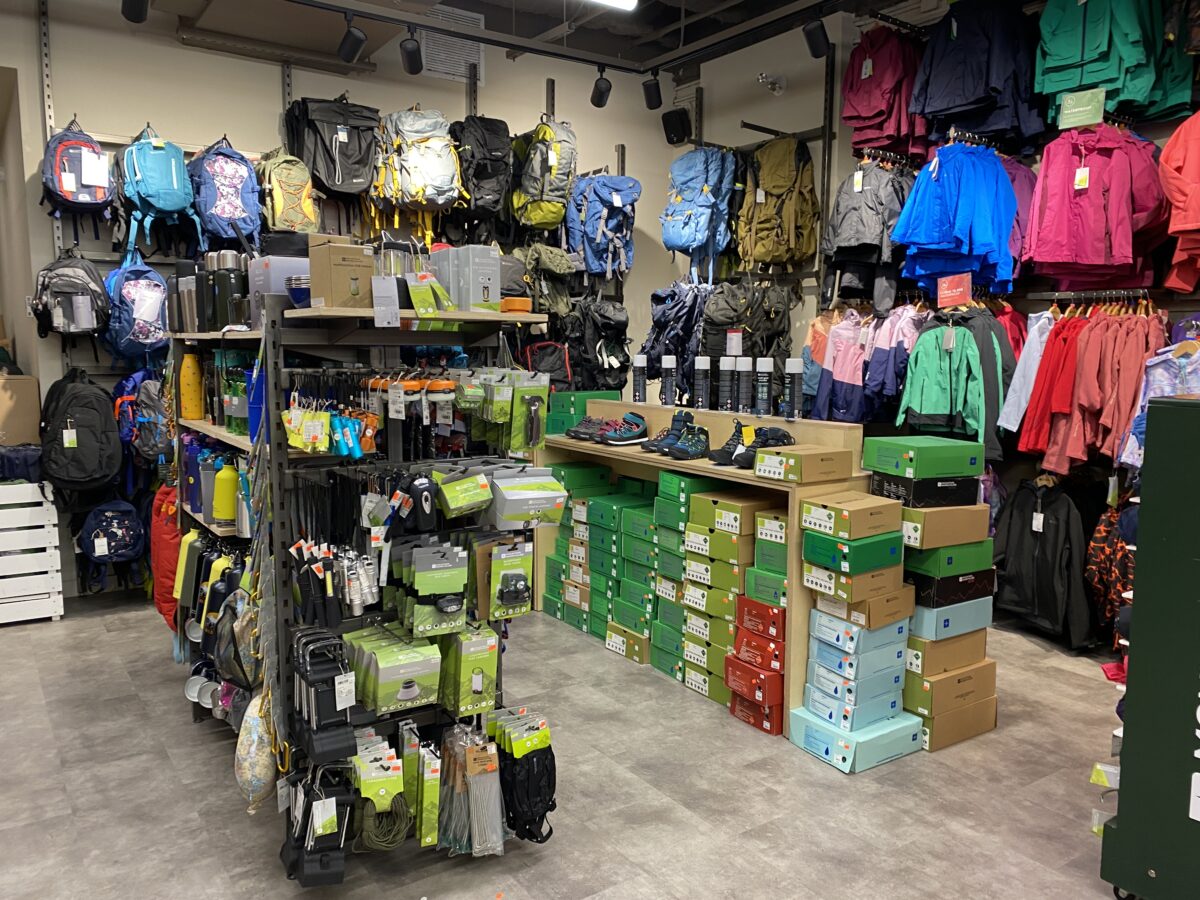
Mountain Warehouse at Square One (Image: Dustin Fuhs)
Our research found that only this last kind of consumer — the not-so-choosy consumer who doesn’t showroom — was the key to determining prices. Their choices and behaviours determine product prices in any given sector.
The reason why showrooming can increase prices is because most consumers — including showroomers — do not compare prices. This leads stores to increase their prices (even just slightly) to make more profit.
Stores and consumer behaviour
Our research differs from past studies in a crucial way. Instead of assuming there is only one kind of store where consumers can discover how suitable a product is, our research accounted for three different types of stores.
The first type, known as deep stores, carry many varieties of products within a certain category. Best Buy, for example, carries many types of television to allow consumers to find the product that suits them best. Deep stores tend to charge higher prices because their shoppers are more likely to make a purchase. Picky consumers tend to shop here.
The second type, known as shallow stores, carry many different types of products, but fewer brands within each product category. Walmart and Costco are examples of shallow stores. These types of stores tend to have lower prices, and less picky consumers tend to shop there.
Walmart Supercentre at Square One (Image: Dustin Fuhs)
Lastly, online stores offer the widest variety of goods (and usually at the lowest prices), but don’t allow consumers to test out products. The mix of consumers at these three store types affects how retailers price their products by shaping the shopping experience.
Broader implications
As showrooming becomes more widespread — and easier to do thanks to online shopping — prices across the retail industry could increase, depending on price sensitivities and the overall mix of different kinds of consumers.
Ultimately, the range of different kinds of stores determines how people shop. Consumers’ shopping patterns and behaviours, in turn, determine prices.
While the perceived threat of showrooming has led to strong policy proposals — like one minister in Spain that proposed retailers should charge shoppers for using changing rooms — our study suggests the effects of showrooming are more subtle than initially thought.
Understanding showrooming requires thinking about the impact the practice has on consumer shopping patterns and how stores respond to them. Retailers, policymakers and observers should be wary of over-emphasizing the role showrooming plays in bringing down prices and changing the retail landscape.
By Heski Bar-Isaac, Distinguished Professor of Economics and Finance, University of Toronto and Sandro Shelegia, Associate Professor, Department of Economics and Business, Universitat Pompeu Fabra
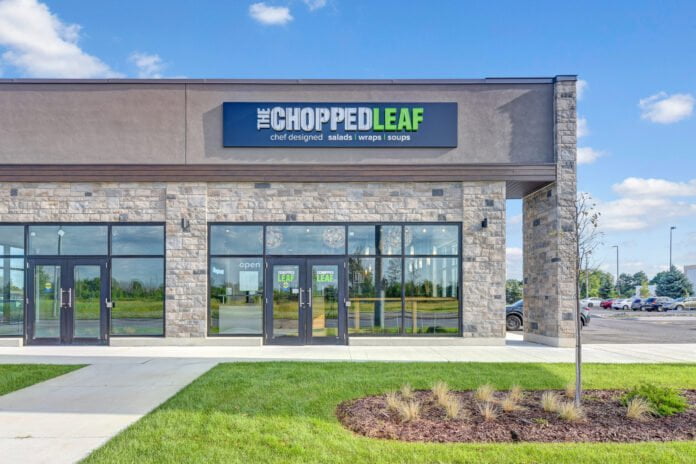
Kelowna-based The Chopped Leaf, which opened its first location in the BC city in 2007, has grown to more than 100 locations in five provinces with plans to add another 30 locations this year.
The Chopped Leaf, owned and managed by Innovative Food Brands, is focusing on Ontario, Manitoba and Atlantic Canada and locations are franchisee-owned and operated.
The brand was founded by Blair Stevens and his wife Karla.
“We’re in the quick service world. We’ve told our consumers we’re more so the full-service experience put into a quick service manner,” said Blair Stevens, President & Founder of The Chopped Leaf. “Our pride and joy is serving salads, bowls and wraps along with a few sandwiches and quesadillas.
“What makes our brand special there’s no doubt about it is the flavours of it. All our dressings and soups are those same recipes that my wife and I developed from day one that are unique recipes to the brand. We offer dine-in and takeout experiences.’
Image: The Chopped Leaf
The fun and upbeat tone of the ad encourages viewers to try out the Shake-A-Bowl and experience the joy of shaking their own salads. The commercial was created by award-winning advertising agency, Crew, and directed by, Rob Tarry. The campaign will be rolled out across various media channels, including social media and national broadcast TV.
He said the original menu was created in the Stevens home kitchen.
“We knew that salads were the base of the menu. Karla and I would brainstorm over each family dinner and lay out what we thought was best. Karla would then get to work producing numerous dressings to test. Every home meal for some time ended up being a potential chopped leaf menu item,” said Stevens.
The name, The Chopped Leaf, came from the idea of a herb cutter (mezzaluna) chopping the lettuce.
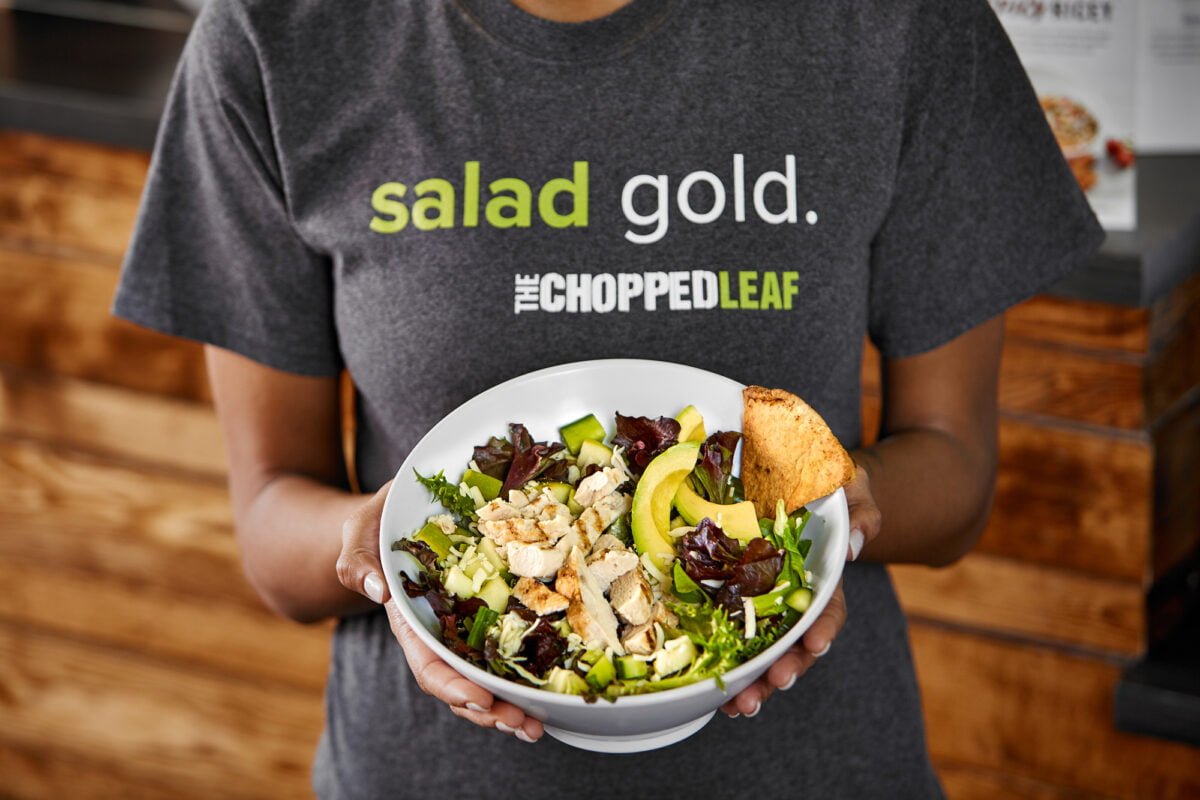
Today’s new menu includes nine flavours available as a bowl, wrap, salad and the new shake-a-bowl packaging makes it easy to eat a fresh, healthy meal on the go.
“I came out of high school and worked some construction. My old man always said listen if you made some money we’ll match it and we can get into business together,” said Stevens. “I started off I owned a franchise of Blimpies Subs and Salads in Edmonton. Grew a second location. And then a couple of buddies and I had an idea of developing the Wok Box concept about 18, 19 years ago in downtown Edmonton.
“I was part of that initial growth with the Wok Box but living in Edmonton I knew my wife and I always wanted to relocate to Kelowna. That’s where we got married. We always wanted to do a brand that associated to our lifestyle so we began the search of a salad brand because there was continuous salads at our dining room table. On our searches we noticed that there was a salad craze happening down in the big metro cities in the USA and we knew we could take what they had and Canadianize it. We worked on the recipes and concept for over a year and we were able to come across an existing restaurant that is close to home and figured we’d throw everything in and try to make it happen.”
Image: The Chopped Leaf
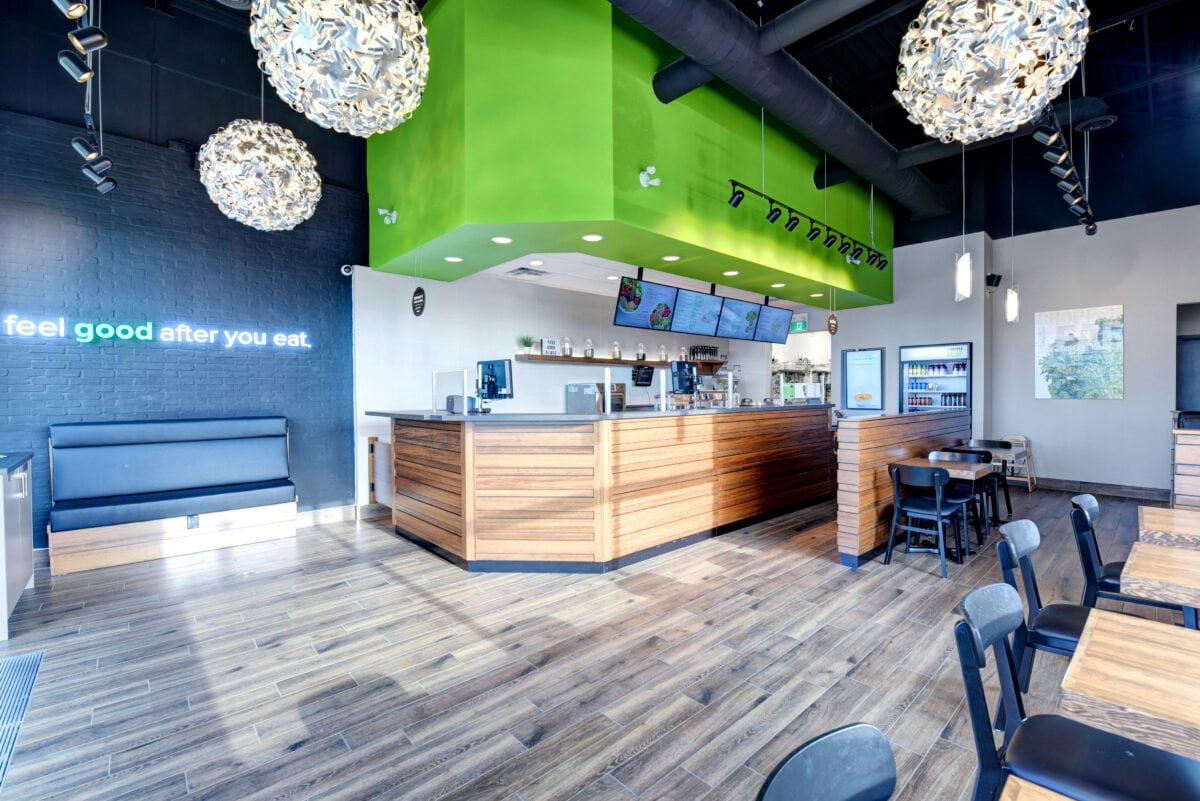
He said average stores are about 1,300 square feet and the brand lends itself to larger power centres with big anchors with lots of parking and easy access.
The average store has about 20 to 24 seats in it.
“A very efficient, compact lay out,” said Stevens.
“We’ve always been taking it since day one. It’s not about the numbers. It’s all about the quality over the quantity. But with that said, we are pushing, we’re coast to coast today. We definitely want to be focusing in on the Ontario market along with Quebec and the Atlantic. We are attending our first US multi-unit franchise conference here soon and we’ll be doing a big US push over the Q3, Q4 this year. We’re really excited about that for sure.
“We’ve been working on our brand for the past two and a half years. Of course, COVID was fun to deal with. But it was a good testament of how strong our brand was. We didn’t have one closure. We’ve rejigged our menu to simplify it for a better customer experience. We worked on this thing for a year and a half and we were able to just launch it a couple of weeks ago. It’s called One Bowl where it’s not only a simpler customer experience but it’s easy for us to execute behind the line which drives to a better consumer experience.”
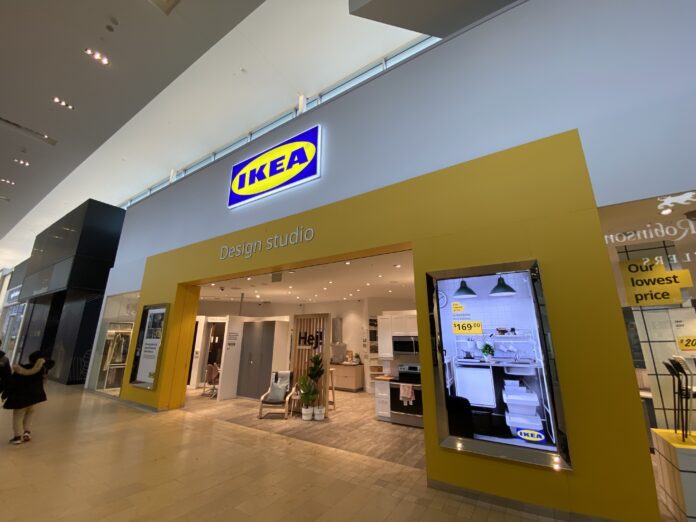
IKEA Design Studio at Square One Shopping Centre (Image: Dustin Fuhs)
In a recent survey, commissioned by IKEA Canada, nearly nine in 10 Canadians (85 per cent) said it’s important to them to work for a purpose-driven employer that lives their values.
And the furniture and home decor retailer is using that information as it launches a brand campaign to attract more people to join the team as an employee.
Many in the retail industry have found it difficult in the past year or so to attract and retain people. A labour shortage is one of the key challenges most retailers face today.
Tanya Bevington, Head of Communications for IKEA Canada, said staffing is a key area of focus for the company.
Tanya Bevington
“With the unemployment rates obviously still quite low, we want to really make sure that we are attracting and retaining the best talent,” she said. “This is one of the reasons why we really wanted to go out with this type of campaign to really launch something that was bold and inspiring, demonstrating that IKEA is a purpose-led organization and to share more about who we are as a business and what are some of the things our own co-workers have been so proud of over the years.”
Image: IKEA Canada
The IKEA survey also found:
67 per cent of people are seeking out companies that offer opportunities to work in different areas of the business; and
77 per cent want to learn new skills.
The Build your career with IKEA campaign demonstrates the wide variety of career paths that are possible at the leading home furnishing retailer. It features the stories of co-workers from IKEA Canada’s 7,400-strong workforce nationally.
Founded in 1943 in Sweden, IKEA is a leading home furnishing retailer, offering a wide range of home furnishing products. IKEA Canada is part of Ingka Group which operates 389 IKEA stores in 32 countries, including 15 in Canada. Last year, IKEA Canada welcomed 26 million visitors to its stores and 189 million visitors to IKEA.ca.
The company said it operates business through the IKEA vision – to create a better everyday life for the many people and does so through its local community efforts and sustainability initiatives.
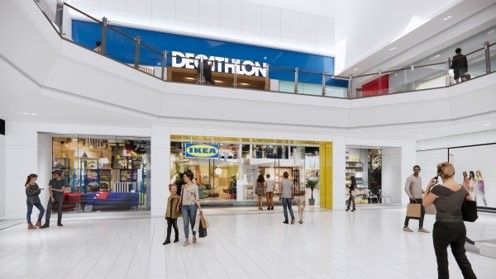
“As we continue to grow our operations in Canada, including opening a new small-format store location in Scarborough Town Centre this summer, we seek to recruit quality talent while creating a life-long relationship with our existing co-workers,” said Tanja Fratangeli, Acting CEO and Chief Sustainability Officer, IKEA Canada.
“The Build your career with IKEA campaign puts our co-workers centre stage and highlights the diversity of opportunities we facilitate.”
IKEA at Scarborough Town Centre (Rendering: Oxford Properties)
Bevington said the retailer felt this is a great opportunity to attract and retain talent to that idea of being purpose-led.
“Our purpose is to create a better everyday life for the many. It’s the same as our vision and that starts with our co-workers.”
The company said culture and values are important to it and to fuel future growth at IKEA, it’s looking to recruit quality talent while creating a lifelong relationship with existing co-workers too.
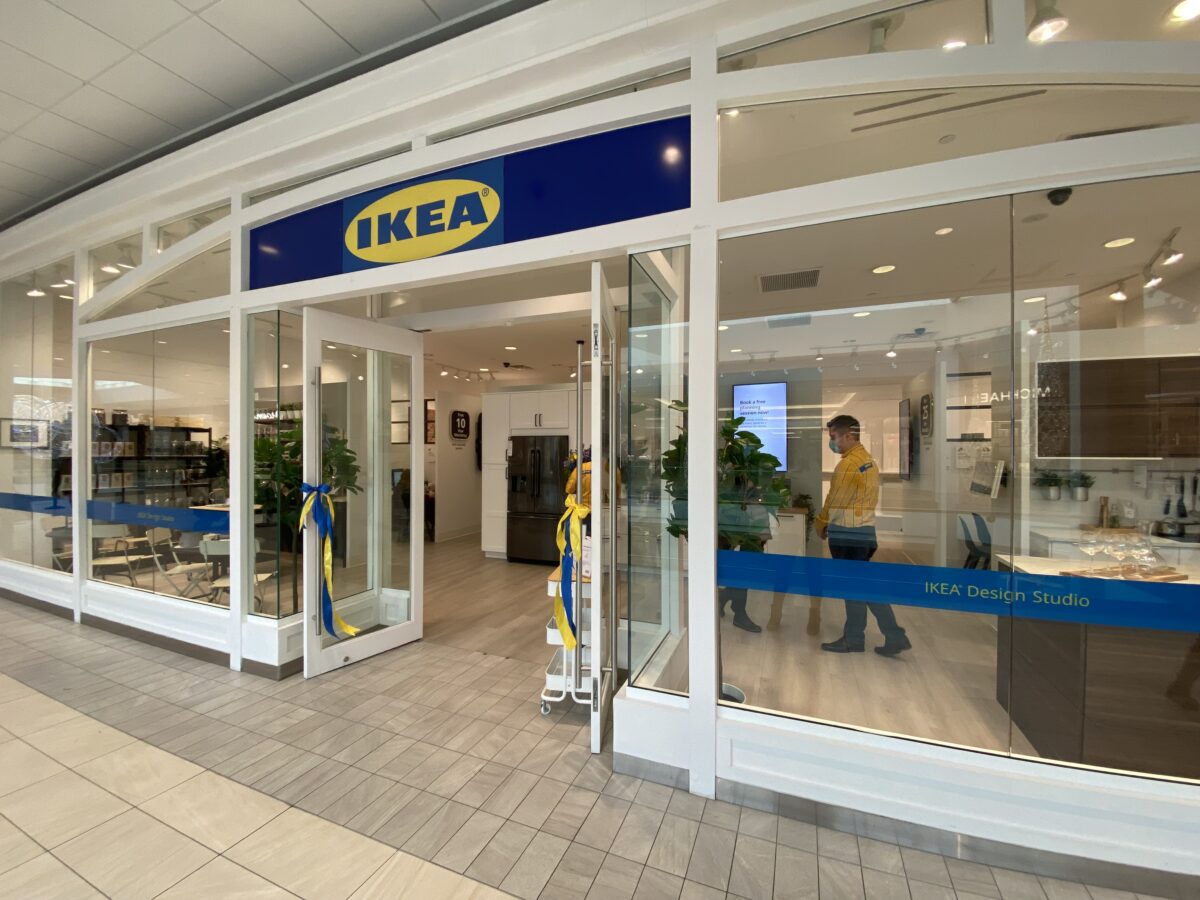
IKEA at CF Masonville Place (Image: Cadillac Fairview)
The new campaign is aimed at demonstrating that at IKEA, it offers people the opportunity to build long-term careers with purpose, surrounded by community.
Co-workers featured in the campaign include Ramiro Pintor Penagos, a new Canadian who relocated here from Colombia in 2019. Following 25 years in the military, he started a new career path at IKEA Calgary as a Goods Flow co-worker.
“My family moved to Canada to build our future here, and we’re grateful for the opportunities it has offered us. The IKEA culture makes it a supportive environment where you can learn new skills. My daughters Laura and Diana have joined me in working at IKEA Calgary, and have expanded their careers into sales and operations,” he said.
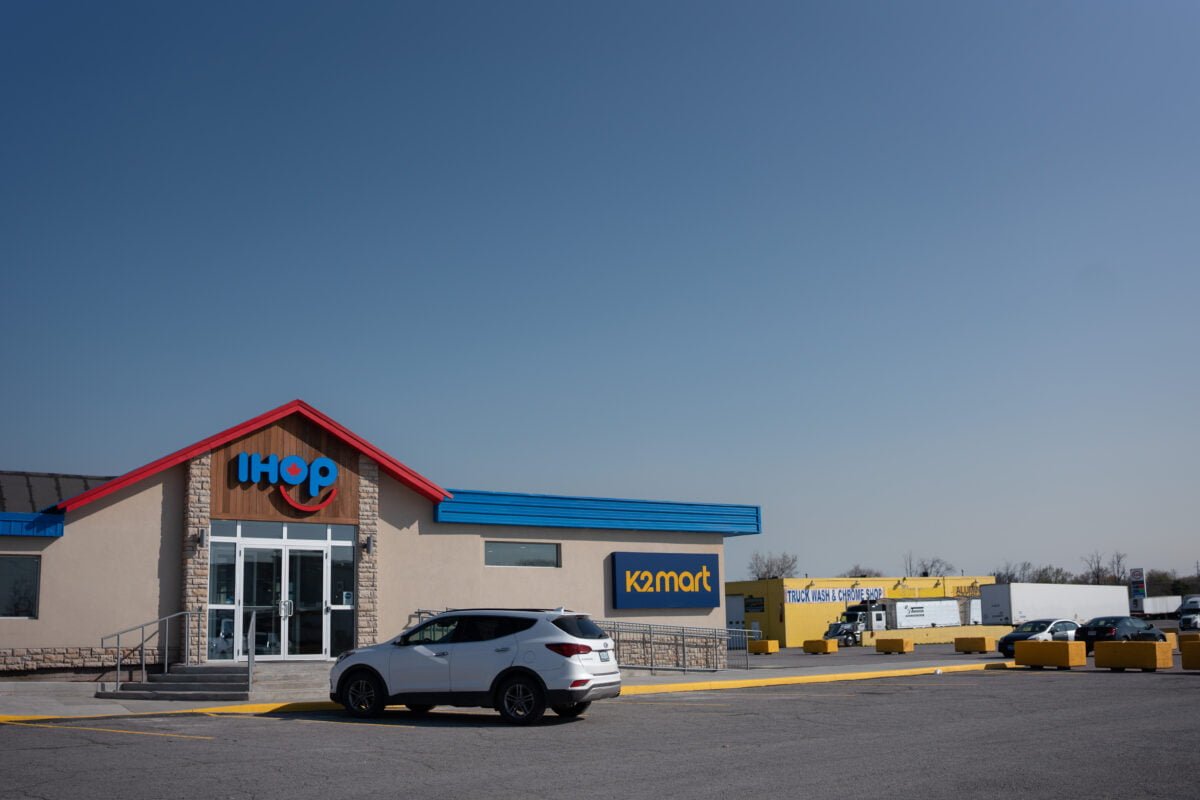
K2 Group, a leading Canadian investment firm, has opened a new 4,000-square-foot IHOP location in Belleville, Ontario.
The Toronto-based K2 Group has plans to open at least five additional IHOP restaurants in Ontario, including locations in London, Hamilton, Waterloo, and Windsor, as part of a non-traditional development agreement with Dine Brands International, an affiliate of Dine Brands Global, Inc., the parent company of Applebee’s Neighborhood Grill + Bar, IHOP, and Fuzzy’s Taco Shop restaurants.
Thomas Jacob, Managing Partner of K2 Group, said the company has other fast food tenants in some of its real estate properties.
“In one of our hotels we actually own an IHOP and we’ve actually been a franchisee of an IHOP in one of our properties in Niagara Falls,” said Jacob.
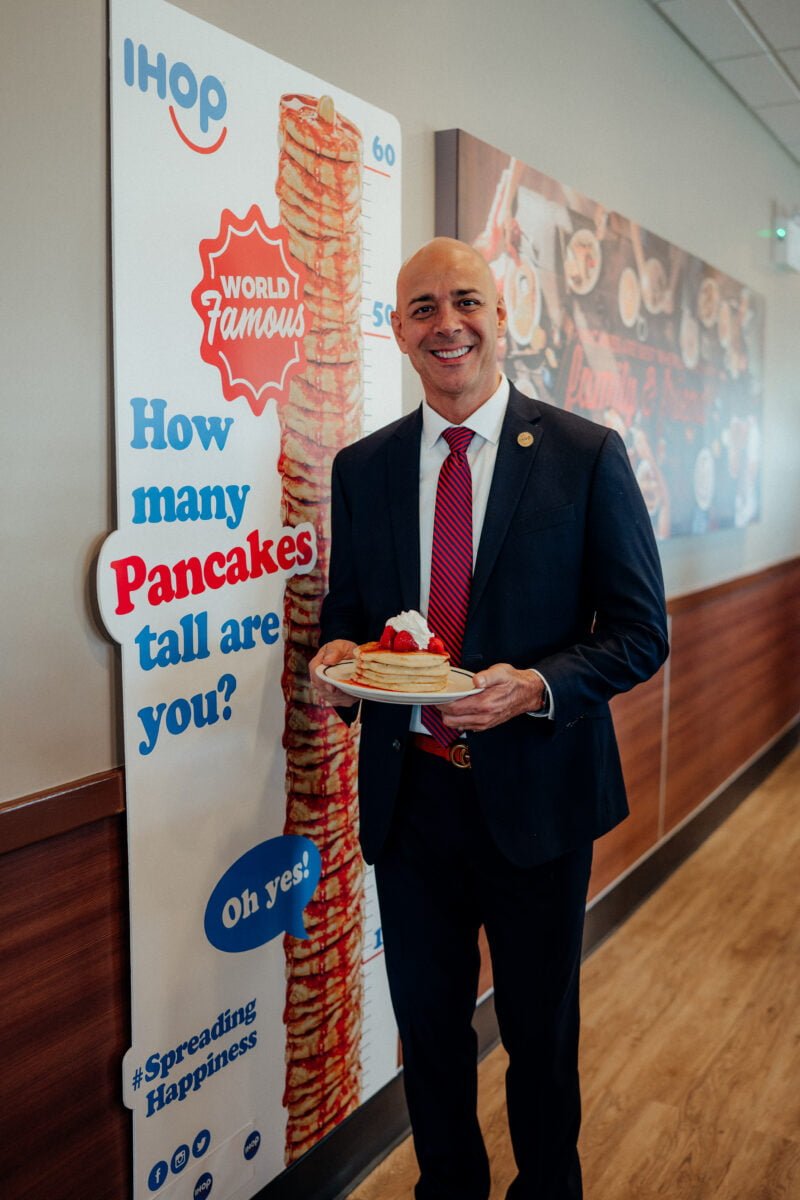
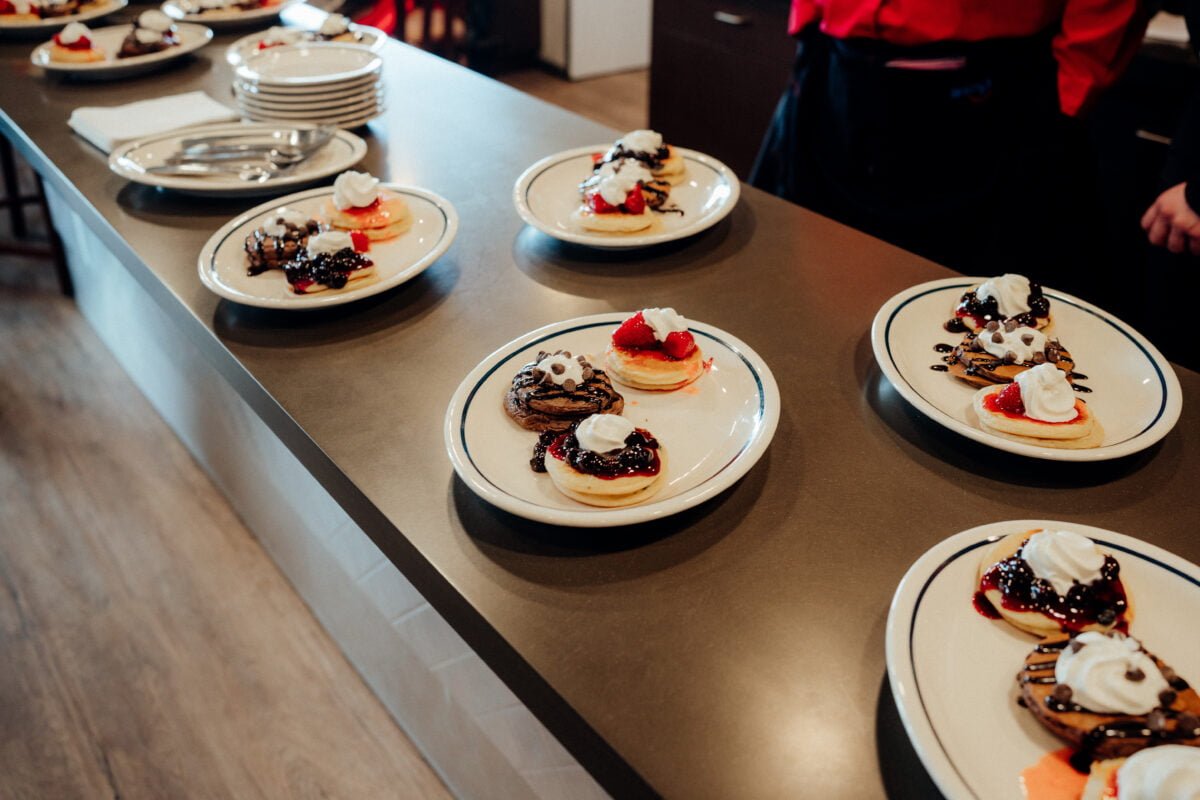
IHOP Grand Opening
“The genesis really started that we had a great relationship with working with several of the other F&B brands, that the Dine Brands team is very passionate and they very much cared about how they did things and we were very impressed.
“We noticed how popular the IHOP brand was doing in the U.S. and essentially we felt that there was a void. There hasn’t been much disruption over the last 10, 20 years. The breakfast/brunch space is a really big space and a couple have come in and gone. We just felt as an investment perspective to grow an IHOP portfolio in Ontario. We decided to do a development deal.”
Jacob said the company is looking at all options in rolling out the IHOP brand.
“Our development deal on the strategy and the cities that we picked were primarily to put one wherever there’s a university,” he said. “We’re actually looking at a bunch of non-traditional opportunities right now in Toronto and the GTA as well.”
Typical size of the restaurant is between 3,000 and 4,000 square feet.
A London location has been confirmed but it has not been officially announced yet. It will be the next IHOP as part of the K2 Group’s development strategy.
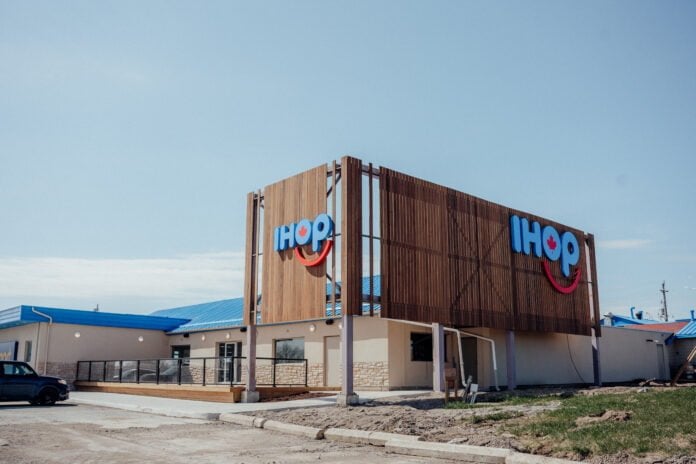
Image: IHOP
The Belleville location is at one of Canada’s largest truck stops, situated on the 10 Acre Truck Stop just off Highway 401, Exit 538 on Wallbridge Loyalist Road. This location marks the first international truck stop venue and sets the foundation for further growth in non-traditional locations, including transit, airports, universities, and more, said the company.
With an investment of $3 million, the new Belleville restaurant will employ over 60 team members and seat up to 184 people during breakfast, lunch, and dinner.
K2 Group is a privately-held fully integrated company that strategically acquires, develops, constructs and repositions hospitality, petroleum and real estate assets throughout Canada.
Image: IHOP
Based in Pasadena, California, Dine Brands Global, Inc.through its subsidiaries and franchisees, supports and operates restaurants under the Applebee’s Neighborhood Grill + Bar, IHOP, and Fuzzy’s Taco Shop brands. As of December 31, 2022, these three brands consisted of over 3,500 restaurants, across 17 international markets, and were operated by 387 franchisees. Dine Brands is one of the largest full-service restaurant companies in the world and in 2022 expanded into the Fast Casual segment.
“Having a superb restaurant offering at the 10 Acre Truck Stop is crucial to ensuring our truckers and local customers have a place to come and gather,” said Kailash Kasal, President of K2 Group. “With more than 25 years in the hospitality business, we’re confident that we will thrive as we work to meet our guests where they are by providing an all-round exceptional experience and, of course, the world’s most famous pancakes.”
“We are pleased to work with K2 Group on furthering IHOP’s non-traditional growth strategy in Ontario,” said Scott Gladstone, President of Dine Brands International. “There is great opportunity for expansion in Canada and we look forward to bringing IHOP’s world-famous pancakes, burgers, and more to guests throughout the country.”
K2 Group acquired the landmark 10 Acre Truck Stop in Belleville in May 2021.
Retail Insider is streamlining its Canadian retail news from around the web to include a handful of top news stories that can be viewed quickly during the day. Here are the top stories from the past 24 hours.