Advertisement
Home Blog Page 703

Survey: Many Small Businesses in Canada Considering Credit Card Transaction Surcharges for Consumers

Canadian merchants now have the ability to surcharge on credit card transactions to offset credit card processing fees, and nearly one in five (19 per cent) small businesses are considering it, according to a survey by the Canadian Federation of Independent Business (CFIB).

The survey also found that 26 per cent of CFIB members said they will do it if their competitors or suppliers do. More than one-third (40 per cent) of small firms said they are not sure yet if they will surcharge, while 15 per cent said they don’t intend to do it.

“Most smaller merchants are still on the fence or don’t plan to surcharge as they don’t want to risk losing customers. However, it’s important for them to know they will have this option,” said Corinne Pohlmann, Senior Vice-President of National Affairs at CFIB. 

Corinne Pohlmann

“Small businesses have long been dealing with expensive credit card processing fees and trying to find ways to absorb the cost of accepting premium cards without the ability to surcharge or refuse those cards. Surcharging gives them the ability to offset some of their costs and be transparent with their customers about the fees they pay.”

When asked about surcharges, retail expert George Minakakis said: “My response will be very blunt. This feels like shaming consumers for not using cash or debit cards. When do retailers start charging for that as well? If you want to build loyalty, this is a bad idea. As a retailer from large corporate chains, passing on surcharges to consumers for credit card use is not good business. 

George Minakakis

“If we take the restaurant industry as an example tipping now has options of up to 30 per cent and add credit card surcharges into this and you will have consumer dissension. What’s next? Pay a portion of the hourly wages? Asking consumers to understand this situation of conducting business when they personally incur debts on credit cards with high interest rates, just makes no sense,” said Minakakis, who leads advisory firm Inception Retail Group and is author of  The New Bricks & Mortar, Future Proofing Retail.

“What this will do in this looming recessionary and inflationary economy is push more consumers to buy online, look for lower pricing and visit stores even less. It is clear businesses are struggling coming out of the pandemic and into an economic fire, is a challenge. A little over 50 years ago credit cards were the saving grace for retailers. Consumers had a means to buy more. Squeezing consumers to cover your costs which have always been built into pricing, signals retailers are not ready for the future. My advice is to build it back into pricing and do a better job sourcing and selling higher quality products and services that are in demand. That’s what successful retailing has always been about!” 

Retail specialist Bruce Winder, author of RETAIL Before, During & After COVID-19, described the idea of credit card surcharges as a complicated issue. 

Bruce Winder

“Although one can argue that on paper it can make financial sense for consumer-facing businesses such as retailers and restaurants to pass on the fees, it could anger customers at a time when prices are already at a 40-year high,” said Winder, a retail analyst, consultant and President of Bruce Winder Retail. “I think the ability to successfully pass on the fee and maintain volume will be dependent on each specific business’s market power and degree of competition as well as how competitors react to the opportunity to pass on the fee. Get your game theory hats on.

“One can argue that independent retailers and restaurants may receive more leeway from customers as they have been struggling so much from the pandemic while large chains have prospered. 

“Either way, I would tread lightly if I were a retailer as this could be the proverbial straw that breaks the camel’s back and sends customers elsewhere.”

The CFIB said that as a result of the recent class action settlement small businesses were given the power from Mastercard and Visa to add a surcharge on some credit card transactions of offset merchant fees. Due to consumer protection laws in Quebec, this option will not be available in that province, said the CFIB.

It added that businesses that often sell to other businesses (B2B), like construction, manufacturing and finance/insurance, were most likely to report they will surcharge for credit card usage, while businesses that serve consumers were less likely to say they will do it. Among consumer-facing sectors, a total of 19 per cent of hospitality (e.g. restaurants), 17 per cent of personal services businesses (e.g. salons) and 12 per cent of retailers intend to surcharge.

Dan Kelly

“These data reveal the frustration so many business owners feel about the high cost of credit card processing, which can eat about 1.5 to 2.5 per cent of every sale,” said CFIB president Dan Kelly. Currently, 35 per cent encourage customers to use other forms of payment and 28 per cent said they increase their prices to absorb credit card fees.

“The power to surcharge will allow merchants to address their rising operating costs, push back against future credit card fee hikes and keep their prices competitive. With mounting pressures small businesses are facing due to inflation and government-imposed costs, surcharging is another way to reduce their cost burden.”

The CFIB said merchants can now apply to surcharge by registering their plans with their credit card processor and Mastercard (Visa requires registration with the processor only). Once they have registered their intent to surcharge, merchants must then wait 30 days before they can start to apply a surcharge on Visa and Mastercard transactions.

The CFIB is providing detailed information for merchants which can be found . 

Eataly to Open 2nd Toronto Location at CF Sherway Gardens

Eataly Dallas. Rendering: Eataly

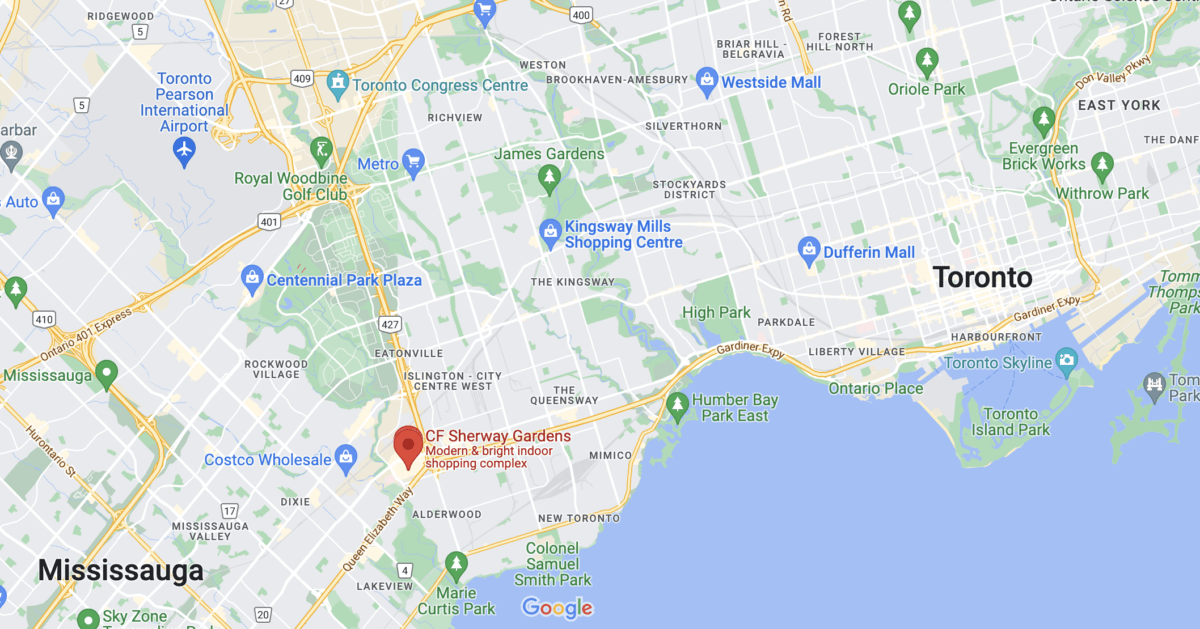
Large-format Italian food marketplace Eataly will open its second location in Canada at CF Sherway Gardens in Toronto next year. Landlord Cadillac Fairview announced Wednesday that Eataly had signed a multi-year lease for the shopping centre near the Western border of Toronto and Mississauga. 

It will be Eataly’s second Toronto location, following the fall 2019 opening of a 55,000 square foot downtown location at the Manulife Centre at 55 Bloor Street West. 

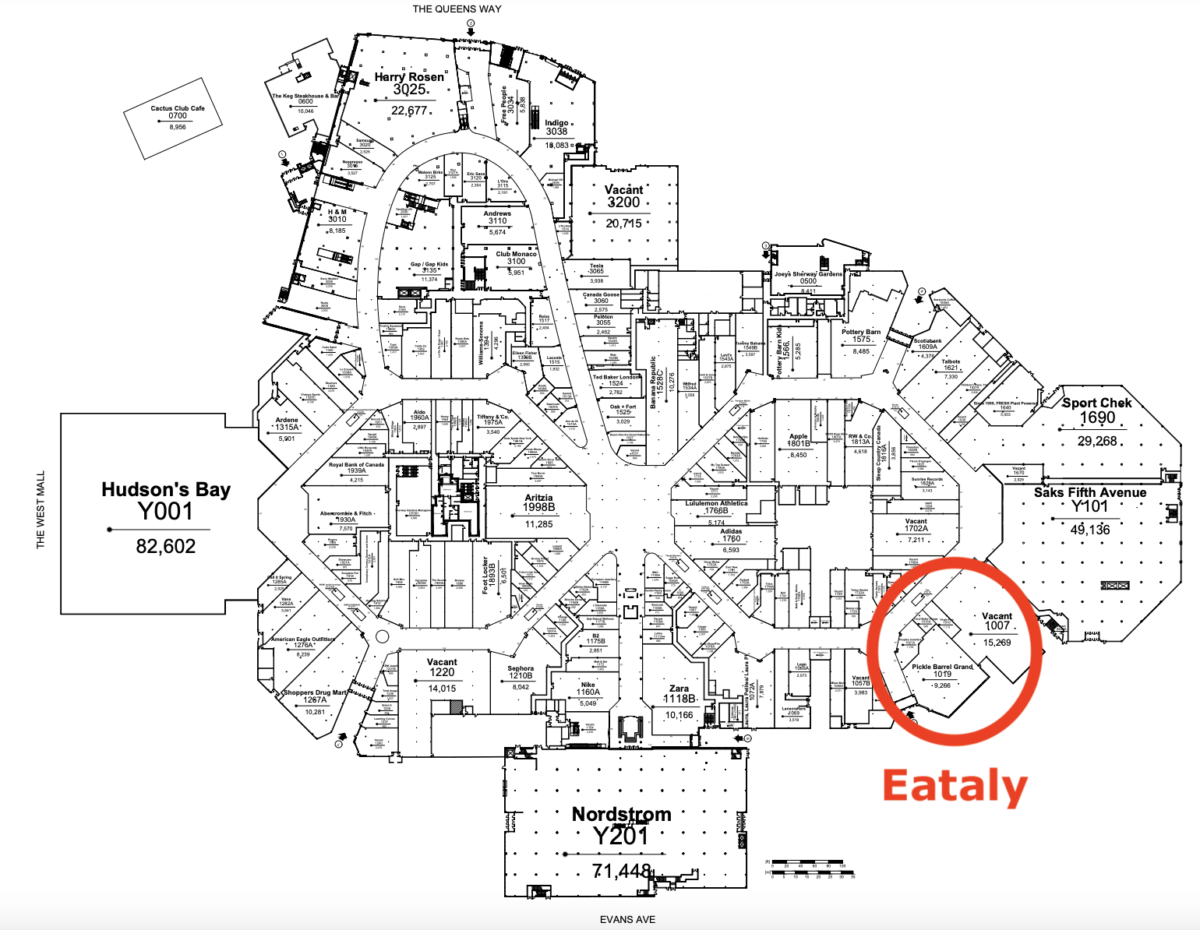
It hasn’t been formally announced when Eataly will open its CF Sherway Gardens location. Retail Insider attended the ICSC Toronto Conference on Wednesday and a representative for Cadillac Fairview said that Eataly will be replacing a Pickle Barrel restaurant location along with adjacent retail spaces next to the mall entrance to Saks Fifth Avenue. Looking at a lease plan for CF Sherway Gardens, it would appear that Eataly will span between 25,000 and 30,000 square feet in the mall depending on how it is configured. 

Click image for interactive Google Map
Lease plan: Cadillac Fairview

“We have been humbled by the warmth of our guests in Toronto and we are thankful to this incredible community for how they welcomed us since we first opened our doors here in 2019. We would like to thank all of our valued partners who have helped us, including Tony Grossi and the Weston family and, of course, we would like to thank our newest partner, Cadillac Fairview,” said Luca Baffigo, global head of development and partner of Eataly.

The Weston family’s investment arm, Wittington Ventures, owns a minority interest in Eataly in Canada and Tony Grossi handles leasing for the company. 

“CF Sherway Gardens is a perfect home to bring Eataly’s values of high quality Italian food and experiences to even more people. This store will continue Eataly’s tradition as a go-to destination for dining and for authentic Italian products and wine, and will allow us to deepen our relationship with our valued local Canadian producers. We look forward to getting to work on opening this newest outpost in the Eataly family,” Baffigo went on to say in a statement. 

Salvatore Iacono, EVP of Operations at Cadillac Fairview said, “At CF Sherway Gardens we pride ourselves on offering a premium retail experience and an important part of our offering is elevated dining options. We could not think of a better partner to join the shopping centre, bringing their uniquely authentic cuisine and concept to Toronto’s west end.” 

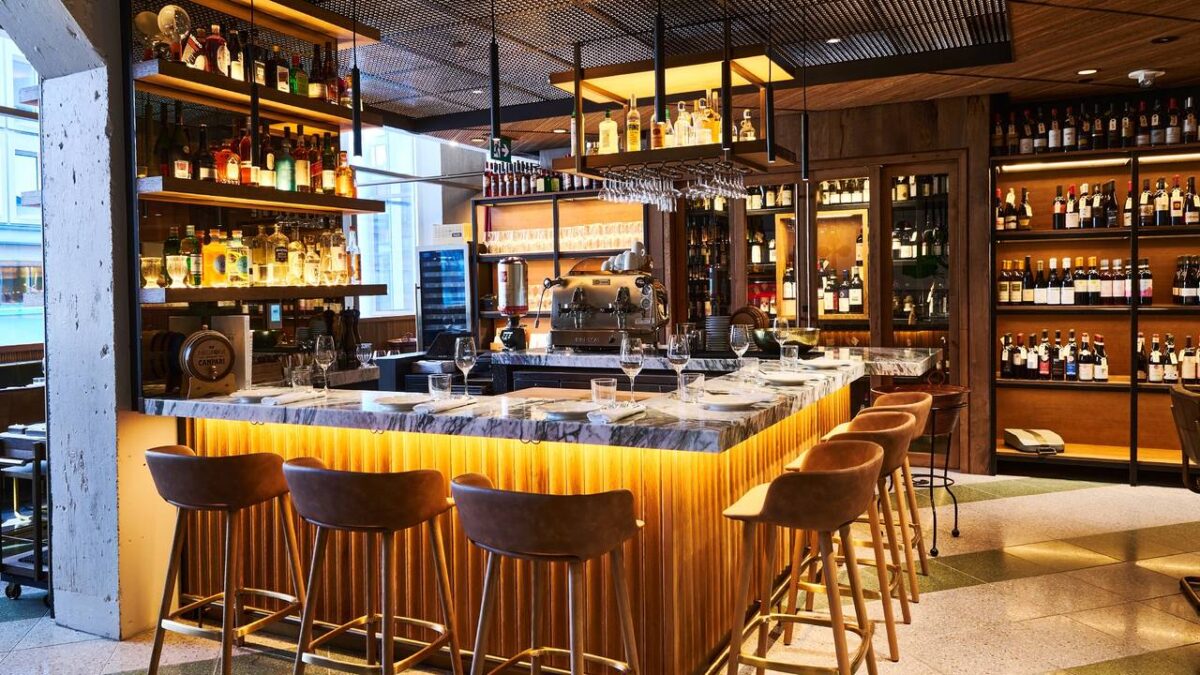
Eataly Toronto. Photo: Eataly

CF Sherway Gardens is one of Canada’s most productive shopping centres in terms of sales per square foot, with over 175 stores. The centre has seen hundreds of millions of dollars of investments in renovations over the past decade, including an expansion wing, an elevated food court, and six full-service restaurants. In 2016, Saks Fifth Avenue opened a 143,000 square foot store in the mall (which has since been downsized) and Nordstrom opened in 2017. Hudson’s Bay is the largest anchor store in the mall. 

Eataly will join another Italian grocery concept at CF Sherway Gardens. Toronto-based Pusateri’s Fine Foods operates a Saks Fifth Avenue food hall in the basement of the mall’s Saks store. 

The announcement of Eataly at CF Sherway Gardens came as a surprise, particularly as Retail Insider had been getting information prior to and during the pandemic that Eataly had been looking at opening at Toronto’s Yorkdale Shopping Centre. One source said that Eataly had been considering a 25,000 square foot space in the middle of the mall that has recently housed pop-up entertainment concepts (most recently one based on the hit TV show ‘Friends’). Another option involved reconfiguring space at the north end of Yorkdale facing a parking lot for Eataly. 

Eataly has also been looking at the Vancouver market according to another source, and a deal has yet to be signed as finding space is a challenge given lease rates. Eataly has been looking primarily in the downtown Vancouver market and it is unknown if it will end up opening in the city. Retail Insider also interviewed Eataly founder and owner Oscar Farinetti in 2019 and at the time, he said that Montreal was also a potential target for a location if space could be found. 

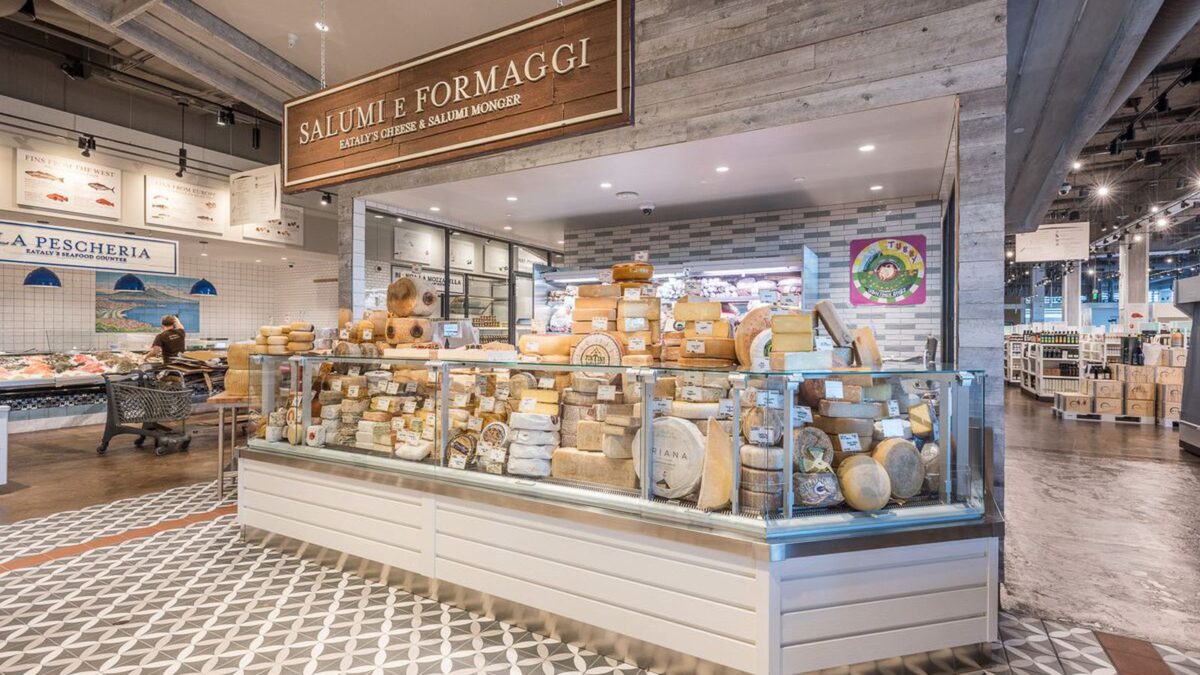
Photo: Eataly

The Toronto Eataly location has proven to be very busy at times with its mix of grocery items, grab-and-go-food, Italian goods and three restaurants. Eataly was founded in 2003 and is now the largest Italian retail and dining experience in the world. It has 44 locations in 15 countries, including Italy, the United States, Canada, the United Arab Emirates, Japan, Germany, Great Britain, France, Sweden and Brazil. There are seven Eataly locations in the United States including street-front and mall locations. 

Montreal Retail Growing Stronger as Tourists Return and Downtown Re-Emerges [Interview]

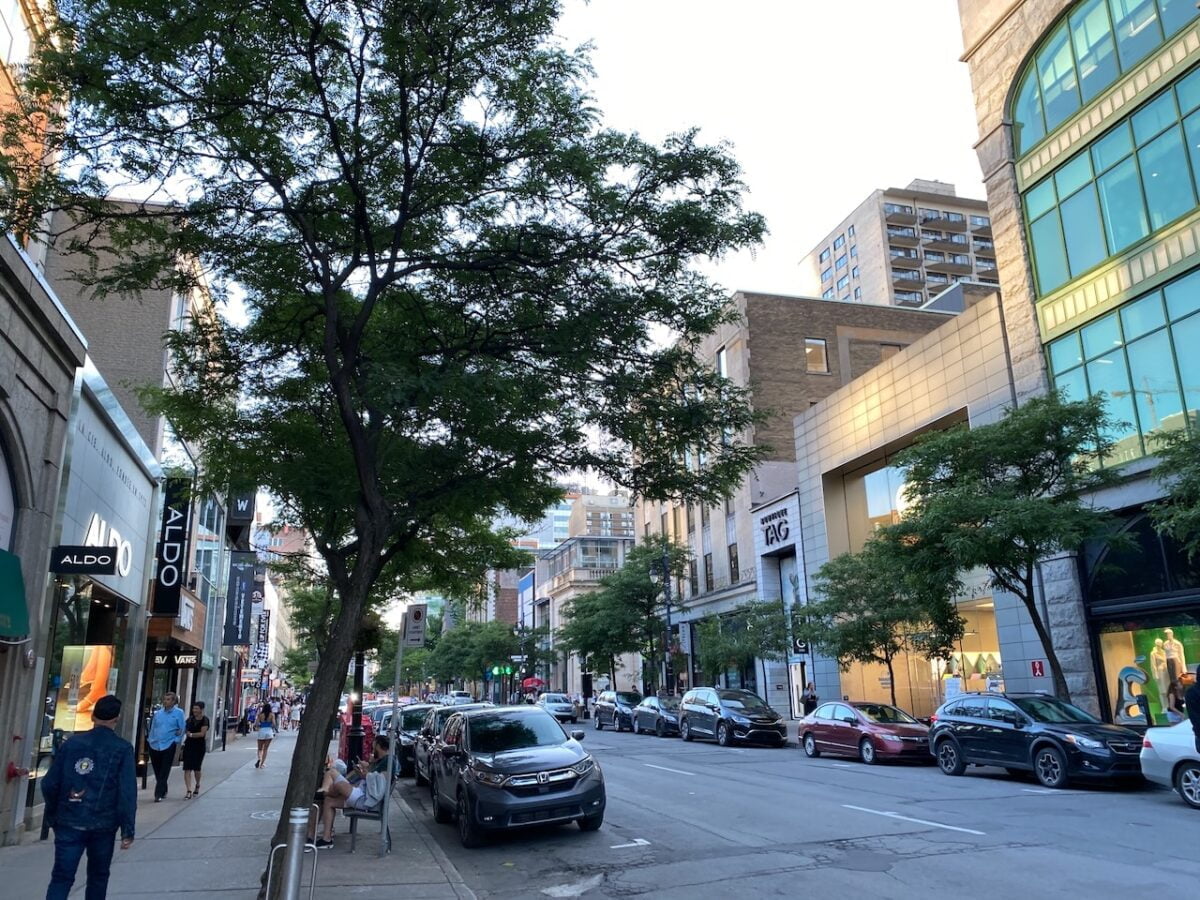
Saint-Catherine St W at McGill in Montreal (Image: Dustin Fuhs)

Retail sales activity is heating up in Montreal, boosted by tourism and the re-emergence of the downtown, according to a recent report by commercial real estate firm JLL

“As expected, the Montreal leasing market has strengthened largely due to the government’s easing of pandemic-related restrictions. The reduction of travel restrictions combined with the arrival of summer was the perfect recipe for increased foot traffic and sales in the Greater Montreal Area. As retailers take advantage of these favourable conditions in the second half of the year, there is sustained upward pressure on rental rates and subsequently downward pressure on vacancies. This trend is expected to continue until there is a drastic change in consumer behaviour,” said the report.

“Effective rental rates have surpassed Q1 2020 levels and are inching their way up further QoQ. Overall, vacancy rates have yet to truly recover to pre- pandemic levels. Landlords and tenants are still agreeing to shorter lease terms than usual. The prevalence of vacant spaces and shorter leases have allowed prospective out-of-market retailers to experiment with pop-up shops to gauge consumer interest before committing to larger-scale investments.

“In order to garner more interest in their vacant spaces, some landlords have become creative and have leased out their traditional retail spaces as showrooms and for medical uses. Modifying interior spaces continue to be landlords’ last option given the lack of labour available in the market.”

Saint-Catherine St W in Montreal (Image: Dustin Fuhs)

Manon Larose, Senior Vice President, Retail with JLL, said she’s feeling positive about the Montreal retail market these days as it heads into the latter half of this year.

Manon Larose

“The return of the tourists, the students that are back in school and more and more daytime population, more and more people going back to the offices, having in-person meetings, functions, weddings, all the events that were postponed in the previous two years, are now happening and we see it in terms of sales results,” she said.

“The other thing is that people were tired of staying at home. Now they are going out. There’s a lot of things pointing in the right direction.”

That’s good news, she said, for Montreal’s downtown as well as the shopping malls.

“I would say we will have continued growth (for the rest of the year). I would suspect that we would have a better Christmas than what we had before,” said Larose.

“There are some best in class brands with whom we are touring as we speak for locations on Sainte-Catherine Street.”

Les Cours Mont-Royal (Image: Dustin Fuhs)

“The improvement of the retail situation in downtown Montreal cannot be overstated. Most businesses in the central business district have experienced rebounding sales thanks to a pronounced increase in foot traffic from residents, office workers, and tourists,” explained the report.

“Tourism has surely had a part to play in the urban core’s recovery from COVID-19 times, as air passenger traffic at the Montreal-Trudeau airport has finally rebounded this year and will soon eclipse Q1 2020 activity. Full- service restaurant activity has skyrocketed compared to last year’s figures. Limited-service eating places continue to benefit from elevated activity, thanks to increased online sales.” 

Both mall-based and Sainte-Catherine Street-based retailers in the urban core have recovered in 2022, but mall-based retailers had more lost ground to recover and were more severely impacted by COVID-19 restrictions, said JLL.

“The recovery and persistence of business activity in the urban core are noteworthy, and even more so when considering that most downtown workers are still working from home on a full or part-time basis. Despite this, foot traffic in the core for Q2 2022 is up almost 40 per cent compared to Q2 2021. This is further evidence that downtown Montreal is gradually reclaiming its identity as a prime destination for shopping, eating, and entertainment,” it said.

Image: CF Fairview Pointe Claire

It said commercial construction costs have slightly increased once more and upward price pressures are being upheld in large part due to the higher cost of debt, raw materials, supply chain issues, and labour shortages. 

“These costs are not expected to decrease soon and therefore threaten to push back the deliveries of some larger commercial developments having already broken ground and planned projects further into the future. As a result, the supply of new retail space has continued to be constrained, thus putting upward pressure on leasing rates,” said JLL.

“With good fundamentals in place, retailers from outside the province are expressing interest in the Royalmount project. Over 200,000 square feet of retail space has been pre-leased since Q4 2021. The project will likely satisfy shoppers’ appetites, as 50 per cent of the pre-leased space will be occupied by new-to-market, best-in-class global brands.

“Fairview Pointe-Claire has also undergone a physical makeover during the pandemic. The mall moved its food court to the busier first floor near a future REM station and welcomed Simons and Uniqlo as its new anchor tenants. The upscale food court now occupies the former Sears location and is now welcoming new food and beverage operators such as Tommy Café, Poulet Rouge, and Lucille’s Oyster Dive.

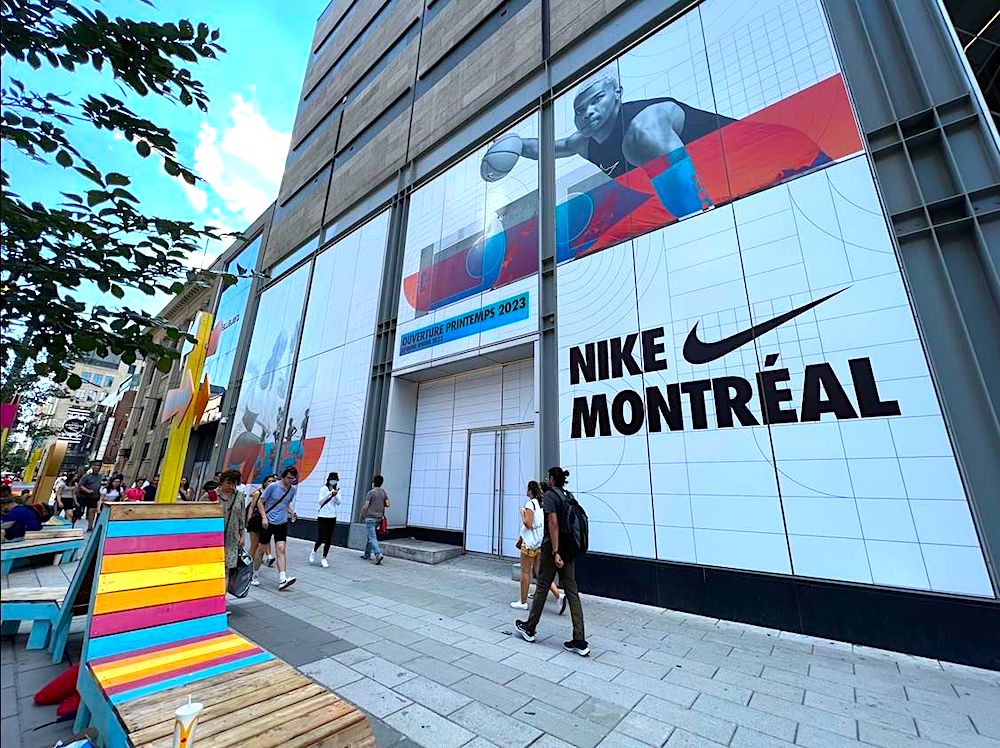
Photo: Maxime Frechette

“Sainte-Catherine Street is also bolstering its roster of notable tenants and reinventing itself. Nike has recently announced that it will build a large flagship store at the location of the former multi-level Gap store in the Eaton Centre by Q3 2023. Furthermore, fashion retailer Chlorophylle is also set to open a store in front of the Eaton Centre.

“Much like Royalmount and Fairview Pointe-Claire, the street is also undergoing its fair share of physical changes. The thoroughfare will be revitalized with the help of broader sidewalks and extra greenery lining the street between De Bleury and Mansfield Streets.”

When comparing the state of major malls in the GMA pre-COVID-19 and post-COVID-19, there was initially a significant decrease in sales, however, they are now recovering. There has also been a decrease in foot traffic, although the decline was softer for sales per square foot. Both conditions are expected to improve in the second half of the year, it said. 

“Interestingly, the number of sales per visit has increased, implying that consumers are now shopping with a set goal. This figure is expected to decrease slightly by the end of the year when more shoppers return to malls and are eventually satisfied with their updated wardrobes. Vacancy rates have also risen compared to pre-pandemic levels, but recovery should occur if consumers maintain their current shopping appetites,” said the report.

“The outlook for retail in Montreal is mostly positive. There have been vast improvements in key factors such as foot traffic, sales growth, and overall activity. There are still improvements to be seen in vacancy rates, however, momentum is trending in the right direction.”

Related Retail Insider Article

Ottawa Will Investigate Food Prices. It’s About Time [Op-Ed]

Food Basics in Oshawa (Image: Field Agent Canada)

With the hype caused by the scandal at Hockey Canada, few noticed last week that Ottawa decided to investigate food prices and the alleged abuse by large grocery chains. This was decided by the Parliamentary Standing Committee on Agriculture, and the members of the Committee will examine the problem in the coming weeks.

We must first welcome Ottawa’s decision. Even though Canada currently has the third lowest food inflation rate among the G7 countries, after Japan and France, the rate of food inflation in Canada has exceeded general inflation for 13 consecutive months now. Every trip to the grocery store gets more financially painful, almost daily.

But to solely investigate retail would be shortsighted, and the committee seems to recognize that. The scope of the study will be the entire chain as Canadians deserve having the government study the state of the whole food industry. Food distribution is complex and involves several companies at once, from farm to table. Many accuse grocers such as Metro, Loblaws, and Sobeys of abusing the system, and inflating prices unjustifiably. But based on publicly available data, this is far from the case.

A very simple evaluation, comparing the profit margins of the three major retailers, Loblaws, Sobeys and Metro for the last five years, shows us that their financial results are rather modest. Thus, at the end of their respective fiscal years in 2021, profit margins for these retailers were 3.7% for Loblaws, 2.7% for Empire-Sobeys and 4.5% for Metro. Returns were about the same for the last 5 financial years. Yields were usually below or at the same level as the rate of food inflation for most of the five years. In other words, the performance of these chains was flat, when compared to the increase in the cost of living. And the year 2022, so far, doesn’t seem all that different.

Of course, the accusations of the last few months are buoyed by the claim of “record profits.” Certainly, a 2% or 3% monetary gain today does not look like a 2% or 3% gain of five years ago. Numbers are greater. Simple math. Incomes are higher, but so are costs. Although the amounts increase, the percentages remain the same.

Despite this, perceptions persist. Almost 80% of Canadians claim that there is abuse in the system and they are not entirely wrong to have these doubts. The industry has disappointed in recent years, especially with the “bread cartel” story. The current accusations, although without any real basis, are fully deserved.

Cereal at Metro Front Street in Downtown Toronto (Image: Dustin Fuhs)

Since the scope of Ottawa’s investigation will include the entire chain, from production to retail, as well as wages, this won’t be easy. Expectations remain realistically low for the committee to uncover anything at all. The food industry is filled with family businesses and companies which guard competitive data with extreme caution. Some companies buy and sell products without ever seeing or touching food. Getting to that data will be challenging.

But the committee needs to go beyond the grocer-gouging rhetoric. If there is abuse, it may be upstream in the chain. Part of the inflation of prices is objectively explained by certain macroeconomic factors, such as the shaky supply chains due to the pandemic, the labour shortages in the sector, and the invasion of Ukraine. But some portions of the price increases we see at the grocery store are hard to explain, especially at the meat counter, in the dairy section, and in the fish and seafood section. There are also price hikes in the bakery aisle these days.

In short, during the investigation, the Parliamentary Committee must maintain a sober and virtuous logic, without falling into the imaginary and the superlative. Selling a product at an exorbitant price does not necessarily constitute a scam if consumers have a choice and companies do not attempt to control market conditions. Rising costs are not the only factor contributing to price increases, either. Fluctuations in price and demand are also important elements in food distribution. Competition and markets will influence price. This is something the Committee also needs to look at. 

Individualizing the differences between certain abusive behaviours and acceptable business practices will not be easy for the Committee. But it is worth the exercise, so that more Canadians can understand how our food supply chains work.

Pret a Manger Expands Canadian Presence with 2 Toronto Temp Locations with Plans for More [Interview/Photos]

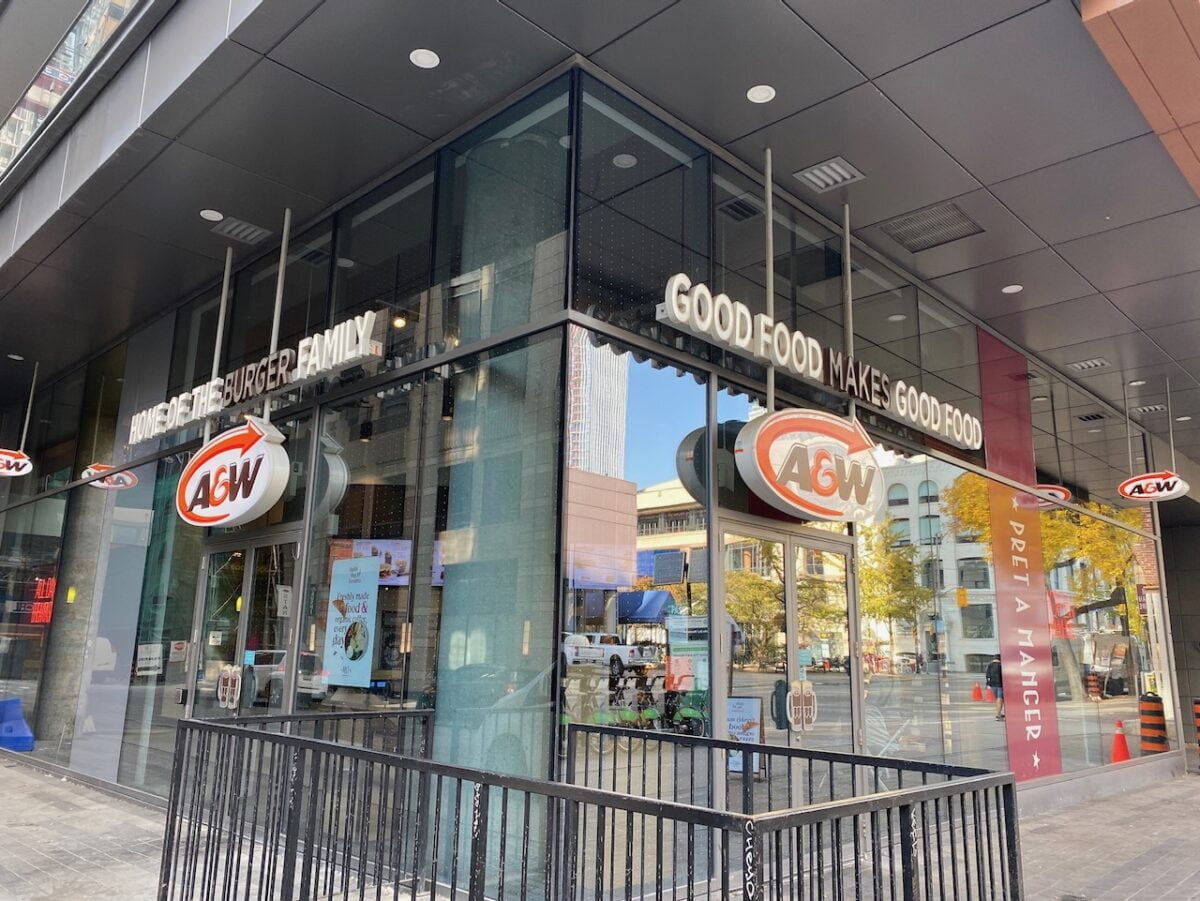
Pret a Manger at A&W Canada on John Street in Toronto (Image: Dustin Fuhs)

Pret A Manger, the UK’s beloved freshly made grab-and-go sandwich and coffee shop chain, has now opened two pop-ups in Toronto following a successful launch of its first Canadian location in Vancouver earlier this summer.

A&W Food Services  of Canada Inc. has partnered with Pret to bring the famous brand to Canadians.  

Susan Senecal, Chief Executive Officer of A&W Food Services of Canada, said Canadians have long been calling for bringing Pret to their community, having experienced the iconic coffee and sandwich shop in London, UK, New York City, and beyond. 

“A&W Canada has admired Pret for a while. It started with a love of its fresh sandwiches and salads and grew from there. We approached the brand and got talking, then realized that we have a lot in common and so do the people in the businesses,” she said.

“Toronto is a bustling hub full of residents and visitors involved in fast paced activities – making Toronto an ideal market to integrate Pret’s fresh, ready-to-eat style meals. We want Torontonians to learn about Pret, spread the word, bring their friends for lunch or a coffee break and keep coming back! 

“You can find Pret in Toronto at 60 John Street, right in the heart of the Entertainment District; a short walk from Union Station, the Financial District and Queen West. We’re also excited to announce Pret opened its second Toronto shop, located in Downsview Plaza (recently).”

Pret a Manger at A&W Canada on John Street in Toronto (Image: Dustin Fuhs)

Senecal said both Toronto and Vancouver felt ideal for the company’s first Pret pop-ups.

“Pret’s fresh grab-and-go concept is perfect for guests with busy urban lifestyles – plus Vancouver and Toronto are both large international cities. From there, it was a race to see where we could build our first pop-up the fastest! We have strong franchisee interest in both markets and in this case, Vancouver was ready first,” she said.

“For Pret, it’s an exciting expansion into a new market. Canadians come to A&W for the best tasting burger made with simple, high-quality ingredients and now with Pret we can expand that to fresh-made sandwiches, salads, soups and pastries, prepared right in our kitchens. 

“The guest reaction to Pret has been very positive so far and we’re excited to continue to bring freshly-made grab-and-go meals to more Canadians in Toronto and Vancouver. We have our target set on 12-15 Pret pop-ups over the next two years.”

For Pret Canada locations: https://www.pret.com/en-CA/find-a-pret.  

Pret a Manger at A&W Canada on John Street in Toronto (Image: Dustin Fuhs)

Pret has more than 560 locations in more than 10 countries. 

In a statement, Pano Christou, Chief Executive Officer at Pret A Manger said, “We are very excited to see how well Pret is being received by customers in Vancouver and we look forward to continuing to build on this momentum with our second pop-up opening in Toronto with A&W. We look forward to continuing to serve our freshly made food and organic coffees to more Canadians and further growing our brand in new markets.” 

According to officials, Pret was started by two college friends who set out to create the sort of food they craved but couldn’t find anywhere – nutritious, simple and delicious, prepared fresh every morning. They opened their first shop in London in 1986 and the brand has since revolutionized the concept of sandwich making and on-the-go meals, expanding all over the world, said the company. 

“Built on amazing service, delicious food and engaged customers, Pret is constantly innovating its offerings around the world. From its unique freshly made and high-quality ingredient sandwiches to successful vegetarian-only locations – marking the first-ever for an international food chain – it’s no wonder Zagat called Pret “the best British invasion since the Beatles.” The new Canadian Pret pop-ups bring all the quality, values and taste closer to home with an assortment of its most famous menu offerings. Whether it’s dashing to work in the morning, or taking a much-needed afternoon break, ‘noshing’ at Pret is definitely worth the visit,” added the company. 

A&W Canada has more than 1,000 restaurants across the country.

Video Interview: Canadian Economy Cooling Down and its Impact on the Retail Sector

Video Interview: Canadian Economy Cooling Down and its Impact on the Retail Sector

Simon Gaudreault, Chief Economist, Vice-President of Research, Canadian Federation of Independent Business, discusses the key findings of the organization’s Main Street Quarterly report.

Gaudreault talks about what’s happening in the overall Canadian economy, sales in the retail sector, the level of job vacancies in the country and the debt small businesses have taken on during the pandemic.

The Video Interview Series by Retail Insider is available on YouTube.

Connect with Mario Toneguzzi, a veteran of the media industry for more than 40 years and named in 2021 a Top Ten Business Journalist in the world and the only Canadian – to learn how you can tell your story, share your message and amplify it to a wide audience. He is Senior News Editor with Retail Insider and owner of Mario Toneguzzi Communications Inc. and can be reached at mdtoneguzzi@gmail.com.

Interviewed this episode:

Like, Share and Subscribe to Mario Toneguzzi on YouTube!

Follow Mario:

Also check out the other series offered by Retail Insider, including The Weekly podcast and The Interview Series, which are both available on Apple Podcasts, Stitcher, TuneIn, Google Podcasts, or through our dedicated RSS feed for Simplecast and other podcast players.

Follow Retail Insider:

Share your thoughts!

Mirvish Village Signing Retail Tenants as Project Transforms former Honest Ed’s Site in Toronto [Renderings/Interviews]

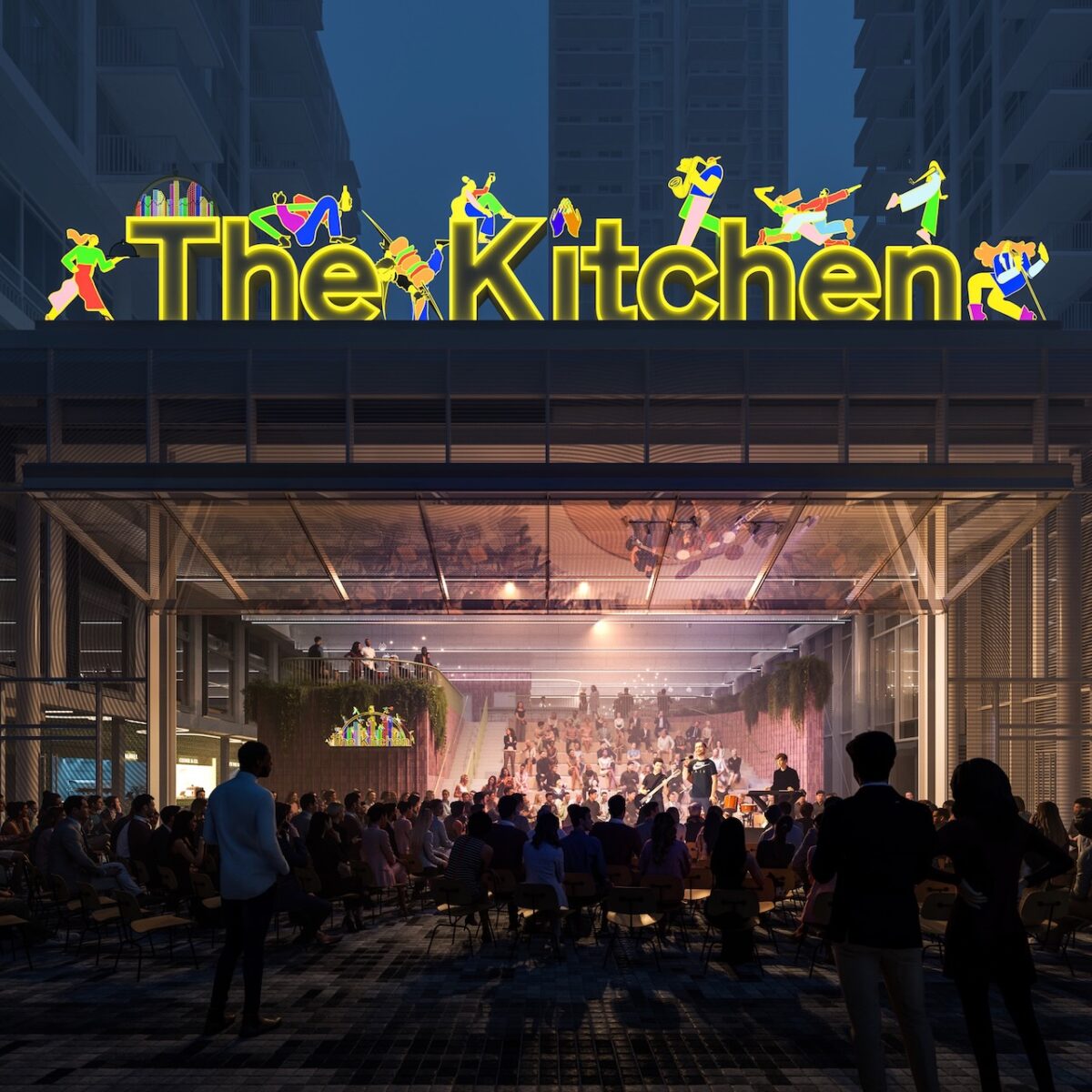
Mirvish Village (Rendering Westbank / Peterson)

The site of Mirvish Village in Toronto builds on the heritage and legacy of Honest Ed’s Department Store, a beloved institution in Toronto for over 50 years.

Designed as a new, vibrant community hub and gathering place, Mirvish Village will integrate a new park and market, called The Kitchen, an extensive public realm, micro-retail, 24 restored heritage buildings, unique restaurants and shops as well as numerous indoor and outdoor performance and gathering spaces all interwoven with public art installations including a mural by artist Frank Stella.

There is 200,000 square feet of Creative Workspace and Retail at Mirvish Village.

Mirvish Village will contribute to the supply of rental housing across the continuum for the Toronto community, with six rental residential buildings and nearly 900 rental homes. Of these, 100 homes will be affordable rental, secured at 80 per cent of Average Market Rent for the City of Toronto, as published by CMHC. The affordable rental homes will be scattered throughout the project and will be of the same quality and design as market rental homes, seamlessly woven into the makeup of a complete 100 per cent rental community at the corner of Bloor and Bathurst. The project is also sustainable, designed to be highly walkable, with pedestrian-oriented amenities and greenspace. The project will be powered by a neighbourhood energy system by Creative Energy that will help reduce energy use by 30%.

Mirvish Village (Rendering Westbank / Peterson)

Vanessa Lynch, Sales Representative, Commercial Acquisitions and Leasing, for DWSV, Remax Ultimate Realty Inc., said there are many pieces to the retail component of Mirvish Village.

“Mirvish Village is designed to be vibrant day and night, and become the neighbourhood’s community hub. There’s actually a lot of interactive components to it,” said Lynch. “And it’s an incredible opportunity for brands and retailers to really engage with the community, visitors and tourists alike.”

The retail at Mirvish Village is diverse, varied and designed to reflect the fine grain character of the historic site, with multiple spaces available for micro to mid-size to larger tenants. The project is anchored by The Kitchen, a market, food hall and performance venue, which forms an identifiable heart of the project. “The Kitchen is connected to every aspect of the site including the retail high street at Markham Street and the public park,” said Lynch. 

Mirvish Village (Rendering Westbank / Peterson)

Retail for the project is in four components.

Honest Ed’s Alley is a pedestrian-only thoroughfare with 25 move-in ready micro retail units. It will build on the entrepreneurial spirit of Ed and Anne Mirvish and celebrate all that they created by supporting creative, innovative and passionate entrepreneurs and small business owners. Mirvish Village will offer incubator spaces and micro-retail spaces for these businesses to showcase their products and test out new concepts.

“They range anywhere from 120-450 square feet. They’re turnkey solutions for entrepreneurs and businesses that want to test out their products and services,” said Lynch. “They can be short term as little as three months or you could do up to two years. It can be everything from a one-person hair stylist to a tattoo artist to a chocolatier to a clothing concept. 

Mirvish Village (Rendering Westbank / Peterson)

“This alleyway was also inspired by the alleyways in Tokyo. So you’re going to have lots of bright neon signages. It’s going to be lit up. A really interactive experience for people to come out and try new products and services.”

There is also The Kitchen and music venue. Lynch said The Kitchen has been designed to be a place where the neighbourhood and the broader Toronto community can come for a diverse array of food and drink that’s reflective of the cultural mosaic of the city. There will be 16 food kiosks ranging from 200 square feet to about 400 square feet.

“Within that we also have a music venue which can be indoors or outdoors, operational all seasons of the year . . . there will also be special concerts and events throughout the year,” she said.

Mirvish Village (Rendering Westbank / Peterson)

The restoration of the Markham Street heritage houses reimagines the street as a pedestrian-oriented avenue. The 18 restored heritage houses (of a total 24 restored heritage structures) will be home to unique restaurants, cafes, bookstores, record stores and other retailers that reflect the distinct character of the neighbourhood. The project is returning Markham Street to the vibrancy of its heyday in the 1960s, when rows of 20th century residences housing galleries and studios lined the street, and artists sold their pieces on their front lawns.

“This is where we get to be really creative and curate the area in a meaningful way,” explained Lynch. “Each home has its own unique traits and a story to tell. We’ve been actively going out to the marketplace and approaching specific brands, retailers, operators, who we feel would be a great fit for the development and for the community itself and that will draw traffic to the area. 

“We’ve engaged with really unique restaurant operators, cafes, bookstores, galleries, clothing, vintage stores, health and wellness groups, and more.”

Then there’s the Main Street Retail element to the project along Bloor and Bathurst which will be curated with a mix of local and international brands and retailers. Each building façade is unique, for example, one building’s façade features and art piece by Ian Wallace as part of a large-scale, multi-artist public art program that will help Mirvish Village become one of the most interesting projects in the country.

Mirvish Village (Rendering Westbank / Peterson)

Lynch said the first businesses are anticipated to open for the second quarter of next year. 

“Mirvish Village is designed to attract visitors and those wanting an exciting day trip or a place where you can literally spend hours and hours and just discover and interact with new products and services,” she said.

“It’s a place that we’re curating for people that need some retail therapy from clothes to books to galleries. It’s a place where you can catch a performance, indoors or out. It’s a place where you can grab an ice cream and hang out in the park with family and friends. It’s truly the place that is going to bring the community together in every way possible. 

“For groups or brands, that’s a huge attraction because you have nearly 900 purpose-built rentals, you have over 1,800 people living within that development, and the way we’re curating it and the groups that we’re speaking with from the unique restaurant operators to health and wellness offerings to galleries, and we’re not talking about big box stores or chain stores. We’re talking to businesses that will offer a unique experience to the consumer. That’s what’s intriguing them and enticing them to become a part of this amazing master plan.”

Mirvish Village (Rendering Westbank / Peterson)

The purpose-built rental community of Mirvish Village will build on a rich history that Ed Mirvish began in 1948 with the opening of Honest Ed’s.

The project is being spearheaded by Westbank and Peterson, after acquiring the site in 2014.

Westbank is active across Canada, the United States, and Tokyo with projects including condo residential, hotels, retail, office, residential rental, district energy, affordable housing and public art. Despite the impressive active portfolio Mirvish Village is, according to Emilie Lok who runs the leasing at Westbank, a very special one to be part of.

“The site itself obviously has a very rich history,” she says. “And, in order to create something truly special – something that lives up to the historical significance of the site – we wanted to leverage the sense of community and entrepreneurialism that it represented. The purpose-built rental towers make the community accessible to anyone who wants to live here. By highlighting small and independent retailers, we’re honouring the entrepreneurial spirit while creating a modern experience that will delight members of the community and keep visitors coming back.”

Mirvish Village (Rendering Westbank / Peterson)

It’s all part of what Lok describes as a vibrance that’s going to permeate the entire Mirvish Village community and surrounding area. And, she says, it’s the result of a concerted strategy focused on approaching the project, and every decision made, with a holistic and comprehensive vision.

“Everything that we’ve done as part of our execution of this project has been done with the idea of creating a community that has all the amenities of daily life, but inside a lively environment where people can gather, eat with friends and family, shop, listen to music and be entertained..”

“A Jewish-American immigrant, entrepreneur, business leader and community builder, Ed Mirvish and his family created a beacon for diverse communities and a gathering place for recent immigrants to Toronto. To this day, the site holds meaning for so many people. Our goal when we were invited by David Mirvish to redevelop the site was not only to honour this legacy, but to build on the idea that Mirvish Village will represent this community and support its evolution,” says a statement from Westbank.

Earlier in the year, Westbank  secured four anchor tenants for the project – Bestco grocery store; LCBO, Toronto School of Management, and House Concepts.

“The Honest Ed’s Store had multiple incarnations, spanning over 60 years in business at the same location. The store grew incrementally from the corner of Bloor and Markham, as “Honest” Ed Mirvish gradually annexed the buildings to the east and south to fill most of a city block. The store became a Toronto landmark and the surrounding area became a haven for artists, housing galleries, boutiques, and restaurants, anchored by Anne Mirvish’s studio and practice,” according to Westbank.

‘The Post’ Redevelopment Milestone in Vancouver Celebrated by Amazon Canada [Images]

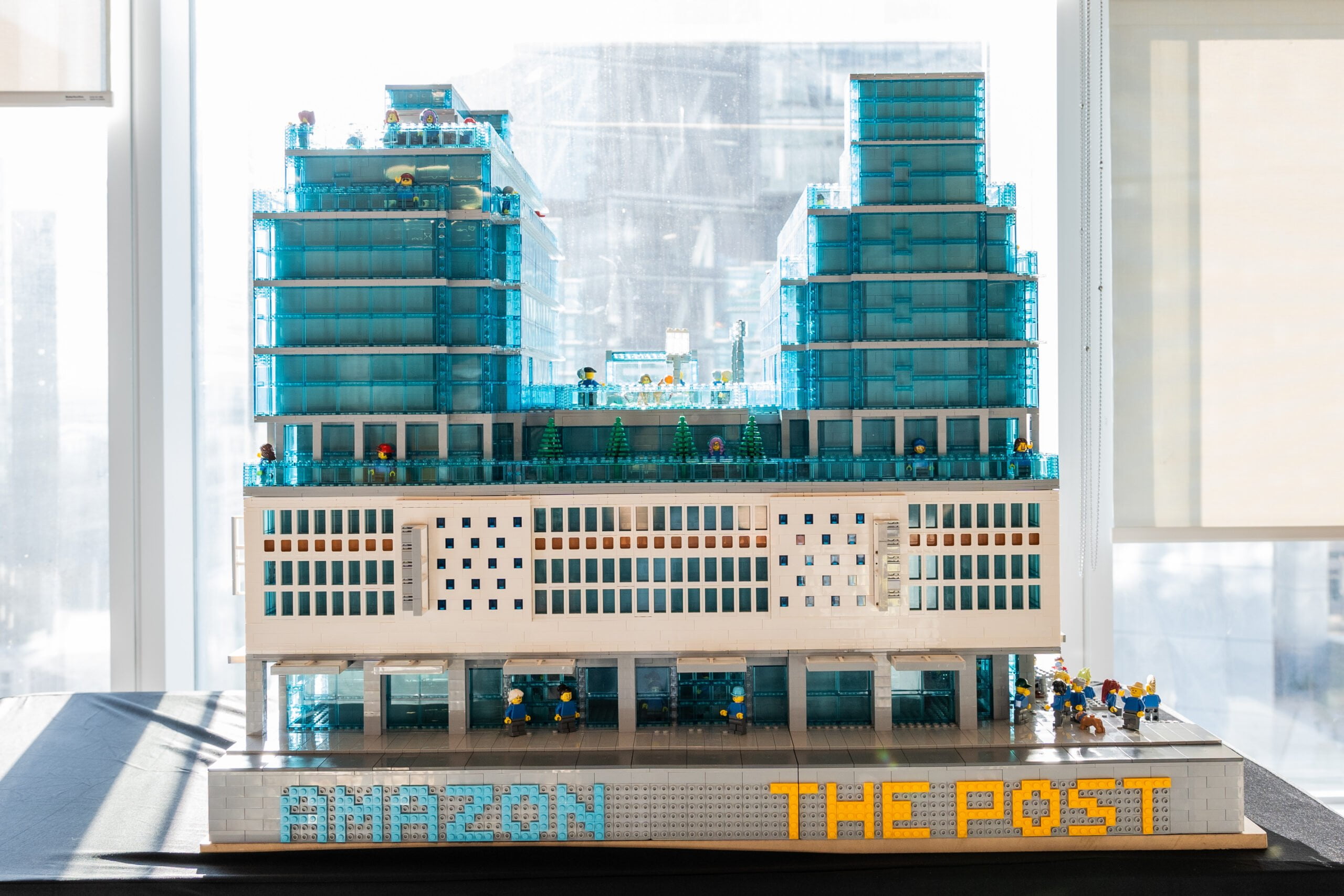
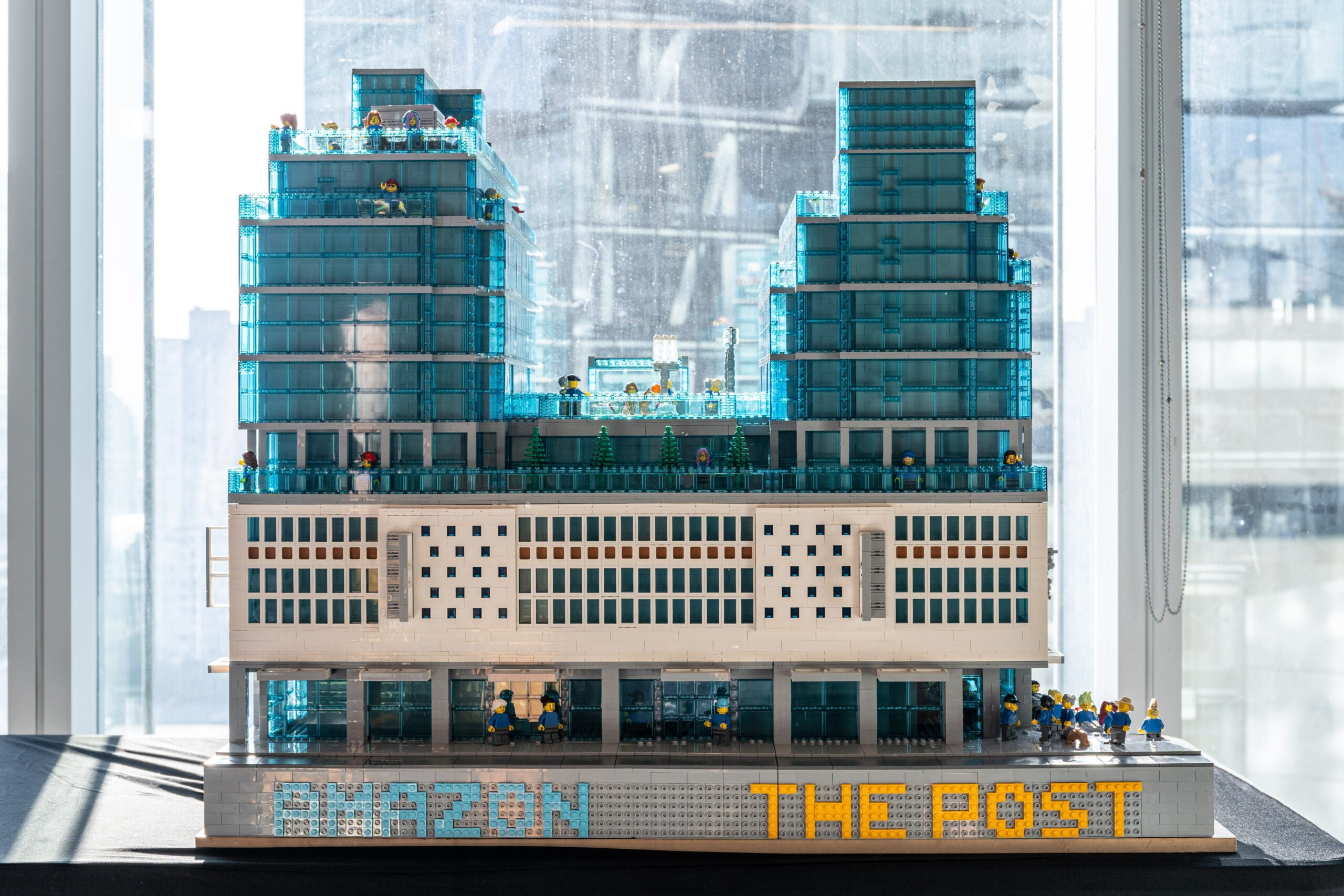
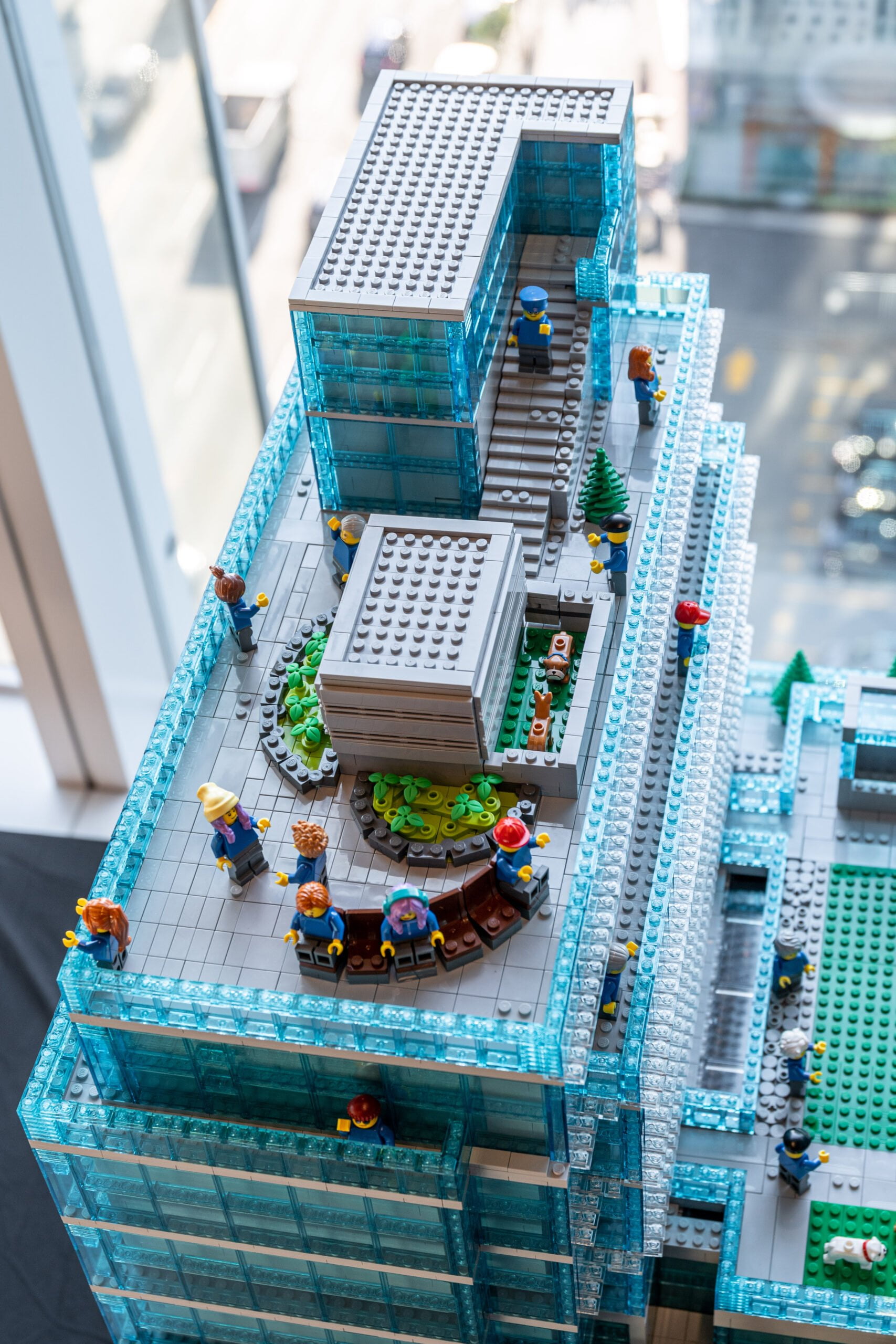
Lego master Graeme Dymond and his 25,000-piece model of The Post in Vancouver. Photo: Amazon Canada

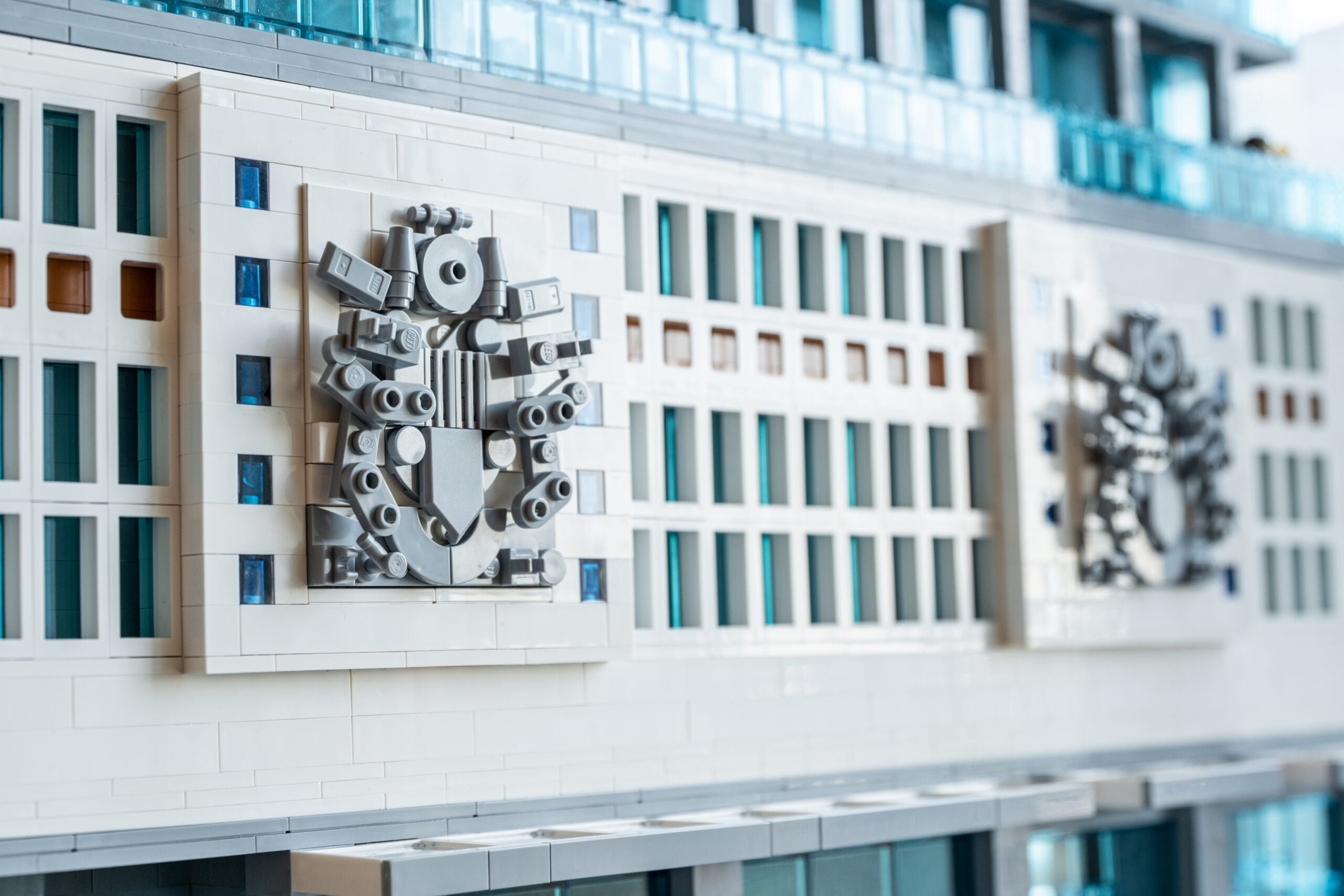
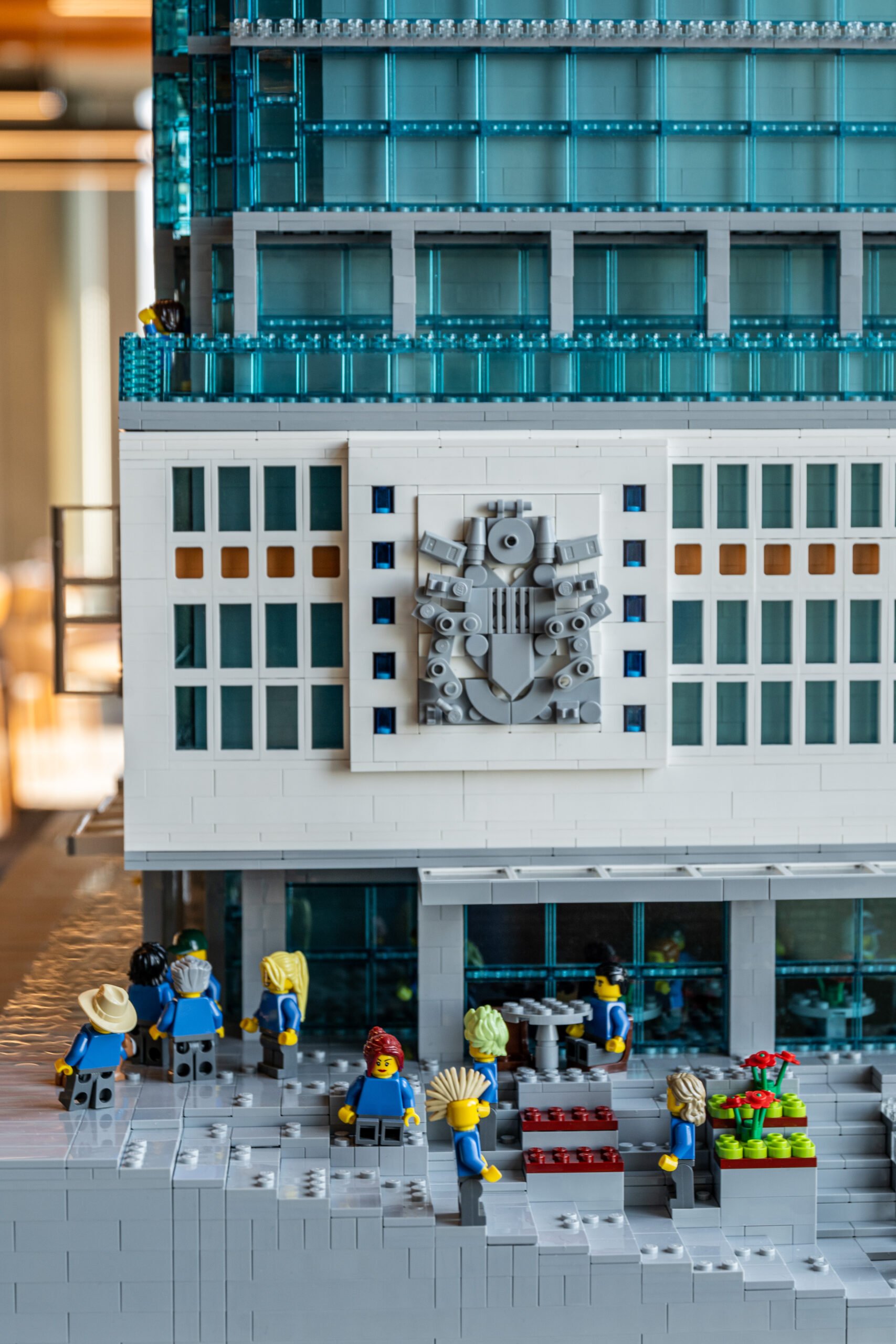
Downtown Vancouver patiently awaits the completion of the redevelopment of ‘The Post‘ as it transforms a legacy Canada Post processing facility into a community hub to invigorate the area. Amazon Canada, which has leased about 1.13 million square feet above the retail podium for offices, recognized the project’s progress by supporting the creation of a giant-sized architectural model of ‘The Post’ made out of 25,000 LEGO® bricks. The tech firm plans to open its Vancouver Tech Hub offices in early 2023 and the LEGO® landmark will be on permanent display.

The collaboration showcases what the unveiling of the completed project will look like in 2023 and involved LEGO®-certified master model builder, Graeme Dymond, reviewing design schematics, renderings, and even an in-person site tour to finish to miniaturized landmark.

The project, announced in 2019 by landlord QuadReal, continued to progress during the trying times of the COVID-19 pandemic. With employers grappling around the globe to entice workers back into the office, a number of the LEGO® landmark features highlighted a number of features which could appeal to returning workers including:

  • A rooftop dog run for the canine companions of Amazon employees, through the Dogs at Work program;
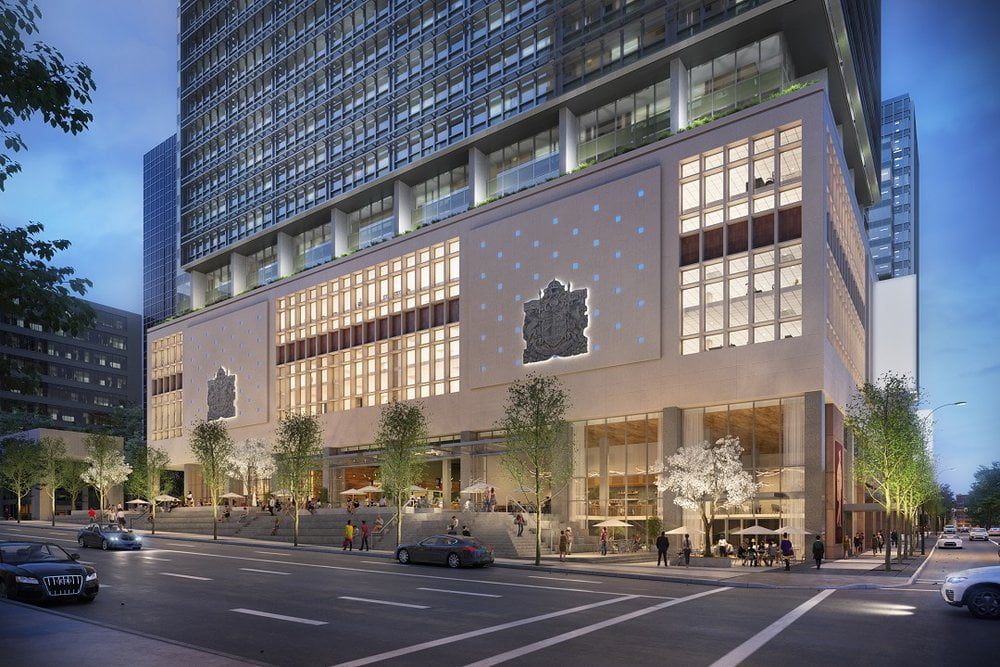
  • The preservation of historical features, including the blue and terracotta tile façade, the relief sculpture of a postal worker and coats of arms, and original artwork; and
  • A central atrium, green spaces and outdoor plazas open to the public as gathering places for the local community.

Retail tenants poised to open will be relying on the return of the office worker and all of the project’s enticements support the project’s original vision to transform the site into a vibrant hub for a downtown community. Anticipated retail amenities include:

  • The Joseph Richard Group operating a new 26,000-square-foot food hall including a mix of full-service, sit-down, and quick-service restaurants;
  • 50,000-square-foot Loblaws City Market;
  • Deville Coffee; and
  • Buro The Espresso Bar.

Life will hopefully get back to normal as the pandemic is hopefully resolved by 2023. Being in relatively close proximity to theatre and sporting facilities, The Post will offer amenities for visitors to the downtown core. The food hall, for example, could become a destination before or after a hockey game or event at the nearby Queen Elizabeth Theatre. The main branch of the Vancouver Public Library is close by as are draws such as CF Pacific Centre which is anchored by flagships for Nordstrom, Holt Renfrew, as well as being adjacent to Hudson’s Bay’s Vancouver flagship.

The Post in Vancouver from above. Rendering: QuadReal

All with LEED Gold Certification appealing to the environmentally conscious by leveraging waste heat recovery, passive solar shading, light shelves that reflect daylight into the interior and an energy-efficient building envelope. The adaptive reuse of the structure results in a savings of approximately 25,000 tonnes of carbon and diverts significant construction waste from local landfills.

Graeme Dymond. Photo: Lego Group

A short Q&A with certified master LEGO®-certified model builder Graeme Dymond provided additional insights on the LEGO® landmark:

  1. Why the career change from “Learning Consultant” at TD Bank to “Lego Certified Professional” (Dymond Bricks) in 2012? Short answer – who wouldn’t want to play with toys all day long! Truthfully, I really enjoyed my time at TD, but I was feeling ready for a change and when an opportunity like this knocks, you gotta answer!  I’ve been a lifelong fan of LEGO, and to be able to transform your hobby and passion  and what you truly love to do into a career that can truly awe and inspire others, it was a dream come true.
  1. What is the creative process to take a landmark (like The Post) and render it into Lego?

I typically spend a lot of time in preparation – Amazon, QuadReal and MCM were all great with sharing resources with me, including design schematics, renderings, and even an in person site tour. All these resources were excellent at highlighting the many unique and inspiring features of the building. But for me, being iterative is such a crucial part of my building process. I will always make changes to my designs as I go, based upon the feel of the build and how it looks. This sometimes might mean unbuilding a section and reworking it so that it is better integrated with the overall structure, or so that it will provide greater stability.

  1. What is the hardest part of the process? Favorite part of the process?

Hardest part of the process – aside from transporting the final build – is almost always the start. Getting the footprint of the build just right is always a challenge, and sets the foundation for the entire project, so it can often take a very long time to get that right look and feel for the base of the project.

My favourite part of the process is when I can move into more of the details, for example in this build the dog parks, basketball court, and the Minifigures.

  1. LEGOLAND Discovery Centre Toronto (Vaughan) was an ambitious project. Any plans for another Canadian Discovery Center’s location with Merlin Entertainments?

I’m not sure! That’s really more of a question for Merlin, but I’d certainly love to work with them again and contribute to another site if I got the chance.  Building the LEGOLAND Discovery Centre in Vaughan, just north of Toronto and still Canada’s first and only of it’s kind – was such a special time for me and a massive undertaking – I was truthfully just one of many hands to build that site.

  1. Any other LEGO projects on the horizon for you? Or any projects you would like to aspire to work on as a dream project?

Many future projects to come, but you’ll have to wait and see! As for dream projects – I have two kids at home who are really coming into their own as LEGO builders, and I’m looking forward to a special project collaborating with them, featuring some of their favourite comic book characters. I’m a big kid at heart, and I love the idea of sharing my passion with my kids while I still can!