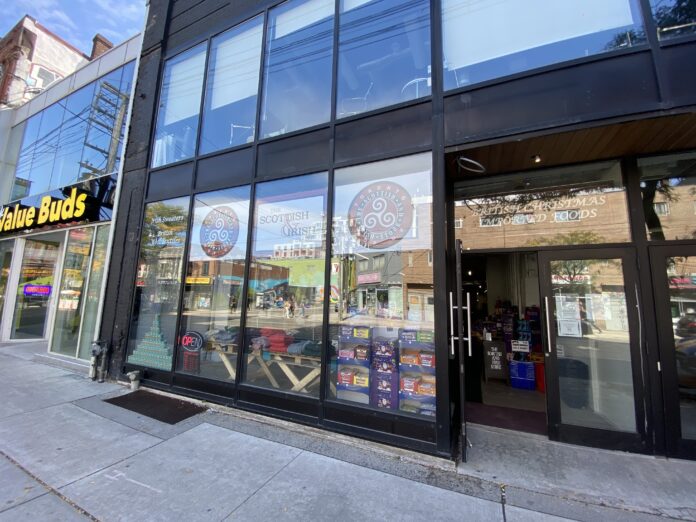
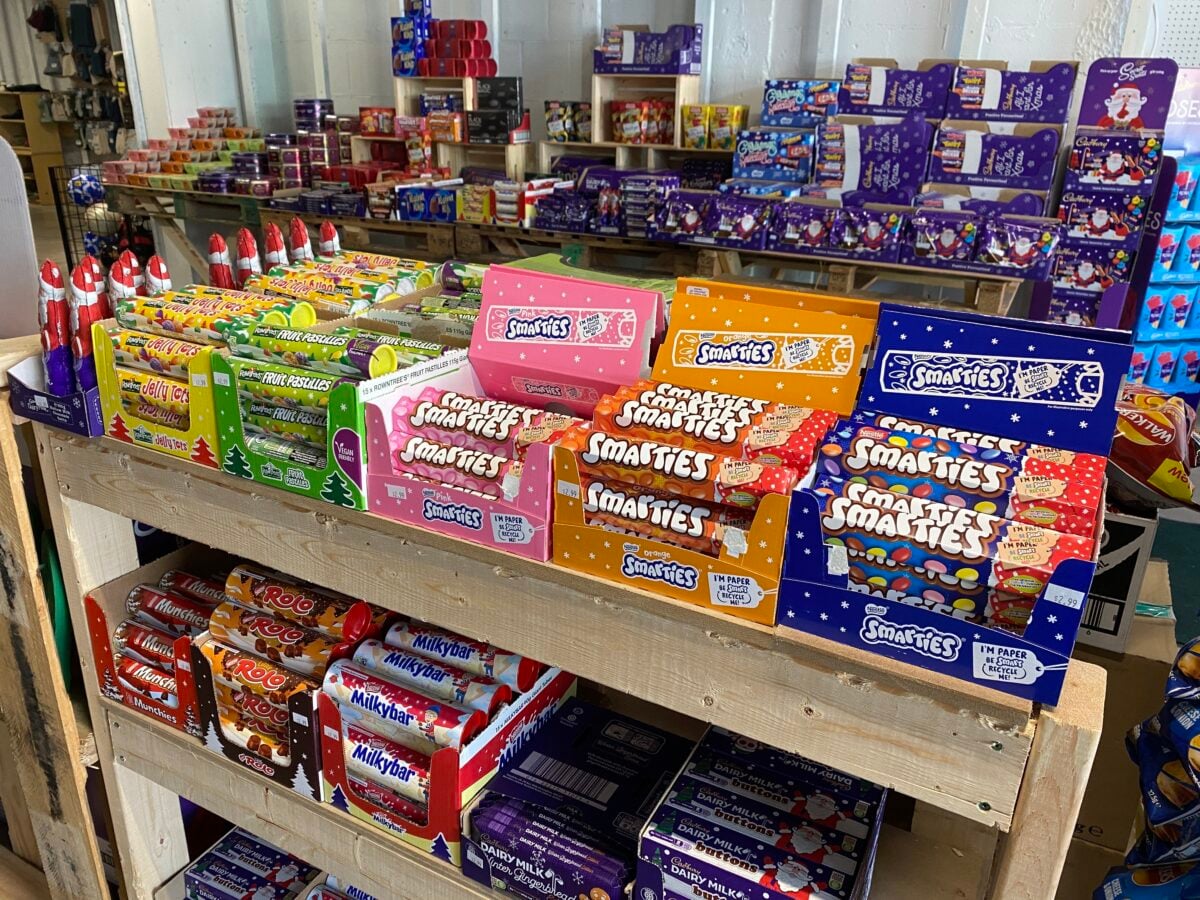
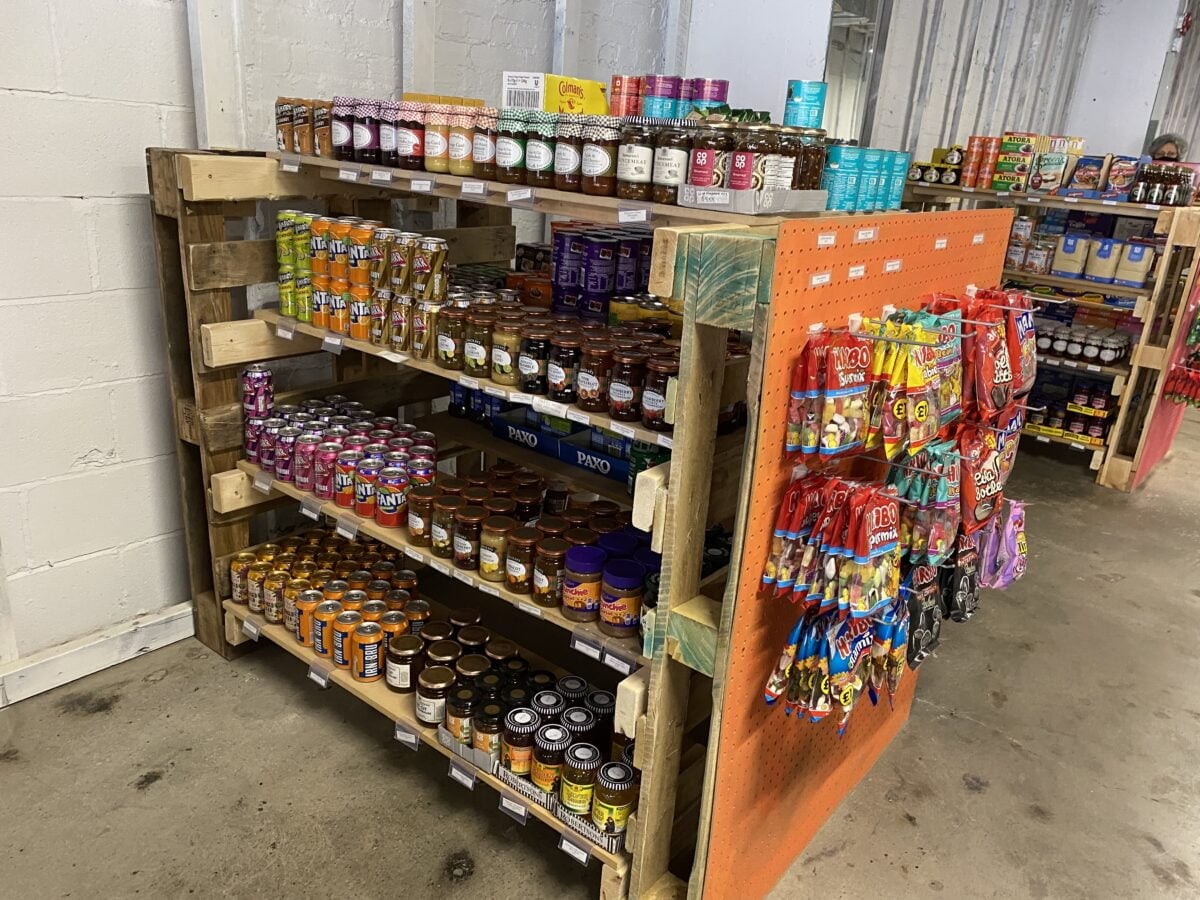
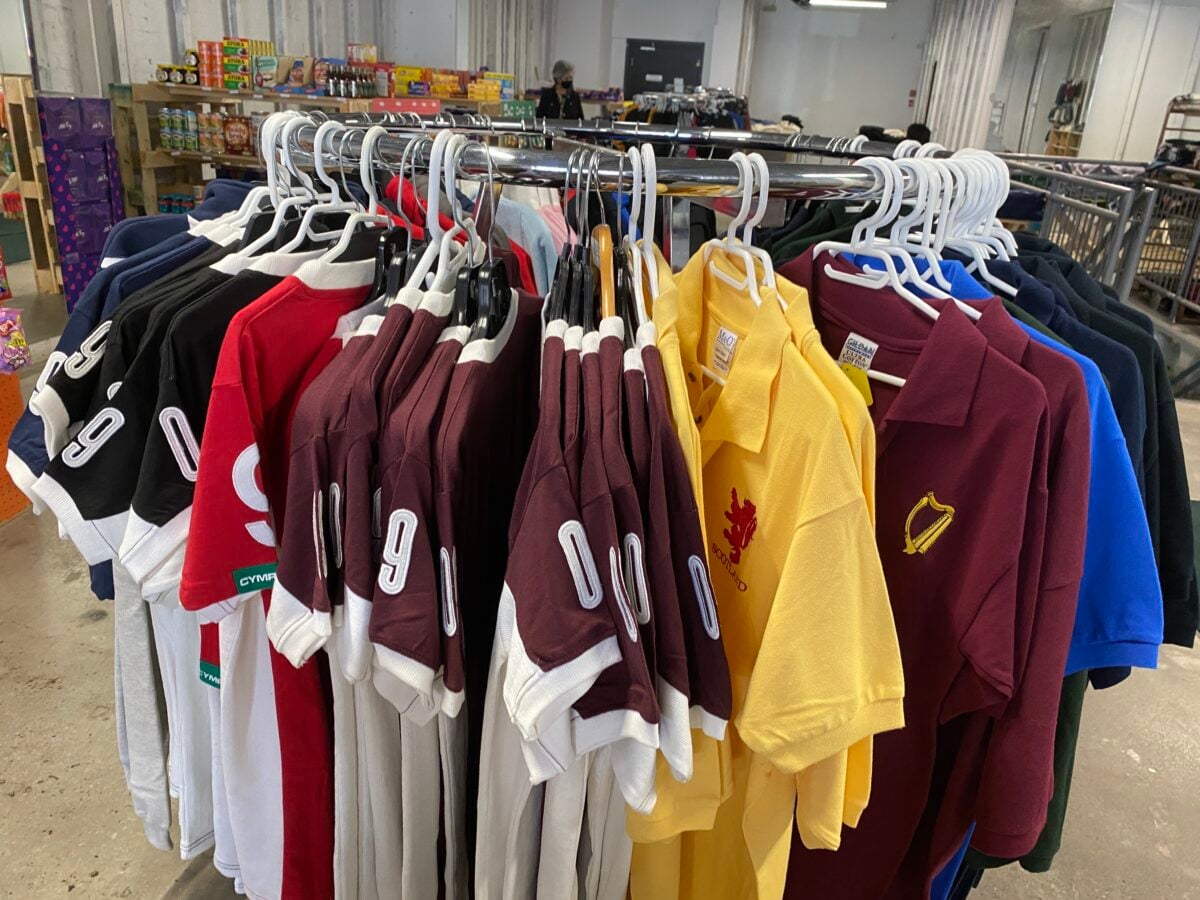
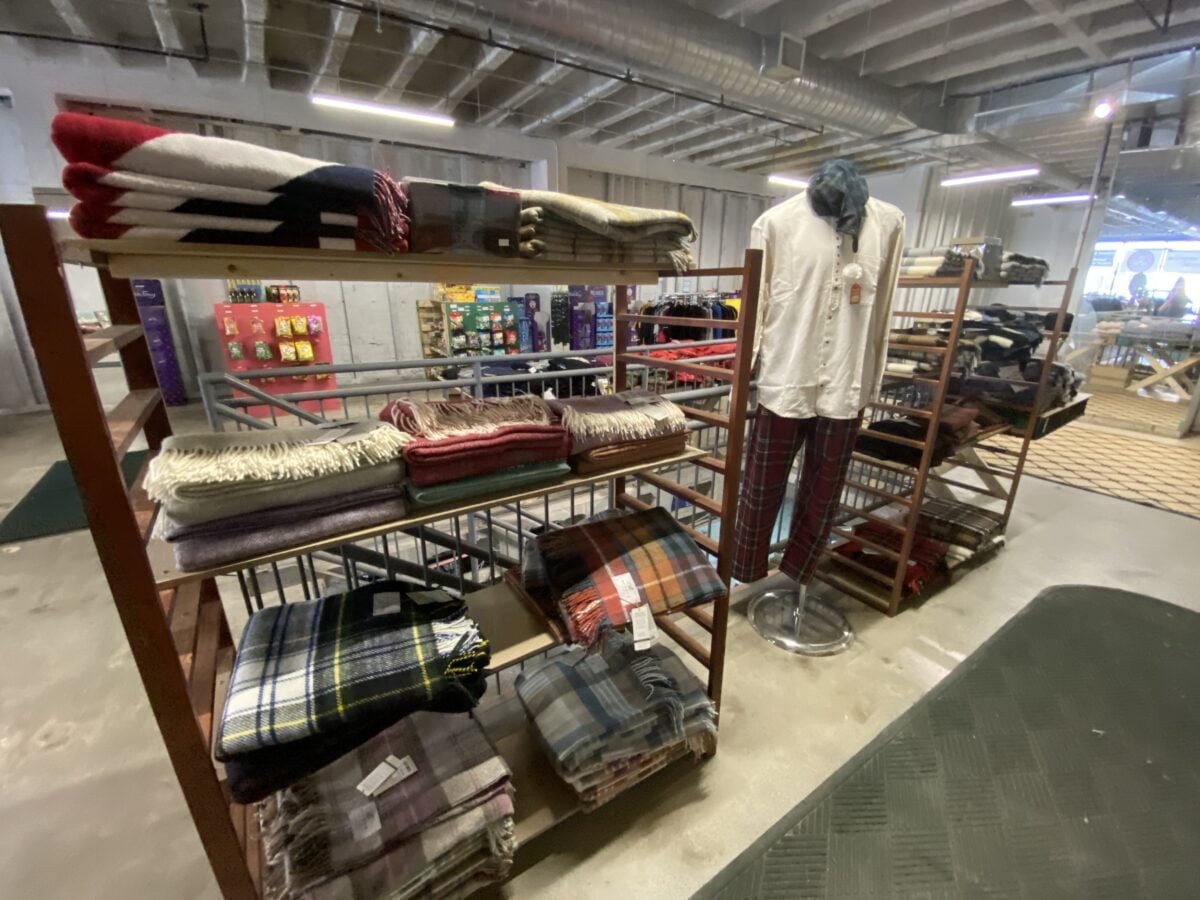
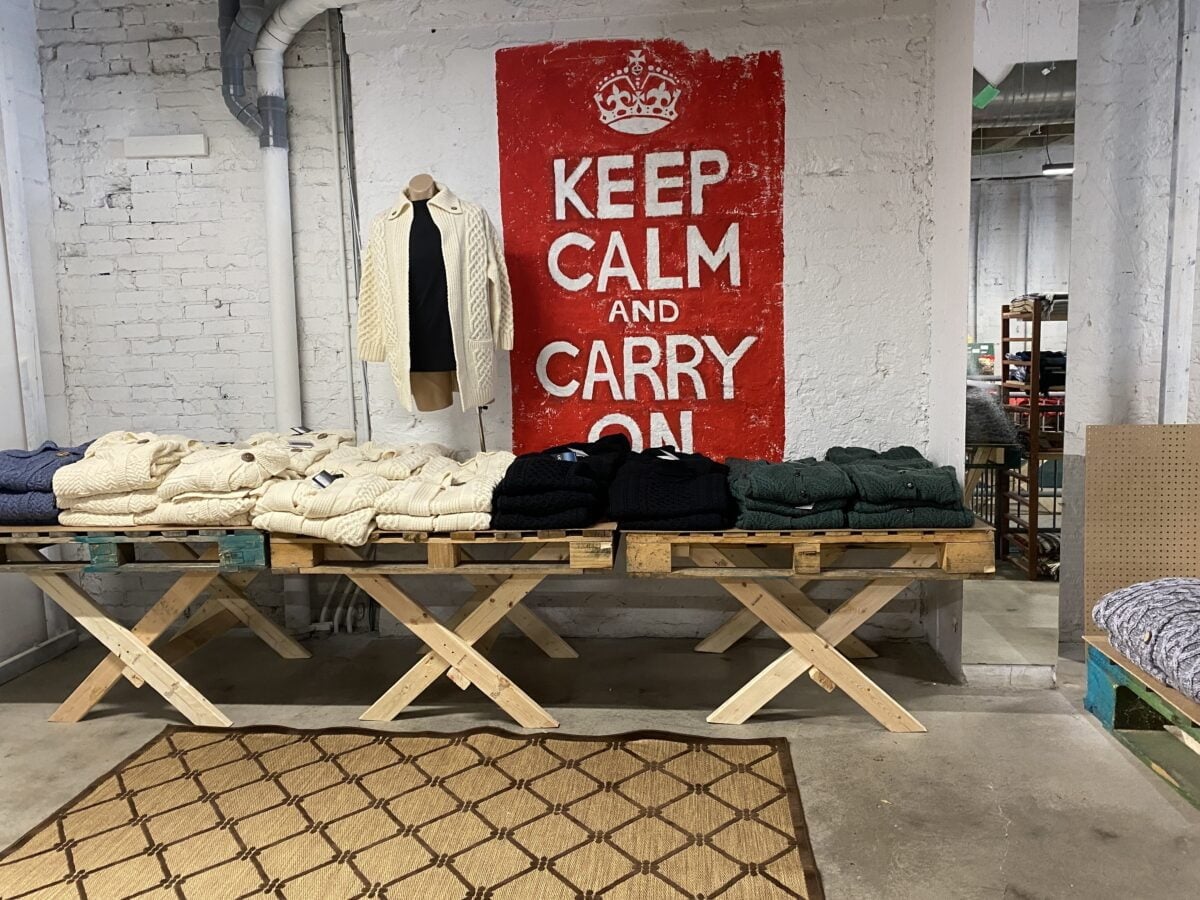
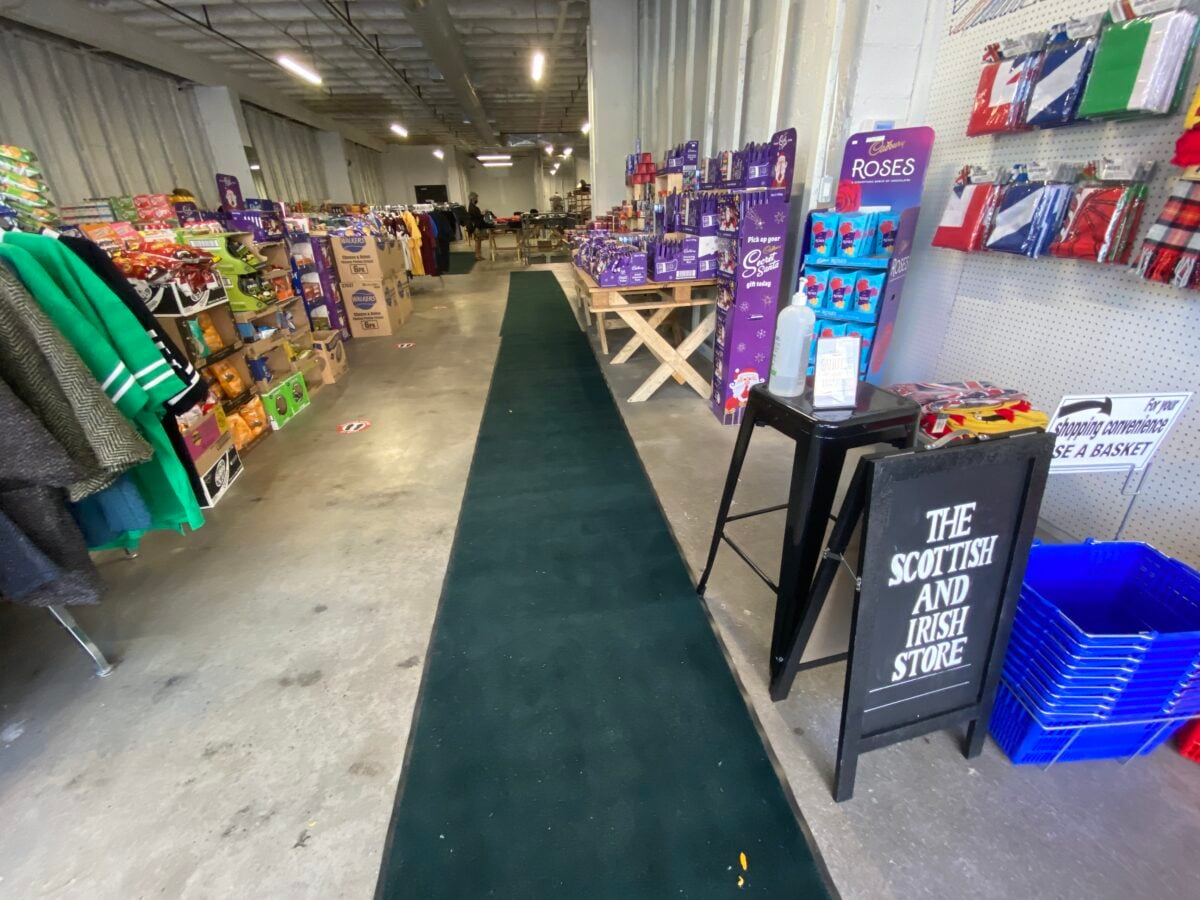
Queen Street is the first pop-up for the brand, which was founded in 2001 and has two retail locations in Ottawa that each have over 6000 square feet.
“pop-up go’s match service was able to provide The Scottish & Irish Store with some really interesting spaces, but they loved the idea of being in the Fashion District on Queen Street West, just west of Spadina,” said Linda Farha, pop-up go’s Founder and Chef Connector.
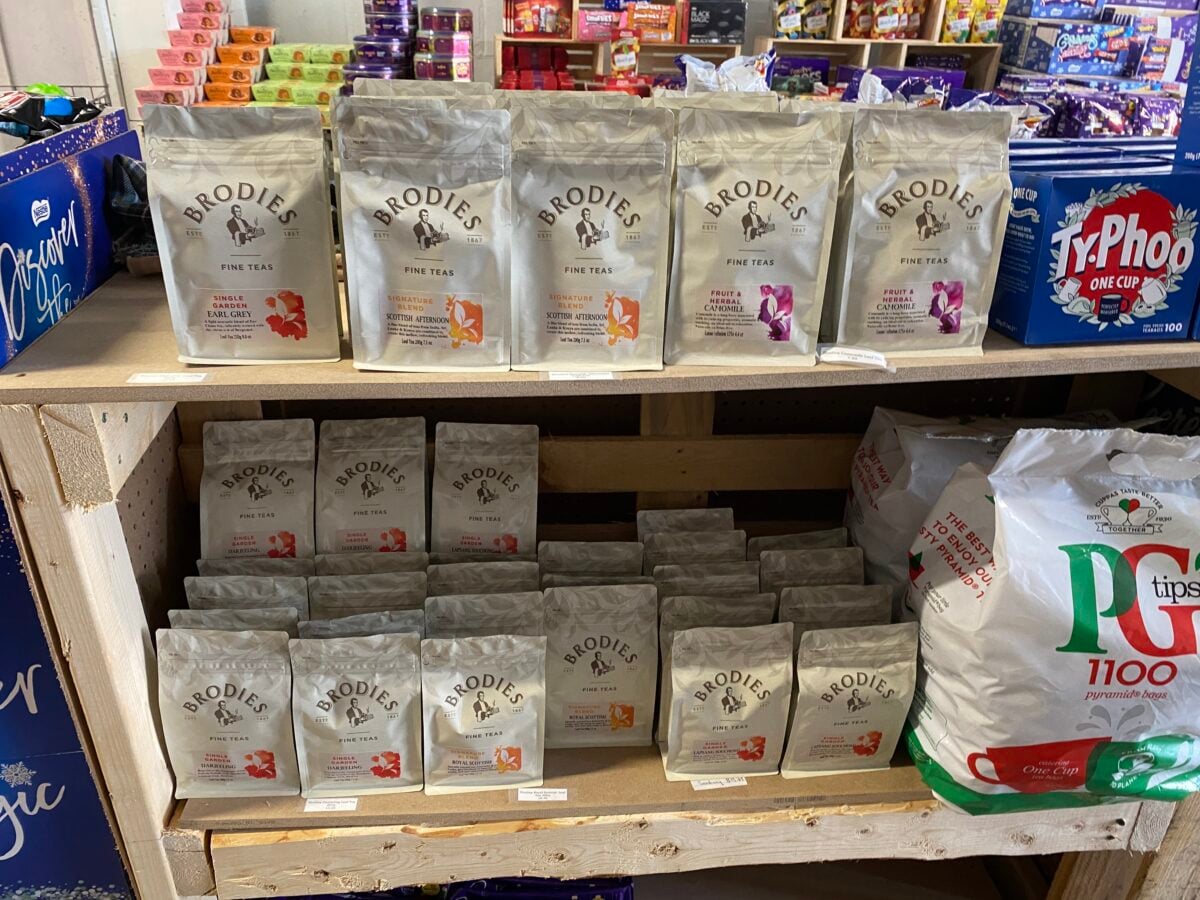
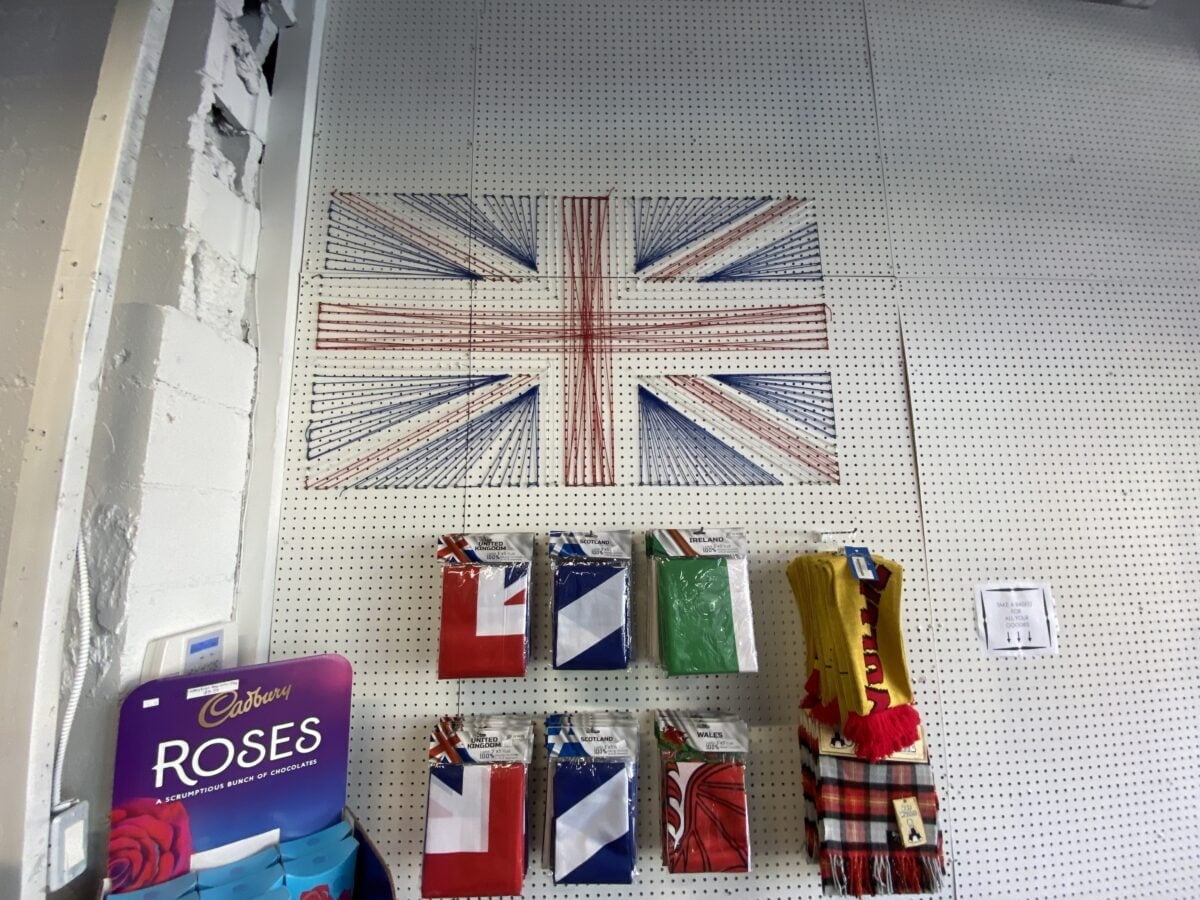
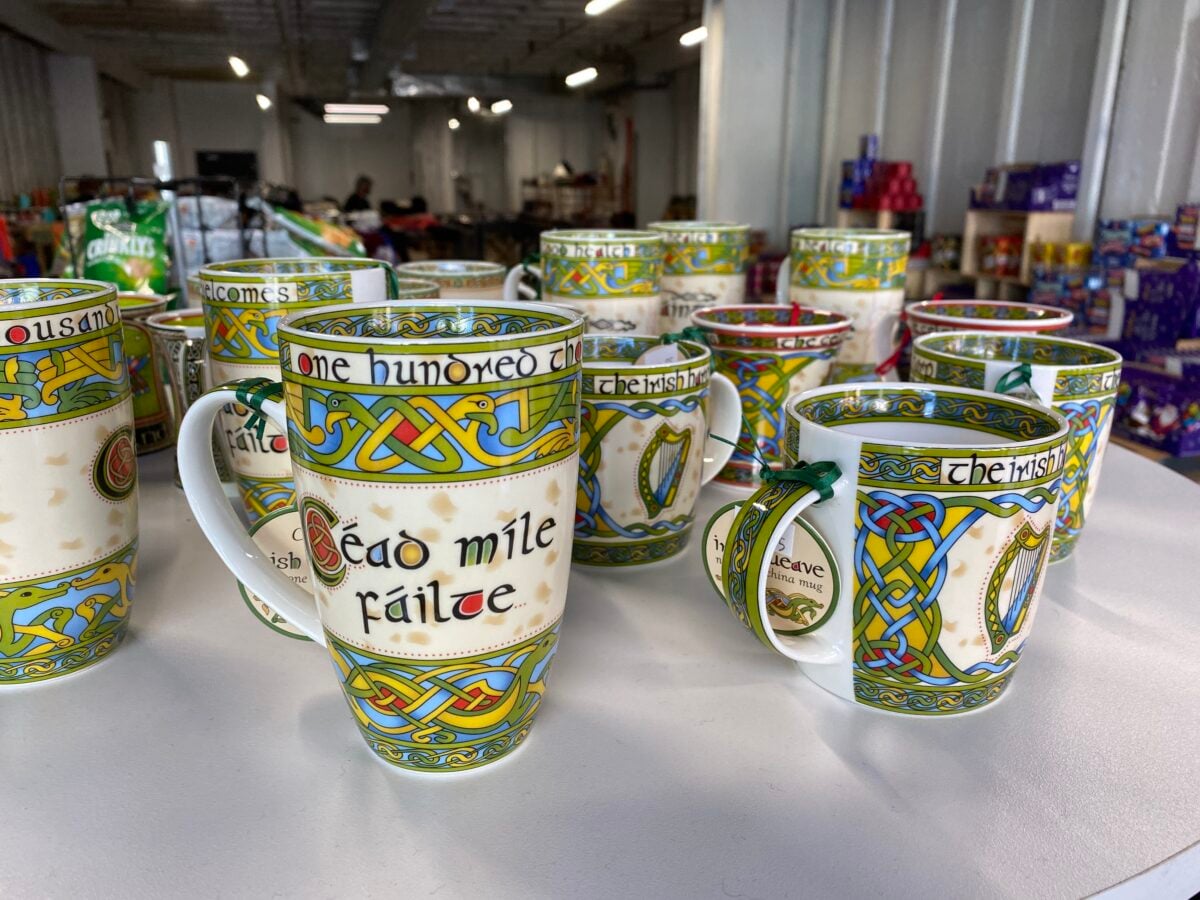
“While it may be hard to travel right now, this pop-up will make you feel like you are euro bound with their lineup of Scottish and Irish snacks, clothing, jewellery, and more!”
The Scottish & Irish Store Pop-up at 501 Queen Street (Photo: Dustin Fuhs)The Scottish & Irish Store Pop-up at 501 Queen Street (Photo: Dustin Fuhs)The Scottish & Irish Store Pop-up at 501 Queen Street (Photo: Dustin Fuhs)The Scottish & Irish Store Pop-up at 501 Queen Street (Photo: Dustin Fuhs)The Scottish & Irish Store Pop-up at 501 Queen Street (Photo: Dustin Fuhs)The Scottish & Irish Store Pop-up at 501 Queen Street (Photo: Dustin Fuhs)The Scottish & Irish Store Pop-up at 501 Queen Street (Photo: Dustin Fuhs)The Scottish & Irish Store Pop-up at 501 Queen Street (Photo: Dustin Fuhs)The Scottish & Irish Store Pop-up at 501 Queen Street (Photo: Dustin Fuhs)The Scottish & Irish Store Pop-up at 501 Queen Street (Photo: Dustin Fuhs)
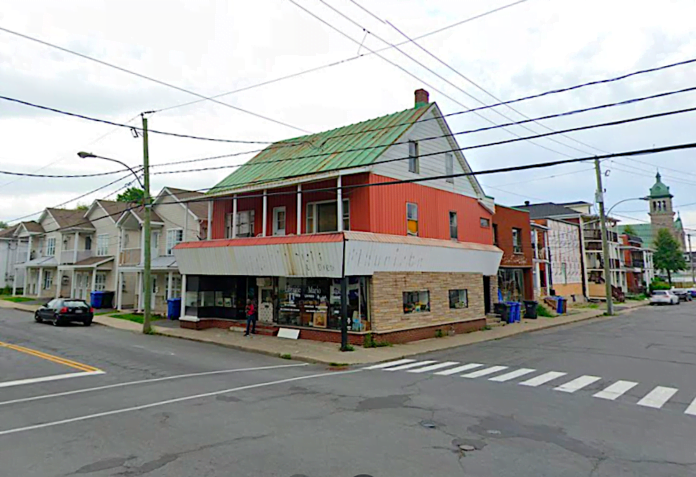
The future home of the Moniz family's second Zellers storefront in Sorel-Tracy, Quebec. Photo: Google Street View
The Moniz family in Quebec is in the process of opening a second small Zellers-branded store in Sorel-Tracy, Quebec, after registering a trademark for the Zellers name earlier this year. The Hudson’s Bay Company, which let the trademark for the Zellers name lapse last year, is fighting back with litigation saying that it has the rights to Zellers after opening a pop-up in Burlington over the summer.
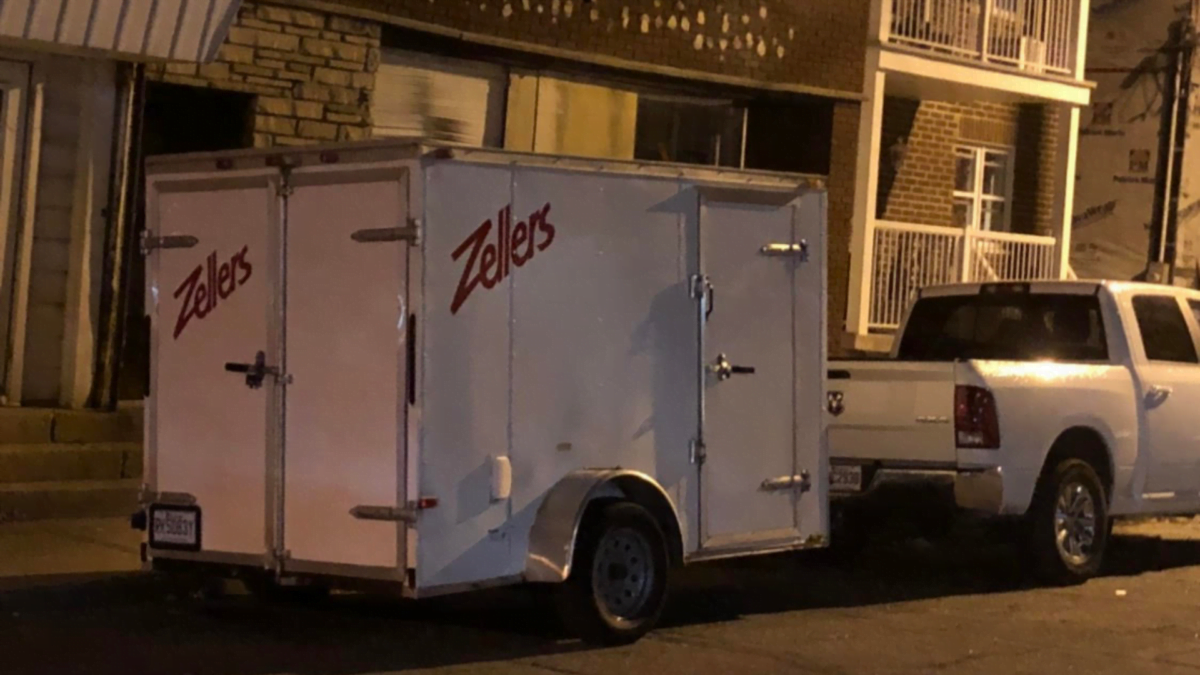
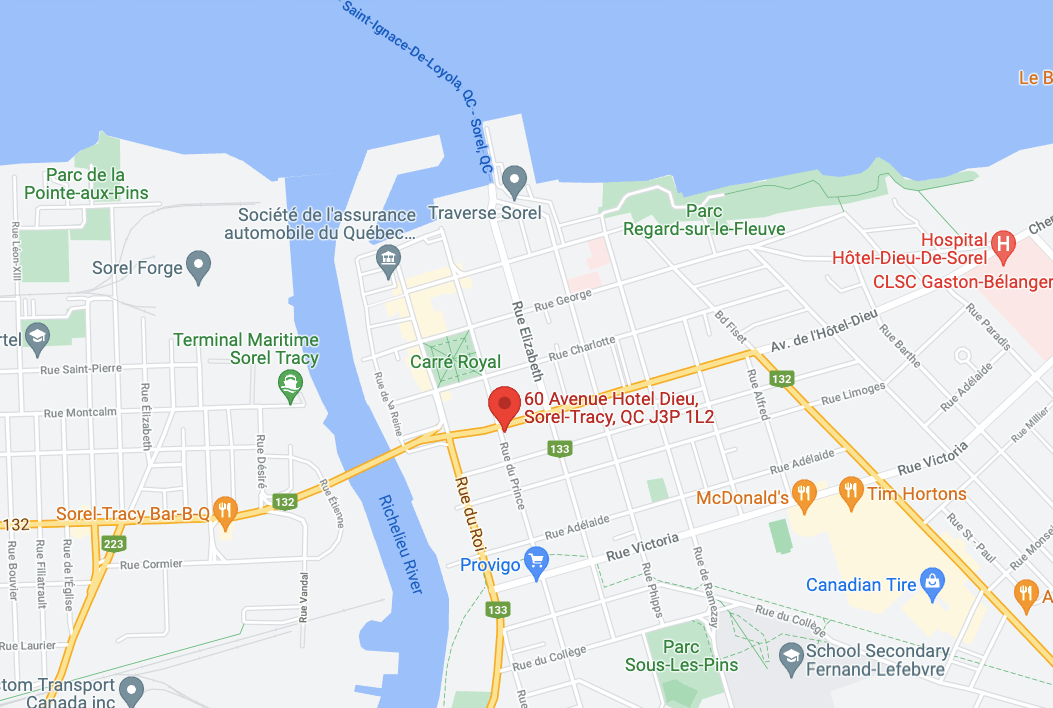
The second Zellers-branded store will open soon at 60 Hotel-Dieu in Sorel-Tracy. Construction has been ongoing for weeks in a retail space formerly occupied by a book store, and one local sent Retail Insider a photo showing a Zellers-branded trailer outside of the new store. The Moniz family says that it is waiting for permits prior to opening the Zellers store in the coming days even although the municipality says nothing has been filed and that the building has to be demolished. In April of this year, they opened a Zellers Express store on Augusta Street in Sorel-Tracy and oddly, there’s very little information online about where it is located or that it even exists.
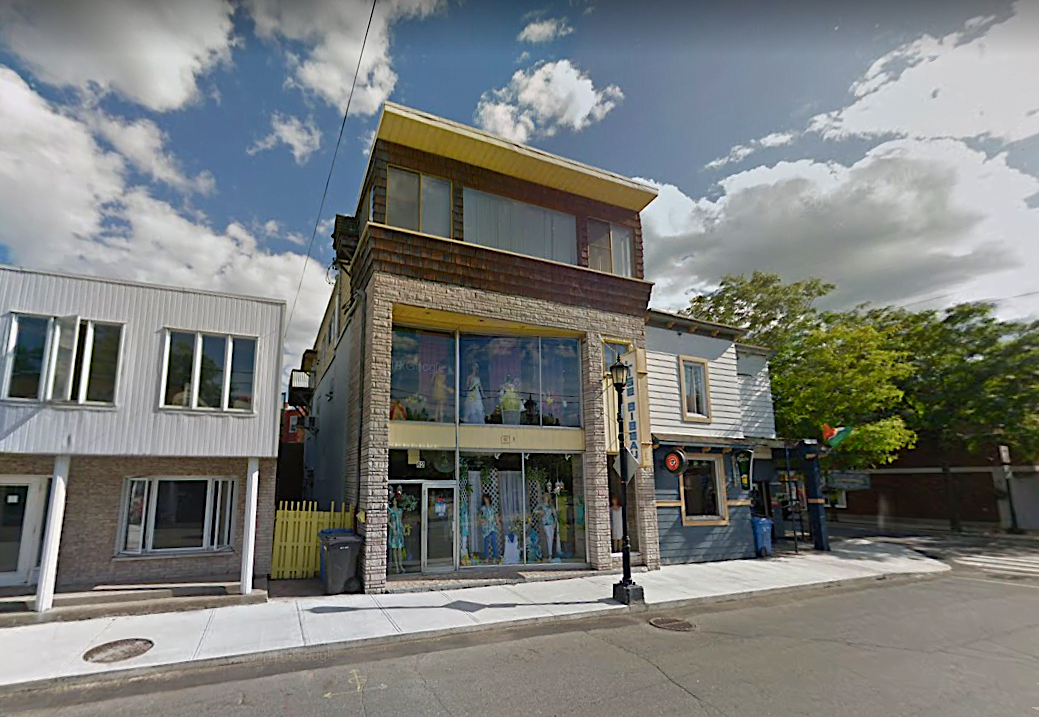
This follows at least one member of the Moniz family going after the Hudson’s Bay Company last year by registering the name Kmart in Canada — the Hudson’s Bay Company bought Kmart’s Canadian operations in 1998 and converted most stores to Zellers banners. The Moniz-owned Kmart store is now operational at 62 Rue Augusta, and again there is little information online about the store and its operations.
A Kmart store operates out of the main floor of this building at 62 Rue Augusta. Photo: Google Street View
The Hudson’s Bay Company recently got wind of the Moniz family’s efforts to take over the Zellers name. On October 5th, the Hudson’s Bay Company filed a Statement of Claim in the Federal Court of Canada naming Defendants: Manuel Moniz, Maria Almerinda Moniz Sousa, Robert Moniz, Carlos Moniz, Zellers Canada Inc., Zellers Convenience Store Inc., Zellers Holdings Inc., Zellers Inc., and Zellers Restaurant Inc.
Retail Insider reached out to the Hudson’s Bay Company which provided the following statement about the situation: “To protect its ZELLERS brand and avoid consumer confusion, HBC has filed a claim in the Federal Court of Canada for passing off, trademark infringement and depreciation of goodwill. The allegations in the claim relate to planned unauthorized third-party ZELLERS stores, among other unauthorized uses of the ZELLERS brand. HBC intends to pursue this claim vigorously.”
The statement follows Retail Insider’s report last month that HBC had opened a Zellers pop-up store within the Hudson’s Bay department store at the Burlington Centre mall near Toronto — we were the first to report on the pop-up that had already operated for about two months prior. A Zellers pop-up will next be opening at the Hudson’s Bay store at CF Galleries d’Anjou in Montreal according to an HBC representative, and other Zellers pop-ups could open inside of Hudson’s Bay stores the future.
The Hudson’s Bay Company’s trademark for the Zellers name expired September 24, 2020 and it was subsequently registered by the Moniz family in 2021. Toronto-based intellectual property lawyer Anjli Patel noted that HBC should have received notice that its trademark for Zellers was set to expire prior to its expiry.
Retail Insider was provided the above photo of a Zellers-branded trailer in Sorel-Tracy Quebec in early October. The location of this photo is in front of the 60 Hotel-Dieu Zellers store that is set to open soon.
Cast of Characters: The Moniz Family
Several members of the Moniz family are involved with the new Zellers operations after registering the Zellers trademark including the logo many Canadians are familiar with. At least one of the family members has what has been reported as being something of a shady past that includes charges of mortgage fraud and car theft.
Under Hudson’s Bay ownership, Zellers was headquartered in Brampton Ontario until the chain as we knew it was shut down in 2013. The new Moniz-operated Zellers business appears to be headquartered in Prince Edward Island, while a restaurant subsidiary is based in Quebec.
Zellers Holdings Inc. was registered on June 11, 2021 and is headquartered in what appears to be a farm house named ‘Blue Lobster’ in Kensington, Prince Edward Island. Zellers Holdings Inc. has four directors: Manuel Moniz, Maria Almerinda Moniz Sousa, Robert Moniz and Carlos Moniz. Manuel and Maria have addresses listed in Laval, Quebec. Robert’s address is in Auclair, Quebec, and Carlos Moniz’s address is in Sorel-Tracy.
Zellers Restaurant Inc. was registered on September 6, 2021, and has an address of a home in La Trinité-des-Monts Quebec. Maria Moniz Sousa is listed as the director of Zellers Restaurant Inc.
The head office for Zellers Holdings Inc. is registered to a farm house named ‘Blue Lobster’ in Kensington PEI. Image via Google Street View
It appears that Manuel and Maria could be spouses, given that they share the same residential address and also once owned a company called Maria & Manuel Import Export Inc. — Manuel has had several other companies according to corporate registry records.
Robert Moniz may be the best known of the family members mentioned above given accusations of mortgage fraud laid against him in 2010. Robert was charged with mortgage fraud totalling more than $5 million — the then 37 year old faced 53 charges, including fraud, forgery and uttering forged documents. Robert Moniz is alleged to have persuaded victims to lend him their names to help him buy properties in the Montreal and Laval areas in return for several thousand dollars and a promise that he could boost their credit ratings, according to an article in the CBC. Robert was also arrested in early 2010 in a stolen Mercedes in Belleville, Ontario.
Both Carlos Moniz and brother Robert were involved in a plan to open a strip club in the former Doc’s Palace on Station Street in Belleville, which saw news coverage given that some were against the plans more than a decade ago.
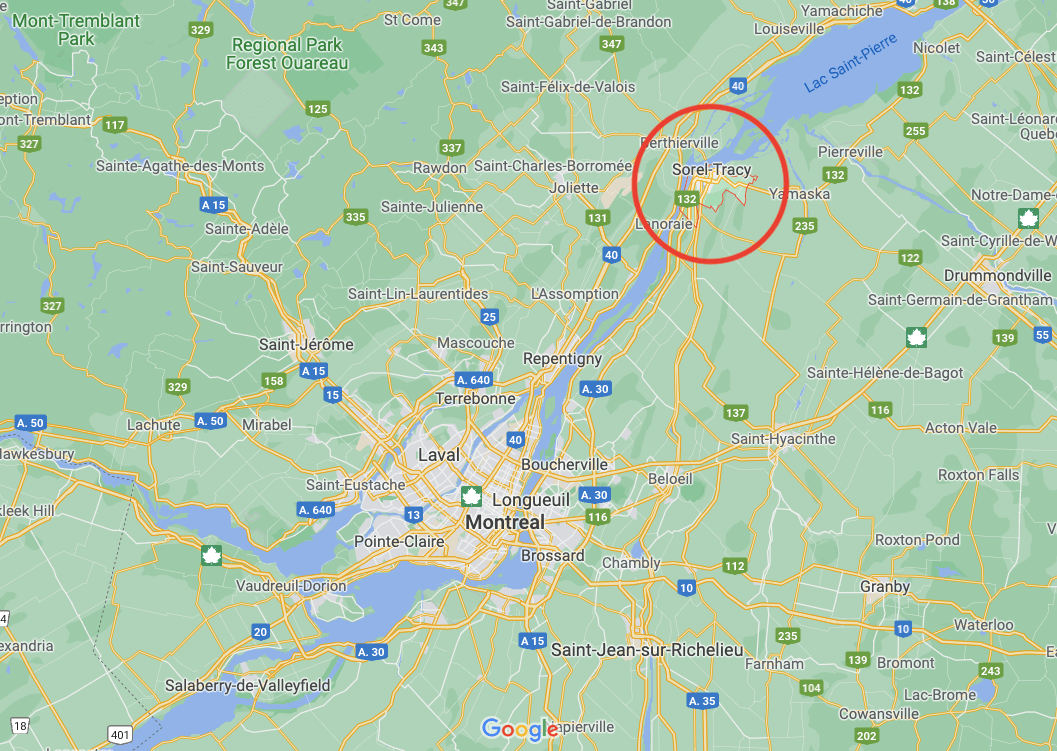
Sorel-Tracy is a community located northeast of Montreal. Image: Google MapsLocation of the soon-to-open Zellers store in Sorel-Tracy Quebec. Image: Google Maps
Kmart Canada
Maria Moniz Sousa is also listed as being sole director of Kmart Canada which was registered in May of 2020. The headquarters for Kmart Canada is listed with a registered office in La Trinité-des-Monts — and the address for Kmart Canada is the same home as the new headquarters for Zellers Restaurant Inc.
Retail Insider was unable to get a hold of Maria by press time for an interview after repeated phone call attempts to a listed phone number for Zellers in Sorel-Tracy. For more than a week we attempted to speak to her after an unidentified family member provided us with information on the progress of their Zellers expansion in two phone calls.
What’s Next?
Anjli Patel
Lawyer Anjli Patel said she was surprised that HBC had let the Zellers trademark lapse and noted that it may be challenging to get it back although the retailer did in fact operate Zellers stores across Canada for decades. HBC launched a Zellers pop-up over the summer in Burlington and will launch at least one more in Quebec, indicating the fact that HBC is intending to continue utilizing the Zellers name which it once owned without dispute.
The Hudson’s Bay Company itself filed for a new trademark application for the Zellers name on June 30 of this year, indicating its intent to maintain domain over the trademark. HBC also filed a lawsuit in the Federal Court against the Moniz family and their Zellers-branded entities as noted above.
The Moniz trademark application as well as the subsequent registration by HBC for the Zellers name are both in progress, and have not yet been assigned to government examiners as of press time. That means that litigation may be required to settle the dispute between HBC and the Moniz-owned Zellers entity which could result in the end of the small-format Zellers stores in Sorel-Tracy as well as any future expansion plans by the Moniz family.
We’ll follow up this unusual story as it develops.
This becomes the second international prescription eyewear retailer in the mall after Bailey Nelson opened in 2019 in addition to B.C.-based Image Optometry which has locations across the lower mainland, Vancouver Island and the interior of the province.
This will become the tenth location in the lower mainland for LensCrafters with other locations in North Vancouver, Vancouver, Richmond, Burnaby, Coquitlam, Surrey, Langley, Abbotsford, and White Rock.
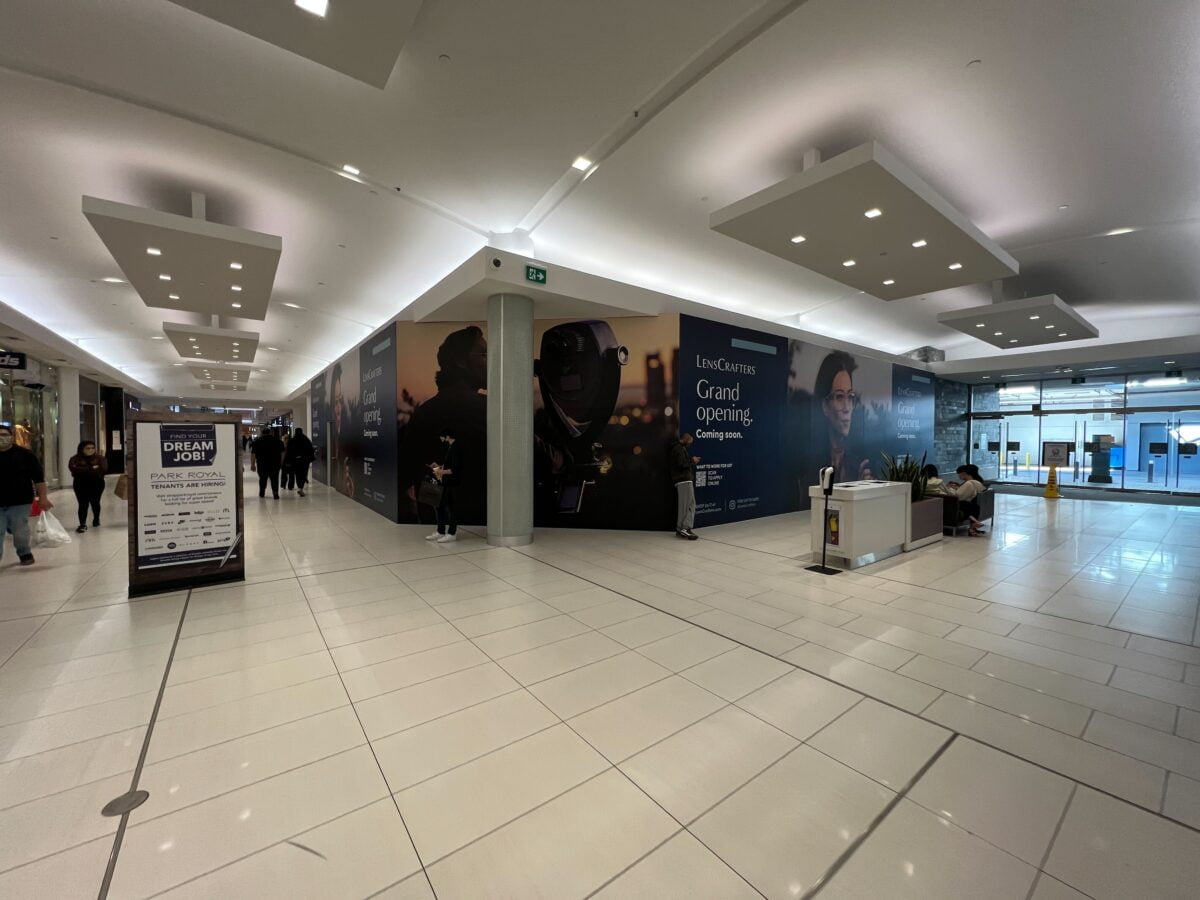
LensCrafters construction signage at Park Royal Shopping Centre (October 2021). Photo: Lee Rivett.
LensCrafters was founded in 1983 and sold to the United States Shoe Corporation (U.S. Shoe) in 1984. Its current parent company, Luxottica, initiated a hostile takeover of U.S. Shoes in 1995 in an attempt of acquiring LensCrafters which resulted in a $1.4 billion agreement being inked.
LensCrafter’s eclipsed its closes rival, Pearle Vision, in growth by 1992 and Luxottica purchased the retailer in 2004 resulting in the combination of America’s two largest eyewear retailers.
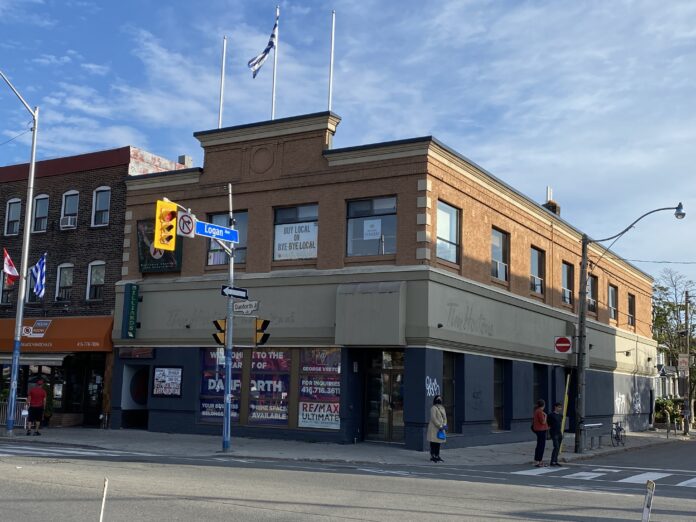
Vacated Tim Hortons on The Danforth (Photo: Dustin Fuhs)
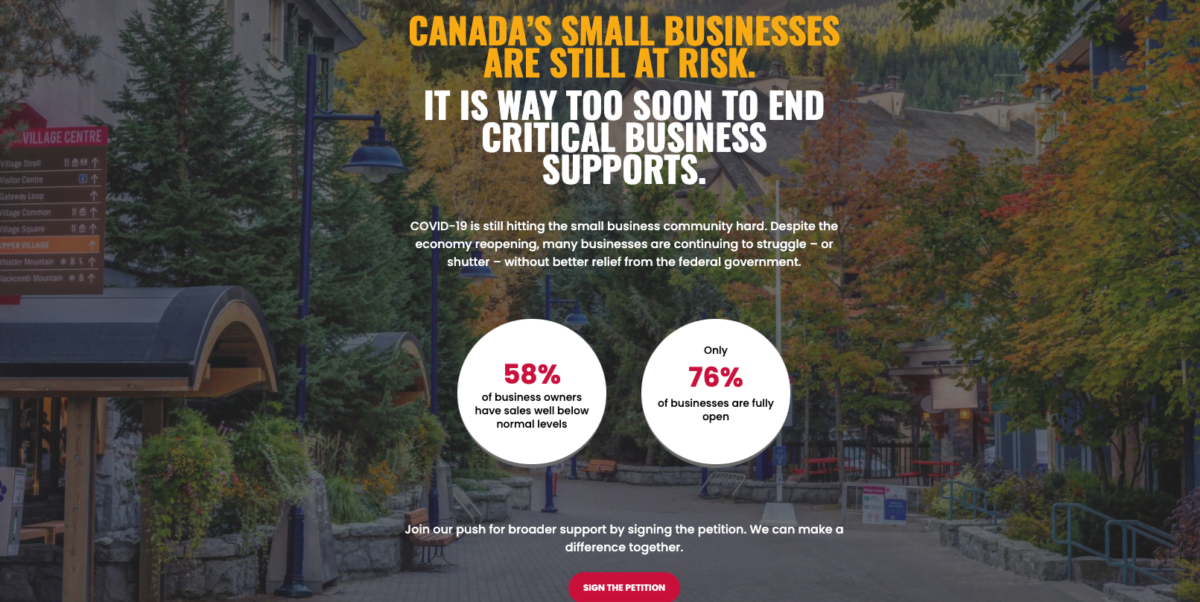
Canadian small businesses are worried that crucial wage and rent subsidy support programs from the federal government are scheduled to come to an end on October 23 and they have yet to hear if those lifesaving initiatives will be continued.
With ongoing capacity restrictions in certain parts of the country, a labour shortage growing and continued uncertainty about the impact and length of the brutal fourth wave of the pandemic, the Canadian Federation of Independent Business is urging the government to immediately extend and expand these programs.
“Businesses need certainty as so many are still dodging constant curveballs with a slow pick-up in revenues, labour shortages, and wariness around ongoing restrictions in the months ahead,” said Corinne Pohlmann, Senior Vice-President of National Affairs at CFIB.
“No business owner expects government support forever, but they need to know they have something to rely on until all restrictions are lifted, and they can fully operate their business once again. They can’t afford for the government to dawdle until the last minute.
“The end of the pandemic may be in sight for some, but business owners are just not there yet. Small businesses will take an average of two years to recover from the pandemic. Pulling support at such a critical moment in their recovery would be a huge misstep.”
CFIB’s latest Small Business Recovery Dashboard shows that only 40 per cent of small businesses are making normal sales and less than half are fully staffed. Last month’s Business Barometer showed the largest decreases in short- and long-term small business optimism since the start of the pandemic in March 2020.
Bruce Winder
Bruce Winder, author of RETAIL Before, During & After COVID-19 and President, Bruce Winder Retail, said the two things that have made the difference between small business survival and extinction during the pandemic have been ecommerce and government supports.
“Along with ecommerce, small to medium sized firms have used government supports to remain solvent in this difficult time. Ecommerce to keep their virtual doors open and government subsidies to help keep workers employed and expenses paid. Without supports, thousands of small businesses would have shut down for good and with them, employees would become jobless. Therefore, supports must continue until markets return to some semblance of normalcy, when the virus moves to a manageable state,” he said.
“Stopping the payments now would only defeat the purpose of offering them in the first place. Much of the money provided thus far would have been wasted. Not to mention that governments would have a difficult time recovering loans if small to medium sized businesses were allowed to go under. Governments would be forced to line up with creditors to liquidate any assets that small to medium sized firms would have at a fraction of the value. Losses would be massive.”
“One can argue that businesses, at some point in time, must stand on their own and make or break it in this new reality. The world has changed, and some firms will not survive life on the other side of the pandemic. They perhaps were going to fail anyway. It’s the natural circle of life of retail and business in general. Lending them more money may be for naught. But this argument is short-sighted.”
“The right thing to do is to continue subsidies until COVID-19 becomes manageable. There will be a portion of loans that will not be recovered but that is the price tag for supporting the many. Without the continuation of subsidies, we would quickly see mass bankruptcies and mass unemployment – things we need to stave off at this fragile time of economic and societal recovery.”
Alla Drigola Birk
Alla Drigola Birk, Director of Parliamentary Affairs and SME Policy with the Canadian Chamber of Commerce, said the wage subsidy in particular has been kind of the make or break program for hundreds of thousands of small businesses in keeping their doors open and keeping employees on the payroll during the pandemic.
“The rent subsidy program as well has been crucial. It did have a bumpier start and it had to kind of come in in a new iteration last fall but since then the businesses that are still locked down and that still really need that support have taken advantage of the rent program as well,” she said. “Both of these programs are critical for businesses that are still hurting, particularly for those in the hardest hit sectors and we need to make sure that these programs continue through until the end of this year and through to the spring of next year for businesses in the tourism, hospitality and travel sectors.”
When asked what the consequences would be of those programs not being extended, she replied: “The consequences are that you brought thousands of businesses this far along and enabled them to survive when they otherwise would not have been able to and pulling these programs now is tantamount to letting folks drown 50 feet from shore. It wouldn’t make sense after all the (initiatives) that have been invested in keeping these businesses alive that you would pull the plug now, especially for those sectors that are not allowed to recover, who still have capacity restrictions, operating restrictions, travel restrictions. It’s really not fair for businesses who cannot operate normally to not be given the same opportunity to receive support from the government that other businesses in other sectors have had.”
Todd Barclay
Restaurants Canada is also calling on the federal government to increase and extend the wage and rent subsidies into 2022 to ensure foodservice businesses can pull through the ongoing pandemic.
“The fate of Canada’s 90,000+ restaurants is still uncertain,” said Restaurants Canada President and CEO Todd Barclay. “Most have been losing money or barely breaking even since coming out of initial lockdown last year, and at least 10,000 establishments have already closed. The rest need government support to help them survive the fall and winter so they can continue feeding our recovery.”
The national organization said recent survey results reveal restaurants need further support amid the ongoing pandemic:
8 out of 10 restaurants have been operating at a loss or barely scraping by with a profit margin of two per cent or less throughout the entire pandemic; nearly half of all foodservice businesses have been consistently losing money ever since the first wave of lockdowns ended last year;
7 out of 10 restaurant operators are still receiving the federal wage and/or rent subsidy; and
If these critical sources of support end this month nearly 80 per cent said they will struggle to keep existing staff/have to cut staff hours and more than half said they will struggle with hiring back staff/hiring new staff.
Image: CFIB
The CFIB has shared its concerns in a letter to Deputy Prime Minister Chrystia Freeland.
The national organization is urging the federal government to:
Immediately announce an extension to the Canada Emergency Wage Subsidy (CEWS) and Canada Emergency Rent Subsidy (CERS) to November 20;
Work with members of Parliament to further extend the Canada Recovery Hiring Program, CEWS and CERS, to March 31, 2022;
Return the maximum wage and rent subsidies to 75 per cent for all sectors of the economy, as promised to the tourism sector by the Liberal Party during the election;
Include new businesses that started after the pandemic began in all business support programs;
Offer additional funding through the CEBA loan and delay the repayment deadline to the end of 2024;
Change the Canada Recovery Benefit to ensure it does not incentivize workers to stay at home rather than returning to the labour force; and
Dedicate the $1 billion in funding to provincial governments to implement passport systems to small business owners required to implement these systems.
Small business owners can sign CFIB’s petition at cfib.ca/covidpetition calling on the government to extend the federal support programs and support small business recovery.
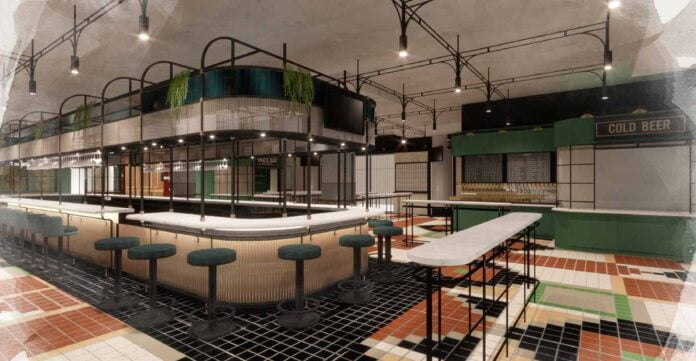
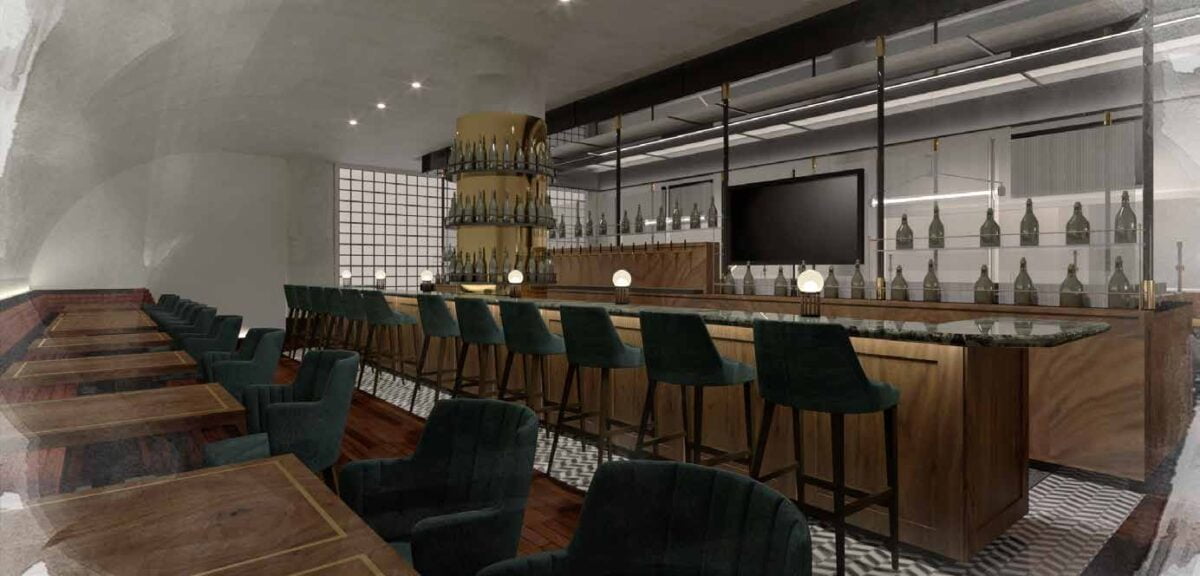
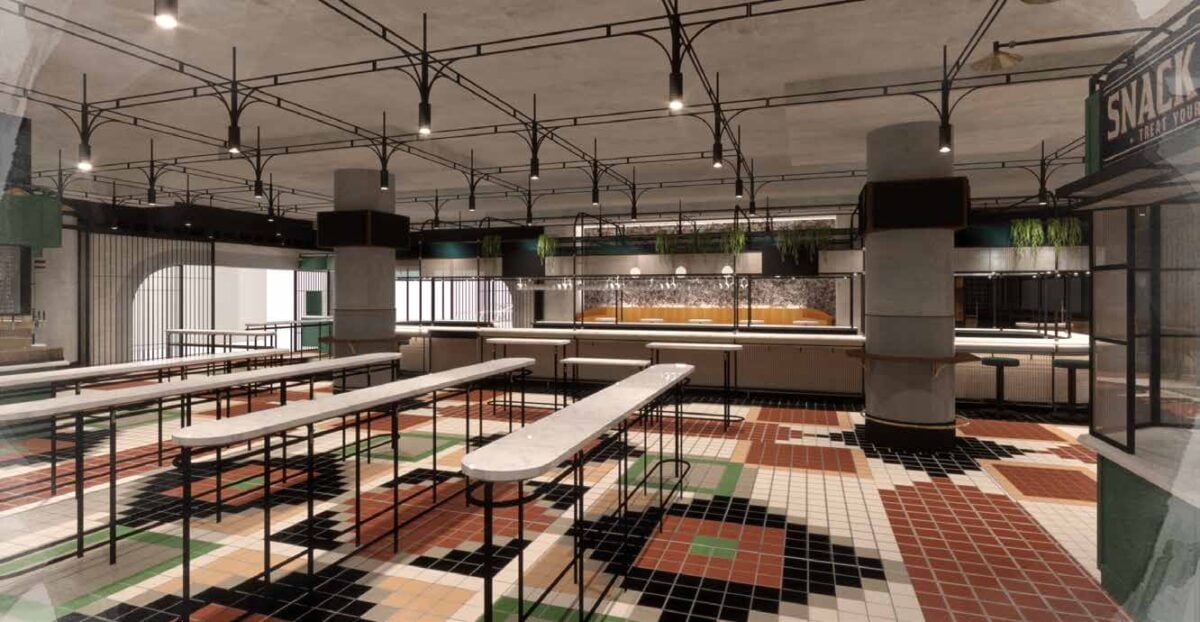
The Queenston Rendering (Image: Open Concept Hospitality)
Toronto’s Union Station is seeing an ongoing transformation that will make the transit hub into a destination for retail and foodservice businesses. The latest tenant to be announced is a restaurant concept called The Queenston which will open next year in Union Station’s Bay Street Promenade.
The Queenston is a collaborative team effort between entrepreneur Yannick Bigourdan and his partners at Open Concept Hospitality, Adam Teolis, Mike Angeloni and Dan Kennedy. Bigourdan is also responsible for several other restaurants and concepts in the city including Union Chicken, Amano, The Carbon Bar and Chefdrop.
The Queenston concept is described as something of a ‘station bar’ that will cater to visitors to Union Station whether they are commuting or attending an event such as a sports game in one of the nearby entertainment facilities.
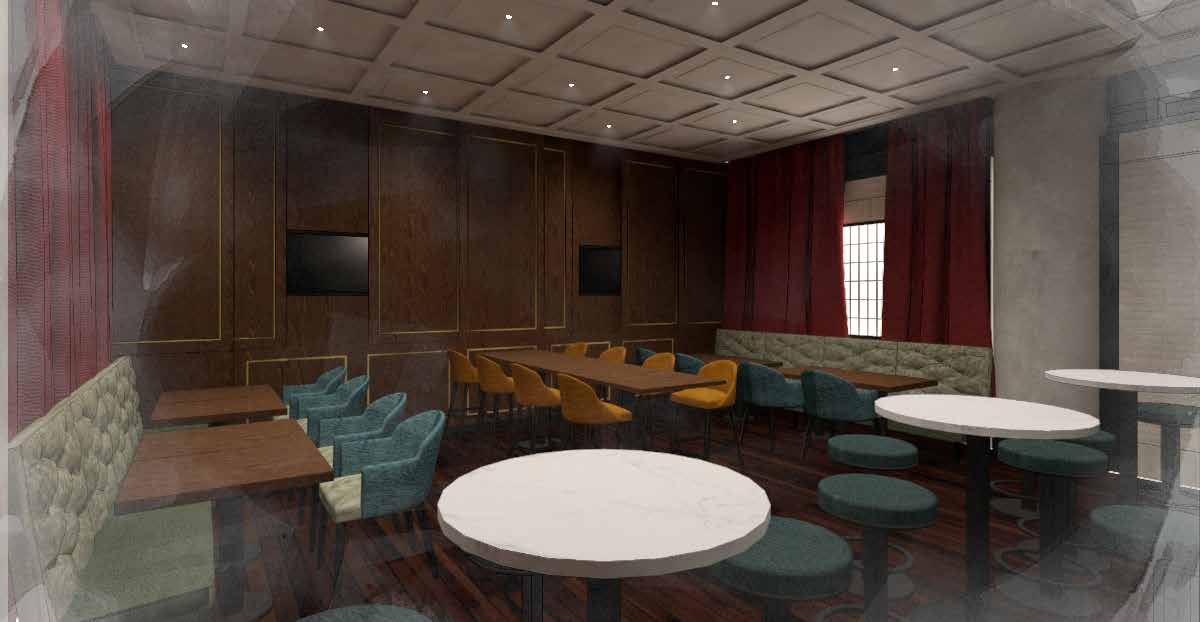
Drawing inspiration from the Art Deco movement of the roaring twenties, the Queenston’s design will celebrate the history of Union Station with its Beaux-Arts architecture and use of Canadian Queenston Limestone. Once completed, the Queenston will serve as a place of modern nostalgia and memorable social gatherings where guests will define their own dining experiences.
“We are very excited to open The Queenston in the heart of Toronto, where people can dine or enjoy a cocktail, a beer while visiting Union Station.” said Bigourdan in an exclusive statement to Retail Insider. “This is a very important project for our Team, and we are very excited to welcome you and your guests in the future.”
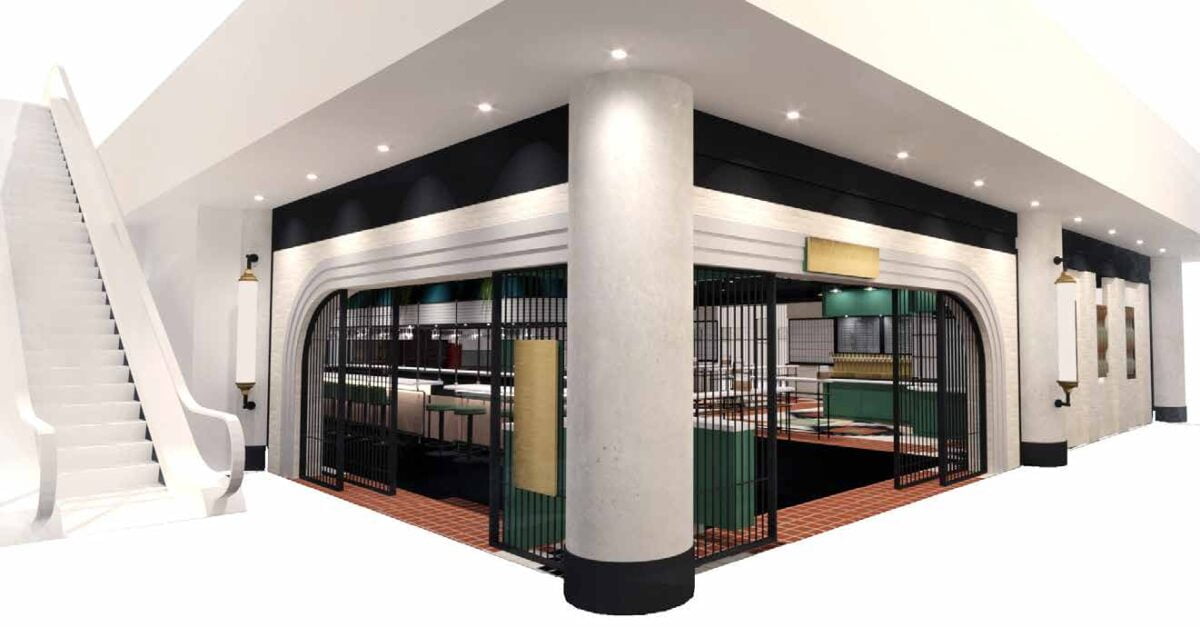
The Queenston Rendering (Image: Open Concept Hospitality)Future Home of The Queenston at Toronto’s Union Station (Photo by Dustin Fuhs)
Bigourdan went on to provide further information on The Queenston, saying “Our Partner and Executive Chef, Michael Angeloni is working diligently with his Team to offer you an amazing food program.”
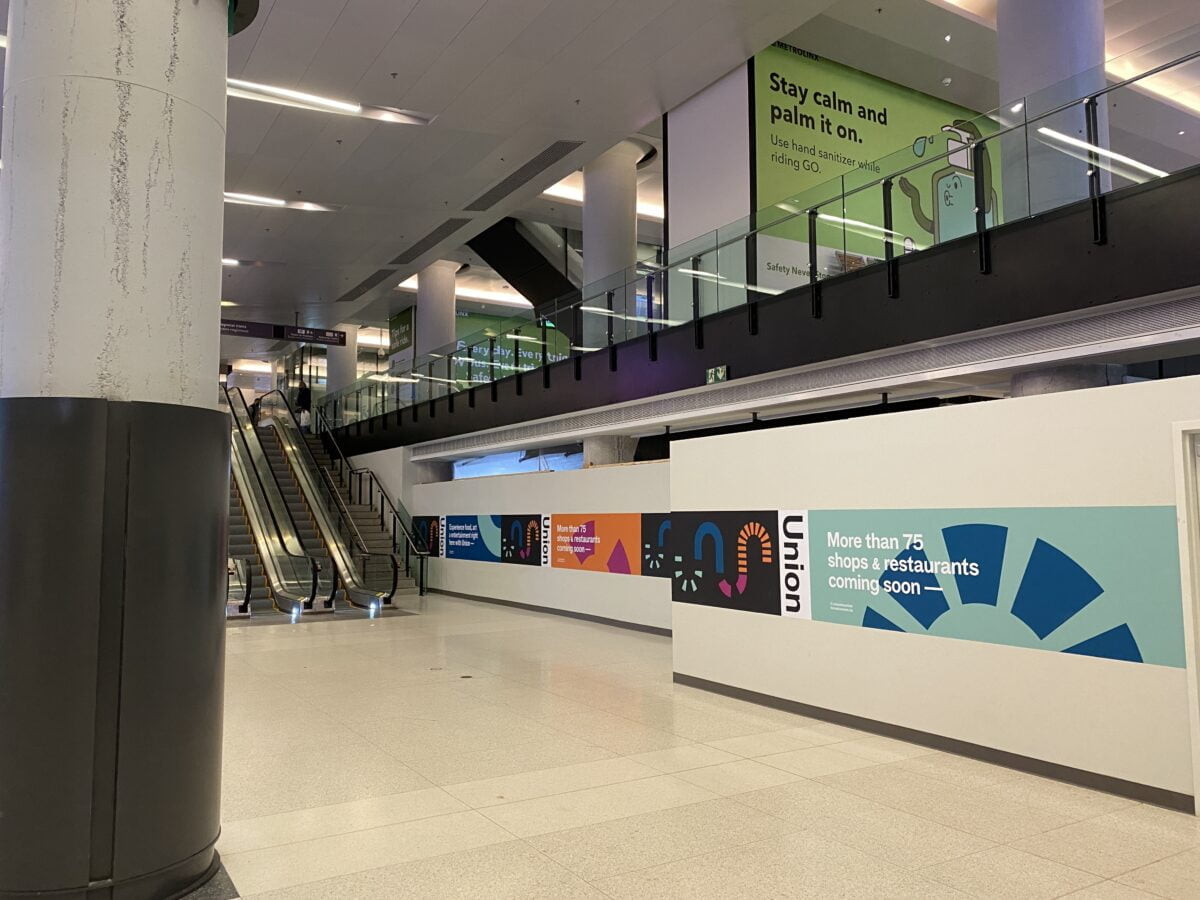
The Queenston will span about 10,000 square feet in the Bay Street Promenade section of Union Station, just outside the doors to Scotiabank Arena, which will also become home to several other retail and food concepts. Retail Insider announced last month that beauty brand Sephora would also be opening in the Bay Street Promenade in Union Station, and other tenants are either negotiating leases or are preparing to make opening announcements as well.
Union Station is Canada’s busiest transit hub and it is seeing an incredible overhaul that includes a repositioning and redevelopment of its retail component which will expand to a footprint of about 170,000 square feet. The mix of retail, food and service tenants will make Union Station a draw for locals and visitors in a unique heritage building in the heart of the city. There hasn’t been a more significant retail development in downtown Toronto since CF Toronto Eaton Centre opened nearly 45 years ago.
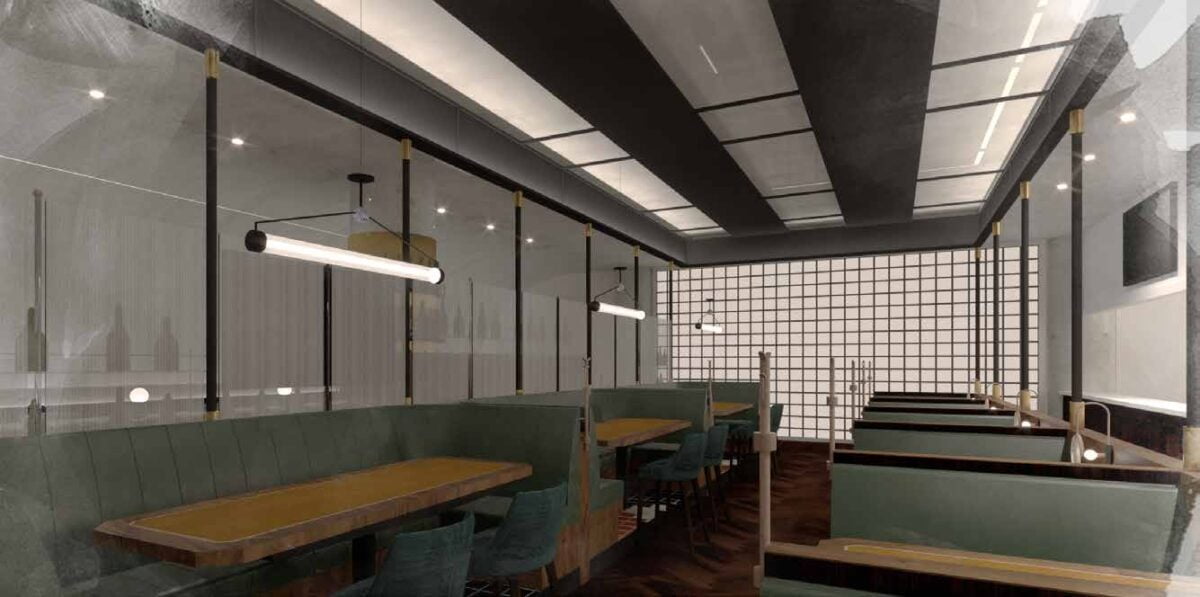
The Queenston Rendering (Image: Open Concept Hospitality)
Additional Images from The Queenston at Union Station
The Queenston Rendering (Image: Open Concept Hospitality)The Queenston Rendering (Image: Open Concept Hospitality)The Queenston Rendering (Image: Open Concept Hospitality)Image: The QueenstonImage: The QueenstonImage: The Queenston
Gary Newbury and Jeff Davenport join Retail Insider Founder and Editor-in-Chief Craig Patterson to discuss what the future might hold for large department store anchor spaces in shopping centres in North America. The department store model is going by the wayside and the future of some spaces could involve shipping fulfillment.
The Interview Series podcast by Retail Insider Canada is available on Apple Podcasts, Stitcher, TuneIn, Google Play, or through our dedicated RSS feed for Overcast and other podcast players. Also check out our The Weekly podcast where Craig and Lee discuss popular content published on Retail Insider which is part of the The Retail Insider Podcast Network.
Drop us a line at Craig@Retail-Insider.com. You can also rate us in Apple Podcasts or recommend us in Overcast to help more people discover the show!
Background Music Credit: Hard Boiled Kevin MacLeod (incompetech.com). Licensed under Creative Commons: By Attribution 3.0 License. http://creativecommons.org/licenses/by/3.0/
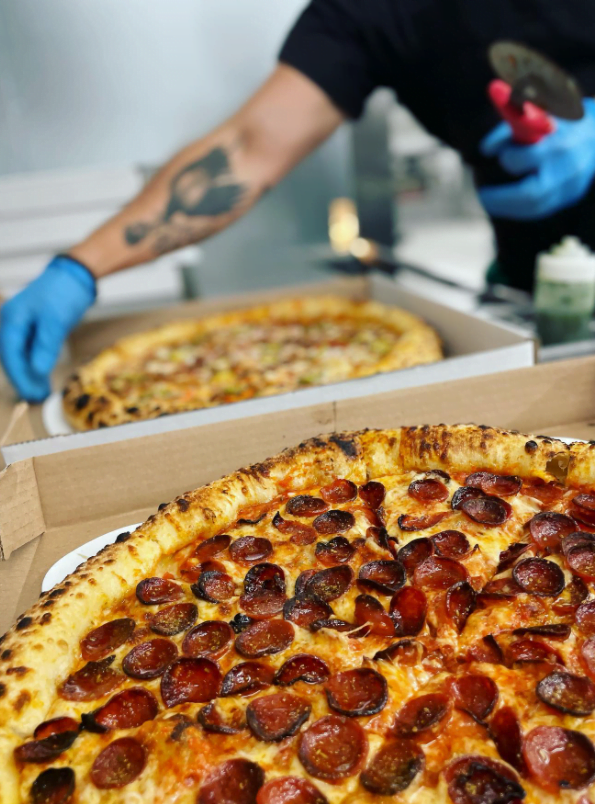
Maker Pizza is poised to continue to grow its footprint in the Toronto area with more locations planned in the future.
The company was established just over five years ago.
“It was a bit of a roller coaster ride to begin with but we’ve been very fortunate over that time and we’re in a strong position now for growth. The idea of Maker initially was to create a higher end, delivery pizza and also in doing that create something that was totally unique and original,” said Shlomo Buchler, owner of the company.
“That was a work in progress for the first two or three years. We had a clear vision of where we wanted to go with the product but we didn’t get there immediately. It took some time and believe it or not it’s still a work in progress for us. We are always looking to make improvements but we feel like we’re really close to attaining the original concept of Maker.”
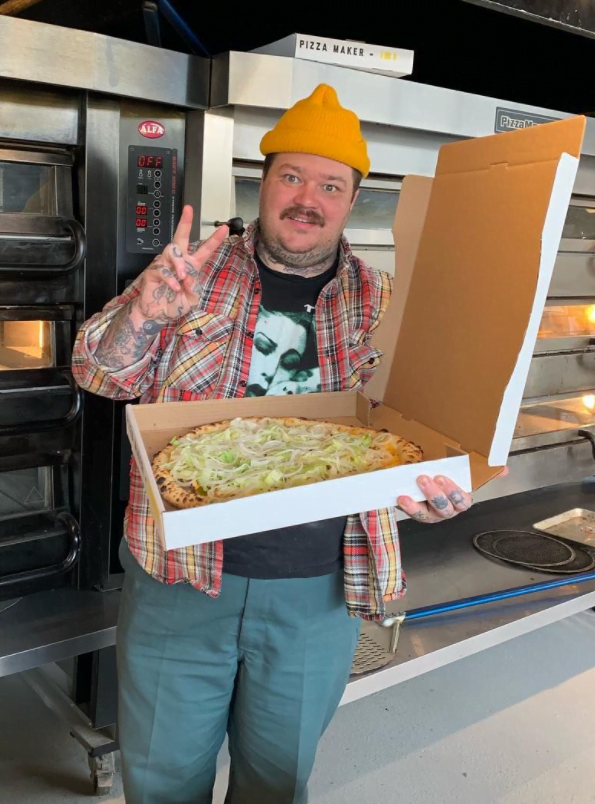
Canadian chef and partner Matty Matheson was a big part of creating the menu for Maker Pizza with original topping combinations.
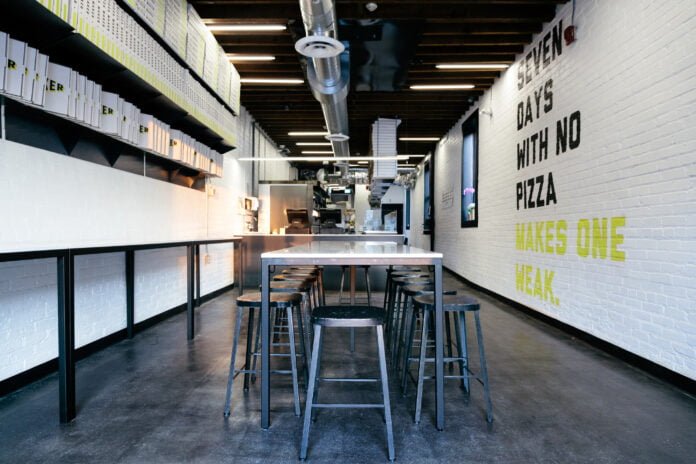
INTERIOR OF CAMERON ST LOCATION. PHOTO: MAKER PIZZA
“It’s a true testament to Matty’s talent that menu has stuck with us for the past five and a half years and here we are today growing the business,” said Buchler.
Currently, the company has what Buchler says are two and a half locations. There’s the original downtown location on Cameron Street. The second location is on Avenue Road in North York. And because it got so busy and the company realized it was having capacity issues with dough, it realized it needed to centralize the dough production. So it built a commissary kitchen in an industrial building on Carlaw Avenue.
“In doing so we recognized we had quite a bit of space in there so we thought why don’t we put an oven in here and open for part-time service. I don’t like using the term, but sort of a ghost kitchen concept,” said Buchler.
“We’ve now acquired a unit in that same building with a storefront so we’ll have a proper location within the next month or so.”
Most of the business has been delivery and take out. When the pandemic is behind us, the plan is to offer some form of dine in at some of the locations and stick to the delivery and take out model for other locations.
Image: Matty Matheson
Image: Maker Pizza
“We’ve got some ambitious goals that we’ve set for ourselves and we’re actually in the process of building a location at Bloor and Dovercourt right now. It’s a great little spot. We’re very excited about entering that market,” said Buchler. “And we’ve got another great location at Bayview and Eglington which we start building out at the beginning of Q1 2022. We’re looking at about eight locations by the end of 2022, all very strategically placed throughout the city.
“All the locations will be hitting up new markets that we currently don’t service.”
Buchler said he believes the company truly created a new lane more than five years ago for delivery-style pizza.
“I think it’s just the pursuit of perfection which is not at a place we expect to land any time soon, however we’re very dedicated to improving. So whether that means the product, the menu, the store design, the efficiency of the kitchen, the customer service. Those things to us are all equally important and we invest a lot of time and effort into all of those things,” said Buchler.
“I don’t want to say that separates us from anybody because I have a lot of respect for the other pizzerias but I will say that internally we have a team that is so dedicated to what we’re doing, it’s really a beautiful thing to see and the team to me is more than a team, it’s really become a family. And as we’re growing that, I think the people that are coming in now to Maker, who are just joining the team, the family, they really see that and that’s why we have a very low turnover rate. It’s more about what we’re doing internally at Maker than what’s happening outside of Maker.”
One of the biggest disconnects in human nature is between what we should do and what we actually do. Doctors tell us to lose weight and exercise more. Financial planners tell us to save and invest more while spending less. Career counselors tell us to constantly upgrade our skills. But despite this expert advice, the overwhelming majority of Canadians fail to take the steps today that will benefit them tomorrow. What if there was a way for retailers to bridge this gap by incentivizing people to do the things that they should be doing?
Since the dawn of modern medicine, doctors have told their patients that the key to good health is eating better and getting more exercise. It’s sound advice because we all know that many common life-threatening illnesses can be directly traced to poor dietary habits and a lack of overall fitness. The same goes for finances: spend less than you earn, budget, save, and invest wisely. Unfortunately, as easy as it is for professionals to make recommendations, follow-through is a much bigger challenge. But where doctors and accountants fail to inspire real change, Canadian retailers who offer reward programs can step up to the plate and actually change human behaviour.
According to behavioural science models, humans are often motivated by a carrot-and-stick approach to life, where the speed of receiving the reward prioritizes the action that needs to be taken — in other words, instant gratification is a far greater motivator than some distant future goal. In addition, the more enjoyable an action is, the faster it is adopted as a habit. As data-savvy Direct-To-Consumer (DTC) brands know, this approach has been widely adopted across the marketing ecosystem, including in loyalty rewards programmes. If you’ve ever gotten a text about a special offer from Tim Horton’s as you are driving past one of their stores, you get the basic concept: it’s all about retaining loyal customers.
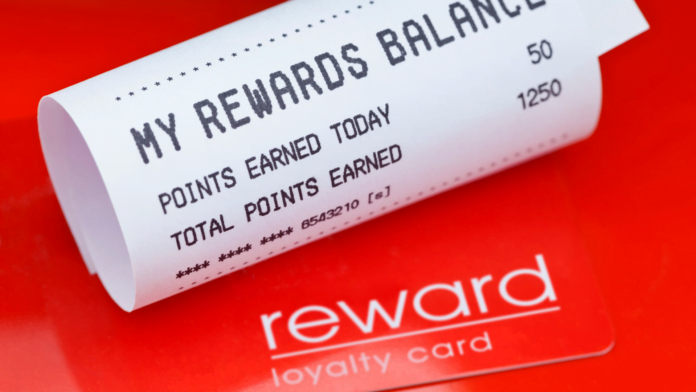
It seems that every coffee shop, hotel chain, and e-commerce brand has some form of loyalty reward, but the mere existence of a programme does not guarantee that a customer will actually stay loyal to a specific company or product. That’s because most of them lack a dynamic approach to continually engage with people beyond the point of purchase. Think of it this way: most of us only think about the local sandwich shop when we are hungry for lunch, which is when we go in, order food, and get a stamp on our reward cards. What if we received some sort of offer at 10 in the morning letting us know about the special of the day, or the promise of a free drink? When it comes to physical wellness and financial health, the same principle applies: savvy merchants know that loyalty comes from multiple touchpoints, not just a single interaction at the point of sale.
This presents an opportunity for Canadian retailers to build deeper connections with their consumers. It’s time to update rewards programs rooted in legacy principles (such as Aeroplan or Triangle Rewards) to go beyond the discount or freebie and evolve it to align with what matters most to their consumers. There is a massive focus on health, wellness, and financial literacy right now, and people are investing more time and money on achieving success in these areas. Retailers can leverage this trend by helping consumers reach these goals through retail rewards programs.
According to a recent Consumer Insights report, the top goals of North Americans include exercising more, eating healthier, supporting mental health, and seeking financial wellbeing. This is no secret, as these are the core elements that affect quality of life for most of us. However, many people lack the consistent action and motivation to follow through on these goals. This is where loyalty rewards can be the proverbial carrot to motivate customers in Canada.
Retailers might ask, “what is in it for me?” Why expand existing rewards programs to cater to a trend? The simple answer is that wellness is not a temporary fad, but a lifestyle, and catering to this audience gives merchants access to consumers who invest in their wellbeing. For example, there is a high likelihood that someone who regularly runs will be interested in rewards for running shoes, fitness apparel, supplements, or hundreds of other products. Avid marathon runners could be prime targets for deals on air travel rewards or hotel discounts so they can race in other cities. And the more that retailers learn about them, the possibilities to cater directly to those desires grows exponentially.
The consumer brands of the future are those that can expand to meet the shifting needs and desires of their customers. After such a transformational and tumultuous time in our lives, people are more conscious of health, wellness and financial stability than ever before, and are spending more money on the resources that will help them reach their goals. Now is the time for Canadian consumer brands to reposition their rewards programs to become “power tools” in their customers’ wellness journeys. These are the brands and retailers that will leap forward as the trusted leaders, supported by deep relationships and mutual interdependencies with their consumers.
Jane J. Wang
Jane J. Wang is the CEO of Optimity, a wellness and productivity app that helps people become their healthiest and wealthiest, by rewarding their efforts with our retail partners’ rewards programs. The Optimity Consumer Report can be downloaded here.