When it comes to the development of strategic partnerships and dynamic collaborations within the retail space, there isn’t a brand executing better than Sleep Country Canada. Following shortly behind the announcement of its expanded partnership with Walmart Canada and the launch of the brand’s Express stores, it’s set to launch an innovative new retail and digital collaboration with US bed-in-a-box provider Casper. It’s a development for Canada’s omnichannel specialty sleep retailer that President and incoming CEO, Stewart Schaefer, says allows the brand to continue expanding its sleep ecosystem while also building further on the incredible selection of sleep solutions that it provides customers.
“Sleep Country has cultivated a relationship with our customers over the years,” he says. “There’s a trust in the brand that’s resulted from ensuring that we’re the curator of the most relevant products and brands. Within the last five or so years, a number of wonderful brands like Endy, Purple and Casper started to appear on the scene with incredible product and innovation. And they were competing with each other and with us. The fact that Casper is now available in Sleep Country stores across Canada changes that landscape between us, and it changes the landscape for the customer in terms of the accessibility to one of the most relevant brands from coast-to-coast.”
Expanded sleep ecosystem
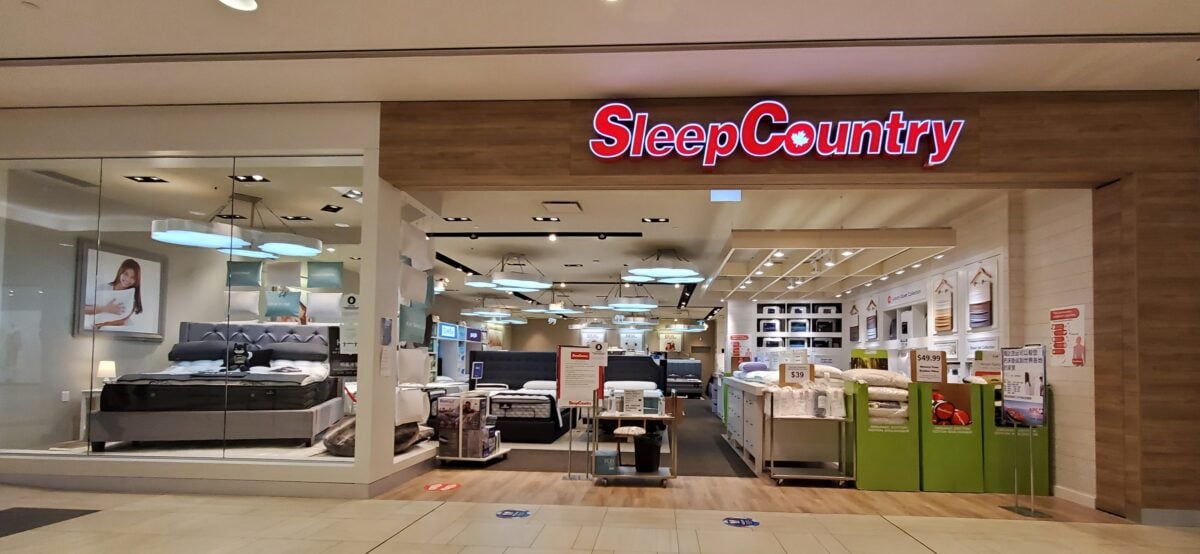
Sleep Country at CF Richmond Centre. Photo: Geetanjali Sharma
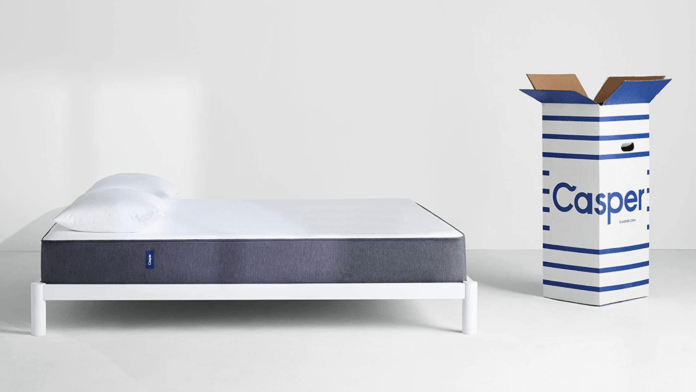
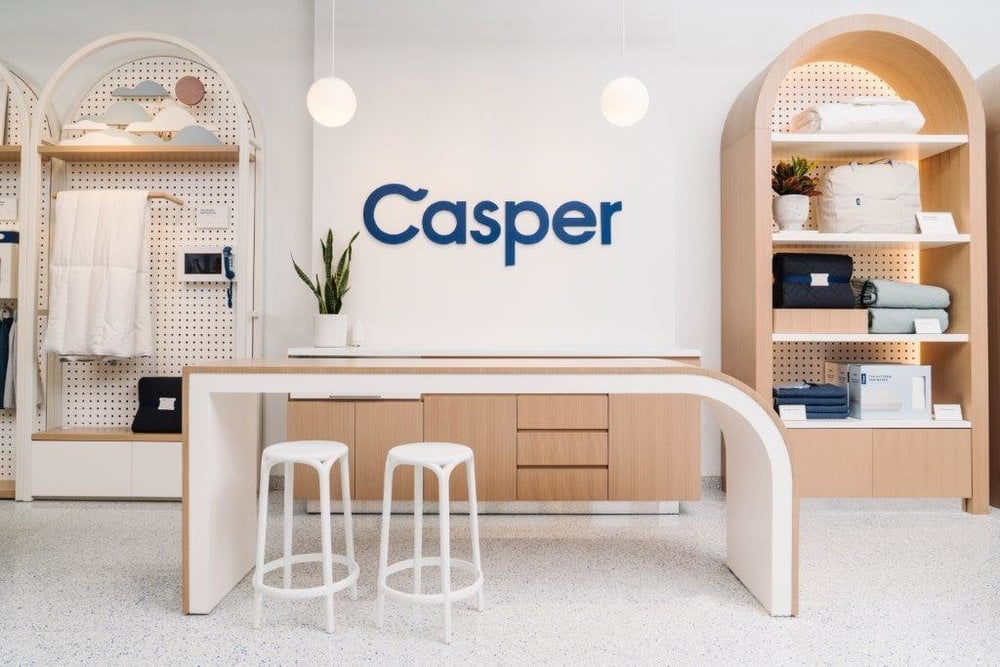
The partnership, announced in September, makes Sleep Country Canada the exclusive provider of six of Casper’s award-winning products, allowing Canadians, beginning early October, to purchase Casper’s core-collection mattresses – the Original, Nova, Wave, Hybrid Original, Nova Snow and Wave Snow – in most Sleep Country and Dormez-vous stores and online. The two companies have also developed a collaborative revenue sharing partnership concerning all Canadian sales within Casper’s Canadian stores and ecommerce platforms. In addition, the brands have entered into a multi-million-dollar cross-promotional marketing commitment intended to broaden and strengthen the awareness of each brand. And, just as important as the details of the deal, says Schaefer, is the ways in which the partnership further bolsters the brands ongoing omnichannel efforts.
“We are not only the retailer that brings Canadians the most innovative products available on the market, but we’re also channel agnostic,” he asserts. “This philosophy has allowed us to be flexible and to develop partnerships with brands, whether they’re digital-first or brick-and-mortar-first. This has enabled us to serve our customers in the way they want to be served. The acceleration of customer shopping behaviours and preferences toward the online channels throughout the pandemic has been incredible. Of course, this was an evolution in the consumer that was already happening prior to COVID, but the increased comfort demonstrated by Canadians to shop and purchase online means that you have to be there with your product if you want to grow going forward.”
Increasing awareness
For the award-winning American sleep products provider, this exclusive partnership marks its largest Canadian distribution platform to-date, with mattresses being sold across Sleep Country’s national network of 287 retail locations and robust e-commerce platforms. Casper has made significant progress in the expansion and distribution of its products through retail partnerships over the past year. Its partnership with Sleep Country, in particular, allows it to extend its presence in the Canadian market and raise awareness of the brand with the Canadian consumer.
“We are thrilled to announce Sleep Country as our exclusive retail partner for our most popular mattresses across Canada,” says Emilie Arel, President and Chief Commercial Officer at Casper. “As we strategically and thoughtfully expand Casper’s footprint, we aim to partner with respected retailers that possess unparalleled sleep and market expertise, and who prioritize a commitment to customer service. As Canada’s leading sleep retailer, I am confident that Sleep Country is the right partner for us to expand our distribution, while leveraging their nationwide logistics network and supply chain to efficiently serve the Canadian consumer.”
Focus on the consumer
As part of the partnership, Sleep Country and Casper will collaborate on the development of new Casper products designed exclusively for the Canadian market, combining the American company’s commitment to design excellence and innovation with Sleep Country’s intimate knowledge of Canadian consumer preferences. It’s a partnership and collaboration that offers each brand tremendous opportunities to continue growing. And, as Schaefer points out, it provides Sleep Country with another layer of offering, building further on a fast-growing sleep solution omnichannel ecosystem in order to continue satisfying the needs of an evolving and varied consumer.
“I learned years ago that not everybody wants to walk into a Sleep Country or Dormez-vous store to shop. The brand has a very strong loyalty-base that we continue to grow every year. But sometimes people will want to shop at a Casper or with Purple or Endy. And it’s up to Sleep Country to ensure that the Canadian consumer has access to all of these amazing brands. In the end, we’re a retailer. We sell mattresses and sleep products, and we do that very well. But we’re also a distribution and logistics machine with two new super hubs to better service the customer. And, as part of that service, we need to provide the range in products that our customer is looking for. We’ve been very focused on this and have been active for the last long while, developing partnerships with brands that share the same vision as Sleep Country. And, moving forward, we plan to continue being creative and innovative in the ways we grow and engage with the Canadian consumer.”
Montreal-based Noize, a brand that offers what it describes as cruelty-free and sustainable apparel and outerwear for women and men, is expanding its retail footprint with several new locations, including entering the Ontario market.
The company also has bigger plans to roll out the brand in more locations.
Mayer Vafi
Mayer Vafi, Chief Operating Officer, said the company has a three-year plan that will eventually result in many more locations in North America – not just in Canada.
“We believe the future of commerce is omni-channel. Digital and physical combined offering that experience for the end consumer to be able to try on the brand, learn about the brand, touch and feel the product of the brand and at the same time shop online,” he said.
The number of stores the company will eventually expand to is still to be determined but Vafi said it will be as much as the company can operationally handle. He said plans in Canada will include other provinces beyond Ontario and Quebec. For example, Western Canada is a target for the retailer.
“We believe that the values of our brand a lot of people out West live by these similar values and also the data proves that our customers are also out there. It’s just an operational, logistical challenge to start so far out,” he said.
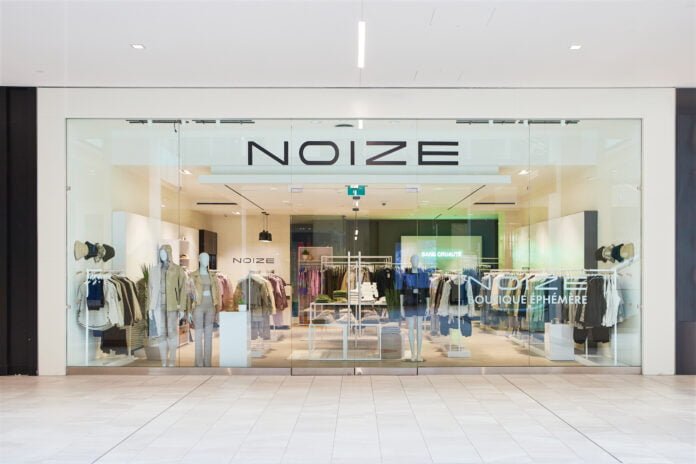
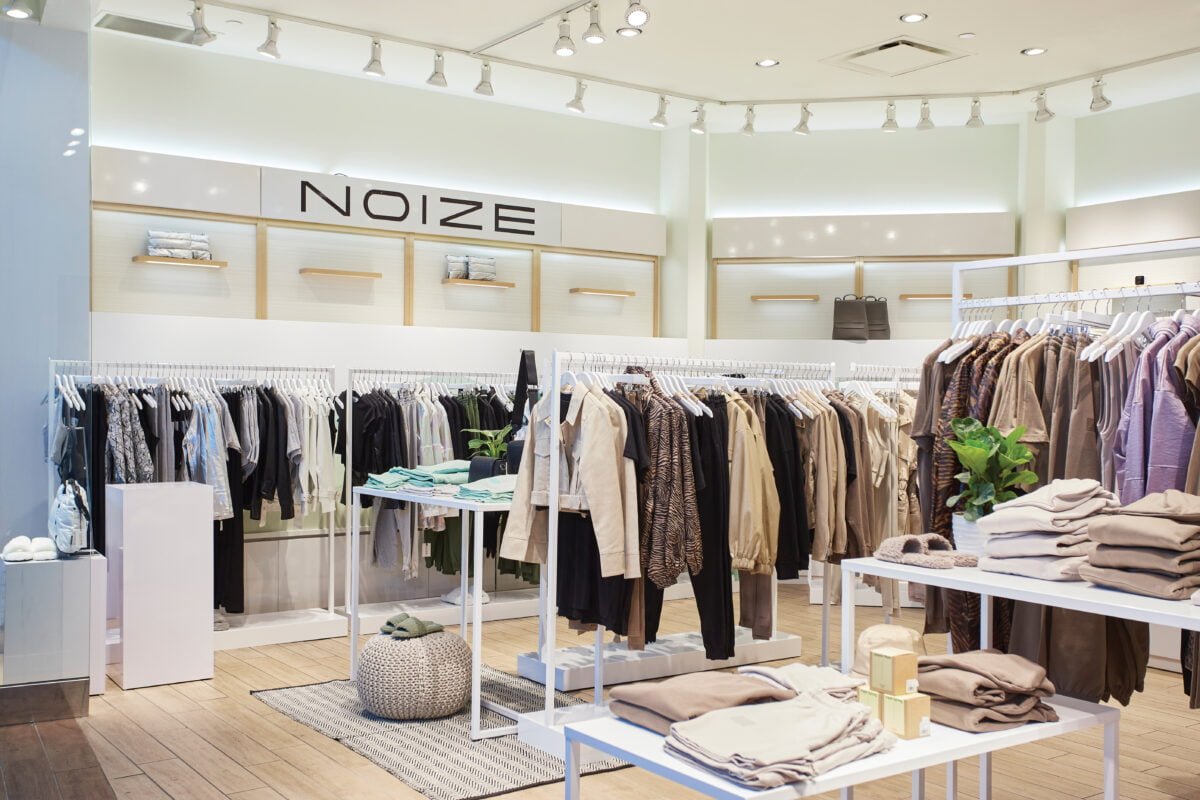
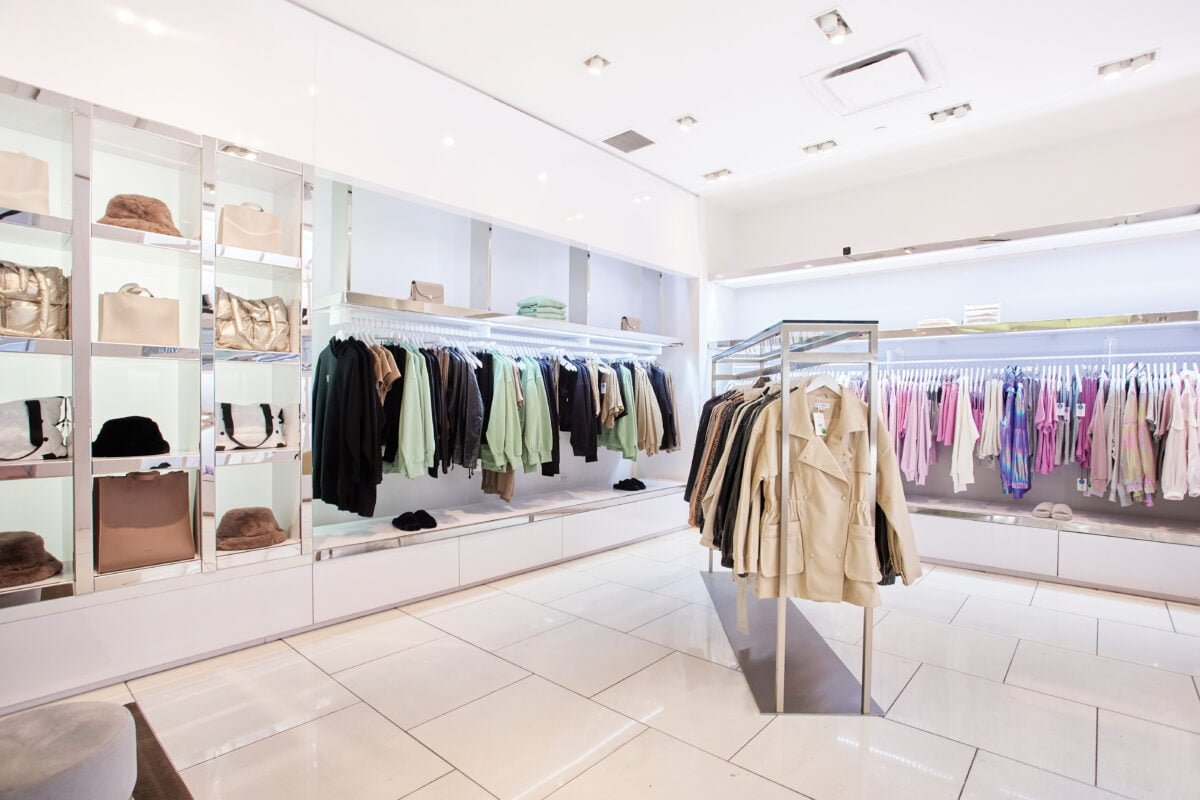
Noize at CF Carrefour Laval. (Image: Noize)
“Retail is far from dead. This whole notion where people are pushing the theme that oh retail is dead and retail is not coming back. Digital and Amazon kills it. That’s all excuses in my opinion for the core business not evolving. I think that offering a unique shopping experience all tailored around customer service and really making sure that the people that walk in understand that you are there to serve them, to solve for them and make sure that they have a good experience which I can clearly say as a consumer going into stores, most retailers don’t. You have to basically almost do the work yourself.
“We believe that is the future and our business and our retail stores are all tied around the customer experience and making sure that they feel important and that they feel value and showing how much we appreciate the business and the work that they do in coming in to visit us. It is the future. Retail is far from dead. People are going to the malls, people are shopping outside, people are hitting at the stores. It’s just a matter of giving them a reason to buy. A value has to be there and the stuff’s got to look good.”
By the end of September, the retailer will have seven stores.
Locations include CF Carrefour Laval, Centre Rockland, Montreal Eaton Centre, Mapleview Shopping Centre in Burlington, Ontario, Square One Shopping Centre in Mississauga, CF Rideau Centre in Ottawa, and Premium Outlets Montreal in Mirabel.
Noize at Rockland Center. (Image: Noize)
Mapleview opened at the beginning of September while Square One, Rideau Centre and Mirabel will open by the end of the month.
“We have a very healthy wholesale business. We deal with a lot of very reputable North American retailers such as Nordstrom, The Bay, all the key players in the sporting world as well,” said Vafi. “Our ecomm business is very healthy and with the data that we’re able to study from our ecomm sales opening these locations solved strategically for us where our end consumers are located.
“(Expansion) is data driven obviously. That’s why we are expanding in those specific locations. But why we are expanding into retail is because we believe in the omni channel experience. We believe that our end consumer should have the ability to touch and feel the product just as much as look at it through social media or e-commerce on our platform,” said Vafi.
“Omni channel is something we truly believe in and offering a seamless experience between digital and the physical world is really what we’re striving for.”
The brand was established in 2010.
“Our ethos and our business is built around sustainability and honestly ethical fashion. The brand was born from our belief that what we wear should not only look good and feel great but also be a champion of a positive contribution towards a better tomorrow,” said Vafi.
“All of our products are vegan, are PETA (People for the Ethical Treatment of Animals) certified. There’s no animal by-products in what we do and what we manufacture.”
The company manufactures outerwear, sportswear, leisure, active and lounge wear as well as accessories. It also has pet and dog accessories. All products are made in the Orient.
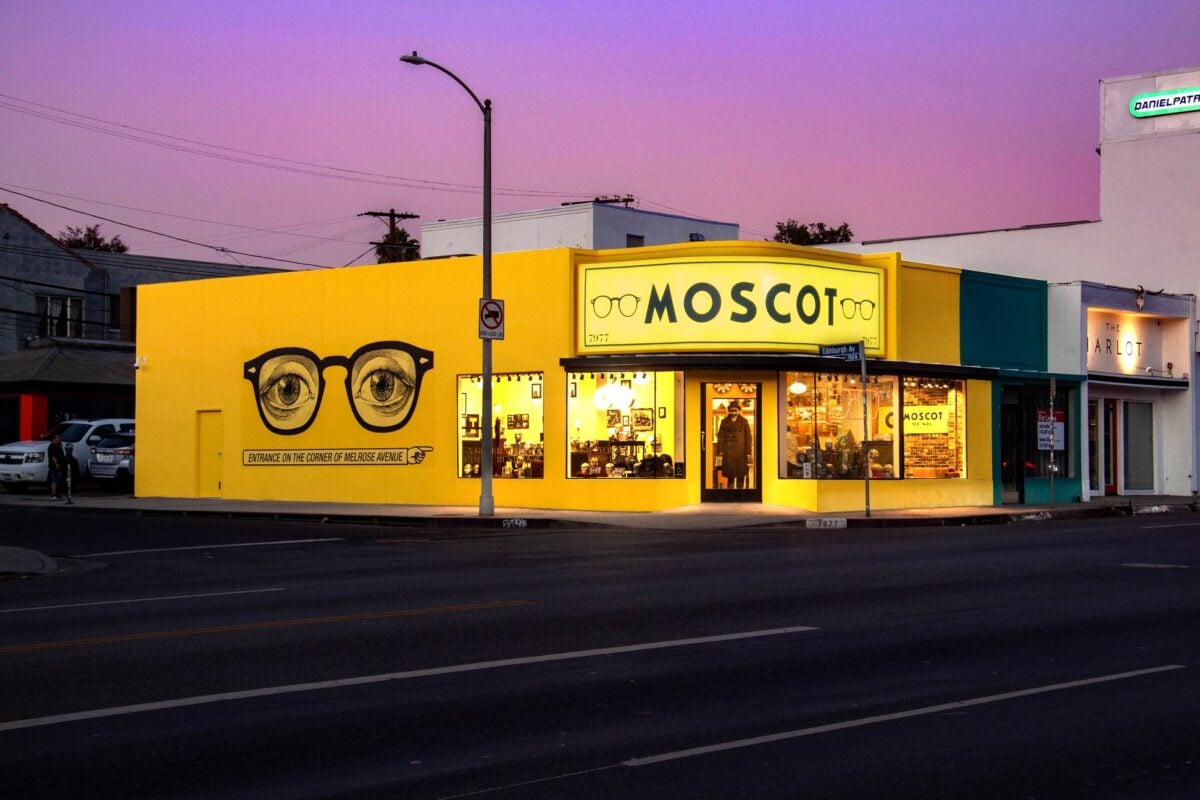
Upscale New York City-based optical frame and sunglasses brand MOSCOT will enter the Canadian market by opening its first standalone store location in Toronto. The family-owned business spans five generations and has 16 stores in 10 cities globally.
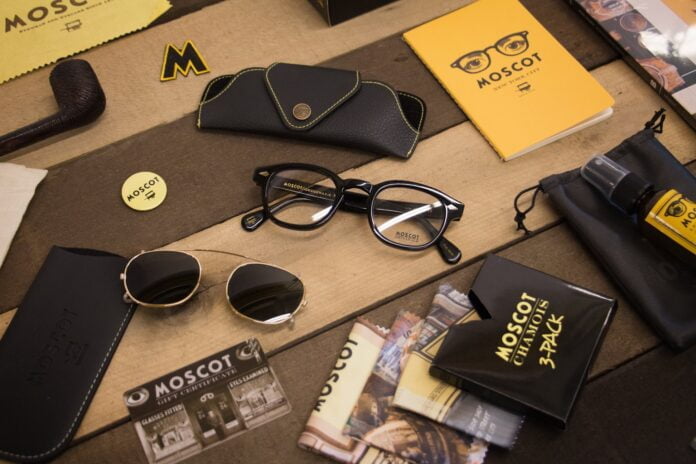
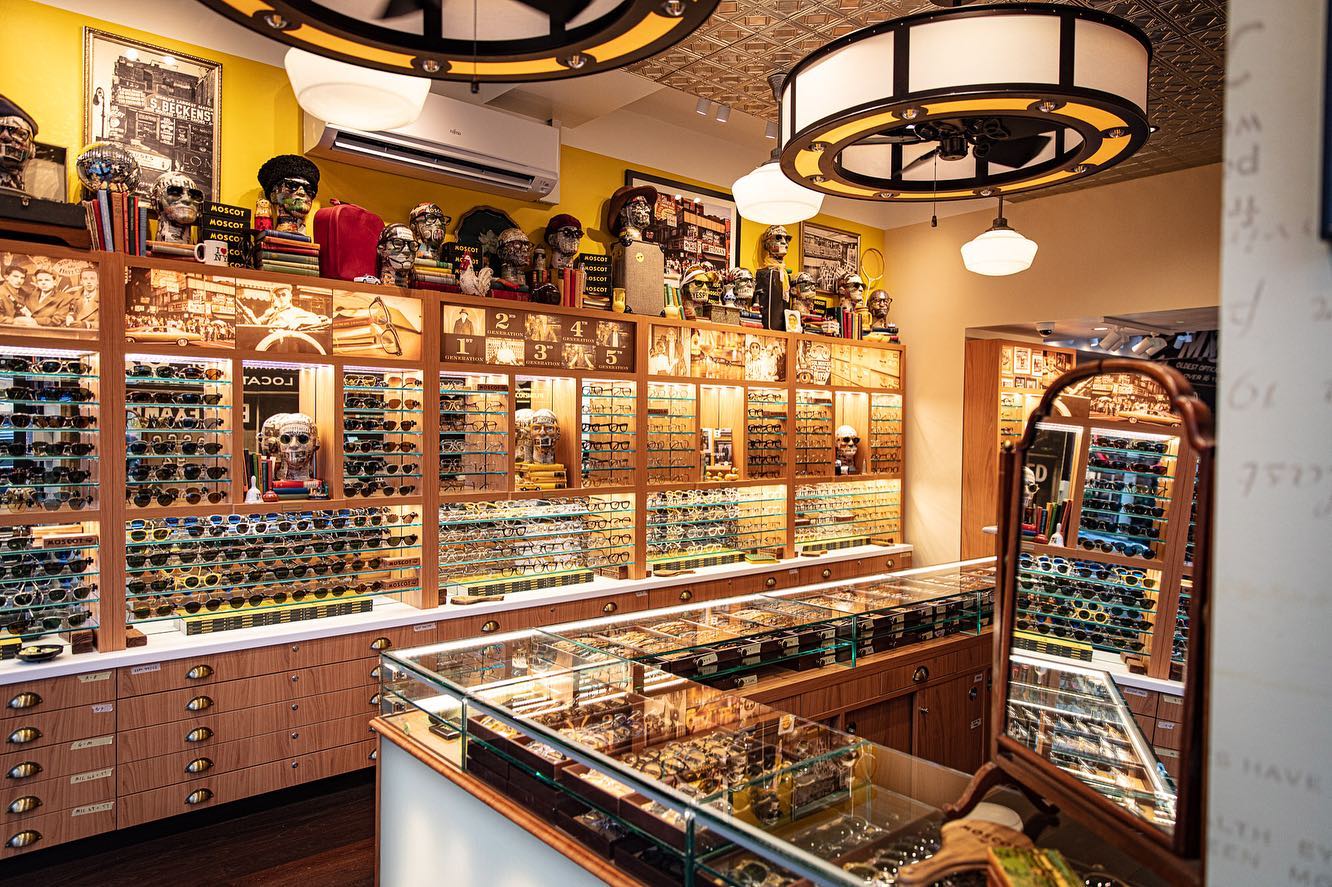
The 106-year-old brand is known for its unique frames in a variety of colours priced at several hundred dollars per pair. Frames are made from materials ranging from metal to beta-titanium. Since 2008, the company has partnered with several designers in collaborations. MOSCOT stores are noted for having eye-catching yellow facades with black trim.
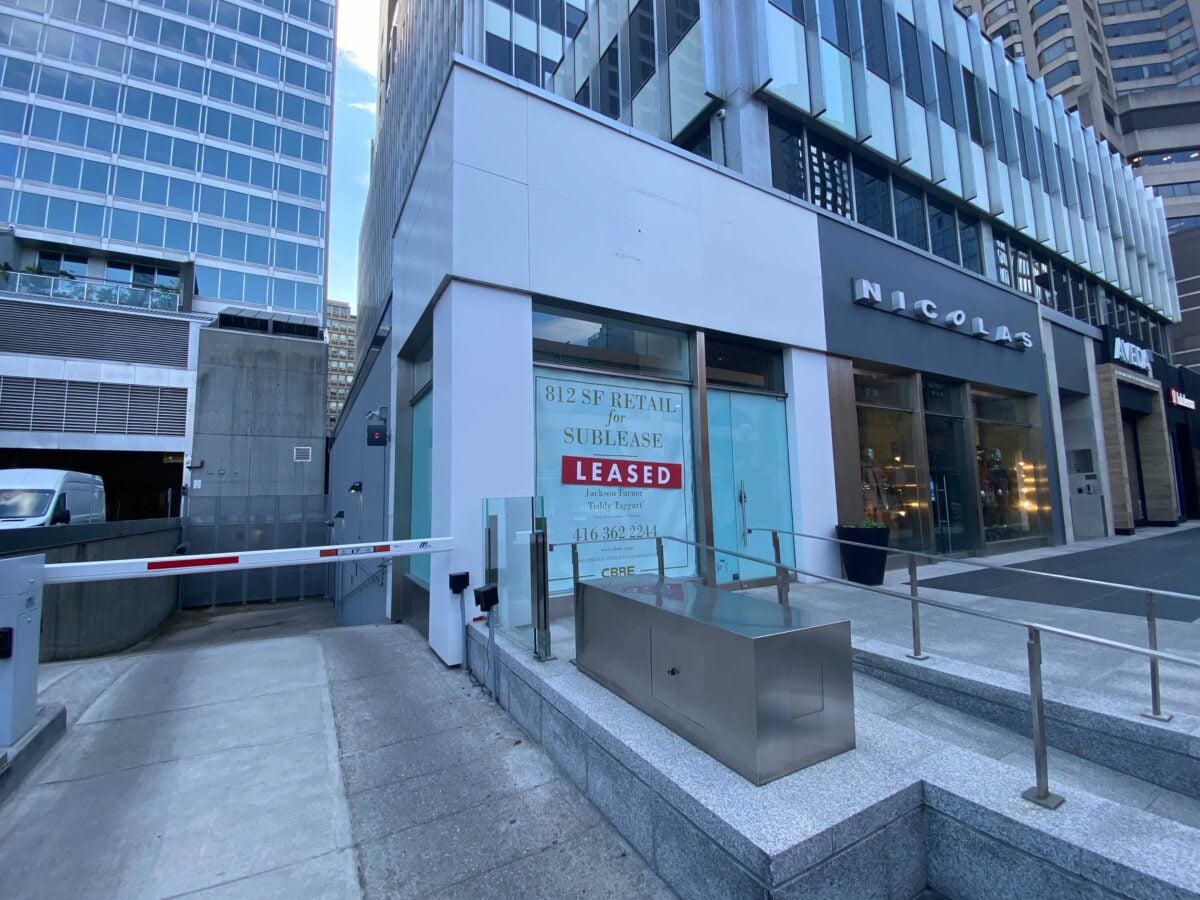
MOSCOT’s first Canadian storefront will open at 153 Cumberland Street in Toronto’s Bloor-Yorkville area. MOSCOT will replace retailer SEE Eyewear that recently vacated the space — in the fall of 2017 Detroit-based SEE opened in the location where it operated for about three and a half years.
The MOSCOT storefront on Cumberland Street will measure about 800 square feet on one level. Luxury multi-brand fashion retailer Nicolas is located next door in a building owned by Kingsett Capital that includes three luxury retailers with the address 130 Bloor Street.
Future MOSCOT Yorkville Location – Photo by Craig Patterson
CBRE Toronto broker Arlin Markowitz and his team listed the former SEE eyewear space and is said to have coordinated the sublease of the former SEE store to MOSCOT.
It’s unknown at this time if MOSCOT will open more Canadian stores. The brand still has only 16 stores globally. In the United States, MOSCOT operates five stores in the New York City market as well as one in Los Angeles — Toronto will only be the third market for MOSCOT in North America to have a standalone store.
In the UK, MOSCOT operates three stores in London. Other global cities where MOSCOT has standalone stores include Rome, Milan, Paris, Amsterdam, Tokyo, Yokohama and Seoul.
MOSCOT-branded eyewear is also sold wholesale in selected optical retailers globally, including several in Canada.
Image: MOSCOT on Melrose
Image: MOSCOT King’s Road
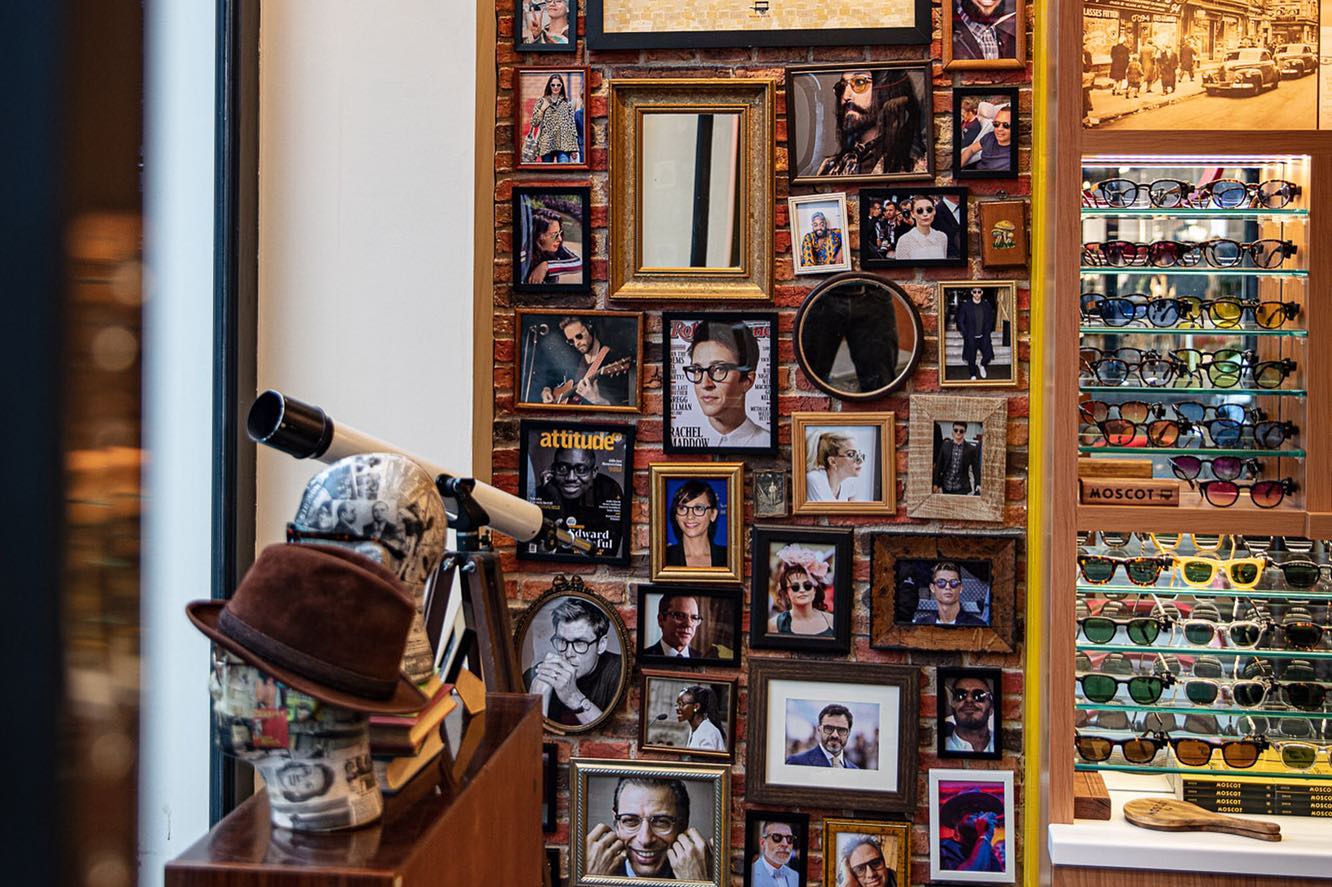
Image: MOSCOT King’s Road
MOSCOT was founded by Hyman Moscot in the Lower East Side neighbourhood of Manhattan in 1915. In 1925, his son Solomon took over in the business and in 1935, he relocated the store to 118 Orchard Street where he introduced a bright yellow colour scheme to the store that was named SOL MOSCOT. Solomon’s son Joel began running the business in 1951 and his sons Harvey and Kenny joined the company in 1986 and 1991 respectively.
Joel retired in 2003 and ‘Sol’ was dropped from the name of the retailer that was then called just MOSCOT. His sons began to take the retailer global with stores overseas in Asia and Europe.
Various celebrities in years past have worn MOSCOT frames, including Andy Warhol, Truman Capote and Johnny Depp.
MOSCOT will join other eyewear retailers in Toronto’s Bloor-Yorkville area. Last month on Cumberland Street, retailer All Eyes On Me opened a unique storefront focused on Cartier designs. Other optical retailers in the area include Karir on Old York Lane, Optical Outlook on Yorkville Avenue, Holly Eyewear on Cumberland Street, Lenscrafters at the Holt Renfrew Centre, Hudson’s Bay Optical at the Hudson’s Bay Centre, Josephson’s on Bay Street and a Hakim Optical at the northwest corner of Bloor and Bay Streets.
We’ll follow up on this story with photos of the new store when it opens.
Young woman is outdoors, holding Christmas presents. She is holding paying card and smart phone
As vaccination rates increase in Canada and globally, shopping trends in 2021 are poised for yet another shift from last year’s surge in eCommerce transactions. The path to purchase is increasing complex as retail searches grew at a rate 3X higher than the same time last year, according to Google.
Retail Council of Canada is helping retailers of all sizes navigate their strategy for 2021. Insights on consumer shopping behaviours for the holiday season will be presented by Luc Dumont, Vice-President, CPG at Leger. Leger shares the most important findings of the annual Holiday Shopping survey of over 2,500 Canadians coast-to-coast.
Retailers are also increasingly aware of the value of understanding their local communities and the cultural nuances. John Stevenson of CulturaliQ will share strategic insights covering multicultural consumers and their shopping patterns. John will also speak about the changing face of Canada, cultural holidays and trends, and how to connect the dots from a 360 DEI perspective.
Navigating the holidays wouldn’t be complete without talking about your digital strategy and leveraging the knowledge of Google. Jamie Garatsougias, head of Direct-to-Consumer and eCommerce Retail at Google joins us to share the critical insights to bolster your strategy.
Whether you are finalizing your holiday strategy or figuring out where to go, Retail Council of Canada’s Holiday Shopping Forum will help you gain the critical insights you need to stand out and build meaningful connections with your customers. Retail Holiday Shopping Forum will be hosted October 5, 2021, fully virtual from 1:00 – 4:00 pm ET. View the agenda or purchase tickets today
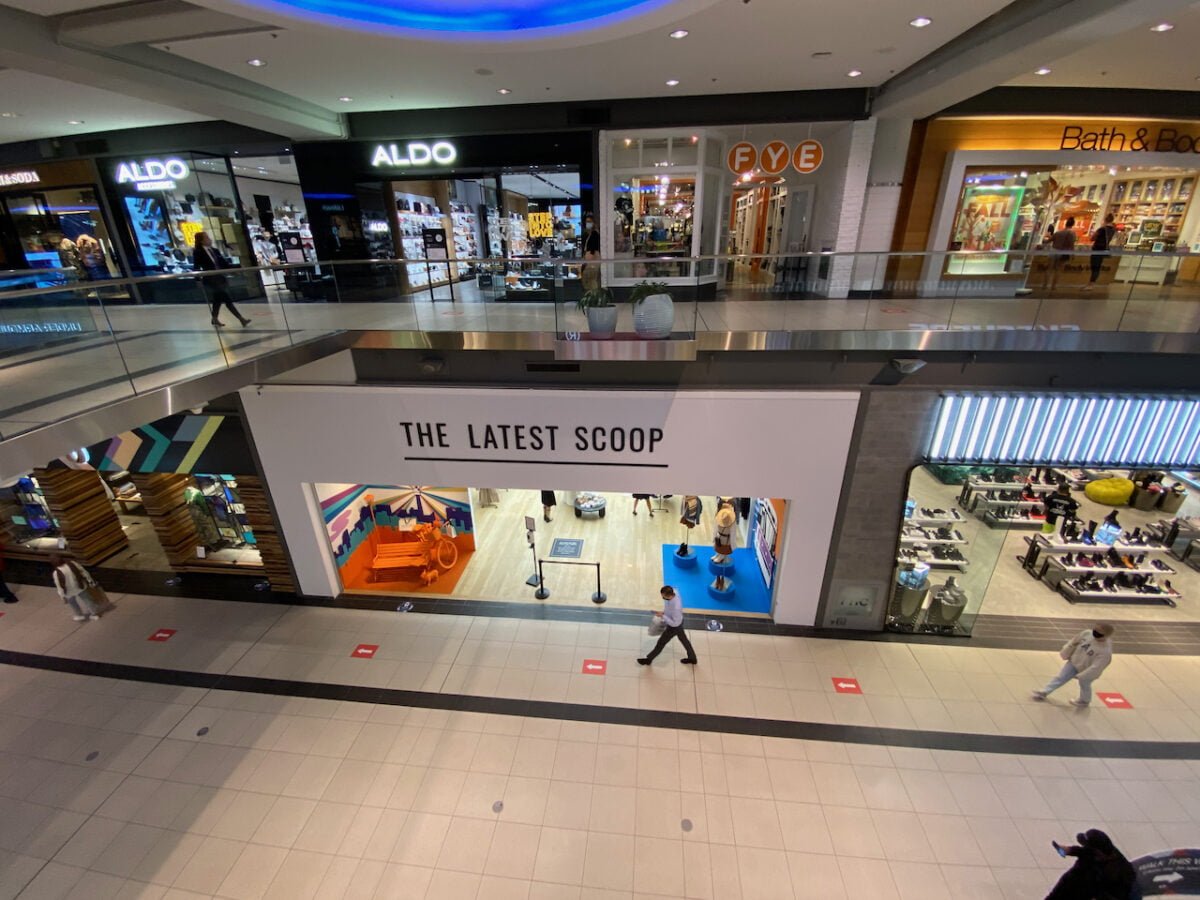
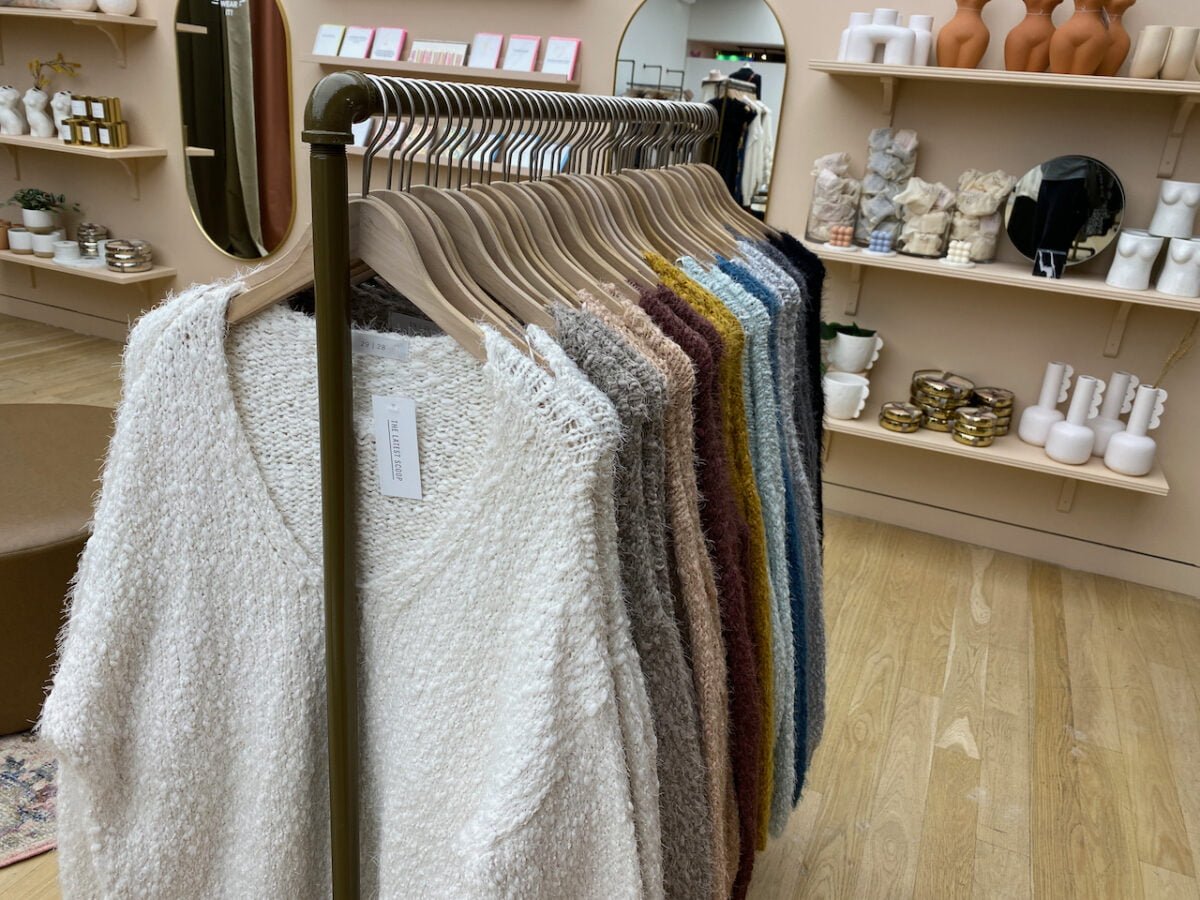
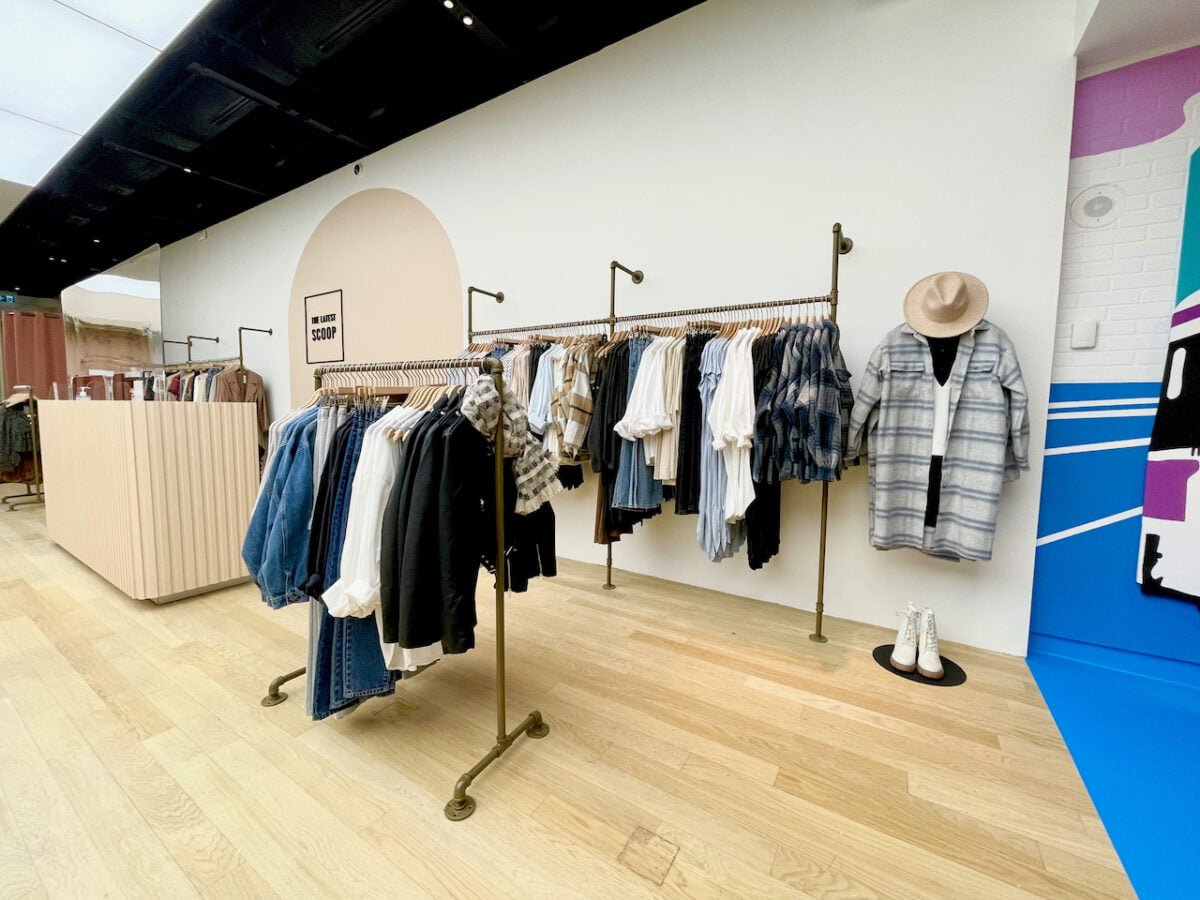
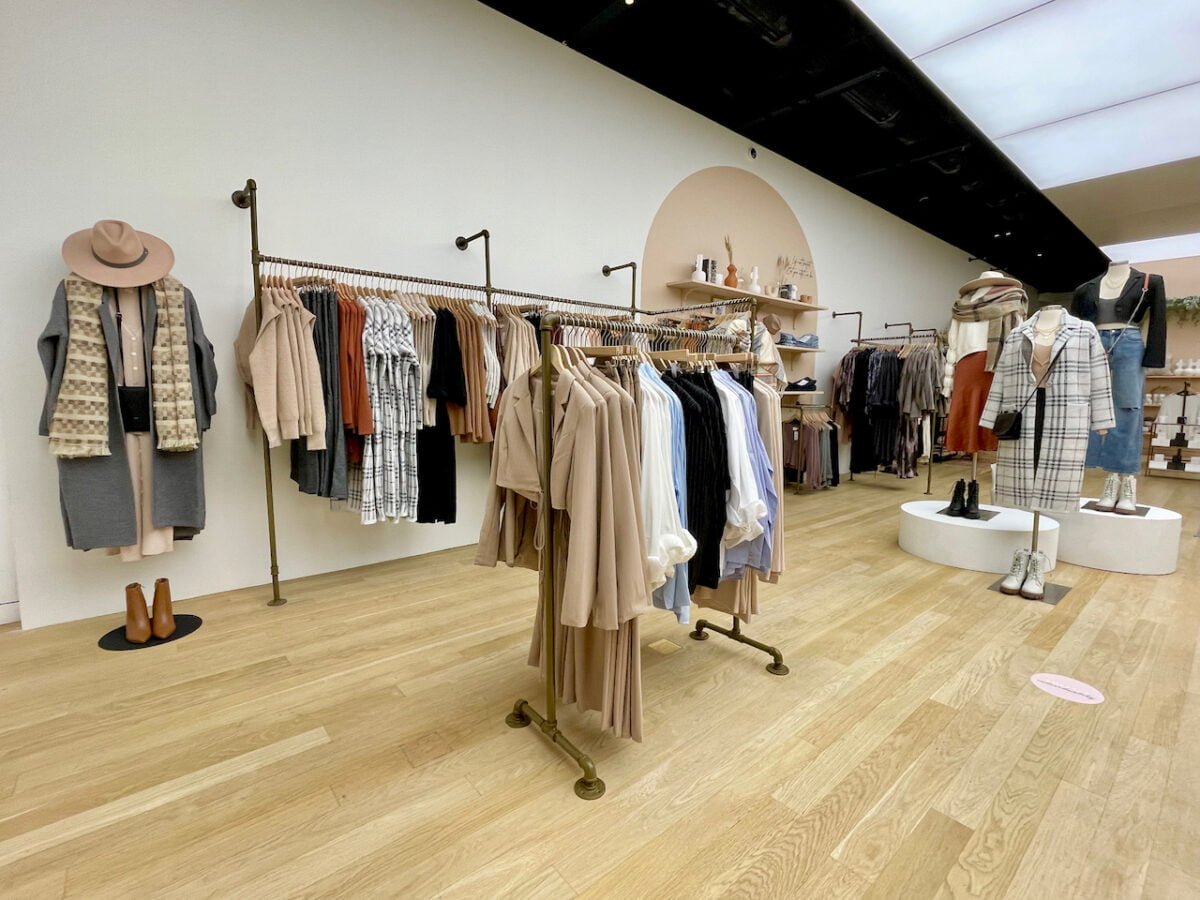
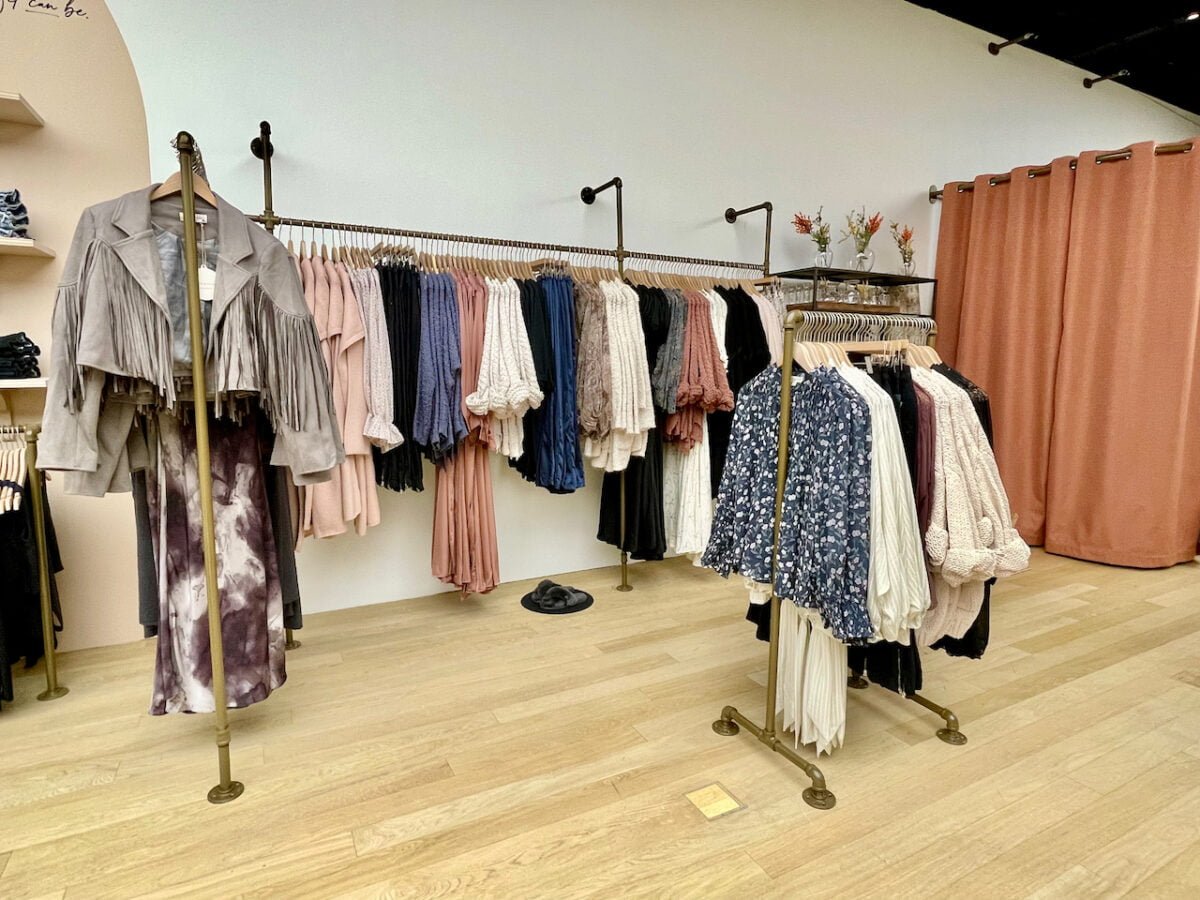
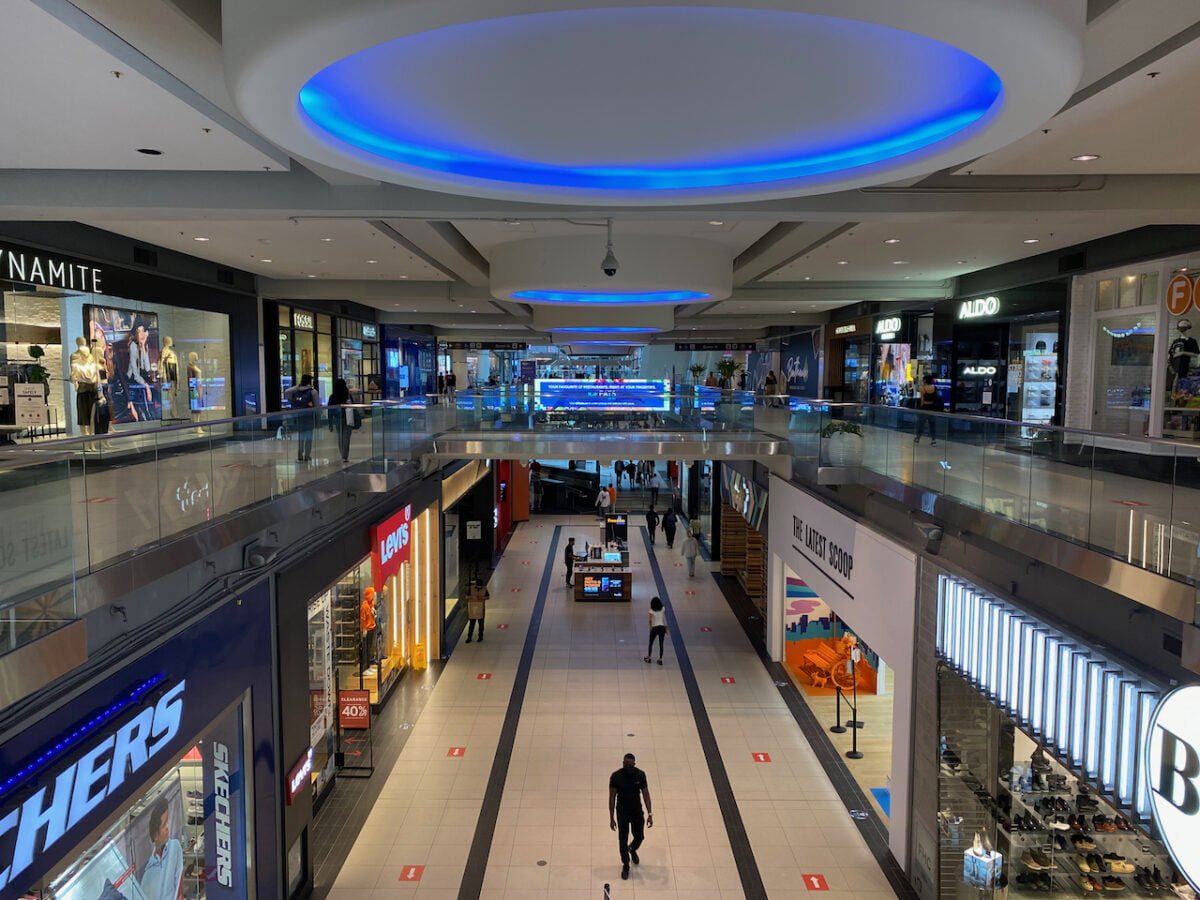
The store takes over a vacated Microsoft location which shuttered in 2020. The technology giant shuttered all 83 physical stores worldwide in June 2020, affecting seven Canadian locations in BC, Alberta and Ontario.
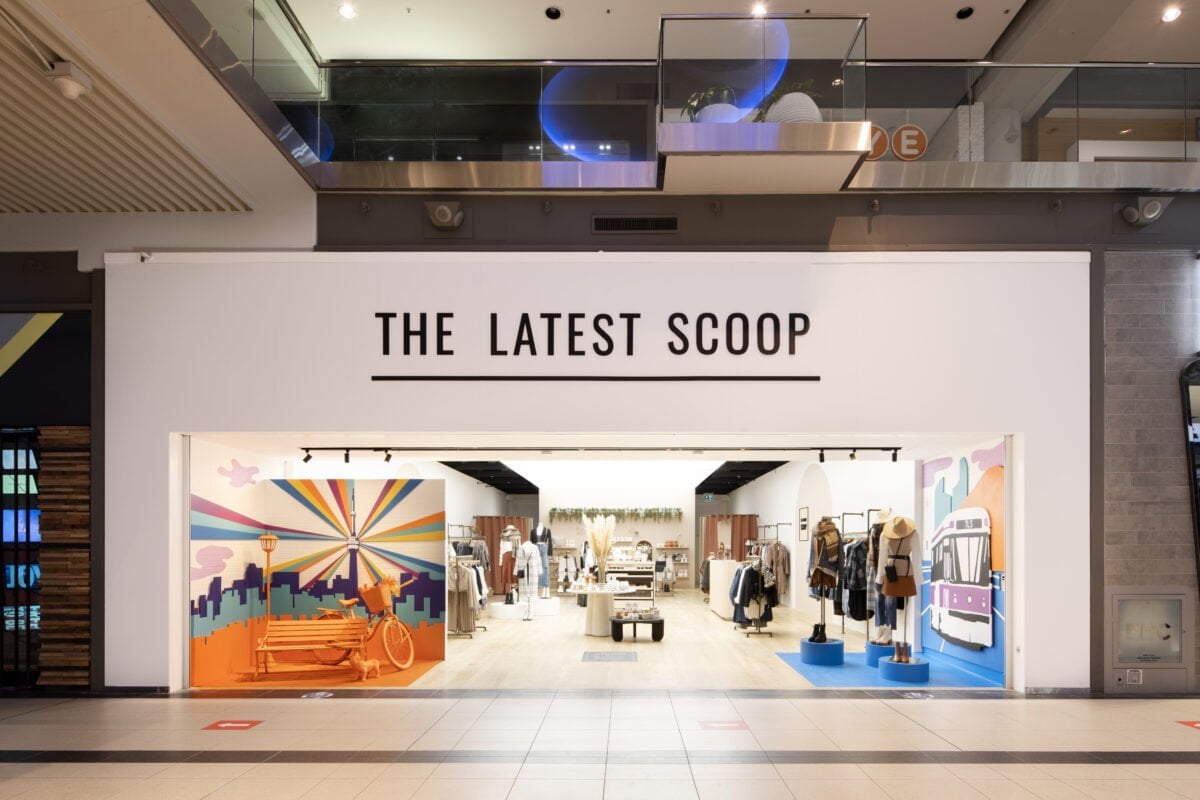
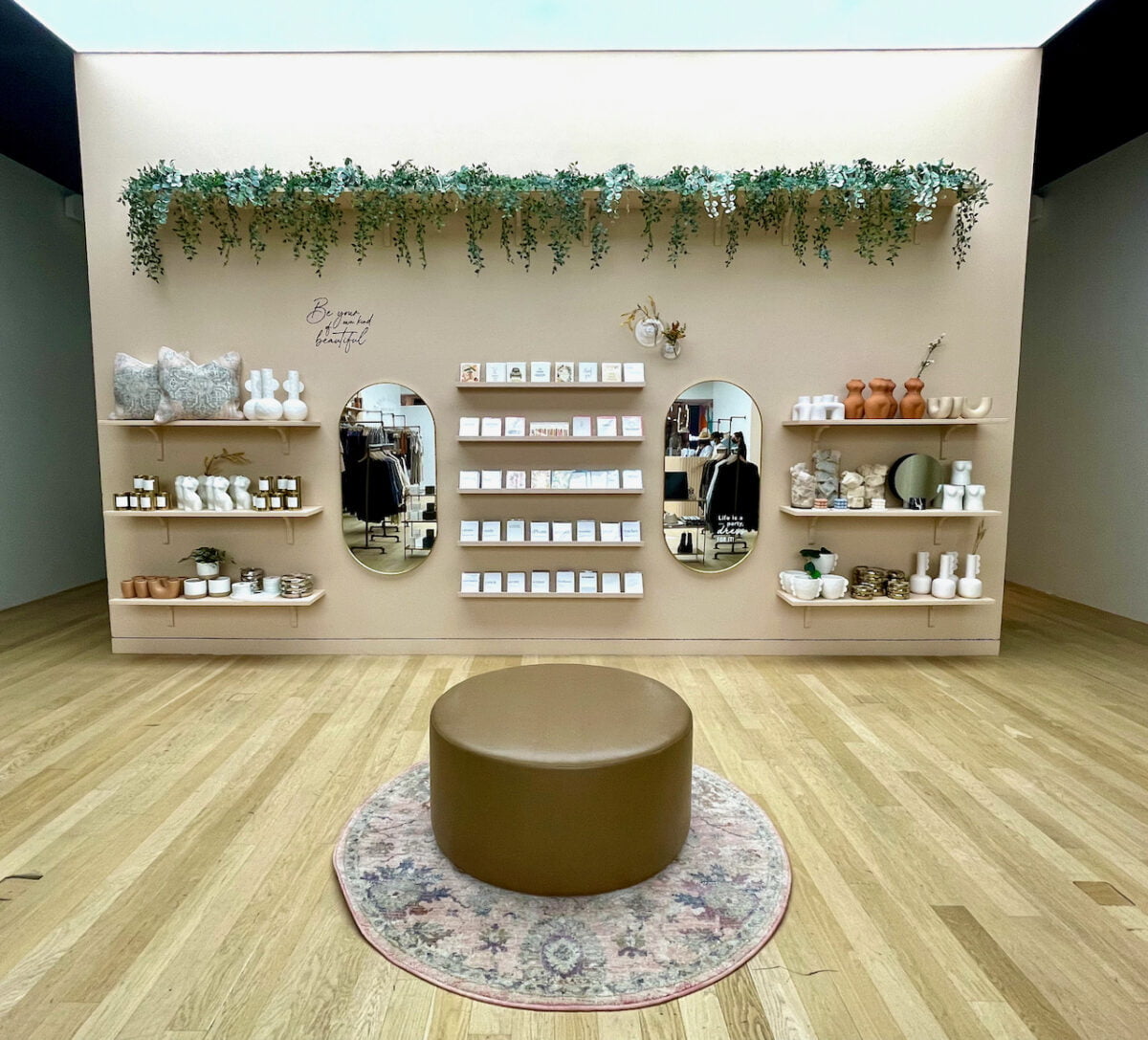
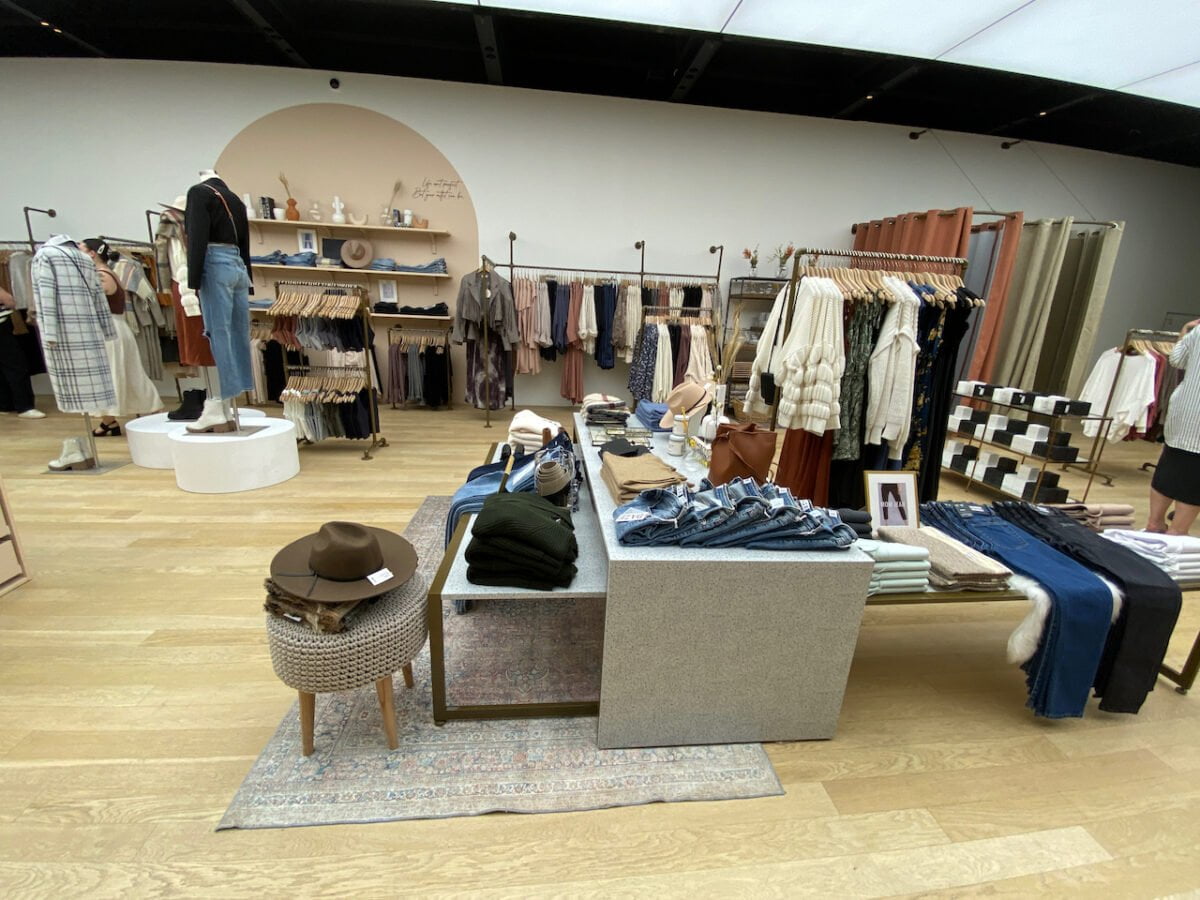
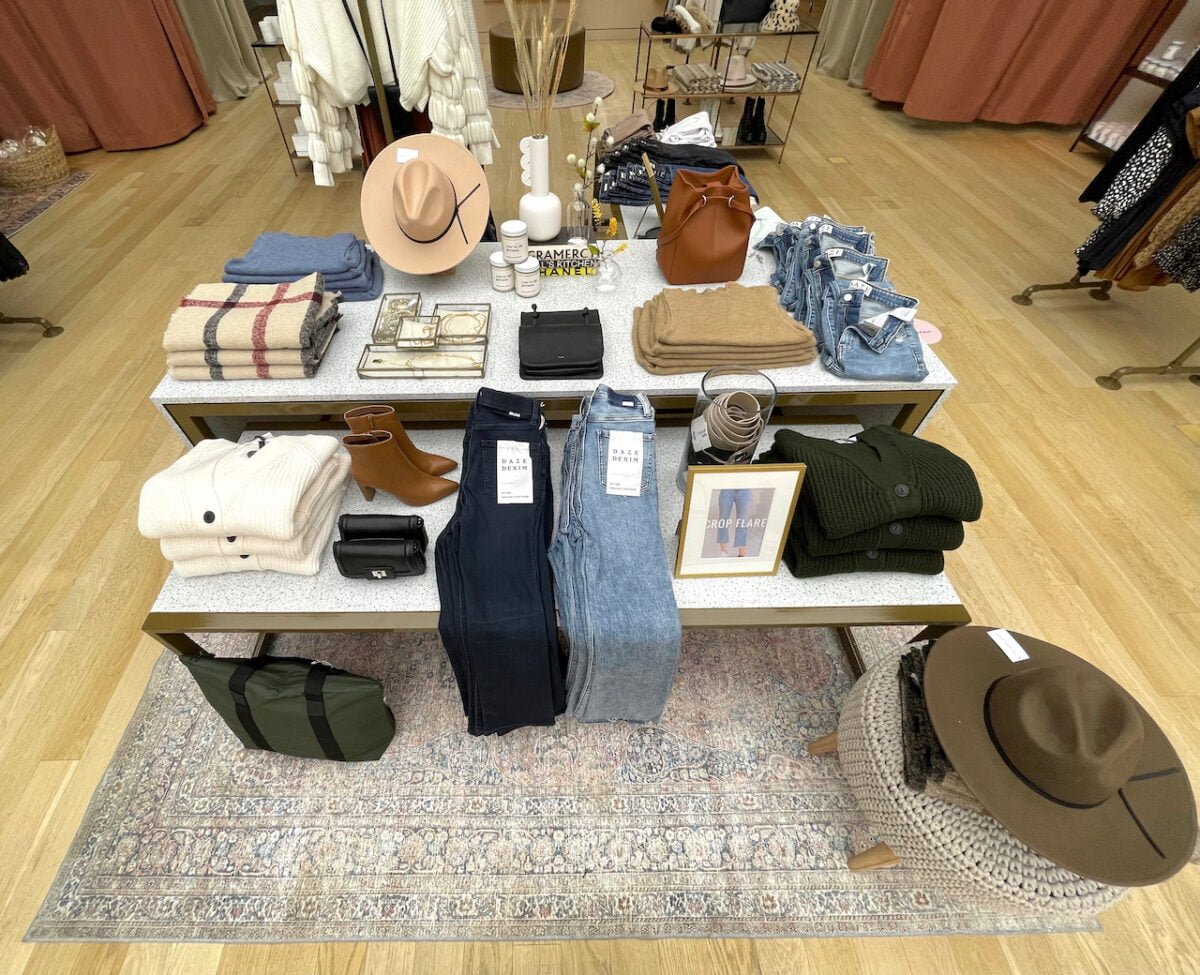
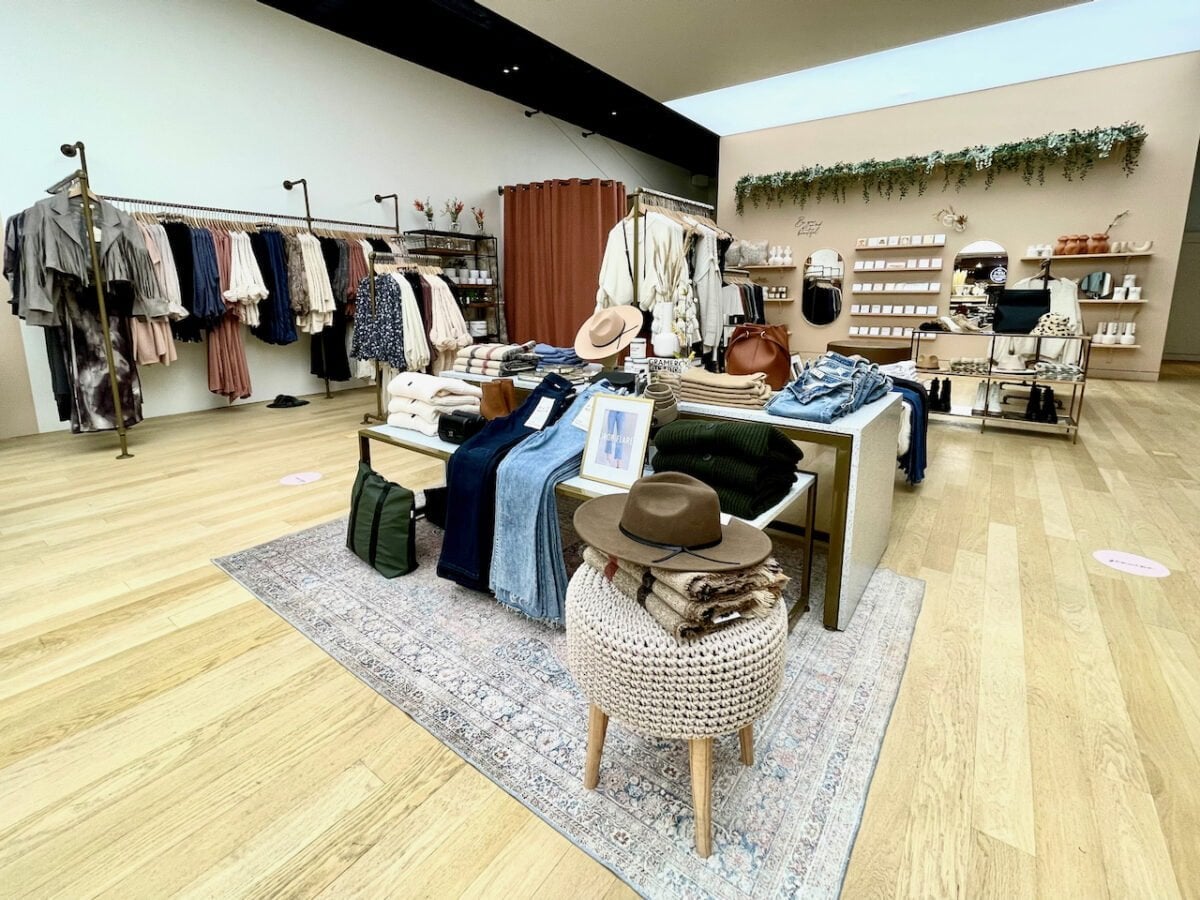
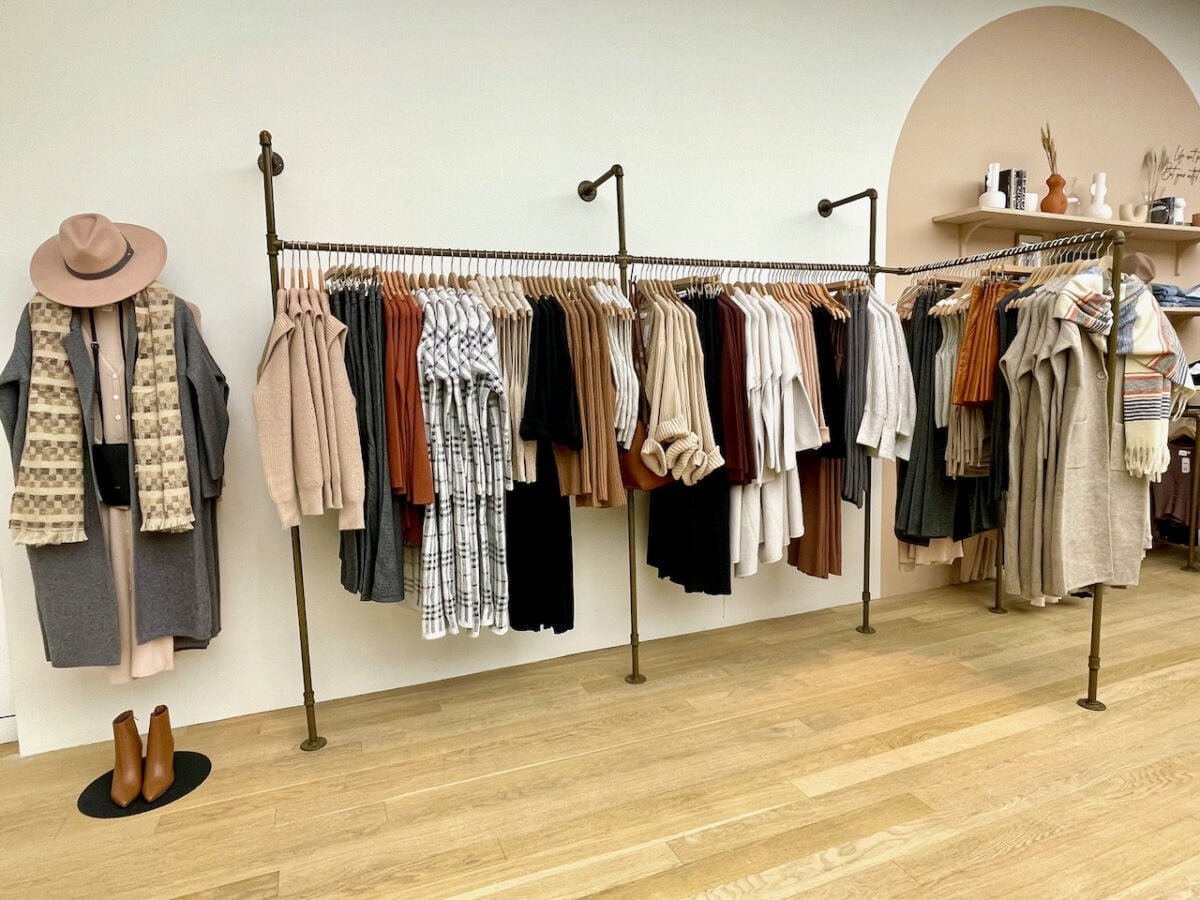
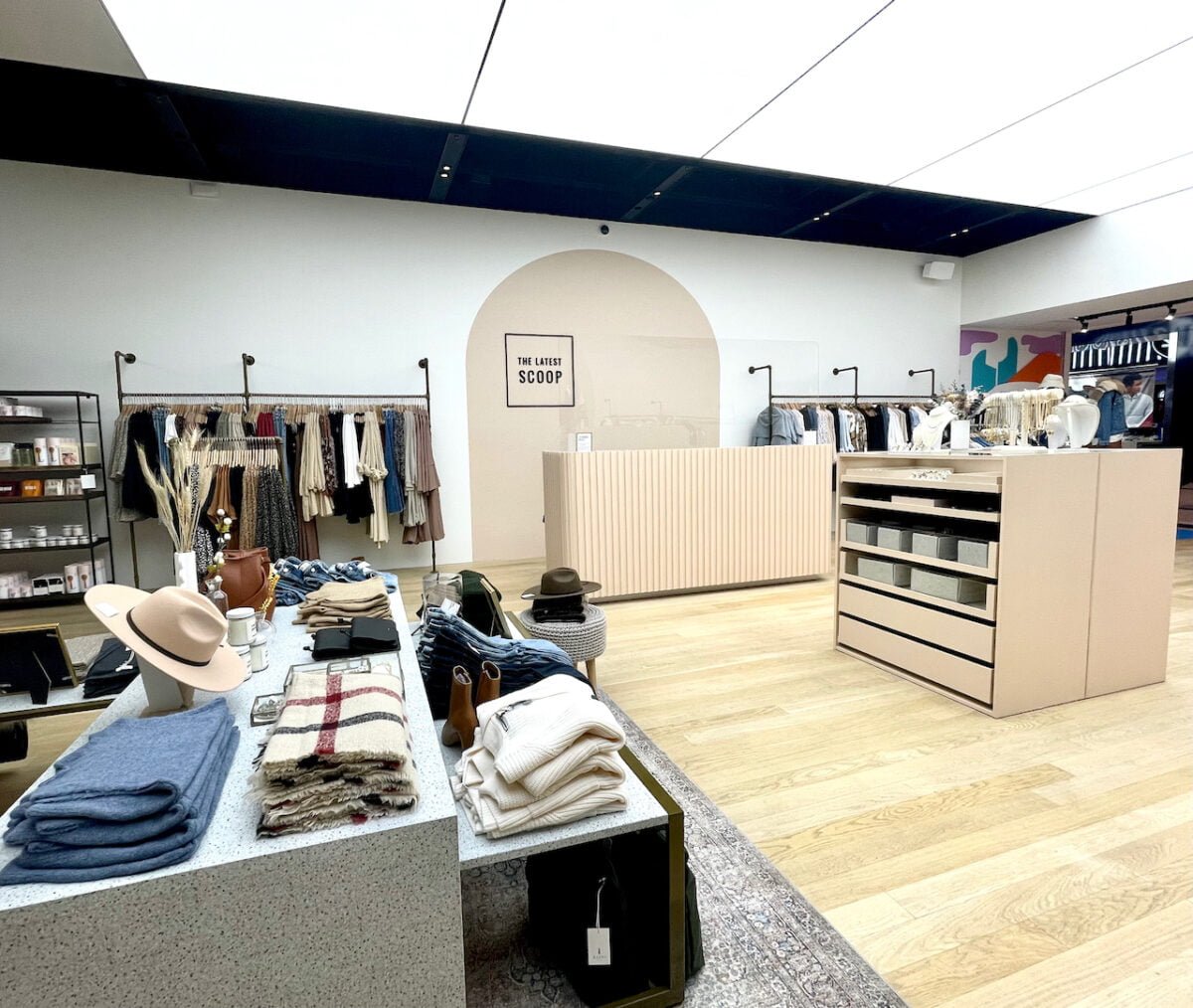
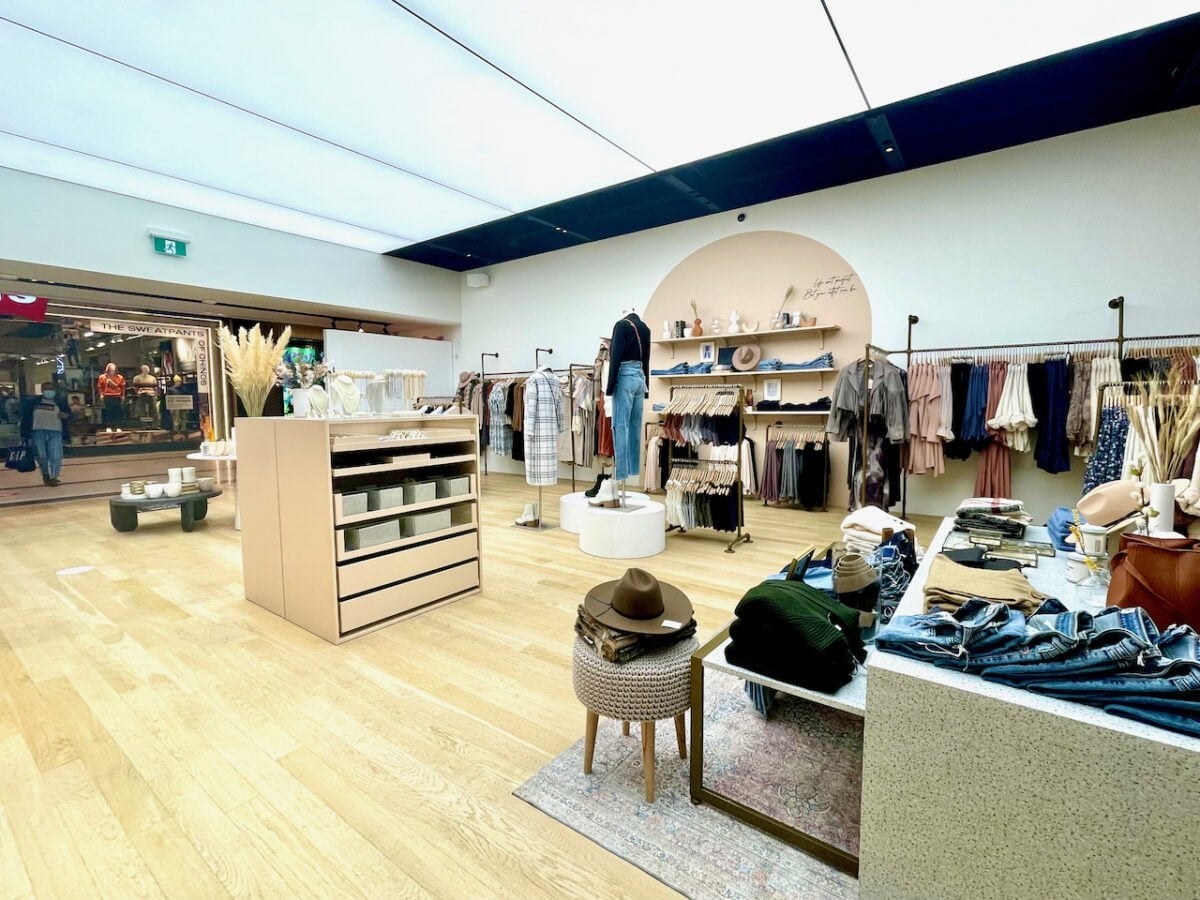
CF Toronto Eaton Centre has provided the opportunity for The Latest Scoop to enter into a pop-up lease, which is evident in the layout and build-out of the store. As part of the agreement, the brand erected temporary walls so as not to disrupt the permanent structure of the existing Microsoft store.
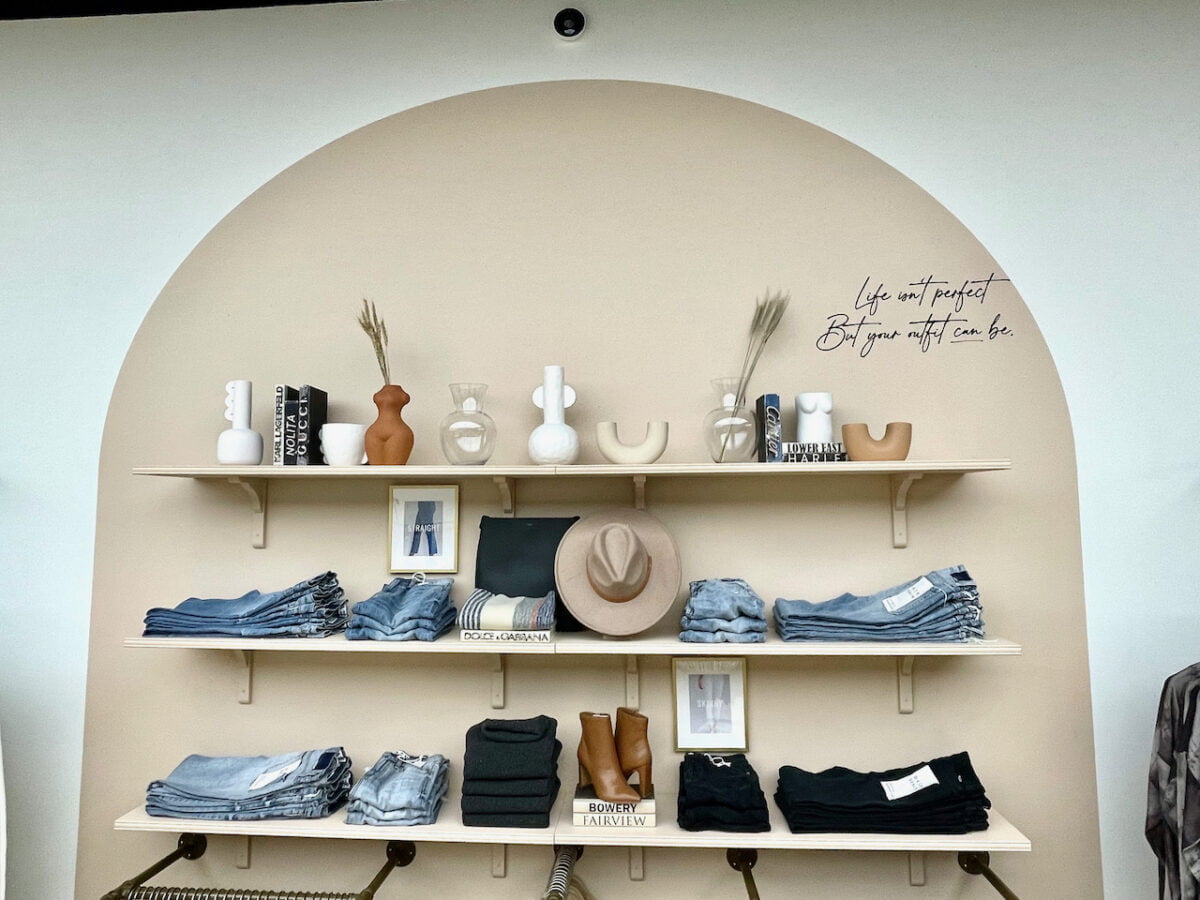
The Latest Scoop at CF Toronto Eaton Centre (Image: The Latest Scoop)
Adrien Nichol
“Cadillac Fairview has been great to work with. The nature of going into pop-up locations is that you’ve got different constraints,” shared Adrien Nichol, CEO of The Latest Scoop. “Our team is so adaptable that we were able to work within the structure to come up with a solution that you see today.”
“Whether we are opening in CF Toronto Eaton Centre or a main street storefront, we are able to engage with customers who may not know about the brand and turn them into long-term fans.”
Stefano Tirone
The CF Toronto Eaton Centre pop-up will have nods to their other stores, with added features that were designed specifically for the high-traffic location.
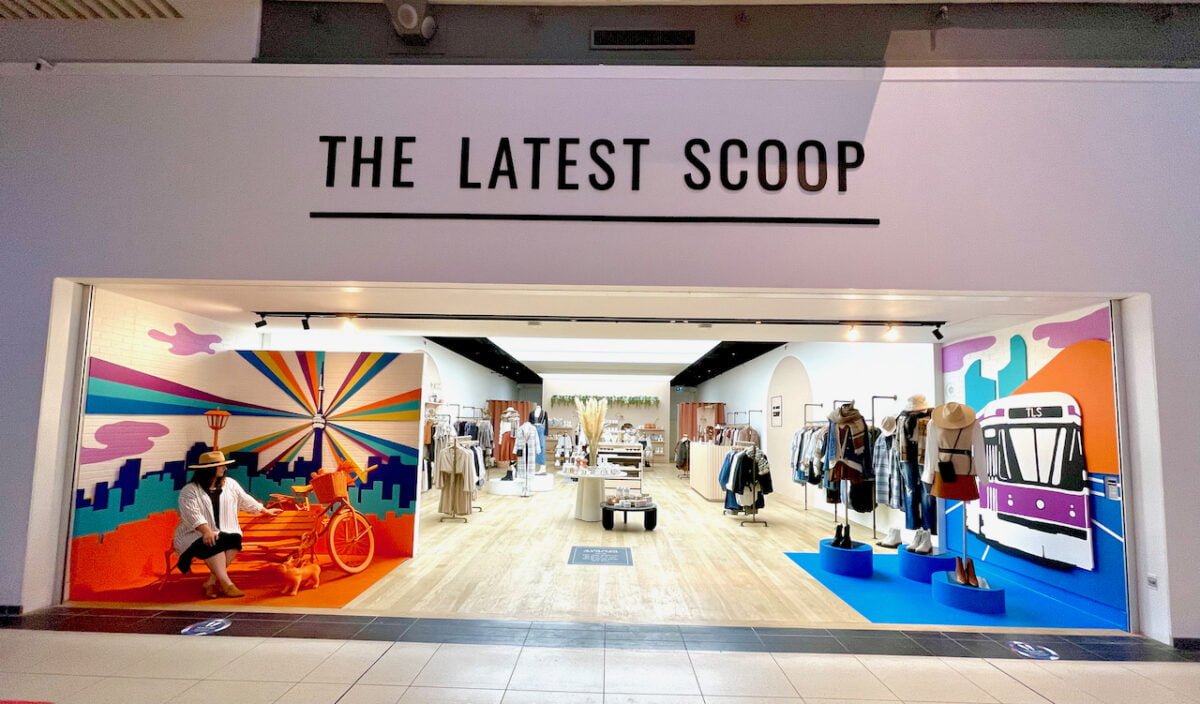
Two window designs were created by Stefano Tirone, a Local Muralist and now the Creative and East-coast Visual Merchandising Manager for The Latest Scoop.
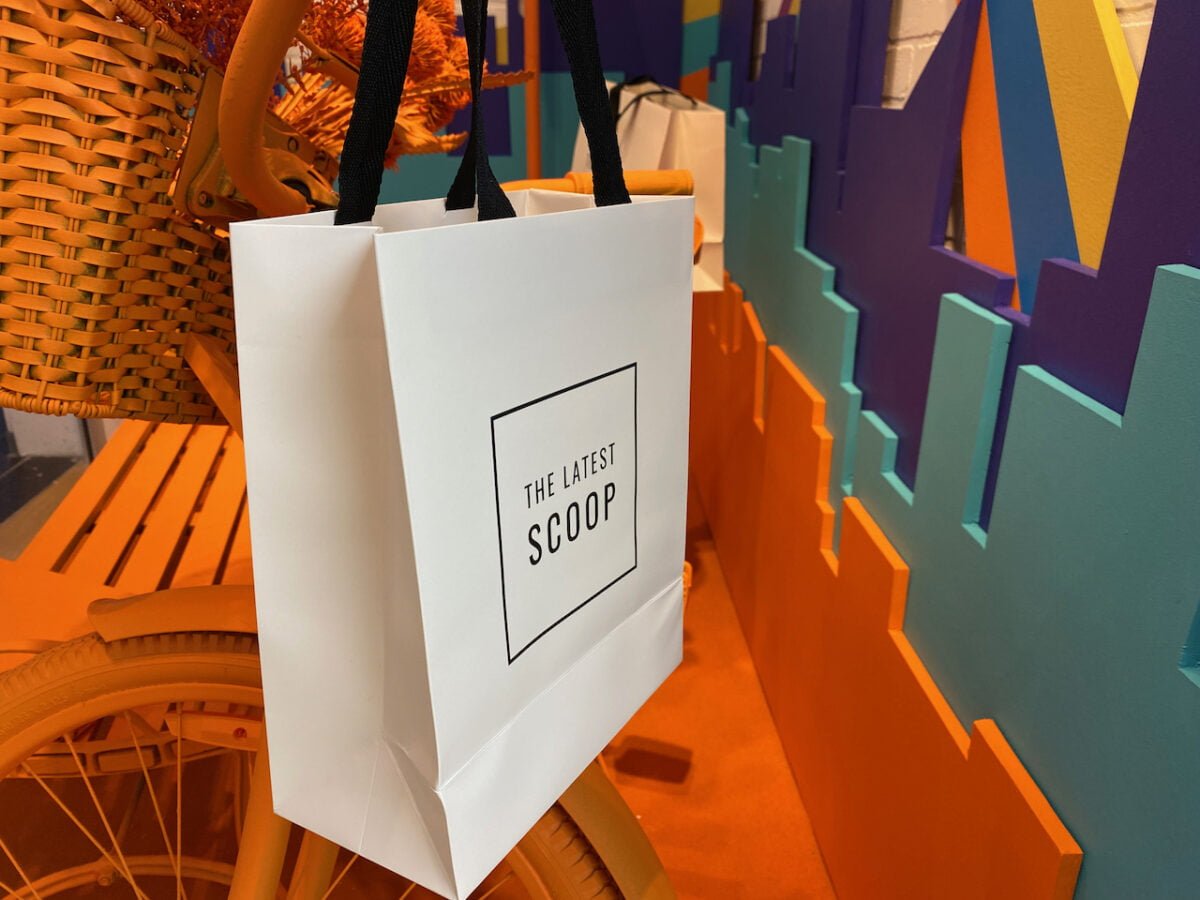
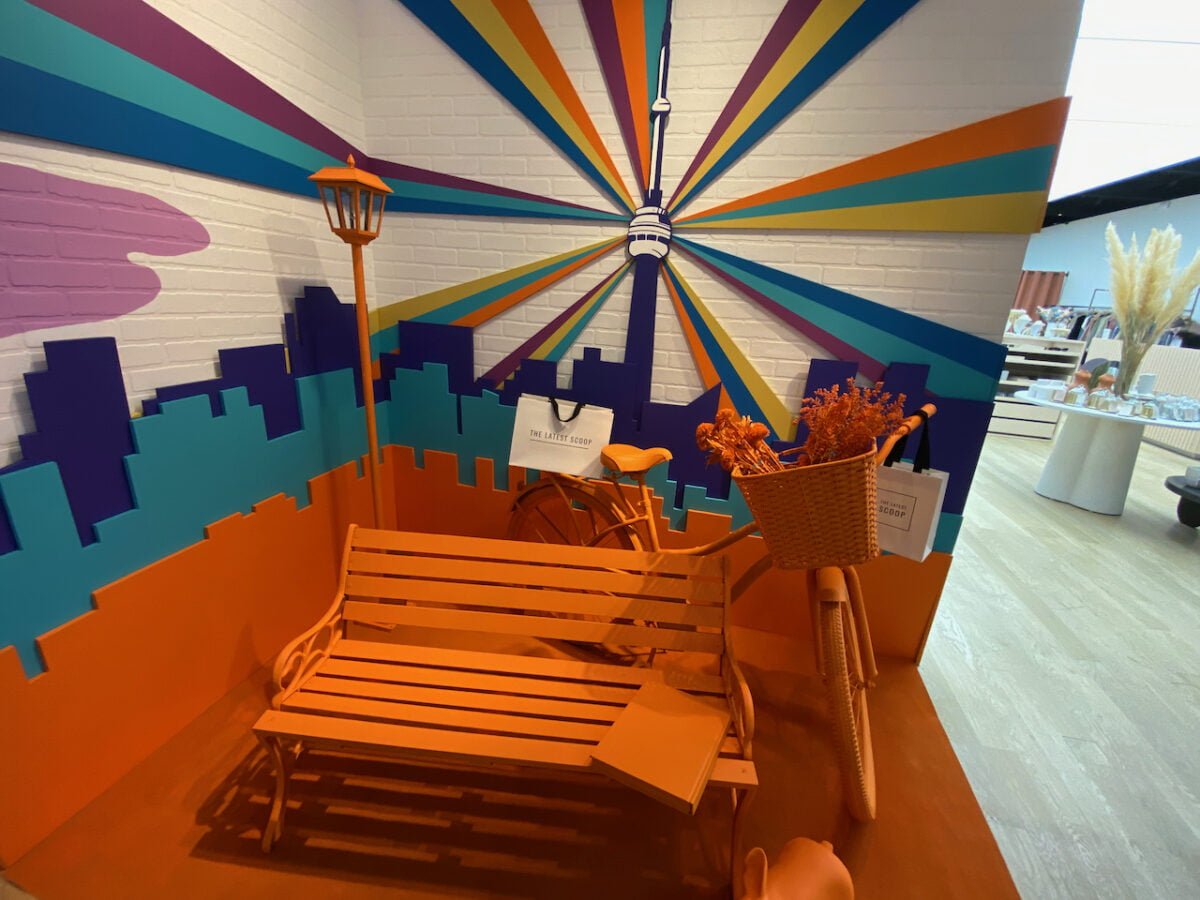
The store also includes an instagrammable window, highlighted by orange physical features and the CN Tower & Toronto skyline in the background.
The Latest Scoop at CF Toronto Eaton Centre (Image: Michelle Flores – Esteras/The Latest Scoop)
Founded in Vancouver in 2004 as a pop-up shop, The Latest Scoop has expanded into eight locations in Vancouver, Calgary and Toronto.
In 2018, Retail Insider covered the first location in Toronto, a 2,900 square foot store on Ossington Avenue. The brand has since opened a store at 700 Queen Street West in 2019, which would make the CF Toronto Eaton Centre location the third store for The Latest Scoop in the downtown core.
The Latest Scoop at CF Toronto Eaton Centre Photos
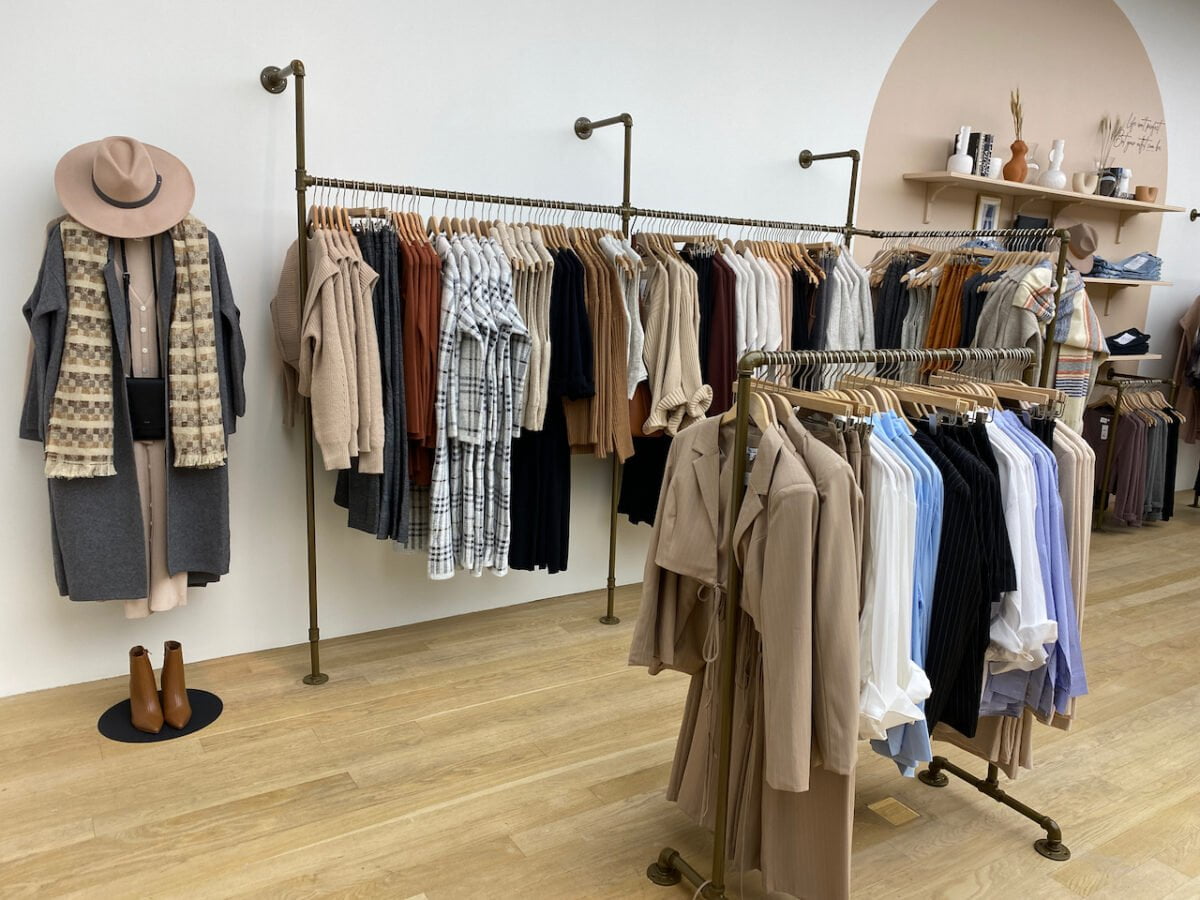
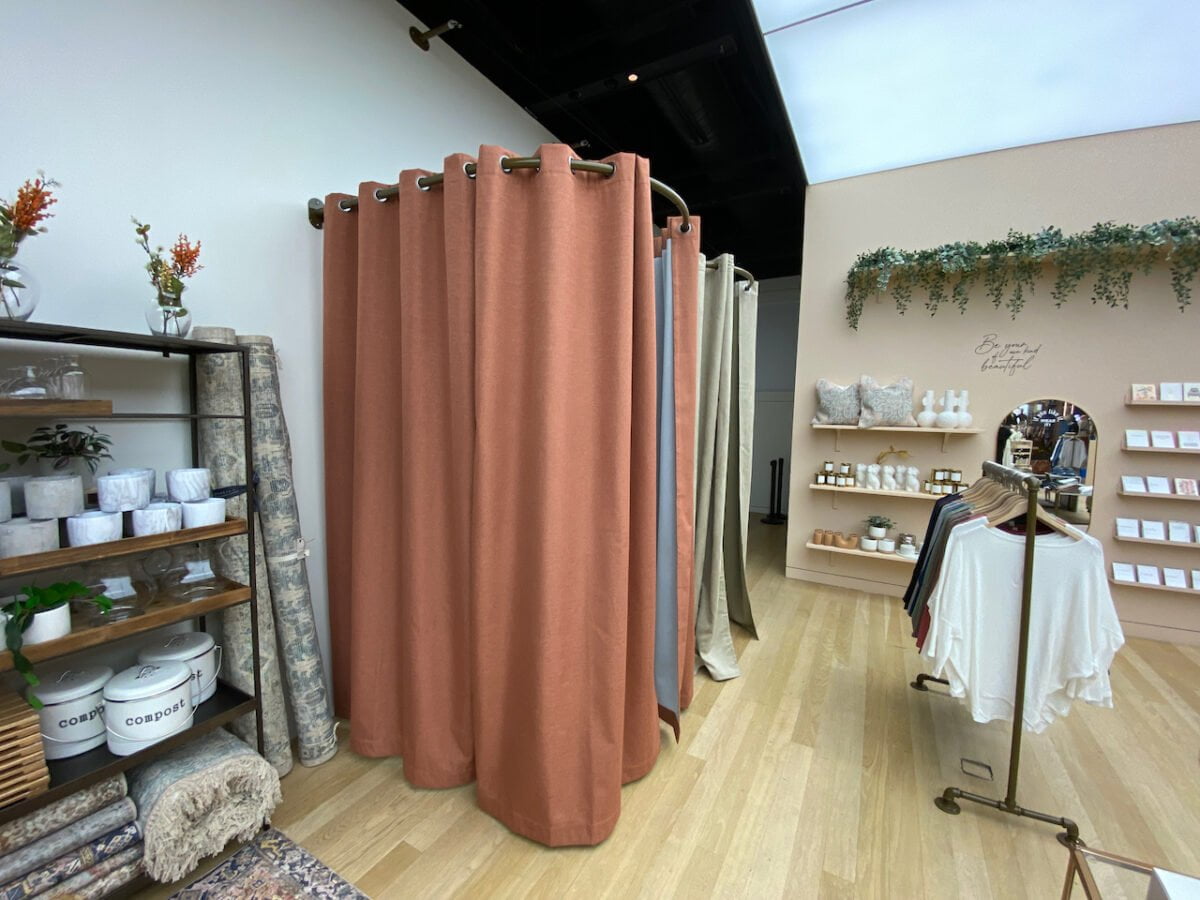
The Latest Scoop at CF Toronto Eaton Centre (Image: Dustin Fuhs/Retail Insider) The Latest Scoop at CF Toronto Eaton Centre (Image: Michelle Flores-Esteras/The Latest Scoop) The Latest Scoop at CF Toronto Eaton Centre (Image: Dustin Fuhs/Retail Insider) The Latest Scoop at CF Toronto Eaton Centre (Image: Dustin Fuhs/Retail Insider) The Latest Scoop at CF Toronto Eaton Centre (Image: Dustin Fuhs/Retail Insider) The Latest Scoop at CF Toronto Eaton Centre (Image: Dustin Fuhs/Retail Insider) The Latest Scoop at CF Toronto Eaton Centre (Image: Dustin Fuhs/Retail Insider) The Latest Scoop at CF Toronto Eaton Centre (Image: Dustin Fuhs/Retail Insider) The Latest Scoop at CF Toronto Eaton Centre (Image: Michelle Flores-Esteras/The Latest Scoop) The Latest Scoop at CF Toronto Eaton Centre (Image: Michelle Flores-Esteras/The Latest Scoop) The Latest Scoop at CF Toronto Eaton Centre (Image: Michelle Flores-Esteras/The Latest Scoop) The Latest Scoop at CF Toronto Eaton Centre (Image: Michelle Flores-Esteras/The Latest Scoop) The Latest Scoop at CF Toronto Eaton Centre (Image: Michelle Flores-Esteras/The Latest Scoop) The Latest Scoop at CF Toronto Eaton Centre (Image: Dustin Fuhs/Retail Insider) The Latest Scoop at CF Toronto Eaton Centre (Image: Michelle Flores-Esteras/The Latest Scoop) The Latest Scoop at CF Toronto Eaton Centre (Image: Michelle Flores-Esteras/The Latest Scoop) The Latest Scoop at CF Toronto Eaton Centre (Image: Michelle Flores-Esteras/The Latest Scoop) The Latest Scoop at CF Toronto Eaton Centre (Image: Michelle Flores-Esteras/The Latest Scoop) The Latest Scoop at CF Toronto Eaton Centre (Image: Dustin Fuhs/Retail Insider)
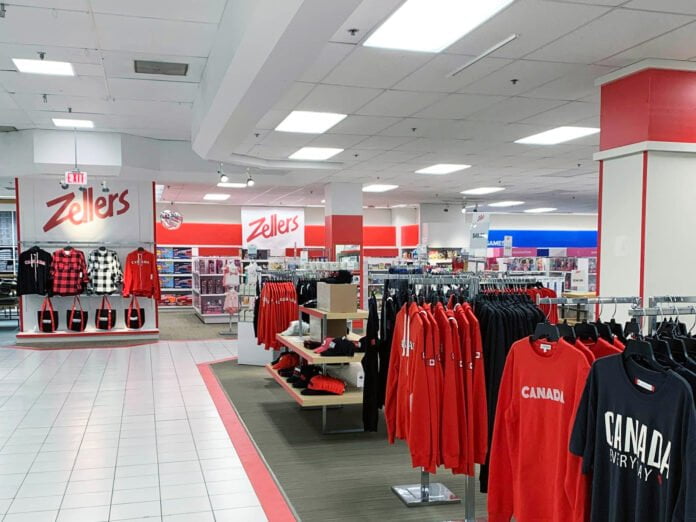
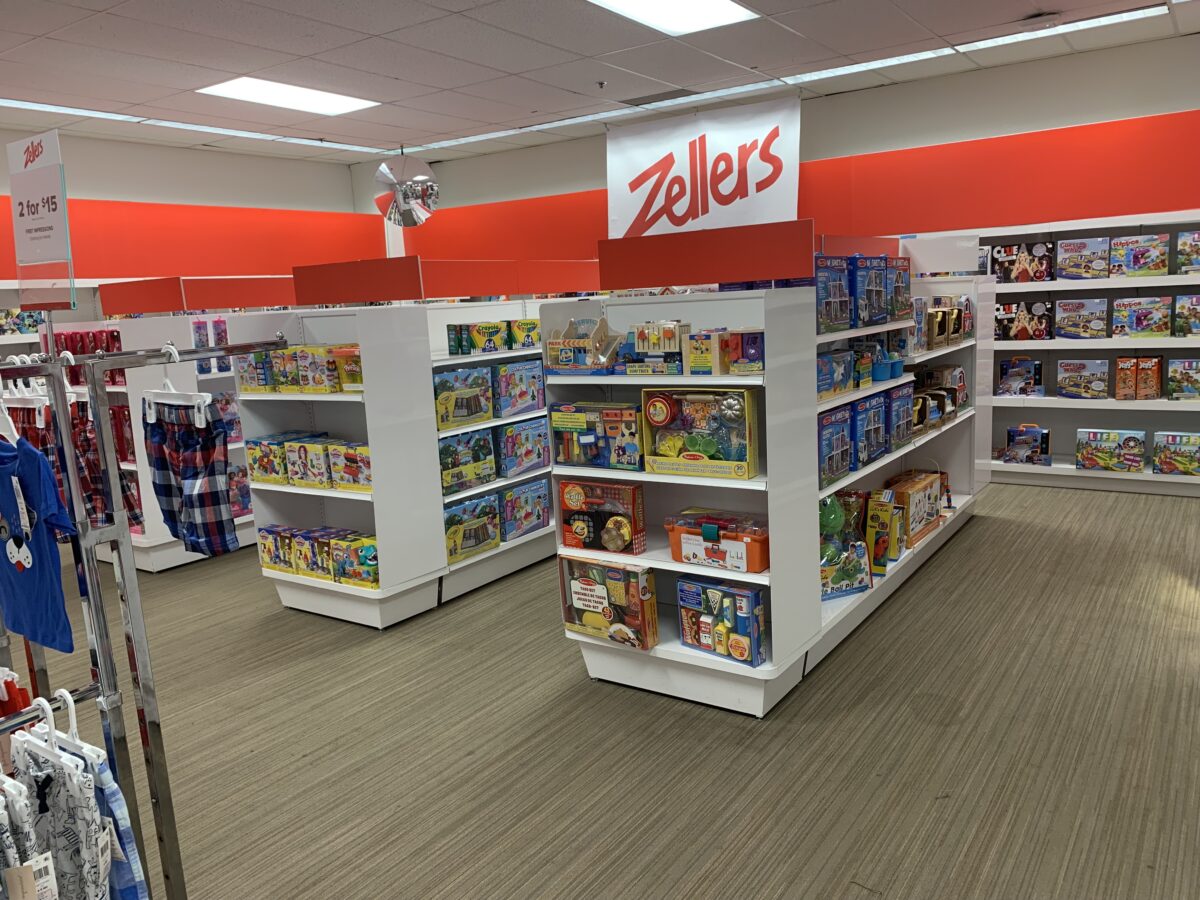
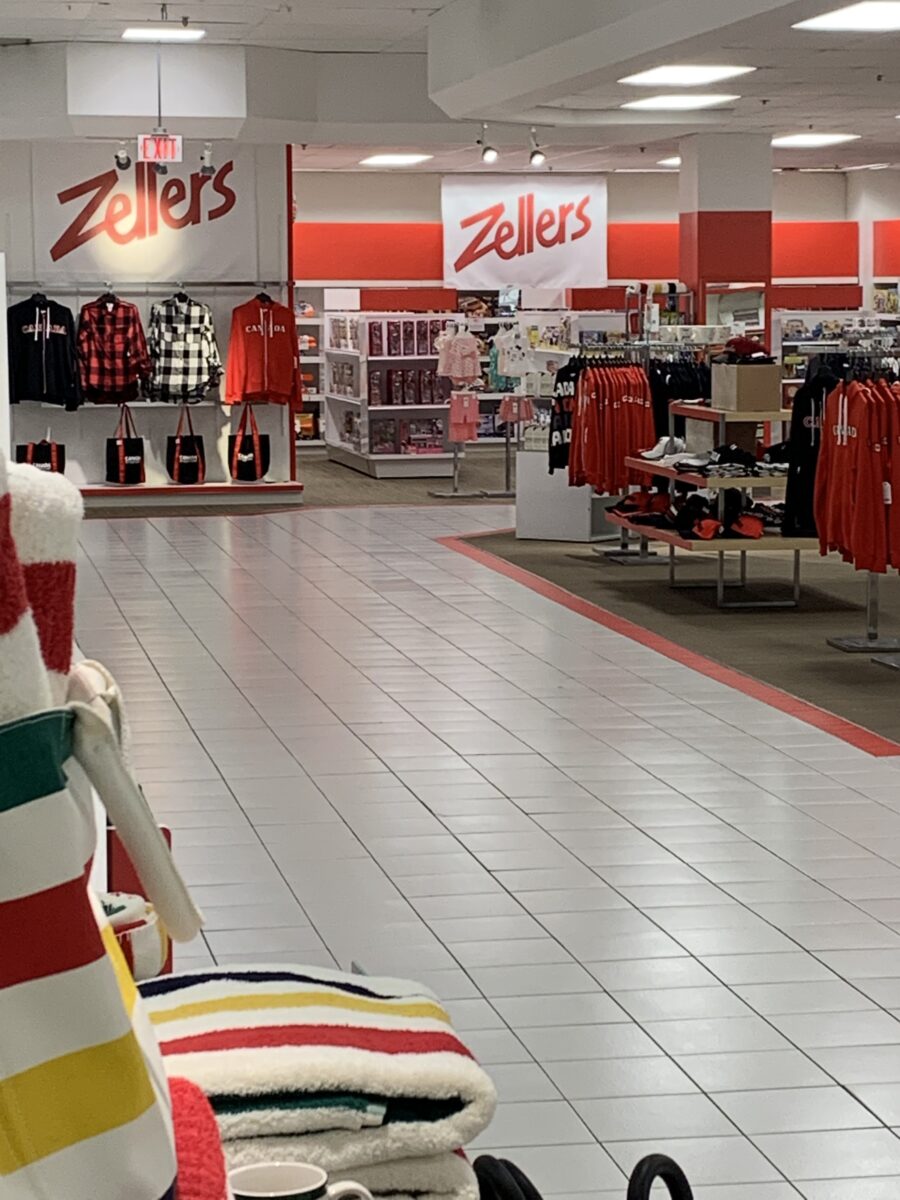
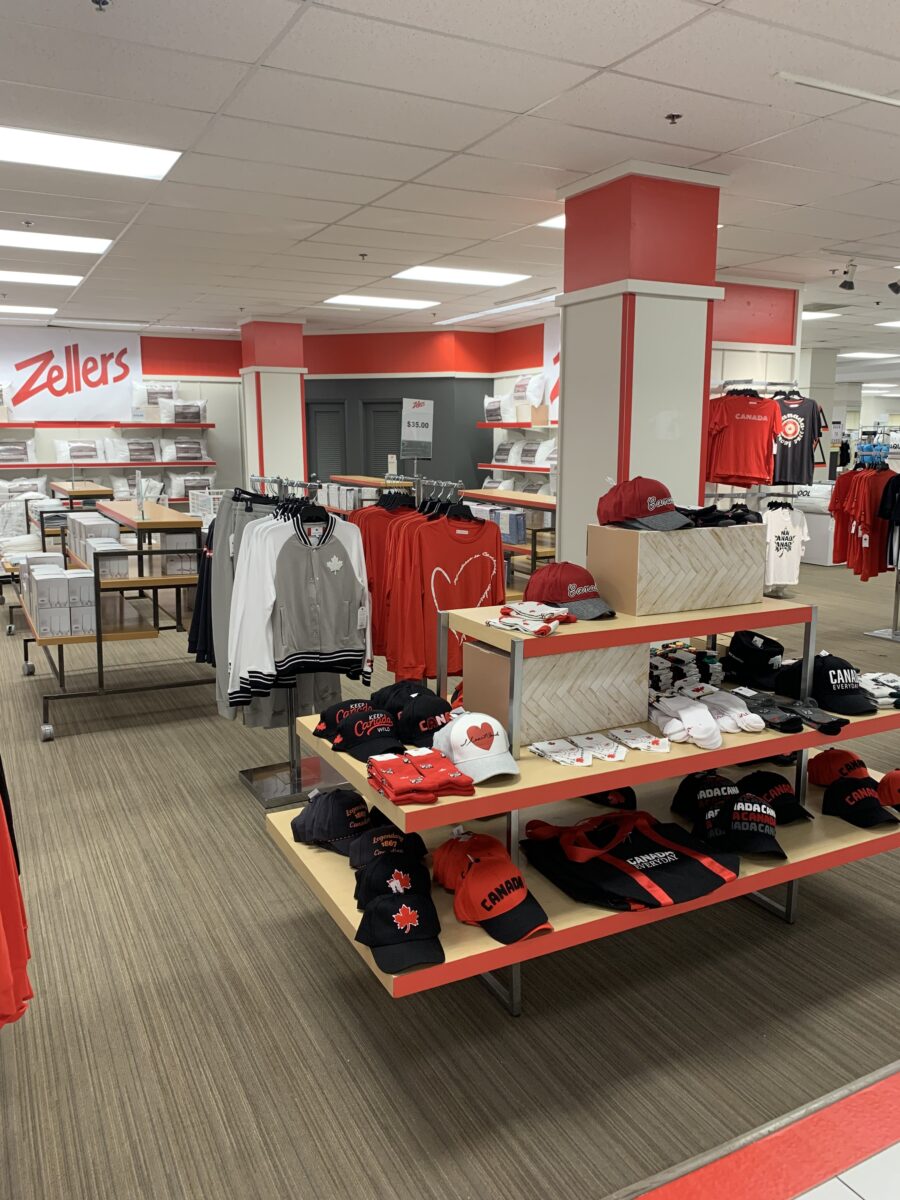
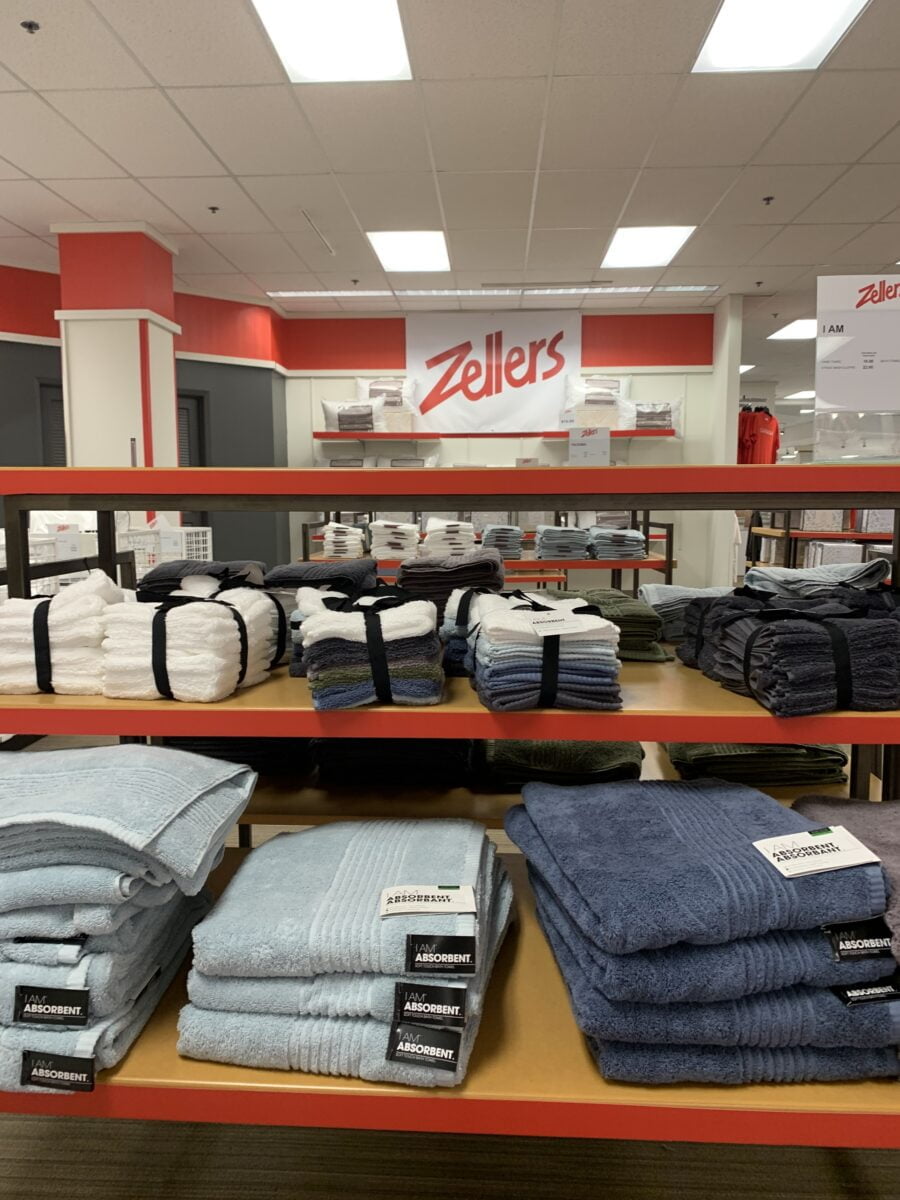
Zellers at Hudson's Bay Burlington Centre. Photo: Sean Tarry
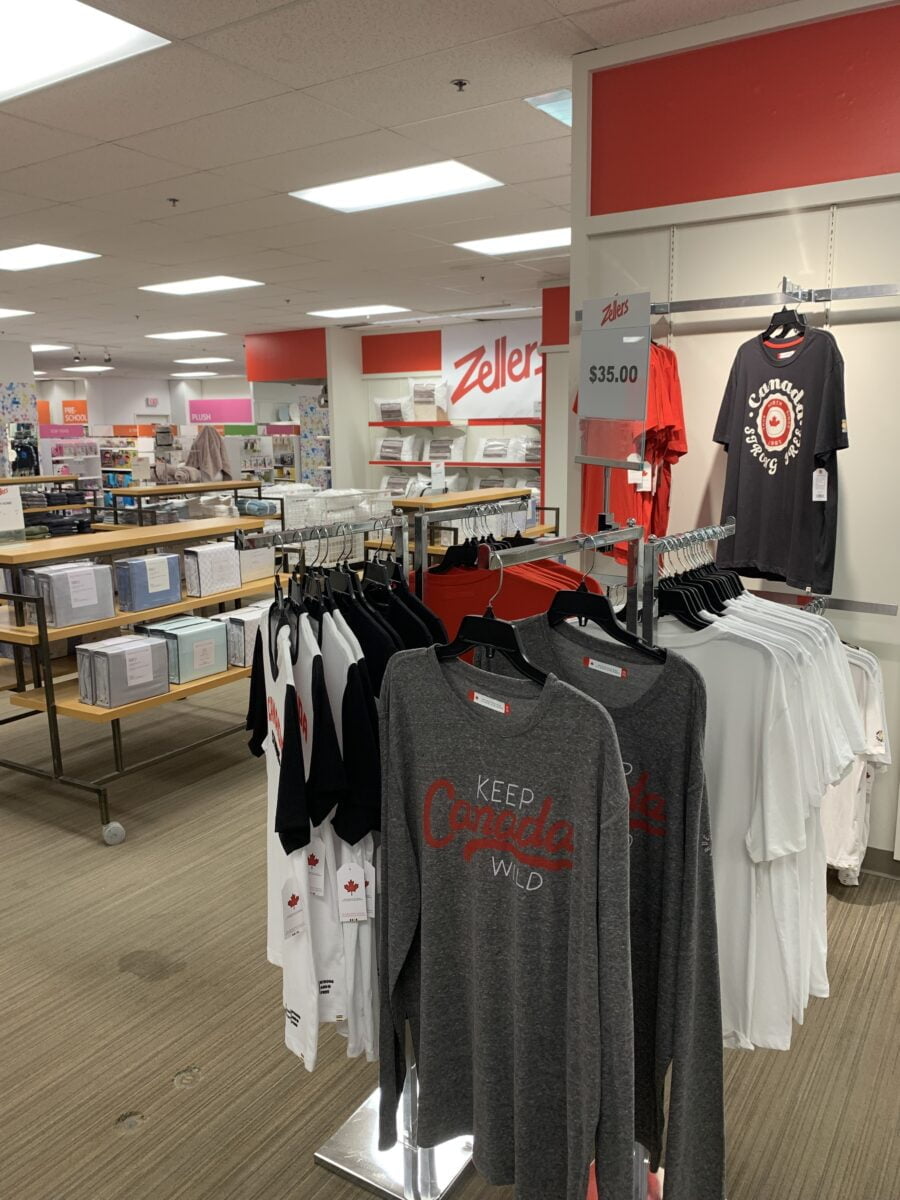
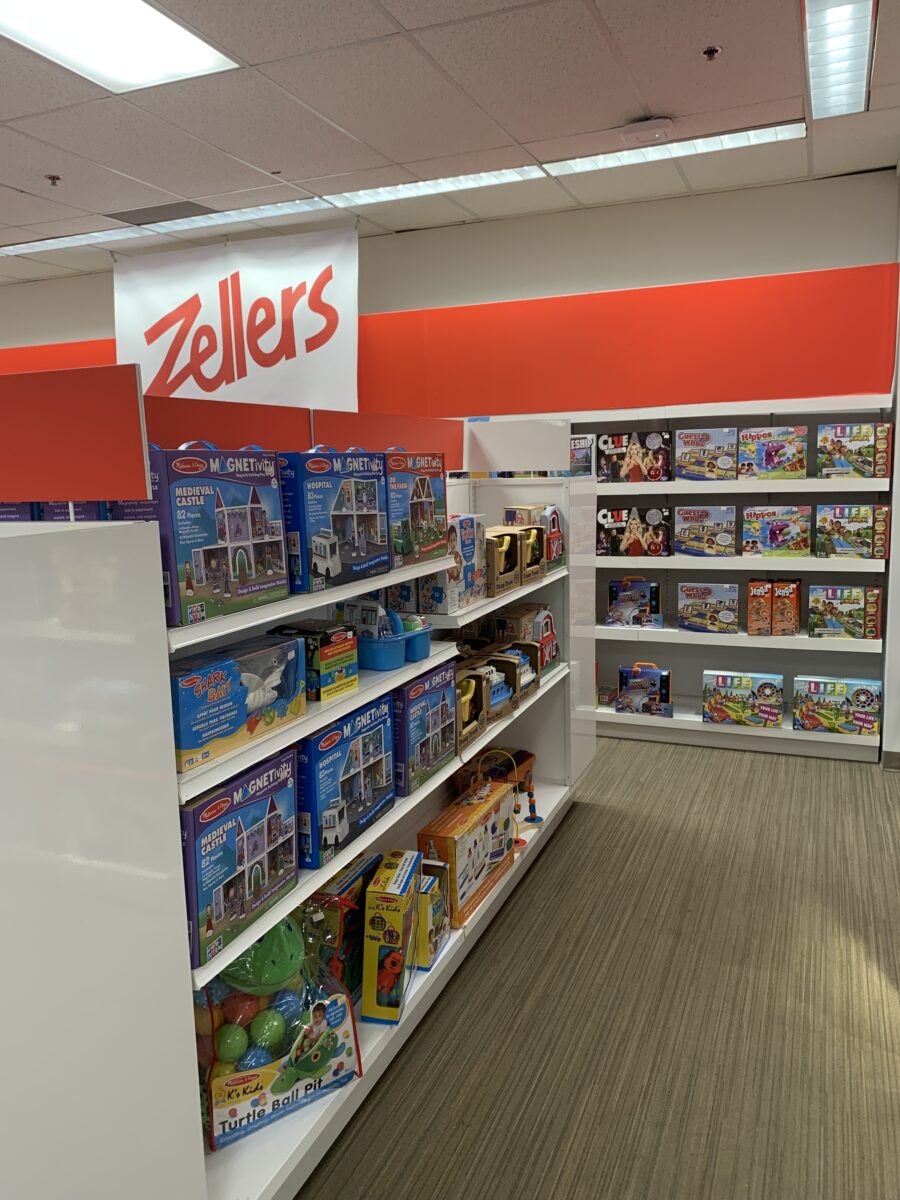
Hudson’s Bay recently launched a Zellers pop-up shop-in-store at its Burlington Centre location near Toronto, and more Zellers pop-ups could follow according to the retailer.
The Burlington Zellers pop-up is a “fun and nostalgic experience with one of HBC’s most beloved brands,” according to Hudson’s Bay which still owns the rights to the name of the Zellers chain which once had a network of stores across the country.
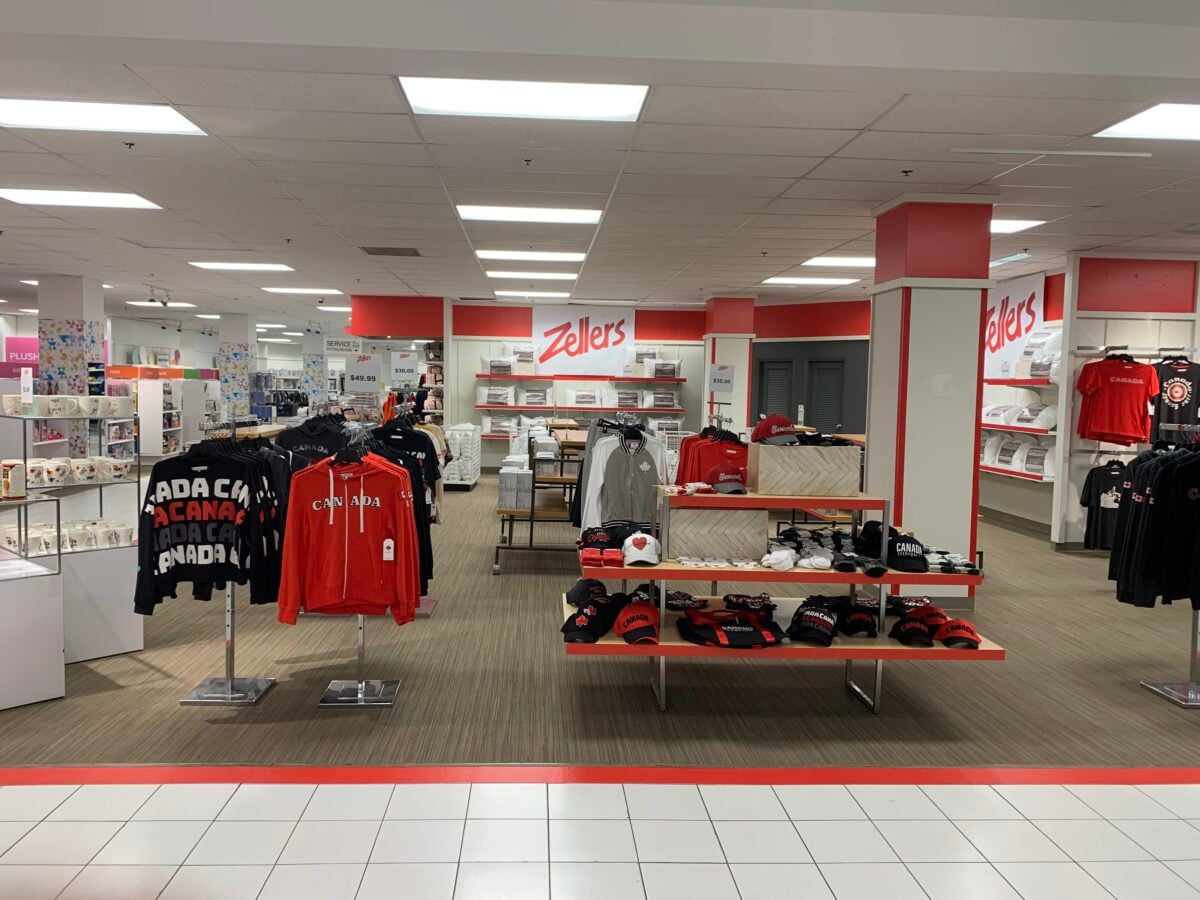
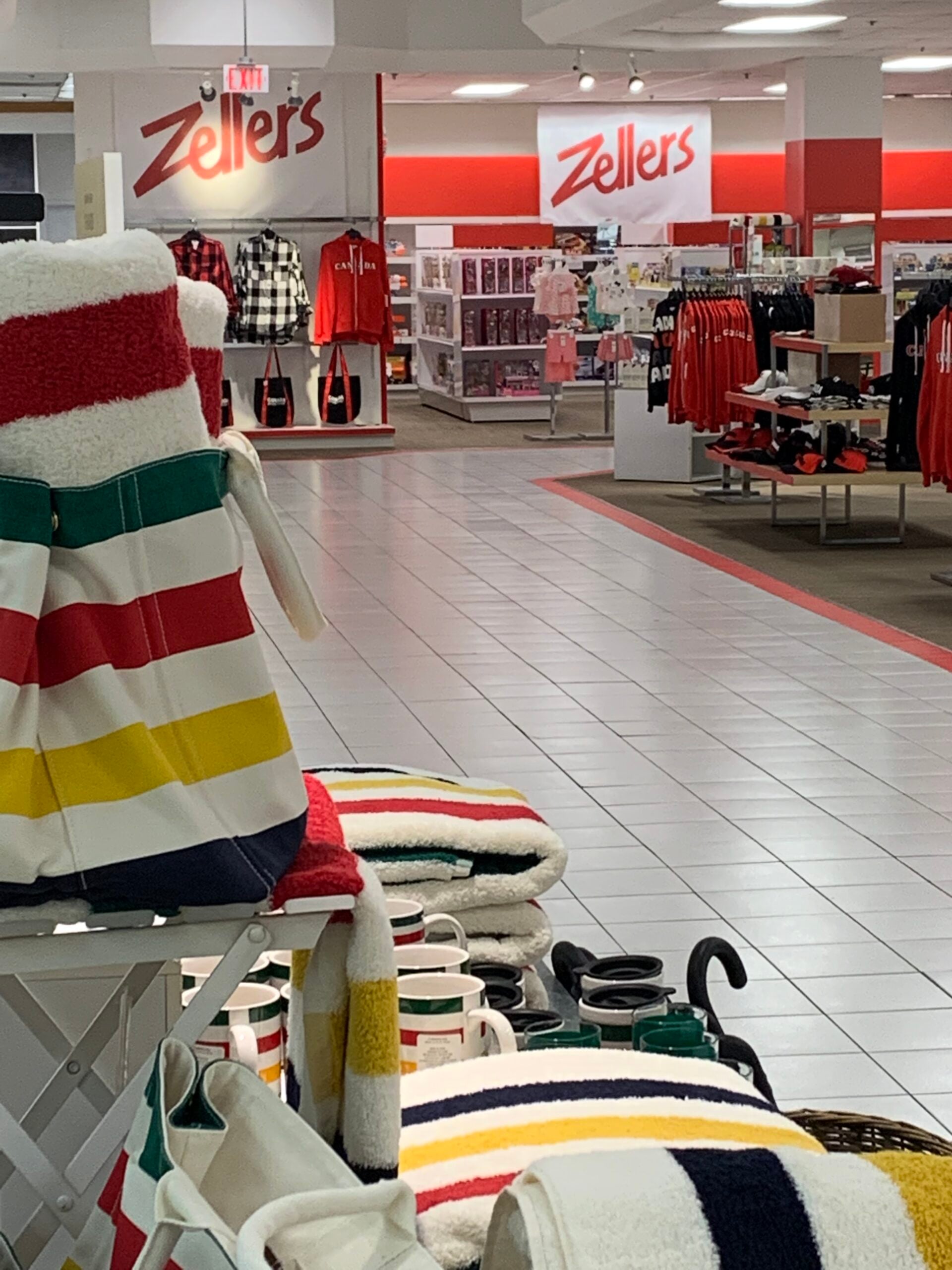
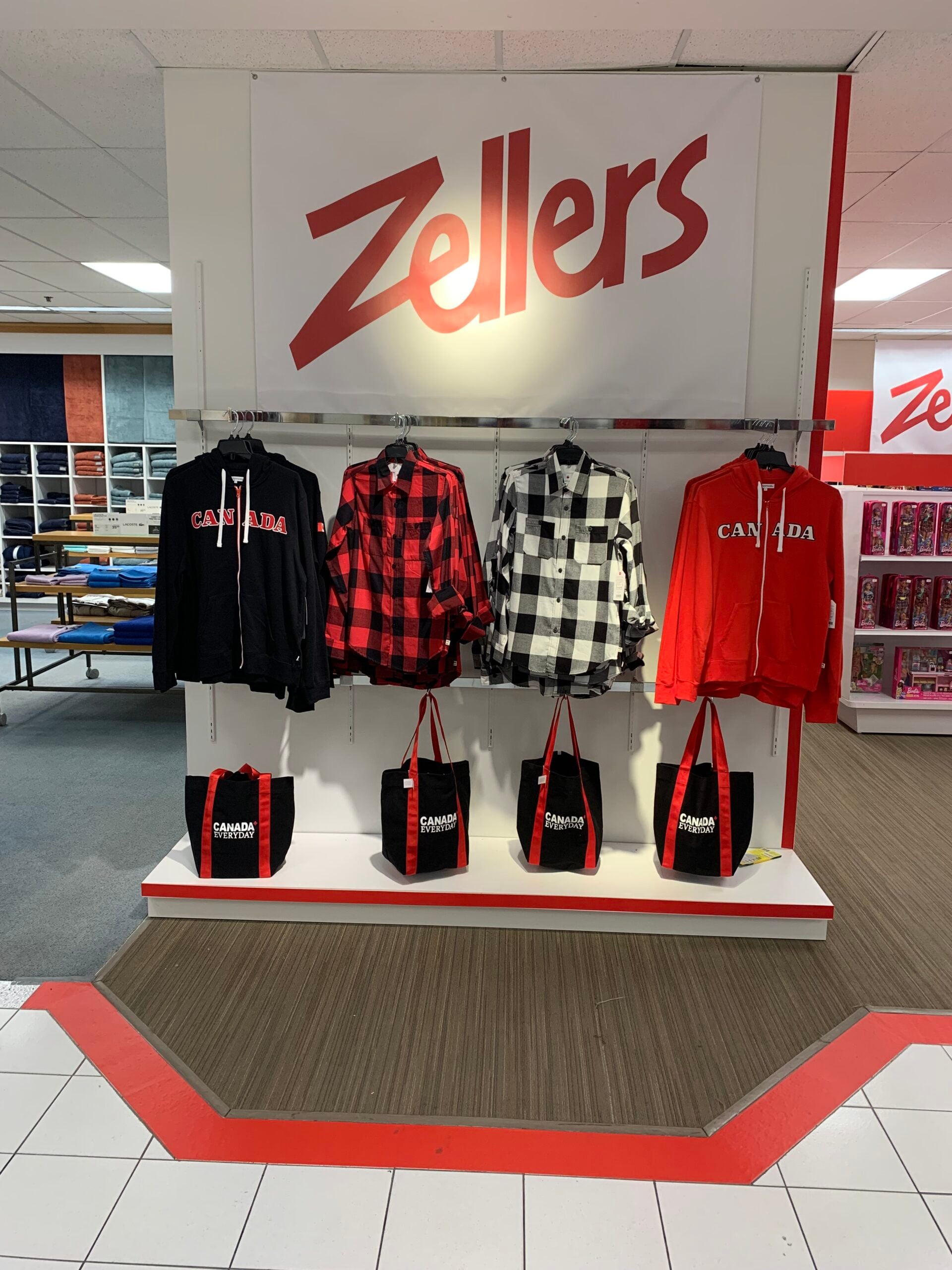
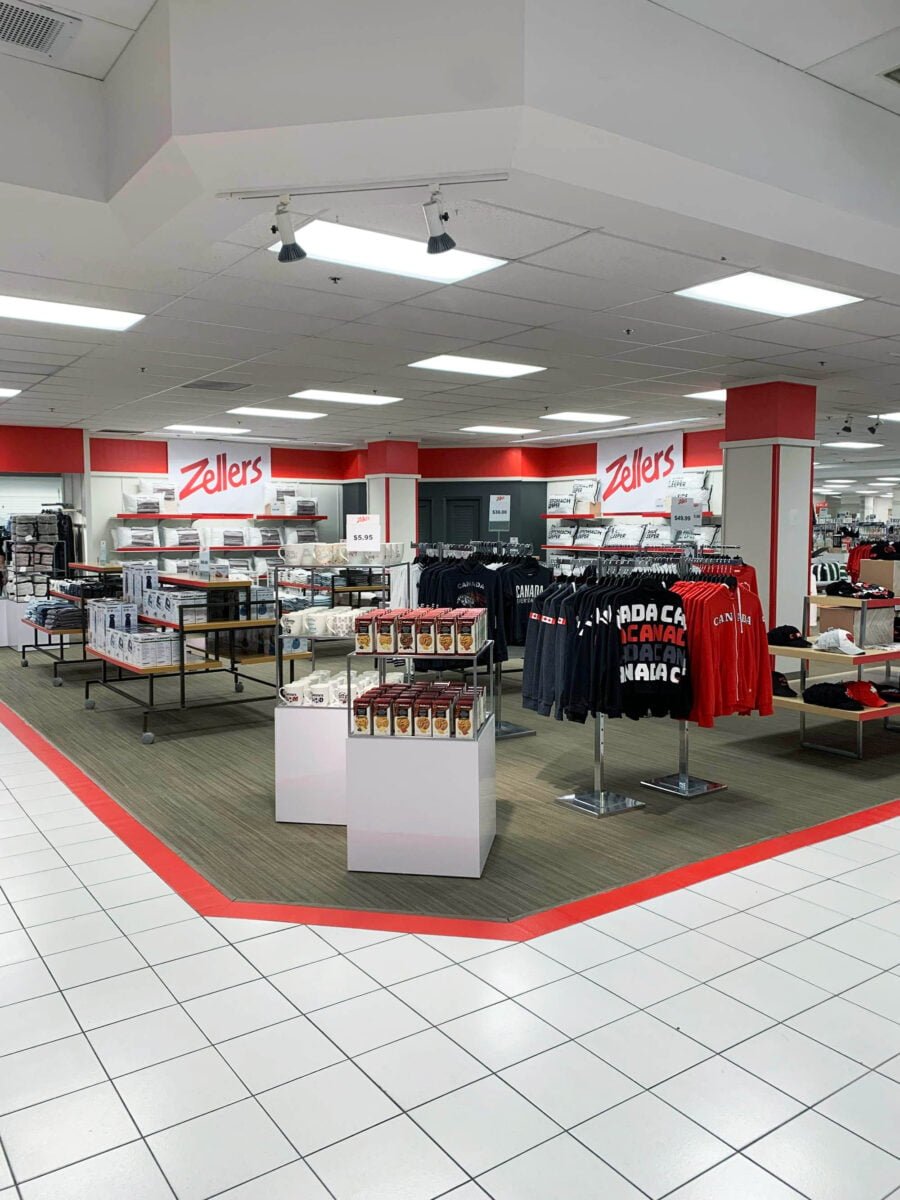
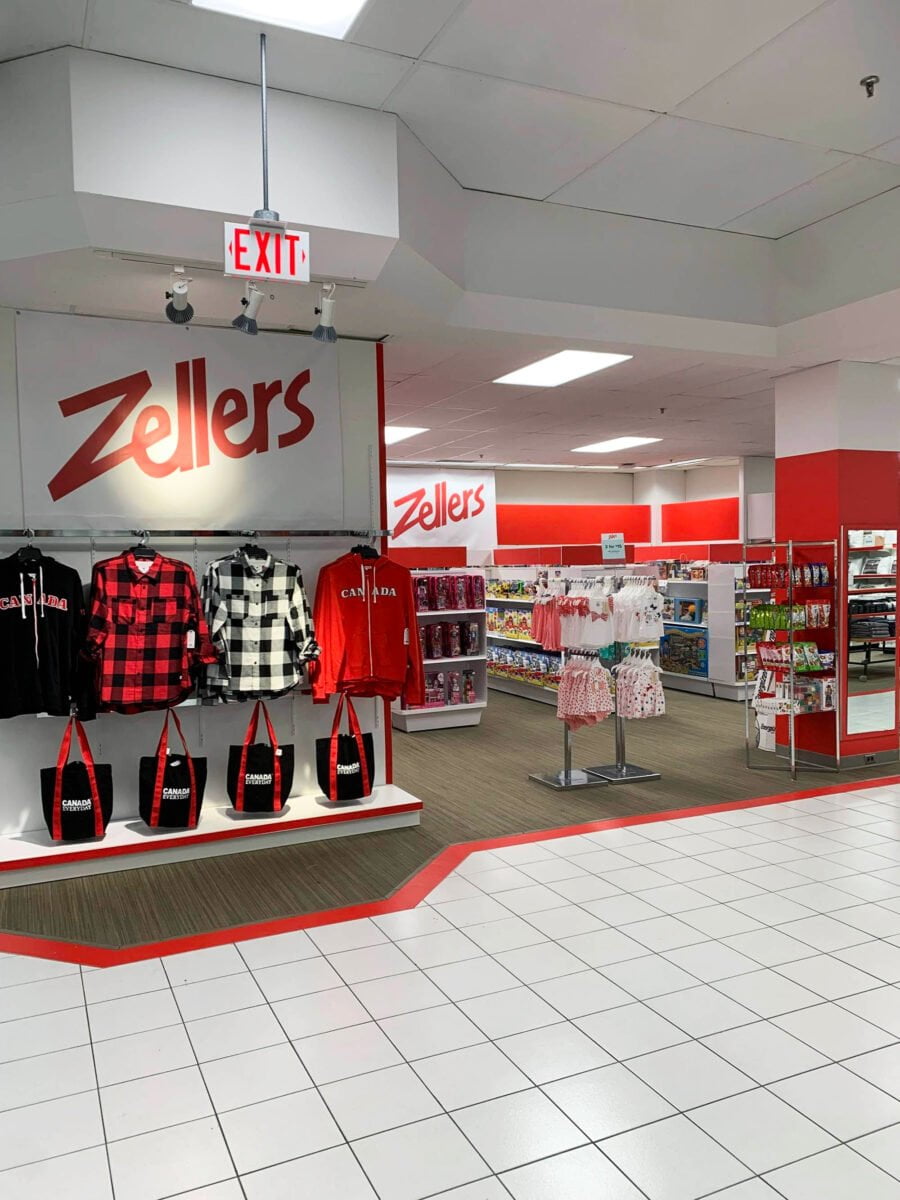
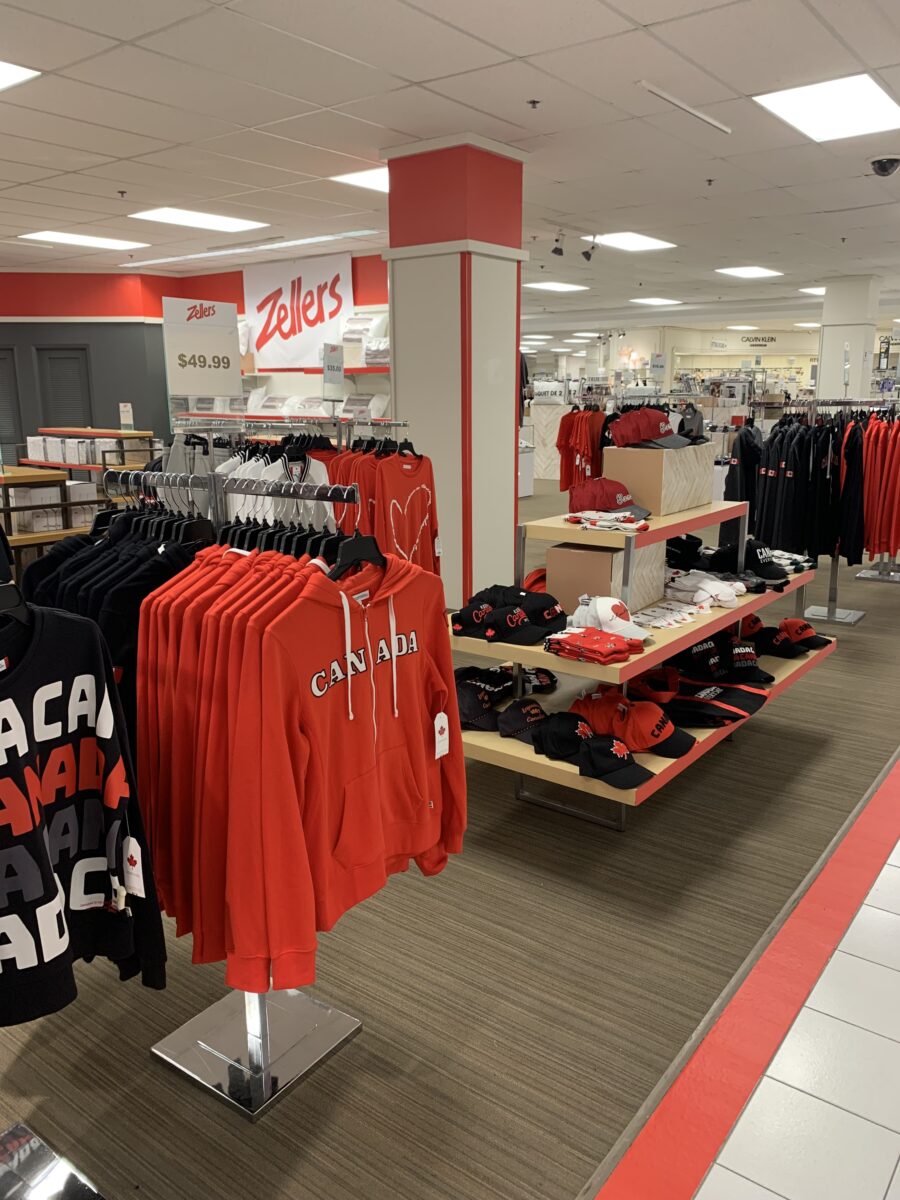
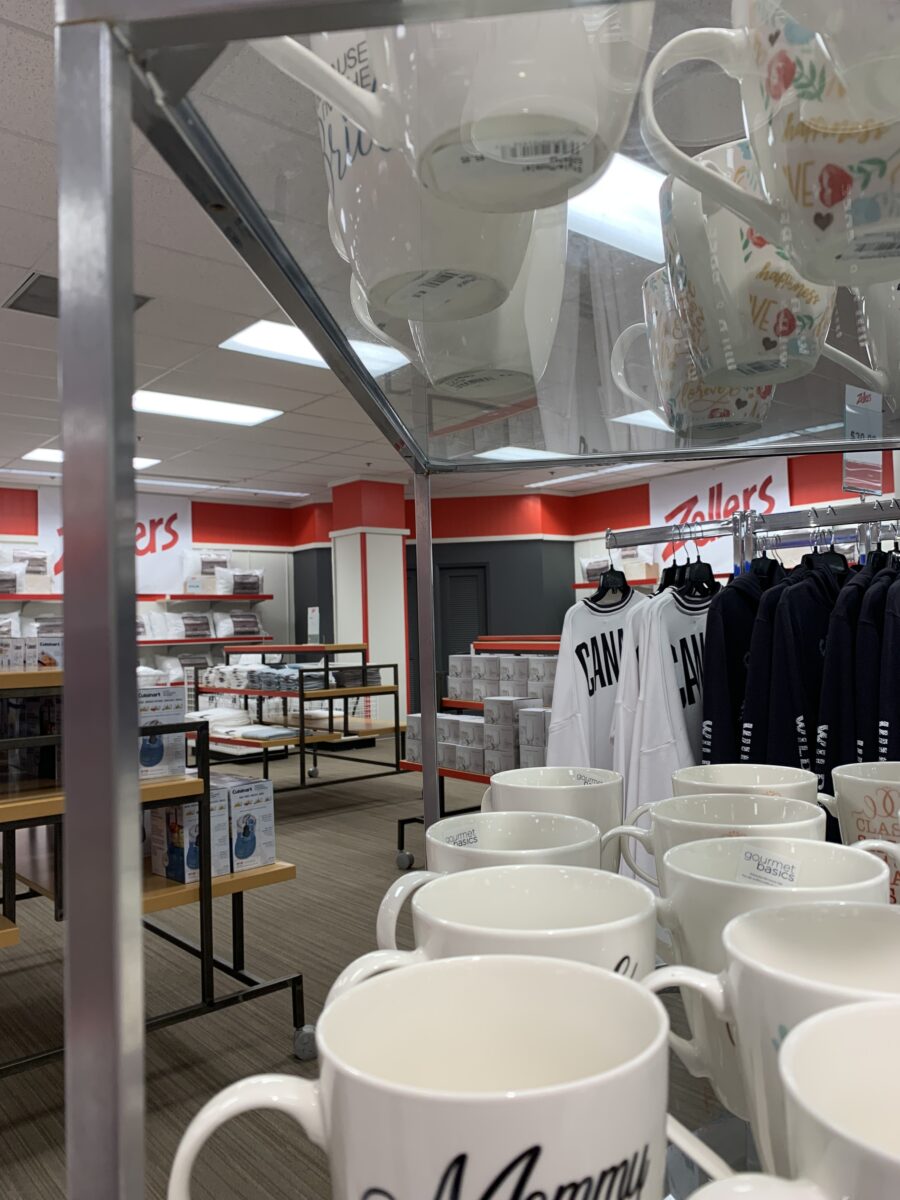
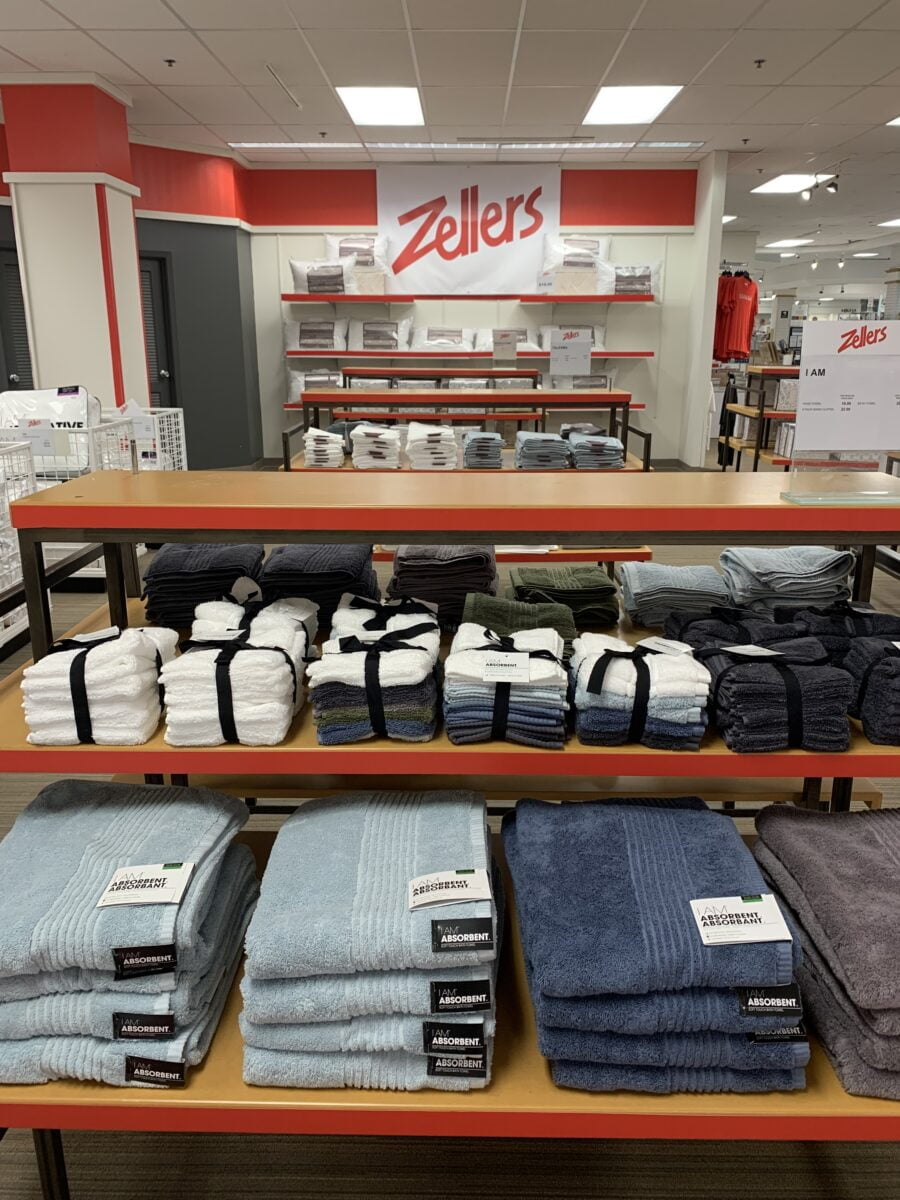
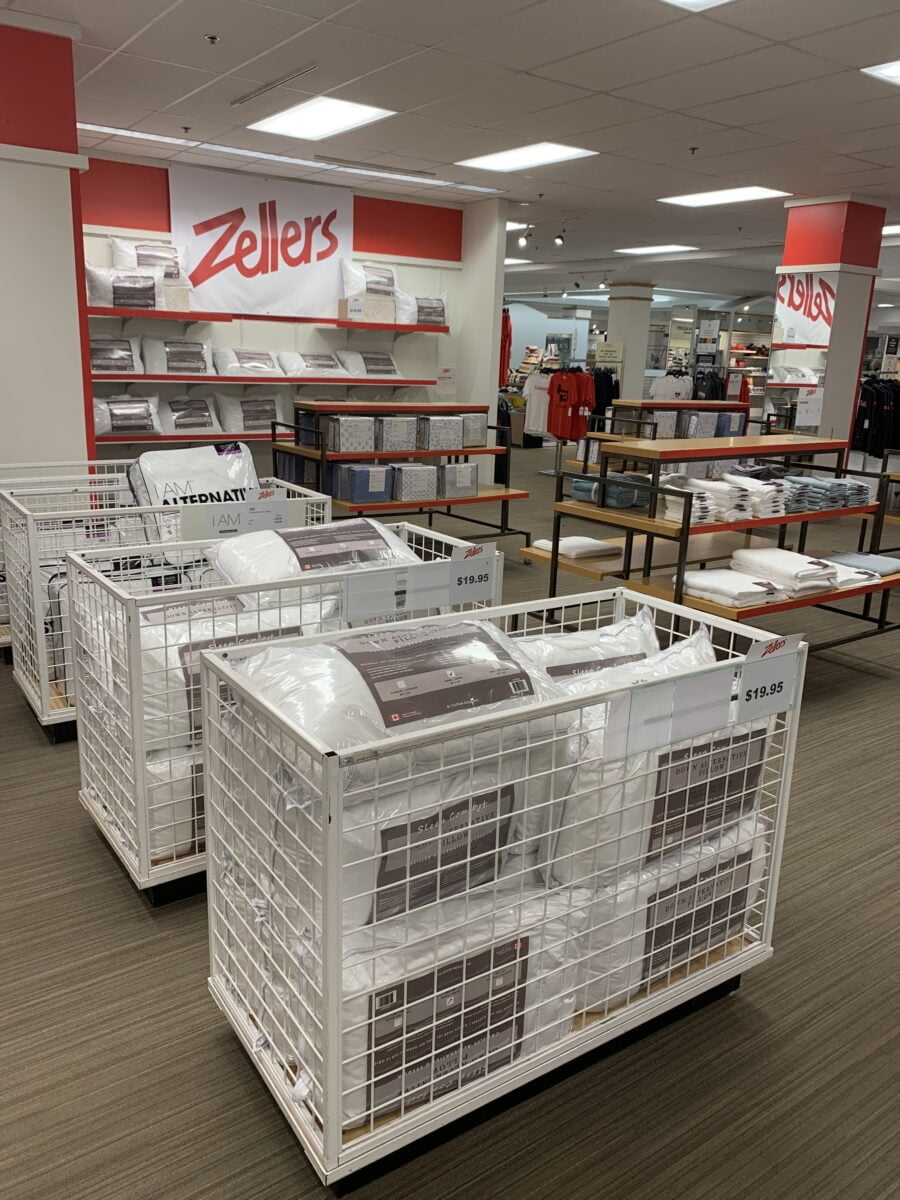
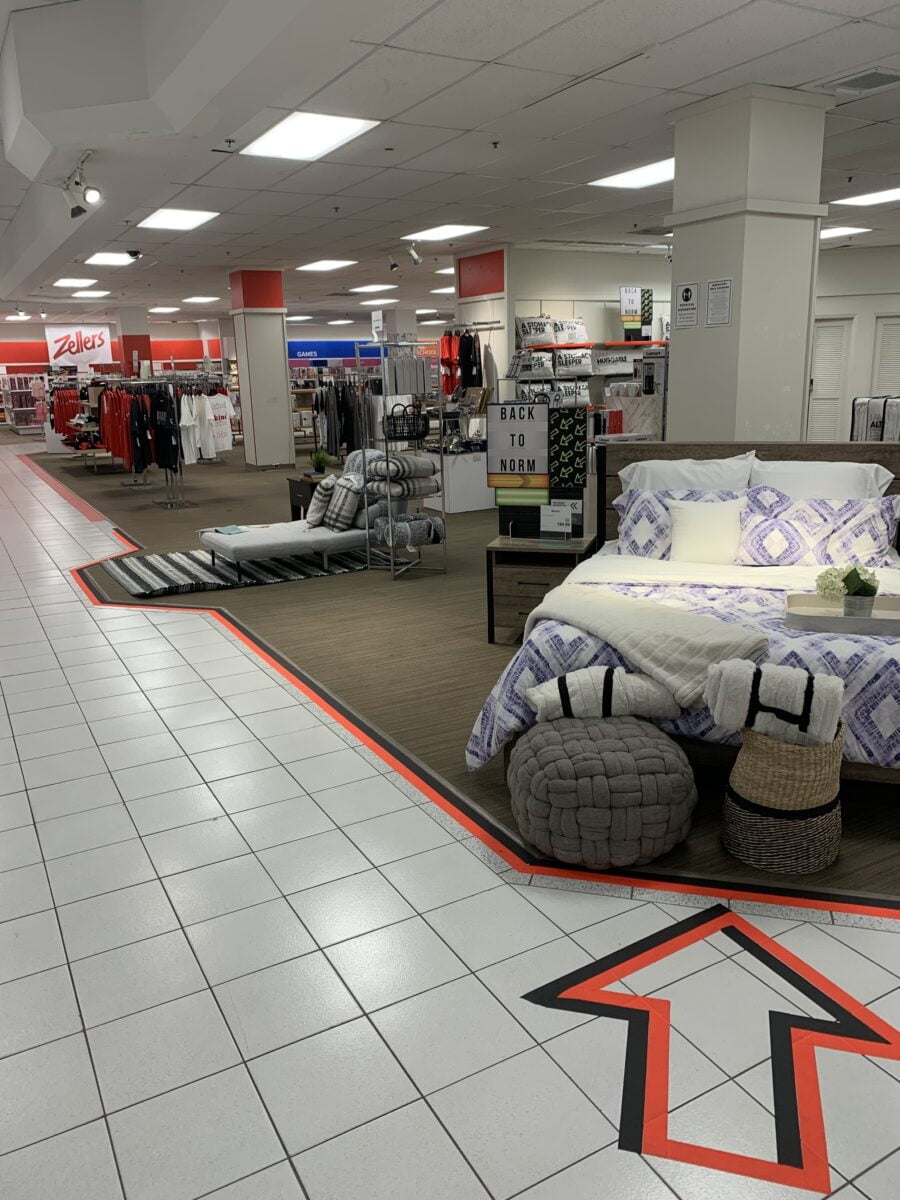
The Zellers pop-up at Burlington Centre features a range of products including Canada-themed apparel and home goods. Red floor tape indicates the boundaries of the Zellers space located on the second floor of the Hudson’s Bay store.
Not present is Zellers mascot Zeddy which for years was part of the retailer’s marketing. In 2012 Zeddy was ‘adopted’ by Camp Trillium after fans voted in Zellers’ final facebook campaign EVERYTHING MUST GO!, marking an end to almost three decades with his Zellers family.
Zellers at Hudson’s Bay Burlington Centre- Photo by Sean Tarry
More Zellers pop-ups could open inside of Hudson’s Bay stores according to a Hudson’s Bay Company spokesperson, though no further details are available at this time.
At its peak in the 1990s, Zellers had over 350 stores in Canada — the entry of Walmart into Canada impacted Zellers’ sales particularly in the early 2000s which resulted in the retailer losing significant market share. In January of 2011, the Hudson’s Bay Company announced that it would sell the leases for up to 220 Zellers store to Minneapolis-based Target for $1.825 billion dollars. HBC retained 64 locations initially and liquidated the chain in early 2013.
The Hudson’s Bay Company operated three Zellers stores in Ontario until early 2020, and those locations acted more as clearance centres for products from Hudson’s Bay store. Zellers as Canadians knew it shut down in March of 2013 after the Hudson’s Bay Company divested most of the store leases to Target which was entering the Canadian market. Target operated in Canada until early 2015 when it exited Canada after seeing significant losses and operating challenges.
In the 1980’s, Zellers’ marketing slogans included “Only you’ll know how little you paid” and “Shopping anywhere else is pointless”. In the late 1980’s and early 1990’s the popular “Where the lowest price is the law!” was used in Zellers advertising. Included were animated commercials featuring Batman and Robin with the villains like the Joker, the Penguin, Catwoman and the Riddler.
Zellers at Hudson’s Bay Burlington Centre – Photo by Sean Tarry
Zellers at Hudson’s Bay Burlington Centre – Photo by Sean Tarry
In the 1990’s, Zellers adopted the slogan “Truly Canadian”. Between 1997 and 2000, “Better and Better” was a slogan and “Everything from A to Z” was part of the retailer’s marketing messaging between 2000 and 2013.
Value-priced Zellers was founded by Walter P. Zeller in London, Ontario, in 1931. The Hudson’s Bay Company acquired Zellers in 1978. The Zellers logo, visible on the last two remaining stores, was adopted in 1975. In 1976, Zellers thrived with sales in excess of $400 million annually and in the same year, discount chain Fields acquired the Zellers chain. Joseph Segal, who at the time was president of Fields, became president of Zellers as part of the transaction.
In 2008, the Hudson’s Bay Company and its subsidiaries, including Zellers, came under the ownership of NRDC Equity Partners, which was headed by Richard Baker. Hudson’s Bay’s namesake stores were positioned as more upscale under the creative direction of retail veteran Bonnie Brooks, while Zellers was seen as a drag on the business.
Additional Photos from the Zellers at Hudson’s Bay in Burlington Centre:
Zellers at Hudson’s Bay Burlington Mall – Photo by Sean Tarry Zellers at Hudson’s Bay Burlington Centre Zellers at Hudson’s Bay Burlington Centre Zellers at Hudson’s Bay Burlington Mall – Photo by Sean Tarry Zellers at Hudson’s Bay Burlington Mall – Photo by Sean Tarry Zellers at Hudson’s Bay Burlington Mall – Photo by Sean Tarry Zellers at Hudson’s Bay Burlington Mall – Photo by Sean Tarry Zellers at Hudson’s Bay Burlington Mall – Photo by Sean Tarry Zellers at Hudson’s Bay Burlington Mall – Photo by Sean Tarry Zellers at Hudson’s Bay Burlington Mall – Photo by Sean Tarry Zellers at Hudson’s Bay Burlington Mall – Photo by Sean Tarry Zellers at Hudson’s Bay Burlington Mall – Photo by Sean Tarry Zellers at Hudson’s Bay Burlington Mall – Photo by Sean Tarry
California-based Apple Inc. held its annual fall Apple event announcement last Tuesday showcasing new iPhones, the next Apple Watch and new iPad variants.
Throughout the pandemic, most Canadians shifted their focus to spending on necessities versus vacations and luxurious shopping – all the while, saving billions of dollars.
Now retail experts are expecting much of that cash to start flooding back into the retail economy.
“The back to school numbers are in and they were unbelievable. People have this feeling that they’ve missed out on two years of their lives and they’re sitting there and they’re thinking I didn’t spend any money, I didn’t travel anywhere, and let’s treat ourselves. Let’s spend the money on things maybe we wouldn’t have before because we were spending it on other things,” she said.
“There’s this sense of loss but there’s also this euphoric sense that you’re getting when you go to the store and you bring something back with you. I think the Christmas season is going to be absolutely brilliant for retailers. We’re seeing footfall traffic for example in the Lansdowne Shopping Centre in Richmond, BC, a 20 per cent growth over 2019 numbers even pre-pandemic because we’re seeing that people need to get out there, they need to be social and they need to spend some money and just feel human.”
During the initial stages of the pandemic, people spent money on their homes but they didn’t spend it on themselves, she added.
“We’ve all been sitting in this virtual world and feeling like it’s my turn now. Let me go get my nails done. Let me go out for a bite to eat with some friends. And really enjoy the aspect of being out,” said Cantkier.
“As we stand on the eve of a revenge spending phenomenon in Canada, it’s also important to recognize that we’ll be stepping back into a retail world that looks, feels and functions differently than the pre-pandemic shopping culture — and that’s a good thing, for the most part.
“We’re still social creatures at the end of the day. There are things that you just cannot do online. The things that people are doing online is where you’re seeing that shift in technology and experience. Retailers have responded.”
She said research indicates online retail will account for 13.4 per cent of all retail this year, up from 6.9 per cent in 2019, according to data from eMarketer. She said Canada’s total retail sector will surge this year, growing by 6.4 per cent after falling back by nearly five per cent during the 2020 pandemic year, according to the Canada E-commerce Forecast.
She said the decline in store traffic will start to reverse by the fall and retailers will need to adjust and strengthen their offerings as shoppers start coming back in large numbers.The number of retail tenants offering an e-commerce platform doubled during the pandemic, yet 77 per cent of tenants still say profitability is highest when customers shop in-person, according to Colliers’ new Retail Recovery report.
“I think even before the pandemic the customer journey was important,” said Cantkier. “What’s leading us back to bricks and mortar and where we’re seeing all of those online retailers looking at bricks and mortar is because the customer journey is so cyclical. It may start online and it used to end there. That customer journey has to be fulsome. It can’t have that sort of stop and start. It has to come full circle now.
“The customer journey has changed. It’s no longer simply about visiting a store; it now involves an overall brand experience through the omnichannel platform. Having done their research online, customers arrive at the store already knowing exactly what they want – in many cases, knowing more about a product’s features and benefits than the sales associate. The role of the in-store sales associate must be elevated to someone fully versed in the product they are selling, who can understand and find a solution for the customer’s needs.”
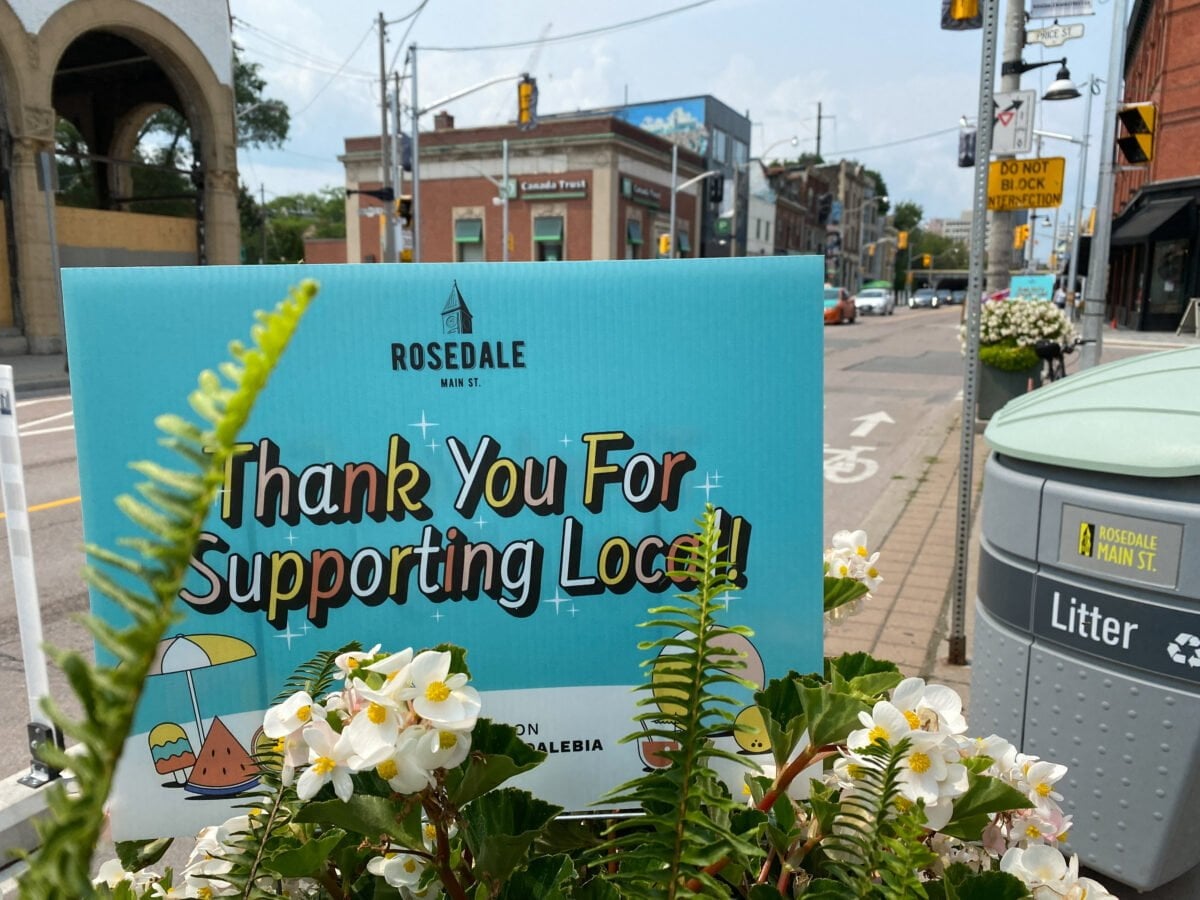
Rosedale BIA Supporting Local – Photo by Dustin Fuhs
She said retailing has less to do with the product but with the experience in getting that product. Brands are now also responding to what’s important to the customer – sustainability, the local nature of products, responding to causes. The trend is retailers responding to what’s important to consumers.
“During the pandemic, retailers had to extend themselves and find innovative ways to support the customer journey. For a time, that journey went online, but as revenge spending takes off, customers will increasingly be turning their attention to items that require interaction, feeling, touching and trying on,” said Cantkier.
“Additionally, high-tech shopping will help set the winners apart in the retail business. New augmented reality such as virtual, or smart, mirrors and artificial intelligence such as personalized item suggestions and tailored sale notifications should emerge as priorities for retailers. We can expect to see more appointment-driven shopping, personal shopping services and specialized one-on-one interactions.These shifts will be born out of our need for safety while also emerging as a byproduct of buying more expensive products that require an elevated experience.”
Cantkier said grocery store anchored centres and high service fashion are poised to thrive.
“Grocery store anchored centres are the catalyst for all the other services and all the other shopping that you’re doing. It’s not going to go away. We need food, drugs and alcohol. Those centres do really well because there are the complementary services and tenants,” she said. “The grocery is really the anchor for it and they really did thrive.
“What we’ve seen with fashion is fashion has become a very challenging category to be in right now. People are focused either on getting something that’s really remarkable, really high end, really great quality. And they’re going to thrive. They’re absolutely here to stay and we’re seeing that in shopping habits and in the sales per square foot numbers that we’re looking at.”