Home Blog Page 977

Retail Profile: Robson Street in Vancouver (Summer 2021)

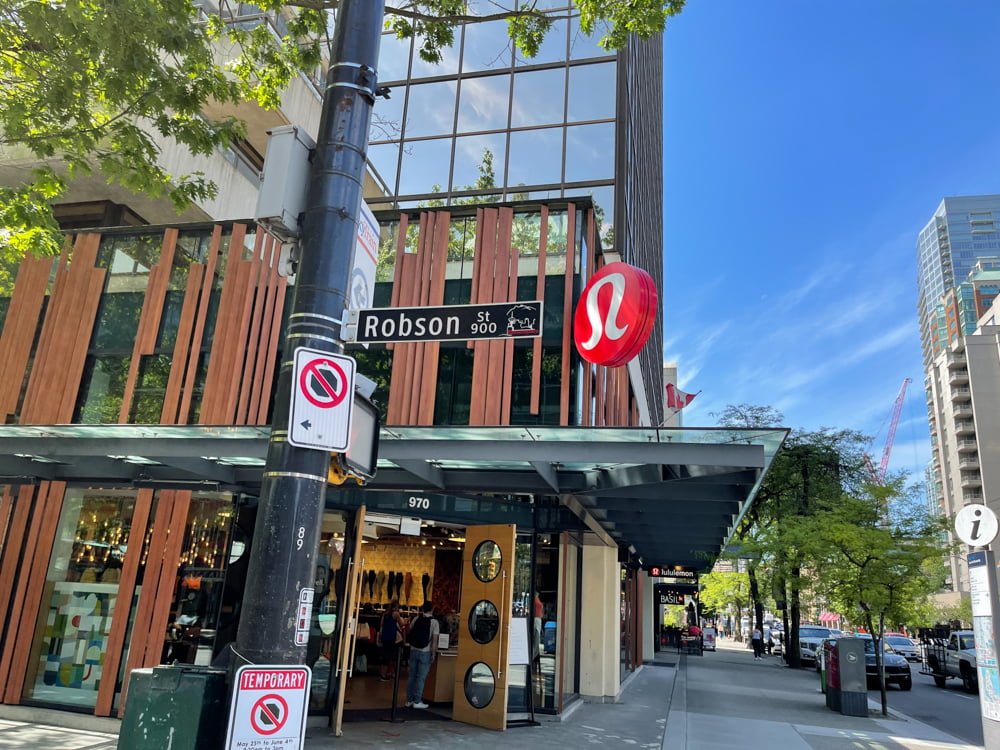
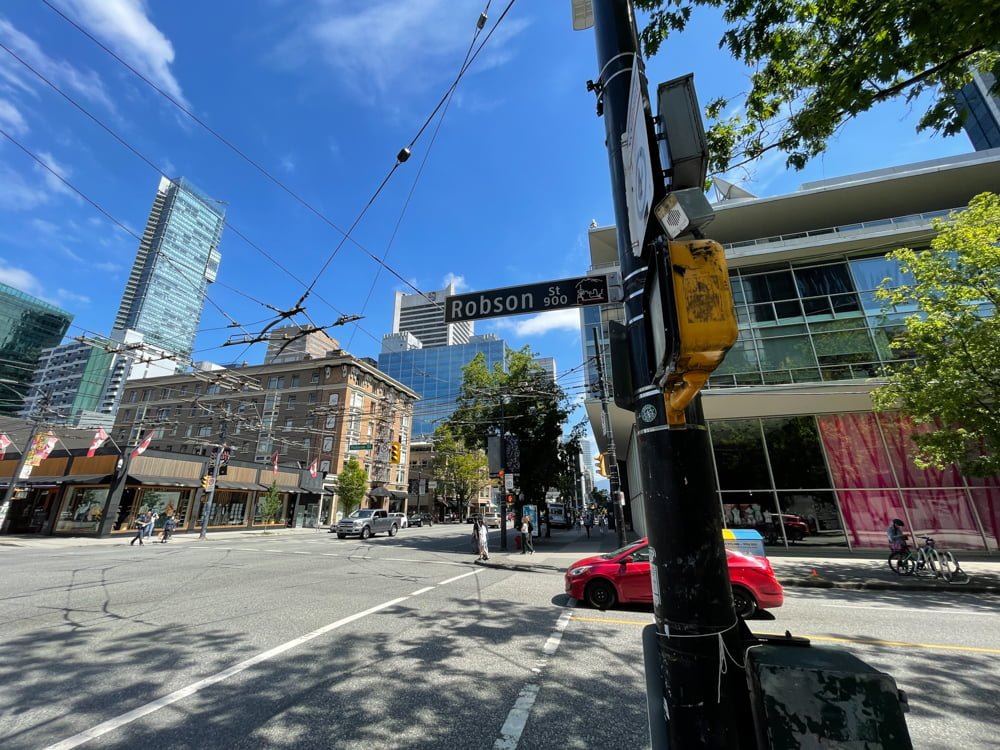
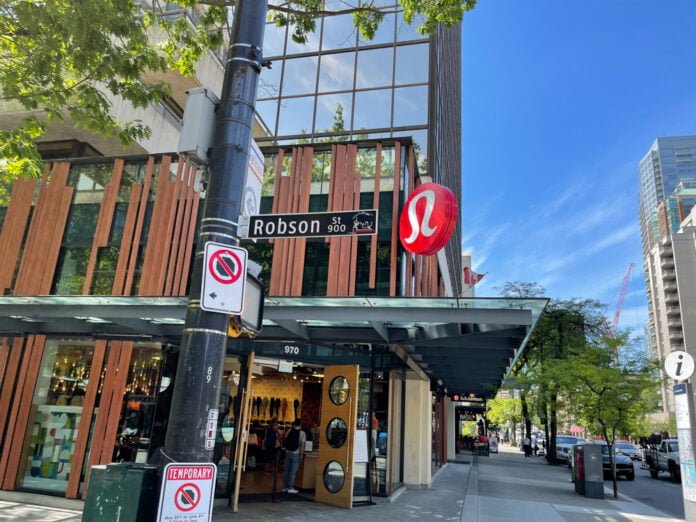
Intersection of Robson and Burrard (June 2021)
Intersection of Robson and Burrard (June 2021). Photo: Lee Rivett.

Retail Insider continues its Photo Tour series to provide a window into retail hotspots across the country that may be continuing to grow and expand while dealing with the effects of the COVID-19 pandemic.

This edition takes us to well-known Robson Street in Vancouver, British Columbia, beginning at Hornby Street and continuing west to Jervis Street. Stay tuned for the Alberni Street ‘Luxury Zone’ Retail Profile which will be published in the upcoming days as well.
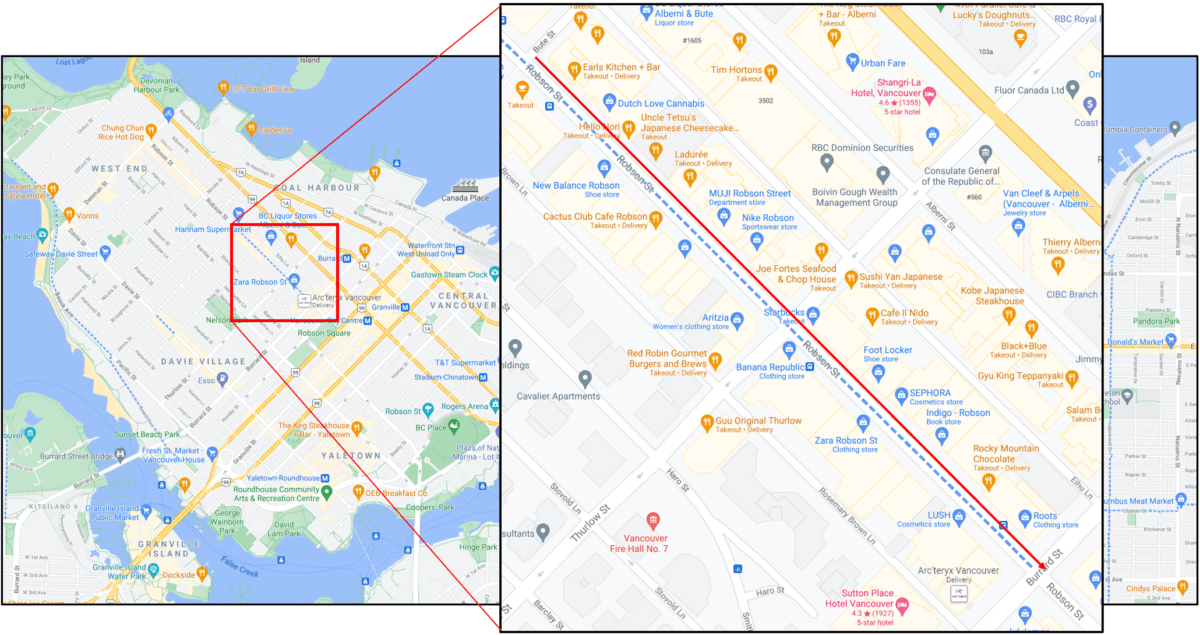
Robson Street (Between Bute Street and Burrard Street) in Vancouver
Robson Street (Between Bute Street and Burrard Street) in Vancouver. Photo: Google Map and overlay by Retail Insider.

History of Robson Street

Robson Street was one of the first streets in Vancouver and was named in honour of John Robson, Premier of British Columbia from 1889-1892. Its commercial traditions date from 1895 when street car tracks were laid along Robson Street to Jervis Street. The 1940’s saw businesses begin to move west towards the 900 block of Robson, which became the market center, and very quickly they crossed Burrard Street to the buildings in the 1000 block. In the 1950’s and 60’s, Robson Street became known as Robsonstrasse, as the area became populated by European shopkeepers, most notably Germans, who arrived in Vancouver post World War II. Many European delicatessens, markets, bakeries and high fashion boutiques lined the street. Robson was bustling and becoming international in character, with the inexpensive housing attracting many new Canadians. In the late 1960’s and early 1970’s, Robson Street’s unique retail character became threatened by redevelopment. Many of the older buildings were redeveloped, rents started to increase and several small merchants were forced to close their doors. In the 80’s and especially after Expo 86, international recognition of Robson Street continued to increase. The street was still home to smaller independent retailers, including Welch’s Candy, Murchie’s Coffee and Tea and a Busy Bee grocery store, to name a few while a few national and international chains began to appear like London Drugs and Starbucks, the latter of which infamously occupied the two corner properties kitty corner to one another at Robson and Thurlow.
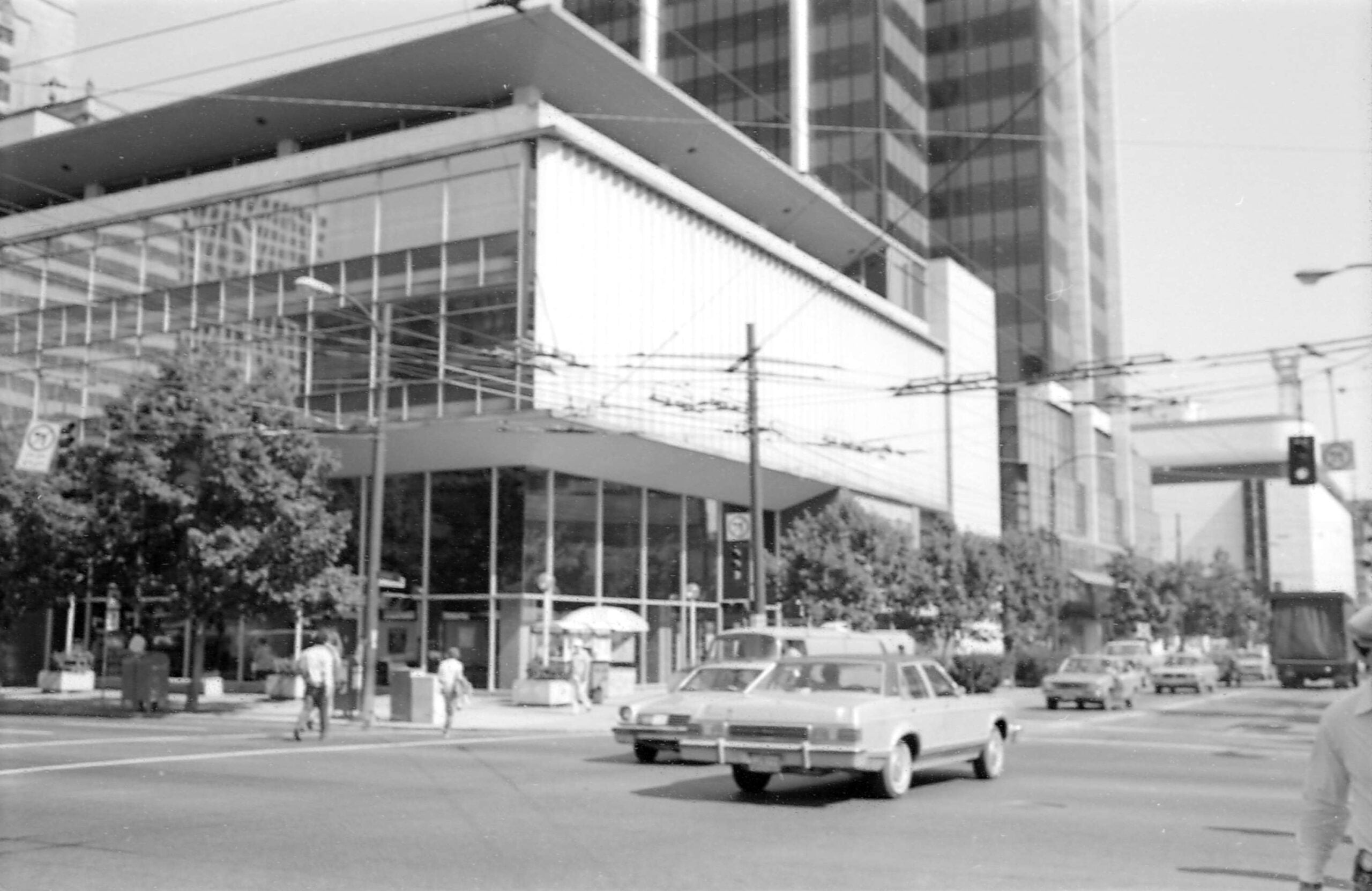
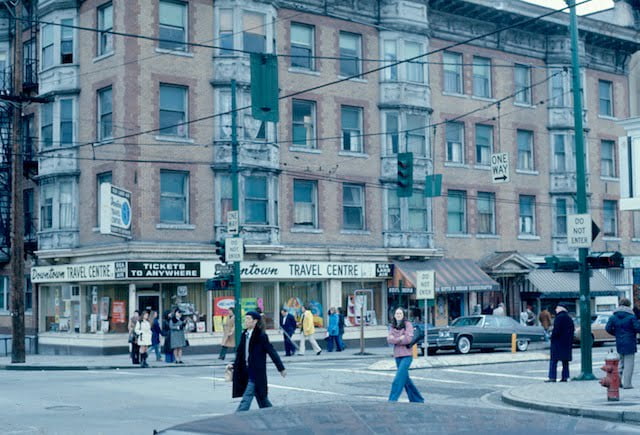
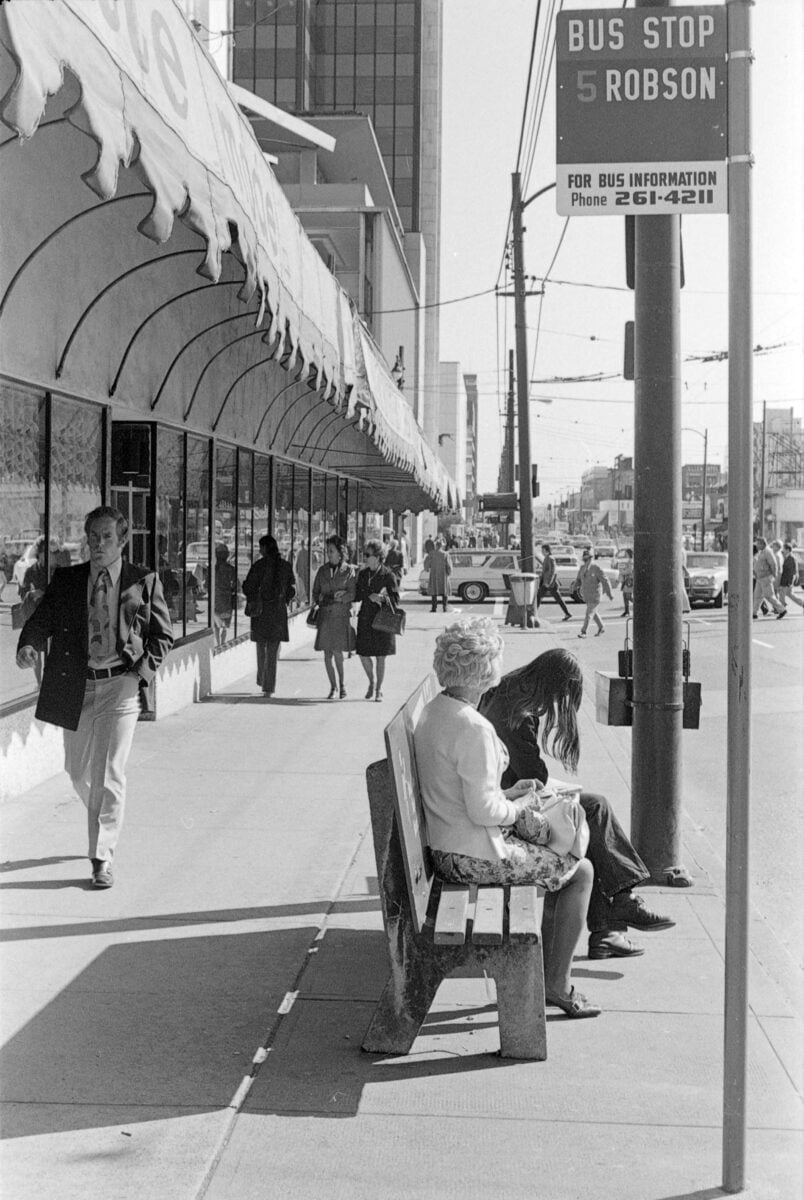
Historical Photo a bus stop at Burrard & Robson in 1974
Historical Photo a bus stop at Burrard & Robson in 1974. Photo: BC Archives # CVA 69-19.19

Breaking Up Robson Street

The Photo Tour of Robson Street starts next to the Vancouver Art Gallery at the intersection of Hornby Street. We will continue westward along Robson Street until we reach Jervis Street where retail becomes sparser. For the purpose of this retail tour, we separated the street into six ‘tour zones’ based on the density of retailers in each area.
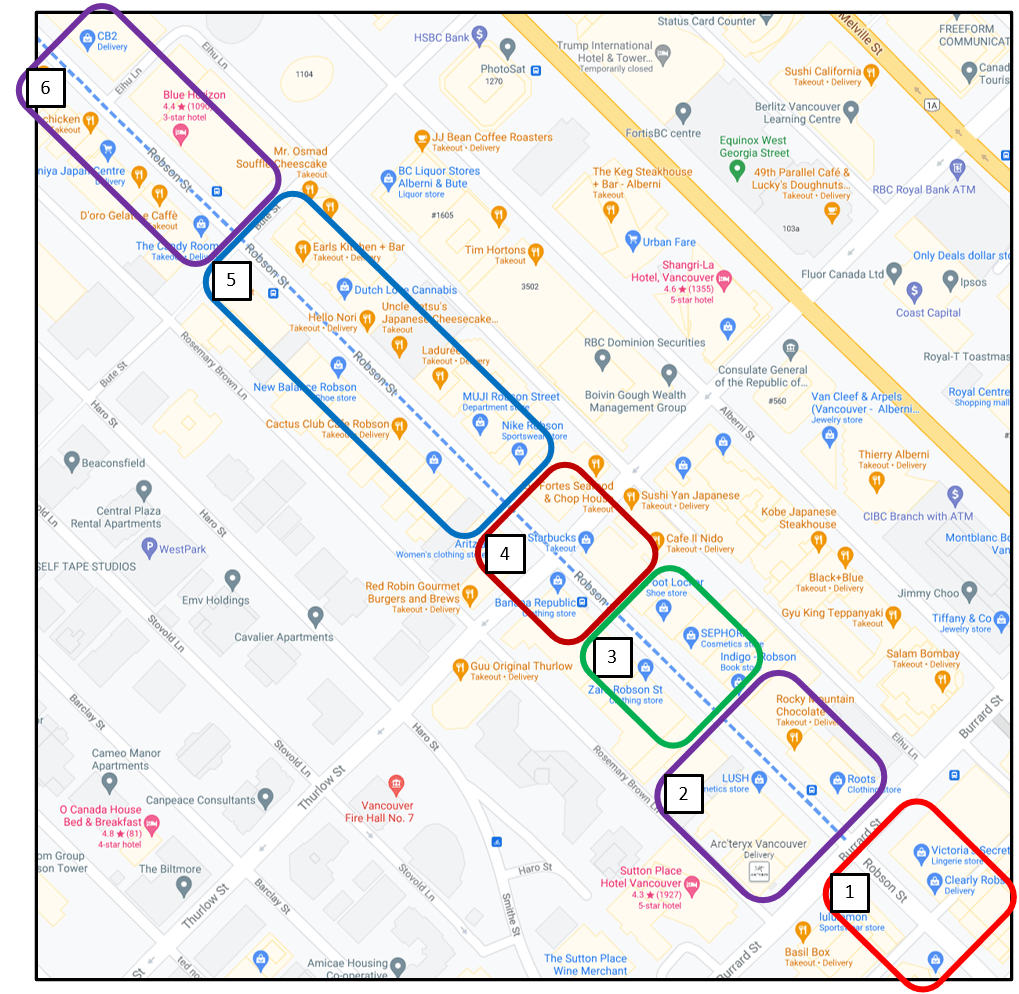
Retail Profile 'Tour Zones' for Robson Street
Retail Profile ‘Tour Zones’ for Robson Street. Photo: Google Map.

The above six encircled ‘tour zones’ along Robson Street include:

  • Zone 1: 900 Block of Robson Street (Hornby Street to Burrard Street)
  • Zone 2: Eastern-1000 Block of Robson Street
  • Zone 3: Mid-1000 Block of Robson Street
  • Zone 4: Intersection of Robson Street and Thurlow Street
  • Zone 5: 1100 Block of Robson Street (Bute Street to Thurlow Street)
  • Zone 6: 1200 Block of Robson Street (Jervis Street to Bute Street)

Retail Tour Zone 1: 900 Block of Robson Street (Hornby Street to Burrard Street)

To make it easier for our readers, we selected a prominent downtown landmark to begin the first tour zone. The Vancouver Art Gallery originally opened as a provincial courthouse and was re-purposed for museum use in the early 1980s. This landmark borders Hornby Street and Robson Street which provides a main source of foot traffic for the Robson Street zone.
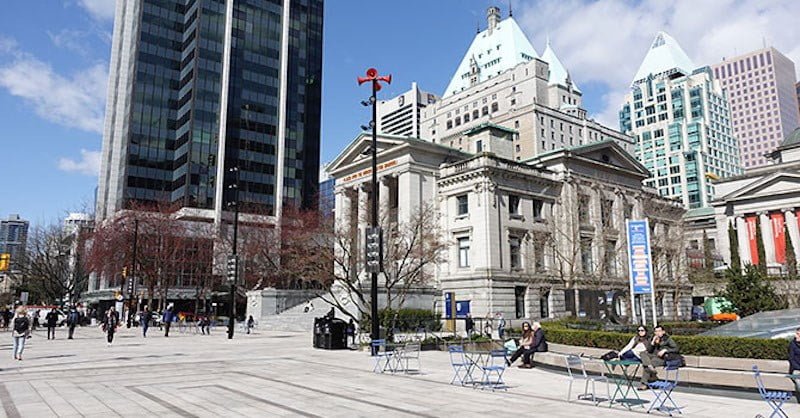
Vancouver Art Gallery at Robson Street. Photo: City of Vancouver
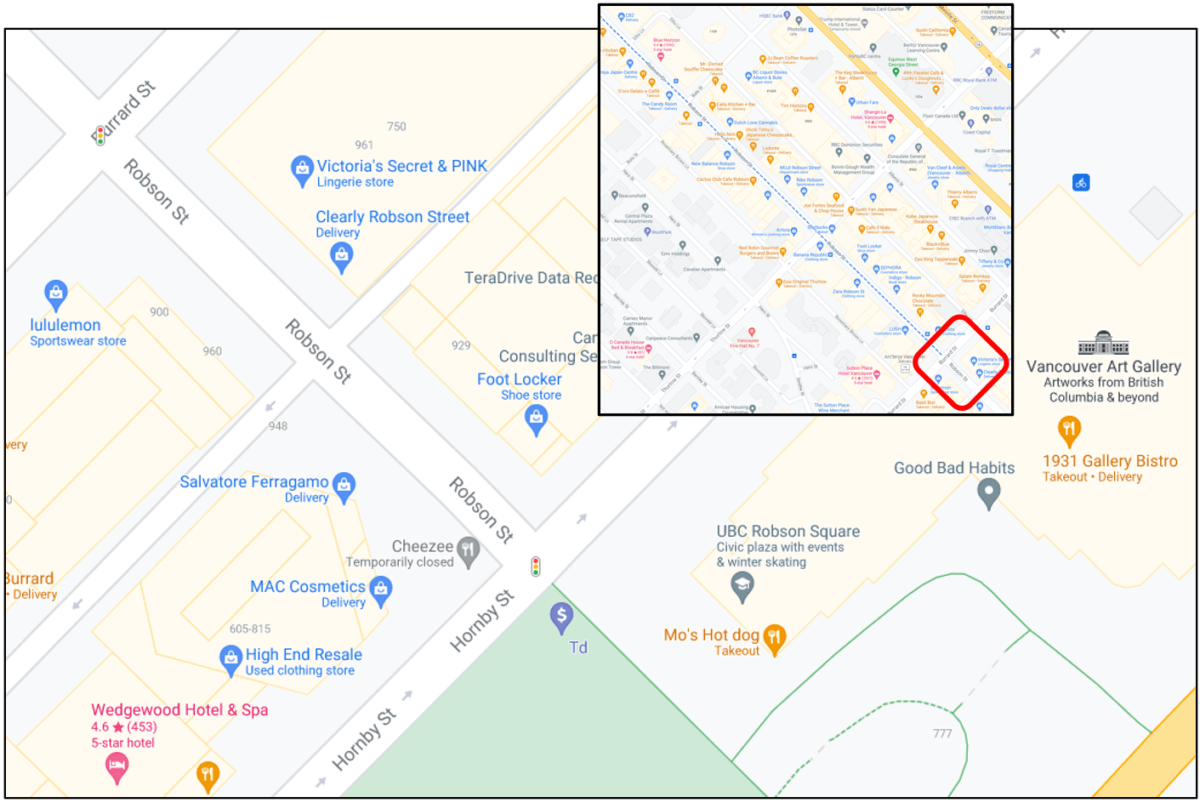
900 Block of Robson Street (Between Hornby Street and Burrard Street) in Vancouver
900 Block of Robson Street (Between Hornby Street and Burrard Street) in Vancouver. Photo: Google Map and overlay by Retail Insider.

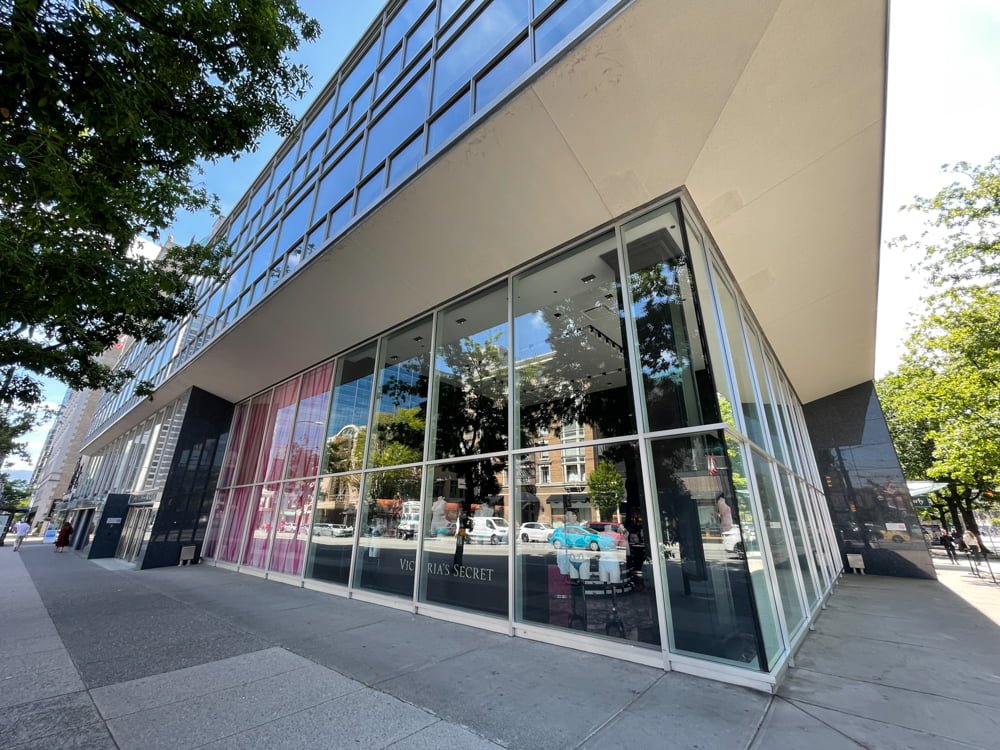
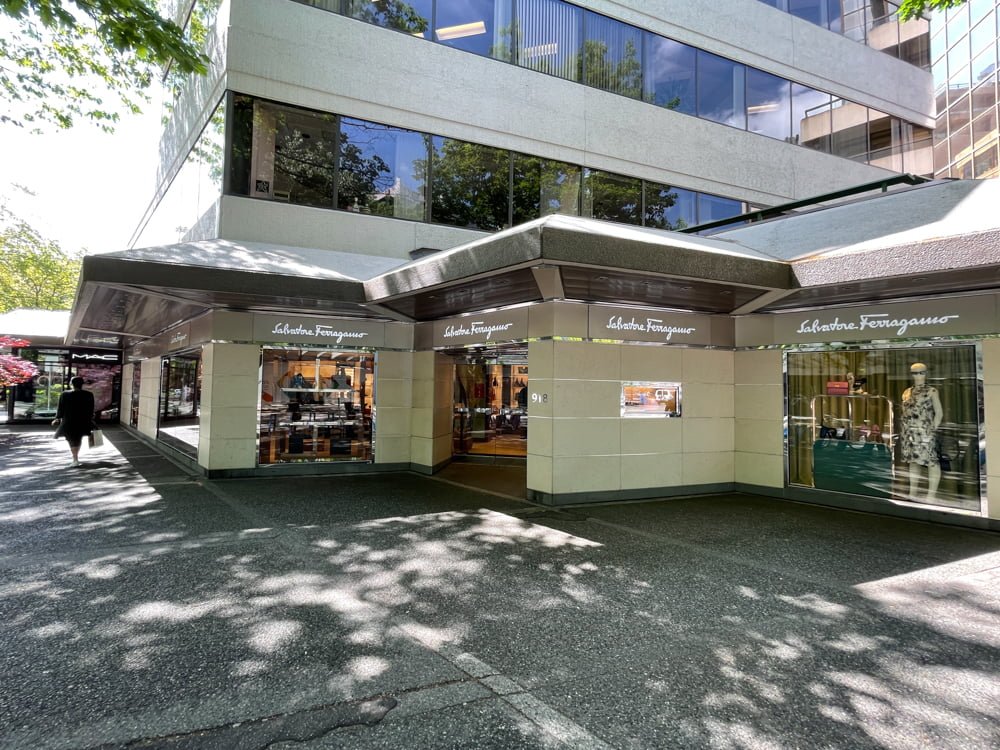
While Robson Street is pedestrian-only along the Vancouver Art Gallery, vehicular traffic resumes on the 900 block of Robson Street heading westward from Hornby Street toward Burrard Street. The retailers mentioned in Retail Insider for this block include:

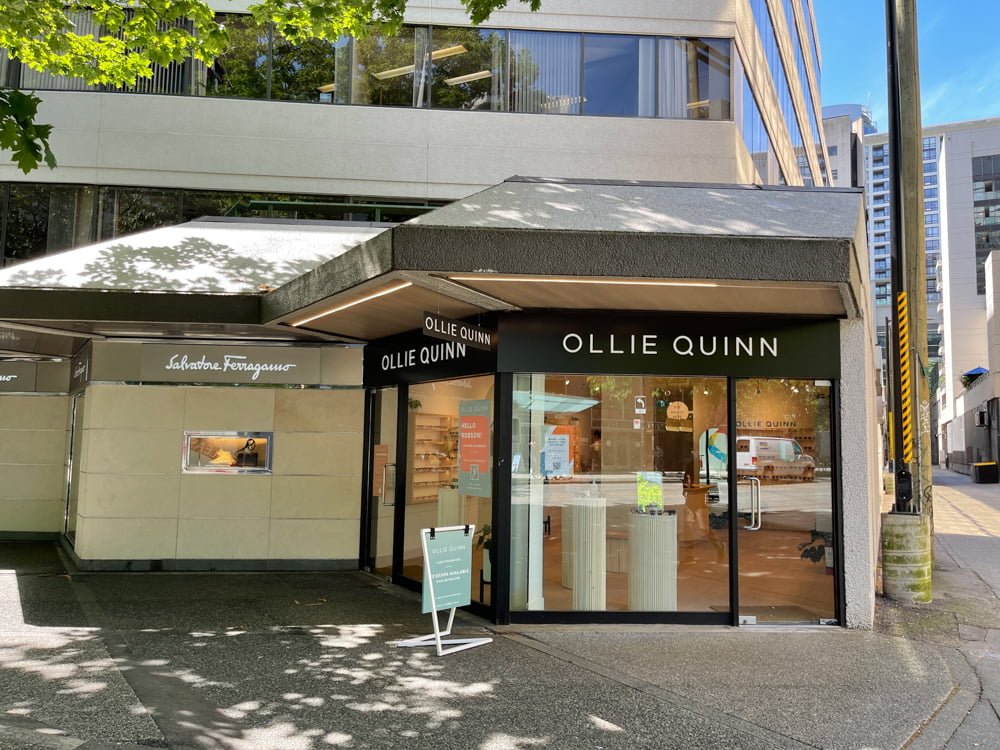
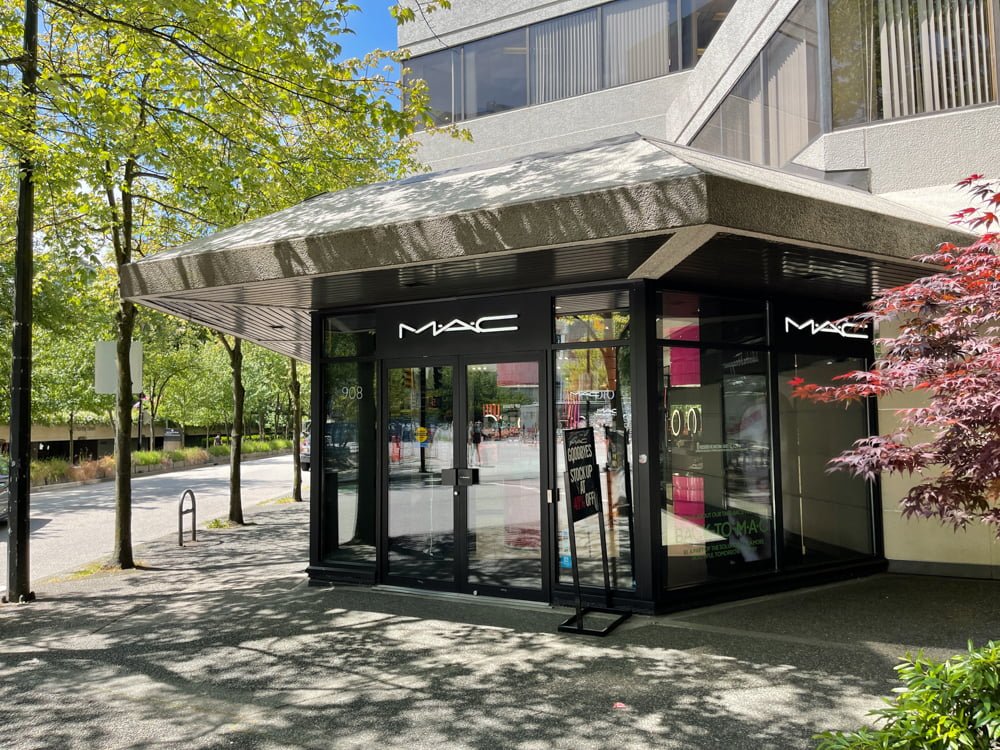
Other retailers on the 900 block of Robson street include Ollie Quinn and MAC Cosmetics, and the block was also home to Tesla Motor’s second Canadian store which recently closed.
Retail Tour Zone 2: Eastern-1000 Block of Robson Street

Retailer density increases as the retail tour crosses Burrard Street to the 1000 block of Robson Street. As a result, we broke the 1000 block into three sections to give the block a little extra detail. As we left the previous tour zone on the 900 block of Robson Street, we crossed Burrard Street bringing us to the first of three sections of the 1000 block.
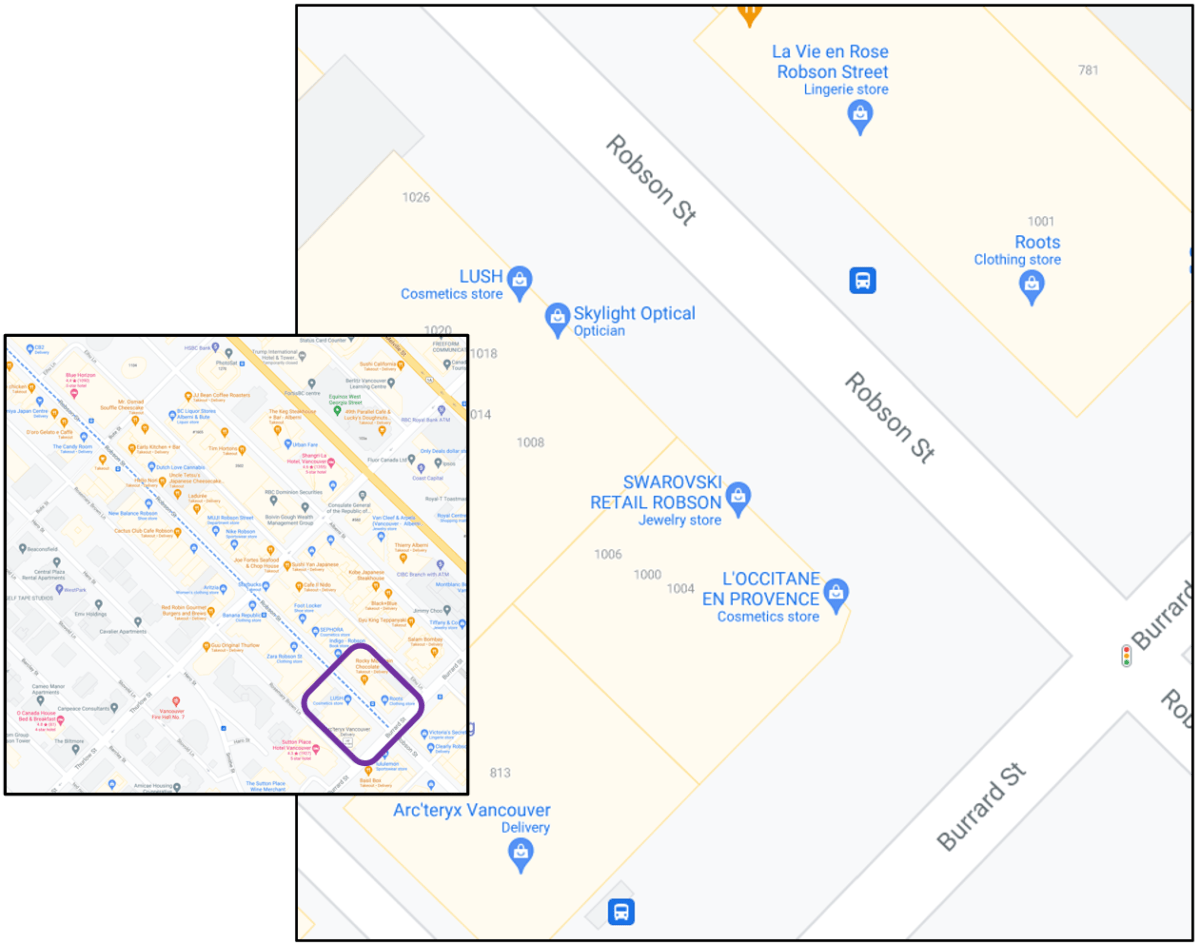
Eastern side of 1000 Block of Robson Street (starting at Burrard Street) in Vancouver
Eastern side of 1000 Block of Robson Street (starting at Burrard Street) in Vancouver. Photo: Google Map and overlay by Retail Insider.
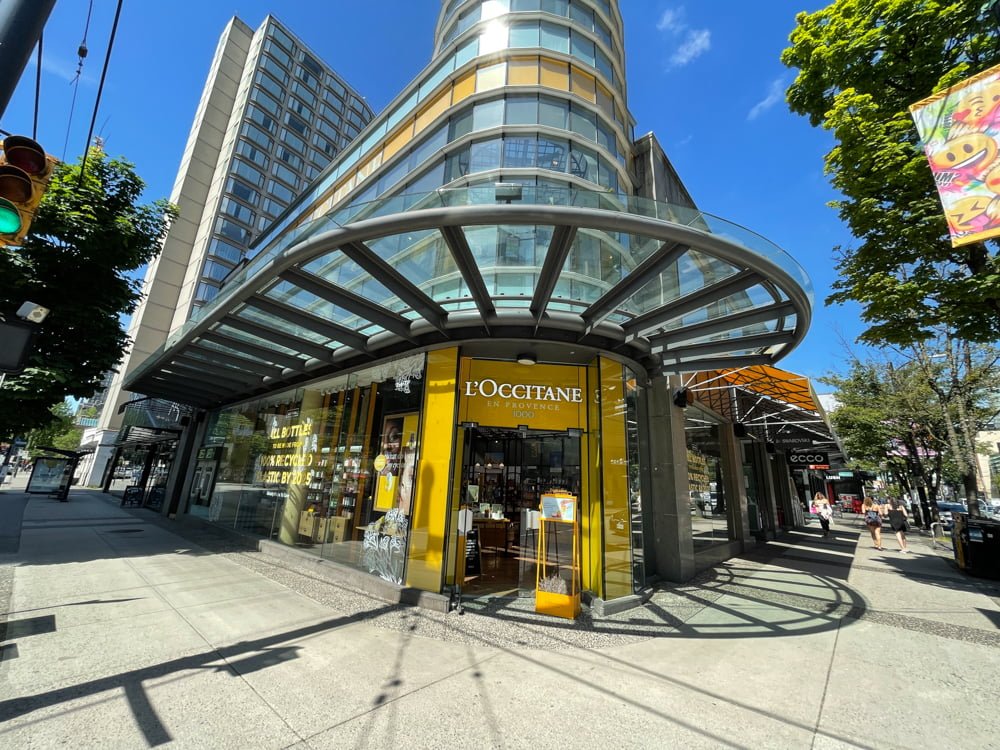
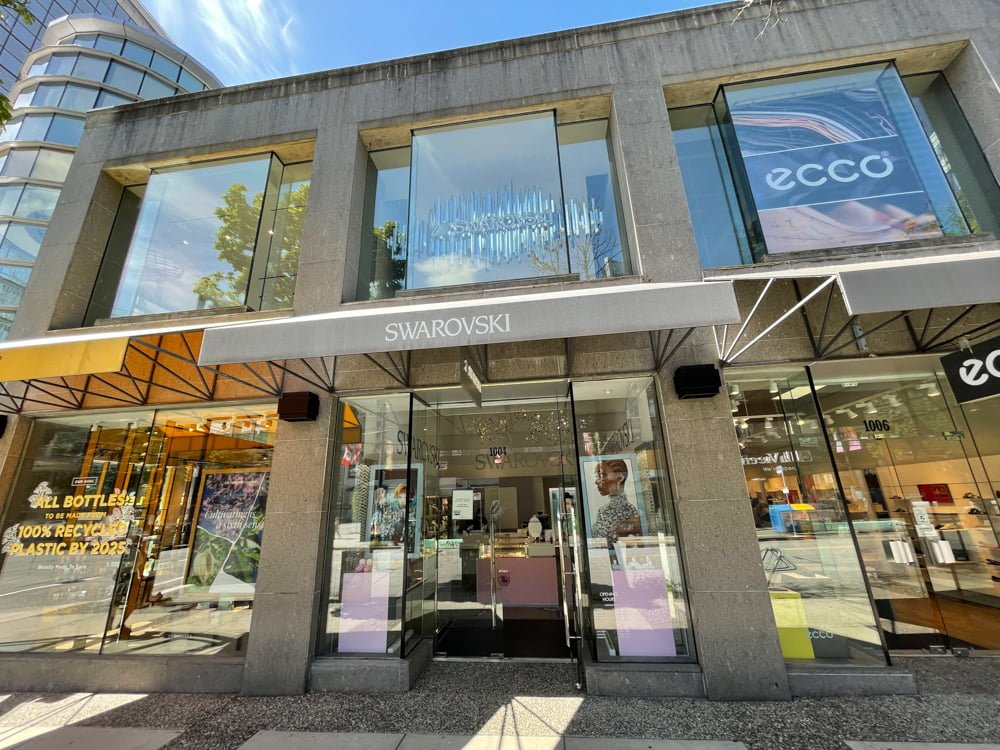
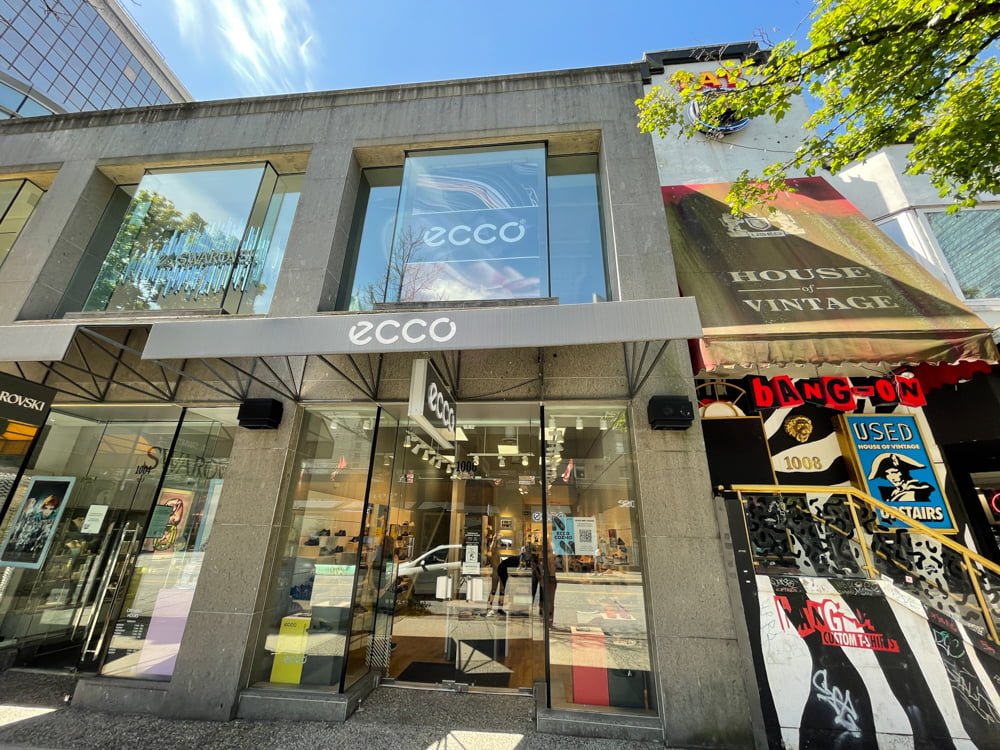
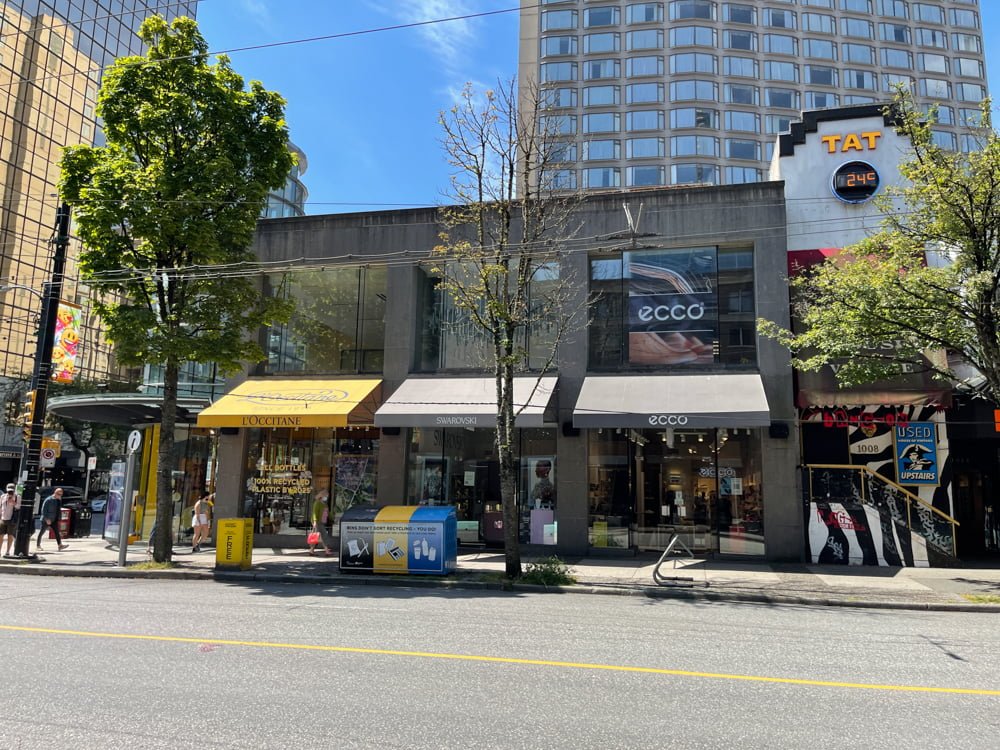
L'Occitane, Swarovski and Ecco Shoes on Robson Street in Vancouver (June 2021)
L’Occitane, Swarovski and Ecco Shoes on Robson Street in Vancouver (June 2021). Photo: Lee Rivett.

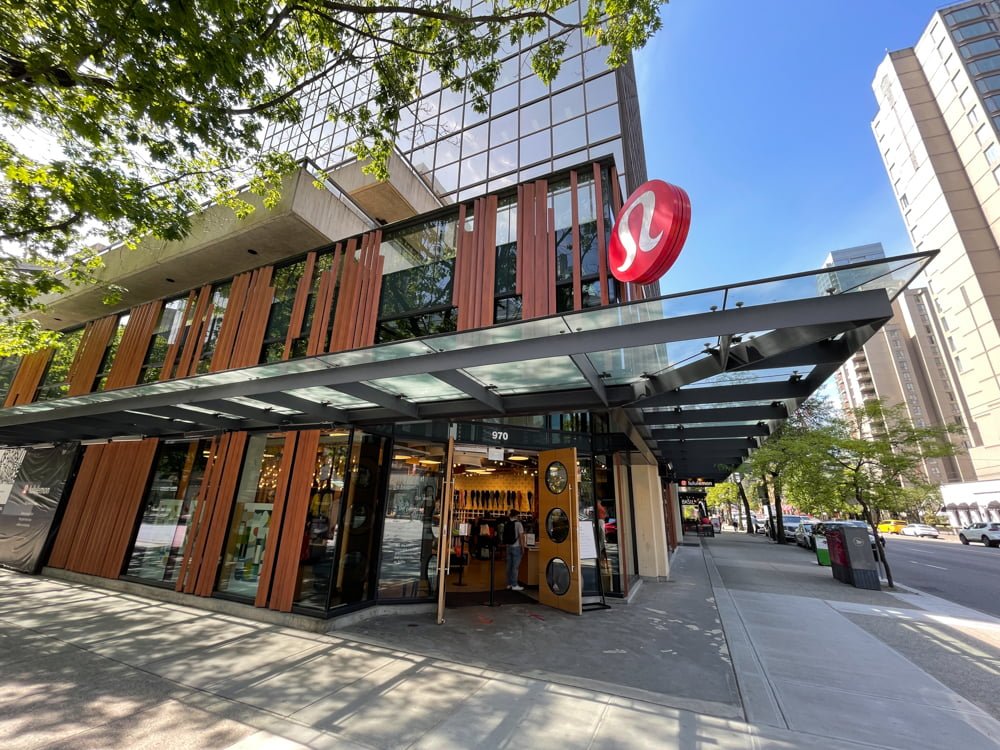
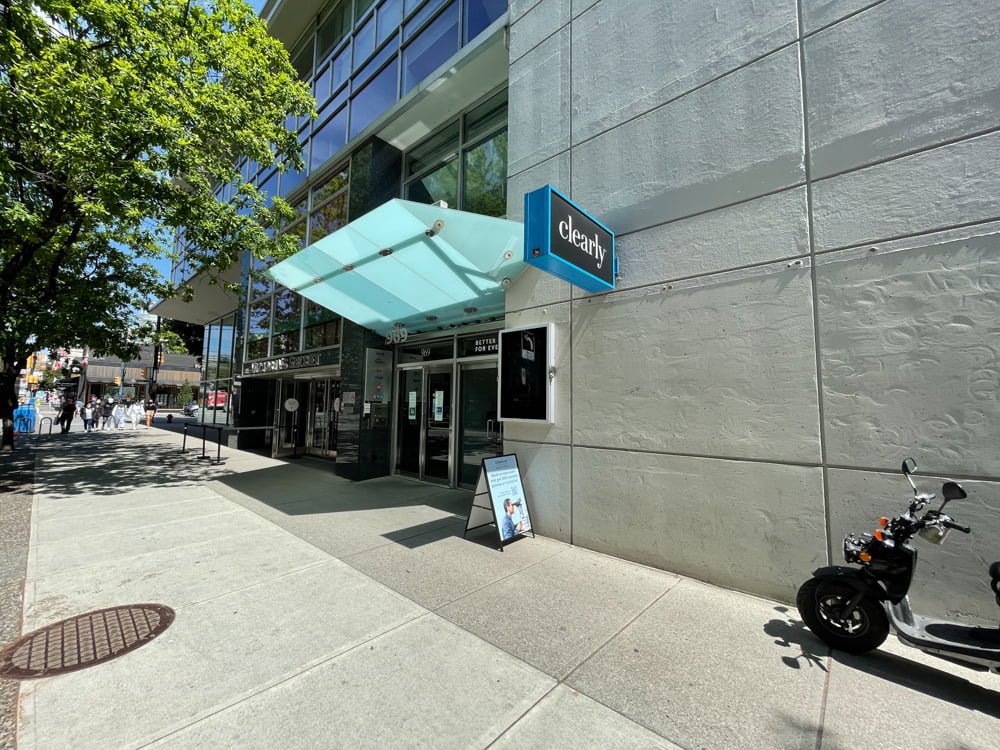
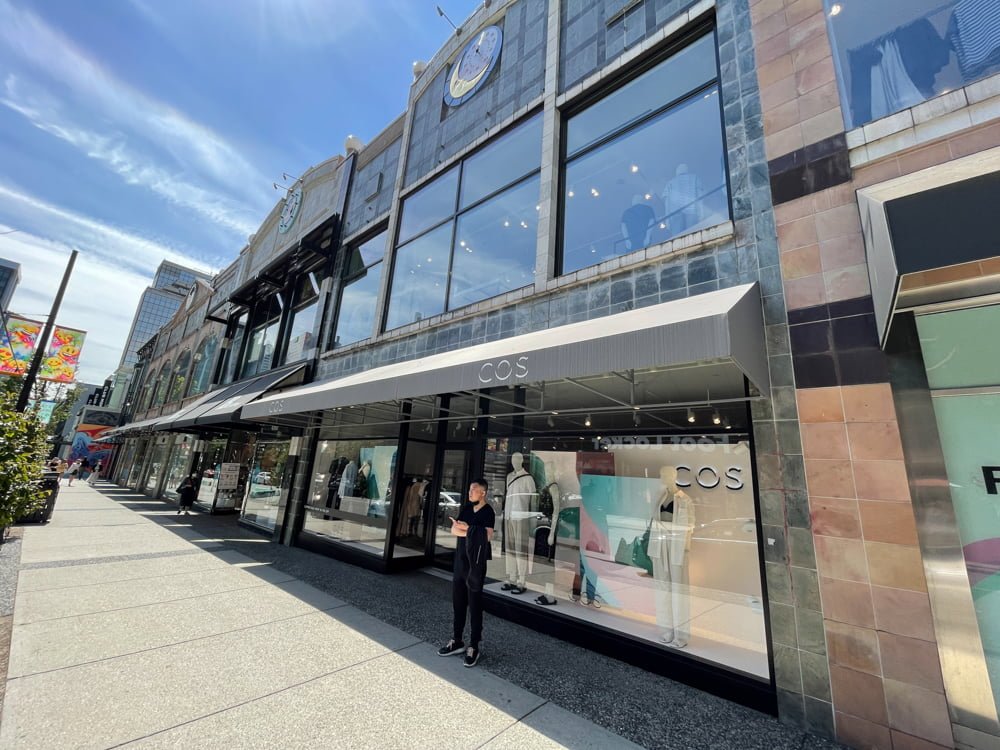
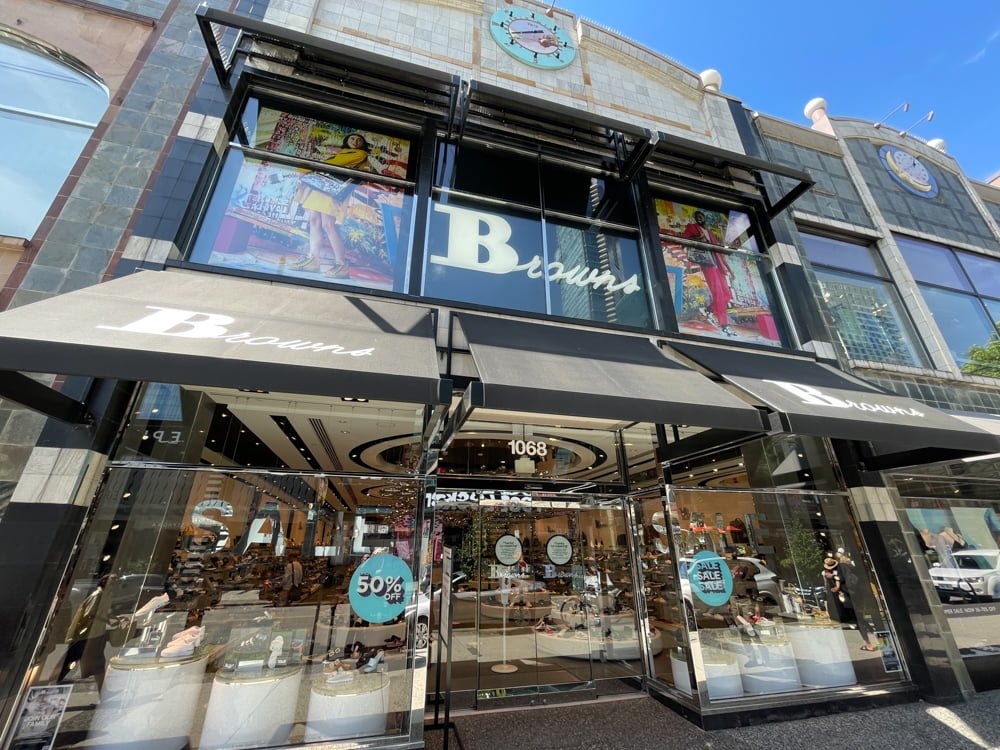
There are several retailers featured in Retail Insider over the years, including:

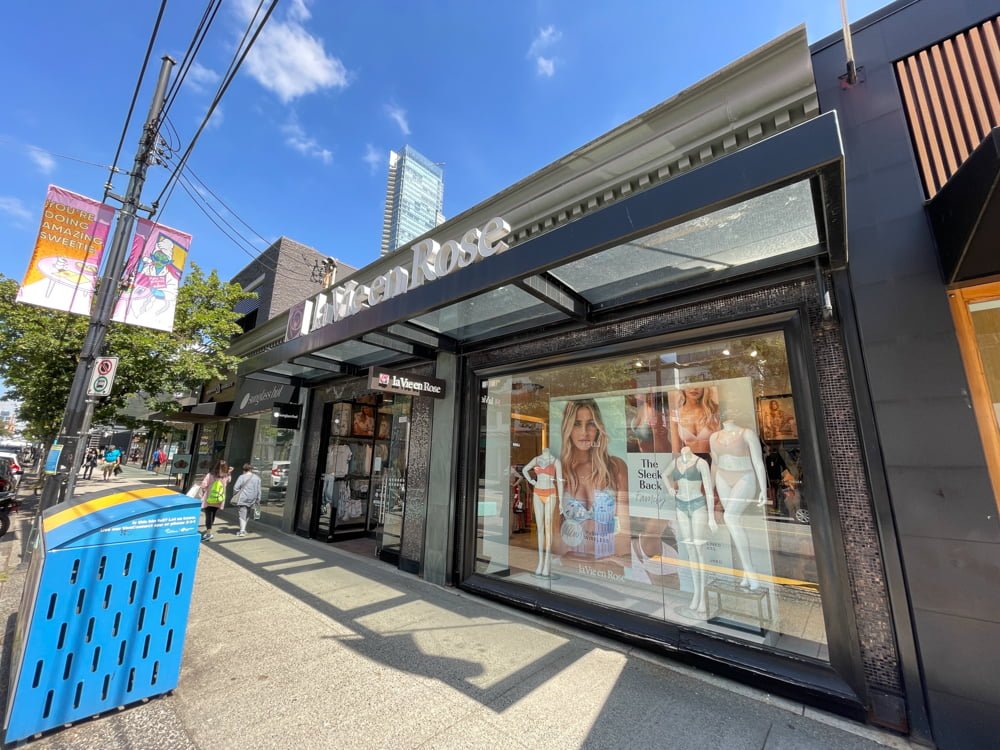
Other select retailers on the eastern portion of the 1000 block of Robson included Sunglass Hut, La Vie en Rose, Ecco Shoes and Swarovski.
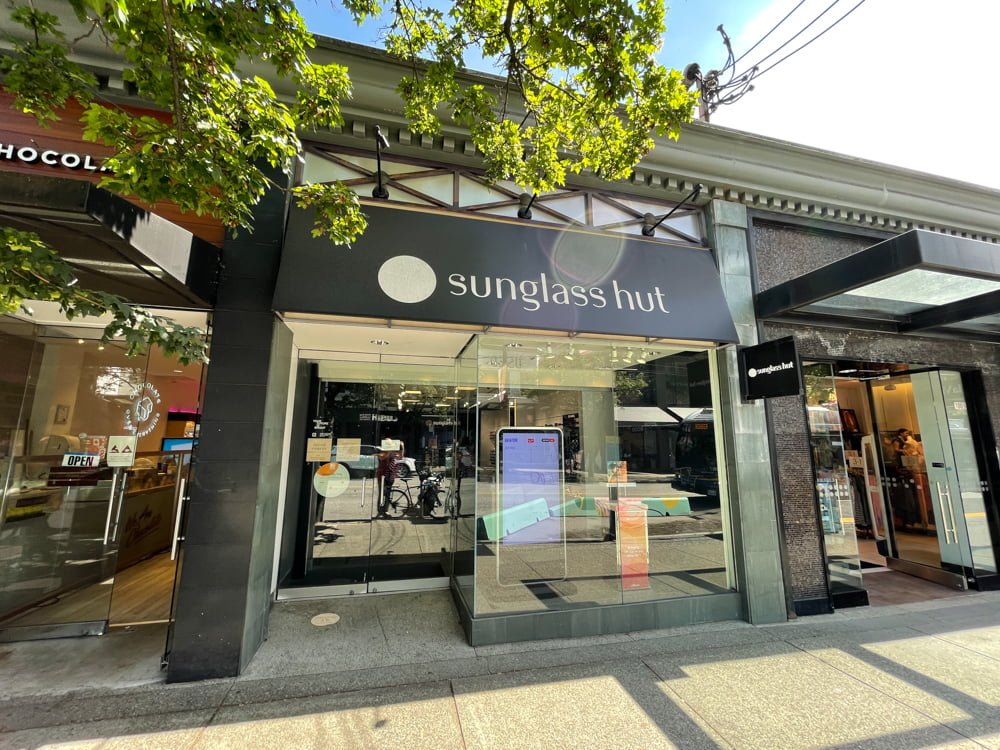
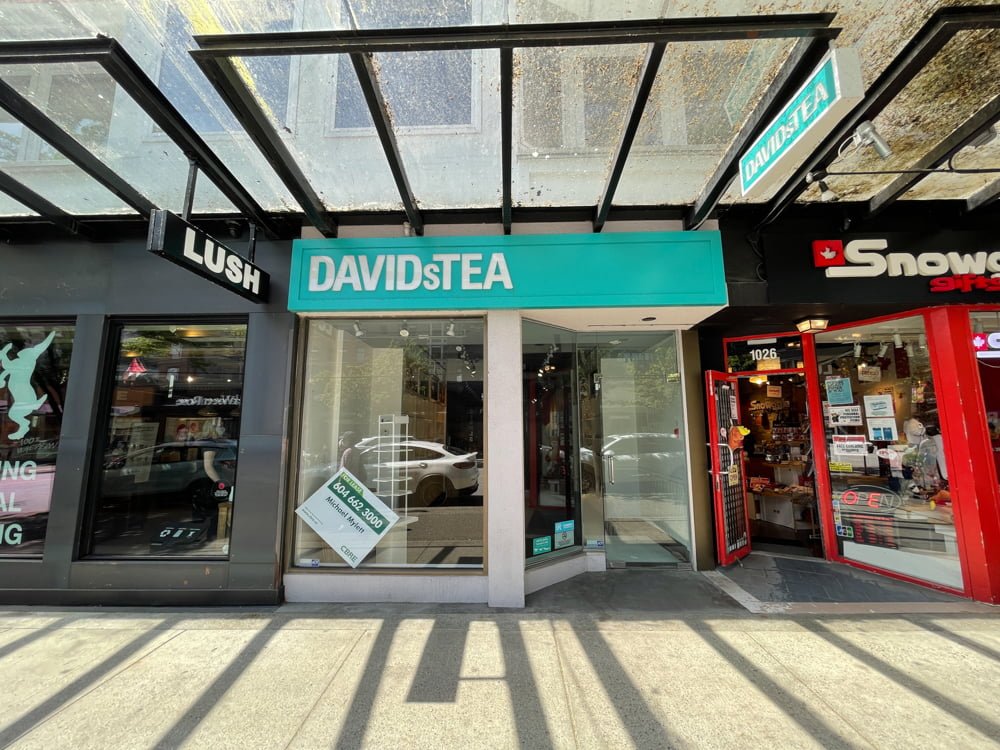
Former David's Tea location on Robson Street (June 2021)
Former David’s Tea location on Robson Street (June 2021). Photo: Lee Rivett.

We couldn’t help including the former DAVIDsTEA location on Robson which was loved by one and all as part of their difficult decision to close a total of 166 retail locations in Canada. Only the DAVIDsTEA location in Vancouver now operates at CF Pacific Centre as of 2021.

Retail Tour Zone 3: Middle of 1000 Block of Robson Street
Middle of the 1000 Block of Robson Street  in Vancouver
Middle of the 1000 Block of Robson Street in Vancouver. Photo: Google Map and overlay by Retail Insider.

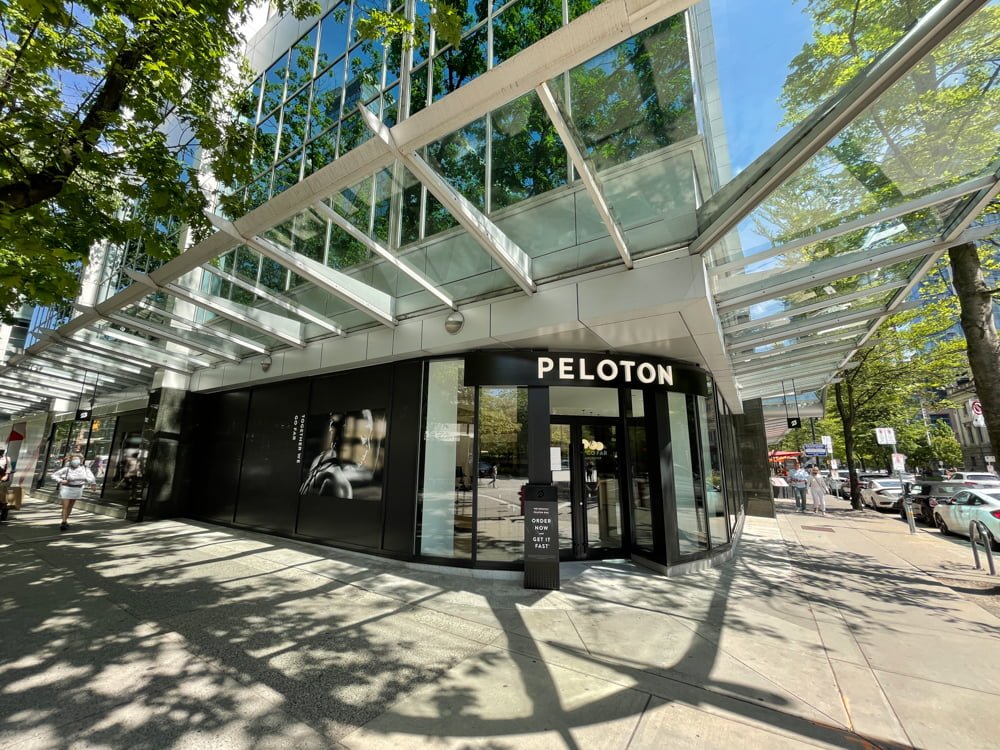
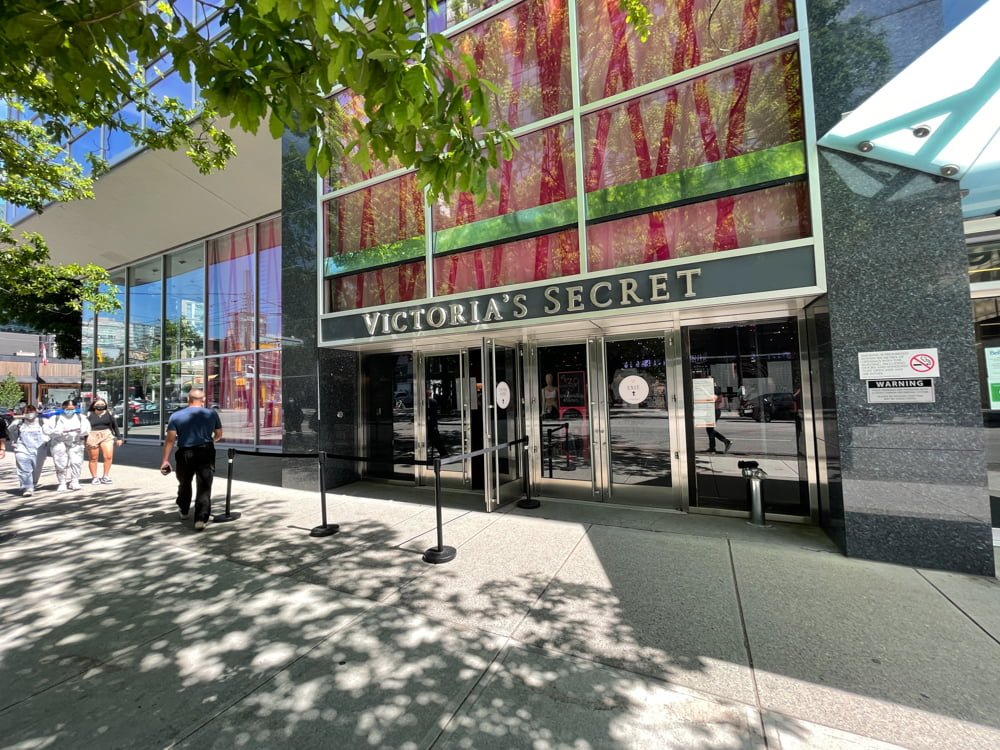
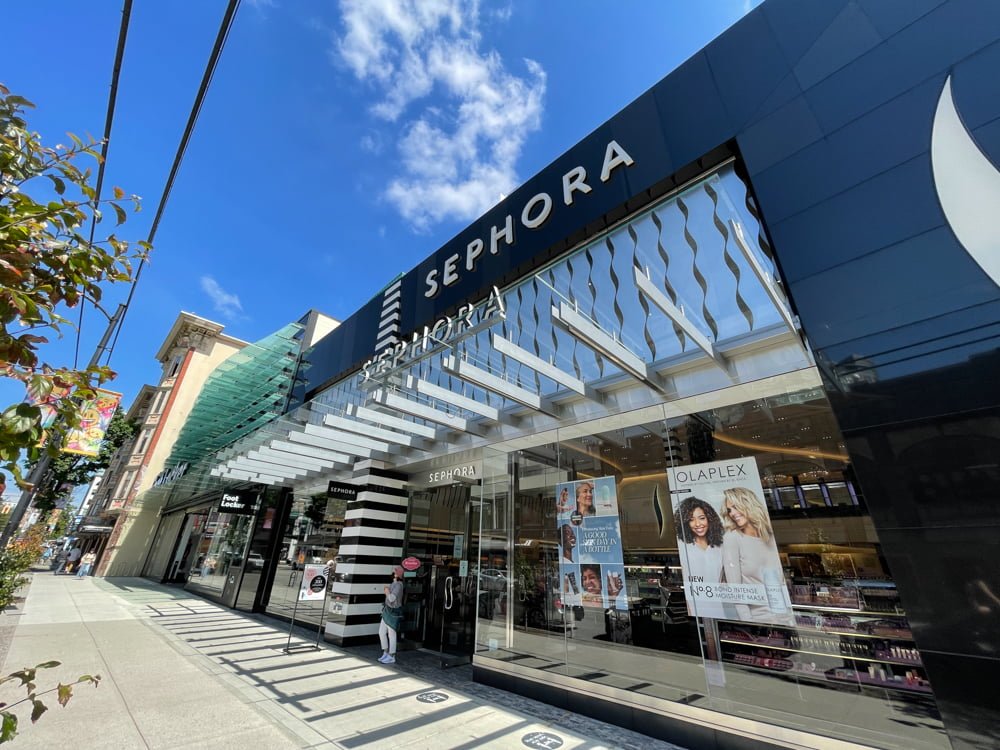
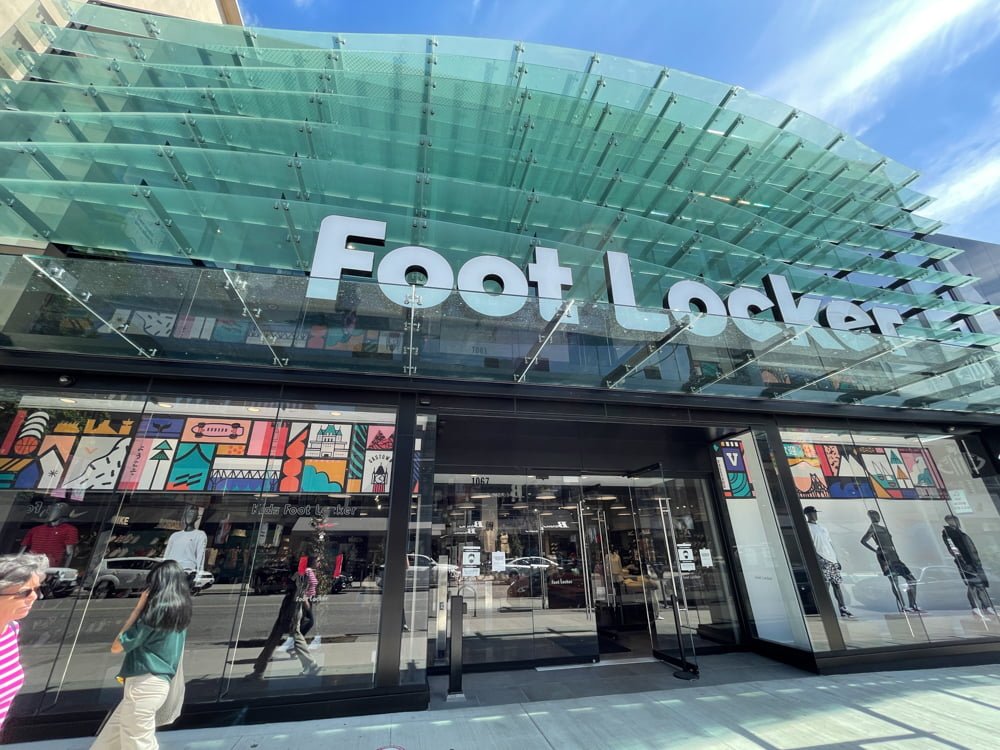
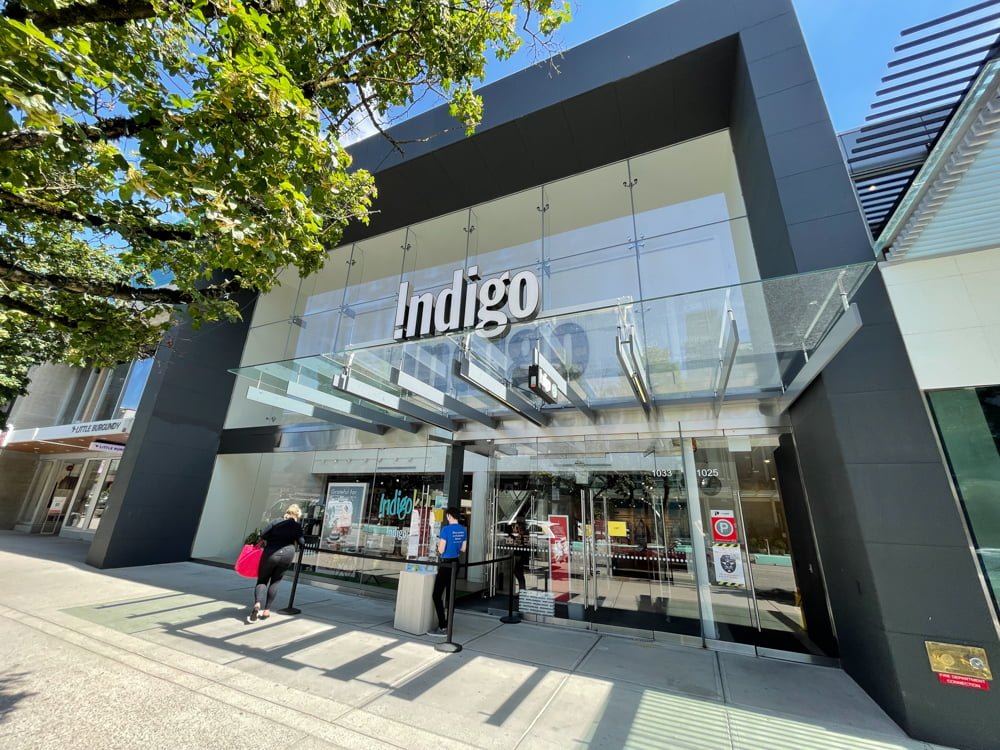
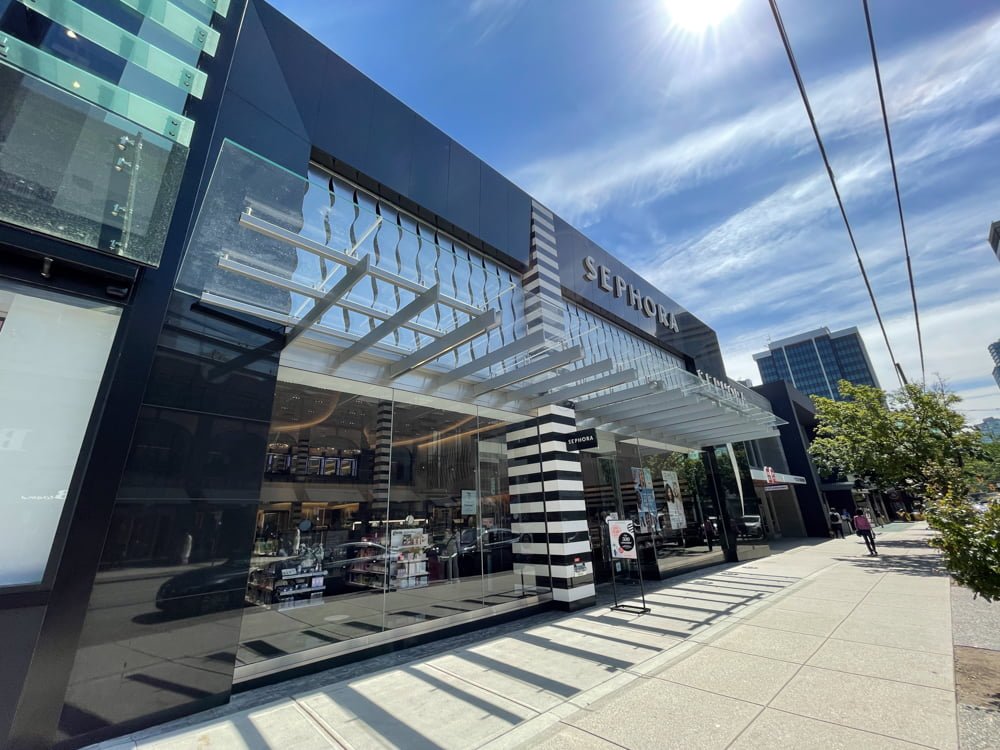
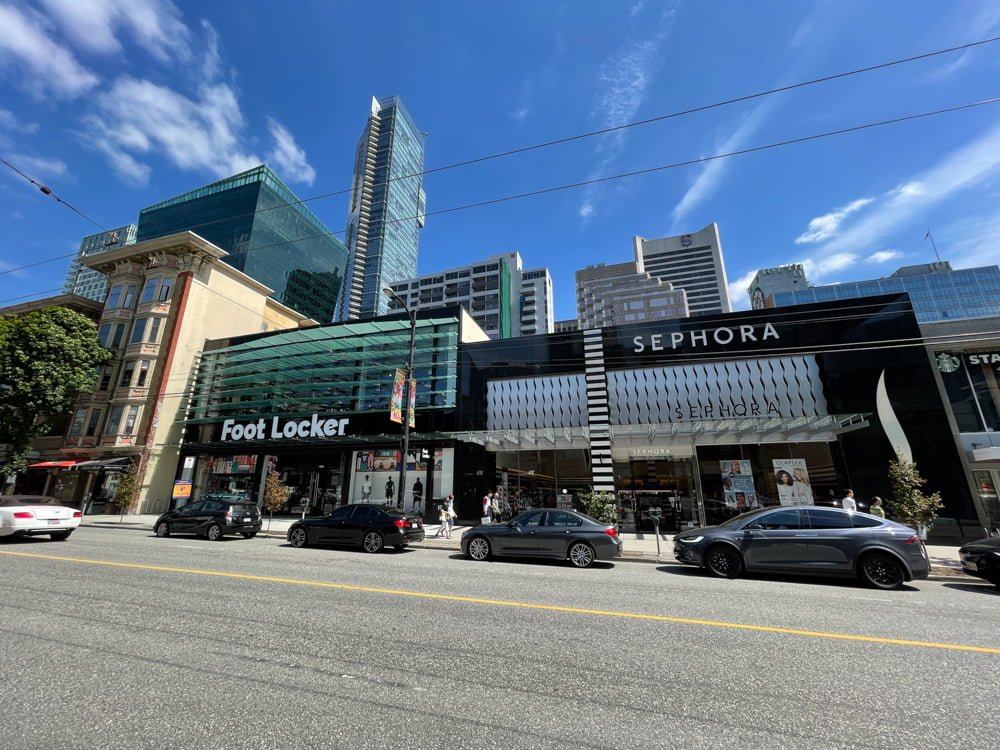
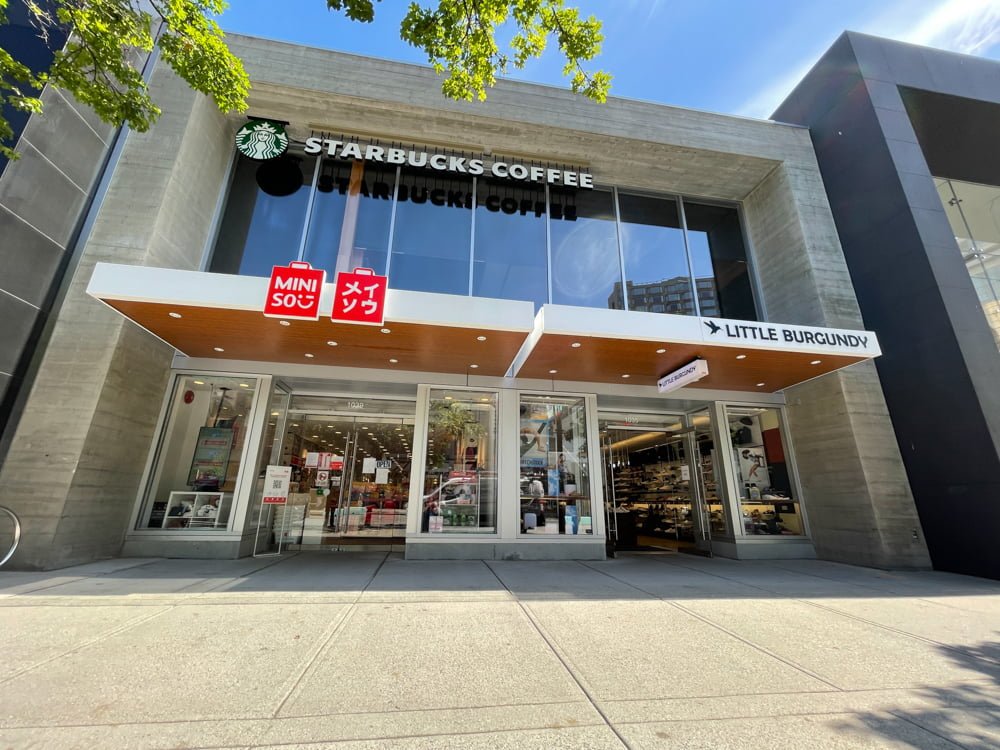
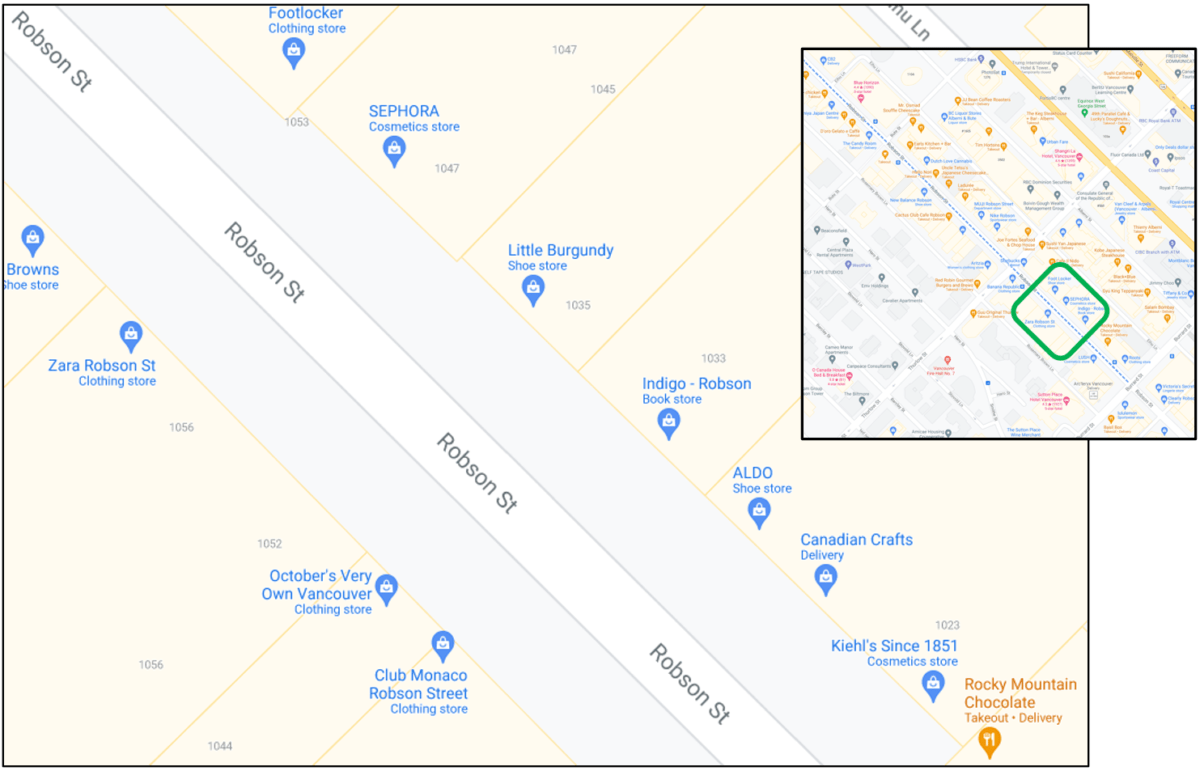
The middle portion of the 1000 block of Robson street has several retailers featured in Retail Insider over the years, including:

Foot Locker and Sephora on Robson Street (June 2021).
Foot Locker and Sephora on Robson Street (June 2021). Photo: Lee Rivett.

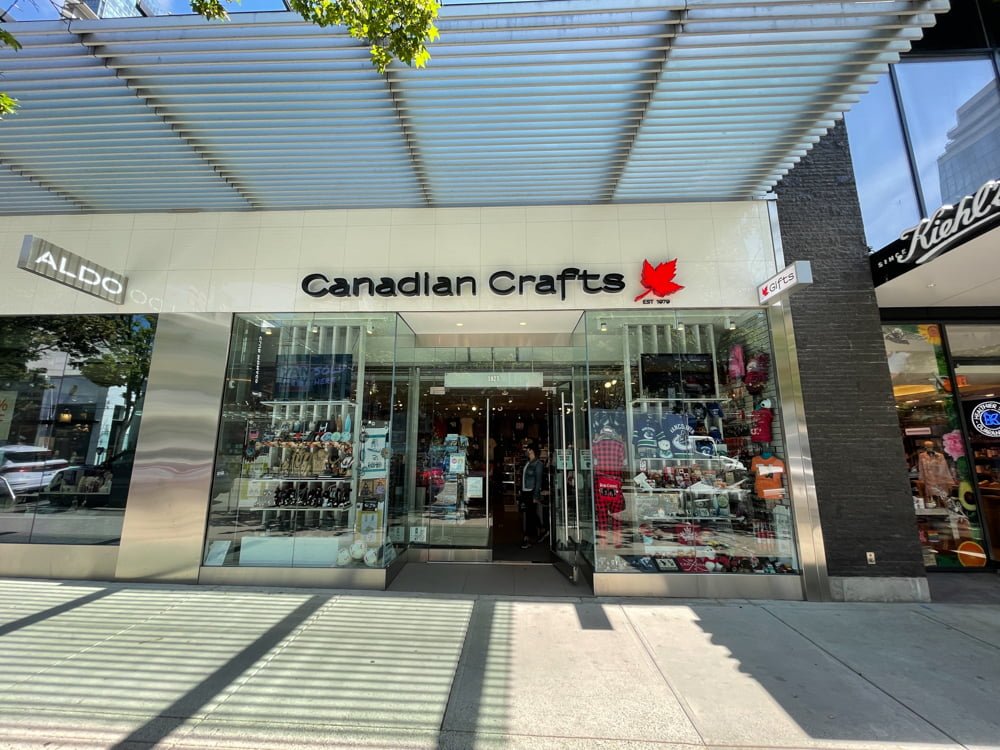
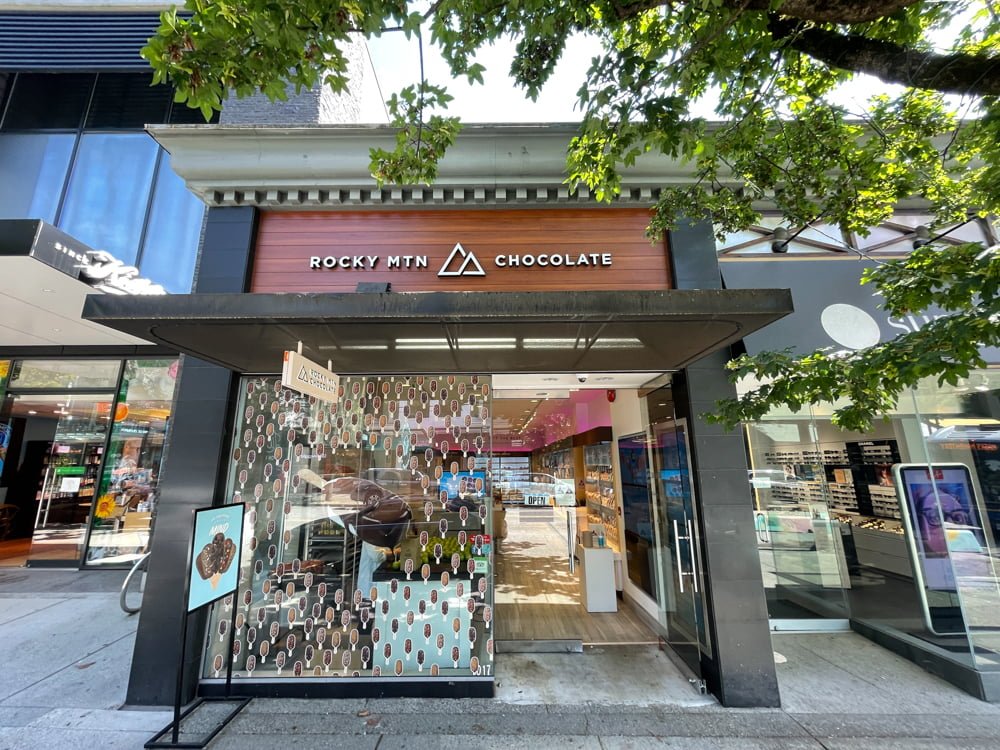
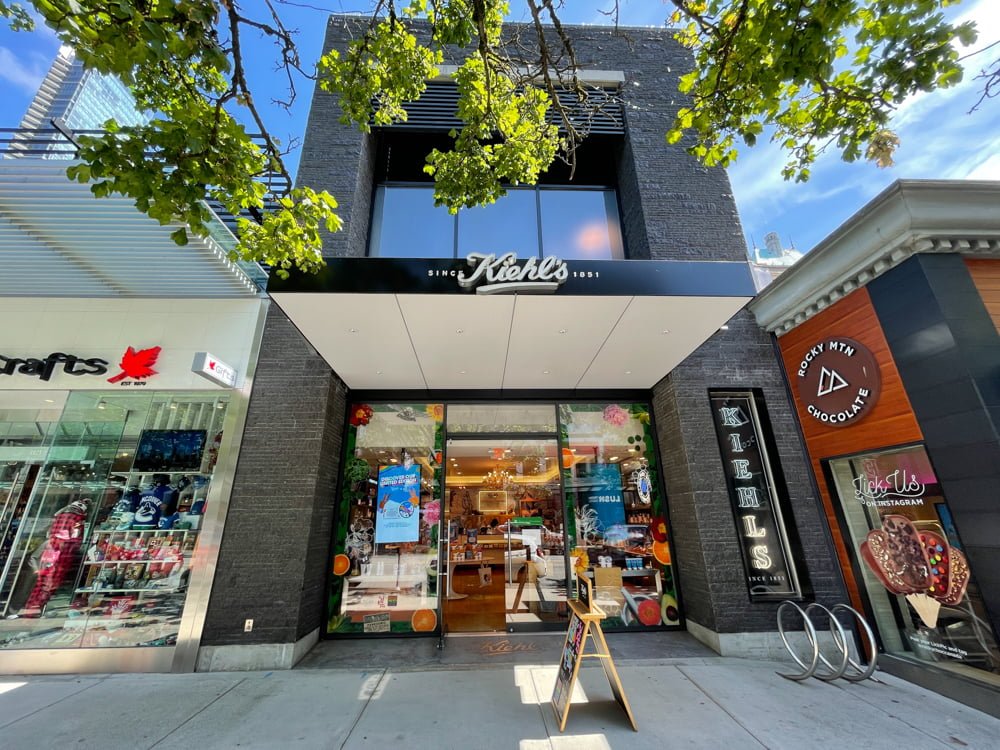
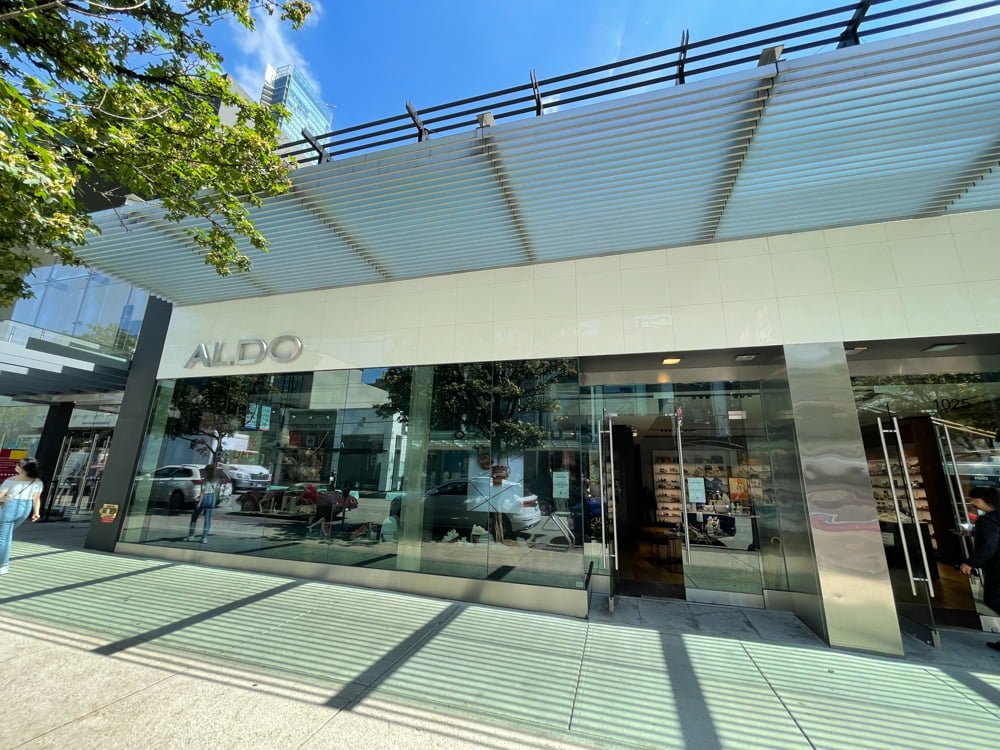
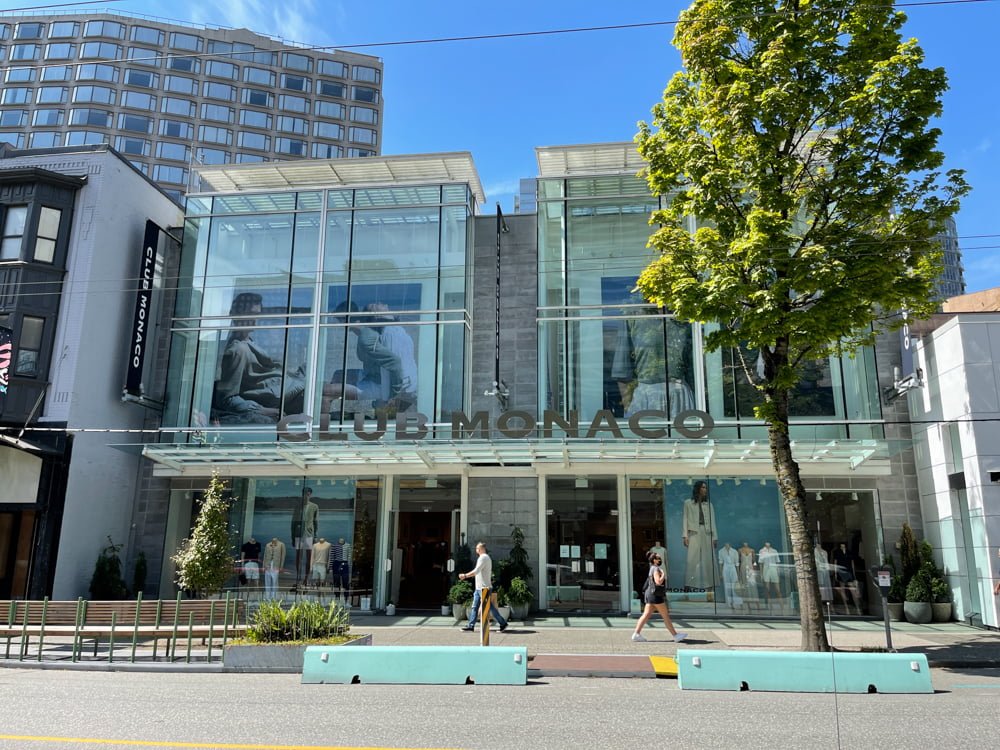
Other select retailers on the middle portion of the 1000 block of Robson Street include Zara, Kiehl’s, Rocky Mountain Chocolate, Club Monaco, Miniso, Little Burgundy, Canadian Crafts and Aldo.
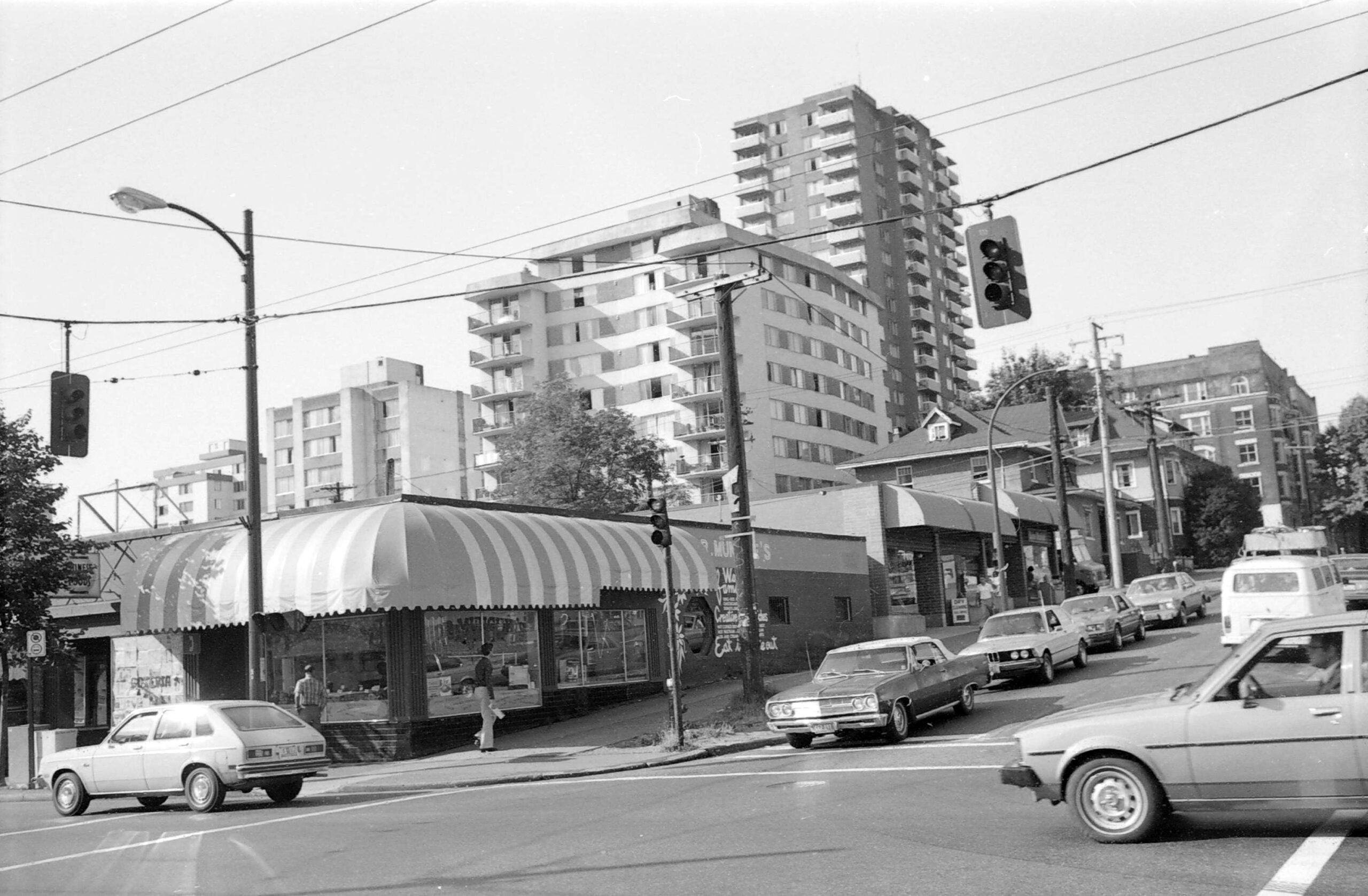
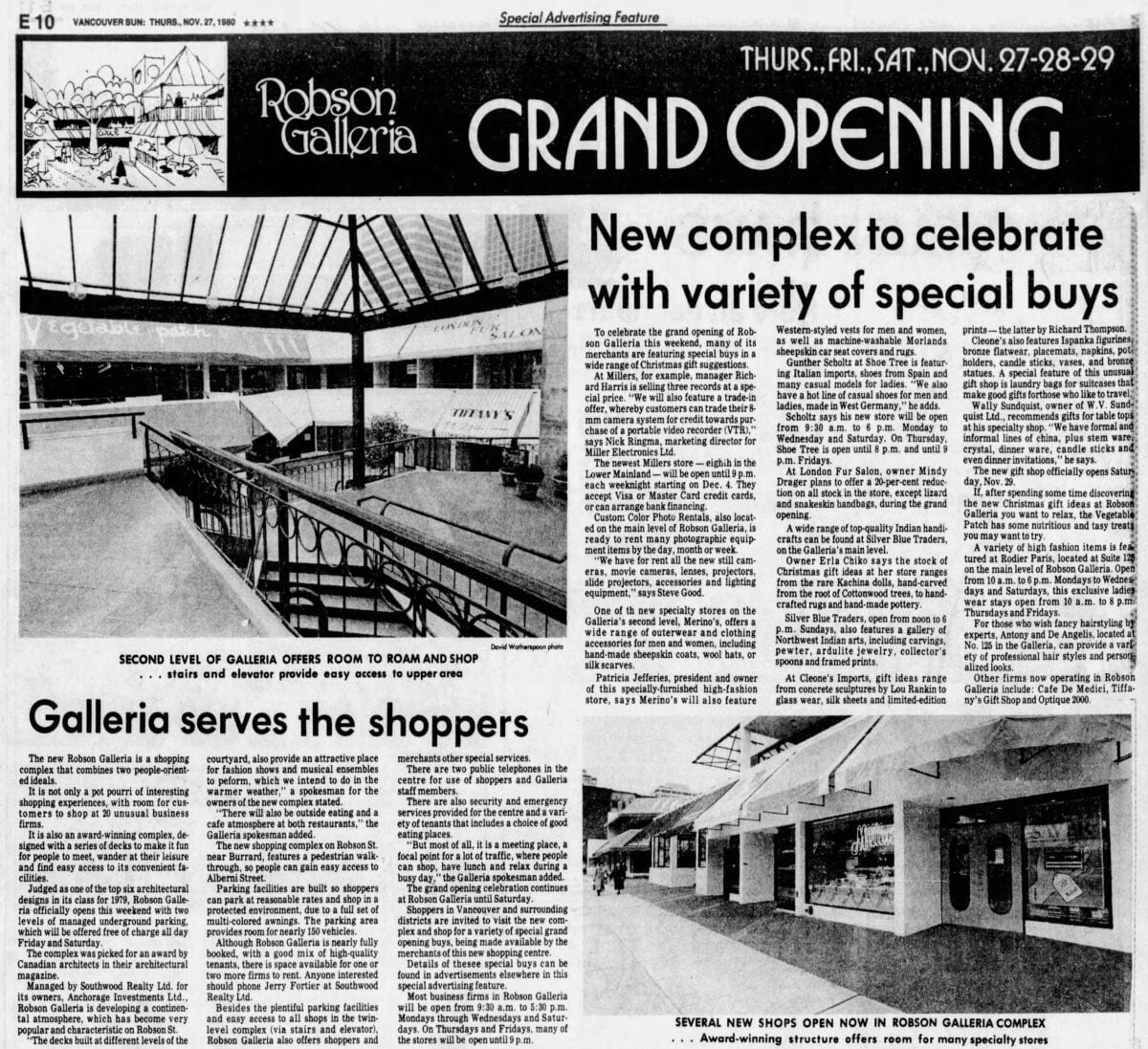
The building housing Indigo and other retailers at 1025 Robson Street was once a shopping centre called ‘Robson Galleria’. Image from the Vancouver Sun from November 27, 1980 via Newspapers.com

Retail Tour Zone 4: Intersection of Robson Street and Thurlow Street
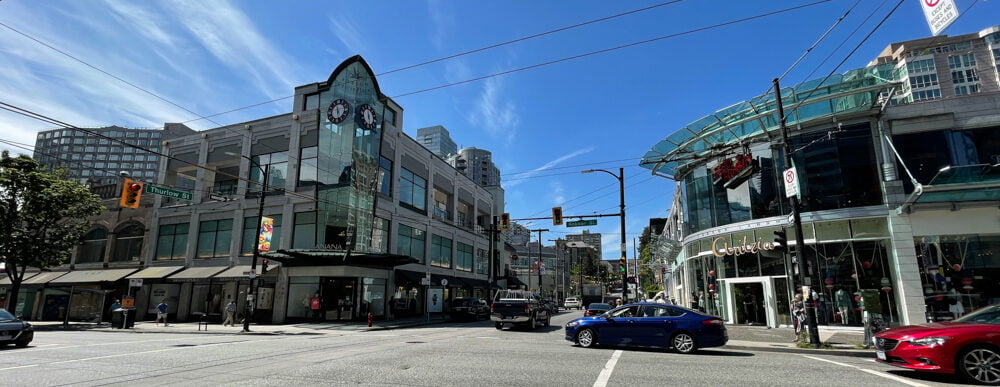
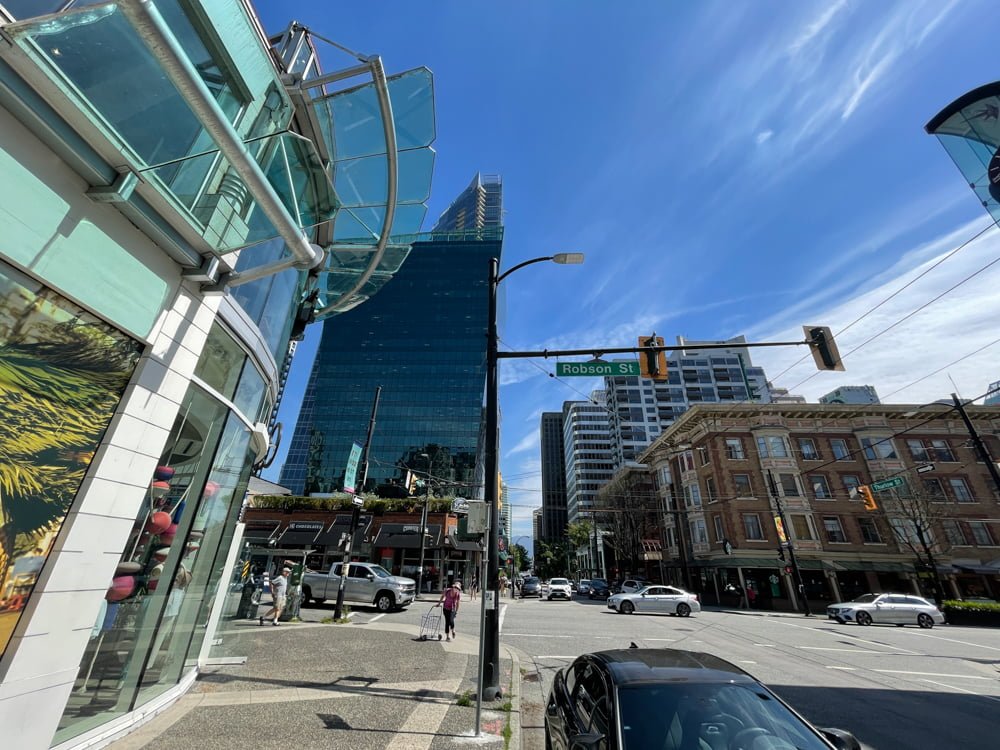
Robson Street and Thurlow Street intersection in Vancouver (June 2021)
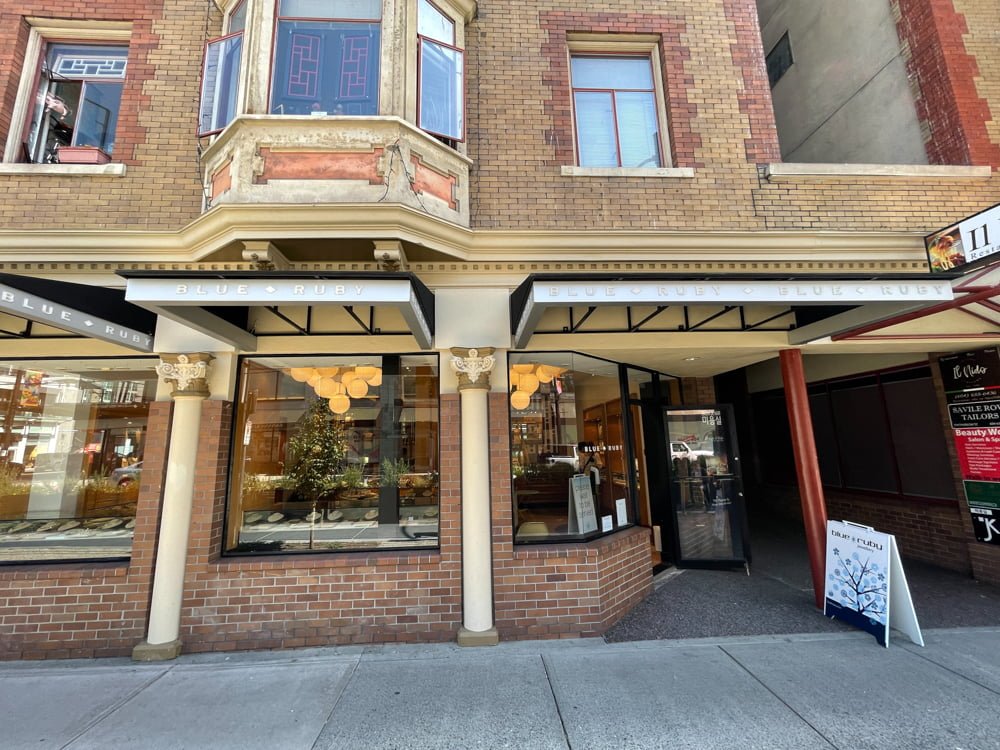
Banana Republic on Robson Street and Thurlow Street intersection in Vancouver (June 2021). Photo: Lee Rivett.
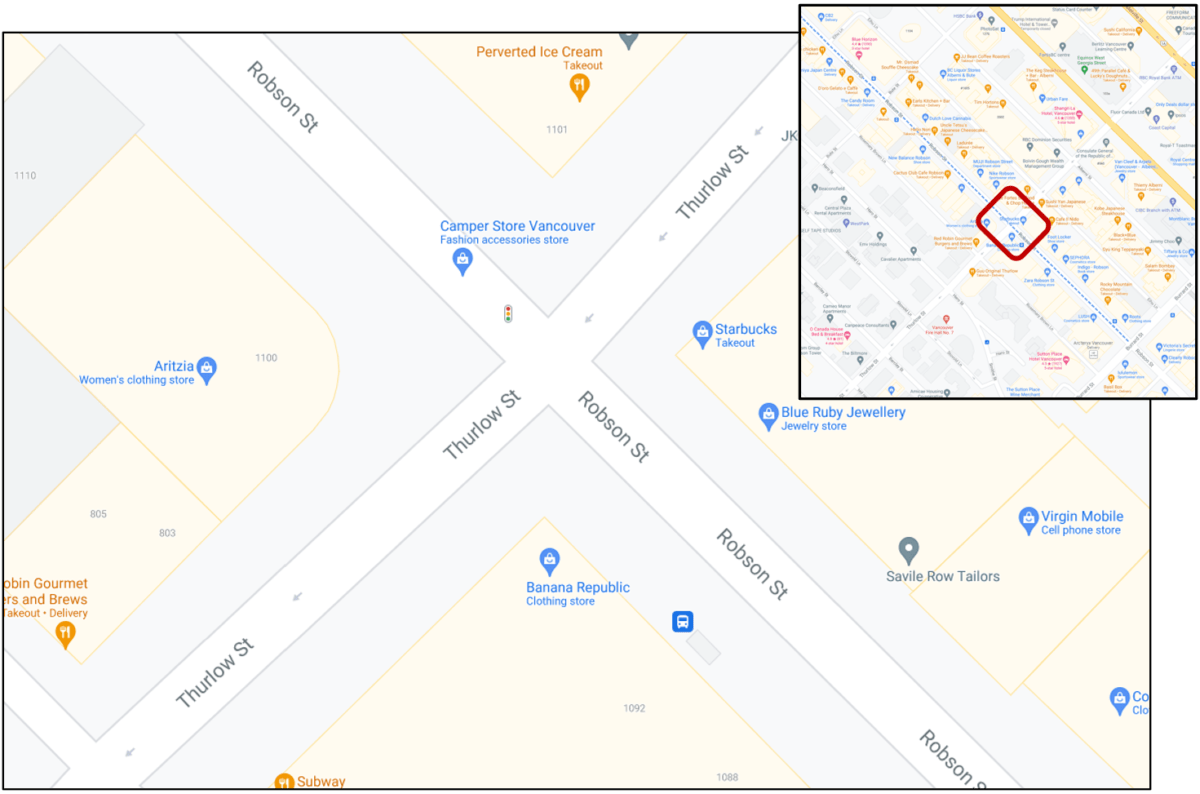
Robson Street and Thurlow Street intersection in Vancouver
Robson Street and Thurlow Street intersection in Vancouver. Photo: Google Map and overlay by Retail Insider.
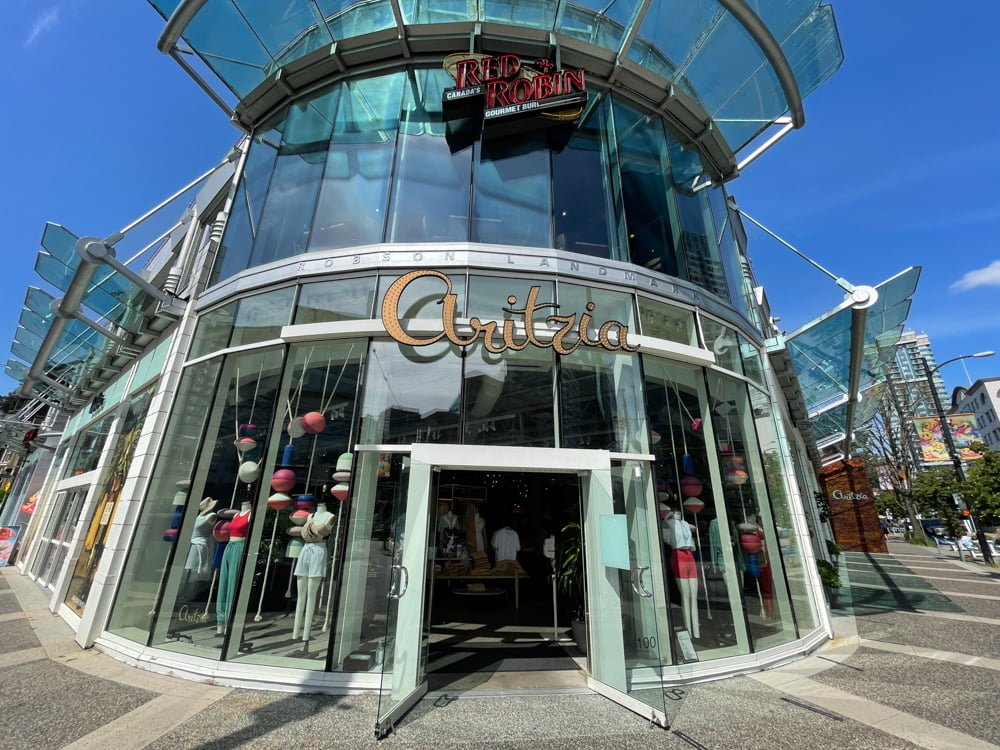
Robson Street at Aritzia (June 2021)
Robson Street at Aritzia (June 2021). Photo: Lee Rivett

The intersection of Thurlow Street and Robson Street has always been a notable retail hub for the Robson community. Until the monolith Aritzia store opened on the corner, its prominent location was a Starbucks location which was across the street from another Starbucks location that still is open in 2021. The Vancouver-based women’s fashion Aritzia retailer has expanded several times at this location over the years. Artizia’s original 1,597 square foot Robson Street location grew by annexing the adjacent 3,565 square foot 1110 Robson Street retail space. In fall 2014, Aritzia annexed an adjacent 3,028 square foot storefront to open Vancouver’s first free-standing location for its house brand, Wilfred. Aritzia will take a further 4,837 square feet in the corner Deecorp Properties Ltd building, according to Artizia. As a result, Aritzia gained a prominent retail presence at the southwest corner of Robson Street and Thurlow Street. 

Sources told Retail Insider that Aritzia for a time had leased the then-under construction 1067 Robson Street building where Foot Locker now operates, and that Aritzia eventually decided to stay at its current corner location.
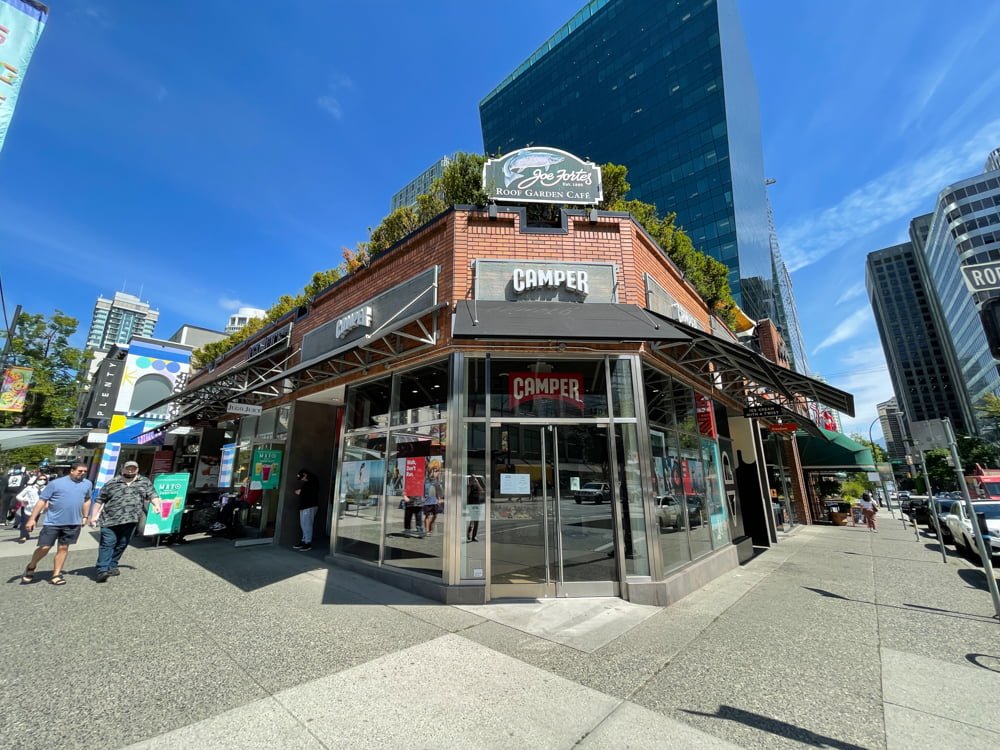
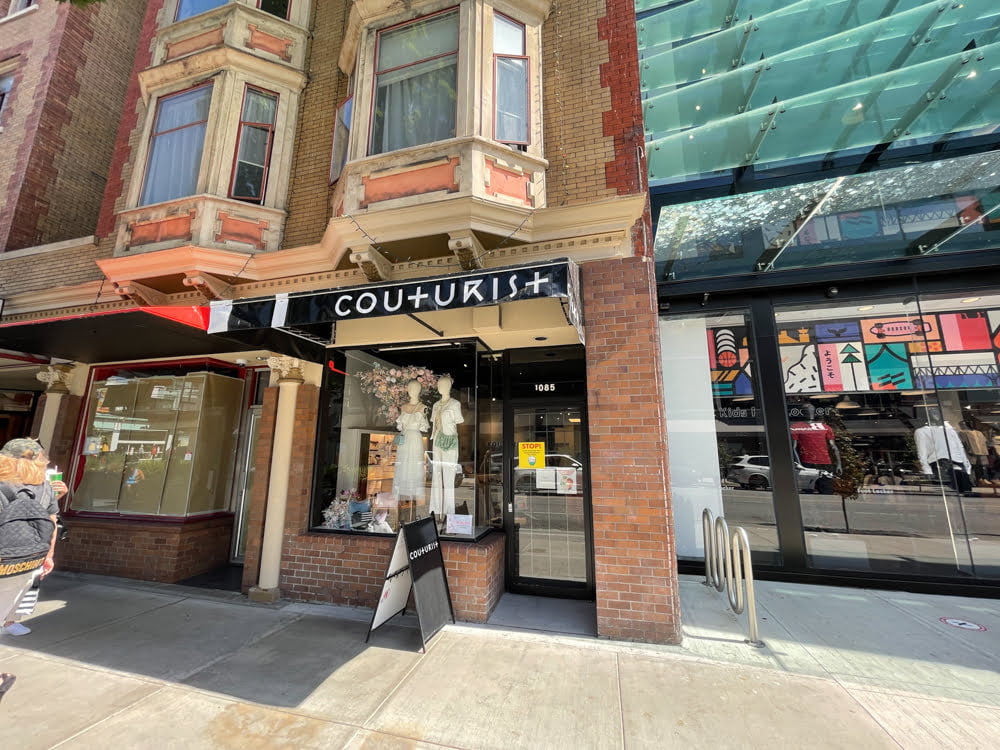
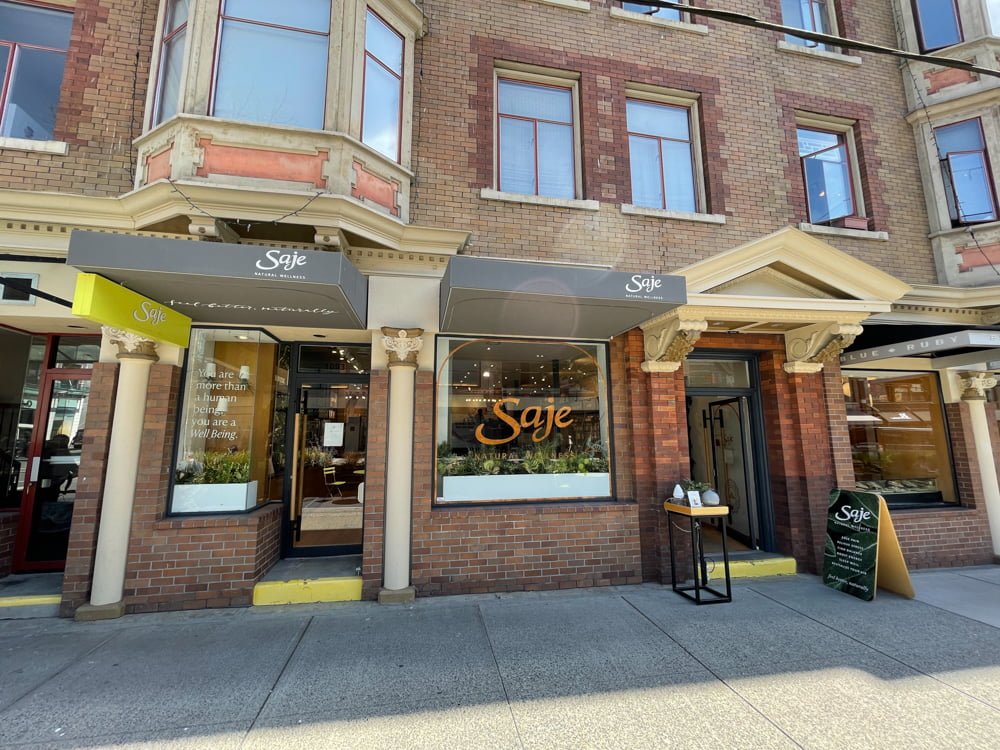
The other anchors at the intersection include Camper shoes and Banana Republic and the northeast corner is home to a brick building which has the remaining Starbucks location, Saje Natural Wellness, Blue Ruby Jewelery and Couturist.
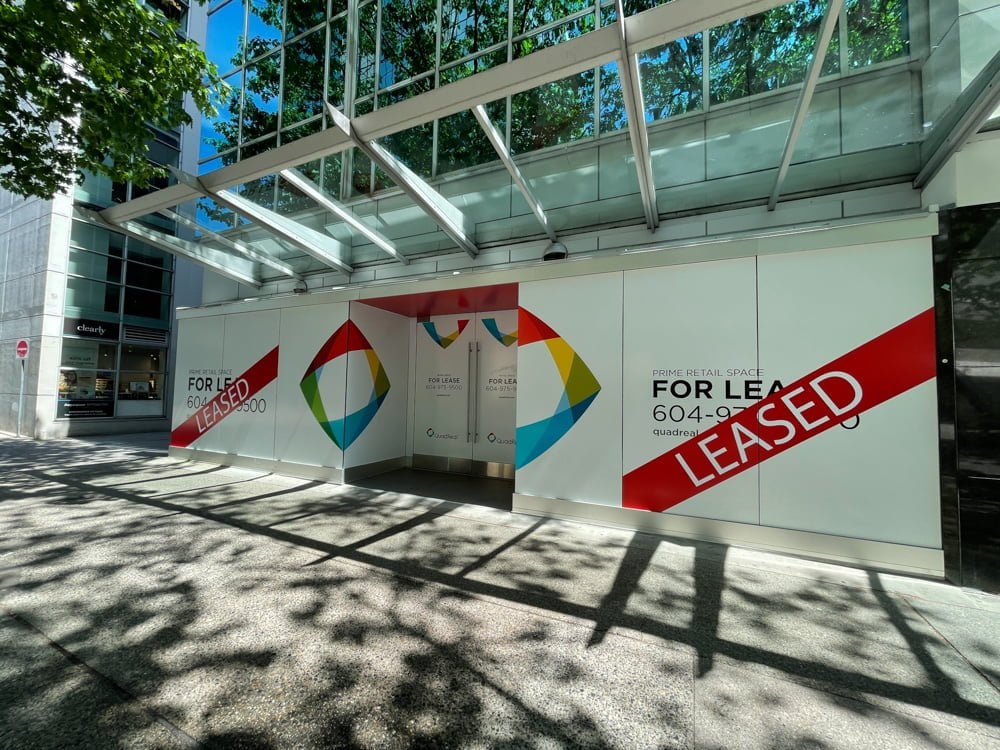
Slightly east of the Banana Republic are a number of vacant retail spaces formerly home to BCBGMAXAZRIA, J.Crew and Tommy Hilfiger. Another unfortunate retailer on Thurlow just south of Aritzia was Vancouver-based RYU which opened on Thurlow Street off of Robson Street in the summer of 2016 and it was noted in Retail Insider’s CEO interview in March 2021 that the athletic brand announced several store closures to coincide with its restructuring. This location on Thurlow street was likely one of the unfortunate locations, similar to its counterpart at Park Royal Shopping Center (see the details at the Retail Tour Update: Park Royal Shopping Centre in West Vancouver).
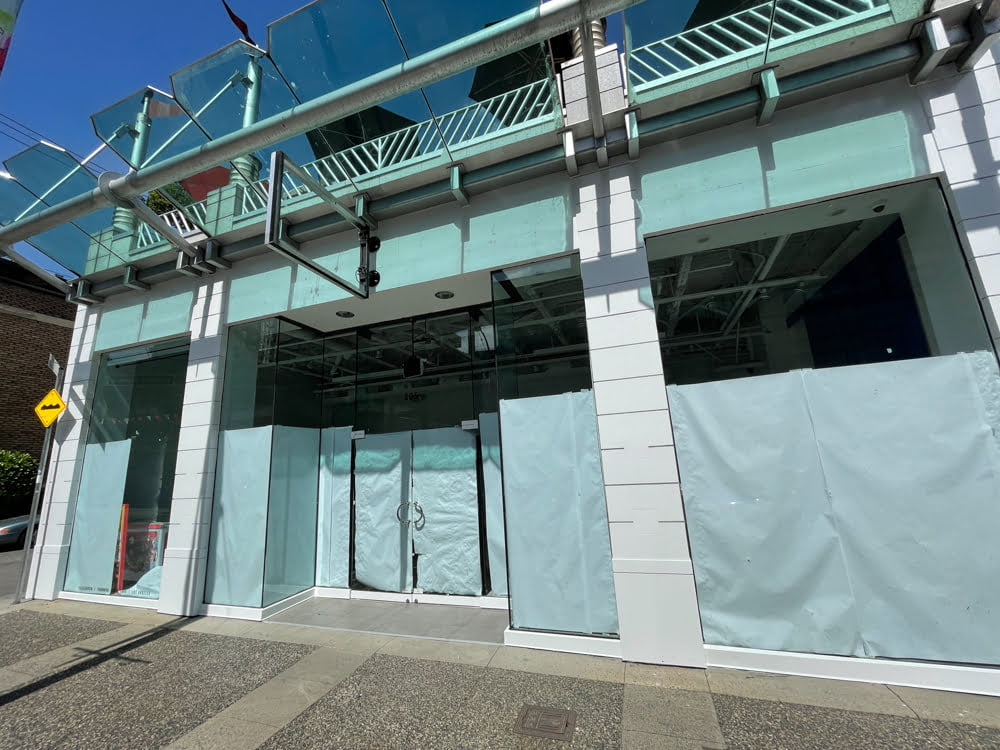
Former RYU location on Thurlow Street (off Robson Street) in Vancouver.
Former RYU location on Thurlow Street (off Robson Street) in Vancouver. Photo: Lee Rivett

Retail Tour Zone 5: 1100 Block of Robson Street (Thurlow Street to Bute Street)

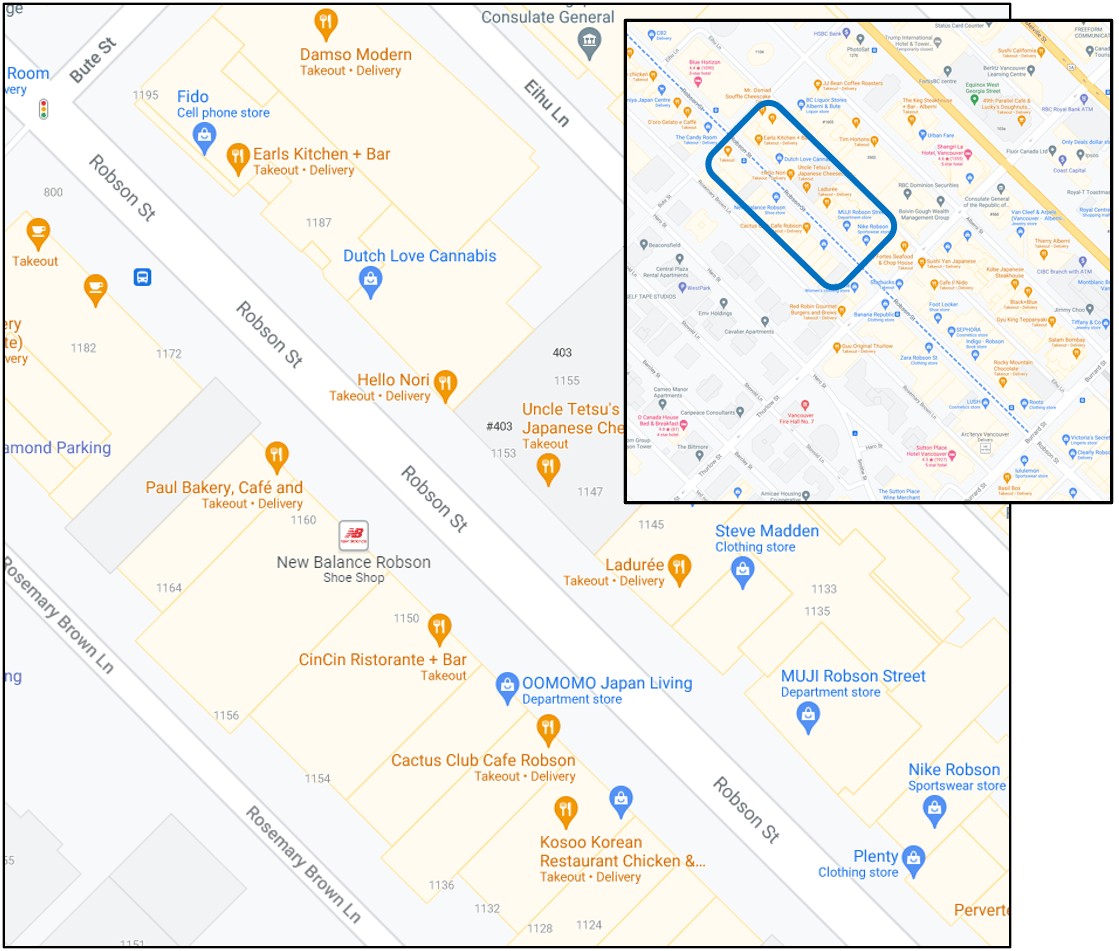
Beyond the intersection of Thurlow Street and Robson Street is the remainder of the 1100 block of Robson Street which is home to athletic, home furnishing and bakery retailers.
1100 block of Robson Street in Vancouver
1100 block of Robson Street in Vancouver. Photo: Google Map and overlay by Retail Insider.

This highly retailer-dense section of Robson Street has been featured by Retail insider over the years including:

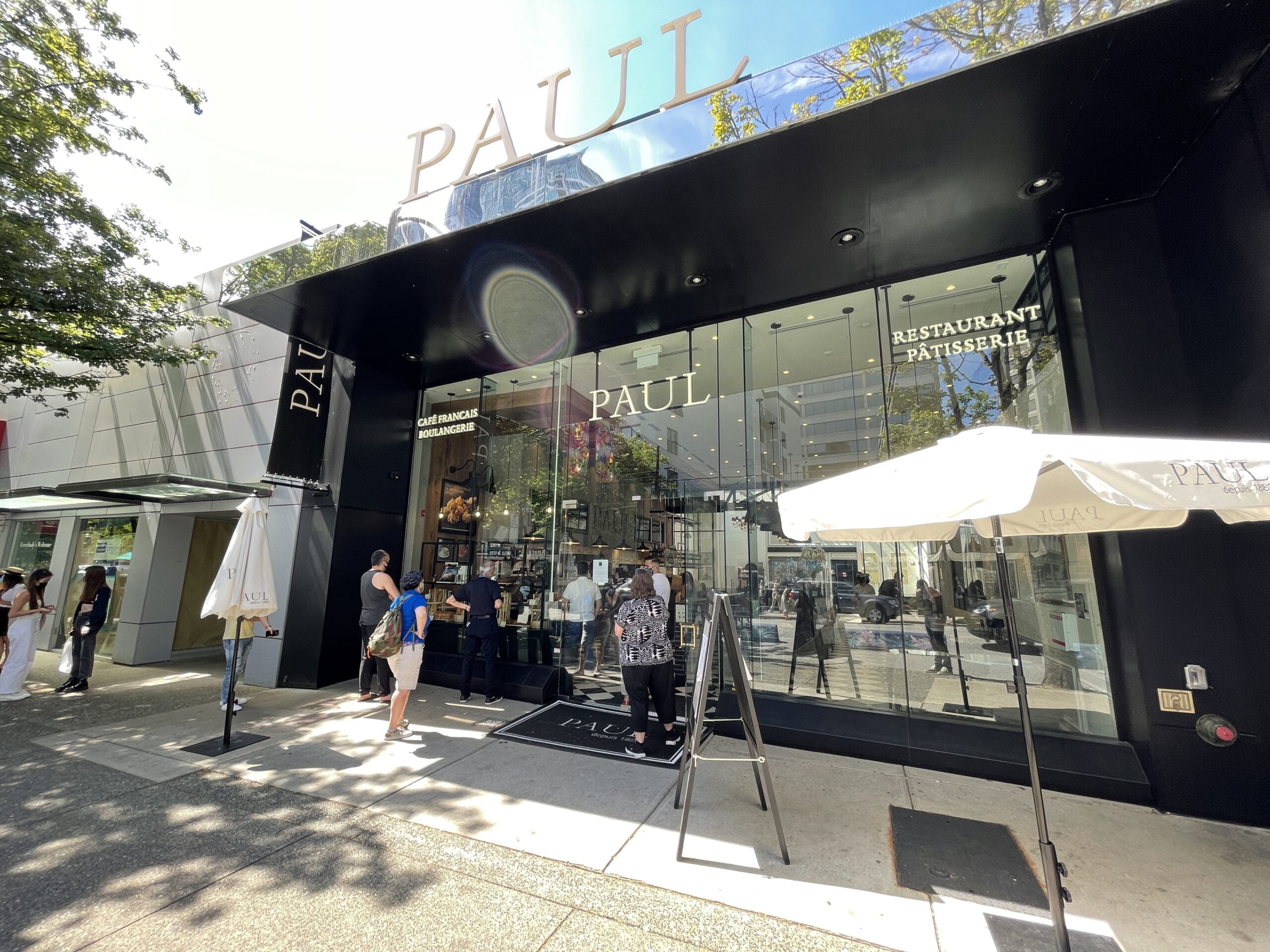
French food concept bakery ‘Paul’ opened its first Canadian location in June 2021 and is owned by the Holder Group. The 1164 Robson Street space was formerly home to Joe Fresh and RW&CO in years past. The space spans 3,120 square feet and the property also features a 1,185-square-foot mezzanine level.

Paul is part of Holder Group which also owns Ladurée which has a franchised storefront across the street. The popular French luxury bakery and sweets maker opened its first Canadian location in March 2016 and expanded by opening a purposely built Pastry Laboratory in July 2018 for their Vancouver locations.
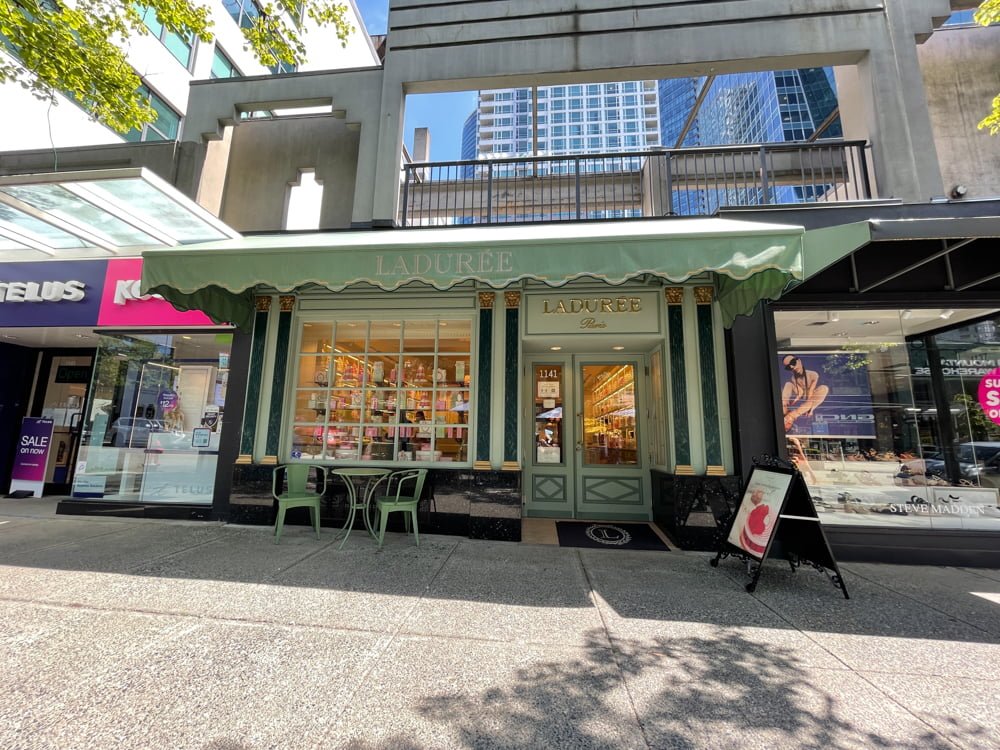
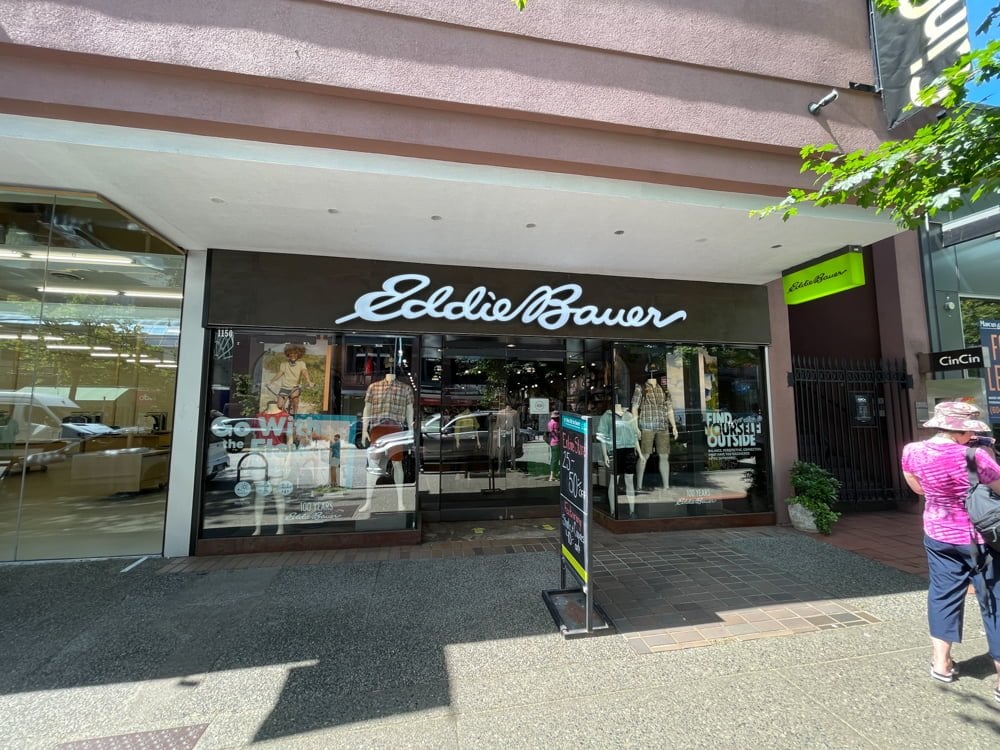
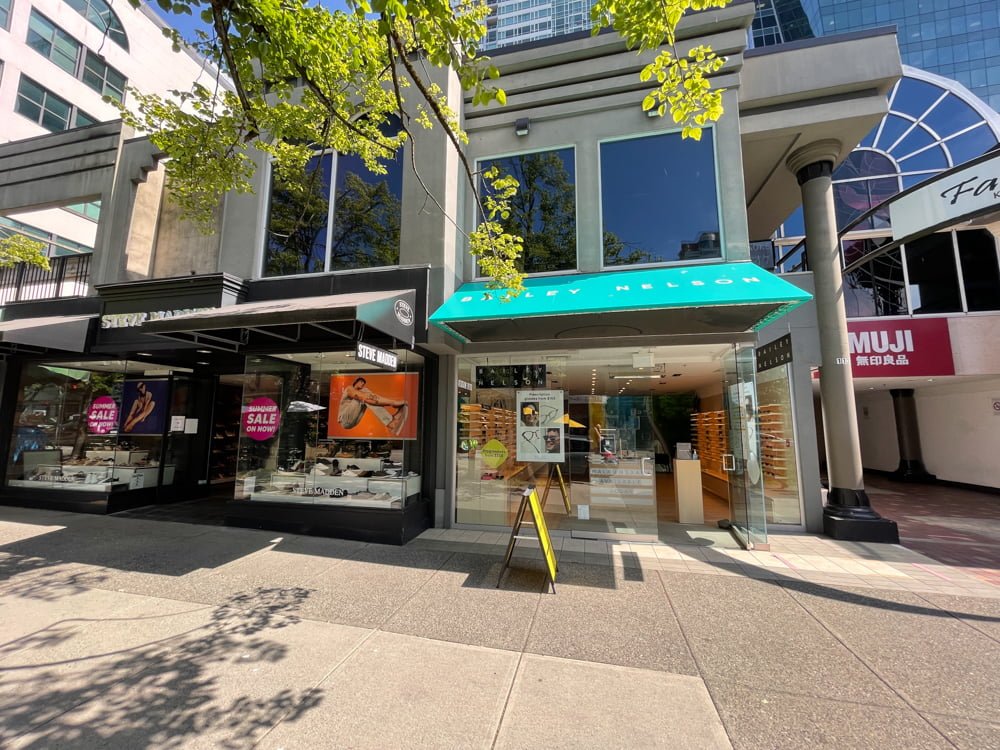
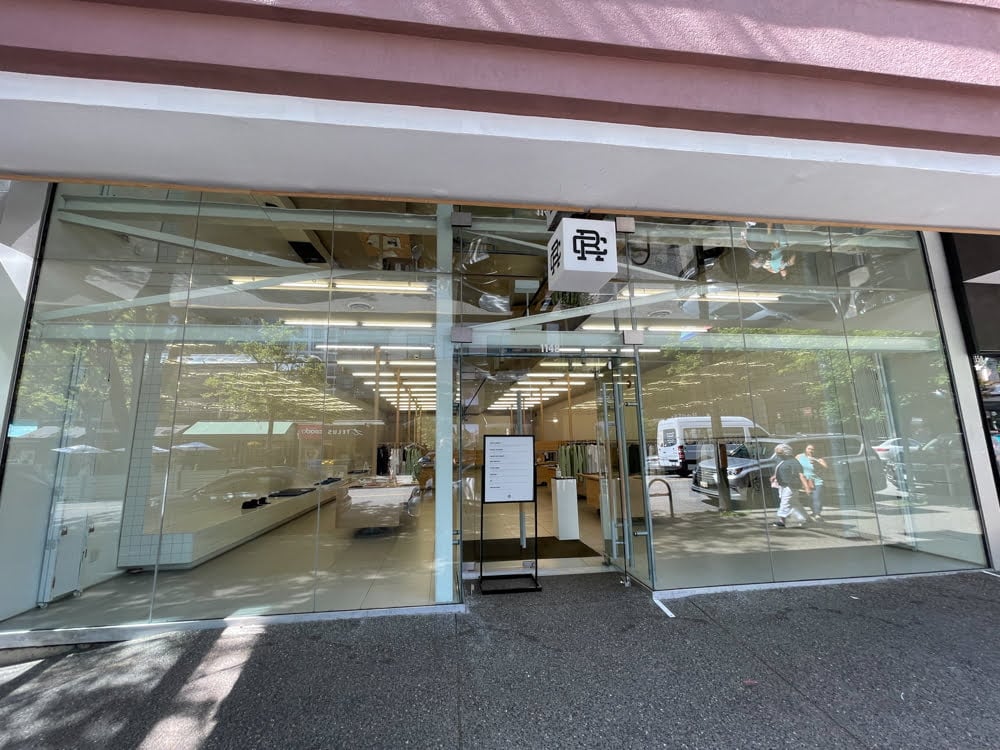
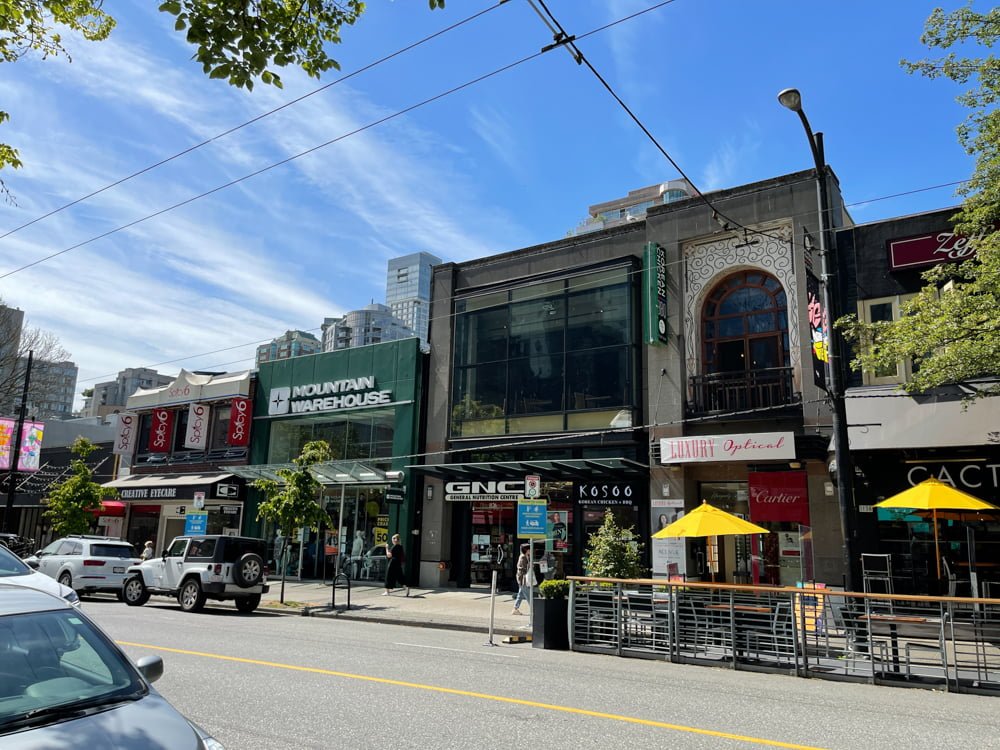
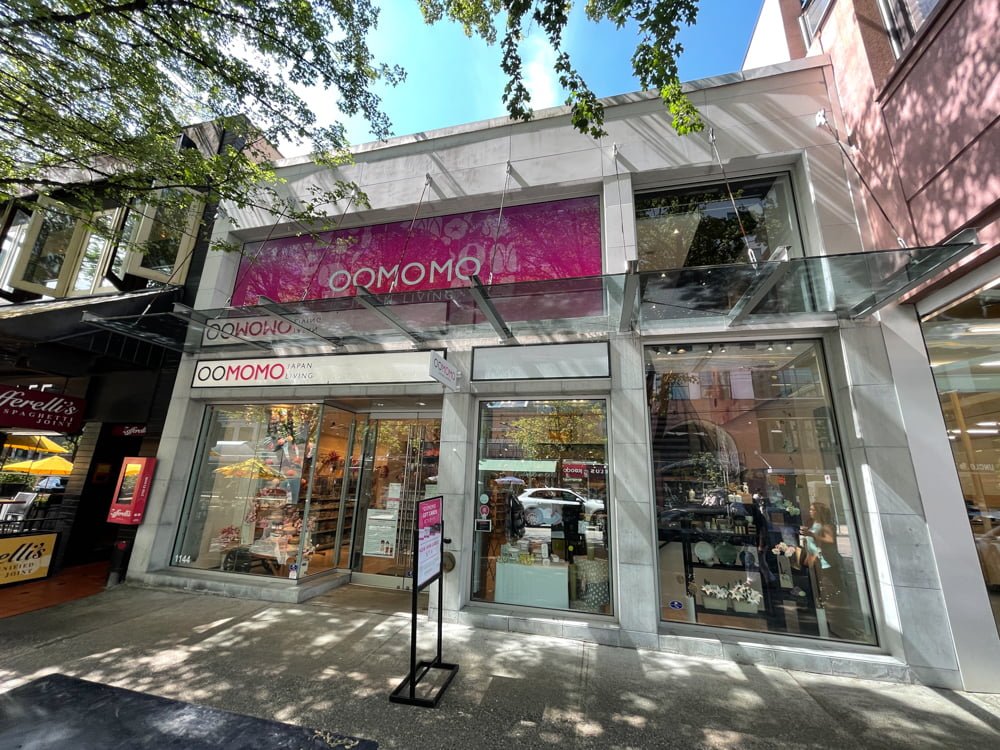
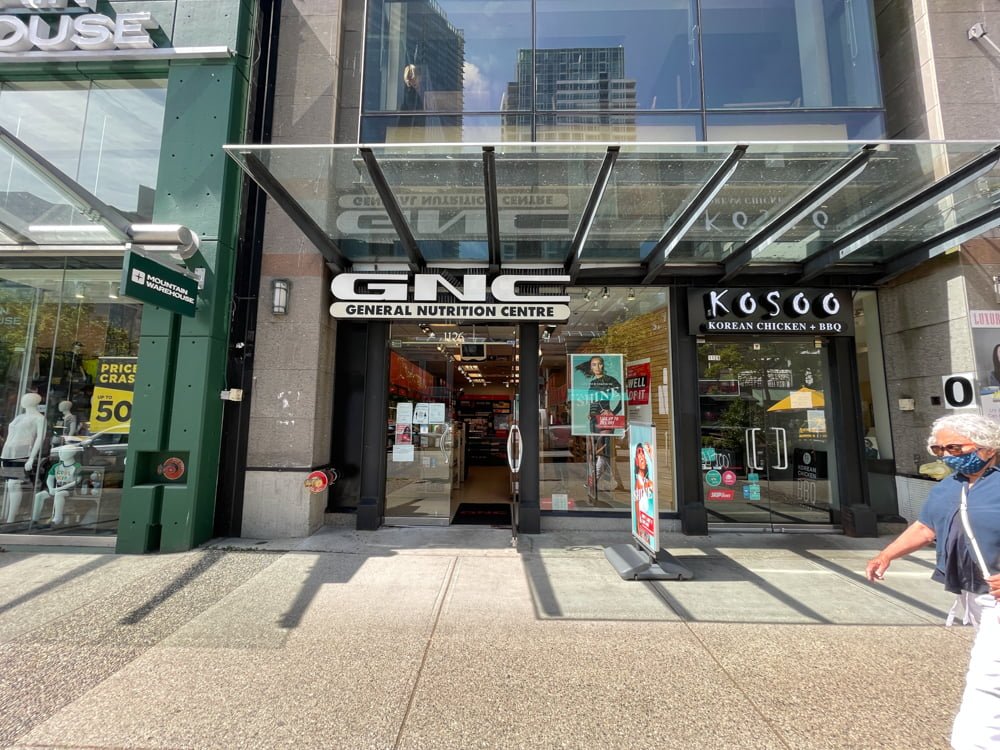
1100 block of Robson Street in Vancouver (June 2021)
1100 block of Robson Street in Vancouver (June 2021). Photo: Lee Rivett.

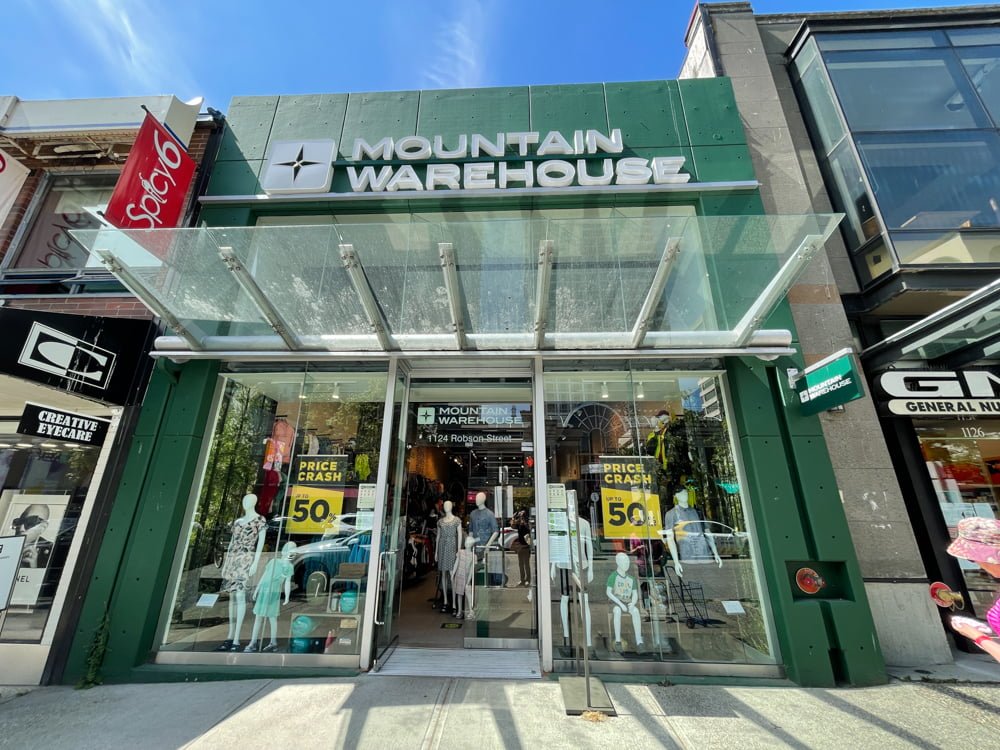
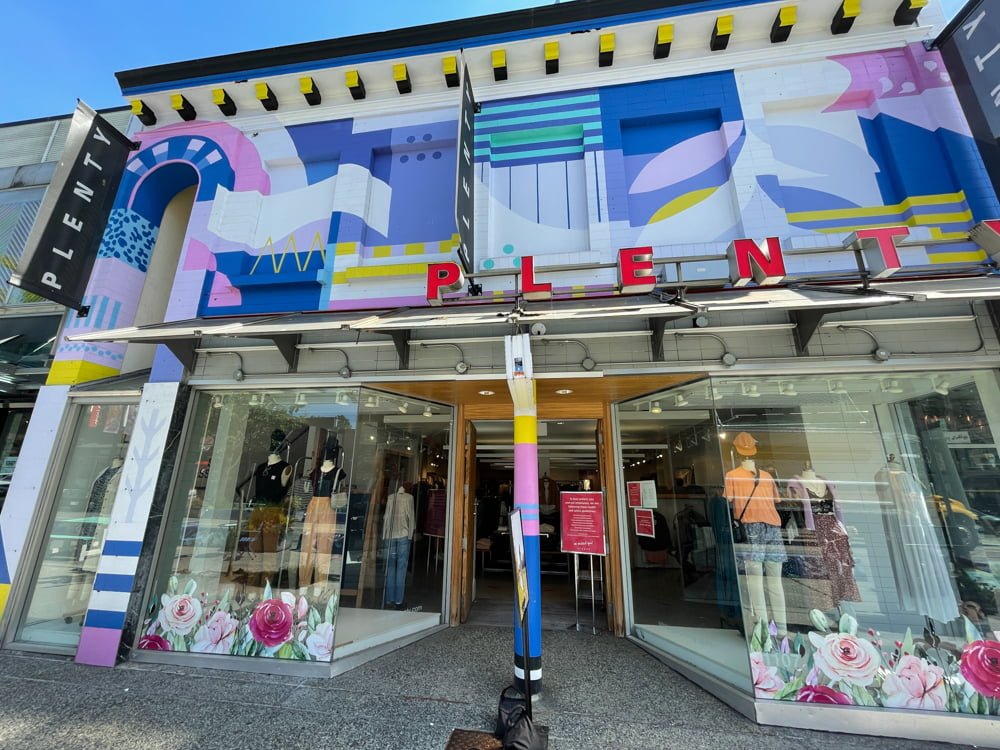
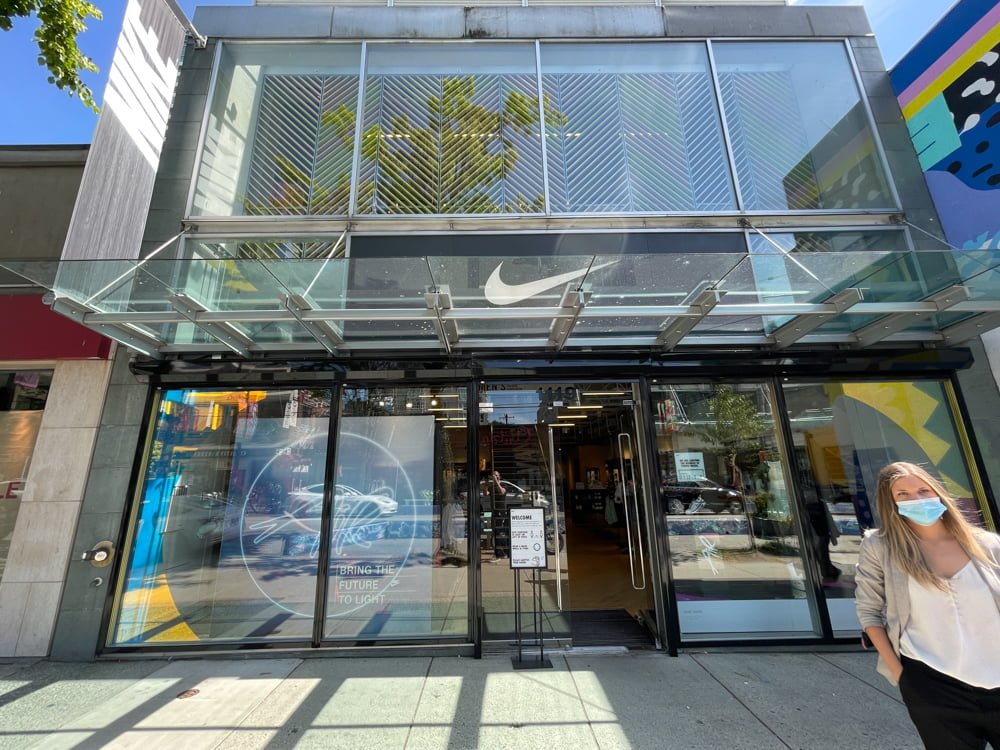
Other select retailers on the middle section of this block of Robson Street included Oomomoo, GNC, Mountain Warehouse, Plenty, Nike and Steve Madden.
Unfortunately, heading eastward on Robson Street has numerous retail locations vacant with the prominent retail tenant being London Drugs.
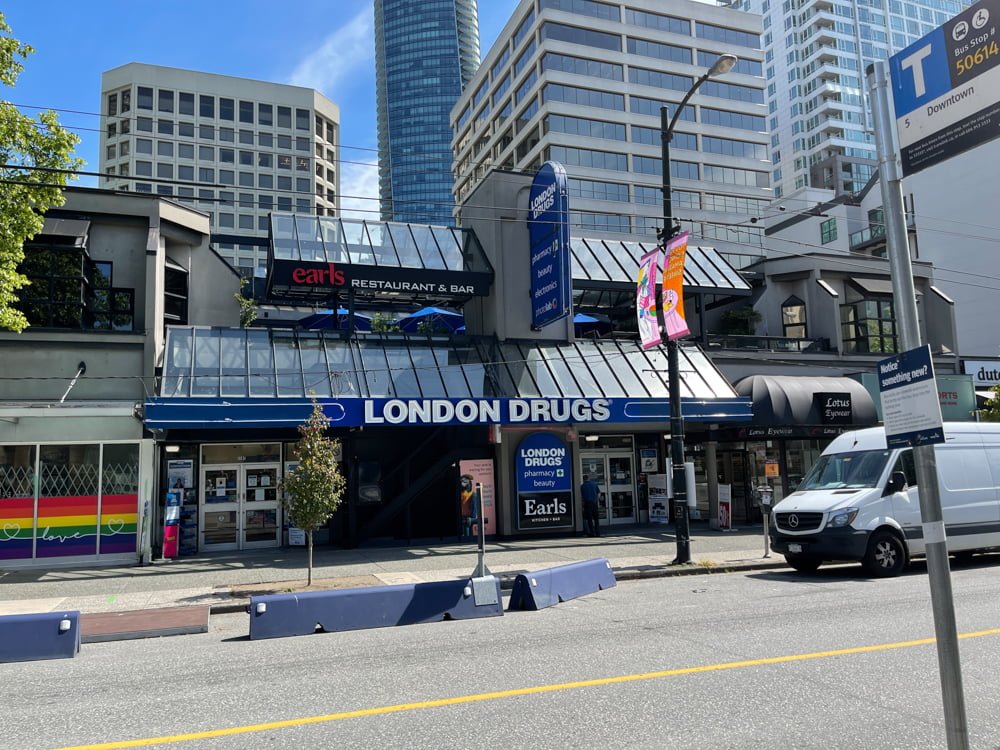
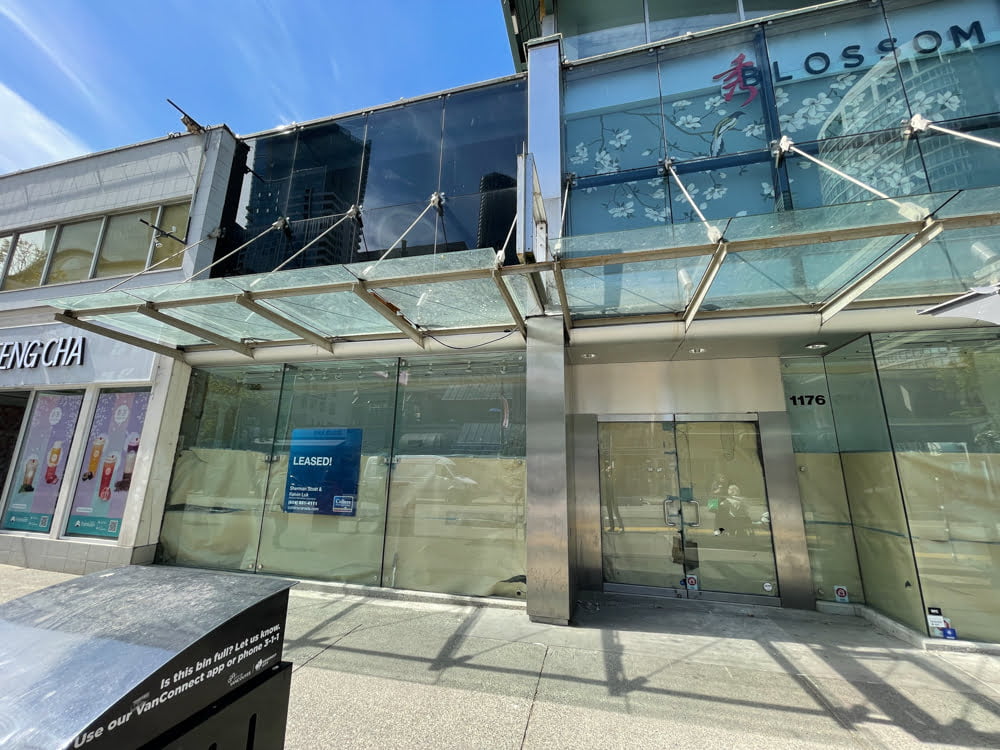
London Drugs on Robson Street in Vancouver (June 2021). Photo: Lee Rivett
Empty restaurant and retailer space on south-western end of Robson Street at Bute
Empty restaurant and retailer space on south-western end of Robson Street at Bute (June 2021). Photo: Lee Rivett.
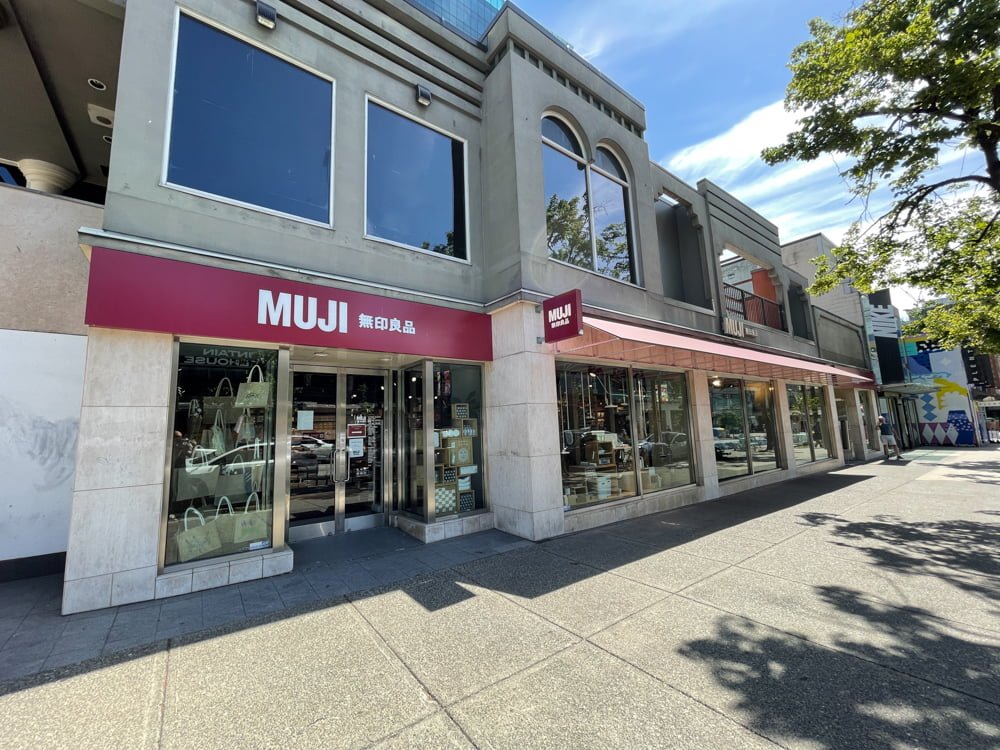
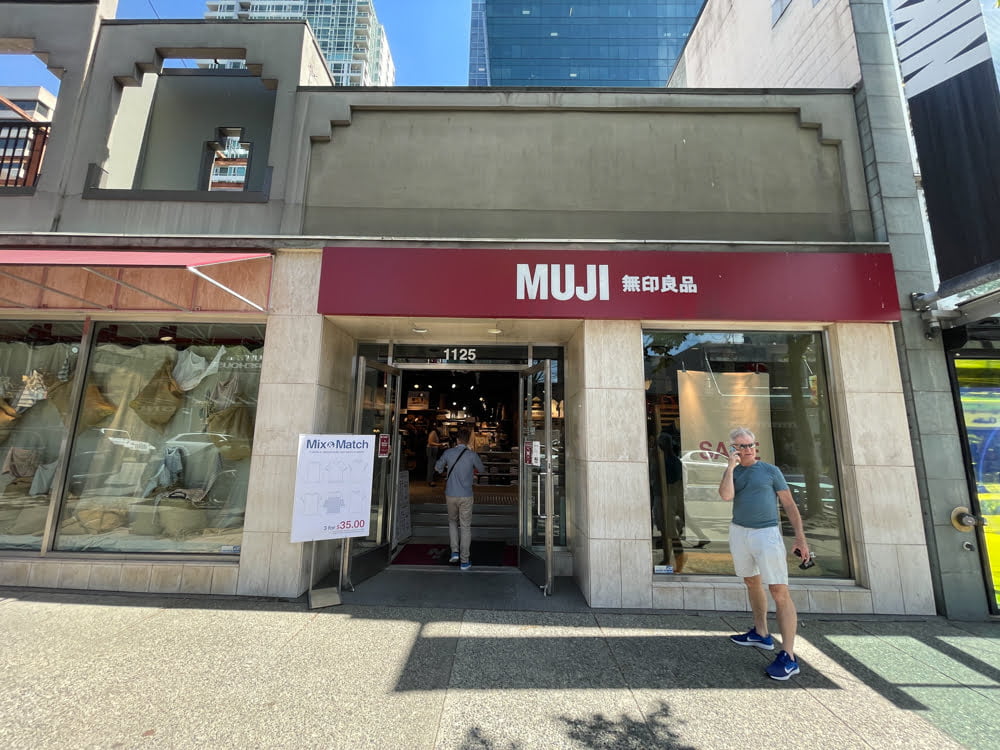
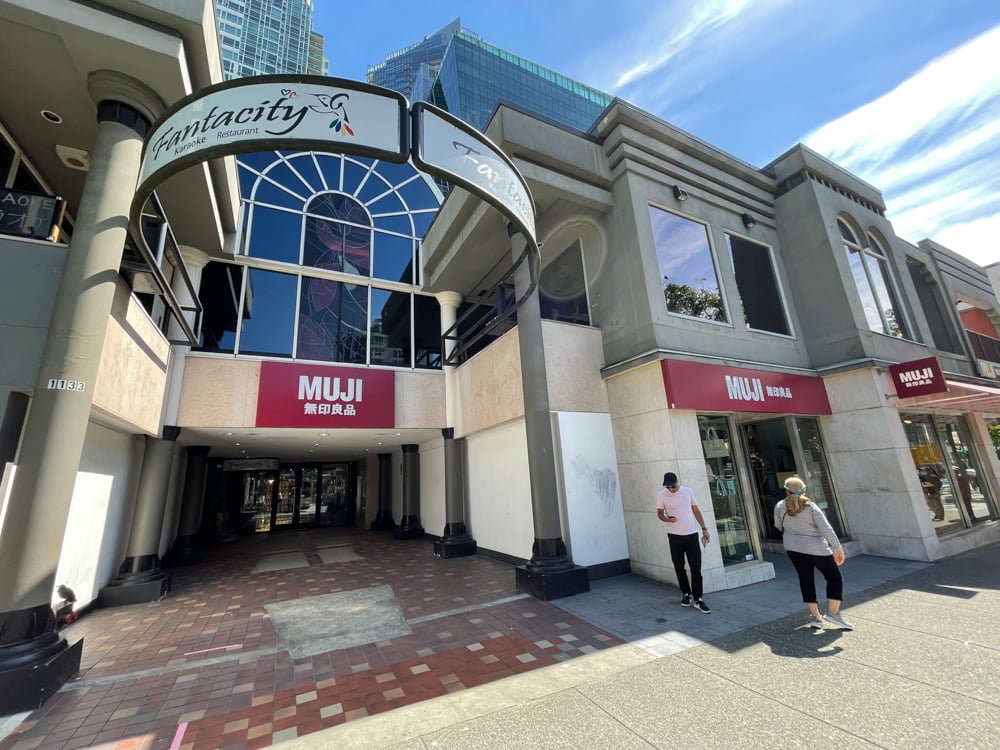
The complex housing Muji and other retailers at 1125 Robson Street was once an upscale enclosed shopping centre called the ‘Robson Fashion Park’. The shopping centre housed a large Polo Ralph Lauren store as well as names such as Laurel, Alfred Sung and Benetton. Image from the Vancouver Province, May 29, 1986 via Newspapers.com

Retail Tour Zone 6: 1200 Block of Robson Street (Bute Street to Jervis Street)
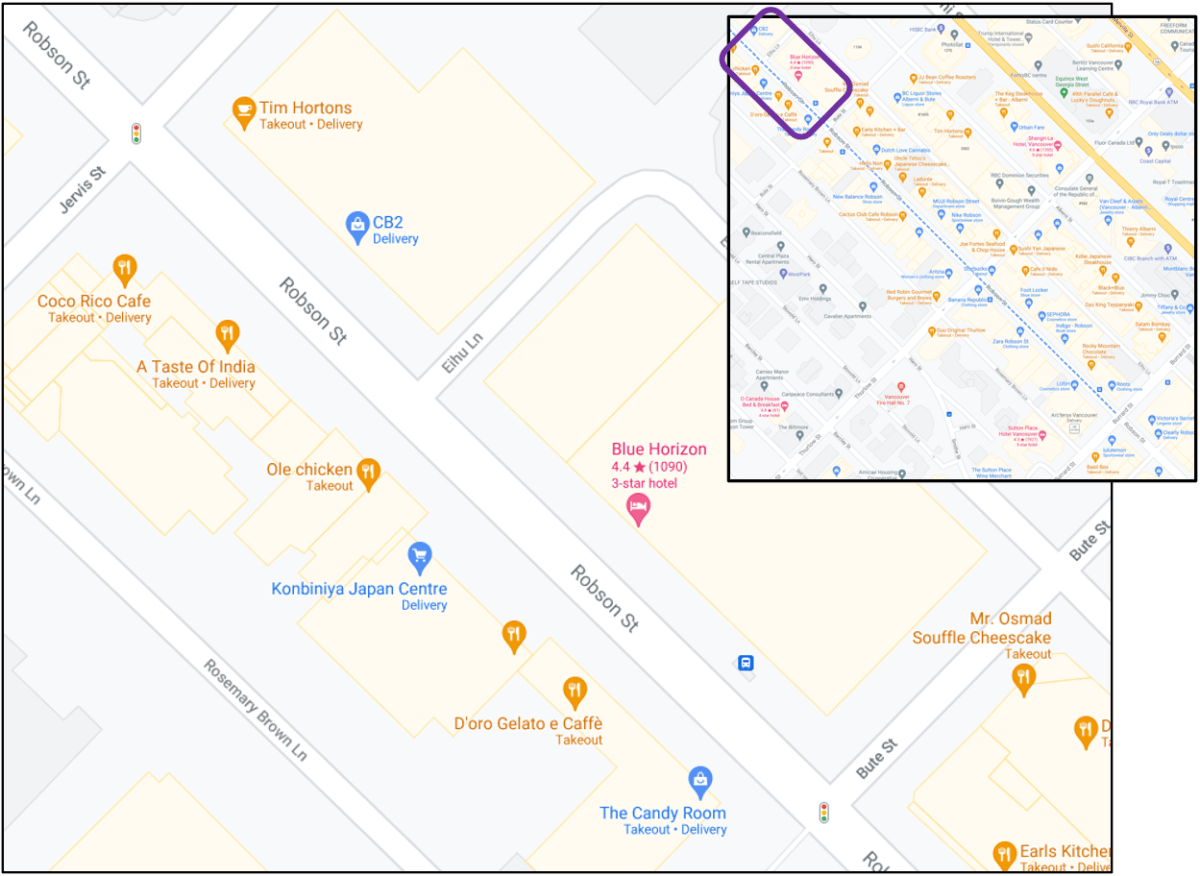
1200 block of Robson Street in Vancouver
1200 block of Robson Street in Vancouver. Photo: Google Map and overlay by Retail Insider.

Southern Bute Street at Robson was pedestrian only at the Vancouver Luggage House (with the big Samsonite sign) with seating at Breka Bakery & Cafe.
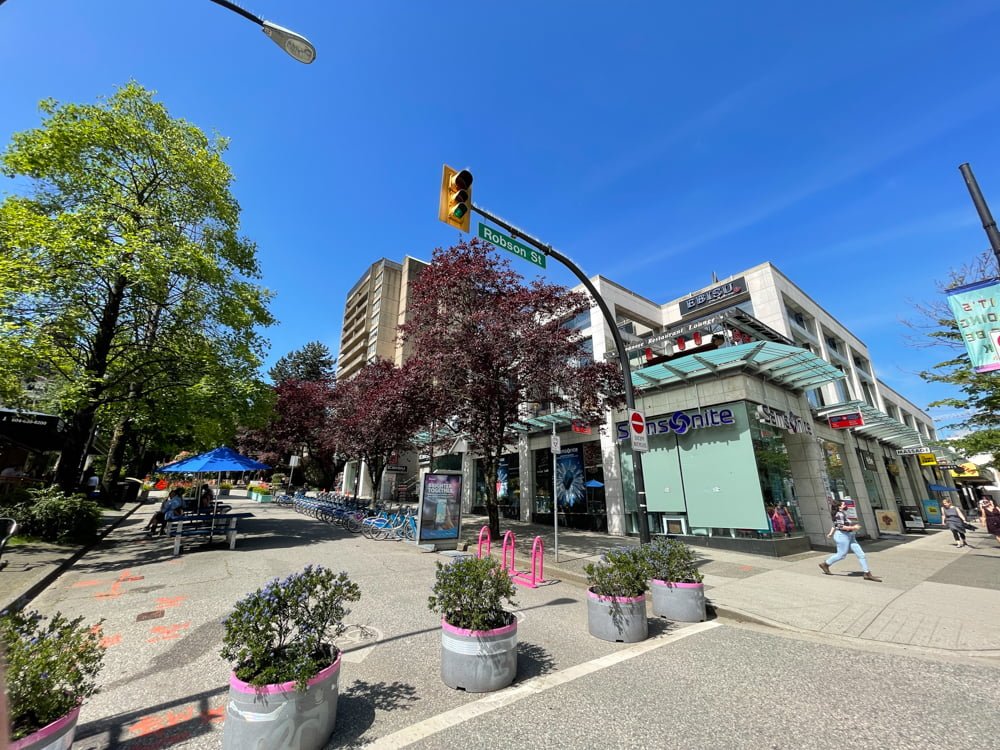
Bute Street closed to vehicular traffic at Robson Street in Vancouver
Bute Street closed to vehicular traffic at Robson Street in Vancouver. Photo: Lee Rivett

To wrap up the Robson Street tour, the last tour zone along Robson Street is home to several restaurants as well as the home furnishings retailer CB2, which is Crate & Barrel’s sister brand geared towards young adults, has a retail location on the city block preceding our starting point.
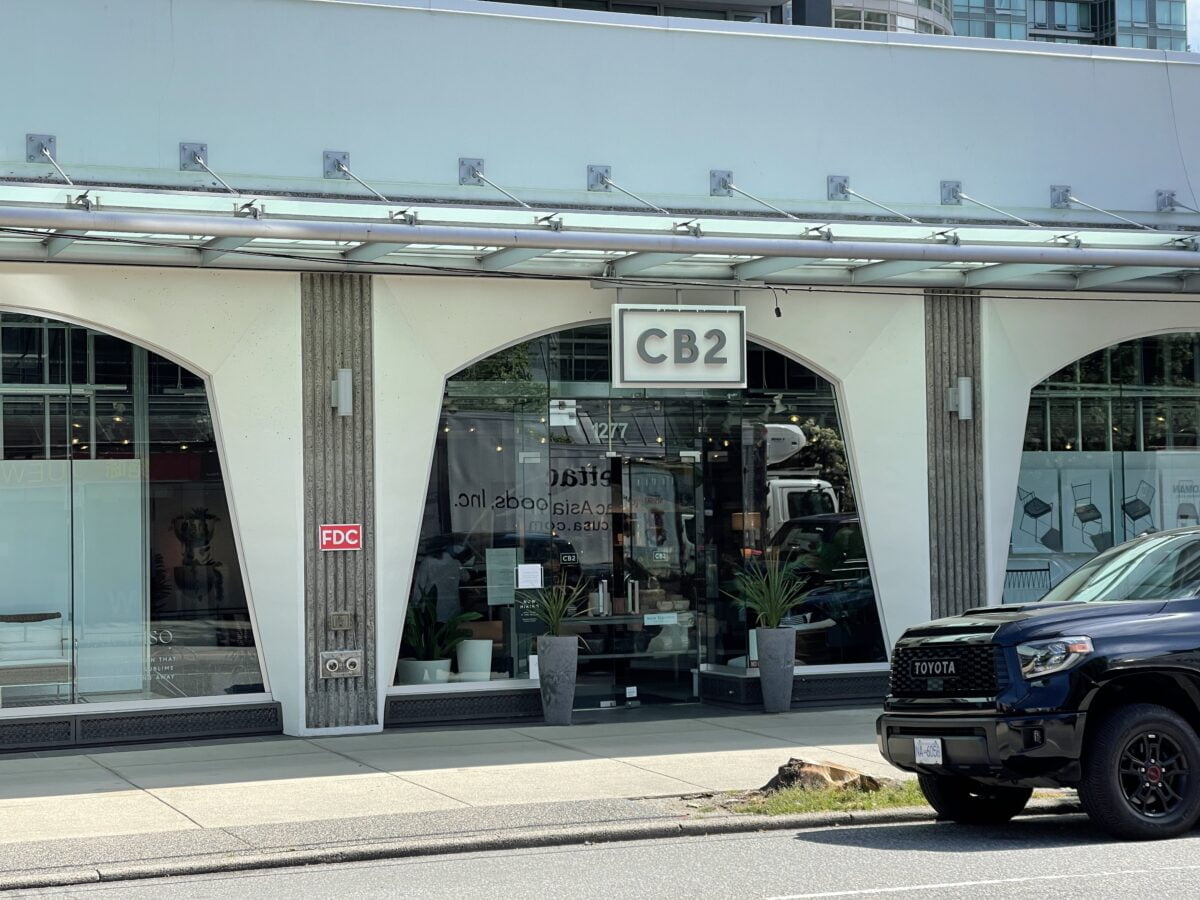
CB2 on Robson Street in downtown Vancouver
CB2 on Robson Street in downtown Vancouver (June 2021). Photo: Lee Rivett.

We hope you enjoyed this update of Robson Street in downtown Vancouver, B.C. and are always excited to see the changes at Canadian shopping centres. Don’t forget to check out our other retail photo tours over the past few months. Thank you for taking this tour with us.

Point Zero at 1119 Sainte-Catherine St. W in Montreal has Closed

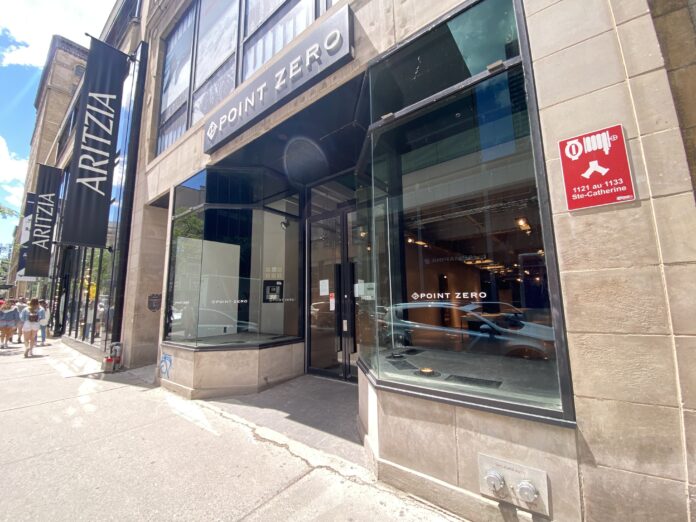
Point Zero at 1119 Sainte-Catherine St. W
Point Zero at 1119 Sainte-Catherine St. W (Photo: Maxime Frechette)

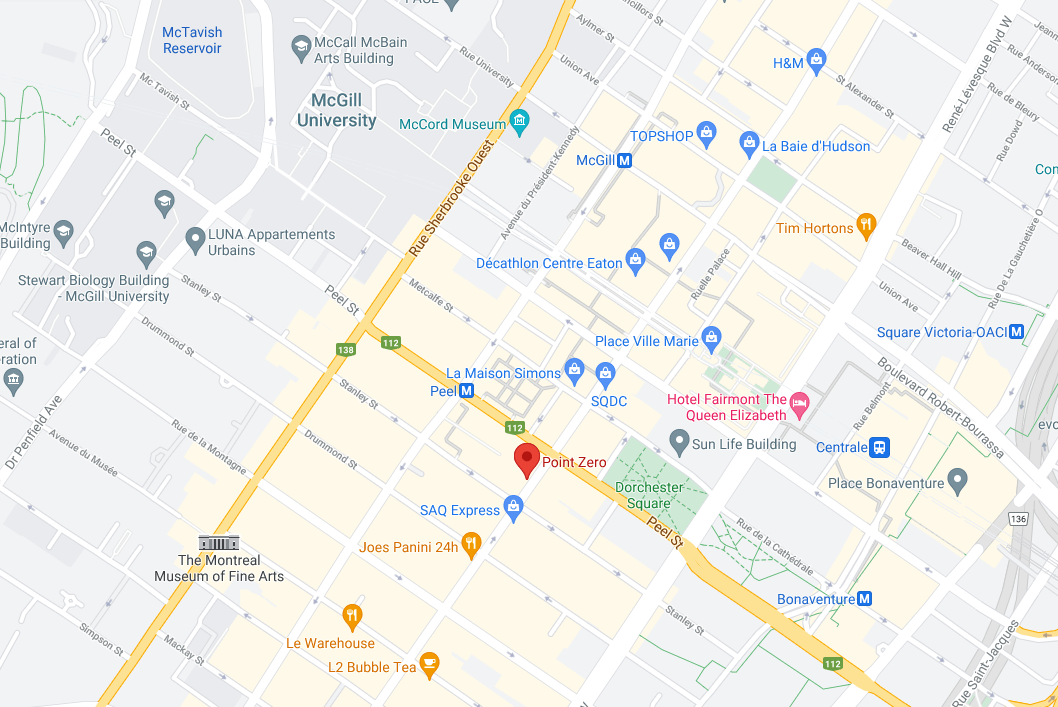
Montreal-based outerwear retailer Point Zero has shuttered its storefront at 1119 Sainte-Catherine St. W. in Montreal. Another storefront remains open nearby at 1395 Sainte-Catherine Street West. Another location also just shut at Quartier DIX30 according to Montreal correspondent Maxime Frechette.

We will be following this story, as the company was featured in Retail Insider back in December of 2020 to discuss their growth plans for a post-pandemic environment. Point Zero is seeing bullish growth and has ample funding under its owner.

The image was captured by Montreal Correspondent Maxime Frechette on June 23rd, 2021. Maxime’s photos were featured in the March 2021 Photo Tour of Sainte-Catherine Street.

Click for Interactive Map

Podcast [Interview]: Drew Green Discusses the Future of INDOCHINO

Drew Green Discusses the Future of INDOCHINO

This week Craig speaks with INDOCHINO CEO Drew Green about where the company is going, including a new partnership with Nordstrom.

The Weekly podcast by Retail Insider Canada is available on Apple Podcasts, Stitcher, TuneIn, Google Play, or through our dedicated RSS feed for Overcast and other podcast players.

**Podcast Sponsor (MSC): As one of the world’s leading container ship lines,  MSC is promoting a sustainable business model that goes far beyond the ‘business as usual’ approach. [Read more on MSC’s Sustainability Program]

Discussed this episode:

Subscribe, Rate, and Review our Retail Insider Podcast!

Follow Craig:

Follow Retail Insider:

Listen & Subscribe:

Share your thoughts!

Drop us a line at Craig@Retail-Insider.com. You can also rate us in Apple Podcasts or recommend us in Overcast to help more people discover the show!

Background Music Credit: Hard Boiled Kevin MacLeod (incompetech.com). Licensed under Creative Commons: By Attribution 3.0 License. http://creativecommons.org/licenses/by/3.0/

Canadian Retail News From Around The Web For June 23rd, 2021

Canadian Retail News From Around The Web

Top Stories: National

Central/Eastern Canada News

Western Canada News

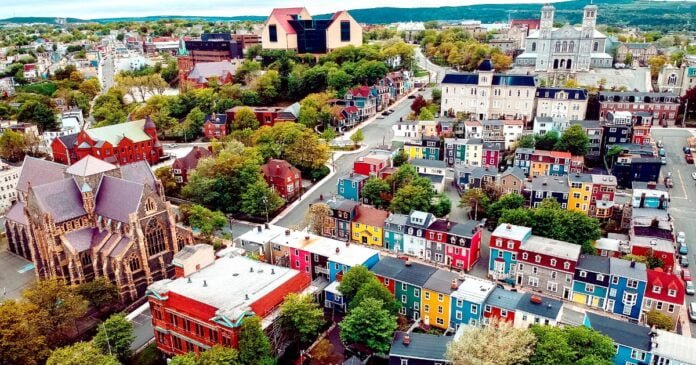
St. John’s NL Retail Rebounding Amid Optimism Following Pandemic Struggles: Interview

Image: Destination St. John's

The pandemic over the past year or so has caused a great disruption for the retail sector across the country, but for the Avalon Mall in St. John’s, Newfoundland and Labrador, it has been a year of new store openings.

Nikki Poole, Associate Vice President for commercial real estate brokerage CBRE Limited, said 2020 was a “slug” for retail in Newfoundland like it was for the rest of the country.

Nikki Poole

“There certainly were some delays in store openings and deals that weren’t in the works before really just went on the backburner. The positive note is that 2021 is shaping up to be a whole more optimistic. Last year, I think it was just more of a status quo, shorter renewals, no one really wanted to rock the boat and stores were just being creative in trying to keep the lights on truthfully, just like anywhere else in Canada,” said Poole.

“Our landscape now is we’ve all been stuck here so disposable income is being spent on retail and renovations and there’s still a lot of money being pumped into the retail market here.

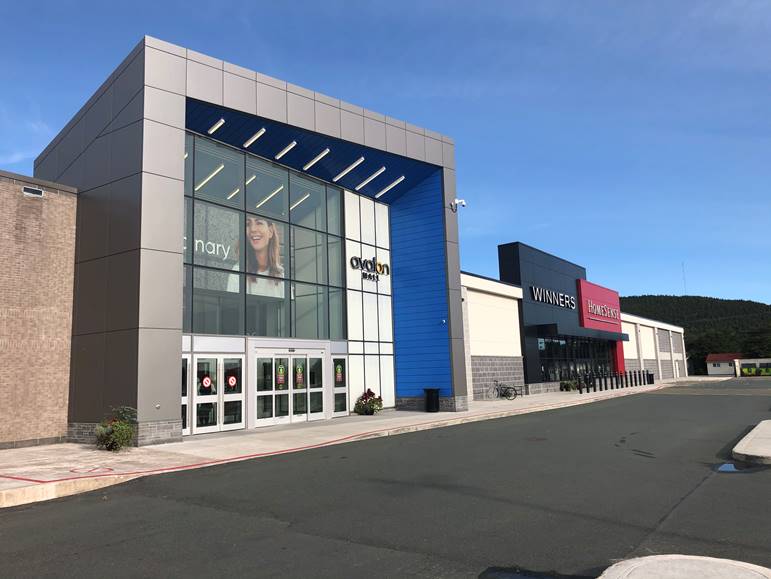
“The Avalon Mall for instance they still opened up H&M, the Gap, Old Navy, Levi’s, Tommy Hilfiger. They’ve opened up all these stores during the pandemic which in any other market would never happen. But the Avalon Mall is just a unique property. As everyone knows across Canada, the sales are phenomenal there and they’re in the middle of a multi-million dollar renovation. So maybe that has helped bring in some interest and Five Guys is opening in the Avalon Mall. That will be our first to the province. That’s promising.”

Image: Avalon Mall

Poole said there is a lot of activity with smaller health and wellness based businesses.

“They seem to be eating up a lot of our smaller retail openings in the suburbs. And then we have some businesses, who have been online based and thrived during the pandemic, online shopping, and some of these businesses are now opening up storefronts which is very positive and exciting because they’re growing and eating into that warehouse distribution space and having these cute little storefronts that are pop-ups that are legit lease spaces,” she said.

Like many other retail experts across the country, Poole also agreed that the feared ‘retail apocalypse’ that would result with many closures due to the pandemic just did not materialize.

“The national closures were out of our control and a lot of times when the national stores closed down the Newfoundland stores were told they were exceeding sales expectations but we all know those decisions are made much broader than in Newfoundland,” said Poole.

“Yes it certainly was a time where the doors were shut in some of these spaces and there was concern that they wouldn’t reopen but I think from a fatality perspective we certainly have I would speculate nationally a smaller percentage of those who didn’t reopen.

“We’re a small market. So tenants know landlords. Landlords know their tenants. They shop at their stores. They don’t want to lock the doors on people knowing that there’s not 50 other businesses lining up to go in those spots. So relationships are really important and what we’re seeing now that we’re sort of out of this dark tunnel a bit is a bit of a relocation happening. I do think people are now calling other landlords and dancing with them to see about relocating their businesses, particularly if their leases are up for renewal right now. They’re shopping around.”

How Canadian Brands Doing Business with the EU Must Comply with New Model Contracts

What’s Changed?

The EU permits businesses to transport personal data of European data subjects outside of Europe as long as a company receiving that personal information uses the EU-approved Standard Contractual Clauses (“SCCs”) in their service agreement contracts. The SCCs were revised on June 4, 2021. Any brand that collects their EU customers’ personal information needs to ensure that their service agreements have SCCs in place, or they will no longer be able process their EU clients’ information or do business in the EU.

How Will This Affect My Brand?

You will need to make sure that you comply with the EU regulations and use these new contractual clauses in the following situations, even if you’re based in Canada or any other country outside the EU:

  • If you have a large European clientele and need to transport their personal information back and forth between Canada and the EU
  • If you use IT services based in the EU and regularly transfer personal information back and forth
  • If you have an office in the EU and EU-based employees

If your brand does business in the EU, your company is subject to the General Data Protection Regulation (GDPR) and likely rely on the SCCs which were enacted as part of the GDPR to transfer personal data across borders in the course of your business. This ensures that even if the laws differ where you are and where your customer resides, that their personal data is sufficiently protected. SCCs are often included in service agreements or contracts where personal data is transferred from an EU country to non-EU nation, and are almost always used within the EU to transfer personal data across borders. This has ramifications on the data that you can share with your supply chain. Here are some of the changes to the new set of SCCs.

Processing of Personal Data

The GDPR applies if you are “processing” – collecting, using, disclosing, and storing – personal data concerning identifiable individuals. In the words, any personal information you gather from your EU customers is subject to this law. Even if your European clientele does not comprise a large component of your customer base at this time, once your business expands into that market and beyond, you should be able to demonstrate compliance with the GDPR.

Any business that makes decisions on how personal data is to be processed is known as a “controller” for the purposes of the GDPR. Any sub-contractors who process personal data on the controller’s instructions are known as “processors”. The terminology is important, as the obligations differ according to a company’s role in any B2B arrangement where personal data is being transferred.

Transfer of Personal Data

Chances are, you are not only processing personal data from customers, but you are also using a number of contractors and third-party vendors to make your business run. The revised SCCs are intended to protect customer privacy in any B2B transfer of personal data. This may include, but is not limited to, the following:

  • Credit card payment processing
  • Market research data analysis
  • Customer profiling
  • Accounting, payroll, and other human resource-related functions (because GDPR also applies to your EU-based employees, too)

In other words, the GDPR applies not just to your business, but to your entire supply chain as well.

Territorial Scope

One of the growing pains in a business, particularly as the world has become increasingly virtual in terms of service delivery due to the Covid-19 pandemic, is that data privacy protection laws can vary amongst countries, and sometimes they even vary within the same country. For instance, in Canada, PIPEDA governs all privacy-sector entities, but provinces have their own versions of the same legislation that imposes stricter conditions on data transfer. But even with those laws in place, if a Canadian retailer processes personal data of EU customers, they must ensure that they and their service providers comply with the GDPR requirements. The challenge is in ensuring you comply with each applicable legislation.

Obligations: Module-based data transfers

The main change to the SCCs is that the new clauses are tailor-made and easily adaptable to B2B transfers of personal data. Although the previous version of the SCCs (which you may have right now with your third-party vendors) impose similar obligations, there are ambiguities in certain areas. The revised SCCs are intended to clarify these ambiguities and make the obligations easier for a business to understand and interpret.

The new module-based SCCs are actually more user-friendly and less ambiguous in terms of how data transfers take place and the safeguards for those transfers to take place. By using a scenario-based module, you and your privacy and legal teams can use the appropriate SCCs applicable to your business arrangement. Here are some examples of how the new scenarios apply to a company:

  • Module 1 – controller to controller transfer: you are a retailer transferring personal data on EU customers to another retailer, and both you and your retailing partner make decisions on how data is to be processed. An example is creating a customer database to whom you perform directed marketing in a joint effort with another business.
  • Module 2 – controller to processor transfer: you provide personal data to a third-party marketing firm to gather customer feedback and intel on an advertising campaign or a recent product launch. The marketing firm takes instructions from you on how to process the data.
  • Module 3 – processor to processor transfer: your third-party bookkeeping company provides your customer personal data to a third-party IT solution firm to crunch data.
  • Module 4 – processor to controller transfer: your third-party actuary has processed financial information relating to your workforce (on which you provided instructions) and provides you with a detailed financial report.

Because the revised SCCs are tailored specifically to outline the minimum legal requirements based on data transfer in a B2B relationship, they are intended to be more business-friendly than the original SCCs.

The revised SCCs also have considerable legal consequences. In the event of a privacy breach, a business characterized as a data controller may be held liable for any breaches caused by a processor, due to their position in the business relationship as a head contractor. The SCCs are intended to minimize risk by setting requirements for data protection to limit liability and to demonstrate due diligence. While the new SCCs have not yet been challenged in court, it is expected that they will more clearly outline contractual obligations in any transfer of personal data in a B2B relationship involving at least one EU-based party to that contract.

The Timeline: When do I have to be compliant?

The current set of SCCs already in place can be used in new contracts until September 27, 2021. The advent of the revised SCCs does not invalidate any agreements you currently have with a third-party vendor that processes personal data on your company’s behalf. However, with the implementation of the revised SCCs, it may not be worthwhile to use the soon-to-be-obsolete versions and to renegotiate the deal.

There is a transition period to align your current SCCs with the revised version. The EU has given a deadline of December 22, 2022, for all companies using the SCCs to renegotiate their contracts and include the revised SCCs into agreements where there is a transfer of personal data across borders.

The effects of non-compliance are unknown at this time. However, a cautionary tale can be gleaned by the demise of the US-EU Privacy Shield, a legal framework that at one time permitted the transfer of personal data between the US and the EU. The Privacy Shield was struck down in the European Court of Justice in July 2020, effectively ending the transfer of personal data, except in cases where a company had used SCCs in their agreements with their service providers. Companies that did not use the SCCs had to scramble to renegotiate all of their agreements with service providers to comply with the GDPR.

How can Kobalt help?

Kobalt is an IT security services firm serving small to medium sized businesses (SMBs) based in Vancouver, BC, with services to the retail sector. As part of their service module, Kobalt offers data privacy gap analysis and compliance services to SMBs, with a focus on complying with applicable privacy laws such as the GDPR Kobalt’s Privacy Practice Lead, Ritchie Po, is a Certified Information Privacy Officer with both Canadian and EU (GDPR) designations. In January 2021, Mr. Po presented on the topic of Bill C-11 and how changes to Canadian federal data privacy laws can affect retailers in the future.

If you are interested in discussing GDPR compliance and other IT security-related services, contact Ritchie Po at:Ritchie.po@kobalt.io.

*Partner content. To work with Retail Insider, email craig@retail-insider.com

Canadian Local Product Search Engine ‘SokoLocal’ Surpasses 1.5 Million Products as it Supports Small Businesses: Interview

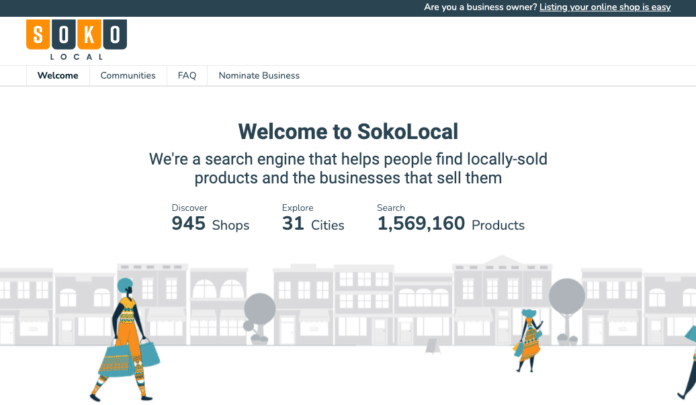
Image: SokoLocal

Calgary-based SokoLocal, a new local product search engine, has surpassed one million products in cities across North America.

“We started SokoLocal to help better connect shoppers with local businesses,” said Nikhil Sonpal, Founder, MQLabs. “The interest and growth we have seen in the last month, including cataloguing more than one million product listings on SokoLocal, is made possible because of the passion people have for supporting the communities in which they live, solidifying the need for this type of innovation. With SokoLocal, we have managed to streamline that process helping businesses and consumers alike, which is something we are very proud of.

Image: Nikhil Sonpal

“It’s a product search engine. I felt that there was this whole movement afoot for finding local businesses, supporting local businesses. But the challenge, at least for me, I don’t know that these local businesses exist. I personally don’t shop for businesses by name. I shop for products. So that’s where the idea came about – to create an interface like Amazon, to give users an Amazon-like experience but the convenience of what the underlying technology that Google has to catalogue and index content that is on these websites.

“What Google does for search in general, we’re trying to carve out a niche for searching for shopping for local products.”

SokoLocal, created and developed by MQLabs, a Calgary-based technology company, launched recently and has since grown a strong presence in Calgary, Edmonton, Winnipeg, Ottawa and Toronto, with additional cities across North America currently in development.

Image: SokoLocal

Sonpal said the search engine hit one million products on June 1 after launching March 1. As of June 18, it was 1.5 million products.

Featuring products from local vendors, SokoLocal allows consumers to search, browse, compare local prices and purchase their favourite products online directly from the retailers. Since launch, the online marketplace has seen significant growth and popularity in its Alberta markets and continues to offer their services to new cities as it expands its reach, most recently in Manitoba and Ontario and the United States with Austin, Texas. Now, with more than one million products available, there is no shortage of selection or accessibility to a wide variety of local products, explained Sonpal.

“It’s a fully automated system. We’ve built it using the latest and greatest technology with all the abbreviations that everyone uses in tech. So it has machine learning, it has AI capability into it,” said Sonpal, adding that there’s very little human intervention in the system. “The idea for us is to grow this globally. We are trying to make sure that local is not a fad and we can provide the convenience of finding local and by doing so we feel Soko fills that niche.”

Supporting local businesses is a vital step in creating new opportunities within local communities. Over the last year in particular, small businesses have been met with unprecedented challenges and have been struggling to stay afloat among giant competitors with international backing. By offering a platform that allows small businesses to increase their visibility and connect with shoppers in their area and around North America, SokoLocal aims to revitalise local economies and direct sales to those who need it most, explained Sonpal.

The impetus for the venture was an injury he received from cycling one day earlier this year. He broke two ribs cycling. He wanted to find local products but was having a hard time doing that.

“I’ve been in tech now for 22 years . . . The motivation for me is I really want to help small businesses be able to run their businesses efficiently and I think the biggest challenge that small businesses have is how do you get the word out to consumers that you exist. I am saddened by the state of ecommerce in the last year and a half being perceived as the next gold rush and I don’t want small business owners to feel helpless and to be taken for a ride where they feel they have to spend in some cases an unbelievable amount of money to get the word out to get consumers to come in because traditional advertising or marketing doesn’t work. Because it’s digital,” he said.

While shopping in physical stores is starting to open up more and more, the convenience of curbside pickup and the movement for buying local should remain.

“The messaging I’m trying to get out there is there is an alternative. That you don’t have to spend in some cases some businesses are being told I hear $2500 a month in Google ads and Facebook advertising to just get the word out and that’s preposterous to have to do that. I know $2500 a month is nothing for large brands but that is significant to a small business owner that’s an owner/operator.

“I wouldn’t say this is a philanthropic initiative because this is a for profit business and we have monetization paths in place that we will be releasing over the next couple of months but our focus has really been my focus predominantly to give business owners the tools to be able to get their products marketed. And consumers shop for products. They don’t shop for (businesses). And that’s the niche we’re trying to fulfill.”

The SokoLocal app is available for Apple iOS and Android Devices.

For more information, to browse local products, or have a local business added to the directory, visit sokolocal.com.

Impact Kitchen to Open 5th Location in Toronto’s Liberty Village

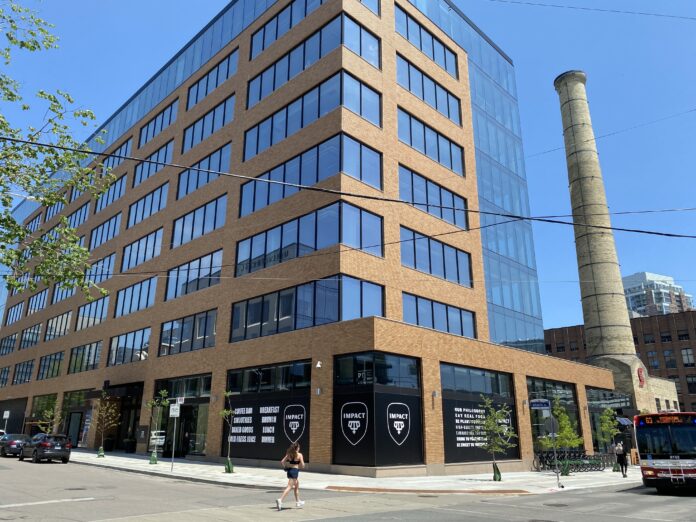
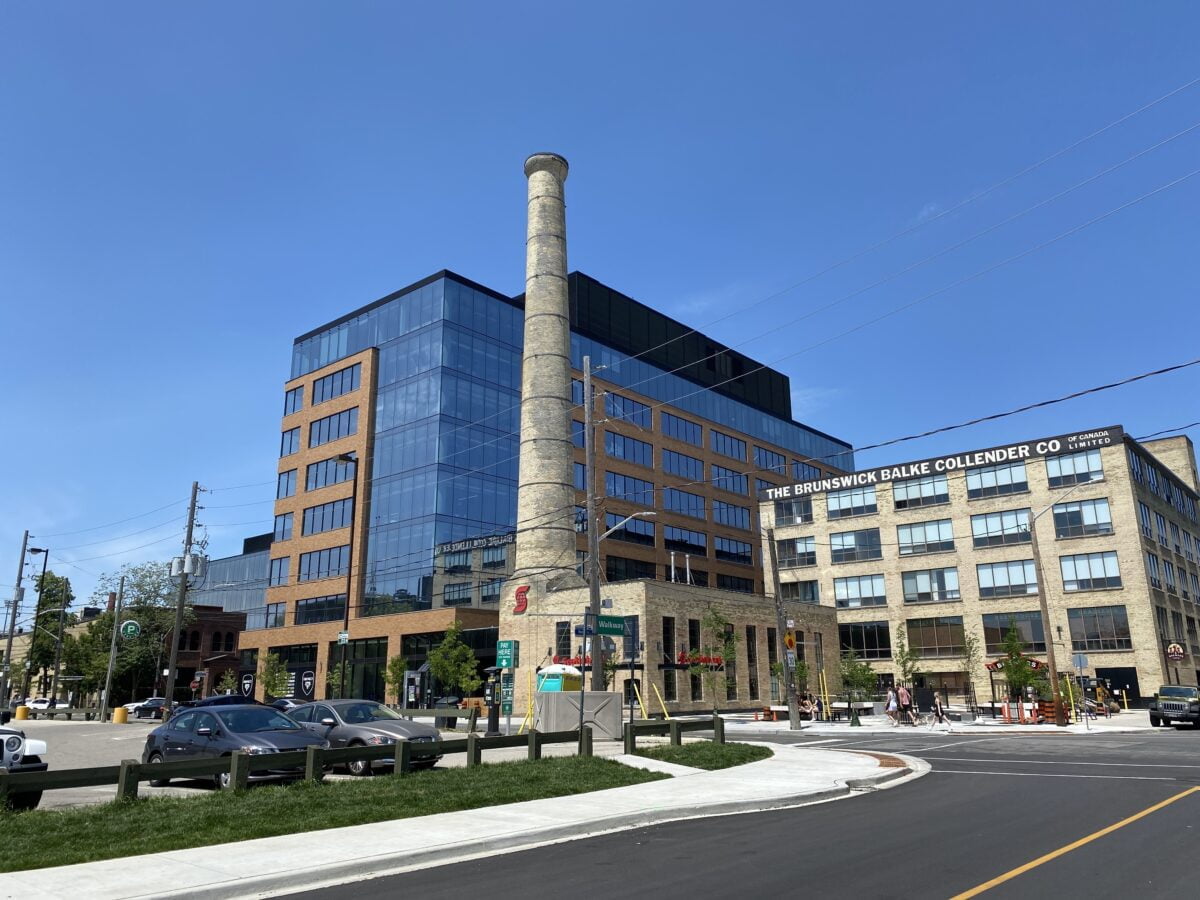
Impact Kitchen in Liberty Village - Photo by Dustin Fuhs

Impact Kitchen, a Toronto-based healthy fast-casual brand will be expanding their footprint in the city with their fifth location, which is confirmed to be opening in Liberty Village this summer.

Retail Insider reported on the expansion of the brand’s second location for to 444 Adelaide Street West (King West) back in 2018, with subsequent openings at 1222 Yonge Street (at Summerhill) and 88 Queens Quay West by the Waterfront. This joins the original location at 573 King Street East (Corktown), which opened in 2015.

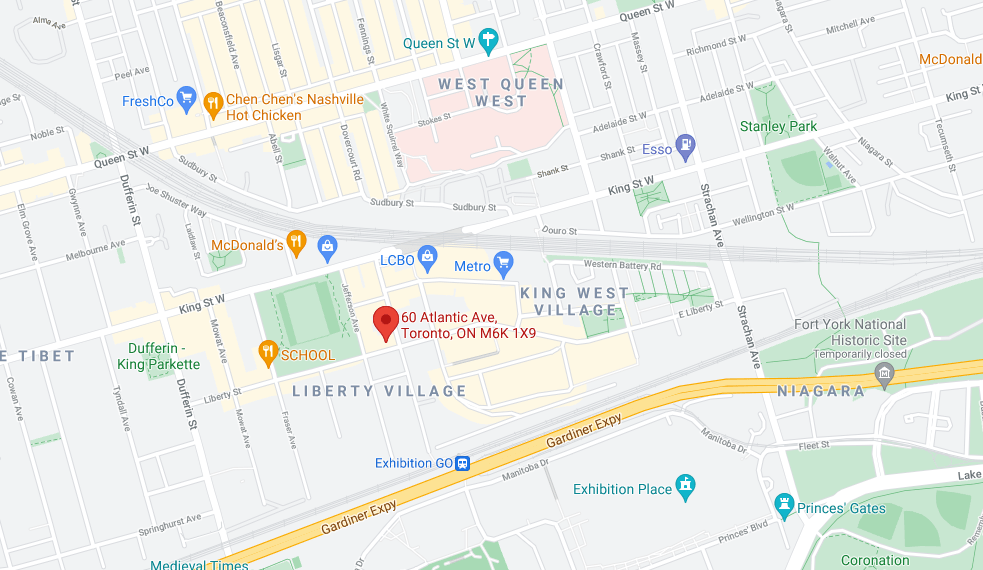
The new cafe will be located at 99 Atlantic, which is the corner of Liberty Street and Atlantic Avenue. The Kevric-owned building broke ground in 2018 and has seen their 8-story availability fully-leased, including offices for Red Bull. Colliers International is the leasing partner for this property.

Click for Interactive Map
Impact Kitchen in Liberty Village – Photo by Dustin Fuhs
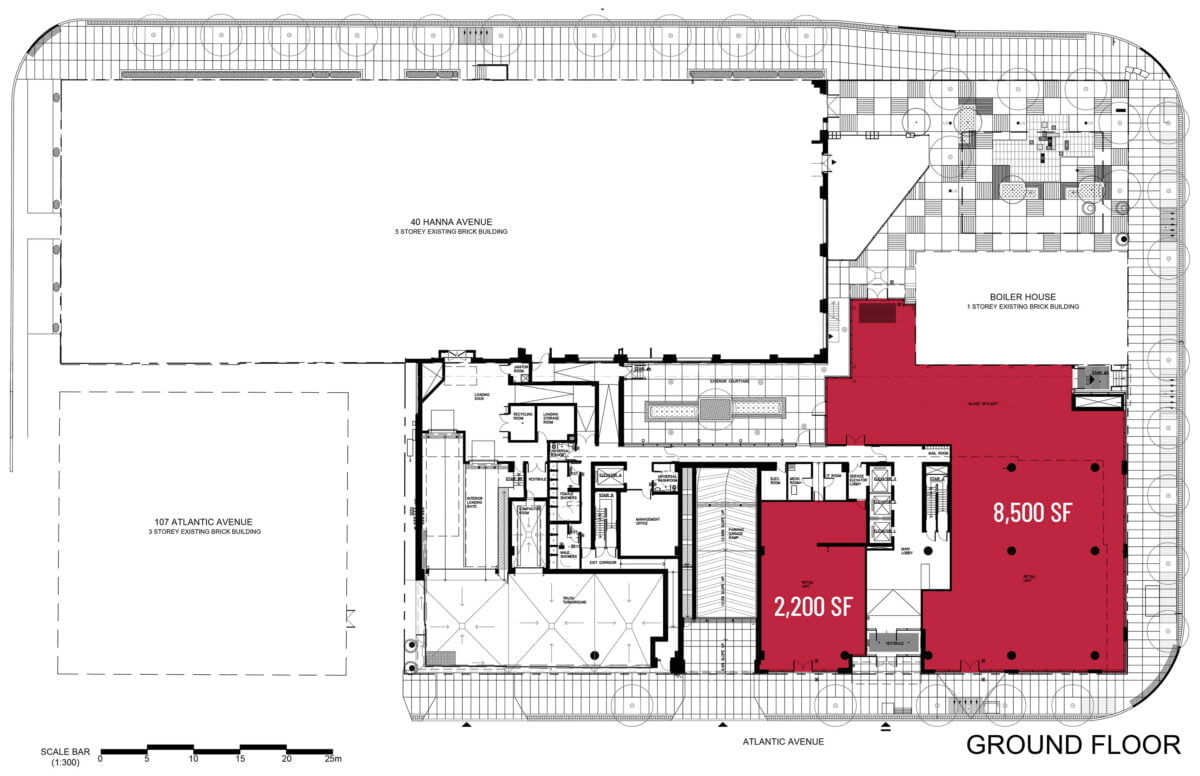
Ground Floor Plans at 99 Atlantic – Image via 99atlantic.com

We’ll be following up with Impact Kitchen as they continue to expand during a pandemic that has decimated the restaurant industry and will have long-lasting effects on the viability of community-driven businesses.

Related Retail Insider Article

Canadian Retail News From Around The Web For June 22nd, 2021

Canadian Retail News From Around The Web

Top Stories: National

Central/Eastern Canada News

Western Canada News

Oxford Properties Launches Outdoor Patios at All Enclosed Shopping Mall Properties in Canada: Interviews/Photos

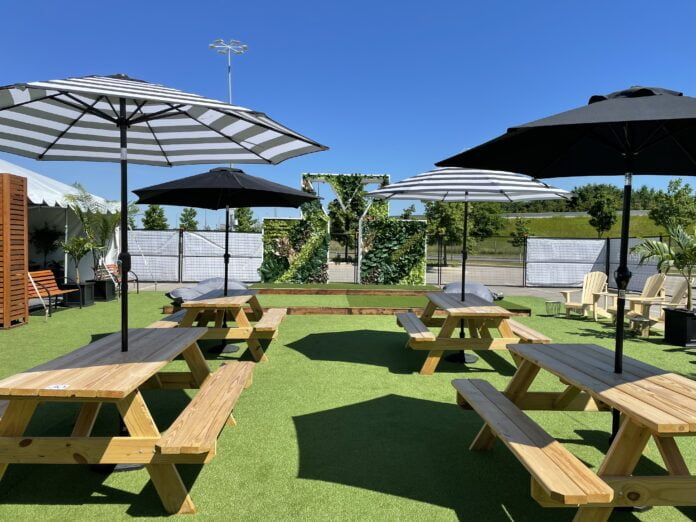
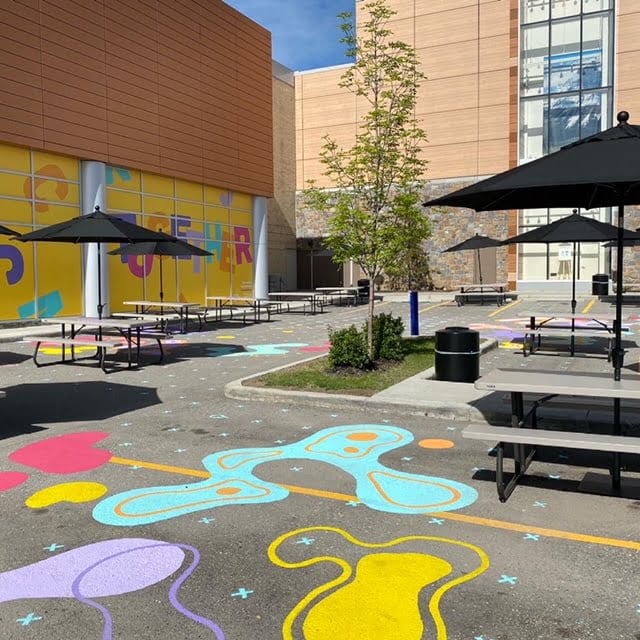
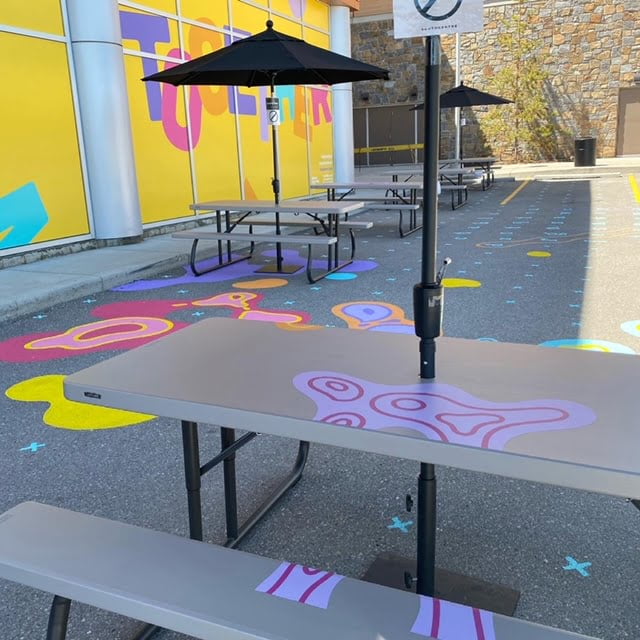
Yorkdale Patio (Photo: Oxford)

Major Canadian shopping centre owner Oxford Properties Group has launched outdoor dining patios in all its enclosed malls across Canada.

“Dining is an important part of the shopping centre experience, and we are deeply invested in the success of all restaurants and food tenants,” said L.A. Glassford, VP Restaurant, Entertainment, Urban Retail, Oxford Properties.

LORIANNE (LA) GLASSFORD

“A number of the food and beverage establishments in our shopping centres have weathered prolonged mall closures. These outdoor dining areas are designed to provide an opportunity for our customers to enjoy food from these businesses in a pleasant environment that adheres to provincial safety measures. These patios also support our restaurants with much-needed additional seating as consumer demand has exceeded expectations.”

Glassford said one thing the company thought about quite early with all the closures due to the COVID-19 pandemic was how it was going to support its food and beverage businesses in general in their enclosed malls.

“When you’ve got a food court, how are we going to support these businesses? And what about restaurants without exterior patios? How do we support these businesses who are already spending a large percentage of their businesses on third-party delivery services? How are we going to help them?,” she said.

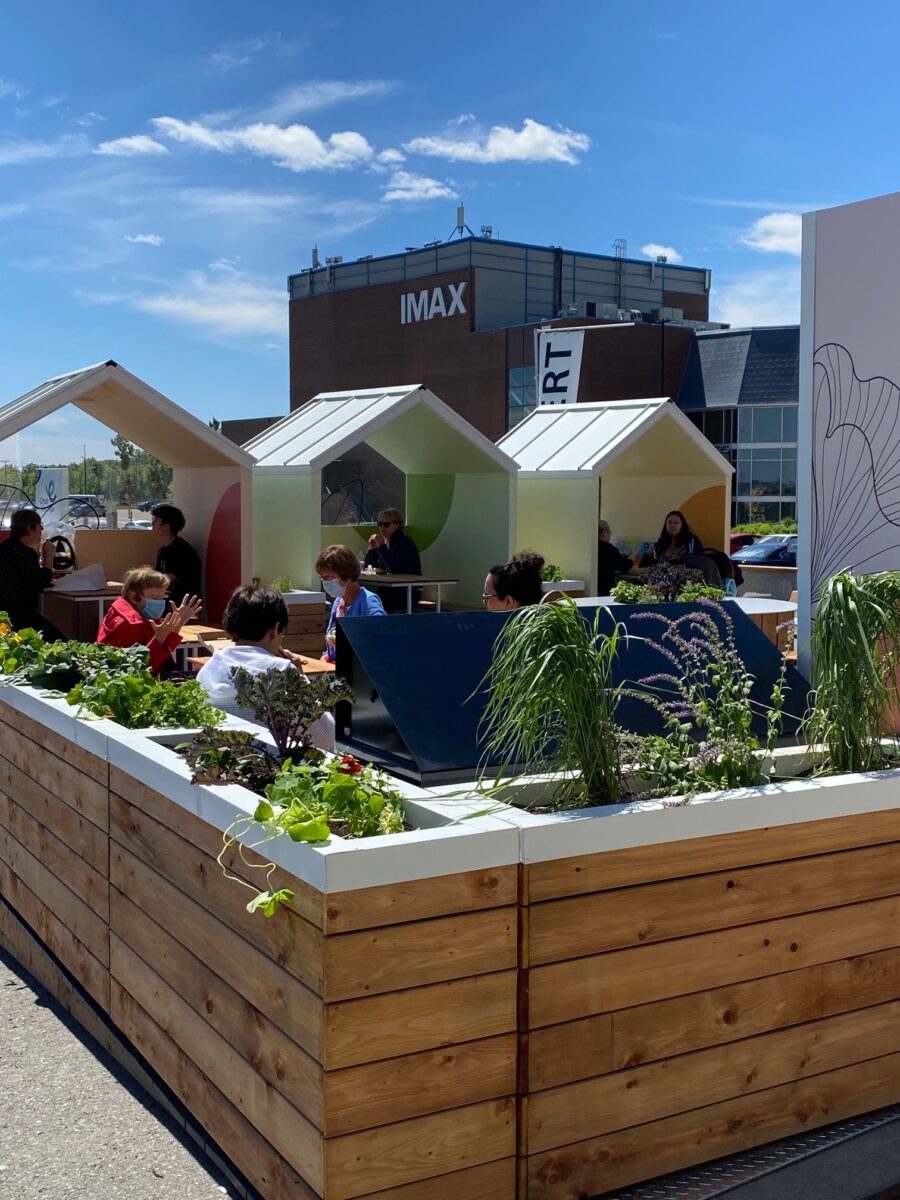
“We spent a lot of time – the operations teams, the site teams, and the marketing teams – very creative on how can we not only support but what is the experience we want to create for the customer. Now the customer being the customer who is going to eat at these establishments, the customers that work at these establishments, our own staff that needs somewhere to eat. What we did is we decided to introduce outdoor dining patios across all of our shopping centres with not just an outdoor patio. But a dining experience.

“So we’re deeply invested in all of these locations. What we did first off it has to address the additional seating we need. It has to meet the expectations of COVID, the safety protocols. We wanted to make it accessible. So we’re open 11 a.m. to 8 p.m. daily. We’re going to be open the entire summer and if we need to licence it we can look at it then. Most of our outdoor experiences can accommodate up to 100 different diners. That’s huge.”

Glassford said they are not just patios.

“You can have an al fresco experience at the terrace at Yorkdale with a chandelier and high end furniture. The grass feels good underneath your feet. You can have a shaded area with an umbrella or you can sit under a pergola. You can have full sun and sit in some bean bag chairs. We have different curated seating options,” she said.

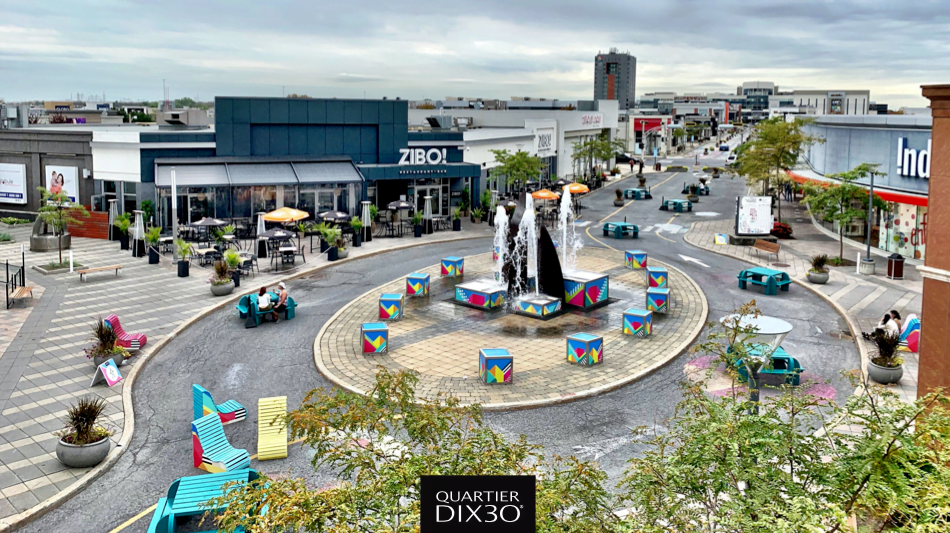
Image: Quartier DIX30

“Palms. Different trees. Landscaping. The lighting. It really feels special. That’s the best way I can describe it. It feels special. When you are underneath the tent or the pergola or you’re sitting around a great high top, you’re transported. That was the goal and I think we delivered.”

Glassford said each outdoor dining patio at a shopping centre is going to be specific to the actual asset and for each one Oxford looked very carefully at where to position them within the property.

“We’ve launched them all and they’re quite special,” she said. “I’m most pleased with the experience it is going to provide because we all right now need an experience. We do. We’re craving it.”

Galeries de la Capitale – Image: Oxford

Oxford Properties Group was established in 1960 and today manages approximately C$60 billion of assets across the globe on behalf of its co-owners and investment partners. Oxford’s portfolio encompasses office, retail, industrial, hotels and multifamily residential and spans more than 100 million square feet in global gateway cities and hubs across four continents. With its global headquarters in Toronto, Oxford operates out of 17 regional offices including London, Luxembourg, New York, Singapore and Sydney. Oxford is owned by OMERS, the defined benefit pension plan for Ontario’s municipal employees.

In Canada, its retail properties include: Arbora1Retail (Montreal); DIX-30-6000 Boulevard de Rome (Brossard, Quebec); Hillcrest Mall (Richmond Hill, Ontario); Kingsway Mall (Edmonton); Les Galeries de la Capitale (Quebec City); Les Promenades Gatineau (Gatineau, Quebec); Metro Centre (Toronto). One 70 Bloor Retail (Toronto); Royal Bank Plaza (Toronto); Scarborough Town Centre (Scarborough, Ontario); Southcentre Mall (Calgary); Square One Shopping Centre (Mississauga, Ontario); Upper Canada Mall (Newmarket, Ontario); and Yorkdale Shopping Centre (Toronto).