Canadian shoppers are the least likely to want to adopt new retail tech among their global counterparts, and wary of promotional material on social media, according to a new report on retail technologies by Capterra Canada.
The study found that 42 per cent of shoppers don’t want to engage at all with brands on social media, and 83 per cent don’t want social media companies to know anything about what products they buy online.
However, they are more welcoming to AI technologies. The study dives into the purchasing journeys of online consumers, such as where they prefer to start their shopping experience, where they trust receiving product reviews most, and the factors that keep them loyal to brands.
Andrew Blair, Content Analyst with Capterra, a free online resource that compares software from nearly 1,000 categories and offers access to over two million verified reviews, said the company’s mission is to accelerate growth by helping companies embrace the right technology.

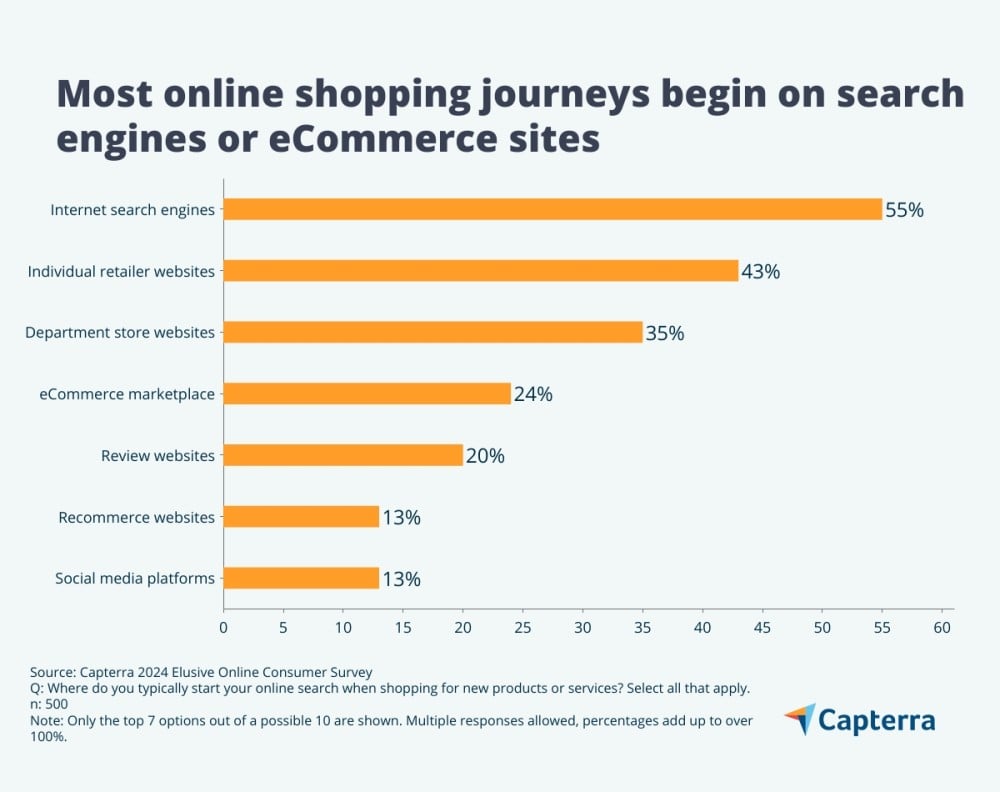
The report found that just 13 per cent of shoppers typically start their ecommerce journeys on social media, compared to 55 per cent who use search engines and 43 per cent for retailer websites, and only eight per cent end up actually buying products on social media.
While 83 per cent of consumers do not want social media companies to know what products they buy online, 41 per cent are happy to be recommended products by artificial intelligence based on their previous purchases. A quarter would even accept recommendations based on their search and viewing history and 61 per cent are happy to be recommended discounts or deals.
“Social media platforms are highly effective at generating traffic to ecommerce websites. No surprise. However, unsurprisingly 89 per cent of respondents say they see too many ads on social media,” said Blair. “So this means consumers may be experiencing ad fatigue which poses a significant challenge for businesses by diminishing the effectiveness of advertising campaigns over time.
“Nearly a quarter of respondents have blocked or have unfollowed a brand in response to social media ads in the past year and 28 per cent have blocked a specific ad. This is generating a bit of negativity with so many ads that are appearing. In the same light, influencer partnerships on social media are being received negatively by online consumers. 72 per cent of respondents say they do not trust reviews by social media influencers. This may emphasize consumer skepticism of fake and disingenuous reviews.
“The mistrust of social media extends to platforms themselves where only nine per cent of respondents say they see social media platforms as a trustworthy source of reviews.”
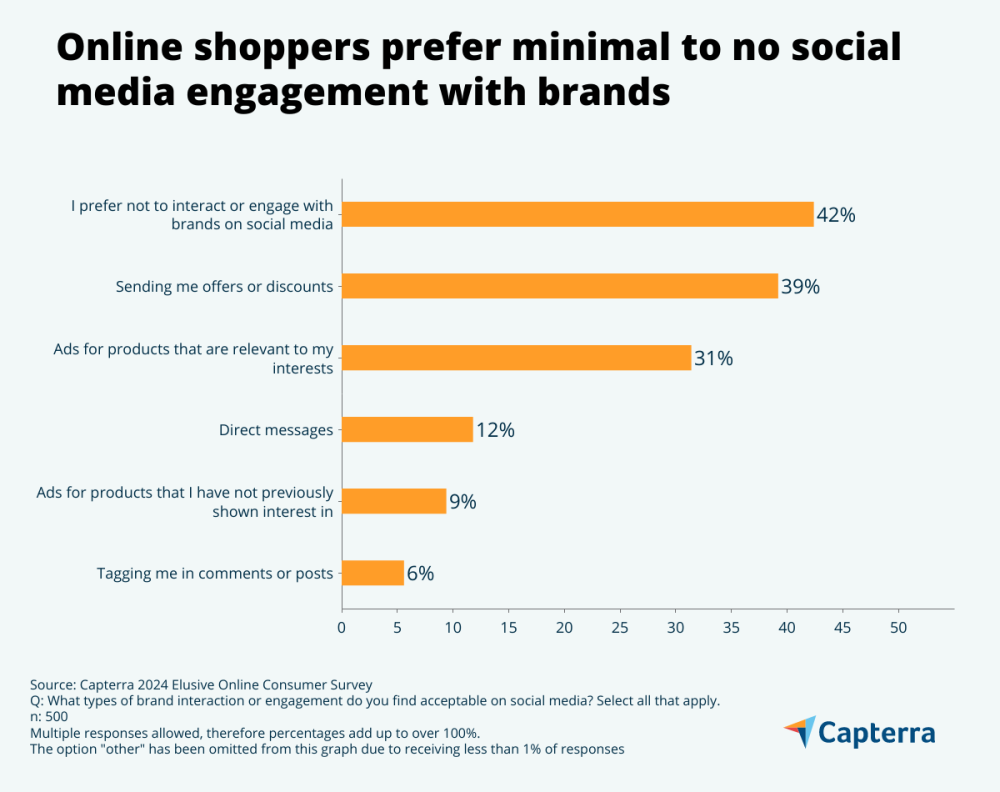
Blair said brands on social media platforms need to moderate their level of engagement with their target audience because 42 per cent of respondents said they prefer not to engage with brands on social media.
“This is demonstrating a desire to maintain traditional methods of ecommerce,” he added.
“Brands must restructure their social media marketing strategy with how online consumers are perceiving ads and paid partnerships on social media platforms.”
He said there is disinterest in adopting new technologies but a need to improve on page search filters and recommendations.
“67 per cent of Canadian online shoppers have expressed a disinterest in adopting new retail technologies to shop online which in comparison is significantly higher than the global average. The global average was 42 per cent,” explained Blair. “Despite the hype of new technologies . . . online consumers in Canada are showing very little interest.
“However, 41 per cent of respondents are happy to be recommended products by AI based on their previous purchases. So there is some sort of movement there and perhaps a niche where online retailers can make use of that opportunity. For recommendations, obviously they can offer prospective buyers a tailored shopping experience and improve the discoverability of products that they may not have found on their own.”
He said nine out of 10 online shoppers use filters at least some of the time and 71 per cent mainly filter by price which has also been a top influencing factor when it comes to buying products and services online over the past year.
Blair said standard filters may not be enough to encourage customers to complete their purchase online. Shoppers commonly report that filters are not specific enough and they don’t work as they should. This places an emphasis on creating a seamless and efficient user experience on traditional websites to keep prospective buyers on an ecommerce and keep them coming back for more.
In this environment there are opportunities for loyalty programs to boost customer retention and to target the budget conscious consumer.
“It’s been a hell of a ride in Canada. Inflation. Everything. And only recently the Bank of Canada has cut interest rates by 25 basis points, signaling stabilization in inflation,” said Blair. “However, consumer spending habits have largely remained unchanged. Consumers are still more cautious with their spending, leading to longer decision making and increased sensitivity to price.
“So it seems that those habits have stayed on. So much so that 59 per cent of consumers say that finding the lowest price for products is the top consideration when purchasing new products over the past year. When it comes to repeat customers, 78 per cent cite price as a top driver . . . followed by product quality at 75 per cent.”