Canadian fashion retailer Aritzia could unveil a long-term revenue target approaching $10 billion when it holds its Investor Day on October 27, according to an analysis from Stifel. The potential target comes as the Vancouver-founded company approaches $5 billion in annual sales, supported by rapid expansion in the United States and growing investment in large-format flagship stores.
Martin Landry, Managing Director at Stifel, outlined expectations for the event in an October 19 research report. He anticipates that Aritzia could establish a fiscal 2032 revenue target of between $9 billion and $10 billion, representing annualized growth of approximately 13% to 15% from fiscal 2027.

The projections follow several years of growth that have already taken Aritzia beyond the objectives presented at its previous Investor Day in 2022. At that time, the company targeted annual revenue of $3.5 billion to $3.8 billion by fiscal 2027, a figure it is now expected to exceed by approximately $1 billion.
Aritzia’s latest financial results illustrate the pace of its expansion. Revenue increased 44.1% to approximately $1.17 billion in the second quarter of fiscal 2027, with comparable sales rising 34.5% and strong performances across physical stores and e-commerce.
The United States accounted for $779.4 million in quarterly revenue, an increase of approximately 60%, while Canadian sales rose nearly 20% to $390.4 million. Management expects full-year revenue of between $4.78 billion and $4.88 billion, representing growth of approximately 29% to 32%.
With annual sales approaching $5 billion, Aritzia is preparing its next growth plan from a considerably larger base. The company will need to demonstrate how it intends to maintain momentum through additional stores, increased productivity and opportunities in new markets and merchandise categories.
U.S. Expansion and Larger Flagship Stores
The American market remains central to Aritzia’s expansion strategy. The company operated 79 U.S. boutiques as of August 31, 2026, and Stifel’s analysis suggests that the network could eventually exceed 180 locations.
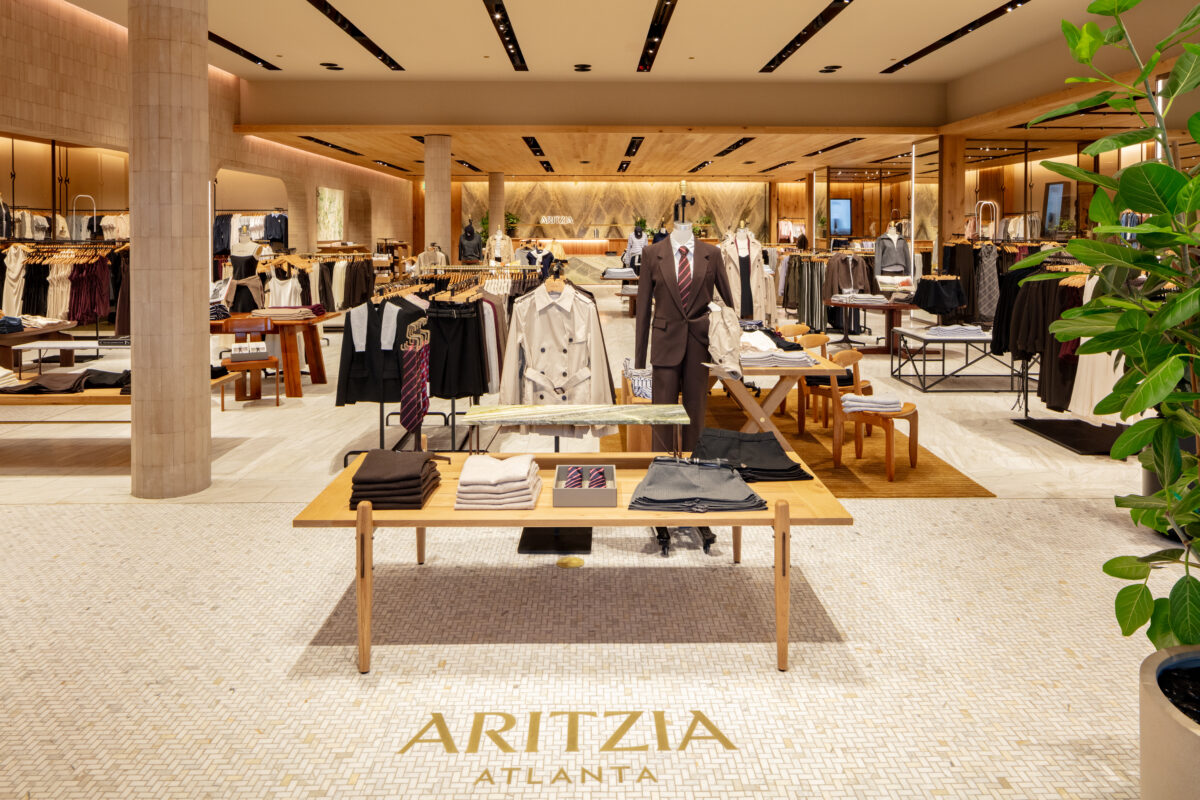
Aritzia has also been investing in substantially larger retail spaces, particularly in prominent urban shopping districts. These stores accommodate expanded merchandise assortments and give the company greater visibility in markets where it is building its customer base.
In Chicago, Aritzia secured approximately 46,000 square feet at 555 North Michigan Avenue on the Magnificent Mile. Announced in 2022, the lease was described at the time as the company’s largest planned store and represented a significant commitment to one of the city’s best-known shopping streets.
In Manhattan, Aritzia secured a multilevel location at 608 Fifth Avenue, in space previously occupied by Topshop. The property was reported to encompass more than 33,000 square feet, adding another substantial location to the retailer’s New York presence.
The larger format allows Aritzia to display more merchandise and potentially introduce additional product categories over time. These stores also require sufficient sales volumes to support their higher occupancy, staffing and operating costs, making productivity an important consideration as the company expands.
Aritzia is pursuing large-format retail in Canada as well. In downtown Vancouver, the company has plans for an approximately 42,000-square-foot flagship in part of the former Nordstrom premises, extending its investment in prominent retail destinations.
The retailer’s expansion has made it an increasingly important tenant for commercial landlords across North America. Its appetite for large stores is particularly relevant in markets where former department store locations and other substantial retail premises are being repositioned for new occupants.
Menswear Has Been a Small Part of Aritzia’s Strategy for Years
Menswear is another potential area of growth, and one Aritzia has explored in different forms for several years. Its involvement began well before the acquisition of Reigning Champ, including efforts to introduce male customers to some of its existing products.
In 2019, Aritzia launched Mr. Super Puff, a men’s version of its popular outerwear jacket. Management subsequently indicated that initial demand had exceeded expectations, providing an early indication that the brand could attract customers beyond its established womenswear business.
Aritzia expanded its presence in menswear in 2021 when it acquired a 75% interest in Vancouver-based Reigning Champ. The premium athletic apparel brand, known particularly for its men’s clothing, gave Aritzia an established business with its own customer base and merchandise assortment.
At the time, Aritzia publicly described the acquisition as an acceleration of its expansion into men’s apparel. Reigning Champ continued to operate as a separate brand, providing a presence in the category without requiring Aritzia to introduce a full men’s collection under its main retail banner.
Around the time of the acquisition, sources told Retail Insider that discussions had taken place about the possibility of introducing a broader Aritzia menswear offering. Those discussions contemplated opportunities beyond the company’s existing outerwear products and the separately operated Reigning Champ business.
Aritzia has not announced plans for a comprehensive menswear collection under its principal banner. Its history with Mr. Super Puff and Reigning Champ nevertheless demonstrates that the company has considered male customers a potential growth opportunity for some time.
The subject has also attracted investor interest ahead of the upcoming Investor Day. In Stifel’s survey of 32 institutional investors, 41% favoured a more aggressive approach to menswear expansion, while 59% were satisfied with the company’s existing strategy involving Reigning Champ.
Aritzia’s increasingly large stores could provide flexibility to accommodate additional merchandise categories in the future. There is no confirmed connection, however, between its major flagship leases and any plan to introduce a broader menswear assortment.
International Expansion Remains a Key Question
Investors will also be watching for indications of when Aritzia might establish a physical retail presence outside North America. The company has built much of its recent growth through the United States, where it continues to see opportunities for additional boutiques.
Stifel’s institutional investor survey found that 53% of respondents expected Aritzia’s first store outside North America to open in calendar 2028, while 31% anticipated an opening in 2027. The findings indicate considerable interest in international expansion as a possible contributor to the company’s longer-term growth.
Landry takes a more cautious view of the timing, given the substantial opportunity that remains in the American market. Continuing to prioritize the United States would allow Aritzia to build on its existing operating infrastructure, distribution network and customer relationships before committing resources to new international markets.
Overseas expansion would introduce additional considerations, including real estate selection, logistics and differences in consumer preferences. Management has yet to outline a confirmed international store rollout, making the October 27 event an opportunity to clarify its intentions.
Profitability and Capital Allocation
Alongside revenue growth, Aritzia’s next five-year plan is expected to address profitability and the capital required to support its expansion. The potential margin target would give investors another benchmark for evaluating the retailer’s next stage of growth.
Stifel anticipates that management could establish a fiscal 2032 adjusted EBITDA margin target of approximately 22.5%. That would represent further improvement from the approximately 20% margin contemplated in Aritzia’s fiscal 2027 outlook, compared with 17.8% in fiscal 2026.
Higher sales volumes, improved merchandise margins and more efficient use of operating infrastructure could support profitability as the business grows. At the same time, new flagship stores, distribution investments and potential international expansion will continue to require capital.
Shareholder returns could also receive attention. Stifel’s survey found that 59% of respondents favoured the introduction of a dividend within the next 12 to 18 months, although Landry expressed a preference for share repurchases.
Aritzia has not announced a dividend in connection with Investor Day. Its capital allocation decisions will need to account for the costs of continued expansion and investments in its retail operations.
Canadian Business Continues to Grow
Although the United States now accounts for approximately two-thirds of Aritzia’s quarterly revenue, the company’s Canadian business continues to expand. Sales in Canada increased nearly 20% to $390.4 million during the latest quarter, demonstrating continued demand in a market where the retailer already has an established store network.
Canada remains an important part of Aritzia’s operations, including its brand development and merchandising activities. The company has grown from its Vancouver origins into a much larger North American fashion retailer, with the American business now providing much of its incremental growth.
The October 27 Investor Day should offer greater clarity on management’s expectations for additional American boutiques, the potential timing of international expansion and longer-term profitability targets. It may also provide insight into how the company intends to develop its merchandise offering as its retail network grows.
For commercial landlords and retail industry observers, Aritzia’s physical store strategy will be particularly important. Its decisions about future locations, store sizes and product categories will help determine how the company approaches the scale anticipated in Stifel’s analysis.