As part of Retail Insider’s ongoing review of the Canadian retail industry by vertical, this article provides insights into the current state of the Pet Retail sector in Canada. The objective is to offer retail leadership valuable insights into market dynamics, trends, and industry opinions. This summary will be revisited annually, supplemented by additional articles that expand on key developments and expert perspectives.
Pet Retail Industry in Canada Market Landscape
The pet retail industry in Canada has evolved rapidly in response to growing pet ownership and the humanization of pets. Consumers are spending more on premium products, wellness services, and personalized items that reflect a deep emotional connection to their pets. As a result, the industry spans a variety of retail formats, including national chains, regional franchise networks, and independent boutiques. It also extends across physical storefronts and e-commerce platforms, with subscription services and delivery models becoming increasingly popular. In parallel, urban pet services and hospitality innovations are emerging in response to densification and lifestyle changes.
National Chains
- Pet Valu: The largest specialty pet retailer in Canada with 800+ stores. Focuses on premium offerings and exclusive brands like Performatrin.
- PetSmart Canada: A dominant nationwide chain offering food, accessories, grooming, and adoption services.
- Mondou: A leading Quebec-based pet retailer with over 80 stores, known for its strong brand identity and emphasis on natural and Canadian-made products.
Franchise-Based Retailers
- Global Pet Foods: One of Canada’s largest pet store franchises, emphasizing natural and holistic products.
- Ren’s Pets: Rapidly expanding in Ontario and Eastern Canada, known for its strong omnichannel experience.
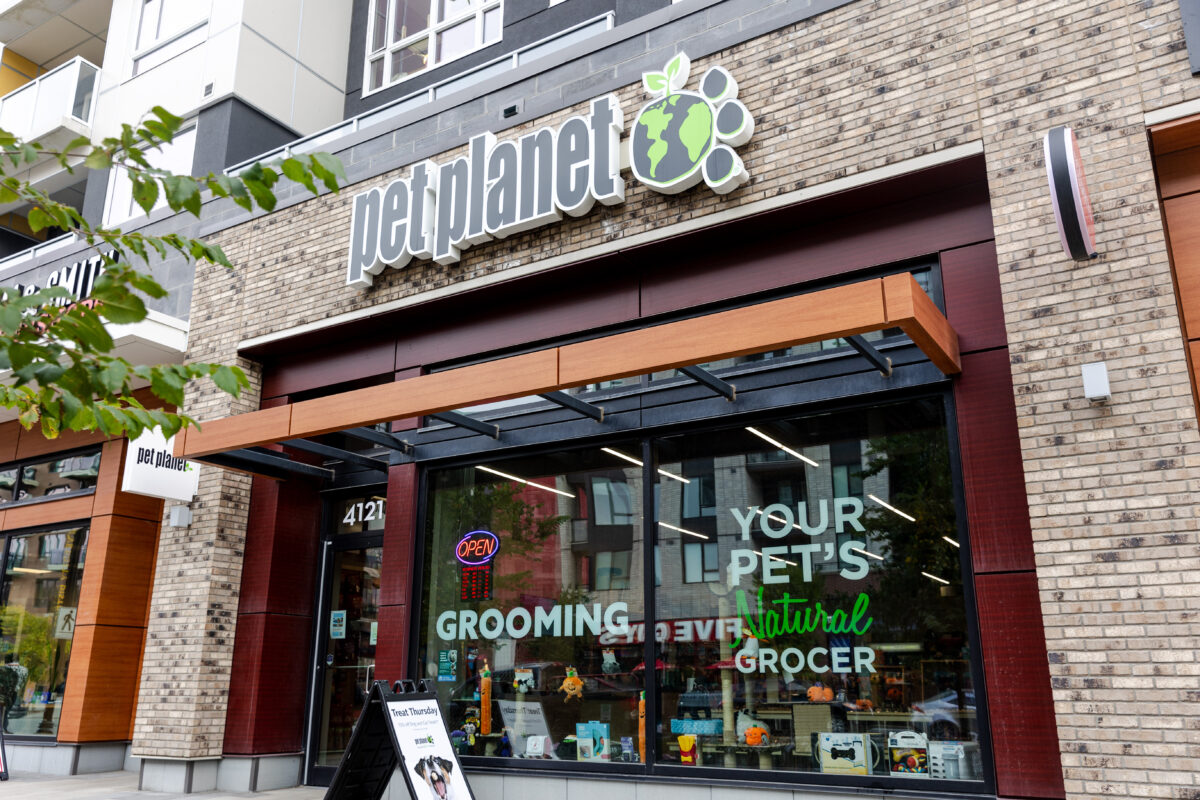
- Pet Planet: Alberta-based franchise with 43+ locations and a health-oriented product focus.
- PetParker: A newer model offering app-based secure hospitality lockers for pets, expanding in grocery and urban nodes.
Independent & Boutique Retailers
- Fit Factory Pets: A lifestyle extension of the boutique fitness brand, positioning pets within health-forward consumer habits.

Notable Financial Trends for Pet Retail in Canada
Among Canada’s publicly traded pet retailers, Pet Valu remains the dominant force. In 2025, the company forecasted annual revenues between $1.17 and $1.20 billion, with adjusted EBITDA projected at $254 to $260 million. These figures highlight strong year-over-year performance and a continued focus on growth through store expansion and exclusive product lines.
While other major players like PetSmart operate under private ownership in Canada, industry-wide trends suggest strong profitability across the board. Despite a broader consumer spending pullback in Canada, 76% of pet owners surveyed planned to increase spending on food and accessories—the highest rate seen in eight consecutive quarterly studies.
Overall, the financial health of pet retail in Canada has remained resilient, with consumer prioritization of pet well-being insulating the sector from broader inflationary and economic pressures.

Trends for “Pet Retail” Industry in Canada
- Humanization of Pets: Pet owners treat pets as family, driving demand for lifestyle and wellness products.
- Premium Health & Nutrition: Demand for high-quality, Canadian-made, and functional foods continues to rise.
- Eco-Conscious Consumption: Products with biodegradable packaging and sustainably sourced materials are trending.
- Digital Expansion: Online sales, mobile app ordering, and subscription models are growing.
- Smart Technology: Consumers are adopting health-tracking devices, smart feeders, and AI-based pet services.
- Omnichannel Experience: Physical store traffic is up, especially for trusted service and local product guidance.
- Loyalty to Local: Canadian consumers are increasingly supporting homegrown brands and retailers.
Industry Opinions
- Richard Maltsbarger, CEO, Pet Valu: “We’ve seen a significant shift in consumer behavior, with pet owners increasingly seeking premium, health-focused products for their pets.”
- Bruce Winder, Retail Analyst: “The pet retail sector in Canada is experiencing robust growth, driven by the humanization of pets and the increasing willingness of consumers to spend on high-quality pet products and services.”
- George Minakakis, CEO, Inception Retail Group: “The integration of technology in pet retail, from online shopping platforms to smart pet devices, is transforming the industry. Retailers embracing these innovations are not only enhancing customer experience but also driving sales growth.”
Industry Associations’ Perspectives
Industry associations provide a broader perspective on the fitness studio retail sector, highlighting ongoing trends and key challenges.
- Pets Canada (Pet Industry Joint Advisory Council) has noted a sustained increase in pet ownership across Canada. The organization credits this growth to emotional wellness trends, shifting family dynamics, and the integration of pets into daily life and routines.
- Pet Industry Distributors Association (PIDA) emphasizes the need for agility in product development and retail strategies, recommending that Canadian retailers double down on personalization, transparency, and category expansion to remain competitive.
Reports, Studies and White Papers
- Leger (2025): Ranked Ren’s Pets and Global Pet Foods among the top in-store experiences across Canadian retail, citing high levels of consumer satisfaction and localized service.
- Pet Valu Financial Report (2025): Pet Valu’s 2024 performance was labeled a “dynamic year,” with robust growth in both earnings and category penetration.
- PIJAC Canada Consumer Insights Report (2024): The report identified post-pandemic growth in pet ownership and noted increased consumer expectations around pet nutrition, service accessibility, and sustainability.
- Euromonitor International – Pet Care in Canada (2024): The report forecasted continued growth in Canadian pet care spending through 2027, driven by premiumization, innovation, and aging pet populations.
- CMHC Urban Pet Ownership Study (2023): Canada Mortgage and Housing Corporation identified in their Fall 2024 Rental Market Report that pet ownership as a rising factor in urban rental preferences, impacting building design and retail amenities.
Retail Insider’s Opinion
Retail Insider believes that Pet Retail in Canada is positioned for long-term growth and category expansion. While inflationary pressure and economic uncertainty may impact discretionary spend in other areas, pets remain a high-priority focus for Canadian households. Emerging opportunities in digital retail, sustainability, and health-driven innovation continue to reshape the industry’s future.
The Impact on Canada
Pet retail influences a wide range of Canadian economic sectors—from agriculture and supply chain logistics to technology and health services. It’s becoming a defining category for neighborhood retail, especially in urban communities where foot traffic and community services are converging. Continued innovation and alignment with wellness, sustainability, and emotional value will ensure its growth trajectory well into the future.
- Emotional Resilience: Pet retail spending remains one of the most emotionally anchored forms of discretionary spending in Canada. Regardless of income level, Canadians are inclined to prioritize pet care, often placing pet needs on par with family necessities.
- Socioeconomic Inclusivity: Unlike luxury goods, pet retail crosses all income brackets. Essential categories like food, grooming, and basic health are consistent across demographics, making the industry broadly impactful.
- Retail Differentiation: Pet retail is becoming a point of differentiation for grocery, pharmacy, and lifestyle retailers seeking to increase traffic and loyalty by appealing to emotionally engaged consumers.
- Urban Integration: As more Canadians live in multi-family dwellings, demand is growing for urban-format pet services, micro-retail, and pet hospitality innovations, helping shape the evolution of convenience retail in cities.
The Pet Retail segment is at a pivotal moment, and its continued success will depend on how well retailers respond to evolving consumer values while delivering value through innovation, personalization, and community connection.