Lessons From UNIQLO: 10 Steps for Canadian Retailers to Generate $2,000+ per Square Foot

Date:

Share post:

By J.C. Williams Group

On a recent trip to New York we ventured off Fifth Avenue, Madison Avenue, and Soho – to Brooklyn and the Atlantic Terminal Mall on Flatbush Avenue — not exactly the haute couture centre of the City.

There on the second floor was a Uniqlo store, opened in October of 2013, which was nowhere near as “jazzy” as its Fifth Avenue or Soho older brothers’ (or sisters’) stores. But look beyond all the fancy Christmas stuff of the Manhattan store and you’ll observe a lean-mean-merchandising-machine. This store has to be pushing $2,000 per square foot. And here is why.

1) Choose a Solid Location with Strong Adjacent Tenants: Co-anchor tenants include Target (not a Canadian version), Burlington Coat Factory, DSW Designer Shoe Warehouse, Victoria’s Secret, and 25 national specialty chains. These are located at a major transit junction in central Brooklyn, so lots of shopper traffic.
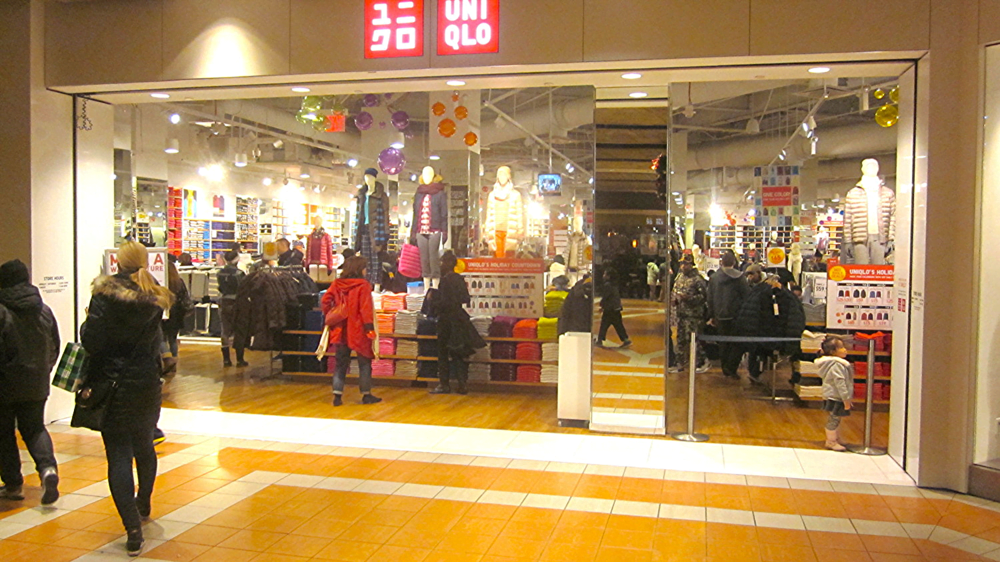
UNIQLO (Image: JC Williams Group)

2) Straight Forward Messages are Best: Shoppers are in a hurry, often confused or conflicted, and need simple choices. Make sure your “theme” messages are easy to comprehend and react to.

3) The Front 10 Feet Pays the Rent: The “front and forward” space productivity should be three to four times the rest of the store. You cannot generate sensational sales revenue with an artsy-fartsy display or minimal intensity. Good retailers know and practice this. They load up the front with best sellers.

Just look at Uniqlo’s displays with:
1. Sales associates beside each one
2. Bright, colourful product
3. In depth assortment
4. Fantastic prices on cashmere women’s and men’s sweaters! $59.90

4) Backup Feature Item In-depth: Part of Uniqlo’s success is single-focused promotional items featured in limited ranges (huge buying clout). Winter jackets were in big demand at $59.90 and $29.90.

5) In-depth Merchandise Sends a “These Items are Important” Message: “If they have that much of this item – it must be important and popular” is what these walls convey.

6) End-aisles are Great for Add-on Sales of Smaller Accessories: Building high productivity is done using many different merchandising techniques. Every one has to be used. 
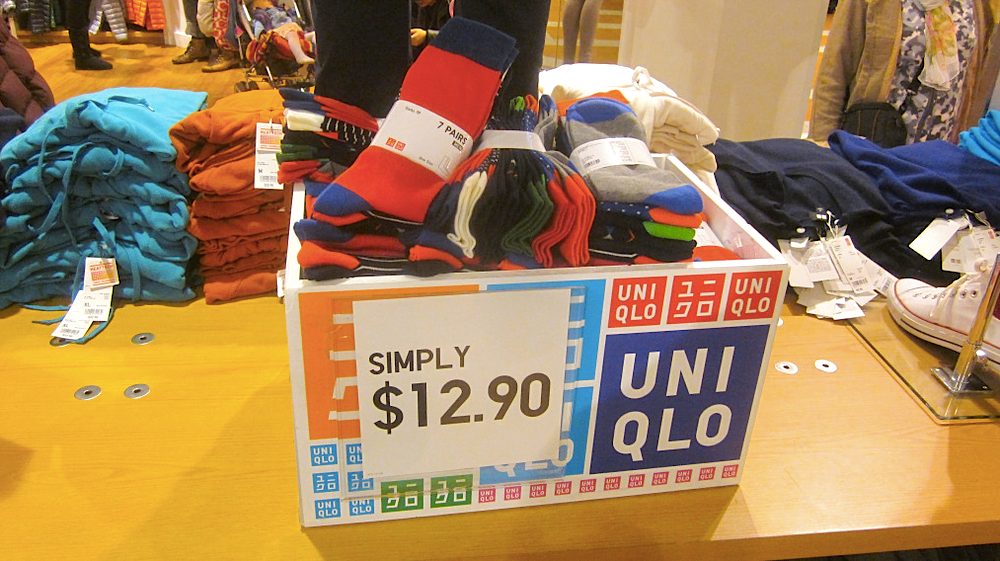
UNIQLO (Image: JC Williams Group)

7) Make the Store a Merchandising Machine with Lots of Impulse Items: Your store gets to $2,000 a square foot by using every space and idea.

8) What is Your Inventory per Square Foot? All retailers should use this metric to analyse sales trends in departments and classifications. Uniqlo does not shy away from “using the cube” to showcase assortments and build productivity. All these pictured items have in-depth backup right on the fixture.

9) An Efficient Check-out is Essential: While Uniqlo had long lines at the service desk, they moved quickly.

10) Lots of Team Members: While almost hidden in the crush of shoppers, there were dozens of uniformed (all in black) staff continuously re-stocking and straightening inventory. This store was managed in an obviously organized and disciplined manner.

Conclusion: Uniqlo’s unique value position is re-enforced by the simplicity of its visual presentation, the commitment to inventory depth, and the efficiency of the shopping experience.

J.C. Williams Group is a well-known, full-service retail and marketing consulting firm. It offers clients practical, creative, and in-depth knowledge of retailing and marketing, including up-to-date know-how and techniques to make retail operations better and more profitable. You can also read their informative blog, Retaileye, here: retaileye.wordpress.com.   

2 COMMENTS

  1. Uniqlo is basically Old Navy but without the fun commercials- waaay too much cheap product in too many color options with styles that never change year after year. If this is the benchmark of good retailing then we are all doomed.

  2. Yeah but the stuff doesn’t fall apart as fast as Old Navy does, and their coats will last years of use through many a harsh winter. The Japanese just do it better.

Comments are closed.

RELATED ARTICLES

Subscribe to the Newsletter

Subscribe

* indicates required

RECENT articles

Slate Grocery REIT agrees to US $2.3 billion buyout

The transaction is expected to close in the first quarter of 2027. All-cash transaction of US $13 per unit

Sports Experts Unveils $8M CF Carrefour Laval Flagship

Sports Experts has invested about $8 million to transform its 45,000-square-foot CF Carrefour Laval flagship, with early sales exceeding forecasts.

Celebrity Chef Stefano Faita opening Toronto’s first Bring-Your-Own-Pasta restaurant

BYOPasta exclusively serves Stefano Faita’s signature sauces and turns leftover pasta into a restaurant-quality dish, leaving the pasta up to guests.

Calgary AI Startup StoriBot Targets Retail With ‘Narrative Intelligence’ Platform

Calgary-based AI startup StoriBot is targeting automotive, grocery and other retail sectors with its Narrative Intelligence platform as it builds enterprise adoption.

Sunterra closes another of its Market locations

In May, Sunterra closed down its downtown Edmonton location on Jasper Avenue after three decades in business.

CF Fairview Pointe Claire Launches The B!G TV: A 27-Foot Retro Experience

Until November 9, CF Fairview Pointe Claire brings the West Island community together with nostalgia-packed giant screen gaming, free movie nights, and daily surprises.

Donatella Versace and REVOLVE launch joint venture focused on beauty and fashion

The new business will combine Donatella's creative direction and cultural influence with REVOLVE’s digital commerce platform, technology, consumer intelligence and operating capabilities.

Tourism spending on the rise: Statistics Canada

Tourism GDP accounted for 1.77% of nominal GDP in the second quarter, virtually unchanged from the first quarter.

Pharmacy Brands Canada Grows to more than 300 Locations in Canada

PBC's growth has accelerated across the country, with particularly strong expansion in Ontario, where the network has added more than 50 locations over the past two years.

From The Desk: Retailers adapt formats and expansion amid labour, cost and consumer shifts

Canadian retailers adjust store formats and expansion amid labour challenges, cost pressures and uneven spending, balancing growth with operational control.

Daily Synopsis: September 25, 2026

Competition Bureau seeks info on grocers in new wave, Marc Giroux steps in as CEO of Metro Inc., Pokemon thefts rise, Starbucks closing some Canadian locations, ABC Books shutting on Yonge St. in Toronto, and other news.

Aritzia’s Store Network Has Shifted South as U.S. Expansion Accelerates

Aritzia now operates more boutiques in the United States than in Canada as the Vancouver-founded retailer directs most new-store growth south of the border. Its mature Canadian network offers a useful template for the company’s push toward a potential 180-to-200-store U.S. footprint.

Starbucks undertakes massive refresh of North American locations and closing 250 stores

A refresh of Starbucks cafés is designed to bring customers back to what they love most about the coffeehouse: great coffee, craft, connection, and community.

Tommy Gun’s Original Barbershop has ambitious growth plans in Canada and internationally

Tommy Gun’s CEO Keenan Fisher discusses the Canadian barbershop brand’s growth, franchising strategy and plans for 80-plus new locations worldwide.

MEC to Open Small-Format Whistler Store as Retailer Tests New Concept

MEC will open a 2,200-square-foot store in Whistler Village, testing a smaller retail format backed by curated inventory and its broader online assortment.

Lavazza Targets Canadian Growth as It Moves to Double North American Business by 2028

Lavazza is expanding its Canadian presence as part of a strategy to more than double its North American business by 2028, with growth opportunities in distribution, Western Canada and experiential marketing.

Guac Mexi Grill Marks 10 Years With 56 Locations, Eyes U.S. Expansion

Oakville-based Guac Mexi Grill is marking its 10th anniversary with 56 Canadian locations and plans to add 10 to 15 restaurants annually while expanding into the U.S. and India.

Rawcology Founder Tara Tomulka turns personal health journey into growing plant-based food business

Rawcology has grown from a nutrition blog into a food brand offering organic, low-sugar products, with founder Tara Tomulka eyeing further growth in Canada and international markets.

AI transforming retail pricing, from dynamic discounts to personalized offers

McGill professor Maxime Cohen examines how artificial intelligence could reshape retail pricing, customer discounts, fairness and the future of AI-driven commerce.

Retailers face growing trust challenge as AI reshapes customer personalization

Amperity co-founder Derek Slager explains why accurate customer data, privacy, transparency and governance are becoming critical as retailers expand AI-powered shopping experiences.