

By Éric Blais
Bill 96 represents a labyrinth of regulations for businesses in Québec that operate under non-French trademarks—especially burdensome and bewildering for retailers with exterior signage.
The Retail Council of Canada has been voicing concerns about the cost of updating signs which it says the government grossly underestimated. The Office of the United States Trade Representative has also voiced its concerns about trademark provisions of Bill 96. This prompted the Bloc Québécois’ leader to write to Secretary of State Antony Blinken that “as the only French jurisdiction in North America, Quebec has a duty to ensure the continued existence of the French language on the continent and the cultural expressions it carries with it.”
Not surprisingly, this prompted federal Liberal Minister Pablo Rodriguez to add that “The Americans, when they go to Mexico, they post (signage) in Spanish, when they go to Argentina, they post in Spanish. When they go around the world they adapt. They are able to adapt. Here, they’ll adapt in French.”
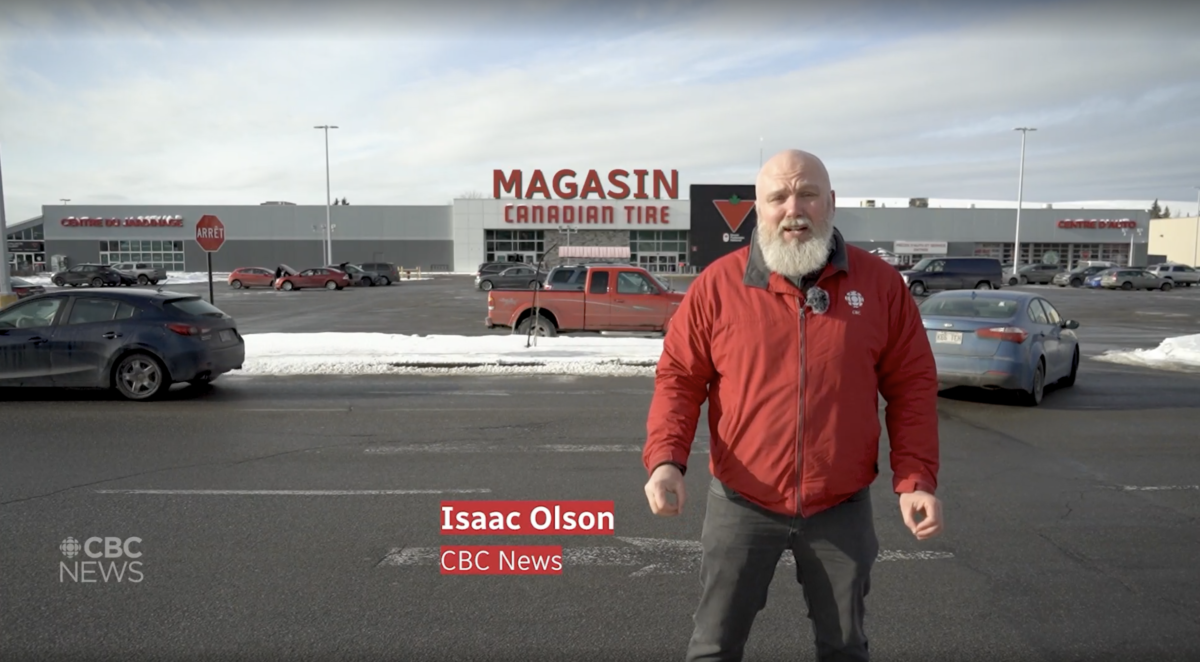
Far from defending the law, I seek to illuminate the recently released regulations and suggest that there might actually be an opportunity for brand building in this troublesome law.
Anyone watching the CBC’s Isaac Olson’s segment last month about Quebec’s new French-language sign rules would have been scratching their head.
In a nutshell, the new draft regulation, published in Quebec’s Official Gazette on Jan. 10 requires non-French trademarks to be accompanied by French descriptions that are twice the size. This makes for a clever creative opening to Olson’s story on video.
He goes on to show images of store fronts with the same French descriptor plastered all over.
Again, it’s ridiculous.
He rightly refers to the guide recently provided by the government showing how the two options: a descriptor twice as large as the non-French trademark, or a bunch of descriptors which, together, take twice as much space as the non-French trademark.
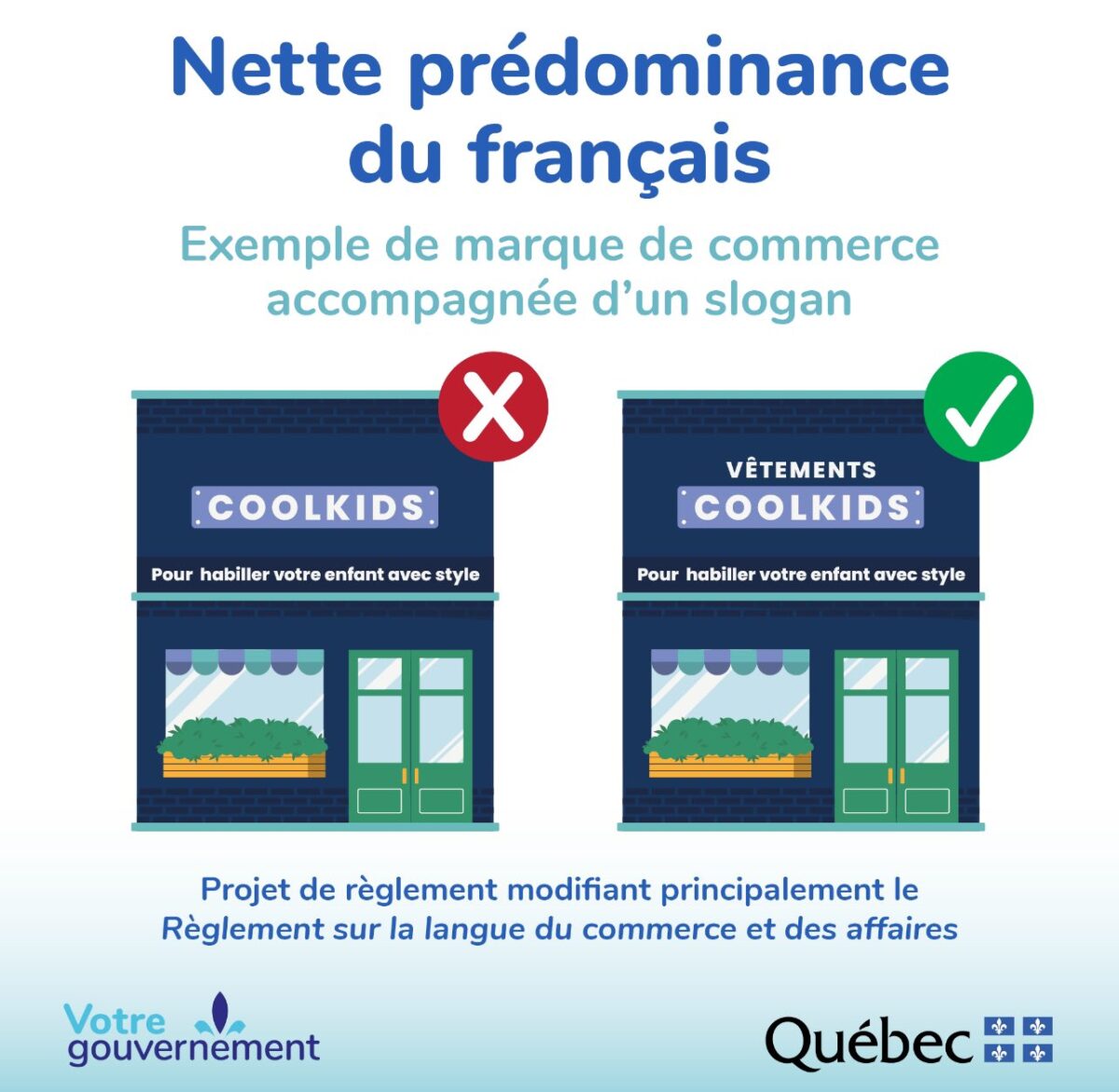
“Basically, stores with non-French names need to add French descriptions that are twice as large as the name itself,” said Olson. “The provincial government produced this document to help businesses understand. It showed two options: a larger description above the store name, or add a bunch of descriptive words that take up twice the space of the name.”
The complexity of compliance is daunting, potentially involving costly investments in new signage and hoping for the best until an OQLF inspector arrives with a ruler in hand.
Yet, let’s not overlook the potential for brand enhancement here.
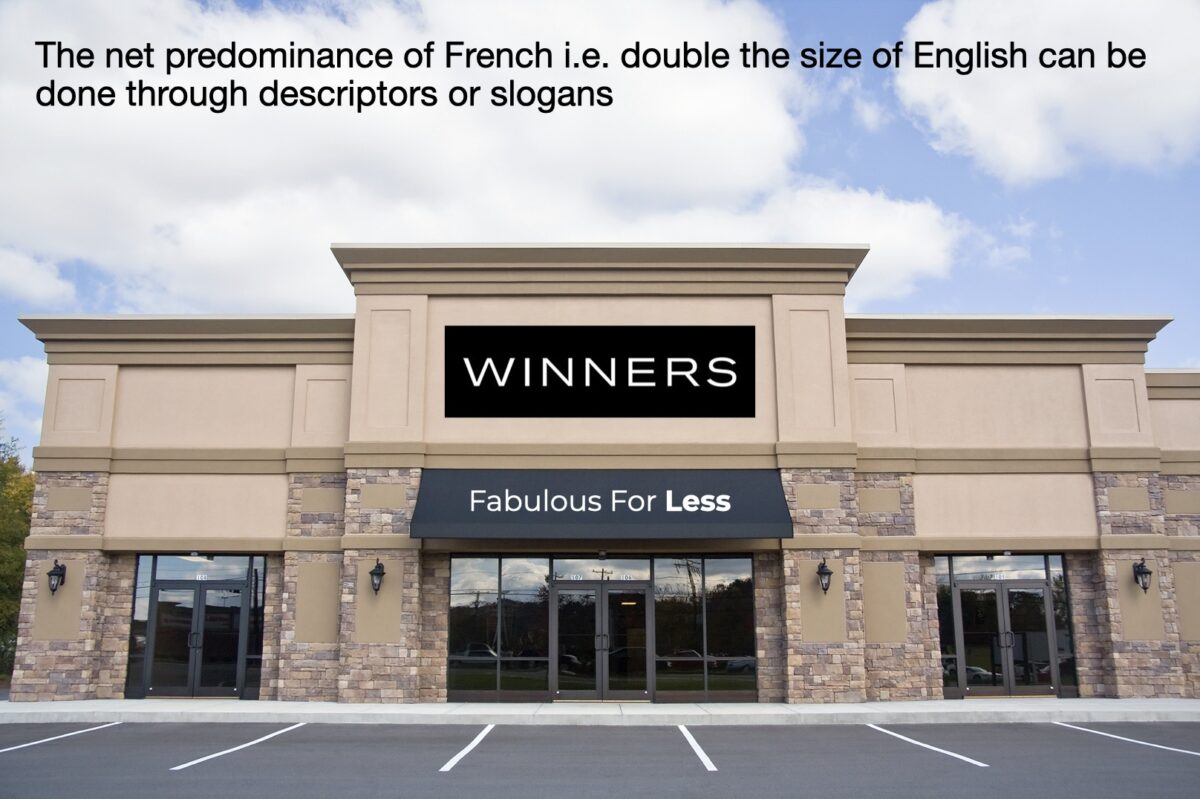
In his segment, Isaac Olson says there are two options. In fact, there is a third option: adding a slogan to the non-French trademark and its descriptor and ensuring that the space used by French words is twice the size of the non-French trademark.
Consider Winners, for instance.
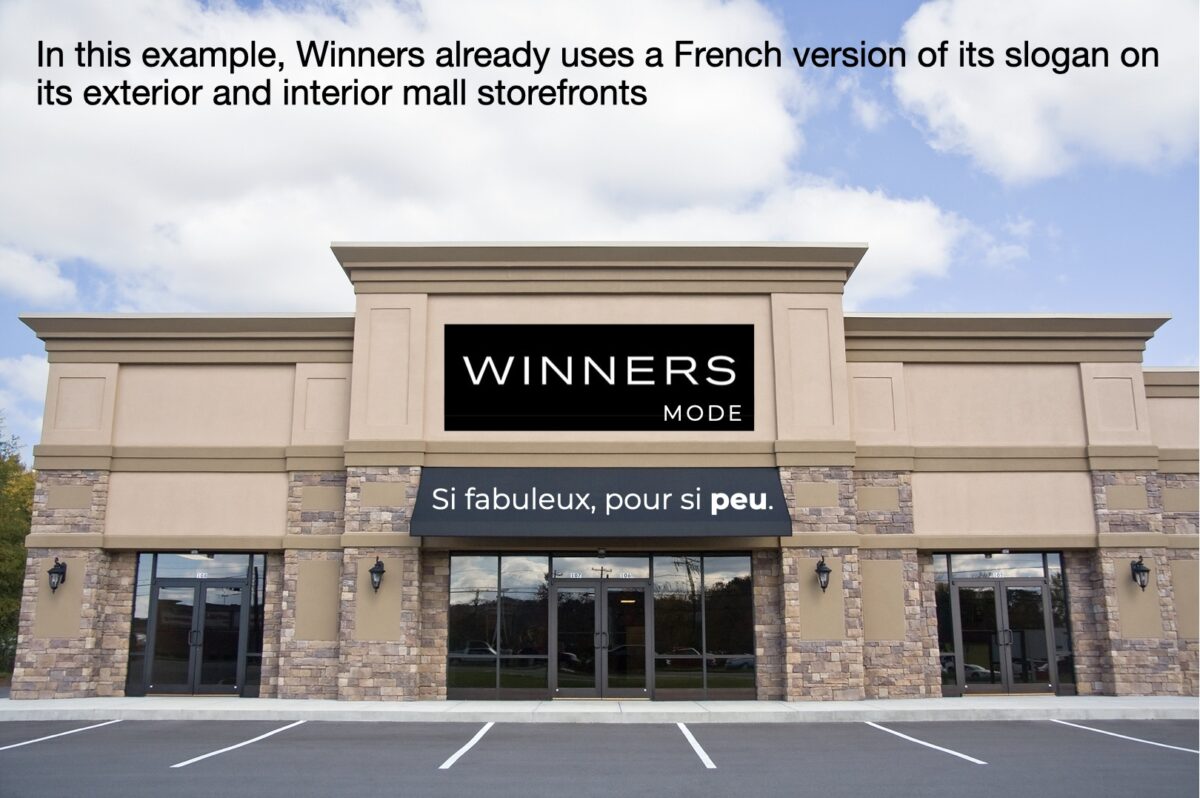
Previously, Winners adhered to the law by adding the descriptor MODE to its signage. Others, like Burger King, added the words “Les restaurants”.
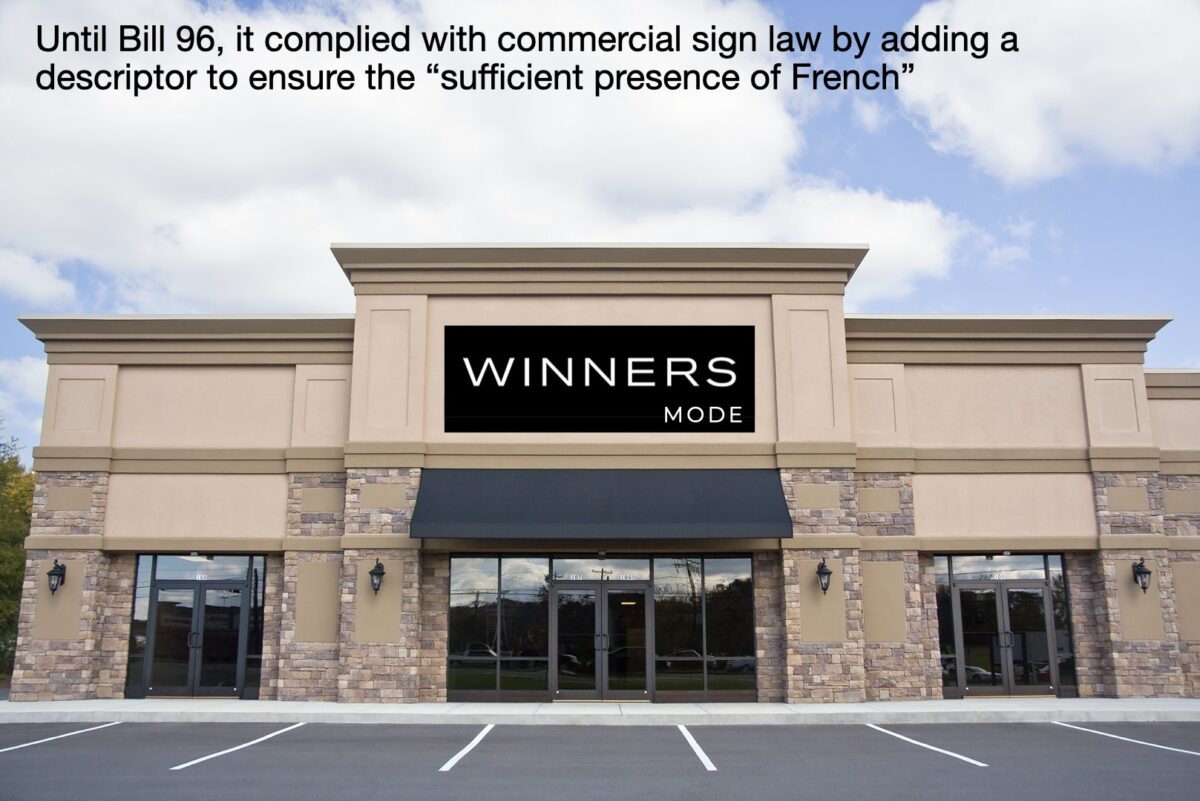
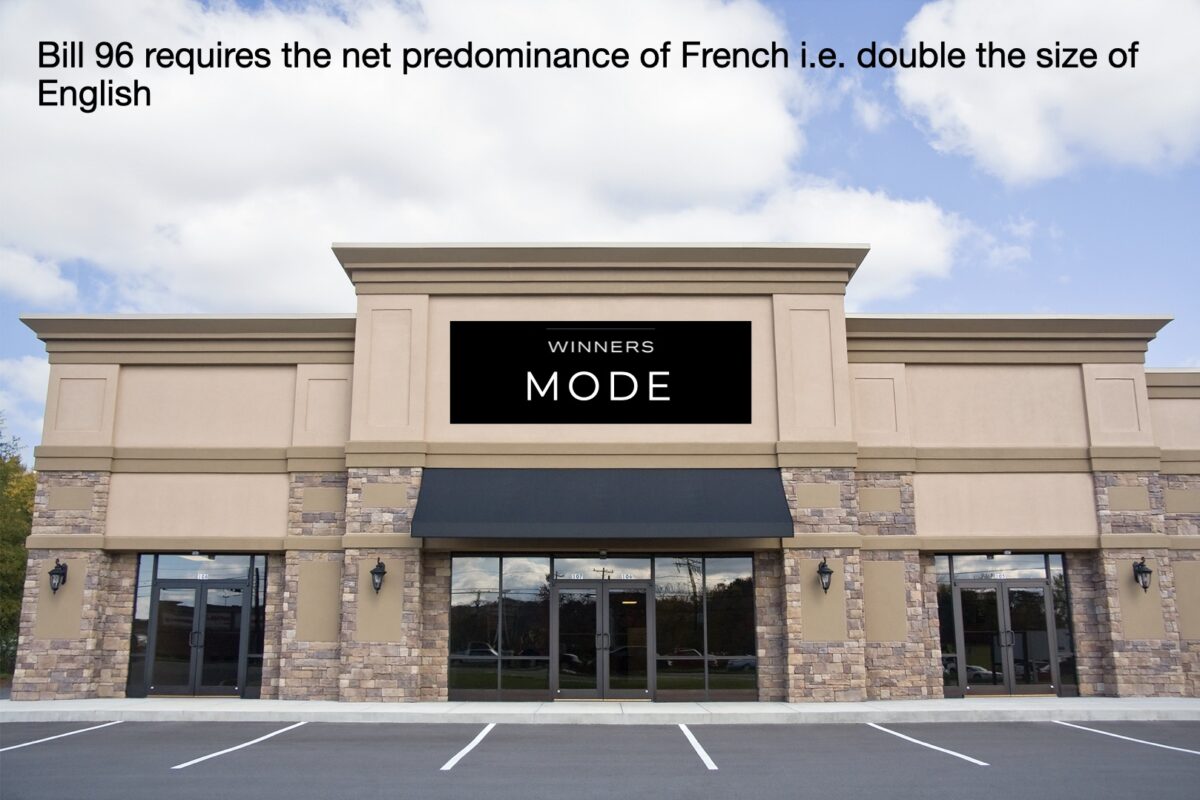
Now, under the new stipulations, MODE would need to be twice the size of its non-French trademark—a challenging prospect amidst the crowded signage landscape of Quartier DIX30.
However, many Winners locations across English and French Canada feature their slogan on their storefronts—a practice common among retailers. In most cases, it’s unlikely to be enough to comply if the total space used by the descriptor and the slogan isn’t twice the space used by the non-French trademark. But if you add it elsewhere, it should.
Admittedly, my outlook may be considered pollyannaish, but incorporating a business’s value proposition into its storefront can distinguish a brand from its rivals and reinforce customer loyalty—especially when price wars tempt them elsewhere.
A slogan isn’t merely descriptive—it’s the essence of a brand. It can define: “There is a lot more to Canadian Tire than tires,” promise value: “Where the lowest price is the law,” encapsulate an experience: “Glasses in less than an hour,” or even pose a challenge: “Why buy a mattress anywhere else?”
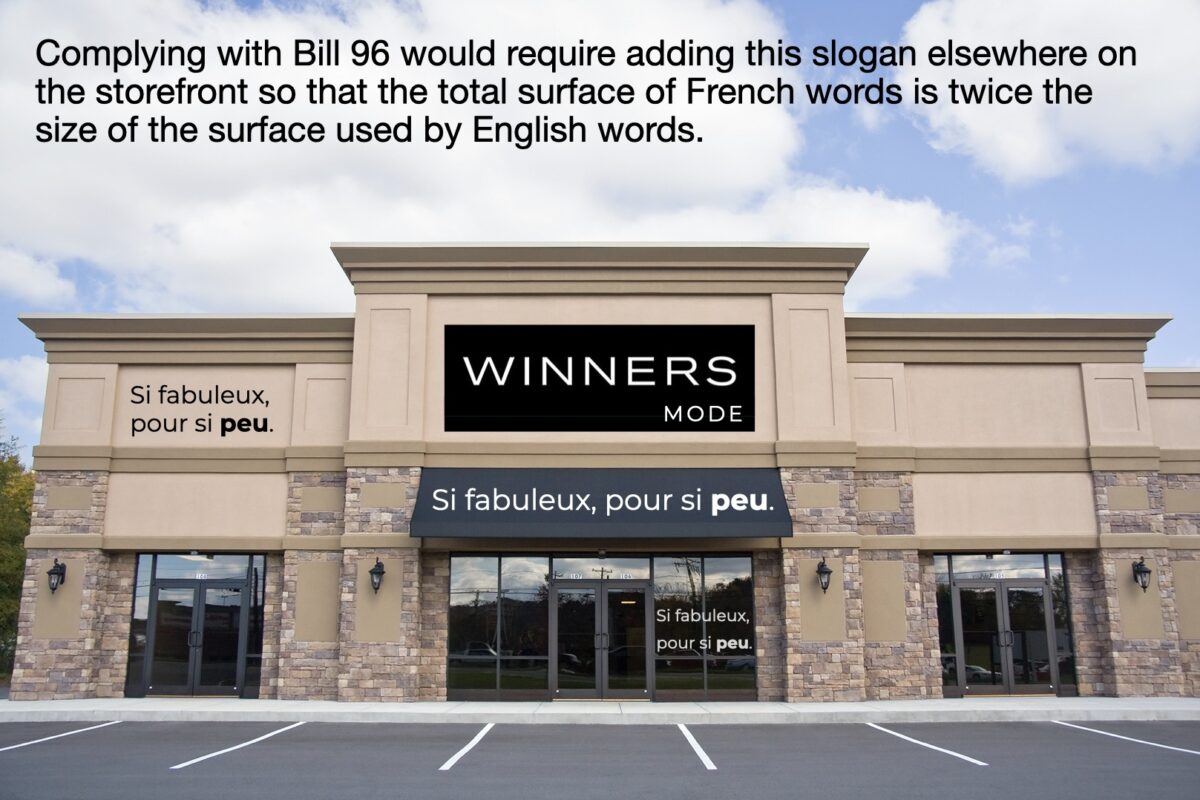
I’m not minimizing the impact of the law; the forced expense of updating and adding signage is substantial. However, like any form of advertising, exterior signage is an investment in brand equity and a lure for foot traffic.
When Home Hardware rolled out its slogan “Here’s How” in 2017, it embraced the French “Savoir. Faire.”—a clever play on words for “know-how” and the verbs know and do. “‘Here’s How’ is more than just a tagline, it is a cultural reflection of our company,” explained Rick McNabb, vice-president of marketing and sales. “It captures everything that makes Home Hardware unique”.
Home Hardware and other retailers should make lemonade from Bill 96’s lemons and proudly display their slogans permanently on their storefronts across Québec.
[This opinion is based on a review of the draft rules provided by the Quebec government and interpretations by various law firms. Retailers (and marketers) looking to navigate these waters should consider turning their legal counsel sessions into collaborative, creative branding opportunities.]

Éric Blais is President of Headspace Marketing – a Toronto-based marketing-communications consultancy helping clients build their brands in Québec.
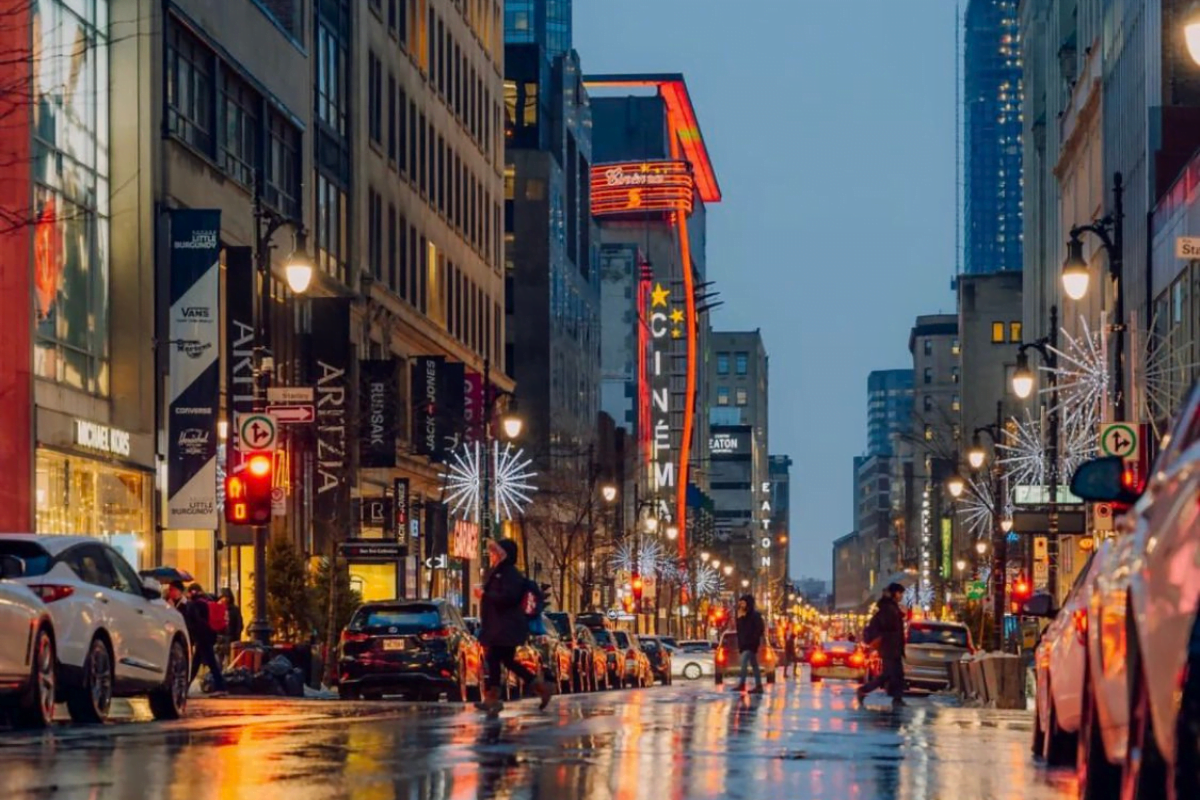
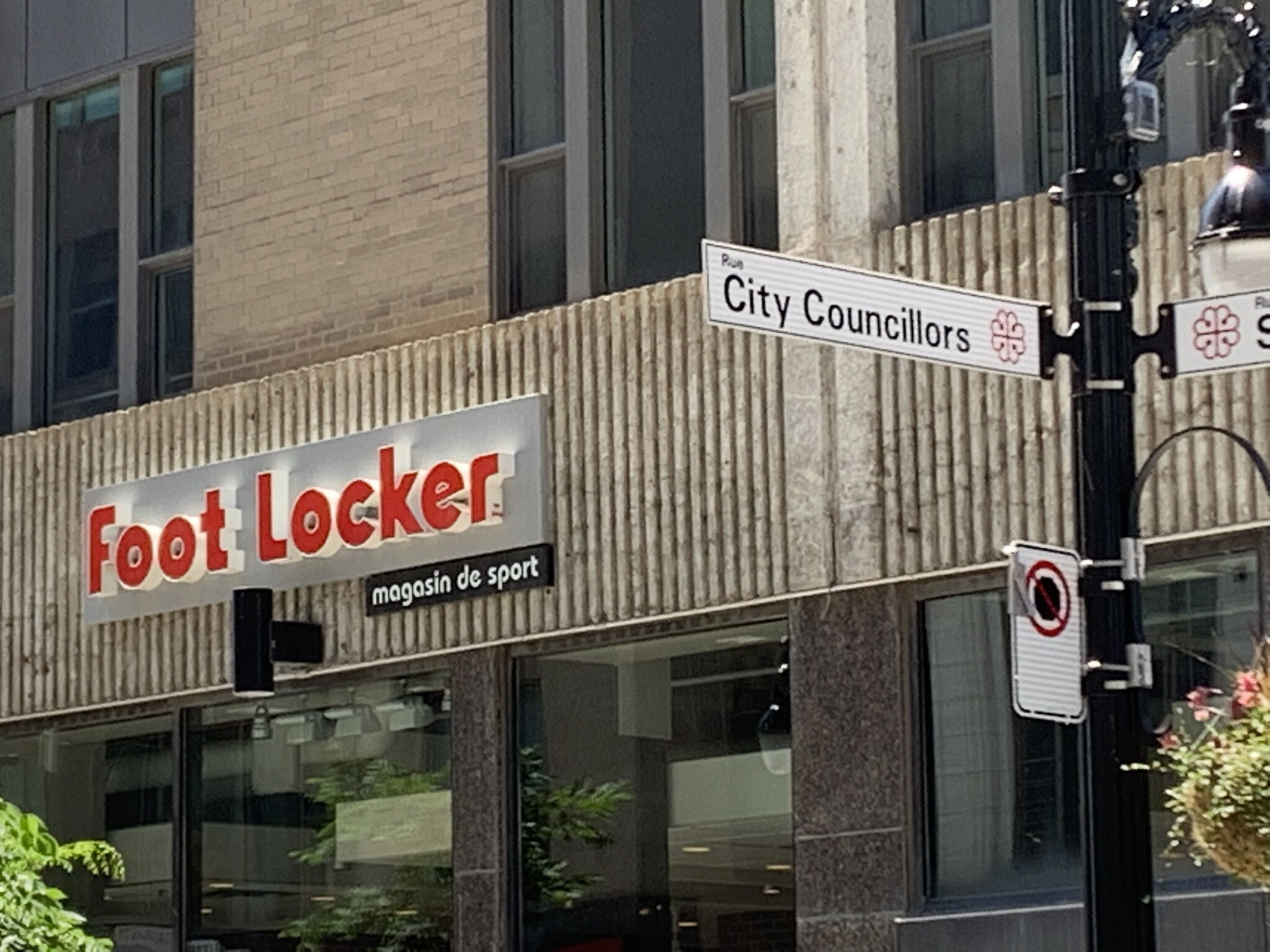


Somewhere, in their bright and shiny office, a Staples exec is really happy to have kept Bureau en Gros as its name for Quebec all those years ago, when it was fashionable to ditch french adaptations (like Footlocker’s Vestiaire Sportif brand that was abandoned 30 something years ago).
So much money saved!
Most shopping centers and all municipalities have size regulations for signage. This means adding descriptive text and having it twice as large as the trademark logo in the same limited space would make the trade mark tiny and non feasible. It’s an underhanded way for the provincial government to force retailers with English trade marks to change them to French.