UNIQLO reopened its renovated Montreal Eaton Centre flagship last week, adding customization, embroidery and repair services to the downtown store as the Japanese retailer continues expanding across Canada.
The investment comes six years after UNIQLO entered Quebec at Montreal Eaton Centre. The renovation includes upgraded fitting rooms and sales floors, new lighting, mannequins and digital screens, while the more significant changes involve what customers can now do in the store.
For the first time in Quebec, the location offers UTme!, UNIQLO’s in-store customization service for T-shirts and canvas totes. The Montreal version includes designs associated with local businesses and creators including September Cafe, Bossa, Le Petit Dep and Paperole.
The store has also added a RE.UNIQLO Studio providing embroidery and repairs. Customers can personalize merchandise with initials and Montreal-themed designs, while existing LifeWear products can be brought in for repair.
Those additions matter because the Montreal investment is happening while UNIQLO is still adding conventional retail coverage across Canada. The company is increasing the number of stores it operates while broadening the role of some of its most established locations.
Canadian Store Expansion Continues
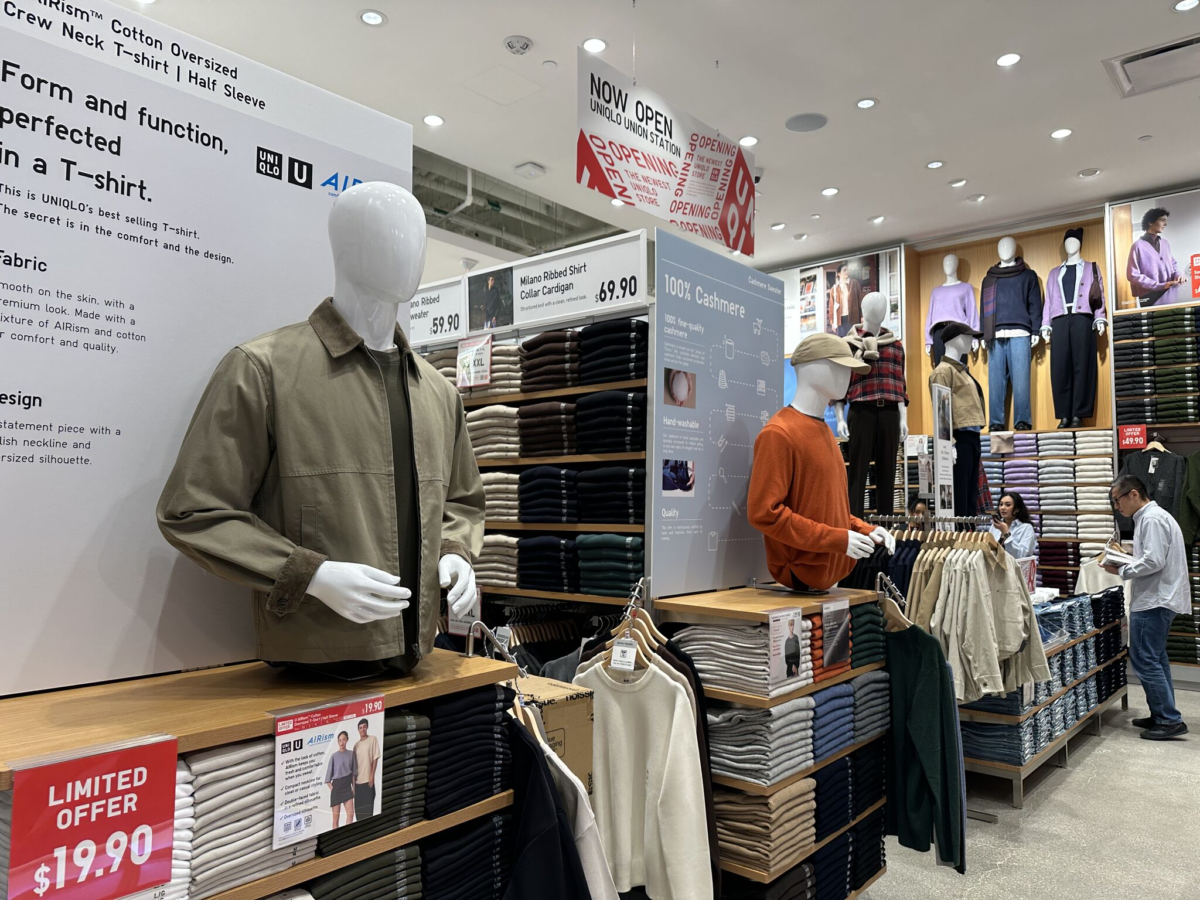
UNIQLO says it now operates 39 stores in Canada, part of a global network of more than 2,500 locations.
Its Canadian opening pipeline remains active. St. Vital Centre in Winnipeg and Quartier DIX30 in Brossard are among the retailer’s recent openings, while Tsawwassen Mills in British Columbia, Hillcrest Mall in Richmond Hill and Conestoga Mall in Waterloo are part of the next wave of expansion. Retail Insider previously reported UNIQLO’s plans for five Canadian openings in fall 2026.
Retail Insider has also learned that UNIQLO is expected to open at St. Laurent Centre in Ottawa. That location has not been publicly announced by the retailer.
Jeff Berkowitz of Montreal-based Aurora Retail Group represents UNIQLO as its broker in Canada and has worked on the retailer’s Canadian real estate expansion. Retail Insider has previously reported Berkowitz’s role negotiating UNIQLO store leases in the country.
The continuing rollout changes the context around Montreal Eaton Centre. UNIQLO is reinvesting in an established downtown store while continuing to add locations in both existing and newer markets.
New stores increase geographic coverage. A flagship equipped with customization and repair services can also support functions that a standard apparel location may not need to carry.
Montreal Remains an Important Quebec Store
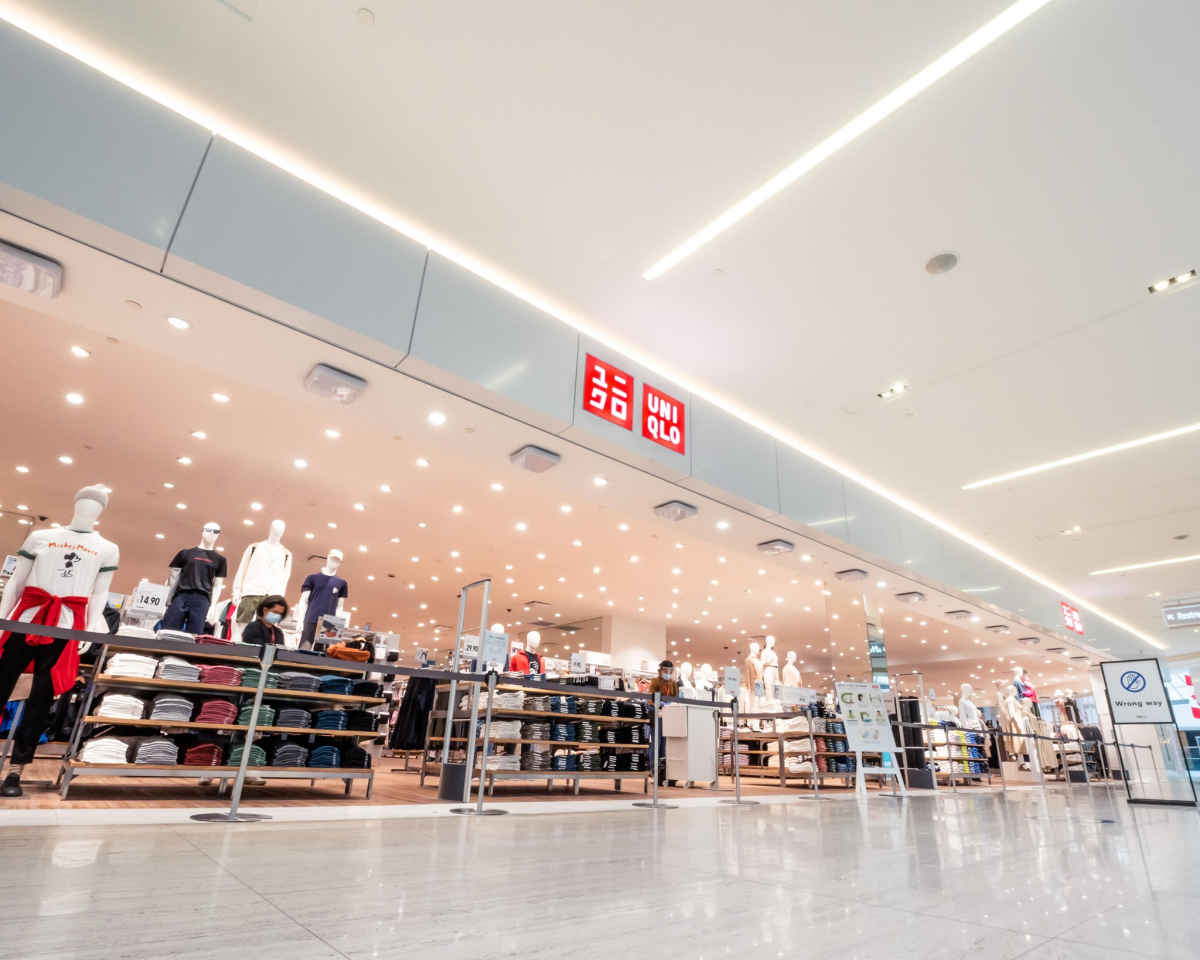
The Montreal Eaton Centre location has occupied a particular place in UNIQLO’s Canadian network since opening in October 2020 as the retailer’s first Quebec store.
At opening, the two-level flagship contained approximately 32,000 square feet of selling space within premises spanning more than 40,000 square feet, with frontage at Ste-Catherine Street West and Robert-Bourassa Boulevard.
UNIQLO has since expanded further into Quebec, including the recently opened Quartier DIX30 store in Brossard.
That puts the Montreal Eaton Centre renovation in a useful real estate context. Suburban expansion has not removed the rationale for investing in a large downtown location. The stores can serve different purposes within the same market.
A suburban store can improve convenience and market coverage. A large downtown flagship can support wider assortments, services and brand-building functions that require more space, staffing or customer traffic.
Montreal is also not being used to test customization and repair concepts from scratch. UNIQLO has deployed versions of these services at selected Canadian stores, making the Montreal renovation an extension of a developing flagship-service model into Quebec.
Global Merchandise, Local Store Experience
The more interesting part of the Montreal renovation is how UNIQLO is adding local character to a retail model built largely around product consistency.
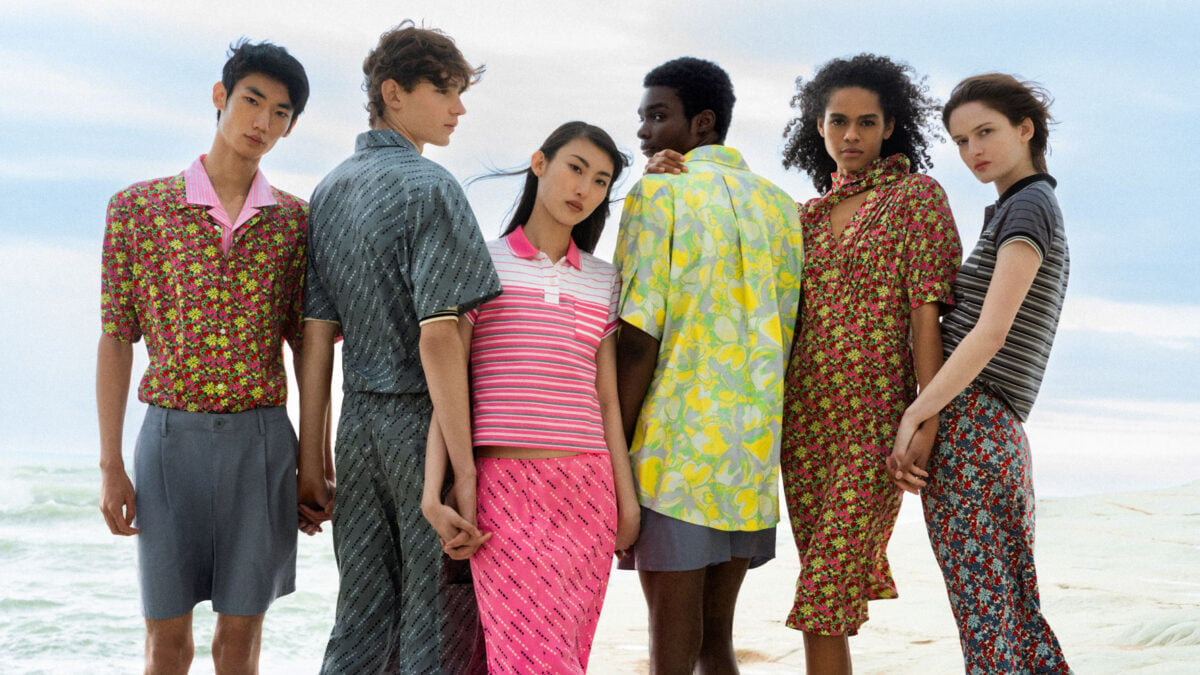
LifeWear is deliberately standardized. UNIQLO describes it as simple, high-quality everyday clothing designed around practicality, comfort and longevity.
The Montreal flagship does not need a separate Quebec assortment to feel tied to the city. The localization is happening around the merchandise.
Customers can create products using designs connected with local businesses. Montreal-themed embroidery is available through RE.UNIQLO. The reopening also included food from Bossa, coffee from Le Petit Dep and a commemorative UNIQLO x Paperole tote.
That gives UNIQLO a relatively efficient way to localize. The core apparel platform can remain consistent across markets while selected stores layer in local graphics, partners and services.
For an international retailer, that is commercially useful. Local adaptation becomes part of the store experience without requiring a fundamentally different merchandising strategy in every city.
Repair Gives the Store Another Function
RE.UNIQLO adds another layer to the economics of the physical store.
Most apparel store visits are tied to acquisition: browsing, fitting and purchasing. A repair service creates a reason for a customer to return after a garment has already been bought.
UNIQLO says the Montreal studio repairs LifeWear products and provides embroidery on items including T-shirts, sweatshirts and tote bags. The service aligns with the company’s broader emphasis on product longevity.
There is no public evidence in the Montreal announcement showing how much traffic, revenue or customer retention these services generate. Claims that repair or customization materially improve store productivity would therefore run ahead of the available numbers.
What can be said is simpler: these services give the store utility beyond holding inventory.
The resulting flagship can perform several jobs at once, selling products, providing services and acting as a physical expression of the brand.
Different Stores Can Do Different Jobs
As UNIQLO’s Canadian footprint grows, there is little reason every location needs to carry the same operational burden. Standard stores can extend geographic coverage. Larger locations can support broader assortments. Selected flagships can justify services and customer-facing functions that are harder to deploy everywhere.
For landlords, particularly owners of major downtown properties, that matters because large-format apparel space has to earn its keep. A tenant using a flagship for customization, repairs and brand activity has more reasons to maintain a significant physical presence than one using the same square footage mainly to hold merchandise.
Montreal also demonstrates a relatively clean way for an international retailer to localize without complicating its core business unnecessarily. UNIQLO is keeping LifeWear at the centre of the proposition while altering the services, collaborations and cultural references surrounding it.
Its Canadian footprint is still expanding. The renovation at Montreal Eaton Centre shows that store count is only one measure of that growth. UNIQLO is also deciding what its most important existing stores should be able to do.