The Canada Post strike, which began on November 15, 2024, has sent shockwaves through the Canadian retail industry, leaving small businesses struggling to adapt as the holiday season approaches. For many independent retailers, the timing of the strike is particularly catastrophic, as December represents a significant portion of their annual revenue.
Retailers across Canada, particularly those in rural or remote areas, are reporting drastic declines in sales, rising costs for alternative shipping methods, and frustrated consumers hesitant to order online.

Rural Businesses Hit Hard
For Kathryn McNally, founder of Poppy’s Collection in Port Carling, Ontario, the strike has created logistical chaos. Poppy’s operates a physical store in Muskoka alongside a robust online business that relies heavily on Canada Post for fulfillment.

“It’s a disaster,” McNally stated. “We’re down about 30% compared to last year. On top of that, shipping costs with UPS and FedEx have significantly increased because of the demand.”
The lack of nearby drop-off points for private courier services has exacerbated the challenge. “The closest FedEx or UPS location is in Bracebridge,” she explained. “Instead of walking a block to ship packages, I now have to find someone to drive orders over 20 kilometers. It’s just adding a whole level of complexity to an already busy time of year.”
McNally also expressed concerns about long-term impacts: “Even if the strike ends tomorrow, the backlog will be insane, and consumer confidence in online shopping will still be affected. Rural retailers don’t have many options beyond Canada Post, so we’re really feeling this.”
Rising Costs for Online-Only Retailers
Toronto-based Sip&Stir, an online retailer specializing in eco-friendly pasta straws and stir sticks, is facing similar challenges. Founder Mindy Budhdeo highlighted the financial constraints for small businesses trying to adapt.

“Our products have a small price point—$16.99 to $18.99. Shipping with UPS or FedEx is simply prohibitive,” said Budhdeo. “Right now, we’re hand-delivering orders within the GTA and holding others until the strike ends. But it’s hard to see how we’ll get these items to customers in time for Christmas.”
Budhdeo noted a sharp decline in consumer engagement. “We launched a holiday collection recently, and while people are browsing, they’re not adding items to their carts. They know the strike will delay shipping, and they just don’t want to risk it.”
The rising costs are also impacting supply chains. “Our supplier is in Northern Ontario, so we’re paying additional fees to get products shipped to us via UPS,” Budhdeo explained. “We’re at the mercy of private couriers right now, and they’re definitely profiting from the situation.”
Urban Retailers Adapting with Mixed Results
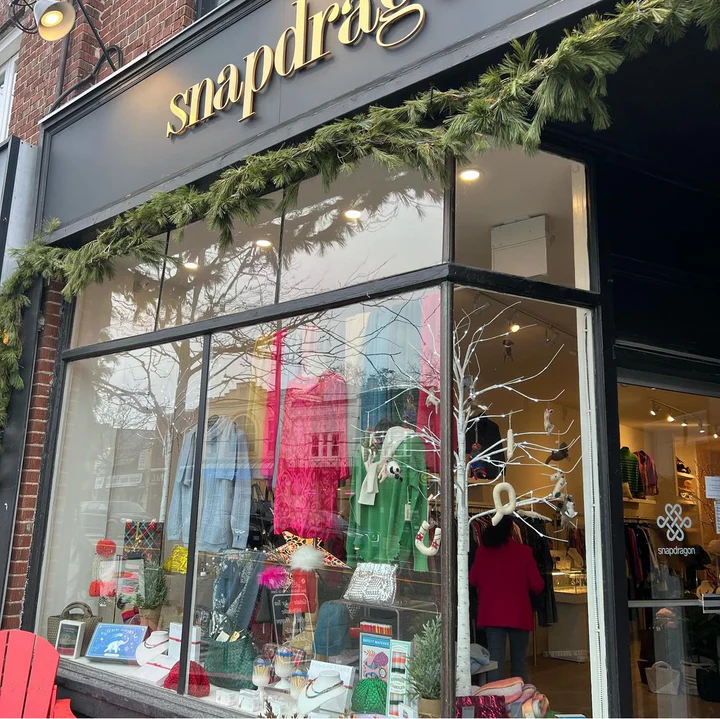
Pam Willcocks, owner of Snapdragon Designs, a boutique specializing in cashmere and resort wear, has taken proactive steps to reassure her customers. Snapdragon operates a physical location on Toronto’s Mount Pleasant Road, a seasonal store in Muskoka, and an online business.

“When the strike started, we sent an email blast with the subject line: ‘We don’t use Canada Post,’” said Willcocks. “We’ve pivoted to using UPS, DHL, and a local courier service, especially for deliveries within the GTA.”
However, the challenges persist. “Shipping to further destinations, like Vancouver or Newfoundland, is still costly. Time is also a factor—driving packages to drop-off points adds hours to my day,” Willcocks shared.
Willcocks observed a decline in consumer spending even before the strike, exacerbated by broader economic concerns. “We’re down 20% in foot traffic compared to previous years. Add in the strike, and it’s a double whammy for small businesses.”
Consumers Growing Frustrated
Retailers report that while most customers have been understanding, their patience is wearing thin. “Nobody blames businesses directly,” said Budhdeo. “But when you’re waiting weeks for a package or paying exorbitant shipping fees, it’s incredibly frustrating. Small businesses don’t have the margins to absorb those costs.”
The situation has led to increased support for local brick-and-mortar stores. “I’ve noticed a slight uptick in in-store traffic,” said Willcocks. “People want to avoid shipping uncertainties, and they’re making the effort to shop locally.”
Calls for Government Action
Retailers are questioning the government’s response to the strike, with many calling for immediate intervention. “At this point in the holiday season, postal service should be treated as an emergency service,” said Budhdeo. “We need a back-to-work mandate or some other resolution to ensure businesses and consumers aren’t left in the lurch.”
McNally echoed this sentiment: “Small retailers are already dealing with economic uncertainty, rising costs, and port delays. The Canada Post strike is just one more layer of hardship.”
The Path Forward
As the strike continues, small retailers are forced to adapt as best they can, but many worry about lasting damage. “This holiday season is critical for us,” said Budhdeo. “January and February are typically slow months, so losing these sales now is devastating.”
Willcocks, meanwhile, is re-evaluating her reliance on Canada Post. “For some things, I’ll go back to Canada Post because it makes financial sense. But this experience has made me explore other options and build relationships with private couriers.”
While larger retailers and Amazon continue to operate with minimal disruption—thanks to private shipping networks—small businesses are left grappling with the fallout. The strike has highlighted Canada Post’s importance, particularly for rural and independent retailers who depend on its accessibility and affordability.
“We’re just asking for a solution,” said McNally. “We’ve all been through enough challenges in recent years. The holiday season should be a time of growth, not crisis.”