Aritzia Posts Blowout Quarter, but U.S. Tariffs Weigh on Future Outlook

Date:

Share post:

Vancouver-based Aritzia Inc. has reported a standout fourth quarter for fiscal 2025, with results significantly exceeding analyst expectations. However, despite the strong momentum, the women’s fashion retailer is adjusting its forward-looking guidance due to pressure from newly imposed U.S. tariffs.

According to a research report published by Stifel on May 1, 2025, Aritzia’s revenue climbed 31% year-over-year to $895 million in the fourth quarter. Adjusted earnings per share surged 144% to $0.83—beating both the firm’s projection of $0.73 and the consensus of $0.70.

“These results demonstrate that Aritzia’s momentum is very real,” noted Martin Landry, Managing Director at Stifel and lead author of the report. “That said, upcoming tariff headwinds have led us to temper our earnings forecast despite the company’s exceptional performance.”

Q4 Outperformance Across the Board

Martin Landry

Aritzia’s comparable sales rose 26% in the fourth quarter, significantly higher than the 17.3% growth projected by Stifel and well ahead of the 15% consensus estimate. Gross margin improved by 420 basis points year-over-year to reach 42.5%, surpassing both internal guidance and external forecasts.

Adjusted EBITDA rose 122% year-over-year to $161 million, with margins expanding to 18%—a 730-basis-point increase compared to Q4FY24. SG&A expenses as a percentage of revenue were trimmed by 20 basis points to 27.5%.

E-commerce also played a crucial role in the strong quarter, with online revenue increasing 42.4% year-over-year to $378 million.

“This was a blowout quarter,” stated the report. “The company’s profitability metrics exceeded expectations and suggest that cost discipline and sales leverage are working in tandem.”

Conservative FY2026 Guidance Reflects Tariff Headwinds

Despite the strong quarter, Aritzia’s FY2026 guidance is cautious. The company expects net revenue between $3.05 billion and $3.25 billion for the year—roughly in line with consensus at the midpoint. However, it is guiding to a lower adjusted EBITDA margin of 14–15%, compared to 14.8% in FY2025. This is notably below Stifel’s prior estimate of 16.4%.

Tariffs imposed by the United States are expected to weigh heavily on margins, with a total negative impact of 400 basis points forecasted for FY2026. Of this, 200 basis points will be absorbed by the company directly, while the remaining 200bps are expected to be offset through strategic mitigation efforts.

Those measures include:

  1. Supply chain diversification away from China, which is expected to reduce exposure to 20% this fall and potentially single digits by spring.
  2. Cost sharing with vendors, designed to distribute tariff-related burdens.
  3. Improved initial markups (IMUs) to enhance realized pricing.
  4. Internal cost-cutting measures to protect profitability.

U.S. Expansion on Track Despite Tariff Risks

While Aritzia has identified tariffs as a significant risk to U.S. operations, the company continues to experience substantial growth south of the border. U.S. revenue now exceeds $1 billion annually, and brand awareness remains relatively low—at just 14% compared to Lululemon’s 73%—signaling runway for expansion.

“The U.S. market is still in the early innings for Aritzia,” said Landry. “With new store openings and increased brand awareness, the company can continue to scale significantly.”

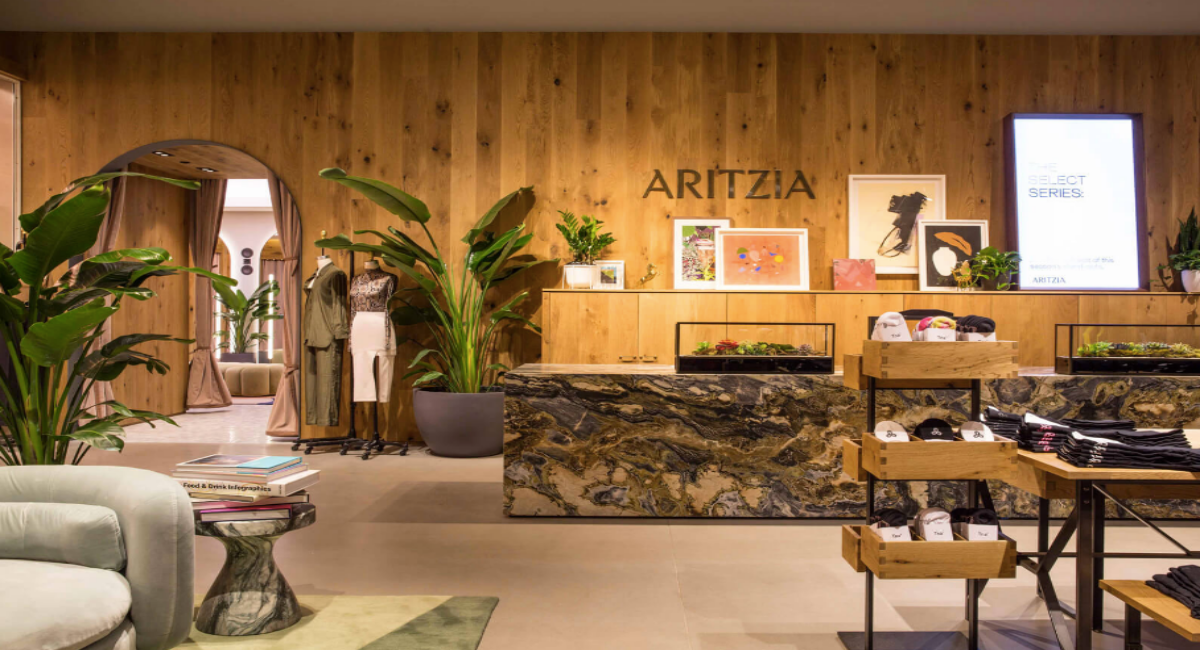
Aritzia currently operates 64 U.S. locations, with plans to open 12 new stores in both FY2026 and FY2027. International markets—particularly Europe and Asia—have also been flagged as next-frontier opportunities.
FY2027 Long-Term Targets Remain in Sight

Despite cautious guidance for the upcoming year, Aritzia has not revised its long-term FY2027 targets. Management is still aiming for revenues between $3.5 billion and $3.9 billion, along with an EBITDA margin of 19%.

Given the setbacks seen in FY2024, there was previously skepticism about whether these goals were still realistic. However, with FY2025’s robust recovery and a return to strong margins, confidence appears to be gradually returning.

“As visibility increases on the FY2027 targets, we believe this could be a catalyst for multiple expansion,” the report stated.

Stifel Lowers Estimates but Maintains ‘Buy’ Rating

In light of management’s guidance, Stifel has revised its forecasts downward. FY2026 and FY2027 EPS have both been reduced by 15%, now standing at $2.21 and $3.08, respectively. EBITDA projections have similarly been trimmed.

Accordingly, Stifel reduced its 12-month price target from $73 to $67 but continues to rate the stock a Buy.

The target price is derived using a blend of three valuation methods:

  • 21x FY27E EPS,
  • 14x FY27E EBITDA,
  • and a discounted cash flow model.

Key Risks to Outlook

The Stifel report outlined several risks to Aritzia’s performance moving forward:

  • Tariffs: Higher duties on Canadian exports could lead to rising U.S. prices, dampening demand and hurting volumes.
  • Brand momentum: A decline in fashion relevance or brand engagement could erode the customer base.
  • Macroeconomic factors: Inflation and higher interest rates may compress consumer spending on discretionary apparel.
  • Currency exposure: Aritzia generates about 50% of its revenue in Canadian dollars but incurs most of its costs in U.S. dollars.
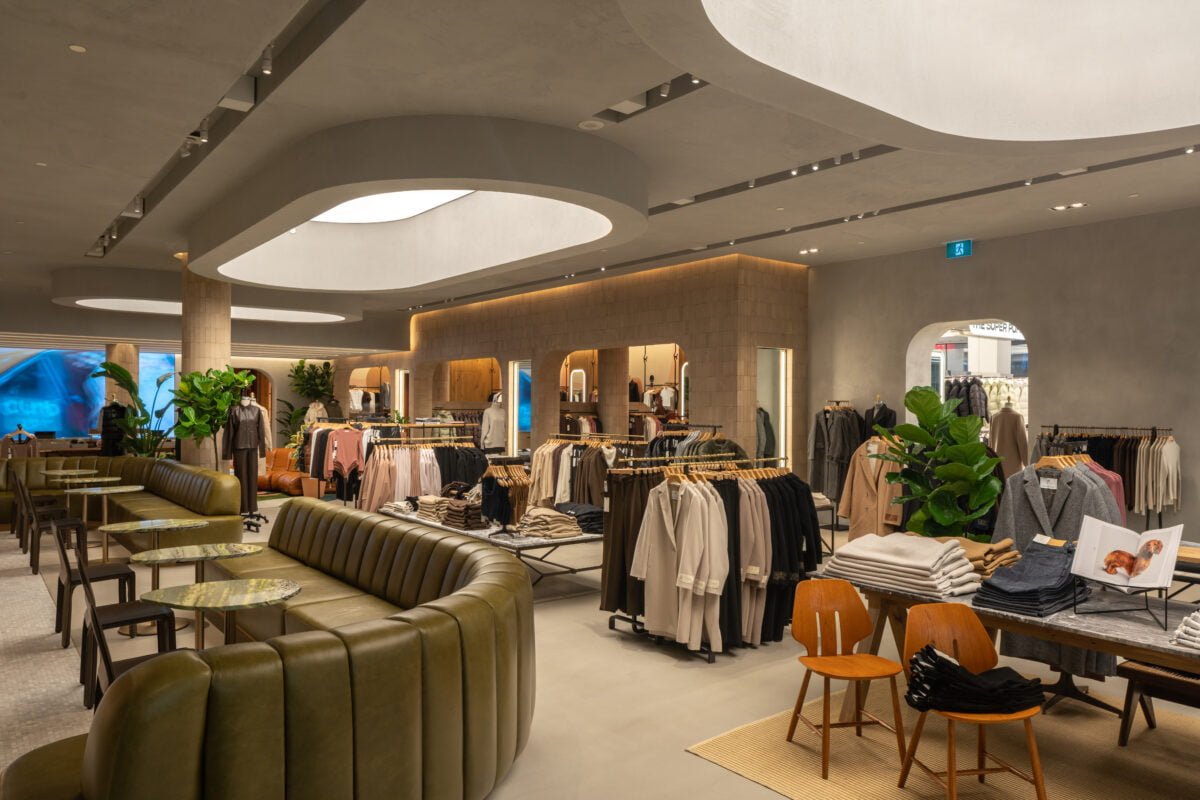
Aritzia Yorkdale (Image: Aritzia)

Financial Metrics at a Glance

MetricFY2025FY2026 (Est.)FY2027 (Est.)
RevenueC$2.74BC$3.16BC$3.59B
Adj. EPS$1.98$2.21$3.08
Adj. EBITDAC$406MC$467MC$616M
EBITDA Margin14.8%14.8%17.2%
Net IncomeC$231MC$252MC$343M

Source: Stifel Research Report, May 1, 2025

Final Thoughts

Aritzia’s Q4FY25 performance confirms the retailer’s ability to deliver strong growth and margin recovery, even in a volatile economic environment. While tariffs represent a real and material risk to FY2026 earnings, the company’s proactive mitigation strategies and consistent expansion in the U.S. suggest the longer-term story remains intact.

Investors may face short-term uncertainty, but Aritzia’s momentum, operational discipline, and runway for growth—particularly internationally—make it a name to watch closely.


More from Retail Insider:

RELATED ARTICLES

Subscribe to the Newsletter

Subscribe

* indicates required

RECENT articles

Canadians rein in holiday spending as affordability concerns weigh on shoppers: Vividata

Vividata research finds consumers are cutting discretionary purchases, comparing deals and weighing delivery costs, with shopping preferences varying significantly by age.

La Caisse invests another $30 million in Cozey as furniture retailer targets U.S. expansion

Montréal-based Cozey will use new financing to expand its physical store network and international presence, including plans for its first permanent New York location in spring 2027.

Stealth Health Eyes Further Acquisitions After MedExpress Canada Deal

Canadian healthcare company Stealth Health has acquired MedExpress Canada and plans further acquisitions in Canada and the United States. CEO Matthew Mazzuca discusses the company’s growing technology platform, pharmacy infrastructure and ambitions for a hybrid physical and digital healthcare network.

TJX Canada Posts Stronger Profitability as Winners, Marshalls and HomeSense Sustain Sales Growth

TJX Canada reported US$1.607 billion in third-quarter revenue and 6% comparable-sales growth, with increased customer transactions and larger baskets. Adjusted segment profit margin rose 120 basis points to 16.1% as Winners, Marshalls and HomeSense continued expanding their Canadian network.

Avril Transforms Former Holt Renfrew Store in Montreal into Grocery and Dining Destination

Avril Supermarché Santé has opened a 12,800-square-foot grocery, wellness and dining location in Montreal’s former Holt Renfrew building. The $5.4-million investment is part of the Quebec retailer’s urban expansion strategy, with three additional stores planned for 2027.

More than one in four shoppers report AI-related shopping scams: Malwarebytes

Malwarebytes research finds 28 per cent of consumers experienced AI-related shopping scams in the past year, raising concerns about fake retail websites, product images and fraudulent delivery messages.

Inside Staples Canada’s Plan to Operate Toys“R”Us Across Nearly 300 Stores

Staples Canada is introducing Toys“R”Us and Parties“R”Us departments across close to 300 stores through 2027. Chief Merchandise Officer Mike Rinaldi explains the operating model, flexible formats, merchandising responsibilities and first Richmond Hill location following the former toy chain's restructuring.

Canadian Consumer Spending Continues to Grow in Q3 as Big-Ticket Purchases Rebound: RBC

RBC reports Canadian cardholder spending rose 1% in the third quarter, with stronger activity tied to big-ticket purchases, regional differences and growing financial stress in Ontario and B.C.

T&T Supermarket More Than Doubles Former Loblaw Store Sales as Canadian Expansion Gains Momentum

T&T Supermarket is generating more than twice the sales of the former Loblaws store at Empress Walk in North York, according to Loblaw CEO Per Bank. Strong performance at Erin Mills adds momentum as the Asian grocery chain expands into major Canadian shopping centres and repurposed retail properties.

Canadians Face Holiday Spending Pressure as Half Carry Credit Card Debt: NerdWallet

NerdWallet’s 2026 Holiday Spending Report finds 28% of Canadians feel pressure to spend more to avoid disappointing loved ones, while 15% of last year’s holiday shoppers are still paying off credit card debt.

AI-assisted gift shopping prompts more thought about recipients

A survey of 8,718 AI users found that most shoppers who used the technology for holiday gifts said it encouraged them to think more carefully about recipients, despite concerns about disclosing its use.

The Children’s Place Liquidation Adds to Leasing Challenges at Canadian Malls

The Children’s Place and Gymboree are liquidating 56 Canadian stores, adding to shopping centre leasing requirements following other national retailer departures. Landlord financial disclosures and original ICSC productivity data reveal differing replacement leasing opportunities across Canadian malls.

Daily Synopsis: November 23, 2026

Children's Place begins liquidating Canadian stores, 50 year old Brampton grocery store closes, lululemon opening in Guelph, and other news.

Higher Food Prices, More Drugs, Emptier Carts

Sylvain Charlebois examines renewed grocery price pressures, declining inflation-adjusted food sales and how wider use of GLP-1 medications could change what Canadians buy. The commentary also considers domestic food processing and transportation infrastructure.

Fashion Art Toronto to Bring 30 Independent Brands to Former Hugo Boss Flagship on Bloor Street

Fashion Art Toronto will bring approximately 30 independent Canadian fashion and lifestyle brands to the former Hugo Boss flagship at 83 Bloor Street West on November 28 and 29, 2026. The free pop-up will combine retail, art and creative programming across three levels.

Canadians Plan to Spend Less This Holiday Season as Deal-Seeking and Buying Canadian Gain Ground: RCC

Canadians plan to spend an average of $911 this holiday season, down 6.5% from 2025, as shoppers prioritize promotions, value and Canadian-made products, according to a Retail Council of Canada survey.

CABUY Builds Directory of 60,000 Canadian-Made Products as Buy Canadian Interest Grows

Burlington-based CABUY has built a bilingual directory featuring more than 60,000 products from approximately 800 Canadian manufacturers. Founder Bernie Langlois explains its product-origin screening, early business model and potential role in helping retailers discover domestic suppliers.

Metro Accelerates Discount Grocery Expansion with 16 More Locations Planned

Metro plans 16 additional discount grocery locations in fiscal 2027, including nine Ontario Metro-to-Food Basics conversions and seven new stores across Ontario and Quebec. The strategy reflects growing demand for value and a selective approach to retail real estate investment.

Buy Now, Pay Later Debt Risks Grow as Consumers Struggle to Manage Multiple Payments

New research finds 40% of Americans have used Buy Now, Pay Later to afford purchases, while overlapping payments and missed due dates are creating financial strain.

Walmart Canada E-Commerce Sales Jump 36% as Price and Wage Investments Squeeze Profitability

Walmart Canada's e-commerce sales increased 36 per cent in its third fiscal quarter, marking four consecutive quarters of growth above 30 per cent. Comparable sales rose 6.4 per cent, but operating income declined as pricing and wage investments weighed on profitability.