Vancouver-based Aritzia Inc. has reported a standout fourth quarter for fiscal 2025, with results significantly exceeding analyst expectations. However, despite the strong momentum, the women’s fashion retailer is adjusting its forward-looking guidance due to pressure from newly imposed U.S. tariffs.
According to a research report published by Stifel on May 1, 2025, Aritzia’s revenue climbed 31% year-over-year to $895 million in the fourth quarter. Adjusted earnings per share surged 144% to $0.83—beating both the firm’s projection of $0.73 and the consensus of $0.70.
“These results demonstrate that Aritzia’s momentum is very real,” noted Martin Landry, Managing Director at Stifel and lead author of the report. “That said, upcoming tariff headwinds have led us to temper our earnings forecast despite the company’s exceptional performance.”
Q4 Outperformance Across the Board

Aritzia’s comparable sales rose 26% in the fourth quarter, significantly higher than the 17.3% growth projected by Stifel and well ahead of the 15% consensus estimate. Gross margin improved by 420 basis points year-over-year to reach 42.5%, surpassing both internal guidance and external forecasts.
Adjusted EBITDA rose 122% year-over-year to $161 million, with margins expanding to 18%—a 730-basis-point increase compared to Q4FY24. SG&A expenses as a percentage of revenue were trimmed by 20 basis points to 27.5%.
E-commerce also played a crucial role in the strong quarter, with online revenue increasing 42.4% year-over-year to $378 million.
“This was a blowout quarter,” stated the report. “The company’s profitability metrics exceeded expectations and suggest that cost discipline and sales leverage are working in tandem.”
Conservative FY2026 Guidance Reflects Tariff Headwinds
Despite the strong quarter, Aritzia’s FY2026 guidance is cautious. The company expects net revenue between $3.05 billion and $3.25 billion for the year—roughly in line with consensus at the midpoint. However, it is guiding to a lower adjusted EBITDA margin of 14–15%, compared to 14.8% in FY2025. This is notably below Stifel’s prior estimate of 16.4%.
Tariffs imposed by the United States are expected to weigh heavily on margins, with a total negative impact of 400 basis points forecasted for FY2026. Of this, 200 basis points will be absorbed by the company directly, while the remaining 200bps are expected to be offset through strategic mitigation efforts.
Those measures include:
- Supply chain diversification away from China, which is expected to reduce exposure to 20% this fall and potentially single digits by spring.
- Cost sharing with vendors, designed to distribute tariff-related burdens.
- Improved initial markups (IMUs) to enhance realized pricing.
- Internal cost-cutting measures to protect profitability.
U.S. Expansion on Track Despite Tariff Risks
While Aritzia has identified tariffs as a significant risk to U.S. operations, the company continues to experience substantial growth south of the border. U.S. revenue now exceeds $1 billion annually, and brand awareness remains relatively low—at just 14% compared to Lululemon’s 73%—signaling runway for expansion.
“The U.S. market is still in the early innings for Aritzia,” said Landry. “With new store openings and increased brand awareness, the company can continue to scale significantly.”
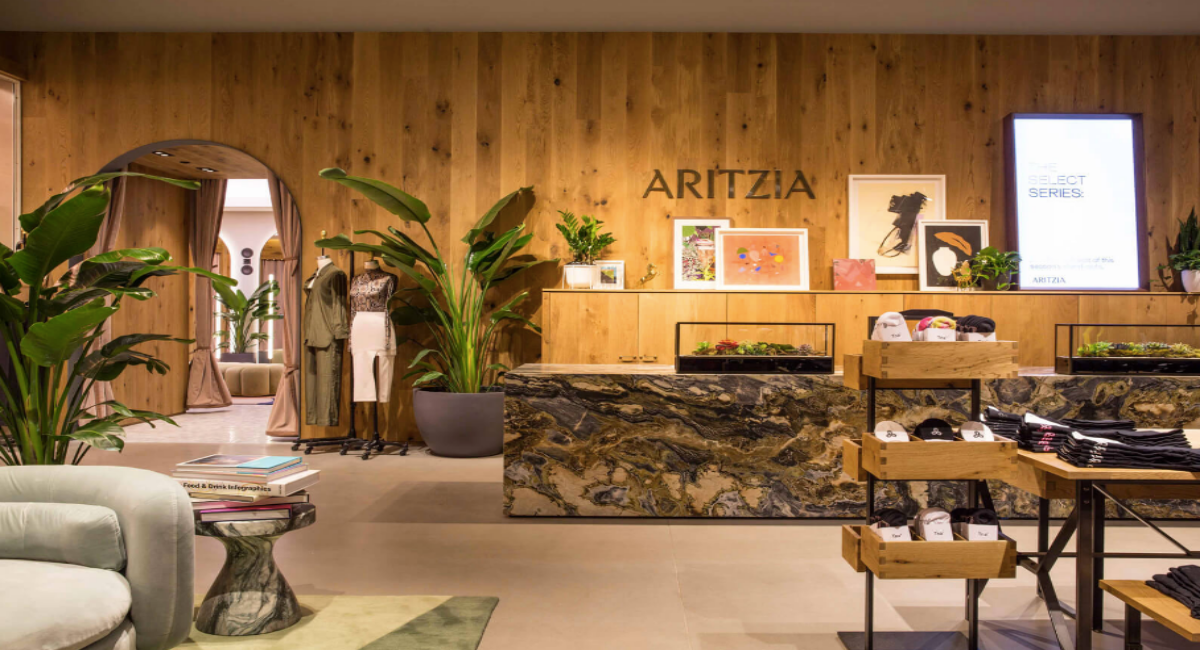
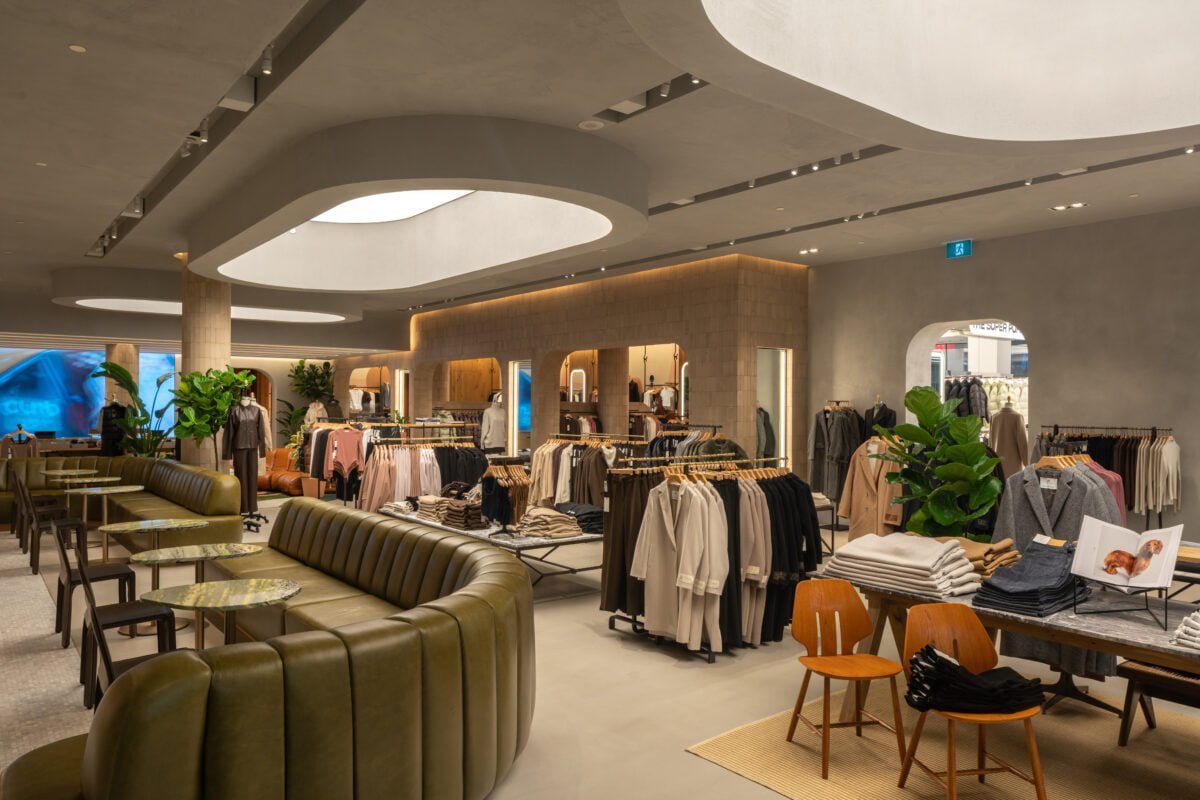
Aritzia currently operates 64 U.S. locations, with plans to open 12 new stores in both FY2026 and FY2027. International markets—particularly Europe and Asia—have also been flagged as next-frontier opportunities.
FY2027 Long-Term Targets Remain in Sight
Despite cautious guidance for the upcoming year, Aritzia has not revised its long-term FY2027 targets. Management is still aiming for revenues between $3.5 billion and $3.9 billion, along with an EBITDA margin of 19%.
Given the setbacks seen in FY2024, there was previously skepticism about whether these goals were still realistic. However, with FY2025’s robust recovery and a return to strong margins, confidence appears to be gradually returning.
“As visibility increases on the FY2027 targets, we believe this could be a catalyst for multiple expansion,” the report stated.
Stifel Lowers Estimates but Maintains ‘Buy’ Rating
In light of management’s guidance, Stifel has revised its forecasts downward. FY2026 and FY2027 EPS have both been reduced by 15%, now standing at $2.21 and $3.08, respectively. EBITDA projections have similarly been trimmed.
Accordingly, Stifel reduced its 12-month price target from $73 to $67 but continues to rate the stock a Buy.
The target price is derived using a blend of three valuation methods:
- 21x FY27E EPS,
- 14x FY27E EBITDA,
- and a discounted cash flow model.
Key Risks to Outlook
The Stifel report outlined several risks to Aritzia’s performance moving forward:
- Tariffs: Higher duties on Canadian exports could lead to rising U.S. prices, dampening demand and hurting volumes.
- Brand momentum: A decline in fashion relevance or brand engagement could erode the customer base.
- Macroeconomic factors: Inflation and higher interest rates may compress consumer spending on discretionary apparel.
- Currency exposure: Aritzia generates about 50% of its revenue in Canadian dollars but incurs most of its costs in U.S. dollars.
Financial Metrics at a Glance
| Metric | FY2025 | FY2026 (Est.) | FY2027 (Est.) |
| Revenue | C$2.74B | C$3.16B | C$3.59B |
| Adj. EPS | $1.98 | $2.21 | $3.08 |
| Adj. EBITDA | C$406M | C$467M | C$616M |
| EBITDA Margin | 14.8% | 14.8% | 17.2% |
| Net Income | C$231M | C$252M | C$343M |
Source: Stifel Research Report, May 1, 2025
Final Thoughts
Aritzia’s Q4FY25 performance confirms the retailer’s ability to deliver strong growth and margin recovery, even in a volatile economic environment. While tariffs represent a real and material risk to FY2026 earnings, the company’s proactive mitigation strategies and consistent expansion in the U.S. suggest the longer-term story remains intact.
Investors may face short-term uncertainty, but Aritzia’s momentum, operational discipline, and runway for growth—particularly internationally—make it a name to watch closely.