Calgary-based entrepreneur Malika Rajani wears more than one hat — quite literally. As Founder and Creative Director of Malika Rajani Leather and Outerwear and General Manager of High River Toyota, she has carved a niche for herself across two very distinct industries: fashion and automotive retail.
Rajani’s professional life is a balancing act between running a family-owned car dealership and leading a growing outerwear fashion brand.
When asked how long she has been General Manager at High River Toyota, she said, “It is about five years now. Just a year pre-COVID, I started working here at High River Toyota. I’ve been on and off. It’s a family business, so I had that flexibility of starting a fashion line along with working here. Then I went specifically to work for the fashion industry, and then I came back here when the family needed me, and I ran the fashion business from here.”
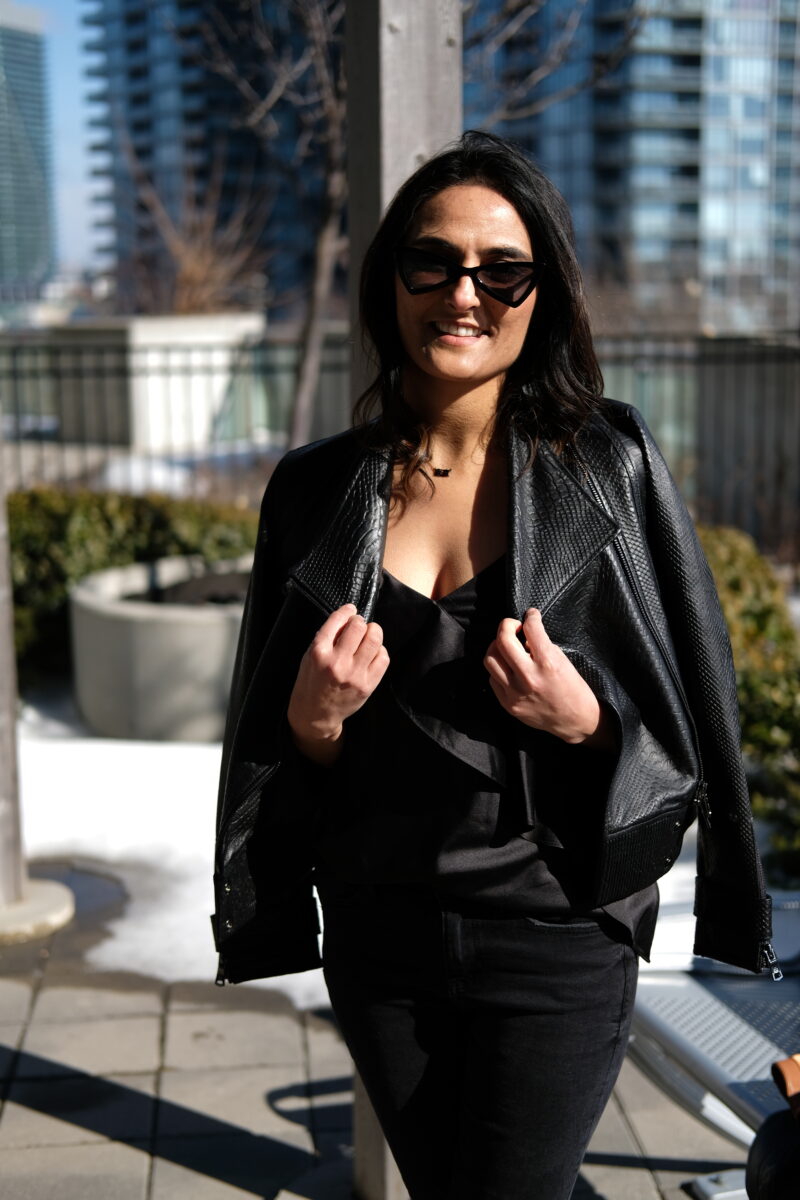
Rajani’s history with the dealership dates back to her early days in Canada. “I grew up in India, but when I came from India here, this was the first ever job I did here in Canada. I started off as a receptionist in the dealership and then just learned the ropes around, learned about all the different departments, and here I am now.”
Working as a female in the long dominated by men automotive industry
In an industry long dominated by men, Rajani acknowledges her role is unique: “It’s an anomaly for sure. When I started there were very few. Right now, the industry is growing and accepting a lot of female entrepreneurs, especially in a GM position. Right now, I think it’s an advantage because a woman GM is a lot different from a male GM in terms of thought process, in terms of taking care of their employees.”
She added, “I think there is a softer edge. With male GMs in a car dealership, it’s a lot aggressive. It’s a little bit harsher environment. I bring a softer edge to this position. Also coming from fashion, my thought process is a bit different compared to what a car GM would think. I bring in a different perspective to the business as well.”
That creative perspective stems from her deep passion for fashion — a passion that was always present but initially kept on the back burner. “As a daughter of an Indian parent, my dad was always of the opinion that fashion can be a hobby and I need to go out and get a degree. So I did my bachelor’s in commerce and then I went out to do masters in business management with finance and marketing as my background.”
But once she moved to Canada, Rajani decided it was time to pursue that passion. “I went to New York to study fashion at that point.” She enrolled at the Parsons School of Design.
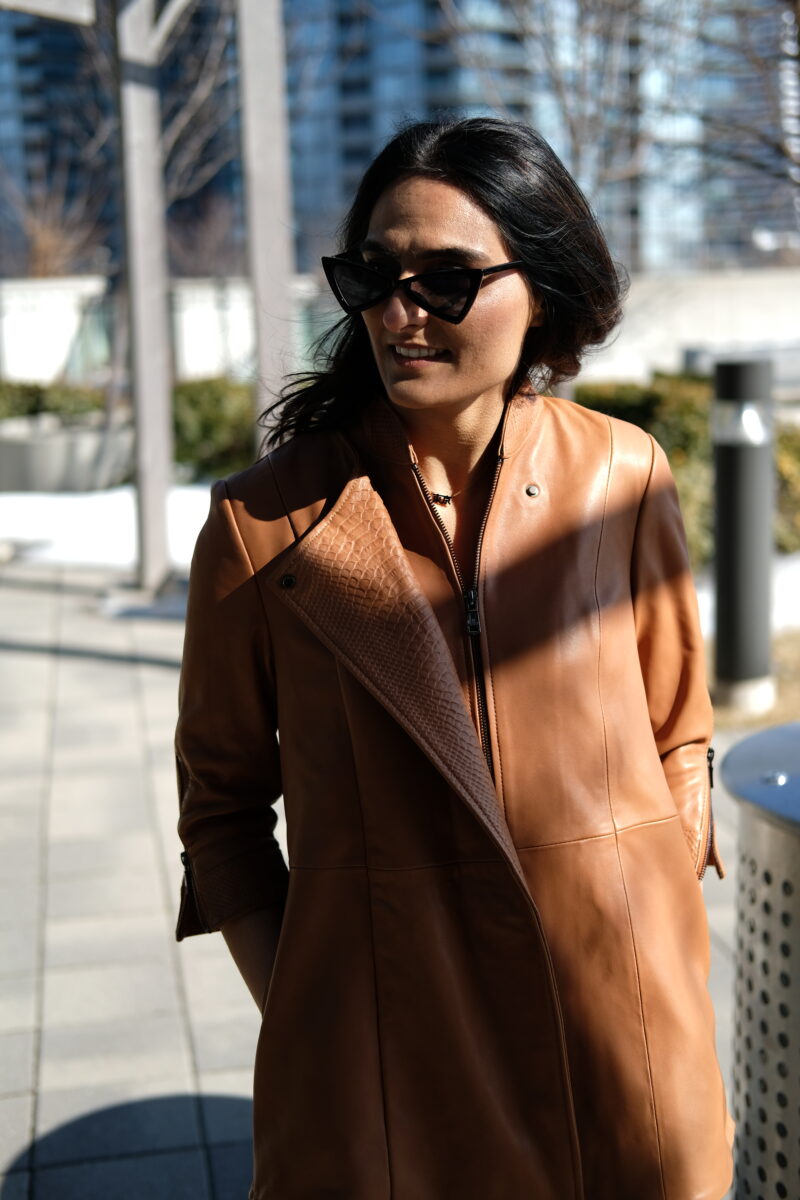
Graduating into the 2008 recession wasn’t ideal. “I interned there with John Varvatos and Ralph Lauren, but it was hard to find jobs. So I came back home. I met someone from CrossIron Mills, which was the new mall that was just starting up, and I decided to open a store there — not with my designs, just a store that carried different brands.”
Eventually, the pull to design her own line became too strong to ignore. “I studied to be a fashion designer. I need to create my own designs.”
Rajani’s fashion business evolved from silk dresses to leather jackets — sparked by a personal need. “I myself wanted a leather jacket, couldn’t find anything different in the market. Everything seemed pretty similar. So I just went out, created a leather jacket for myself, and every time I wore it, people asked me where it was from and they wanted to buy it. That just triggered me into creating a couple other jackets. I did really good with them and I just diverted into that segment eventually.”
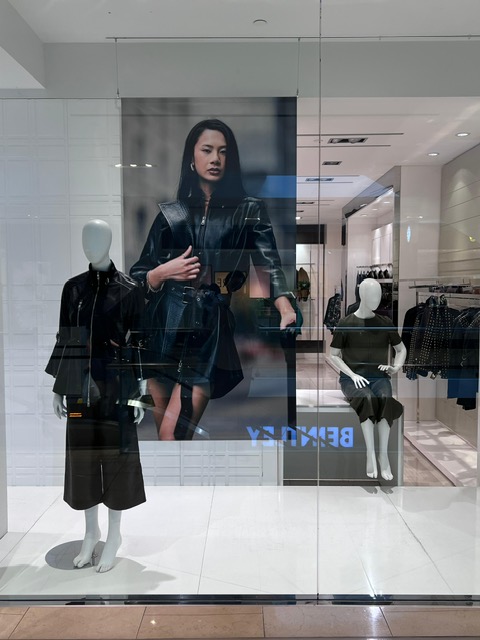
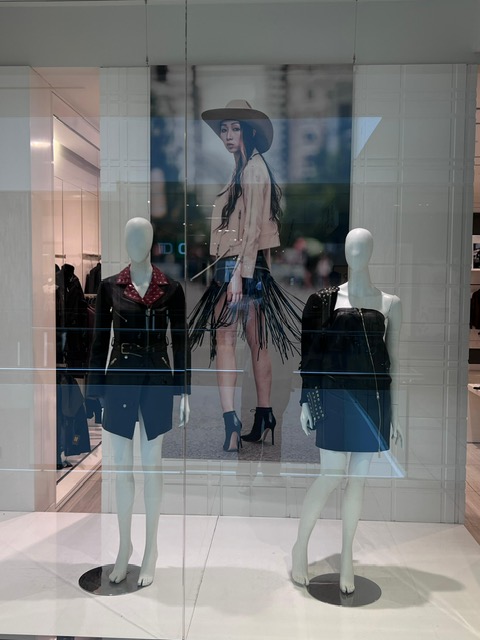
Today, her outerwear line is gaining increased visibility, including a pop-up location at The CORE Shopping Centre in downtown Calgary. “Yes, it’s a popup for a couple months, just to give visibility to my brand. I do really good online sales and I pop up here and there for a day or two, but this came up as a good opportunity to just have more visibility to the brand. So I decided to do that around Stampede, especially where people love leather fringes, and that’s what I’ve been offering right now.”
When asked if a permanent store is in the works, Rajani said, “It depends how these couple months go. The shopping habits of people have transitioned towards online shopping a lot. I don’t mind having this business concept of popping up in different malls for three to four months at once… but if the store does really good here, then I don’t mind extending the contract and just staying there — if that’s allowable or feasible.”
Juggling two demanding businesses
Juggling two demanding businesses isn’t easy, but Rajani makes it work. “My biggest advantage is it’s a family business. High River Toyota is a family business, so I have some leeway. Also, most of the time when I’m designing, when I’m connecting with my factories — because they are in Asia — my time difference is I have to sacrifice on my sleep while I do that and get to work in the morning here. Right now I have really dedicated employees running the store, but once in a while, I take a day off and just head to the store and tell everybody, ‘I’ll be in the store this day, so come see me if you want to see me.’”
Operating in both the auto and fashion sectors gives Rajani a front-row seat to shifting consumer behaviour. “People are uncertain about the future. Some people want to make their shopping decisions sooner because they’re not sure about what is to come… and some people just don’t want to pull that plug yet.”
“In the car business right now, if the tariff comes along, then the pricing goes up quite a bit. So you see two different kinds of customers — some want to pull the plug right away, some want to wait it out. Meanwhile, they miss out on the opportunity to buy the vehicle they like because of the colour, because of the availability.”
In fashion, the story is different. “People buy for occasions, people buy for events. Right now during the Calgary Stampede, which is huge — this year I think Stampede came back much bigger than previous years — people have the occasion and they want different outfits. So I find that consumers buying for events want instant gratification and they’re pulling the plug quicker.”
Despite conflicting economic signals, Rajani emphasizes that the key to staying ahead is agility. “Consumer behaviour is changing more frequently than we used to be able to predict. Every single month, we have to change our strategy.”
And while discounting may work in some sectors, she believes in differentiating based on experience. “At High River Toyota, we are a rural store. Our pull is more towards customer service. Some people are driven by customer service rather than discount.”
On the fashion side, she sees trends toward sustainability and resale. “A lot of people are gearing towards secondhand fashion. Different segments of people are behaving differently. You have to really categorize people into different segments and cater and market towards those segments separately.”
The joy of being an entrepreneur
Asked what she enjoys most about entrepreneurship, Rajani answered simply: “That I have the control. It’s not easy, yet it is satisfying at the end of the day. I like the final outcome — when I see the results, that’s satisfying.”
Her advice for young entrepreneurs? “It’s not easy. There’s a lot of challenges, a lot of sleepless nights. But after all of that, it is gratifying. It’s like a child that you’ve raised. Even if somebody fails, you learn from it. I feel like it’s not just about the end product, but also about the journey.”
With a business load that could tire even the most seasoned entrepreneur, Rajani said she finds balance through travel. “Sometimes it’s hard to balance, but I travel quite a bit. I try to get out of the city where I’m not accessible. That just gives me a good break. Wherever I travel, I also come back inspired to create more. I come back with a force — that’s what keeps me going.”
Related Retail Insider stories: