Foodtastic, one of Canada’s growing restaurant franchise companies, is actively seeking new franchisees to support its rapid expansion. CEO Peter Mammas said the company currently operates 26 brands with more than 1,000 locations nationwide.
While Foodtastic maintains fewer than 30 corporate locations, the majority of its outlets are franchised, spanning roughly seven or eight of its brands. The company aims to attract franchisees who can commit to long-term growth and success within the system.
Mammas said the ideal franchisee combines financial readiness with operational know-how. “Somebody with restaurant experience to start with. That’s a good starting point,” he said. “They obviously need the capital. They have to be hardworking, honest, and organized. We do some pre-screening to make sure they’re doing it for the right reasons and are motivated to succeed.”
He added that franchisees often start small before expanding into multiple units. “The good ones open one store, like what they’re doing, make money, and then open a second and third store. These single operators often evolve into experienced multi-unit operators,” Mammas said, noting that the company actively supports this progression with guidance and operational frameworks.
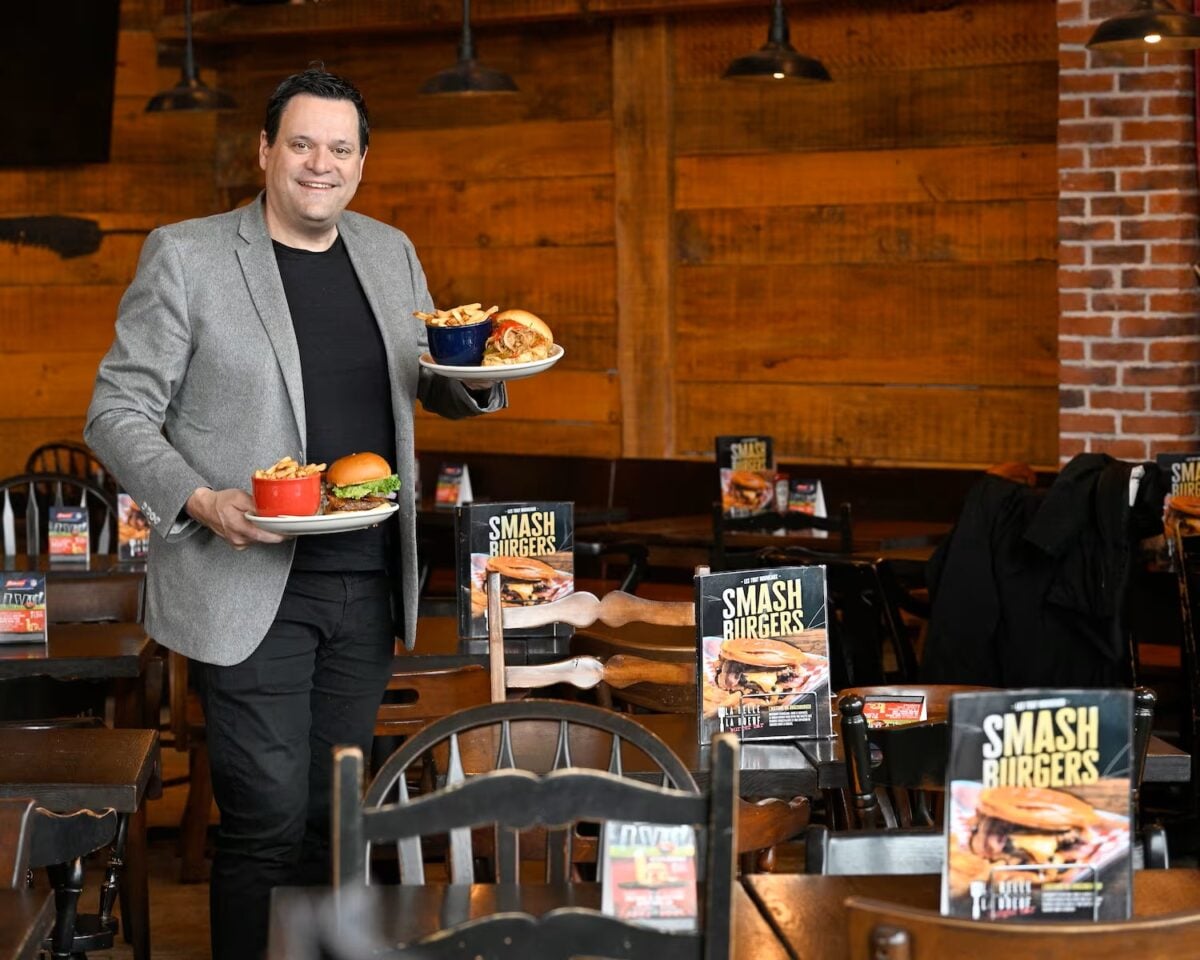
The company has shifted its focus toward quick-service restaurants in recent years, in part because of rising construction costs for full-service locations and broader economic conditions. “Construction costs have gone way up for full-service brands,” Mammas said. “So we’re seeing a pivot toward quick service, which costs about $600,000 to $700,000 to build.”
He added that quick-service franchises offer a more accessible entry point for prospective franchisees while allowing for faster expansion.
Foodtastic is also exploring innovative dual-concept locations, combining two complementary brands under one roof to maximize space and operational efficiency. Mammas cited Second Cup coffee as a successful example. “Second Cup is probably the best duo concept because people come in for coffee and also grab food. It complements the food portion of system franchises,” he said.
Mammas said dual-concept locations also create operational synergies, including shared storage, freezers, and coolers, making units more profitable for franchisees. He added that careful pairing of brands is essential. “You don’t want to open one concept and add another one that’s going to cannibalize it. You want another one that’s going to actually help it sell,” he said.
Looking ahead, Mammas said Foodtastic plans an aggressive growth strategy. “We’ll probably open about 80 stores in 2025, increasing to about 120 in 2026,” he said. “We’re constantly looking to grow, acquiring new concepts. A couple are currently under LOI (Letter of Intent), which we’ll announce in the new year. We’re a hungry company. We love what we do, want to grow, and will continue acquiring concepts and building stores.”
He said franchisees are central to the company’s growth strategy. “It takes a lot for anyone to run a restaurant: hard work, dedication, and support,” Mammas said. “They have to get into a system that provides the support they need financially, operationally, and in marketing. That gives them the best chance to succeed.”
Mammas said he expects franchising in Canada’s restaurant sector to continue growing. “Franchise restaurants are taking over more and more of the dollar because of the marketing, experience, and support that come with a franchise,” he said. “Banks like franchising better. The success rate is higher. I see the franchising segment just continuing to grow.”
More from Retail Insider: