Canada’s largest retail-focused REIT is seeing accelerating momentum as demand for space remains strong, rents rise sharply, and vacant department store boxes begin to fill.
RioCan Real Estate Investment Trust reported first quarter 2026 results that reinforce a narrative increasingly evident across the Canadian retail landscape: well-located retail real estate is tightening, and landlords are gaining leverage.
The company’s performance reflects a combination of structural factors, including limited new supply, sustained demand from essential retailers, and the ongoing absorption of large-format vacancies left behind by legacy department store Hudson’s Bay Company.
Leasing Spreads Signal Strength in the Market
RioCan posted blended leasing spreads of 25.8% in the quarter, with new leasing spreads reaching 58.5%. Over the past twelve months, blended spreads have averaged 23.1%, pointing to sustained upward pressure on rents.
President and CEO Jonathan Gitlin described the current environment as a “retail leasing super cycle,” driven by expiring legacy leases and a lack of new supply.

The results are not isolated. Instead, they reflect a broader shift in market dynamics, where existing assets are being repriced to current market levels after years of more modest growth.
“We continue to benefit from a favorable retail leasing environment,” Gitlin said on the company’s earnings call, noting that the trend is supported by high-quality assets in densely populated markets.
Occupancy Remains Near Full Capacity
RioCan’s retail portfolio remains effectively full, with committed occupancy at 98.6% and a retention rate of 92.4%. The high occupancy levels underscore the lack of available space across major markets.
Demand continues to be driven primarily by necessity-based tenants, including grocery stores, pharmacies, and essential personal services. These categories have proven resilient despite broader economic pressures, and they are continuing to expand in key urban nodes.
At the same time, limited turnover is constraining the amount of space available for new entrants, intensifying competition for well-located units.
Former Hudson’s Bay Spaces Begin to Fill
A notable development in the quarter was progress in leasing former department store space.
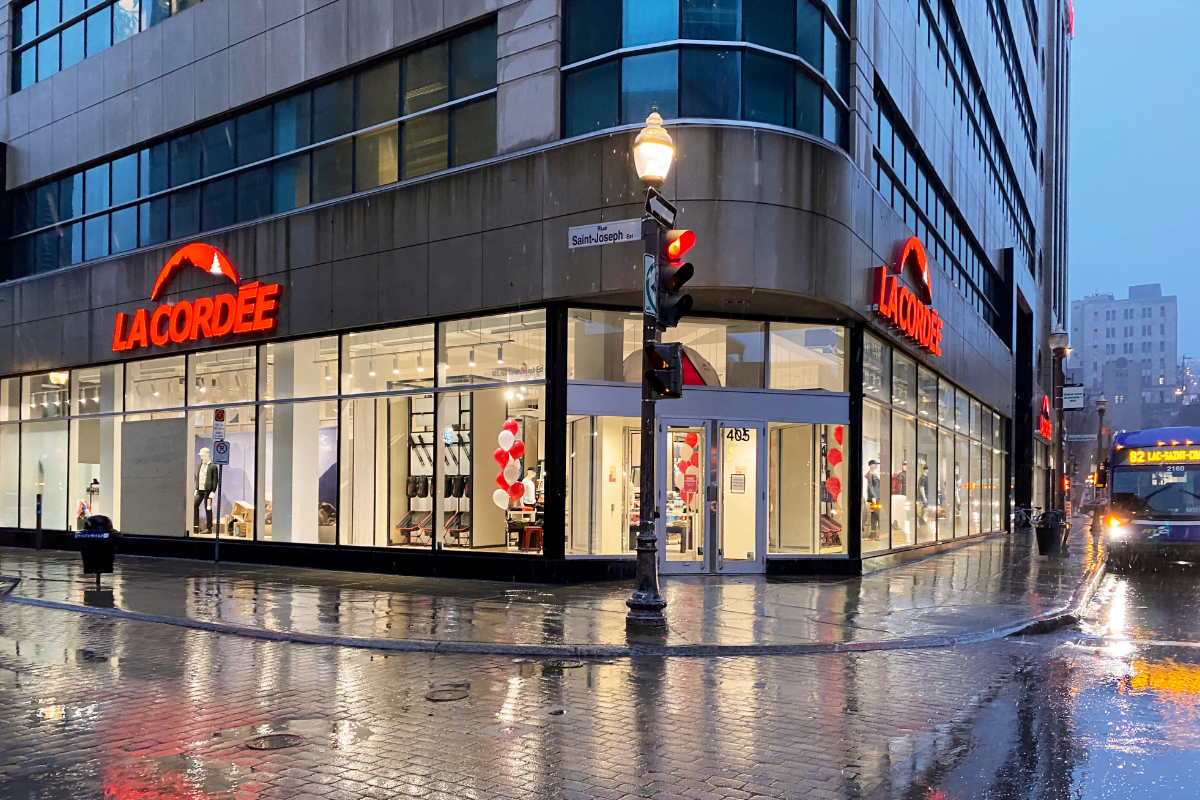
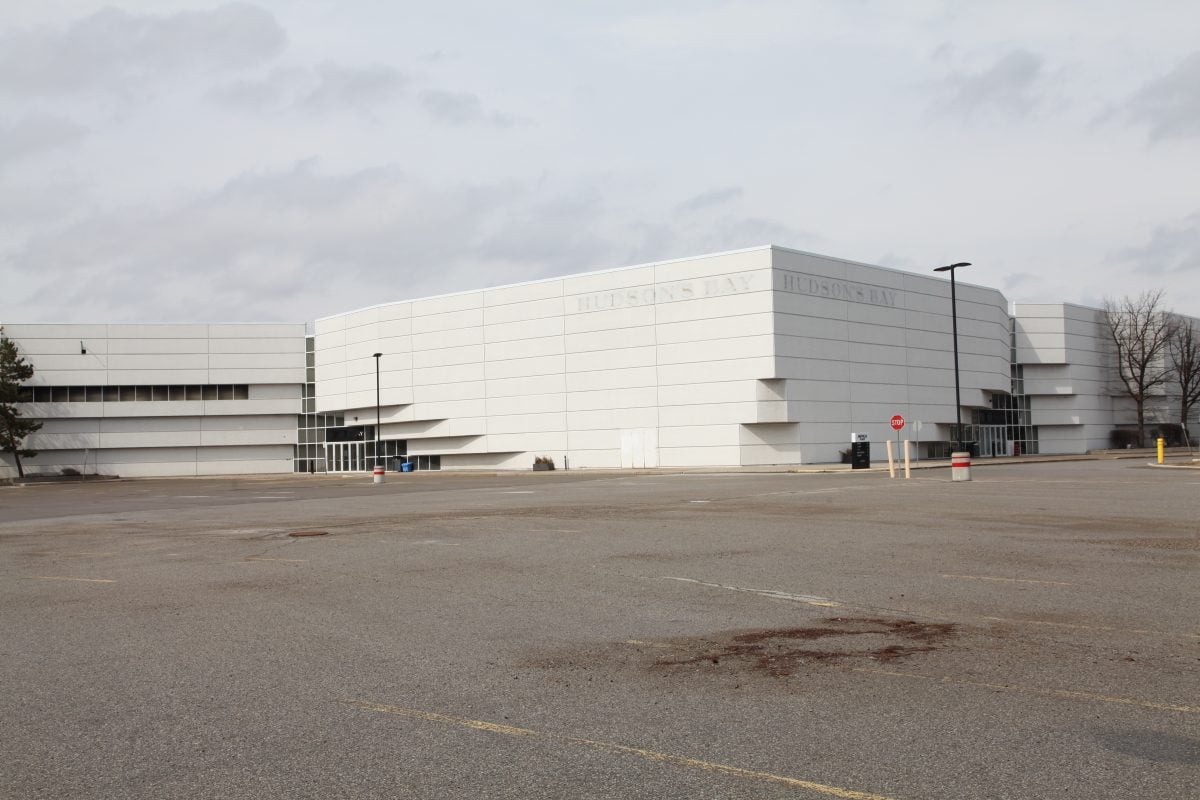
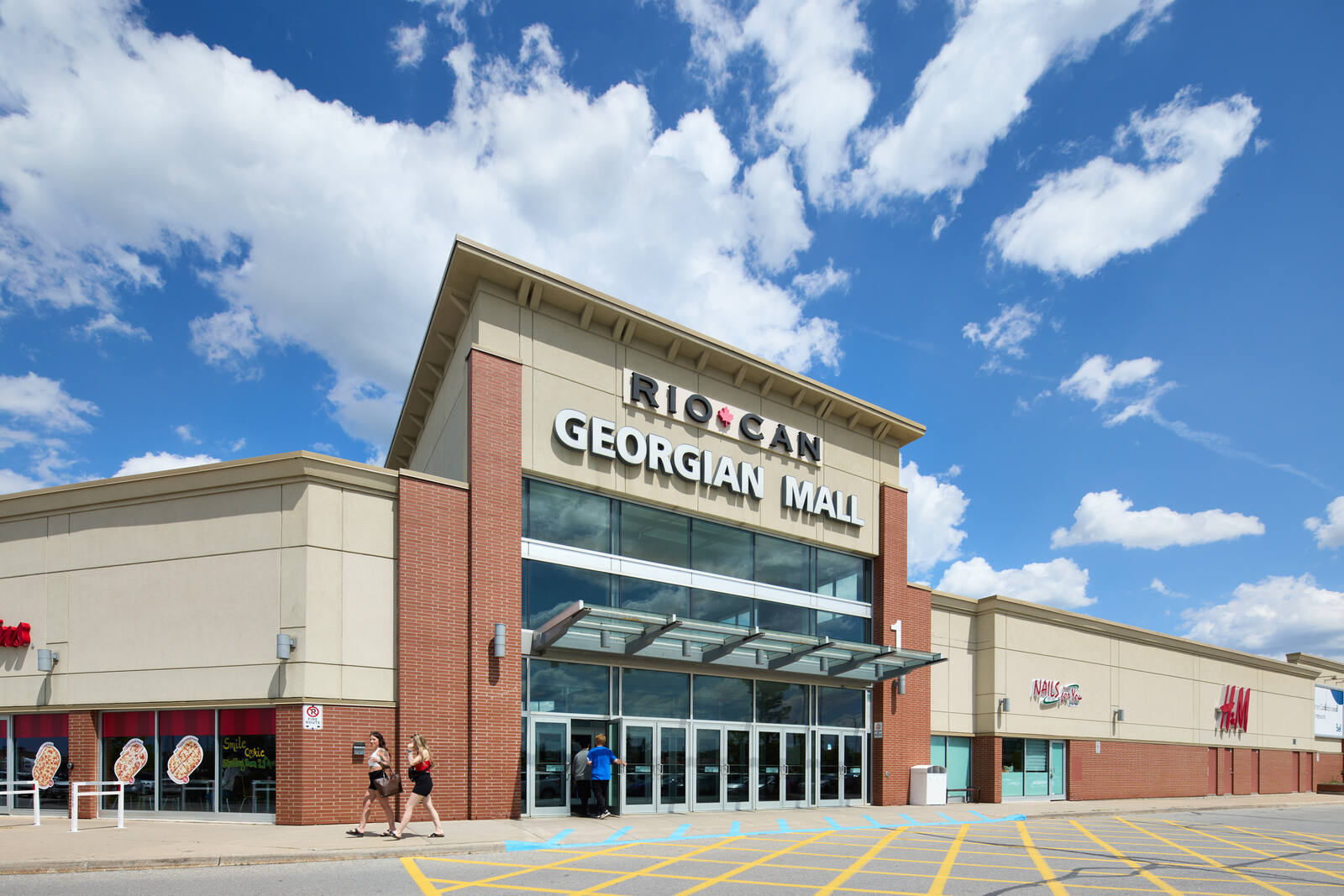
RioCan highlighted that vacant boxes at properties such as Oakville Place and Georgian Mall, previously occupied by Hudson’s Bay, have already been fully leased. While some of these tenants have not yet commenced rent payments, the rapid backfilling of these large-format spaces signals strong underlying demand.
The absorption of former Hudson’s Bay locations is significant given the scale of vacancies created by the company’s exit from multiple markets. Across Canada, former department store spaces have represented one of the largest sources of available retail square footage.
RioCan’s experience suggests that well-located assets are being repositioned more quickly than some observers anticipated.
No New Supply Reinforces Landlord Advantage
A key theme emerging from RioCan’s commentary is the absence of meaningful new retail supply.
Gitlin emphasized that barriers to development remain high, including land availability, zoning constraints, and construction costs. As a result, new ground-up retail projects are unlikely to materially impact the market in the near term.
The lack of supply is extending the runway for existing assets, allowing landlords to capture rent growth as leases roll over.
“If RioCan can’t find viable land and opportunities to build new sites, it’s likely others will face the same challenges,” Gitlin said.
This dynamic is contributing to a structural shift in the sector, where value is increasingly concentrated in existing, well-located properties.
Leasing Economics Continue to Evolve
Beyond headline rent growth, RioCan is also reshaping lease structures.
New leases increasingly include annual rent escalations, typically in the range of 2% to 4%. At the same time, the company is reducing reliance on percentage rent and negotiating more predictable long-term agreements.
These changes reflect a shift toward more stable and transparent income streams, aligning retail leasing more closely with other commercial real estate asset classes.
The approach also positions landlords to better capture inflationary growth over time.
Capital Recycling Refocuses Strategy on Retail
RioCan continues to advance its capital recycling program through the sale of residential assets under its RioCan Living platform.
As of early May, the company expects to repatriate approximately $1.04 billion, representing about 80% of its $1.3 billion target. Proceeds are being redeployed into retail-focused investments, unit repurchases, and balance sheet improvements.
The strategy is simplifying the business while sharpening its focus on core retail operations.
At the same time, RioCan is investing in intensification opportunities within its existing portfolio, including retail infill and site enhancements designed to increase density and productivity.
Outlook Remains Stable as Growth Continues
RioCan reaffirmed its 2026 outlook, including same-property net operating income growth of 3.5% to 4% and core funds from operations of $1.60 to $1.62 per unit.
The company expects leasing momentum to continue, supported by strong fundamentals and limited supply.
While leasing spreads may fluctuate from quarter to quarter, the broader trajectory remains positive.
Retail Real Estate Enters a New Phase
RioCan’s results point to a sector that is no longer defined by excess space or weak demand.
Instead, the Canadian retail market is entering a phase characterized by constrained supply, strong tenant demand, and rising rents. The rapid leasing of former Hudson’s Bay spaces adds another layer to that narrative, suggesting that even large vacancies can be absorbed in the current environment.
For landlords, the implications are clear. Pricing power is returning, and the value of well-located retail real estate is being reinforced.
For retailers, the environment is becoming more competitive, as access to prime space tightens and occupancy costs rise.
As 2026 unfolds, RioCan’s performance will serve as a key indicator of how durable these trends prove to be across the broader market.