

From New York to Toronto, the concept of government-run grocery stores has been trending lately. The idea is not new, and the evidence shows that these initiatives do not address the root cause of high food prices, and carry a heavy risk of failure, the MEI notes in a Viewpoint published on Thursday.
The MEI is an independent public policy think tank with offices in Montreal, Ottawa, and Calgary.
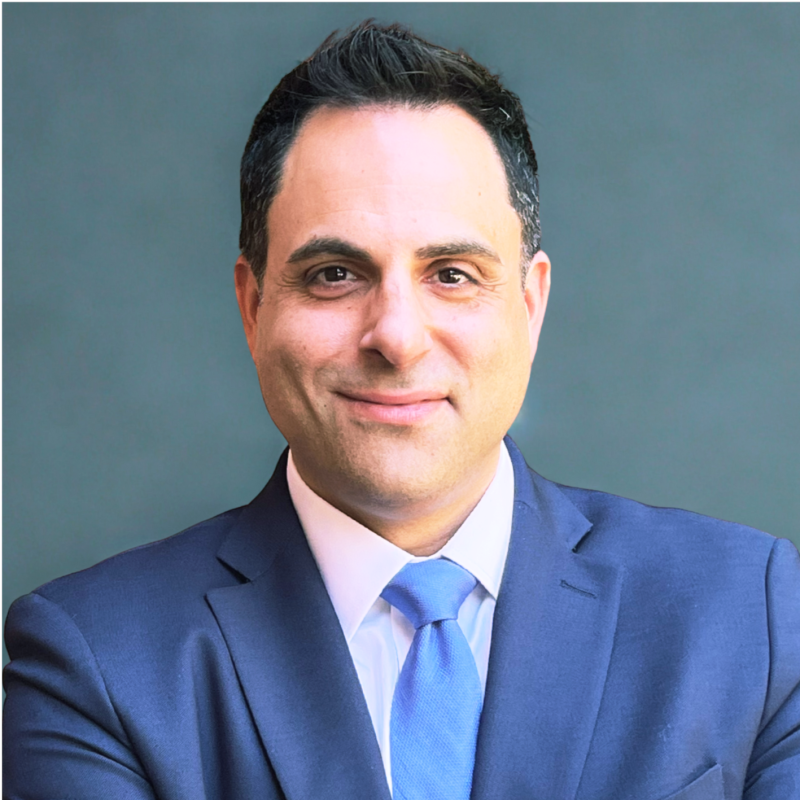
“Government-run grocery stores have been tried before, and the results have been costly for taxpayers,” said Charles Lammam, Senior Fellow at the MEI and author of the publication. “Key drivers of higher food prices are the government policies already on the books, such as tariffs, interprovincial trade barriers, and layers of regulatory costs. That is where reform is needed.”
This year, a proposal for a government-run grocery pilot project was tabled and adopted in Toronto. In Ottawa, a city councillor recently proposed studying such a model, said MEI.
At the federal level, new NDP leader Avi Lewis is proposing to establish such a network across the country, promising savings of “30 to 40 percent” for families. At the provincial level, Québec solidaire recently indicated that it wants to evaluate this proposal, it noted.
“The grocery sector is well known for its razor-thin profit margins, which hover between three and five per cent,” explained the organization.
“Even if those margins were entirely eliminated, and supply chains remained just as efficient, monthly savings for consumers would be just $11 to $18 per person. By way of comparison, a Canadian family of four spends an average of $17,571 per year on groceries—roughly $370 per person per month—according to a Canadian study.”
“Running a grocery store means coordinating thousands of perishable products across complex supply chains, on margins that leave little room for error,” said Lammam. “Governments simply do not have the expertise to do that, and it is inevitably the taxpayer who ends up paying the price.”
MEI shared that the record of government-run grocery stores in North America isn’t encouraging: the failure or restructuring rate of these initiatives likely exceeds 50 per cent, according to Dalhousie University Professor Sylvain Charlebois.
In Kansas City, for example, the government spent $29 million in public funds to keep Sun Fresh Market afloat. The municipal government-run grocery store opened in 2018 and shut its doors last summer, beset by empty shelves, food safety issues, and persistent financial losses. A similar project in Erie, Kansas, operated at a loss for years before being handed over to a private operator, added MEI.

While the sharp rise in food prices has had a real impact on household budgets, the researcher notes that many public policies are contributing factors, it said. Barriers to interprovincial trade are equivalent to an internal tariff of nine percent, according to an International Monetary Fund analysis.
Tariffs on imported food average 15 percent, with surcharges of 200 to 300 percent on dairy, eggs, and poultry. The regulatory burden, taxes throughout the supply chain, and transportation costs also inflate the price of every product found on store shelves, added MEI.
“If the goal is truly to lighten Canadians’ grocery bills, the solution is not to have governments enter the grocery business—it’s to eliminate the policies that are artificially driving up prices,” said Lammam.
More from Retail Insider:












Carney’s Davos speech was marvellous and courageous – planting the flag for a true change-maker approach to the issues he identified. Mandani may be well motivated. But taxpayers will lose big time in the grocery business.
My biggest disappointment in Carney on point is the interprovincial barriers. We need boldness. Teere’s been some modest progress, but provinces continue to be too driven by protectionism.