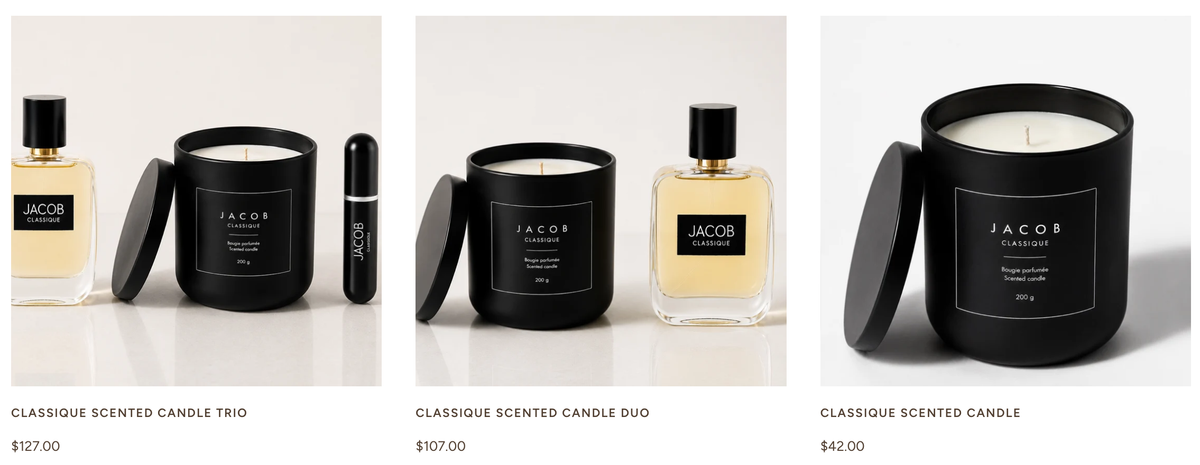
Canadian fashion brand JACOB, which once operated more than 250 stores across the country, is entering a new phase under the ownership of Cristelle Basmaji, daughter of founders Joey and Odette Basmaji. The Montreal-based business is beginning celebrations ahead of its 50th anniversary in 2027 with new beauty products, a limited-edition fashion accessory and plans to explore additional retail distribution.
JACOB closed its national retail network in 2014 following years of financial difficulties, although the brand continued through fragrance sales and smaller-scale initiatives. Basmaji is now rebuilding the business with an approach that draws on its established customer base while avoiding the substantial costs associated with operating a large chain of stores.
In an interview with Retail Insider, Basmaji discussed her decision to take over the family business, the challenges that contributed to its closure and the opportunities she sees for JACOB in today’s Canadian retail market.
From a Small Quebec Store to a National Fashion Chain
JACOB’s origins date back to a small menswear store in Sorel, Quebec, operated by Cristelle’s grandfather, Jacob Basmaji. Following his death, his son Joey took over the business at just 17 years old, helping support his mother and two sisters.
Joey’s future wife, Odette, was interested in fashion design and encouraged him to introduce women’s clothing. The business initially became a unisex retailer before shifting entirely to women’s fashion in 1977, the year the family identifies as the beginning of JACOB in its familiar form.

Odette began designing the company’s collections in Montreal, replacing merchandise purchased from other brands with JACOB’s own designs. The retailer developed a following for coordinated women’s fashion, with an emphasis on classic styling, quality fabrics and accessible pricing.
JACOB expanded across Canada, eventually operating more than 250 stores and employing over 4,000 people at its peak. Its retail concepts included JACOB, JACOB Junior, JACOB Lingerie and other banners serving different segments of the women’s fashion market.
For many Canadian women, JACOB became a destination for professional clothing, particularly during the 1980s, 1990s and early 2000s. Basmaji recalled customers purchasing their first office wardrobes from the retailer, often choosing tailored suits, blazers, skirts and dresses.
The company’s presence in shopping centres was substantial. At Montreal’s Rockland Shopping Centre, where Basmaji worked earlier in her career, separate JACOB, JACOB Lingerie and JACOB Junior stores operated alongside one another, collectively occupying thousands of square feet.
JACOB’s national expansion became increasingly difficult to sustain as international competition intensified and the costs of operating a large specialty apparel chain increased. The company entered creditor protection in November 2010 and undertook restructuring efforts.
By May 2014, it had announced plans to liquidate inventory across its remaining 92 stores after continuing financial difficulties. International retailers such as Zara and H&M had expanded their Canadian operations, adding competition for established domestic fashion chains.
Rising shopping-centre rents and lengthy lease commitments placed further pressure on the business. Basmaji said her parents were also approaching retirement, while she had established a career outside the family business and was not looking to take over the chain at that time.
“High rents had a huge impact on our business,” Basmaji told Retail Insider. She recalled that shopping centres increasingly sought long-term lease commitments, sometimes extending to 10 years, creating substantial financial obligations for retailers facing uncertain sales conditions.
The family had purchased some of its retail properties over the years, including its St. Catherine Street flagship in Montreal. Basmaji said stores in family-owned properties were among the last to remain open because their occupancy costs were easier to manage.
The business continued in smaller forms after the national closures. Retail Insider reported in 2018 that JACOB-branded apparel was being sold through Costco, reflecting an earlier effort to maintain the brand through wholesale distribution.
Cristelle Basmaji Leads the Revival
Although JACOB’s original retail network disappeared, the company’s fragrances retained a following among customers who had purchased them for years. Basmaji said her father continued receiving messages from former customers asking whether their favourite JACOB perfumes could be brought back.
He eventually reintroduced the fragrances through the company’s website, maintaining a small business primarily serving existing customers. “When you fall in love with a perfume, it becomes deeply emotional. It’s your signature scent, and you can’t recreate that anywhere else,” Basmaji explained.
Following Joey Basmaji’s death in 2022, Cristelle became involved in managing the remaining business while continuing her professional career. As she worked through her father’s succession and reconnected with the company’s history, she began considering a more substantial revival.
“I feel like JACOB deserves to come back,” she said, explaining that renewed interest in 1990s fashion and the continued attachment former customers had to the brand contributed to her decision. Her plans begin with the existing fragrance business, supported by new beauty products and accessories that reflect the company’s fashion heritage.
She is taking a measured approach to expansion, with future products and distribution opportunities guided in part by customer response. The approach allows JACOB to test demand before making larger commitments.
Three Generations Behind the New Collections
JACOB is beginning celebrations for the 50th anniversary of its transformation into a women’s fashion business in 1977. Two product launches on October 19 connect the company’s history with a younger generation of consumers.
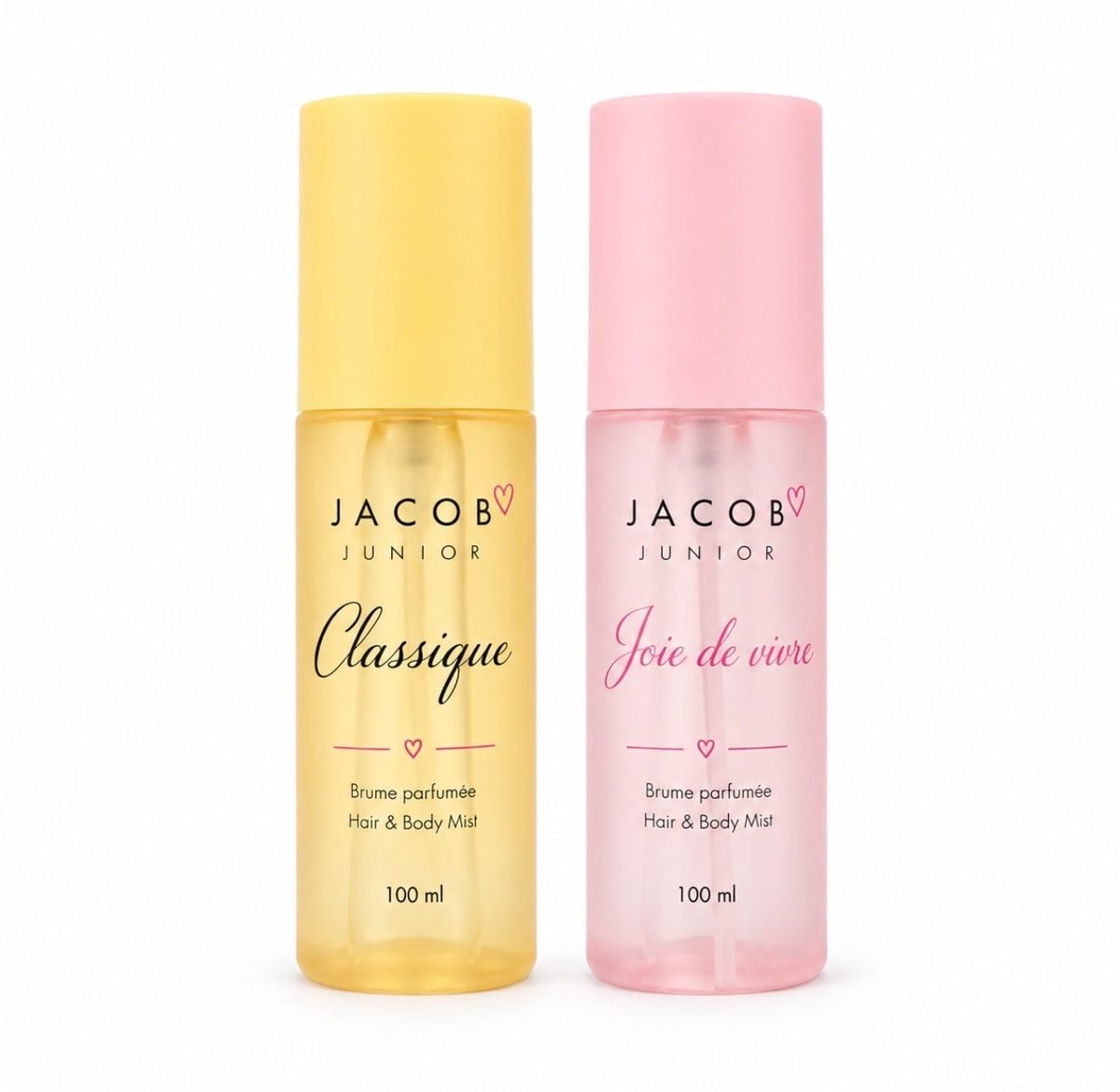
The first is the return of JACOB Junior, originally introduced by Odette in 1986 after she identified a gap in the market for fashionable, well-made children’s clothing at accessible prices. The collection became a popular part of the company’s retail business, particularly during the 1980s and 1990s.
Forty years later, the name is returning through body mists developed by Cristelle and her 12-year-old daughter, Chloé. The two 100-millilitre body mists, Joie de Vivre and Classique, retail for $30 each through jacob.ca.
Basmaji said Chloé was closely involved in developing the products, helping select the fragrances, bottle colours, finishes, typography and packaging. “She chose everything, from the scents to the fonts and colours on the bottles,” she said.
The collaboration has particular significance for Cristelle, whose mother originally created JACOB Junior with her in mind. She said involving Chloé provided an opportunity to introduce her daughter to the entrepreneurial experience that shaped her own childhood.
The anniversary launches also include a $50 black-and-white polka-dot silk scarf developed by Cristelle and Odette. Polka dots were among JACOB’s most recognizable design elements, appearing throughout its original clothing and accessories collections.
Basmaji described the company’s historical aesthetic as “classic with a twist,” combining timeless styling with distinctive prints and an emphasis on quality. The scarf also honours Joey Basmaji, who died after experiencing heart disease.
Cristelle said $10 from each scarf sold will be donated to the Heart & Stroke Foundation, with an additional contribution planned through the family’s charitable foundation. The family hopes to support women’s heart-health education and prevention initiatives, continuing JACOB’s involvement in causes related to women’s health.

Exploring Retail Partnerships and New Distribution
Basmaji is cautious about rebuilding the extensive shopping-centre network that once defined JACOB. She said she witnessed the financial pressures associated with managing a national chain and believes there are other ways to reach customers.
“I’m not sure I’m ready to dive into reopening retail stores,” she said, explaining that she would prefer to explore other distribution opportunities before committing to standalone locations. She is interested in wholesale partnerships, pop-up stores and collaborations with established retailers.
Potential opportunities include placing JACOB fragrances in beauty stores and pharmacy chains, where customers would be able to sample products before purchasing them. Basmaji mentioned Sephora, Shoppers Drug Mart, Pharmaprix and Jean Coutu as examples of retailers that could provide that type of distribution; no agreements with those companies have been announced.
Sampling is particularly important as JACOB attempts to attract consumers unfamiliar with its original fragrances. Longtime customers may already know the scents, but younger shoppers have limited opportunities to experience them through the company’s current online sales model.
Basmaji is developing fragrance discovery sets containing two-millilitre samples, which she hopes to introduce in early 2027. The sets would allow customers to try the company’s three existing fragrances before purchasing full-size bottles.
Retail partnerships could provide access to new customers without the investment and long-term lease commitments associated with operating a national store network. Basmaji also reflected on changes in Canadian shopping centres, where restaurants, entertainment and other attractions have become increasingly important in drawing visitors.
She cited Quartier DIX30 on Montreal’s South Shore as an example of a destination where customers may visit for dining or entertainment and incorporate shopping into a broader outing. This was among the retail environments she discussed while considering JACOB’s future.

Canadian Production and the Possibility of Apparel Returning
Canadian identity remains important to JACOB, according to Basmaji, who recalled the company’s historical commitment to domestic apparel production. She said JACOB aimed to manufacture at least 25% of its clothing collections in Canada, despite the higher costs associated with domestic production.
The company’s design operations were based in Montreal. Today, the fragrance business maintains a Canadian production connection, with fragrance oils originating from Grasse, France, while mixing and bottling take place through a supplier in Quebec’s Eastern Townships.
Basmaji said she intends to maintain an emphasis on Canadian design and production as the company develops additional products. She is also open to eventually reintroducing clothing, although no apparel collection has been announced.
“I’m not saying no to apparel,” she said, explaining that she wants to understand which products former customers would most like to see return. Accessories are a more immediate area of interest because they can be introduced without the complexities associated with extensive apparel sizing and seasonal collections.
The anniversary scarf will provide an opportunity to assess customer interest in that category. Basmaji also sees potential in the children’s and preteen clothing market, particularly for girls who have outgrown traditional children’s fashion but are not yet ready for adult clothing sizes or prices.
Her daughter’s shopping experiences have helped her recognize that gap, although the current JACOB Junior revival remains focused on beauty products. Over the coming months, Basmaji plans to communicate with customers through social media and other channels to learn which elements of the former JACOB assortment they would like to see return.
Their response, along with sales of the new products, will help guide decisions about additional accessories, apparel and future retail partnerships. No timetable has been announced for a return to clothing.