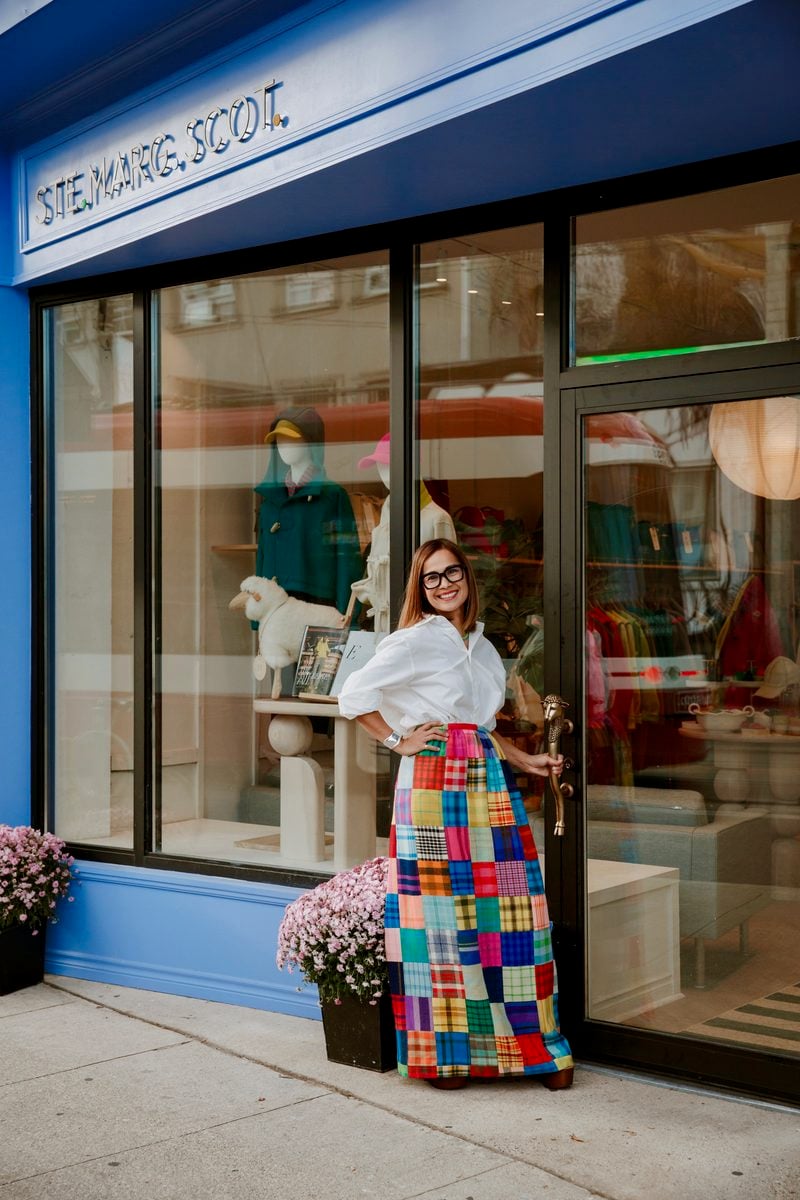
Canadian outerwear brand SteMargScot has opened a flagship boutique at 1412 Dundas Street West in Toronto, transforming a former hardware store into a colourful retail destination featuring wool coats, clothing, accessories and home products from independent Canadian brands.
Founded by designer and entrepreneur Sasha Jardine, SteMargScot specializes in colourful wool outerwear made without conventional Pplastic or metal hardware. The new boutique brings together complementary Canadian labels, including Vancouver-based Simply Merino, which has established its first physical retail presence in Toronto through a micro-store within the location.
For Jardine, the opening provides a permanent home for SteMargScot while creating opportunities for other Canadian makers to reach customers through physical retail.
“Over the past four years, I’ve met so many talented Canadian makers who share our values,” Jardine told Retail Insider. “What many of us lack isn’t creativity or exceptional products, it’s visibility and access to physical retail space.”
From Science Education to Fashion Entrepreneurship
Jardine entered the fashion industry following a career in science education. With a background in biochemistry, she spent more than a decade teaching subjects including biology and climate change, experiences that shaped her interest in natural materials and their environmental impact.
“I spent over a decade teaching science, particularly biology and climate change, so I’ve always been acutely aware of the environmental consequences of the materials we consume,” Jardine explained. “When I started SteMargScot, I couldn’t reconcile making beautiful clothing with introducing more plastic into the world.”
Wool became central to the brand because of its breathability, temperature-regulating properties and durability. SteMargScot uses materials such as corozo buttons and wooden toggles, along with construction techniques intended to eliminate the need for conventional plastic and metal hardware.
Jardine’s approach to design also reflects her personal background. Having grown up in the Caribbean before moving to Canada as a child, she wanted to create outerwear that offered an alternative to the darker colours commonly associated with Canadian winter wardrobes.
The brand’s name references Saint Margaret of Scotland, whose association with beauty and colour inspired Jardine’s design philosophy. She sees colourful outerwear as a way to combine practical winter clothing with a more expressive aesthetic.
Dundas West Boutique Brings Canadian Makers Together
SteMargScot spent months converting the former Lisboa Hardware premises into a boutique designed to encourage product discovery and personal interaction with customers. The store is located along Dundas Street West, near Gladstone Avenue, in a neighbourhood with an established concentration of independent businesses.
Jardine said the area’s creative atmosphere and neighbourhood character appealed to her when selecting the location.
“Dundas West felt like a natural home for SteMargScot,” she said. “It’s a neighbourhood with character, creativity, independent businesses, and a real appreciation for things that are a little different.”
Alongside SteMargScot’s outerwear, the boutique carries merchandise from Simply Merino, Revolution Wool Co., Ferris Toronto, Modern Sunday, Dotty and This Lady Wood, among other Canadian makers. The assortment extends beyond apparel into wool blankets, furniture and decorative home products.
The multi-brand approach broadens the store’s merchandise offering while providing participating businesses with additional physical exposure. Customers visiting for outerwear can discover complementary products from companies emphasizing craftsmanship, natural materials and Canadian production.
“Opening our flagship felt like an opportunity to build something bigger than our own brand,” Jardine said. “I love the idea that customers can discover a beautiful Canadian-made coat, a wool blanket, a gorgeous hand turned side-table, or something entirely unexpected, all under one roof.”
Jardine also wants the boutique to offer a more personal shopping experience, giving customers opportunities to learn about products and the people who make them. The concept allows smaller labels to introduce merchandise to shoppers who may be unfamiliar with their brands.
Simply Merino Establishes Its First Toronto Retail Presence
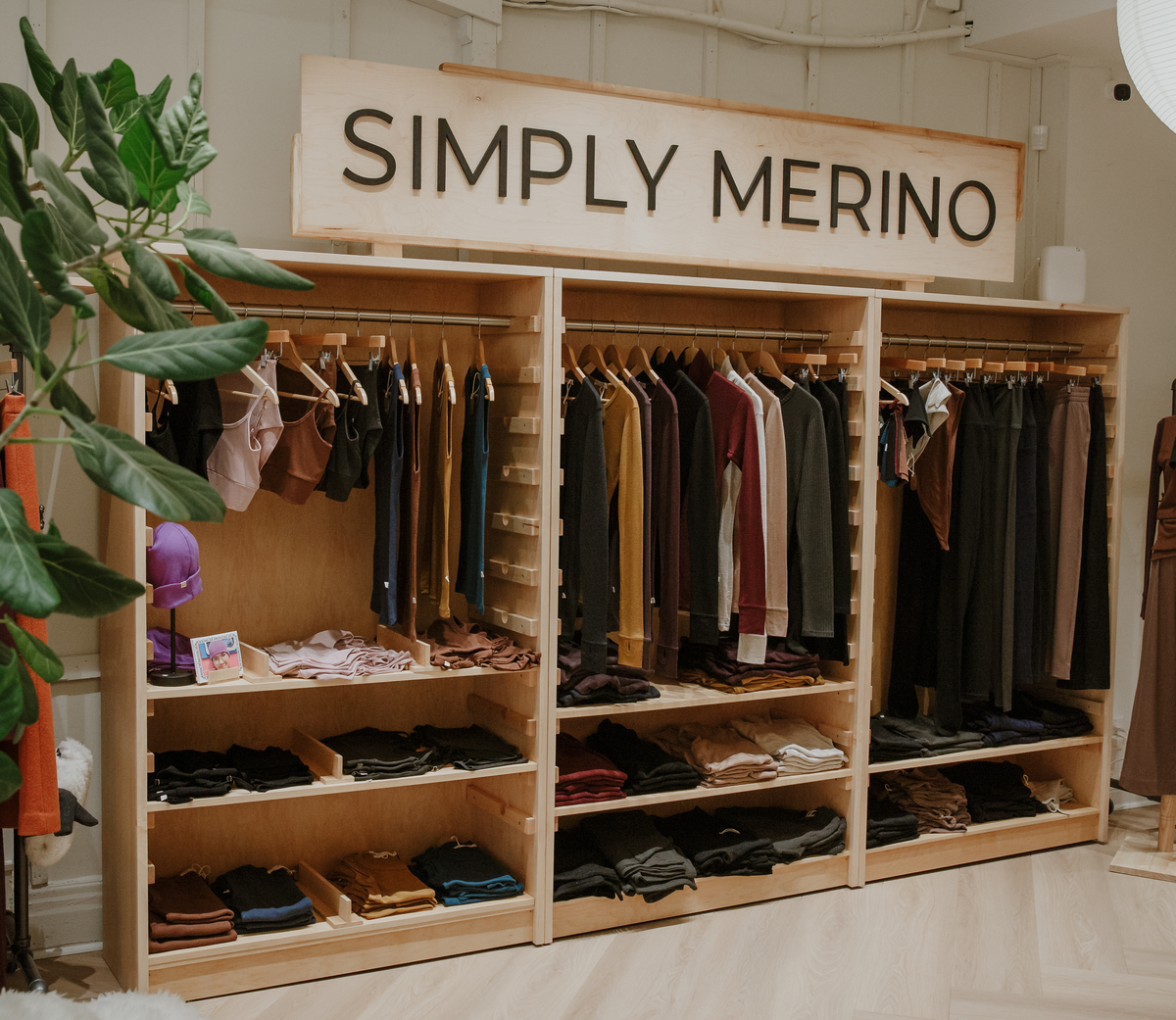
Among the participating businesses is Simply Merino, a Vancouver-based apparel company owned by Shannon Dixon. The brand specializes in fine merino wool clothing for adults and children, with garments manufactured in Vancouver.
The SteMargScot partnership marks Simply Merino’s first physical retail presence in Toronto, already the company’s second-largest market after Vancouver. The company describes its Dundas West operation as a micro-store within the SteMargScot boutique.
“Toronto is our second-largest market after Vancouver, so we’ve wanted a physical presence here for a long time,” Dixon told Retail Insider.
The arrangement gives Toronto customers an opportunity to experience the company’s products firsthand, an important consideration for a brand whose merchandise relies on the feel and performance of fine merino wool.
“Because many people still associate traditional wool with heavy, scratchy sweaters, nothing replaces the experience of touching our fabric in person,” Dixon explained.
Simply Merino uses fine Australian merino wool to produce lightweight garments intended for everyday wear. Its merchandise complements SteMargScot’s heavier outerwear, allowing customers to explore natural-fibre clothing ranging from base layers to winter coats.
The partnership provides Simply Marino physical exposure in an established market while the company continues to concentrate on its direct-to-consumer business. Dixon said the brand is interested in developing additional relationships with retailers that share its values, although online sales will remain its primary focus.
Canadian Manufacturing Remains Central to Simply Merino
Simply Merino’s commitment to domestic manufacturing began when the business was established. Dixon said producing locally was initially a practical decision because the founders wanted to understand apparel manufacturing and work closely with their suppliers.
“When we first launched Simply Merino, choosing to manufacture locally in Vancouver was a decision of necessity,” Dixon explained. “We were new to apparel production and wanted to learn the process hands-on rather than using overseas factories.”
The company subsequently developed relationships with family-run manufacturers in Vancouver and made local production a central part of its business model.
Every Simply Merino garment is cut, sewn and finished in Vancouver, according to Dixon. The company also sources components such as elastics, labels and thread, along with plastic-free packaging, through local suppliers.
Dixon said domestic production allows the business to maintain closer oversight of product quality and manufacturing practices while supporting its relationships with suppliers. She also identifies fair compensation and transparency as important parts of the company’s operating philosophy.
U.S. Trade Uncertainty Influences Business Planning
Although Simply Merino manufactures its clothing in Canada, the company relies heavily on international customers, particularly in the United States.
Dixon said more than 50% of Simply Merino’s sales come from American customers, making changes to cross-border trade conditions a significant consideration for the business.
“Navigating cross-border trade uncertainty has been a huge test for small Canadian businesses,” Dixon said. “For us, more than 50% of our sales comes from U.S. customers, we couldn’t wait on the sidelines.”
The company has adapted its operations to help American customers avoid unexpected duties or tariffs when receiving orders. Dixon said continuing trade uncertainty could require additional changes to its distribution arrangements.
The first joint review of the Canada-United States-Mexico Agreement (CUSMA) took place in July 2026. The United States did not agree to extend the agreement at that time, triggering a process of annual reviews, although the existing agreement remains in force.
Simply Merino is considering contingency plans that could include opening a U.S. distribution hub if trade conditions make that necessary. Dixon said absorbing substantial new tariffs or passing those costs directly to customers would be difficult for the business.
No decision to establish an American distribution operation has been announced. The possibility reflects the practical distribution questions facing Canadian manufacturers with substantial U.S. customer bases.
Canadian Wool Industry Faces Processing Challenges
The two brands share an interest in natural fibres and Canadian manufacturing, although their material requirements illustrate some of the challenges facing Canada’s domestic wool industry.
Jardine serves on the Canadian Wool Council‘s policy committee, which is involved in efforts to strengthen domestic wool processing and manufacturing. She believes Canada has potential to develop a larger industry around wool, particularly for outerwear, home textiles, insulation and other products requiring durable natural fibres.
“Canada has an extraordinary wool heritage, and yet much of the wool produced here is undervalued, underutilized, or treated as a byproduct rather than a valuable natural resource,” Jardine said.
According to Jardine, the country needs additional investment in processing, spinning, research and manufacturing infrastructure to turn more of its raw wool into commercially viable products.
“We have the sheep. We have the fibre. What we’re missing is much of the infrastructure and coordination needed to turn that raw material into commercially viable products at scale.”
Simply Merino’s sourcing illustrates another aspect of the challenge. Dixon said the company purchases Australian merino wool because its lightweight garments require exceptionally fine fibres, measuring approximately 18 microns, along with specialized processing capabilities that are not currently available in Canada at the required scale.
The company says its wool is traceable and sourced from suppliers whose animal-welfare practices it has reviewed firsthand. While Simply Merino manufactures its finished garments in Vancouver, its dependence on imported fibre illustrates the distinction between domestic apparel production and a fully Canadian textile supply chain.
Textile Waste and New Product Development
Both businesses are exploring ways to reduce textile waste and develop additional products using leftover materials.
Simply Merino has diverted more than 2,000 pounds of merino fabric scraps from landfill, according to Dixon. The company collects offcuts from production runs and pays to store them while developing products that can make practical use of the material.
“Behind the scenes, zero-waste is a lot less glamorous than it sounds,” Dixon said.
She explained that the challenge involves finding applications that make effective use of the material without creating unnecessary products.
SteMargScot is also experimenting with new uses for wool scraps. Jardine is exploring the possibility of combining leftover wool with mineral-based resins to create colourful, terrazzo-like materials for decorative home objects.
The project remains experimental, but it forms part of her longer-term interest in expanding SteMargScot beyond outerwear into accessories, home products and other applications for wool.
New Collections and Additional Retail Partnerships Planned
Simply Merino is preparing to introduce an Active Collection alongside new patterns for its merino swimwear. Dixon said the swimwear category developed partly from customers using the company’s existing underwear and bralettes for swimming.
The company intends to continue growing organically through its online business while exploring selective partnerships with additional physical retailers.
For SteMargScot, the Dundas West flagship provides a permanent location to introduce new products and showcase Canadian makers. Jardine plans to continue experimenting with wool-based materials and developing merchandise beyond the brand’s original outerwear collections.