
Advertisement

How First Capital Realty Curates Retail Communities Through Neighbourhood Acquisitions

Date:

Share post:

First Capital Realty has strategically made an effort of consolidating real estate property in key retail districts in order to create a synergystic and vibrant shopping neighbourhood.

It’s a strategy the company has successfully deployed in places such as Yorkville Village in Toronto, Liberty Village in Toronto and Mount Royal Village in Calgary.

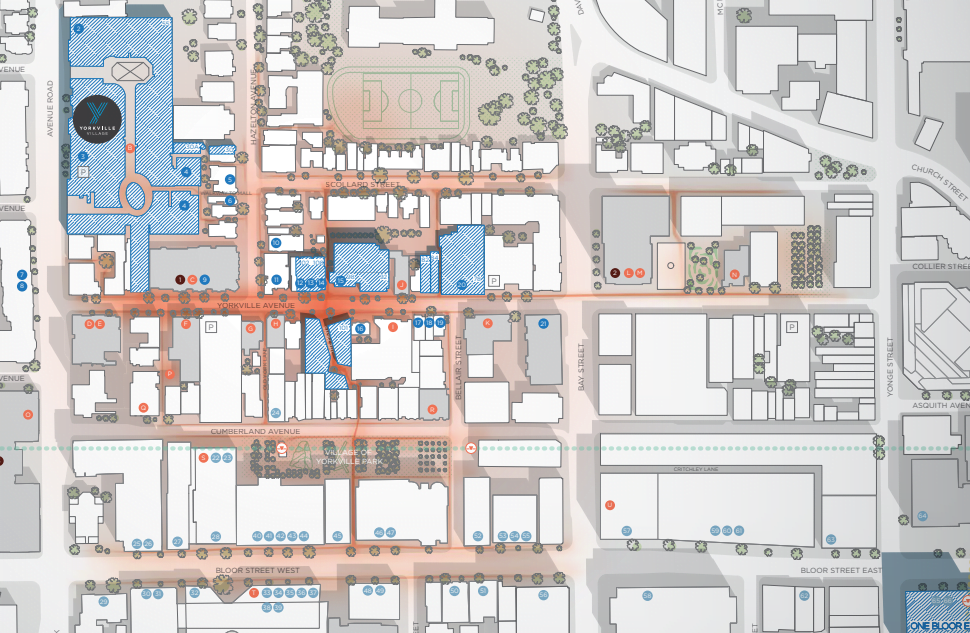
Yorkville Village.
Mount Royal Village Location in Calgary.

Jordan Robins, executive vice president and chief operating officer with First Capital, told Retail Insider that the company thinks about real estate in a holistic way.

“In addition to curating the retail properly, we think about the retail in the context of the neighbourhood it’s situated in,” said Robins. “Creating a retail mix and public realm space that services the community results in functional real estate that works within the confines of the neighbourhood it’s situated.”

Is there a common theme to what the company is doing in those neighbourhoods?

“We see ourselves more as master developers, a term you tend to hear more in Europe,” said Gareth Burton, senior vice president of construction and design with First Capital. “The philosophy is you envisage what could happen in a neighbourhood when you remove the shackles of boundaries.”

Burton said the company thinks about a certain neighbourhood, based on what First Capital currently owns, what it could acquire in the future, who its partners are and who it can work with to realize what really is possible.

So in the neighbourhoods such as Yorkville Village, Liberty Village and Mount Royal Village there’s an emphasis on analysis and strategy. Daytime population is key. So is employment in the area. Transit access and pedestrian friendly are also important elements.

“If I look at Yorkville or Liberty Village, we put together strategic pieces of real estate which some people, when we bought them, wondered why we’d buy those things,” said Burton. “As the network comes together, the neighbourhood comes together. As the neighbourhood comes together, the retailers come together, the owners come together and it becomes a real thing with a sense of place.

“So for us places like Yorkville Village, Liberty Village, Mount Royal West are organic neighbourhoods where we have a much bigger vision. It could be 20 years of gestation and in the end we would have something very, very special.”

Robins said as First Capital looks at aggregating properties in specific or targeted neighbourhoods it will support growth by virtue of the fact of the demographic that surrounds them in both income and population density.

“It’s more than buying the one piece of property whatever it may be – retail or commercial office,” said Robins. “By aggregating properties over time, you have a degree of control over how it will evolve and you can consider the neighbourhood in a broader way. You can also amortize the cost over a number of properties in a neighbourhood and translate that into creating something meaningful for the public realm that is broader than just a single property.”

Liberty Village, Yorkville Village and Mount Royal Village are the three places where First Capital’s philosophy is most prominent. But the company has also adopted a similar approach in Griffintown in Montreal.

“If you look at our real estate across the country, you’ll note that we aggregate real estate in specific areas we believe in and that supports this philosophy and we think we can add value to in a broader way,” added Robins.

Burton said the basic commonalities in these neighbourhoods is they’re all places that have the bones and the skeleton of something quite spectacular.

“If we can do what we want to do and if the communities can come together in the way we think they will, they’ll be the points on the map that everybody knows in those cities,” said Burton.

“I’m very interested in urban spaces because of what urban really means. Urban means that you have to have public transit, you have to have public space there, you have to have a good mass of people of significance.

Each of the neighbourhoods First Capital aggregates property is different but Robins said typically 10 to 15 properties for each are accumulated, making it the largest single property owner in those communities.

“We want to identify places that have the capability of being great neighbourhoods in cities that are expanding and becoming world-renowned. This will definitely resonate with prominent retailers, city builders and community partners”.

LEAVE A REPLY

Please enter your comment!
Please enter your name here

More From Retail Insider

RECENT RETAIL INSIDER VIDEOS

Advertisment

Subscribe to the Newsletter

Subscribe

* indicates required

RECENT articles

Millennials Are Trading Down And Splurging At The Same Time: Study

A Calgary-based Cashew Research study finds Millennials are trading down in some categories while still spending selectively on premium products and experiences.

Consumers Are Losing Trust in Influencers Says Canadian Study

Field Agent Canada research finds consumers increasingly trust real people and reviews over influencers when making purchases.

Rewards being repositioned from passive perks to active financial strategy: Chexy

Cashback transaction volume among users under 40 rose 125 per cent between Q4 2025 and Q1 2026.

VIDEO: Edmonton entrepreneur warns of growing small business crisis across Canada

“For many business owners, survival has become a daily battle."

Motion-based digital billboards outperform static ads: Vistar Media

3D motion creative was found to be 67% more effective at driving brand awareness compared to standard DOOH creative 

HBFace announces expansion into London, Ontario with new studio opening

The brand is known for its personalized brow services, skincare, makeup, and curated beauty products designed to simplify routines.

IKEA Canada renews Rainbow Railroad for third year, projects $600,000 in total contributions

Sales of the Rainbow cake across its Canadian stores will contribute directly to Rainbow Railroad’s efforts to assist LGBTQI+ people facing significant risks in various parts of the world.

Sephora Canada launches Toronto Tempo partnership platform tied to WNBA team’s inaugural season

The initiative, called "Pretty Badass," will feature Toronto Tempo players, coaches and Canadian athletes as part of a national campaign aimed at highlighting athletes both on and off the court.

Inside Harry Rosen’s Reimagined Oakridge Park Store in Vancouver

Harry Rosen's new Oakridge Park store in Vancouver reflects the retailer's evolving strategy, featuring luxury brands, hospitality and innovative design.

Daily Synopsis: Jun 1, 2026

Canada sees middle market squeeze, Metro's Carmen Fortino and London Drugs' Clint Mahlman retire on same day, Pepper Lunch closes in Richmond, 16,000 fake World Cup merch items seized, No Frills opens 1st Lloyminster store, and other news.

Canada’s Economy Is Shrinking. Why Hasn’t the Food Sector Followed?

Canada's economy is shrinking, but the food sector remains resilient. Sylvain Charlebois examines why agri-food has held up and the risks ahead.

Casavogue Emphasizes Personalized Design Guidance for Montréal Homes

Casavogue offers personalized furniture guidance, customizable options, and curated interiors for homeowners seeking high-end furniture in Montréal.

Mirvish Village Comes to Life as Toronto Retail District Opens

Mirvish Village begins opening at the former Honest Ed’s site with independent retail, food halls, heritage restoration, and public gathering spaces.

Toronto and Vancouver to anchor up to $6.5B soccer-powered economic boost for Canada: BMO Economics

Tourism-related spending is expected to be the primary driver of economic activity, as international visitors increase demand for hotels, air travel, restaurants and bars.

Mailo’s The Pasta Project to open first North American location in Toronto

The concept is a fast-casual restaurant brand known for its signature "street pasta" concept, combining premium ingredients with the convenience of modern urban dining.

Dr. Phone Fix reports record Q1 2026 results

Gross profit increased 34% to $1.62 million, compared to $1.21 million in Q1 2025.

Why Grocery E-Commerce Still Struggles With Impulse Discovery

Canadian grocers are investing heavily in digital grocery, but physical stores still outperform online platforms in product discovery and impulse buying.

Canadian businesses report growing confidence in climate planning as AI adoption and extreme weather reshape strategy: BMO

78 per cent of Canadian business leaders say their organization has or is developing a climate plan, up from 66 per cent in 2025.

Randstad Digital report finds gap between AI investment and workforce readiness

Organizations are deploying AI across their operations and technology environments at a rapid rate, while facing challenges in ensuring employees have the skills required to use the technology effectively.

Businesses brace for more cost-related obstacles: Statistics Canada

Nearly half (48.8%) of businesses expect inflation to be an obstacle over the next three months, marking it as the most commonly expected obstacle among businesses.